
Forgotten Weapons
Published 23 Mar 2026When the US replaced the M1 Garand, the plan was to adopt both a select-fire infantry rifle and a heavy-barreled support weapon on the same platform. During development, both the T44 (later M14) and T48 (FAL) rifles had heavy-barreled versions. In the case of the M14, the final iteration of the heavy-barreled weapon was the T44E5, which was formally adopted as the M15. Before it could be actually put into production, though, it was cancelled as unnecessary.
In testing, first the Marine Corps and then the Infantry Board found that fitting a standard M14 with a detachable bipod gave the same performance as the M15 — and so why bother with an extra version of the gun? Of course, the equal performance was really quite poor compared to proper light machine guns, and once the M14 got into service this shortcoming was noticed. this led to the M14A1 aka M14E2 project, to essentially recreate the M15 with a pistol grip stock and front grip.
Thanks to the Springfield Armory National Historic Site for giving me access to this truly unique specimen from their reference collection to film for you! Don’t miss the chance to visit the museum there if you have a day free in Springfield, Massachusetts: https://www.nps.gov/spar/index.htm
(more…)
August 18, 2026
M15 Automatic Rifle (aka T44E5): Adopted But Not Produced
August 17, 2026
QotD: The real reason that MilSpec stuff sucks
Something I ran across in a video by @Fat_Electrician made sense of something I and most military personnel have never understood: Why military equipment sucks compared to most civilian.
@Fat_Electrician was talking about super cars and why they don’t generally work as well as, say, a regular car. Super cars break down a lot. Some are worse than others. His point, apparently from Jay Leno, is that a Ferrari has much less actual engineering in it than, say, a Dodge minivan. Why?
Because there are thousand more engineers working on the minivan and tens of thousands more background hours of engineering. The minivan comes from a long history of similar vehicles with much more engineering in the actual design.
So, think about a military vehicle. Say the Humvee. It’s not that it’s designed to fail, it’s that there is much much less engineering in it. Ditto any military equipment. Thus, it’s much more likely to break down, just like a Ferrari.
I was thinking about this in light of the current series I’m working on not to mention any milSF. The current series the main character is leading a group that works with a mix of civilian small freighter starships and military warships. The civilian ships, even the old ones, are relatively maintenance free vs the military ships. Why?
1. There’s way more engineering in the civilian ships because the companies sell more of them and can spend more on engineering.
2. There’s a lineage of what works and what doesn’t.
3. Civilian companies cannot spend enormous sums on maintenance.But it’s mostly the first one.
I’m not even sure I’m going to insert a discussion of it in the book. It’s the sort of thing I occasionally insert just because my readers sometimes find stuff like that interesting. But mostly I thought you might.
MilSpec sucks because there’s not as much of it as civilian.
John Ringo, The social media site formerly known as Twitter, 2026-05-07.
August 16, 2026
How Not to Be A Nazi – Death of Democracy 28 – Epilogue
World War Two
Published 15 Aug 2026Nazi Germany destroyed democracy in weeks, launched a war that killed tens of millions, and carried racial persecution to industrialized mass murder. But after 1945, Germans and Europeans faced another question: how could they prevent it from ever happening again?
In this final, independently viewable epilogue to Death of Democracy, Spartacus examines how West Germany transformed the lessons of dictatorship and war into the Grundgesetz — a constitutional system built around human dignity, enforceable rights, federalism, judicial independence, social stability, and a democracy empowered to defend itself.
We trace how the Federal Republic combined lessons from Weimar, the United States, Britain, Austria, France, and other democratic traditions; how Konrad Adenauer’s generation tied Germany to a new European order; and how the same determination to restrain power and prevent another continental war eventually shaped the European Union and the Lisbon Treaty.
Finally, we ask how well those democratic fortifications are holding in 2026 — and return one last time to the diarists, victims, witnesses, supporters, and resisters whose voices guided us through Germany’s descent into dictatorship.
From the comments:
@spartacus-olsson
12 hours agoThank you for joining me on this adventure. I hope it has been eye-opening. If you watched to the very end, you will know that I’m soon launching a World War 2 Trivia board game – I’ve been super punny and named it World War IIrivia (2rivia with Roman numerals).
After so many years of studying this and sharing it in the darkest possible way, I felt it was time to look at the whole affair in a way that’s fun, social, and still educational. So a couple of months ago I came up with something. It turned out to be one of those moments when the work seems like extra fun. Before I knew it, I was spending my sleepless nights on the idea, sketching rules in Word, writing questions into lists in Excel, designing the game in Photoshop, testing gameplay against myself, and redesigning. And then there it was — an actual game. It’s a game for both novices and experts, with some unexpected twists and turns. If you’re interested in this period of history and enjoy a night of board games, this is for you. Stay tuned for more updates about the launch.
Once again, many, many thanks to all of you for watching. Thank you to Iryna, Astrid, Anna, and Clara for your great work on the series. Thank you to the TimeGhost Army members for enabling me to do this. With that, as Mr. Murrow would put it:
Good Night and Good Luck,
Your Spartacus
The Ancient Greeks 04 – The Persian Invasion 2 – Logistics and Diplomacy
seangabb
Published 24 Mar 2026Greece: A Brief History, c.700 BC – 500 AD
How do you move an empire to war? This lecture examines the extraordinary logistical and diplomatic preparations behind Xerxes’ invasion of Greece. We explore how the Persian Empire assembled one of the largest armies in ancient history and the immense challenges of supplying and coordinating such a force.
At the same time, we examine the diplomatic pressure placed on the Greek states, including demands for submission and the divisions this created within the Greek world.
– The scale and organisation of the Persian army and navy
– Supply lines, engineering, and preparation
– The bridging (and scourging) of the Hellespont
– Persian diplomacy and the demand for “earth and water”
– Greek responses: submission, neutrality, and resistanceThis lecture shows that the invasion was not simply a military campaign, but a vast imperial operation combining force, intimidation, and political calculation.
QotD: The “Marian reforms” were not a thing
- Cohorts: Experimented with before Marius, especially in Spain. Marius uses cohorts, but there’s no evidence he systematized or standardized this or was particularly new or unusual in doing so. Probably the actual breakpoint here is the Social War.
- Poor Volunteers Instead of Conscripted Assidui: Marius does not represent a break in the normal function of the Roman dilectus but a continuation of the Roman tradition of taking volunteers or dipping into the capite censi in a crisis. The traditional Roman conscription system functions for decades after Marius and a full professional army doesn’t emerge until Augustus.
- Discharge bonuses or land as a regular feature of Roman service: Once again, this isn’t Marius but Imperator Caesar Augustus who does this. Rewarding soldiers with loot and using conquered lands to form colonies wasn’t new and Marius doesn’t standardize it, Augustus does.
- No More equites and velites: No reason in the source to suppose Marius does this and plenty of reasons to suppose he doesn’t. Both velites and equites seem to continue at least a little bit into the first century. Fully replacing these roles with auxilia is once again a job for our man, Imperator Caesar Augustus, divi filius, pater patriae, reformer of armies, gestae of res, and all the rest.
- State-Supplied Equipment: No evidence in the sources. This shift is happening but is not associated with Marius. In any event, the conformity of imperial pay records with Polybius’ system of deductions for the second century BC suggests no major, clean break in the system.
- A New Sort of Pilum: No evidence, probably didn’t exist, made up by Plutarch or his sources. Roman pilum design is shifting, but not in the ways Plutarch suggests. If a Marian pilum did exist, the idea didn’t stick.
- Aquila Standards: Eagle standards pre-date Marius and non-eagle standards post-date him, but this may be one thing he actually does do, amplifying the importance of the eagle as the primary standard of the legion.
- The sarcina and furca and making Roman soldiers carry things: By no means new to Marius. This is a topos of Roman commanders before and after Marius. There is no reason to suppose he was unusual in this regard.
So the Marian reforms … were not a thing. Functionally none of what is described as happening in them was new or unique to Marius. Indeed, the most substantial reforms are either things that were already changing (and which Marius seems to have had little role in) or things which had not yet changed but which would, under Augustus. Indeed, one of the problems with the assumption of a Marian reform is that it takes a whole lot of changes which were more likely a package of reforms under Augustus and pulls them forward in time to Marius, doing some damage to our understanding of both figures.
But Augustus makes much more sense as the figure doing many of those organizational changes. For one we have sources actually telling us he did them, from the standardization of military service (Dio 54.25.6), the creation of retirement bonuses and the aerarium militare to fund them (Dio 54.25.6 again, but also Res Gestae 17), and the radical expansion and formalization of the auxilia as part of the Roman army (Tac. Ann. 4.5). The one thing missing is citizenship-for-service, which we can see emerging under Tiberius, the next emperor immediately after Augustus. And it makes sense because Augustus is, by necessity, doing a bunch of other things with the legions too. He’s instituting a whole new command structure, with dedicated legionary commanders (the legatus legionis) serving under his own provincial commanders (legati Augusti) with imperial procuratores handling the former role of the quaestors. Also, the legions get their citizen cavalry (though a quite small detachment of it) back too.
So instead of thinking, “Marian reforms” – which were, I must stress, not a thing – you ought to be thinking about a period of tactical, organizational and institutional change beginning in the second century, accelerating in the first century and then finally being instituted as a comprehensive set of reforms and formalization by Augustus, not by Marius, which codified a lot of change that had already happened over that long period. A long process with a punctuation mark at the end rather than a singular moment of reform associated with a singular Roman general.
Alright. Now one of you go and fix the Wikipedia entry.
Bret Devereaux, “Collections: The Marian Reforms Weren’t a Thing”, A Collection of Unmitigated Pedantry, 2023-06-30.
August 13, 2026
The Ancient Greeks 04 – The Persian Invasion 1 – Xerxes Decides
seangabb
Published 23 Mar 2026Greece: A Brief History, c.700 BC – 500 AD
What drove the greatest invasion force of the ancient world to march against Greece?
In this lecture, we move from the aftermath of the Battle of Marathon to the momentous decision of King Xerxes of Persia to launch a full-scale invasion of mainland Greece in 480 BC. We examine the political, strategic, and psychological factors behind the Persian decision, including the legacy of Darius, the revolt in Egypt, and the internal debates within the Persian court.
Drawing on Herodotus and other ancient sources, this video explores:
– The consequences of Marathon for both Persia and Greece
– Xerxes’ consolidation of power
– The famous debate at the Persian court
– The role of honour, revenge, and imperial ideologyThis is the essential starting point for understanding how a regional conflict escalated into one of the defining wars of the ancient world.
Part of a full lecture series on the Persian Wars.
August 12, 2026
The Korean War Week 112 – The Chinese Take Siberia – August 11, 1952
The Korean War by Indy Neidell
Published 11 Aug 2026There’s heavy fighting in the field this week for a position the US Marines call Siberia. Behind the scenes there’s worry, though, as the US Army is more and more facing a manpower crisis. They are, however, training ever more South Korean troops to one day hopefully bring all their own troops home from the Korean peninsula, and leave it defended by the locals.
“Hitler’s socialism wasn’t just an internal economic policy – it was the cause of the war”
On the social media site formerly known as Twitter, Krzysztof Szczawinski explains why socialism — of the left (the Soviet Union) and the right (Nazi Germany) — was the economic driver that pushed Europe into war in 1939. German socialism (in one state) could only continue to grow by annexing resources and manufacturing capabilities from neighbouring states, and by August 1939 it was Poland’s turn:
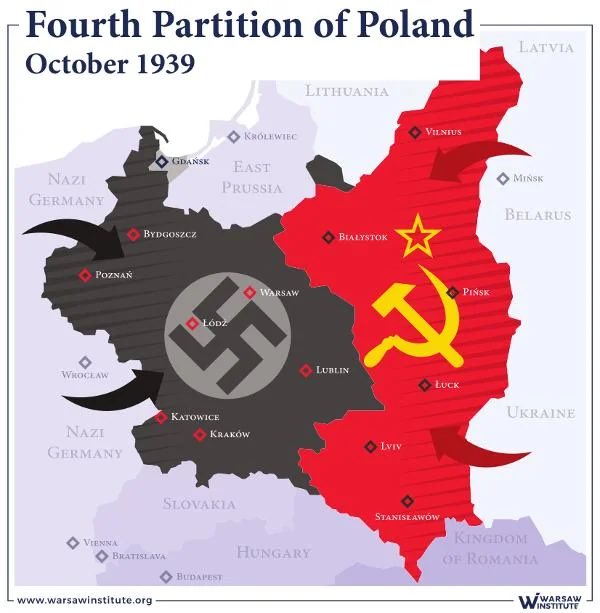
Socialism was at the origin of the war. Not as a coincidence. As a necessity. The socialist economic model generates contradictions it cannot resolve internally – the calculation problem, the misallocation, the stagnation, the mounting failure. War is the exit. It provides the external enemy that explains the internal failure. It justifies the total mobilization the system always wanted. It consumes the surplus population the economy cannot employ. It redirects the resentment outward.
Does this remind you of anything?
The evidence is not subtle. The NSDAP program of 1920 reads like a standard socialist manifesto. The economic reality confirmed it – price controls, industrial planning, state allocation of raw materials, entrepreneurs reduced to government functionaries. Private property in name only. Mises called it Zwangswirtschaft – coercive economy. Hayek dedicated a chapter of The Road to Serfdom to the socialist roots of Nazism. Both writing from observation, not retrospect.
After 1945 the Soviet victors imposed their version and attached the capitalist label to every rival. Western textbooks followed. The lie became the curriculum.
The real divide has never been left versus right. It is collective control versus individual freedom. Once you place National Socialism correctly within the family of collectivisms, the political spectrum becomes legible – and the war becomes explicable.
When the system fails — and it always fails — it needs an enemy. The bigger the failure, the bigger the enemy required.
Imagine being Poland. Squeezed between two socialist systems, both searching for their enemy.
We were it.
US Army M68 Close Combat Optic aka Aimpoint CompM Series
Forgotten Weapons
Published 16 Mar 2026When Aimpoint entered the competition for a US Army standard-issue combat optic in the 1990s, they really didn’t expect to win. The other finalists were Trijicon and Meprolite, and it seems like a safe bet that the American firm — Trijicon — would get the contract. However, it ended up going to Aimpoint’s CompM on both price and technical capability. This meant an order for 100,000 of the optics, requiring Aimpoint to massively scale up. It also led to a series of improvements to the design, which became the CompM2, CompM3, and CompM4.
Today, we are looking at the history of this evolution. How the Aimpoint 3000 became the Comp[etition], how the Comp was ruggedized to the CompM[ilitary], and how the Swedish Army Aimpoint CS led to the current CompM4.
(more…)
August 11, 2026
How the Royal Navy’s budget cuts built foreign navies
Warships & Warriors
Published 10 Apr 2026When the United Kingdom’s Ministry of Defence faces a budget crisis, the rest of the world goes shopping. Welcome to Warships And Warriors! Today, we are exploring the global “Ghost Fleet” of the Royal Navy.
Through decades of cyclic Strategic Defence Reviews, the UK has repeatedly cut its fleet, selling off highly capable surface combatants, submarines, and massive amphibious assault ships decades before the end of their mechanical lifespans. In this video, we track down these decommissioned British warships to see how middle-power navies in South America, Eastern Europe, and Southeast Asia have transformed them.
From Brazil snapping up the Royal Navy’s amphibious heavyweights like HMS Ocean (now the Atlântico) and HMS Bulwark, to Chile bolting advanced missile systems onto ex-British Type 22 and Type 23 frigates, we uncover how foreign navies are gaining massive frontline capabilities at bargain prices. We also look at the strategic transfers of Upholder-class submarines to Canada, armed patrol vessels in Bangladesh, and the legally complex deployment of Sandown-class minehunters in the Black Sea.
0:00 – The Royal Navy Fire Sale
01:16 – Chapter 1: The Amphibious Heavyweights (Brazil)
04:31 – Chapter 2: The Frigates (Brazil, Chile & Romania)
07:16 – Chapter 3: The Submarines (Canada)
08:36 – Chapter 4: The Offshore Upgrades (Bangladesh & Philippines)
10:27 – Chapter 5: Clearing the Minefields (Lithuania, Greece, Ukraine & Estonia)
13:01 – Chapter 6: Mapping the Deep (Bangladesh)
13:48 – The Wrap-Up & The Tragic Fate of the Type 22 Batch 3
(more…)
QotD: The long lead-up to the invasion of Iraq
The Americans kicked Iraq out of Kuwait quickly and easily, and then … hesitated about what to do next. Nobody wanted to keep Saddam around (remarkably, when you have outlived your usefulness, people suddenly start to notice all of your human rights abuses), but nobody wanted to march into Baghdad and topple him either. There was some wishful thinking that the Kuwait defeat would cause Saddam’s regime to collapse, but most US foreign policy thinkers just shrugged their shoulders and figured better Saddam than chaos and a Vietnam-style quagmire. One especially perceptive official put it this way to a PBS journalist:
I felt there was a real danger here that you could get bogged down in a long drawn out conflict … and then you’ve got to worry about what comes after. And then you have to accept the responsibility for what happens in Iraq, accept more responsibility for what happens in the region. It would have been an all-US operation, I don’t think any of our allies would have been with us, maybe Britain, but nobody else. And you’re going to take a lot more American casualties if you’re gonna go much around in Iraq for weeks on end trying to run Saddam Hussein to ground and capture Baghdad and so forth and I don’t think it would have been worth it.
That official’s name was Dick Cheney.
So Saddam was left in place, and throughout the ’90s American policymakers seethed about it. There was no official policy that said we were going to overthrow him, but prominent politicians like Al Gore were out there writing op-eds saying that Saddam must be toppled and his government dismantled. This produced what Mazarr calls “destructive ambiguity” — everybody knew that everybody else knew that the real policy was to get rid of the guy, but since this was an unofficial position it went through none of the usual policymaking channels and was never formally debated. It also left a lot of room for freelancing.
For example, CIA clandestine operative Bob Baer (whose memoir is a terrifically fun read, by the way) began organizing a coup in 1995, not because he was directly ordered to do so but because he thought it was what his supervisors wanted. Even the strategy of the coup points towards this ambiguity — rather than straightforwardly overthrowing the government, it aimed to spark a rebellion that would gain some momentum but not enough to win, so that when Saddam moved to crush it the US would be pulled in and forced to act.1 Think for a moment about what an odd plan this is, and how it only makes sense if you believe the US secretly wants to invade while officially pretending not to.
The leader of this rebellion was supposed to be Ahmed Chalabi, one of the more fascinating characters in this story. Chalabi was a dapper, cosmopolitan, and erudite bank manager who got exiled from Iraq for gross financial corruption. He promptly reinvented himself as a freedom fighter, rented beautiful houses stocked with fine art in several major cities, and set about ingratiating himself with Western elites. He also began organizing his fellow emigrés and exiles into an effective political lobbying force. Unsurprisingly given his educated and aristocratic manner, he was extremely good at the lobbying part, and soon placed a special focus on the United States, wining and dining congressmen and writing op-eds for major newspapers. Soon he managed to convince the CIA that there were thousands of resistance fighters back in Iraq ready to follow him into battle.
He was good at convincing, but they also wanted to be convinced. Chalabi and his fellow emigrés were charming, cultured, westernized intellectuals who at least pretended to be pro-democracy. It was oh-so-tempting to believe that everybody in Iraq was like that, when in fact they were completely unrepresentative. As a rule of thumb, when a country has a revolution or a civil war or other social breakdown, the ones who make it out are the ones bright enough to see it coming and rich or well-connected enough to escape. Whether it’s the Russian Revolution, the Lebanese Civil War, or whatever you call what’s happening in South Africa, the people who leave are not a random subset — they’re the creme-de-la-creme. Unfortunately the US government somehow couldn’t figure this out in the case of Iraq. They met the emigrés, and were impressed by them, and decided that Iraq really was a civilized and cosmopolitan place under the surface, when in fact the society that created the emigrés had been destroyed decades earlier.
The emigrés represent one pole of the Baptists-and-bootleggers coalition that emerged in the ’90s to advocate for the overthrow of Saddam’s regime. The other is exemplified by Paul Wolfowitz, a soft-spoken academic who bounced between senior government positions and jobs at think tanks. Wolfowitz was a humanitarian in the most sincere sense. Much of his extended family had been killed in the Holocaust. The plight of oppressed peoples was not an abstraction for him, and he dedicated his life and career to the proposition that the United States should use all available means to end tyranny and oppression wherever they existed.
Wolfowitz is commonly described as a fanatical neoconservative, and he is, but I think it’s important to demystify that term. Too often it gets used as a catchall for “people we don’t like”, but at least when it comes to foreign policy the neoconservatives fit squarely within the American mainstream. With the notable exception of Donald Trump, every American president of the past few decades has had essentially the same foreign policy, driven by essentially the same core ideas: (1) Americans are the good guys, (2) it’s the job of the good guys to right wrongs wherever they are happening, (3) freedom and democracy are the non-negotiable inheritance of everybody on planet earth. These ideas drive the neoconservatives, yes, but they also drive Samantha Power and Susan Rice, not to mention Hillary Clinton and Barack Obama.
If you are an American, it may not be apparent to you how weird these ideas seem to the rest of the world. If I were to characterize how previous empires — and America’s current rivals — think about the world, it would be more like: (1) every country has core interests and peripheral interests, (2) you should not interfere in another country’s core interests if you can help it, (3) different peoples and cultures are adapted to different forms of government, and this diversity makes life spicy and interesting. Perhaps most shocking to Americans: most countries do not self-identify as “the good guys”, instead they think of themselves as a people with a history and a set of territorial claims.2
Mazarr describes this peculiar American quality as “the missionary impulse”, and notes that while it comes from a well-intentioned place, it “can produce a theological and absolutist conception of America’s responsibility as well as a romantic conviction that America can renovate other societies at will”. Or, to put it in blunter words, it makes us do insane things like invade and occupy a culturally alien country on the other side of the world, and stand there in blinkered incomprehension when people don’t like it. Perhaps the most damning thing about this missionary impulse is the way it provides a self-excusing justification for recklessness: since America is definitionally the good guys, all the horrible consequences of America’s dumb decisions must be somebody else’s fault, and anyway we meant well so you can’t really blame us.3 It’s like a speeding driver who hits and kills pedestrians over and over again, and when confronted gets huffy and points out he’s on his way to feed people at a soup kitchen.
Why is our national character like this? It’s one of those eternal questions. Maybe it’s because we were settled by various strains of fanatical Protestants, or because our ethnos was born during the Enlightenment, or some other “genetic” factor. Alternatively, it could be something about our historical development, or perhaps the large oceans that have always insulated us from most of the negative consequences of our decisions. Or maybe it’s just inevitable that whoever the current world empire is will feel this way, a consequence of our “unipolar moment”.4 Whatever the cause, it’s been a frequent source of misunderstanding between American and foreign diplomats, and few more so than Iraq’s.
The inability of the Iraqi regime, and of Saddam Hussein in particular, to “get” America or its motivations is a recurring bit of comic relief in Mazarr’s book, and one of the first big episodes of it occurs here in the mid ‘90s. This was the time when the Iraqis completely shut down their WMD programs and destroyed every trace of them. But even while halting their nuclear, chemical and biological weapons projects, they continued to loudly insist that they were operational. This appears to have been done out of fear that they would lose prestige if they admitted to backing down. Saddam also really wanted the Iranians to think that he still had chemical weapons out of fear that they’d invade if he didn’t, and he figured that US intelligence would obviously figure out that the programs had been stopped, so they didn’t have to come out and say it themselves.
I remember when I was a kid watching Dr. Strangelove, and laughing at the part where the Soviets built a doomsday device without telling anybody, completely defeating the purpose of having a doomsday device. Then I got older, and learned that no actually, in real life the Soviets built a doomsday device, and then didn’t tell anybody, because they apparently assumed that its psychological effect would be more powerful if America found out about it from its spies (naturally, we didn’t find out until after the Cold War was over). Saddam’s mistake was a weird inverse of this, destroying all his doomsday weapons and then just assuming we’d figure it out. I guess the moral of the story is that in real life, these too-clever-by-half schemes where you double-bluff your opponent are rarely worth it.5
Anyway, Saddam destroyed all of his WMD, and then kicked out the UN inspectors so as to maintain the charade that he still had them. At the same time that all of this was happening, the sanctions regime that the US had imposed was clearly falling apart. European and Asian businessmen were swarming all over Baghdad, trying to get things in place for when foreign investment inevitably flooded back into the country. All of this contributed to an ambient sense that something had to be done; the attempt to kick the can down the road was failing. By the late ’90s, the Clintons had already convinced themselves that a rematch with Saddam was inevitable, but they didn’t have time to act on it before their term was up and a new sheriff rolled into town.
John Psmith, “REVIEW: Leap of Faith, by Michael J. Mazarr”, Mr. and Mrs. Psmith’s Bookshelf, 2025-06-30.
- Yes, this was exactly Strelkov’s strategy in the Ukrainian civil war. And for similar reasons — the Russian government as an official body was dithering and indecisive, but a large faction within it wanted to act.
- My north star here is, as always, my former coworker from Bulgaria.
- Graham Greene did an exquisite job skewering this attitude in his novel The Quiet American. One character says of the titular American: “I never knew a man who had better motives for all the trouble he caused”.
- Did the Romans feel this way? Did the Chinese? I don’t actually know, but I think there’s something distinctive about the American imperial attitude. It really does come down to our belief that we’re bombing you for your own good (or overthrowing your government for your own good, or whatever). My sense is that past hegemons have been a bit more honest.
- Then again, Gaddafi did what Saddam arguably should have done, and look what that got him. I guess the real lesson is just not to make too much trouble until your nukes really work.
August 10, 2026
Was Canada’s Victoria-class submarine deal a massive procurement failure?
Dominion Defence Review
Published 8 Aug 2026Plagued by chronic low availability while also being expensive to maintain, the purchase of used British submarines seems to be a good reminder that a low sticker price isn’t everything …
Gresham’s Law and the Thirty Years’ War
For one of the most destructive wars in European history (until the 20th century), most people know little or nothing about the Thirty Years’ War (which was a name applied later to a series of overlapping and interlocking conflicts that caused nearly 10 million deaths between 1618 and 1648). One of the many causes wasn’t so much religious or military, it was financial:
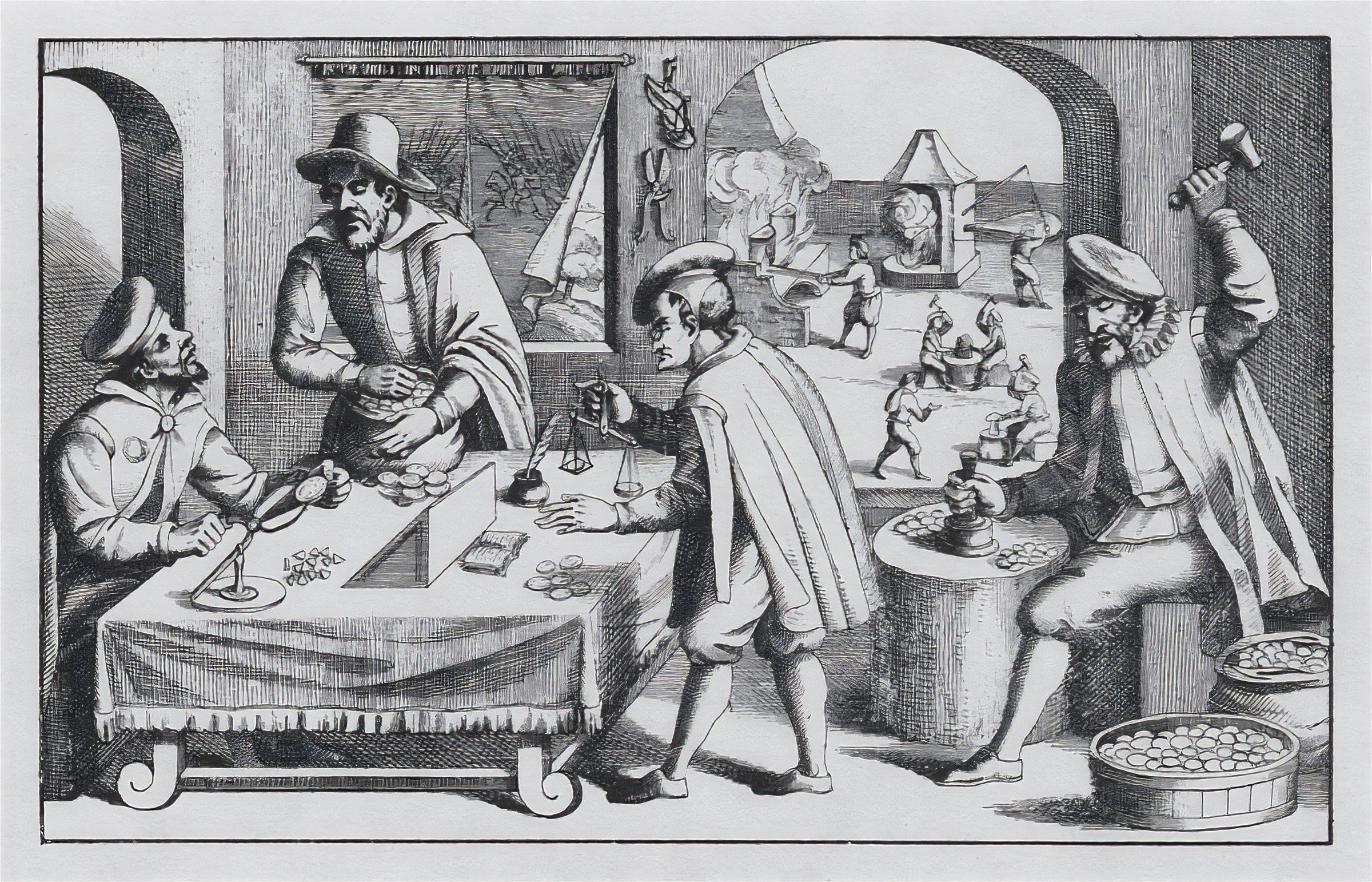
“Clipping coins in a Kipper mint”
Wikimedia Commons.
The Kipper und Wipperzeit of 1621 to 1623 [Wiki] was a direct consequence of princes and mints doing exactly what governments always do when they need money and cannot borrow it: they debased the currency.
The Thirty Years’ War started in 1618, and the Holy Roman Empire’s princes immediately faced a problem. War is expensive. Silver is finite. So the mints across the Empire began clipping, sweating, and debasing the small subsidiary coins that ordinary people used for daily transactions, flooding markets with copper-heavy pfennigs and kreutzers while hoarding the full-weight silver.
If you want to understand Gresham’s Law in its most brutal form, watch this play out. Bad money drives out good. People saved the honest silver and spent the garbage. Prices in nominal terms exploded. Contemporary accounts from Frankfurt and Augsburg document grain prices doubling and tripling between 1619 and 1623.
The real villain is the territorial mint system, which gave dozens of competing princes the legal power to set coin standards within their own borders. That fragmented monetary sovereignty created a race to the bottom. Each prince had every incentive to debase slightly more than his neighbor, because the first mover extracted real purchasing power before the market caught on.
This is currency debasement as taxation without legislation. The people who held wages and savings in subsidiary coin absorbed the loss. The princes who controlled the mints captured the seigniorage gain. No vote, no debate, no accountability.
Sound money advocates have been clear about the mechanism: when you hand governments monopoly power over coinage, they spend it. Every single time. The Kipper und Wipperzeit killed trade, wiped out savings across central Europe, and contributed to social instability that fed the war it financed. The policy destroyed the instrument it relied on.
Debasement never solves a fiscal crisis; it transfers it onto the population.
August 9, 2026
How To Launch the Apocalypse – Death of Democracy 27 – Q3 1939
World War Two and Spartacus Olsson
Published 8 Aug 2026This is Step 27 in the Death of Democracy: LAUNCH A WORLD WAR — the moment when the collapse of democracy, diplomacy, and collective security culminated in an attack that would engulf the world.
In July and August 1939, Adolf Hitler turned the destruction of German democracy into the instrument for launching a European war.
While Nazi Germany armed Danzig, mobilized reservists, prepared its U-boats, introduced civilian rationing, and manufactured stories of Polish aggression, Britain, France, Poland, the United States, and the Soviet Union made a final series of increasingly desperate attempts to prevent catastrophe.
At the center of the crisis was the failed effort to construct an Anglo-French-Soviet alliance against Nazi aggression. Negotiations foundered on delay, mutual suspicion, the Baltic states, and the Soviet demand for military passage through Poland. Stalin then chose an agreement with Hitler: the Molotov–Ribbentrop Pact and its secret protocol divided Eastern Europe into German and Soviet spheres of influence and prepared the way for the destruction of Poland.
Inside Germany, there was little repetition of the supposed national enthusiasm of August 1914. Nazi leaders and Wehrmacht commanders ranged from confidence and opportunism to anxiety and fatalism, while many ordinary Germans feared that Hitler had finally pushed Europe beyond the point of no return. Yet propaganda, repression, and six years of dictatorship had stripped the population of any effective means of preventing the war.
The next episode will conclude the series with an epilogue examining what the destruction of the Weimar Republic teaches us about defending democracy today.
August 7, 2026
Blood Dawn by Hans van de Ven
On his Substack, Dr. Robert Lyman reviews a new book on the Second World War in Asia by Hans van de Ven:
I really wanted to enjoy this book. The enthusiastic endorsements from Rana Mitter, Antony Beevor and Richard Overy raised my expectations considerably. Yet by page eight of Blood Dawn I felt as uncomfortable as the proverbial curate confronted with a rotten egg.
The author aims to provide a narrative that “contributes to a gradual shift in our understanding of the significance of World War II”. This is admirable. A more Asian-centred interpretation of the conflict is certainly needed, as the war is still too often viewed through a Eurocentric or North Atlantic lens. Historians such as Rana Mitter, Jonathan Fennell and Richard Overy have already helped redress this imbalance. It is unquestionably true that the conflict began with Japanese aggression in China as early as 1931 and that the war both began and ended in Asia.
The problem is that the book insists that the central dynamic of modern Asian history is a nationalist struggle to escape imperialism and colonialism. While both undeniably shaped Asia, it is a considerable stretch to explain the region’s political development primarily through resistance to empire. The author correctly notes that many Asian political movements saw the war as an opportunity to cast off colonial rule, but he greatly overstates their role in determining the war’s outcome.
Consequently, the analysis neglects the broader dynamics of power – local, regional and imperial – that shaped Asia before, during and after the war. The author assumes that modern Asia is the product of “Asian peoples’ continuing struggle to overcome the legacies of empire”. That seems reductive. A more convincing interpretation would describe modern Asia to be the result of a power-based confrontation among declining powers such as Britain, France and the Netherlands, a rising Japan, a developing China, and the emerging superpowers whose ideologies would shape postwar Asia: the United States and the Soviet Union. The war was principally caused by one rising empire, Japan, seeking to assert its dominance regionally and to replace existing empires.
As a result, some empires disappeared, others expanded, and many colonial territories gained independence as competing political elites seized opportunities created by wartime upheaval. Where those struggles could not be resolved peacefully, civil war followed. One may call this nationalism or self-determination, but it was power politics nonetheless.
In the postwar period, Asians were often less concerned with abolishing imperial legacies than with creating new centres of power controlled by local elites. Since 1945, Asia has been shaped by competing powers, some imperial in nature, such as China, the Soviet Union/Russia and the United States, and others nationalist and local.
A similar lack of nuance appears in the treatment of imperialism. British imperialism is lumped together with that of France and the Netherlands, with little appreciation for their differences. British involvement in 19th-century China is presented primarily as the cause of China’s problems rather than as part of a broader interaction with a declining and dysfunctional Qing polity. Imperialism was certainly influential, but so were domestic developments, including China’s internal sclerosis and Japan’s response to modernity, which produced its own imperial ambitions in China, Korea, Manchuria and the Pacific.
The author’s ideological predispositions are impossible to miss, and the book frequently descends into crude Anglophobia. We are told, for instance, that “British elites, who liked (and like) to think of themselves as natural and gifted rulers, found a new outlet for their yearning to govern India”. Such statements are simplistic, if not puerile. Similarly, discussing the collapse of the American-British-Dutch-Australia Command (ABDACOM) in 1942, the author remarks that “the Dutch were abandoned to their fate. Retreat is an underappreciated military skill, and the British were practiced masters of it, as they had shown at Dunkirk”. This is the sort of cheap point-scoring that would weaken an undergraduate essay, yet here it appears in a supposedly serious work of history.
The treatment of India is particularly problematic. The narrative focuses heavily on the Indian National Congress and consequently overlooks the diversity and complexity of the independence movement. There is little recognition that what Congress often described as British obstruction was, in part, a debate within Britain (especially the Conservative Party) about the form an independent India should take. The same debate also took place within Indian circles considering the subject.
During the 1920s and 1930s, the central political question in India was often not whether independence would occur but what form it would take and, crucially, who would benefit from it. The Quit India movement of 1942 followed the Cripps Mission, which had already offered India Dominion status after the war. Congress sought immediate separation, but many of its leaders privately supported the Allied war effort, believing correctly that victory would hasten independence. One could even argue that Congress’s greatest unintended achievement was not independence but the partition and communal violence that accompanied it. The book fails to engage adequately with these complexities.


