
TimeGhost Cartographic
Published 5 Nov, 2025September, 1944. Soviet forces push ever westwards, slicing their way through Poland en route to Berlin. In the west, the Allies have made great strides after the invasion of Normandy, but now face a winter of relative stagnation as supply issues threaten to undercut their momentum. At this time, British Field Marshal Bernard Montgomery believes has a plan to carve a corridor through occupied Netherlands and get his forces into Germany within days, striking at the heart of the German war economy, and maybe, just maybe, ending this war before 1945 dawns. In Part 1 of 2, we look over the plan, the forces involved, and the colossal effort required to make Monty’s vision a reality.
00:00 Intro
01:12 Background
04:40 Planning
07:07 Disposition of Forces
09:05 Geographic Overview
11:30 Conclusion
(more…)
November 6, 2025
Lines of Fire: Operation Market Garden Part 1 of 2 – WW2 in Animated Maps
Galand de Guerre Model 1872: Too Good for the Military
Forgotten Weapons
Published 23 Jun 2025Charles François Galand is best known for his simultaneous-extraction Model 1868, but he also developed a very good solid-frame revolver. This was specifically for the French 1871 military trials, which specifically required a solid frame. The Galand was chambered for 12mm Galand (with its distinctive very thick rim), held 6 rounds, operated in either single or double action, required no tools to disassemble, and had very simple but durable lockwork. The gun was very good, and was a very tight competitor for the other trials finalist, the Chamelot-Delvigne. Ultimately, it lost out because it was the more expensive of the two options.
For more information on the Model 1873 Chamelot-Delvigne that won the French trials, I suggest the C&Rsenal video on that model:
• History of WWI Primer 061: French and Ital…
(more…)
November 5, 2025
The Korean War Week 72: UN Censors as Communists Speak! – November 4, 1951
The Korean War by Indy Neidell
Published 4 Nov 2025The Panmunjom peace talks continue, but a real sticking point is Kaesong- both sides insist that they must have control of it. Frustration mounts among the Allied journalists, though, as they are allowed less access to what’s going on than their Communist counterparts. Despite the talks, there’s new action in the field this week, as the Chinese attack in force to try and retake Maryang-san, a commanding strategic position.
Chapters
00:00 Intro
00:40 Recap
00:59 The Kaesong Issue
03:24 Voluntary Repatriation
07:14 US Command’s Position
09:15 All For All Repatriation
10:35 UN Censorship
12:29 Maryang-San
13:35 Summary
13:37 Conclusion
14:39 CTA
(more…)
Hands To Flying Stations (1975)
David Bober (Royal Navy Films)
Published 25 Jun 2013Official govt film uploaded as “fair use”. Naval Instructional Film A2690.
Royal Navy documentary from 1975 featuring aircraft carrier HMS Ark Royal (R09). The film details flight operations aboard the Ark. Aircraft in the film include the Phantom FG1, the Buccaneer S2, the Gannet AEW3, the Wessex HAS1 and the Sea King HAS2.
HMS Ark Royal (R09) was an Audacious-class aircraft carrier built by Cammell Laird, Birkenhead and commissioned into the Royal Navy on 25 February 1955. She was decommissioned on 14 February 1979 after 23-years service. She was the last operational RN aircraft carrier to use “cats and traps” (conventional catapult launch and arrested landing). The Ark featured in the 1976 BBC television series Sailor.
November 4, 2025
Sir Arthur Currie, Canada’s best general in WW1
On the social media site formerly known as Twitter, InfantryDort gives a lesson in Canadian military history that your kids are unlikely to ever get in school:
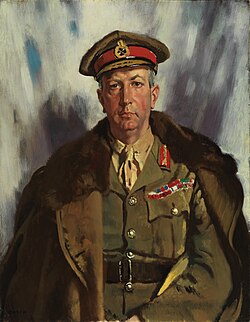
Canada: Let us remind you of what your nation was once capable of, and likely still is again. Time will tell. Courtesy of @grok UNHINGED👇
SIR ARTHUR CURRIE: The Ontario slide-rule psychopath who turned war into a goddamn spreadsheet and made the Kaiser cry uncle.
Listen up, you trench-foot tourists and armchair Haigs. While Europe’s aristocrats were using human meat to plug shell holes, some lanky insurance salesman from Napperton, Ontario rolled up with a protractor and a grudge against inefficiency so pure it could sterilize a field hospital. Six-foot-four of quiet Canadian fury. No Sandhurst polish. No inherited estate. Just a militia gunner who looked at the Western Front and said: “This is sloppy. Let me fix your murder math.”
Vimy Ridge: the ridge that laughed at French corpses for two years. Currie hands every platoon leader a map accurate to the latrine, rehearses the assault until the boys can do it blindfolded in a thunderstorm, then unleashes a creeping barrage so precise it’s basically a Roomba made of high explosives. Four days later the ridge is theirs. France needed therapy. Canada needed a birth certificate.
Hill 70: supposed to be a sideshow. Currie turned it into a German obituary — 9,000 Canadian casualties for 20,000 German ones. That’s not a battle, that’s a hostile takeover with extra steps.
Passchendaele: Haig wants it. Currie says, “Fine, but it’ll cost exactly 16,000 of my boys”. Mud eats them like clockwork. Sixteen thousand. He predicted it to the body. The man could forecast death better than the Farmer’s Almanac predicts frost.
Amiens: the day the German army discovered existential dread. Currie’s corps punches twenty-two kilometers through the Hindenburg Line in four days like it’s made of wet cardboard. Ludendorff calls it “the black day of the German Army” and probably wet his monocle.
The Hundred Days: wherever the Canadians go, the war ends faster — Arras, Cambrai, Canal du Nord. German prisoners start asking for Currie by name like he’s the Grim Reaper’s polite cousin. “Wenn Currie kommt, bricht die Linie.” When Currie shows up, your defense budget becomes a suggestion.
And the best part? He’s not screaming. He’s not posing for propaganda photos with a riding crop. He’s in the back, recalculating artillery tables while lesser generals are still figuring out which end of the horse goes forward.
Post-war? Becomes principal of McGill because apparently breaking the German army wasn’t challenging enough. Gets slandered for “wasting lives” at Mons, sues the bastard for libel, and wins with the same cold precision he used to win battles. Even his lawsuits had kill ratios.
Runner-ups:
Sir Richard Turner — the human participation ribbon. Managed the 2nd Division like success was contagious.Sir David Watson — followed Currie’s plans like IKEA instructions: mostly right, but slower.
Sir Henry Burstall — thought “supporting fire” meant “hope the shell lands somewhere in Europe”.
Currie carried their divisions like a Sherpa with a PhD in applied violence.
Verdict: Currie didn’t just win battles. He invented the modern battlefield while everyone else was still playing medieval siege with extra mustard gas. Montgomery called him “the best corps commander of the war”, and Monty would rather die than compliment anyone.
Share this if you’d let Currie balance your checkbook, plan your wedding, and end your existential crisis with a well-timed barrage. Canada’s greatest general was a nerd with a death wish for waste and a heart that bled maple syrup for every lost soul. Never forget.
The Bear Who Beat the Nazis | Wojtek
The Rest Is History
Published 29 Jun 2025The story of Wojtek — the bear who took on the Nazis — amidst the death and devastation of the Second World War, and more specifically Poland’s heroic resistance, is a flicker of redemption amidst an otherwise deeply depressing period of history. His is a life that exemplifies not only Poland’s struggle in microcosm, but also the global nature of the war overall. Discovered by a young boy as a tiny cub, his mother dead, he was sold to Polish officers travelling to Palestine in the hills outside Tehran. The soldiers nursed and fed the young bear with milk from a vodka bottle, treating him like one of their own. Later, he was even purported to keep them warm at night, drink beer, delight in wrestling and showers, and both march and salute. When the Polish forces were finally deployed to Europe, “Wojtek” as he had been named, went with them; a mascot and morale booster to the men. There he was given military rank, and actively participated in the Italian campaign, carrying ammunition and artillery crates. But with death and destruction on all sides, what would be his fate?
Join Tom and Dominic as they discuss Wojtek, one of history’s most extraordinary animals, and his life in the army — an emblem of hope and resilience in the face of the horrors of the Second World War.
(more…)
QotD: What are Castles?
Castles are occupied defensive structures which are built to defend a large swathe of territory by denying any potential enemy freedom of movement.
That purpose (defense) and that method (denying freedom of movement) are key to understanding how castles function, why they matter, and why they sprang up everywhere across Europe. So remember it: a castle is built in order to deny an enemy freedom of movement. We’ll get into what that actually means below.
But let’s stay on this definition for a moment, because, while all castles are fortifications, not all fortifications are castles.
I’ve often seen a further narrowing of the definition among medieval scholars, who often argue that to be a true castle, the structure must be from the European Middle Ages and be a fortified residence. This is why castles often have courtly rooms within them (like grand halls, bedrooms, chapels, etc.) beyond the storerooms, barracks, and defensive structures that their military purpose require.
I, of course, defer to the scholarly opinion in that definition — that a castle must be a medieval fortified residence. However, whether or not a castle’s owner continually lives there is actually less important for our purposes than the fact that a castle would be continually inhabited by someone loyal to its owner. A castle would not be left empty, whether or not anyone was sleeping in the master bedroom.
Eric Falden, “What Were Castles Actually For?”, Falden’s Forge, 2025-07-29.
November 3, 2025
“Vice-Admiral Angus Topshee more or less kiboshed the notion of building new submarines here in Canada”
Assuming that this government or the next one follows through with current plans, the Royal Canadian Navy (RCN) will replace the four current British-built Victoria-class submarines with up to a dozen new subs based on either the German Type-212CD design or the South Korean KSS-III. There is no reason at all that these new submarines need to be built in Canada, as there is no existing shipyard with any experience in this kind of vessel and no chance that creating a domestic submarine industry would be anything more than a perpetual money-sink. Our existing shipyards can, at a stretch (and at a significant cost increase), build surface ships from small motorboats up to frigates, destroyers, and larger supply ships, but there’s always a hefty premium for building the hulls here because once the order is complete, the shipyard can rarely use that skilled workforce and their specialized expertise to build more ships for other navies, so the yards shrink, the workers move on and a decade or so later, we have to start all over again from basically nothing.
Submarines are even more specialized than the ships the RCN is likely to buy, and there’s almost zero chance an allied navy or a neutral power would choose to have submarines built in Canada. The head of the RCN, Vice-Admiral Topshee clearly recognizes this:
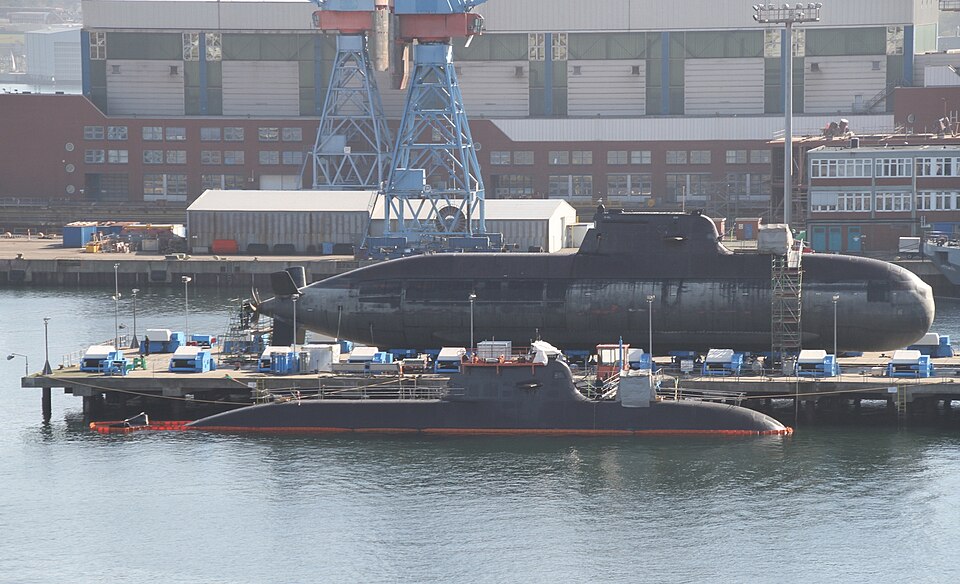
Type 212 submarines at the HDW shipyard in Kiel, Germany, 1 May 2013.
Photo by Bjoertvedt via Wikimedia Commons.
On Thursday in South Korea, Royal Canadian Navy Vice-Admiral Angus Topshee more or less kiboshed the notion of building new submarines here in Canada. He cited two major concerns: One, that we need these submarines “quickly.” And two, that our demand for submarines couldn’t possibly sustain an operation on its own.
“A submarine industry requires a consistent production line, and to be able to build enough submarines … to sustain a production line will be a real challenge,” Topshee said at the Hanwha Ocean Shipyard, where he, Defence Minister David McGuinty and Prime Minister Mark Carney tickled the periscope on one potential replacement for Canada’s aging-out Victoria-class subs.
Both Hanwha and ThyssenKrupp say it’s technically possible they could build the subs in Canada; it would just take a long time to lay down the infrastructure, and we’re in an uncommon hurry. We are assured plenty of Canadian steel and sweat will go into maintaining them.
And I suspect that won’t be very controversial, if at all. We’ve had American submarines, British submarines and German submarines in the past. Submarines are just something that are not made in Canada, like a lot of other things: jumbo jets, fighter planes, aircraft carriers, pineapples, cellular telephones, home electronics.
And we’re fine with it. Aside from the odd Avro Arrow obsessive, everyone seems to accept we’ll be buying new fighter jets off the peg from abroad — assuming we ever come to a final decision on which to buy, of course.
The question is, why isn’t that controversial? Or, why is it by contrast seen as controversial to buy surface vessels from abroad. Whoever’s fault it is, Canadian shipbuilding for the navy is a scrapyard of blown deadlines, outrageous cost overruns and sometimes outright failure. If we’re happy with South Korean or German subs, why not South Korean or German or Danish frigates and destroyers — or passenger ferries, for that matter?
Until this silly “elbows up” narrative took hold, no one seemed to care very much where our ferries were built: Marine Atlantic sails Chinese-built ferries between Cape Breton and Newfoundland with barely a whisper of controversy. But the entire political class is now essentially united against BC Ferries’ decision to buy Chinese ferries from the same shipyard. The fact that BC Ferries needs ferries almost seems like an afterthought.
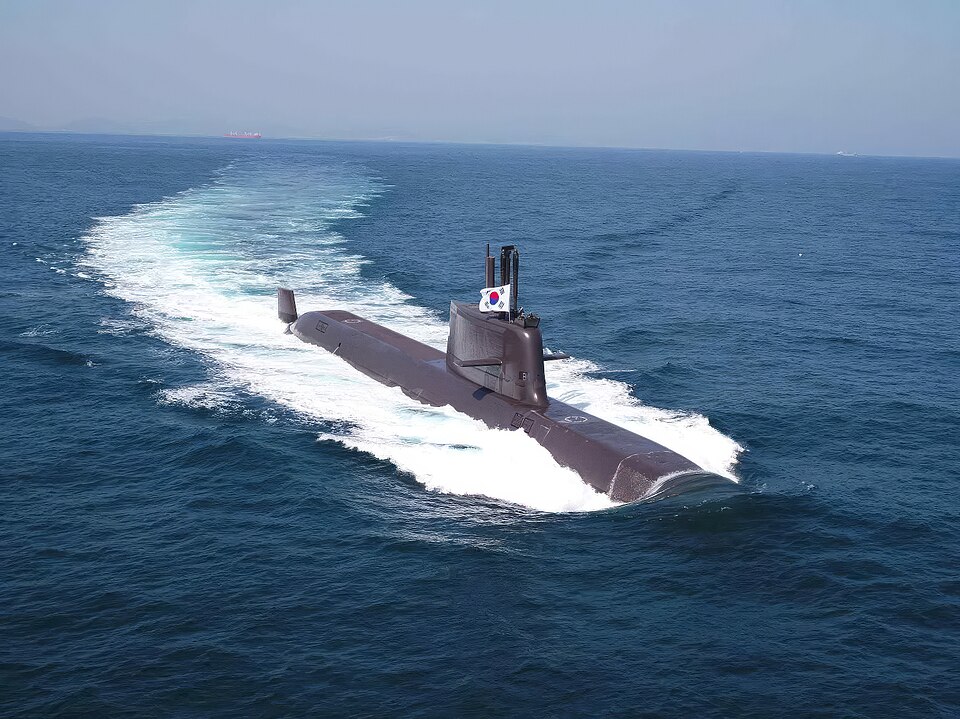
ROKS Shin Chae-ho, a KSS-III submarine at sea on 4 April, 2024.
Photo from the Defense Acquisition Program Administration (DAPA) via Wikimedia Commons.
Update: Noah posted a Q&A session with his readers that included some comparisons of the two contending designs for the Canadian Patrol Submarine Project (CPSP):
Q4. Have you had a chance to compare the AIP on the Ks III & 212CD yet with respect to Time underwater. There are different numbers floating around with new systems?
The truth is that no manufacturer is going to give you the accurate endurance. None. That is a closely guarded secret. I can say the KSS-III is higher, though out of respect for everyone and to not get myself in trouble I won’t say numbers. Both have endurance of several weeks and fit the HLMR.
I do plan to go into details about the systems themselves soon though, so I’m not leaving it alone!
Q5. The Type 212 has been described as an “ambush” submarine silently lying in wait for Russian subs. What advantages does the 212 bring to the Pacific?
Understand that both the KSS-III and Type 212CD are products of different needs and philosophies. Both focus on different strengths, in this case the 212CD puts almost all its efforts into being as stealthy and quiet as possible.
Its not just about ambush. Its about survival. The Type 212CD is designed to operate in the shallow, tight waters of the Baltic, and the littoral regions of the North Sea. That isn’t just about submarines but also being survivable against a dense field of Russian Maritime Patrol Aircraft and Anti-Submarine Helicopters.
That means a lot of effort was taken to ensure they’re as quiet and undetectable as possible. That’s where things like the Diamond-Shaped hull are supposed come into play, the use of non-magnetic stainless steel.
A lot of its value comes in what role you expect it to play. It is still an excellent asset in the littoral regions of the pacific, however it isn’t optimized for prowling around the open ocean, deep-diving nature of the Pacific. That is the domain of platforms like the KSS-III, at least in my opinion.
That doesn’t mean it can’t, but just as the KSS-III can also operate in the littoral regions of the Baltic doesn’t mean it’s optimized too. That’s the thing about CPSP. There’s a lot of requirements, a lot of different environments we expect these subs to operate in, and both [designs] focus on different priorities.
The advantages it has as a stealth-optimized platform don’t disappear. It could easily act in complement to other assets like U.S. and future Australian SSN [which] are more optimized for operations in the wider Pacific.
Strengths and weaknesses.
Update, the second: South Korea looks to be joining the nuclear-powered navy club with a new class of Korean subs to be built in Philadelphia using US navy nuclear propulsion technology.
South Korea has been wanting to get in the SSN club for a long time. Good on them for their persistence.
I’m not sure how this will work out. The Philadelphia Shipyard, even at its heyday, never built nuclear powered ships of any kind.
The South Koreans build a solid conventional submarine, the KSS-III that they offered to Canada recently, but nuclear submarines are at another level. Besides the infrastructure issues specific to nuclear shipbuilding at the shipyard that would need to be addressed, there is the fact that the U.S. nuclear workforce and hardware providers are already behind schedule with expected demands. While another yard is great, whoever is going to successfully solve those two structural issues needs superhuman abilities and one heck of a funding line.
Swedish Kulspruta m/36 Double Browning MGs
Forgotten Weapons
Published 18 Jun 2025Despite being a neutral power during World War Two, Sweden had a variety of very interesting small arms — like their dual-mount Browning m/36 machine guns. These were originally adopted because the Swedes wanted a heavier medium MG cartridge and didn’t think their delayed-blowback Schwarzlose guns could handle it. The cartridge was 8x63mm, pushing a 219 grain projectile at 2500 fps. The m/36 Browning was a water cooled gun, an improvement on the older M1917 design. It not only handled the powerful new round, but it could also be easily swapped to the older 6.5x55mm round to use stocks of existing ammunition (and it would be later adapted to 7.62mm NATO as well). Most of the guns were built as matching pairs for antiaircraft use, with mirrors left and right side feeds and in effective recoil-absorbing cradle mounts.
Special thanks to Bear Arms in Scottsdale, AZ for providing access to this rare pair of guns for today’s video!
(more…)
QotD: Was Alexander “the Great”?
And that’s just not a reading of Alexander which can survive reading all of any of our key sources on him. The moment you read more than just the genteel anecdotes (“for he, too, is Alexander”, – though note that Alexander’s gentle words do not keep him from trying to use Darius’ family to extort Darius out of his kingdom, Arr. Anab. 2.14.4-9), I think one must concede that Alexander was quite ruthless, a man of immense violence. I mean, and I want to stress this, he killed one of his closest companions with a spear in a drunken rage. I do not think there is a collection of polite-but-witty one-liners to make up for that. But Cleitus was hardly the only person Alexander killed.
Alexander had Bessus, the assassin of Darius, mutilated by having his nose and ears cut off before being executed (Arr. Anab. 4.7.3). He has 2,000 survivors of the sack of Tyre crucified on the beach (Q. Curtius Rufus 4.4.14-17). Because he resisted bravely and wouldn’t kneel, Alexander had the garrison commander at Gaza dragged to death by having his ankles pierced and tied to a chariot (Q. Curtius Rufus 4.4.29). Early in his reign, Alexander sacks Thebes and butchers the populace, as Arrian notes, “sparing neither women nor children” (Arr. Anab. 1.8.8; Arrian tries, somewhat lamely, to distance Alexander from this saying it was is Boeotian allies who did most – but not all – of the killing). Of the Greek mercenaries enrolled in the Persian army at Granicus – a common thing for Greek soldiers to do in this period – Arrian (Anab. 1.16.6) reports that he enslaved them, despite, as Plutarch notes, the Greeks holding in good order and attempting to surrender under terms before they were engaged (Plut. Alex. 16.13). Not every opponent of Alexander gets Porus’ reward for bravery and pride.
Meanwhile, Alexander’s interactions, as noted above, with the civilian populace were self-serving and generally imperious. That’s not unusual for ancient armies, but I should note that Alexander’s conduct towards civilians was also no better than the (dismally bad) norm for ancient armies: he foraged, looted what he wanted, occasionally burned things (including significant parts of Persepolis, the Persian capital), seized land and laborers for his colonies and so on. Alexander’s operations in Central Asia seem to have been particularly brutal: when the populace fled to fortified settlements, Alexander’s orders were to storm each one in turn, killing all of the men and enslaving all of the women and children (Arr. Anab. 4.2.4, note also 4.6.5, doing the same in Marakanda).
And this, at least, brings back to our original question: Was Alexander “Great”? In a sense, I think the expectation in this question is to deliver a judgment on Alexander, but I think its actual function is to deliver a judgment on us.
The Alexander we have in our sources – rather than in the imperialistic hagiographies of him that still condition so much popular memory – seems to have been a witty, charismatic, but arrogant, paranoid and violent fellow. As I joke to my students, “Alexander seems to have enjoyed two things in life, killing and drinking and he was only good at the former”. He could be gentle and witty, but it seems, especially towards the end of his reign, was more often proud, imperious and murderous.
He was at best an indifferent administrator and because he was so indifferent to that task, most of his rule amounted to questions of the men he chose to do the job for him, and those choices were generally quite poor. He made no meaningful preparations for the survival of his empire, his family or his friends upon his death; Arrian (Anab. 7.26.3) reports famously that his last words were, when pushed by his companions to name a successor, τῷ κρατίστῳ (toi kratistoi), “to the strongest”. Translation: kill each other for it. And they did, killing every member of Alexander’s family in the process.1
He was not a great judge of men – for every Perdiccas, there is a Harpalus – or a great military innovator. He largely used the men and the army that his father gave him, and where he deviated from the men, the replacements were generally inferior. That said, he was an astounding commander on campaign and on the battlefield, managing the complex logistics of a massive operation excellently (until his pride got the better of him in Gedrosia) and managing his battles with unnatural calm, skill and luck. He was also, fairly clearly, a good fighter in the personal sense. Alexander was a poor ruler and a lack-luster king, but he was extremely good at destroying, killing and enslaving things.
To the Romans – who first conferred the title “the Great” on Alexander, so far as we know (he is Alexander Magnus first in Plautus’ Mostellaria 775 (written likely in the late 200s)) – that was enough for greatness. And of course it was enough for his Hellenistic successors, who patterned themselves off of Alexander; Antiochus III even takes the title megas (“the Great”) in imitation of Alexander after he reconquers the Persian heartland. Evidently by that point, if not earlier, the usage had slipped into Greek (it may well have started in Greek, of course; Plautus’ comedies are adapted from Greek originals). It should be little shock that, for the Romans, this was enough: this was a culture that reserved their highest honor, the triumph, for military glory alone. And it was clearly enough for Droysen and Tarn too: to be good at killing things and then hamfistedly attempt – and mostly fail – to civilize them, after all, was what made the German and British Empires great. It had to be enough, or else what were all of those Prussian officers and good Scottish gentlemen doing out there with all of that violence? To question Alexander might mean questioning the very system those men served.
What is greatness? Is it pure historical impact, absent questions of morality, or intent? If that is the case, Alexander was Great, because he killed an exceptionally large number of people and in so doing set off a range of historical processes he hadn’t intended (the one he did intend, fusing the Macedonian and Persian ruling class, didn’t really happen) which set off an economic boom and created the vibrant Hellenistic cultural world, outcomes that Alexander did not intend at all. This is a classic “great, but not good” formulation: we might as well talk of “Chinggis the Great”, “Napoleon the Great” or (more provocatively) “Hitler the Great” for their tremendous historical impact. Yet this is a definition that can be sustained, but which robs “greatness” of its value in emulation.
One cannot help but suspect in many of these circumstances, “greatness” is about killing larger numbers of people, so long as they are strange people who live over yonder and dress and pray differently than we here do. It is ironic that Tarn credited Alexander with imagining the unity of mankind, given that Alexander was in the process of butchering however many non-Macedonians was required to set up a Macedonian ethnic ruling class over all other peoples. One suspects, for Droysen and Tarn, it was “greatness”, to be frank, because they understood the foot inside the boot Alexander was planting on the necks of the world, was European and white and so were they. In that vision, greatness is “our man” as opposed to “their man”. But that is such a small-minded, petty form of greatness, “our killer and not your killer”.
Does greatness require something more? The creation of something enduring, perhaps? Alexander largely fails this test, for it is not Alexander but the men who came after him, who exterminated his royal line and built their kingdoms on the ashes of his, who constructed something enduring. Perhaps greatness requires making the world better? Or some kind of greatness of character? For these, I think, it is hard to make Alexander fit, unless one is willing, like Tarn was, to bend and break the narrative to force it. Had Alexander, in fact, been Diogenes (Plut. Alex. 14.1-5), rather than Alexander, but with his character – witty, charismatic, but imperious, arrogant and quick to violence – I do not think we would admire him. As for making the world better, Alexander mostly served to destroy a state he does not seem to have had the curiosity or cultural competence to understand, as Reames puts, it, “not King of Asia, but a Macedonian conqueror in a long, white-striped purple robe” (op. cit. 212). He surely did not understand their religions.2
In a sense, Alexander, I think, serves as a mirror for us. We question the greatness of Alexander and what is revealed are the traits, ideals, and actions we value. Alexander’s oversized personality is as captivating and charismatic now as it was then, and his record as a killer and conqueror is nearly unparalleled. But what is striking about Alexander is that beyond that charisma and military skill there is almost nothing else, which is what makes the test so discerning.
And so I think we continue to wrestle with the legacy and value of Alexander III of Macedon.
Bret Devereaux, “Collections: On the Reign of Alexander III of Macedon, the Great? Part II”, A Collection of Unmitigated Pedantry, 2024-05-24.
- I thus find it funny that every few years another “inspiring” anecdote about Alexander’s wise last words filters around the internet that Alexander’s actual reported last words were so grim and heartless.
- On this, see F. Naiden, Soldier, Priest and God (2018).
November 2, 2025
North Africa Ep. 6: Do You Smell What The Fox Is Cooking?
World War Two
Published 1 Nov 2025Rommel pushes his HQ toward the front, seizes the oasis at Marada, and sends a long-range Italo-German column deep toward Murzuk to harden his forces for true desert warfare. A brutal Ghibli sandstorm shows how the Sahara itself is a third enemy, choking engines, wrecking vehicles, and nearly killing Rommel in the air. At the same time, ULTRA intelligence finally reaches Wavell, Malta’s bombers are forced off the island under relentless Luftwaffe pressure, and Rommel is already ordering preparations to hit El Agheila despite supposedly leaving for Berlin.
(more…)
Canada finally getting serious about the military? Ignore the words and wait for concrete actions
 The Canadian military used to be one of the best in the world. We “punched above our weight” as the hoary old cliché had it. But it was true. Then came Lester Pearson and the notion of peacekeeping, which is related to but not the same thing as having a military prepared to fight. Then came Pierre Trudeau and his loyal acolyte Paul Hellyer and the notion that merging the Canadian army, the Royal Canadian Navy (RCN), and the Royal Canadian Air Force (RCAF) into a single organization — the Canadian Armed Forces (CAF) — would magically reduce our military spending while maintaining our military power. It may have saved some money on paper, but its real impact was allowing the federal government to cut, cut, cut until the CAF was no longer capable of fielding significant numbers of combat troops, aircraft, or naval vessels and we began quietly withdrawing from our NATO and UN commitments (while still propagandizing about being a “soft power” superpower and persuading Canadians that we were still world leaders in peacekeeping).
Later Canadian governments have made noises about correcting the mistakes of the past half century and getting proper equipment — and enough of it to matter — and resurrecting the fighting capabilities (and numbers) of the CAF … even bringing back the proper names of the RCN and RCAF … but the promises were rarely implemented and even more rarely maintained beyond the life of a given government.
Our allies have been urging us to take the military more seriously for so long that it seems inevitable that any new expansion plans will fade into the mist just as quickly as all the previous fever dreams. Even when the government actually provides new funding, the bureaucracy is so incapable that time expires before they actually spend some or even all of it. All of which is why I’m highly skeptical that ongoing noises about increased military spending will actually result in anything more than a higher head-count in the civil service and lots (and lots, and lots) of re-announcing the spending plans:
In summer 2023, NATO held its largest-ever air exercise in Germany. Canada did not take part because its fleet was up on bricks.
Understaffed by around 10,000 regular soldiers, thanks to a 12 per cent attrition rate, the CAF was rocked by sexual misconduct scandals and chastised by a government more focused on culture change than war fighting.
Critics like Mark Norman, a former vice-chief of the defence staff, said Canada was increasingly seen as irrelevant in Washington.
But Norman said he is encouraged by the Carney government’s moves.
“Let’s be clear, the Forces are still in a decrepit state. We haven’t resolved the fighter jet or recruitment problems, or produced a defence industrial strategy. But I acknowledge that the prime minister has done a lot to try to refocus the government and, more broadly, Canadians,” he said.
A major problem for all governments has been actually spending money approved by Parliament. This week’s PBO report said that between 2017/18 and 2023/24, actual capital spending fell short of planned expenditure by $18.5 billion. Every year, the Department of National Defence failed to spend an average of $2.6 billion of its procurement budget.
“The scale of the planned increase raises questions about the government’s capacity to manage a higher volume of procurement activity and the domestic defence industry’s ability to support it,” the report said.
Norman suggested the new Defence Investment Agency, headed by former banker Doug Guzman, is a positive development. “The public service is not designed to produce operational outcomes, so the (appointment of an outsider) is encouraging,” he said.
According to David Pugliese, the Canadian Army is looking to vastly expand the existing army reserves:
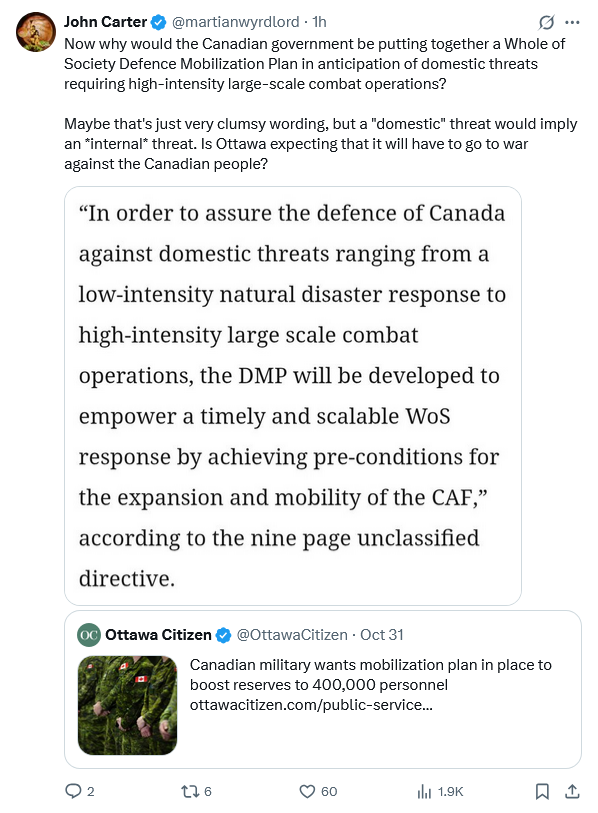
The Canadian military has set in motion an initiative to increase the number of its part-time soldiers from the current 28,000 to 400,000 as part of an overall mobilization plan, according to a directive approved by senior leaders.
The directive, signed by Chief of the Defence Staff Gen. Jennie Carignan and defence deputy minister Stefanie Beck on May 30, 2025, outlines the need to increase the current reserve force from 23,561 to 100,000 and supplementary and other reserves from the current 4,384 to 300,000.
Beck and Carignan approved the creation of a “tiger team” which will work on setting the stage for a Defence Mobilization Plan or DMP to accomplish such a goal. That team will examine what changes are needed to government legislation to allow for such a massive influx of Canadians into the military.
Beck and Carignan pointed out that the plan would require a Whole of Society or WoS effort, meaning that all Canadians would have to contribute to the initiative.
“In order to assure the defence of Canada against domestic threats ranging from a low-intensity natural disaster response to high-intensity large scale combat operations, the DMP will be developed to empower a timely and scalable WoS response by achieving pre-conditions for the expansion and mobility of the CAF,” according to the nine page unclassified directive.
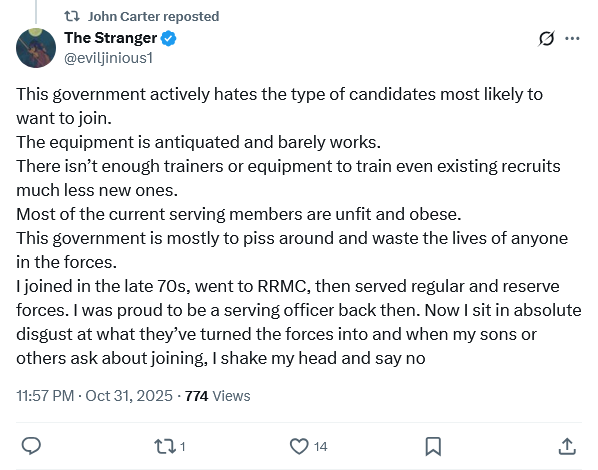
The initiative has drawn some critical responses on the social media site formerly known as Twitter:
November 1, 2025
The Spanish-American War 1898
The Great War
Published 13 Jun 2025In the last years of the 19th century, tension was building in the Caribbean. American newspapers were filled with grisly reports of Spanish atrocities against the people of Cuba struggling for independence. US businessmen and expansionist politicians also saw practical opportunities in Spain’s struggles: great power status and an empire for the United States. It’s the Spanish-American War.
(more…)
October 30, 2025
Cowardice & Courage – Fear, Flying & Combat Stress
HardThrasher
Published 24 Oct 2025Just getting into a bomber took guts. To do it twice required balls of steel. What happened when men wouldn’t or couldn’t continue to fly? We’ll look at the dangers they faced, what the RAF and the USAAF did to tackle the problem and talk about the infamous “LMF” cases in the RAF
00:00 – Come with Me
03:51 – Intro
04:16 – Shell Shock
06:00 – Inter War vs Early War
09:17 – Night Terrors
10:31 – Death in the Daylight
11:00 – Common Fears
13:22 – Raw Numbers
14:55 – The Mew Who Flew
16:35 – In The Hands of the CO
18:53 – LMF
21:01 – Combat Stress in the USAAF
22:03 – Attempts at treatment
24:47 – Wrap up and Closing Message
(more…)
Arab-Israeli War, 1973 (Yom Kippur War)
Real Time History
Published 6 Jun 2025On October 6, 1973, Israelis celebrating the holiday of Yom Kippur are shocked by news of a mass two front attack in the Sinai and Golan Heights. Egypt and Syria, two nations still reeling from their humiliating defeat by Israel in 1967, smash through Israeli defenses.
(more…)


