The same people who last week were screeching about the government having concentration camps now want me to give my AR15s to that same government.
The same people who last month were hyperventilating about the government slaughtering black people now expect me to surrender my guns to that same government.
The same people who last year were setting stuff on fire and yipping about the government rounding up the gays and Muslims for liquidation now think it’s a good idea for me to just hand over my rifles to that same government.
You chuckleheads need to make up your damned minds.
Lawdog, “You know what I find …”, The Lawdog Files, 2019-08-07.
September 19, 2023
QotD: Logical consistency isn’t their jam
Comments Off on QotD: Logical consistency isn’t their jam
September 10, 2023
QotD: The hill people and the valley people
This is not their story. Instead it’s the story of the people who live in the hills behind that village. Without knowing anything at all about the place that picture depicts, you can probably tell me a lot about the people in those hills. Hill people are hill people, the world over. What are the odds that they’re clannish? Xenophobic? Backwards! Unusual family structures. Economically immiserated (probably due to their own paranoia and indolence). Deviant in their religious, commercial, and sexual practices. Illiterate, or at best poorly-read. They also probably talk funny. Basically they’re barbarians, but not the impressive kind who ride out of the steppe to massacre and enslave the soft city-dwellers. No, something more like living fossils — our ancestors were once like that, but then they got with the program. Well if they could do it, why don’t those hill dwellers move down here too, like normal people?2 They’re up to no good up there.
That’s certainly been the traditional view from the valleys, and there’s some truth to it, but there’s one important detail that we valley-dwellers get wrong. Far from being aboriginal holdovers of some previous phase of humanity, it’s relatively easy to determine from genetic, linguistic, and archaeological evidence that the hill people are largely descended from … the valley people!3 But … that would mean that there are people who look around at our beautiful civilization and reject its fruits — you know, art, technology, fusion cuisine, and uh … taxation, conscription, epidemic disease, corvée labour … How dare they!
You would never know it from reading the reports of the valley-bureaucrats, but the great agricultural civilizations of classical antiquity were in a near-constant state of panic over people wandering away from their farms and becoming barbarians.4 There are estimates that over the course of the empire something like twenty-five percent of the inhabitants of Roman border provinces quietly slipped across the limes for the proud life of the savage. In Ancient China, the movement was more cyclical — in times of war, or epidemic, or famine, entire villages might give up rice agriculture and vanish into the hills. Then, when the situation had stabilized, the human tide would reverse, and the hills would disgorge barbarians eager to be Sinicized (or really re-Sinicized, as their parents and grandparents had been). In both these cases and more, the boundary between “civilized” and “savage” was a great deal more porous, and the flow a great deal more bi-directional than we might realize. Like a single substance in two phases, now boiling, now condensing, changing back and forth in response to changes in the temperature.
So why then is it that hill people5 the world over have so much in common? Scott argues pretty convincingly that something like convergent cultural evolution for ungovernability is at work — that is, the qualities we stereotypically associate with backwards and barbarous peoples are precisely the traits that make one difficult to administer and tax. Some examples of this are very obvious to see — for instance physical dispersal in difficult terrain makes it harder to be surveilled, measured, or conscripted. Scott also talks a lot about the crops that hill people like to grow, and how the world over they tend to be either crops that are amenable to swiddening and don’t require irrigation, or things like tubers that mature underground and can be harvested at irregular times. Both patterns make it easy to lie about how much food you’ve planted and where, hence difficult for others to tax or control you.
What about illiteracy? Scott finds that many hill people around the world have oral legends about how they once had writing, but no longer do. Of course this is exactly what we would expect if, contrary to the usual story, the hill people are not the ancestors of the valley people, but their descendants. Yet the question remains, why give up writing? Scott posits several benefits of illiteracy: one is just that the inability to write removes any temptation to keep written records of anything, and written records are the kind of thing that can be used against you by a tax collector or an army recruiter.
But more fundamentally, a reliance on oral history and genealogy and legend is powerful precisely because these things are mutable and can be changed according to political convenience. Anybody who’s read ancient Chinese accounts of the steppe peoples or Roman discussions of Germanic barbarians has probably recoiled from the confusing profusion of tribes, peoples, and nations; the same ethnonyms popping in and out of existence over a vast area, or referring to a band of a few hundred one year and a nation of millions a decade later. Scott argues that the reason we see this is that the very notion of stable ethnic identity is a fundamentally “valley” conceit. Out in the hills or on the far wild plains, people exist in more of a quantum superposition of identities, and the nonsensical patterns you see in the histories come from imperial ethnographers feverishly making classical measurements in a double-slit experiment and trying to jam the results into a sensible form.
John Psmith, “REVIEW: The Art of Not Being Governed by James C. Scott”, Mr. and Mrs. Psmith’s Bookshelf, 2023-01-16.
1. Scott has yet another book about how this important detail of the stock story is totally false. In Scott’s telling, early agriculture produced fewer calories per hour of work than hunting and foraging. The entire increase in social complexity associated with primitive agriculture came not from a food surplus, but from the fact that it was easier to measure how much food everybody was producing and confiscate a portion of it.
2. Maybe then one of their descendants can go to Yale Law School and write a book about it.
3. Next time you’re driving through Montana, try to count how many people are transplants from New York or California.
4. Once you know this fact, you can go back and read those classical texts esoterically, and nervous panic over people defecting from civilization is practically all you will see.
5. I’ve used “hill people” throughout this review as a synecdoche for groups that have rejected a life-pattern involving settled agriculture and tax-paying, but as Scott points out there are many kind of terrain unsuitable or difficult for state administration. Marshes have historically been another magnet for those rejecting polite society, as have deserts and open plains.
Comments Off on QotD: The hill people and the valley people
August 29, 2023
The Souls of Black Folk by W.E.B. Du Bois “runs so fantastically counter to the entire ideology of ‘decolonise'”
In Spiked, Brendan O’Neill finds himself surprised at the inclusion of a very unusual book on a list demanded by those pushing for “decolonization” of university curricula:
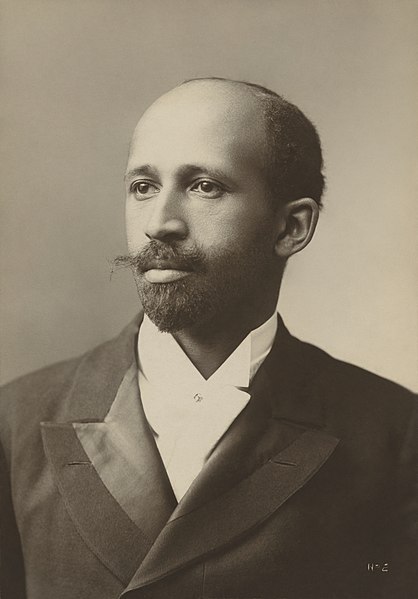
W.E.B. Du Bois by James E. Purdy, 1907, gelatin silver print, from the National Portrait Gallery which has explicitly released this digital image under the CC0 license.
Wikimedia Commons.
“Decolonise the curriculum” is a movement that wants university courses to focus less on dead white European males and more on writers of colour. Its argument is that black students need texts that speak directly to them. They need books by authors who look like them. They need books about experiences and ideas they can more readily relate to than they can the stuff written about in “high white culture”. Black students must be able to recognise themselves in what they study, we’re told, or else they’ll feel cheated and demeaned.
I was surprised to find that one of the leading decolonise movements, at the University of Edinburgh, was arguing for WEB Du Bois’ 1903 book, The Souls of Black Folk, to be included on the English curriculum. The activists said it was unreasonable to expect black students to engage with so many white authors. They also need to engage with people like Du Bois, in whose work they might “recognise themselves”. I was surprised, not because I think The Souls of Black Folk shouldn’t be on more university courses – absolutely it should. No, it’s because The Souls of Black Folk runs so fantastically counter to the entire ideology of “decolonise”. It made me wonder if these activists have even read it. Du Bois’ book contains some of the finest arguments you will ever read against the idea that high culture is a white thing that others cannot connect with.
One of my favourite passages in the book, from the chapter on what kind of education black men are fit for, touches on this very question. Here Du Bois makes his critique of those in his own time who were arguing that blacks only require basic education and industrial training. He describes his own experience of higher learning, writing:
I sit with Shakespeare and he winces not. Across the colour line I move arm in arm with Balzac and Dumas … From out the caves of evening that swing between the strong-limbed earth and the tracery of the stars, I summon Aristotle and Aurelius and they come all graciously with no scorn or condescension.
That passage, Du Bois’ moving belief that Shakespeare does not wince at him, captures a central thread of his writing: universalism. Du Bois agitates against accommodating to segregation or low expectations, and argues for the rights of “black folk” to assimilate into the spoils of civilisation; to become, as he puts it, “co-workers in the kingdom of culture”. To those in the late 1800s and early 1900s who argued that black people needed a targeted form of culture, one specific to their needs and capacities, Du Bois said: “We daily hear that an education that encourages aspiration, that sets the loftiest of ideals and seeks as an end culture and character rather than breadwinning, is the privilege of white men, and the danger and delusion of black men.”
Du Bois insisted that it is only through assimilation into the “kingdom of culture” that self-knowledge and self-improvement can truly occur. As he wrote: “Wed with Truth, I dwell above the veil.” The veil he’s referring to is the veil of colour, the one that separated blacks from whites in post-slavery America. For Du Bois, that veil was best lifted via assimilation into the American republic’s political universe and its realm of culture.
Du Bois’ critique of the notion that high culture was for white men, and would prove mystifying to black men, has sadly been superseded by an “anti-racism” with an entirely different outlook. Now, the supposedly radical stance is to believe that high culture is disorientating for black people, and possibly even damaging to their self-esteem, and therefore they require something more targeted. In short, they need release from the kingdom of culture. That, in essence, is what the decolonise movement desires: the “liberation” of non-white peoples from the cultural gains of Western civilisation. Behold the crisis of universalist belief.
Comments Off on The Souls of Black Folk by W.E.B. Du Bois “runs so fantastically counter to the entire ideology of ‘decolonise'”
QotD: Private versus public decision-making
In private-property markets each individual has the power to say “no”, and when each individual says “yes”, that individual spends only his or her own money. Also, in private-property markets each individual’s choices are significant: if Smith chooses to buy a new car, Smith gets the new car that he chooses; if Smith chooses not to buy a new car, Smith gets no new car.
These basic features of private-property markets, along with a handful of other features that are embodied in the common law, ensure not that markets operate “perfectly”, but that the market process is always in action to generally improve the operation and outcomes of markets.
The political marketplace is nearly the exact opposite. In the political marketplace, Jones spends Smith’s money, and Smith has no real power to say no. Nor [are] Smith’s choices ever genuinely significant (unless, of course, Smith becomes one of the relatively small percentage of people who succeed in grabbing hold of political power).
If a malevolent all-powerful being were intent on designing a market that is destined to abuse the vast bulk of people, that devil could do no better than to impose on his victims majoritarian politics largely unconstrained by constitutional rules. This devil – being, of course, ill-mannered, and evilly-intentioned – would seek to destroy private-property markets.
Don Boudreaux, “Bonus Quotation of the Day…”, Café Hayek, 2019-07-31.
Comments Off on QotD: Private versus public decision-making
August 18, 2023
QotD: Everyone’s a woke cop
I read about the PWR BTTM accusations. They’re disturbing. I take them seriously. But these guys have had their careers erased overnight, and the idea that we have any responsibility to give them the chance to defend themselves is treated like you took part in their alleged crimes. You simply cannot say, in polite society, “basic fairness requires us to avoid a rush to judgment and to give people the right to respond to accusations”. To do so gets you lumped in with the criminals. Like a friend of mine said, “the only acceptable reaction to an accusation is enthusiastic and unqualified acceptance”. I don’t know how people can simultaneously talk about prison abolition and restoring the idea of forgiveness to literal criminal justice and at the same time turn the entire social world into a kangaroo court system. Like I wrote once, we can’t simultaneously be a movement based on rehabilitation and restorative justice AND a viciously judgmental moral aristocracy. You know who thinks everybody’s guilty until proven innocent? Cops. You know who thinks people don’t deserve the right to defend themselves? Cops. You know who says those who defend basic fairness and due process are as bad as criminals themselves? Cops.
Freddie deBoer, “Planet of Cops”, reposted by Jesse Singal, originally published 2017-05-17.
Comments Off on QotD: Everyone’s a woke cop
August 9, 2023
QotD: The “Merry Pranksters”
To make ends meet, he got a job as an orderly at the local psych hospital. He also ran across some nice people called “MKULTRA” who offered him extra money to test chemicals for them. As time went by, he found himself more and more disillusioned with the hospital job, finding his employers clueless and abusive. But the MKULTRA job was going great! In particular, one of the chemicals, “LSD”, really helped get his creative juices flowing. He leveraged all of this into his Great American Novel, One Flew Over The Cuckoo’s Nest, and became rich and famous overnight.
He got his hands on some extra LSD and started distributing it among his social scene – a mix of writers, Stanford graduate students, and aimless upper-class twenty-somethings. They all agreed: something interesting was going on here. Word spread. 1960 San Francisco was already heavily enriched for creative people who would go on to shape intellectual history; Kesey’s friend group attracted the creme of this creme. Allan Ginsberg, Hunter S. Thompson, and Wavy Gravy passed through; so did Neil Cassady (“Dean Moriarty”) Jack Keroauc’s muse from On The Road. Kesey hired a local kid and his garage band to play music at his acid parties; thus began the career of Jerry Garcia and the Grateful Dead.
Sometime in the early 1960s, too slow to notice right away, they transitioned from “social circle” to “cult”. Kesey bought a compound in the redwood forests of the Santa Cruz Mountains, an hour’s drive from SF. Beatniks, proto-hippies, and other seekers – especially really attractive women – found their way there and didn’t leave. Kesey and his band, now calling themselves “the Merry Pranksters”, accepted all comers. They passed the days making psychedelic art (realistically: spraypainting redwood trees Day-Glo yellow), and the nights taking LSD in massive group therapy sessions that melted away psychic trauma and the chains of society and revealed the true selves buried beneath (realistically: sitting around in a circle while people said how they felt about each other).
What were Kesey’s teachings? Wrong question – what are anyone’s teachings? What were Jesus’ teachings? If you really want, you can look in the Bible and find some of them, but they’re not important. Any religion’s teachings, enumerated bloodlessly, sound like a laundry list of how many gods there are and what prayers to say. The Merry Pranksters were about Kesey, just like the Apostles were about Jesus. Something about him attracted them, drew them in, passed into them like electricity. When he spoke, you might or might not remember his words, but you remembered that it was important, that Something had passed from him to you, that your life had meaning now. Would you expect a group of several dozen drug-addled intellectuals in a compound in a redwood forest to have some kind of divisions or uncertainty? They didn’t. Whenever something threatened to come up, Kesey would say — the exact right thing — and then everyone would realize they had been wrong to cause trouble.
Scott Alexander, “Book Review: The Electric Kool-Aid Acid Test”, Slate Star Codex, 2019-07-23.
Comments Off on QotD: The “Merry Pranksters”
July 10, 2023
QotD: Liberal and conservative views on innovation
A debate on the merits of change between these two psychological profiles helps guarantee that change benefits society instead of ruining it. Conservatives act as gatekeepers enforcing quality control on the ideas of progressives, ultimately letting in the good ones (like democracy) and keeping out the bad ones (like Marxism). Conservatives have often been wrong in their opposition to good ideas, but the need to win over a critical mass of them ensures that only the best-supported changes are implemented. Curiously, when the change in question is technological rather than social, this debate process is neutered. Instead, we get “inevitablism” — the insistence that opposition to technological change is illegitimate because it will happen regardless of what we want, as if we were captives of history instead of its shapers.
This attitude is all the more bizarre because it hasn’t always been true. When nuclear technology threatened Armageddon, we did what was necessary to limit it to the best of our ability. It may be that AI or automation causes social Armageddon. No one really knows — but if the pessimists are right, will we still have it in us to respond accordingly? It seems like the command of the optimists to lay back and “trust our history” has the upper hand.
Conservative critics of change have often been comically wrong — just like optimists. That’s ultimately not so interesting, because humans can’t predict the future. More interesting have been the times when the predictions of the critics actually came true. The Luddites were skilled artisans who feared that industrial technology would destroy their way of life and replace their high-status craft with factory drudgery. They were right. Twentieth century moralists feared that the automobile would facilitate dating and casual sex. They were right. They erred not in their predictions, but in their belief that the predicted effects were incompatible with a good society. That requires us to have a debate on the merits — about the meaning of the good life.
Nicholas Phillips, “The Fallacy of Techno-Optimism”, Quillette, 2019-06-06.
Comments Off on QotD: Liberal and conservative views on innovation
July 4, 2023
QotD: The (arguments over the) founding of America
No, in its ambitious and often excellent 1619 Project, the New York Times wants to do more than that. So it insists that the very ideals were false from the get-go — and tells us this before anything else. Even though those ideals eventually led to the emancipation of slaves and the slow, uneven and incomplete attempt to realize racial equality over the succeeding centuries, they were still “false when they were written”. America was not founded in defense of liberty and equality against monarchy, while hypocritically ignoring the massive question of slavery. It was founded in defense of slavery and white supremacy, which was masked by highfalutin’ rhetoric about universal freedom. That’s the subtext of the entire project, and often, also, the actual text.
Hence the replacing of 1776 (or even 1620 when the pilgrims first showed up) with 1619 as the “true” founding. “True” is a strong word. 1776, the authors imply, is a smoke-screen to distract you from the overwhelming reality of white supremacy as America’s “true” identity. “We may never have revolted against Britain if the founders had not understood that slavery empowered them to do so; nor if they had not believed that independence was required in order to ensure that slavery would continue. It is not incidental that 10 of this nation’s first 12 presidents were enslavers, and some might argue that this nation was founded not as a democracy but as a slavocracy,” Hannah-Jones writes. That’s a nice little displacement there: “some might argue”. In fact, Nikole Hannah-Jones is arguing it, almost every essay in the project assumes it — and the New York Times is emphatically and institutionally endorsing it.
Hence the insistence that everything about America today is related to that same slavocracy — biased medicine, brutal economics, confounding traffic, destructive financial crises, the 2016 election, and even our expanding waistlines! Am I exaggerating? The NYT editorializes: “No aspect of the country that would be formed here has been untouched by the years of slavery that followed … it is finally time to tell our story truthfully”. Finally! All previous accounts of American history have essentially been white lies, the NYT tells us, literally and figuratively. All that rhetoric about liberty, progress, prosperity, toleration was a distraction in order to perpetrate those lies, and make white people feel better about themselves.
Andrew Sullivan, “The New York Times Has Abandoned Liberalism for Activism”, New York, 2019-09-13.
Comments Off on QotD: The (arguments over the) founding of America
May 30, 2023
Ban all the words!
Chris Bray reflects on the historical context of literature bans:
Before the Civil War, Southern states banned abolitionist literature. That ban meant that postmasters (illegally!) searched the mail, seized anti-slavery tracts, and burned them. And it meant that people caught with abolitionist pamphlets faced the likelihood of arrest. The District of Columbia considered a ban, then didn’t pass the thing, but Reuben Crandall was still arrested and tried for seditious libel in 1833 when he was caught with abolitionist literature. He was acquitted, then died of illness from a brutal pre-trial detention. Seizure, destruction, arrest: abolitionist literature was banned.
The Soviet writer Yevgeny Zamyatin wrote a 1924 novel, We, depicting a world in which an all-powerful government minutely controlled every aspect of life for an enervated population, finding as an endpoint for their ideological project a surgery that destroyed the centers of the brain that allowed ordinary people to have will and imagination. The Soviet government banned Zamyatin’s work: They seized and destroyed all known copies, told editors and publishers the author was no longer to allowed to publish, and sent Zamyatin into exile, where he died without ever seeing his own country again. Seizure, destruction, exile: Yevgeny Zamyatin’s work was banned.
During World War I, the federal government banned literature that discouraged military service, including tracts that criticized conscription. Subsequently, “socialists Charles Schenck and Elizabeth Baer distributed leaflets declaring that the draft violated the Thirteenth Amendment prohibition against involuntary servitude”. They were arrested, convicted, and imprisoned. The Supreme Court upheld the conviction. Anti-conscription literature was banned: It was seized and destroyed, and people caught distributing it were sent to prison.
In 2023, the tedious midwit poet Amanda Gorman posted on Twitter that she was “gutted” — the standard emotion for tedious midwits — to discover that one of her poems had been “banned” by a school in Florida. The news media raced to proclaim that Florida schools are banning books, the leading edge of the Ron DeSantis fascist wave.
As others have already said, Gorman’s boring poem was moved from an elementary school library shelf to a middle school library shelf, without leaving the library

Comments Off on Ban all the words!
May 27, 2023
Communism, Democracy, Monarchy? Any form of government is inherently tyrannical once it gets big enough
As I’ve mentioned now and again, although I’m philosophically libertarian, I also describe myself as a “weak monarchist” … it’s not that I want a return to spurred-and-booted aristos literally lording it over everyone else, but that the central institution of the monarchy tends to tamp down some of the worst excesses of various flavours of democracy. Presidential systems put a temporary monarch on top, but a temporary monarch with real, day-to-day powers that can be — and often are — exercised to the detriment of some or all of the population. Constitutional monarchy reserves a few rarely used (and rarely needed) powers to the monarch, but delegates the vast majority of the grubby day-to-day governing stuff to grubby elected politicians. This neat division of powers progressively fails as governments attempt to take on more power to interfere in the lives of ordinary people … and that process went into overdrive with the pandemic lockdowns and so much arbitrary power put not into the hands of elected officials (who at least theoretically have to answer to the voters every now and again) but to the already bloated civil service and their extended families of government-funded but “independent” organizations delegated powers to do all sorts of mischief.
All that said, I don’t think I quite fit into Theophilus Chilton‘s group of former-libertarians-turned-monarchists, if only because I’ve always preferred keeping the monarchy in place:
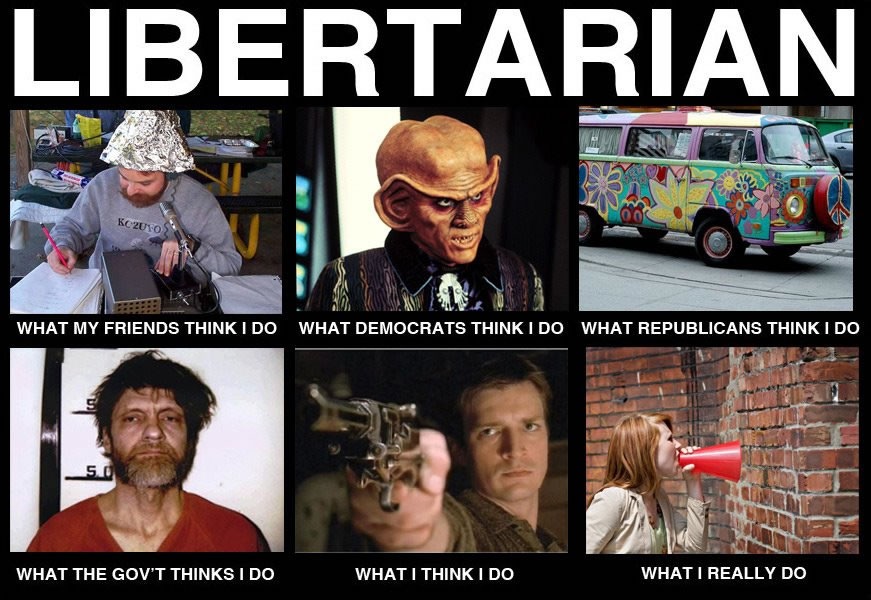
One of the greatest ironies of modern non-mainstream politics in the West is the tendency on the part of libertarians (whose whole ideology supposedly centers upon the maximization of personal freedom) to eventually find their way into supporting much more authoritarian ideologies on the dissident and reactionary Right. Indeed, this is the general route that my own political convictions have taken – from libertarianism to monarchism. Many libertarians would recoil in horror at the thought, yet given the number of former libertarians in neoreaction and in the dissident Right in general, it obviously happens quite often. One of the reasons I would suggest for this is that the foibles and failures of democracy – the governing system most often associated with the libertarian view of freedom – are becoming increasingly apparent to thoughtful observers. The old propaganda used to prop up the democratic dogma in Western nations is becoming increasingly stale and unconvincing. It becomes more and more apparent that democracy does not equal freedom, just as it is becoming apparent that “freedom” is not always and in every sense something that is conducive to good government and stable society.
My purpose with this essay is not to seek to convince my libertarian or classically liberal readers to become monarchists. This may well end up being where they land, politically and ideologically speaking, but their experiences and growth may move them in other directions. What I do want to do is to try to get them started on that path by pointing out that democracy is not any better than other forms of government and may indeed be worse in some areas that we can see empirically. I want to plant a seed of doubt and encourage it to grow. If the thoughtful libertarian is to be convinced, it must be by convincing himself or herself.
Please note that throughout this article, I will refer to “democracy” in a general sense to refer to any modern popular form of government. This includes the sort of representative republican system (formerly) typified by the American government which, while not directly democratic, was still essentially democratic in its overall form and complexion.
Personal Freedom
One of the obvious objections which libertarians and other classical liberals have against monarchy (and other authoritarian governing systems in general) is that the unification of power into the hands of a single executive makes it prone to abuse and to the removal or suppression of the freedoms of the citizenry. Typically, they will envision a monarchy as some kind of police state where citizens who step out of line are severely punished and every aspect of life is closely watched and regulated by the government. This, in turn, leads to a somewhat jaundiced view of history, especially that of the much-excoriated “Dark Ages”, believed to have been a dystopia of violence and tyranny.
This view of the relevant history is, however, untrue and generally relies upon a false epistemic dichotomy that is sadly very common within libertarianism. This is the failure to distinguish between “strong government” and “big government”, the two of which are usually confounded in the classical liberal’s mind. The former term refers to the capacity of the executive to exercise power within his sphere of activity, while the latter describes the extent of the sphere of activity itself. A ruler may be strong in the sense of being decisive and effective in what he does, yet find the area in which he can legitimately act to be circumscribed by law or custom. Among most historical Western monarchies, while kings often ruled “strongly”, they were not able to rule intrusively. Their subjects were often left with a relatively wide degree of latitude in their personal and economic affairs, and the restraints of custom and social structure tended to be more constraining than the actual deeds of their king himself.
Let us contrast this with the various democracies we see in the West, both the United States and others. How much do they really respect personal freedoms? In other words, how much do they really embody the “small government” ideal desired by libertarians and other classical liberals? The answer is: not much at all. Western man lives in democracies in which he can be arrested for tweeting “hate speech” on social media. His everyday life is overseen, administered, and commandeered by a body of regulations enforced by entirely unaccountable bureaucrats who have the capacity to trap him into Kafkaesque nightmares of life-altering tribulation. Every aspect of his food, his clothing, his home, his transportation, his workplace – all controlled by the government he (wrongly) believes he elected freely. If he has any kind of well-paying job or business enterprise, he will be paying a tax rate that ancient absolute monarchs would have blushed to even suggest exacting from their subjects. Democratic governments – supposedly by and for the people – intrude into every area of his life (big government) and do so through robust and often corrupt police state apparatuses which are literally willing to break down his door and possibly shoot him and his family for even minor infractions.
So please, let us dispense with the notion that democracy protects personal freedom.
Comments Off on Communism, Democracy, Monarchy? Any form of government is inherently tyrannical once it gets big enough
May 16, 2023
Hope for sensible reform to US Civil Asset Forfeiture?
J.D. Tuccille on the latest bipartisan attempt to at least somewhat rein in the Civil Asset Forfeiture abuse allowed under current rules:

Years after “civil asset forfeiture” became synonymous in many minds with legalized theft, the practice of seizing money and property merely suspected of a connection to a crime remains a boil on the ass of American jurisprudence. Now, in a rare demonstration of cooperation across political divides, Democratic and Republican lawmakers have joined together to introduce legislation to reform the practice of civil forfeiture at the federal level. They are supported by a coalition of organizations that put aside ideological differences in an attempt to curb the dangerous practice. As encouraging as the bill’s prospects appear, that this is not the first attempt to pass this legislation underlines the challenge of correcting government abuses.
“Today, U.S. Representatives Tim Walberg (R-MI) and Jamie Raskin (D-MD) reintroduced the Fifth Amendment Integrity Restoration Act (FAIR Act), a comprehensive reform to our nation’s civil asset forfeiture laws,” the two lawmakers announced in March. “The FAIR Act raises the level of proof necessary for the federal government to seize property, reforms the IRS structuring statute to protect innocent small business owners, and increases transparency and congressional oversight.”
The FAIR Act sets a higher bar for seizing private property, but still allows for civil forfeiture in the absence of a criminal conviction. The legislation requires:
“If the Government’s theory of forfeiture is that the property was used to commit or facilitate the commission of a criminal offense, or was involved in the commission of a criminal offense, the Government shall establish, by clear and convincing evidence, that … there was a substantial connection between the property and the offense; and the owner of any interest in the seized property — (i) used the property with intent to facilitate the offense; or knowingly consented or was willfully blind to the use of the property by another in connection with the offense.”
The bill requires that seizures be conducted in court rather than through administrative processes and also guarantees legal representation for federal forfeiture targets.
The FAIR Act isn’t a perfect bill. Many reformers will object that forfeiture should require the criminal conviction of the person whose money and property is being taken. Draining somebody’s bank account and nabbing their car keys may not be as dramatic as throwing them in a prison cell, but it’s a harsh punishment all the same and should require full due process. Still, some improvement is better than none for a practice that has largely served as an exercise in legalized highway robbery.
Comments Off on Hope for sensible reform to US Civil Asset Forfeiture?
May 15, 2023
Paul Wells – “Unworkable and swiftly-disavowed tinpot dictatorship is, statistically, one of the least damaging forms of tinpot dictatorship”
Paul Wells follows up last week’s rather disturbing report that the Liberal Party’s big gathering in Ottawa extruded a resolution to get “The Government” to work toward forcing journalists (and those peasant bloggers like Paul Wells) to only publish things that the sources informing it could be “traced” by that same authority:
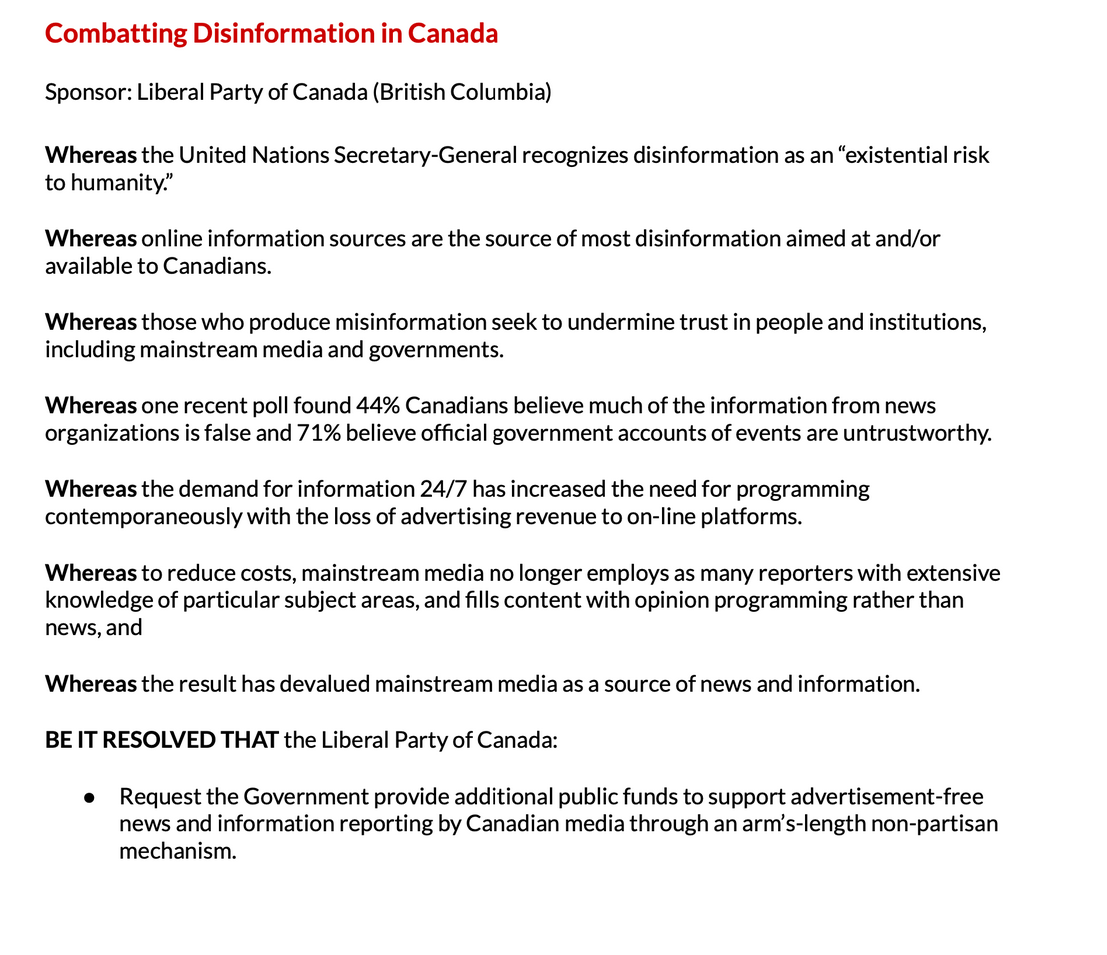
Last Friday I wrote about a policy resolution at the big Liberal Party of Canada national convention that was, in my opinion, bad. This was the resolution that would have the party “request the government explore options” to “hold on-line information sources accountable” by requiring that they “limit publication only to material whose sources can be traced”.
How do you limit publication to traceable sources? I have to assume you clear the sources. “This resolution has no meaning,” wrote I, “unless it means I would be required to clear my posts through the federal government, before publication, so the ‘traceability’ of my sources could be verified.”
Some people disagreed, but I had a hard time getting them to describe what it could mean if it wasn’t what I thought. I was careful to note that party conventions aren’t binding on governments. Commenters sympathetic to the Trudeau government latched onto all the this-might-mean-nothing language, the stuff about “request” and “explore options.” At their convention, a tiny minority of registered Liberal delegates attended a “policy workshop” at which nothing was debated. Amid considerable confusion about where these resolutions were in the party’s own process — Althia Raj covered it on Twitter; go look if you like — this resolution became party policy with no discussion at all. That was on Saturday.
On Tuesday, Justin Trudeau went before reporters and said no Liberal government would ever implement this Liberal policy. Other cabinet ministers followed suit, and one MP who didn’t benefit from the counsel of the Monday-morning issues-management call had a rougher time executing the U-turn.
Look, I think the amount of self-inflicted ballistic damage to the government’s own foot here is minor. Unworkable and swiftly-disavowed tinpot dictatorship is, statistically, one of the least damaging forms of tinpot dictatorship.
But I want to let everyone in on a secret of my journalism, and indeed of most journalism: Criticism of politicians is often advice to politicians. I actually don’t spend a lot of time hoping governments and opposition parties will keep pursuing self-destructive and country-destructive choices indefinitely. I always hope a bit of mockery, especially pre-emptive mockery, will help inform their choices. If it stings when Wells writes it, it might sting worse when everyone is saying it.
Ministers of the Crown who didn’t need to wait for the Monday-morning issues-management meeting to tell them what to think could have spent the weekend thinking for themselves. They might even have invited their own staffs, riding executives, and Liberals at large to think for themselves. A dozen or so hardy souls, out of 3,500 registered delegates, might then have showed up to the policy workshop willing to debate.
“Uh, Paragraph Two looks hinky. How would a government enforce that?”
“Well, it doesn’t apply to reputable journalists.”
“Great, thanks. Remind me who decides who’s reputable? Any thought on who’ll be making those calls once we’re no longer in government?”
Maybe somebody would have added a friendly amendment. “For greater clarity, nothing in this paragraph impinges …”
I can even imagine a cabinet minister showing up for those floor debates and influencing the party’s direction single-handed. I’ve seen it happen in other parties. But I had Liberal friends over the weekend explain to me that no such thing ever happens. Fine, it’s your funeral. Basically we’re watching a party choose between two different models of public-policy deliberation:
OPTION 1: Smart people think and talk.
OPTION 2: Everybody in the party defends rickety thinking until it blows up in their faces.
I’m not kidding when I tell you most people in political communications would defend Option 2. We’re living in a time that values message over thinking. But folks can’t say I didn’t warn them.
Comments Off on Paul Wells – “Unworkable and swiftly-disavowed tinpot dictatorship is, statistically, one of the least damaging forms of tinpot dictatorship”
May 10, 2023
From Thomas Szasz to Jordan Neely – how noble ideals can lead to terrible results
At Samizdata, Natalie Solent remembers how her early discovery of Ideology and Insanity by Thomas Szasz helped to shape her philosophical views in a generally libertarian direction. On the other hand, as the death of Jordan Neely shows, one of the long-term results of Szasz’s denunciation of the institutionalization of the mentally ill has been a vast increase in violence, vandalism, and anti-social behaviour in urban areas:
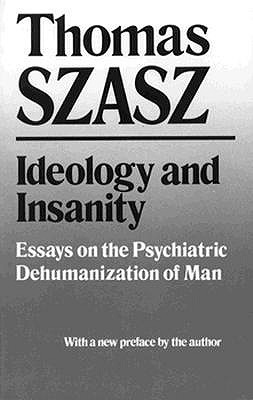
Szasz believed that if we accept that “mental illness” is a euphemism for behaviors that are disapproved of, then the state has no right to force psychiatric “treatment” on these individuals
Great stuff. I think Szasz still has much to teach us… but I suppose by now you have all heard of the killing of Jordan Neely on a New York subway train?
I have linked to the Wikipedia account for convenience, but I do not trust Wikipedia. There are very few media outlets I do trust on subjects like this. The magazine USA Today initially called Neely a “beloved subway performer”. USA Today has changed the article since, but I saw it when it still had the original wording. The article was right to say that Jordan Neely was a human being with a tragic past, but he was not beloved by users of the New York subway. Back in 2013, a Reddit post on /r/nyc warned passengers, “Try to stay away from the Michael Jackson impersonator if you see him … Just avoid the guy at all costs, try not to look at him at all. Stay safe.” That was Neely. By the time of his death, he had been arrested more than forty times, including for crimes of violence.
There are thousands of Americans like Neely who still live as he lived, exercising the right Thomas Szasz helped gain them to be mentally ill (or whatever you want to call it) drug addicts living on the subways and roadside verges of America. It is not going well for them or for others. A viral graph shows the declining proportion of Americans held in mental hospitals and the rising proportion of Americans held in prisons forming a neat “X” over the course of the twentieth century. Liberals in the U.S. sense have a prodigious capacity to not see inconvenient facts, but even they are being forced to notice that the presence of the crazies and junkies is causing their beloved public spaces and public facilities to become dirty, frightening places to which much of the public only goes when it must.
There is a libertarian solution of course: fewer public spaces. This would increase, not decrease, the number of places where the public could happily go. Junkies and crazies are much less of a problem in shopping malls, because the owners still retain some power to eject them. I feel no shame in saying that a further benefit would be that said junkies and crazies would be under more pressure to seek treatment if the state no longer facilitated them sleeping on the sidewalks and the subway trains.
Unfortunately for everyone, this solution is politically impossible in the current climate. Even in the miraculous event that the public transport systems and the streets of New York, San Francisco and Chicago were privatised tomorrow, anti-discrimination law would ensure that practically no one could be excluded.
Thomas Szasz had a noble ideal. Sadly, the way it combined with the dominant ideals of our time has produced very bad results. I know what should and could be done to make things better in a sane society, but the US in 2023 is not that society. So what can be done?
May 6, 2023
The federal Liberals want even more control over the internet
Paul Wells notes that a policy proposal at the Liberal conference this week indicates just how much the Liberal Party of Canada wants to control free expression on the internet:
Here on the 2023 Liberal convention’s “Open Policy Process” page are links to “Top 20 Resolutions” and “Fast-Tracked Resolutions”. The latter go straight to the plenary floor, the former go through a smaller preliminary debate and, if they pass, then on to the plenary. These things move fast because, in most cases, Liberals are paying only listless attention to the discussions. Policy is for New Democrats. Well, I mean, it used to be.
But sometimes words have meaning, so this morning I’m passing on one of the Top 20 Resolutions, from pages 12 and 13 of that book. This one comes to us from the British Columbia wing of the party.
It’s in two screenshots simply because it spreads across two pages. This is the entire resolution.
BC Liberals want “on-line information services” held “accountable for the veracity of material published on their platforms” by “the Government”. The Government would, in turn, “limit publication only to material whose sources can be traced”.
This resolution has no meaning unless it means I would be required to clear my posts through the federal government, before publication, so the “traceability” of my sources could be verified. I don’t suppose this clearance process would take too much more time than getting a passport or a response to an access-to-information request. Probably only a few months, at first. Per article.
After publication, “the Government” would hold me accountable for the veracity of my material, presumably through some new mechanism beyond existing libel law.
I’m not sure what “the Government” — I’m tickled by the way it’s capitalized, like Big Brother — would have made of this post, in which I quote an unnamed senior government official who was parked in front of reporters by “the Government” on the condition that he or she or they not be named. But by the plain meaning of this resolution, I would not have to wonder for long because that post would have been passed or cleared by the Government’s censors before publication, and I’m out of recourse if that process simply took longer than I might like.