
seangabb
Published 16 Feb 2022In this, the sixth video in the series, Sean Gabb discusses the impact on the Byzantine Empire of the Islamic expansion of the seventh century. It begins with an overview of the Empire at the end of the great war with Persia, passes through the first use of Greek Fire, and ends with a consideration of the radically different Byzantine Empire of the Middle Ages.
Between 330 AD and 1453, Constantinople (modern Istanbul) was the capital of the Roman Empire, otherwise known as the Later Roman Empire, the Eastern Roman Empire, the Mediaeval Roman Empire, or the Byzantine Empire. For most of this time, it was the largest and richest city in Christendom. The territories of which it was the central capital enjoyed better protections of life, liberty and property, and a higher standard of living, than any other Christian territory, and usually compared favourably with the neighbouring and rival Islamic empires.
The purpose of this course is to give an overview of Byzantine history, from the refoundation of the City by Constantine the Great to its final capture by the Turks.
Here is a series of lectures given by Sean Gabb in late 2021, in which he discusses and tries to explain the history of Byzantium. For reasons of politeness and data protection, all student contributions have been removed.
(more…)
October 25, 2022
The Byzantine Empire: Part 6 – Weathering the Storm, 628-717 AD
October 24, 2022
The rise of “Queer Theory”
In City Journal, Christopher F. Rufo provides the background that has lead to the widespread phenomenon of “Drag Queen Story Hour”:

Start with queer theory, the academic discipline born in 1984 with the publication of Gayle S. Rubin’s essay “Thinking Sex: Notes for a Radical Theory of the Politics of Sexuality”. Beginning in the late 1970s, Rubin, a lesbian writer and activist, had immersed herself in the subcultures of leather, bondage, orgies, fisting, and sado-masochism in San Francisco, migrating through an ephemeral network of BDSM (bondage, domination, sadomasochism) clubs, literary societies, and New Age spiritualist gatherings. In “Thinking Sex”, Rubin sought to reconcile her experiences in the sexual underworld with the broader forces of American society. Following the work of the French theorist Michel Foucault, Rubin sought to expose the power dynamics that shaped and repressed human sexual experience.
“Modern Western societies appraise sex acts according to a hierarchical system of sexual value,” Rubin wrote. “Marital, reproductive heterosexuals are alone at the top erotic pyramid. Clamouring below are unmarried monogamous heterosexuals in couples, followed by most other heterosexuals. … Stable, long-term lesbian and gay male couples are verging on respectability, but bar dykes and promiscuous gay men are hovering just above the groups at the very bottom of the pyramid. The most despised sexual castes currently include transsexuals, transvestites, fetishists, sadomasochists, sex workers such as prostitutes and porn models, and the lowliest of all, those whose eroticism transgresses generational boundaries.”
Rubin’s project — and, by extension, that of queer theory — was to interrogate, deconstruct, and subvert this sexual hierarchy and usher in a world beyond limits, much like the one she had experienced in San Francisco. The key mechanism for achieving this turn was the thesis of social construction. “The new scholarship on sexual behaviour has given sex a history and created a constructivist alternative to” the view that sex is a natural and pre-political phenomenon, Rubin wrote. “Underlying this body of work is an assumption that sexuality is constituted in society and history, not biologically ordained. This does not mean the biological capacities are not prerequisites for human sexuality. It does mean that human sexuality is not comprehensible in purely biological terms.” In other words, traditional conceptions of sex, regarding it as a natural behavior that reflects an unchanging order, are pure mythology, designed to rationalize and justify systems of oppression. For Rubin and later queer theorists, sex and gender were infinitely malleable. There was nothing permanent about human sexuality, which was, after all, “political”. Through a revolution of values, they believed, the sexual hierarchy could be torn down and rebuilt in their image.
There was some reason to believe that Rubin might be right. The sexual revolution had been conquering territory for two decades: the birth-control pill, the liberalization of laws surrounding marriage and abortion, the intellectual movements of feminism and sex liberation, the culture that had emerged around Playboy magazine. By 1984, as Rubin acknowledged, stable homosexual couples had achieved a certain amount of respectability in society. But Rubin, the queer theorists, and the fetishists of the BDSM subculture wanted more. They believed that they were on the cusp of fundamentally transforming sexual norms. “There [are] historical periods in which sexuality is more sharply contested and more overtly politicized,” Rubin wrote. “In such periods, the domain of erotic life is, in effect, renegotiated.” And, following the practice of any good negotiator, they laid out their theory of the case and their maximum demands. As Rubin explained: “A radical theory of sex must identify, describe, explain, and denounce erotic injustice and sexual oppression. Such a theory needs refined conceptual tools which can grasp the subject and hold it in view. It must build rich descriptions of sexuality as it exists in society and history. It requires a convincing critical language that can convey the barbarity of sexual persecution.” Once the ground is softened and the conventions are demystified, the sexual revolutionaries could do the work of rehabilitating the figures at the bottom of the hierarchy — “transsexuals, transvestites, fetishists, sadomasochists, sex workers”.
Where does this process end? At its logical conclusion: the abolition of restrictions on the behavior at the bottom end of the moral spectrum — pedophilia. Though she uses euphemisms such as “boylovers” and “men who love underaged youth”, Rubin makes her case clearly and emphatically. In long passages throughout “Thinking Sex”, Rubin denounces fears of child sex abuse as “erotic hysteria”, rails against anti–child pornography laws, and argues for legalizing and normalizing the behavior of “those whose eroticism transgresses generational boundaries”. These men are not deviants, but victims, in Rubin’s telling. “Like communists and homosexuals in the 1950s, boylovers are so stigmatized that it is difficult to find defenders for their civil liberties, let alone for their erotic orientation,” she explains. “Consequently, the police have feasted on them. Local police, the FBI, and watchdog postal inspectors have joined to build a huge apparatus whose sole aim is to wipe out the community of men who love underaged youth. In twenty years or so, when some of the smoke has cleared, it will be much easier to show that these men have been the victims of a savage and undeserved witch hunt.” Rubin wrote fondly of those primitive hunter-gatherer tribes in New Guinea in which “boy-love” was practiced freely.
Such positions are hardly idiosyncratic within the discipline of queer theory. The father figure of the ideology, Foucault, whom Rubin relies upon for her philosophical grounding, was a notorious sadomasochist who once joined scores of other prominent intellectuals to sign a petition to legalize adult–child sexual relationships in France. Like Rubin, Foucault haunted the underground sex scene in the Western capitals and reveled in transgressive sexuality. “It could be that the child, with his own sexuality, may have desired that adult, he may even have consented, he may even have made the first moves,” Foucault once told an interviewer on the question of sex between adults and minors. “And to assume that a child is incapable of explaining what happened and was incapable of giving his consent are two abuses that are intolerable, quite unacceptable.”
Rubin’s American compatriots made the same argument even more explicitly. Longtime Rubin collaborator Pat Califia, who would later become a transgender man, claimed that American society had turned pedophiles into “the new communists, the new niggers, the new witches”. For Califia, age-of-consent laws, religious sexual mores, and families who police the sexuality of their children represented a thousand-pound bulwark against sexual freedom. “You can’t liberate children and adolescents without disrupting the entire hierarchy of adult power and coercion and challenging the hegemony of antisex fundamentalist religious values,” she lamented. All of it — the family, the law, the religion, the culture — was a vector of oppression, and all of it had to go.
Another bombed city – war still not ended – October 23, 1943 – WAH 083
World War Two
Published 23 Oct 2022Trainload after trainload arrives at the slave and murder factories in Auschwitz, and a Fürstin is created in Kassel, while the United Nations War Crimes Committee UNWCC is formed.
(more…)
An overview of strategic airpower
Bret Devereaux wants to provide a basic idea of what we mean when we use the military term “strategic airpower”:

USAF B-52 Stratofortress near the North Pole on 31 July, 2016 during the Polar Roar exercise.
Detail of original USAF photo by Senior Airman Joshua King via Wikimedia Commons.
This week, I’m going to offer a fairly basic overview of the concept of strategic airpower, akin to our discussions of protracted war and nuclear deterrence. While the immediate impetus for this post has been Russian efforts to use airpower coercively in Ukraine, we’re going to focus more broadly on the topic: what is strategic airpower, where did the idea come from, how has it been used and does it actually work? As with nuclear deterrence, this is a much debated topic, so what I am going to present here is an overview of the sort I’d provide for an introductory class on the topic and then at the end we’ll cover some of the implications for the current conflict in Ukraine. That said, this is also an issue where I think most historians of the topic tend to part ways with both some things the public think they know about the topic and some of the things that occasionally the relevant branches of the military want to know about the topic; in any case I am going to try to present a fairly “down the middle” historian’s view of the question.
Before we dive in, we need to define what makes certain uses of airpower strategic because strategic airpower isn’t the only kind. The reason for the definition will emerge pretty quickly when we talk about origins, but let’s get it out of the way here: strategic airpower is the use of attack by air (read: bombing) to achieve “strategic effects”. Now that formal definition is a bit tautological, but it becomes clarifying when we talk about what we mean by strategic effects; these are effects that aim to alter enemy policy or win the war on their own.
Put another way, if you use aircraft to attack enemy units in support of a ground operation (like an invasion), that would be tactical airpower; the airpower is a tactic that aims to win a battle which is still primarily a ground (or naval) battle. We often call this kind of airpower “close air support” but not all tactical airpower is CAS. If you instead use airpower to shape ground operations – for instance by attacking infrastructure (like bridges or railroads) or by bombing enemy units to force them to stay put (often by forcing them to move only at night) – that’s operational airpower. The most common form of this kind of airpower is “interdiction” bombing, which aims to slow down enemy ground movements so that friendly units can out-maneuver them in larger-scale sweeping movements.
By contrast strategic airpower aims to produce effects at the strategic (that is, top-most) level on its own. Sometimes that is quite blunt: strategic airpower aims to win the war on its own without reference to ground forces, or at least advance the ball on winning a conflict or achieving a desired end-state (that is, the airpower may not be the only thing producing strategic effects). Of course strategic effects can go beyond “winning the war” – coercing or deterring another power are both strategic effects as well, forcing the enemy to redefine their strategy. That said, as we’ll see, this initially very expansive definition of strategic airpower really narrows quite quickly. Aircraft cannot generally hold ground, administer territory, build trust, establish institutions, or consolidate gains, so using airpower rapidly becomes a question of “what to bomb” because delivering firepower is what those aircraft can do.
As an aside, this sort of cabined definition of airpower and thus strategic airpower has always been frustrating to me. It is how airpower is often discussed, so it’s how I am going to discuss it, but of course aircraft can move more than bombs. Aircraft might move troops – that’s an operational use of airpower – but they can also move goods and supplies. Arguably the most successful example of strategic airpower use anywhere, ever is the Berlin Airlift, which was a pure airpower operation that comprehensively defeated a major Soviet strategic aim, and yet the U.S. Air Force is far more built around strategic bombing than it is around strategic humanitarian airlift (it does the latter, but the Army and the Navy, rather than the Air Force, tend to take the lead in long-distance humanitarian operations). Nevertheless that definition – excessively narrow, I would argue – is a clear product of the history of strategic airpower, so let’s start there.
And once again before we get started, a reminder that the conflict in Ukraine is not notional or theoretical but very real and is causing very real suffering, including displacing large numbers of Ukrainians as refugees, both within Ukraine and beyond its borders. If you want to help, consider donating to Ukrainian aid organizations like Razom for Ukraine or to the Ukrainian Red Cross. As we’re going to see here, airpower offers no quick solution for the War in Ukraine for either party, but the recent Russian shift to air attacks on civilian centers sadly promises more suffering and more pressing need for humanitarian assistance for Putin’s many victims.
Finally, a content warning: what we’re discussing today is largely (though not entirely) the application of airpower against civilian targets because it turns usually what “strategic” airpower ends up being. This is a discussion of the theory, which means it’s going to be pretty bloodless, but nevertheless this topic ought to be uncomfortable.
On with our topic, starting with the question of where the idea of strategic airpower comes from.
The Beretta AR70
Forgotten Weapons
Published 2 May 2017After failing to acquire a license to produce the M16 rifle, Beretta worked with SIG from 1963 through 1968 to develop 5.56mm infantry rifles. When the companies parted ways, SIG went on to produce the SIG-540 and Beretta developed the AR-70. It was introduced on the market in 1972, and was adopted by the militaries of Jordan and Malaysia, as well as Italian special forces units (the Italian Army at large would adopt the 70/90 version in 1990).
The AR-70 takes several cues from the AK series of rifles, including the rock-in magazine with large rear paddle release and a two lug rotating bolt. In a somewhat unorthodox choice, the rifle uses a coil spring in tension for its mainspring, located around the gas piston and in front of the bolt. While this would likely cause heat-related problems in a light machine gun, it appears to have been acceptable in a rifle, as the improved 70/90 version maintain the same system. It does also allow simple use of folding or collapsing stocks, as there are no working parts in the stock.
Only a relatively small number of commercial AR70/223 rifles came into the United States in the 1980s, and they are a relatively unknown member of the black rifle family.
(more…)
QotD: When the “Grand Tour” gave way to the mere “tourists”
Few of the many holidaymakers photographing their artisanal breakfast for a sunlit post on Instagram will have heard of Albert Smith. But they owe him a moment’s reflection: for if anyone can be said to have perfected the packaged visuals of a holiday abroad, it is Smith, a showbusiness titan of mid-Victorian London. Smith’s wildly popular panoramic spectaculars of his travels across Europe drew audiences of thousands. He was a prolific journalist, a bestselling novelist, a man-about-town, a mountaineer, and a dandy, but it was Smith’s innovative talent for boiling down his adventures abroad into a collection of vivid and memorable images that proved his biggest crowd-puller. Panoramas — vast paintings showing a 360-degree view of a landscape — had been part of the London scene since the turn of the century, but Smith took the panoramic experience to new levels of immersion: he was the self-appointed star of his own show, dramatising his own adventures against a sliding background of tableaux complete with music and props.
Smith’s most celebrated panorama relived his ascent of Mont Blanc in 1851 — which had been an astonishing physical feat for a clubbable bon viveur (though he had to be dragged to the summit barely conscious, he claimed to have celebrated by drinking a bottle of champagne and smoking a cigar). He pulled out all the stops to recreate Mont Blanc on the stage of the Egyptian Hall, Piccadilly in 1852, importing woodcarvers from Chamonix to recreate a Swiss chalet. St Bernards roamed the aisles and during the interval hot baked potatoes were dispensed for those in the audience feeling a glacial chill from the buckets of cold water placed around the hall. The stage was decked with alpine plants; there was a waterfall with real water, a mill wheel and a lily pond; the walls of the theatre were hung with chamois skins. “The Ascent of Mont Blanc” ran for six years and 2,000 performances, and on top of the fortune he made in ticket sales, Smith cannily expanded his repertoire by selling colouring books, fans, board games and miniature models of Mont Blanc.
Smith, an unrepentant populist (he liked to shock Thackeray by saying that Shakespeare was “all rot”), knocked the high culture out of the touristic experience. He made the adventure of foreign parts bite-sized and accessible — if not in reality, at least in dreams. He called it “the Alps in a box”. Figuratively speaking, Smith’s panoramas boxed up the great sights of the classical Grand Tour and sold them in miniature form, building them up with a dramatic flourish then cutting them down to size with a knowing dig in the ribs. Smith’s success runs parallel with the emergence of photography, the industrial manufacture of souvenirs, and the “I was here” frame of the postcard. After Smith, it became possible to think of “buying” the travel experience without actually going very far, framing it, and taking it home with you. Antiquarian high-culturists looked for quiddity and oddity when abroad but Smith encouraged a joyful appetite for mass-produced kitsch. His own apartment off Tottenham Court was a riot of knick-knackery from his travels. There was a figure of a Swiss peasant with a clock-face in his waistcoat, Venetian glasses, miniature Swiss chalets, soap from Vienna in the shape of fruit and a working model of a guillotine.
The tourist boom in Chamonix inspired by Smith was viewed with horror by those who thought the mountain were theirs to command. Ruskin found the “white leprosy of hotels” and souvenir shops that followed the visitors into the Alps was a blasphemy against “all the deep and sacred sensations of nature”. Everywhere the new tourists went, reported a journalist in 1856, they brought with them “Cockneyism, Albert Smithery, fun, frolic and vulgarity”. The rise in popular tourism to Europe, sparked most importantly by Thomas Cook, had highlighted a divide which has characterised British travelling ever since. In this paradigm, the tourist is the new bug and the traveller is the old soul. And even when they are gazing at the same view, the latter thinks the former is spoiling the view. The distaste is notable in how often crowds of tourists were, and still are, described in terms of mindless cattle or insects — they come in “herds” and “swarms” and “flocks”.
Lucy Lethbridge, “The snobbery of Brits abroad”, UnHerd, 2022-07-12.
October 23, 2022
Stalin Agrees to the United Nations – WW2 – 217 – October 22, 1943
World War Two
Published 22 Oct 2022A conference in Moscow lays out some postwar plans of the Allies, but the war has to be won first. The Allies fight their way across both the Dnieper and Volturno Rivers, but the going looks like it’s going to be tougher after the crossings. Meanwhile, in the South Seas the Japanese change plans in the face of Allied advances over there.
(more…)
T. E. Lawrence: The True Lawrence of Arabia
Biographics
Published 13 Jun 2022
(more…)
QotD: Sparta’s military reputation in the Peloponnesian War
That reputation was already deeply held even by the early stages of the Peloponnesian War, such that Thucydides notes that “Nothing that happened in the war so shocked the Greeks so much as” the surrender of 120 Spartiates at Pylos/Sphacteria, instead of dying with their weapons in their hands (Thuc. 4.40.1). The Athenians had, in the event, managed to trap a force of Spartans – Spartiates and other Laconians – on an island and harassed them with arrow fire from a distance, never closing with them, until the Spartans surrendered. This is, I must stress, in the context of a war that obliterated entire poleis, shredded the diplomatic fabric of Greece and was by far the largest war between Greeks that any of them knew of. But this, the shattering – if just for a moment – of the Spartan reputation, that was what shocked people. The image of Sparta – whatever the reality – was that deeply set.
Thucydides, amusingly, relates that some Greeks were so shocked that they couldn’t believe it, and one ally of Athens inquired to the Spartiates – then held as captives in Athens – if perhaps what had happened was that all of the brave men (you know, the real Spartiates) had been felled by the arrows, to which the Spartans responded, “an arrow would be worth a great deal if it could pick out noble and good men from the rest, in allusion to the fact that the killed were those whom the stones and the arrows happened to hit” (Thuc. 4.40.2).
Bret Devereaux, “Collections: This. Isn’t. Sparta. Part VI: Spartan Battle”, A Collection of Unmitigated Pedantry, 2019-09-20.
October 22, 2022
Battle of the Bulge 1944: Could the German Plan Work?
Real Time History
Published 21 Oct 2022Sign up for Nebula and watch Rhineland 45: https://nebula.tv/realtimehistory
The Battle of the Bulge was one of the last German offensives during the Second World War. It caught the US Army off guard in the Ardennes sector but ultimately the Allies prevailed. But did Unternehmen Wacht am Rhein (“Operation Watch on the Rhine”) ever have a chance to succeed and reach Antwerp?
(more…)
Two new works on British architecture through the years
In The Critic, James Stevens Curl discusses two recent books on the “monuments and monstrosities” of British architecture:
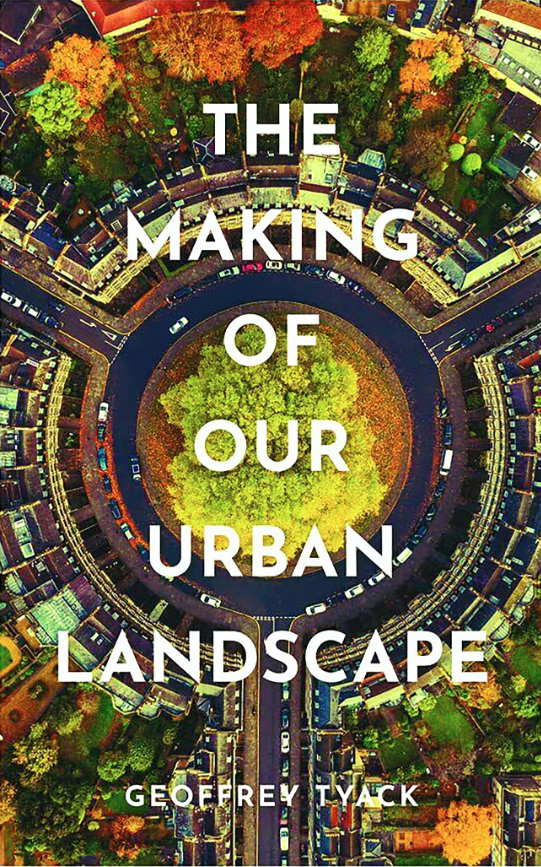
The most startling achievement of the Victorian period was Britain’s urbanisation. By the 1850s the numbers living in rural parts were fractionally down on those in urban areas. By the end of Victoria’s reign more than 75 per cent of the population were town-dwellers, and a romantic nostalgic longing for a lost rural paradise was fostered by those who denigrated urbanisation. This myth of a lost rural ideal led to phenomena such as garden cities and suburbia. Anti-urbanists and critics of the era detested the one thing that gave the Victorian city its great qualities: they were frightened of and hated the Sublime.
These two books deal with the urban landscape in different ways. Tyack provides a chronological narrative of the history of some British towns and cities spread over two millennia from Roman times to the present day, so his is a very ambitious work. Most towns of modern Britain already existed in some form by 1300, he rightly states, though a few were abandoned, such as Calleva Atrebatum (Silchester) in Hampshire, a haunted place of great and poignant beauty with impressive remains still visible. Most Roman towns were more successful, surviving and developing through the centuries, none more so than London. Tyack describes several in broad, perhaps too broad, terms.
He outlines the creation of dignified civic buildings from the 1830s onwards, reflecting the evolution of local government as power shifted to the growing professional, manufacturing and middle classes: fine town halls, art galleries, museums, libraries, concert halls, educational buildings and the like proliferated, many of supreme architectural importance. Yet the civic public realm has been under almost continuous attack from central government and the often corrupt forces of privatisation for the last half century.
Tyack is far too lenient when considering the unholy alliances between legalised theft masquerading as “comprehensive redevelopment”, local and national government, architects, planners and large construction firms with plentiful supplies of bulging brown envelopes. Perfectly decent buildings, which could have been rehabilitated and updated, were torn down, and whole communities were forcibly uprooted in what was the greatest assault in history on the urban fabric of Britain and the obliteration of the nation’s history and culture.
One of the worst professional crimes ever inflicted on humanity was the application of utopian modernism to the public housing-stock of Britain from the 1950s onwards: this dehumanised communities, spoiled landscapes and ruined lives, yet the architectural establishment remained in total denial. In 1968–72 the Hulme district of Manchester was flattened to make way for a modernist dystopia created by a team of devotees of Corbusianity.
The huge quarter-mile long six-storey deck-access “Crescents” were shabbily named after architects of the Georgian, Regency and early-Victorian periods (Adam, Barry, Kent and Nash). This monstrous, hubristic imposition rapidly became one of the most notoriously dysfunctional housing estates in Europe, a spectacular failure whose problems were all-too-apparent from the very beginning. Yet in The Buildings of England 1969, Manchester was praised for “doing more perhaps than any other city in England … in the field of council housing”. The “Crescents” were recognised quickly as unparalleled disasters and hated by the unfortunates forced to live there. They were demolished in the 1990s, but the creators of that hell were never punished.
October 21, 2022
Britain’s Royal Spy – WW2 – Spies & Ties 24
World War Two
Published 20 Oct 2022SOE agents come from all walks of life but very few can claim to be royalty. Few except Noor Inayat Khan. She’s been sent as a radio operator to France, arriving right in the middle of a German crackdown on the resistance. Now she is the sole link between London and Paris.
(more…)
What is Gruel?
Tasting History with Max Miller
Published 14 Jun 2022
(more…)
QotD: The real reason for Upton Sinclair writing The Jungle
As a result, the Federal Meat Inspection Act passed Congress, and consumers were saved from ghastly diseases. The lesson is that government is essential to stop enterprise from poisoning us with its food.
To some extent, this mythology accounts for the wide support for government’s involvement in stopping disease spread today, including Covid and the catastrophic response.
Not only that, but the story is also the basis for the US Department of Agriculture’s food inspection efforts, the Food and Drug Administration’s regulation of medical drugs, the central plan that governs food production, the Centers for Disease Control and Prevention, and the legions of bureaucrats who inspect and badger us every step of the way. It is the founding template for why government is involved in our food and health at all.
It’s all premised on the implausible idea that people who make and sell us food have no concern as to whether it makes us sick. It only takes a quick second, though, to realize that this idea just isn’t true. So long as there is a functioning, consumer-driven marketplace, customer focus, which presumably includes not killing you, is the best regulator. Producer reputation has been a huge feature of profitability, too. And hygiene was a huge feature of reputation — long before Yelp.
Sinclair’s book was not intended as a factual account. It was a fantasy rendered as an ideological screed. It did drum up support for regulation, but the real reason for the act’s passage was that the large Chicago meat packers realized that regulation would hurt their smaller competitors more than themselves. Meat inspections imposed costs that cartelized the industry.
That’s why the largest players were the law’s biggest promoters. Such laws almost have more to do with benefiting elites than protecting the public. It was not really about safety, the best scholarship shows, but exclusionary regulation to raise competitors’ costs of doing business.
Jeffrey A. Tucker, “Poke and Sniff: A Lesson from 1906”, Brownstone Institute, 2022-06-29.
October 20, 2022
French C6 Long-Recoil Prototype Semiauto Rifle
Forgotten Weapons
Published 18 Nov 2016France began working on developing military self-loading rifles virtually as soon as the 1886 Lebel was adopted, and they would pursue a pretty elaborate series of trials right up to World War I. One series was developed by Etienne Meunier at the Artillery Technical Section using gas operated mechanisms, and designated the A series. The B series was the work of M. Rossignol at the Musketry School, using mostly direct gas impingement systems. The C series was designed by Louis Chauchat and M. Sutter at the Puteaux Arsenal, and these were long-recoil actions. Trials commenced in 1911 and 1912 on the latest rifles from each series, and ultimately none was judged really ready for military service — although the A6 Meunier would be produced in small numbers (about a thousand) and issued in 1916.
This particular rifle is a C6, from Chauchat and Sutter. The C7 was in the formal testing, and this C6 is a very similar rifle. It uses a long recoil action, a unique locking system with two pivoting locking lugs somewhat similar to the Kjellman system, and a remarkably powerful 7mm rimless cartridge fed from 6-round Mannlicher-type clips. It was deemed too complicated at trial, not surprisingly.
(more…)


