Quotulatiousness

July 8, 2022

Dutch government clearly has been cribbing notes from Justin Trudeau’s brownshirt tactics for dealing with unarmed protests

For such a big story, the revolt of the Dutch farmers doesn’t seem to be getting as much international coverage as you might expect … almost as though governments and the tame mainstream media are trying to hide it:

Whether it’s the Netherlands or Canada, the story is the same across the globe. Over the past several years, elitists occupying positions of power within governments have grown accustomed to imposing their will on ordinary citizens.

It doesn’t matter that they’re blatantly violating the social contract established by their own people. For the elitist, the only item on the agenda is maintaining power and dominion over the populace, whom they view as nothing more than subjects meant to obey their diktats without question.

Avoiding such power grabs, however, requires a vigilant citizenry, whose dedication to liberty must be stronger and more widespread than elitists’ devotion to tyranny. As witnessed during the Covid regime, compliance with the state gives birth to more draconian edicts, which only continue to erode the line between democracy and oligarchy.

Make no mistake, if the Dutch farmer protesters let their foot off the gas for one second, the state will not hesitate to shove their alarmist, degrowth policies down the people’s throats without remorse. Any form of surrender will likely continue to enable more overreaching policies, which will undoubtedly infringe upon the everyday lives of Dutch people.

The other day it was reported that police had opened fire on a tractor driven by a 16-year-old. Today, the young man was released from custody without charges:

Farmers’ protests in the Netherlands have reached the royal palace at Dam Square in Amsterdam. 16-year old Jouke, who was shot at by a police officer on Tuesday, was released without charges.

Opposition leader Geert Wilders released a bombshell letter showing the globalist Dutch government wants to use expropriated agricultural land for asylum centers.

Around 40,000 Dutch farmers paralyzed traffic in the Netherlands and blocked around 20 food distribution centers over the weekend with trucks and tractors. Yesterday the protests reached Dam Square in Amsterdam and the seat of government in The Hague. The airport in Groningen was blockaded by demonstrators on Wednesday, German farmers joined the protests in Heerenberg near the Dutch-German border.

In an incident near the blockaded food distribution center at Heerenveen in Friesland, police officers shot at 16-year-old Jouke’s tractor, which was already turning away from the roadblock, missing the boy’s head by an inch (Gateway Pundit reported). Jouke and two other protestors were arrested on suspicion of “attempted manslaughter” after which an angry crowd gathered in front of the police station in Leeuwarden. All three have now been released without charges.

A farmer in Leeuwarden told Canadian journalist Keean Bexte that the Rutte government had “created a climate where the police think they can shoot”. Dutch farmers are being dispossessed and committing suicide, the protester said, while China, for example, fails to meet any environmental regulations.

[…]

Sky News Australia host Rowan Dean compared the Dutch police tactics to the violent quashing of Canadian trucker protests by uparmored riot police, calling Premiers Trudeau and Marc Rutte the “golden pin-up boys for Klaus Schwab and the globalist fantasists of the World Economic Forum.”

“The similarities between Canada and Holland are as startling as they are disturbing,” Dean said. “Only a few months ago, it was the Canadian government that attacked its own citizens in the most grotesque and terrifyingly authoritarian manner during the so-called Truckers’ Convoy when the government actually froze the bank accounts and basically starved out any individuals in what was legitimate peaceful democratic opposition to Covid (vaccine) mandates. That ended badly for Trudeau.”

At the World Economic Forum in Davos 2021, Dutch PM Marc Rutte had boasted about “Holland’s involvement with the World Economic Forum’s Global Food Innovation Hubs, which is busily ‘transforming food systems and land use'”, Dean said.

At Ace of Spades H.Q., J.J. Sefton had this to say about the protests and the repressive measures taken by the Dutch and Canadian governments toward peaceful protestors:

Mind you, this is in Holland. I’m no ethnographer, but the Netherlands is a country and people that are about as liberal, peaceful and secular as they come. Like many other European nations, they atoned for the collective guilt over what happened to its Jews during the war (among other things) by opening its borders to a massive influx of Muslim immigrants with predictable results. Strange how what happened to Theo Van Gogh was all but ignored and someone like Geert Wilders is vilified. Yet with this green madness, somehow the people have woken up to the Globalist/EU wolf at their throat. The Dutch government’s response? Crush the farmers. You have to wonder what the reaction would have been had most or even some of them had been Muslim? Meh, Muslims don’t farm. But, think about it. This is Holland. Not North Korea, Cuba, Venezuela or Iran. Holland. A supposedly enlightened European democratic society that imposes its will on people and sets the water cannon and tear gas on them for daring to object.

Well, look at Canada only a few short months ago. In the wake of the truckers’ convoy protest over forced injections, how did Justin Castreau-cescu react? Arrests, confiscation of vehicles and bank accounts, among other things. Cana-fucking-da. Now look at what that maple syrup sucking hoser is up to:

    The Canadian government is funding a booklet being sent to schools across the country that teaches children to be wary of people who champion “free speech.”

    Yes, really.

It’s a Paul Joseph Watson video, hence the short quote. But it says it all. Holland is no longer Holland. Canada is no longer Canada and America is no longer America. You know it. They know it. The forces that hijacked those governments and societies know it. The question is not do they know that we know? Of course they know we know. Yet they are betting the farm that we are not going to do a damned thing about it. So, okay, J.J. What about this “optimism” thing? In a sense, as Dave in FL and CBD talked about, I am optimistic in that I understand that what cannot go on will not go on. And this crap for sure cannot go on.

In Spiked, Brendan O’Neill comments on the lack of interest among the people you’d expect to be most vocal in support of working people protesting against out-of-touch, arrogant elites:

If police were opening fire on protesters in a European nation, we would have heard about it, right? If there was a mass uprising of working people in a European Union country, taking to the streets in their thousands to cause disruption to roads, airports and parliament itself, it would be getting a lot of media coverage in the UK, wouldn’t it? The radical left would surely say something, too, given its claims to support ordinary people against The System. Cops shooting at working men and women whose only crime is that they pounded the streets to demand fairness and justice? There would be solidarity demos in the UK, for sure.

Well, all of this is happening, right now, in a nation that’s just an hour’s flight from Britain, and the media coverage here is notable by its absence. As for the left in Britain and elsewhere in Europe – there’s just silence. This is the story of the revolting Dutch farmers. These tractor-riding rebels have risen up against their government and its plans to introduce stringent environmental measures that they say will severely undermine their ability to make a living. They have been protesting for a couple of years now, but their fury has intensified in recent weeks. They’ve blocked motorways, blocked roads to airports, set fire to bales of hay, and descended on The Hague. Things are so serious that yesterday, in the province of Friesland, police opened fire. Mercifully, no one was injured.

There has been some reportage outside of the Netherlands, of course. But it has been strikingly muted. And it isn’t hard to see why. This is a people’s revolt against eco-tyranny, against the modern elite’s determination to slash “harmful” emissions with little regard for the consequences such action will have for working people and poor people. To the formers of elite consensus opinion, for whom environmentalism is tantamount to a religion, the sight of pesky little people rebelling against green diktats is too much to bear. So they either demonise these dissenters, as is happening in the Netherlands, or they ignore them in the hope they will go away, as is happening outside the Netherlands.

The farmers have a very good case. Their concern is that the government’s plans for slashing greenhouse gases will hit farming – and other industries – very hard indeed. The targets, introduced last month, commit the Netherlands to halving its use of nitrogen compounds by 2030. The government says emissions of nitrogen oxide and ammonia, both of which emanate from livestock, will need to be drastically cut. This will entail farmers getting rid of vast numbers of their livestock, potentially devastating their livelihoods. Fishermen are concerned, too. As of next year, fishing permits will be given out on the basis of the eco-friendliness of the trawler the fisherman is using, and many are worried that they’ll end up permit-less, unable to earn a living. They have blocked harbours in solidarity with the farmers. The construction industry could also suffer. Courts have blocked numerous infrastructure projects on the basis that the emissions they cause will breach the new eco-rules.

July 6, 2022

The ongoing protests by Dutch farmers demand your attention

Protests in many countries in the western world can get violent and even be claimed (by the targets of the protest) to be “insurrections”, but protests in the Netherlands always have more of an edge to them than elsewhere, because when the Dutch really get angry they have, in the past, gone so far as to kill AND EAT their prime minister. The current protests haven’t gone that far yet, but politicians should keep in mind that Dutch farmers can react primally to being treated in the way the Soviets treated the kulaks:

This is really important – you know, on the level of “pay attention or your food supply is next”.

We reported last week that Dutch farmers were attacking government vehicles, blocking roads, and dumping manure on government buildings in response to a new “climate” policy that shut down numerous family farms because their cows were farting too much.

These farmers are now banned from working their own land to feed their families.

Let me explain what’s happening and why it is of the utmost importance as I randomly drop in videos of what the Dutch farmers are doing to keep your attention.

Unelected elites at the World Economic Forum, World Bank, United Nations, and BlackRock think us little people are rodents that are polluting the Earth, and that it’s their job to cull us and tame us so we can follow their smartypants amazingness into what is obviously a glorious future.

These elites get corporations to fall in line by promoting “Environmental-Social-Governance” metrics (a scorecard, if you will) that shows how many woke policies a company is adopting. Do they have a climate pledge? Are they hiring based on skin color, gender, and sexual fetish? Do they fly a rainbow flag over their headquarters? Do they have at least a few dozen “equity” executives to make sure everyone is a good little Marxist?

Companies lose customers by joining this radical, perverse cult, but they get access to the trillions of dollars represented by the elites and the corrupt organizations, from the WEF to the WHO to the mega-investment firms. They don’t care if you boycott them because they are expecting to simply outlast you.

The elites then get governments to fall in line by lobbying, pushing big money into local elections, and taking over school boards and classrooms to ensure good little disciples are being churned out to vote for the right people. They get young people riled up, telling them the planet is burning and that unarmed black men are yelling “Hands up, don’t shoot!” while being gunned down by racist white cops in the streets. Good people watch as their cities burn and politicians bail out the rioters.

“The Great Charter of the Liberties” was signed on June 15, 1215 at Runnymede

Filed under: Britain, Government, History, Law, Liberty, USA — Tags: , , , , — Nicholas @ 03:00

Ed West on the connections between England’s Magna Carta and the American system (at least before the “Imperial Presidency” and the modern administrative state overwhelmed the Republic’s traditional division of powers):

King John signs Magna Carta on June 15, 1215 at Runnymede; coloured wood engraving, 19th century.
Original artist unknown, held by the Granger Collection, New York. Image via Wikimedia Commons.

England does not really go in for national monuments, and when it does they are often eccentric. There is no great shrine to Alfred the Great, for example, the great founder of our nation, but we do have, right in the middle of London, a large marble memorial to the animals that gave their lives in the fight against fascism. And Runnymede, which you could say is the birthplace of English liberty, would be a deserted lay-by were it not for the Americans.

Beside the Thames, some 10 miles outside London’s western suburbs, this place “between Windsor and Staines”, as it is called in the original document, is a rather subdued spot, with the sound of constant traffic close by. Once there you might not know it was such a momentous place were it not for an enclosure with a small Romanesque circus, paid for by the American Association of Lawyers in 1957.

American lawyers are possibly not the most beloved group on earth, but it would be an awful world without them, and for that we must thank the men who on June 15, 1215 forced the king of England to agree to a document, “The Great Charter of the Liberties”.

Although John went back on the agreement almost immediately, and the country fell into civil war, by the end of the century Magna Carta had been written into English law; today, 800 years later, it is considered the most important legal document in history. As the great 18th-century statesman William Pitt the Elder put it, Magna Carta is “the Bible of the English Constitution”.

It was also, perhaps more importantly to the world, a huge influence on the United States. That is why today the doors to America’s Supreme Court feature eight panels showing great moments in legal history, one with an angry-looking King John facing a baron in 1215.

Magna Carta failed as a peace treaty, but after John’s death in 1216 the charter was reissued the following year, an act of desperation by the guardians of the new boy king Henry III. In 1300 his son Edward I reconfirmed the Charter when there was further discontent among the aristocracy; the monarch may have been lying to everyone in doing so, but he at least helped establish the precedent that kings were supposed to pretend to be bound by rules.

From then on Parliament often reaffirmed Magna Carta to the monarch, with 40 such announcements by 1400. Clause 39 heavily influenced the so-called “six statutes” of Edward III, which declared, among other things, that “no man, of whatever estate or condition he may be … could be dispossessed, imprisoned, or executed without due process of law”, the first time that phrase was used.

Magna Carta was last issued in 1423 and then barely referenced in the later 15th or 16th centuries, with the country going through periods of dynastic fighting followed by Tudor despotism and religious conflict. By Elizabeth I’s time, Magna Carta was so little cared about that Shakespeare’s play King John didn’t even mention it.

July 4, 2022

A first, tentative step to reining back the juggernaut that is the modern administrative state

Filed under: Bureaucracy, Government, Law, USA — Tags: , , , — Nicholas @ 05:00

Brad Polumbo has words of praise for US Supreme Court Justice Neil Gorsuch:

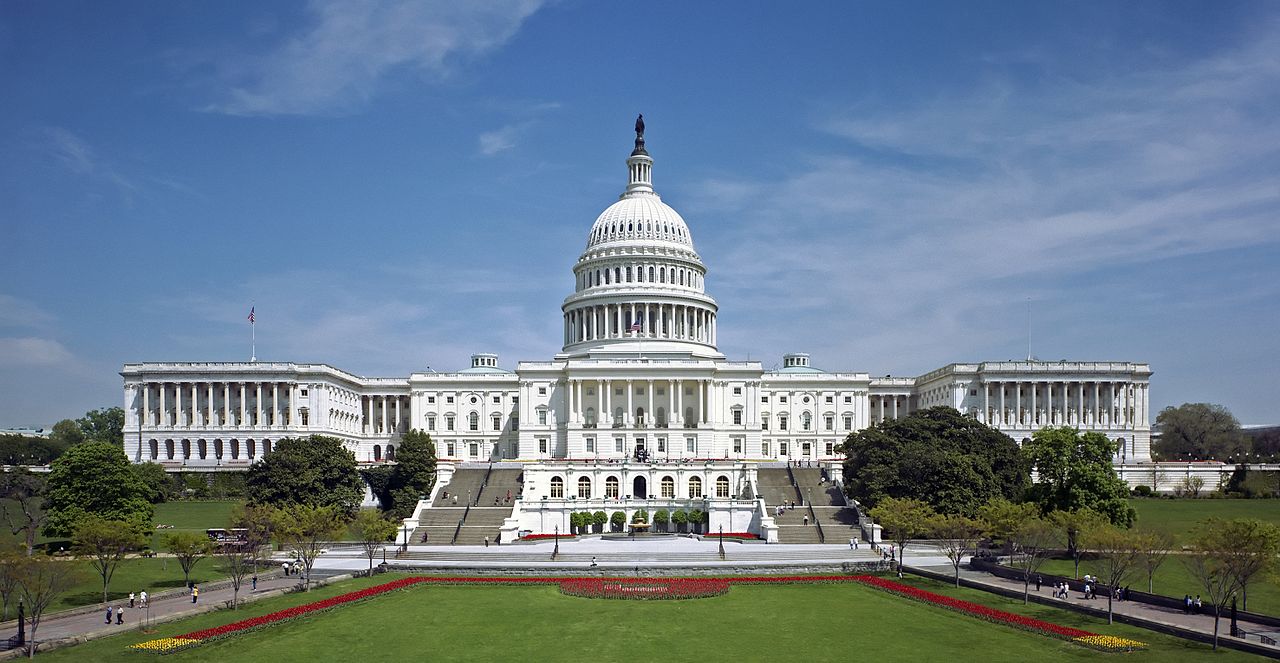
Panorama of the west facade of United States Supreme Court Building at dusk in Washington, D.C., 10 October, 2011.
Photo by Joe Ravi via Wikimedia Commons.

“Vesting federal legislative power in Congress [rather than bureaucrats]”, Gorsuch writes, “is vital because the framers believed that a republic — a thing of the people — would be more likely to enact just laws than a regime administered by a ruling class of largely unaccountable ‘ministers’.”

But what about those, like dissenting Justice Elena Kagan, who say that federal bureaucrats need wide latitude because Congress is failing to, in their view, adequately address climate change?

“Admittedly, lawmaking under our Constitution can be difficult,” Gorsuch acknowledges. “But that is nothing particular to our time nor any accident.”

“The framers believed that the power to make new laws regulating private conduct was a grave one that could, if not properly checked, pose a serious threat to individual liberty …” he said. “As a result, the framers deliberately sought to make lawmaking difficult by insisting that two houses of Congress must agree to any new law and the President must concur or a legislative supermajority must override his veto.”

With an empowered, unelected bureaucracy, “agencies could churn out new laws more or less at whim”, Gorsuch adds. “Intrusions on liberty would not be difficult and rare, but easy and profuse.”

This isn’t hypothetical speculation — it’s exactly what we’ve seen under the status quo.

For a glaring example, just consider the Centers for Disease Control’s pandemic-era “eviction moratorium”. The federal agency unilaterally declared that evictions nationwide were prohibited in many circumstances by citing an old statute that gave the CDC director the ability to order in specific places “such measures to prevent such spread of the diseases as he/she deems reasonably necessary, including inspection, fumigation, disinfection, sanitation, pest extermination, and destruction of animals or articles believed to be sources of infection.”

They went from that to a nationwide “eviction moratorium”. Stretch, much?

That’s right: Unelected government officials effectively commandeered the nation’s rental market, which caused tremendous dysfunction, trampled over property rights, and sabotaged the supply of rental housing. (For which prices are now surging. Shocker!) And, it was years before the courts finally stopped them and struck down the “moratorium”.

(Very expensive) roads, bridges, and railways to nowhere

In Palladium, Brian Balkus wonders why American can’t build anything any more:

Construction of the Fresno River Viaduct in January 2016. The bridge is the first permanent structure being constructed as part of California High-Speed Rail. The BNSF Railway bridge is visible in the background.
Photo by the California High-Speed Rail Authority via Wikimedia Commons.

Sepulveda’s cost and schedule overrun aren’t even the worst of it. Just as unattainable as a shortened commute is the Californian dream of building a bullet train that could take you from Los Angeles to San Francisco in under three hours. In 2008, a year before the Sepulveda project began, the state tried to turn this dream into a reality after voters approved a 512-mile high-speed rail (HSR) project. Amid failing overseas wars and financial crises, at the time it could’ve become a symbol of renewal not just for California but the entire country. Instead, it came to exemplify a dysfunctional government that lacks the capacity to build.

At the time California began accelerating the development of its HSR system it only had 10 employees dedicated to overseeing what was the most expensive infrastructure project in U.S. history. It ended up 14 years (and counting) behind schedule and $44 billion over budget. Incredibly, the state has not laid a single mile of track and it still lacks 10 percent of the land parcels it needs to do so. Half of the project still hasn’t achieved the environmental clearance needed to begin construction. The dream of a Japanese-style bullet train crisscrossing the state is now all but dead due to political opposition, litigation, and a lack of funding.

Despite its failure, the HSR project inaugurated the U.S.’s megaproject era. Once a rare type of project, by 2018 megaprojects comprised 33 percent of the value of all U.S. construction project starts. An alarming number of these have spiraled out of control for many of the same reasons that killed the California bullet train. The decade that followed the financial crisis was a kind of inflection point in the industry; this was when construction projects became noticeably worse and when the long-term implications could no longer be ignored. One of the most cited studies of the U.S.’s declining ability to build reviewed 180 transit megaprojects across the country, revealing that today, U.S. projects take longer to complete and cost nearly 50 percent more on average than those in Europe and Canada.

Having joined Kiewit in 2010, I witnessed these changes first-hand. I have since moved on, but have remained in the broader industry, including working on what are called “strategic pursuits” — the process by which companies compete for megaprojects. This experience has provided insight into the mechanics of how these projects are awarded and why they so frequently fail.

Even if the construction had proceded close to schedule, the economic justification for California’s high speed rail line was never strong … and it’s unlikely the service would have come close to breaking even. It almost certainly would have added significant ongoing costs to Californian taxpayers, and due to the nature of high speed rail services, been effectively a subsidy from working-class Californians to the laptop elites of Los Angeles and the San Francisco Bay area.

All of that, however, are merely additional reasons to believe the project was doomed from inception. Broadly speaking, all major infrastructure projects in the United States are struggling with paperwork and compliance requirements mostly driven by state and federal environmental regulations passed with the best possible intentions (as the saying goes):

Sepulveda’s numerous lawsuits and stakeholder conflicts are an example of a phenomenon that can be traced back to the passage of the National Environmental Policy Act (NEPA) in 1969. NEPA mandates developers to provide environmental impact statements before they can obtain the permits necessary for construction on huge swathes of infrastructure.

Shortly following the passage of NEPA, California’s then-governor Ronald Reagan signed the California Environmental Quality Act (CEQA) into law, which required additional environmental impact analysis. Unlike NEPA, it requires adopting all feasible measures to mitigate these impacts. Interest groups wield CEQA and NEPA like weapons. One study found that 85 percent of CEQA lawsuits were filed by groups with no history of environmental advocacy. The NIMBY attitude of these groups has crippled the ability of California to build anything. As California Governor Gavin Newsom succinctly put it, “NIMBYism is destroying the state”.

It is also destroying the U.S.’s ability to build nationally. The economist Eli Dourado reported in The New York Times that “per-mile spending on the Interstate System of Highways tripled between the 1960’s and 1980’s.” This directly correlates with the passage of NEPA. If anything, the problem has gotten worse over time. Projects receiving funding through the $837 billion stimulus plan passed by Congress in the aftermath of the financial crises were subject to over 192,000 NEPA reviews.

The NEPA/CEQA process incentivizes the public agencies to seek what is often termed a “bulletproof” environmental compliance document to head off future legal challenges. This takes time, with the average EIS taking 4.5 years to complete. Some have taken longer than a decade. A cottage industry of consultants is devoted to completing these documents, earning themselves millions in fees.

July 3, 2022

David Warren waves the flag

As noted the other day, the official period of mourning sickness that enveloped Canada last year after the blockbuster revelations about residential schools has not been followed-up by any substantive proof of any of the sensational claims that Prime Minister Trudeau seized upon to lecture Canadians about our historical guilt (the “genocideal nation” that he claimed we were) and to haul the national flag down to half-staff for half a year. David Warren chooses to wave the flag instead:

Justin Trudeau has always had a strong affinity for the symbolic gesture, especially when the media are around to record it.

The latest trick in what we might call “eco-commie-perv agitprop”, emerged while shaming Canadian history and traditions. I’ll touch on it in a moment. It is a product chiefly of the Indian Wars of the last few years. The White Man, and more specifically when Catholic, has been accused of massacring the Native People in 20th-century residential schools, just as he did upon coming to the continent. He then ploughs the anonymous victims into mass graves, showing his affinity to, exempli gratia, the Nazis.

This propaganda campaign, which quickly reached the tedious stage, was founded on a series of oft-repeated unambiguous lies, driven into our susceptible children in our compulsory public schools, and throughout life by such agencies as the CBC. (All our significant media are now under government control, subsidy, and watch.) White men, especially the Catholics, contaminate Canadian history by their Satanic essence, according to this malicious fantasy. Goodness and innocence can be found only in their victims, the “visible minorities” (or majorities, as the case may be). Shame is inculcated among persons exhibiting the wrong race.

I write of Canada, but something similar is happening in the United States, and has been carried to Europe on the sails of Hollywood and popular “music”. Canada is, however, an extreme example — of brazen idiocy — and even to underprivileged (all-white) rural places the message is piped in. Disharmonious voices must expect state interference, and eventual arrest.

For Canada now has political prisoners, including many who participated in the Freedom Convoy of truck drivers. Tamara Lich, a prominent organizer of this demonstration, has been gratuitously jailed, though she didn’t even try to commit a plausible crime. This week she was gaoled again, apparently for receiving a freedom medal. (Persons it was in her bail conditions not to meet may have been in the audience.) She was put out of sight for “Canada Day” (the former Dominion celebration, yesterday). This manipulation of Canadian law is, sadly, no longer unprecedented. It seems to be ordered directly from the Prime Minister’s Office.

More evidence produced against RCMP Commissioner … how long can she hang on now?

Filed under: Cancon, Government, Law, Politics — Tags: , , , , — Nicholas @ 03:00

In the free-to-cheapskates cut-down edition of The Line‘s weekly dispatch, the editors look at another confirmation that RCMP Commissioner Brenda Lucki really ought to resign, and soon:

Another document has been released that addresses the controversial teleconference between Lucki and local commanders and officials in Nova Scotia on April 28, 2020. This document is an email (which has been published by the Mass Casualty Commission in full), written by Lia Scanlan, a civilian who was working with the Nova Scotia RCMP as a communications advisor. She was a participant in the teleconference that is the source of the controversy. In an email sent to Lucki in 2021, well after the events in question but well before the recent controversy erupted, Scanlan harshly criticized Lucki’s conduct.

The bulk of Scanlan’s email relates to Lucki’s insensitivity to the officers and civilian staff in Nova Scotia in the aftermath of the shooting. (Lucki, for her part, has already acknowledged that she behaved badly in the meeting and regrets it.) What’s interesting for the purposes of the broader story, however, is that Scanlan’s email repeats the primary allegation contained in the earlier explosive document: that Lucki told the local commanders and officials that she was under political pressure to accelerate the release of information about the crime prior to a forthcoming gun-control announcement by the Trudeau Liberal government.

Specifically, Scanlan wrote: “Eventually, you informed us of the pressures and conversation with Minister Blair, which we clearly understood was related to the upcoming passing of the gun legislation. and there it was. I remember a feeling of disgust as I realized this was the catalyst for the conversation and perhaps a justification for what you were saying about us.”

This is interesting for two big reasons. The first is obvious: it is verification, from a new source also present at the controversial meeting, of the primary allegation that has been made against Lucki, and which she has not explicitly denied, though she has now put out two vague statements denying any intention to interfere. The second interesting thing is that one of the immediate lines of defence that miraculously sprung into being last week — just kidding, these were clearly PMO talking points — was that criticisms of Lucki’s conduct simply reflected the old-guard, all-male club mentality of the RCMP seeing an opportunity to put a hatchet into the uppity lady boss they’ve been saddled with by the Trudeau government.

Your Line editors weren’t born yesterday. We’re sure there’s plenty of good ole boys in the RCMP who do indeed feel exactly that way about Lucki. Scanlan, though, doesn’t reflect that. She’s a young woman, and a civilian. Further, even if the allegations were 100 per cent coming from an old-boys club, that doesn’t mean the allegations aren’t true. There have been many, many examples of pissed-off, agenda-driven people with axes to grind striking back at their rivals and opponents by … telling the truth about them.

As we said last week, Lucki is probably finished. If she doesn’t have the good judgment to resign, she should be fired. We don’t honestly know if this problem goes any higher up the chain of command than her. That’s why we repeat what we said last week: we need an investigation into this.

We will note that the government’s tone has slightly changed this week. It’s hard to read too much into government statements. And we want to be careful to avoid simply projecting our own views onto bland bureaucratese. But it does seem to us that the government’s position has evolved slightly, from “There’s no truth to these allegations and we stand by the commissioner” to something more akin to, “Hey, if she did this, it wasn’t because we asked her to. Don’t blame us!”

Commissioner Lucki? That sound you hear is the big red bus you will soon be thrown under pulling up to the curb you are standing beside. Don’t say we didn’t warn you.

July 1, 2022

Trust “the experts”

Chris Bray on the appalling track record of so many of our modern-day “experts”:

So the public health experts are baffled by the consistent failure of their predictive models, and the economic experts are baffled by the consistent failure of their predictive models. It’s like a chef who keeps trying to grill a steak, only to find that he’s burnt another lemon pie. “I SWEAR TO GOD I THOUGHT THIS ONE WAS A BEEF THING.”

These people aren’t stupid, but they’re stupid in practice because they show up to the game with the weight of what they know people in their position are supposed to say and think. Fashionable experts, in-group leaders in their status-compliant position in a field, aren’t reviewing the evidence — ever — but are instead reviewing a performative checklist dotted with social status land mines.

They’re on a team, so they say the team slogans.

[…]

If that’s how expertise works, we no longer have have any. We have actors who play the brow-furrowing expert role, but have no real job beyond intoning the message of the day. It says on this card that we recommend even more Covid vaccines for everyone. Let’s break for lunch!

But, mercifully, that’s not invariably how expertise works. And this is why politicians and trend-policing media figures are so completely baffled by experts like Robert Malone or Ryan Cole, or Geert Vanden Bossche or Clare Craig or Peter McCullough, experts who follow the evidence wherever it goes. Tone and social reception tells you a lot: Does an expert say things that aren’t comforting, that sound a little … not on the team? That person clears the first barrier, and you can start assessing the specifics of what they say. Look for journalists who are offended and triggered, and try to find the person who hurt their feelings. That person may turn out to be wrong, but he won’t turn out to be Paul Krugman wrong.

June 30, 2022

QotD: Sparta had Lycurgus, while Athens had Solon … who at least actually existed

Filed under: Europe, Government, Greece, History, Quotations, Religion — Tags: , , , — Nicholas @ 01:00

Lycurgus was the name the Spartans gave for their mythical founder figure, a Spartan who had supposedly lived in the late 9th century and had set up the Spartan society as we see it in the classical period. Almost all of our details for his life come from a biography by Plutarch, written c. 100 A.D. (date to be significant in a moment). The story the Spartans told went thusly:

    Once upon a time … there was a Spartan named Lycurgus, and he was the very best Spartan …

Lycurgus had been the younger brother of one of Sparta’s two kings, but had left Sparta to travel when his brother died, so that he would be no threat to his young nephew.

After a time, the Spartans begged Lycurgus to come back and reorganize society, and Lycurgus – with the blessing of the Oracle at Delphi – radically remade Spartan society into the form it would have for the next 400 years. He did not merely change the government, but legislated every facet of life, from child-rearing to marriage, to the structure of households, the economic structure, everything. Once he had accomplished that, Lycurgus went back to Delphi, but before he left he made all the Spartans promise not to change his laws until he returned. Once the Oracle told him his laws were good, he committed suicide, so that he would never return to Sparta, thus preventing his laws from ever being overturned. So the Spartans never changed Lycurgus’ laws, which had been declared perfect by Apollo himself. Subsequently, the Spartans accorded Lycurgus divine honors, and within Sparta he was worshiped as a god.

    And that’s how Lycurgus remade Sparta. The End.

The role Lycurgus serves in the sources is as the perfect, infallible founder figure. No less than the Oracle at Delphi – the divine word of Apollo – declared Lycurgus a god (Hdt. 1.65.3). For later sources who, we must stress – believe their own religion (as people everywhere are wont to do) – that means, essentially a priori that Lycurgus’ “constitution” must be practically flawless and all flaws must stem from its imperfect implementation.

But – wait a second – what is our evidence for the actual person of Lycurgus or the character of the state he set up?

Remember how I said Lycurgus is dated to the late 9th century – specifically the 820s B.C. or so. That’s a huge problem. The earliest Greek literature comes from around (very roughly – there is deep scholarly debate here that I’m glossing over) the mid-8th century (c. 750 or so) and is entirely mythological in nature. The first actual history is Herodotus, writing in the mid-400s. The earliest historical event we have evidence for is the Lelantine War (c. 700ish), at least a century after the life of Lycurgus. None of our sources have anything to go on about Lycurgus – save for what the Spartans – who already worship this figure as a god – tell them. Crucially, Tyrtaeus, writing in the 650s B.C., while he does mention the rhetra (an oracle the Spartans received concerning the arrangement of their government) does not mention Lycurgus (although Plutarch is quick to connect the two, Plut. Lyc. 6.5), meaning that the earliest source for Lycurgus’ existence is Herodotus.

Wait, it gets even better – the one thing we do know about Lycurgus’ laws is that they were not written down (Plut. Lyc. 13.1). Also, Lycurgus supposedly took steps to prevent his remains from returning to Sparta (Plut. Lyc. 29.5-6, but cf. 31.4) and no continued family line, which seems like exactly the sort of explanation you put at the end of a good campfire story for why there was absolutely no trace of such an important man save his legend. So not only the details of Lycrugus’ life, but also the society he created will have lived as oral tradition – potentially changing from one telling to the next, being embellished or expanded – for generations before being committed to the permanent, unchanging memory of written history.

In short, our only evidence for Lycurgus are the campfire stories told about him by people who worshiped him as a god, as related to individuals centuries later. Which is to say that, by historical standards, there is no reliable evidence at all that Lycurgus existed.

[…]

Lycurgus is often set against Solon – the early 6th century Athenian reformer. It is true that Athenians also tend to attribute things to Solon that were later developments, but we need to note the key differences: Solon comes two centuries after Lycurgus (thus, unlike Lycurgus, in the historical period), didn’t receive divine honors and most importantly writes to us (he wrote poetry, some of which survives), so that we can know he was an actual real person. Asking students – as I have seen done – to compare a real, flawed reformer with an idealized, semi-mythical demi-god without any kind of guidance as to the nature of these two figures is, quite frankly, educational malpractice.

Bret Devereaux, “Collections: This. Isn’t. Sparta. Part III: Spartan Women”, A Collection of Unmitigated Pedantry, 2019-08-29.

June 29, 2022

COVID Exposed the Truth About the CDC

ReasonTV
Published 28 Jun 2022

The agency will never be controlled by fact-driven experts shielded from politics.
——————-
The Centers for Disease Control and Prevention (CDC) was once widely viewed as the gold standard in public health, considered an apolitical, science-driven bulwark against all pathogen threats, foreign and domestic.

Today, trust in the agency has plummeted because COVID-19 exposed the truth: The CDC is thoroughly corruptible, and federal regulators will never be impartial experts. They respond to political incentives just like everyone else, and a fact-driven, purely technocratic state is an impossible dream.

The Trump administration pressured the CDC to narrow the scope of testing so case counts would drop, blocked officials from doing interviews, and edited its flagship scientific reports. The CDC provided a scientifically dubious public health rationale for rejecting migrants at the southern border. President Joe Biden continued that policy, and under his purview, CDC guidance on school closures was surreptitiously written by leaders of the country’s second-largest teachers union.

Tom Frieden, a former CDC director, co-authored a 2021 op-ed with three other former agency heads expressing hope that Biden’s incoming CDC Director Rochelle Walensky would “restore the public’s confidence in the CDC’s scientific objectivity,” with its reputation “a shadow of what it once was.” Yet, Frieden endorsed large-scale protests against racial injustice two months after writing in The Washington Post that “the faucet of everyday activities needs to be turned on slowly. We cannot open the floodgates.” Meanwhile, public health officials were keeping people from attending the funerals of their loved ones.

And could it be pure coincidence that the CDC chose the Friday before President Biden’s State of the Union address to drop its indoor mask recommendation for the majority of Americans, even though the supporting data were months old?

In other words, it doesn’t matter who occupies the White House — political incentives mean that, no matter how dedicated or competent the career scientists who work at the CDC are, the agency will never be controlled by fact-driven experts shielded from the “hurry and strife of politics,” as Woodrow Wilson wrote. After decades of mission creep, the CDC’s role should be strictly narrowed, limited to surveillance and coordination, leaving the heavy lifting to local officials and private and academic researchers who are more reactive to direct feedback from their communities.

Written and produced by Justin Monticello. Edited by Isaac Reese. Graphics by Reese, Tomasz Kaye, and Nodehaus. Audio production by Ian Keyser.

Music: “Robotic Butterflies” by Evgeny Bardyuzha; “We Fall” by Stanley Gurvich; “Free Radicals” by Stanley Gurvich.

Photos: BSIP/Newscom; BSIP/Newscom; Sarah Silbiger/UPI/Newscom; Shawn Thew – Pool via CNP/ZUMAPRESS/Newscom; Alex Edelman/ZUMA Press/Newscom; SMG/ZUMA Press/Newscom; Simon Shin/ZUMA Press/Newscom; Michael Brochstein/ZUMAPRESS/Newscom; Adam Schultz/White House/Newscom; Brazil Photo Press / SplashNews/Newscom; Tom Williams/CQ Roll Call/Newscom; Polaris/Newscom; Jonathan Alpeyrie/Polaris/Newscom; Aimee Melo/dpa/picture-alliance/Newscom; Julian Stratenschulte/dpa/picture-alliance/Newscom; Sven Hoppe/dpa/picture-alliance/Newscom; CNP/AdMedia/Newscom

June 28, 2022

If your gas can sucks – and it probably does – thank the EPA

Filed under: Bureaucracy, Environment, Government, USA — Tags: , , , — Nicholas @ 05:00

The editors at FEE dug out an old classic article from Jeffrey A. Tucker that still holds up ten years later:

The gas gauge broke. There was no smartphone app to tell me how much was left, so I ran out. I had to call the local gas station to give me enough to get on my way. The gruff but lovable attendant arrived in his truck and started to pour gas in my car’s tank. And pour. And pour.

“Hmmm, I just hate how slow these gas cans are these days,” he grumbled. “There’s no vent on them.”

That sound of frustration in this guy’s voice was strangely familiar, the grumble that comes when something that used to work but doesn’t work anymore, for some odd reason we can’t identify.

I’m pretty alert to such problems these days. Soap doesn’t work. Toilets don’t flush. Clothes washers don’t clean. Light bulbs don’t illuminate. Refrigerators break too soon. Paint discolors. Lawnmowers have to be hacked. It’s all caused by idiotic government regulations that are wrecking our lives one consumer product at a time, all in ways we hardly notice.

It’s like the barbarian invasions that wrecked Rome, taking away the gains we’ve made in bettering our lives. It’s the bureaucrats’ way of reminding market producers and consumers who is in charge.

Surely, the gas can is protected. It’s just a can, for goodness sake. Yet he was right. This one doesn’t have a vent. Who would make a can without a vent unless it was done under duress? After all, everyone knows to vent anything that pours. Otherwise, it doesn’t pour right and is likely to spill.

It took one quick search. The whole trend began in (wait for it) California. Regulations began in 2000, with the idea of preventing spillage. The notion spread and was picked up by the EPA, which is always looking for new and innovative ways to spread as much human misery as possible.

An ominous regulatory announcement from the EPA came in 2007: “Starting with containers manufactured in 2009 … it is expected that the new cans will be built with a simple and inexpensive permeation barrier and new spouts that close automatically.”

The government never said “no vents”. It abolished them de facto with new standards that every state had to adopt by 2009. So for the last three years, you have not been able to buy gas cans that work properly. They are not permitted to have a separate vent. The top has to close automatically. There are other silly things now, too, but the biggest problem is that they do not do well what cans are supposed to do.

And don’t tell me about spillage. It is far more likely to spill when the gas is gurgling out in various uneven ways, when one spout has to both pour and suck in air. That’s when the lawn mower tank becomes suddenly full without warning, when you are shifting the can this way and that just to get the stuff out.

June 27, 2022

It’s not clear where the money will come from to fund the recently announced NORAD upgrades

Filed under: Cancon, Government, Military — Tags: , , — Nicholas @ 03:00

Aside from sticking knives in the backs of political critics, Justin Trudeau’s government loves announcing new programs and additional spending more than anything else. The boring, workaday details like actually implementing the newly announced programs … well, that sometimes gets forgotten in the rush to make new announcements. In this case, the recent announcement that Canada will be spending Cdn$4.9 billion to upgrade our contribution to NORAD for continental defence — and to no real surprise for anyone who’s been paying attention — it’s not clear even to the head of the Canadian Armed Forces just where that money is actually supposed to come from:

Canada’s defence chief says he doesn’t yet know where the money is coming from for $4.9 billion in promised upgrades to NORAD radar and surveillance systems.

In an interview with The West Block‘s Mercedes Stephenson, Gen. Wayne Eyre was asked about growing questions facing the government to detail their spending plan on NORAD upgrades.

Sources have told Global News the military is uncertain about where the funds are coming from, and that there are meetings happening at the department trying to determine how much of the money is new. Those sources say there are significant concerns that the money may not be new, and may need to be re-capitalized from within the existing defence budget.

“I haven’t completely figured out myself the source of funds for this,” Eyre said.

“So I can’t say definitively where it’s coming from. I will say, though, the announcement was welcome.”

Eyre was also asked whether the military is planning any departmental cuts in order to be able to allocate $4.9 billion to the NORAD upgrades.

“We haven’t looked at cutting. But as always, we have to look at rebalancing,” he said.

“The force that we have today is not the force that we need to support tomorrow. So we need to look at force structure. Do we have it in the right place? Do we need to look at rerolling of units so that they undertake roles that are more relevant for the future security environment? That is all important.”

Global News has asked for clarity on the question to Defence Minister Anita Anand’s office.

No answer has yet been received.

June 25, 2022

Kenneth Whyte announces the Sutherland House Prize

Filed under: Books, Cancon, Government, History — Tags: , — Nicholas @ 03:00

If the Canada Council for the Arts — the most important prize-awarding organization in Canadian literature — decides to ignore the majority of works of history in their award schemes, what can the Canadian literary community do about it? Sutherland House reacts by creating their own prize for those works deemed no longer prize-worthy by the Canada Council:

Almost from the start of this newsletter in May 2019, we’ve been concerned with the crisis in Canadian nonfiction publishing.

It began with our realization (SHuSH 10 and SHuSH 17) that the Canada Council had decided that books relying primarily on facts as opposed to the author’s voice are not art. Personal history, personal memoir, personal essay meet the Canada Council’s standard for art and are therefore eligible for grants and awards. Objective fact-based journalism, essays, histories, biographies, business and science writing, not so much.

We were bothered by the notion that the distance an author chooses to take from a subject (first person, say, versus third-person) is what makes or breaks a work of art. Same goes for an author’s fidelity, or lack thereof, to verifiable fact.

It also seemed bonkers that a government agency like the Canada Council would bail on researched nonfiction in favor of works in which the subjective experience of the writer is primary at a time when the rest of the government was so panicked over the lack of reliable fact-based information in the public sphere that it was pumping more than $500 million into our failing newspaper chains. If Ottawa was genuinely concerned about the quality of public discourse in Canada and the information available to the electorate, it would be directing the Canada Council to rescind its policy and support fact-based nonfiction to the same levels as fiction, poetry, and personal literature.

SHuSH pursued the issue. We explained why Canada Council funding matters: most publishers in Canada would be out of business or much reduced without their grants, so they naturally produce books that keep them in the money. Researched nonfiction is expensive and time-consuming to produce at the best of times; when it’s relatively disadvantaged by arts funders, it begins to disappear. It’s no accident that the shortlists of all the major nonfiction prizes in Canada have been dominated by memoir in recent years.

(We’ve always been at pains to add that we have nothing against memoir — we publish our share — but it is no substitute for well-researched, fact-based nonfiction. We need investigative journalism, history, biography, politics, current affairs, science & health books if we’re going to understand ourselves and our times.)

June 24, 2022

QotD: “[Woodrow] Wilson was a human pile of flaming trash”

Filed under: Government, History, Quotations, USA — Tags: , , , — Nicholas @ 01:00

I come now not to explain Wilson, but to hate him. A national consensus on hating Wilson is long overdue. It is the patriotic duty of every decent American. While conservatives have particular reasons to detest Wilson, and all his works, and all his empty promises, there is more than enough in his record for moderates, liberals, progressives, libertarians, and socialists to join us in this great and unifying cause.

The roll call of the worst presidents in American history includes some consensus top choices. James Buchanan and Franklin Pierce both contributed mightily to the nation’s slide into the Civil War, and Andrew Johnson did enduring harm to Reconstruction in the war’s aftermath. But all three of those men were repudiated by the end of their single term in office. They left no heirs who would acknowledge their influence, no fleet of academic hagiographers who could see themselves reflected in those presidencies.

Wilson, by contrast, served two full and consequential terms. He was the only Democrat re-elected to the job during the century between 1832 and 1936. He was lionized by liberals and progressives in academia and the media for most of the century after he left office in 1921. In my youth, and perhaps yours, Wilson was presented in history books as a tragic hero whom the unthinking American people didn’t deserve. He was often placed highly on academics’ rankings of the presidents. Princeton University named its school of international relations for him. Even in rescinding that honor in June 2020, the university’s press release declared: “Though scholars disagree about how to assess Wilson’s tenure as president of the United States, many rank him among the nation’s greatest leaders and credit him with visionary ideas that shaped the world for the better.”

Nah. Wilson was a human pile of flaming trash. He was a bad man who made the country and the world worse. His name should be an obscenity, his image an effigy. Hating him is a wholesome obligation of citizenship.

Dan McLaughlin, “The Hater’s Guide to Woodrow Wilson”, National Review, 2022-03-16.

June 23, 2022

Lucki will need to be lucky to keep her job as RCMP Commissioner

Filed under: Cancon, Government, Law, Politics, Weapons — Tags: , , , , , — Nicholas @ 05:00

In The Line, Stephen Maher covers the active collusion between the Commissioner of the RCMP, Brenda Lucki, and the Liberals in Ottawa to use the tragedy in Nova Scotia that took so many lives to push for further federal gun control measures:

It is bitterly ironic that the first female commissioner of the Royal Canadian Mounted Police may have to resign for pushing the force to be more open, but it is hard to imagine that Brenda Lucki will be able to maintain public confidence after evidence presented Tuesday in the inquiry into the Nova Scotia mass shooting.

On April 28, 2020, 10 days after a killer went on a shooting and arson rampage that left 22 innocent people dead in rural Nova Scotia, Supt. Darren Campbell gave a news conference in which he declined to reveal what kind of firearms the killer used because investigators in Canada and the United States were still trying to find out how the killer came to have them.

After the news conference, Lucki summoned Campbell to a conference call where she chewed him out for holding that information back, as the Halifax Examiner reported.

    “The Commissioner said she had promised the Minister of Public Safety and the Prime Minister’s Office that the RCMP (we) would release this information”, Campbell’s notes say. “I tried to explain there was no intent to disrespect anyone however we could not release this information at this time. The Commissioner then said that we didn’t understand, that this was tied to pending gun control legislation that would make officers and the public safer. She was very upset and at one point Deputy Commissioner (Brian) Brennan tried to get things calmed down but that had little effect. Some in the room were reduced to tears and emotional over this belittling reprimand.”

If this is accurate — and a statement from Lucki late Tuesday did not contradict it, reading in part that “I regret the way I approached the meeting and the impact it had on those in attendance” — then it is hard to see how Lucki can stay in her job. Further, the jobs of then-public safety minister Bill Blair and Prime Minister Justin Trudeau are also in jeopardy.

[…]

Trudeau and Blair are in the vote-seeking business, but Lucki is not supposed to be. If Campbell’s notes are accurate, she was confused about that, which is worrying.

We don’t know how much pressure the Liberals were applying. They clearly wanted to make a big splash with their gun announcement, and it would have had more impact if they had been able to say that they were banning the very guns used by the killer.

Pierre Poilievre has called for an emergency committee meeting to look into the matter, and that seems like a good idea. If Lucki was clumsily freelancing, seeking to curry favour with her bosses, she needs to go. If Blair and Trudeau were putting the muscle on her to release politically helpful information even at the risk of damaging an investigation, they need to go. Either way, we need to find out.

« Newer PostsOlder Posts »

Powered by WordPress