
World War Two
Published 19 Apr 2022Nikita Khrushchev has served Joseph Stalin faithfully for the past decade. He’s a career commissar and party man. So, when war breaks out, are commissars like Khrushchev little more than Stalinist enforcers? Or is there more to the institution than that?
(more…)
April 20, 2022
Khrushchev – Stalin’s Loyal Enforcer?
Comments Off on Khrushchev – Stalin’s Loyal Enforcer?
De Tocqueville once called it “sleeping on a volcano”
Joel Kotkin looks at the first round results of the French Presidential election and wonders how long the working classes are going to put up with everything the elites dish out:

Whatever the final outcome, the recent French elections have already revealed the comparative irrelevance of many elite concerns, from genderfluidity and racial injustice to the ever-present “climate catastrophe”. Instead, most voters in France and elsewhere are more concerned about soaring energy, food and housing costs. Many suspect that the cognitive elites, epitomised by President Emmanuel Macron, lack even the ambition to improve their living conditions.
The French elections reflect the essential political conflict of our time. On one side, there is a powerful alliance between the corporate oligarchy and the regulatory clerisy. On the other, there are two beleaguered and angry classes – the small-business owners and artisans, and the vast, largely unorganised service class. The small-business class generally tends to favour the populist right, whether in America, Australia or Europe. These people want the government out of their business and to be left alone. Meanwhile, workers tend towards the populist left, which promises to relieve their economic pain.
The common feature is the politics of anger and resentment. In the first round of the French elections, a majority voted either for Marine Le Pen and other rightist candidates, or for the old Trotskyist warhorse Jean-Luc Mélenchon and other candidates of the hard left. The establishment parties, like the centre-left Parti Socialiste and the Gaullist Républicains, were left way behind. The ultra-green Parti Socialiste mayor of Paris, Anne Hidalgo, won less than two per cent – a pathetic performance from the onetime ruling party. Intriguingly, voters under 35 went first for Mélenchon and then Le Pen, leaving the technocrat Macron in dismal third place among the young. Macron only won decisively among voters over 60.
We may, as de Tocqueville put it during the early stages of the Industrial Revolution, be “sleeping on a volcano”. A still inchoate rebellion from below against the concentration of wealth and power above seems to be gathering momentum. Across the 36 wealthier countries of the Organisation for Economic Cooperation and Development (OECD), the richest citizens have taken an ever-greater share of national GDP in recent years as the middle class has become smaller. Heavily in debt, mainly because of high housing costs, the middle class “looks increasingly like a boat in rocky waters”, suggests the OECD.
One key indicator of the declining middle class is rates of home ownership, which are stagnant or plummeting, particularly among the young, in the United States, the United Kingdom and Australia. In the United States, the chance of middle-class earners moving up to the top rungs of the earnings ladder has dropped by approximately 20 per cent since the early 1980s. Life expectancy in the US has dropped to the lowest levels in a quarter of a century.
Comments Off on De Tocqueville once called it “sleeping on a volcano”
The Unbreakable ROCKEX: Canada’s answer to the Enigma machine
Polyus Studios
Published 30 Dec 2021Well before digital encryption and VPNs there was Rockex, Canada’s unbreakable cipher machine that rivaled the German Enigma in its day. Although completely hidden from the public, Canada has played a noticeable role in the history of espionage. During the Cold War Canadian cipher machines worked alongside those of her allies to keep communications secure and helped to preserve the peace.
Check out cryptomuseum.com for more information about Rockex and to find the source of most of the pictures of the device I used.

Comments Off on The Unbreakable ROCKEX: Canada’s answer to the Enigma machine
April 19, 2022
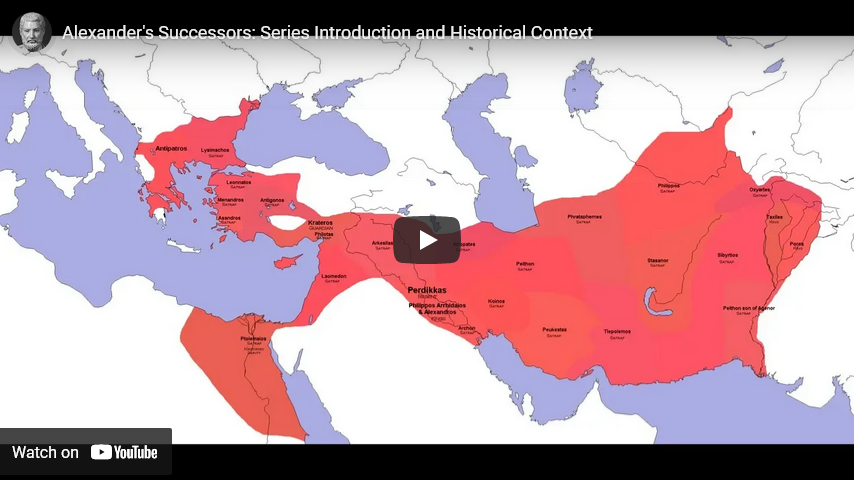
Alexander’s Successors (the Diadochi): Series Introduction and Historical Context
Thersites the Historian
Published 24 Nov 2018This video introduces my series on Alexander’s Successors by talking about what the series will be like and by going through the historical context that the viewer might need to understand the age of the Successors.
Patreon link: https://www.patreon.com/thersites
PayPal link: paypal.me/thersites
Twitter link: https://twitter.com/ThersitesAthens
Minds.com link: https://www.minds.com/ThersitestheHis…
Steemit/dtube link: https://steemit.com/@thersites/feed
Backup Channel: https://www.youtube.com/channel/UCUrD…
Comments Off on Alexander’s Successors (the Diadochi): Series Introduction and Historical Context
When the Germans had to surrender twice
The end of the war in Europe is usually noted as being the 8th of May, 1945, when General Eisenhower received the surrender of German forces, but the Soviets (and now the Russians) mark the anniversary on the 9th:
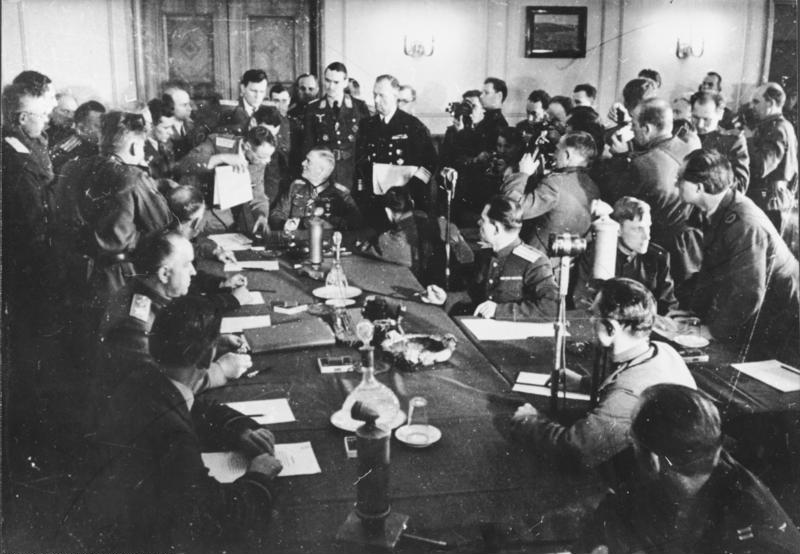
ADN-ZB/Archiv
II.Weltkrieg 1939-1945
Die bedingungslose Kapitulation der faschistischen deutschen Wehrmacht wird am 8. Mai 1945 in Berlin-Karlhorst unterzeichnet.
Links: Der Vertreter des Oberkommandos der Roten Armee, Marschall der Sowjetunion G. K. Shukow, am Tischende Generalfeldmarschall Wilhelm Keitel.
J 0422/600/2 N
It was at three in the morning on Tuesday, 8 May 1945, that Generaloberst Alfred Jodl of the German High Command, signed a surrender document at General Dwight Eisenhower’s headquarters in Rheims, France. The European war was over. It was VE-Day. Stalin’s representative, General Ivan Susloparov, cabled his chief the great news.
However, the Russian leader flew into a rage. He wanted his own observance and insisted on a further ceremony at the Soviet military HQ in Karlshorst, a former Wehrmacht officers’ mess, six miles south-east of central Berlin. Chosen simply because it was one of the few buildings in the capital left with windows and a roof, the formalities were presided over by the captor of the city, Marshal Georgy Zhukov.
This time, it was Generalfeldmarschall Wilhelm Keitel, Jodl’s superior, who read over a near-identical document. Susloparov was again present, along with Carl Spaatz for the Americans and Jean de Lattre de Tassigny, representing France. Newsmen were unaware of the diplomatic spat that delayed proceedings.
De Lattre refused to sign unless the French tricolore was in evidence among the standards and pennants decorating the surrender room. The first Soviet solution hilariously produced a Dutch flag. To pacify an even-more outraged de Lattre, a Red Army seamstress was summoned to run up the appropriate banner. More delays ensued while the Allies bickered over the order of signatures and witnesses, only agreed after the mollifying effects of vodka and some food.
This is why the final ceremony began shortly after midnight. Cameras captured Keitel in full dress uniform, arriving in pompous mood. Flashlights caught the glint of his many medals, and the arrogant flourish of his marshal’s baton, held with gloved hands. He gazed around the room, haughty contempt written across his face. The field marshal removed only his right glove, screwed his monocle into his left eye and applied a fountain pen to the two-page, typewritten document. It was 00:16 local time on Wednesday, 9 May, which became Soviet Victory Day and remains so in Eastern Europe.
Each subsequent year on Victory Day, Red Square has echoed to the “Hurrahs” of vast numbers of Russian soldiers, sailors, marines and paratroopers, national guardsmen and airmen. They are drawn up to listen to their commander-in-chief and inspected by generals. Banners are saluted; swords flash through the air. Serenaded by massed bands playing stirring tunes, they march past the top brass, assembled on the roof of Lenin’s Mausoleum.
Comments Off on When the Germans had to surrender twice
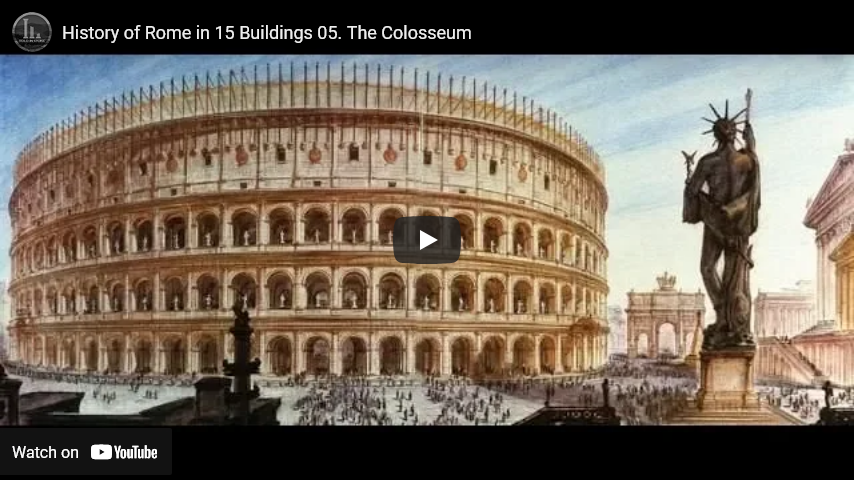
History of Rome in 15 Buildings 05. The Colosseum
toldinstone
Published 27 Sep 2018Six lions fighting eight tigers! A troupe of performing elephants! Executions, accompanied by a full orchestra! Twelve gladiatorial combats, guaranteed to the death! So might a day of games at the Colosseum, the subject of our fifth episode, be advertised. No monument better encapsulates Roman imperialism – or its costs.
If you enjoyed this video, you might be interested in my forthcoming book Naked Statues, Fat Gladiators, and War Elephants: Frequently Asked Questions about the Ancient Greeks and Romans. You can find a preview of the book here:
https://toldinstone.com/naked-statues…
If you’re so inclined, you can follow me elsewhere on the web:
https://www.reddit.com/r/AskHistorian…
https://www.instagram.com/toldinstone/To see the story and photo essay associated with this video, go to:
https://toldinstone.com/the-colosseum/Thanks for watching!
Comments Off on History of Rome in 15 Buildings 05. The Colosseum
QotD: “Bog iron” in ancient and medieval society
There are quite a lot of ores of iron, but not all of them could be usefully processed with ancient or medieval technology. The most commonly used iron ore was hematite (Fe2O3), with goethite (HFeO2) and limonite (FeO(OH)·nH2O) close behind. Rarer, but still used was magnetite (Fe3O4) and siderite (FeCO3). All of these can occur in big rock deposits, but may also occur as “bog iron” where oxidation occurs in acidic environments (in swamps and bogs) leading to the formation of small clumps of iron-rich material. Many of these ores can be spotted visually by someone who knows what they are doing; hematite can be blackish to reddish-brown but leaves tell-tale red streaks (of rust); goethite’s black-brown color is also fairly recognizable, as is limonite with its burnt yellow-orange hue. We’ll come back to these ores a few times both this week and next, because while they can all yield iron, some of them yield that iron easier than others.
One distinction here is between bog iron and iron in ore deposits. Bog iron is formed when ground-water picks up iron from iron-ore deposits, where that iron is then oxidized under acidic conditions to form chunks of iron minerals (goethite, magnetite, hematite, etc.), typically in smallish chunks. Bog iron is much easier to smelt because it contains fewer impurities than iron ore in rock deposits, but the quantity of iron available from bog iron is relatively low (although actually renewable, unlike mines; a bog can be harvested for iron again after a few decades as the processes which produce the bog iron continue). Because of its low output, bog iron tends to be an important part of the iron supply only when production is relatively low, such as during the Pre-Roman Iron Age in Europe, or the early medieval period.
But what I want to stress here at the outset is that while the local variety of iron may vary based on conditions, iron ores are sufficiently common that prior to the industrial revolution, it wasn’t generally necessary to trade or transport them over long distances because most areas have deposits. There are some exceptions (Japan is notoriously mineral poor – my limited geological understanding is that this is common in volcanic land formations – and while it does have some iron deposits, they are few and relatively small), but for the most part, getting iron ore was not hard. As we’ll see, timber availability was actually often a more pressing limitation on iron exploitation than the ore itself […]
Bret Devereaux, “Iron, How Did They Make It? Part I, Mining”, A Collection of Unmitigated Pedantry, 2020-09-18.
Comments Off on QotD: “Bog iron” in ancient and medieval society
April 18, 2022
Republic to Empire: The Augustan Settlement
seangabb
Published 23 Mar 2021Here is the tenth lecture, which covers the Augustan Settlement and the ending of the Roman Republic. Discussion includes: the Constitutional Settlements, graphical representations of the old and new Roman Constitutions; opinions in Rome and the provinces of the new order; the legitimisation propaganda; the general success of the reign of Augustus.
(more…)
Comments Off on Republic to Empire: The Augustan Settlement
7.62mm Rifle L8: The Last Gasp of the Service Lee Enfield
Forgotten Weapons
Published 13 Dec 2021http://www.patreon.com/ForgottenWeapons
https://www.floatplane.com/channel/Fo…
Cool Forgotten Weapons merch! http://shop.forgottenweapons.com
After the British adopted the FAL as the L1A1 rifle, there was still an interest in converting stocks of existing No4 Enfield rifles to the new 7.62x51mm cartridge for reserve and training use. A conversion system was developed using a new barrel, bolt, and magazine — although the Sterling company was doing much the same thing at the same time and intellectual property lawsuits would close the project for nearly 10 years. By the time the lawsuits cleared up, it had become clear that the rifles were neither particularly successful nor particularly necessary anymore. The problem the British has was one of accuracy — the 7.62mm version just wasn’t sufficiently accurate. A thousand were sold to Sierra Leone, and a few more used in New Zealand and by cadet organizations in the UK, but the project was basically a failure.
Contact:
Forgotten Weapons
6281 N. Oracle 36270
Tucson, AZ 85740

Comments Off on 7.62mm Rifle L8: The Last Gasp of the Service Lee Enfield
QotD: Colonialism in the British Raj
There I met a man of very advanced age, whose name I cannot remember (to my shame) who had been a civil servant in India during the final days of the Raj. He told me something I have pondered ever since. “We were just a handful of people providing guidance and administration”, he said, “with overwhelming consent in a gigantic country. We even slept in the streets during summer on khatias and had no fear of being killed.”
Whatever politics was happening was between the British and Indian political elites, and plainly did not affect most normal Britishers or Indians.
Consider, that in 1901 Indians numbered nearly 300 million while the British-born population of India was around 150,000. Colonialism was indeed by the consent of the governed, and the independence fight was primarily an intra-elite affair, where the mostly western-educated native would-be boss class fought with the foreign overlords who taught them, for political control.
In the sub-continent, the civil service, lower (and some higher) judiciary, magistrates, police officers, intelligentsia, landed gentry and local businesses were primarily Indian, a lot of them pro-imperial to the end of their time. What happened to those voices? In current post-colonial discourse, one cannot read any pro-imperial literature, which is either lost or considered too reactionary to be taught at universities, an injustice to a clear understanding of history.
Sumantra Maitra, “Pro-imperial truths of the old world”, The Critic, 2021-11-09.
Comments Off on QotD: Colonialism in the British Raj
April 17, 2022
Operation Mincemeat, 1943
Once an obscure bit of espionage and military disinformation, the events of Operation Mincemeat are being brought to the big screen (boy, does that term seem dated) in a feature film starring Colin Firth. Michael Curtis provides a look at the actual deception mission that inspired the film:
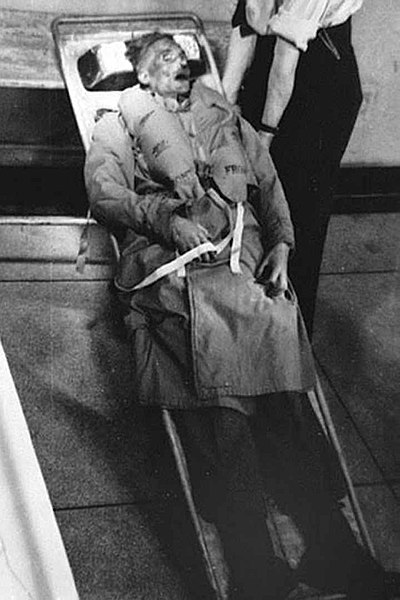
The corpse of Glyndwr Michael, dressed in a Royal Marine uniform with false documents and a fake ID, used in Operation Mincemeat, 1943.
Public domain image from The National Archives.
The story of the British deception, a fascinating story of Allied subterfuge, is now told in the film Operation Mincemeat. It is a remarkable and seemingly highly improbable story of a plan of Allied intelligence to deceive Hitler and misdirect German intelligence. Indeed, it is one of the best examples in history of military deception.
The concept of a plan starts with the Trout Memo, officially written in 1939 by Admiral John Godfrey, director of Naval Intelligence, but almost certainly written by his subordinate Lieutenant Commander Ian Fleming, not yet dreaming of 007, about the deception of an army in war time by fly fishing. Many ideas were suggested, including sending out tins of explosives disguised as food so that hungry sailors would pick them up. One idea, number 28 on the list, almost certainly the thought of Fleming who thought of elaborate deception options, was to use a dead body dressed as an airman dropped from a parachute that had failed and carrying false papers, and drop it where the Germans would find it and be deceived by it.
The deception was planned by a group, the Twenty Committee, XX, headed by Lieutenant Commander RNVR, Ewen Montagu, Cambridge, Harvard, a naval intelligence officer and prominent Jewish lawyer, who later became a judge, together with an RAF officer Squadron Leader Charles Cholmondeley. Montagu later wrote an account of the affair in a book, The Man who Never Was, 1953. The memory of the event is also simply commemorated in a mortuary in Hackney in East London where the body that was used in the plot is buried. In a rather unkind but truthful remark Montagu said of the man who was used, “The only worthwhile thing he ever did, he did after his death.”
The main deception in the plot was a personal letter purported to be from General Sir Archibald Nye to General Sir Harold Alexander, starting, “My dear Alex.” Nye’s letter contained details of sensitive topics, and of a new commander of the Guards brigade, and U.S. service medal awards. He also referred to Operation Husky, an imminent Allied invasion of Greece, that the Germans had been reinforcing and strengthening their defenses in Greece and Crete, and therefore the chief of the Imperial General Staff felt that the Allied troops planned for the assault were insufficient. Thus, it was agreed by the chiefs of staff that the 5th division should be reinforced by one brigade group for the assault on the beach south of Cape Araxos and that similar reinforcement should be made for the 56th division at Kalamata. The letter was a clever double bluff. Nye wrote that “we stand a very good chance of making the Germans think we will go for Sicily, it is an obvious objective and one about which they must be nervous.” To confuse Hitler, he therefore suggested the Allies would invade Sicily.
It is interesting but not surprising that a key figure in the deception appears to have been Ian Fleming, Mr. James Bond, who had written of methods to confuse the enemy, and was crucial to the Trout Memo.
The plot developed. After some difficulty a suitable body was found by a London coroner and kept on ice for few months. It was Glyndwr Michael, 34, homeless Welsh laborer, penniless, with mental health problems, who had died after ingesting rat poison in a London warehouse. He was transformed into Major William Martin, of the Royal Marines whose body contained love letters from a non-existent fiancé named Pam, a jewelry bill for an engagement ring, ticket stubs, religious medal, a copy of a letter marked “personal and most secret”, and above all the false Nye letter. The body had to look as if it had died in an air crash, but floated ashore and he had died at sea. Major Martin, his body wrapped in a life jacket, and with a black attaché case chained to his wrist, was found on April 30, 1943, by a Spanish fisherman off the coast of Huelva.
Even more unlikely than the plan itself was the impact the “secret” document had on Axis planning, summarized in the Wikipedia article:
On 14 May 1943 Grand Admiral Karl Dönitz met Hitler to discuss Dönitz’s recent visit to Italy, his meeting with the Italian leader Benito Mussolini and the progress of the war. The Admiral, referring to the Mincemeat documents as the “Anglo-Saxon order”, recorded
The Führer does not agree with … [Mussolini] that the most likely invasion point is Sicily. Furthermore, he believes that the discovered Anglo-Saxon order confirms the assumption that the planned attacks will be directed mainly against Sardinia and the Peloponnesus.
Hitler informed Mussolini that Greece, Sardinia and Corsica must be defended “at all costs”, and that German troops would be best placed to do the job. He ordered that the experienced 1st Panzer Division be transferred from France to Salonika, Greece. The order was intercepted by GC&CS on 21 May. By the end of June, German troop strength on Sardinia had been doubled to 10,000, with fighter aircraft also based there as support. German torpedo boats were moved from Sicily to the Greek islands in preparation. Seven German divisions transferred to Greece, raising the number present to eight, and ten were posted to the Balkans, raising the number present to 18.
On 9 July the Allies invaded Sicily in Operation Husky. German signals intercepted by GC&CS showed that even four hours after the invasion of Sicily began, twenty-one aircraft left Sicily to reinforce Sardinia. For a considerable time after the initial invasion, Hitler was still convinced that an attack on the Balkans was imminent, and in late July he sent General Erwin Rommel to Salonika to prepare the defence of the region. By the time the German high command realised the mistake, it was too late to make a difference.
Kursk – The Next Great Battle? – WW2 – 190 – April 16, 1943
World War Two
Published 16 Apr 2022The Allies have one chance left to catch the Axis forces in Tunisia before they can reach the Tunis defences; in the USSR both the Axis and Soviets are making plans for a fight near Kursk; and in the skies, in the South Pacific a Japanese aerial offensive ends and Yamamoto himself flies off to congratulate his pilots.
(more…)
Comments Off on Kursk – The Next Great Battle? – WW2 – 190 – April 16, 1943
Queen Victoria’s Easter Cake
Tasting History with Max Miller
Published 23 Mar 2021Help Support the Channel with Patreon: https://www.patreon.com/tastinghistory
Tasting History Merchandise: crowdmade.com/collections/tastinghistoryFollow Tasting History here:
Instagram: https://www.instagram.com/tastinghist…
Twitter: https://twitter.com/TastingHistory1
Tiktok: TastingHistory
Reddit: r/TastingHistory
Discord: https://discord.gg/d7nbEpyLINKS TO INGREDIENTS & EQUIPMENT**
Sony Alpha 7C Camera: https://amzn.to/2MQbNTK
Sigma 24-70mm f/2.8 Lens: https://amzn.to/35tjyoW
Self Rising Flour: https://amzn.to/3cKxIoy
Almond Flour: https://amzn.to/3cGN9Ox
Mixed Peel: https://amzn.to/3lp6MP2
Currants: https://amzn.to/3bWEXe4
Castor Sugar: https://amzn.to/3vJMjJR
8 Inch Cake Pan: https://amzn.to/3f3fL7JLINKS TO SOURCES**
Pot Luck: British Home Cookery Book by May Byron: https://amzn.to/3r1qQIp
The Chronicle of Battle Abbey: https://amzn.to/3ePfrco
Cake: A Slice of History by Alysa Levene: https://amzn.to/2Q7JOAs**Some of the links and other products that appear on this video are from companies which Tasting History will earn an affiliate commission or referral bonus. Each purchase made from these links will help to support this channel with no additional cost to you. The content in this video is accurate as of the posting date. Some of the offers mentioned may no longer be available.
Subtitles: Jose Mendoza
#tastinghistory #easter #simnelcake

Comments Off on Queen Victoria’s Easter Cake
April 16, 2022
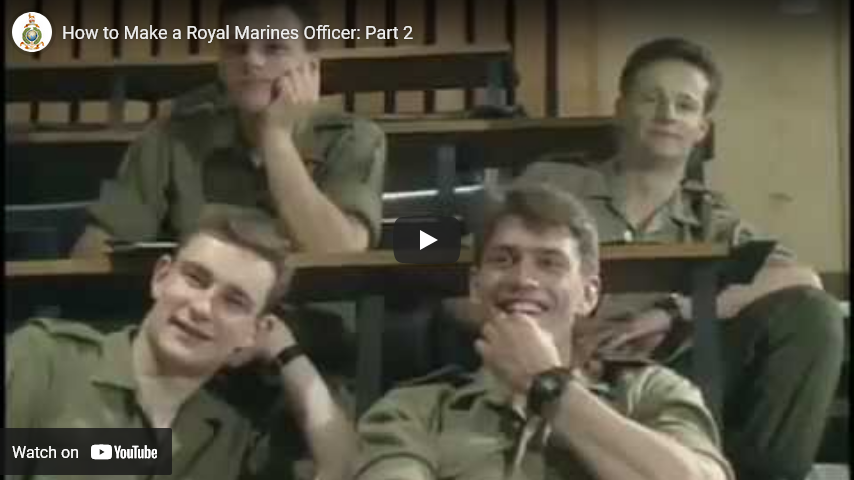
How to Make a Royal Marines Officer: Part 2 (1989)
Royal Marines
Published 13 Sep 2012First transmitted in 1989, this is the second part of a programme that follows the progress of 29 men who want to be Royal Marine officers. The remainder of those hoping to be Royal Marine officers face their toughest test.
From the comments:
Nick B
5 years ago (edited)
Richard Van der Horst (honour sword winner) rose to become a Lt Col and commanding officer of the SBS. He was widely expected to be fast tracked to General and command of all UK special forces. Tragically he died in a diving training accident in Norway in 2005.
Comments Off on How to Make a Royal Marines Officer: Part 2 (1989)
Tank Chats #143 | Hetzer | The Tank Museum
The Tank Museum
Published 31 Dec 2021Our Patreons have already enjoyed Early Access and AD free viewing of our weekly YouTube video! Consider becoming a Patreon Supporter today: https://www.patreon.com/tankmuseum
The Munich Agreement averted the outbreak of war but for Czechoslovakia, it meant giving way to German occupation. Join David Willey to discover how Germany was able to use the country’s existing military outputs to build the tank destroyer, Hetzer.
00:00 – Intro
00:28 – The history of the tank destroyers name
14:55 – Wartime production
(more…)
Comments Off on Tank Chats #143 | Hetzer | The Tank Museum


