
seangabb
Published 23 Jan 2021The Crusades are the defining event of the Middle Ages. They brought the very different civilisations of Western Europe, Byzantium and Islam into an extended period of both conflict and peaceful co-existence. Between January and March 2021, Sean Gabb explored this long encounter with his students. Here is one of his lectures. All student contributions have been removed.
(more…)
April 26, 2022
The Crusades: Part 1 – The Long Prehistory
Comments Off on The Crusades: Part 1 – The Long Prehistory
History of Rome in 15 Buildings 06. The Pantheon
toldinstone
Published 27 Sep 2018The sixth building in our History of Rome, the Pantheon, epitomizes the most stable Roman building material and the most restless Roman emperor – concrete and Hadrian, respectively. This episode discusses the peculiarities of both in some detail.
If you enjoyed this video, you might be interested in my book Naked Statues, Fat Gladiators, and War Elephants: Frequently Asked Questions about the Ancient Greeks and Romans. You can find a preview of the book here:
https://toldinstone.com/naked-statues…
If you’re so inclined, you can follow me elsewhere on the web:
https://www.reddit.com/r/AskHistorian…
https://www.instagram.com/toldinstone/To see the story and photo essay associated with this video, go to:
https://toldinstone.com/the-pantheon/Thanks for watching!

Comments Off on History of Rome in 15 Buildings 06. The Pantheon
QotD: “Boris Lloyd George”
Since Lloyd George’s admirers are usually found at the liberal end of the spectrum, I imagine many of them will be displeased by the comparison. It’s true that Lloyd George — born in 1863, brought up speaking Welsh, steeped in the Baptist faith of his native land — came from a relatively humble background, never went to Eton, was a brilliantly fluent speaker and had an extraordinary appetite for hard work. And in his early days he exhibited an admirable commitment to all kinds of unfashionable causes — that is, until he sold out.
But more than any other twentieth-century PM, the last Liberal premier embodied the ambition, promiscuity and shameless indifference to rules and conventions that have driven Boris Johnson’s critics mad. Boris might be a mountebank, but Lloyd George was the mountebank’s mountebank.
Had he been prime minister during the Covid pandemic, would he have held parties at Number 10? The answer is obvious. He wouldn’t just have invited you to a party, he’d have sold you a peerage and made a move on your wife while you were still hanging up your coat.
Lloyd George was brilliantly funny. He was patriotic. He had the common touch. He was also, to quote Max Hastings on his modern-day successor, a “cavorting charlatan”, a “bully”, a “rogue” and a “scoundrel”, who “would not recognise truth, whether about his private or political life, if confronted by it in an identity parade”. And like Boris, he never hid it; quite the reverse. “My supreme idea is to get on,” he wrote to his future wife, Maggie Owen, during their courtship. “I am prepared to thrust even love itself under the wheels of my Juggernaut if it obstructs the way.” He meant every word.
According to one of his own aides, Lloyd George was “mental on matters of sex. In his view, a man and a woman could not possibly be friends without sexual intercourse.” That sounds familiar. Like Boris, he could never be entirely sure how many children he had. Within months of his marriage to the stolid and long-suffering Maggie, he had already strayed, impregnating a Liberal activist known only as Mrs J.
Not content with also impregnating his wife’s cousin Kitty, he also had affairs with “Mrs Tim” who was married to his friend Timothy Davies, as well as Julia Henry, another Liberal MP’s wife. He also carried on for decades with his secretary, Frances Stevenson, whom he forced to have at least two abortions. And there were many more — so many that nobody has ever produced a definitive count.
At the time, people joked that Lloyd George had a child in every town in Britain. The story goes that one day his son Dick went into a pub and fell into conversation with a stranger who looked just like him. The stranger eventually confessed that Lloyd George was indeed his father, and was secretly paying him £400 a year. To cap it all, some biographers suggest that Lloyd George also slept with Dick’s troubled wife, Roberta — and this when he was well into his sixties! By these standards, even Boris seems a paragon of fidelity.
Dominic Sandbrook, “How to bring down a Prime Minister”, UnHerd, 2022-01-14.
Comments Off on QotD: “Boris Lloyd George”
April 25, 2022
The Jews Fight Back – WAH 057 – April 24, 1943
World War Two
Published 24 Apr 2022The war against Naziism is escalating on all fronts — in the War Against Humanity the main battleground is now the Warsaw Ghetto.
(more…)
Comments Off on The Jews Fight Back – WAH 057 – April 24, 1943
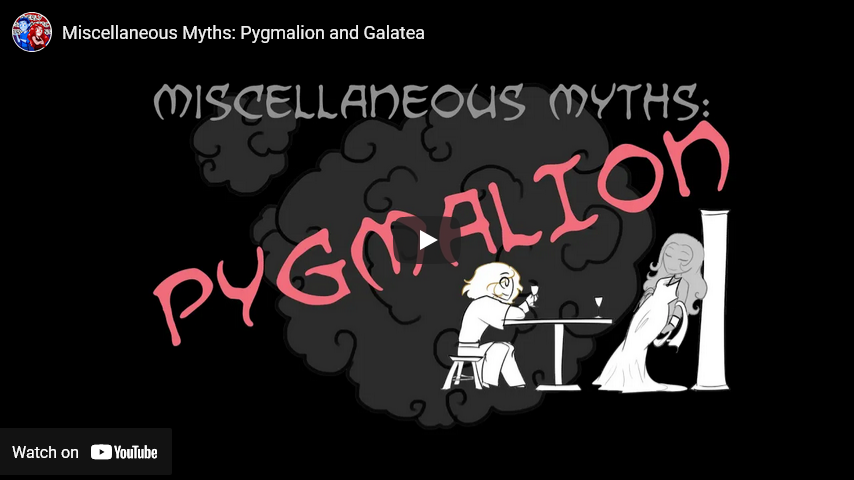
Miscellaneous Myths: Pygmalion and Galatea
Overly Sarcastic Productions
Published 7 Jul 2016Hey, any of you ever wanted a girlfriend? Statistically speaking, more than half of you just thought “yes”, and a non-trivial percentage probably even went so far as to think “HECK yes.” Well, this is the story of one brave pioneer who, rather than waiting for Miss Right to find him, decided to speed up the process by MAKING her! Don’t go getting any ideas, though — I’m afraid our boy didn’t quite think this through in advance.
MERCH LINKS:
Shirts – https://overlysarcasticproducts.threa…
All the other stuff – http://www.cafepress.com/OverlySarcas…
Comments Off on Miscellaneous Myths: Pygmalion and Galatea
QotD: The 15th century as a “mulligan”
As I’ve written here before, the 15th century makes much more sense if you consider it a “mulligan” century, a do-over — an attempt to stuff the Early Modern cat back into the High Medieval bag in the wake of the Black Death. One cannot, of course, say that thus-and-such should’ve happened in history — history is the study of what actually did happen — but it’s clear that the Black Death was a giant hiccup in the otherwise “natural” progression from Middle Ages to Early Modern. It was all there in embryo in 1340; had the Black Death not hit the pause button for half a century, the great ructions of the early 1500s would’ve hit in the early 1400s. And they no doubt would’ve been a lot less severe, too — without the Black Death, the “Martin Luther” of 1417 might’ve been one of the great reforming Popes.
Read Huizinga or Duffy, and you get the overwhelming impression of bright children playing dress up. Everything’s cranked way past eleven. Like kids, they know that grownups do these things, and because they’re bright kids they have some idea why grownups do it … but not really, and the nuances utterly escape them. Huizinga tells the story of some churchman who ostentatiously drinks every drink he’s given in five swallows, one for each of Jesus’s wounds … obnoxious enough, but then he goes that characteristically Late Medieval extra mile — because both blood and water flowed from Christ’s side, he takes the second swallow in two gulps.
Knights vow to not open one of their eyes until they’ve met the Turk in battle. Another churchman rails against the kitschy little figurines found in burghers’ homes, a carving of the Virgin Mary with a door in her stomach. You open it up, and there’s the Trinity. Bad enough, but again the Late Medieval twist: He’s not upset at the figure as such (even though it’s the next best thing to idolatry); he’s pissed because you see the entire Trinity there, and not just Jesus, as is theologically proper. Speaking of Mary, academics debate, in all apparent seriousness, whether or not she was an “active participant” in Our Lord’s conception. And so on: Creeping to the Cross, endless novenas and rosaries and vigils, the whole spastically ostentatious public piety of the devotio moderna. The Imitation of Christ is great, everyone should read it, but imagine people doing all that in public, and not in the cloister as Kempis intended.
The old, exhausted, Alzheimery (it’s a word) dregs of a once vital and vibrant spirituality. Sound familiar?
Severian, “Alt Discussion Thread: Sacraments and Superstitions”, Founding Questions, 2022-01-18.
Comments Off on QotD: The 15th century as a “mulligan”
April 24, 2022
Ladies and Gentlemen, We Got Him – Yamamoto – WW2 – 191 – April 23, 1943
World War Two
Published 23 Apr 2022The mastermind of Pearl Harbor meets his fate this week in the Solomons, as do a great many Italian airmen and sailors in the Mediterranean in the Palm Sunday Massacre trying to supply the desperate Axis forces in Tunisia.
(more…)
Comments Off on Ladies and Gentlemen, We Got Him – Yamamoto – WW2 – 191 – April 23, 1943
April 23, 2022
Spring 1917: Why the Allies Failed (WW1 Documentary)
The Great War
Published 22 Apr 2022Sign up for Curiosity Stream and get Nebula bundled in and SAVE 26%: https://curiositystream.com/thegreatwar
The Allied 1917 Spring Offensive masterminded by French general Robert Nivelle was supposed to end the stalemate on the Western Front and bring a decisive breakthrough. But the German Army also knew they couldn’t win the war on the offensive and thus prepared a new type of defensive system: The Hindenburg Line.
» SUPPORT THE CHANNEL
Patreon: https://www.patreon.com/thegreatwar» THANKS TO OUR CO-PRODUCERS
John Ozment, James Darcangelo, Jacob Carter Landt, Thomas Brendan, Kurt Gillies, Scott Deederly, John Belland, Adam Smith, Taylor Allen, Rustem Sharipov, Christoph Wolf, Simen Røste, Marcus Bondura, Ramon Rijkhoek, Theodore Patrick Shannon, Philip Schoffman, Avi Woolf,» SOURCES
Cook, Tim, “Storm Troops: Combat Effectiveness and the Canadian Corps in 1917” in Dennis, Jeffrey & Grey, Peter (eds), 1917: Tactics, Training and Technology: the 2007 Chief of Army’s Military History Conference, (Canberra: Australian History Military Publications, 2007)Coombes, David, Bloody Bullecourt, (Barnsley: Pen & Sword Military, 2016)
Doughty, Robert T, Pyrrhic Victory: French Strategy and Operations in the Great War, (Cambridge, MA: Harvard University Press, 2005)
Doughty, Robert A, “How did France Weather the Troubles of 1917?” in Dennis, Jeffrey & Grey, Peter (eds), 1917: Tactics, Training and Technology: the 2007 Chief of Army’s Military History Conference, (Canberra: Australian History Military Publications, 2007)
Farr, Don, A Battle Too Far: Arras 1917, (Warwick: Helion & Company, 2018)
Foley, Robert T, “The Other Side of the Wire: The German Army in 1917” in Dennis, Jeffrey & Grey, Peter (eds), 1917: Tactics, Training and Technology: the 2007 Chief of Army’s Military History Conference, (Canberra: Australian History Military Publications, 2007)
Lupfer, Timothy T, “The Dynamics of Doctrine: The Changes in German Tactical Doctrine During the First World War” Leavenworth Papers, No. 4, Combat Studies Institute, U.S. Army Command and General Staff College, (Fort Leavenworth, KS: 1981)
Nicholls, Jonathan, Cheerful Sacrifice: The Battle of Arras 1917, (London: Leo Cooper, 1990)
» OUR SISTER CHANNEL
https://youtube.com/realtimehistory» CREDITS
Presented by: Jesse Alexander
Written by: Jesse Alexander
Director: Toni Steller & Florian Wittig
Director of Photography: Toni Steller
Sound: Toni Steller
Editing: Jose Gamez
Motion Design: Philipp Appelt
Mixing, Mastering & Sound Design: http://above-zero.com
Research by: Jesse Alexander
Fact checking: Florian WittigChannel Design: Yves Thimian
Contains licensed material by getty images
Maps: MapTiler/OpenStreetMap Contributors & GEOlayers3
All rights reserved – Real Time History GmbH 2022

Comments Off on Spring 1917: Why the Allies Failed (WW1 Documentary)
Historic “innovation prizes” (somewhat) debunked
In the most recent Age of Invention newsletter, Anton Howes does a bit of heavy lifting to debunk some accreted nonsense about the origins and success of early innovation prizes:
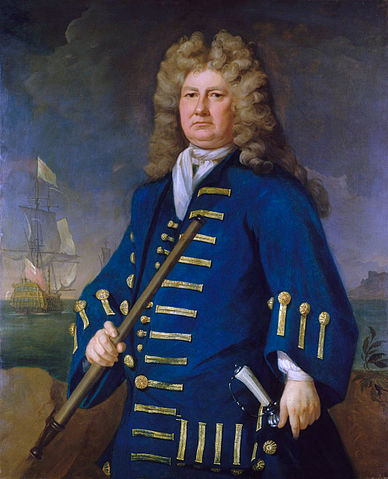
Admiral of the Fleet Sir Cloudsley Shovell (1650-1707).
Portrait by unknown artist from the National Maritime Museum collection via Wikimedia Commons.
Yesterday I had a piece in Works in Progress magazine, on the best ways to design modern innovation prizes — and why many of them fail.
I examined the famous “Longitude Prize” of 1714, and in the process busted some major myths about it. Almost every element of the popular story is wrong — something that experts on the topic like Richard Dunn and Rebekah Higgitt have been going on about for years. The popular story’s hero, John Harrison, often portrayed as an inventor shunned by a haughty scientific establishment, actually received massive amounts of funding from the committee for awarding the prize. The story’s villain, the Astronomer Royal Neville Maskelyne, was no villain at all. And there’s very little evidence that the prize actually incentivised people to innovate. The Board of Longitude, for that matter, ended up more like a grant-giving agency — a kind of navigation-themed DARPA — than just a committee of prize judges.
You can read the full piece here.
So what is the rest of this week’s newsletter about? Well, I’d like to take the chance to bust even more myths about innovation prizes!
Let’s start with a fairly small one, to do with longitude, that I’d missed. Take the narrative about the 1707 naval disaster off the Isles of Scilly, which led to the demise of the wonderfully-named admiral Sir Cloudesley Shovell. The disaster is usually cited as having been the direct cause of the institution of the 1714 reward, and, of course, gives most Youtubers, bloggers, and TV presenters discussing longitude the opportunity to say the name “Sir Cloudesley Shovell”. Who wouldn’t?
I had already been sceptical of the disaster’s relevance to Parliament’s creation of the longitude reward, because of the seven-year delay. I had then noticed, when researching for the piece, that the disaster was hardly mentioned at all by those lobbying for the reward, by those consulted on it, or by the MPs who voted on it. It seemed to be irrelevant as a cause, so I repurposed that part of the popular story to simply use as a general example of a naval disaster caused by not knowing one’s position at sea.
But even my downgrading of its relevance, it turns out, may have been over-generous. Yesterday, after I published my piece, Richard Dunn pointed out to me that not only was the 1707 disaster irrelevant as a cause of the 1714 reward, but that the disaster itself may not have had very much to do with a specific failure to find longitude. It certainly wasn’t singled out as a cause at the time.
As for the actual causes, they were probably compass error, inconsistent charts, and even uncertainty over the fleet’s latitude, not just its longitude. And to the extent that not knowing the fleet’s longitude appears to have been a major part of the problem, it was also related to failures to accurately calculate longitude on land — something that could already be done using existing techniques. The navigational text-books, for example, disagreed on the position of Cape Spartel, in Morocco, from which the fleet departed and took its bearings. As the maritime historian William E. May put it, when he looked into the detail of the fleet’s route and navigational measurements, “the errors in longitudes in the accepted text-books must have introduced a danger just as great as any errors in reckoning the longitude.”
Comments Off on Historic “innovation prizes” (somewhat) debunked
Tank Chats #144 | Staghound | The Tank Museum
The Tank Museum
398K subscribers
Dissent This
Our Patreons have already enjoyed Early Access and AD free viewing of our weekly YouTube video! Consider becoming a Patreon Supporter today: https://www.patreon.com/tankmuseumHistorian David Fletcher is kicking off 2022 with the Staghound! It is an American armoured car that was designed and produced during the Second World War. Watch the video to find out more!
0:00 – Intro
0:30 – What is the Staghound
5:17 – Other variants
(more…)
Comments Off on Tank Chats #144 | Staghound | The Tank Museum
April 22, 2022
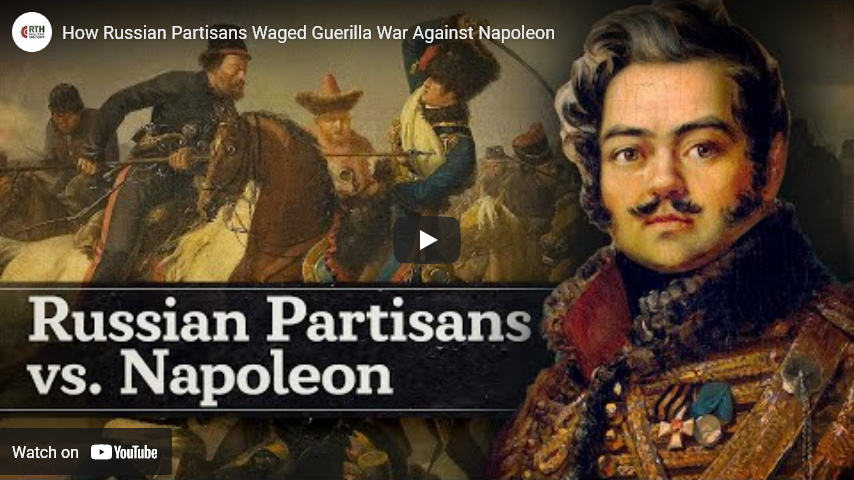
How Russian Partisans Waged Guerilla War Against Napoleon
Real Time History
Published 21 Apr 2022Sign up at https://curiositystream.com/realtimeh… and get Nebula bundled in.
The face of war was changing in 1812. While the Russian Army retreated and left behind scorched earth, Russian partisans took up arms against Napoleon’s troops. They harassed and attacked vital supply lines and we a true menace to the Grande Armée‘s rear.
» SUPPORT US ON PATREON
https://patreon.com/realtimehistory» THANK YOU TO OUR CO-PRODUCERS
John Ozment, James Darcangelo, Jacob Carter Landt, Thomas Brendan, Kurt Gillies, Scott Deederly, John Belland, Adam Smith, Taylor Allen, Rustem Sharipov, Christoph Wolf, Simen Røste, Marcus Bondura, Ramon Rijkhoek, Theodore Patrick Shannon, Philip Schoffman, Avi Woolf,» SOURCES
Boudon, Jacques-Olivier. Napoléon et la campagne de Russie en 1812. 2021.
Chandler, David: The Campaigns of Napoleon, Volume 1, New York. 1966.
Durova, Nadezhda. Cavalry Maiden. Journals of a Female Russian Officer in the Napoleonic Wars. 1990.
Lieven, Dominic. Russia Against Napoleon. 2010.
Mikaberidze, Alexander. “The Lion of the Russian Army”: Life and Military Career of General Prince Peter Bagration 1765-1812. PhD Dissertation, 2003.
Rey, Marie-Pierre. L’effroyable tragédie: une nouvelle histoire de la campagne de Russie. 2012.
Zamoyski, Adam. 1812: Napoleon’s Fatal March on Moscow. 2005.» OUR STORE
Website: https://realtimehistory.net»CREDITS
Presented by: Jesse Alexander
Written by: Jesse Alexander
Director: Toni Steller & Florian Wittig
Director of Photography: Toni Steller
Sound: Above Zero
Editing: Toni Steller
Motion Design: Toni Steller
Mixing, Mastering & Sound Design: http://above-zero.com
Digital Maps: Canadian Research and Mapping Association (CRMA)
Research by: Jesse Alexander
Fact checking: Florian WittigChannel Design: Simon Buckmaster
Contains licensed material by getty images
Maps: MapTiler/OpenStreetMap Contributors & GEOlayers3
All rights reserved – Real Time History GmbH 2022
Comments Off on How Russian Partisans Waged Guerilla War Against Napoleon
Lucy Worsely on The Jacobites & the Scottish Enlightenment
Whitehall Moll History Clips
Published 22 Jul 2018A segment on the Jacobites and the Scottish Enlightenment that blossomed in the face of Hanoverian oppression.

Comments Off on Lucy Worsely on The Jacobites & the Scottish Enlightenment
April 21, 2022
EU accuses Le Pen of financial skulduggery, in what I’m sure must be purely co-incidental timing
Theodore Dalrymple on the surprisingly frequent “charges made against anti-EU politician late in election campaign” phenomenon that seems to have become standard practice in France:
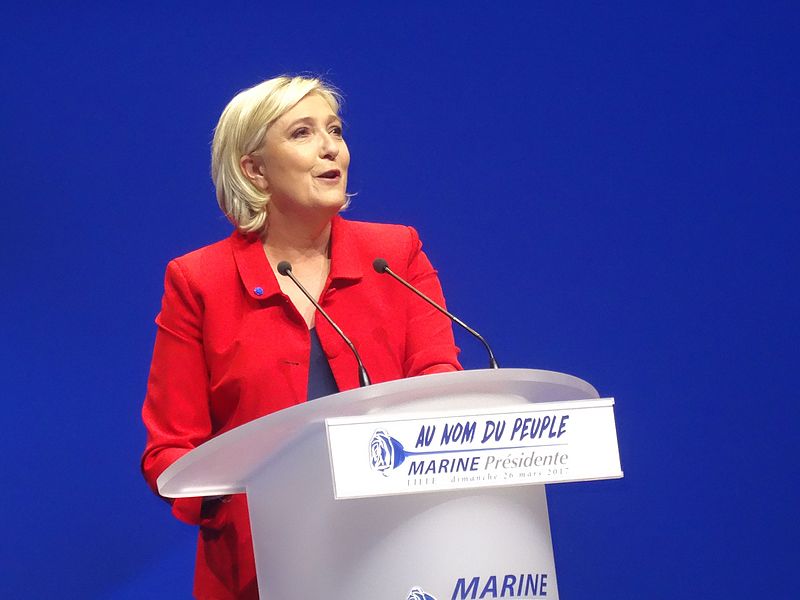
Marine Le Pen speaking in Lille during the 2017 French presidential election
Photo by Jérémy-Günther-Heinz Jähnick via Wikimedia Commons
A disturbing pattern has emerged in French presidential elections: A credible candidate is found almost at the last minute to have committed an illegal act, the revelation of which is intended to spoil or destroy altogether the candidate’s electoral chances.
The latest “victim” of this pattern is Marine Le Pen, who is facing the incumbent president, Emmanuel Macron, in the forthcoming second round of the French presidential election, a repeat of the contest of 2017. The main difference between the two contests is that, this time round, the polls give Le Pen at least some slight chance of victory, while last time Macron gained not only an overwhelming victory, but from the first had also appeared likely to do so. The outcome was never in any kind of doubt, as it is now.
Le Pen is usually described as being of the far right, though in fact her economic ideas are in some respects not very different from those of the candidate of the far left, Jean-Luc Mélanchon, who came not very far behind her in the first round of the election, in which the two candidates who receive the most votes go forward to the second, and decisive, round.
Perhaps economic affinity helps to explain why almost as many voters for the far-left candidate say they will vote for the candidate of the far right as say they will vote for the centrist candidate, Macron. Mélanchon himself has expressed the wish that not a single one of his voters should vote for Le Pen, without, however, having asked them to vote for Macron. He seems, then, to be hoping for a high rate of abstention, which would strengthen his argument that the current French political system is undemocratic and illegitimate, and that the country needs yet another new constitution.
Le Pen has just been accused by the European Union’s antifraud office of malversation of funds, 136,993.99 euros (about $148,000) of the Union’s money to be precise, while she was a member of the European Parliament between 2004 and 2017. For example, she is accused of having claimed 23,100 euros (about $25,000) for the purchase of little objects such as pens and bags to be given out at her political party’s annual conference in 2014, which is not allowed under the rules.
It might be a coincidence that the accusation of something that was allegedly done eight years ago has emerged in the week before the election, but I do not think many people will be found to believe it. After all, Le Pen is decidedly hostile to the European Union, while Macron is almost a religious devotee of it. There are no prizes for guessing, then, which of the two candidates the Union would prefer to win.
Comments Off on EU accuses Le Pen of financial skulduggery, in what I’m sure must be purely co-incidental timing
L8(T) Enfield: The British Army Fails to Make a Sniper
Forgotten Weapons
Published 14 Dec 2021http://www.patreon.com/ForgottenWeapons
https://www.floatplane.com/channel/Fo…
Cool Forgotten Weapons merch! http://shop.forgottenweapons.com
We looked at the 7.62mm conversion of the No4 Enfield into Rifle L8 yesterday. Part of that program was an attempt to develop a new sniper rifle on the L8 platform. To this end, six good-quality No4(T) Lee Enfield sniper rifles were tested for accuracy, then made into L8 rifles and fitted with No.32 telescopic sights (the standard scope from the .303 days) and tested for accuracy again. Much to the chagrin of the Army, the new L8(T) rifles were barely able to match the performance of the .303 rifles they began as. The goal was to significantly improve on the No4(T) accuracy, and that was clearly not happening.
However, at this same time, British civilian competition shooters were having excellent success making 7.62mm versions of the No4. It was only when Enfield was willing to collaborate with the British NRA and others that they were able to successfully create the L42A1 rifle, which at last met the accuracy goals of the program.
The rifle we are looking at today is one of those original six trials L8(T) rifles. Many thanks to the generous collector who allowed me to film it for you!
Contact:
Forgotten Weapons
6281 N. Oracle 36270
Tucson, AZ 85740

Comments Off on L8(T) Enfield: The British Army Fails to Make a Sniper
QotD: Self-promotion in the modern job market
A friend of mine, an Indian pediatrician, applied for temporary jobs in England and was considered for none of them. My friend was puzzled by this, for he had worked in England before and had good references. My wife, who knew the system from having worked in it at a senior level, asked to see his curriculum vitae that he sent to prospective employers, and soon spotted the problem: He boasted of nothing, and the culture had changed. What was necessary, my wife said, was to inflate his accomplishments as boastfully as possible. There was no risk that anyone would discover his exaggerations. He had once worked as a voluntary pediatric consultant to Mother Teresa’s charity in Calcutta; he had not even mentioned it in his CV, let alone made it sound as if he were all but the founder of her charity. If he once had helped an old lady across the road with her shopping, he should transmute this in his CV into a lifelong concern for the condition of the elderly; and so on and so forth.
It was all rather disgusting, but it worked like a charm: He immediately had offers of jobs aplenty, though of course his real worth as a doctor remained precisely the same. Reticence, which is to me a far more attractive quality than boastfulness, will get you nowhere, and nothing must be left to speak for itself. You must blow your own trumpet, if possible louder than anyone else’s.
Nowadays there are professional coaches in how to “big yourself up”, as the charming phrase has it, in applications for jobs or places in institutions. The son of a friend of mine used one to get into medical school. Lying will go undetected, but even if detected will do you no lasting harm. The most minor accomplishment can and should be made to sound like evidence of genius. It is almost a condition of employment that one should boast and write an advertisement for oneself.
Theodore Dalrymple, “Be Your Own Advert”, Taki’s Magazine, 2022-01-13.
Comments Off on QotD: Self-promotion in the modern job market


