
The past has always interested me more than the future. This backward-looking tendency has only been reinforced by reaching, somewhat unexpectedly, the age of 70. I can’t say that I don’t feel my age because I don’t know what feeling any particular age is like — but one repeatedly hears that 60 is the new 40, 70 is the new 50, and so on; certainly, the human aging process has slowed since I was born. When I look at photos of people who were 50 in the year of my birth, 1949, they look much older and more worn-out than do 50-year-olds now; and if I had lived only to my life expectancy at birth, I would be dead these last four years.
So progress must have occurred in the intervening time, despite the pessimism that infects those who, like me, are of retrospective temperament and hypersensitive to deterioration. It is not hard to enumerate many things that have improved. They relate principally, but not only, to material conditions. My best friend when I was very young was one of the last children in Britain to suffer from polio, which paralyzed him from the waist down. The quickest form of written communication was then the telegram, and anything other than local telephone calls had to go through an operator. To call across the Atlantic required a reservation and was ferociously expensive; the resultant conversation always seemed to take place during a violent storm. In England, the food was generally disgusting, and meals were to be endured as a regrettable necessity instead of enjoyed (it puzzles me still how people could have cooked so badly). Cars broke down frequently, and every November, pollution produced fogs so thick that you couldn’t see the hand in front of your face (I loved them). Rationing continued for eight years after the war, and disused bomb shelters, present in every park, were where illicit sexual fumbles and smoking took place. Incidentally, for an adult male not to smoke was unusual (75 percent did so); we must have lived in a perpetual fog of foul-smelling tobacco, to judge by the distaste caused by even a single lit cigarette in these virtuous times. Poverty, as raw necessity, still existed. Murderers were sometimes hanged — as well as, more rarely, the innocent. Overt racial prejudice was, if not quite the norm, certainly prevalent.
Yet not everything has improved, though the deterioration has been less tangible than the progress. To give one example: by age 11, I was free to roam London, or at least its better areas, by myself or with a friend of the same age. The sight of an 11-year-old child wandering the city on his own did not suggest to anyone that he was neglected or abused. I remember, too, the evening papers piled up at newsstands; people would throw coins on top of the pile and take their copy. It never occurred to anyone that the money might get stolen; nowadays, it would never occur to anyone that the money would not be stolen. The crime statistics bear out this sea change in national character.
Theodore Dalrymple, “What Seventy Years Have Wrought”, New English Review, 2019-10-26.
June 25, 2024
QotD: Progress and decline
June 23, 2024
The amazing range of things Britain’s Ofcom gets its tentacles into
Earlier this week, Mark Steyn discussed the British government’s Office of Communications (Ofcom) and the way it rigs regulates who can say what during British election campaigns:

Why do I think the UK state censor Ofcom should be put out of business? Because there are very few areas of British life that this strange, secretive body does not “regulate”. Take, for example, this current UK election campaign, which the media are keen to keep as a torpid Potemkin struggle between TweedleLeft and TweedleRight. So, on Thursday night, BBC bigshot Fiona Bruce will host a debate between the four party leaders – that’s to say, the head honchos of the Conservatives, Labour, the Liberal Democrats and the Greens.
Wait a minute: what about Nigel Farage, leader of the Reform party? Since the beginning of the year, Reform has been third-placed in the polls, ahead of the LibDems and Greens, and last week they rose to second place ahead of the unlovely Tories.
So why wouldn’t the second-place party get a spot in the leaders’ telly debate?
Ah, well, you’re looking at it all wrong, you hick. Here’s how the Beeb explain it:
The Ofcom guidance gives “greater weight on the actual performance of a political party in elections over opinion poll data” taking into account the “greater uncertainty associated with support in opinion polls”.
The “actual performance of a political party” refers to their results in the two previous elections — 2019 and 2015 — when Reform didn’t exist. A lot of other things didn’t exist in 2015: Brexit, Covid, lockdown, the Ukraine war, legions of vaccine victims, the massed ranks of Albanian males occupying English country-house hotels …
But, per “Ofcom guidance”, Campaign 2024 has to be conducted on the basis of how things stood a decade ago.
You know who would also be ineligible to participate under Ofcom’s rules? Everyone’s favourite Lana Turner sweater-girl in Kiev, Volodymyr Zelenskyyyyy. He only formed his Servant of the People party in late 2017, so no election debates for you, sweater-girl. And don’t try blaming it on Putin, because it’s “Ofcom guidance” so we all know it’s on the up-and-up.Because, as their barrister assured the High Court, Ofcom are “expert regulators”. Lord Grade and Dame Melanie Dawes probably did a module in regulation at Rotherham Polytechnic or whatever.
I can see why the likes of Naomi Wolf’s creepy stalker-boy Matthew Sweet like this system: it’s a club and they get to decide who’s admitted. It’s less obvious why the generality of the citizenry put up with it. At any rate, get set for another thrilling BBC election debate in which all four “opponents” agree on Covid, climate, Ukraine, the joys of mass Muslim immigration and the inviolability of the NHS … but ever more furiously denounce each other for not tossing enough money that doesn’t exist into the sinkhole.
Don’t get me wrong, I quite like that pixie Green leader who describes herself as a “pansexual vegan”, and I certainly don’t have the personal baggage with her that I have with Nige. But under what rational conception of media “regulation” does the six per cent basement-dweller get guaranteed a seat at the table but not Reform?
And you wonder why nothing changes?
June 22, 2024
“We can learn a lot about our betters from looking at each exception to their rules”
Julie Burchill isn’t a soccer fan, but she points out that the “exceptions” to the usual “rules” that the kakistocrats allow during international soccer tournaments tell us a lot about them:
Patriotism is not the only “bad” thing we’re suddenly “allowed” to do in the weeks when the national team plays on the world stage. The BBC in particular reminds men that they can disregard the finger-wagging for a few brief weeks. In EastEnders, male characters cringingly ask their mates to “get the beers in for the game”. Alcohol would generally be condemned as a public-health menace by Auntie, but during “The Game”, one more “cheeky” tipple apparently won’t hurt you.
We can learn a lot about our betters from looking at each exception to their rules. Don’t be racist – except against Jews. Believe all women about sexual assault – unless they’re Israeli. Oh, and be careful not to “culturally appropriate” the slightest thing from any other nationality, even to the point of never wearing a sombrero in a Mexican restaurant – but it’s fine to be a cross-dressing man culturally appropriating my sex. Meanwhile, if you’re a woman, be a good little Transmaid and stand by smiling, even if you call yourself a feminist.
Like most other places in the West in these dog days of civilisation, England feels like a nation devoid of hope and pride. Even so, being allowed to take pride in some overpaid ball-kickers, but not in the fact that this country contributed massively to ending slavery – lest we be called out as White Saviours – is a somewhat surreal situation to find ourselves in, after all those centuries of blood, sweat and struggle.
Flying the flag for the duration of the Euros is like being a eunuch who’s permitted to have his nuts back for a couple of weeks – for old times’ sake – and wear them as earrings. But those who indulge must be sure to tear their St George’s down sharpish once the festivities are over, lest they be fingered as a fascist for liking their own flag more than others. Remember, the only flag that can be flown constantly now is the Pride flag. This must be saluted respectfully wherever it pops up – failure to do so may identify you as an unworthy citizen of Soft Play Pit Nation.
June 21, 2024
From “invention” to “tradition”
At Astral Codex Ten, Scott Alexander considers some “traditions” which were clearly invented much more recently than participants might believe:

Two NYC synagogues, one in Moorish Revival style and the other is some form of modernism (you can tell it’s not Brutalism because it’s not all decaying concrete). Like Scott, I vastly prefer the one on the left even if it isn’t totally faithful to the Moroccan original design.
A: I like Indian food.
B: Oh, so you like a few bites of flavorless rice daily? Because India is a very poor country, and that’s a more realistic depiction of what the average Indian person eats. And India has poor food safety laws – do you like eating in unsanitary restaurants full of rats? And are you condoning Narendra Modi’s fascist policies?
A: I just like paneer tikka.
This is how most arguments about being “trad” sound to me. Someone points out that they like some feature of the past. Then other people object that this feature is idealized, the past wasn’t universally like that, and the past had many other bad things.
But “of the past” is just meant to be a pointer! “Indian food” is a good pointer to paneer tikka even if it’s an idealized view of how Indians actually eat, even if India has lots of other problems!
In the same way, when people say they like Moorish Revival architecture or the 1950s family structure or whatever, I think of these as pointers. It’s fine if the Moors also had some bad buildings, or not all 1950s families were really like that. Everyone knows what they mean!
But there’s another anti-tradition argument which goes deeper than this. It’s something like “ah, but you’re a hypocrite, because the people of the past weren’t trying to return to some idealized history. They just did what made sense in their present environment.”
There were hints of this in Sam Kriss’ otherwise-excellent article about a fertility festival in Hastings, England. A celebrant dressed up as a green agricultural deity figure, paraded through the street, and then got ritually murdered. Then everyone drank and partied and had a good time.
Most of the people involved assumed it derived from the Druids or something. It was popular not just as a good party, but because it felt like a connection to primeval days of magic and mystery. But actually, the Hastings festival dates from 1983. If you really stretch things, it’s loosely based on similar rituals from the 1790s. There’s no connection to anything older than that.
Kriss wrote:
I don’t think the Jack in the Green is worse because it’s not really an ancient fertility rite, but I do think it’s a little worse because it pretends to be … tradition pretends to be a respect for the past, but it refuses to let the past inhabit its own particular time: it turns the past into eternity. The opposite of tradition is invention.
Tradition is fake, and invention is real. Most of the human activity of the past consists of people just doing stuff … they didn’t need a reason. It didn’t need to be part of anything ancient. They were having fun.
I’ve been thinking a lot about [a seagull float in the Hastings parade] … in the procession, the shape of the seagull became totemic. It had the intensity of a symbol, without needing to symbolise anything in particular. Another word for a symbol that burns through any referent is a god. I wasn’t kidding when I said I felt the faint urge to worship it. I don’t think it would be any more meaningful if someone had dug up some thousand-year-old seagull fetishes from a nearby field. It’s powerful simply because of what it is. Invention, just doing stuff, is the nebula that nurses newborn gods.
I’m nervous to ever disagree with Sam Kriss about ancient history, but this strikes me as totally false.
Modern traditionalists look back fondly on Victorian times. But the Victorians didn’t get their culture by just doing stuff without ever thinking of the past. They were writing pseudo-Arthurian poetry, building neo-Gothic palaces, and painting pre-Raphaelite art hearkening back to the early Renaissance. And the Renaissance itself was based on the idea of a re-naissance of Greco-Roman culture. And the Roman Empire at its peak spent half of its cultural energy obsessing over restoring the virtue of the ancient days of the Roman Republic:
Then none was for a party;
Then all were for the state;
Then the great man helped the poor,
And the poor man loved the great:
Then lands were fairly portioned;
Then spoils were fairly sold:
The Romans were like brothers
In the brave days of old.Now Roman is to Roman
More hateful than a foe,
And the Tribunes beard the high,
And the Fathers grind the low.
As we wax hot in faction,
In battle we wax cold:
Wherefore men fight not as they fought
In the brave days of old.(of course, this isn’t from a real Imperial Roman poem — it’s by a Victorian Brit pretending to be a later Roman yearning for the grand old days of Republican Rome. And it’s still better than any poem of the last fifty years, fight me.)
As for the ancient Roman Republic, they spoke fondly of a Golden Age when they were ruled by the god Saturn. As far as anyone knows, Saturn is a wholly mythical figure. But if he did exist, there are good odds he inspired his people (supposedly the fauns and nymphs) through stories of some even Goldener Age that came before.
June 20, 2024
The birth of para-rescue
At The War Room, Dr. Robert Lyman discusses an air crash in 1943 and the innovative and daring rescue of the survivors using parachutes:

A United States Army Air Force (USAAF) C46 similar to that of Flight 12420.
The birth of para-rescue can be placed in operations across the Hump airlift in 1942 and 1943. The story of the crash of Flight 12420 was a central part of the story.
The story itself is extraordinary. In 1943 a Soviet spy inside the predecessor organization to the CIA and a proud descendant of the famous Southern leader General Robert E Lee, on his way to China to meet General Dai Li, the mysterious and secretive Kuomintang intelligence chief; a celebrated American journalist sent by President Roosevelt to ascertain the “truth about China”; and General “Vinegar Joe” Stilwell’s political adviser; together with eighteen others — American and Chinese — survived a C46 air crash on the mountainous and remote border between India and Burma. It was, and remains, the largest evacuation of an aircraft by parachute, and, given the fact that even the crew had never been trained in the technique, it was a miracle that so many survived. But they fell with their crippled plane from the frying pan into the fire. On disentangling themselves from their parachutes, the twenty shocked survivors soon found that they had arrived in wild country dominated by a tribe that had an especial reason to hate white men. The Nagas of the Patkoi Hills on their remote and unsurveyed land were notorious headhunters, who continued — despite the feeble wrath of distant British imperial authority — to practice both slavery and human sacrifice. Their specialty was the removal of the heads of their enemies — often women and children — achieved with a swipe of ugly, razor-sharp daos. On two occasions in recent years their village, or parts of it, had been burned to the ground and their warriors killed in running battles with sepoys sent to teach the villagers a lesson and to exert the authority of the Raj.
Nevertheless, and against all the odds, all but one of the twenty-one passengers and crew on the doomed aircraft survived. The story of the extraordinary adventure of those men among the Nagas of Pangsha and of their rescue by the young representative of the distant imperial power, the British deputy commissioner who arrived wearing “Bombay bloomers” and stout leather walking shoes, carrying a bamboo cane, and leading an armed party of “friendly” Nagas, is told in my book Among the Headhunters. In their meeting in some of the world’s most inaccessible and previously unmapped terrain, three very different worlds collided. The young, exuberant apostles of the vast industrial democracy of the United States came face-to-face with members of an ancient mongoloid race, uncomprehending of the extent of modernity that existed beyond the remote hills in which they lived and determined to preserve their local power, based on ancient head-hunting and slaving prerogatives. Both groups met — not for the first time for the Nagas, whose village had been burned twice, in 1936 and 1939, because of persistent head-hunting — the vestiges of British authority in India, disintegrating as the Japanese tsunami washed up at its gate.
One of the reasons for the survival of the men whose aircraft fell to earth that tumultuous day was the quick thinking, rapid action and spontaneous sacrifice of a group of US servicemen at the airbase from whence the aircraft departed that morning, Chabua. One in particular needs calling out, thirty-six-year-old ATC wing surgeon Lieutenant Colonel Don Flickinger. He had been duty medical officer at Pearl Harbor during the Japanese attack on December 7, 1941 and in 1943 found himself stationed in the upper reaches of Assam as part of the mammoth Hump airlift to China.
On the day the C46 went down over the rugged Paktoi ranges, the dividing line between astern India and Burma in the first leg of the journey to China, a C47 sent up to see if it could find the wreckage, and found the survivors waving from a remote village high in the hills. Using ground signalling panels the C47 dropped to the survivors they indicated that at least one of the party was badly injured. When the C47 returned to Chabua with the news that survivors were seen in the sprawling village and its location pinpointed on the map, the British deputy commissioner gave the Americans the grave news that the men were likely to be in grave danger. The villagers were, unknown to the survivors, the most practised headhunters of the region, a powerful and unruly tribe who were notorious for their violence. It was unlikely that the men would survive the encounter.
June 16, 2024
Orwell’s Nineteen Eighty-Four at 75
Ed West on the attempts by many different parties to claim the legacy of George Orwell for their own purposes:
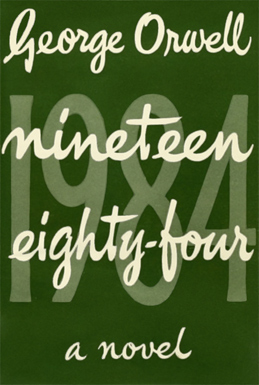
No writer’s legacy and approval is so fought over as George Orwell, whose final — and most celebrated — work Nineteen-Eighty-Four was published seventy five years ago this month.
The most influential piece of political fiction in history, such is the success of the dystopian novel that its themes have been recited to death by columnists, often by people I imagine he would have loathed (including me).
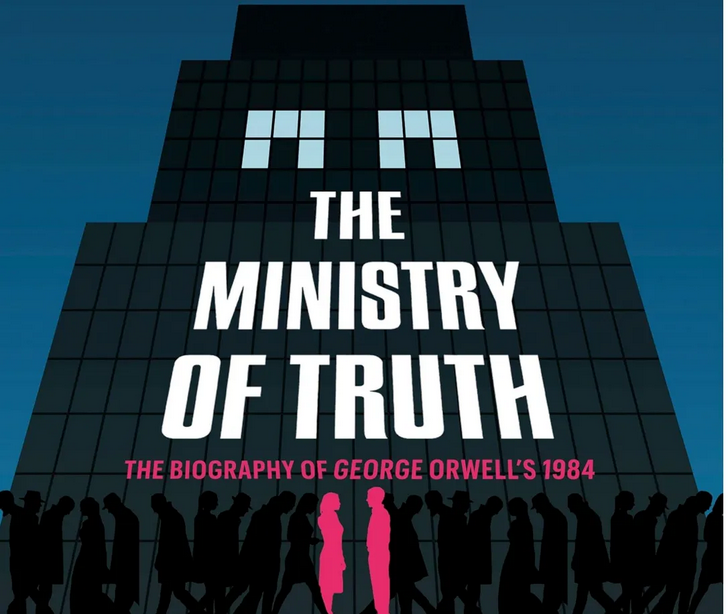
Orwell’s nightmare became a particular focus of conservative commentators from the 1990s with the rise of “political correctness”, which might be seen as both a form of politeness and at the same time a way of policing opinions by changing the language. As Orwell’s Newspeak was described, it was to ensure that dissent cannot be voiced because “the necessary words were not available”. Newspeak, along with thought police and doublethink, has become a part of our political vocabulary, while even the proles have Big Brother to entertain them. No one can doubt that Orwell has won the final victory, and the struggle for the writer’s soul forms part of Dorian Lynskey’s entertaining and informative The Ministry of Truth, a biography of Nineteen-Eighty-Four which was published at the time of the last significant anniversary.
Lynskey, a hugely gifted writer who specialises in the relationship between arts and politics, is very much on the Left and sees the modern parallels with the Trumpian disdain for truth, although the great man himself is now often more cited by the Right. Indeed the anniversary was recently celebrated by the free-market think-tank the Institute of Economic Affairs with a new edition and an introduction by my friend Christopher Snowdon.
Orwell was a paradoxical man, contradictory, sometimes hypocritical (aren’t we all?). In the preface to his book, publisher Victor Gollancz wrote that “The truth is that he is at one and the same time an extreme intellectual and a violent anti-intellectual. Similarly he is a frightful snob – still (he must forgive me for saying this), and a genuine hater of every form of snobbery.”
As Lynskey writes: “Until the end of his life, Orwell acknowledged that microbes of everything he criticised existed in himself. In fact, it was this awareness of his own flaws that inoculated him against utopian delusions of human perfectibility.”
Such awareness is surprisingly rare among intelligent journalists and commentators, especially when ideology takes a grip — and Orwell was introduced to this reality in quite brutal form.
The background to both Nineteen Eighty-Four and Animal Farm was Orwell’s disillusionment during the Spanish Civil War. The conflict between Nationalists and Republican galvanised western intellectuals and marked the turning point when the intelligentsia became firmly wedded to the Left. Over a thousand writers went to fight in Spain, and while few entirely understood the political situation they did grasp, as Malcolm Muggeridge said, that “it seemed certain that in Spain Good and Evil were at last joined in bloody combat”.
In reality it was a conflict in which both sides committed appalling atrocities, although Franco’s forces certainly outdid their enemies in murderous scale. That ruthlessness partly explains their victory, but the Republicans were not helped by the seemingly endless factionalism that saw various squabbling leftist acronyms fight each other, and which makes the war hard to follow. There was the socialist UGT, the Russian-backed PSUC, the anarchist FAI and anarcho-syndicalist CNT, and also the POUM, Workers’ Party of Marxist Unification, which rather belied its name by falling out with both Stalin and Trotsky.
Spain was an education for Orwell. Witnessing in Barcelona a Russian known only as “Charlie Chan”, allegedly an agent of NKVD, he wrote: “I watched him with some interest for it was the first time I had seen a person whose profession was telling lies — unless one counts journalists”.
He recorded how, with the honourable exception of the Manchester Guardian, “One of the dreariest effects of this has been to teach me that the Left-wing press is every bit as spurious and dishonest as that of the Right”. Welcome to the Intellectual Dark Web, George Orwell.
June 15, 2024
W.H.O. the hell do they think they are?
Christopher Snowden on what he calls a “new low” for the World Health Organization (WHO) in a report issued earlier this week that sounds like Karl Marx was one of the writers:

The WHO European Region published a new report today, written mostly by British ‘public health’ academics. It is quite revealing. For example …
This requires, at a minimum, that governments recognize that the primary interest of all major corporations is profit and, hence, regardless of the product they sell, their interests do not align with either public health or the broader public interest. Any policy that could impact their sales and profits is therefore a threat, and they should play no role in the development of that policy. Similarly, governments must also recognize the now overwhelming evidence (see also chapters 4, 6 and 7) that HHIs [“health-harming industries”] engage in the same political and scientific practices as tobacco companies and that voluntary or multistakeholder partnership approaches do not work where conflicts of interest exist. Instead, they must regulate other HHIs [“health-harming industries”], their products and practices, as they do tobacco.
That’s just one paragraph, but there’s a lot it in.
Firstly, they are clearly not just opposed to “health-harming industries” but to private industry and the free market in general.
Secondly, they want to exclude all industries from the policy-making process, as already happens with the tobacco industry.
Thirdly, they want to regulate all “health-harming industries” in the same way as they regulate tobacco. These industries include alcohol, food and fossil fuels, but the report also mentions pharmaceuticals, infant formula, gambling, firearms, healthcare (!) and sugary drinks. As the quote above makes clear, they think that all private industry damages health in some way.
This is all there in black and white and there is much more of the same in the report. This is not scaremongering or the slippery slope fallacy. It is in an official WHO document.
When people show you who they are, believe them.
I have written about this for The Critic …
If this sounds to you like Bolshie talk, you might be onto something. It is further confirmation that the modern “public health” movement is an arm of the hard left presented as an arm of medicine. It would be tempting to tell the authors to stay in their lane, but anti-capitalist nanny statism is their lane. For over a decade, such academics, mostly from Britain and Australia, have been pumping out studies about the “commercial determinants of health” and the “corporate political activity” of “unhealthy commodity industries”. The new WHO report is a sort of greatest hits collection. Last year they published a whole series of articles in the Lancet in which they claimed that there is “growing evidence that neoliberalism has been damaging to health” and called for “a normative shift away from harmful consumptogenic systems”.
Half-baked Marxist rhetoric has been rife in the social sciences for decades, but these people have a vaguely coherent point to make and are pursuing a serious, if terrifying, agenda. Since they do not believe in human agency, they assume that people only make “unhealthy choices”, such as eating processed ham, because the system that controls them has been rigged by big corporations. They say in today’s report that “consumers do not have capacity (time or resources) to make the ‘right’ choice”. Fortunately, public health academics know what the right choice is and could impose it on a grateful population if it were not for the pesky free market. Hence their rage against capitalism, which extends to suspicion of intellectual property, international trade, share buybacks, impact assessments (because they allow businesses to engage with policy-makers) and even the EU single market.
Further to what I say in the article, I’d add that it is to the UK’s shame that so many of the authors of this report are British. They include quackademics that I have been making fun of for years, such as Anna Gilmore, Mark Petticrew and May van Schalkwyk. Between them, they constitute a small clique of talentless, fanatics and/or grifting social scientists who have constructed a world of unreality for themselves by publishing endless low quality journal articles which they and their colleagues then reference and self-reference. It is profoundly depressing that they are now dangling the corpse of the WHO — which was once a great institution — on pieces of string.
June 14, 2024
Britain’s anti-gay hate crime epidemic
Andrew Doyle suggests you take the recent reports of burgeoning hate crime in Britain with a fair bit of salt, because the hate crime statistics are far from trustworthy:

When things like this can be reported as “hate crimes”, and the definition depends on the reporter’s assumption of hateful intent, you’re going to see a lot more “hate crimes”.
We all know by now that the Metro is an activist publication masquerading as a newspaper. And so we ought to approach with some caution its article this week claiming that the UK has seen a surge in hate crime against gay people. There’s even a handy rainbow-coloured map which pinpoints the most homophobic locations in the country. Thankfully St Ives isn’t on the list, so I won’t have to cancel my holiday.
What are we to make of the article’s claim that there has been a 462% increase in homophobic hate crime and a 1,426% increase in transphobic hate crime since 2012? The source for these remarkable figures is the House of Commons Hate Crime Statistics report. If true, it would seem to confirm activists’ claims that we are living in an anti-LGBTQIA+ hellhole.
The truth is not so melodramatic. The supposed escalation of hate crimes in the UK can be accounted for by the way in which they are now recorded. Police actively trawl for complaints, inviting citizens to report offensive comments or any action – criminal or otherwise – that the “victim” perceives to have been motivated by prejudice. No evidence of “hate” is required for it to be recorded as such, other than the assumption of the complainant. With such methodology in place, it is inevitable that the statistics will rise.
And perhaps that’s the whole point. The police in the UK are just one of the many major institutions that has been captured by intersectional ideology. Police are regularly seen dancing at Pride parades, driving rainbow-coloured cars, and harassing gender-critical women for wrongthink. In February 2021 in Merseyside – a county that tops the Metro‘s list of homophobic hate spots – police were photographed next to a digital advertisement which read “Being offensive is an offence”. This belief-system can only be sustained by the narrative of widespread hate, and so we should not be surprised to see that police practice has been modified to ensure this outcome.
In fact, the College of Policing had made it clear that a fall in hate crime statistics would not be acceptable. Its operational guidance says that “targets that see success as reducing hate crime are not appropriate”. And by the Home Office’s own admission, “increases in police-recorded hate crime in recent years have been driven by improvements in crime recording and a better identification of what constitutes a hate crime”. In other words, there is no hate crime epidemic at all. It’s simply that the definitions have expanded.
Rather than rely on the Home Office statistics, we would be better turning to a source that hasn’t been corrupted by ideology. The Crime Survey for England and Wales hasn’t adopted the new police methods of recording, and shows that hate crime has been consistently dropping. Between 2008 and 2020, the number of hate crimes fell by 38%, and all the while records of hate crime kept by the police kept on rising. The disparity between the reality and the narrative couldn’t be more stark.
QotD: European “megacorporations” in the east
And the structure of these massive trading companies mirrors some of the elements of a megacorp. While both companies were, in theory, shipping companies, in practice they were massive vertically integrated conglomerates. Conquering the production areas (particularly India for the EIC and Java for the VOC), they essentially controlled the production chain from start to finish. That complete vertical integration meant that the companies also had to supply employees and colonial subjects, which in turn meant controlling trade and production in everything from food and clothes to weapons. Both companies had their own armies and fleets (the EIC boasted more than 25,000 company soldiers at its height, the VOC more than 10,000) and controlled and administered territory.
In short, they were the colonial Dutch and British governments for many millions of colonial subjects. For the people living in territory dominated by these companies, they really would have resembled the megacorps of speculative fiction, operating with effectively impunity and using their vast profits to field armies and navies capable of defeating local states and compelling them to follow the interests of the company (which remained profit-oriented).
(I feel the need to stop and note that “company rule” in India and even more so in the Dutch East Indies was brutally exploitative, living up to – and in many cases quite surpassing – the normal dystopian billing of science fiction megacorporations. At the same time, it seems equally worth noting that the shift to direct colonial rule by the state was not always much better.)
So in one sense, the speculative fiction megacorp has already existed, but in the other, the limits of these historical entities are informative too. First, it seems relevant that none of these companies were creatures of the markets, rather, they were created by state action – they were chartered companies, state monopolies, or both. These massive imperial trading companies (of which the EIC and VOC were the most successful, but not the only ones) were all created by their respective governments, armed with substantial privileges and typically given exclusive rights to certain trade – they were state-sanctioned monopolies (echoes of this also in the Japanese Zaibatsu state-sanctioned vertical monopolies; note that the Roman publicani [tax-farming “companies” of the middle and late Republic] were also state-sanctioned monopolies) whose monopolies were backed by state power to the point that their states (that is, Britain, the Dutch Republic, France and so on) would and did go to war to protect the trading rights of their monopoly trading companies.
Second, these megacorporations, far from being in a position to usurp the states that formed them (as fictional megacorporations often do), turn out to be extremely vulnerable to those states. The EIC was effectively nationalized by an act of parliament in 1858 (after the Indian Mutiny of 1857 discredited company rule in the eyes of the British government) and disbanded in 1874. The VOC was likewise nationalized by its parent government in 1796 and then dissolved in 1799. No effort was made by either company to resist being disbanded with any sort of force; it would have been a pointless gesture in any case. While the resources of the EIC were vast, the military capabilities of the British Empire were far greater. Moreover, the companies simply didn’t have the legitimacy to operate absent their state backing.
This is of course also true for the not-quite-megacorporations, like the great trusts of America’s gilded age (Standard Oil, U.S. Steel, etc.), or the Japanese zaibatsu or even modern super-sized corporate entities. Of the 10 largest companies in the world, four are straight up state-owned enterprises. Even for the private modern massive company, by and large when they try to fight their “home” state, they lose, or at least are badly damaged without seriously inconveniencing the far greater power of the state (just ask AT&T or Microsoft).
Bret Devereaux, “Fireside Friday: January 1, 2021”, A Collection of Unmitigated Pedantry, 2021-01-01.
June 13, 2024
The Best Allied Tank Of WW2
WW2 Pod: We Have Ways of Making You Talk
Published Mar 7, 2024Comedian Al Murray and historian James Holland look at a picture of a Cromwell tank jumping over a ramp in 1944. Was this the best Allied tank of WW2?
June 12, 2024
“Consumption inequality” really has fallen significantly since Orwell’s day
Tim Worstall on some of the points raised by Christopher Snowdon’s new introduction to Orwell’s Nineteen Eighty-Four:
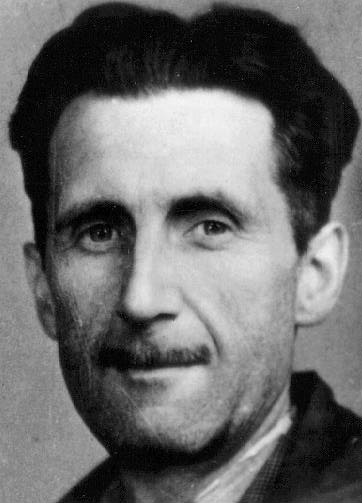
Eric (“George Orwell”) Blair’s press card portrait, 1943
Eric Blair, the useful one, once pointed out that:
In a world in which everyone worked short hours, had enough to eat, lived in a house with a bathroom and a refrigerator, and possessed a motor-car or even an aeroplane, the most obvious and perhaps the most important form of inequality would already have disappeared. If it once became general, wealth would confer no distinction.
That’s from Chris Snowdon’s new intro to 1984 – you should buy a copy.
Not that Eric knew enough economics to know this but what he’s talking about is consumption inequality.
Sure, we’ve Oxfam squealing that wealth inequality is rising summat fearsome. It ain’t — they fail to account for what we already do to reduce wealth inequality. Many tell us that income inequality is rising summat fearsome. It ain’t. Global income inequality has been falling this past 40 years and as all men are indeed brothers it’s the global number that matters.
But the one that’s really fallen like a stone is that consumption inequality. Consumption is also really the only one of the three that matters. Sure, a world in which there are those without three squares and a crib is not a good one. But once all do have three squares etc. then whatever other inequality there is is, well, it’s not actually all that important is it?
[…]
We really have got to what Orwell thought would be equality. In 1930s England (which was his mental reference point) all of these things – all – were signifiers of significant wealth or income:
As a poorer country the UK was a little behind on these things but my best guess would be that we’re ahead of the US on washing machines today (the US still has a habit of communal machines in apartment blocks). And it amuses that central heating isn’t even on the list. This was something very middle class indeed in the 1960s, really only became “normal” in the UK in the late 70s into the 80s. As with double glazing. These days you’re defined as being in fuel poverty if you cannot heat your house, always and all of it, to a level that no one at all could before that central heating. No, really, coal fire heated houses might average 10oC in winter and that would only be in rooms with an actual fire — others would be at 0oC.
This is not to get into a Four Yorkshiremen but people would be astonished at how cold houses were 1970s and earlier. My own arrival in the US in 1981 had me wondering how they had heating systems that heated all the house, properly, all winter. How could anyone afford that?

England “is a parochial country doomed to nostalgia and irrelevance by its unwavering belief in a series of grandiose historical myths”
In The Critic, Fred Skulthorp reviews England: Seven Myths That Changed a Country and How to Set Them Straight by Tom Baldwin and Marc Stears:

Should Keir Starmer find himself in Downing Street after the next election, he will have little to play with in terms of zeitgeist. Unlike Blair, there is no Cool Britannia to tap into. There are few unifying cultural figures and despair seems the only discernible national mood. Starmer has only the recent success of the Lionesses and an oft-quoted anecdote about his dad being a toolmaker to inspire the nation.
But there is one nation-renewing narrative on the centre-left that has emerged since 2016. England, unlike the rest of Europe, is a parochial country doomed to nostalgia and irrelevance by its unwavering belief in a series of grandiose historical myths. The real 21st century England is being held back by people singing “Rule Britannia” at the Last Night of the Proms and the fantasies of Daniel Hannan.
In England: Seven Myths That Changed a Country, Starmer’s biographer Tom Baldwin and former Labour Party speechwriter Mike Stears embark on a journey to set us free from such falsehoods. In Hull we find that William Wilberforce has given the nation an unqualified moral superiority. In Plymouth we discover that Sir Francis Drake is the inspiration for “the aggressively macho nationalist idea” that Brexit can “restore the country’s global reach”. In Runnymede we find that Magna Carta has given rise to the idea of an “Anglo-Saxon birthright sealed with the blood of dead kings”.
Whether anyone actually believes these things is beside the point. These national myths, the authors insist, can account for everything from the popularity of Michael Portillo’s railway documentaries to the 2016 vote to leave the European Union.
Journeys in search of England tend to lend themselves more to projection than discovery. This book presents the worst of that sin. Reading Seven Myths is a bit like being stuck on a very long car journey and regretting having asked the driver: “Whatever happened to the legacy of the London 2012 Olympics?”
Unsurprisingly, much of what follows spouts repackaged Blairite clichés about football, curry and the NHS. Lingering behind their polemic is the tedious psychodrama of the Corbyn years and Labour infighting about how the party should allow itself to feel patriotic. This book is as much about two middle-aged Starmerites trying to work out what it is acceptable to like between their party, the electorate and the limited scope of their inquiry into the England of the 2020s.
And the scope is indeed limited. Reportage and interview, where the book is allowed to breathe away from the grating polemic, is cramped, incomplete and tokenistic. The most memorable soundbite is from Nigel Farage, who tells them — perhaps half-mockingly — that his favourite place in England is London: “It gets faster and more trendy every year that comes”.
Interactions with the public are even more painful. “What do you think of Enoch Powell?” one “brown-skinned man” is asked in Wolverhampton. A refugee from Hong Kong is asked “Does Magna Carta mean anything to you?” Unsurprisingly these conversations don’t return much, but they pave the way for the eye-rollingly mundane conclusion that when it comes to English identity there is “complexity everywhere” (as if anyone’s sense of national identity were ever simple).
Still from the 1964 movie Zulu with Michael Caine as Lieutenant Gonville Bromhead, 24th Regiment of Foot.
For a book that spends nearly 400 pages debunking myths and trying to correct the course of English history, its sources require a lot of reading between the lines. Many can be narrowed down to soundbites from a few politicians and forgotten op-eds in the Telegraph (one quoted is dated as far back as 2004).
All this generates endless false dichotomies, strawmen and reductive statements to account for a grander myth loosely referred to as “English exceptionalism”. At times, attempts to source these myths in the body politic come across as comically desperate. Zulu (1964) becomes a film which kept alive the “British Empire myth” and which “the current generation of politicians would have watched growing up”.
Ironically, the writing itself is laced with the sins of myth-making: boring, trite, incoherent, lazy and unfunny. At times it veers into self-parody. In Runnymede, the “high iron gates” of a housing development near the Magna Carta memorial serve to remind us that national identity myths can “make others feel excluded”. In Plymouth, Greta Thunberg is placed in a pantheon alongside Darwin and Drake who both set sail from the Devon port: “None of these dead Englishmen have as much relevance right now as [the voyage] undertaken from the same city by a Swedish Girl”.

June 11, 2024
We’ve descended into some sort of bizarre hellworld where Jeremy Clarkson can be described as an “unlikely national treasure”
In The Critic, Kara Kennedy considers the possibility that Jeremy Clarkson, the petrolhead’s petrolhead, might actually have a soul:

Screencap from Jeremy Clarkson’s banned Hawkstone Lager ad
The last truly poignant thing I watched on television was a show about a grumpy farmer raising piglets. He’s a city gentleman new to farming, but what may have started out as a gimmick has, over three growing seasons, transformed into a real calling. Or a passion, even. And one that, in some moments, sees him battle with life and death. Unfortunately, for a lot of the little piglets, it was death. After watching their births — their first moments and last, after their delinquent pig mothers smothered them without a care in the world — I cried. My husband cried. The friends who we harangued to watch the season again with us cried. And Jeremy Clarkson cried.
Yes, I am talking about Jeremy Clarkson on Clarkson’s Farm, streaming on Amazon Prime Video. Clarkson, over the last few decades, has made a career for himself in part by being easy to hate. It is uncomfortable for everybody, himself included, that the miserable boomer has turned into an unlikely national treasure, and all it took was some honest work.
Clarkson is cultural marmite. After 35 years on the BBC’s Top Gear, he is revered in the petrolhead community as a god. Newspapers love him because he’s impolite and will sell some prime “you can’t say anything anymore” content. Meghan Markle hates him after he once wrote he was “dreaming of the day” that British crowds threw lumps of shit at her. Feminists hate him for mostly that same reason. Leftists hate him for writing once that striking workers should be “shot in front of their families”. As for the denizens of the countryside, he has maintained a multi-decade fight in his newspaper column with ramblers.
Basically, the answer to whether you like Clarkson relies really on whether you take what a funny old guy says seriously. But there are some legitimate grievances towards the presenter too. When he was finally bounced from the Beeb, it was because he punched a producer. And as annoying as the people who had long had it in for Clarkson had always been, it is not some new Gen Z norm or innovation of “cancel culture” to say you can’t physically assault your colleague. That said, the producer in question did sue him for racial injury, which is a bit closer. (He called him Irish, for God’s sake!) The crux of it, anyway, is that Clarkson is badly behaved and probably too inconsistent to be trusted by any major TV network. He wound up on Amazon Prime’s The Grand Tour, a just-changed-enough-to-be-legal Top Gear clone, once again drawing a massive and mostly male audience that loves to memorise the 0-60 times of cars only oligarchs can ever afford.
But, once The Grand Tour began winding down — it now returns just for the occasional travel special — the old presenters went off to make spinoffs for Amazon. And Clarkson decided to make his, and to rejigger his Times column, around his 1000 acre country farm in the Cotswolds. And that is where, through epiphany, necessity, human nature, act of God, or sheer growing up, Clarkson was reborn as someone who not just the lovers of edgy humour and high horsepower figures can admire.
Mark Steyn on Nigel Farage
This is from his Friday round-up post at SteynOnline:

“Nigel Farage” by Michael Vadon is licensed under CC BY-SA 2.0 

 .
.
Demography is relentless. Douglas Murray notes that the BBC is always warning that the “far right” is “on the march“, but in the west it is demographic transformation that is truly on the march, quietly and unreported, picking up pace every month. By comparison, the wretched Sunak/Starmer dinner-theatre of the UK election campaign is completely irrelevant to Britain’s future. So I am glad to see that Nigel Farage has had a change of heart and opted to join the battle. Back in 2016, in the days after the Brexit vote, I said he was the most consequential figure in UK politics since Mrs Thatcher. Which was true. Alas, people most Britons have never heard of then set about subverting Brexit, and very effectively.
So here we are eight years later, with half-a-million Anglo-Celts abandoning the UK each year and a million Pushtun warlords and Sudanese clitoridectomists and Albanian sex-traffickers taking their place. Demography is relentless, and the hour is late.
Over a decade ago — in fact, closer to two, as I estimate it — Nigel Farage said to me that the first thing you have to do when you found a new political party on the right is to accept the burden of being its only member — at least for a while. Because the first 10,000 people who want to join are neo-Nazis and skinheads and the like. It was a clever insight, and he spread it around. So I had it told back to me many times over the years by populist politicians from all over the Continent, Danes and Dutch, Swedes and Spaniards alike.
Nigel took his gatekeeping seriously — and not just on the domestic front, “distancing” himself from Tommy Robinson and Tommy-associated issues such as Islam and the industrial-scale sex-slavery of thousands of English girls. As Gavin Mortimer reminds us, a decade ago Farage also rejected any Euro-collaboration with Marine Le Pen because her party had “anti-Semitism and general prejudice in its DNA“. Geert Wilders (for whose fine book I am proud to have written the introduction) was furious with Farage and attempted to broker a rapprochement. Nigel was having none of it.
So here we are a decade later:
* in the Netherlands, Wilders is currently the most powerful politician, leading the most popular party, and has helped move the electorate significantly;
* in France, Mme Le Pen’s party will, in just two days’ time, win the European elections. She is the de facto leader of the opposition, and her caucus in the National Assembly is the largest and most effective opponent to Macron. She has also helped move the electorate significantly;
* in the United Kingdom, by contrast, voters are about to elect a left-wing government led by a fellow, Sir Vics Starmer, who thinks men can have a cervix.
I think Nigel over-gatekept.
He has been very good at founding personal vehicles (Ukip, the Brexit Party) that deflate like punctured soufflés when he steps down as leader. Yes, he was very watchable in the jungle on “I’m a Celebrity — Get Me Out of Here”, and, in my GB News days, he certainly handed me a bigger audience at 8pm than any of his guest-hosts. But, as that station’s currently Farageless ratings reveal, you can’t build a sustained movement on one man. Nigel’s advice was clever twenty years ago. Wilders, LePen, Meloni et al were wise to recognise its limitations.
So I’m pleased Farage changed his mind on this election. He should change his mind on the over-gatekeeping, too.
Time and demography march on.
June 10, 2024
Elite contempt for democracy is fuelling anti-immigration “far right” sentiment in the west
Even for people who are generally happy with robust immigration, the numbers being recorded (or, more likely, under-recorded) in Canada, the United States and Europe are far too high to pretend that the new arrivals will quickly integrate into their new countries, and they are generally not being encouraged to do so anyway. Complaints to the people who have enabled these massive inflows — at best — are waved off or ignored, but often are seized upon as examples of hateful far-right xenophobia to be punished and suppressed:
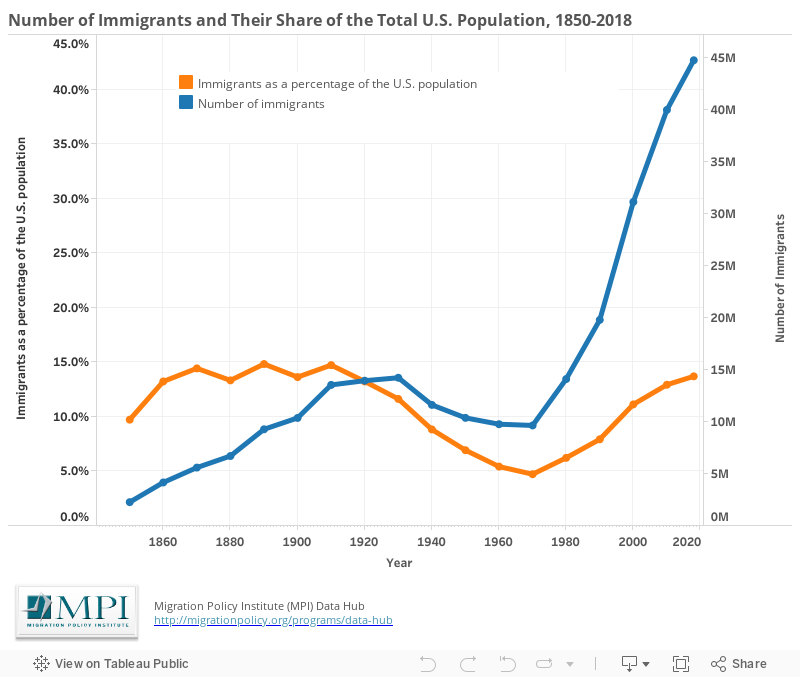
Not so long ago, as many of us reeled from the political earthquakes of Brexit and Trump, it seemed sensible for responsible mainstream political parties to adopt tighter immigration control to keep the populist right at bay. Mass migration in Europe had led to a far-right resurgence; in the US and UK, Trump and the Johnson-era Tories seemed to grasp this and moved to co-opt the anti-immigrant fervor. Democracy was working to accommodate a shift in the public mood.
Or so it seemed. Nearly a decade later, something else has happened: an immigration explosion. In response to a volatile public mood, Western elites actually intensified their policy of importing millions of people from the developing world to replace their insufficiently diverse and declining domestic populations.
The recent figures from the US, UK and Canada are mind-blowing. The graphs all look like a hockey stick, with a massive spike in the last three years alone. Under Trump, the average number of illegal crossings a year was around 500,000; under Biden, that has quadrupled to two million a year — from a much more diverse group, from Africa, China and India. To add insult to injury, Biden has also all but shut down immigration enforcement in the interior; and abused his parole power to usher in nearly 1.3 million illegal migrants in 2023 alone. The number of undetained illegal migrants living in the US has thereby ballooned under Biden: from 3.7 million in 2021 to 6.2 million in 2023, according to ICE. If a fraction of those millions turns up for asylum hearings, I’ll be gob-smacked.
Canada has seen something similar. For much of the 21st century, Canada had around 200,000 to 300,000 immigrants a year; but in the last two years, this has nearly doubled. In Britain, the same story. In 2015, the year before Brexit, net migration (the numbers of people immigrating minus the number emigrating) was 329,000; in the last two years, it has more than doubled to over 700,000. And whereas most immigration before Brexit was from the EU, today, immigrants from the developing world outnumber European immigrants by almost 10 to 1. For those Brits who voted for Brexit to lower the number of foreigners in the country, it’s been surreal.
If you want to understand why Biden keeps trailing in the swing states, why the Tories are about to be wiped out in a historic collapse, and why Trudeau is at all-time low in approval at 28 percent, this seems to me to be key. As the public tried to express a desire to slow down the pace of demographic change, elites in London, Ottawa, and Washington chose to massively accelerate it. It’s as if they saw the rise in the popularity of the far right and said to themselves: well now, how can we really get it to take off?
This week, CNN ran a poll on Biden and immigration. Here’s what they found: in May 2020, only one percent of Americans put immigration as their top concern — in 15th place among issues; in May 2024, 18 percent put it first. In 2020, Biden edged Trump by one percent on who was best to tackle the border crisis; four years later, Trump is ahead on the issue by 27 points. As a coup de grâce, CNN also found that foreign-born Americans preferred Trump to Biden on immigration by 47 to 44 percent. Turns out that this immigrant’s worries are widely shared by my fellow new Americans.
Biden, of course, is now desperately scrambling to salvage something from this disaster. This week, he contradicted himself by saying he has the unilateral capacity as president to shut down the border, and attempted to blame the GOP for the problem. Yes, the GOP was unhelpful and cynically political earlier this year — but that won’t muddy the waters for most voters who have been conscious for the past three years. But I am grateful nonetheless to hear the president echo what the Dish has been saying for years now, and for which I was routinely called a racist:
To protect America as a land that welcomes immigrants, we must first secure the border and secure it now. The simple truth is there is a worldwide migrant crisis, and if the United States doesn’t secure our border, there is no limit to the number of people who may try to come here, because there is no better place on the planet than the United States of America.
Now that didn’t hurt, did it? But why did he keep telling us there was no crisis for the last three and a half years? And why would anyone trust a re-elected Biden to enact this if he had a Congressional majority? I sure don’t.
Even under Biden’s “crackdown”, he is still prepared to admit at least 1.75 million illegal immigrants a year! Last week, Chuck Schumer declared that the ultimate goal was to legalize every single illegal immigrant — because Americans are not having enough children. Without open borders, of course, our economy wouldn’t look so good: in the last year, according to the Bureau of Labor Statistics, foreign-born workers gained 600,000 new jobs, while native-born Americans lost 300,000. But don’t you dare mention the “Great Replacement Theory“!


