
A lot of swordfighting in medieval-period movies is even less appropriate if you know what the affordances of period weapons were. The classic Errol Flynn vs. Basil Rathbone duel scene from the 1938 Adventures of Robin Hood, for example. They’re using light versions of medieval swords that are reasonably period for the late 1100s, but the footwork and stances and tempo are all French high line, albeit disguised with a bunch of stagey slashing moves. And Rathbone gets finished off with an epée (smallsword) thrust executed in perfect form.
It was perfect form because back in those days acting schools taught their students how to fence. It was considered good for strength, grace, and deportment; besides, one might need it for the odd Shakespeare production. French high-line because in the U.S. and Europe that was what there were instructors for; today’s Western sword revival was still most of a century in the future.
This scene exemplifies why I find the ubiquitousness of French high-line so annoying. It’s because that form, adapted for light thrusting weapons, produces a movement language that doesn’t fit heavier weapons designed to slash and chop as well as thrust. If you’re looking with a swordsman’s eye you can see this in that Robin Hood fight. Yes, the choreographer can paste in big sweeping cuts, and they did, but they look too much like exactly what they are – theatrical flourishes disconnected from the part that is actually fighting technique. When Flynn finishes with his genuine fencer’s lunge (not a period move) he looks both competent and relieved, as though he’s glad to be done with the flummery that preceded it.
At least Flynn and Rathbone had some idea what they were doing. After their time teaching actors to fence went out of fashion and the quality of cinematic sword choreography nosedived. The fights during the brief vogue for sword-and-sandal movies, 1958 to 1965 or so, were particularly awful. Not quite as bad, but all too representative, was the 1973 Three Musketeers: The Queen’s Diamonds, a gigantic snoozefest populated with slapdash, perfunctory swordfights that were on the whole so devoid of interest and authenticity that even liberal display of Raquel Welch’s figure could not salvage the mess. When matters began to improve again in the 1980s the impetus came from Asian martial-arts movies.
Eric S. Raymond, “A martial artist looks at swordfighting in the movies”, Armed and Dangerous, 2019-01-13.
August 4, 2022
QotD: Errol Flynn versus Basil Rathbone in the 1938 Adventures of Robin Hood
August 2, 2022
The Last Battle in the West – How The Allies Crossed The Rhine 1945
Real Time History
Published 30 Jul 2022Get CuriosityStream + Watch Rhineland 45 on Nebula: https://curiositystream.com/realtimeh…
The Rhine river was the last major natural obstacle on the Western Front of WW2 in early 1945. The Allied armies needed to cross the symbolic river to enter the heart of Nazi Germany. While General Patton’s 1st Army crossed the river at Remagen first, the actual set-piece battle of the Rhine took place further north and involved the biggest airborne operation in a single day in the entire war.
(more…)
August 1, 2022
Hamburg’s Citizens Burnt Alive – WAH 071 – July 31, 1943
World War Two
Published 31 Jul 2022In Italy the Fascists fall from power in a peaceful coup, while in Germany the RAF and USAAF bring down a rain of fire of biblical proportions in Operation Gomorrah, launching the Firestorm of Hamburg.
(more…)
July 31, 2022
Mussolini Falls from Power – WW2 – 205 – July 30, 1943
World War Two
Published 30 Jul 2022The Allied advance on Sicily continues, though they’re really gearing up for operations next week. The Soviet advances in the USSR and in New Georgia also continue, with the enemy deciding to withdraw in both; Allied firebombing kills tens of thousands of German civilians, but the big news is still the fall of Benito Mussolini from power in Italy.
(more…)
Look at Life — Pipeline (1961)
ian16th Jones
Published 20 Aug 2017Refuelling at Sea and in the Air 1960’s style
QotD: Intervention and non-intervention in the Spanish Civil War
The most baffling thing in the Spanish war was the behaviour of the great powers. The war was actually won for Franco by the Germans and Italians, whose motives were obvious enough. The motives of France and Britain are less easy to understand. In 1936 it was clear to everyone that if Britain would only help the Spanish Government, even to the extent of a few million pounds’ worth of arms, Franco would collapse and German strategy would be severely dislocated. By that time one did not need to be a clairvoyant to foresee that war between Britain and Germany was coming; one could even foretell within a year or two when it would come. Yet in the most mean, cowardly, hypocritical way the British ruling class did all they could to hand Spain over to Franco and the Nazis. Why? Because they were pro-Fascist, was the obvious answer. Undoubtedly they were, and yet when it came to the final showdown they chose to stand up to Germany. It is still very uncertain what plan they acted on in backing Franco, and they may have had no clear plan at all. Whether the British ruling class are wicked or merely stupid is one of the most difficult questions of our time, and at certain moments a very important question. As to the Russians, their motives in the Spanish war are completely inscrutable. Did they, as the pinks believed, intervene in Spain in order to defend Democracy and thwart the Nazis? Then why did they intervene on such a niggardly scale and finally leave Spain in the lurch? Or did they, as the Catholics maintained, intervene in order to foster revolution in Spain? Then why did they do all in their power to crush the Spanish revolutionary movements, defend private property and hand power to the middle class as against the working class? Or did they, as the Trotskyists suggested, intervene simply in order to prevent a Spanish revolution? Then why not have backed Franco? Indeed, their actions are most easily explained if one assumes that they were acting on several contradictory motives. I believe that in the future we shall come to feel that Stalin’s foreign policy, instead of being so diabolically clever as it is claimed to be, has been merely opportunistic and stupid. But at any rate, the Spanish civil war demonstrated that the Nazis knew what they were doing and their opponents did not. The war was fought at a low technical level and its major strategy was very simple. That side which had arms would win. The Nazis and the Italians gave arms to the Spanish Fascist friends, and the western democracies and the Russians didn’t give arms to those who should have been their friends. So the Spanish Republic perished, having “gained what no republic missed”.
Whether it was right, as all left-wingers in other countries undoubtedly did, to encourage the Spaniards to go on fighting when they could not win is a question hard to answer. I myself think it was right, because I believe that it is better even from the point of view of survival to fight and be conquered than to surrender without fighting. The effects on the grand strategy of the struggle against Fascism cannot be assessed yet. The ragged, weaponless armies of the Republic held out for two and a half years, which was undoubtedly longer than their enemies expected. But whether that dislocated the Fascist timetable, or whether, on the other hand, it merely postponed the major war and gave the Nazis extra time to get their war machine into trim, is still uncertain.
George Orwell, “Looking back on the Spanish War”, New Road, 1943 (republished in England, Your England and Other Essays, 1953).
July 28, 2022
The Posh Brits Betraying Their Country – WW2 – Spies & Ties 20
World War Two
Published 27 Jul 2022Being allies does little to discourage Moscow from recruiting double agents in the British establishment. The most famous of them all, Kim Philby and the Cambridge Five, penetrate deep into MI5, MI6, and Bletchley Park. With friends like the NKVD, who needs enemies?
(more…)
July 27, 2022
When the founder of the SAS was captured by Italian troops in 1943
In The Critic, Saul David describes what happened when Lieutenant Colonel David Stirling was captured during his “most hare-brained scheme” to link up the troops of Britain’s First and Eighth armies in Tunisia:
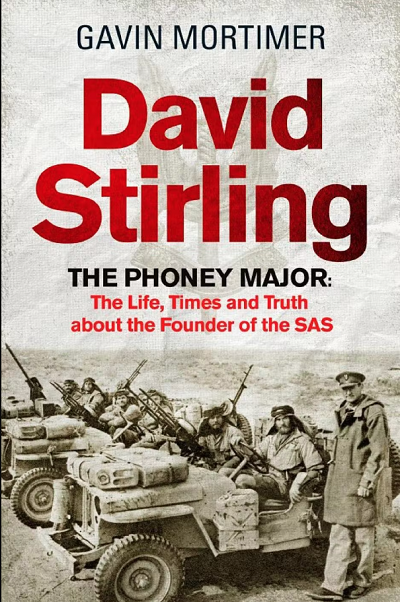
In January 1943 Lieutenant Colonel David Stirling, founder of the SAS, was flown to Rome for interrogation. He had been captured by the Italians on his “most hare-brained scheme yet” — leading a small raiding party deep into enemy territory in Tunisia to attack lines of communication, reconnoitre the terrain and become the first Eighth Army unit to link up with the First Army advancing from the west.
Cautious when speaking to the Italians, he was “vain and voluble” in conversation with a fellow “captive”, Captain John Richards. Unbeknown to Stirling, Richards was an Anglo-Swiss stool pigeon, Theodore Schurch, who had deserted from the British army and was working for fascist intelligence.
Prior to Schurch’s court-martial for treachery in late 1945, Stirling denied he had revealed any sensitive information. If he had, it was inaccurate and “designed to deceive”. This was a lie, told to protect Stirling’s reputation. In fact, as the British authorities knew all too well from intercepted signals, Stirling had told Richards vital details about current SAS operations, including the location of patrols and their orders. He had even given them the name of his probable replacement as SAS commander: Paddy Mayne.
The story of Stirling’s unfortunate encounter with Schurch has been told before, notably by Ben Macintyre in his bestselling SAS: Rogue Heroes. But Macintyre underplays Stirling’s indiscretion and fails to link it to the many other examples of the SAS commander’s recklessness and poor judgement of character. For Gavin Mortimer, on the other hand, both the capture and loose talk were typical of a man who was “imaginative, immature, immoderate and ill-disciplined”. Small wonder that even his own brother Bill thought he would be better off in a prisoner-of-war camp.
The subtitle of Mortimer’s book — a carefully researched and impeccably sourced take-down of the legendary special forces pioneer — is a corrective to the flattering but inaccurate nickname that was first coined for Stirling by British tabloids during the Second World War. “When word reached Cairo of the Phantom Major moniker,” writes Mortimer, “it must have sparked a mix of hilarity and indignation. All the falsehoods and fabrications would have been harmless enough had Stirling not stolen the valour of his comrades.”
Thread by thread, Mortimer unpicks the myth of Stirling’s life and war service that the subject and his fawning admirers had so carefully constructed, both during and after the war. Stirling was not training in North America for an attempt on Mount Everest’s summit when war broke out in 1939, as he later claimed, but rather working as a ranch hand because his exasperated family hoped it might give the feckless youth some focus and direction.
July 25, 2022
Stalin, Hitler, and Churchill – Architects of Death – WAH 070 – July 24, 1943
Rowan Atkinson & Hugh Laurie – Shakespeare and Hamlet (1989)
Nathaniel Brechtmann
Published 1 Sep 2011A sketch called “A Small Rewrite”, performed by Hugh Laurie (aka House) as Shakespeare and Rowan Atkinson (aka Mr Bean) as the editor.
July 24, 2022
After a Victory at Kursk, The Soviets Attack Everywhere – WW2 – 204 – July 23, 1943
World War Two
Published 23 Jul 2022The Allied invasion of Italy powers on and puts the future of a key axis power at play. In the USSR, the Soviets have learnt to deal with German offensives, as the Wehrmacht struggles to make a dent.
(more…)
QotD: British armour from BAOR to the first Gulf War
To that end generations of British soldiers were stationed there training for a war that they hoped would never come. To this day there are still serving Cold War veterans who even into the late 1980s knew where they would deploy to, and the likely exact spot in the field or woods where they would dig their trenches and realistically be killed.
This force though was essentially a static one, designed to operate defensively and underpinned by an enormous static logistical and support network stretching from the Inner German Border all the way back to Antwerp and then the UK. The British Army was able to sustain armour in large numbers in part because it had the threat to face, the space to operate and the support network in place to enable this to occur. To this day the subject of how well supported BAOR was through the extensive rear communications zone efforts, and the widespread workshops (such as in Belgium) designed to repair and support UK units is not widely known or told, but deserves much greater recognition.
This matters because when people look back to the size of the British Army in 1990 and look at how many tanks we had then compared to now, they forget that the Army’s MBT capability was essentially a static garrison force waiting to conduct a defensive campaign against a peer threat where it expected to take heavy losses and probably operate very quickly in an NBC environment. It was not intended to be a deployable force capable of operating across the planet on an enduring basis.
This is why when people talk about how many tanks were deployed in 1991 to the Gulf War (some 220 Challenger 1’s were deployed) they forget that this was the first time since Suez that the UK had operated heavy armour overseas. It took many months to get this force into place, and it came at the cost of gutting the operational capability of the remaining BAOR units, who found their logistical support chains hammered in order to support the forces assigned to GRANBY.
The harsh, and perhaps slightly uncomfortable reality for the UK is that OP GRANBY required nearly 6 months of build up at the cost of gutting wider armoured warfare capability – proving that away from home, having 900 tanks is irrelevant if you are operating outside normal parameters and are having to effectively cannibalise or mothball most of them to keep 220 in the Gulf.
By contrast OP TELIC saw over 100 tanks deployed, but a significantly shorter lead in time for the deployment – testament to the significant investments made in the intervening period in logistical capabilities.
Sir Humphrey, “Tanks for nothing — Why it does not matter if the British Army has fewer tanks than Cambodia”, Thin Pinstriped Line, 2019-04-24.
July 23, 2022
Tank Chat #152 | Swiss Centurion | The Tank Museum
The Tank Museum
Published 25 Mar 2022
(more…)
July 22, 2022
Inventing historical connections with slavery where they don’t exist
In Quillette, David Foster recounts the story from the National Museum of Wales which effectively fabricated a connection to the slave trade as part of their politically correct performative “decolonization” efforts:
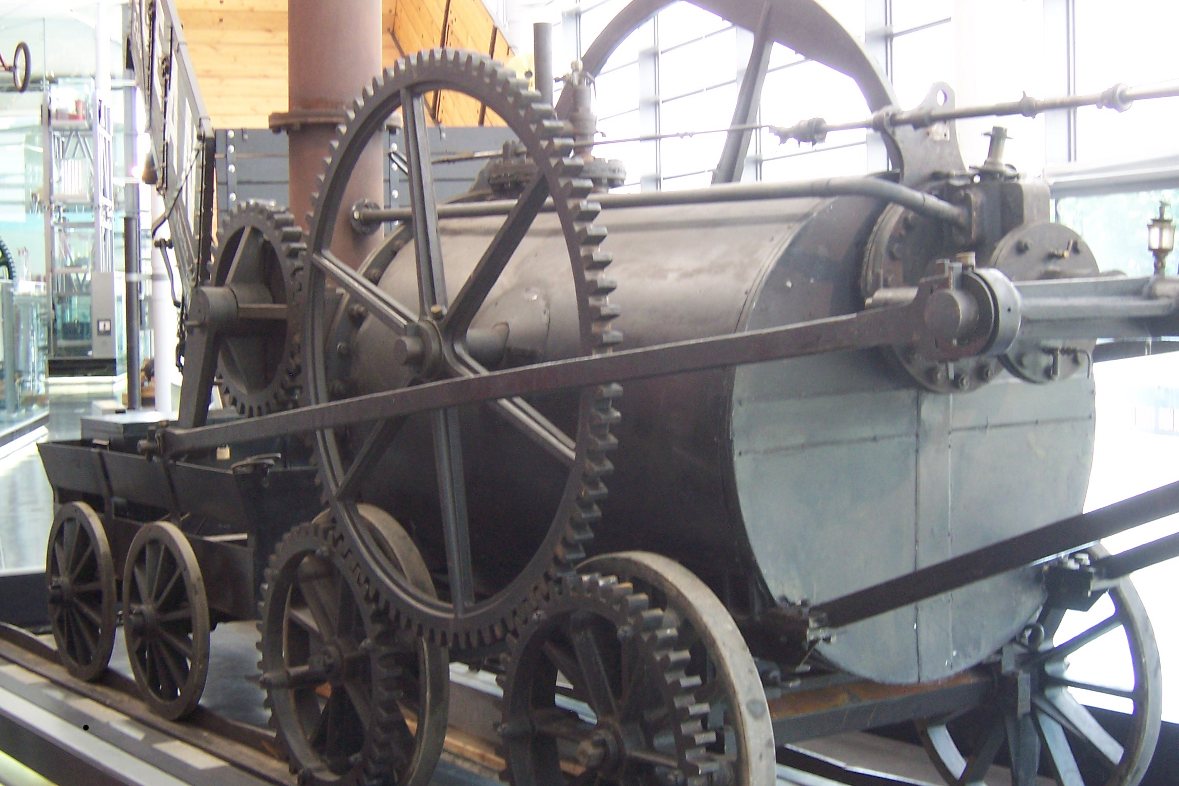
A replica of Richard Trevithick’s 1802 steam locomotive at the National Waterfront Museum in Swansea.
Photo by Chris55 via Wikimedia Commons.
In March, Britain’s Daily Telegraph and GB News channel both reported that the National Museum of Wales would be relabelling a replica of the first steam-powered locomotive, unveiled by its Cornish inventor Richard Trevithick in 1804. Trevithick had no links to slavery, but the amendment has apparently been included anyway as part of the museum’s commitment to “decolonizing” its collection. In a statement defending what it described as the addition of “historical context”, the museum said: “Although there might not be direct links between the Trevithick locomotive and the slave trade, we acknowledge the reality that links to slavery are woven into the warp and weft of Welsh society.” The statement continued:
Trade and colonial exploitation were embedded in Wales’ economy and society and were fundamental to Wales’ development as an industrialised nation. As we continue to audit the collection, we will explore how the slave trade linked and fed into the development of the steam and railway infrastructure in Wales.
[…]
When a society compulsively disrespects its historical accomplishments — when it obsessively seeks to turn every good thing into a bad thing — the outlook for that society is bleak. It destroys social cohesion, and sends the wrong kind of message to actual and potential opponents. The matter of the steam locomotive display in Wales may seem minor, and certainly trivial when compared with the appalling events in Ukraine or the threat of Iranian nuclear weapons. But it is not.
The behavior of the museum administrators in Wales is of a piece with other contemporary symptoms, such as the eagerness within influential circles in the US to embrace the conclusions of the New York Times‘s revisionist 1619 project. It is part of the politicization of everything. Science, technology, and art cannot — indeed, must not — be appreciated simply on the grounds of beauty, utility, or truth; everything must be reduced to race, gender, and other academically and media-approved categories of analysis.
Trends such as these have real-world implications, including the growth and decline of nations and their relative power. Writing in 1940, C.S. Lewis, warned about the dangers of what he called the National Repentance Movement, which focused on the need to apologize for Britain’s sins (thought to include the Treaty of Versailles) and to forgive Britain’s enemies.
Certainly, the British State had done many bad things during its long and eventful history — as well as many good things. But the excessive focus on its sins was part of a phenomenon manifested in a 1933 motion debated at the Oxford Union: “This House will under no circumstances fight for King and country”. To the Nazis and the Imperial Japanese, attitudes like these indicated that aggression would not meet much resistance. They also informed a policy of appeasement.
Liberals and progressives (as they call themselves) claim to be greatly concerned with physical sustainability of resources and ecosystems. But they are too eager to undercut the social sustainability of their own societies and the physical infrastructures on which those societies depend, however fond they may be of repeating the word “infrastructure”.
Why Did The First World War Break Out? (July Crisis 1914)
[My 2014 series on “The Origins of World War I” can be read here. Although I’d read a fair bit of history on the period, once I began researching the period, even I was surprised at how many different contributing causes there were.]
The Great War
Published 15 Jul 2022The assassination of Archduke Franz Ferdinand and his wife in Sarajevo on the 28th of June 1914 kicked off a crisis among the European Powers. Tensions that built up in the decades before erupted and in early August 1914 the world was at war. But what happened in these fateful July weeks 1914?
(more…)


