
Kobean History
Published 31 Aug 2020
(more…)
July 22, 2022
Winemaking in the Middle Ages | The Process, Taste, Storage and Use
Comments Off on Winemaking in the Middle Ages | The Process, Taste, Storage and Use
July 20, 2022
Climate change is nothing new, and it was warmer in England for a few hundred years in the Middle Ages
If you’ve been reading the blog for a while, you’ll have noticed that I’m not a fan of trying to panic people about climate change … catastrophism just isn’t my thing. I certainly don’t deny that climate change happens and I agree that it is happening now, but I’m highly skeptical that human action has more than a minor influence compared to the ups and downs of long-term climate shifts driven by natural forces. Ed West has a thumbnail sketch of just how much the European (and especially English) climate change impacted ordinary people during the Middle Ages:
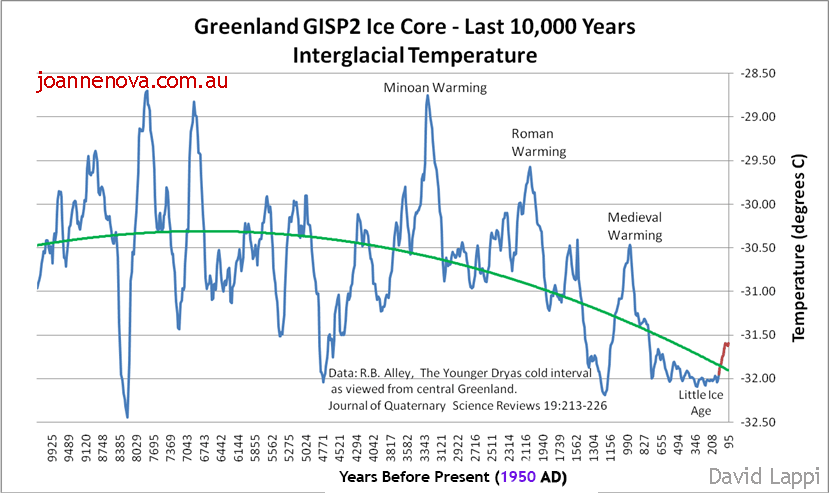
Chart from the Journal of Quaternary Science Reviews showing Greenland ice core data over the last 10,000 years. At the end of the Minoan Warming came the Bronze Age Collapse, after the Roman Warming came the fall of the western Roman Empire.
The climate is changing, with all that entails, something we’ve known about for several decades now. Among the early proponents of the theory of climate change was mid-century climatologist Hubert Lamb, who spent most of his career at the Met Office and during the course of his studies made a curious historical discovery.
It was once widely believed that climate remained relatively stable over recorded history, civilisational lifespans being too brief to see such grand changes. But while looking into medieval chroniclers, Lamb was struck by the numerous references to vineyards in England, some as far as the midlands. As long as anyone had ever remembered, the country had been too cold to grow wine, except in tiny pockets of Sussex which occasionally produced almost-drinkable white.
William of Malmesbury, living in the 12th century, observed of his native Wiltshire that “in this region the vines are thicker, the grapes more plentiful and their flavour more delightful than in any other part of England. Those who drink this wine do not have to contort their lips because of the sharp and unpleasant taste, indeed it is little inferior to French wine in sweetness.” How could that have been?
Lamb concluded that Europe must have been considerably warmer during the Middle Ages, and in 1965 produced his great study outlining the theory of the Medieval Warm Period; this posited that Europe was at its hottest in the High Middle Ages (1000-1300) and then became unusually cool between 1500 and 1700.
Since then, Lamb’s thesis has been reinforced by analysis of pollen in peat bogs, as well as the radioactive isotope Carbon-14 found in tree rings (the less sun, the more Carbon-14). In Medieval Europe, every summer was a hot girl summer — and tiny changes could make earth-shattering differences.
The people of Europe enjoyed that extended period of warmer weather for about 300 years, then things suddenly got far worse:
Across Europe, people must have noticed a change. Farmers in the Saastal Valley in Switzerland were probably the first to observe what was happening, back in the 1250s, when the Allalin Glacier began to flow down the mountain. Surviving plant material from Iceland suggests an abrupt decrease in the temperature from 1275 — and, as Rosen points out, a reduction of one degree made a harvest failure seven times more likely. From 1308 England saw four cold winters in succession; the Thames froze, chroniclers recalling dogs chasing rabbits across the icy surface for the first time.
As with many things, change was gradual, until it was dramatic, for then came the disastrous year of 1315. The Chronicle of Guillaume de Nangis, written by a monk at the Abbey of Saint-Denis outside Paris, recorded that in April the rains came down hard — and didn’t stop until August.
Drenched and starved of sunlight, the crops failed across Europe. The price of food doubled and then quadrupled. By May 1316, crop production in England was down by up to 85 percent and there was “most savage, atrocious death”, as a chronicler put it. Hopeless townsfolk walked into the countryside, searching for any bits of food; men wandered across the country to work, only to return and find their wives and children dead from starvation. At one point, on the road near St Albans, no food could be found even for the king. Emaciated bodies could be seen floating face down in flooded fields.
The Great Famine killed anywhere between 5-12% of the European population, although some areas, such as Flanders, suffered far worse death rates, losing up to a quarter of their population to hunger.
Comments Off on Climate change is nothing new, and it was warmer in England for a few hundred years in the Middle Ages
Book Review: The Wipers Times
Forgotten Weapons
Published 6 May 2018Get your copy here: https://amzn.to/2jzWnkI
Or here: https://amzn.to/2JOpMm3The Wipers Times was a satirical trench newspaper printed from February 1916 until December 1918 by British Captain F.J. Roberts and a crew of assistants. Such papers were not particularly uncommon, but the Wipers Times was particularly successful, well written, and long-lived, and it has survived in reprints today to a greater extent than any other similar work. A total of 23 issues were printed, and they consist of poetry, commentary, mock advertisements, advice columns, and short stories. While much of the humor is still quite accessible to us today, much of it also includes references, abbreviations, and inside jokes that are inscrutable to those who are not quite knowledgeable about life in the trenches.
Roberts and his cohorts were legitimate front-line soldiers, not writing as visiting journalists or from the safety of the rear echelons. Beyond its basic entertainment value, their writings also provide a rare and interesting view into the minds of men who were truly living the Great War.
Note that a book about the newspaper has also been printed, titled The Wipers Times, and with a very similar cover. If you want to buy a copy of the reprinted original issues, make sure you are not buying that book.
The BBC made a 90 minute program based on the Times, which is available in its entirely on YouTube here:
https://www.youtube.com/watch?v=SKPXu…[The original channel has been deleted, but I believe this is the same video: https://www.youtube.com/watch?v=juZBxhUYRpg]
(more…)
Comments Off on Book Review: The Wipers Times
July 18, 2022
General Patton Orders War Crimes – WAH 069 – July 17, 1943
World War Two
Published 17 Jul 2022This week, we see a contrast in the way different civilians behave within occupied Ukraine, Patton orders war crimes, and Jewish resistance give up one of their own fighters.
(more…)
Comments Off on General Patton Orders War Crimes – WAH 069 – July 17, 1943
July 17, 2022
Science by press release
Christopher Snowden on a media-genic “study” from a few years ago that supported the priors of the anti-alcohol campaigners and thus was given full uncritical media coverage, despite obvious flaws in data selection and methodology:
In 2018, the Lancet published a study from the “Global Burden of Disease Alcohol Collaborators” which claimed that there was no safe level of alcohol consumption. This was widely reported and was naturally welcomed by anti-alcohol campaigners. The BBC reported it under the headline “No alcohol safe to drink, global study confirms”. (Note the cheeky use of the word confirms, despite the finding going against fifty years of evidence.)
The study wasn’t based on any new epidemiology. Instead it took crude, aggregate data from almost every country in the world, mashed it together and attempted to come up with a global risk curve.
The study contains no new evidence and uses an unusual modelling approach based on population-wide data from various online sources. If you look at this massive appendix you can see the kind of data they were using. The figures are extremely crude.
The authors don’t dispute the benefits of moderate drinking for heart disease but they claim that the benefits are matched by risks from other diseases at low levels of consumption and are outweighed by the risks at higher levels of consumption. Some diseases which have been associated with benefits of drinking, such as dementia, are excluded from the analysis entirely. They also ignore overall mortality, which you might think was kind of important.
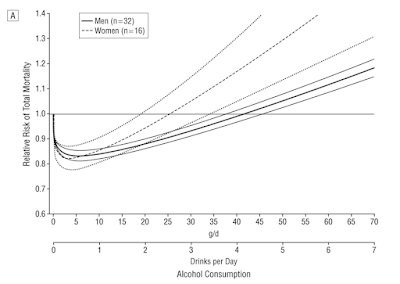
A typical risk curve for alcohol consumption and mortality is J-shaped. It looks like this …
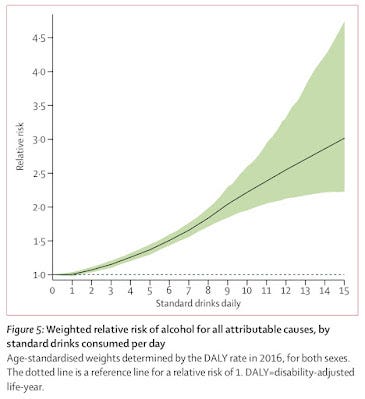
But the GBD’s risk curve for “all attributable causes” looked like this…
You will notice that there appears to be no protective effect at moderate rates of consumption in the GBD’s curve. One important reason for this is that they associate alcohol consumption at any level with tuberculosis. Tuberculosis remains a serious health problem in much of the world, but not in Britain. So what relevance does a global risk curve have to us? None.
Moreover, TB is not really an alcohol-related disease and is only viewed as such in this study because (a) drinking might weaken the immune system and (b) people who go to bars and clubs are more likely to catch an infectious disease. I kid you not.
Comments Off on Science by press release
Who Let the Dogs Out?! – The Invasion of Sicily – WW2 – 203 – July 16, 1943
World War Two
Published 16 Jul 2022The Allies have begun their fight to take back Western Europe with Operation Husky. That’s not the only news though. They are also trying to extend their foothold in the Solomons, and Germany and the USSR continue smashing into one another at Kursk.
(more…)
Comments Off on Who Let the Dogs Out?! – The Invasion of Sicily – WW2 – 203 – July 16, 1943
July 13, 2022
The Irish Fighting for Britain, Mexico’s Role in the War, and Chuikov in Uranus – WW2 – OOTF 27
World War Two
Published 12 Jul 2022How many Irishmen are fighting for Britain and why? And what did Chuikov do during Operation Uranus? And what role has Mexico played in the fighting so far? Find out the answers to these fascinating questions in our latest edition of Out of the Foxholes!
(more…)
July 12, 2022
Kursk, When Titans Clash – 202 – July 9, 1943
World War Two
Published 10 Jul 2022Adolf Hitler launches his huge summer offensive in the USSR, Operation Citadel, known as the Battle of Kursk. Men in the millions clash. The Allies’ New Georgia campaign continues in the Solomons, both on land and with fighting at sea this week, and the preliminary actions begin for the Allied invasion of Sicily, scheduled to go off tomorrow.
(more…)
Comments Off on Kursk, When Titans Clash – 202 – July 9, 1943
Ed West – “Farewell then, Boris Johnson, and to paraphrase another leader who had rather lost the support of his front bench, what an artist dies with him”
Outgoing (in several senses) British PM Boris Johnson was a political throwback in many ways:
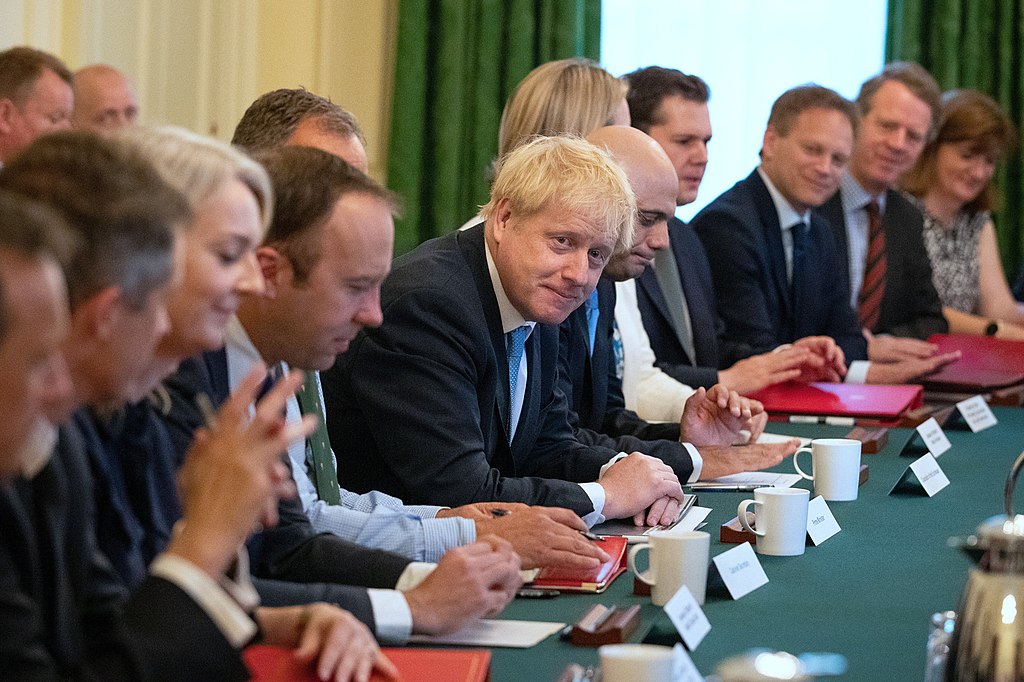
Prime Minister Boris Johnson at his first Cabinet meeting in Downing Street, 25 July 2019.
Official photograph via Wikimedia Commons.
Johnson was the most amusing prime minister in living memory, but also the most historically aware. The first British political leader since Harold Macmillan to read classics, he was hugely influenced by the ideas of the ancient world, in particular Fortuna. And as Tom Holland reflected in last Friday’s The Rest is History, this obsession with the classics guided his career.
Classics, Holland said, had once been a “how to do politics” course, from the time of Machiavelli to the aristocrats of the 18th and 19th centuries, seen as a guide to “how to behave morally and politically”. This became especially important as elites in Europe and America came to consciously imitate the ancients — five Victorian and Edwardian prime ministers read classics — but “that has not been the case for many, many years”.
Johnson in that way “is a throwback. He is someone for whom classics is central to his education, but I think the thing that is intriguing about it is that he studied it as an example of how to get ahead. He had a properly Greek/Roman understanding of Fortuna, Tyche, chance, this great goddess who has her favourites. He genuinely, in an inchoate sense but in a sense that does seem to be authentic, saw himself as fortune’s favourite, but of course it’s the essence of tragedy, the cruelty and humour of Fortuna, that she raises her favourites up only to hurl them down. The joke that fate has played on Johnson is a particularly cruel one.”
It’s hardly surprising that Boris believed in Fortuna, considering just how much she smiled on him. A little over a year ago I wrote about how incredibly fortunate Boris was to become leader in the middle of a seismic demographic shift that would make life very difficult for the Tories in just a few years.
It was all the more incredible because, just 12 months earlier, it appeared that Boris’s luck had finally run out. Having done everything to climb the greasy pole, Johnson had achieved his goal only for his dreams of power to turn sour. Apollo had fired his arrow at Britain and Boris was left with a country overrun by disease and necessitating authoritarian measures that repulsed him; soon he was sick himself, and it looked like he might follow his idol Pericles a bit too much by dying of the plague.
Comments Off on Ed West – “Farewell then, Boris Johnson, and to paraphrase another leader who had rather lost the support of his front bench, what an artist dies with him”
Killing the Resistance, and Rockets of Death – War Against Humanity 068 – July 10, 1943
World War Two
Published 10 Jul 2022The Polish and French resistance find themselves weakened by the lots of their leaders. Hitler decided to give Werner von Braun hundreds of thousands of slaves to launch the German rocket program.
(more…)
Comments Off on Killing the Resistance, and Rockets of Death – War Against Humanity 068 – July 10, 1943
July 11, 2022
The Master Race of Asia? – WAH 067 – July 3 1943
World War Two
Published 8 Jul 2022
(more…)
Comments Off on The Master Race of Asia? – WAH 067 – July 3 1943
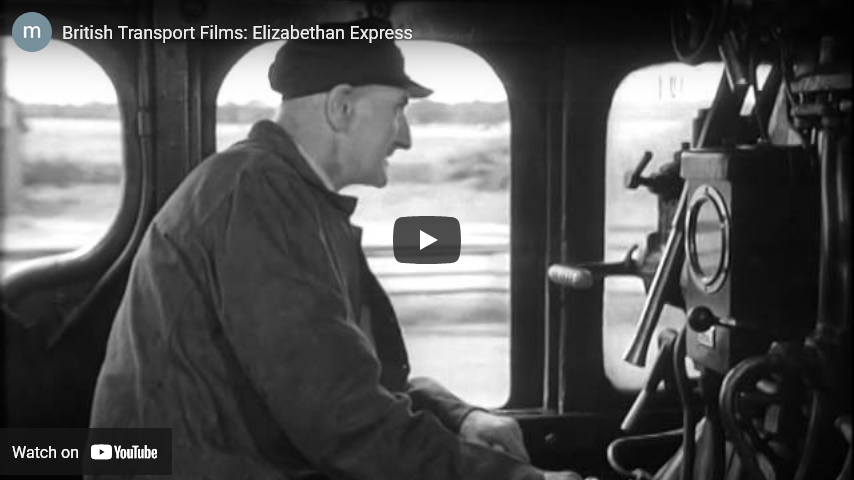
British Transport Films: Elizabethan Express (1954)
mikeknell
Published 6 May 2014This 1954 documentary is uploaded in a couple of places, but here it is without breaks and in the correct aspect ratio. One of the classic railway films.
Comments Off on British Transport Films: Elizabethan Express (1954)
July 9, 2022
Tank Chat #151 Plastic Tank | The Tank Museum
The Tank Museum
Published 11 Mar 2022► TIMESTAMP:
00:00 – INTRO
00:43 – FEATURES
(more…)
Comments Off on Tank Chat #151 Plastic Tank | The Tank Museum
July 7, 2022
“Boris was the latest incarnation of the slippery mountebank in politics”
As I’m writing this, Boris Johnson seems to be losing a cabinet minister every couple of hours, and there’s a finite number of them so at some point soon he’s likely to resign — or in Tory tradition, be knifed by a former trusted colleague. Ed West gets in an early political obituary for Boris:
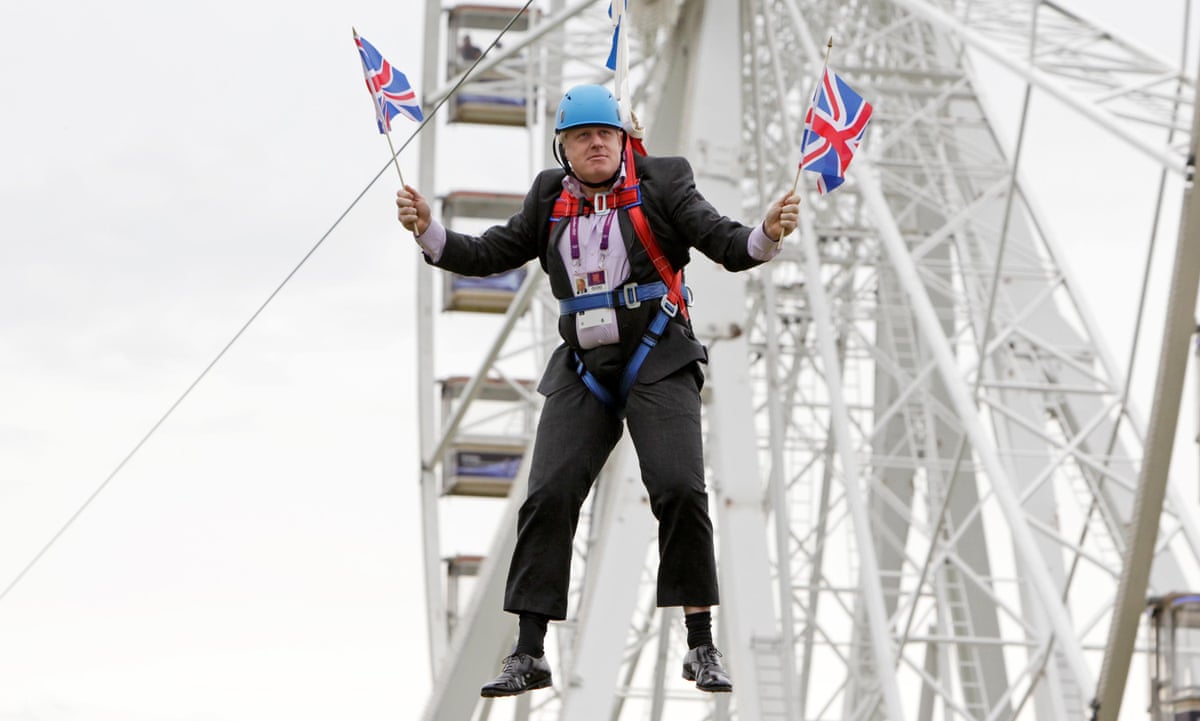
However bad Boris Johnson’s career ends, it will surely be a better finale than that of his great-grandfather, the Turkish journalist, editor and liberal politician Ali Kemal. Almost exactly a century ago, following the trauma of defeat and the end of the Ottoman Empire, Kemal was attacked by a mob of soldiers, hanged from a tree, his head smashed in with cudgels before being beaten to death. I can’t imagine that the Tory backbenchers will go that far.
There is something charming and colourful about Johnson’s background, the mixture of Turkish, Russian, Jewish and even a Circassian slave just a few generations back (according to Boris himself, and if you can’t trust his version of events, who can you trust?). Just like David Cameron, he is also descended (via a mistress) from George II, the last king of England to fight in battle.
As Rod Liddle once put it, Boris is “the esoteric product of millennia of Eurasian toff miscegenation”, and that’s part of the attraction. It explains his ease with people of different backgrounds, and his liberal persona as London Mayor, which felt like the real him, more than his later populist act. It’s why the charges of racism never stuck; he has his faults, but racial prejudice isn’t one of them.
It’s often been noted that Boris was the latest incarnation of the slippery mountebank in politics while his opponents, both Keir Starmer and Jeremy Corbyn, came from that other British political archetype, the do-gooding Puritan. Disraeli and Gladstone were the Platonic examples of these contrast, but the division dates back further to the Civil War, and there could be no doubt which side Boris would have fought for at Marston Moor.
In fact he is almost more like an oriental potentate, a benevolent and cosmopolitan sultan, hampered by court intrigue and presiding over a crumbling empire. At the time of his ascension to Downing Street, Wikipedia listed Johnson’s de jure and de facto spouses, making Boris the first polygamous ruler of England since King Canute. Since coming to power his rule has been marked by unprecedented court drama, with quite obvious parallels to the reign of Henry VIII, with Carrie Symonds as Anne Boleyn and Dominic Cummings playing Thomas Cromwell.
And on his political legacy, such as it might be:
There’s a whole new generation out there who hate progressivism, who don’t want social norms dictated by dysfunctional, miserable people, and yet the Tories have nothing to offer them. Everywhere there is a sense of overwhelming gloom about the state of the country and its lack of future. Boris Johnson, one of the funniest men to inhabit Number 10, has left his audience with a feeling of dread and sadness, a lesson perhaps in allowing newspaper columnists too much of a say.
As Johnson’s rule nears it end, it feels like everything is collapsing, from the health service to the police, even a shared faith in institutions — and as a Conservative voter I’ve got no “buts” to give in response, except perhaps that Corbyn would have been worse.
In clear expectation of the smash, Mark Steyn reposted what he wrote when Boris took possession of Number 10 Downing Street:
Boris Johnson, it seems, is determined to hang on. Tonight I chanced to see, on the one hand, his father, apparently breezy and unperturbed. On the other hand, a senior Tory backbencher told me that, were another confidence vote to be held, Boris would win the support of fewer than sixty Conservative MPs, with over three hundred voting against him.
I don’t really have anything new to say about this failed prime minister because, in the third of a century since I first met him, he has been, in the turbulence of a constantly changing world, eternally unchanging. Here is what I wrote about him upon the occasion of him taking office as PM:
Is he a nice person? Well, he’s left an awful lot of human wreckage in his wake. Some of the women he’s used and discarded seem to me, without naming names, to be sad and profoundly damaged from their brief intersection with his wandering zipper. His latest squeeze seems likely to be moving into Number Ten without benefit of clergy — a first for the Tories and a sign of how desperate they are after years of letting all the sober, serious, earnest types turn their party into a laughingstock.
What does he believe in? Other than himself, not terribly much. About a decade ago, I was in London for a couple of days and had lunch with him and Stuart Reid at a favorite Italian restaurant. Stuart was the deputy editor who did all the hard grind at the Speccie, while Boris was the great fizzing impresario fronting the operation — a business model he transferred successfully into his mayoral regime, and will no doubt be trying again in Downing Street. He was going on the BBC’s Question Time that night and was worried that he didn’t have anything sufficiently arresting to say, so asked if I had any tips. I gave him a few thoughts on the passing scene, and he considered them not in terms of his own public-policy positions (if any) but in terms of attitudinal cachet. Finally, I said, “Why don’t you really stir them up and put in a word for social conservatism?”
“You mean abortion and all that? Oh, God …” he sighed, and ordered dessert.
If that seems to be (for self-interested reasons) his most firmly drawn red line, don’t nevertheless overstate his ideological flexibility. Like Boris, Theresa May schemed and maneuvered for decades to reach the top spot … and, by the time she pulled it off, she’d spent so much time and effort on the scheming and maneuvering that she had no idea of what to do once she got there. Boris is likewise invested in himself, but, having reached the finial of Disraeli’s greasy pole, he doesn’t intend to be just the latest seat-filler. Mrs May wanted to be prime minister; Johnson wants to be a great and consequential prime minister.
So much for that. That was July 2019. Six weeks later came the first of what would become an avalanche of ministerial resignations …
Comments Off on “Boris was the latest incarnation of the slippery mountebank in politics”
July 6, 2022
Decapitating the French Resistance – WAH 066 – June 26, 1943
World War Two
Published 5 Jul 2022The Gestapo deals a devastating blow to French Resistance, and in Bengal, British India the famine is only getting worse.
(more…)
Comments Off on Decapitating the French Resistance – WAH 066 – June 26, 1943


