Quotulatiousness

August 1, 2019

“People in Ottawa don’t invoke PMO frequently or lightly. It is done to intimidate and obtain compliance”

Filed under: Bureaucracy, Cancon, China, Government, Politics — Tags: , , , , — Nicholas @ 03:00

What we’re not allowed to know can’t hurt us … the federal government apparently figures that no charges can be contemplated if there’s no investigation allowed:

Parliament Hill in Ottawa.
Photo by S Nameirakpam via Wikimedia Commons.

Before colleagues voted to quash a review of whether the Liberal government acted improperly after a bureaucrat asked former ambassadors to temper public comments about China, Liberal MP Rob Oliphant told Parliament’s Foreign Affairs committee that he’s “distressed”.

Apparently, he was not distressed about a Foreign Affairs assistant deputy minister being asked to “check-in” on two former Canadian diplomats to China before making future pronouncements on Canada’s shambolic relations with the communist regime.

Oliphant’s also not distressed about the troubling optics that either diplomat – David Mulroney and Guy Saint-Jacques – felt The Globe and Mail should be aware of their reservations about said interactions, which the paper reported last week.

“I am very distressed, at the tone, at the idea and at the allegations that are being cast about by members of the opposition,” Oliphant, Parliamentary Secretary to the Minister of Foreign Affairs and non-voting member, claimed at the committee’s emergency meeting Tuesday.

Oliphant’s claim comes after either diplomat says the department’s ADM Paul Thoppil told them his call was at the behest of the PMO. Both Prime Minister Justin Trudeau and Foreign Affairs Minister Chrystia Freeland have denied they directed such outreach.

Mulroney, who had earlier warned about travel to China following the detention two Canadians there in December of last year, told the Globe that Thoppil cited the “election environment” and asked him to contact the department before making future statements.

“It wasn’t, in my view, so much an offer to consult and share ideas as to ‘get with the program’. People in Ottawa don’t invoke PMO frequently or lightly. It is done to intimidate and obtain compliance,” Mulroney is quoted as saying.

Saint-Jacques told the Globe that his conversation with Thoppil differed somewhat, “But I can understand that one could come to that conclusion when they say we should speak with one voice.”

July 31, 2019

Federal NDP and Greens duel on climate platforms

Filed under: Cancon, Economics, Environment, Politics — Tags: , , , , — Nicholas @ 03:00

Colby Cosh looks at the two most environmentally conscious federal parties’ climate change stances as we head into the next general election:

Federal NDP leader Jagmeet Singh taking part in a Pride Parade in June 2017 (during the leadership campaign).
Photo via Wikimedia.

So why are our most radical, eco-aware parties so easily distracted on this front? Jagmeet Singh’s New Democrats talk tough on climate change in their “Power to Change” plan. It is maximum urgency right out of the gate in the preamble. “People across Canada are worried about the future.” True enough! They usually are! “Flooding and forest fires are threatening our homes.” Well, speak for yourself, but OK. “Polluted air and water are hitting communities hard.” Wait, polluted water…? Wasn’t this supposed to be a climate change thing? “And rising temperatures are threatening our farming and forestry industries.” Oh, good, back on track! “It’s clear there’s no time to waste.”

There is a whole load of radical measures in the NDP program, but they cannot resist this tendency to drag in grace notes of economic nationalism and other subjects at best vaguely related. They promise to “make it easier to own a zero-emission vehicle” in Canada, which might help with the Big Problem, but in mid-sentence they remember that they’re in hock to organized labour and add “and make sure those cars are made in Canada.” This means that if the price of a Tesla comes down to $500 tomorrow, you’ll still have to buy the carbon-neutral modern equivalent of a Bricklin, assuming someone can be found to try building one. Shouldn’t we be willing to buy zero-emission vehicles from Zanzibar or Antarctica if that’s the most efficient way, or the only way, to upgrade the fleet?

The document also smuggles in a promise to eliminate single-use plastic products, which take carbon from the bowels of Mother Earth and… restore it thither in landfills, with the evil molecules usefully imprisoned in polymer chains. We’ll be replacing all that plastic, presumably, with metal cutlery (from mines) and cloth bags (from forests) that have to be washed in hot water if you happen to be particular. There is no hint that this is an incongruous or irrelevant part of a climate-change plan.

So, perhaps a bit of mixed messaging there, as the NDP have to trim their sails in odd ways to keep some of their constituencies in line. How about the Green Party then?

Green Party of Canada leader Elizabeth May with Green candidate Christ Tindal in 2008.
Photo by Shaun Merritt via Wikimedia Commons.

The Green list of climate-change policies is much more radical and earnest in appearance; Elizabeth May’s political liquidators intend to abolish internal-combustion vehicles by 2040 (such dates are no longer sci-fi, oldies) and retrofit every single building in the country for carbon neutrality by 2030.

But what, as the University of Alberta energy economist Andrew Leach asked in a CBC editorial on Monday, is this about “ending all imports of foreign oil”? This autarkic flake out flies in the face of the Greens’ entire approach; some of the oil we produce here is (please imagine me whispering this part) somewhat carbon-intensive relative to the stuff Eastern Canada takes from elsewhere in the world. Moreover, increasing use of domestic oil even in the short term implies a pretty major program of, uh, pipeline-building.

Not to mention the new refineries. The Green Climate Change War Cabinet (a real thing they want) would permit “investment in upgraders to turn Canadian solid bitumen into gas, diesel, propane and other products for the Canadian market, providing jobs in Alberta.” By 2050, they envision shifting “all Canadian bitumen from fuel to feedstock for the petrochemical industry.” This adds up to an awful lot of subsidized high-tech construction — executed at the same time as a total retrofit of the national housing stock! — that has nothing much to do with reducing emissions per se. Although it sounds as though the Greens are, if nothing else, definitely much bigger fans of plastic than the New Democrats.

July 28, 2019

“Fantasy Fleet” notions for the RCN

Filed under: Cancon, Military — Tags: , , — Nicholas @ 05:00

I hate to use the term “fantasy fleet” when linking to a Ted Campbell article … he’s far from being an obsessive who loves amassing lists of cool, gosh-wow hardware, as he’s a retired former army officer who actually does know what he’s talking about on military matters. I apply the term because no matter how sensible and practical these suggestions are (and I largely agree with them on those terms), there is no chance the current government or even a Conservative government under the Milk Dud could stand the political heat they’d take for devoting the kind of ongoing investment a fleet renewal and expansion like this would generate:

The Kingston-class Maritime Coastal Defence Vessel (MCDV) HMCS Moncton in Baltimore harbour for Sailabration 2012.
Photo by Acroterion via Wikimedia Commons.

… Canada’s 25 years old Kingston class vessels have a range of up to 5,000 nautical miles and can carry unmanned aerial vehicles, but they are slow and are designed for underwater warfare, being fitted with specialist payloads to look for mines and other things on the seabed … The Royal Canadian Navy has said, in the past, that it needs 25± surface combatants (the Navy uses the term “bottoms” when it means surface ships) and Canada has, now, 12 of the 30-year-old (but still lethal) Halifax class frigates and we also have, right now, 12 very useful little Kingston class ships, too. Canada plans (hopes?) to have 12 of the new Type 26 ships in the future, plus 5 of the very large (6,500+ tons) Harry DeWolf class Arctic patrol ships … so we are going from 24 down to 17?

A Chilean navy boarding team fast-ropes onto the flight deck of RCN Halifax-class frigate HMCS Calgary (FFH 335) during multinational training exercise Fuerzas Aliadas PANAMAX 2009.
US Navy photo via Wikimedia Commons.

My guesstimate is that a proper Canadian Navy needs, in addition to supply/support ships, at least:

  • 2 or 3 large (25,000± tons) helicopter carrying “destroyers,” (in fact, small aircraft carriers) perhaps like the modern Japanese Izumo-class multi-purpose “destroyers” (pictured below) to conduct multi-purpose operations, including carrying combat-ready specialized amphibious warfare trained soldiers, on a global basis;
  • JS Izumo DDH-183

  • 8 to 12 Type-26 destroyer-frigates (below) ~ I believe (guess) they will also be named for Canadian provinces, cities or rivers or something;
  • Type 26 Global Combat Ship
    (BAE Systems, via Flickr)

  • 6 to 10 modern corvettes (a modern Dutch design is pictured below), 1,500-ton to 2,500-ton vessels, with a 5,000± nautical mile range, each able to carry a helicopter or, at least, a large unmanned aerial vehicle;
  • KRI Diponegoro (pennant number 365) of the Indonesian navy. The Sigma (Ship Integrated Geometrical Modularity Approach) class is a Dutch modular design that can be built in OPV, corvette, or frigate variants. In 2019, ships of this class are in service with Indonesia, Morocco, and Mexico.
    Photo by Wim Kosten via Wikimedia Commons.

  • 6 to 10 special purpose, ocean-going (i.e. with a range measured in thousands, not hundreds of nautical miles) underwater warfare vessels to replace the Kingston-class ships; and
  • The lead vessel of the Orca-class in the Gulf Islands on officer training in August, 2007. She is not a commissioned naval ship, so does not bear the HMCS designation. Orcas are not generally armed, but the foredeck has been strengthened to allow an M2 12.7mm machine gun to be mounted if necessary.
    Photo via Wikimedia Commons.

  • 8 to 12 armed “training” ships, about 250 tons (about the same as the Finnish Hamina class) to replace the (fairly new) Orca class vessels, which are not warships. These ships would be, primarily, training vessels, for which there is, always, a pressing need but they could, in emergencies, be used for coastal, constabulary patrol and search and rescue duties, too. The important thing is that they would be real warships, in commission, armed about as well as the Harry DeWolf class ships (which would enhance their training value, too) and, therefore, able to “fight.”
  • FNS Hanko, a Finnish Hamina-class missile boat.
    Photo by kallerna via Wikimedia Commons.

In his ideal world (i.e., not the one we’re living in at the moment), that would be the RCN’s combat fleet. Submarines, logistical support vessels, and (lots of) helicopters would also be required, which would further put this shopping list out of consideration for a Canadian peacetime government.

One thing to keep in mind for most of us civilians, is that warships operate in very rough environmental conditions even in peacetime, and require much more in the way of maintenance and service than your car or pleasure boat. This is why, even if you have a dozen ships “in commission”, you’ll likely only have eight of them available for deployment as the others will be in various states of maintenance and repair. For operations far from home, you really need three ships for each one actually deployed on active service, to account for the back-shop work to keep the ships afloat, fully staffed, and fully capable, plus transit time for the ship itself getting to and from the area of operations, and adequate leave and out-of-combat rest and recreation for the crews.

With the SNC-Lavalin affair fading from memory, Justin Trudeau looks set for the fall election

Filed under: Cancon, China, Media, Politics — Tags: , , , , , , — Nicholas @ 03:00

They say that memories are short in politics, but this short? Thanks largely to the dog days of summer and a complicit media desperate for more government subsidies, Justin Trudeau and the Liberals are being allowed to shed the scandal-tainted skin of four whole months ago to emerge glistening and new with election promises galore. Democracy dies in government subsidies, apparently.

On the other hand, perhaps Canadian voters’ memories will last long enough to get past the casting of ballots in October:

Supposedly, the Liberals have put the SNC-Lavalin scandal behind them: the polls have rebounded, the media have moved on, while the company has worse problems to deal with than a mere hair-raising multi-million-dollar corruption charge.

Even the return of Gerry Butts, the prime minister’s former principal secretary, albeit in a part-time, temporary, what-are-friends-for capacity as adviser to the party’s election campaign, seems to have caused little stir, although he was one of two senior government officials to resign over their part in the affair.

Perhaps the Liberals have concluded the passage of time is enough to earn them a pass from the public. I mean this all took place, what, four months ago? Who even remembers that far back?

But as recent events have shown, the same ingredients that combined to produce the SNC-Lavalin scandal — hubris, a maniacal desire to run everything from the centre, and an unwillingness, in all this overweeningness and control-freakery, to be bound by basic legal and procedural norms — remain very much in place in the prime minister’s office.

For starters, there is the affair of the two ex-ambassadors. First, David Mulroney, Canada’s ambassador to China from 2009 to 2012, then his successor, Guy Saint-Jacques, reported a senior official in the Global Affairs department had called them to demand they clear any public comments on the government’s policy towards China with the government.

Both men are now private citizens. Both have been critical of the government’s handling of the China file. Unlike the most recent former ambassador, former Liberal cabinet minister John McCallum, neither has framed his comments on Sino-Canadian relations in terms of what would assist in the re-election of the Liberals. Apparently, that was the problem.

The official, assistant deputy minister Paul Thoppil, claimed to be speaking on behalf of the PMO and explicitly cited “the election environment” as a reason to shut up. Oh, also the current state of “high tension” between the two countries, presumably over China’s seizure of two Canadians as hostages, which supposedly made it essential for everyone in Canada, whether in the government’s employ or not, to “speak with one voice,” i.e., refrain from criticizing the government.

As a China policy, this has the advantage of closely resembling the Chinese way of doing things. It’s hard to say which is the more extraordinary: the notion that private citizens should be compelled to clear their criticisms of the government with the government, or the notion that they could be.

July 26, 2019

Post-Brexit, consider CANZUK

Filed under: Australia, Britain, Cancon, Economics — Tags: , , — Nicholas @ 03:00

Tom Colsey explains why in a post-Brexit world, CANZUK might be an attractive economic alternative:

One possible option would mean the island nation would initially turn away from Europe toward certain anglophone Commonwealth nations and former colonies. I talk, of course, of the promising CANZUK proposal that would see Canada, Australia, New Zealand, and the United Kingdom band together with voluntary agreements on multilateral free trade and movement, forming a bloc that would singularly hold the third largest nominal GDP in the world.

The Free Movement Proposal

What makes CANZUK unique is how viable and well-thought-out it is on every level. Unlike within the EU, the grouping would not be consolidated through impositional treaties laced with unpleasant footnotes delegating political power to a bureaucratic institution. Freedom of movement would assist meeting labor market demands across the countries, yet this would be prohibited to those with serious criminal records.

Everything the EU seemed to get wrong about forming unions under a liberal-internationalist pretense, CANZUK proposals seem to get right. They account for social attitudes and the dangers of becoming impositional, eroding national sovereignty. Free movement within the European Union had been widely reviled by the domestic population — and is part of the reason Britain now is set to leave. Yet the very same population overwhelmingly favor the same principle, alternatively implemented, across the CANZUK nations, polling outright majorities in favor in every region.

Perhaps a reason for this is that while the nations are extremely close culturally, they are also resoundingly similar socio-economically. Despite their distances, the states could have been separated at birth (of course, they do share the same monarch).

July 25, 2019

In British Columbia, “butthurt” damages can exceed $75,000 under Human Rights legislation

Filed under: Cancon, Law, Liberty — Tags: , , , — Nicholas @ 05:00

In the Post Millennial, Jordan Schroeder illustrates how BC human rights rules have created a new class of tort:

I would argue that the issue is not with the BC Human Rights Tribunal itself, but with the perverse incentive of litigating for profit that is created by the BC Human Rights Code. The BC Human Rights Code creates this incentive through a type of damages called “injury to dignity, feelings, and self-respect.”

This head of damages is harmful to human rights law in BC. It is unfair to the defendants, and it incentivizes predatory litigation. All of this causes British Columbians to lose trust in the important role that the tribunal can play in redressing wrongs.

Section 37 of the BC Human Rights Code allows the tribunal to make an award of damages to a complainant for “injury to dignity, feelings, and self-respect”. The tribunal is permitted to award any amount for this that it sees fit.

By the admission of the Human Rights Tribunal [PDF], the awards for this type of damages is high and is “trending upwards.” For example, in the Oger v Whatcott case, Whatcott was ordered to pay $35,000 for discriminatory speech against Morgane Oger. Whatcott had made critical comments about Oger based Oger’s transgender identity. In the same case, the tribunal cited $5,000 awards as “lower” awards. Other cases have seen awards of up to $75,000.

Awards for hurt feelings are unique to human rights law. Damages awarded in every other area of law are based on the principle that the award should only make the complainant whole. A complainant should never be better off after receiving the damages award.

For example, consider if a company leased a concert hall to a business that wanted to use the space to put on a production. Imagine that business stood to make $50,000 in profit from a sold-out production.

If the rental was cancelled by the company leasing the concert hall in breach of the contract, that company would have to pay the other party $50,000, representing all of the profit the other party could have made. The other party is not better off after the award. They are only made whole.

In contrast, awards for hurt feelings undoubtedly put the complainant better off than they would have been had the human rights violation not occurred in the first place. It is self-evident that an award in the tens of thousands of dollars outweighs any injury to feelings caused by the discriminatory speech or action.

Why is it a problem to have an award that amounts to more than what the complainant actually lost? Obviously, there is the problem that it saddles a defendant with a massive financial burden that doesn’t reflect the damage that they caused. A woman starting a small business who is ordered to pay a “small” award of $5,000 dollars would likely find it ruinous.

July 24, 2019

Wait, you mean there might be a downside to cannabis legalization?

Filed under: Cancon, Health, Law, Liberty, USA — Tags: , , , , — Nicholas @ 05:00

As a libertarian of long standing, I’m on the record as being in favour of legalizing cannabis since long before it was cool (geeky and perpetually uncool libertarians probably helped keep it from being cool for at least a few years longer). I’m not enthused to hear that we may have been undersold on the risks of cannabis use … not that the government didn’t try telling is it was deadly, deadly poison (they did, repeatedly, and at great length), but they institutionalized the role of the boy who cried wolf, and every illegal narcotic got basically the same description. I’m actually not kidding here: the first health class I got in middle school included a lecture and a pamphlet on the dangers of pot; the second class covered the dangers of cocaine; the third warned against LSD; and so on … but they used a copy/paste to discuss the physical and mental risks of the different drugs, and they all read the same way. All those evil drugs are evil, bad, and rot your brain. Knowing that the pothead (“Hi, Gary!”) at the back of the class hadn’t suddenly had a psychotic break and tried to fly off the top of the school was the first hint that we were being oversold on the real world risks of (some) illegal drug use. The declared fact that some illegal narcotics actually are deadly, deadly poison ran up against the observed fact that a significant majority of people over the age of fifteen had tried cannabis and found it somewhat less scary than advertised.

Along with the beginnings of doubt that the government was being honest with us, and the clear understanding that even if using drugs wasn’t as dangerous as we were told, we shared a growing awareness that being caught with drugs by the police was significantly more dangerous and possibly deadly. Officer Friendly would shoot you down like a mad dog if he thought you were one’o’them drug-crazed hippies. It certainly changed the social dynamics of any interaction with Officer Friendly’s fellow heavily armed co-workers…

In the National Post, Barbara Kay suggests that not all the dangers of cannabis use were mere government propaganda:

Some years ago, in conversation with his wife, a forensic psychiatrist specializing in mentally ill criminals, former New York Times reporter Alex Berenson observed that the perpetrator of a recent violent crime had been high at the time, and had smoked pot regularly all his life. Her response — “Yeah, they all do” — jolted him. The result was his book, Tell Your Children: The Truth About Marijuana, Mental Illness and Violence.

Much of the referenced material in Berenson’s book had not yet been published a decade ago. But more recent studies only confirm what a few intrepid researchers were already warning about then.

Indeed, as I noted in a 2008 column, the head of the Medical research Council in the U.K., Professor Colin Blakemore, who in 1997 had been the moral authority behind a pot-legalization campaign, unequivocally reversed his pot-friendly stance in 2007, stating: “The link between cannabis and psychosis is quite clear now; it wasn’t 10 years ago.”

If you haven’t energy for a whole book, but would invest in 16 pages on the subject, you will be well rewarded by Steven Malanga’s in-depth article, “The Marijuana Delusion,” in City Journal‘s June issue. Here you will find debunked the blithe claim, still received as gospel by progressives and libertarians, that pot is virtually harmless and even therapeutic.

Unlike marijuana, real medications are deeply researched before coming on the market, and may attest to proven benefits, but are obligated to admit potential harms. Is pot a medicinal drug or a placebo? Nobody really knows. One may argue “who cares, as long as it works” (anecdotally I hear that pot works, and also that it doesn’t work), but that isn’t the point, since the legalization movement made medical claims for pot in order to bring the public onside politically. There was no will on the movement’s side to discover even radically fortified pot’s downsides.

The knowledge was out there for those interested. In 1987 a study of nearly 50,000 Swedish military conscripts followed for drug use over 15 years found that frequent pot use in teenhood was linked to a six-fold risk of schizophrenia as compared with non-usage. A 2004 meta-analysis of studies on pot use came to a similar conclusion. These studies, and others, are suggestive that heavy marijuana consumption, particularly in youth, may cause serious mental health problems. Yes, it is possible that the link isn’t entirely causal; people with mental health issues may be more likely to use marijuana heavily. But at the very least, this ought to be an issue of ongoing concern, particularly now that marijuana is legal in Canada and in an increasing number of U.S. states.

July 22, 2019

FAL in the North: The Canadian C1A1

Filed under: Cancon, History, Military, Weapons — Tags: , , , , — Nicholas @ 04:00

Forgotten Weapons
Published on 19 Jul 2019

http://www.patreon.com/ForgottenWeapons

Cool Forgotten Weapons merch! http://shop.bbtv.com/collections/forg…

Canada was the first country to adopt the FAL rifle, purchasing trials rifles from FN within weeks of the formal standardization of the 7.62mm NATO cartridge. Canada acquired production rights to the rifle along with the technical package from FN, and spent 18 months converting the drawings into 1st-angle inch pattern (which would be used by the rest of the Commonwealth nations subsequently). Both a C1 rifle pattern and a C2 LMG pattern were made, although today we are looking at just the C1.

The first production was a run of 20 toolroom prototypes, one of which we have in today’s video. After a few changes were made – most distinctively to the rear sight – full-scale production commenced. Over the following years, a few minor changes were made, and a slightly improved C1A1 pattern adopted. These would service the Canadian military until eventually replaced with the C7 rifles.

Contact:
Forgotten Weapons
PO Box 87647
Tucson, AZ 85754

July 20, 2019

“Scheer is demonstrating what it actually looks like for a Canadian political leader to be utterly beholden to a special interest group”

Filed under: Bureaucracy, Cancon, Economics, Food, Politics — Tags: , , , — Nicholas @ 03:00

I wasn’t a fan of Andrew Scheer even before he bought the leadership of the Conservative party with Quebec dairy money. I think he was one of the worst possible choices for Tory leader, but we’re stuck with his ineffectual bought-and-paid-for self to attempt to beat an incumbent PM who has the undying loyalty of 95% of the mainstream media. And we know beyond a shadow of a doubt that his loyalty isn’t to Canada or to the Tories, but to his paymasters in Big Dairy. Despite this, Chris Selley says that The Milk Dud’s vassalage to a well-moneyed and legally privileged class may end up destroying the government cartel that is Supply Management:

Andrew Scheer, paid tool of Big Dairy, chugs some milk during a Press Gallery speech in 2017. I’ve called him the “Milk Dud” ever since.
Screencapture from a CTV video uploaded to YouTube.

There’s no shame in a conservative politician opposing the federal government of a gigantic country containing multitudes of lifestyles trying to create an ideal diet for all its citizens. “I’ll eat what I want, get out of my kitchen,” is a perfectly respectable position — especially since the food guide is such a joyless, under-salted slog. But that’s not Scheer’s position. Instead he’s vowing to “get it right.” This suggests consulting people other than medical and scientific experts, most of whom were relatively pleased with this edition of the food guide. It suggests bringing industry voices back into the mix. And that’s not something anyone other than Big Dairy and Big Meat should want.

The so-con comparison is somewhat facetious, of course: Abortion is a third-rail issue, or at least the media treats it as such, whereas unwavering protectionist support for our dairy farmers is an all-party consensus-cum-contest to see who can most abase themselves. The winner, by far, is Andrew Scheer. On Wednesday he excoriated the Liberal government for allegedly missing deadlines to explain how it would compensate dairy farmers for ever-so-slightly opening the Canadian market to European and Asian countries.

“(This) mistreatment is unacceptable,” he told the Saskatonian audience. His future government would “never back down from defending the (dairy) sector,” he vowed.

In a strange way, it gives me hope. Surely it’s objectively weird that a man the Liberals are trying to portray as the human embodiment of Canada’s future ruination is so cartoonishly in favour of subsidizing and coddling a given industry, thereby continuing to inflate prices for Canadian consumers, and yet his opponents’ only instinct is to find a way to agree with him. By rights it ought to be the Conservatives who bust up lactosa nostra (copyright CBC’s David Cochrane). But having rebuffed Big Dairy’s dubious dietary advice, the option is entirely open to the Liberals as well. The average Canadian grocery shopper will thank whichever party finally gets it done.

July 18, 2019

Andrew Coyne interviews NATO Secretary General Jens Stoltenberg

Filed under: Cancon, Europe, Military, Russia, USA — Tags: , , , , , — Nicholas @ 05:00

In the National Post, Andrew Coyne discusses NATO, Donald Trump, and Russia with the current Secretary General of NATO, Jens Stoltenberg:

General Hastings “Pug” Ismay, later the first Secretary General of NATO during his military service as Winston Churchill’s chief military assistant in 1941.
Official British government photograph via Wikimedia Commons.

Throughout their term in government — and especially since Donald Trump’s victory in America’s 2016 election — Prime Minister Justin Trudeau’s Liberals have taken every opportunity to pay tribute to the “rules-based international order,” the consensus among countries that everyone’s interests are best served by following a set of rules and guiding principles that have evolved through the decades, expressed through things such as trade agreements and international alliances like the United Nations. If this consensus has a face it may be that of Jens Stoltenberg. The urbane former prime minister of Norway has been Secretary General of the North Atlantic Treaty Organization (NATO) since 2014, and through tough times for the international consensus he’s been one of the loudest voices defending it. This week he was in Canada to meet with Trudeau, to tour the Canadian Forces’ Garrison Petawawa and to discuss Canada’s NATO deployments in Latvia and Iraq. He sat down for an interview with the National Post‘s Andrew Coyne.

Q. Lord Ismay, NATO’s first secretary-general, famously defined the alliance’s mission as “keeping the Soviet Union out, the Americans in, and the Germans down.” When you hear some of the things Donald Trump says about NATO, about Article 5 (the collective defence provision) — are the Americans still in?

A. Yes. And they are more in now than they have been for a long time — meaning that they are actually increasing their NATO presence in Europe. After the end of the Cold War, Canada and the United States, for natural reasons, reduced their military presence in Europe. Because tensions went down, there was less need… Now tensions are increasing again, and both Canada and the United States are now increasing their military presence in Europe: Canada with a Canadian-led battle group in Latvia, and the United States with a battle group in Poland and also with a new armoured brigade. So what we see is that the United States is actually investing more in NATO, more military presence in Europe, more U.S. investments in infrastructure, in pre-positioned equipment, more exercises. So the message from the United States is that they are committed to NATO and we see that not only in words but also in deeds.

Q. But when you see Trump questioning the value of multilateral institutions, asserting “America First,” his chumminess with Putin, does it risk sending a signal that, if push came to shove — if Russia got up to no good in the Baltics or what have you — that America’s resolution to resist that would be less than certain?

A. For me the strongest possible signal to send is the presence of U.S. forces in Europe. The fact that we now, for the first time in the history of NATO, have U.S. troops in the eastern part of the alliance, in Poland and the Baltic countries. There is no way to send a clearer signal than that. And the Canadian troops because they are part of the picture. To have American troops in the Baltic countries sends a very clear signal that if a Baltic country is attacked it will trigger a response from the whole alliance… It’s not possible to imagine a stronger and clearer signal than that.

Canada’s disputed claims to the Arctic

Filed under: Cancon, Government — Tags: , , — Nicholas @ 03:00

In the Post Millennial, Jason Unrau writes about the Canadian government’s largely unsupported claims to the Northwest Passage as Canadian territorial waters:

If Canada is serious about defending sovereignty over its Arctic archipelago, Ottawa needs to develop better infrastructure there and start with a permanent military base, says the only MP who attended the International Arctic Forum held in St. Petersburg, Russia.

“The conversation was that it’s international waters. From a Canadian perspective we lay claim to it, but the international community is really looking at it as international waters,” said David Yurdiga, Conservative MP for Fort McMurray–Cold Lake Alberta.

“There are plans to open up the Northwest Passage and connect it as part of international shipping lanes, as they call it … even the U.S. says it’s international waters.”

Canada’s jurisdiction over the waterway was last publicly questioned at the meeting of Arctic Council nations in Finland, where U.S. Secretary of State Mike Pompeo called Canada’s claim “illegitimate”.

[…]

But back in the real world, nobody cares about Canada’s claims to our Arctic archipelago, except for us, said Yurdiga. And barely a month before Scheer and Freeland duked it out on Twitter, in St. Petersburg, according to Yurdiga, only department staff attended the International Arctic Forum – not MPs, nor ministers.

“I was really shocked there was no representative from the government,” Yurdiga said. “We have international communities talking about these as international waters, and we have nobody from the Canadian government pushing back on our sovereignty. We’ve got to be an active player.”

July 17, 2019

Andrew Scheer falls into carefully prepared media trap on “conversion therapy”

Filed under: Cancon, Media, Politics — Tags: , , , — Nicholas @ 05:00

Chris Selley explains why federal Conservative leader Andrew Scheer is now being pilloried over his stance on banning so-called “conversion therapy”:

Andrew Scheer meets British Prime Minister Theresa May
Photo via Wikimedia Commons

The day before Global ran its story, CBC reported it had “obtained” a letter the feds sent to the provinces in June asking them to ramp up efforts to outlaw preposterous and potentially dangerous so-called treatments designed to turn homosexual people into heterosexual people. “The provincial, territorial, municipal and federal governments all have roles to play to protect Canadians from the harms associated with this practice,” read the letter, signed by federal Justice Minister David Lametti among others. “The federal government is committed to doing everything within its jurisdiction to combat conversion therapy” — including, supposedly, amendments to the Criminal Code.

Global took that to Scheer, who had nothing nice to say about conversion therapy: “We will always … stand up for the rights of LGBTQ individuals and protect their rights and … we’re opposed to any type of practice that would forcibly attempt to change someone’s sexual orientation.”

Asked whether he would support a “ban,” Scheer responded precisely as opposition leaders always do in the absence of legislation: “We will wait and see exactly what is being contemplated.” After all, Scheer trenchantly noted, “this is something that this Liberal government is only now recently proposing.”

This entirely reasonable position begat the above-noted headline, and the above-noted headline begat mass outrage — including among commentators who know very well how the game is played. “Why would you allow any ambiguity about where you stand?” Global radio host Charles Adler fumed on Twitter, addressing Scheer. “Why can’t you just say this so-called therapy is peddled by charlatans. It exploits vulnerable people including children. Voluntary or coercive, it’s bogus.”

Now, if you think it’s self-evident that conversion therapy ought to be illegal in Canada, and you hold anyone who doesn’t share and proselytize that opinion in contempt, then Scheer has given you your answer. But if that’s what you think, you should be just as furious with the Liberals — probably more.

Not only is the “plan for (a) conversion therapy ban” referred to in the Global headline nothing of the sort, but rather a hitherto private and suddenly, conveniently, public letter that explicitly leaves open the question of federal jurisdiction. But the letter was sent just a few weeks after the Liberals ruled out exactly what the headline would have us believe they are now proposing!

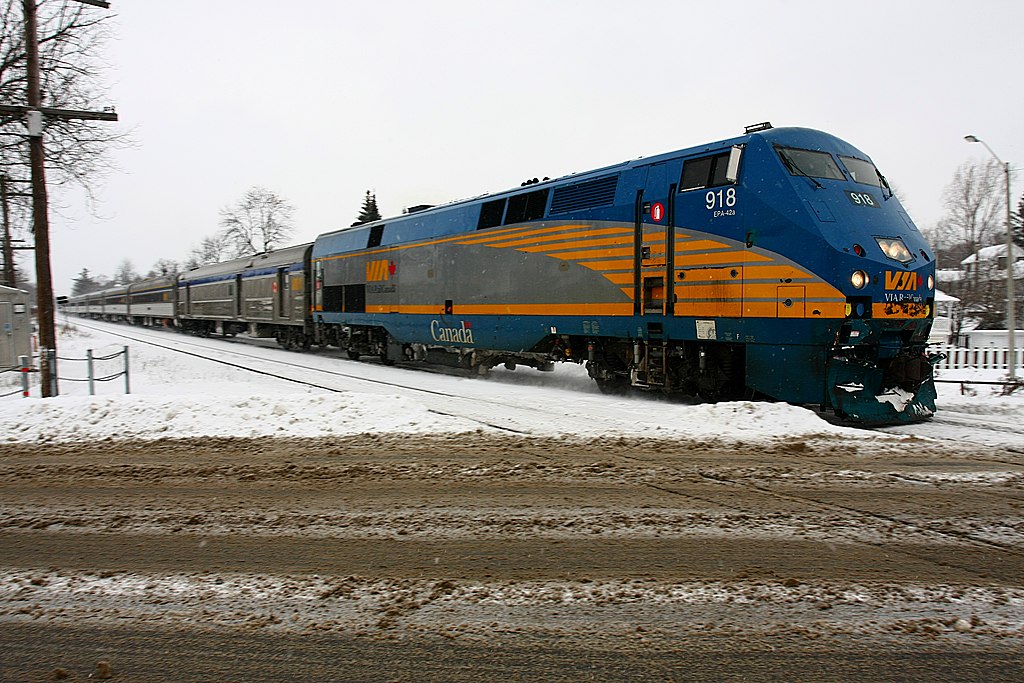
VIA Rail’s “High Frequency Rail” proposal

Filed under: Cancon, Railways — Tags: , , , , — Nicholas @ 03:00

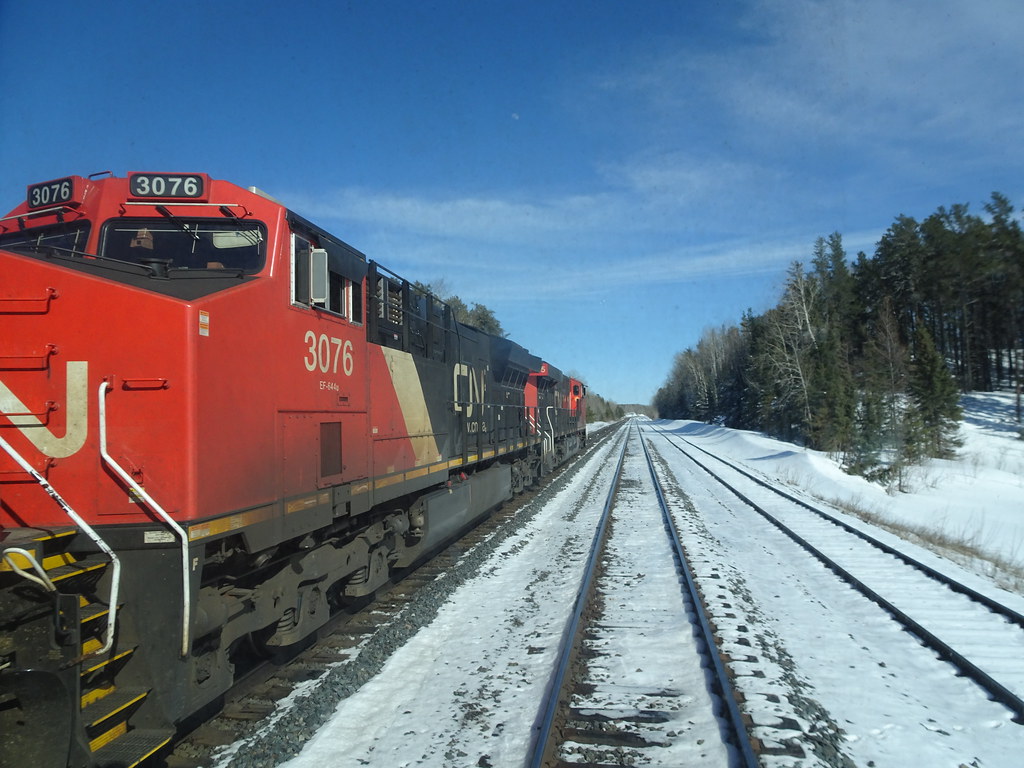
In Trains, Bill Stephens outlines some of the strikes against VIA Rail Canada’s hopes for a dedicated passenger-train-only route between Toronto and Quebec City:

Last month VIA’s $4 billion plan got a $71 million boost that will fund additional feasibility studies. It shouldn’t take $71 million to figure out the plan is fatally flawed. Why? Because it won’t accomplish its chief aim: Eliminating the mind-boggling delays related to sharing tracks with Canadian National freight trains.

To be successful, passenger service needs to be fast, frequent, and dependable. VIA’s current service is faster than driving between Canada’s two biggest cities, Toronto and Montreal. It’s fairly frequent, too, with seven weekday departures between Toronto and Montreal. But it’s not dependable. On-time performance is in the low 70% range for the entire Toronto-Ottawa-Montreal-Quebec City corridor. VIA blames the late trains on interference from CN freights, primarily on the double-track route linking Toronto and Montreal.

So you can understand why VIA would lobby the Canadian government for a dedicated passenger route. Last year VIA’s Eastern Corridor, the Canadian equivalent of Amtrak’s Northeast Corridor, carried three-quarters of VIA’s entire ridership. It stands to reason that you can fill more seats with service that’s faster, more frequent, and more reliable.

[…]

Keeping passenger and freight trains on time takes a combination of operational discipline, the right track capacity, and a willingness to make it work. CN takes pride in its operational discipline, and executives say the Eastern portion of the railroad, between Chicago and Halifax, is underutilized. What’s missing, it seems, is a willingness to expedite VIA trains.

VIA needs a cooperative host railroad more than it needs a new route that would bypass intermediate population centers, face opposition from the not-in-my-backyard crowd, take years to build, and in the end would still have to rely on shared trackage in key areas.

Also a monumental problem without an apparent solution: Squeezing extra trains into Toronto Union Station and Central Station in Montreal on new approaches that would only complicate operations and increase conflicts with freight and commuter traffic.

July 15, 2019

War by other means – the “grey zone”

Filed under: Cancon, Government — Tags: , — Nicholas @ 05:00

Ted Campbell discusses that field of conflict that isn’t recognizably war, but is still an arena of struggle between state actors:

I said, about 18 months ago, that “Western leaders like Presidents Marcon and Trump, Chancellor Merkel and Prime Ministers Abe, May, Rutte, Trudeau, Turnbull all see ‘war’ as a binary choice ~ you’re either fighting or you’re not, while Putin and Xi see it as spectrum wherein actual armed conflict is only one of many, many choices. We, in the US-led West, are not ‘playing’ the same strategic ‘game’ as our competitors … that’s a mistake on our part.” War in the “grey zone” or a strategy of “constructive ambiguity,” as The Economist explains it, is the most likely form of great power competition for the foreseeable future.

[…]

There are, the report suggests, two overarching strategic concepts for responding to the grey zone threats:

  • The report’s proposed strategic concept rests on four (interrelated) notions ~
  • – Shaping an allied strategy supportive of U.S. and partner objectives over the long term,

    – Actively, now, deterring a handful some of the more dangerous forms of grey zone aggression,

    – Preventing the day-to-day use of some of the more-elaborate grey zone techniques, and

    – Maintaining resilience in the lower-level, persistent competition areas; and

  • To implement the strategic concept, the report proposes a preliminary list of about three dozen response options for American and allied officials to consider, such as stationing permanent new military capabilities in key locations, anticipating political meddling and blunting the effects with information operations planned in advance, and denying the aggressor participation in key economic institutions.

That’s all well and good, but: how to implement such a strategy? What to do? How to do it? And who is to do it? The report recommends that:

  • America and its allies, partners, and friends ~ and this must include Canada ~ need to decide what actions are intolerable in the grey zone environment. But, the report says, it is hard to stop, much less prevent, gradual, sometimes unattributable actions involving secondary interests, so identifying the actions that the US-led West will seek to deter is the one reliable way to draw a boundary or a “red-line” around the possible effects of grey zone encroachment; and
  • The US and its allies should adopt a “multicomponent strategy” like the one outlined in the report, but we must all recognize that it will be of limited utility “if the U.S. government continues to lack a clear coordinating function with the responsibility for overseeing a renewed effort to gain strategic advantage in the gray zone.” The report concludes that an important part of any grey zone response strategy, therefore, is undertaking institutional reform, such as assembling purpose-built office in the U.S. government, and in allied nations and alliances, like NATO, with significant dedicated staff, to conduct real-time counter–grey zone campaigns.

So, what does this mean for Canada?

A couple of months ago I said that the world is changing and Canada must change, too. I made a few recommendations: I said that we have to have an interest-based strategy … one focused on our vital interests in the world. I suggested that we must be less reliant on one or two cornerstones, the USA and NATO, and, instead, build a better foundation with more friends and groups. This is, of course, the exact opposite of what Justin Trudeau has accomplished in the past 3¾ years ~ instead, he has alienated traditional allies, even Australia, and major trading partners like China and rising great powers like India. His ineptitude is stunning … our foreign policy is a national disgrace. We need to rebuild our once-sterling reputation for fair dealing and for doing a fair share. Finally, I said, we need to rebuild our hard (military) power so that we can use our soft power to good effect.

[…]

The point is that some grey zone operations are not “conventional,” and while some grey zone warriors are soldiers, many others are quite decidedly unmilitary … but, we’ve been there before, unconventional warfare is not new, nor are unconventional warriors, whichever side they might be serving. But, the grey zone is never the only area of operation. Just as soft power is only useful if one has enough hard, military power to make one’s voice heard, so grey zone operations are always part of a larger grand strategic plan that aims to secure quite conventional objectives. That’s why war in the grey zone must be fought by both conventional forces, as we fought the first Cold War, for example, and by unconventional forces which might be strange and even a little frightening to those used to seeing “‘war’ as a binary choice ~ you’re either fighting or you’re not.”

We, America, Australia, Britain, Canada, Denmark and, and, and, are being attacked in the grey zone now, whether we like it or not and whether we understand it or not. We need to defend ourselves in both conventional and unconventional ways … and then counter-attack. In fact, the war in the grey zone is being fought, sometimes, even now, on Canadian soil, by Canadians and some political parties and leaders are sometimes complicit in activities that do real, serious harm to Canada’s relations with other great nations. But the war in the grey zone, is, as I said, just above, part of a bigger, grand strategic plan that needs to be countered by both conventional and unconventional means. As much as we need to do (and avoid doing) things that impact the grey zone we must, simultaneously, be prepared to do things that strengthen our position in the “binary,” black and white world of conventional power.

QotD: The Canadian Broadcasting Corporation

Filed under: Bureaucracy, Business, Cancon, Media, Quotations — Tags: , , — Nicholas @ 01:00

The public broadcaster is a sticky wicket, admittedly. If every privately held media outlet in the land wound up business there would still be CBC News, providing some very serviceable-to-excellent coverage of cities, provinces, territories and their governments across this land. It reduces the private organs’ leverage. But Britain’s private media competes just fine against the BBC, and ours compete just fine against CBC today in the world of television and online news — and well they might.

CBC’s television and online news departments are a haunted museum of bloat, larding tons of valuable content with tiresome victim-mongering; endless why-didn’t-the-government-prevent-this stories; Trudeau propaganda snaps beamed straight in from the Prime Minister’s Office; a dumb, tawdry nightly newscast; an opinion section that pays writers way over market (though, ahem, nothing more than what’s fair!); Canadian Press wire copy of which a lavishly resourced public broadcaster has no earthly need; and an entire clickbait department that’s stealing digital advertising revenue from private-sector outlets. It has no clear mandate to do much of this in the first place — indeed, the Heritage Committee recommended getting CBC out of digital revenue altogether — and unlike CBC Radio and SRC, I’m not aware of a single human being who supports the TV/online status quo.

Chris Selley, “Federal government should stop trying to help private media and fix the CBC”, National Post, 2017-06-20.

« Newer PostsOlder Posts »

Powered by WordPress