Quotulatiousness

January 6, 2025

If you’ve ever been in any military organization, you’ve encountered this

Filed under: Bureaucracy, Cancon, Military — Tags: , , , — Nicholas @ 04:00

Shady Maples on the frequent issue needing a particular piece of equipment, but … bureaucracy:

Have you heard the one about the soldier and supply technician?

    Soldier: I need a sleeping bag.

    Supply Tech: We’re not issuing sleeping bags right now.

    Soldier: I can see a sleeping bag on the shelf right there.

    Supply Tech: But that’s my last sleeping bag! If I issued that one then I wouldn’t have any left in stock. I need to keep at least one sleeping bag in stock in case someone needs it.

    Soldier: Yes! That someone is me! I need the sleeping bag!

    Supply Tech: Look, my job is to keep the shelves stocked. See the sign on the door? It says Stores, not Gives. If I give you that sleeping bag then we’ll be out of stock.

    Soldier: But I need the sleeping bag.

    Supply Tech: You’ll have to come back after we restock.

    Soldier: Fine, when are you restocking sleeping bags?

    Supply Tech: When we’ve depleted our current stock.

This is barely a joke, I’m convinced it’s a script that supply techs learn in Borden.1 A common variant involves a soldier trying to get a piece of kit ahead of a training exercise. The supply tech tells them they can’t have the kit because they don’t need it. If the soldier needed the kit then it would be issued to them and since it’s not issued to them they don’t need it. I have personally had that conversation multiple times with everyone from lowly supply techs to quartermasters up to Life Cycle Material Managers in ADM(Mat). A notable one involved asking the depot in Montreal to send my unit a specific piece of optical equipment2 which we desperately needed, only to be told that they could not release that kit to us because the Army divesting it. My unit had just taken on a new capability that required this kit, why were they throwing this equipment away? “Nobody uses it anymore.” But I’ll use it, I’m telling you that I’m going to use it! My appeal failed, the depot had to divest because no one used the kit and they wouldn’t let us use the kit because they had to divest. I subsisted by borrowing equipment from other units off-the-books.

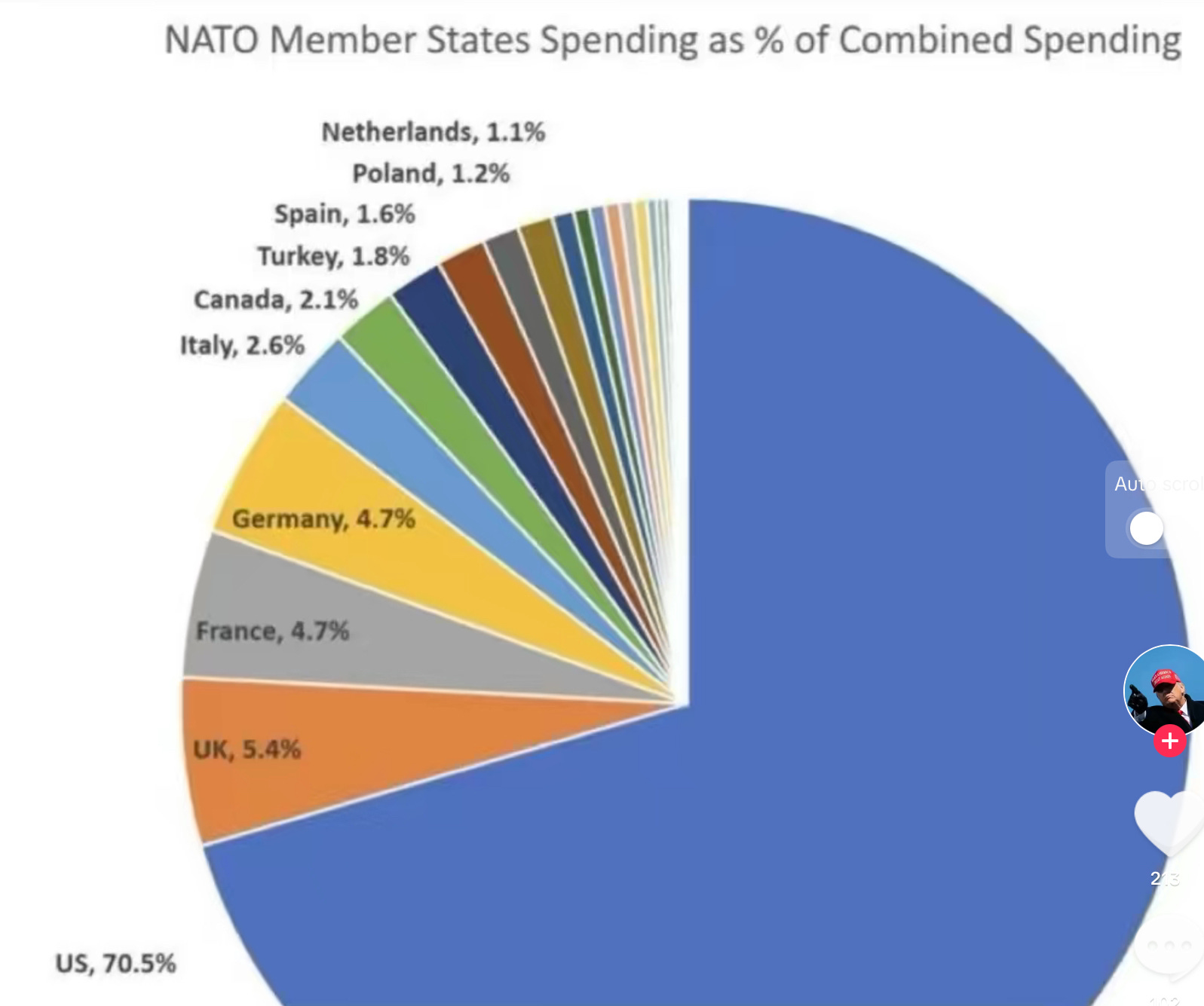
Pic related, from Patrick McKenzie.

There is a deep and difficult-to-articulate emotion that I feel whenever I have interactions like this. It’s a middle shade of anger, frustration, sadness, and loathing triggered by a people who so are so lost in process that they stop caring about real-world outcomes. Via Scott Alexander’s Links For December, I just learned? that Scott Aaaronson coined the term “blankface” for people like this:

    What exactly is a blankface? He or she is often a mid-level bureaucrat, but not every bureaucrat is a blankface, and not every blankface is a bureaucrat. A blankface is anyone who enjoys wielding the power entrusted in them to make others miserable by acting like a cog in a broken machine, rather than like a human being with courage, judgment, and responsibility for their actions. A blankface meets every appeal to facts, logic, and plain compassion with the same repetition of rules and regulations and the same blank stare — a blank stare that, more often than not, conceals a contemptuous smile.

Once, my 2IC3 was trying to access a childcare benefit intended to reimburse members for babysitting when they are in the field or called in for overnight duties. My 2IC enquired about reimbursement but word came down from Ottawa that she wasn’t eligible since since had not used a licenced childcare provider. Nevermind that there are no licenced providers offering overnight childcare in our geographic area. When my 2IC submitted a grievance for her exclusion from the policy, the grievance analyst rejected it on the grounds that, since she never applied for the benefit (after being told she wasn’t eligible), she had not technically been denied anything. The analyst recommended applying for the benefit in order to be denied and then submitting another grievance based on that denial. At a time when the CAF is desperately trying to attract and retain female leaders, you know what really makes our case? Nickle-and-diming single moms over $70 of childcare. The analyst’s rejection letter made me feel like maybe Ted Kacynski had a point.

In his blog post, Scott Aaronson used Dolores Umbridge as the canonical example of a blankface. Umbridge is conspicuous do-gooder who uses her positional authority to make life miserable for everyone around her. As the story progresses and she accrues more power to her office, it becomes apparent that her virtuous posturing conceals a cruel authoritarian heart. Scott noted that:

    The most despicable villain in the Harry Potter universe is not Lord Voldemort, who’s mostly just a faraway cipher and abstract embodiment of pure evil, no more hateable than an earthquake. Rather, it’s Dolores Jane Umbridge, the toadlike Ministry of Magic bureaucrat who takes over Hogwarts school, forces out Dumbledore as headmaster, and terrorizes the students with increasingly draconian “Educational Decrees”. Umbridge’s decrees are mostly aimed at punishing Harry Potter and his friends, who’ve embarrassed the Ministry by telling everyone the truth that Voldemort has returned and by readying themselves to fight him, thereby defying the Ministry’s head-in-the-sand policy.

Voldemort is evil, yes, but he is a moral agent who chooses and sacrifices according to his principles. The series pits his perverse will-to-power against the protagonists heroic defence of good. Unlike Voldemort, Umbridge doesn’t have any vision or principles, her only goal appears to be rigorous application of Ministry rules and procedures. She is not an agent of evil so much as its midwife, allowing evil to spread by obstructing any effort to stop it.


    1. CFB Borden is the home of Canadian Forces Logistics Training Centre, a place that nobody says anything good about, especially the loggies.

    2. This piece of kit was specialized enough that I would effectively dox myself if I told you what it was.

    3. 2IC: Second-In-Command.

January 2, 2025

How to solve Britain’s housing crisis

Tim Worstall outlines why just increasing the number of building permits allowed won’t — by itself — increase the total number of houses built. This is because the process of awarding the permits has been largely captured by the biggest players, and the supply is artificially restricted by local governments:

Kensington High Street at the intersection with Kensington Church Street. Kensington, London, England.
Photo by Ghouston via Wikimedia Commons.

The first bit is to diagnose the problem properly. If the big builders won’t build because they don’t want to then and therefore we want to find other builders who will and do want to. And the important part of this is that the big builders do indeed have market power. It costs a lot — a lorra lots — of money to be able to get a scheme through planning. Thus we not only have that problem of a shortage of places to build — because planning — but we’ve also handed market power to those able to build — because planning.

The answer is to shoot the planners, obviously. But then that always is the correct answer. Here, more specifically, we need to flood the zone with permissions. Really, grossly, oversupply. Like issue 15 million permits. Say. At which point the value of a permit is zero. So, anyone with a scrap of land can gain a permit and build.

This brings back the small housebuilder. Instead of being held back by the ideals of half a dozen national builders we’ve got 50,000 blokes all looking to build 2 or 3 houses a year. Or 10 or 20 even.

There’s no way that the big builders can then delay building on their plots. For they don’t have market power any more. And even if they do want to delay then it doesn’t matter a damn.

And this always is the way that you deal with those with market power. You flood that zone with supply so as to destroy their market power.

DOGE has a lot of low-hanging fruit to pick

Filed under: Bureaucracy, Economics, Government, Politics, USA — Tags: , , , , — Nicholas @ 03:00

Patrick Carroll selects some of the least-defendable ways the US government has been spending taxpayer money from Senator Rand Paul’s 2024 Festivus Report, including pickleball courts, $10B in unused office space, DEI initiatives for birdwatchers, crop fertilizer in foreign countries, and literal circus performances:

Rand Paul by Gage Skidmore is licensed under CC BY-SA 2.0 .

Why does such government waste persist year after year? A significant part of the explanation traces back to the concept of concentrated benefits and dispersed costs. Essentially, the beneficiaries tend to be a small, concentrated group, so they lobby hard for these outlays because they stand to gain a lot from them. Taxpayers, on the other hand, tend to be dispersed and only minimally affected by any single expense, so it’s not usually worth it for them to lobby against the spending, or even learn about it in the first place.

Economist Gordon Tullock famously illustrated this concept with his fictional Tullock Economic Development Plan. The plan “involves placing a dollar of additional tax on each income tax form in the United States and paying the resulting funds to Tullock, whose economy would develop rapidly”.

Think about the incentive Tullock would have to advocate for this plan, compared to the incentive that an ordinary taxpayer would have to look into it and voice their objections. With campaign contributions and votes to be gained from the special interest beneficiaries, is it any wonder politicians often go for these kinds of wealth transfers?

The ubiquity and stubborn persistence — year after year — of all this waste, combined with the economic theory that explains why it happens, suggests that there is a fundamental problem with the process of government as we know it. This is not, as many are itching to believe, a “Democrat” problem or a “Republican” problem. The degree of government waste changes very little with changing administrations. No, this is a problem with the government as such.

To solve this problem, we need to ask not just who should run the government, but what the government should be allowed to spend money on in the first place, given what we know about its entirely predictable and repeatedly demonstrated propensity for waste and dysfunction.

Milei has already started that conversation in Argentina. Let’s hope that with the new Trump administration and DOGE, that’s a conversation we can have here as well.

January 1, 2025

The EU emulates King Canute

Filed under: Bureaucracy, Business, Europe, Technology — Tags: , , — Nicholas @ 05:00

The headline is a bit misleading, as Canute’s failed attempt to control the tides was intended to refute courtiers’ exaggerations about his royal powers. The EU, on the other hand, is determined to impose stasis on a very dynamic and changing field:

The European Union will have the continent-wide standard for the buggy whip real soon now. That’s the logical conclusion to draw from that recent announcement about USB-C.

For those who’ve not been following along at home the European Commission is very proud of itself. They’ve managed to pass a law mandating that USB-C (don’t worry, it’s a shape of cable) be the only flavour of connector now allowed within the EU. This has caused the less intellectual of our own rulers — St Stella for example — to just quiver, gasp, with excitement. This is proof of the ability of the collective bureaucracy to really stick one to The Man or something. A vast victory over Big Cable it seems.

Well, yes. Those with a little history to their name will know that the EU has been trying to do this for some time now. So much time that they’d originally intended to make Micro-USB the Europe-spanning insistence but it took them so long to make their rules that USB-C had already superseded it.

At which point we might draw a couple of conclusions. Even, suggest an insistence or two. That first insistence would be that a time of rapid technological change is really not quite le moment juste to be insisting upon only the one way of doing things. Because change, d’ye see? No, this is important for we know, absolutely, that there’re people out there just itching to insist upon the one connector for electric vehicles. Who would, in the name of a vapid uniformity, insist upon freezing technology at its current state rather than allow it to develop.

We could, should, also go on to insist that such a legal insistence on the only form allowed means that technological development cannot happen any more. For, in order to advance or even just change it will be necessary to change that law, that definition.

Legal changes in the European Union are not easy. Of course, the Parliament cannot do it — they are not allowed to even propose law changes, let alone enact them. It is necessary first to convince the European Commission of the need for a change. That means convincing the bureaucracy of course. Once that’s done it must pass the Council of Ministers, which is all the national governments. Parliament is then allowed to say yes. Then, and only then, would it be possible to put the new technology — say, a new cable — on the market.

But the only method we’ve got of testing whether a new cable is better is by putting it on the market. That is — no, really — the only process by which we find out whether consumers desire this new cable with all its delights, at the price that suppliers are willing to make it. But in the European system they cannot undertake the basic usefulness test until they’ve convinced a continent full of politicians that the new is in fact necessary and compulsory.

Mark Steyn – “This is not a healthy development in world affairs”

Mark comments on the ongoing political punch-up over the US government’s H1B visa program for foreign workers:

Elon Musk and Vivek Ramaswamy as the figureheads of D.O.G.E.

As you’ll have noticed, the world’s most uniquely unique peaceful transition of power turned suddenly violent over Christmas with various of America’s super-brainy Indians beating up on each other: Nikki Haley, the Boeing board’s token Sikh, lit up Hindu monotheist Vivek Ramaswamy’s tweet like Air Canada overhead baggage in objection to Vivek’s remarks on US “mediocrity”. The offending Ramaswamy tweet was in response to MAGA objections to Trump’s appointment of Madras techie and open-borders fanatic Sriram Krishnan as his AI advisor. This was a very 2025 brouhaha: while you knuckle-draggers down in flyover country were arguing about sub-minimum-wage Hispanics turning down the sheets at Motel Six, the Hindu billionaires have been busy taking over the country.

Is everyone in this all-American punch-up an Indian? Well, no, eventually a South African weighed in. The Boers don’t like the Hindus, do they? I think I got that from Gandhi. Ah, but in this case Elon agrees with Sriram and Vivek.

A couple of very general observations:

1) The MAGA base intuits that H1B visas are a racket. Why wouldn’t they be? Everything else the federal government touches is — from presidential pardons to West Point to Jan 6 justice. America is the third largest nation on earth — a third-of-a-billion people, officially (rather more in actual reality). Why does it need to hire entry-level workers from the first and second largest nations? Yes, yes, too many Americans graduate in non-binary studies rather than any serious academic discipline but simply because you’ve bollocksed up your entire education system is no reason to (as my former National Review colleague John Derbyshire puts it) “import an overclass“.

The MAGA objections to mass immigration (ie, not just illegal immigration) are primarily cultural. They didn’t like it eight years ago when Trump would add to his wall-building promises the line about “and that wall will have a big beautiful door”, and he should have got that by now. Besides, to address the counter-argument more seriously than it merits, a nation of a third-of-a-billion that “needs” to import entry-level accountants is so structurally dysfunctional that no amount of immigration can save it. How about entry-level lawyers? Do we need more of those?

As an aside to that, for all you Constitution fetishists, I’m increasingly sceptical that a Constitution designed for an homogeneous population of two-and-a-half million people can be applied to a third-of-a-billion with a cratering fertility rate of 1.6. The only two more populous nations — China and India — are both more or less conventional ethnostates. Which is a great advantage. America is the only large-scale polity founded on a proposition — that, simply by setting foot on US soil, one becomes American. Immigration on the present transformative scale will nullify the Constitution. So the Dance of the Constitution Fetishists will get even sadder.

The Constitution is increasingly for judges rather than citizens. May be time to import more Supreme Court justices.

2) Besides, H1B is what the government calls, correctly, a “nonimmigrant” visa. One of Rupert Murdoch’s minions offered me an H1B thirty years ago. I looked up the terms and declined to sign on to indentured servitude. You’re not importing “the best and brightest”. You’re assisting well-connected corporations in advantaging themselves at the cost of the citizenry among whom they nominally live. [NR: Emphasis mine.]

3) Have you noticed that almost everyone involved in this spat is a billionaire? Today’s rich are not just rich in the old Scott Fitzgerald they-are-different sense. They approximate more to the condition articulated by Lord Palmerston in his observation that England had no eternal friends or enemies, only eternal interests. For a billionaire, friends and enemies come and go, but, like any medium-sized nation-state, he has his interests.

To most Americans, Elon was largely unknown until he started weighing in on and then buying social media; Vivek was entirely unknown until he ran for president; Sriram is still unknown. But they are far above not just the schlubs who lost their jobs to cheaper H1B types but also to the more famous political class whose poll numbers in Iowa so obsess the hamster-wheel media but which are increasingly irrelevant to anything that matters. Among Sriram Krishnan’s minor claims to “fame” is that he’s the guy who introduced Boris Johnson (remember him?) to Elon Musk — and you can bet that was after desperate wheedling and pleading from the Shagger, not because Elon had any desire for dating tips.

This is not a healthy development in world affairs.

4) Vivek Ramaswamy’s sweeping paean to American “mediocrity” as manifested by everything from prom queens to sitcoms was probably ill-advised but it was certainly entirely sincere — and would be widely shared by his fellow members of the Hindu overclass. The Indian tycoon (and David Cameron advisor) Ratan Tata, who died in October, is best remembered in the UK for his 2011 Vivek-like attack on the natives’ “work ethic“. As Sir Ratan marvelled after buying Jaguar-Land Rover:

    I feel if you have come from Bombay to have a meeting and the meeting goes till 6pm, I would expect that you won’t, at 5 o’clock, say, ‘Sorry, I have my train to catch. I have to go home.’

    Friday, from 3.30pm, you can’t find anybody in the office.

That may well be true, as Vivek’s musings re Urkel and football jocks may be true. On the other hand, as a rather precocious lad, I observed to my mum that, five years after the Gambia’s independence, nothing seemed to work as well as it did under colonial rule. True, conceded my mother, then added: “But in the end people want to be themselves, as themselves. At least it’s their chaos.”

December 23, 2024

Trump’s second term – “The counterrevolution begins now”

A few weeks back in City Journal, Christopher Rufo provided a blueprint for President-elect Donald Trump’s second term with emphasis on “dewokification” of the executive branch:

The second election of Donald Trump, along with Republican victories in both houses of Congress, sets the stage in the United States for a confrontation between democracy, which depends on representative institutions to form a government, and the rule of unelected elites, which relies on claims of expertise to control the state.

Already, internal opposition to Trump is organizing within the federal agencies. CNN reports that Pentagon officials are discussing disobeying official policy. Federal Reserve Chairman Jerome Powell has declared that he would refuse if Trump asked for his resignation. Some would like to see a reprise of the orchestrated counteractions against Trump, from the Russia collusion hoax to the Hunter Biden laptop censorship to the political prosecutions that led to his arrest and felony convictions.

The coming political confrontation is unusual because the specific antagonist is hard to identify. Trump is not contending against Joe Biden or Kamala Harris, or even the Democratic minority in Congress. Instead, the president-elect’s post-electoral opposition comes from inside the executive branch itself, in defiance of Article II of the Constitution, which opens with the unqualified statement: “The executive Power shall be vested in a President of the United States of America”.

In recent years, phrases like “the deep state” have arisen in American political discourse to describe this phenomenon, in which administrators, bureaucrats, and unelected officials seem to wield a kind of power that we still lack appropriate language to describe. Part of the motivation is self-interest — bureaucrats want to protect their positions — but another is ideological: the federal government is steeped in left-wing race and gender ideology, and its adherents see Trump as an existential threat.

By rights, he should be. The incoming president has, under the Constitution, every right to bend the administration to his vision, which is contrary to the tenets of left-wing racialism. But those ideologies, which the Biden administration has entrenched through its “whole-of-government” diversity agenda, have long ruled the agencies that control the details of federal policymaking. Hence, the conflict: the president, who has formal authority, versus the ideological bureaucracy, which has real power.

At the end of his first term, Trump attempted to correct this problem through actions such as an executive order banning critical race theory in the federal government. The second Trump administration must go further and dedicate itself to a process that Vice President–elect J. D. Vance has described as “dewokeification”. This is the most urgent policy problem facing the administration, because without representative institutions and a restoration of constitutional authority, it is not possible to govern America.

The Trump administration has a unique opportunity to take decisive action on Day One, through executive orders that can serve as the opening salvo in a counterrevolution. The basic premise: the U.S. should strip left-wing racialism from the federal government and recommit the country to the principle of color-blind equality. Through an aggressive campaign, Trump and his cabinet can put an end to forms of discrimination disguised under the name of “diversity, equity, and inclusion” (DEI) and make government work again.

The process of ideological capture has taken decades. But the counterrevolution can, and must, quickly retake those institutions in the name of the people and reorient them toward the enduring principles of liberty and equality. Bureaucrats abusing the public trust to advance their own ideologies should be put on notice: they will be shut down, their departments abolished, and their employment terminated. The administration will work to rid America of this ideological corruption before it further rots our institutions, demoralizes our citizens, and renders the government totally incompetent.

The counterrevolution begins now.

December 20, 2024

QotD: A’s hire A’s and B’s hire C’s

Filed under: Bureaucracy, Business, Quotations — Tags: , , — Nicholas @ 01:00

so how does even a little DEI lead to full incompetence contagion? i would like to posit a very simple emergent algorithm rooted in a simple and longstanding organizational idea:

A’s hire A’s and B’s hire C’s. (and you seriously do not want to meet the people C’s hire)

that’s it. that’s all we need to extrapolate and plot it.

this pattern emerges in response to two simple drives affecting all those who lack ability to compete […]

the essence of this is simple: the highly competent (A’s) wish to be surrounded by other highly competent people. an organization of mostly A’s (or at least A’s in management) thrives and gets lots done. it innovates. it rewards achievement and ability. it’s a meritocracy. because that’s what A’s want.

and B’s hate this. they cannot get ahead and they live in fear of A’s beneath them coming for their jobs and hatred of A’s above them who prevent advancement and who make demands for performance.

they do not want their jobs taken, so they respond to this by hiring only those less competent than themselves to work under them (C’s). this is how they hold position and avoid challenge and threat.

ideally, they’d also like to clear any A’s above them out of the way so they can generate some upward mobility. they cannot do this on a meritocratic axis, so they seek another one to supplant it.

they seek to move hiring and promotion to some other quality than ability then reinforce it with doctrine.

the pretext itself is incidental to this process. it does not really matter what it is.

it just has to be “something other than competence” and you land in this self-referential recursive trap.

el gato malo, “the mediocrity downspiral”, bad cattitude, 2024-09-10.

December 10, 2024

Countering the “Managerial Revolution”

Tim Worstall discusses the rise of the managerial class — described in 1941’s Managerial Revolution by James Burnham — and how detrimental to individual enterprises and the wider economy managerialism has been:

This, rather joyously, explains a lot about the modern world. We could go back to the mid-1980s and the bloke who ran the ‘baccy company written up in Barbarians at the Gates. In which he, as CEO, had a fleet of private planes, the company paid for his 11 country club memberships and so on. His salary was decent, sure, but the corporation rented him all the trappings of a Gatsbyesque — and successful — capitalist. Until the actual capitalists — the barbarians — turned up at those gates and started demanding shareholder returns.

Or we can think of the bureaucratic classes in the UK in more recent decades. Moving effortlessly between this NGO, that quasi-governmental body and a little light sitting on the right government inquiry. All at £1500 a day and a damn good pension to follow.

Or, you know, adapt the base idea to taste. There really is a bureaucratic and managerial class that gains the incomes and power of the capitalists of the past without having to do anything quite so grubby as either risk their own money or, actually, do anything. They, umm, administer, and the entire class is wholly and absolutely convinced that everything must be administered and they’re the right people to be doing that.

You know, basically David Cameron. Met him once, when he was just down from uni. At a political meeting – drinkies for the Tory activists in a particular council ward, possibly a little wider than that. Hated him on sight which I agree has saved me much time over the decades. And I was right too. There is nothing to Cameroonism other than that the right sort of people should be administering — the managerial revolution.

Sure, sure, we used to have the aristocracy which assumed the same thing but we did used to insist that they could chop someone’s head off first — show they had the capability. Also, they didn’t complain nor demand a pension when we did that to them if they lost office.

But the bit that really strikes me. France — and thereby the European Union — seems to me to be where this Managerial Revolution has gone furthest. Get through the right training (the “enarques“) and you’re the right guy to be a Minister, run a political party, manage the oil company, sort out the railways etc. You don’t have to succeed or fail at any of them, you’re one of the gilded class that runs the place. Because, you know, everything needs to be run and one of this class should do so.

The divergence or even active conflict of interests between the owners and the non-owning managers is part of the larger Principal-Agent Problem.

December 7, 2024

The FBI’s future – fix it or abolish it? Decisions, decisions …

Filed under: Bureaucracy, Government, USA — Tags: , , — Nicholas @ 03:00

At Racket News, Matt Taibbi provides some background information on FBI failures leading up to the 9/11 terrorist attacks:

On August 13, 2001, 33-year-old French citizen Zacarias Moussaoui paid $6,800 in $100 bills to train on a 747 simulator at the Pan-Am International Flight Academy in Eagan, Minnesota. A retired Northwest Airlines pilot named Clarence “Clancy” Prevost thought Moussaoui’s behavior was odd for someone with no pilot’s license and told his bosses as much. When they said Moussaoui had paid and they didn’t care, Prevost said, “We’ll care when there’s a hijacking and the lawsuits come in”.

The company went to the FBI and on August 16, in what should have been one of the biggest arrests in the history of federal law enforcement, Moussaoui was picked up on an immigration violation. Agents on the case wanted permission to search Moussaoui’s belongings, with one asking superiors as many as 70 times for help in obtaining a warrant. The situation grew more urgent when the French Intelligence Service sent information that Moussaoui was connected to Islamic radicals with ties both to Osama bin Laden and the Chechen warlord Khattab, and that even within this crowd, Moussaoui was nicknamed “the dangerous one”.

Coleen Rowley, the Chief Division Counsel for the Minneapolis Field Office, absorbed agents’ concerns quickly and was aggressive in asking superiors to seek a Foreign Intelligence Surveillance Act (FISA) warrant to investigate further. One of the goals was a look at Moussaoui’s computer, as agents believed he’d signaled he had “something to hide” in there. But unlike the former Northwest pilot Prevost, whose superiors trusted his judgment and escalated his concerns, Rowley and the Minneapolis field office were denied by senior lawyers at FBI Headquarters. The Bureau was sitting on the means to stop 9/11 when the planes hit the towers.

This story is actually worse than described, as Rowley made clear in what became a famous letter she wrote to then-Director Robert Mueller the following May. “Even after the attacks had begun,” she wrote, “the [Supervisory Special Agent] in question was still attempting to block the search of Moussaoui’s computer, characterizing the World Trade Center attacks as a mere coincidence with Misseapolis’ prior suspicions about Moussaoui.”

While the Bureau blamed 9/11 on a lack of investigatory authority, the actions of the Minnesota office showed otherwise. Rowley’s decision to confront Mueller with a laundry list of unnecessary bureaucratic failures made her perhaps the FBI’s most famous whistleblower. Her letter excoriated the Bureau’s Washington officeholders for failing to appreciate agents in the field, and for implicitly immunizing themselves against culpability.

December 6, 2024

QotD: Herbert Hoover in the Harding and Coolidge years

[Herbert] Hoover wants to be president. It fits his self-image as a benevolent engineer-king destined to save the populace from the vagaries of politics. The people want Hoover to be president; he’s a super-double-war-hero during a time when most other leaders have embarrassed themselves. Even politicians are up for Hoover being president; Woodrow Wilson has just died, leaving both Democrats and Republicans leaderless. The situation seems perfect.

Hoover bungles it. He plays hard-to-get by pretending he doesn’t want the Presidency, but potential supporters interpret this as him just literally not wanting the Presidency. He refuses to identify as either a Democrat or Republican, intending to make a gesture of above-the-fray non-partisanship, but this prevents either party from rallying around him. Also, he might be the worst public speaker in the history of politics.

Warren D. Harding, a nondescript Senator from Ohio, wins the Republican nomination and the Presidency. Hoover follows his usual strategy of playing hard-to-get by proclaiming he doesn’t want any Cabinet positions. This time it works, but not well: Harding offers him Secretary of Commerce, widely considered a powerless “dud” position. Hoover accepts.

Harding is famous for promising “return to normalcy”, in particular a winding down of the massive expansion of government that marked WWI and the Wilson Administration. Hoover had a better idea – use the newly-muscular government to centralize and rationalize American In his first few years in Commerce – hitherto a meaningless portfolio for people who wanted to say vaguely pro-prosperity things and then go off and play golf – Hoover instituted/invented housing standards, traffic safety standards, industrial standards, zoning standards, standardized electrical sockets, standardized screws, standardized bricks, standardized boards, and standardized hundreds of other things. He founded the FAA to standardize air traffic, and the FCC to standardize communications. In order to learn how his standards were affecting the economy, he founded the NBER to standardize government statistics.

But that isn’t enough! He mediates a conflict between states over water rights to the Colorado River, even though that would normally be a Department of the Interior job. He solves railroad strikes, over the protests of the Department of Labor. “Much to the annoyance of the State Department, Hoover fielded his own foreign service.” He proposes to transfer 16 agencies from other Cabinet departments to the Department of Commerce, and when other Secretaries shot him down, he does all their jobs anyway. The press dub him “Secretary of Commerce and Undersecretary Of Everything Else”.

Hoover’s greatest political test comes when the market crashes in the Panic of 1921. The federal government has previously ignored these financial panics. Pre-Wilson, it was small and limited to its constitutional duties – plus nobody knows how to solve a financial panic anyway. Hoover jumps into action, calling a conference of top economists and moving forward large spending projects. More important, he is one of the first government officials to realize that financial panics have a psychological aspect, so he immediately puts out lots of press releases saying that economists agree everything is fine and the panic is definitely over. He takes the opportunity to write letters saying that Herbert Hoover has solved the financial panic and is a great guy, then sign President Harding’s name to them. Whether or not Hoover deserves credit, the panic is short and mild, and his reputation grows.

While everyone else obsesses over his recession-busting, Hoover’s own pet project is saving the Soviet Union. Several years of civil war, communism, and crop failure have produced mass famine. Most of the world refuses to help, angry that the USSR is refusing to pay Czarist Russia’s debts and also pretty peeved over the whole Communism thing. Hoover finds $20 million to spend on food aid for Russia, over everyone else’s objection […]

So passed the early 1920s. Warren Harding died of a stroke, and was succeeded by Vice-President “Silent Cal” Coolidge, a man famous for having no opinions and never talking. Coolidge won re-election easily in 1924. Hoover continued shepherding the economy (average incomes will rise 30% over his eight years in Commerce), but also works on promoting Hooverism, his political philosophy. It has grown from just “benevolent engineers oversee everything” to something kind of like a precursor modern neoliberalism:

    Hoover’s plan amounted to a complete refit of America’s single gigantic plant, and a radical shift in Washington’s economic priorities. Newsmen were fascinated by is talk of a “third alternative” between “the unrestrained capitalism of Adam Smith” and the new strain of socialism rooting in Europe. Laissez-faire was finished, Hoover declared, pointing to antitrust laws and the growth of public utilities as evidence. Socialism, on the other hand, was a dead end, providing no stimulus to individual initiative, the engine of progress. The new Commerce Department was seeking what one reporter summarized as a balance between fairly intelligent business and intelligently fair government. If that were achieved, said Hoover, “we should have given a priceless gift to the twentieth century.”

Scott Alexander, “Book Review: Hoover”, Slate Star Codex, 2020-03-17.

December 5, 2024

Ontario’s housing market squeezed by the 35.6% combined tax rate on new builds

Filed under: Bureaucracy, Business, Cancon, Government — Tags: , , , — Nicholas @ 04:00

The housing situation in Toronto and the rest of the province has been very tight for years. Lots of would-be buyers chasing the proportionally smaller number of new houses being built. This drives prices higher, but no matter how much of the final price is the builder’s profit margin, the government gets nearly four times as much on every new house sale:

The National Post previously reported that at least a third of a new home’s sticker price in Ontario was comprised of taxes, but an updated report, courtesy of the Canadian Centre for Economic Analysis (CANCEA), now puts the figure at 35.6 per cent.

(It gets even better when it comes to affordable housing — but more on that later.)

The Increasing Tax Burden on New Ontario Homes: 2024, which was commissioned by the Residential Construction Council of Ontario and released by CANCEA on Tuesday, is eye-opening for reasons beyond the fact that a compendium of largely superfluous taxes and production levies has reached 35.1 per cent of the final purchase price of a new home in the city of Toronto. It’s 35.5 per cent in the outlying 905 region, and 34.5 per cent in Ottawa.

The report needed only 16 pages to elucidate how bureaucratic machinations aren’t just gouging prospective homebuyers, but homeowners, too — especially the estimated 1.2 million whose mortgages, according to the Canada Mortgage and Housing Corporation, are due for renewal in 2025.

Read closely enough, CANCEA’s report makes a strong argument that, effectively, Canadians work for the government rather the other way around.

For example, CANCEA’s report demonstrates that 70 per cent of aforesaid taxes on new homes “consist of direct fees on the home, such as DC (development charges) and other fees”.

“For homes priced at $450,000,” which aligns with median income, “… the tax burden rises sharply to 45.2 per cent,” says the report, which also notes that economics often force developers to build smaller units that are insufficient for families.

December 1, 2024

QotD: Recording and codifying the land that William conquered

Filed under: Britain, Bureaucracy, China, Government, History, Quotations — Tags: , , , , , — Nicholas @ 01:00

I hesitate to recommend academic books to anyone, but I’ll make an exception for James C. Scott’s Seeing Like a State. Subtitled “how certain schemes to improve the human condition have failed”, it’s the best long-form exposition I know of, that explains how process and outcome first deform, then negate each other.

[…]

In brief, Scott argues that the process of making a society “legible” to government officials obscures social reality, to the point where the government’s maps and charts and graphs take on a life of their own. It’s recursive, such that those well-intentioned schemes end up first measuring, then manipulating, the wrong thing in the wrong way, to the point that the social “problem” the process was supposed to address drops out entirely — all you have, at the end, is powerpoint girls critiquing spreadsheet boys because their spreadsheets don’t have enough animation, and vice versa.

Scott doesn’t use the Domesday Book as an example (IIRC from a graduate school class 20-odd years ago, anyway), but it’s one we’re probably all familiar with. The first thing William the Conqueror needed to know is: what, exactly, have I conquered? So he sent out the high-medieval version of spreadsheet boys to take a comprehensive survey of the kingdom. Turns out the Duke of Earl’s demense runs from this creek to that rock. He has five underlings, and their domains run from etc.

The point of all this, of course, was so that Billy C. could call the Duke of Earl on the carpet, point to the spreadsheet, and say “You owe me a cow, three chickens, and two months in the saddle as back taxes.” It worked great, except when — as, it seems, is inevitable — the high-medieval equivalent of the spreadsheet boys did the high-medieval version of “ctrl-c”; just copying and pasting the information over. Eventually the tax situation got way out of whack, as it did for most every pre-modern government running a similar system — one of the reasons declining Chinese dynasties had such fiscal problems, for instance, is that the tax surveys only got updated every two centuries or so, such that a major provincial lord was still only paying 20 silver pieces in taxes, when he should’ve been paying 20,000 (and his peasants were all paying 20 when all they could afford was 2).

In other words: unless the spreadsheet boys periodically go out and check that the numbers on their spreadsheets actually correspond in some systematic, more-or-less representative way to some underlying social reality, government policy is being set by make-believe.

Severian, “The Finger is Not the Moon”, Rotten Chestnuts, 2021-09-14.

November 30, 2024

It’s not just your imagination, the Canadian government is much bigger and much less efficient now

Filed under: Bureaucracy, Cancon, Government — Tags: , , — Nicholas @ 05:00

At The Audit, David Clinton shows that the Canadian federal government has gone through significant growth in staff at the same time as just about everything it does is now being done slower and less effectively1 than it was ten or twenty years ago:

Change is normal. The world around us isn’t sitting still and that’s got to have an impact on what’s needed by Canada and Canadians. So we can expect a government’s size and shape to evolve over time, but we’d certainly prefer that the changes were rational.

So let’s take a few minutes to understand how the size, cost, shape, and mandates of our government have been changing over the past few years.

Public service employment

Governments provide a set of services that don’t change dramatically from year to year. Sure, as the population grows they’ll need to process more passport applications and oversee the movement of greater numbers of international travellers across our borders. But task complexity shouldn’t increase faster than the population itself.

Therefore you would expect that the public service should grow in proportion to the overall population. Well, that’s not really true. Due mostly to digital automation, Canada’s private sector labour productivity rose steadily between around 1990 and 2014 and has maintained its peak level ever since. So in fact, since we can now do more with fewer people, you’d really expect public sector employment not to keep pace with rising population levels.

However, the actual proportion of federal employees to Canada’s total population has been growing noticeably over the past six years. Because of the scale I chose for its y-axis, the graph below does exaggerate the changes a bit, but you can see how the federal workforce grew from around 0.72% of the total population in 2017 to 0.9% in 2023. That means about one out of every 59 employed Canadians now works for the federal government.

Which means that – worker-for-worker – Canada’s public service is significantly less productive than it was ten years ago. And the growth in absolute numbers from 257,034 workers in 2015 to 357,247 in 2023 can be accurately characterized as bloat. Unforgivable bloat.

Departmental employment

Since 2011, by my count (and based on Treasury Board data), 11 new federal departments or agencies have come into existence and 18 have been shuffled off to wherever it is old bureaucracies go when they die. In some cases, the change represents nothing more than a technical realignment. The move from the Canadian Polar Commission to Polar Knowledge Canada is probably one such example.

I’m mildly curious to know how much such changes cost, even in terms of simple details like outsourcing designs for a new letterhead and getting IT to set up (and secure) a new website and email domain. I’m sure those don’t come for free.

It’s noteworthy that 11 of those 18 shutdowns took place in 2015 and 2016. That suggests they were the result of the incoming Liberal government’s policy implementations. Nevertheless, those changes don’t explain the scope of civil service employment growth since 2015.


    1. I’m sure you’re all completely sick of me saying it, so I’ve relegated it to a footnote: the more the government tries to do, the less well it does everything.

The mission of DOGE

One of Donald Trump’s more interesting announcements shortly after winning the federal election early in November was that he was going to give Elon Musk and Vivek Ramaswamy a formal position to do to the US government’s vast array of bureaucratic organizations what Javier Milei did to Argentina’s bloated national government. Here, scraped from the social media platform formerly known as Twitter, is Devon Eriksen‘s thoughts on how to go about pruning back the “fourth branch” of government:

Since the framers of the Constitution created a federal government with three branches, not four, there are no Constitutional checks on the emergent fourth branch.

Currently, the fourth branch is in many ways the most powerful, and certainly the most destructive, arm of the government.

– It has the privilege of targeting individual citizens on its own initiative, which is forbidden to the three other branches.

– It can interfere their lives in any way it wishes by making a “ruling”.

– The only recourse against a “ruling” is to take the bureaucracy in question to court.

– But the process is the punishment, because this takes months if not years and costs tens if not hundreds of thousands of dollars.

– Until recently, courts have deferred to bureaucrats as a matter of legal precedent. Now they merely do so as a matter of practice.

– But should the bureaucracy lose anyway, the only punishment the court inflicts is that they are told they have to stop doing that specific thing.

– Any fines or legal costs imposed on them punish the taxpayer, not the agent or even the agency.

– And the next, closely related, thing the bureaucracy thinks of to do is once again fair game, until the courts are once again brought in, at further cost, to tell it to stop.

All of this creates a Red Queen Effect.

Citizens must establish their own organizations, and raise donations to engage in constant lawfare, just to retain the rights they haven’t lost yet. And they must win every time to maintain the status quo.

Bureaucrats, on the other hand, can fight endless legal battles using money taken from their victims by the IRS, at no cost to themselves. Any victory they claim, they may keep permanently, while any loss may be refought endlessly simply by a slight variance of the attack.

Obviously, if this system is not changed, all power will accrue to the bureaucracy over time. They will constitute a totalitarian authority over every aspect of the life of every citizen.

This is why the name “DOGE” (Department of Government Efficiency) is a serious mistake.

Look, Elon, I like a joke as much as the next guy, and I do think irreverence is a load-bearing component of checking the bureaucracy, because a false aura of gravitas is one of their defenses against public outrage.

But words mean things.

When you create a check on the bureaucracy and call it the department of government efficiency, you focus the attention, and the correction, on the fact that the bureaucracy is stomping on people’s lives and businesses inefficiently, not on the fact that they are doing so at all.

But the name isn’t my decision. The power of the vote isn’t that granular. I can only elect an administration, not protect it from tactical errors by weighing in on individual policy decisions.

Unless someone with direct power happens to read this.

So, regardless of the name, here’s how an organization might be set up to effectively check federal bureaucracies.

1. DOGE must be responsive, not merely proactive.

Being proactive sounds better in the abstract, but it is much easier for a federal agency to gin up some numbers to fight a periodic overall audit, than it is to fight an investigation of a specific case.

2. DOGE must have direct oversight.

If it must take agencies to court, it is merely a proxy for the citizens whose money is being wasted, and whose rights are being trampled.

Imagine the level of inefficiency, waste, and delay, if your process for addressing bureaucratic abuse simply results in one part of the federal government pursuing an expensive court case against another.

Instead, DOGE must have the power to simply make a ruling, via its own investigation hearing process, which is binding on federal agencies.

Any appeals to the court system must be allowed to trigger their own DOGE investigation (for wasting taxpayer fighting a ruling).

3. DOGE must have the power to punish the agent, not just the agency.

“You have to stop that now” is not a deterrent. Neither is fining the agency, because such fines are paid by the American taxpayer.

DOGE must follow Saul Alinsky’s 11th rule: target individuals, not institutions.

Why?

Because agencies are agencies. They consist of agents.

An agent is someone who acts on behalf of a principal — someone whose interests the agent is supposed to represent.

When the agent is incentivized so that his interests diverge from those of the principal, he will be increasingly likely to act in his own interest, not the principal’s.

This is the Principal-Agent Problem.

An agency is a construct, a theoretical entity. What Vonnegut would call a “granfalloon”.

Agencies do not act, they do not make decisions, they do not have incentives they respond to. Any appearance to the contrary is an emergent property created by the aggregate action of agents.

Every decision, whether we admit it or not, has a name attached to it, not a department. It is that person who responds to incentives.

Agents will favor their own incentives over those of their principal (the American people) unless a counter incentive is present for that specific person.

For this reason, DOGE should, must, have the power to discipline individual employees of the federal agencies it oversees.

This doesn’t just mean insignificant letters of reprimand in a file. It means fines against personal assets, firing, or even filing criminal charges. No qualified immunity.

Yes, you read that right. DOGE must be able to fire other agencies’ staff. I recommend that anyone fired by DOGE be permanently illegible for any federal government job, excluding only elected positions.

4. DOGE investigations must be triggerable by citizen complaints.

This is self-explanatory. It gives DOGE the practical capability to redress individual injustices, and it crowdsources your discovery problem.

Establish a hotline.

5. DOGE must have sufficient power to protect and reward whistleblowers, and punish those who retaliate against them.

6. Bureaucrats must be held responsible for outcomes, not just for following procedure.

Often, procedure is the problem. The precedent must be established, and clearly enforced, that because agents have agency, agents are responsible for using their discretion to ensure efficient, just, and sane outcomes, not just for doing whatever departmental policy allows.

7. DOGE must have an adversarial relationship with the bureaucracies is oversees.

This eliminates the phenomenon of “we investigated ourselves and found no wrongdoing”.

Following the previous recommendation is almost sure to make this happen.

The point is not for DOGE to address every instance of waste or wrongdoing, it is to make bureaucrats act responsibly because they fear an investigation.

In essence, I am imagining DOGE (or some superior name that better reflects the mission) as an entity with a license to treat bureaucrats the way bureaucrats currently treat citizens.

November 29, 2024

Dr. Jay Bhattacharya nominated as Director of the US National Institutes of Health

From the point of view of the establishment, the barbarians are well and truly inside the gates, as President-elect Donald Trump has nominated Stanford epidemiologist Dr. Jay Bhattacharya as the next director of the National Institutes of Health:

Dr. Jay Bhattacharya, Donald Trump’s nominee as Director of the National Health Institutes.
Photo by Taleed Brown, 2020, via Wikimedia Commons.

Four years ago, Jay Bhattacharya was ostracized by his colleagues at Stanford and censored on social media platforms thanks to a campaign against him by the public-health establishment. The director of the National Institutes of Health, Francis Collins, sent an email to another NIH official, Anthony Fauci, urging a “quick and devastating published takedown” of Bhattacharya and his fellow “fringe epidemiologists”.

Bhattacharya is far from the fringe today. Donald Trump nominated him this week for Collins’s old job, director of the NIH. Assuming the Senate confirms him, it will be a major victory for science and academic freedom — and a serious threat to the universities that suppressed scientific debate and promoted disastrous policies during the pandemic, causing public trust in science to plummet. Academic researchers and administrators have mostly refused to acknowledge their mistakes, much less make amends, but Bhattacharya promised yesterday to “reform American scientific institutions so that they are worthy of trust again”.

As NIH director, he would wield a potent tool to induce reform: money. Stanford and more than a dozen other universities each get more than $500 million annually in grants from the NIH, the world’s largest funder of biomedical research. The NIH grants support not only researchers but also their universities’ bureaucracies, which collect a hefty surcharge to cover supposed overhead costs. The federal largesse has helped finance the administrative bloat at universities, including the expansion of diversity, equity, and inclusion bureaucracies under the Biden administration, which took into account a university’s commitment to DEI principles when deciding whether to award grants from the NIH and other agencies.

Those priorities are about to change. Trump has vowed to rescind immediately Biden’s executive order directing federal agencies to promote DEI. During his first term, Trump threatened to issue an executive order barring universities from receiving federal funds if they suppressed free speech. He didn’t issue that order, but whether or not he does so in his next term, the NIH director will already have the power to consider a university’s commitment to academic freedom in deciding whether or not to award funds.

“For science to thrive and progress, we must be open-minded and allow vigorous and passionate debate,” says Martin Kulldorff, a former professor of medicine at Harvard. “Why should taxpayers subsidize universities that don’t allow that?” Kulldorff, an eminent epidemiologist, lost his job at Harvard after he became an early and outspoken critic of pandemic policies. In 2020, he joined with Bhattacharya and Sunetra Gupta, an epidemiologist at Oxford, to write the Great Barrington Declaration, a critique of lockdowns that was signed by tens of thousands of scientists and physicians.

Bhattacharya, who has a Ph.D. in economics as well as an M.D. from Stanford, hung on to his job as professor of health policy at the latter’s medical school, but his views were taboo on campus. After he and colleagues did a field study at the start of the pandemic showing that the Covid fatality rate was much lower than the doomsday number used to justify lockdowns, they were vilified by academics and journalists, and Stanford subjected them to a two-month inquiry by an outside legal firm. (They were vindicated by the inquiry and also by subsequent research confirming their findings.)

« Newer PostsOlder Posts »

Powered by WordPress