Quotulatiousness

February 24, 2025

Rule by bureaucrat, believe it or not, was once considered a better form of government

Filed under: Bureaucracy, China, Government, History, Politics, USA — Tags: , , — Nicholas @ 05:00

In the 19th century, the Americans switched from a system where one of the major outcomes of a presidential election was the wholesale replacement of government employees to one where the civil service was “professionalized” to the point that only the very top levels were subject to presidential replacement (Trump 2.0 may mark a significant change in this). Fans of the professional bureaucracy would sometimes gesture toward the venerable Chinese model, which had been run in this way for a very long time until the 20th century. Lorenzo Warby considers the actual performance of these kinds of systems:

Excerpt from the handscroll Viewing the Pass List. Imperial examination candidates gather around the wall where results had been posted. Traditionally attributed to Qiu Ying, but now suspected to be the work of a late-Ming painter with Qiu Ling’s name added.
National Palace Museum via Wikimedia Commons.

Over the course of the C19th, Western states adopted the Chinese notion of appointment by examination for their government bureaucracies. Such appointment-by-merit did have the effect — for about a century and a half — of creating effective and responsive bureaucracies. So much so, that Western democracies gave more and more tasks to such bureaucracies.

This replicates the early stage of the Chinese dynastic cycle — the actual one (see below), rather than the traditional version — where, early in a Dynasty, rule through the bureaucracy is quite effective, even efficient. In modern Western democracies, the legitimacy of democratic action — the demon-in-democracy problem, where the all-trumping legitimacy of the democratic principle tends to overwhelm other ways of doing things — aided the massive expansion in government action, and so in the ambit of government bureaucracy.

The trouble with adopting the Chinese model of appointment-by-merit bureaucracy — including selection-by-examinations — is that folk failed to take a good hard look at the patterns of Chinese government. This despite the fact that the keju, the imperial examination, was introduced under Emperor Wen of Sui (r.581-604) and was not abolished until 1905, so there was quite a lot of history to consider.

The patterns of Chinese government are much less encouraging, because the quite effective, quite efficient, stage of bureaucratic administration does not last. The problem with appointment-by-merit is that it selects for capacity, but not character. Confucianism tries to encourage good character, but it repeatedly turned out to be a weak reed compared to incentive structures. (Almost everything is a weak reed, compared to incentive structures.)

The actual dynastic cycle was:

  1. Population expands due to peace and prosperity in a unified China. This pushes against resources — mainly arable land — creating mass immiseration, an expanding underclass with no marriage prospects, peasant revolts and falling state revenues.
  2. The number of elite aspirants expand — a process aggravated by elite polygyny — but elite positions do not, leading to disgruntled would-be elites who provide organising capacity for peasant revolts (including through sects and cults).1
  3. Bureaucratic pathologies multiply, leading to a more corrupt, less responsive, less functional state apparatus, eroding state capacity and increasing pathocracy (rule by the morally disordered). Late-dynasty imperial bureaucracies could be astonishingly corrupt and dysfunctional.

In contemporary Western societies, mass migration interacting with restrictive land use, and other regulation (e.g. “net zero”), so that:

  1. housing supply is blocked from fully responding to demand for housing—thereby driving up rents and house prices; while also
  2. inhibiting infrastructure supply from responding to demand—increasing congestion and other (notably energy) costs

is creating immiseration pressures. Figures about the “macro” health of the US economy, for instance, are misleading as much of the growth is either not reaching people further down the income scale or is failing to compensate for rising rents.

Western commercial societies are sufficiently dynamic that elite over-supply is much less of a problem than in pre-industrial societies. There is, however, very much a problem of toxic parasitism — the entire (Diversity Equity Inclusion) DEI/EDI apparatus to start with. What we might call malign elite employment or bureaucratic parasitism.

    1. NR: I’ve read that the Taiping Rebellion in China was led by a man who’d failed the Imperial Examination and raised the banner against the entire system as a form of revenge. By the time the rebellion was quashed, somewhere up to 30 million people were killed in the fighting or as an indirect result of the conflict. (Traditional note of caution about any statistics from pre-20th century China … well, any Chinese statistics at all, really.)

Update: Fixed broken link.

February 21, 2025

QotD: Why does it cost so much to build modern infrastructure?

Now, obviously, there are reasons why building infrastructure is expensive. One is that politicians have taken unto themselves the power to decide what infrastructure should be built how and where. Therefore infrastructure is built by fuckwits, obvious, innit? We’ve also allowed far too many people to dip their ladle in the gravy — that £300 million planning inquiry into a tunnel under the Thames. And did I say fuckwits already — that £100 million bat tunnel.

But one reason all these things are so expensive is because we’re not doing them on terra nullius. If we start with a bare field a ground source heat pump might well not be that bad an idea. Communal heating systems into an entirely new development, maybe.

But putting ground heat pumps into central London? Can’t do that ‘ere mate, someone’s already built central London right where you want to dig up. HS2 goes right through some of the most expensive — and inhabited by the highly vocal — countryside in the nation. Edinburgh, minor though it is, still has that central London problem.

This also explains why Mercury Comms employed the ferrets. The tubes already existed and fibreoptic could be stuffed down them. They didn’t have to dig up central London, see?

Agreed, this isn’t one of the world’s truly great insights but it is something to keep in mind. The reason building the infrastructure for the next level of civilisation costs so much is because we already have a civilisation. The existence of which gets in the way of the building men …

Tim Worstall, “Why Is Infrastructure So Damn F’n Expensive?”, It’s all obvious or trivial except …, 2024-11-18.

February 17, 2025

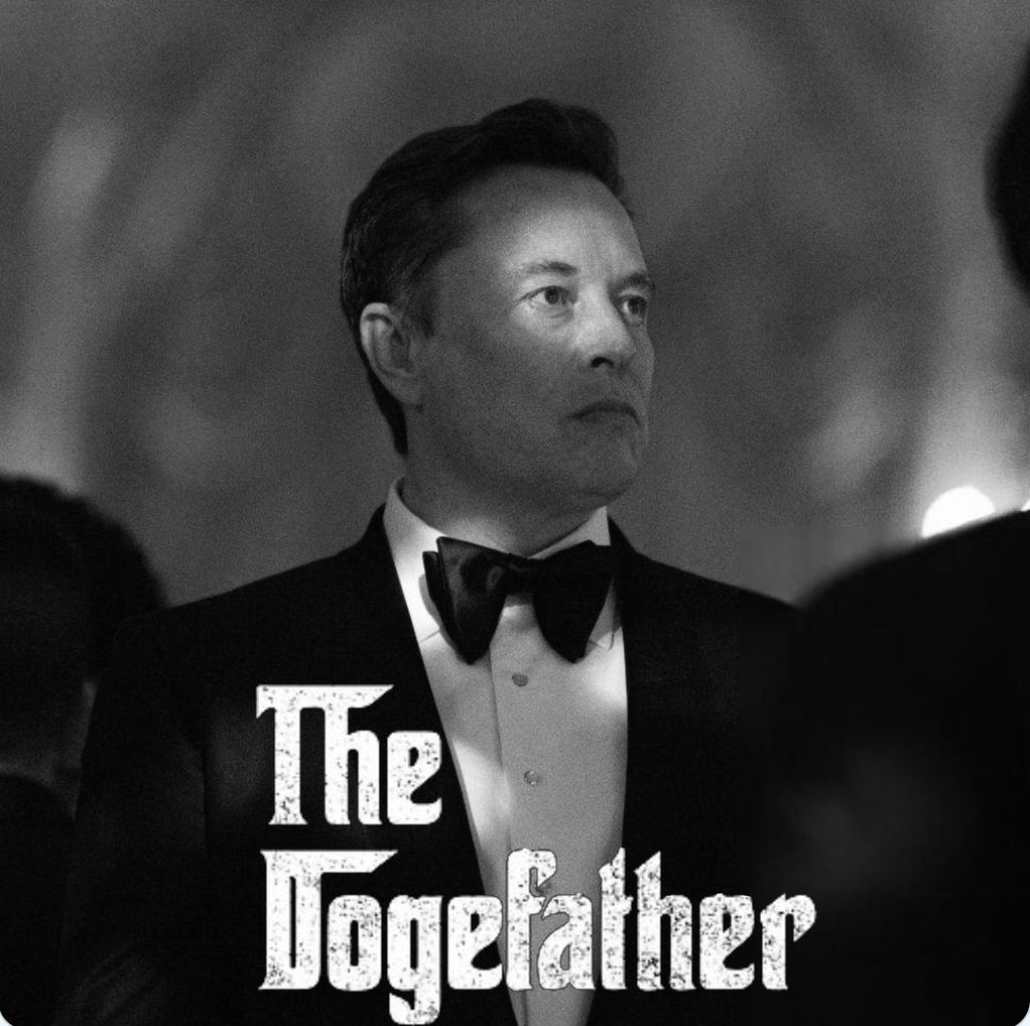
A maple-flavoured DOGE? Maxime Bernier proposed this in 2020

Filed under: Bureaucracy, Cancon, Government, Media, Politics — Tags: , , , , , , — Nicholas @ 05:00

It’s both amusing and alarming seeing the kind of things the US government has been pouring money into, as the young auditors of Elon Musk’s DOGE dig into the accounts. Some folks on social media have been asking for a Canadian version of DOGE, but they’re nearly five years behind PPC leader Maxime Bernier:

Did you know that the Canadian government is spending $143,000 to help the African country of Senegal implement a “sectorial gender strategy” in its armed forces?

Or $46,793 to improve healthcare for intersex people in the Chinese province of Shandong?

What about $4.6 million to develop programs promoting a “positive masculinity” in Cuba?

There are hundreds of such crazy programs costing Canadian taxpayers billions of dollars every year to fund the Liberals’ woke ideology in other countries.

Many people on social media just found out that these programs exist last week, after they started looking for them on the website of the Government of Canada.

They were inspired by similar crazy programs that Elon Musk has unearthed with his DOGE team in Washington.

The DOGE – or Department of Government Efficiency – was created by President Trump and has already cut tens of billions of dollars in frivolous spending after only a few weeks.

I’m being asked if I support having the equivalent of a DOGE in Canada.

Not only do I support it, but I didn’t wait for Trump and Musk to do it to propose one. I did years ago!

In 2020, I stated that a PPC government would have a Minister of Government Downsizing to examine every federal program and cut or abolish everything that is inefficient, wasteful or not essential.

And speaking of DOGE, Coyote Blog shares some thoughts about some of the reasons Democrats are critical of the organization’s efforts:

… having thought about this longer, I think this is about more than just money. It is also about class. Just listen to how the cool kids in the media talk about Musk’s group of young weirdly-nicknamed geeks. This is fairly typical:

    He was speaking specifically about a Trump executive order that decrees that the Department for Government Efficiency can force federal agencies into firing four people for every new hire. “Who the hell voted for Mr. Musk?” Begala raged. “Who the hell voted for — excuse the phrase — a guy who calls himself Big Balls? A 19-year-old kid going in there and trying to fire cancer researchers and scientists and teachers and agricultural specialists. It’s, it’s appalling.”

This is moderately hilarious from a) a party who still has not told us which unelected people really were making decisions behind the curtain for a senile Joe Biden; and b) an individual (Begala) who wielded immense power and influence across all departments of the Clinton Administration. The department staffs in DC are 99.99% people who are both unelected and unconfirmed by Congress. The issue is not that they are unelected, the issue is that they are “the wrong sort”. I am reminded of the British aristocracy in the 19th century that would tolerate almost any sort of governmental incompetence or malfeasance as long as the people were “the right sort” — meaning of their class.

The mention of Victorian England reminds me of another way that class is likely involved here. In the English aristocracy the oldest son inherited the title and often all the land and income (which was entailed to the title). This left little for any additional sons, so an income had to be found somewhere for them in a profession that did not require them to sully themselves with “trade” (daughters were handled a different way, through the marriage market). Reading for the law was an acceptable profession for a son with brains, and the army or navy were outlets for many. But most families needed a way for their sons without too much brains or ability and not militarily inclined to make a living. A position in the Church was often the solution.

Modern American blue-blood parents are no different — they need a way to secure a living for their kids who won’t or can’t land a job in the modern elite career choices (law, consulting, investment banking, or a sexy startup). Unlike in Victorian times, the military or the Church are no longer preferred elite options. So what to do with your 22-year-old gender studies major? The parents need her to get an income and they need her to do it in a context that they can proudly report to their friends — Paul Begala does not want to tell his friends that his son’s job is maintaining distributor pricing lists (anyone who does not believe the latter criteria should have been at my Princeton or Harvard Business School 25th reunions).

The solution? Get them a job at a non-profit, the modern American version of going to the Church. As Arnold Kling noted once, non-profits tend to have much higher status than do for-profits. And without competition they don’t have to carry the same performance standards as for-profits. And they are incredibly susceptible to trading a position for your kid in exchange for a nice donation.

The employment rosters of non-profits and NGO’s are stuffed with the children of privilege. So much so that there are many non-profits that seem to do nothing EXCEPT employ and pay the travel expenses of 20-something kids from rich and/or influential families. I have been writing about the non-profit scam for years. As I wrote then:

    From my direct experience, I would go further. There is a tranche (I don’t know how large) of non-profits that are close to outright scams, providing most of their benefits to their managers and employees rather to anyone outside the organization. These benefits include 1) a salary with few performance expectations; 2) expense-paid parties and travel; 3) myriad virtue-signalling opportunities; 4) opportunities to build personal networks. This isn’t just criticizing theoretical institutions — people I know are in such jobs in these organizations.

The spending that DOGE is going after at USAID and other departments likely threatens the income of a number of under-qualified elite kids. So I will update my meme:

February 13, 2025

The downfall of the “theatre kid occupied government”

Filed under: Bureaucracy, Government, Media, Politics, USA — Tags: , , , , — Nicholas @ 03:00

Theophilus Chilton says that one of the biggest weaknesses of the Biden administration was their addiction to the idea that appearances mattered far more than reality:

For the previous four years, one of the constant refrains from the Left that we kept hearing over and over was “the adults are back in charge”. Trump is “childish” while Biden was “the adult in the room,” or so the media-driven narrative kept telling us. Trump just hung out on social media and made fun of people during his first term while Democrats did the serious business of guiding the ship of state through the rocky shoals of the modern world when Biden was in office, and all that. The whole point was to mask the serious deficiencies in the previous administration and its underlying ideational premises, deficiencies that existed at both the structural and personnel levels because of the fundamental ideological puerility of the Left.

It’s become common for observers to (only partially jokingly) note that until very recently we had a “theatre kid occupied government”. What’s that mean? Well, everything we saw from the past four years (and really, a lot longer than that) was performative — it was about giving appearances rather than getting anything useful done. All the way back to the terminally midwit show The West Wing, the belief among up-and-coming leftie PMCers was that government could essentially be conducted by stagecraft. All you have to do is write the script, teach the actors their lines, and create whatever you want out of the production. More generally, the theatre kids in government thought that they could rule the world merely by wishcasting things into reality, which explains a lot of the “questionable” spending to and through USAID and various NGO organisations. They have the very juvenile tendency to think that wanting something to be a certain way can make it so, regardless of intervening realities.

Fundamentally, that is the whole character of modern Western and American progressivism. Modern leftists display a whole suite of childlike behavioural patterns that, as it turns out, are not conducive to good government. Really, progressivism is essentially based on wishful thinking and daddy issues. Once you understand this, you understand about 90% of where the Left’s thought process comes from.

One good example of this is the whole transgender push. While there is obviously an element of grooming/recruiting involved with it all, the main point to it is that it’s a means of social conditioning and control. They pretend — and demand that others pretend — that boys can become girls and that girls can become boys. Until recently, they were able to punish normal people who didn’t at least pay lip service to this. Even without this power, there is still a good deal of attempting to emotionally manipulate people about the matter (you don’t want to commit TRANS GENOCIDE do you???), which is itself a means of trying to exercise power, though in a juvenile manner.

Of course, the fact that the whole trans agenda rests of wishful thinking, on the attempt to stage manage reality into accepting something blatantly at odds with it, should go without saying. There has been a concerted effort to build a Baudrillardian hyperreality around this issue, to create a “consensus reality” that muddies the distinction between fact and fiction. Baudrillard himself defined hyperreality as “… the generation by models of a real without origin or reality”. The entire process is essentially semiotic, which explains the obsession of the modern Left (not just now, they tried this in Weimar Germany in the 1920s as well) with transgenderism — it’s a spearhead which, once successfully pierced through the veil of classical reality in this one area, can justify the same exact process being carried out in any other so that any symbolic-yet-unreal consensus can be built, even if by fraud or force.

There are real world consequences to this sort of theatre kid performativism. It leads to them impeding traffic on busy highways to protest whatever their idiotic cause du jour happens to be (physics isn’t real bro!). It’s also why (ostensibly adult) Democratic elected officials think they can impede federal immigration enforcement efforts. For so long, progressives in our TKOG were able to force everyone else to go along with their delusions or face punishment. Even though they’re now not able to do this (at least here in the USA, other places in the West aren’t so lucky), they still think they can obstruct and counteract the implementation of policy simply because they don’t want these things to happen. Like little kids who can’t accept that they lost at a game, these folks believe they can roll back the results of the latest election by throwing tantrums and trying to get in the way. Hopefully, a few arrests will clear up this misconception.

February 11, 2025

“As it turns out, you can just cut things”

Filed under: Bureaucracy, Government, Media, Politics, USA — Tags: , , , , — Nicholas @ 03:00

John Carter outlines the left’s long march through the institutions and explains why a conservative counter-operation of the same kind would utterly fail. Instead, Donald Trump (of all people) launched a political blitzkrieg that used none of the strategies of the long march — because the establishment knew intimately how those worked, as they’d used them for generations to become the establishment:

Alexander Cutting the Gordian Knot
Fedele Fischetti, 18th century.

But a counter-revolutionary long march through the institutions was always a doomed project.

The left understands the method quite well, having perfected it themselves, and its defences against counter-infiltration were well advanced. It was never enough merely to say the right things, and not say the wrong things – the left knows how easily such signals are faked, as these are mere words, and words have no meaning to an egregore which sees in discourse nothing but the currents and tokens of power. Much of the seeming insanity of the Cancelled Years is best understood as the imposition of elaborate, difficult to fake displays of loyalty: offering your child’s genitals to the hungry gender gorgon, opening your veins for the gene therapy injection. Then of course there is DEI, whose explicit intent was to simply deny opportunity to those most likely, on a demographic basis, to oppose the left. There is very little point, as a young white man, in keeping your mouth shut if you will be locked out simply because you are white, no matter what you say.

The psychological demands of stealthy infiltration are spiritually toxic. Anyone attempting this path finds himself embedded in a social context in which all of his friends and colleagues adhere to values which he privately despises, and moreover, he knows that the instant they discover his true beliefs he will be not only fired, but ostracized and isolated. Worse, he’s constantly placed in the position of betraying his own convictions, of going along with and even actively supporting things he knows are wrong, because failing to do so would be immediately suspicious. Since the left is a hive mind, he must “pretend” to give up his agency … and insofar as you are what you do, there is very little difference between pretending to give up your agency, and actually doing giving it up. Living like this is miserable. It requires iron discipline, and there is very little reward. Some of you doubtless have direct experience of this.

The most important reason that a long march was never viable, however, was that there was not enough time.

The West is in crisis. Public debt has broken up through the exosphere, its rise ever more vertical as the deficits fuelling it continue to expand, and we can all see in its meteoric rise that its inevitable descent will hit the land like rods from God. Third world invaders pour into our countries by their millions at the open invitation of seditious governments whose open aim is to reduce native white populations to second-class minorities in their own homelands within the space of a generation. These two crises of the Great Inflation and the Great Replacement could never be solved by the tactics the left used to bring them about. Even if such a long march could have succeeded in the face of the barriers the left so astutely erected, by the time it came to fruition the victors would preside over wreckage.

The left’s tactics were those of a chronic disease, gradually wasting the patient, leaching the strength from his limbs. You cannot cure a patient by becoming an opportunistic infection in your own right.

So what to do? Many, despairing, looked to civil war. A coup d’état, likely followed by blue states separating from the Union. Battle lines would be drawn, brother would be set against brother, cities would be ruined, vast pits would be excavated and filled with the stinking dead. Such a war would never have been limited to continental United States. It would have dissolved the Pax Americana, with brushfire wars springing up across the globe as great powers sought to expand their territories by grabbing resources or strategic trade corridors. Those powers would have gotten involved in the Civil War themselves, backing one side or another, prolonging the conflict in order to ensure the Union remained shattered forever.

On J6, the American government teetered on a precipice. Had Trump applied so much as the gentlest pressure with his baby finger, it would have toppled over. The other side would then have screamed that he was a tyrant who had seized power by force; his own supporters would have rallied to the cause that the election had been stolen; America, and the world, would have been bathed in blood. So Trump pulled back, allowed the heroes of J6 to be imprisoned, and permitted the sclerocracy to impose four years of malevolent mismanagement on the American people.

Many were furious with Trump. He’d lost his nerve; he was a coward.

As it turned out, they were all wrong. It was a strategic withdrawal.

And now, instead of a Long March, we are getting a blitzkrieg.

I’ve been silent for the last month partly for personal reasons that deprived me of the time and energy to write, which I won’t elaborate upon here save to note that it’s nothing anyone has to worry about. But I’ve also been silent because I haven’t been sure what to say. The last weeks have been one of those ‘weeks when decades happen’ periods, and that pace of change doesn’t appear to be letting up. Executive Orders flying off of the big man’s desk, birthright citizenship being struck down, entire government departments getting defunded, the J6 heroes being pardoned, trade wars starting and then stopping before they start, the military heading to the border, DOGE siccing broccoli-headed zoomers armed with large language models to rip through the sprawling financial records of acronym agencies like a cyclone of destruction.

As it turns out, you can just cut things.

These are all great, wonderful things. We are winning, and the pace of winning is dizzying. It’s like we’ve spent the last several years slamming again and again against a seemingly immovable wall, bashing our brains out upon it like an enraged tiger, only for that wall to suddenly turn to sand upon our final desperate push, leaving us sprawled and disoriented on the ground.

That is at least what it has felt like to me. The people on the inside of the Trump administration are not disoriented. Far from it. They are executing a detailed, thorough plan. They’ve identified the enemy nerve centres and are neutralizing them precisely, rapidly, and ruthlessly. Handpicked squads of very competent young men have been turned loose inside the Beltway. It is clear that they are not being micromanaged, but are being left to develop their own action plans on the fly as the tactical situation evolves. This is manoeuvre warfare, with small, nimble, lethal teams dropped into the heart of enemy territory and being given maximum latitude to pursue the campaign’s strategic objectives.

QotD: Scientists, in their natural habitat

Filed under: Bureaucracy, Education, Humour, Quotations, Science — Tags: , — Nicholas @ 01:00

Now, do you accept the traditional image of scientists as sober, serious, disinterested seekers of truth? Or do you have more of a Biscuit Factory sort of view of them, where quite a lot of them are very flawed human beings, egotistical shits bent on climbing the greasy pole and treading on people to get to the top? Bullshitters and networkers and operators? Actually, I think the former types do exist, there are good, serious scientists out there (including some of my personal friends, and quite a few readers of this blog), but there are an awful lot of the latter types, especially at the top, and it’s rare to hear of a science department that isn’t full of bitter hatreds and jealousies and vendettas, where every Professor turns into an arsehole no matter how nice they seemed when they were a graduate student.

Hector Drummond, “Soap-opera science”, Hector Drummond, 2020-03-29.

February 2, 2025

Captain Trumpmerica versus the Post-national Maple Protectionists

Donald Trump has made picking fights with the corrupt oligarchs of Mexico and Canada a key part of his appeal to American voters. Canada used to be a proud nation, but after years of deliberate mismanagement and stubborn opposition to innovation and growth, we’ve become — as Justin Trudeau so smugly put it — the first “post-national state” that has “no core identity [and] no mainstream”, because we’re a plaything for the WEF and other transnational organizations. Elizabeth Nickson calls us a “failed state” and that swapping in globalist WEF’er Mark Carney for globalist WEF’er Justin Trudeau will make no positive difference:

25% tariffs will ruin us. The tariffs mean one million small businesses — all which sell to the U.S. — will contract and many will close their doors. And then Trump, as he promised the unions, will pull “our” auto industry. Then we’re done.

Who is to blame for this?

The following is going to be crude because Canada is so boring (that’s deliberate) that no one cares. There are a thousand ultra-complex rationales on why Canada is failing and all they do is obfuscate. I’m not pulling punches, softening rhetoric — it is bad. It is urgent. This is the death of something that 75 years ago was shining, sunlit, exciting. That country? That country was killed by the Laurentian elite, weak, cosplaying Marxism to stay in power, themselves outwitted by investment bankers who plan to steal everything not nailed down. In so doing new elements were forcibly injected into the population: envy, resentment of the successful, sloth, the refusal to grow up, be strong and independent. We effectively sit on top of the U.S., seething with envy, in wet diapers.

We are a broken country. Everyone who understands the world knows this. The only people who don’t are deluded Canadian socialists, which is to say our entire elite and all our “knowledge class”. Dissent is ignored. Or jailed.

Central banker Mark Carney, WEFer paramount, is being parachuted into the Liberal party in order to sell us off to the investment banks who will harvest us for our resources. Our people? Future serfs in Special Enterprise Zones. We already have the regulation in place. No taxes, no worker rights, no enviro controls, no self-determination, no agency, no freedom. Time frame? Ten years, twenty at the outside. The inevitable end of hard-core socialism.

That is what Carney did to Canada in the ‘08 crisis, a crisis entirely created by larcenous government and investment bankers: he loaded us up with so much debt that the moment the economy turned, the working class — and Canada is now 75% working class — paid for it through interest rates so high they crippled and broke every middle class family with a mortgage. Then, he moved to England and did it to the English. His name there? Mark Carnage. During the ’08 crisis, he in Canada and the UK and Obama in the US transferred trillions in public wealth to the investment banks to keep them going after the worst crisis since ’29. A crisis they caused. That was the people’s money, not theirs.

However, as Peter Menzies points out, our Laurentian Elite are still 100% protecting us from the baleful influence of American culture … well, the commercial bits anyway:

Next Sunday, the federal agency responsible for the flourishing of national culture and identity will be swamped with complaints. The grumbling will emanate from Canadians enraged they can’t get more American culture. Yes, America may be in the process of humiliating Canada as its lamest of lame duck leaders, Prime Minister Justin Trudeau, waddles into the sunset. And, for sure, most of us are mortified that U.S. President Donald Trump has chosen to make an example of us as he launches his mission to bring the globe to heel and Make America Great Again.

But the bitching directed in the days to come at the Canadian Radio-television and Telecommunications (CRTC) headquarters in Gatineau will originate from Canadians angry they can’t watch American Super Bowl TV ads along with the game. A perennial contender to be the most watched TV event in Canada, the Super Bowl also has traditionally been the most controversial event on the CRTC’s calendar.

The USA can slap us silly with tariffs. It can send hundreds of thousands of us into unemployment and despair. It can mock our disinterest in maintaining the essentials of nationhood and drive us into unsustainable debt. Trump can brutalize our national esteem and taunt us for our cavalier attitudes towards the defence of our sovereignty. And he can lick his big beautiful lips while pondering our potential as the 51st state.

But what will really light us up Feb. 9 will be being unable to watch Meg Ryan and Billy Crystal reinvent their famous restaurant scene from When Harry Met Sally or Michelob Ultra’s production starring Willem Dafoe and Catherine O’Hara as a couple of pickleball hustlers. Or Matthew McConaughey channeling legendary Chicago Bears coach Mike Ditka for Uber Eats. And the Clydesdales. Everyone loves those Budweiser Clydesdales, particularly the cute little foal making a debut.

It doesn’t matter that the ads cost $7 million U.S. (which will convert into heaven only knows how many bazillion loonies in the months ahead) for a 30-second spot. Or that for more than a decade many of the commercials have been available on YouTube. Canadians don’t want to watch a Super Bowl adorned with Government of Ontario and Maple Leaf Foods ads. They want to watch the game like real Americans and relish the full, unfettered American experience.

At the National Post, a sad recounting of just how badly we’ve been let down by our politicians — and not just recently … this is a decades-long list of conscious self-harm for short-term domestic political advantage:

Bold counter-attacks against the U.S. can’t work, because all the ideas Canada could have put into action to make such a response viable are collecting dust on the cellar shelf. Drop interprovincial trade barriers that amount to a $200-billion penalty on the national economy every year? That only became a serious conversation in the last month. It should have been a serious conversation 10 years ago, if not more.

End supply management? Out of the question — think of the Quebec votes such a move would cost. The Big Milk lobby is a strong one.

How about resource development? Because Canada is ultimately a resource-exporting economy? No; we’ve been cancelling energy projects at the slightest objection and building more legislation to stand in their way. Industries like mining and fishing, already mired in growth-choking regulations, are increasingly refashioned by governments into welfare and “reconciliation” initiatives, repelling private investment that would have brought prosperity to the country as a whole.

Diversify away from the Americans? We’ve only done the opposite: since 2017, Canadian trade has become more focused on the U.S.

Canada should be a prosperous, growth-oriented economy, but instead, its government — and the people who continuously vote for economy-stagnating policy — settle for subsistence and redistribution of a shrinking pie of wealth. Their choices for the past decade have left us without enough fat to get through a cold trade winter.

Prompt retaliatory counter-tariffs are hence unwise. Such a move would put Canadians in the path of two separate blows, one from the front, the other from the back. And while immediate counter-tariffs could affect Americans whose support the president depends on — as was the case in the 1930s, when Canadian counter-tariffs prolonged the American Great Depression (while inflicting domestic pain) — those Americans have much bigger economic fat stores. In a trade war of attrition, expect Canada to lose.

That leaves us, unfortunately, with the less-glamourous immediate option: play this by the book. The United States-Canada-Mexico free trade agreement, which will be violated by any across-the-board tariff Trump applies, needs to be challenged with the mechanisms agreed upon by party states. During the process, Canada must remind Trump that it’s just following the agreement that he made.

February 1, 2025

DOGE’s first week

Filed under: Bureaucracy, Government, USA — Tags: , , , , — Nicholas @ 04:00

J.D. Tuccille on the odd position DOGE finds itself in, as many Americans seem conflicted about cutting back the federal government:

The new Department of Government Efficiency (DOGE) is off to a quick start, if we consider the advisory board’s claimed savings in federal spending and the voluntary buyout of workers that could reduce the ranks of federal employees with a minimum of drama. But while the public agrees that corruption, inefficiency, and red tape are serious problems for the government, DOGE itself enjoys mixed popularity and majorities believe the government spends too little on big-ticket items, leaving little room for savings. The American people themselves are a big obstacle to paring the federal government to size.

DOGE Off to a Good Start

“DOGE is saving the Federal Government approx. $1 billion/day, mostly from stopping the hiring of people into unnecessary positions, deletion of DEI and stopping improper payments to foreign organizations, all consistent with the President’s Executive Orders,” the DOGE X feed boasted this week. “A good start, though this number needs to increase to > $3 billion/day.”

The Trump administration also sent a letter to the majority of the federal government’s roughly three million workers, offering a “deferred resignation” plan. Those who accept the deal could stop working for the government as of February 6 and still be paid through September of this year. The administration expects up to 10 percent of workers to take the offer. The voluntary nature of the plan blunts inevitable complaints from unions about “purging the federal government of dedicated career civil servants”.

We will have to see what the results will be in the coming months and years. But if that works out, it’s a pretty good launch for an administration and its advisory board that are less than two weeks old. Unfortunately, Americans aren’t sure where they stand on all this.

The Public Frets About Corruption, Inefficiency, and Red Tape …

According to AP-NORC polling, majorities believe that corruption (70 percent), inefficiency (65 percent), and red tape such as regulations and bureaucracy (59 percent) are “major problems within the federal government.” These findings square with the results of other surveys revealing that “nearly 2/3 of Americans fear that our government is run by corrupt officials” (Babbie Centre at Chapman University, Spring 2024), that 56 percent of Americans say government is “almost always wasteful and inefficient” (Pew Research, June 2024), and that “55% of Americans say the government is doing too much” (Gallup, November 2024). That’s exactly what the Trump administration created DOGE to combat, so it should be a good sign for the project.

But Americans are torn over DOGE. Asked by AP-NORC to share their opinions of “an advisory body on government efficiency led by Elon Musk and Vivek Ramaswamy” (before Ramaswamy left to run for office), only 29 percent support the venture while 39 percent oppose it. That seems to reflect its leadership. Fifty-two percent of those polled have an unfavorable opinion of tech titan Musk, while 36 percent view him favorably.

Why the hate? Musk’s problem may be that he’s a high-profile rich guy with things to say at a time when that type of person isn’t especially popular. Sixty percent of respondents believe it would be a bad thing “if the president relies on billionaires for advice about government policy”. That disapproval crosses over into opinions about DOGE, even if people say they support its goals.

QotD: In a centrally planned economy, all that matters is meeting or exceeding the Gross Output Target

The mobbed-up oligarchs currently running Russia, for instance, were almost all members of an informal class whose name I forget, which translates as “brokers” or “wheeler-dealers” or something. They learned how best to manipulate the Soviet system of “gross output targets”. Back when he was funny, P.J. O’Rourke had a great bit about this in Eat the Rich, a book I still recommend.

When told to produce 10,000 shoes, the shoe factory manager made 10,000 baby shoes, all left feet, because that was easiest to do with the material on hand — he didn’t have to retool, or go through nearly as many procurement processes, and whatever was left over could be forwarded to the “broker”, who’d make deals with other factory managers for useful stuff. When Comrade Commissar came around and saw that the proles still didn’t have any shoes, he ordered the factory manager to make 10,000 pairs of shoes … so the factory manager cranked out 20,000 baby shoes, all left feet, tied them together, and boom. When Comrade Commissar switched it up and ordered him to make 10,000 pounds of shoes, the factory manager cranked out one enormous pair of concrete sneakers …

So long as Comrade Commissar doesn’t rat him out to the NKVD — and why would he? he’s been cut in for 10% — nobody will ever be the wiser, because on the spreadsheet, the factory manager not just hit, but wildly exceeded, the Gross Output Target. That nobody in Krasnoyarsk Prefecture actually has any shoes is irrelevant.

Severian, “The Finger is Not the Moon”, Rotten Chestnuts, 2021-09-14.

January 27, 2025

QotD: The bureaucratization of university administration

Filed under: Britain, Bureaucracy, Education, Quotations — Tags: , , , , — Nicholas @ 01:00

On the consolidation of power within the administrative bureaucracy:

    The character of the college as a micro-community of academics is being doubly subverted: from within, by the rapid growth of bureaucratic roles taken up by professional administrators, and from without, by a university seeking to centralise control and elide differences among the colleges. The more uniform the overall environment becomes, the more rapidly it will suffer from the bad decisions inevitably yet to be made.

On the metastasis of overpaid, officious administrators:

    The content of this letter is extremely important, so please read it carefully.” It isn’t often that the university speaks to its employees in this way. This was a follow-up email from the former pro-vice-chancellor for strategy and planning, David Cardwell. He wanted academics to complete his Time Allocation Survey by tabulating how many hours were spent across a vast suite of possible activities. It is characteristic of contemporary Cambridge that the strongest rhetoric it can muster is directed toward this self-serving bureaucratic exercise. Cardwell rubbed shoulders with four other pro-vice-chancellors, all enjoying a salary that is several multiples of the typical university academic, and surpasses the Prime Minister’s.

This administrative overgrowth is, by the way, a historical novelty:

    All of this is new: until 1992, the role of vice-chancellor was covered in short stints by the Heads of House, who paused their college governance while the rest of Cambridge got on with what they were here to do. Now we have not only career administrators at the helm, but their five deputies, for an annual cost of around £1.5 million. All the while, the university fails to find the money to keep important subjects alive, such as the centuries-old study of millennia-old Sanskrit.

I’ve been pointing this out for years. Until very recently, administrative functions in universities were largely filled by senior academics: you got bullied into shouldering the unwelcome burden because somebody had to do it, and you drew the short straw. There is nothing that a serious person despises more than paperwork, especially a scholar, who would much rather be happily buried in whatever esoterica he has made his field of study. Forcing academics into administrative roles ensured that the people filling those offices were incentivized to keep the paperwork to an absolute minimum; the last thing they wanted was to create more of the hateful stuff.

Enter, some decades ago, the professional administrators. Initially, these usually had some sort of academic qualification, and still largely do – albeit typically in fake non-disciplines, “public administration” or what have you – but they were not in any sense scholars. They were managers. Give us your burden, they said; we’ll do all the annoying paperwork for you, and you can concentrate on your very important research, you very important scholars, you. Thus the professoriate, like gullible fools, handed over the keys to the kingdom.

Unlike professors, managers are incentivized to create as much administrative complexity as they can: the more administration there is to perform, the more administrators the institution needs, and the larger the fiefdoms senior administrators can command. Since admin typically has control of the budget, they were easily able to appropriate the necessary funds. The result has been the explosive proliferation of useless eaters with lavish salaries and ridiculous titles like Senior Vice Assistant Dean for Excellence or Junior Associate Student Life Provost. At many universities, administrators now exist in a 1:1 ratio with the student body.

Admin have sucked shrinking university budgets dry, with real intellectual consequences: they aren’t going to fire themselves, and they sure aren’t taking a salary cut, so to make up budget shortfalls academic programs with low enrolment get the axe. Butterfield’s reference to the closure of the Sanskrit program is an example of this; there are many such examples, and they are increasingly common. To brains built out of buzzwords and spreadsheets, everything is either a marketing technique or a revenue stream, and if a program isn’t popular enough to subsidize their summer vacations in Provence or social-justicey enough for them to brag to their beach friends about how progressive they are, it serves no purpose.

This ability of university administrations to close down programs illustrates something else, which is that they are the real power on campus. The academics are mere employees: they will teach whichever students the admin decides to admit, will teach those students whatever the admin says to teach them, will not teach what the admin tell them not to teach, will teach in whatever manner admin decides is best, and will evaluate the results of that instruction in whatever fashion admin mandates they be evaluated.

As members of the managerial class, university administrators are drones of the global managerial hive mind, and instinctively exert a homogenizing influence. Old, parochial practices must be jettisoned in favour of standardizing the institutions they manage.

    As for our age-old titles – of lecturer, senior lecturer, reader and professor – these were replaced with American titles so as to be “more intelligible” to a global audience. … To conjure up a world of “assistant professors” and “associate professors”, who in fact have no supporting relationship to “the professors”, makes a mockery of that venerable system.

Administrators dislike horizontal social relationships amongst faculty. Peer-to-peer network architectures are hard to control; they prefer a server-terminal model, with management as the server through which all communications pass, and professors as the terminals, who can be regulated through systems of permissions. Thus, they set about dissolving those institutions that facilitate conviviality amongst the faculty:

    It was telling that a few years ago the authorities silently closed down the University Combination Room, the 14th-century hall in which academics could freely convene outside their individual colleges.

Administration is also sneaky, adopting governance practices that minimize whatever legacy powers the professoriate still possesses:

    Although in theory Cambridge academics are self-governing, the move to online voting, with minimal announcement, allows for many university policies to be driven through by those who want them enacted.

Butterfield understands full well that the problems are hardly unique to Cambridge:

    All this I say of Cambridge. But these issues go right across the university sector … The public need to trust and respect the elite academic institutions they fund; but that respect is waning, as stories continue to reveal politicised teaching, grade inflation, authoritarian campus policies and lurid, even laughable, research grants. The ambitions of our whole education system are ultimately pegged to the achievements at the very pinnacle of academia. If Cambridge can’t resist decline, who can?

The obvious answer is: no one can resist this. Not Cambridge, not Oxford, not University College London, not Harvard, not Princeton, not MIT, and not Whittier College. The problem is too systemic; the rot too deep. Decades of administrative consolidation of power has subsumed the ivory tower into an appendage of the global asset management system. Generations of ideological infection by the mind virus of cultural Marxism, wokeism, critical social justice, gay race communism, whatever you want to call it, has poisoned the minds of too many of the faculty. Generations of steadily declining standards, an inevitable consequence of massively increased enrolment which of unavoidable necessity heavily sampled the fat middle of the IQ distribution, has thinned out the influence of the bell curve’s rarefied tail to statistical irrelevance. After all of this, the only way to save the university is to purge it, of the great mass of low-performing affirmative action students, of the diversity hire academics who substitute clumsy sermonizing for the scholarship they can neither understand nor perform, and most especially of the great tumorous mass of useless administrators.

Such a purge, to be effective, would need to be thorough. To be thorough, it would remove almost everyone in the system. This would be the same as destroying the system. To save the patient, one would have to kill the patient.

Therefore no such purge will take place.

Instead, the system will crumble, buckle under its own weight, and eventually collapse.

As, in fact, it is doing.

John Carter, “Crumbling DIEvory Towers”, Postcards From Barsoom, 2024-10-25.

January 26, 2025

QotD: The map is not the territory, state bureaucrat style

… most bureaucrats aren’t evil, just ignorant … and as Scott shows, this ignorance isn’t really their fault. They don’t know what they don’t know, because they can’t know. Very few bureaucratic cock-ups are as blatant as Chandigarh, where all anyone has to do is look at pictures for five minutes to conclude “you couldn’t pay me enough to move there”. For instance, here’s the cover of Scott’s book:

That’s part of the state highway system in North Dakota or someplace, and though again my recall is fuzzy, the reason for this is something like: The planners back in Bismarck (or wherever) decreed that the roads should follow county lines … which, on a map, are perfectly flat. In reality, of course, the earth is a globe, which means that in order to comply with the law, the engineers had to put in those huge zigzags every couple of miles.

No evil schemes, just bureaucrats not mentally converting 2D to 3D, and if it happens to cost a shitload more and cause a whole bunch of other inconvenience to the taxpayers, well, these things happen … and besides, by the time the bureaucrat who wrote the regulation finds out about it — which, of course, he never will, but let’s suppose — he has long since moved on to a different part of the bureaucracy. He couldn’t fix it if he wanted to … which he doesn’t, because who wants to admit to that obvious (and costly!) a fuckup?

Add to this the fact that most bureaucrats have been bureaucrats all their lives — indeed, the whole “educational” system we have in place is designed explicitly to produce spreadsheet boys and powerpoint girls, kids who do nothing else, because they know nothing else. Oh, I’m sure the spreadsheet boys and powerpoint girls know, as a factual matter, that the earth is round — we haven’t yet declared it rayciss to know it. But they only “know” it as choice B on the standardized test. It means nothing to them in practical terms, so it would never occur to them that the map they’re looking at is an oversimplification — a necessary one, no doubt, but not real. As the Zen masters used to say, the finger pointing at the moon is not, itself, the moon.

Severian, “The Finger is Not the Moon”, Rotten Chestnuts, 2021-09-14.

January 25, 2025

QotD: “Big budget cuts!”

Filed under: Bureaucracy, Government, Media, Politics, Quotations, USA — Tags: , , , — Nicholas @ 01:00

So why is there such a big disconnect in the media? Why are there headlines about cutting and slashing when government is growing by every possible measure?

For the simple reason that the budget process in Washington is pervasively dishonest, as I’ve explained in interviews with John Stossel and Judge Napolitano. Here are the three things you need to know.

  1. The politicians created a system that automatically assumes big increases in annual spending, called a baseline.
  2. When there’s a proposal to have spending grow slower than the baseline, the gap between the proposal and the baseline is called a cut.
  3. It’s like being on a diet and claiming progress because you’re gaining two pounds each month rather than five pounds.

Defenders of this system argue that programs should get built-in increases because of things such as inflation, or because of more old people, which leads to more spending for programs such as Social Security and Medicare.

It’s certainly reasonable for them to argue that budgets should increase for these reasons.

But they should be honest. Be forthright and assert that “Spending should climb X percent because …”

Needless to say, that won’t happen. The pro-spending politicians and interest groups like the current approach because it allows them to scare voters by warning about “savage” and “draconian” spending cuts.

Daniel J. Mitchell, “The Media’s Pervasively Dishonest Coverage of Trump’s New Budget”, International Liberty, 2020-02-10.

January 24, 2025

The end of “affirmative action” in US government hiring

Filed under: Bureaucracy, Government, History, USA — Tags: , , , , , — Nicholas @ 04:00

In The Free Press, Coleman Hughes outlines how the US federal government got into the formal habit of hiring and promoting staff based on things other than ability and merit during the Nixon administration:

Trump’s Executive Order 14171 is titled Ending Illegal Discrimination and Restoring Merit-Based Opportunity. It describes how vast swaths of society, including the “Federal Government, major corporations, financial institutions, the medical industry, large commercial airlines, law enforcement agencies, and institutions of higher education have adopted and actively use dangerous, demeaning, and immoral race- and sex-based preferences under the guise of so-called ‘diversity, equity, and inclusion’ (DEI)”.

In response, Trump has ordered the executive branch and its agencies “to terminate all discriminatory and illegal preferences, mandates, policies, programs, activities, guidance, regulations, enforcement actions, consent orders, and requirements”.

That is a lot of preferences and mandates. Trump’s executive order accurately describes the enormousness of the DEI bureaucracy that has arisen in government and private industry to infuse race in hiring, promotion, and training. Take, for example, the virtue-signaling announcements made by big corporations in recent years — such as CBS’s promise that the writers of its television shows would meet a quota of being 40 percent non-white.

And so, we will now see what federal enforcement of a color-blind society looks like. We’ll certainly see how many federal employees were assigned to monitor and enforce DEI — Trump has just demanded they all be laid off.

The most controversial part of this executive order is that it repeals the storied, 60-year-old Executive Order 11246, signed by President Lyndon Johnson in 1965. Johnson’s original order mandated that government contractors take “affirmative action” to ensure that employees are hired “without regard to their race, color, religion, or national origin”.

The phrase affirmative action, however, has come to have a profoundly different meaning for us than it did during the 1960s civil rights era. Back then, it simply meant that companies had to make an active effort to stop discriminating against blacks, since antiblack discrimination was, in many places, the norm. Only later did the phrase come to be associated with the requirement to actively discriminate in favor of blacks and other minorities.

One of the great ironies of affirmative action is that it was not a Democrat but a Republican president, Richard Nixon, who did more than anyone to enshrine reverse racism at the federal level by establishing racial quotas. According to the Richard Nixon Foundation, “The Nixon administration ended discrimination in companies and labor unions that received federal contracts, and set guidelines and goals for affirmative action hiring for African Americans”. It was called the “Philadelphia Plan” — the city of its origin.

For the first time in American history, private companies had to meet strict numerical targets in order to do business with the federal government. Philadelphia iron trades had to be at least 22 percent non-white by 1973; plumbing trades had to be at least 20 percent non-white by the same year; electrical trades had to be 19 percent non-white, and so forth.

In the intervening decades, this racial spoils system has not only caused grief for countless members of the unfavored races — it has also created incentives for business owners to commit racial fraud, or else to legally restructure so as to be technically “minority-owned”. As far back as 1992, The New York Times reported that such fraud was “a problem everywhere” — for instance, with companies falsely claiming to be 51 percent minority-owned in order to secure government contracts. In a more recent case, a Seattle man sued both the state and federal government, claiming to run a minority-owned business on account of being 4 percent African.

January 23, 2025

Do you want an imperial presidency, because this is how you get an imperial presidency

Filed under: Bureaucracy, Government, Law, Liberty, Politics, USA — Tags: , , , — Nicholas @ 03:00

On paper, prime ministers in Westminster parliamentary systems have more power, but the US president has more immediate, practical power to direct government activity using totally non-democratic executive orders. Democrats didn’t mind that when it was Obama wielding the pen, but they’re incandescent now that it’s the Bad Orange Man inking rules into existence. MAGA Republicans hated when Joe Biden’s ventriloquist was writing the orders, but suddenly it’s fine because it’s their president doing it. In neither case is democracy safe:

A quick image search turns up plenty of examples of Presidents proudly showing off freshly signed documents. Usually these will be laws passed by the legislators but sometimes (especially in January 2025) it’s rule-by-decree on steroids.

Well before President Donald Trump returned to office, his supporters boasted that he would start the second term with a flurry of executive actions. The new president exceeded expectations with an avalanche of pardons, orders, and edicts on matters great and small. Some should be welcomed by anybody hoping for more respect for liberty by government employees. Others extend state power in ways that are worrisome or even illegitimate. All continue the troubling trend over the course of decades and administrations from both parties for the president to assume the role of an elected monarch.

From an Interoffice Memo to “Shock and Awe”

“When President Trump takes office next Monday, there is going to be shock and awe with executive orders,” Sen. John Barrasso (R–Wyo.) predicted last week.

The president signed some of those orders as he bantered in the Oval Office with members of the press, engaging in more interaction than we saw from his predecessor over months. Wide-ranging in their scope, Trump’s orders “encompassed sweeping moves to reimagine the country’s relationship with immigration, its economy, global health, the environment and even gender roles,” noted USA Today.

Executive orders, which made up the bulk of Trump’s actions (he also pardoned and commuted the sentences of participants in the January 6 Capitol riot), are basically interoffice memos from the boss to executive branch agencies. “The President of the United States manages the operations of the Executive branch of Government through Executive orders,” according to the Office of the Federal Register of the National Archives and Records Administration.

That doesn’t sound like much — and at first, it wasn’t. Executive orders as we know them evolved into their modern form from notes and directives sent by the president to members of the cabinet and other executive branch officials. Nobody tried to catalog them until 1907.

But because executive branch officials interpret and enforce thickets of laws and administrative rules under which we try to live, guidance from the boss is powerful. Interpreted one way, a rule regulating unfinished gun parts leaves people free to pursue their hobbies; interpreted another, and those owning the parts are suddenly felons. The president can push interpretations either way.

They Can Be Used Correctly, or Abusively

So, some of Trump’s executive orders are very welcome, indeed, for those of us horrified by federal agencies pushing the boundaries of their power.

“The vicious, violent, and unfair weaponization of the Justice Department and our government will end,” Trump said in his inaugural address regarding an order intended to punish politically motivated use of government power. “I also will sign an executive order to immediately stop all government censorship and bring back free speech to America,” he added of another.

January 22, 2025

“Do not give institutional power to activists” or “moral projects to bureaucrats”, but “Progressivism systematically does both”

Lorenzo Warby on the dangers of enabling totalitarians and suffering the useful idiots in any political system:

The overthrow of Robespierre in the National Convention on 27 July 1794, Max Adamo (1870),
Wikimedia Commons.

Do not give institutional power to activists, as activism — being power without responsibility that readily lauds bad behaviour — attracts manipulative “Cluster B” personalities. Moreover, activism degrades realms of human action by imposing pre-conceived outcomes and constraints on them. We can see this is in all the entertainment franchises whose internal logics of story and canon have been debauched in the service of political messaging.1

Do not give moral projects to bureaucrats, as such projects elevate the authority of the bureaucrats who become moral masters, devaluing the authority of the citizens turned into moral subjects, and so undermines any ethic of service to said citizenry. Such projects also frustrate accountability, as the grand intentions can, and will, be used to shield the bureaucrats from scrutiny. Indeed, moral projects rapidly become moralised projects, whose grand intentions protects, even aggrandise, the self-interest of the bureaucrats.2

Progressivism systematically does both — give institutional power to activists and moral projects to bureaucrats. Hence progressivism has so often proved disastrous for human flourishing. Indeed, it has a powerful tendency to use the grandeur of its moral intentions to free itself from moral constraints: to be moralised, rather than moral.

As various folk “walk away” from what left-progressivism has become, a common sentiment is some version of “this is not the Left I remember” or “this is not what the Left used to stand for”. Yet, one of the striking things about Post-Enlightenment Progressivism (aka “wokery”) within contemporary societies is how thoroughly it is replicating mechanisms of social control familiar to any student of Communism, of Marxist Party-states.

This “not the Left I joined” is typically a notion of “the Left” that does not include Lenin, Stalin, Mao, Pol Pot, Mengistu, Ceausescu … So it is an historically illiterate, “wouldn’t-it-be-nice”, Leftism. Yet it is precisely the Left that does include Lenin, Stalin, Mao, Pol Pot, Mengistu, Ceausescu and so on whose echoes are being played out in our societies.

When we look around our contemporary societies, we have commissars/political officers (aka DEI officers, intimacy consultants, sensitivity readers, bias response teams, etc); Zhdanovism, in the remarkable ideological conformism in the arts, entertainment and gaming (usefully discussed here); Lysenkoism in science journals, especially the genderwoo sex-is-non-binary nonsense, though genetics research and male-female differences also have aspects of it; and censorship that was originally paraded as stopping “hate speech”, now being purveyed as anti-dis/mis/mal-information. Critical Pedagogy — which has become influential in Education Faculties and teacher training — is explicitly about replicating Mao’s Cultural Revolution model of permanent revolution. We have the same, disastrous, patterns of institutional power to activists and moral projects to bureaucrats.


    1. There is a large difference from the “we want to be included, we want a say” activism that abolished first the slave trade and then slavery, that abolished laws against Jews and Catholics, that gave us universal male and then female suffrage — what I have called the Emancipation Sequence. Such political movements included previously excluded folk in freedoms and political processes that already existed. They did not give institutional power to activists nor moral projects to bureaucrats.

    2. The institutional shrinkage of the Church has not abolished the meaning-and-morality role it used to play, it has just shifted it into academe and the welfare state apparat, making both simultaneously more arrogant and less functional.

« Newer PostsOlder Posts »

Powered by WordPress