
I’ve focused on game morale systems here, but of course this blends over into film as well, where the “mooks” often charge the heroes seemingly utterly heedless of their losses – frequently despite the fact that the last identical group of mooks to do so just got taken apart before their very eyes. And invariably they do this until they are so beaten that they switch to the other binary state, simply running away.
Actual armies have far more than two states of morale and behaved in far more dynamic, unpredictable and interesting ways!
The first problem with this “binary model” of morale is that it assumes just a single factor (“leadership” or “morale”) but in practice we ought to be thinking about at least two different ingredients here: morale and cohesion.
Morale is the commitment the combatants have to their leadership and their cause. To simplify a bit, we might say that soldiers with good morale believe three things: that their cause is a worthy one, that they are on the road to success and that their leaders have a good (enough) plan to achieve final victory. Poor morale can result from a breakdown in any of those three elements: troops might for instance believe both in their goal and its eventual possibility but not in their leaders to produce it (this seems to have been the case, for instance, in the French Mutiny of 1917). On the other hand, regardless of the charisma of leaders, few people come to a war intending to die in it; if the cause appears impossible, morale will sink regardless. And armies that do not believe in the cause at all are extremely difficult to motivate by other means.
On the other hand cohesion is the force that holds a specific unit together through the power of the bonds holding the individual combatants to each other and/or to their (generally junior or non-commissioned) officers. There are a lot of ways to build that cohesion: people are generally unwilling to abandon neighbors, close friends and relatives, for one. They are also reluctant to expose themselves to shame at home for having done so; shame is one of the few things people fear as much, if not more than, death. For armies that can’t rely on that sort of organic cohesion, it can be built by reconstructing the soldier’s unit as his primary social group. Drill can do this: it creates an experience of shared suffering and achievement which bonds the soldiers together creating strong “artificial” cohesion.
These two ingredients have different roots, but they also function differently. The formulation that has always stuck with me is one from James McPherson’s For Cause and Comrades: Why Men Fought in the Civil War (1998): morale (McPherson discusses it under the heading of “the Cause”) will get men into uniform, it will sustain them on large marches and cold nights and it will get them to the battle, but it will not get them through the battle. Instead, cohesion (the “comrades” of the title) gets men through the terror of actual combat, when fear has driven “the cause” far from mind. But of course cohesion isn’t enough on its own either, since it provides no reason to advance or attack or really to do anything at all except stick together.
Adding further complication to this, morale and cohesion are not, as they often exist in games, inherent properties of a unit, but rather emergent properties of the interactions of a whole bunch of individuals. In a strategy game, units exist primarily as extension of the player’s will; in film units typically exist as extensions of their commander’s or the main character’s will (note how common it is that right as the hero begins winning his duel with the villain, so too his army begins winning the battle). But of course actual armies are composed of lots of humans, each with their own individual will and agency.
Those humans are continually making calculations about risks, goals and survival. It’s not hard here to see why, by the by, morale won’t carry troops through high risk conditions: if your only goal is to survive to experience the end-state of the war, then it is always in your interest to let someone else do the dying; it doesn’t serve your end to stay in a high risk position. By contrast, if you are held there by the fear of shame if your close comrades see you run, that still applies. Thus these calculations get progressively more “primal” as the sense of danger rises (fear makes a mess of those higher brain functions), but they do not stop.
Bret Devereaux, “Collections: Total Generalship: Commanding Pre-Modern Armies, Part IIIC: Morale and Cohesion”, A Collection of Unmitigated Pedantry, 2022-07-01.
May 17, 2026
QotD: Battlefield morale and cohesion in movies/games versus real history
May 16, 2026
The failure of Operation Crossbow in 1943-45
Timing is everything in war — well, if not everything, it’s extremely important. An example was the development delays for the German V-1 and V-2 systems that kept them from being a potentially devastating weapon against the Anglo-American invasion forces on D-Day. Secretary of Defense Rock explains why allied air attacks to suppress the German launch sites were an almost unmitigated failure:

German A4 or V-2 replica at Peenemünde
Photo from Wikimedia Commons.
Two campaigns separated by 50 years — the Anglo-American CROSSBOW campaign against German V-weapons in 1943–1945 and the “Great Scud Chase” of Desert Storm in 1991 — suggest that what is happening over Iran today is not a deviation from the norm but simply a repeat of it. As Colonel Mark Kipphut argued in his 1996 study comparing the two campaigns, the failure to internalize CROSSBOW’s lessons was itself one of the reasons those same failures were repeated in 1991; the present campaign against Iran suggests we might still not have learned them.1
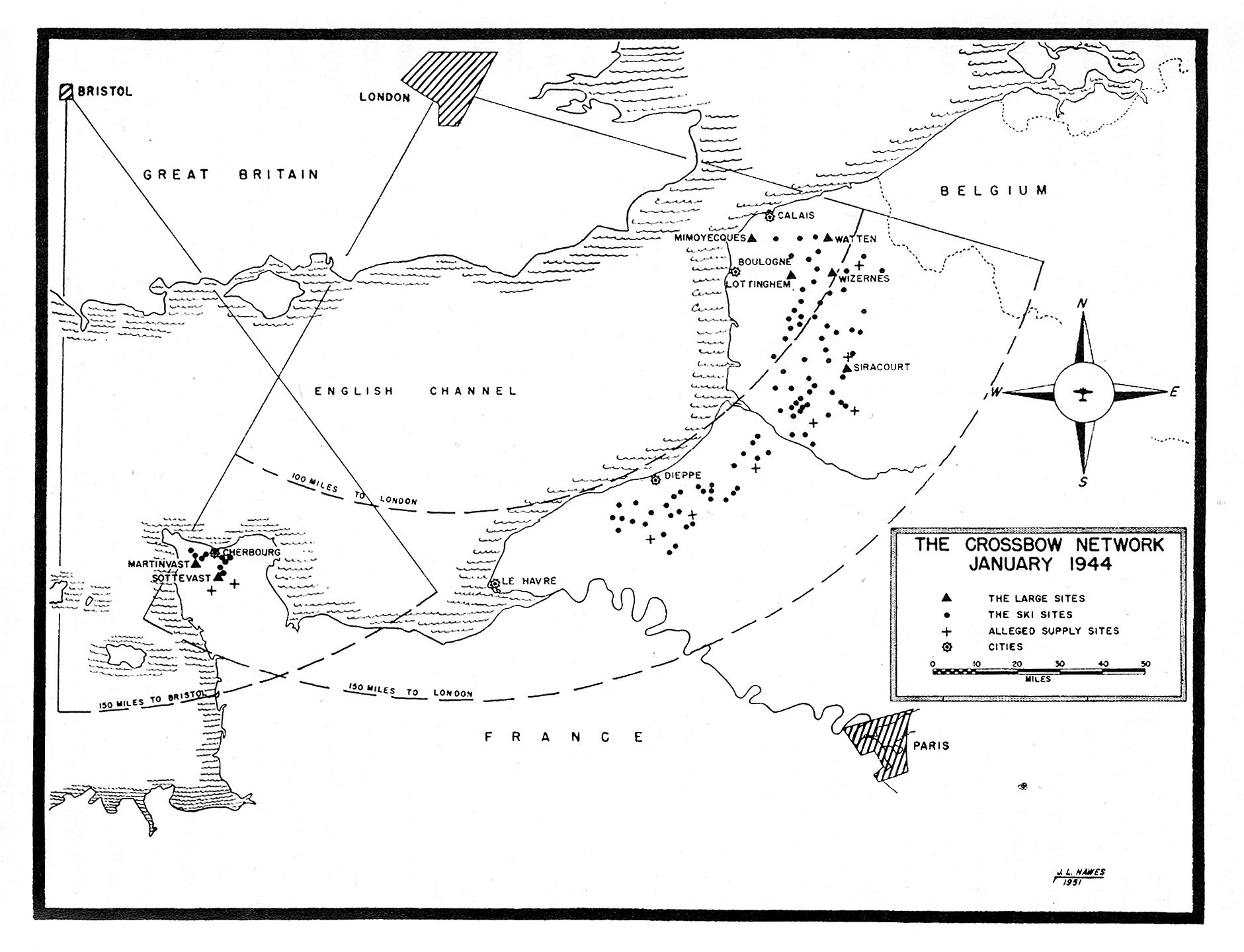
The first lesson of CROSSBOW is that fixed infrastructure is easy to destroy and that adversaries do not stay fixed for long. British intelligence had received “reliable and relatively full information” on German long-range weapons as early as November 1939 two months into the war.2 It wasn’t till four years later, in 1943, that Allied photo-reconnaissance first identified the German “ski-sites” in northwestern France, named for the curious shape of one of the buildings on each launcher complex.3 Within weeks, the U.S. Strategic Bombing Survey would later report, ninety-six sites had been cataloged, and a sustained bombing offensive against them had begun. Of these ninety-six sites, no more than two were ever used operationally.4 On its face, this was a complete victory. Allied airpower had, by direct attack, denied the Luftwaffe permanent launching infrastructure before the V-1 campaign could begin.5
The Germans drew the obvious conclusion. The Survey noted that during the period of the Allied counterattack, the Germans developed methods for launching V-1s and V-2s from small, inconspicuous sites that required minimal engineering work and freed firing operations from the elaborate sites originally planned.6 These were the “modified sites”, first photographed on April 26, 1944, which were well camouflaged, dependent largely on prefabricated buildings, of which more than sixty had been identified before the first V-1 was launched in England in mid-June.7 The “modified sites”, the Survey concluded plainly, were “heavily bombed without marked effect on the scale of effort”.8
Kipphut, working from the same primary documents, formalizes the consequence as a two-phase division of the campaign. CROSSBOW I, running from April 1943 to early June 1944, was a qualified success: it delayed the start of V-weapon attacks by an estimated three to six months and so allowed OVERLORD to proceed before the full weight of Hitler’s missile arsenal could be brought to bear.9 Eisenhower himself wrote that had the Germans perfected the weapons six months earlier, the invasion of Europe would have been “exceedingly difficult, perhaps impossible”, and that a sustained V-weapons attack on the Portsmouth-Southampton embarkation area could have caused OVERLORD to be written off entirely.10 CROSSBOW II, however, the campaign to suppress launches once they had begun, was in Kipphut’s assessment a “dismal failure”; despite thousands of sorties against more than 250 targets in the critical summer of 1944, the Germans averaged just over 80 launches per day, and German sources contend they never failed to launch on account of either Allied air attack or weapons shortages.11
A World War II map shows the two areas where the Germans were setting up their secret “V” weapons to bombard England (right, center). These are the areas in which the Royal Air Force and 8th Air Force heavy bombers concentrated their bombs in order to knock out the weapons — part of the pre-invasion plan. This event was given the operational code name Crossbow during World War II. The grouping (left, center) is the site of the Invasion of Normandy.
The implications for Allied resource allocation were severe. Between the beginning of May 1943 and the end of March 1944, nearly 40% of Allied reconnaissance sorties over Europe were devoted to supporting CROSSBOW, with those planes taking more than 1.25 million photographs and service members preparing more than 4 million prints for study and analysis.12 Over the course of the campaign, U.S. and British air forces flew approximately 68,913 sorties against CROSSBOW targets and dropped roughly 136,789 tons of munitions.13 During the thirteen-month peak period from August 1943 to August 1944, the joint strategic-bomber effort absorbed 13.7% of its sorties and 15.5% of its tonnage on V-weapon targets.14 By the autumn of 1944 and into the winter, RAF Fighter Command devoted 79% of its offensive sorties to CROSSBOW.15 Eisenhower, faced with the apparent failure of CROSSBOW II to suppress the launches that began on D-Day plus seven, directed that V-weapon suppression take priority over all other Allied air operations, including direct support to the Normandy lodgment and the Combined Bomber Offensive.16
That bombing, which failed against the dispersed V-2 launch sites, was almost overdetermined. The Survey concluded bluntly that after the initial Allied success, the firing sites for V-2s were small, well camouflaged, and made poor targets for bombers.17 No comparable problem arises with a factory complex. The V-2 launcher, like the modified V-1 ramp, was small, mobile, and concealable, and the strategic-bomber instrument was designed and procured to flatten large, stationary targets. In the end, Kipphut notes, silencing the V-weapons required ground forces to overrun the launch sites.18
- Mark E. Kipphut, “Crossbow and Gulf War Counter-Scud Efforts: Lessons from History”, Counterproliferation Paper No. 15 (Maxwell AFB, AL: USAF Counterproliferation Center, February 2003), 1–3. Originally published in Airpower Journal, Winter 1996.
- Wesley Frank Craven and James Lea Cate, eds., The Army Air Forces in World War II, vol. 3, Europe: Argument to V-E Day: January 1944 to May 1945 (Chicago: University of Chicago Press, 1951), 89.
- United States Strategic Bombing Survey, V-Weapons (Crossbow) Campaign, Military Analysis Division, 2nd ed. (Washington, D.C., January 1947), 5–6.
- Ibid, 6.
- Craven and Cate, eds., have a full chapter on the operational history of CROSSBOW, 84-106.
- Ibid, 2.
- Ibid, 6.
- Ibid, 6.
- Kipphut, 7–8.
- Dwight Eisenhower, Crusade in Europe (New York: Doubleday, 1948), 260, quoted in Kipphut, 5.
- Kipphut, “Crossbow and Gulf War Counter-Scud Efforts”, 8, citing Phillip Henshall, Hitler’s Rocket Sites (New York: St. Martin’s Press, 1985), 187.
- Craven and Cate, eds., 89.
- Kipphut, “Crossbow and Gulf War Counter-Scud Efforts”, 8
- USSBS, “V-Weapons (Crossbow) Campaign”, 28.
- USSBS, “V-Weapons (Crossbow) Campaign, 28”; Kipphut, 8–9.
- Kipphut, 5.
- USSBS, “V-Weapons (Crossbow) Campaign”, 7
- Kipphut, 10.
Canada’s imaginary “immigration consensus”
An informative post from earlier this year, showing how the much-talked-about “immigration consensus” was never any more than an expression of Laurentian Elite luxury belief:

Ever since immigration became a hot issue, it has become fashionable to say that “Trudeau broke Canada’s immigration consensus”. But this “consensus” was based on a false narrative that is easily disproved with data.
UNHEARD VOICES
Until about 10 years ago, I had also believed that there was an “immigration consensus” in Canada. But once my life in Canada had settled down enough for me to have the mental space to dabble in public debates online, I came across an opposing view. An Indian immigrant who was then working as editor for an English language community newspaper in the GTA wrote often about opinion polls showing a fairly high level of opposition to high immigration. His name is Pradip Rodrigues. I corresponded with him via email, and later we became friends.
What struck me at the time was that the lone voice talking about these polls was himself an immigrant. Some years later, I came across an article in [the] Vancouver Sun by journalist Douglas Todd, saying that Indo-Canadians in the Vancouver region were unhappy with the large influx of international students [from] India. Given how much value the Progressives (which category most of the MSM is a part of) put on “lived experience”, the reporting by Pradip and Mr. Todd should have attracted urgent attention.
But because the mess being created by excessive immigration hadn’t reached crisis levels by then, these voices went unheard. At best, they were preaching to the choir, and at worst, they were accused of racism (or, in the case of Pradip, “internalized racism”). Smart people see beforehand the problems that are coming and take steps to avert them. People of average intelligence attend to problems after they have occurred. Fools keep denying that problems have occurred, and it always takes a full-blown crisis to get them to accept that they have a problem on their hands – at which point they segue effortlessly to blaming others for the problems. We see this in many policy areas in Canada, and immigration is one of the most salient examples of this shortcoming in Canadian society.
RAISON D’ETRE
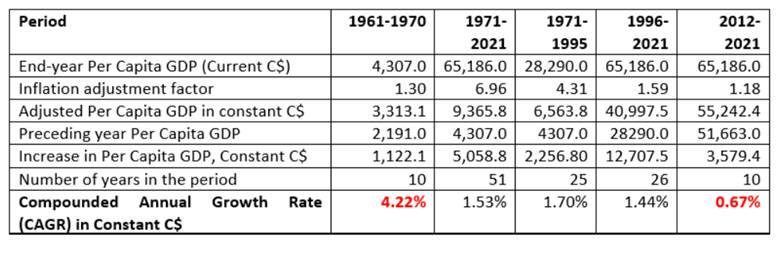
No politician will ever tire of saying that “Canada needs immigration to boost our economy”. An ancillary statement is that “immigrants pay taxes that support Canada’s social programs”. But as I showed in my article “Immigration Does NOT Increase Prosperity“, the inflation-adjusted compounded average growth rate (CAGR) in per capita GDP fell by a precipitous 84% between 1970 and 2021, ending up at an anemic 0.67% in the decade ending in 2021:
Clearly, the capacity of Canadians – long-time residents and newcomers alike – to “boost Canada’s economy” and “pay (more) taxes that support the social programs” has been eroded almost to zero. It is worth pondering how, in spite of clear signs evidenced by data, the exact opposite narrative could prevail over such a long period, and how so many people subscribed to it. This is as if Abraham Lincoln’s sage statement that “You can fool some people all the time, or all the people for some time, but not all the people all the time” was held in abeyance in Canada from 1970 onwards – or is that the case?
Not all of the people, but enough of the boomer generation who were raised with the constant drumbeat of propaganda from the Liberals — Canada’s “Natural Governing Party”, as they liked to refer to themselves — and now that most of them are comfortably retired, they seen no reason to rock the boat, even when their own children and grandchildren tell them how bad Canada has become since their prime.
“Do not expect a quick fix or some magical solution”
On the social media site formerly known as Twitter, Eve Chipiuk points out that it’ll take more to get our governments out of the habit of kicking the can down the road than just change of faces at the top:

Parliament Hill in Ottawa.
Photo by S Nameirakpam via Wikimedia Commons.
No one said it would be easy. Nothing worth fighting for ever is.
Fighting powerful institutions is what I have done my entire life. It is not easy, but it is worth it because you know what is at stake.
This is also not a new problem. History has repeated this pattern before. “The first panacea for a mismanaged nation is inflation of the currency; the second is war. Both bring a temporary prosperity; both bring a permanent ruin. But both are the refuge of political and economic opportunists.” — Ernest Hemingway
Most do not want to give up an inch of their power or control because many have built their identity, influence, and livelihoods around those systems. Some have convinced the public that they know what is best for everyone else better than citizens know for themselves. Yet all you have to do is look around to see the lie. We are not better when people are divided, angry, fearful, and distracted, turning on each other instead of asking harder questions about the institutions and incentives driving the problems in the first place.
And if good people stop standing up, asking questions, and pushing back when something is wrong, those institutions only become more powerful and less accountable. That has been happening for a long time, which is exactly why many systems are so entrenched and disconnected from the people they are supposed to serve.
History repeatedly shows that when governments and institutions avoid addressing deeper structural problems, they rely on temporary measures, slogans, fear, distractions, and promises of quick fixes to maintain stability and public support. But eventually reality catches up, and and ordinary people bear the cost.
So do not expect a quick fix or some magical solution. Democracy, accountability, and freedom require informed citizens willing to stay engaged, stay principled, ask difficult questions, and do the hard work necessary to protect them.
Because in the end, what is more important to fight for than freedom, accountability, and the society we leave behind for future generations?
Indonesian M95/51 Mannlicher Carbine & Short Rifle Converted to .303 British
Forgotten Weapons
Published 27 Dec 2025When Indonesia won its independence in 1949, its military had a real mess of different equipment. The SMLE was adopted as the first standard rifle, but these were in short supply and a lot of Arisakas and Dutch Mannlichers were also in the country’s possession. Looking for a weapon for rural police using the now-standard .303 British cartridge, the Indonesian government decided to revisit a program to convert 6.5mm M95 rifles and carbines to .303 — something initially done with Australian help in 1941.
With Australian advisors from Lithgow, the Indonesian PSM factory gear conversions in 1951, and continued them into early 1955. In total, 13,999 M95/51 conversions were made, 9,904 of them carbines and 4,905 short rifles. They were made by reboring the original 6.5mm barrels to .303 and reaming the chambers out (although this does result in a slight double shoulder to fired cases). The carbines (with 19″ barrels) were fitted with a variety of muzzle brakes, and made for an as-yet unidentified pattern of bayonet. The short rifles (with 26″ barrels) were given new 2-position rear notch sights, but left using standard Dutch M95 bayonets.
The guns were used in police and possibly military training roles until removed from service in 1961. A batch was sold as surplus in 1962 to InterArms, and another batch was found in the late 1970s and sold to Odin in the early 1980s. The InterArms guns tend to be in better condition, and have intact Indonesian markings, where the Odin guns are generally rougher and have the government property marks ground off.
(more…)
QotD: History doesn’t repeat, but sometimes it rhymes
Let me just quote a couple of passages that might be written with very slight alterations today:
My object is to relate all the follies of the day to their common origin. The committers of folly, the authors of the rubbish which I commit to my symbolical flames, have not, in all probability, the wit to understand any general principles of puerility. It needs reason to understand that the source of the trouble is a general flight from reason and from the legacy of civilised opinion in which past reason has been embodied. The world increasingly substitutes fisticuffs for argument, flags and symbols for facts and realities, belief in the omnipotence of the sub-conscious for faith in self-determination of the will by reason guided … it teaches its children that impulse is divine. Consequently it has no standards.
Brown asked a question nearly a century ago now that has surely occurred to many of us:
Why should all acquired knowledge, all human experience, all civilisation be cast aside? It needs sifting, that is acknowledged; but why scrap it? The passion for such root-and-branch abolition invades the arts as well as the schools.
Later, he provides the sketch of an explanation for the radical iconoclasm that he sees in his own time:
It is a commonplace that the person most easy to deceive is the recipient of a higher education that has failed to be high enough. The schooling system of Europe and America had just reached the stage at which it was creating the pseudo-intellectual in very considerable numbers.
This seems more than ever applicable now: the contemporary pullers-down of statues are educated enough to formulate simplistic generalisations, but not educated enough to appreciate the complexities and ironies of existence.
Theodore Dalrymple, “Sufficiently Educated to Embrace the Simplistic”, The Iconoclast, 2020-09-24.
May 15, 2026
Sweden – “We’re actually trying to get rid of screens as much as possible”
Back in the early days of the internet, a lot of us were enthusiastic about schools adopting digital technology, as it seemed to be the way of the future for kids to be fully immersed in the online world as part of their education. Reality has harshed the mellow for a lot of us misguided techno-fossils, as there seems to be a very strong correlation between childrens’ (computer) screen use and lower educational achievements. Sweden is trying to reverse this pattern:
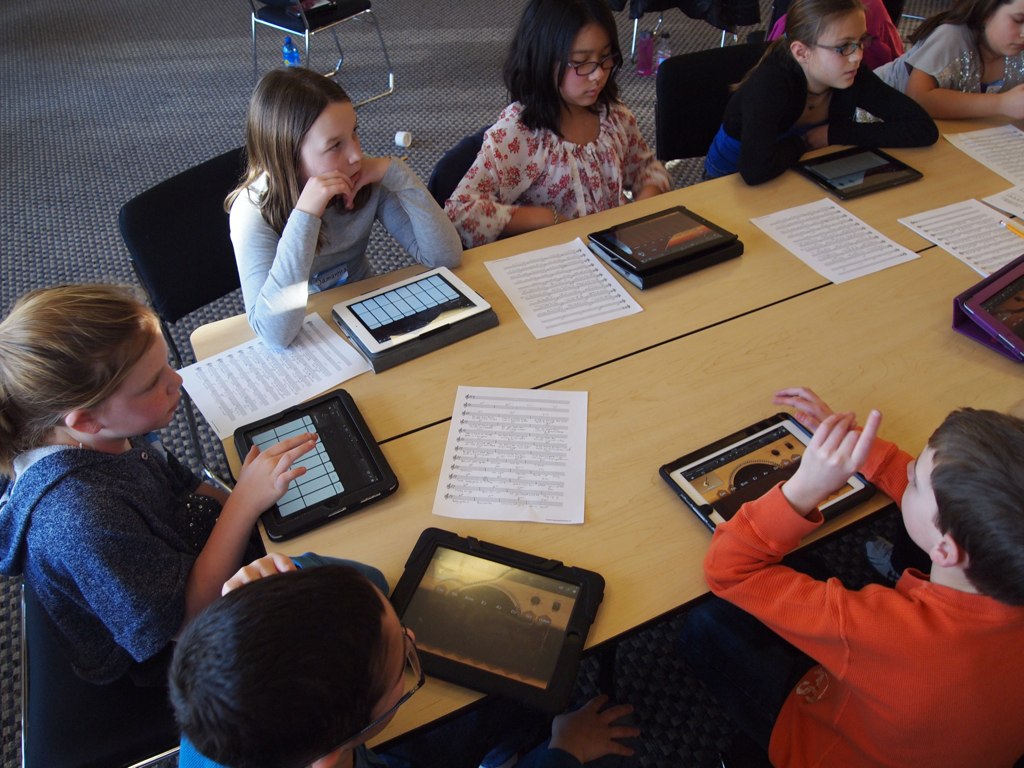
“student_ipad_school – 038” by flickingerbrad is licensed under CC BY 2.0 
 .
.
According to primary school teachers, many children shamble through the doors today zombified and crying out for their iPads.
Their parents, lined at the school gates, barely say goodbye, what with the hypnotic drivel spewing from their iPhones.
The kids greet their teachers with the YouTube vernacular: “Hi, guys!” When handed a book, they swipe and tear at the unfamiliar paper. They greet each other with: “Welcome to my channel!”
Finally, when they leave, they don’t say goodbye. They say: “Remember to like and subscribe!”
I’m not taking the piss. A friend of mine, tasked with civilising these screen-addled sprogs, confirms what one reads in the newspapers. These chirpy little addicts ransack classrooms crying out for more iPad with the fanatical calculation of tweaking crackheads.
Wherever you may sit on the political spectrum, I hope you agree that a functioning democracy might one day need citizens who can read and write, and who can concentrate beyond a ten-second video clip.
At least one functioning democracy agrees. Recently, Swedish politicians reversed their digital-first obsession by announcing a return to paper and pen. The sensible Swedes have gone analogue. Why? Literacy rates in the cosy Nordic social democracy have collapsed.
“We’re actually trying to get rid of screens as much as possible,” said the Liberal party’s Joar Forsell.
Since 2025, pre-schools are no longer obliged to employ digital ‘tools’ and teachers no longer dole out tablets to kids under two. According to Mr Forsell, reading real books on paper does what schools have for decades avoided: it teaches kids to think. Tablets for toddlers is now från skärm till pärm (from screen to paper.)
High school students now drag their textbooks and notepads to classrooms stripped of screens.
The evidence piles up. Researchers found that hyper-digital tablets-for-toddlers eroded basic skills. Writing by hand, Swedish students learned more and retained more. Wiping away digital mandates, Swedish lawmakers promise more handwriting and books, fewer devices, and quiet reading time.
But it’s not just the Swedes.
Psychologists Pam A. Mueller (Princeton University) and Daniel M. Oppenheimer (UCLA) found handwriting beats typing — at least if learning something is your thing. Students who pecked down verbatim notes on their laptops wrote twice as many words as their pen-and-paper classmates. Who learned and remembered more? Take a guess.
How could this be? Writing by hand is slower. You’re forced to process and reframe information in your own words — the art of thinking. Screens hamper this essential process. When we write by hand, there’s a greater connection between the brain and the finger. This act, they say, cements the information in one’s brain. Essentially, the typists transcribed much. They absorbed little. It’s like paying someone else to have sex for you.
Researchers claim that writing on paper improves everything from recalling a random series of words to grasping and understanding complicated or conceptual ideas. Writing by hand ties down the balloons of motor, visual, and sensory memory.
When studying from their notes, the longhand writers did better on tests. This persisted even when the typists were told to rephrase the material into their own words. They didn’t absorb the material. They parroted it, much like ChatGPT doesn’t know that flipping a glass spills water. It merely knows that the words “flip” and “glass of water” are statistically related to the word “spill”.
And yet, British schools continue marching to the drumbeat of post-literate doom.
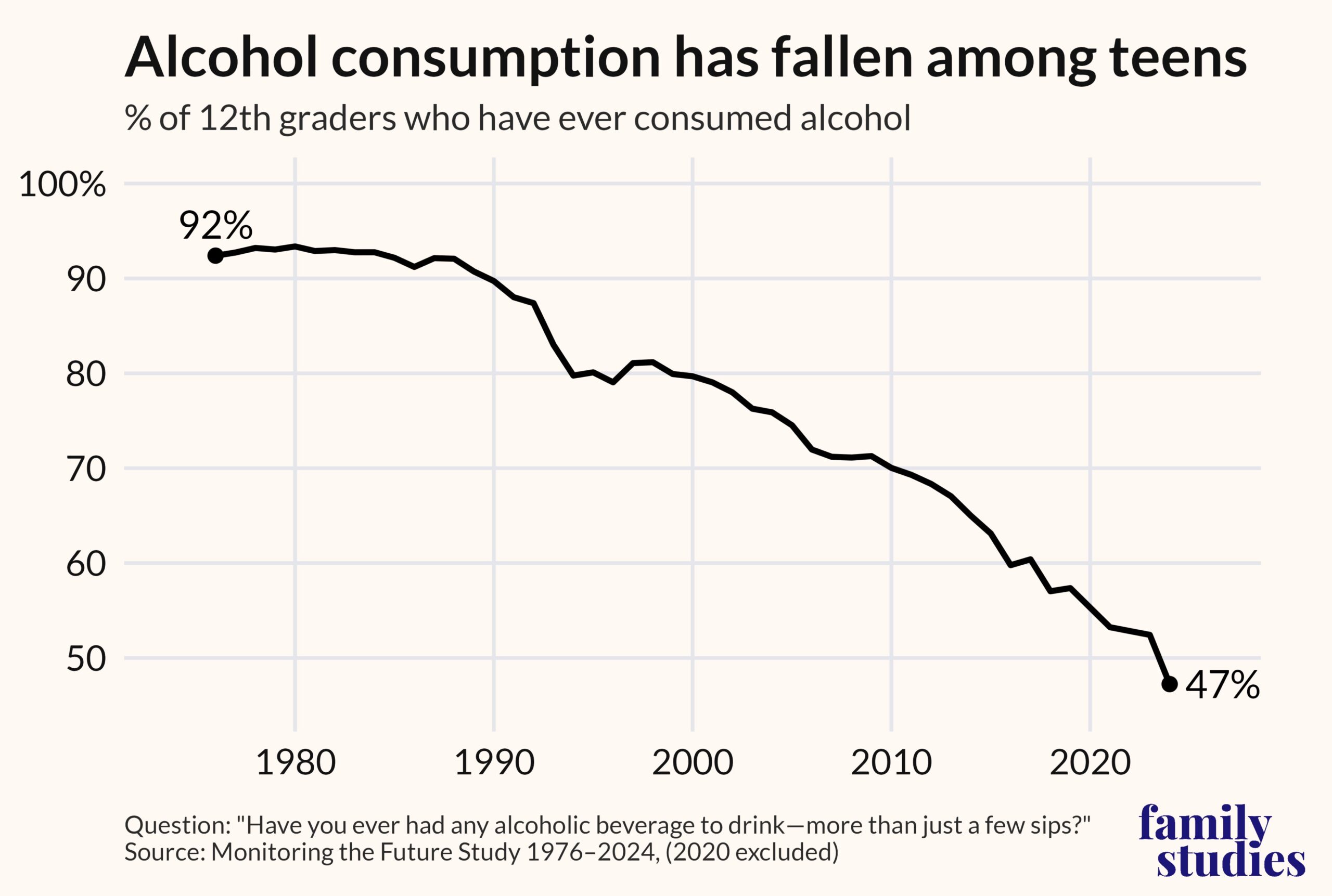
The good news: kids are drinking a lot less! But there’s also bad news …
The good news seemed to be that teenage drinking was dropping fast. Fewer underage drinkers, happier teenagers, right? Not so fast …
⚡️The deeper signal is youth risk did not disappear.
It migrated inward.
Teen drinking fell because the old physical world of adolescence got dismantled. Alcohol belonged to a social ecosystem: unsupervised time, cars, parties, local jobs, malls, basements, boredom, flirting, older siblings, house gatherings, and the chaotic peer world where teenagers learned who they were by colliding with other people in real space.
That ecosystem was replaced by phones, surveillance, parental tracking, algorithmic entertainment, social anxiety, online status games, and a much thinner physical commons.
So the surface looks healthier. Fewer kids drinking. Fewer kids using weed. Fewer kids doing reckless things in public.
The hidden layer looks worse. The young are less reckless because they are less socially embodied. Less initiation. Less unsupervised friction. Less courage-building. Less embarrassment and recovery. Less real dating. Less independence. Less contact with the physical world before adulthood demands it.
The old teenage world produced damage, stupidity, alcohol abuse, pregnancy risk, fights, accidents, and bad decisions. No need to romanticize it. But it also produced social reps. It forced young people through discomfort. It made them practice attraction, rejection, conflict, reputation, risk, repair, and status in the open.
The new world suppresses visible risk while increasing invisible fragility.
That is the trade.
A teenager can avoid drinking, avoid parties, avoid sex, avoid driving, avoid real confrontation, avoid rejection, avoid shame, avoid danger, and still arrive at 23 emotionally underbuilt. Cleaner behavior does not automatically mean stronger formation.
This is why the marriage chart and the teen drinking chart are the same story at different stages. People are not suddenly failing to pair in adulthood. The whole pathway into embodied adulthood has been slowing for years before marriage even becomes the question.
The real truth: society solved part of the teen vice problem by shrinking the arena where teenagers become adults.
It took away the dangerous commons and replaced it with controlled isolation.
The result is safer kids with weaker initiation into real life.
“One of the most iconic pictures of WWII” – the seen and the unseen, USN edition
CDR Salamander posts an iconic US Navy photo from late 1944, showing the unparalleled naval might of the American efforts against Japan. But, as with Bastiat’s famous economic essay, there are the obvious things we see and the important but unseen things that matter just as much:
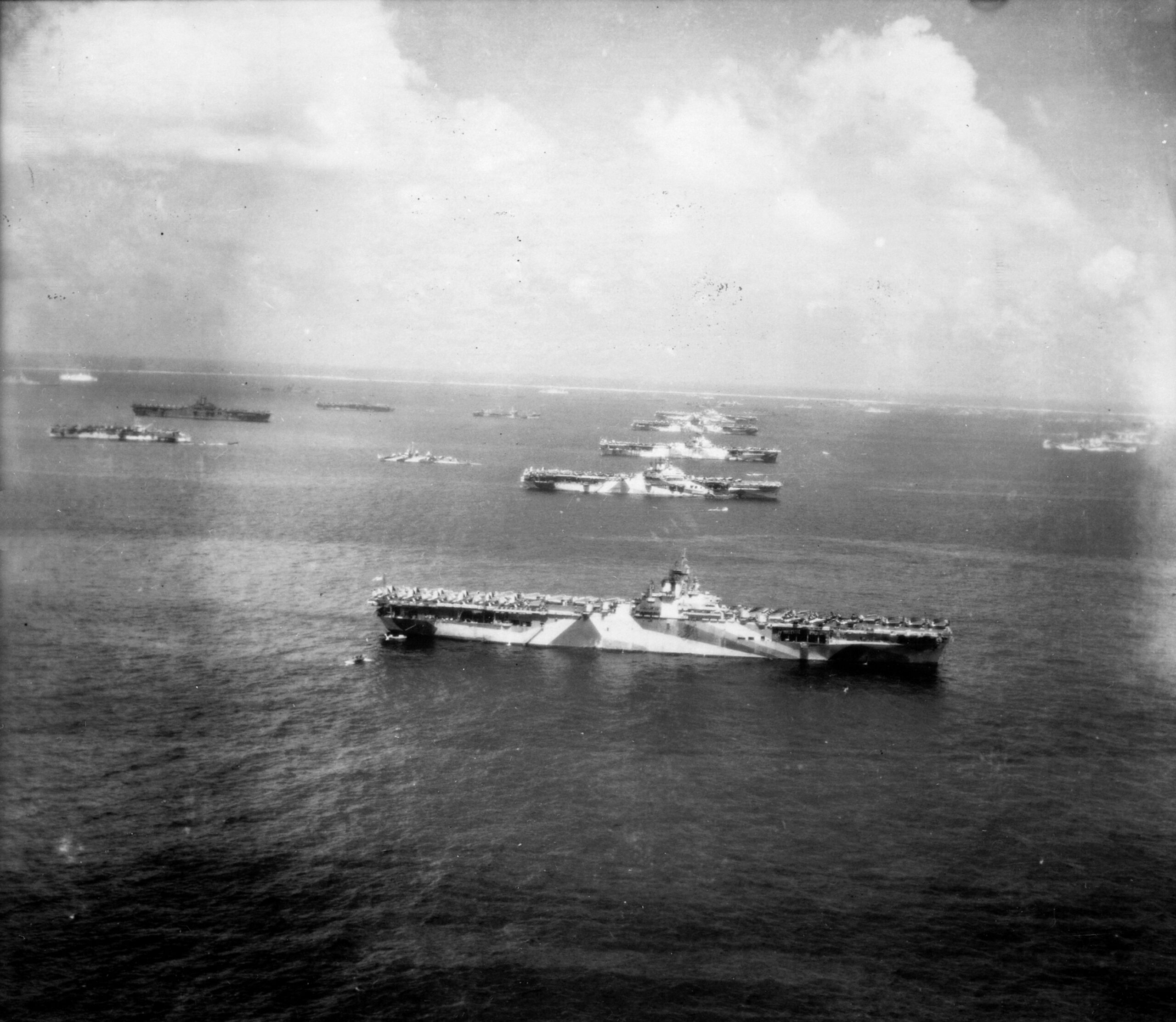
Murderers’ Row. Ulithi anchorage, December 8th, 1944. Just three years after the attack on Pearl Harbor.
One of the most iconic pictures of WWII.
The carriers are (from front to back): USS Wasp (CV-18), USS Yorktown (CV-10), USS Hornet (CV-12), USS Hancock (CV-19) and USS Ticonderoga (CV-14).
The oldest of those ships, Yorktown, was only 19 months old. The youngest, Hancock, was commissioned only a little under eight months earlier. All were laid down and took from a bit under three to a bit under four years to build.
Just a year prior, the US Navy was so short of aircraft carriers, it had to borrow a carrier from the Royal Navy.
At first glance, it appears to be a flex of American naval power at flood tide — the aircraft carrier’s unassailable invincibility manifest — and it is. However, when you dig deeper, it has a more important story. It gives a warning. It informs us today, if we are willing to listen.
It isn’t about the power of being the world’s greatest shipbuider, that we were. It isn’t about an unequalled ability to project national will across the Pacific like no nation ever has in human history, which it is.
No. That isn’t what it tells us that is most important.
As we have done more than once over the last two decades, we’re taking a holder of a front row seat on the Front Porch and CDR Salamander Plank Owner Sid’s comments, in this case from yesterday, and bringing it to a standalone post.
Most of this post is his. The insight certainly is.
The actual story this picture tells is much more sobering, right there in plain sight, but you can’t see it.
The reality is that on the day this picture was taken, the Fast Carrier Task Force (TF 38/58) was down an entire Task Group from where it started two months earlier.
USS Franklin (CV-13) was severely damaged on 27 OCT by kamikaze and had to return [to] CONUS for repairs.
USS Belleau Wood (CVL-24) was severely damaged in the same attack.
USS Princeton (CVL-23) was sunk on 24 OCT by a Judy dive bomber.
USS Essex (CV-9) had a devastating hit by a kamikaze on 24 NOV followed by a disabling machinery casualty requiring a trip back to CONUS for repairs.
USS Enterprise (CV-6) departed a few days earlier for repairs in Pearl Harbor.
All the carriers in this picture had been damaged to varying degrees. Damage that today would require a trip to the yard to fix, like the absent Enterprise and Essex.
For example Ticonderoga (fourth Essex in the line from the bottom) would take damage to her radar waveguides in January. That could not be repaired forward and she would have to return to Bremerton as well.
“This is what luxury-belief failure looks like”
L. Wayne Mathison reacts to a pair of smarmy politicians congratulating one another in the House of Commons to the echoes of the trained seals clapping in the background:
This photo has the stink of Ottawa self-congratulation all over it.
Two suited insiders shaking hands while the room applauds, as if Canadians are supposed to mistake ceremony for competence. The whole scene screams managed success: the smiles, the poppies, the polished wood, the clapping loyalists in the background. Very official. Very staged. Very pleased with itself.
And that is the problem.
This is what luxury-belief failure looks like in picture form: people with secure salaries, protected pensions, communications teams, and zero personal exposure to the damage their policies create, congratulating each other for “building Canada” while ordinary Canadians are buried under housing costs, taxes, debt, inflation, weak productivity, and a government that thinks another announcement is the same thing as a result.
The photo says: “We are proud of what we’ve done.”
The Canadians with a brain say: “That’s exactly the problem.”

For over a decade now, the Canadian government has devoutly believed that appearances matter far more than reality, and conducts all of its operations with PR at the very tip-top of the priority list. If it will look really good on camera, it’s much more likely to get done … for Ottawa values of “done”. That usually means a big flashy announcement with whatever quick background props can be conjured up, followed by little or no actual work. Often the same thing will be re-announced multiple times in different places over an extended period of time, still with little else taking place. This is how Canada’s lost decade (and counting) has gone. And Liberal boomer voters love every performative second of it.
Bloodier Than Verdun? Winter Battles on the Eastern Front 1915
The Great War
Published 16 Jan 2026The first four months of 1915 witnessed a titanic struggle on the Eastern Front, in East Prussia, the Carpathians, Bukovina, and at Przemysl. Both sides suffered staggering casualties that surpass those of the Somme or Verdun the following year. Ironically, the Austro-Hungarians lost far more men trying to save Przemysl than there were in the fortress.
(more…)
QotD: Rediscovering Cræft
So why am I telling you about a book on how to do things by hand that you can do far more quickly and efficiently with a machine?
Well.
Langlands frames his book around the concept of cræft, which (as you can probably guess from that æsc) is the Old English origin of our modern “craft”. The ancestral word is richer and more complicated than the modern one, though, pointing to far more than handmade tchotchkes and beer with too much hops. The Dictionary of Old English explains:
“Skill” may be the single most useful translation for cræft, but the senses of the word reach out to “strength”, “resources”, “virtue”, and other meanings in such a way that it is often not possible to assign an occurrence to one sense in [modern English] without arbitrariness and loss of semantic richness.
Like the modern “craft”, it does convey a sense of ability, especially when it comes to one’s livelihood: the students in Ælfric’s Colloquy use cræft as well as weorc when discussing what they do all day. But it can also mean might or power: when the Old English Orosius tells us that the strength of the Medes failed them in battle, for example, it’s Meða cræft that gefeoll,1 and when Judah Maccabee’s foes join the fray, they begin to fight mid cræfte. Of course, there are semantic connections among these varied meanings: the ideas of physical strength and physical skill blend into one another at the edges, and a word for a thing you’re good at doing with your hands can also be used for a thing you’re good at doing with your mind. (After all, we still refer to writing as a “craft”.) And ideally you’re fairly talented at whatever set of things provide your livelihood! So we can say that Old English cræft broadly means something like “a person’s ability to bring his will to bear on the world, and his skill in doing so”.
There’s one more meaning, though, and it appears more or less exclusively in the writings of Alfred the Great: cræft as spiritual or mental excellence.2 Anglo-Saxon scholars had mostly used cræft as a way of rendering Latin ars, but when King Alfred translated Boethius into Old English he used cræft for Latin virtus, virtue as in moral excellence.3 A contemporary reader might be tempted to see this as merely an extension of the “mental skill” sense of the word (a virtuous person is one who is good at being good), but that would be misleading; the general meaning of cræft leaves the word freighted with powerful and inescapably physical implications. (Remember, too, that before the Reformation the Christian image of spiritual excellence universally emphasized asceticism, which necessarily involves the body a great deal.) Cræft as virtue is not an internal moral condition, it’s an internal activity, a kind of doing or making of the soul.
Or, as Langlands glosses his title, cræft is “a hand-eye-head-heart-body coordination that furnishes us with a meaningful understanding of the materiality of our world”.
Langlands is now a professor of archaeology at Swansea University, but he got his professional start as a circuit digger, the kind of “hired trowel” real estate developers pay to quickly catalog all the ancient remains they’re about to turn into the foundation of a new Tesco. It was not a fulfilling job — “crude and expedient” is the line he uses for his commercial excavations — and he was beginning to grow disillusioned with archaeology as a field. So naturally he did what any sensible person would do if he didn’t like his job: he applied to be on a TV show. This was in 2003, and BBC Two was advertising for people to spend a year in 1620, living on and running a historical farm using reconstructed period techniques and equipment. Langlands got the gig (along with Ruth Goodman and another archaeologist whose book I haven’t read), and had a wild year in the Stuart era and then a few more in the Victorian and Edwardian periods.
The shift from examining the archaeological record to experiencing how it was made was an eye-opener, and the success of that first program took him by surprise: “I’d often wondered to myself who on earth would want to watch a bunch of cranky, oddball re-enactors and archaeologists bimbling around in costume, pretending to be in the past”, he writes. “But I didn’t care too much because I was spending nearly every single hour of every day immersed in historical farming. I was tending, ploughing, scything, chopping, sweeping, hedging, sowing, walling, slicing, chiselling, digging, sharpening, thatching, shoveling; the list was almost endless.” And the longer he spent doing all these things (he was on three more shows), the more he realized that the skills, and the knowledge they required, were slipping away.
True cræft, in Langlands’s version, is a combination of know-how and make-do. It’s when you live on the Outer Hebrides and don’t have any trees, so you use whatever driftwood washes up as the ridgebeam for your roof. No timber for the rafters? No problem — a sufficiently strong rope, drawn tightly enough over the ridgeline and secured on both sides, makes something like a giant net on which you can lay your thatch. The straw left in the fields after harvest will do nicely for making both rope and thatch, but if (say) it’s the early twentieth century and you’ve abandoned cereal crops because cheap North American grain knocked the bottom out of the market, then you can make rope from heather and thatch with bunches of bracken. (On the Danish coast, they use seaweed.)
Or it’s when you’re an early Anglo-Saxon who wants to boil some water. A few generations ago, some Romano-Briton on the same spot would simply have bought a beautifully thrown pot from any one of a dozen proto-industrial centers across the Empire, but these days that production has slowed or stopped and the trade networks that would’ve brought them to you are kaput anyway. All you’ve got is some lousy local clay, too weathered to be easily worked. You don’t even have the fuel to fire it hot. So you add organic tempers like grass or chaff (or even dung) to make the clay more plastic, you shape it by hand without a wheel, and when you fire your pot the chaff burns away and leaves tiny voids in the ceramic. Your pot is soft, it’s brittle, it’s kind of lumpy, and fifteen hundred years from now Bryan Ward-Perkins is going to point to it as evidence that civilization collapsed when Rome fell — but it’s still a pot, and it still holds water. You’ve made ingenious use of the world around you to solve your problem. You are, in a word, cræfty.
So when Langlands says cræft, he means the way people behave under conditions of scarcity and resource constraint. And when you’re in that kind of situation, of course you have to be intimately familiar with all your materials — you have to squeeze every last drop of performance out of them! And while Langlands is interested in preindustrial techniques, this isn’t just a matter for drystone wallers and skep-making beekeepers; you can also be cræfty with machines or computers. Cræft is the Havana mechanics who keep 1950s cars running on an income of $40/month, or the engineers who fit all the computer code for the Apollo Guidance Computer into 80 kilobytes. It’s the defining feature of the Real Programmer who “tuck[ed] a pattern matching program into a few hundred bytes of unused memory in a Voyager spacecraft that searched for, located, and photographed a new moon of Jupiter”. We rightly admire these cræfty solutions for their elegance and their makers’ skills, but aside from a few weird hobbyists we don’t imitate them. You don’t spend days hauling rocks and building a wall to keep your sheep in when you have wire fencing. You don’t learn the skies so you can time your haymaking for clement weather when you can just wrap your machine-mown grass in plastic and make silage instead. And you don’t work in unreal mode when you have 64-bit processor. Technological advances have freed up our time precisely because they’ve freed us from the need for clever, thoughtful, material-aware solutions to our problems. No one is cræfty in the midst of abundance, because they don’t have to be.
Your reaction to that last paragraph reveals where you fall in the Wizard/Prophet divide: are you pumping your fist for humanity, or are you a little sad that a kind of mastery has been lost? Is our ability to simply throw more resources at the problem and go on with our day a blessed liberation from the bonds of brute necessity, or is it a tragic separation of our thinking, making, doing selves from our world? Are our practical limitations something to be defeated or innovated around, or are they something to embrace because they are, in some sense, good for us?
Langlands is, unsurprisingly, well over on the Prophet side. He warns that “while some machines are clever, the net result of our using them is that we become lazy, stupid, desensitized, and disengaged” — it’s not that a thing made by hand is better as an object than its mass-produced counterpart (although in some cases it is, and a stone wall does last longer than a wire fence), it’s that the making changes the maker. And while he likes to warn that climate change or Peak Oil or the fragility of international supply chains make our uncræftiness a serious survival risk (think of those poor imported-pot-dependent Britons when Rome withdrew!), that’s not really the point. Even if our technological society never falters — even if we soar to greater and greater heights of prosperity and can afford to automate and mechanize more and more of our interface with the world — Langlands argues that would just mean more missing out.
Jane Psmith, “REVIEW: Cræft, by Alexander Langlands”, Mr. and Mrs. Psmith’s Bookshelf, 2025-03-24.
- As in modern German and Dutch, Old English used the ge– prefix for past participles.
- For more on Old English cræft, especially in the Alfredian corpus, see here. Langlands quotes from the late Peter Clemoes, who wrote extensively on the topic, but no obliging Kazakh has put that online for me.
- This is a fascinating word choice, because virtus is also a complicated and interesting word; it’s derived from the Latin word for man, vir, and means things like “force” but also “manliness” or “bravery” (like Greek ἀνδρεία). In the classical world, it came to mean something like moral worth or excellence in a particularly masculine way, and though it was adopted as a western Christian term for something like spiritual ἀρετή, it retained some of those echoes.
May 14, 2026
“Trust is the most scarce thing in the media landscape right now”
As with a lot of cultural upheavals, I’m a bit behind the curve on this one, so let Ted Gioia give you the state of play in “Rick Beato Versus the NY Times“:

Fifteen days ago, the New York Times published its list of the 30 greatest living American songwriters. Since then, all hell has broken loose in the music world. And in the last 48 hours, that Hades just got a lot hotter.
I’d been one of the 250 “music insiders” surveyed by the Times for the article — so the day after the list was published I shared my ballot here.
I was unhappy with the results, as were many other music fans. But that might have been the end of the story. Surveys are always a bit dodgy — but what can you do about it?
Then I took time to learn about the Times methodology and was even more dismayed. In fact, I was miffed.
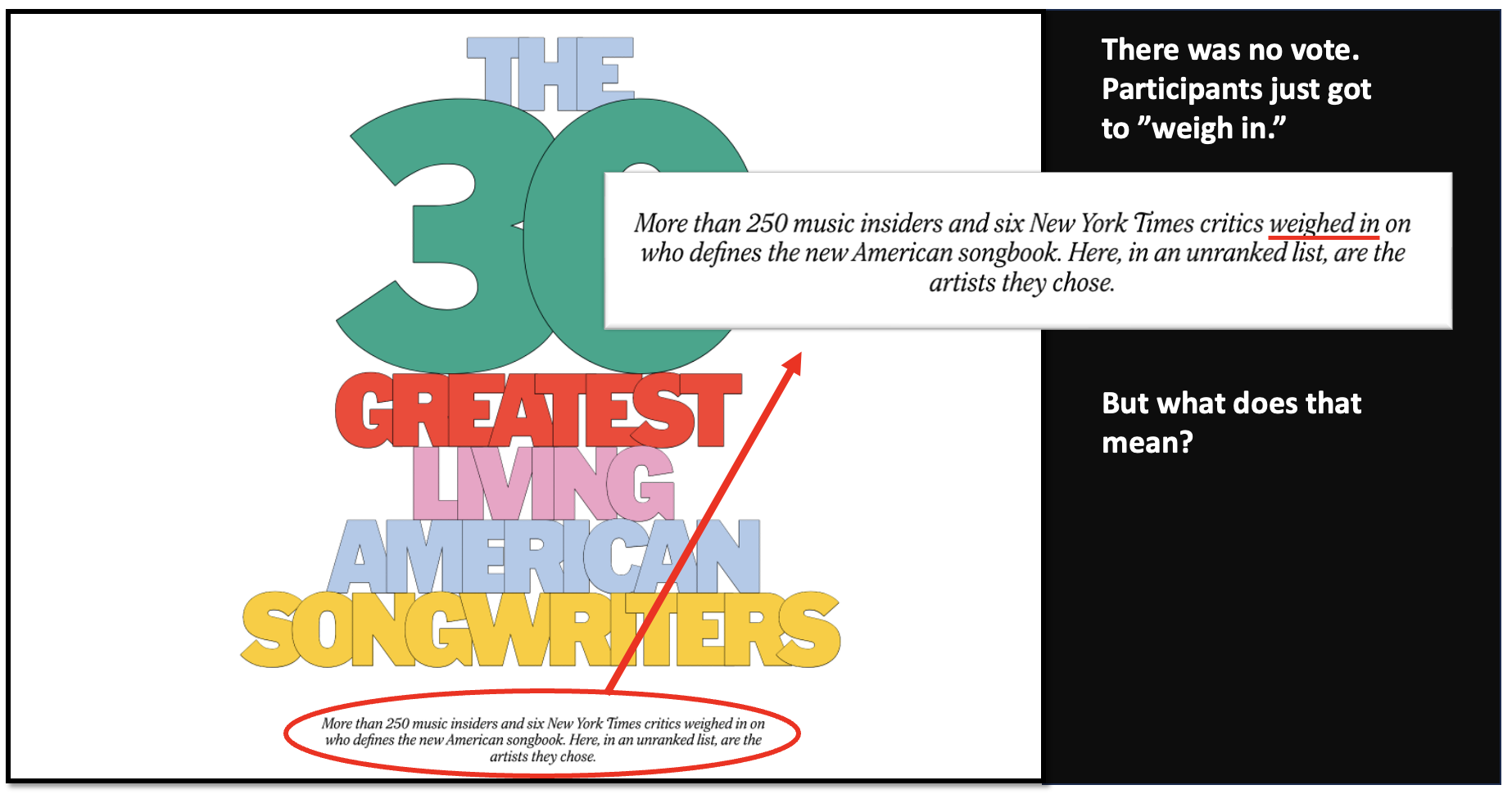
I assumed that I was voting for the songwriters who would be included in the list. But I now see that the experts consulted by the Times only got to make nominations. The final 30 names were chosen by six New York Times music critics.
There never was a real vote. The Times got the results it wanted internally — the insiders made the final call. But the way they explained it to their readers was intentionally vague.
In small print, readers were told that industry experts “weighed in” — whatever that means.
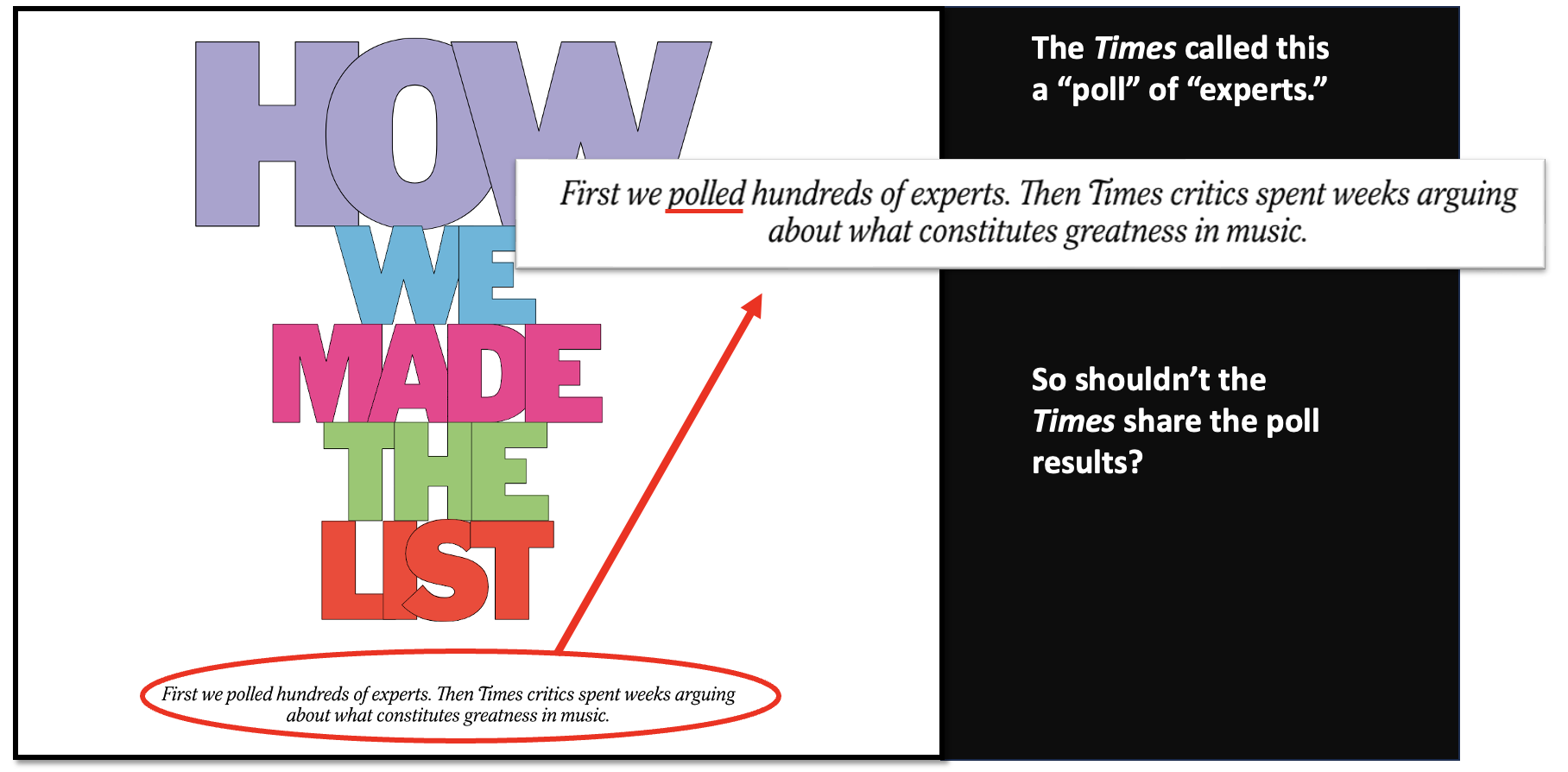
Readers were invited to click on a link to learn “how we made the list”. But even here, the Times served up fuzzy language.
If you kept on reading, you eventually learned the truth. The Times took the verdict of the “experts” and then “ran it through a filter”. The survey was just a “starting point”. The actual top thirty was decided via a “conversation” among its internal team.
Huh?
The Times did share a few ballots, and even this small sample made clear how different the final list was from the survey of experts. That would be embarrassing for the Times under the best of circumstances, but especially so in the current environment — when that same newspaper has repeatedly expressed outrage about voter suppression and attempts to subvert democracy.
If the Times really believes in the importance of voting and standing by results, why doesn’t it just share the actual ballot count?
Even so, this all might have been forgotten. But last Friday, the Times made the mistake of releasing a video entitled “In Defense of the NYT ‘Greatest Songwriters’ List“.
Here members of the inside team came across as smug, maybe even contemptuous, in responding to music fans who reached out to them. At one juncture, a Times critic laughs at a comment from a reader — simply for saying that he went to the Berklee College of Music. Then he continues to chuckle and smirk as he reads the rest of the reader’s comment, before finally throwing it on the floor.
This music lover had made the mistake of defending Billy Joel. For a serious critic at the Times, that is apparently very funny.
The Humble Wood that Built Great Furniture
Rex Krueger
Published 13 May 2026
Lynching
On the social media site formerly known as Twitter, Tom Kratman shares some thoughts on lynching:
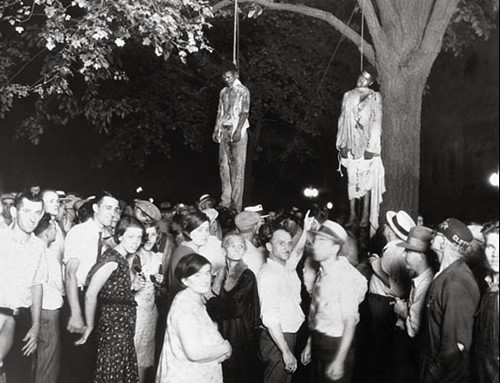
“1930 Lynching” by e-strategyblog.com is licensed under CC BY 2.0 .
So, in honor of the white liberal idiots (Lord, forgive us our redundancies) and black race grifters, who seem to infest X, some old thoughts on lynching:
So I was musing on lynching. It occurred to me that merely because someone was lynched it does not necessarily follow that they were either innocent, nor that the lynching was improper or wrong. Of course, we think of it, or most of us do, today, as being a purely racist phenom, applied entirely to innocent black folks. Neither of those is true.
I think we can divide lynching into several different levels and levels of legitimacy.
1. In a place of high crime where the law does not exist. In this case, yes, of course, do what you must to preserve life, liberty, and property, to protect your friends, neighbors, and family.
2. In a place of high crime where the law exists but has become purely notional, where criminals are not generally pursued, tried, convicted, or punished, and where this is no real hope for improvement. In this case, too, lynching is likely legitimate, for two reasons, the ones set out above and, further, to humiliate the arms of the law and the political branches into doing their jobs.
3. In a place where the law exists, where criminals are pursued, tried, and convicted, things become murkier. Note that I left off “punished”. In this case, I would argue, the law has become as ineffective as #2, above. Parts of California under Soros-supported prosecutors, I am looking at you. On the whole, in these places, I would suggest that lynching has at least some legitimacy.
4. Illegitimate lynching starts where the law is operative, and largely works, but where people — and this is where black folks tend to come in — are both impatient and want to terrorize some folks into general acquiescence. I am thinking here of people dragged from jail, after conviction, and put to death. It’s been done to both whites and blacks, but more to blacks.
This is wrong both because of the terrorizing aspect AND because you have just, from the perspective of those same black folks, changed matters into something highly analogous to #1, above, the law doesn’t apply to or defend them, so of course they can legitimately engage in self-help.
5. The least legitimate form, indeed, it is totally illegitimate, is when the law works, but people just want to engage in self-help, largely for the reasons in #4, and without there ever being an indictment, presentation of evidence, conviction, or anything but a mob operating with a mob’s IQ, which is roughly that of a none-too-bright earthworm.
There are some odd nuances here. For example, take someone with diplomatic immunity who kills your child. I have no answer, yet, for this, but, as a practical and personal matter, have to say that I would personally hunt the son of a bitch down and have lumber and nails handy.


