As with a lot of cultural upheavals, I’m a bit behind the curve on this one, so let Ted Gioia give you the state of play in “Rick Beato Versus the NY Times“:

Fifteen days ago, the New York Times published its list of the 30 greatest living American songwriters. Since then, all hell has broken loose in the music world. And in the last 48 hours, that Hades just got a lot hotter.
I’d been one of the 250 “music insiders” surveyed by the Times for the article — so the day after the list was published I shared my ballot here.
I was unhappy with the results, as were many other music fans. But that might have been the end of the story. Surveys are always a bit dodgy — but what can you do about it?
Then I took time to learn about the Times methodology and was even more dismayed. In fact, I was miffed.
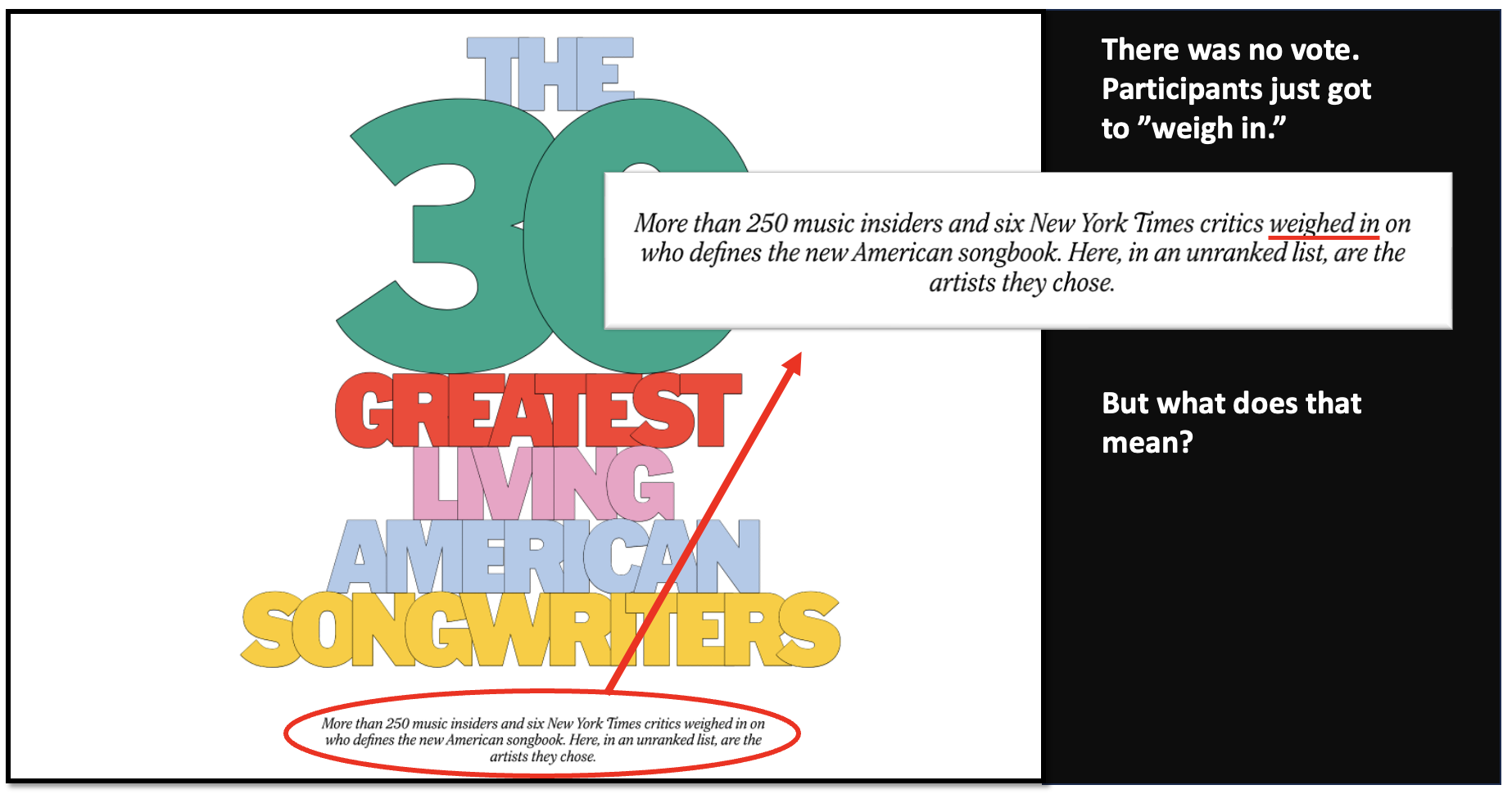
I assumed that I was voting for the songwriters who would be included in the list. But I now see that the experts consulted by the Times only got to make nominations. The final 30 names were chosen by six New York Times music critics.
There never was a real vote. The Times got the results it wanted internally — the insiders made the final call. But the way they explained it to their readers was intentionally vague.
In small print, readers were told that industry experts “weighed in” — whatever that means.
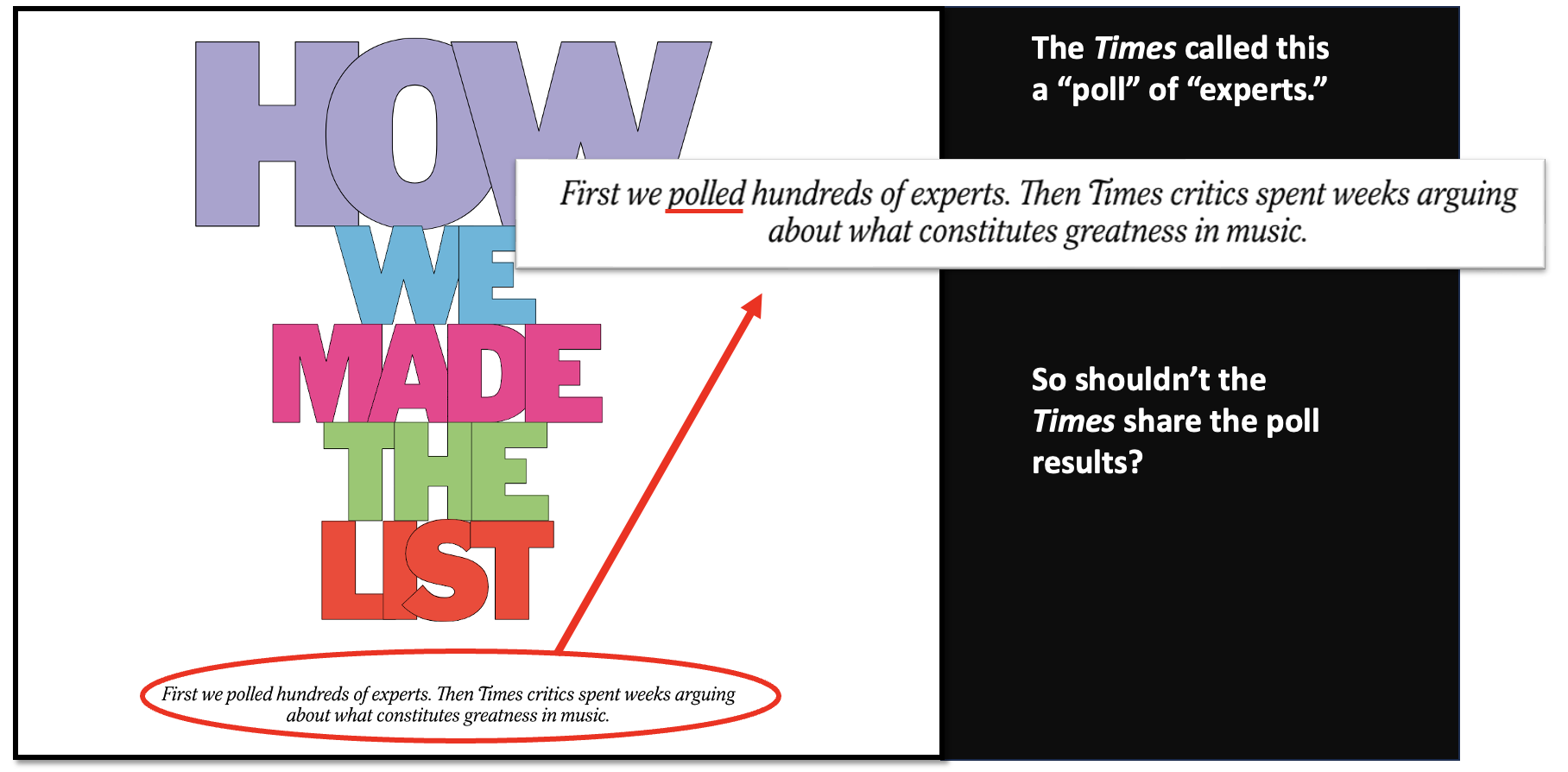
Readers were invited to click on a link to learn “how we made the list”. But even here, the Times served up fuzzy language.
If you kept on reading, you eventually learned the truth. The Times took the verdict of the “experts” and then “ran it through a filter”. The survey was just a “starting point”. The actual top thirty was decided via a “conversation” among its internal team.
Huh?
The Times did share a few ballots, and even this small sample made clear how different the final list was from the survey of experts. That would be embarrassing for the Times under the best of circumstances, but especially so in the current environment — when that same newspaper has repeatedly expressed outrage about voter suppression and attempts to subvert democracy.
If the Times really believes in the importance of voting and standing by results, why doesn’t it just share the actual ballot count?
Even so, this all might have been forgotten. But last Friday, the Times made the mistake of releasing a video entitled “In Defense of the NYT ‘Greatest Songwriters’ List“.
Here members of the inside team came across as smug, maybe even contemptuous, in responding to music fans who reached out to them. At one juncture, a Times critic laughs at a comment from a reader — simply for saying that he went to the Berklee College of Music. Then he continues to chuckle and smirk as he reads the rest of the reader’s comment, before finally throwing it on the floor.
This music lover had made the mistake of defending Billy Joel. For a serious critic at the Times, that is apparently very funny.