Quotulatiousness

October 14, 2021

The quasi-monopolies of the “web giants”

Arthur Chrenkoff runs afoul of automated “community standards” enforcement on social media, getting locked out of his Twitter account for something that any actual human being would be able to instantly decide was not at all any kind of violation of normal human interactions online or in-person. Of course, if you’ve been in this position yourself, you won’t be surprised to find that launching an appeal of the bot’s action does not get immediate response … and sometimes never gets any attention from a human. He’s aware of this, and he’s still of the belief that this does not call out for any kind of government intervention:

“Automotive Social Media Marketing” by socialautomotive is licensed under CC BY 2.0

I remain broadly sympathetic to the free market argument that competition will, in time, cure any problems that business activity throws up from time to time, such as market domination or underhand practices. The mighty will be brought down low, new players will offer new products, consumer preferences will change, creative (or destructive) equilibrium will be restored. We can all argue, of course, to what extent free market and free competition exist in any particular setting at any particular time. If “real socialism” has never been tried, “real free market” (as opposed to capitalism, which is not necessarily the same thing) might be equally rare in practice. It is certainly true that comparing the lists of top 50 biggest companies one hundred, 50, 20 years ago and today will indicate a lot of economic change, but might not tell us very much about the reasons for that change, which can be quite complex.

The tech giants might not be historically unique as far as their size and power are concerned, but they’re not the norm either. They are not exactly monopolists, but their domination of their particular sections of the market elevates them from the domain of mere companies to something akin to public utilities. Google, Facebook and YouTube, for example, account for 80 per cent of digital advertising in Australia. There are alternatives to all these providers but they are so tiny by comparison as to defeat their main purpose for many users, which is to provide the biggest possible reach and exposure to the world. If you get demonetised or banned by YouTube, other video-sharing platforms can give you only a fraction of the traffic and the eyeballs, which impoverishes you literally and the internet users metaphorically, since they are now less likely to be exposed to the broad range of content. There are other social networks, but only Facebook has “everyone” on it, including your grandma, school friend from primary, and that couple you’ve met on the trip to Spain. Sure, if you get banned from Facebook, you can still try to keep in touch with all these people via many separate channels but it’s so much more difficult, disjointed and time consuming. For that same reason, Facebook’s Marketplace has a much better reach than other platforms that are focused exclusively on online ads. If Marketplace continues to shadow ban me, I can try Craigslist or Gumtree or Locanto, but – certainly in the categories I’m interested in – they all have significantly smaller audiences.

The traditional response to bad customer experience has been “try somebody/something else”. You don’t like Facebook – or Facebook doesn’t like you? Try another similar service. But I’m not sure if most of my friends would be able to name even one alternative to FB, and the chances they are on it are even slimmer. So telling people to stop whining and use an alternative to the tech giants is akin to telling someone “Oh, you can’t have a mobile (cell) phone? So what, no one is stopping you from writing a letter!” It’s the same but different. This is the consequence of the domination of the internet by the Googles and the Facebooks. And the internet now does play an essential role – for better or worse – in our lives and work. Hence the comparison to public utilities. Facebook might not be quite like electricity or running water, but it’s very close to, say, phone service. Yes, you can opt for another social network, but compared to Facebook this would be like a phone company that only makes it possible for you to contact one in twenty people instead of just about everyone, and even then maybe only once a week, at a time predetermined by the provider. It’s a service of sorts, but so inferior in every way to the main game in town as to be incomparable.

I’m not offering any solution to this problem. Many, both on the left and the right, are increasingly of a mind that, like Standard Oil of more than a century ago, the tech behemoths of today need to be broken down into smaller and less powerful units. That could solve some problems but won’t solve many others. Like mine, for example; a somehow “smaller” Twitter and Facebook can still be unresponsive and unaccountable. And as we know from other areas of economy, greater involvement and control by the supposedly impartial government does not guarantee better outcomes either. Big government, like big business, is run by human beings who, quite apart from their own characteristics as individuals, work within a particular culture, which has its own values, agendas and preferences. Government is a monopolist too in many ways, and for all the politics, is not necessarily responsive and accountable either.

October 1, 2021

Social media proves Derrida correct – “il n’y a pas de hors-texte” (“there is nothing outside the text”)

Filed under: Media, Technology — Tags: , , , , — Nicholas @ 03:00

A look at how social media — especially Twitter — shows that Derrida had a valid point … even if that isn’t the original intent.

Jacques Derrida (1930-2004).
Photo from https://bettyrojtman.huji.ac.il/media-gallery/detail/15698/15538 via Wikimedia Commons.

Derrida once said “il n’y a pas de hors-texte“, “there is nothing outside the text”, and since the social damage to words uttered ratio of that phrase must be among the highest in history, it’s worth exploring. Just so we’re clear, I have no idea what Derrida was trying to do with “deconstruction”, outside of the most basic general concept (I often doubt Derrida his own self had any idea what he was trying to do, but that’s irrelevant). But let’s do some “deconstruction” of our own on that phrase, since that has some interesting implications.

If you take it as written — that there is nothing outside the text; that is, that the text exists as a complete unit of meaning, for its own sake — then it seems to argue for a kind of “positivism” in communications. Something like Orwell’s desire to develop “window pane” prose — writing so clear that the author would disappear and only the ideas would come through, unfiltered. Alas, this is a habit of mind that seems impossible to develop. No matter how clear your prose is, “writing” is one of those dialectical relationships so beloved of Marxists and stoned sophomores (lot of overlap between those groups, admittedly). In some vague, yet real and obvious, way, “writing” doesn’t exist apart from “reading”. Sure, sure, you can make marks on a page, but that’s all it is, until someone sits down to read it …

… at which point his personality comes into play, his worldview, his circumstances, his history, to be somewhat pretentious about it. And this will be true even if — in a lot of cases, especially if — you confine your prose to simple statements of fact. For instance, back in the early days of smartphones, I watched a minor miscommunication between a buddy and his girlfriend escalate into something very close to a relationship-ending fight, simply because neither party would stop texting and, you know, actually use the telephone they were texting with. A five minute phone call would’ve straightened it all out, and needless to say a face-to-face chat would’ve solved the “problem” in about ten seconds, but since text messages are devoid of subcommunication and, crucially, context, each party naturally brings his or her own biases to it, and, well … screaming, relationship-ending blowout for the win.

See also: Twitter. Like most people, I gave it a look-see when I first heard about it. I quickly concluded that it wasn’t for me. Not because it was vapid garbage, you understand — Facebook was always vapid garbage, but it had some utility for all that, as Twitter does — but because I just don’t think in discrete chunks the way Twitter requires. I just can’t process the fact that “replies” are their own distinct utterances, devoid of all other context, that can come in at random times. A Twitter “thread” is a mad babble of people shouting past each other; it’s not “communication” in any sense my brain can handle, so I dropped it …

September 26, 2021

“… is there a single area of public policy where Canada has its shit together?”

Filed under: Bureaucracy, Cancon, Government — Tags: , , , — Nicholas @ 03:00

In The Line‘s weekly round-up, they point out a little-noticed Globe and Mail article that illustrates something that should really concern Canadians:

Sometimes the big lessons are in the small things. While everyone was busy jawboning about the federal election returns earlier this week, we were also struck by a barely noticed story in the Globe and Mail reporting that the federal government had awarded a contract to begin replacing the disastrous Phoenix payroll system. Phoenix, you’ll recall, was an IT project designed to harmonize the payroll for the entire federal public service. The 2016 rollout was a disaster, resulting in thousands of employees being paid too much, too little, or not at all. Fixing it has cost billions and has not entirely succeeded, and now it is being replaced entirely.

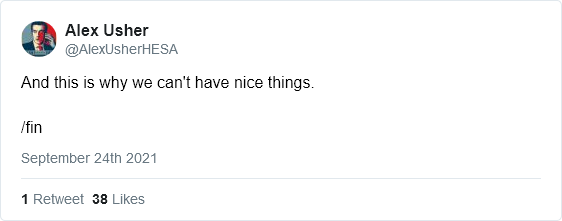
We were still pondering this news when Alex Usher idly wondered: “Genuine question: is there a single area of public policy where Canada has its shit together?”

Alex isn’t some rando Twitter troll. By day he runs Canada’s premier higher education consultancy. But he’s also one of the country’s most perceptive policy analysts, writes a daily blog about just about anything policy related, and is probably one of the three or four smartest Canadians still on Twitter.

Which is why his question was met with more thoughtful responses than the usual schoolyard heckling that is typical of the platform. Fiscal policy between 1993 and 2015, offered Ken Boessenkool. Andrew Coyne half-heartedly suggested monetary policy. Rachel Curran proposed immigration, prisons, and the coast guard, but was quickly set right by people who knew what they were talking about.

So when Usher followed his question with a long Twitter thread showing just how broken Canada is, with a sophisticated and nuanced take on why that’s the case, there really wasn’t anyone left making a serious argument against him. Everyone knows it is true.

Everyone, that is, except two of the most politically polarized groups in the country, who disagree about everything except the capacities of the government.

On the one hand there are the Build Back Better people, mostly housed in the increasingly unpopular Liberal Party of Canada. These people persist in believing that the federal government is poised to make big decisions, to take big actions, on big issues such as climate change, pandemic preparedness, and dealing with the rise of China. They are prepared to talk big talk, and spend big money, in pursuit of their policy objectives.

On the other, there are the paranoid conspiracists who believe that the government is using the cover of the COVID-19 pandemic to implement all manner of social controls. These include suspicions that the government would use a contact tracing app to engage in mass surveillance, that they are putting a 5G payload into the vaccines, or that this is all part of a big Liberal internationalist plan to set up a world government.

While these seem to be diametrically opposed worldviews, what they share is the deep conviction that the government can actually do something. Indeed, what is charming about the conspiratorial worldview is how much faith it actually has in the authorities.

Confront China? Please. We can’t buy ships, planes or even handguns for our military. Pandemic preparedness? You’re kidding, right? We can’t even hire enough nurses for the health-care system. Set up a world government? Lol who would we hire to work for this government? We can’t even figure out how to pay the public servants we already have on staff.

As usual, the correct counter to conspiracy-minded thinking is not to have faith in government, it’s to be realistic about it. Similarly, the correct response to the build back better crew is not enthusiasm, but realism. And ultimately, the right approach to everything the government proposes is deep, deep, deep cynicism.

One of the major reasons I’ve long favoured smaller government — the smaller the better — is that the bigger any organization gets and the more things it tries to do, the less effective it is at all of them. Governments in the western world generally have gotten so big that they’re incapable of doing almost anything in an effective, competent, and repeatable manner. A hypothetical world government would be even worse (just look at the existing United Nations to see how billions of dollars not only get nothing useful done, but often exacerbate existing problems).

August 28, 2021

QotD: Social media capitalizes on “the biggest Faculty Lounge Fallacy of them all”

Filed under: Education, Media, Quotations, USA — Tags: , , , , , , — Nicholas @ 01:00

… Twitter (etc.) are specifically set up in such a way as to discourage any real-world action. Basically it’s the faculty lounge writ large. If you’ve been to college in the last half-century, you surely noticed that the faculty are Very Very Concerned about all kinds of stuff … but that the stuff they’re Very Very Concerned about is always happening to some obscure group thousands of miles away.

Even when they’re pretending to Care Very Much about, say, “systemic racism” in “America”, it would never occur to them to go down to the ghetto that, in many notorious cases, is literally right next door to do anything about it. They could find out everything they ever wanted to know — and then some!! — about “the Black Experience” by driving down MLK Blvd. at three in the morning, but somehow they never do. The way you win at victim bingo in the ivory tower is you find the most obscure group, the furthest away, to chastise your peers for not caring enough about. If what you say could possibly have any real-world application in the lives of anyone anybody you know had even the possibility of ever meeting, you lose.

Such is Social Media, so it’s no surprise that the Twitterati all fall victim to the biggest Faculty Lounge Fallacy of them all: That saying something is the same as doing something. Or, in other words, and not to put too fine a point about it, they act like passive-aggressive little bitches, like cat ladies around the company water cooler. You could get Johnny from Accounting to stop leaving his half-eaten sandwich in the lunch room fridge by simply asking him to stop … or you can have daily hen parties about it for weeks, months, years, squawking about how some people need to get some common courtesy … and meanwhile Johnny from Accounting goes on doing it, oblivious.

The genius of Facebook, Twitter, etc. — and it IS genius; sick, evil, twisted genius — is that they figured out how to monetize this.

Severian, “Internet Tough Guys”, Rotten Chestnuts, 2021-05-10.

July 17, 2021

“Now I am become Twitter, the destroyer of worlds”

Filed under: Media, Politics, Technology, USA — Tags: , , , — Nicholas @ 05:00

In UnHerd, Douglas Murray remembers what it was like before Twitter ruined everything:

Fifteen years ago today, an innovation was unveiled that has probably changed our lives as much as any other this century. It was on 15 July 2006 that software developer Jack Dorsey and his team launched an online platform where text messages of 140 characters could be shared in a group; six days later Dorsey sent his first tweet, launching a new age of reasoned debate and engagement.

There are some who want to celebrate today — principally Dorsey, along with the small number of other people who have become unimaginably rich off the platform. But for everybody else on the planet, I suspect we should welcome the anniversary with roughly the same enthusiasm that we would the emergence of the Ebola virus. For the further away we have come from Twitter’s birth, the clearer it has become that the platform is a source of unimaginable harm to almost every aspect of society.

In the early days, it didn’t feel like this. Like Facebook, Amazon, Google and the other Big Tech monoliths, it all started out so well. Twitter was actually fun back then. People said whacky things. There were cat videos. There was Follow Friday and friendships were made. As professional and amateur newshounds took to the platform, it became the fastest way to learn about any developing story.

If something was going on, Twitter was there first, certainly ahead of the BBC or any of the other news establishments who had to lumber through the old legal and editorial hurdles, rather than enjoying the lightning-quick response time of social media. Politics is a drug, and the most successful drugs provide an instant hit. But they are also the most dangerous, and the downsides soon started to assert themselves.

Soon many started using the site in a game of competitive grievance, or competitive sanctimony. They took obvious glee in targeting victims who had transgressed some moral code; the obvious righteousness of these online crusaders meant they rarely recognised themselves as the aggressors or bullies.

And soon it became apparent that, while everyone was on the site, everyone also hated it. Those on the ideological Left began to turn against the platform when it became clear that it allowed their opponents on the Right to spread “hate”, a scourge which they defined generously. Just as they used it themselves to spread their message.

This all reached its nadir with Donald Trump, whose presidency is to many people the most concrete result of Twitter. The world watched aghast as Trump was able to say often the craziest of things to millions upon millions of followers, speaking unfiltered and directly — in a way the old news media would never have allowed. When he won the presidency and then thanked Twitter for the helping him to get it, many of these natural Twitter followers lost their faith in the platform. How could they have let it happen? It was their platform, after all, this noisy minority of the American and British electorate. Indeed, if you had read UK Twitter ahead of the 2019 election, you would have been absolute certain of a Jeremy Corbyn landslide. Where were these millions of Tory voters who didn’t like Jeremy?

June 30, 2021

“We’re having a heat wave/A tropical heat wave …”

Filed under: Cancon, Environment, Media — Tags: , , , , , — Nicholas @ 03:00

Jay Currie is apparently melting in the heat somewhere out on the left coast of Canada:

As my readers know I live on Vancouver Island right by the ocean. Normally, it is too cool to be comfortable having the evening g&t on the deck. Well, yesterday and today and very possibly tomorrow it will be way too hot.

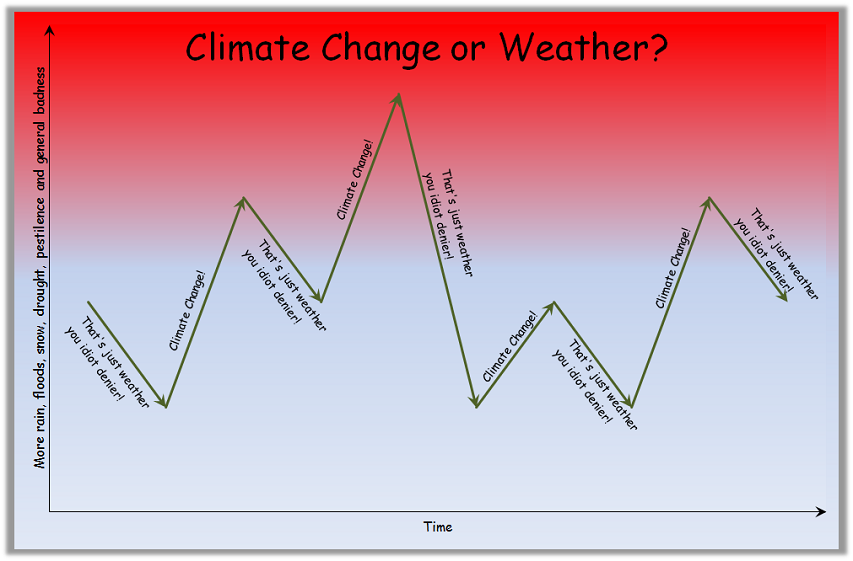
The thing about heat waves is that they bring out the climatistas ready to ascribe weather to climate change. On #bcpoli Twitter it is a dead heat between the unscientific “I will wear a mask until there is no COVID anywhere on Earth” people and the people who insist that the present heat wave “proves” global warming. Well it doesn’t.

What we are in the grips of is a jet stream excursion. A big loop of hot air is sitting on top of us. It is practically the definition of “weather”. Three weeks ago Victoria set an all time record for coldest June day in the middle of a series of anomalously cold days. This too was “weather”.

The warmists are not deterred. “Well, over all the ‘weather’ is getting hotter because of climate change.” “The jet stream is behaving eccentrically because the Arctic is getting warmer and that’s climate change.” And then they add their policy prescription d’jour – Save Old Growth, Raise the carbon tax, Stop LNG exports and so on.

The brutal narcissism of the climate crusaders is touching. The problem and its solution are all about them. Other than the Pacific North West, the rest of the world is normal to cold. The Eastern US has been wet and cool, South America is freezing, Australia and New Zealand are experiencing an early ferociously cold winter, summer snow is falling in Scandinavia. The fact the major factor in the northern and jet stream’s preignitions is the level of solar activity is borne out by the general coolness of 2021. Guess what, the Sun is very quiet at the moment which is historically linked to cooling rather than warming.

But, for fun, let’s propose that the climate change fanatics are right and there is a direct link between CO2 and the present heat wave – not one of their favoured solutions will make the slightest difference. We could all walk to hug the trees and it would not matter.

Here’s why […]

June 17, 2021

QotD: Declaring war on the Upper-Class Media

Filed under: Media, Politics, Quotations, USA — Tags: , , , , , , , , — Nicholas @ 01:00

This is your new term for “mainstream media”. Being against the “mainstream media” sounds kind of conspiratorial. Instead, you’re against the upper-class media, which gains its status by systematically excluding lower-class voices, and which exists mostly as a tool of the upper classes to mock and humiliate the lower class. You are not against journalism, you’re not against being well-informed, you’re against a system that exists to marginalize people like you. Tell the upper-class media that if they want your respect, they need to stop class discrimination.

67% of US families watch the Super Bowl — what percent of New York Times editors and reporters do? 20% of Americans go to religious services weekly — how many of those work for the New York Times? How come 96% of political donations from journalists go to Democrats? Your job is to take a page from the Democratic playbook and insist there is no reason any of this could be true except systemic classism, that any other explanation is offensive, and it’s the upper-class media’s moral duty to do something about this immediately. Until they do so you are absolutely justified in ignoring them and trusting less bigoted and exclusionary sources (I hear Substack is pretty good!)

Insist that working-class people have the right to communicate with each other without interference from upper-class gatekeepers. Make sure people know every single fact about @Jack and what a completely ridiculous person he is, and point out that somehow this is the guy who decides what you’re allowed to communicate with your Twitter friends. Every time tech companies censor social media, even if they’re censoring left-wing views, call their CEOs in for long and annoying Congressional hearings where you use the words “Silicon Valley elites” a lot.

Scott Alexander, “A Modest Proposal For Republicans: Use The Word ‘Class'”, Astral Codex Ten, 2021-02-26.

June 12, 2021

Literate people who “never read books”

Filed under: Books, Business — Tags: , , , , — Nicholas @ 05:00

I recently added Kenneth Whyte’s SHuSH to my growing list of Substack blogs, and his latest entry considers people who can read but choose not to … and boast about it:

… I ran across a tweet by Neil Patel, a self-made marketing guru, explaining or, rather, bragging about how he doesn’t read books:

    The only books I read are kids’ books and that’s to my daughter. People talk about reading books. You know what? I wrote a book and I was even a New York Times best-selling author, but here’s the thing: most books that you see in a book store, they’re written a year to two years before they were actually published and they go through this really long process. A lot of the times you’re reading outdated information. Even if the book has theories and strategies that aren’t outdated, heck, you can just go on YouTube and find that info in a five-minute clip. Why would you want to read 300 pages when you can just figure it out in five minutes. So I don’t spend my time reading books. Instead, I spend three hours a day reading blogs, Instagram, YouTube and all the other places where I can consume information faster, and you should, too.

It turns out Patel’s tweet was too dumb even for Twitter. Within hours, it had 87 retweets against 1,836 quoted retweets and 764 replies, indicating an extremely high ratio of people blasting him to people sharing his pensées.

Washington Post book critic Carlos Lozada had some of the best mockery: “Also do you realize that when you go in a bookstore, some of the books are so old that the authors are dead? How can you learn anything from a dead person? They can’t even tweet.”

I’ve found over the last few years that I’m spending less time reading books, although I still treasure my quiet reading time in the late evening. My tastes have changed a lot over the years, and I read almost no fiction works at all except for a few “unwoke” science fiction authors, and aside from books on hand tool woodworking almost everything else is history — and not much recently published history (for the same reason I avoid most modern SF novels … they’re far too woke for boring old fuddy duddy readers like me).

You’ve probably seen those internet ads that claim the average CEO reads a book a week. That’s bullshit marketed by Blinkist to flog fifteen-minute book summaries. There is no data to support it. The average American reads twelve books a year, and high-earners read fifteen, which is probably the best-case scenario for the average CEO.

Sure, Bill Gates and Mark Zuckerberg and Warren Buffett read a lot of books. I’ve run across a few lesser mortals in big offices who were enthusiastic readers. I was even part of a Bay Street book club for several years (I loved it). But most businessmen, in my experience, read very little, or not at all. Trump, who also had his name on a bestseller but never reads books, is far closer to the norm than Gates.

I was once at a dinner retreat with a dozen executives, all of whom had good university educations and generous salaries. They’d been asked by a moderator to come to the dinner with an example of something they’d read, a book or a poem or an essay that really spoke to them. Only three of the twelve mentioned books (and each mentioned a business book). Several mentioned newspaper or magazine articles they’d read. The rest relied on song lyrics, with two citing the same line from “Hotel California” as a commentary on their careers: “You can check out any time you like, but you can never leave.” None of us knew whether to laugh or cry.

Another thing I learned at that retreat, which struck me as related, was that all of the executives complained of having no time to think about the big picture: they were so busy doing their work that they seldom stopped to consider if there wasn’t a better way to do it, or if it was worth doing at all. They complained at this lack of perspective, but all were senior enough to be able to delegate day-to-day chores to others, leaving themselves time to think. I don’t believe they wanted to.

Canadian “Conservatives” start listing their preferred pronouns

Filed under: Cancon, Politics — Tags: , , , , — Nicholas @ 03:00

Mark Steyn surveys the “conservatives” in the UK, the US, and last-and-least, Canada:

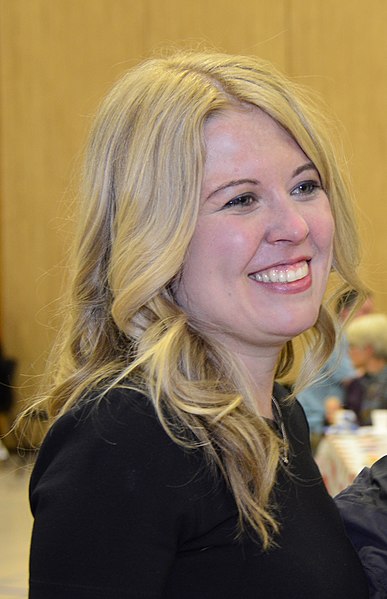
Michelle Rempel Garner, Conservative MP for Calgary Nose Hill (preferred pronouns she/her).
Photo attributed to “Michelle Staff” via Wikimedia Commons.

So much for UK conservatism. What of Canada? The two most rock-ribbed “right-wingers” in the Dominion’s politics, Doug Ford of Ontario and Jason Kenney of Alberta, have taken the position that conservatism is an indulgence you can’t afford in a pandemic: Just as there are no atheists in foxholes, so there are no conservatives in lockdowns.

At the federal level, the cautious and eventually stalled incrementalism of Stephen Harper was followed by the unprincipled hollowness of Andrew Scheer and, after his predictable failure, the everything-must-go massive-storewide-clearances of Erin O’Toole. Even so, I was startled by a tweet from Michelle Rempel Garner, an Alberta MP whom I knew only as an occasionally lively thorn in the side of Justin & Co. Ms Rempel Garner was responding to the appalling killings of a Muslim family in London, Ontario, which within minutes had been seized on by the media-left alliance for the usual purposes, notwithstanding that the perp does not appear to fit the desired narrative. Nevertheless, the outbreak of vehicular “Islamophobia” was taken by Michelle Rempel Garner as the perfect opportunity for an express checkout:

    I humble myself and ask forgiveness, and seek to make things right.

    I have privilege; I am cis/straight/white. But I am also a woman who works in a system dominated by white maleness.

    But no excuses. I will do what I can.

Seeing the above at the great Kate McMillan’s website, I assumed it was a giant leg-pull by Ms Rempel Garner, as did many other of Miss McMillan’s readers. So, as she clarified, no, sorry, it’s for real. The Tory member’s Twitter account now shows her pronouns: “she/her” (at the time of writing). In 2019 it was a big deal when Kamala Harris, at the start of a Democrat debate, announced her pronouns. Less than two years later, “conservative” politicians want a piece of the pronoun action too. Already a key player in O’Toole’s shadow cabinet, the she/her move could make Michelle a shoo-in for Deputy Prime Minister.

Except, of course, that that would require the Tories to win an election.

Guys, it was a joke that modern conservatism is just progressive policies on a five-year delay … please stop taking it seriously!

June 11, 2021

QotD: Twitter

Filed under: Humour, Media, Quotations, Technology — Tags: , , — Nicholas @ 01:00

Imagine being trapped in a room filled with strangers for a long period of time, and in that room, everyone is forced to hear all the stray thoughts from everyone else’s mind. After a time, you’d all be driven insane, yet on Twitter, we accept this as a matter of course.

Clive Mansa (@clivemansa), Twitter, 2021-03-09.

January 12, 2021

“Big Tech” flexes the muscles and squeezes down the Overton Window online

In the FEE Daily newsletter, Brad Polumbo outlines the collusive mass deplatforming of President Trump and many of his high profile supporters:

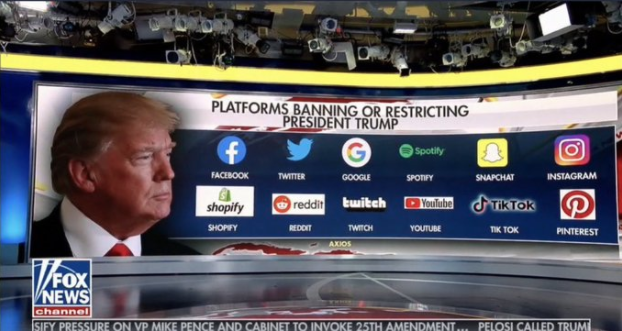
Screencap of a Fox News report on the social media networks that have deplatformed President Donald Trump, January 2021.

Amid the fallout from the January 6 attack on the US Capitol, President Trump has been banned from just about every social media platform.

This crackdown is, frankly, unprecedented.

To be sure, social media and tech companies are private companies, and are not bound by the First Amendment. They have no legal obligation to host President Trump’s speech.

But there’s a question beyond can here that ranges into the should.

And I, for one, find it extremely disturbing that the elected President of the United States — who just weeks ago received roughly 75 million votes — is deemed beyond the pale of acceptable speech by Silicon Valley overlords who are overwhelmingly left-wing. Especially so given that these same platforms still allow the literal Chinese Communist Party to post pro-genocide propaganda and allow the members of the Iranian regime to openly foment violence.

The least consumers can demand is some consistency. Personally, I would find it much more reasonable for companies like Twitter to remove individual posts, including by President Trump, that violate rules — like fomenting violence — than to erase prominent political figures from the digital conversation entirely.

We should all want to see a free and open discourse online promoted by the companies we patronize. At the same time, none of this is cause for government control of the internet or meddling with the Section 230 liability shield.

If conservatives don’t like how Twitter CEO Jack Dorsey regulates content, they’d hate how Kamala Harris would do it.

December 28, 2020

Titania McGrath, unmasked

Filed under: Britain, Humour, Media, Politics — Tags: , , , — Nicholas @ 05:00

In The Critic, Andrew Doyle talks about creating the “Titania McGrath” persona on Twitter and what happened after he was “outed” as the writer behind the tweets:

My most recent “outing” was as the writer of Titania McGrath, an intersectional activist who began life on Twitter in order that she might chastise the unwoke for their moral impurity and proclaim her infinite virtue to the cybersphere. For those of you who are not on Twitter — that’s the 80 per cent of the country who actually value their time on earth — you may not be aware that such self-aggrandising behaviour is considered acceptable. On Twitter, it’s the norm. It’s effectively a digital playground in which grown adults toss their half-baked opinions around like pies in that scene from Bugsy Malone.

From Titania’s earliest appearance, I resolved to stay anonymous — not to cause mischief, but more for the fun of it. If people believed she was real, I reasoned, I could enter into dialogue with her detractors. This meant that the satirical impact would not be restricted to what Titania said, but how others reacted to her. Her tweets are designed to ridicule the excesses of the social justice left, but her interactions tend to expose the folly of those on the right who take her at face value and lose their temper. As such, her targets are not limited to one side of the political spectrum.

[…]

Having been revealed as the author, most of this venom was now channelled in my direction. The extent of the abuse was often unfathomable, and some even went so far as to send direct threats of violence. It’s a curiosity of our times that the most vicious and bullying online behaviour tends to be exhibited by those who claim to be on the side of empathy and compassion.

I have never quite understood the kind of anger that comedy and satire can provoke. As someone who has seen my fair share of stand-up, I have often found that the best response to a joke that does not amuse me is simply not to laugh. It would never occur to me to berate other members of the audience for their poor taste, or to take to social media and complain about the comedian in question. As someone who does not suffer from narcissistic personality disorder, I am well aware that my personal sense of humour is not the benchmark for the entirety of humankind. When it comes to comedy criticism, “that’s not funny” is about as insightful as “that’s not erotic”. Try telling a fetishist that studded PVC nuns’ habits are objectively devoid of sexual appeal, and he will probably be able to show you some homemade videos that will quickly prove you wrong.

It is of course entirely natural to feel displeasure when one’s worldview is being ridiculed. I do not blame the poor writer for the Observer who suggested that copies of Titania’s first book would be given to every person in Hell, and that “lampooning the language of social justice is a cheap shot”. I have some sympathy for her position. If I were absorbed in an ideology that mistrusts humour and perceives that jokes have the potential to “normalise hate”, I would doubtless be similarly vexed by anyone who had the temerity to mock it. But that’s the trouble with religious belief. However important it seems to one’s sense of personal identity, there is no way to protect our icons from desecration by unbelievers.

October 18, 2020

Larry Correia on the danger in allowing Big Tech to decide what speech is and is not allowed to be heard

Filed under: Government, Liberty, Media, Politics, Technology, USA — Tags: , , , , , — Nicholas @ 05:00

The recent now-you-see-it, now-you-don’t over allegations that former Vice President Biden’s son used his father’s influence to gain vast sums of money are — ahem — unproven but persuasive. The frantic efforts of companies like Google, Facebook, and Twitter to keep those allegations out of the public eye get Larry Correia very angry:

If social media had banned Obama’s press secretary, and then stopped Diane Feinstein and Chuck Schumer from sharing articles from the New York Times, and then shut down the Obama campaign page nineteen days before his election against Mitt Romney, everyone would have lost their fucking minds. And rightfully so! Because that kind of blatant manipulation of information is evil.

If I put that into a thriller my editor would tell me it was too far fetched. Nobody would buy into such mustache twirling villainy, even if I was writing cyberpunk dystopia.

But Correia, they are private companies and you are usually against meddling in the affairs of private companies, you big hypocrite! Yeah, usually I am, but this is also something new, the likes of which mankind has never seen before, with these entities being the primary exchange of information for BILLIONS of people, so it’s kind of hard to put this thing which didn’t exist before into historical context. Facebook has no real competitors, and it has something like 2.7 billion regular users. With the flick of a switch it can stop a third of the Earth’s population from seeing whatever it doesn’t want them to see. Humanity has never had that before.

That’s real fucking power right there.

Now, unlike most people on the internet, I am not compelled to pretend to be a lawyer who just got my law degree from the University of Internet. Communications law is not my area, and I’m not going to be a Dunning-Krugerand talking about section 230 or whatever.

However, what I do know is that this is some seriously dangerous bullshit, and if we keep going down this road it is going to lead to some very bad ends. Freedom of speech functionally ceases to exist when both sides speak, but only one side is heard. If social media is a forum, then it needs to be an actual forum. If it is functionally a propaganda arm of the DNC, then so be it, but it can’t keep pretending to be something it’s not, while mindfucking the populace.

They are subpoenaing the Twitter CEO to come testify before congress but I expect that to be another utterly useless clown show where dummies ask dumb questions about something they don’t understand to some clever asshole who is just going to lie.

Like most liberty minded people, I have a reflexive dislike for government regulation of the free market. If the government can screw something up, it will. However I doubt I’ll feel that strongly about the sanctity of the free market as I’m being starved to death in a re-education gulag, after conservatives were stupid enough to let a tiny group of control freak statists have absolute power over the whole country’s speech and information.

What we’ve got right now with a handful of organizations having a monopoly over news and knowledge is stupid, getting stupider, and going to end extremely badly.

I don’t give a shit if you are liberal or conservative, the idea of some entity like Google determining what mankind is allowed to know or not know should terrify the shit out of you. Free speech becomes a meaningless concept if only approved speech is ever seen. And if you are cheering this shit on because right now it is helping your team score points against the other team, you are fool. Because once they have that power it is only a matter of time until one of your beliefs ends up on the naughty list too.

(note, that’s not an issue for Kool Aid drinking progs, because they don’t actually have any beliefs beyond GET POWER. It took them less than 24 hours to change “sexual preference” to a bad thing in the dictionary)

The only good thing about this situation is that even though Facebook and Twitter are trying to monopolize the flow of information, they are still bad at it. This week’s attempt at shutting down the New York Post‘s expose will probably go down as the biggest Streisand Effect in history. Their painfully obvious censorship will make far more people pay attention and lend credence to the report. Because after all, they wouldn’t try this hard to squish it, if there wasn’t some meat to it.

October 17, 2020

Actually, his photo has that effect on me too …

… except that I still keep the beard. David Warren, on the other hand, is clean shaven:

“Jack Dorsey, Twitter and Square founder, in a London cafe in November 2014.” by cellanr is licensed under CC BY-SA 2.0

Every time I see a photograph of Jack Dorsey, I want to wash and shave. It is seldom that another human being has such an hygienic effect on me; especially one I have never personally met. Thanks to him, I may report to gentle reader that, up here in the privacy of the High Doganate (surrounded by jackhammers), I am quite clean-shaven this morning. I was able to resist the temptation to bathe in Dettol, but my shower was the next best thing.

I’m going out on a limb here. I am assuming my reader knows who Jack Dorsey is. (It’s not hard to find his picture.)
The boss of Twitter is among the “deep tech” executives who have, in a less ambiguous way than ever before, shut the accounts of the Trump campaign, within three weeks of a national election, and are blocking those (rather numerous) subscribers who are trying to forward the meaty revelations appearing in the New York Post. Those, incidentally, unambiguously show that one of the presidential candidates (Biden, of all people) is seriously fraudulent and corrupt. Who’d have guessed it? (Well, I did.)

Now, when I write “deep tech,” some reader will accuse me of touting a conspiracy theory. I use this expression on the analogy of “deep state.” Curiously, I don’t think this is a conspiracy at all. In the District of Columbia, where the bureaucratic institutions of the Merican Nanny State are chiefly located, Democrats routinely take well over 90 percent of the vote. Republicans do not necessarily finish second, however. That the labour pool for these institutions is overwhelmingly “progressive,” is something I infer.

Ditto for Silicon Valley. The residents do not need to conspire, although the speed at which identical editorial decisions are reached, is amazing. This I attribute to their electronic hardware.

Some seven years ago, under the influence of well-intended friends, I did a three-month experiment of “being on Twitter.” They said it would immensely increase my “hits,” and it did — while dramatically decreasing attention to them. I was flattered by all the fan-mail I received, because I am a shallow person, but when the three months were up I got off. For I do not covet a mass audience, or that kind of fame. Engaging in live-time battles of wits with other Twitterers is fun for a while, but sooner or later one recovers one’s self-respect. Or at least some people do.

October 15, 2020

Twitter will now helpfully prevent you from committing thoughtcrime, citizen!

Filed under: Liberty, Media, Politics, USA — Tags: , , , , — Nicholas @ 05:00

When you appoint yourself the guardian of speech, you quickly become the gatekeeper of all speech:

« Newer PostsOlder Posts »

Powered by WordPress