Today’s revolutionaries aren’t very good students of history, to say the least. They are full of zeal, have the requisite urge to destroy, the obligatory faith in their ability to remake humankind, the belief that widespread property destruction is good PR, and so on. What they lack is pacing.
You want to say: Slow down, young’uns! First you seize power and send all your class enemies to the camps or the grave. Then you turn on your own to purge the ideologically wobbly or those who are insufficiently zealous.
But these idiots are eating their own before they have power. Harry Potter author J. K. Rowling? Off to the gulag for believing in biological sex. The New York Times editorial-page editor earned defenestration for believing in free speech. Day after day on Twitter there’s a frenzy of witch-burning and heretic-stoning; the entire platform is like a self-lubricating guillotine.
Then again, it might be seen as a new, efficient model. After you’ve overthrown the tyrants and set up the People’s Committee, you have a new world to build. Even if you devote the morning to inventing a postcapitalist paradigm and spend the afternoon figuring out how to get fresh water and sanitation to your typhus-infested camp, that means you have to spend the evening drawing up proscription lists. Purging is necessary, but who has the time?
So they’re getting it out of the way now, purging the culture and the Twitter lists of people and things that need to be extirpated for the good of all.
Perhaps this is what happens when people who have been bingeing on TV shows for three months with no place to go decide to have a revolution. Instead of watching the shows once a week and pacing themselves, it’s a whole season in one day.
James Lileks, “Twinkling’s Canceled, Little Star”, National Review, 2020-07-06.
October 14, 2020
QotD: The frenetic pace of cancel culture
September 19, 2020
July 1, 2020
May 24, 2020
May 5, 2020
April 29, 2020
“The war on ultraviolet radiation because it might help Trump is an educational moment”
Arthur Chrenkoff on the sudden decision that the World Health Organization is the ultimate arbiter of what we’re allowed to say on social media platforms like Twitter and YouTube:
There is of course no evidence that the video represents any disinformation. It relates to legitimate scientific research by a medical company conducted in association with a respected hospital to develop a novel treatment of possibly crucial importance in the current conditions and into the future. The only problem with the video is that is indirectly supports Trump’s flight of fancy speculation about using light and chemicals to “disinfect” the body. Ergo, according to a NYT journalist it represents a problem and YouTube agrees. YouTube now has a standing policy of removing COVID information that goes against the World Health Organisation’s guidelines. Putting aside the question of the WHO’s credibility in the wake of the pandemic, we are not talking here about some guy in a tinfoil hat talking about 5G towers spreading the virus; this is a video relating to ongoing, respectable scientific research. Will it work? Probably not. But perhaps neither will any of the 150 or so COVID-19 vaccines being currently developed around the world. We won’t know until we know. But in the meantime, scientific news should not be censored, period.
[…]
Goldsmith and Woods are correct in pointing out not only the greater role that governments have been playing in regulating speech but more importantly how much of that effort has been embraced and driven by the big tech — and by the private individuals enabled and encouraged by the big tech — what I have previously called the “democratised censorship”. The difference is that people like Goldsmith and Woods think that’s a good thing.
The dirty little secret is that a great number of leftists, progressives and even centrist technocrats and activists look at China, with its authoritarian government, social credit score system, ubiquitous surveillance, and the ability to “get things done” and done quickly and supposedly efficiently (in China, bullet trains run on time, I hear), and pine for such a system to be applied in their own countries — as long as, of course, they are the ones in power and decide what is right, important and valuable. The left’s objections are rarely against authoritarianism and its means and methods per se, just with the possibility that someone else — like Trump — is the one behind the wheel, implementing their, not the left’s, agenda.
The war on ultraviolet radiation because it might help Trump is an educational moment. One could say, first they came for crazy conspiracy theorists and I said nothing because I’m not an anti-vaxxer or anti-5G activist — and so on. The problem with censorship is that it keeps creeping up on everyone else. And those who do the censoring — who decide what the ignorant masses should and shouldn’t be allowed to read — are not some detached and impartial spiritual beings but people with political agendas. People who think that ideas and beliefs of one half of the society are harmful and offensive. People who will censor news that doesn’t fit the agenda and support the narrative.
And then they came for ultraviolet radiation… You have been warned.
March 23, 2020
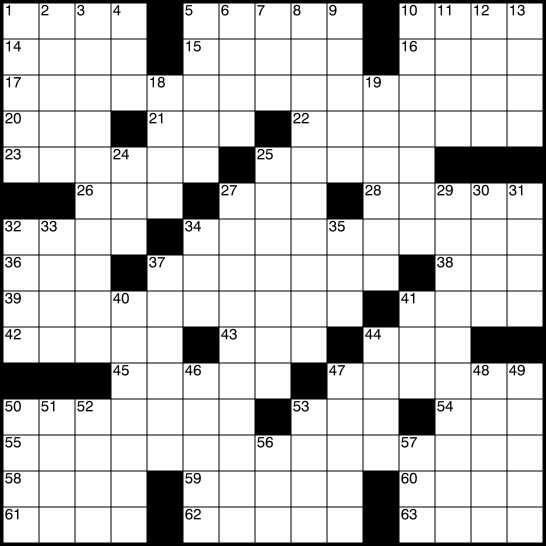
The world of woke crossword-puzzlers – a place of horrible, unintentional microaggressions
David Thompson takes us on a scary trip to the heart of the woke crossword world:
The world of woke crossword-puzzlers — because that’s a thing that exists — is one in which enthusiasts, via social media, grumble about white men, bemoan the insufficient prominence of “queer or POC colloquialisms,” share “off-colour jokes about hypothetical titles for a Melania Trump memoir,” and fret about the exact ratio of male and female names used as clues. Because a lack of “gender parity” in crossword puzzle clues constitutes one of “the systemic forces that threaten women.”
Crossword puzzles can do that, apparently.
The list of possible crossword-puzzle wrongdoings is, of course, extensive, ever-growing and not entirely straightforward.
Transgressions include clues for ILLEGAL (“One caught by border patrol”); MEN (“Exasperated comment from a feminist”); and HOOD (“Place with homies”).
I’ll give you a moment to steady yourselves, to recover from all that gasping.
A New York Times puzzle triggered agitation with the clue “Pitch to the head, informally,” the solution to which was “beaner.” Given sufficient effort, said word could also, it seems, be construed as a mild and antiquated racial slur, albeit one that had escaped me and which I had to look up. Inevitably, apologies and public prostration ensued, despite both the puzzler-writer and editor confessing their own ignorance and intending no harm. Needless to say, the apology immediately resulted in further hissing and rending of garments by people whose Twitter bios include preferred pronouns and the words liberal and feminist.
Unlike almost every other site on the web, I do encourage you to read the comments at David’s blog … he has a great group of regular commenters (commentators? commentistas? Whatevs…)
February 13, 2020
February 5, 2020
December 21, 2019
December 16, 2019
“The near-homogeneity of Silicon Valley political beliefs has gone from wry punchline to national crisis in the United States”
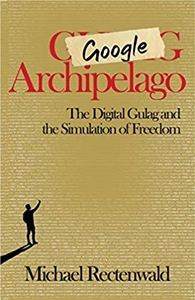
Jason Morgan reviews Michael Rectenwald’s new book Google Archipelago: The Digital Gulag and the Simulation of Freedom:
The near-homogeneity of Silicon Valley political beliefs has gone from wry punchline to national crisis in the United States. The monoculture of virtue signaling and high- and heavy-handed woke corporate leftism at places like Google, Twitter, and Facebook was once a source of chagrin for those who found themselves shut out of various internet sites for deviating from the orthodoxies of the Palo Alto elites. After the 2016 presidential election, however, it became obvious that the digitalistas were doing a lot more than just making examples of a few handpicked “extremists.” From the shadow banning of non-leftist sites and views to full-complement political propagandizing, Bay Area leftists have been so aggressive in bending the national psyche to their will that there is talk in the papers and on the cable “news” channels of “existential threats to our democracy.”
It is tempting to see this as a function of political correctness. Americans, and others around the world, who have found themselves on the “wrong side of history” (as determined by the cultural elite in an endless cycle of epistemological door closing) have long been shut out of conversations, their views deemed beyond the pale of acceptable discourse in enlightened modern societies. Google, Facebook, Twitter — are these corporations, and their uber-woke CEOs, just cranking the PC up to eleven and imposing their schoolmarmish proclivities on the billions of people who want to scrawl messages on their electronic chalkboards?
Not so, says reformed leftist — and current PC target — Michael Rectenwald. The truth of Stanford and Harvard alumni’s death grip on global discourse is much more complicated than just PC run amok. It is not that the Silicon Valley giants are agents of mass surveillance and censorship (although mass surveillance and censorship are precisely the business they’re in). It’s that the very system they have designed is, structurally, the same as the systems of oppression that blanketed and smothered free expression in so much of the world during the previous century. In his latest book, Google Archipelago, Rectenwald outlines how this system works, why leftism is synonymous with oppression, and how the Google Archipelago’s regime of “simulated reality” “must be countered, not only with real knowledge, but with a metaphysics of truth.”
Google Archipelago is divided into eight chapters and is rooted in both Rectenwald’s encyclopedic knowledge of the history of science and corporate control of culture, as well as in his own experiences. Before retiring, Rectenwald had been a professor at New York University, where he was thoroughly entrenched in the PC episteme that squelches real thought at universities across North America and beyond. Gradually, Rectenwald began to realize that PC was not a philosophy, but the enemy of open inquiry. For this reason, and because Rectenwald is an expert in the so-called digital humanities and the long history of scientific (and pseudo-scientific) thinking that feeds into it, Google Archipelago is not just a dry monograph about a social issue. By turns memoir, Kafkaesque dream sequence, trenchant rebuke of leftist censorship, and intellectual history of woke corporate political correctness, Google Archipelago is a welcoming window into a mind working happily in overdrive.