
As my regular readers know, as far as I’m concerned, they represent two not-terribly-different wings of exactly the same political party: the Boot on Your Neck Party. If it isn’t George Bush with his boot on your neck after 2008 — if George isn’t there any more to steal half of everything you make, and enslave your kids for military and other purposes, and dog your steps, and lowjack your phone, and read your mail, and ransack your medical records, and censor your radio and television, and search your home, and probe your bunghole — it’ll be Hillary.
Or somebody just like her.
Neither of these phony antagonists will offer not to do any of those evil things. Instead, they’re competing on the basis of who can deprive us all of more of our rights faster. Standing on the shoulders of would-be tyrants like Lincoln, Wilson, Roosevelt, and Johnson, Bill Clinton did his damnable best to make the state stronger and more unaccountable to the people. George Bush stands on Clinton’s shoulders today.
Any “progress” made by Republicans in converting America into a dictatorship will be absorbed by the next Democratic administration before they go on to make “progress” of their own. The “no-fly” list will become the “no-ride” list, then the “no-drive” list, then the “no-walk” list, and finally the “no-breathe” list. Why anybody should think that it matters which wing of the Boot on Your Neck Party is doing it to us at any given moment is — and always has been — beyond me.
L. Neil Smith, “Time for a Boynout”, Libertarian Enterprise, 2006-02-19.
January 20, 2022
QotD: The Boot-On-Your-Neck parties
January 7, 2022
QotD: British intelligentsia and imperial decline
It should be noted that there is now no intelligentsia that is not in some sense “Left”. Perhaps the last right-wing intellectual was T.E. Lawrence. Since about 1930 everyone describable as an “intellectual” has lived in a state of chronic discontent with the existing order. Necessarily so, because society as it was constituted had no room for him. In an Empire that was simply stagnant, neither being developed nor falling to pieces, and in an England ruled by people whose chief asset was their stupidity, to be “clever” was to be suspect. If you had the kind of brain that could understand the poems of T.S. Eliot or the theories of Karl Marx, the higher-ups would see to it that you were kept out of any important job. The intellectuals could find a function for themselves only in the literary reviews and the left-wing political parties.
The mentality of the English left-wing intelligentsia can be studied in half a dozen weekly and monthly papers. The immediately striking thing about all these papers is their generally negative, querulous attitude, their complete lack at all times of any constructive suggestion. There is little in them except the irresponsible carping of people who have never been and never expect to be in a position of power. Another marked characteristic is the emotional shallowness of people who live in a world of ideas and have little contact with physical reality. Many intellectuals of the Left were flabbily pacifist up to 1935, shrieked for war against Germany in the years 1935-9, and then promptly cooled off when the war started. It is broadly though not precisely true that the people who were most “anti-Fascist” during the Spanish civil war are most defeatist now. And underlying this is the really important fact about so many of the English intelligentsia – their severance from the common culture of the country.
George Orwell, “The Lion And The Unicorn: Socialism and the English Genius”, 1941-02-19.
January 6, 2022
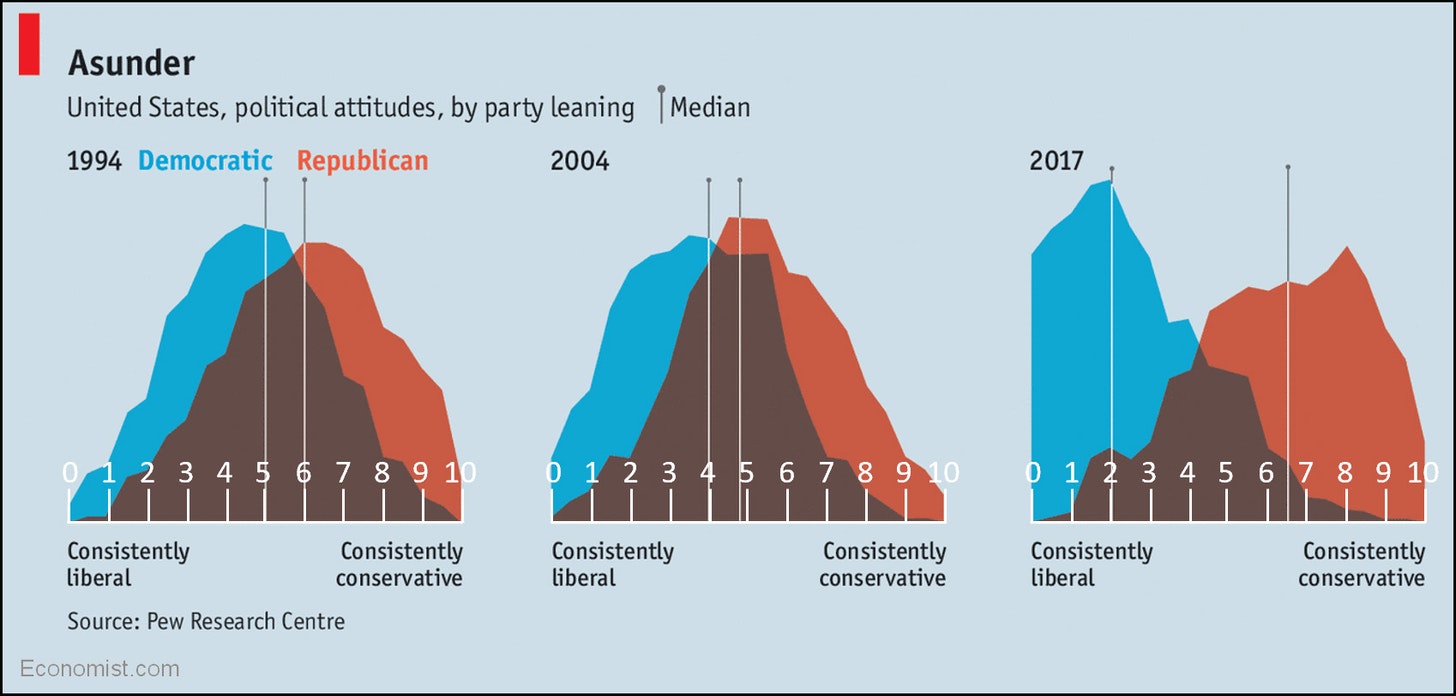
QotD: The centre cannot hold … because there’s barely any “centre” remaining
On immigration, Republicans have moved around five points to the right; the Democrats 35 points to the left. On abortion, Republicans who advocate a total ban have increased their numbers a couple of points since 1994; Democrats who favor legality in every instance has risen 20 points. On guns, the GOP has moved ten points right; Dems 20 points left.
It is also no accident that, as Drum notes and as David Shor has shown: “white academic theories of racism — and probably the whole woke movement in general — have turned off many moderate Black and Hispanic voters.” This is why even a huge economic boom may not be enough to keep the Democrats in power next year.
We are going through the greatest radicalization of the elites since the 1960s. This isn’t coming from the ground up. It’s being imposed ruthlessly from above, marshaled with a fusillade of constant MSM propaganda, and its victims are often the poor and the black and the brown.
Andrew Sullivan, “What Happened To You?”, The Weekly Dish, 2021-07-09.
January 4, 2022
QotD: Status signalling
In fact, their philosophy — the Marxist ideology they propound and the craziness behind it — has been in control of society, on top, since at least the seventies.
Being a leftist is a mark of being “good” and also well educated. The same way that in Elizabethan England poor mad Christopher Marlowe wrote his stage directions in Latin, to show that he had had an excellent education and deserved respect, so too the leftists of today pepper their works, from movies to TV to books to art, with odes to the oppressed and paeans to the coming revolution. It’s how you show you’re high-class and exquisitely educated.
All the old families, all the rich, all the captains of industry and power brokers signal left as hard as they can, because that’s where the power is — and in my field, the awards, the professorships, and the acclaim. Heck, remember what Trump signaled just to be allowed to do business.
And that’s why I’ve been watching in amusement the left going through the motions of kabuki theater revolution against a society … they control.
Sarah Hoyt, “We’re Seeing the Death Rattle of the Revolution, Not Its Birth”, PJ Media, 2020-07-28.
January 3, 2022
QotD: The Sisyphean quest of conservatives looking for progressive approval
Stop caring what liberals and their media toadies say. Be a conservative and make them pay.
It’s simple, effective, and much more satisfying than trying to get people who hate you to stop hating you.
It’s also more dignified. Look at Chimpy McBu$Hitlerburton. That was what they called George W. Bush back in the day. He was hardly hardcore – the guy was softer than a My Pillow and about 1 percent as based. But they hated him anyway, trashed him, slandered him, and even toobined to their assassination fantasies about him. But he was too gentlemanly to defend himself. Yet, once he retired to paint tacky pictures and began sucking up to the elite, he suddenly became a respected elder statesman. Now you have the Democrats positively orgasmic over his upcoming fundraiser for the doomed reelection bid of the Beltway Cowgirl Liz Cheney, who has likewise earned the temporary reprieve from the hate-tsunami by utterly betraying her fellow Republicans.
So, you can buy yourself some time. The price is your dignity, but if you crawl around on your belly and lick the toes of your vinyl-clad leftist dominatrix – oops, I assumed xis gender! – you’ll get a little less hatred for a little while.
These indisputable facts completely dispel the argument that the problem with conservatives is that they are too scary, that they must be bland and moderate and bipartisan and not upset the erotically-forgone wine women of the suburbs who channel their sexual frustrations into liberal politics. The idea that we will win these people over by not standing up for anything is just silly; how many times do you have to have a plan fail before you admit it’s a failure, GOP?
Kurt Schlichter, “Every Republican Is ‘Literally Hitler’, So Stop Caring What Libs Say”, TownHall.com, 2021-09-29.
January 2, 2022
In 1978, E.O. Wilson was “the only scientist in modern times to be physically attacked for an idea”
In the current year, I suspect many, many scientists have been physically attacked for advocating unpopular ideas. In Quillette, Alice Dreger publishes an interview she had with Wilson in 2009:

Edward O. Wilson in February 2003.
PLoS image by Jim Harrison via Wikimedia Commons.
Alice Dreger: I know you’ve spoken about it many times before, but I would like to begin by asking you about the session at the 1978 AAAS [American Association for the Advancement of Science] conference during which you were rushed on the stage and a protester emptied a pitcher of water onto your head. By all accounts, the talk you then gave was very measured. How on Earth were you able to remain so calm after being physically assaulted?
Edward O. Wilson: I think I may have been the only scientist in modern times to be physically attacked for an idea. The idea of a biological human nature was abhorrent to the demonstrators and was, in fact, too radical at the time for a lot of people — probably most social scientists and certainly many on the far-Left. They just accepted as dogma the blank-slate view of the human mind — that everything we do and think is due to contingency, rather than based upon instinct like bodily functions and the urge to keep reproducing. These people believe that everything we do is the result of historical accidents, the events of history, the development of personality through experience.
That was firmly believed in 1978 by a wide part of the population, but particularly by the political Left. And it was thought at the time that raising the specter of a biological basis for human behavior was not only wrong, but a justification for war, sexism, and racism. Biological gender differences could justify sexism, and any imputation that we evolved a human nature, or that human qualities might differ from one race to another, was dangerously racist.
So, furious ideologically based opposition had built up in 1978. That opposition had been fanned by a small number of academics including [paleontologist] Stephen Jay Gould and [evolutionary biologist] Richard Lewontin and two or three others on the Harvard faculty who thought this was a very dangerous idea and said so. These people helped organize the so-called “Science for the People” movement, or the branch of it called the “Sociobiology Study Group”. Their purpose was to discredit me personally for having brought up such a dangerous and destructive idea.
In fact, at that meeting, InCAR — the International Committee Against Racism — held up signs condemning me and sociobiology and racism in general. Of course, racism never even entered my thinking in developing these ideas. Anyway, after they dumped the water on me, amazingly, they returned to their seats while I was drying myself off. A couple of people then made short speeches — most notably Stephen Gould, of all people, the guy whose agitation and inflammatory essays had been partly responsible for all this. He addressed the demonstrators and said, in effect, that while he fully understood their motivation, violence was not the right way to achieve their goals.
As for me, I don’t know why, but I just get calm under a lot of stress. I’ve been in that sort of stressful situation many times, especially in the field. I started thinking to myself, this is probably going to be an historical moment, and it is very interesting. I wasn’t in the least doubt that my science was correct. I knew this was a kind of aberration. I understood the source because I knew the people who had been the chief thinkers, the ideological leaders. An astonishingly good percentage of them were on the faculty at Harvard. I wasn’t concerned this would come to anything in the long term.
So, someone found a paper towel and I dried my head. As soon as things settled down, I just read my talk. I knew things were going to work out — there was so much evidence accumulated already for a somewhat programmed human brain. By then, it was already coming from many directions, including genetics and neuroscience. There was no doubt about where things would go. There may be hold-outs but the inevitable conclusion from neuroscience and anthropology and genetics is for this way of thinking. [American anthropologist] Nap[oleon] Chagnon was present and he was certainly a leader in thinking about human nature and how valuable it is, and what its motivations are, by studying groups like the Yanomamö.
I knew history was on my side. I was young enough that I thought I would live through a good part of it. I was annoyed! But I wasn’t under stress in an extreme way. Before going home, I went to the next session, at which an anthropologist made the mistake of stating that I believe every cultural difference has a genetic basis, so that I am a racist. Of course, I rebutted that, but that was the kind of thing being exchanged at that meeting.
December 29, 2021
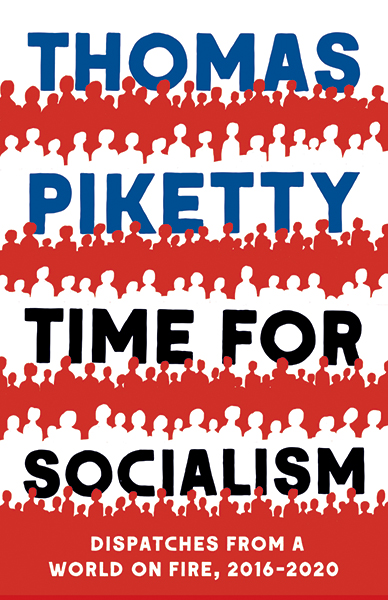
Theodore Dalrymple reviews the latest work from Thomas Piketty, Time for Socialism
Thomas Piketty has been a big name among progressives since his first book hit the bestseller lists, so the release of his latest work calls for some consideration from Theodore Dalrymple:
Piketty still writes clearly, though without much imaginative verve, and he has obviously consulted a lot of data. He is intelligent, knowledgeable, and decent, with a very firm grasp of unreality. He believes in a world in which economic levers act frictionlessly, or to borrow the description a doctor of my acquaintance has used with regard to his own medico-legal reports: “You turn the handle and the sausage comes out.”
There is no difference in his world between investment and expenditure. Thus, when he correctly ascribes low productivity in Britain to the low educational level of the general population (such that, in a predominantly service economy, much of it is unable even to answer the telephone properly or with reasonable courtesy), he ascribes it to lack of expenditure on education. If only this were the case! But lack of expenditure cannot possibly explain why about a fifth of children leave school barely literate. Incidentally, France seems to be progressing, if that is quite the word, in this direction.
We read that “Research in the social sciences, of which economics is an integral part, whatever some may think, is and always will be hesitant and imperfect. It is not designed to produce ready-made certainties … we have to examine patiently to endeavour to draw some provisional and uncertain lessons.” Amen to that! But modesty or tentativeness is not Professor Piketty’s main characteristic, nor does prudence once enter into his proposals.
There is no awareness that deterioration is possible as well as improvement, or of the fragility of things. Nothing counts for him but equality. He is to taxation policy what Le Corbusier was to architecture: he wants to prescribe (and proscribe) for the whole world. Above all, no variation! He would tell us how much we may possess, how much we may leave to our descendants or receive from our ancestors, how much we may earn in a year.
As an egalitarian and firm anti-nationalist, he does not explain why redistribution should stop at national borders. But try telling the average Frenchman that from now on he must forgo half his wealth in order to raise up Somalia or South Sudan! The book sometimes reads as if it were written by an electoral propagandist for Éric Zemmour, acting as an agent provocateur.
Uniformity is for him the price of unity (his countryman, Frédéric Bastiat, did not make the same mistake). He has little regard for, or even awareness of, the potential political consequences of some of his proposals. In his European Assembly, for example, which would have real power (unlike the current European Parliament), France, Spain, and Italy could and probably would outvote Germany with regard to economic policy. It does not occur to him that there could be few better ways of arousing dormant German nationalism than this. Nothing is certain, but much is possible; and while he mentions the internationalism of Jean-Luc Mélanchon, the left-wing French politician, he might also have mentioned that M. Mélenchon wrote a book about Germany and Germans that could easily have been written by a patriotic Frenchman in 1916.
Piketty is a strong believer in taxes as tools to make people more equal, and objects to the elimination of the wealth tax by the French government recently. Were he given the power, he would not only re-implement it, but vastly expand the taxes demanded of the wealthy.
[…] To all this, Professor Piketty has one sovereign remedy: tax the rich.
He thinks this is democratic because many, perhaps a majority, would vote for it. He has no problems with majoritarian democracy (provided the majority agrees with him): How can democracy be tyrannous? Thus, he sees no drawbacks in Senator Warren’s proposal to set a wealth tax and to provide — provide! — “an exit tax equal to 40% of total wealth for those who choose to leave the country and relinquish American citizenship.” Moreover, “the tax would apply to all assets, with no exemptions, with dissuasive sanctions for persons and governments who do not transmit appropriate information on assets held abroad.” Not only is this tyrannous with regard to individuals, but it is tyrannous with regard to international relations, providing a justification for American jurisdiction over the whole world. Needless to say, China, Russia, and India would never accept this, and might find allies. Conflict could become endless.
The answer to this little problem is obvious to Professor Piketty: a wealth tax worldwide, such that there would be nowhere for anyone to hide. There might be a few little teething problems with implementation — for example, who is to oversee it all — but think of the benefits: lie back and think of England! Professor Piketty has found the elixir of life, and it is taxation.
December 20, 2021
Even libertarians can fall victim to progressive hysteria
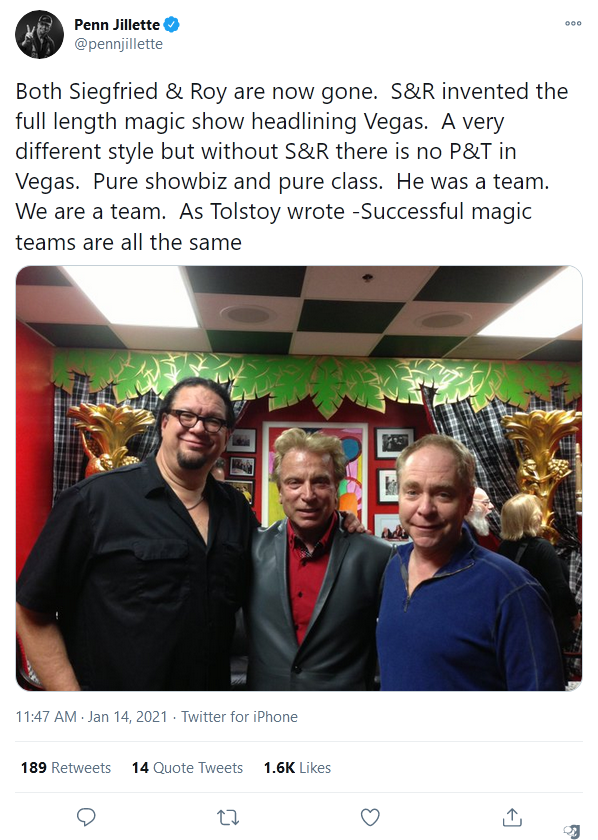
In the latest Libertarian Enterprise, Sean Gangol mourns the discovery that Penn Jillette has abandoned his libertarian beliefs due at least in part to a bout of Trump Derangement Syndrome:
In the last three years I have found myself becoming increasingly disappointed with certain organizations and people who have called themselves libertarian. My first disappointment was Christopher Cantwell, a libertarian who joined the Free State movement in New Hampshire. I used to be a regular listener of his podcast up until he got involved in the so-called Alt-Right movement, where he found himself mixed up in the fiasco that took place in Charlottesville. To this day I still can’t comprehend how a no-nonsense Anarcho-Capitalist like Cantwell could trade the principles of individual freedom for the principles peddled by a neo-fascist group. Then there was Reason magazine, who blamed Trump for the death of a young protestor in Charlottesville, which led to me cancelling my subscription. I also got tired of libertarians constantly belly-aching about how Trump is far from their ideal president, which is why I stopped watching Kennedy. Though I would say that my biggest disappointment was Judge Andrew Napolitano who had an obvious vendetta against Trump since he seemed to support any charge that was made against the former president no matter how bogus it seemed. At least Napolitano was my biggest disappointment, up until I heard about Penn Jillette’s recent abandonment of his libertarian principles.
When I first discovered Penn & Teller’s Bullshit on Showtime back in 2005, I not only fell in love with the show but with the witty duo. They were never afraid to pull any punches when it came to the subjects that they went out of their way to debunk. It didn’t matter if the subject was gun control, The War on Drugs or just about every form of pseudoscience that Western Civilization had to offer. The most controversial episodes involved slave reparations, climate change hysteria and AA meetings. The episode on the AA meetings was so controversial that their own film crew threatened to go on strike over it. I had the pleasure of getting my picture taken with the duo back in 2008, when I went to see one of their magic shows in Las Vegas.
I can definitely say that I take no pleasure in criticizing Penn Jillette, but I couldn’t believe that he actually said these words on an episode of Big Think : “[A] lot of the illusions that I held dear, rugged individualism, individual freedoms, are coming back to bite us in the ass. It seems like getting rid of the gatekeepers gave us Trump as president, and in the same breath, in the same wind, gave us not wearing masks, and maybe gave us a huge unpleasant amount of overt racism.” When I heard those words, I wanted to ask Penn, “who the hell he was and what did he do with the real Penn Jillette?” This statement sounded like it came from somebody like Edwin Lyngar from Salon, who claims to be a former libertarian, but seems to know very little about the ideology that he now trashes. If I didn’t know anything about Penn Jillete, I would have thought of him as big of a phony as Lyngar. It’s hard to believe that this is the same man that went to a TSA checkpoint at the airport with his pants around his ankles to protest the invasive security measures that that they put the passengers through on a daily basis. What happened to that man?
I find it disappointing and perplexing that Penn Jillette would associate any damage caused by the CORONA virus to individualism, when it was a totalitarian government that caused the whole mess in the first place. I don’t know if anyone every explained this to him, but China isn’t renowned for their individualism. I also find it perplexing that a hard-nosed skeptic like Penn can have such a fixation with masks. I remember a time when Penn Jillete would criticize people who put their faith in certain ideas without evidence. It didn’t matter if it was a belief in a deity or a misguided faith in alternative medicine. Yet, he seems to believe in the same quackery that he and Teller used to routinely debunk on Bullshit. Yes, I do believe that masks are a form of pseudoscience and for that matter I believe that most of the measures that have been shoved down our throats for the past year and half are complete bunk. I assume these things are complete bunk because the officials pushing those measures have yet to show a single shred of evidence that they have been effective in reducing infection rates.
I’ve had the same disillusionments with former libertarians, and Penn’s conversion to progressive nostrums was certainly one of the most disappointing. I’m not renewing my more-than-30-year subscription to Reason magazine — in fact, I haven’t read many issues in the last several years, as I keep finding arguments that might appear in The Atlantic or other consciously progressive organs rather than the libertarian reporting they used to be so good at delivering.
December 17, 2021
QotD: The Kafkatrap that is known as “white feminism”
Many describe Franz Kafka’s disenchanted fables as tragic. And this is certainly true. But they are also farcical. To watch someone being relentlessly wrong can be grimly enjoyable — as long as you’re not the person in question.
The term white feminism, as it is commonly used today, is a classic example of the Kafka Trap. If you show too much interest in the lives of people of colour, you risk being accused of white saviourism — which is another way of saying you have a suspiciously condescending attitude to people of colour. But if you don’t show enough interest, you are insufficiently intersectional. You only care about the white, middle-class cisgendered women in your social circle.
White feminism is a classic example of the Kafka Trap because whatever you do is either too much or not enough. You are never right.
Tomiwa Owolade, “The problem with white saviours”, UnHerd.com, 2021-09-12.
December 13, 2021
QotD: Cultural undermining of the British “establishment” was effectively complete by 1970
[…]
It also made the middle class, especially the educated and well-off middle class, despise themselves and feel a sort of shame for their supposedly elitist prejudices, based upon injustice and undermined by their failure to defend the nation from its enemies in the era of appeasement. Thanks to this, in another paradox, they have often felt unable to defend things within Britain which they value and which help to keep them in existence, from the grammar schools to good manners. They are ashamed of being higher up the scale, though for most middle-class people this is more a matter of merit than birth, and nothing to be ashamed of at all.
[…]
Since the 1960s, when the Left began its conquest of the cultural battlements, it has always been surprised and annoyed by Tory election victories. The 1970 Tory triumph, though entirely predictable, took the cultural establishment by surprise. The 1979 Tory win, though even more predictable, infuriated them. They had won control of broadcasting, of the schools, of the universities, the church, the artistic, musical and architectural establishment? How was it possible that they could not also be the government? Their rage was enormous, and increased with each successive Labour defeat. It was an injustice. How could the people be so foolish? Now, instead of aristocratic snobs misgoverning the country, the establishment was portrayed as a sort of fascistic semi-dictatorship, hacking at the NHS and the welfare state, waging aggressive wars abroad and enriching itself while the poor lived in misery.
This series of falsehoods has now become a weapon ready and waiting for unscrupulous demagogues to harness, and perhaps use against the new “establishment” which has benefited so much from the satire boom and the alternative comedians. Once you have begun to use dishonest mockery as a weapon, you can never be entirely sure that it will not eventually be turned against you, by others who have learned that abuse and jeering pay much easier and swifter dividends than hard fact or serious argument. It could be that the civilized mirth of the sixties leads in a direct line to the crude hyena cackling of the mob. In any case, there is no sign of the humour industry taking the side of traditional morality, patriotism or civility. The best it can do is dignify itself with noisy and public collections for sentimental and prominent charity. Once you step beyond the fringe, you sooner or later find yourself in very wild country indeed.
Peter Hitchens, The Abolition of Britain, 1988.
December 12, 2021
“[T]oday’s antiracism paradoxically requires the crudest of racist categories to justify and explain itself”
Andrew Sullivan on the racism of modern “anti-racist” movements and his hope that Hispanic Americans may provide a way out of the current political deadlock:
Of all the acronyms, euphemisms and sophisms pioneered by critical theory, one of the most revealing is the term “black and brown people”. You hear it all the time now. Whether it’s about “the lack of Black and brown representation in Hollywood”, vaccine hesitancy in “Black and brown neighborhoods in large cities”, the right to vote for “Black and brown people”, or “allyship between Black and brown people”, the “B&b” formula is now yet another ubiquitous media virtue-signal. It’s subtler than some others. It doesn’t shriek woke like “BIPOC”; it isn’t as instantly risible as “2SLGBTQIA+”; it gives “Black” a Capital Letter, and “brown” feels a bit like a lower-case add-on — but at least it uses actual English words, and doesn’t end in an X.
Still: what does it tell you that a staggering and brilliant array of totally different ethnicities, races, religions, histories and cultures can now routinely be reduced to just two drab colors?
I think it speaks to two things. The first is that today’s antiracism paradoxically requires the crudest of racist categories to justify and explain itself. A whole kaleidoscope of immigrant difference — from Kurds and Mexicans and Somalis to Dominicans, Chileans, Nigerians, and Pakistanis — has now been turned into one monochrome racial “brown” — just to fit into an oppressor/oppressed, white/black narrative.
Equally, a diverse African diaspora — ranging from Nigerian immigrants to descendants of Southern slaves to biracial men and women with mainly European ancestry who go back to this country’s miscegenated origins — is now just “Black”. And this new racial unit has one politics: left-Democrat. Individuals disappear; diversity of opinion within groups evaporate; all that matters is a single skin color and oppression.
The second aspect of critical theory that “B&b” helps reveal is that the crude binary of “black” and “white” simply has less salience with every passing day, as more and more races, ethnicities and cultures complicate and enrich our society, and render it structurally, demographically and culturally unrecognizable from even the recent past. To give one example: 60 years ago, four percent of Americans approved of inter-racial marriage; today, it’s 94 percent. Or check out the rapid decline in the “white Christian” share of the population — from 80 percent in 1996 1976 to 44 percent today. Look around you and you’ll see how the crude rubric of “white supremacy” is, in fact, wildly out of date.
This is why so many of the most passionately woke are so obsessed with history in America, and the further back the better, as the 1619 Project shows. The past is a world they are much more comfortable in than the present, a place where the racial divide was infinitely simpler, and racial inequality both brutal and actively enforced by the government. Before the Civil Rights Act in 1964, before mass non-white immigration began in 1965, before mass non-white illegal immigration since the 1990s, the “white supremacy” rubric had some lingering traction.
But in the 21st Century, it’s been hopelessly compounded by layer upon layer of mass immigration from every conceivable corner of the planet. The Latino population in the US is now larger than the African-American one; and Asians, of many different varieties, are now immigrating in higher numbers than Latinos. Before too long, the black/white dynamic may disappear into the multi-colored, multi-hued background entirely.
December 11, 2021
Another front opens in the “War On Christmas”
In The Line, Jen Gerson looks at the latest offence against mainstream views of the Christmas season:
it was impossible not to get sucked into the blossoming horror of Santa Inc.
The eight-part television show made for HBO Max by comedians Sarah Silverman and Seth Rogen may soon attain the record of one of the most poorly rated television series of all time. And watching but a brief trailer, it’s not hard to see why.
I mean … Jesus. If you were trying to craft a perfect example of hate-bait for the reactionary right in a lab, this is pretty much what it would look like. It’s got woke politics, feminism, hatred of white guys and a pot shot in the War on Christmas neatly tied up in a claymation bow. The fact that the show is fronted by comedians who are Jewish has dug this mess into the very ugliest, muddiest trench of the culture war.
[…]
If you want to create an outrageous, bawdy Christmas movie that features a miserable and bored Mrs. Claus giving head to Santa, or a gag with a miner’s hat filled with dildos, there’s nothing wrong with that. But there’s a very specific audience for “sausage party” humour — lacrosse-playing young white men, and older white men who wish they were still young white men who could play lacrosse. In other words, people who look like Seth Rogen.
And do you know what that crowd doesn’t generally enjoy?
Thinly veiled manifestos on how awful white men are; the terribleness of corporate America, and a show featuring a lot of downtrodden women complaining about health insurance and lack of maternity leave.
On the other hand, if Santa Inc. was trying to appeal to the #resistence pussy hat and rainbow tattoo crowd, certainly a woke-appropriate message is here for them. But, does this crowd need to be so lectured? Meanwhile, the juvenile humour is off-putting. Is the feminist set going to keel over laughing because one of the female reindeer characters brags about having a threesome with Donner?
Lol. Thud.
There’s no sophistication here. No clever set up or punch line. It’s just a story about an angry female elf who wants to be Santa Claus that pretends to be funny by leaning on sex jokes.
Raunchiness is fine for a cheap laugh. It relies on the taboo of shock and sex to generate an emotional reaction. But, man, one of the most popular music videos of the last few years was Wet Ass Pussy. Who even notices swearing anymore? Who is shocked by a scene in which the main character’s mother bangs the Easter bunny?
This kind of lazy humour is old hat. It’s boring.
So, no, Santa Inc. is not good.

December 1, 2021
“To challenge individualism, we must suspend individual perceptions by exploring our collective racial identity, which is good because by disrupting individual identities, we challenge individualism”
Matt Taibbi reviews Robin DiAngelo’s Nice Racism: How Progressive White People Perpetuate Racial Harm.
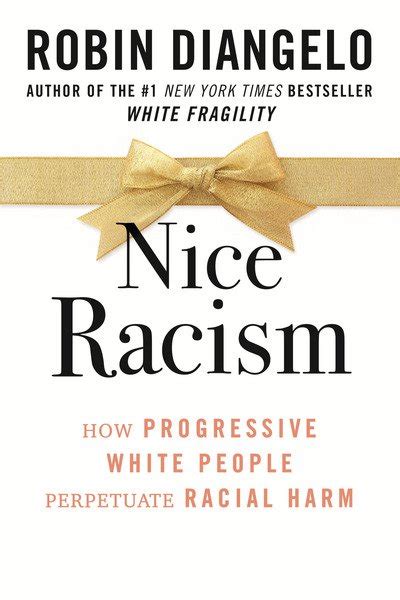
Nice Racism, the booklike product just released by the “Vanilla Ice of Antiracism“, Robin DiAngelo, begins with an anecdote from the author’s past. She’s in college, gone out to a dinner party with her partner, where she discovers the other couple is, gasp, black. “I was excited and felt an immediate need to let them know I was not racist,” she explains, adding: “I proceeded to spend the evening telling them how racist my family was. I shared every racist joke, story, and comment I could remember my family ever making …”
Predictably, her behavior makes the couple uncomfortable, but, “I obliviously plowed ahead, ignoring their signals. I was having a great time regaling them with these anecdotes — the proverbial life of the party!” She goes on:
My progressive credentials were impeccable: I was a minority myself — a woman in a committed relationship with another woman … I knew how to talk about patriarchy and heterosexism. I was a cool white progressive, not an ignorant racist. Of course, what I was actually demonstrating was how completely oblivious I was.
No kidding. Instead of trying to amp down her racial anxiety out of basic decency, this author fed hers steroids and protein shakes, growing it to brontosaurus size before dressing it in neon diapers and parading it across America for years in a juggernaut of cringe that’s already secured a place as one of the great carnival grifts of all time. Nice Racism, the rare book that’s unreadable and morally disgusting but somehow also important, is the latest stop on the tour.
DiAngelo is a unique writer, being dishonest, dangerous, and moronic in magnificent quantities, probably in that order. If you’re trying, which she clearly isn’t, a good trade rule is, “If you’ve already written a book once, don’t write it again.” Nice Racism is the same book as the 2018 bestseller White Fragility, and by “the same” I don’t mean generally, but word-for-word, line-by-line, chapter-by-chapter the same, a thunderous, admirably brazen exercise in self-plagiarism. Can you guess which of these passages is from Nice Racism, and which from White Fragility?
a) Individualism… allows white people to exempt ourselves personally from race-based advantage.
b) To challenge the ideologies of racism such as individualism and color blindness, we as white people must suspend our perception of ourselves as unique and/or outside race.
c) Exploring our collective racial identity interrupts a key privilege of dominance — the ability to see oneself only as an individual.
d) We need to discuss white people as a group — even if doing so jars us — in order to disrupt our unracialized identities … Talking about race and racism in general terms such as white people is constructive for whites because it interrupts individualism.
The first is from Nice Racism, the rest from White Fragility. The last three actually comprise a paragraph that moves in full circle: “To challenge individualism, we must suspend individual perceptions by exploring our collective racial identity, which is good because by disrupting individual identities, we challenge individualism.” A rhetorical palindrome! This isn’t writing, but vomiting up mounds of sentences that mean the same thing and mopping them on the page. Because this author only has two or three ideas — I was going to make a list but I think it stops after “denying racism is evidence of racism” — the effect is disorienting across one book, let alone two.
H/T to K.T. at Ace of Spades H.Q. for the link.
QotD: When mere teaching isn’t enough, indoctrination takes over
There is no such thing as learning loss. Our kids didn’t lose anything [during the pandemic]. It’s okay that our babies may not have learned all their times tables. They learned resilience. They learned survival. They learned critical-thinking skills. They know the difference between a riot and a protest. They know the words insurrection and coup.
So says Cecily Myart-Cruz, president of the United Teachers Los Angeles union. A union representing 33,000 teachers and associated educational staff.
“Education is political”, says Ms Myart-Cruz, who boasts of her ability to act with near-impunity, and whose list of Intolerable Things includes cognitive testing, “structural racism”, border controls, policing, and the supposed “privilege” of parents who would like their children to actually learn things, including times tables. Our Mistress Of Higher Purpose struggles to comprehend why parents might object to their children’s education, even in basic skills, being supplanted by the nakedly self-serving and increasingly weird activism of the people paid to teach them those basic skills. Instead, she endorses claims that such objections must be driven by “white-supremacist thinking”.
David Thompson, “Activism Farms”, DavidThompson, 2021-08-31.
November 19, 2021
QotD: People who are interested in history versus “academic” historians
One of many reasons I never went anywhere in my career as an academic historian is that I actually like history. I find it interesting. That’s because I find people interesting, and history is, above all, the study of people and how they be.
Your average academic historian lives entirely in xzheyr own head. They hate and fear people. They have no interest in how people actually are, only in how they should be. Thus, academic history quickly devolves into the worst kind of Social Justice Mad Lib, a never-ending, ever more frantic search for ever more obscure terms to complete the equation: “Despite [barbarities], the [micro-group] were actually only doing it because they were oppressed by the Pale Penis People, because [reasons].”
For example:
This is one of those things that’s true even if it’s not true, because Clown World, but I actually looked this guy up and yeah, he’s real — he’s a “Professor of Practice in Media and Activism at Harvard University”, which is exactly what it sounds like: basically, a tenured pest, who makes very nice bank making students protest shit for class credit. The “new book” referenced in the screenshot isn’t on Amazon yet, so maybe that’s not real, but again, Clown World — even if it’s not real, it’s real, because that’s exactly the kind of thing academic historians do. You probably remember it well from your own college days, if you were in college at any time between about 1985 through 1995, the heyday of “everyone you’ve ever heard of was secretly gay!” pseudo-scholarship.
Severian, “On Boredom”, Rotten Chestnuts, 2021-08-17.



