Quotulatiousness

September 26, 2020

“… debate is an imperialist capitalist white supremacist cis heteropatriarchal technique that transforms a potential exchange of knowledge into a tool of exclusion & oppression”

Filed under: Media, Politics, USA — Tags: , , , , , — Nicholas @ 03:00

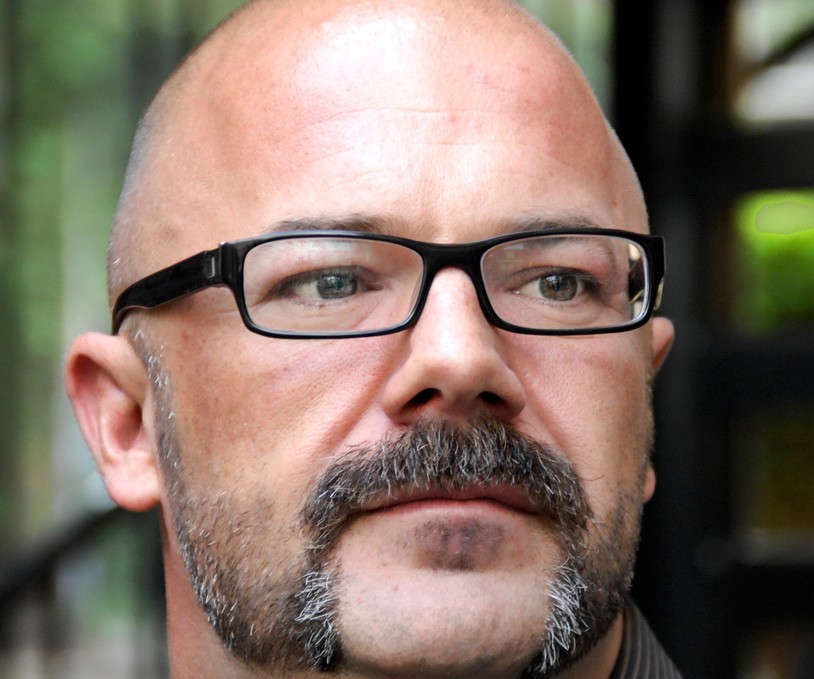
Andrew Sullivan‘s latest look at the ultrawoke:

If you’ve ever wondered why critical theorists and their popularizers never seem to actually expose themselves to direct criticism, this quote might help:

    I get regular invites to debate on various platforms. I always say no. Because debate is an imperialist capitalist white supremacist cis heteropatriarchal technique that transforms a potential exchange of knowledge into a tool of exclusion & oppression.

And also perhaps because debate is one of the most effective tools in rooting out ideological bullshit. Speaking of which, here’s an interview with Judith Butler, the patron saint of wokeness, in which she can actually say, with a straight face: “I am not aware that terf is used as a slur.” “Terf” is short for “Trans-Exclusionary Radical Feminist.” It’s yelled routinely at any dissenter from critical queer and gender theory. Of course it’s used as a slur.

Meanwhile, the 1619 Project has begun finally to implode. Its core argument – that America’s true founding was in 1619 not 1776, because America is in its DNA a slavocracy built on “white supremacy” and not a democracy rooted in the unrealized principle of human equality — has been withdrawn by the editor. Here’s the best summary of the rank dishonesty of the entire thing, from the preternaturally reasonable Conor Friedersdorf. He attempted to engage Nikole Hannah-Jones in good faith, a concept she simply doesn’t comprehend.

I think it’s clear by now that a completely defensible — even important — airing of new scholarship about the evil of slavery, and its profound impact on America, became hijacked at the NYT by the ideology that insists that the United States is inherently white supremacist, that this explains everything about the country, that this has never changed, that no white people were involved in perfecting the union, and that liberal democracy is a front for racism and should be dismantled. Given the extremist politics and unethical behavior of Nikole Hannah-Jones, this is unsurprising. But that this confused, half-baked rant won a Pulitzer and is being used to indoctrinate school kids in critical race theory is a staggering indictment of how corrupted by left-racism American elite journalism now is. In my view, the Pulitzer Board needs to rescind its prize. Fat chance, of course.

But there is hope. There are still reporters at the NYT interested in the truth about woke culture and politics. Nellie Bowles’ dispatch from Portland is a must-read. It’s a glimpse into the totalitarian impulses behind so many on the far left. Chilling.

September 23, 2020

QotD: Don’t blame the Boomers for the “Summer of Love” … most of ’em were too young to participate

I’ve written a lot here about how the most dangerous types in peacetime are the ones who juuuuust missed participating in some vast social upheaval. The Nazis are an obvious example. The Nazi-est Nazis of them all — Himmler, Heydrich, Eichmann, etc. — were old enough to have seen and understood the great national cataclysm that was World War I, but weren’t quite old enough to participate in it directly. Thus, when their turn came, they had to go double-or-nothing to prove to their older kin and classmates that they had what it takes. In America, guys like Teddy Roosevelt don’t make much sense until you realize that they grew up hearing their fathers and older brothers reminisce about the Civil War. And so on.

Now, I’m all for bashing the goddamn Boomers, but let’s be fair (since it matters for historical analysis). There’s a common misconception about the Baby Boom. Here, see if you can spot it:

Did you see it? Look closer, and you’ll see that while 1947(-ish) appears to be the peak year in terms of total births, the vast majority of what we call “Boomers” were born after 1950. Let’s do some simple math. The very oldest Boomers were born in 1946. The Summer of Love was 1967. Even if we assume the Summer of Love came out of nowhere — which is impossible, of course, any movement that large had antecedents going back years, probably decades, but let’s assume — that means that any “Boomers” participating were, at most, barely 22 years old. They were just barely 24 when Woodstock came around. Granted that the youngest are the dumbest, and thus can have outsize influence, they still can’t have been largely, let alone solely, responsible for the idiocy of the hippies.

That’s all on the older crowd, the so-called “Silent Generation” — the ones who were old enough to be aware of World War II, but unable to participate directly.

It’s easy to verify. The Port Huron Statement, the founding document of the New Left, was penned by coddled college kids in 1962 — meaning, by kids born, at latest, in about 1942 (its principal author, Tom Hayden, was born in 1939). Here are the Chicago Seven and their dates of birth: Abbie Hoffman (1936), Jerry Rubin (1938), David Dellinger (1915!), Hayden, Rennie Davis (1941),John Froines (1939), and Lee Weiner (1939).

Hoffman, especially, bears scrutiny. Though he’s best remembered as a Yippie — that is, the founder of an ostentatiously youth-oriented movement — he was 31 at its founding. Don’t trust anyone over thirty, right?

1936 to 1946 is only a decade, but it’s crucial. A kid born in 1936 would have vivid memories of World War II and its immediate aftermath — fathers, uncles, and older brothers (and, in more than a few cases, aunts and older sisters) coming home from the service. A kid born in 1946 would have a completely different experience — ask any combat veteran about the first year or two back in the world, versus being home for a decade. Those guys — the kids who saw firsthand the angry young strangers they were supposed to call “Dad” — were the ones who did the real damage in The Sixties(TM), just as it was the almost-but-not-quite frontsoldaten who did the real damage in the Third Reich.

With me? Now hang on to your hats, because here’s where it gets pretty meta: It was the “Silent Generation,” not the Boomers, who did the real damage in The Sixties(TM). That is, the guys who juuuust missed the giant social upheaval that was World War II. The Boomers have done all the damage since The Sixties(TM).

That — The Sixties(TM), which is why I’m using that obnoxious (TM) — is the great social upheaval they juuuust missed. [These people] aren’t old fossils from the flower power years, though many of those fossils are still alive and kicking (including four of the Chicago Seven: Hayden, Davis, Froines, and Weiner). Has anyone heard from Billy Ayers lately? How about Noam Chomsky (born 1928)? I’m sure they have plenty to say … but nobody cares.

It’s not retreads from The Sixties(TM) out there doing this stuff. It’s the people who wish they’d been around for the Summer of Love that are doing it. It’s the people who just know they would’ve ended the Vietnam War, if only they hadn’t been in junior high at the time. This is their Woodstock, not least because they only heard about the original when they arrived for freshman orientation in 1976.

Severian, “Talkin’ ’bout My Generation!”, Rotten Chestnuts, 2020-06-11.

September 17, 2020

Book burning’s back on the menu, boys!

Filed under: Books, Britain, Politics — Tags: , , , , , , — Nicholas @ 05:00

Brendan O’Neill on the latest fad for the ultrawoke celebrities — book burning.

J.K. Rowling

So it turns out that Jedward, with their quiffed Aryan hair and strangely intense mannerisms, don’t only look like a couple of members of Hitler Youth who’ve been on a shopping spree at TK Maxx. They sound like it too. Yesterday, ever keen to jump on a bandwagon, even if it’s a bandwagon of misogynistic hate, the Shining twins of Irish pop suggested to their Twitter followers that they should burn JK Rowling’s next novel when it is published. “Does anyone need firewood this winter!”, they tweeted. “JK’s new book is perfect to burn next to a Romantic fire. Aww get all cozy and comfy can’t wait.”

Let’s leave to one side the industrial levels of gall it must require for two blokes who don’t know the difference between an exclamation mark and a question mark to have a pop at the most successful British author of all time. The more striking thing about Jedward’s tweet is that it suggests book-burning is back. Their tween-fascist cry for the burning of Rowling’s forthcoming novel was retweeted and liked thousands of times, by armies of so-called trans allies who now look upon Rowling as a real-life Voldemort: a despicable, evil figure whose works should be tossed on to raging bonfires as the woke mob yelps with delight.

The hatred for JK Rowling is out of control. It goes far beyond the everyday attempted cancellations and screeching Twittermob assaults on anyone who dares to deviate from the correct-think of the PC elites. The hatred for Rowling is far more raw, far more intense, far more irrational.

Her intellectual sin, her speechcrime, is of course that she believes in biological sex. She thinks there are differences between men and women. She thinks biological males should bugger off out of women’s changing rooms, sporting tournaments, prisons, rape-crisis centres, and so on. Many of us agree with her. And for this, she is frequently bombarded with rape threats and death threats. “Suck my cock!”, sexist pigs tweet at her. They invite her to die in a fire. They send her explicit pornography. This week #RIPJKRowling trended on Twitter. These people are insane. When your “activism” involves tirelessly insulting and sexually harassing a woman for having a thought that is different to your own, you need to have a serious word with yourself.

The deranged Rowling hate intensified this week after it was reported that her next Strike novel – the detective series she writes under the name Robert Galbraith – will involve a backstory about a man who dresses as a woman and then goes around murdering women. “Transphobia!”, the woke Twitterati predictably yelled. Not for the first time the sexist fury with Rowling for having the temerity to be a woman who thinks for herself was in large part inflamed by Pink News, the online gay magazine that has done more than most to depict women who are sceptical of certain aspects of transgenderism as “TERFs” – that is, witches, bitches, uppity broads who really ought to do what the editors at Pink News tell them to.

September 16, 2020

The Canadian echo chamber on American political issues

Filed under: Cancon, Media, Politics, USA, Weapons — Tags: , , , , , — Nicholas @ 05:00

Ben Woodfinden’s latest for The Dominion looks at the weird effects political passions in the United States have on political stances in Canada:

Restricted and prohibited weapons seized by Toronto police in a 2012 operation. None of the people from whom these weapons were taken was legally allowed to possess them.
Screen capture from a CTV News report.

Participatory media increasingly defines and shapes our discourse. It submerges us in a broader reality but only does so by filtering it into a digital reality that offers a distorted reflection rather than picture of the real world. This has been going on for at least a decade now, but the pandemic has accelerated this transformation of our discourse and politics. By locking us in our homes the pandemic forces us to view the world through a digital lens even more than we already did, and in a world where we’re all viewing everything through our screens that digital reality becomes closer and closer to our primary reality.

One of the specific, and most pernicious effects of this, as I lamented in The Critic is that it turns us all into online Americans participating in their politics through the digital medium, rendering us virtual participants and not just foreign observers. I won’t repeat myself too much, I’d recommend just reading the piece [link], but the online realm is American, and what digital politics does is make politics everywhere more American. We participate in it as a game and a form of entertainment. This bleeds back into our own politics.

Americanized Discourse

Gun politics is one particular political issue where Americanized discourse is most pronounced. It captures perfectly how Americanization plays out. Every time there is some sort of tragic shooting or discussion of gun violence in Canada the debates play out in depressingly predictable ways. Progressives and Liberals paint a picture in which Canada suffers from the kind of rampant gun violence and mass proliferation of firearms as in America. This is the framing used to justify often highly symbolic or ineffective new gun laws and restrictions that, while often not all that effective, make the Liberals and progressives seem like the party for gun control in the face of this rampant violence. But only if you pretend we live in America.

And it’s not just the Liberals and progressives who play this game. Listen to some of the more vocal advocates of “gun rights” in Canada and you’d think we have a second amendment in the Charter. One side wants to make it seem like Canadians are walking around with and easily able to acquire assault weapons, the other side wishes it were so! The reality of course lies somewhere in between. Gun possession is heavily regulated, but lawful citizens can still buy firearms if they want to, and there is no explicit right in the Charter that prevents the government from regulating and restricting firearms. Talking about gun “rights” in Canada is itself quite a foreign and imported concept. At the same time we don’t have an epidemic of gun violence, and while we have experienced some horrific mass shootings, like the recent Nova Scotia tragedy, gun violence in Canada pales in comparison to the United States.

But because both sides are essentially happy to help paint a phantasmic picture of gun violence and/or gun regulations in Canada, we end up with a surreal politics around guns. Sensible debates around guns are made harder by this because debates take place on top of a framing and narrative that draws explicitly on American political culture more than it does Canada’s. Both sides want to take on American roles and are happy to contribute to this framing.

Gun politics is just one example, and there are so many others. Our discourse is so often built around framings that make it seem as if the issues and political cleavages here are indistinguishable from American ones, but it only happens because we import American framing and narratives into our own discourse and then build are arguments around these phantasms. We, like many other countries around the world, are in the middle of a moment of racial reckoning, or whatever you want to call it, because of something that happened in Minneapolis, not in Canada.

Racism is a real thing in Canada, no honest person should deny this, because there is racism in absolutely every country and society. But in the wake of George Floyd’s killing we ended up having a conversation about racism that reflected the particular ways racism works in America.

September 15, 2020

When you mix up cause and effect

In the Continental Telegraph, Esteban remembers a Reagan bon mot that is still observably true today:

US President Ronald Reagan and Soviet General Secretary Mikhail Gorbachev at the Hofdi House in Reykjavik, Iceland during the Reyjavik Summit in 1986.
Official US government photograph via Wikimedia Commons.

Ronald Reagan once observed that “the trouble with our liberal friends isn’t that they are ignorant, it’s that so much they know isn’t so”. I am repeatedly surprised by Leftists’ ability not to just get something wrong, but to get it spectacularly, 180 degrees wrong.

First, a couple of examples from the archives – some years ago there was an article in the NY Times (or WaPo perhaps) quite distressed that even though crime rates in the U.S. were at historically low levels the percentage of the population in prison was quite high. “Why are we putting so many people in prison when the crime rate is low?” they wondered, seriously. Hmm, how about this – when we put more bad people in prison the crime rate goes down? Keep in mind that the crime rate is what’s happening now, the prison population is who we caught and locked up over the past several years.

Then we had an article in a West Coast newspaper wondering why the homeless population in San Francisco had grown dramatically in recent years despite all the wonderful things the city had done to help them – weekly stipends, free shopping carts, etc. Note that none of this assistance to the homeless enabled them to become independent or required them to better themselves, they were all handouts. How is it that offering lots of goodies to homeless people attracts more of them here?

My point in bringing up these old stories is that it seems impossible that someone could fail to see they had cause and effect reversed. How could someone intelligent enough to write a column get these stories so backwards. The only answer I can see is that their worldview, at least in these areas, flows in only one direction and the underlying premise can never be questioned – putting people in prison is bad, there can be no possible upside, giving homeless people stuff is good, there can be no downside. So, when things get worse it’s a mystery, we can’t reconsider our starting point.

September 13, 2020

“Systemic racism” in Canada

Filed under: Cancon, Government, Politics — Tags: , , , — Nicholas @ 03:00

At The Line, a useful examination of what is meant in the Canadian context by the term “systemic racism”:

Can we go back one step? “Systemic racism.” Let’s start there: which system? The legal system? Our social welfare system? The policing system? The media? Our corporations? All of human society? Are we talking about Canadian society, or North American society as whole? Are there geographic limits to the systems we’re talking about? Is China systemically racist?

Let’s break this down further: what definition of “racism” are we using? Are we using the old definition whereby any bigotry based on skin colour is “racist”? Or are we engaging the new definition, where “racism” is an expression of structural power — and, therefore, only white people can be racist because only they hold structural power?

It’s impossible to fix a problem if we can’t come to a common understanding about plain meanings of the terms we are using. Vague in, vague out.

There are many statements of “systemic racism” that we, at The Line, would have no qualms agreeing with, i.e.; “The Indian Act is a clear example of systemic racism in Canadian law.” That isn’t a controversial position — but it also isn’t an unclear one. Asserting a belief in “systemic racism” sounds like a broadly agreeable thing to do, but the term is loaded with meaning and ideological baggage that is not immediately apparent.

Take, for example, a claim that Canadian society is systemically racist because it is structured at all levels to favour white dominance — and that any disparity of outcome between racial groups is proof of that fact. Well, that’s a much more all-encompassing ideological position, isn’t it? There’s a perfectly legitimate framework for critique in here, but there’s also a lot to unpack.

It’s easy to find legitimate examples of systemic racism while leaving the actual meaning and implications of the term both vague and tautological. But if we’re going to use statement of belief in “systemic racism” as some kind of litmus test for political acceptability, the clear meaning of the term matters.

In the absence of that clarity, using it as a gotcha question and backing people in public life into reciting this stuff as if it were some kind of statement of faith comes off as not a little creepy.

September 12, 2020

Andrew Sullivan on a “genetic case for communism”

Filed under: Books, Education, Politics, Science, USA — Tags: , , , , , — Nicholas @ 03:00

Actually, this isn’t the case Sullivan himself is making, but he’s summarizing a recent book by Fredrik deBoer, The Cult of Smart: How our broken education system perpetuates social injustice:

There aren’t many books out there these days by revolutionary communists who are into the genetics of intelligence. But then there aren’t many writers like Freddie DeBoer. He’s an insistently quirky thinker who has managed to resist the snark, cynicism and moral preening of so many others in his generation — and write from his often-broken heart. And the core of his new book, The Cult of Smart, is a moral case for those with less natural intelligence than others — the ultimate losers in our democratic meritocracy, a system both the mainstream right and left have defended for decades now, and that, DeBoer argues, gives short shrift to far too many.

This isn’t a merely abstract question for him. He has grappled with it directly. As a school teacher he encountered the simple, unavoidable fact that some humans are more academically gifted than others, and there’s nothing much anyone can do about it. He recalls his effort to teach long division to a boy who had managed to come a long way socially (he’d gone from being a hell-raiser to a good student) but who still struggled with something as elemental as long division: “At one point he broke into tears, as he had several times before … I exhaled slowly and felt myself give up, though of course I would never tell him so. I tried to console him, once again, and he said, ‘I just can’t do it.’ And it struck me, with unusual force, that he was right.”

What DeBoer tries to do is explain how our current culture and political system is geared to torment, distress and punish this kid for no fault of his own. “This is the cult of smart,” DeBoer proclaims. “It is the notion that academic value is the only value, and intelligence the only true measure of human worth. It is pernicious, it is cruel, and it must change.” It has become un-American — or perhaps it always was? — to say that an individual has natural limits, that, even with extremely hard work, he won’t always be able to realize his dreams. And this is not because of anything he has done or failed to do — but simply because of his draw in the genetic lottery of life. The very American cult of education is supposed to end this injustice — except that it doesn’t, because it can’t, and its brutal logic actually exposes and entrenches the least defensible inequality of all, the inequality of nature.

This genetic reality — in fact, the very idea of nature existing at all — is currently a taboo topic on the left. In the most ludicrously untrue and yet suffocatingly omnipresent orthodoxy of our time, critical theory leftists insist that everything on earth is entirely socially constructed, that all inequality is a function of “oppressive systems”, and that human nature itself is what John Locke called a “white paper, void of all characters” — the famous blank slate. Freddie begs to differ: “Human behavioral traits, such as IQ, are profoundly shaped by genetic parentage, and this genetic influence plays a larger role in determining human outcomes than the family and home environment.”

People are not just born unequally and unfairly into class, and culture, and place, they are inherently unequal in various ways in their very nature: “not everyone has the same ability to do calculus; not everyone has the same grasp of grammar and mechanics … we can continue to beat our heads against the wall, trying to force an equality that just won’t come. Or we can face facts and start to grapple with a world where everyone simply can’t be made equal.” And this is not a counsel of despair. What Freddie is arguing is that, far from treating genetic inequality as a taboo, the left should actually lean into it to argue for a more radical re-ordering of society. They shouldn’t ignore genetics, or treat it as unmentionable, or go into paroxysms of fear and alarm over “eugenics” whenever the subject comes up. They should accept that inequality is natural, and construct a politics radical enough to counter it.

[…]

This genetic case for communism can leave a reader a little disoriented, I have to say, if only for its novelty. But it is more coherent, it seems to me, than a leftism that assumes that genes are irrelevant to humans and society, that the ultimate goal is to be as smart and thereby wealthy as possible, and that we can set up an educational system where everyone, regardless of their genetic inheritance, can succeed or fail by their own efforts. What sounds like a meritocratic dream is, in practice, a brutal and unforgiving formula for most who can’t achieve it — and has obviously failed if its task is to foster equality. In fact, mass education appears to have increased the gulf between rich and poor. As Freddie notes, “education is not a weapon against inequality; it is an engine of inequality.”

September 9, 2020

Today’s intelligentsia: helpless captives of their uber-woke disciples

Filed under: Education, Media, Politics, USA — Tags: , , , , — Nicholas @ 05:00

Theodore Dalrymple on the temptations of power:

A building burning in Minneapolis following the death of George Floyd.
Photo by Hungryogrephotos via Wikipedia.

One must not exaggerate, of course. We do not yet live under a Soviet-type tyranny in which every university thesis, on no matter how arcane a subject, was obliged by hook or by crook to quote Lenin. It is still possible, though not at all easy, to live as a scholar in our societies outside the university system. But it does not require the tyranny of the complete police state to obtain a high degree of intellectual conformity, as we can now observe at our leisure. Young university academics of my acquaintance in several countries tell me that they are now afraid to speak their mind, not because they would fear for their lives, but fear for their promotion. This is not the same, or as terrible, as fearing for their lives, but it is nonetheless very far from the Millian ideal of freedom of thought and speech.

There is much worse. It is not merely that they must keep their mouth shut and not say what they think, bad enough as this must be for those who have chosen the life of the mind; it is that they must positively subscribe to things that they believe to be bad or false. And this is a mark of totalitarianism. They must subscribe to doctrines they believe absurd, for example by describing in job applications their future efforts to promote diversity, so-called. By making the expression of untruth the condition of employment, probity is destroyed in advance. Those who lack it are easier to control.

Increasingly, social movements do not allow any neutrality with regard to the causes that they promote. Non-adherence is no different from enmity and derogation is evil: if you are not part of the solution you are part of the problem. In vain might you argue that your interest is elsewhere, in the taxonomy of grasshoppers, for example, or in the biochemistry of acorns, or in the bibliography of Alexander Pope: there is one subject that trumps all others in importance, and on it only one opinion is permissible. You must pass a test of loyalty.

The latest of these movements is, of course, Black Lives Matter, and its success in cowing so large a part of the intelligentsia is in a way admirable, a model of political organization for the future, though one much to be feared. By claiming that silence is violence, it has made hand-wringing (to avoid its anathema) the mark, and almost the whole, of virtue. It has successfully reversed Martin Luther King’s goal, such that the colour of a man’s skin is once again more important than the content of his character, and it has made respectable that most Stalino-Maoist of notions, that people should be promoted and rewarded according to their social (in this case, racial) origins. And anyone who disagrees is an Enemy of the People, the word People being here used in a severely technical sense, to mean the arbiters of the allocation of rewards.

September 1, 2020

“John from America” and the South Pacific cargo cults

Filed under: Books, Economics, History, Pacific, Religion, WW2 — Tags: , , , , — Nicholas @ 03:00

Steven W. Aunan responds to Vicky Osterweil’s recent book on the joy of looting (which was clearly informed by her almost total innocence of any economic understanding) and also tells the story of the perhaps mythical “John from America” and the cargo cults of islanders in the South Pacific during and after World War II:

Ceremonial cross of John Frum cargo cult, Tanna island, New Hebrides (now Vanuatu), 1967.
Photo by Tim Ross via Wikimedia Commons.

In 1940, or so goes the myth, a man who identified himself as “John from America” appeared in a native village in the New Hebrides Islands with a message: Rebel against the colonizers, their missions, their schools, their laws, and John would reward them with free housing, clothing, food, and transportation.

The result was the “John Frum Cargo Cult” that persists to this day in the modern-day South Pacific nation of Vanuatu.

Frum’s message was remarkably similar to Vicky Osterweil’s message: rebel against settler domination, against the history of whiteness, and someone will reward you with all the free stuff you need.

Like Osterweil’s chaotic myth of impossibly contradictory Marxist worlds, we can’t be sure who the mythical John Frum was, how or when he arrived, whether he was a man or a spirit-being, if he lived in the U.S. or in the island’s active volcano, or if he first appeared as a tiger on an island where no tigers live, as a black man with a moustache, or as a white man who magically spoke the native language.

You can pick your own truth about Frum, because Marxists will tell you it’s no better than anyone else’s truth.

And, like every other false promise spoken by the fork-tongued followers of the dead white male devil Karl Marx, John Frum brought with him a vision of the future in which the old social order is violently dismantled, a new world is born, and the people emerge with material wealth, happiness, hope, and success.

After Frum left the islands, large numbers of Americans in their flying machines immediately and miraculously followed, building military airstrips and bringing in enormous quantities of cargo. Everything came to pass just as John Frum had promised.

The residents of the islands, of course, did not understand modern manufacturing or transportation, or that World War II was underway. The cargo simply arrived at the airstrip in the jungle, apparently by magic.

Kind of like the Target stores around the country that are repeatedly looted only to be magically restocked by the invisible hand of an invisible genius named John Galt.

August 31, 2020

QotD: The Alt-right and Jordan Peterson

Filed under: Cancon, Media, Politics, Quotations — Tags: , , , , — Nicholas @ 01:00

You can hear this in the visceral contempt with which Peterson’s “young white male” audience is described by his journalistic detractors, (most of whom are white, and many of whom are male). And yet this crucial piece of hearsay, linchpin of the Peterson narrative, is not true. It hasn’t been true for a while, if it ever was. Anyone who cares to know the truth can go out and find it: I saw it myself with my own eyes at three events I attended in the winter, as did the Maclean’s reporter who found that:

    They are new Canadians, people of colour, men and women. And in a way that seems out of sync with op-ed portrayals of Peterson’s supporters as committed to preserving old hierarchies and positions of privilege — they often see themselves as searchers, truth-seekers and iconoclasts.

Popularity, even among people of color, is not, of course, proof in itself of the salubriousness of anything, especially in a world where Fox News, Breitbart, and InfoWars also command the attention of tens of millions. And indeed, Peterson really was avidly embraced at first by the far-right when he emerged, denouncing concepts of unconscious bias and white privilege, and stated his intention to defy any prospective attempt through the force of law to compel him to adopt gender-neutral pronouns in his classroom at the University of Toronto. In his rather coarse-grained and Manichaean analysis of so-called Social Justice Warriors, Peterson occasionally invoked a term, “Cultural Marxism,” whose lineage was said, by others, to have also birthed a far-right conspiracy theory that, in turn, figured prominently in the manifesto of the Norwegian mass murderer Anders Breivik. So anyone playing a game of connect the dots in order to portray Peterson as part of a recrudescence of reactionary modernism has material to work with, some of it even provided by Peterson himself.

Yet it soon enough became clear to anyone paying attention that Peterson’s initial embrace by the alt-right was a case of mistaken identity. Eventually, the spokesmen of that poisonous and amorphous internet tendency decided in concert that Peterson had been sent by the left to disrupt their “movement” and siphon off its energies by redirecting it toward an individualistic creed that would prove fatal to their own racist ethnonationalism. Peterson then rapidly crossed over to an audience that is now many multiples the size of the cohort of problematic young males who first embraced, then rejected him, even as the progressive left tried to hold on to the alt-right’s original, mistaken read.

Wesley Yang, “The Shocking Truth About Jordan Peterson”, Tablet, 2018-05-28.

August 24, 2020

QotD: Progressive malevolent narcissism

Filed under: Media, Politics, Quotations, USA — Tags: , , , — Nicholas @ 01:00

This is what happens when malevolent narcissists don’t get slapped and thrown to the ground. The kind of psychology we’re seeing, over and over again, overwhelmingly from the left, is an exercise in bad faith, a fundamental dishonesty. It therefore isn’t amenable to correction with facts or debate, or appeals to reciprocity or some higher purpose. Tolerating such behaviour — and worse, deferring to it — will only encourage an escalation of vanity, malice and sociopathy. It may, however, be discouraged with reminders of physical consequences. Ideally, physical humiliation. A reminder that nasty little egos can be publicly broken.

These are people who will lie as readily as breathing in order to excuse their antisocial urges. They aren’t being obnoxious reluctantly, in desperation, or under duress. They harass, provoke and delight in domination because it gives them pleasure. It makes them feel important and powerful. Power being conceived solely as power over others. It’s a focus for their spite. Anything else is a fig leaf, a pretext. Among Portland’s identikit radicals, the ones exulting in the alarm and misery of others, there is no good faith. And so, you can’t engage with such creatures on their own ostensible terms.

David Thompson, “Shamelessly, He Quotes Himself”, David Thompson, 2020-08-22.

August 22, 2020

Debra Soh’s new book is “a cancel-culture grenade”

Filed under: Books, Health, Media, Politics — Tags: , , , , , , — Nicholas @ 05:00

Jen Gerson knows that any positive mention of Debra Soh’s The End of Gender: Debunking Myths About Sex and Identity has a strong resemblance to square-dancing in a minefield. Cancellations may fall like raindrops on the career of anyone so unenlightened as to even acknowledge the existence of such a work:

For that, at its heart, is what Soh’s book is: a lucid discussion of the best science we have to date on the nature of gender and sex, written for a lay audience. What gives the title its sizzle is not the content, but rather the cultural climate in which it is being published.

It maps the depth, scope and scale of current Culture War trenches in this particular theatre of battle. The End of Gender stomps on tripwires like the gender binary, whether transgender women are women, autogynephilia, Rapid Onset Gender Dysphoria, bathroom bans, and more.

It’s a cancel-culture grenade.

That’s not because these subjects ought to be contentious. Soh’s approach and tone are largely neutral. Rather, the controversy the book will inevitably incite is a reflection of a culture that has been warped into a state of existential terror by the very notion that these ideas can be responsibly discussed.

Soh begins by defining her terms.

So much of the debate around the most difficult topics of sex and gender stem from the simple fact that we are misusing the basic language. For example, sex and gender are not interchangeable concepts, even though they are often treated as such.

Sex is a term of biology. One’s sex, Soh argues, is determined by his or her gametes. With the exception of rare intersex disorders, 99 per cent of the population has a clearly defined biological sex that slots into one of two dimorphic categories: male or female.

Gender is more complicated. It’s now popular to state that there are more than two genders, but Soh disputes this. She argues that gender — or the set of characteristics that signal one’s sex to society — is also dimorphic. For 99 per cent of the population, gender correlates with sex. Further, even when expressions of gender are at odds with one’s biological sex, this, too, is mediated by biology. Whether one presents as gender typical or gender atypical is the result of prenatal testosterone exposure.

Soh notes that claiming to be gender non-binary, or gender fluid — or any one of a thousand variations that transcend the limiting concepts of male and female — is increasingly trendy, especially among teenagers and young adults. It seems to be the latest form of identity experimentation.

There are two reasons for this trend.

The first is that seeing the world through an intersectional framework encourages progressives to reverse the traditional hierarchies of race, sex and power. Therefore, claiming a marginalized identity — like genderqueer non-binary unicorn — accrues status within progressive peer circles.

The second is that the culture has undergone a massive awakening to transgender rights over the past decade. This has contributed expressive categories and vocabularies for people who otherwise might have struggled to find the language to explore their most authentic selves. As the cues, like cosmetics and dress, that we used to signal our gender are socially constructed, gender expression is limited only by our creativity.

August 21, 2020

Virtuesplaining Blazing Saddles

Filed under: History, Humour, Media, Politics, USA — Tags: , , , , , , — Nicholas @ 03:00

Paul du Quenoy says that Mel Brooks is cancelled after all:

It seems like only yesterday that HBO Max, the financially troubled American cable television network’s new film streaming service, signalled its virtue by removing Gone With The Wind from viewing so that the classic film could be properly “contextualised” as what presenter and University of Chicago film professor Jacqueline Stewart calls “a prime text for examining expressions of white supremacy in popular culture”. She believes this is useful for the “re-education” of audiences who might otherwise stray into thoughtcrime.

Mel Brooks’s smash hit 1974 comedy Blazing Saddles, which seems to have been added to HBO Max since the Gone With The Wind dust up and is known for its liberal use of the feared and loathed “n-word”, arrived with a similarly patronising disclaimer already installed. In a three-minute introduction that apparently cannot be skipped over, Stewart is there again, this time to inform viewers that “racist language and attitudes pervade the film”, while instructing them that “those attitudes are espoused by characters who are portrayed here as explicitly small-minded, ignorant bigots … The real, and much more enlightened, perspective is provided by the main characters played by Cleavon Little and Gene Wilder”.

Thanks, Aunt Jacqueline. If you have not seen Blazing Saddles – and if you are under the age of forty there is an excellent chance some prudish authority figure sanitised it out of your cosseted millennial existence – it stands as one of the greatest, and the certainly the funniest, anti-racist films of all time. Based on a story by Andrew Bergman, Brooks conceived it as a scathing send-up of racism and the hypocrisy that still enabled it after the great civil rights victories of the 1960s. Brooks’s idiom was a parody of the classic Western, by then an exhausted genre that had, among other flaws, become inanely predictable and was much criticised for leaving out minorities. A landmark of American film, Blazing Saddles was selected in 2006 for inclusion in the US National Film Registry, which recognises “culturally, historically, or aesthetically significant films” worthy of preservation.

Drenched in hilarity – and by my count using the “n-word” 17 times in its 93-minute run – the plot involves a conspiracy by an avaricious U.S. state attorney general who wants to drive white settlers off land he needs to complete a profitable railroad project. After having outlaws wreak mayhem on the townspeople, he recommends that the governor appoint a black sheriff to restore law and order, cynically assuming that their racism will cause them to reject the new lawman and give up. Despite a rough initial reception, the sheriff outwits attempts to get rid of him and, with the help of a washed up but sympathetic alcoholic gunslinger, leads the townspeople to victory, winning their love and respect before moving on to other brave deeds.

While HBO no longer wants to risk having its paying customers think for themselves (and what stale corporate outfit uneasily transitioning to a crowded new market wouldn’t?), it could rightly be said that anyone dumb enough to miss the film’s message might be a recent product of Anglo-American higher education. I do not mean this at all facetiously. Decaying and run by a self-important clerisy whose demands to be taken seriously only become shriller as it declines in reach and vitality – and from which any participant can be dismissed for even the slightest speech or behavioural infraction – academia naturally discourages humour. Jokes, which can almost always cause some kind of offence, are simply too risky to be told or laughed at, even in private. Finding the wrong thing funny can invite career-hobbling accusations that one has demeaned a student or colleague and thereby made them feel unacceptably “uncomfortable” or even physically “unsafe”. Perceived flippancy bruises sanctified “professional seriousness” in a way tantamount to sacrilege. The only tolerated exceptions are a kind of solemn irony that offers comfort in coping with academia’s increasing irrelevance and a resigned gallows humor about its ever more limited prospects.

August 18, 2020

Political polarization, or why Liberals and Conservatives really don’t understand each other

Filed under: Media, Politics, USA — Tags: , , , , — Nicholas @ 05:00

John Miltimore discusses the findings of Jonathan Haidt on the differences in moral worldviews of conservative and liberal Americans which seem to explain why communication across the political “aisle” is so difficult:

Jonathan Haidt at the Miller Center of Public Affairs in Charlottesville, Virginia on 19 March, 2012.
Photo via Wikimedia Commons.

During a TED talk a number of years ago, Haidt shared his discovery that contrary to the idea that humans begin as a blank slate — “the worst idea in all psychology,” he says — humans are born with a “first draft” of moral knowledge. Essentially, Haidt argues, humans possess innate but malleable sets of values “organized in advance of experience.”

So if the slate is not blank, what’s on it?

To find out, Haidt and a colleague read the most current literature on anthropology, cultural variations, and evolutionary psychology to identify cross-cultural matches. They found five primary categories that serve as our moral foundation:

  1. Care/harm: This foundation is related to our long evolution as mammals with attachment systems and an ability to feel (and dislike) the pain of others. It underlies virtues of kindness, gentleness, and nurturance.
  2. Fairness/reciprocity: This foundation is related to the evolutionary process of reciprocal altruism. It generates ideas of justice, rights, and autonomy. [Note: In our original conception, Fairness included concerns about equality, which are more strongly endorsed by political liberals. However, as we reformulated the theory in 2011 based on new data, we emphasize proportionality, which is endorsed by everyone, but is more strongly endorsed by conservatives.]
  3. Loyalty/betrayal: This foundation is related to our long history as tribal creatures able to form shifting coalitions. It underlies virtues of patriotism and self-sacrifice for the group. It is active anytime people feel that it’s “one for all, and all for one.”
  4. Authority/subversion: This foundation was shaped by our long primate history of hierarchical social interactions. It underlies virtues of leadership and followership, including deference to legitimate authority and respect for traditions.
  5. Sanctity/degradation: This foundation was shaped by the psychology of disgust and contamination. It underlies religious notions of striving to live in an elevated, less carnal, more noble way. It underlies the widespread idea that the body is a temple which can be desecrated by immoral activities and contaminants (an idea not unique to religious traditions).

[…]

What Haidt found is that both conservatives and liberals recognize the Harm/Care and Fairness/Reciprocity values. Liberal-minded people, however, tend to reject the three remaining foundational values — Loyalty/betrayal, Authority/subversion, and Sanctity/degradation — while conservatives accept them. It’s an extraordinary difference, and it helps explain why many liberals and conservatives in America think “the other side” is bonkers.

August 12, 2020

Defending Sir John A.

In his latest post for The Dominion, Ben Woodfinden attempt to defend that horrible racist, sexist, homophobe, transphobe, non-intersectional, dead, white, cis-gendered male monster, Sir John A. Macdonald:

Statue of Sir John A. Macdonald that formerly stood in front of City Hall in Victoria, British Columbia.
Wikimedia Commons.

The way you’re supposed to begin a piece like this is with a sort of penitential act. I should begin a discussion of Sir John A. Macdonald with a confession of his various sins and crimes, before offering an apology, and a reluctant defence of our first prime minister that essentially boils down to “history matters,” without actually explaining what that history is or why it matters.

If you do this you’ve already lost the historical fight, because you’ve willingly ceded the narrative to Macdonald’s detractors, and fallen back to a defence of history in some abstract sense, instead of a defence of Macdonald himself. This kind of Girondin impulse is far too common amongst many liberals and conservatives now, especially in elites institutions and fields like journalism and academia.

[…]

No one, including me, claims that Macdonald was a saint, and Canada’s treatment of Indigenous people and migrants in the early days of Confederation was racist, and wrong. I doubt any serious person would deny this. But even on these questions, Macdonald’s record is complex. Tristin Hopper, wrote an excellent and accessible piece in the National Post simultaneously laying out both the bad things Macdonald was responsible for, and also Macdonald’s paradoxically ahead of his times views on Indigenous voting rights, and recognition of the terrible plight of Indigenous peoples.

But this is only part of the story of Macdonald, and the crucial role he played in our history. Too often this is all that gets discussed, ceding the narrative to Macdonald’s detractors and dooming him to inevitable damnatio memoriae. This is why, in the name of defending our history, we cannot simply defend capital H History, we have to defend the substance of our actual history.

Macdonald’s central role as the key architect of Confederation, and our country, is not well known because Canadian history, especially the history that led to confederation, is not well known by Canadians. It’s a national embarrassment, and in this vacuum it is easy to build incomplete and partial narratives about what Canada is and what Canada means.

Macdonald is best described as “the indispensable politician.” Confederation was not inevitable, it took adept figures like Macdonald to make it happen. Macdonald was not an ideologue, and his political career was defined by his masterful ability to forge coalitions and working compromises between seemingly intractable groups. He was an important political figure in the United Province of Canada (the union of Upper and Lower Canada), and proved adept at balancing and forging coalitions with the warring and disparate factions from Upper and Lower Canada forced into an uncomfortable union. He resisted, but worked and ultimately partnered with uncompromising reformers in the province like George Brown, while ultimately laying the groundworks for constitutional reform that Brown, though principled, could almost certainly never have achieved.

« Newer PostsOlder Posts »

Powered by WordPress