
The reason “critical race theory” is a decent approximation for this new orthodoxy is that it was precisely this exasperation with liberalism’s seeming inability to end racial inequality in a generation that prompted Derrick Bell et al. to come up with the term in the first place, and Kimberlé Crenshaw to subsequently universalize it beyond race to every other possible dimension of human identity (“intersectionality”).
A specter of invisible and unfalsifiable “systems” and “structures” and “internal biases” arrived to hover over the world. Some of this critique was specific and helpful: the legacy of redlining, the depth of the wealth gap. But much was tendentious post-modern theorizing. The popular breakthrough was Ta-Nehisi Coates’ essay on reparations in the Atlantic and his subsequent, gut-wrenching memoir, Between The World And Me. He combined the worldview and vocabulary of CRT with the vivid lived experience of his own biography. He is a beautifully gifted writer, and I am not surprised he had such an emotional impact, even if, in my view, the power of his prose blinded many to the radical implications of the ideology he surrendered to, in what many of his blog readers called his “blue period”.
The movement is much broader than race — as anyone who is dealing with matters of sex and gender will tell you. The best moniker I’ve read to describe this mishmash of postmodern thought and therapy culture ascendant among liberal white elites is Wesley Yang’s coinage: “the successor ideology”. The “structural oppression” is white supremacy, but that can also be expressed more broadly, along Crenshaw lines: to describe a hegemony that is saturated with “anti-Blackness”, misogyny, and transphobia, in a miasma of social “cis-heteronormative patriarchal white supremacy”. And the term “successor ideology” works because it centers the fact that this ideology wishes, first and foremost, to repeal and succeed a liberal society and democracy.
In the successor ideology, there is no escape, no refuge, from the ongoing nightmare of oppression and violence — and you are either fighting this and “on the right side of history”, or you are against it and abetting evil. There is no neutrality. No space for skepticism. No room for debate. No space even for staying silent. (Silence, remember, is violence — perhaps the most profoundly anti-liberal slogan ever invented.)
And that tells you about the will to power behind it. Liberalism leaves you alone. The successor ideology will never let go of you. Liberalism is only concerned with your actions. The successor ideology is concerned with your mind, your psyche, and the deepest recesses of your soul. Liberalism will let you do your job, and let you keep your politics private. S.I. will force you into a struggle session as a condition for employment.
Andrew Sullivan, “What Happened To You?”, The Weekly Dish, 2021-07-09.
May 5, 2022
QotD: Critical Race Theory, the “successor ideology”
May 2, 2022
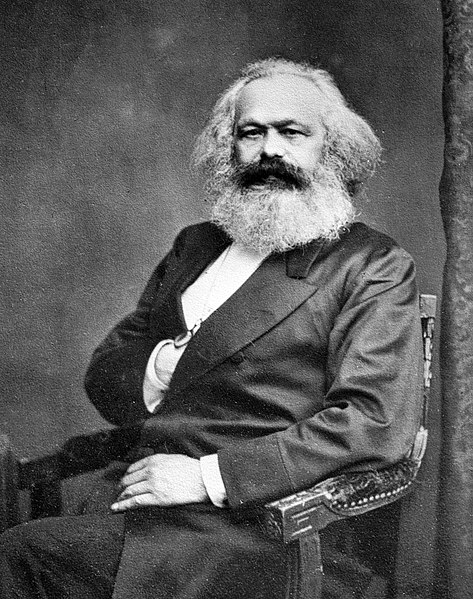
Cancel Karl Marx? That’s definitely a bridge too far for the woke
In the free portion of his Weekly Dish, Andrew Sullivan considers how other philosophers and statesmen from the age of enlightenment are quickly thrown aside by modern day Progressives, yet one political philosopher remains sacrosanct:
Discrediting a thinker’s broad worldview or legacy by discovering some statement from the distant past revealing him or her to be a bigot by today’s standards is a depressing degeneration in our intellectual life. It speaks of a compulsion to moralize rather than to understand, to shut down rather than expand debate.
Picasso was morally monstrous; but his painting is transcendent. And if you cannot disentangle the two, you are attacking a key liberal principle: that ideas and works of art should be considered on their merits, and not on the virtue or vice of their proponents.
But what makes this illiberalism even more repellent is how selective it is. For a few generations now, critical race theorists have attempted to cancel one Enlightenment thinker after another, excoriating Thomas Jefferson as a bigot and hypocrite, David Hume as a vicious racist, Immanuel Kant of all people for white supremacism. The Age of Reason has been recast as the Era of Hate.
In his new book, The War on the West, Douglas Murray quotes Black Studies professor Kehinde Andrews explaining the rationale for this: “A defense of liberalism is the worst possible thing you want to do. Because liberalism is the problem. It is the Enlightenment values which really cement racial prejudice.” The notion here is that human beings had no tribal, racial prejudices until the Age of Reason dawned. Racial hatred was invented by and is the exclusive property of white people in the last few hundred years. Seriously, that’s what the woke believe.
The attacks on Hume, Jefferson and Kant, moreover, refer to single sentences or asides that represent some of the lazy bigotries of the past. (The entire works of Aristotle and Plato are also on the chopping block because of their retrograde views on slavery, among other things.) And so one wonders if the same standard would apply to every philosopher in the past — way beyond the Enlightenment.
Well, one doesn’t wonder very much … because the bad faith of so much critical theory is a feature and not a bug. The goal is not to see the truth, but to gain power in order to impose their truth. And to accuse you of hate if you dare to demur.
Few examples demonstrate this better than Karl Marx, one of the most repellent anti-Semites and racists of the 19th century. Murray’s treatment is devastating. Let’s cite some of the greatest hits:
The Jewish nigger Lassalle who, I’m glad to say, is leaving at the end of this week, has happily lost another 5,000 talers in an ill-judged speculation … It is now quite plain to me — as the shape of his head and the way his hair grows also testify — that he is descended from the negroes who accompanied Moses’ flight from Egypt (unless his mother or paternal grandmother interbred with a nigger). Now, this blend of Jewishness and Germanness, on the one hand, and basic negroid stock, on the other, must inevitably give rise to a peculiar product. The fellow’s importunity is also nigger-like.
Classic “race science” — yet the left pass it by. The following passage could come from Mein Kampf:
What is the worldly religion of the Jew? Huckstering. What is his worldly God? Money. … Money is the jealous god of Israel, in face of which no other god may exist. Money degrades all the gods of man — and turns them into commodities. … The bill of exchange is the real god of the Jew. His god is only an illusory bill of exchange. … The chimerical nationality of the Jew is the nationality of the merchant, of the man of money in general.
And this is not just a personal aside or footnote or private correspondence. It’s in a published essay, “On The Jewish Question”, from 1843.
What did Marx think of a multicultural society? Roughly what Richard Spencer believes today. In 1853, Marx wrote of the Balkans that the region had “the misfortune to be inhabited by a conglomerate of different races and nationalities, of which it is hard to say which is the least fit for progress and civilization.”
April 22, 2022
QotD: George Carlin’s appropriate-for-Earth-Day monologue
We’re so self-important. So self-important. Everybody’s going to save something now. “Save the trees, save the bees, save the whales, save those snails.” And the greatest arrogance of all: save the planet. What? Are these fucking people kidding me? Save the planet, we don’t even know how to take care of ourselves yet. We haven’t learned how to care for one another, we’re gonna save the fucking planet?
I’m getting tired of that shit. Tired of that shit. I’m tired of fucking Earth Day, I’m tired of these self-righteous environmentalists, these white, bourgeois liberals who think the only thing wrong with this country is there aren’t enough bicycle paths. People trying to make the world safe for their Volvos. Besides, environmentalists don’t give a shit about the planet. They don’t care about the planet. Not in the abstract they don’t. You know what they’re interested in? A clean place to live. Their own habitat. They’re worried that some day in the future, they might be personally inconvenienced. Narrow, unenlightened self-interest doesn’t impress me.
Besides, there is nothing wrong with the planet. Nothing wrong with the planet. The planet is fine. The PEOPLE are fucked. Difference. Difference. The planet is fine. Compared to the people, the planet is doing great. Been here four and a half billion years. Did you ever think about the arithmetic? The planet has been here four and a half billion years. We’ve been here, what, a hundred thousand? Maybe two hundred thousand? And we’ve only been engaged in heavy industry for a little over two hundred years. Two hundred years versus four and a half billion. And we have the CONCEIT to think that somehow we’re a threat? That somehow we’re gonna put in jeopardy this beautiful little blue-green ball that’s just a-floatin’ around the sun?
The planet has been through a lot worse than us. Been through all kinds of things worse than us. Been through earthquakes, volcanoes, plate tectonics, continental drift, solar flares, sun spots, magnetic storms, the magnetic reversal of the poles … hundreds of thousands of years of bombardment by comets and asteroids and meteors, worlwide floods, tidal waves, worldwide fires, erosion, cosmic rays, recurring ice ages … And we think some plastic bags, and some aluminum cans are going to make a difference? The planet … the planet … the planet isn’t going anywhere. WE ARE!
We’re going away. Pack your shit, folks. We’re going away. And we won’t leave much of a trace, either. Thank God for that. Maybe a little styrofoam. Maybe. A little styrofoam. The planet’ll be here and we’ll be long gone. Just another failed mutation. Just another closed-end biological mistake. An evolutionary cul-de-sac. The planet’ll shake us off like a bad case of fleas. A surface nuisance.
You wanna know how the planet’s doing? Ask those people at Pompeii, who are frozen into position from volcanic ash, how the planet’s doing. You wanna know if the planet’s all right, ask those people in Mexico City or Armenia or a hundred other places buried under thousands of tons of earthquake rubble, if they feel like a threat to the planet this week. Or how about those people in Kilauea, Hawaii, who built their homes right next to an active volcano, and then wonder why they have lava in the living room.
The planet will be here for a long, long, LONG time after we’re gone, and it will heal itself, it will cleanse itself, ’cause that’s what it does. It’s a self-correcting system. The air and the water will recover, the earth will be renewed, and if it’s true that plastic is not degradable, well, the planet will simply incorporate plastic into a new pardigm: the earth plus plastic. The earth doesn’t share our prejudice towards plastic. Plastic came out of the earth. The earth probably sees plastic as just another one of its children. Could be the only reason the earth allowed us to be spawned from it in the first place. It wanted plastic for itself. Didn’t know how to make it. Needed us. Could be the answer to our age-old egocentric philosophical question, “Why are we here?” Plastic … asshole.
So, the plastic is here, our job is done, we can be phased out now. And I think that’s begun. Don’t you think that’s already started? I think, to be fair, the planet sees us as a mild threat. Something to be dealt with. And the planet can defend itself in an organized, collective way, the way a beehive or an ant colony can. A collective defense mechanism. The planet will think of something. What would you do if you were the planet? How would you defend yourself against this troublesome, pesky species? Let’s see … Viruses. Viruses might be good. They seem vulnerable to viruses. And, uh … viruses are tricky, always mutating and forming new strains whenever a vaccine is developed. Perhaps, this first virus could be one that compromises the immune system of these creatures. Perhaps a human immunodeficiency virus, making them vulnerable to all sorts of other diseases and infections that might come along. And maybe it could be spread sexually, making them a little reluctant to engage in the act of reproduction.
Well, that’s a poetic note. And it’s a start. And I can dream, can’t I? See I don’t worry about the little things: bees, trees, whales, snails. I think we’re part of a greater wisdom than we will ever understand. A higher order. Call it what you want. Know what I call it? The Big Electron. The Big Electron … whoooa. Whoooa. Whoooa. It doesn’t punish, it doesn’t reward, it doesn’t judge at all. It just is. And so are we. For a little while.
George Carlin, “The arrogance of mankind”.
April 9, 2022
“Woke Disney” is far from a new thing
Geoff Shullenberger points out that Disney’s reputation for family-friendly media rests rather uneasily on the corporation’s actual products:
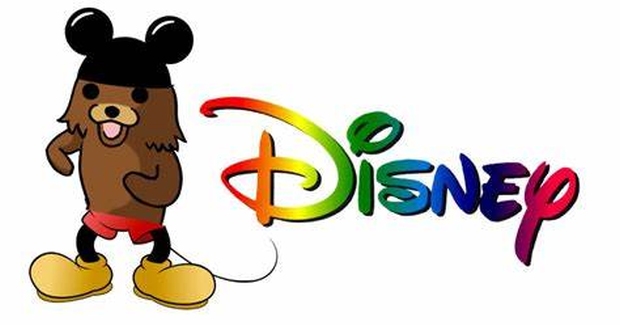
“Disney is the worst enemy of family harmony.” You’d be forgiven for thinking those words were uttered yesterday, given the number of conservative politicians and pundits castigating Disney for “grooming children” following its criticism of the “Don’t say gay” bill.
In fact, the statement appeared just over 50 years ago, in a polemical analysis of Disney cartoons written by two Marxist militants, the Chilean writer Ariel Dorfman and the Belgian sociologist Armand Mattelart. How to Read Donald Duck: Imperialist Ideology in the Disney Comic was published in Chile during the brief rule of Salvador Allende as part of an attempt by Allende’s leftist allies to push back against American cultural influence. The book became a bestseller, but after Augusto Pinochet’s 1973 coup, it was banned and publicly burned.
The Right’s current lament for the betrayal of “traditional families who want to hold onto innocent entertainment for their kids” proceeds from the premise that this “woke Disney” is a deviation from the company’s benevolent past. But Dorfman and Mattelart, all the way back in 1971, contested this assumption of innocence. Although their methodology is Marxian and their aims overtly anti-capitalist, their allegations foreshadow the American Right’s current concerns in surprising ways.
[…]
How to Read Donald Duck contains many of the expected Left-wing criticisms of patriarchy and gender roles, but it also includes observations that might be surprising to ideologues today. Notably, as one illustration of the propaganda functions taken on by Disney in the Global South, the authors remark that the US Agency for International Development has circulated films featuring Disney characters promoting contraception. They reinforce this association with the title of their chapter on Disney family dynamics: “Uncle, buy me a contraceptive …”
Like many radicals at the time, Dorfman and Mattelart saw the US state’s growing interest in controlling fertility in the developing world as consistent with a broader campaign to suppress the value placed on family in the subject nations of its economic empire; this was deemed to be in tension with values such as efficiency, productivity, individualism, and competition. Disney’s exclusion of references to reproductive sexuality, in this light, looks less like an attempt to protect childhood innocence, than part and parcel of the larger modern decoupling of sex from reproduction.
It all suggests that the supposed sexual innocence of Disney’s dreamscapes was never aligned with “family values” in the first place and the Right’s current war on Disney isn’t about family — it is simply the latest phase of its realisation that corporate America has now largely aligned itself with the values of the cultural Left.
For, in fact, Disney’s vast influence on the imaginations of children has been enabled by market society’s weakening of the authority of the family. With parents overburdened by the demands of work, important aspects of child-rearing are entrusted to the entertainment industry. Disney has capitalised on this exploding demand more than any other company. If we take “grooming” to simply mean instilling values alien to the family into children, Dorfman and Mattelart would suggest that Disney has never been innocent of this charge.
April 2, 2022
Jon Stewart believes that “… the only thing that can possibly explain racial inequality today in America is still ‘white supremacy'”
Andrew Sullivan recounts his experiences on one of Jon Stewart’s shows:
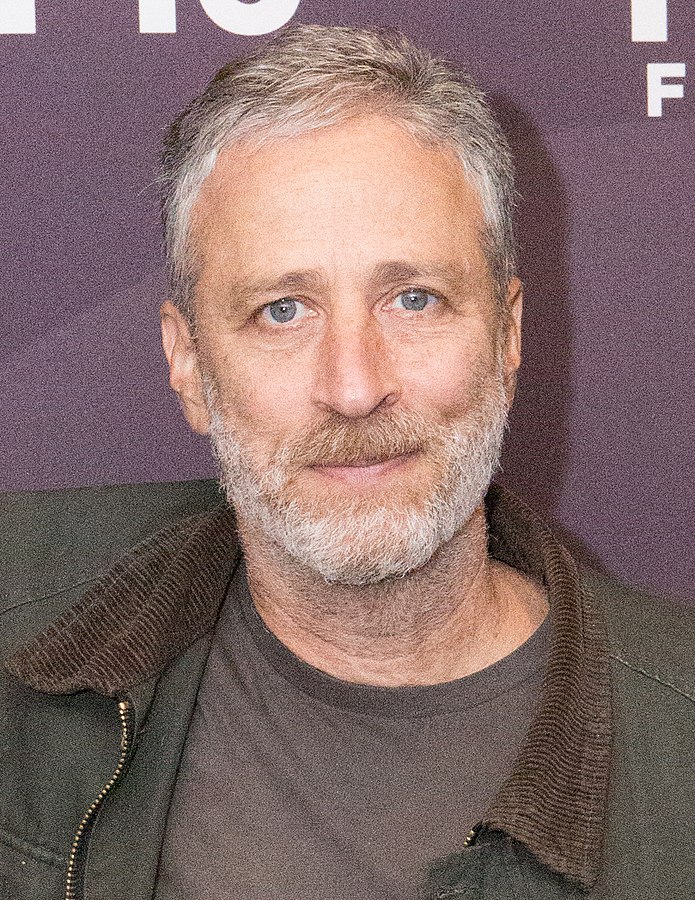
Jon Stewart at the Montclair Film Festival, 7 May, 2016.
Wikimedia Commons.
… I found out, in fact, that there would be two other guests, and that it would, indeed, be a debate. Surprise! As the show started, I also realized for the first time there was a live studio audience and that the episode was called “The Problem With White People” — a title I’d never have been a party to, if I’d known in advance. (I wouldn’t go on a show called “The Problem With Jews” or “The Problem With Black People” either.) At that point I should have climbed carefully off the stake, tamped down the flames, made a path through the kindling, and walked away.
I protested to the producers that I’d been ambushed. And to be fair, they gave me the option of backing out at the last minute. But I didn’t want to leave them in the lurch, reassured myself that Stewart was a pro, and said I’d go ahead. I just assumed he wouldn’t demonize or curse at a guest; he would moderate; he would entertain counter-arguments; he would defend fair play. After all, this was the man who had lacerated Crossfire for bringing too much heat and not enough light. He believed in sane discourse. He was a liberal, right?
Wrong.
On the race question, Stewart has decided to go way past even Robin DiAngelo, in his passionate anti-whiteness. His opening monologue was intoned at times in a somber tone, as if he were delivering hard truths that only bigots could disagree with. He argued that no one in America had been prepared to have an honest discussion about race — until the “reckoning” of 2020. He also suggested that nothing had been done by whites to support African-Americans from 1619 (yes, he went there) … till now. The most obvious solution — reparations — was, he implied, somehow, absurdly, taboo.
His montage of “black voices” insisted that African-Americans are still granted only conditional citizenship, are still barred from owning property — “we don’t own anything!” — and ended with Sister Souljah — yes! — explaining that the thing that kills black people are not bullets, but white people. This is the same moral avatar who once said: “If black people kill black people every day, why not have a week and kill white people?” Stewart then hailed Angela Davis — a proud Communist, with a particular fondness for East Germany’s suppression of dissent — and warmly thanked her as “Angela”. But Stewart included not a single black voice of disagreement or nuance. He apparently believes that all black people hold the same view. And all white people just refuse to hear it.
Jon Stewart’s insistence that Americans had never robustly debated race before 2020 is also, well, deranged. Americans have been loudly debating it for centuries. There was something called a Civil War over it. His claim that white America has never done anything in defense of black Americans (until BLM showed up, of course) requires him to ignore more than 300,000 white men who gave their lives to defeat the slaveholding Confederacy. It requires Stewart to ignore the countless whites (often Jewish) who risked and gave their lives in the Civil Rights Movement. It requires him to erase the greatest president in American history. This glib dismissal of all white Americans throughout history, even those who risked everything to expand equality, is, when you come to think about it, obscene.
Stewart’s claim that whites never tried to ameliorate black suffering until now requires him to dismiss over $19 trillion of public funds spent in the long War on Poverty, focused especially on black Americans. That’s the equivalent of more than 140 Marshall Plans. As Samuel Kronen has shown, it requires the erasure from history of “the Food Stamp Act of 1964, the Child Nutrition Act of 1966, the Social Security Amendments of 1965, the Elementary and Secondary Education Act of 1965, the Social Security Amendments of 1962, and the Economic Opportunity Act of 1964, and on and on.” To prove his point, Stewart has to pretend LBJ never existed. That’s how utterly lost he now is.
Stewart then used crude metrics of inequality to argue, Kendi-style, without any evidence, that the only thing that can possibly explain racial inequality today in America is still “white supremacy”. Other factors — concentrated poverty, insanely high rates of crime and violence, acute family breakdown, a teen culture that equates success with whiteness, lack of affordable childcare — went either unmentioned or openly mocked as self-evident expressions of bigotry. He then equated formal legal segregation with voluntary residential segregation, as if Jim Crow were still in force. And he straw-manned the countering argument thus: white America believes that African-Americans are “solely responsible for their community’s struggles”.
I don’t know anyone who believes that. I sure don’t. It’s much more complex than that. And it’s that complexity that some of us are insisting on — and that Stewart wants to dismiss out of hand in favor of his own Manichean moral preening. His final peroration ended thus: “America has always prioritized white comfort over black survival.” Note: always. There has been no real progress; white people have never actually listened to a black person; America is irredeemably racist. Those fucking white men, Lincoln and LBJ, never gave a shit.
March 29, 2022
QotD: SJW white guilt
In short, reading shit like this is penance for being white. Subjecting themselves to a stream of invective about their failings for being white gives them absolution. It’s kinda like those folks in the BDSM community who seek out a black dominatrix to work out their guilty feelings, and having paid for verbal abuse and a beating, feel that they’ve done their bit for race relations, and for the liberal side of the SF community, Mistress Nora is just the ticket, and they are paying her with sales and awards for all the abuse they can stomach.
Dr. Mauser, “Message Received”, Shoplifting in the Marketplace of Ideas, 2019-01-30.
March 19, 2022
QotD: The sterility of partisan political argument
If you are arguing with someone, say, who has a better education than you, a higher I.Q., with perhaps a doctorate in law and a career as a journalist and a published series of books on his resume, that does not matter. The mere fact that he comes to different conclusions than the Party line indicates that he is stupid uneducated Nazi bigot, and a stupid bigoted fascist racist moron.
This is argumentum ad cloaca —— ratiocination via offal. Whatever the loudest donkey laughs loudest at, you take to be untrue. Since that was the way (admit it!) you yourself were convinced, O ye of little mind, it is the first, usually the only means, to which you resort to convince others: the volume and clamor is what matters, not the content.
The reason for the inadequacy of these condemnations, the reason why they are so unimaginative, is because of the paucity of the moral vocabulary of the Left. They do not have words to express outrage, so they sneer and yodel. They are like creature struck dumb, and only able to act out their condemnation by means of antic pantomime.
The more closely they follow Marx, the more impoverished their moral vocabulary becomes. You cannot call someone evil once you accept the proposition that all standards of good and evil are merely genetically-determined group survival behaviors, or merely culturally determined artifacts, or merely ideological superstructures meant to promote class interests. Your concept has lost its referents: it can be used only metaphorically, or ironically.
Likewise, you cannot call someone damned if you don’t believe in damnation. There is no such thing as blasphemy if there is nothing sacred, supernatural, or divine.
Likewise again, you cannot call someone illogical if logic is no longer the standard used to separate self-consistent from self-contradictory statements: because then you would have to argue the merits of the case, and rely on reason, like Adam Smith, rather than on verbal fetishes, like Karl Marx.
Our Progressive detractors have to call the object of their scorn a racist (or a parallel word, such as sexist, lookist, homophobe, capitalist, colorist, agist, whateverist) because that is the only arrow in their quiver. That is the only thing they have to shoot, so they shoot, and do not care how short of the target the dart falls.
John C. Wright, “The Crazy Years and their Empty Moral Vocabulary”, John C. Wright, 2019-02-18.
March 17, 2022
If everything is about justice, then nothing is
At Astral Codex Ten, Scott Alexander wonders why everything these days is said to be about “justice”:
Freddie deBoer says we’re a planet of cops. Maybe that’s why justice is eating the world.
Helping the poor becomes economic justice. If they’re minorities, then it’s racial justice, itself a subspecies of social justice. Saving the environment becomes environmental justice, except when it’s about climate change in which case it’s climate justice. Caring about young people is actually about fighting for intergenerational justice. The very laws of space and time are subject to spatial justice and temporal justice.
I can’t find clear evidence on Google Trends that use of these terms is increasing — I just feel like I’ve been hearing them more and more often. Nor can I find a simple story behind why — it’s got to have something to do with Rawls, but I can’t trace any of these back to specific Rawlsian philosophers. Some of it seems to have something to do with Amartya Sen, who I don’t know enough about to have an opinion. But mostly it just seems to be the zeitgeist.
This is mostly a semantic shift — instead of saying “we should help the poor”, you can say “we should pursue economic justice”. But different framings have slightly different implications and connotations, and it’s worth examining what connotations all this justice talk has.
“We should help the poor” mildly suggests a friendly optimistic picture of progress. We are helpers — good people who are nice to others because that’s who we are. And the poor get helped — the world becomes a better place. Sometimes people go further: “We should save the poor” (or the whales, doesn’t matter). That makes us saviors, a rather more impressive title than helpers. And at the end of it, people/whales/whatever are saved — we’re one step closer to saving the world. Extrapolate the line out far enough, and you can dream of utopia.
“We should pursue economic justice” suggests other assumptions. Current economic conditions are unjust. There is some particular way to make them just, or at least closer to just. We have some kind of obligation to pursue it. We are not helpers or saviors, who can pat ourselves on the back and feel heroic for leaving the world better than we found it. We are some weird superposition of criminals and cops, both responsible for breaking the moral law and responsible for restoring it, trying to redress some sort of violation. The end result isn’t utopia, it’s people getting what they deserve.
(cf. Thomas Jefferson: “I tremble for my country when I remember that God is just.”)
What is “climate justice”? Was the Little Ice Age unjust? What if it killed millions? Is it unjust for Mali to have a less pleasant climate than California? What if I said that there’s a really high correlation between temperature and GDP, and Mali’s awful climate is a big part of why it’s so poor? Climate justice couldn’t care less about any of this. Why not? Hard to say. Maybe because there’s no violation and no villain.
March 13, 2022
The Canada Council for the (woke) Arts
In the latest SHuSH newsletter, Kenneth Whyte looks at the origins of the Canada Council for the Arts and compares its original mission to the new direction the crown corporation plans to take:

The Massey Commission (1951), from which all public funding of arts, culture, and scholarly research in Canada derives, and out of which our flagship granting body, the Canada Council for the Arts, was born, knew that it was pushing the nation into perilous terrain. “The dangers inherent” in any system of grants from the central government to arts, letters, and culture was that “the government or its agents would attempt not merely to encourage but to direct” artistic and cultural expression.
The Massey Commission was not the first entity to confront this issue. Much like the Great Canadian Baking Show is a re-staging of the Great British Baking Show, the Massey Commission itself was a knockoff of a UK original (a sad commentary on an initiative intended to define and promote Canada’s unique national identity). The UK effort resulted in the establishment of the British Arts Council, initially chaired by Lord Keynes. Massey quoted him at length on the potential pitfalls of arts funding:
At last the public exchequer has recognized the support and encouragement of the civilizing arts of life as part of their duty. But we do not intend to socialize this side of social endeavour. Whatever views may be held by the lately warring parties, whom you have been hearing every evening at this hour, about socializing industry, everyone, I fancy, recognizes that the work of the artist in all its aspects is, of its nature, individual and free, undisciplined, unregimented, uncontrolled. The artist walks where the breath of the spirit blows him. He cannot be told his direction; he does not know it himself. But he leads the rest of us into fresh pastures and teaches us to love and to enjoy what we often begin by rejecting, enlarging our sensibility and purifying our instincts. The task of an official body is not to teach or to censor, but to give courage, confidence and opportunity.
The founders of the Canada Council felt so strongly about the dangers of political interests imposing themselves on the arts, using federal money to force artistic and cultural activities in one direction or another, that they built checks and balances into its founding legislation. The Canada Council was made a crown corporation, at arm’s length from political types, and its board members were required to “avoid the promotion of any personal interests” or any other specific interests, whether on behalf of regions or “stakeholder groups”.
I can’t speak to the whole of the Canada Council’s activities, but from what I’ve seen of its annual reports, public statements, and funding practices, the Canada Council has jumped the tracks and is now fully dedicated to teaching, censoring, and directing artistic endeavour.
Here’s Simon Brault, chief executive of the Canada Council, giving an enthusiastic endorsement of the core Trudeau government priorities of Indigenous rights and environmental activism:
We need to reimagine an arts sector determined to eliminate racism and discrimination in every form, and the legacy of colonialism. We need to reimagine the arts’ rightful place in the conversations that shape our future. And we need to reimagine, through the arts, a greener and more just and equitable world.
Even if you agree with Brault’s priorities, you have to admit that he is not straightforwardly supporting artistic endeavor but pushing the arts-and-culture sector toward the achievement of a socio-political program.
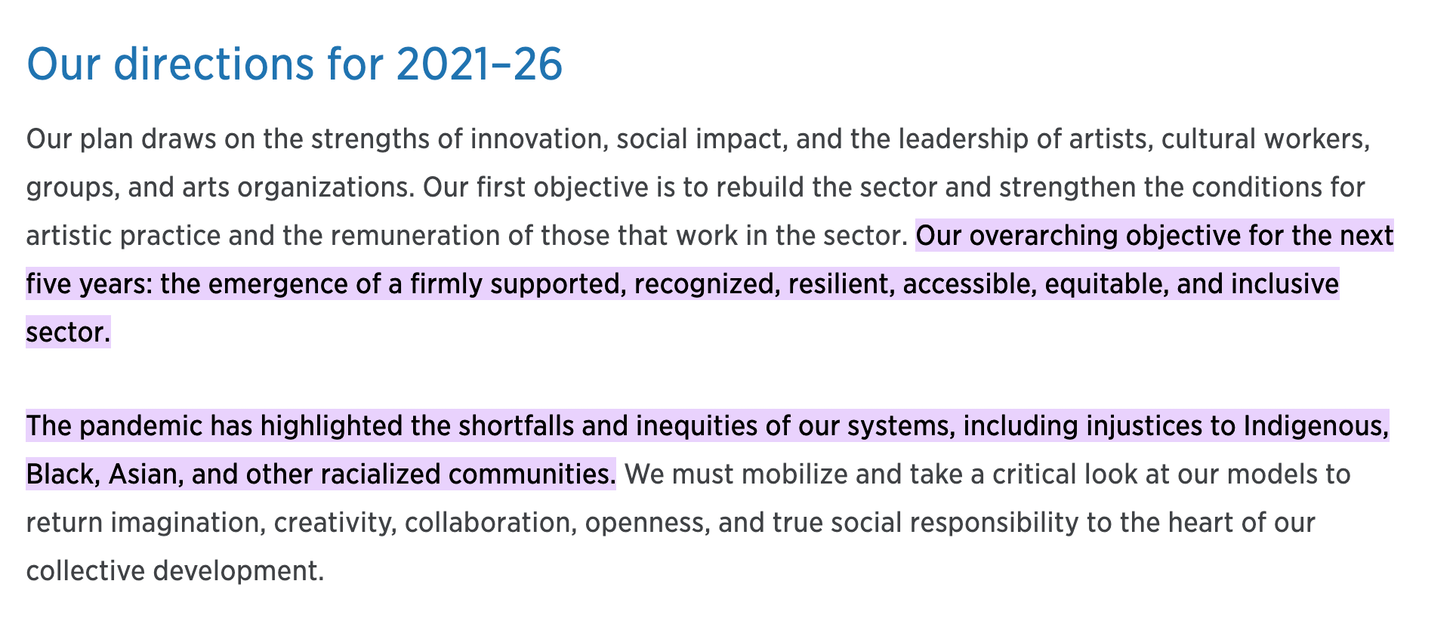
This mission is also explicit in the Canada Council’s new five-year plan, which has surprisingly little to say about lifting artists and arts organizations out of penury, which some might consider a laudable goal after years of financial crisis and pandemic:
Those are the council’s highlights, not mine.
This past week, the politicization of the Canada Council reached new heights when Brault announced that in solidarity with the Ukrainian people he would cease to fund any “activity involving the participation of Russian or Belarusian artists or arts organizations … This includes partnerships, direct and indirect financing of tours, co-productions, participation in festivals or other events held in Russia.”
March 6, 2022
QotD: The academic rat-race
Since only “scholars” who publish get tenure, and since journals only publish original “research”, the only way to publish consistently is to make shit up. Given that Shakespeare ain’t writing no more sonnets, the only way to get tenure in, say, English Literature is to argue that, properly “deconstructed”, the list of contents on a packet of beef jerky is just as valuable — indeed, more valuable — as a “cultural artifact” than anything the Bard, curse his CisHetPat White soul, ever wrote. Hence, the road to tenure takes only left turns.
Severian, “I Learned A New Word”, Rotten Chestnuts, 2019-01-23.
February 8, 2022
Neil Young and the rebellion of “the Grumpy Old Woke Bros”
Julie Burchill on the (one hopes) last opportunity for elderly, wrinkly 60s and 70s rock stars to virtue signal their protests to a rapidly diminishing body of fans:

For a while now the generation gap has been making a comeback in politics in a way not seen since the youthquake of the 1960s. “Don’t trust anyone over 30” has become “OK Boomer”. Oldsters have been demonised for everything from Brexit to Covid. Personally, at 62, looking at the lives today’s teenagers can expect, I thank my lucky stars that I was young in the 1970s and 80s, when you could say what you liked and go where you wanted. But this dwindling of fun and freedom has as much to do with the stifling nature of woke culture as it does with the other virus.
So I wouldn’t blame teenagers if they were cross. But those doing the most to promote the alienation of young and old aren’t hot-blooded bright young things. They are old men who appear to identify as young, despite sharing the same unsavoury grey whiskers. Of course, if someone with a penis can be a woman, a greybeard can be a teenager. They’re the Grumpy Old Woke Bros.
We can trace this unhappy breed from the then 68-years-young Ian McEwan spluttering at an anti-Brexit rally in 2017: “A gang of angry old men, irritable even in victory, are shaping the future of the country against the inclinations of its youth. By 2019 the country could be in a receptive mood: 2.5million over-18-year-olds, freshly franchised and mostly Remainers; 1.5 million oldsters, mostly Brexiters, freshly in their graves.” Since then the likes of Alexei Sayle, Billy Bragg and Stewart Lee have joined in from the monstrous regiment of woke entertainers, adding Damon Albarn (a youthful 53 – and an OBE, the rebel!) to their rankled ranks last week when he said of Taylor Swift “She doesn’t write her own songs”. (This isn’t the first time Albarn has had beef with young female pop stars. He said of Adele in 2015: “She’s very insecure”, to which she replied “It ended up being one of those ‘Don’t meet your idol’ moments … I was such a big Blur fan growing up. But it was sad, and I regret hanging out with him.”)
Though we think of grumpiness as being an English trait, let’s not forget Neil Young (76) who spat his dummy out last week over sharing Spotify with Joe Rogan. Young is a latecomer to the wonderful world of wokeness, whose welcome to the spotless ranks was somewhat marred by the emergence of a 1985 interview in which he backed Ronald Reagan’s gun control policy and added for good measure, AIDS having recently been discovered, “You go to a supermarket and you see a faggot behind the cash register – you don’t want him to handle your potatoes”.
February 6, 2022
In Critical Race Theory, racism “only applies to powerful whites (and fellow travelers) vis-a-vis powerless blacks”
Andrew Sullivan on Caryn Elaine Johnson (stage name Whoopi Goldberg) and how her unconsidered anti-semitic worldview has been moulded and shaped by Critical Race Theory:
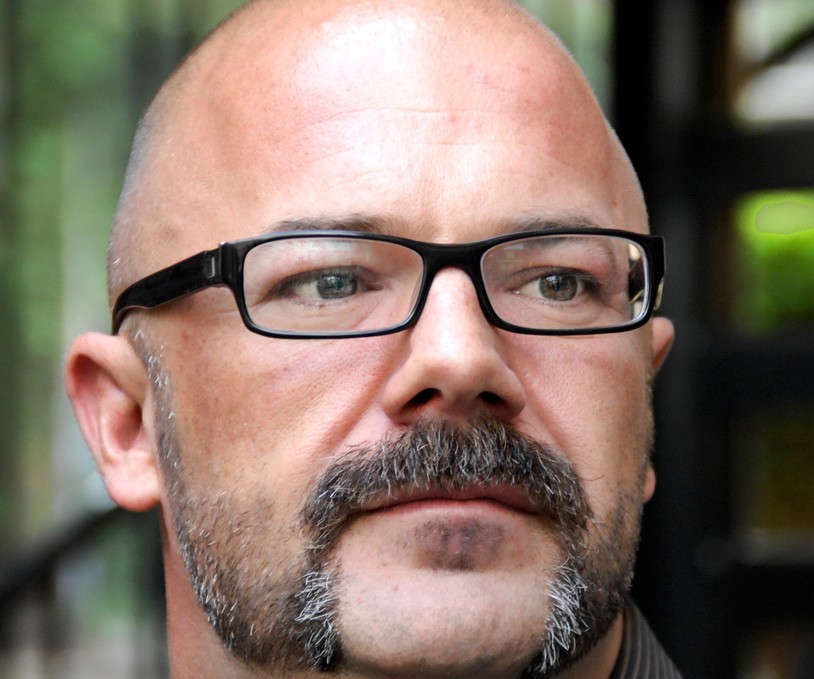
Whoopi Goldberg, I think it’s safe to say, is not a deep thinker, and wouldn’t claim to be. She’s also clearly not an anti-Semite. She’s a talented entertainer and merely reflects many (but not all) of the assumptions of Hollywood types — well-intentioned, rarely ruffled, cultural leftism. But that’s precisely why her comments on The View about antisemitism and the Holocaust are so interesting. They expose some aspects of “anti-whiteness” and “antiracism” as these CRT ideas have trickled down into the public consciousness, and also a deep, long-standing sense among some African-Americans that Jews in America are not usually the oppressed, but often the oppressor. These are things no one wants to explore very much — because it’s complicated, fraught, and, well, who needs the grief?
So here we go! Anti-Semitism is seen as not racism, because for Whoopi, and critical theorists, “racism” is defined as an essentially Euro-American social construction, which didn’t exist before the colonial era, and only applies to powerful whites (and fellow travelers) vis-a-vis powerless blacks. Racism is not, for them, a universal, instinctual, tribal, evolution-rooted suspicion of different-looking others that is always with us, and can happen anywhere. It is solely rather the deliberate, historically contingent oppression of the non-white by colonial “white supremacy”. However much truth this contains about American history (and it does contain a lot of it), it’s a terribly parochial view that misses a huge amount in the world, throughout history, and in America.
As Adam Serwer explains, this parochial view of racism also “renders the anti-Semitism that led to the Holocaust illegible”. Well, yeah. Any theory of racism that cannot explain the Holocaust is not just illegible, it is untenable. It would mean that the conflicts between, say, Tutsis and Hutus, Germans and Slavs, Jews and Arabs, Burmese and Rohingya, or Han and Uighur, are not instances of racism — because they are not examples of “white targeting non-white”. It wouldn’t include the Bible’s description of the Jewish people’s own enslavement by the Pharaohs, for goodness’ sake. And that’s a problem for any concept of racism — let alone one that now controls much of American culture.
Here, for example, is the Anti-Defamation League’s woke definition of “racism” the day Whoopi made her remarks (a definition swiftly changed after the contretemps): “The marginalization and/or oppression of people of color based on a socially constructed racial hierarchy that privileges white people.” But since Jews are deemed “white people”, by this definition, how could the Nazis have been racist? The same would also have to be said, would it not, about Louis Farrakhan today? He may sound like a Nazi about Jews, but his skin color means he cannot be racist.
Whoopi’s gaffe helps explain why the mainstream media now describes young black men assaulting Jews and Asians as expressing … “white supremacy”! This is what the WaPo op-ed page, referring to growing Latino support for Trump, called “multiracial whiteness”. If they are non-white and bigots, they miraculously become white. And notice how bigotry is exclusively ascribed to a single “race”: whites. Without whites, we’d have no racism at all.
This is not the only way critical theorists distinguish anti-Semitism from racism. “Whiteness”, disproportionately including Jewishness, is wrapped up in systems of oppression, especially capitalism, and defined by control of money and power. Robin DiAngelo argues in White Fragility that “white supremacy” exists in mainstream America by noting how many “white people” there were in various positions of power in 2017:
Ten richest Americans: 100 percent white (seven of whom are among the ten richest in the world). US Congress: 90 percent white. US governors: 96 percent white. Top military advisers: 100 percent white. President and vice president: 100 percent white. US House Freedom Caucus: 99 percent white. Current US presidential cabinet: 91 percent white. People who decide which TV shows we see: 93 percent white. People who decide which books we read: 90 percent white. People who decide which news is covered: 85 percent white. People who decide which music is produced: 95 percent white. People who directed the one hundred top-grossing films of all time, worldwide: 95 percent white.
She goes on to emphasize Hollywood’s influence, in particular. Now just put the word “Jewish” where the word “white” is, and her list reads a bit differently, doesn’t it: “People who decide which books we read: 90 percent Jewish. People who decide which news is covered: 85 percent Jewish.” It’s an assertion that one race hoards power, controls the media, and directs the culture, a race so powerful it permeates everything. Sound a little familiar?
January 30, 2022
Fighting progressive illiberalism with populist illiberalism
In the free-to-non-paying-subscribers segment of this week’s Weekly Dish, Andrew Sullivan laments the ratcheting illiberal tactics of both the opponents and supporters of Critical Race Theory in American schools:
I’ve spent a lot of time these past few years concerned with left illiberalism, especially the replacement of liberalism with critical theory as the guiding principle of our republic. But at the same time, of course, right illiberalism has gone into overdrive, in a polarizing vortex. Being a conservative liberal, or a liberal conservative, is becoming close to impossible. And this week, as I pored over a mass of bills to ban the praxis, pedagogy and content of critical theory in public high schools, I felt as if I were being tossed between the blue devil to my left and the deep red sea to my right.
One core point: the illiberalism is real on both sides. Not always in equal measure, now or in the past, but definitely on both, feeding off each other. And in public education, once again a battleground in the culture war, it seems quite obvious to me that the left bears the burden of responsibility for the conflict.
Critical theory’s long march through the institutions reached its peak some time ago in higher education — and has gone on to capture media, corporate America, medicine, the federal government, tech, science, and every cultural institution. Over $14 billion have been spent on philanthropic “equity” initiatives since the summer of 2020 alone. Of course children’s education would be affected. What hasn’t been? And of course critical theorists aim directly at children. The woke, like the Jesuits, understand the value of instilling certain concepts at a very young age. How else to transform the world?
That’s why Ibram Kendi has bequeathed the world not just one but two books on how to rear “antiracist babies”. The publisher says the new one, Goodnight Racism, “gives children the language to dream of a better world and is the perfect book to add to their social justice toolkit.” My italics. Another recent book, Woke Baby, instructs toddlers to be “a good revolutionary”, and another one explains how “activism begins in the cradle”.
You truly think that in school districts where teachers are saturated in equity training, whose unions invite Kendi to be their keynote speaker, that this is all being made up? Just peruse through all the “equity” conferences, courses, syllabi, lesson plans and curricula that now dominate public ed. Many parents found out only because they overheard what their kids were being taught online during the pandemic. Or you can just surf the web as the woke dismantle schools for the gifted, abolish SATs, describe merit as racist, and lay waste to excellent schools merely because too many Asian-American kids are succeeding in them.
What we’re seeing now is the reaction to this left-wing power grab. And — guess what? — it’s a right-wing power grab. If the left has stealthily changed public education from above, the right has now used the only power they have to fight back — political clout in state legislatures. 122 separate bills have been introduced since January 2021, 71 in the last three weeks alone. They all regulate speech by teachers in public schools, but many are now also reaching into higher education — a much more fraught area — and outright book banning. The bills are rushed; some appear well-intentioned; others are nuts; many are very vague, inviting lawsuits to clarify what they can mean in practice. In most cases, if passed, they will surely chill debate of race and sex and history — and increasingly of gender, sex and homosexuality — in high schools. And that’s a bad thing for liberal education.
January 21, 2022
Boris is in trouble, threaten the BBC to take the heat off him!
In Spiked, Gareth Roberts wonders why Britons should continue to pay an annual license fee to support a media conglomerate that demonstrably hates them and their country:

Culture secretary Nadine Dorries, the most ardent of Boris Johnson stans, obligingly threw the deadest of cats on to the table at the weekend to distract from the woes of her beleaguered boss. She announced a two-year freeze on the BBC licence fee and dangled the prospect of scrapping it entirely.
Dorries must be well aware that any threat to the BBC always results in a Furies’ chorus of anger, horror and prophecies of woe, coming from precisely those people the Tory grassroots are likely to detest. And up they obligingly popped – Polly Toynbee, Nish Kumar, Gary Lineker, all present and correct. This wasn’t so much political theatre as a pantomime with stock phrases and responses. She’s behind you!
Behind all this repetitive call and response, there is something different this time around, on both sides. Dorries was noticeably blatant and direct when she tweeted that this licence-fee consultation “will be the last” (though she seemed less so in the Commons a couple of days later). And her detractors seemed more at a loss, struggling to find the counter examples of BBC excellence that used to come quickly and easily to hand. Citizen Khan creator Adil Ray tweeted a BBC promotional video asking “What has the BBC ever done for us?” that was made 36 years ago. Comedian Simon Day provided a list of great BBC comedies going back to the 1950s, which contained only one show commissioned in the last 15 years.
Canada’s CBC has a similar attitude toward Canadian culture and (ugh!) Canadians that the BBC displays, but the CBC gets direct government subsidies rather than a formal TV license required of all British TV owners. It’s quite reasonable to wonder what benefit Canadian taxpayers and British license-holders derive from all this financial support of increasingly unwatched TV and online propaganda that mocks and belittles them:
What this seems to show is that the BBC is now in a fix. In a way, the BBC hasn’t changed all that much. It is doing now what it has always done, reflecting and embodying a certain section of the middle class. When that section was sane, or at least fairly sane, that could be irritating on occasion, but we all forgave it because it had its heart in the right place. But in the past decade, the nominally “liberal” middle class has, to put it politely, gone both doolally and totalitarian.
To consume the BBC since about 2012 is to be never more than 10 minutes away from being scolded or berated, usually based on some spurious identity-politics talking point imported from the sick vortex of American academia. (On Radio 4 this happens much more frequently, about every 35 seconds.) It is unbearable, like paying £159 a year, on pain of imprisonment, to be told off by a particularly irritating polytechnic lecturer.
BBC News gets a lot of stick for this, understandably, but the Beeb’s drama, comedy and documentary output is now infested with it, too. It’s the same crushingly banal suite of opinions across everything.
Life before Blair was a grey, damp horror, a cultural wasteland of prejudice where Oswald Mosley had huge amounts of support (strangely enough, insinuating that people’s grandparents were all fascists doesn’t endear them to you). Working-class whites are bigots who can’t be trusted with basic information in case they start a race war. Fiona Bruce has kittens live on air when a doctor states the simple fact that it’s impossible to change sex. The BBC’s younger journalists have to be told that people have different opinions. If upper-class or working-class people can’t be shamed or blamed for something, the BBC just isn’t interested. It is stultifyingly bourgeois.
The BBC is often valued, and often trumpets itself, as a thing that brings the nation together. I think it has transmogrified into doing the opposite, with a superior sneer that treats Britain like something it’s found on its shoe.
Conservatives versus the “Blob”
Sam Ashworth-Hayes is writing here about the British Conservative party, but just swap out the names and it’s equally applicable to the Canadian equivalent, and very likely true for the rest of the western world:
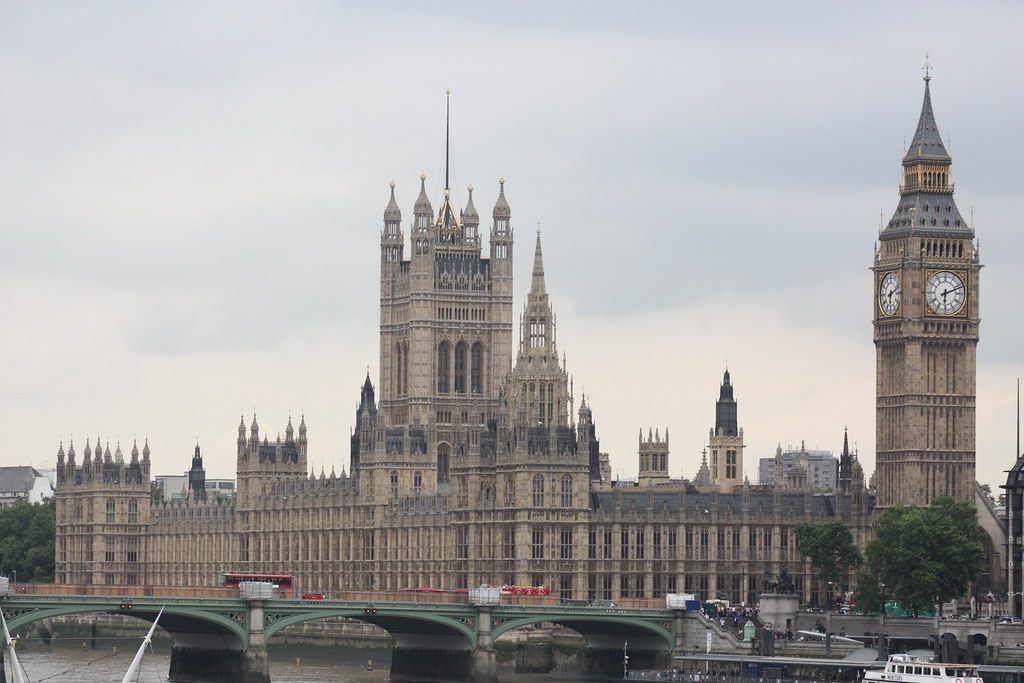
“Palace of Westminster”by michaelhenley is licensed under CC BY-NC-SA 2.0


The Conservative party is trapped in a nightmare of its own making. Number 10 is rocked by scandals, support in the polls is plummeting, the Northern Ireland Protocol (Chekhov’s car bomb) waits patiently for its return to the newscycle. As with every good nightmare, there is the sense of unease that something remains undone.
That something would be “conserving”. Set aside economic policy, where the Conservatives and Labour are still just about separable — although the new interest in higher taxes, spending and regulation is rapidly eroding this gap — and judge the period on the social axis: same-sex marriage, net migration at record highs, the march of progressive ideas through academia, business and press and into government speeches. You could be forgiven for thinking that Labour won the 2010 election, and every bout subsequent.
Why is that the Conservative party governs in such a fundamentally unconservative way? Part of the issue is that the average Conservative MP is, on social issues, basically indistinguishable from the average Labour voter, while the average Labour MP is to the left even of this. The centre of gravity in Parliament is well to the left of the general population.
A second part of the answer — and a partial cause of the first — is that the infrastructure of British politics is not designed for the right. When Michael Gove and his then-Special Advisor Dominic Cummings attempted to shake up the English education system in 2014, they found themselves publicly at war with what they termed “the Blob”: an amorphous conglomerate of civil servants, academics and unions that acted to gum up change and ensure stasis in the interests of its members. Rightwards reform is received as violent revolution, whilst the constant leftwards drift goes unremarked and unchallenged.
When Cummings made his way to Number 10, so did the concept of the Blob, expanded to include the BBC, various quangos, much of Whitehall and what is sometimes called “civil society”. The example of hate crime policy is illustrative of the general idea. The concept is not dissimilar to Curtis Yarvin’s “Cathedral”, or the Trumpian “deep state”. Critics of such accusations point out, not unreasonably, that coordinating so many constituent parts would be almost impossible — but this misses the point entirely. The purpose of a system is what it does, and individual elements responding to an ecosystem of incentives that produce given results can act in a remarkably coordinated way, when those incentives point in the same direction.


