Quotulatiousness

July 30, 2019

Mark Steyn: Boris Johnson is “Bertie Wooster with Jeeves’ brain”

Filed under: Britain, Politics — Tags: , , , , — Nicholas @ 03:00

The new British PM is quite different from anyone else inhabiting Number 10 in my lifetime, certainly:
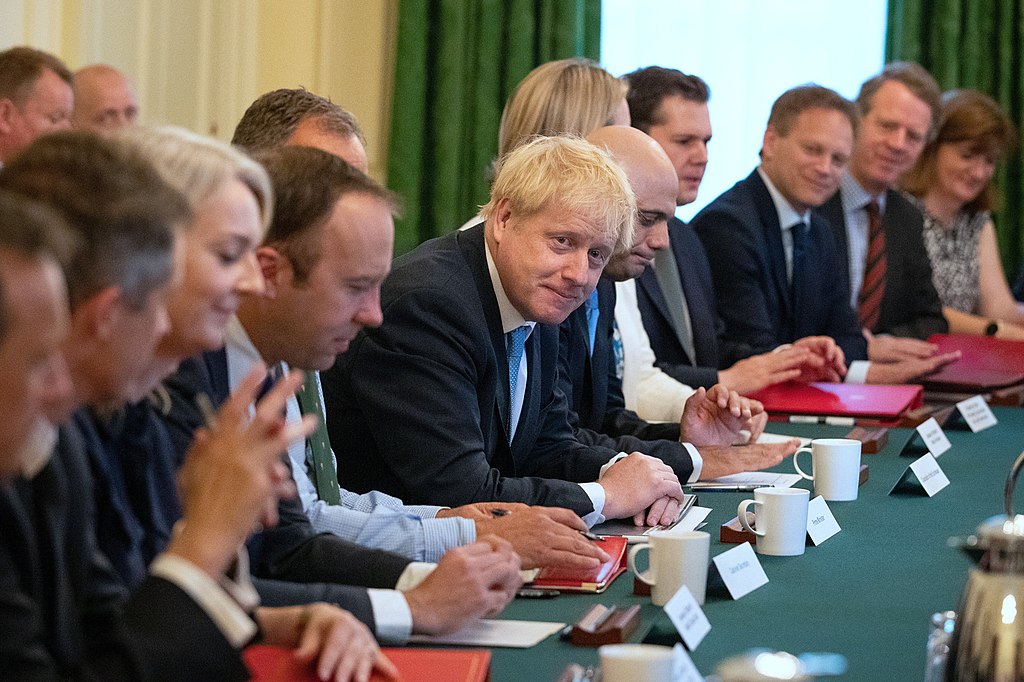
Prime Minister Boris Johnson at his first Cabinet meeting in Downing Street, 25 July 2019.
Official photograph via Wikimedia Commons.

… unlike most media or entertainment figures who progress into politics, Boris has not abandoned his old self — for the very good reason that it’s a hit persona: The great-grandchild of Jews, Muslims and a distant cousin of the Queen, he invented himself in his teens as what his Oxford chum (and another old editor of mine) Toby Young calls a Wodehousian buffer — one might say a Drones Club character, were it not for the fact that he is not, as it happens, terribly clubbable.

It was a canny choice of shtick: It duped the left and half of the right into dismissing him as a buffoon. And, even more cleverly, chuntering his way around the country as a toff with a massive thesaurus gave him, somewhat counter-intuitively, the common touch. The famous image of him stuck on the zipline in a beanie-like helmet waving plastic Union Jacks is so ingeniously endearing one assumes he paid them to stall the thing — because a failed photo-op is way less tedious than one that goes off like clockwork.

This is the genius of the act: He’s Bertie Wooster with Jeeves’ brain. Out on the street, he’s everybody’s friend; among his actual alleged friends, he’s utterly ruthless: Within twenty-four hours of entering 10 Downing Street, he’d pulled off the bloodiest cabinet reshuffle of “modern times”, as the papers say — although actually I can’t think of a bloodier one even from non-modern times. (Only four members of the May regime were retained: Michael Gove, Amber Rudd, Baroness Evans and Matt Hancock.)

Is he a nice person? Well, he’s left an awful lot of human wreckage in his wake. Some of the women he’s used and discarded seem to me, without naming names, to be sad and profoundly damaged from their brief intersection with his wandering zipper. His latest squeeze seems likely to be moving into Number Ten without benefit of clergy – a first for the Tories and a sign of how desperate they are after years of letting all the sober, serious, earnest types turn their party into a laughingstock.

What does he believe in? Other than himself, not terribly much. About a decade ago, I was in London for a couple of days and had lunch with him and Stuart Reid at a favorite Italian restaurant. Stuart was the deputy editor who did all the hard grind at the Speccie, while Boris was the great fizzing impresario fronting the operation — a business model he transferred successfully into his mayoral regime, and will no doubt be trying again in Downing Street. He was going on the BBC’s “Question Time” that night and was worried that he didn’t have anything sufficiently arresting to say, so asked if I had any tips. I gave him a few thoughts on the passing scene, and he considered them not in terms of his own public-policy positions (if any) but in terms of attitudinal cachet. Finally, I said, “Why don’t you really stir them up and put in a word for social conservatism?”

“You mean abortion and all that? Oh, God..,” he sighed, and ordered dessert.

If that seems to be (for self-interested reasons) his most firmly drawn red line, don’t nevertheless overstate his ideological flexibility. Like Boris, Theresa May schemed and maneuvered for decades to reach the top spot … and, by the time she pulled it off, she’d spent so much time and effort on the scheming and maneuvering that she had no idea of what to do once she got there. Boris is likewise invested in himself, but, having reached the finial of Disraeli’s greasy pole, he doesn’t intend to be just the latest seat-filler. Mrs May wanted to be prime minister; Johnson wants to be a great and consequential prime minister.

On another brief pop-in from the thirteenth century, David Warren also takes note of the new British PM:

It has come to my attention that Britain has a new prime minister, BoJo the Clown (known to his friends as “Alexander Boris de Pfeffel Johnson”). I gather Mrs Maybe, previously raised to that office under some gender equality programme I suspect, didn’t work out. Mr BoJo has already been criticized for having unkempt blond hair (and small eyes, I have noticed). Too, he was educated at Oxford University, which is still somewhat élite. He was able to use the word anaphora in a sentence (here), and shares with Churchill (and Trump) an ebullience, a buoyant exuberance, that his enemies invariably discount to their cost. He is a reminder that one man (and I have named three) can change the course of history, and the fate of nations.

Not necessarily for the better, of course.

Jacob Rees-Mogg, Member of Parliament for North East Somerset, is suddenly elevated from the backbenches to the front bench; from persistent articulate rearguard rebel, to House Leader in the Mother of Parliaments; and, Lord President of the Council.

Born to rule (the son of an editor of The Times), the now right honourable gentleman stands as a throwback to 1529, when the last indigenous Catholic was appointed to that office. (Though I am not entirely clear what were the Privy Council arrangements under Good Queen Mary, before the return to Erastian apostasy under Bad Queen Bess.)

Not merely a Conservative but a member of the party’s (“Faith, Flag, and Family”) Cornerstone Group, and a diligently practising Roman Catholic with forty children or so, Rees-Mogg has already made a mark in his new rôle, by imposing rules of civility upon the Tory caucus. He was able to do so while characteristically exhibiting them, in a talk that kept everyone in stitches.

Mr BoJo, too, was christened a Catholic, though it has not so far had much effect. He has rabbinical Jewish and infidel Turk antecedents, too, and learnt Anglican hymns at Eton. He is thus a kind of one-stop shop for nominal Abrahamic associations, but to the point, the Orangemen of Ulster are already calling him “England’s first Catholic prime minister” — and what’s good enough for Belfast is good enough for me.

Woodturning a spiked mace

Filed under: History, Tools, Woodworking — Tags: , , , — Nicholas @ 02:00

Rex Krueger
Premiered on 5 Jun 2019

More video and exclusive content: http://www.patreon.com/rexkrueger
(more…)

QotD: Business versus economics

Filed under: Business, Economics, Quotations — Tags: , , — Nicholas @ 01:00

There often occurred to me the difference between the Professor of Economics and the business man, as judged by their financial success. The business man may not perhaps be on the same intellectual plane as the professor, but he bases his ideas on real facts and puts the whole power of his will behind their realisation. The professor, on the other hand, often has a false conception of reality and although perhaps having more ideas, is neither able nor anxious to carry them out; the fact that he has them is satisfaction enough. And so the business man has the greater financial success.

Erwin Rommel, edited by B.H. Liddell Hart in The Rommel Papers, 1953.

July 29, 2019

Life and love aboard HMS Pacific Princess

Filed under: Britain, Media, Military — Tags: , , , — Nicholas @ 05:00

Sir Humphrey is not amused at the stories in the British press about pregnant Royal Navy sailors needing to be flown back to the UK from some of Her Majesty’s deployed ships:

Life in the Royal Navy is less about preparing for war, and more like spending time on the loveboat. That seems to be the gist of quite a few stories in the media today which breathlessly relate to the news that since 2005 35 women sailors from 18 different ships have been airlifted to shore as a result of becoming pregnant and discovering this while they were at sea.

This news has been met with shock and horror by some commentators online, some of whom give the distinct impression that they are not intimately familiar with the process by which babies are made. At least one Daily Mail reader suggested that Chasity belts should form part of naval uniform for female members of the naval service (presumably in the RN kit record book it would be recorded as a “Torpedo Protection Belt”?).

Is the nation being let down by a bunch of serial shaggers in uniform or is perhaps the truth of the matter a little more complex than originally conceived?

The specific FOI that was referred to in the article, which looks like it originated in the Daily Star (alongside another story suggesting that the 2003 Iraq war occurred due to Saddam possessing “stargate” technology and the US and allies wanting to prevent various aliens attacking the Earth) asked for the total number of females aeromedically evacuated between 2005 and 2019. Confusingly though there is also some suggestion that the Sun also got the story as an exclusive – to be honest, its rather hard to tell.

To start with, a sense of context is perhaps useful. This FOI is a well worn question which seems to have been asked quite a few times over the years. Humphrey has found similar articles from 2015 and 2017 and 2018, so its not exactly breaking news that the RN has had to occasionally return sailors ashore when they find out they are pregnant.

The numbers involved sound dramatic – a whole 35 women flown at public expense due to getting pregnant. In 2015 the number was 25, so in the last four years a whole 10 additional women sailors have discovered they were pregnant while onboard a ship.

Given that the Royal Navy consists of about 3,000 women at any one time (roughly 10% of the Naval Service) and that each year roughly 3000 people join the Royal Navy (lets assume 300 women based on the above figure), then in very big handfuls between 2005 and 2019 roughly 7500 women have served in the Royal Navy at different times. The figure is likely to be even higher still, but it’s a useful, albeit very rough, “guesstimate”.

This means that of the 7500 women, a total of 35 have discovered they were pregnant while at sea during this period. That works out at, roughly, 0.5% of the total force spread over 14 years. This doesn’t sound quite as dramatic as first made out to be.

Cutting the Tails | Dovetail Box Project #3 | Free Online Woodworking School

Filed under: Tools, Woodworking — Tags: , , — Nicholas @ 04:00

Matt Estlea
Published on 27 Jul 2019

In this video, I show you how to accurately cut the tails of a dovetail joint all the way from wielding the saw through to refining the component with the chisel.

For the best experience, please view this video on my website where you will get access to a variety of supporting resources to help you with this project.
_________________________________________________________________
Purchase the Katz-Moses Guide here:
http://tinyurl.com/katzmosesstoreME
(Great for people who want instant results without the drama)
_________________________________________________________________
Support what I do by becoming a Patron! This will help fund new tools, equipment and cover my overheads. Meaning I can continue to bring you regular, high quality, free content. Thank you so much for your support! https://www.patreon.com/mattestlea

Don’t want to commit to a monthly direct debit but still want to help out? That’s fine!
You can make a one time donation here: https://www.paypal.me/MattEstlea
You can donate us biscuits here: https://amzn.to/2WOl1UR
_________________________________________________________________
BUY THE WOODWORKING BIBLE HERE:
– UK: https://goo.gl/X8ZzSF
– US: https://goo.gl/UDqWf3
– CA: https://goo.gl/31jBxj
_________________________________________________________________

See what tools I use here: https://kit.com/MattEstlea
My Website: http://www.mattestlea.com
_________________________________________________________________

My name is Matt Estlea, I’m a 23 year old Woodworker from Basingstoke in England and my aim is to make your woodworking less s***.

I come from 5 years tuition at Rycotewood Furniture Centre with a further 1 year working as an Artist in Residence at the Sylva Foundation. I now teach City and Guilds Furniture Making at Rycotewood as of September 2018.

I also had 5 years of experience working at Axminster Tools and Machinery where I helped customers with purchasing tools, demonstrated in stores and events, and gained extensive knowledge about a variety of tools and brands.

During the week, I film woodworking projects, tutorials, reviews and a viewer favourite ‘Tool Duel’ where I compare two competitive manufacturers tools against one another to find out which is best.

I like to have a laugh and my videos are quite fast paced BUT you will learn a lot, I assure you.

Lets go make a mess.

Erasing the past, statue by statue, plaque by plaque

Alexander Adams on the deliberate sabotage of historical monuments in pursuit of a more perfect (i.e., imaginary) past:

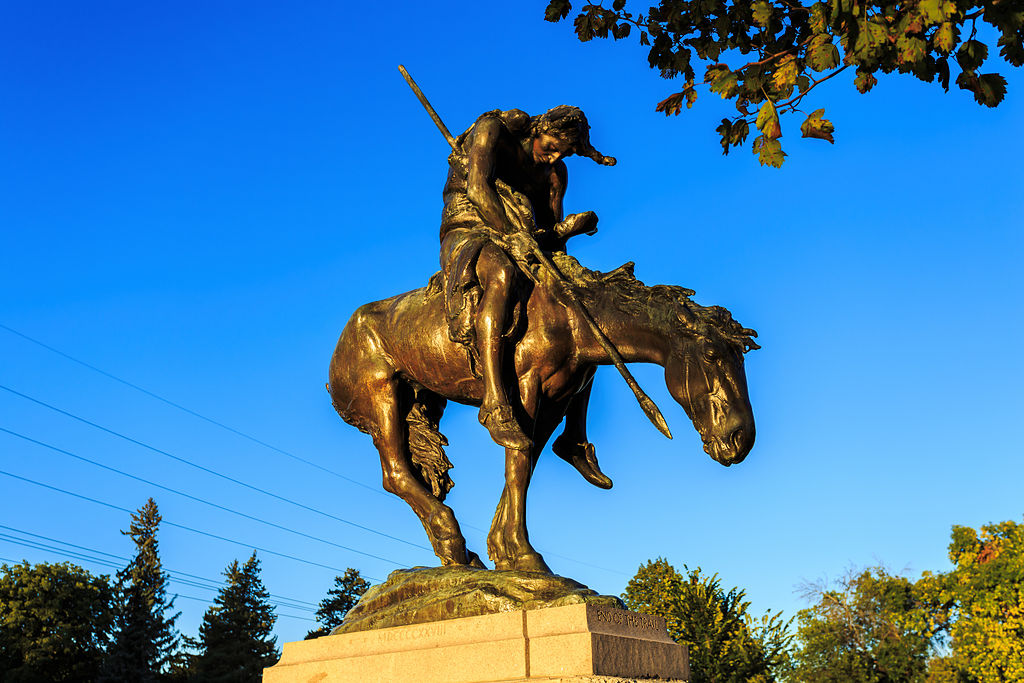
End of the Trail by James Earle Fraser, located in Waupun, Wisconsin.
Photo by Shawn Conrad via Wikimedia Commons.

In the wake of recent attempts – some successful – to have Confederate statues removed from the US south, what is the future of colonialist statues in the US west? In Pioneer Mother Monuments: Constructing Cultural Memory, Cynthia Culver Prescott, a professor of history at the University of North Dakota, senses a reluctance to apply to pioneer monuments the ideological zeal that was turned on Confederate memorials. “We resist applying the insights of settler colonial studies to American pioneer narratives because to do so would call into question foundational myths of Jeffersonian agrarianism and American exceptionalism, and lay bare white conquest of native lands and peoples.” She outlines the cases against statues of colonialists, and particularly against female settlers, who took part in the drive to colonise the American west in the 19th century.

Statues depicting women have been criticised by academics and campaigners for being idealising, inaccurate, generalising and stereotypical. There is a sense that campaigners direct such ire at statues of women settlers not just because they embody sexism and colonialism but because they show women as complicit in the act of dispossessing native peoples. There is a residual resentment that – in intersectional terms – a political minority took part in a project to oppress another minority.

The creation of monuments honouring white settlers of the west began in earnest in the 1890s. As the American western frontier was closed and territories became part of the United States, a chapter of national history had been definitively closed, too. Just under 190 monuments have been erected in the US since the 1880s marking pioneer achievements. It was a way of fixing in collective memory the achievements of forebears just at the moment their stories were becoming history. The western territories had been spared the scourge of the Civil War, and its new states had a history that involved war with Mexico, the persecution and flight of the Mormons and the Indian Wars.

In the statuary, common types emerged. Women were the prairie Madonna, the protective mother, the Indian guide leading the way, the nuclear family. Men were resolute fathers, the epitome of bravery and stoic defiance. Competitions, touring exhibitions, newspaper features and book publications circulated them, encouraging other communities to commission similar statues. Alexander Phimister Proctor’s statue of a male pioneer was an acceptable manifestation of the conquering of the west. Bearded and dressed in buckskin clothing, the pioneer wears European boots and carries a rifle. He straddles the wisdom of the natives and the technological superiority of settlers, explaining how the west was won through a combination of old knowledge and new materials.

Culver Prescott notes the example of James Earle Fraser’s sculpture The End of the Trail (1890s), which depicted an exhausted American Indian on a tired pony. Fraser had apparently developed a deep sympathy for native peoples after witnessing an army eviction. It seems the sculptor intended to elicit sympathy for evicted Indians, yet it was interpreted by contemporary observers as a scene of the sad but necessary extinction of a primitive indigenous people, conforming to the social Darwinist reading of history, in which advanced people defeat and displace inferior peoples. This is an object lesson in the variety of interpretations an artwork can elicit, regardless of artistic intent. It should alert today’s social-justice warriors to the dangers of misinterpreting public art and the risk of suppressing art on the basis of misapprehension.

South African R2 and its Special Furniture

Filed under: Africa, History, Military, Technology, Weapons — Tags: , , , — Nicholas @ 02:00

Forgotten Weapons
Published on 5 Jun 2019

http://www.patreon.com/ForgottenWeapons

Cool Forgotten Weapons merch! http://shop.bbtv.com/collections/forg…

In South African military service, the R1 was the FN FAL and was the preferred infantry combat rifle until the adoption of the Galil as the R4 rifle. So what were the guns in between? Well, the R2 was a South African adaptation of the G3. A large number of rifles were needed as a reserve, and also to equip second echelon units like the Air Force, Cape Corps, and South West Africa Territorial Force. To reduce the expense of this, South Africa purchased something like 100,000 G3 rifles from Portugal and designated them R2.

The Portuguese hand guards and buttstocks were found to be unsatisfactory, however. In the heat and harsh ultraviolet radiation of South West Africa (now Namibia) in particular, the plastic would shrink and lose its fit, leading to the guns being called “rattlers” by the SADF troops. The fix this, the American firm of Choate Machine & Tool was contracted to make new hand guards based on the H&K export pattern — wider and longer and with fittings for a bipod. New stocks were also made, duplicating the shape of the R1/FAL stock.

Contact:
Forgotten Weapons
PO Box 87647
Tucson, AZ 85754

QotD: Put up your dukes!

Filed under: Britain, History, Military, Quotations — Tags: , , — Nicholas @ 01:00

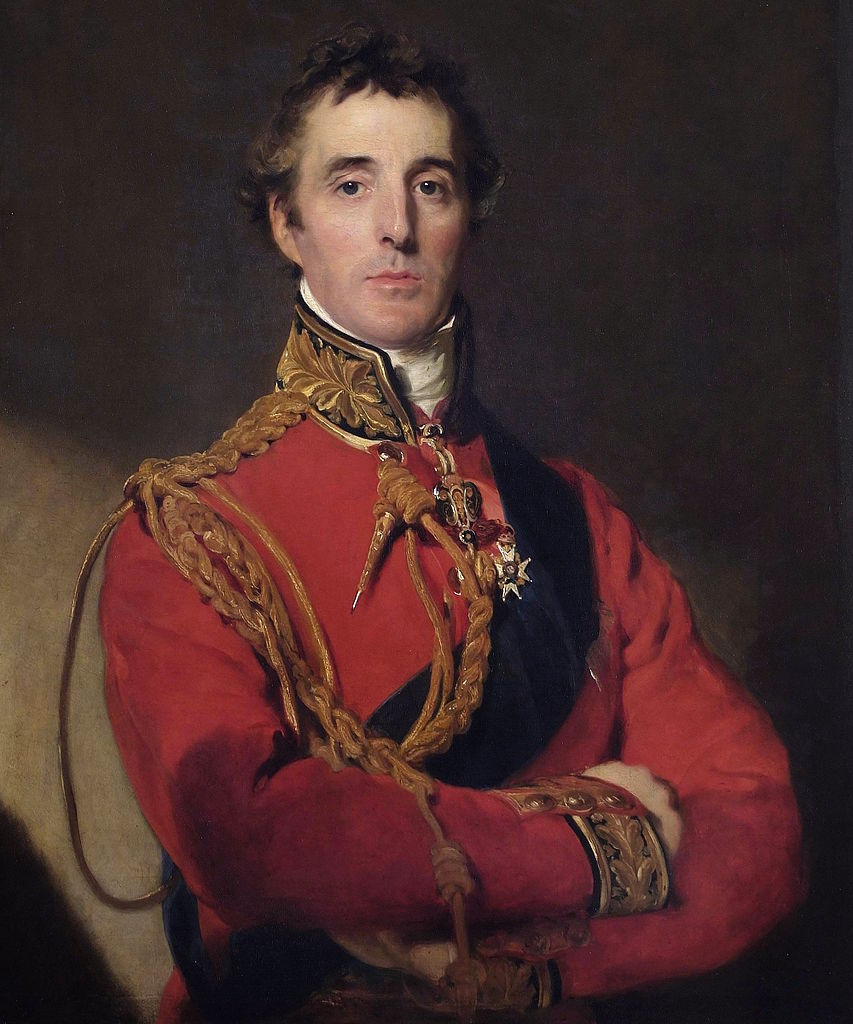
Arthur Wellesley, 1st Duke of Wellington (1769–1852) by Thomas Lawrence, circa 1815-1816.
Wikimedia Commons.

The phrase “duke it out”, meaning “fight”, appears to derive ultimately from a nickname of one of the Great Captains, the Duke of Wellington (1769-1852).

It seems that the Duke had a rather prominent nose, so distinctive, in fact, that his troops often referred to him as “Old Nosey”. So the word “duke” soon became a synonym for “nose” in working class English slang, attested during Wellington’s own lifetime. That, in turn, led to the rise of the threat “bust your duke”, meaning “punch your nose”, and thus to “duke buster” as slang for “fist”, which was soon shortened to “duke”.

By further evolution, the phrase “put up your dukes” developed as an invitation to fight and “duke it out” became slang for “fight”.

While some etymologists apparently do not agree with this derivation, it’s worth noting that there is in London a mini-monument to the ducal proboscis, suggesting how notable it was.

Al Nofi, “Al Nofi’s CIC, Issue 472”, Strategy Page, 2019-06-01.

July 28, 2019

Joan of Arc – Thy Kingdom Come – Extra History – #4

Filed under: Britain, France, History, Military, Religion — Tags: , , , — Nicholas @ 06:00

Extra Credits
Published on 27 Jul 2019

Join us on Patreon! http://bit.ly/EHPatreon
City after city surrendered to Joan of Arc without a fight. Her mission was complete… or was it?

“Fantasy Fleet” notions for the RCN

Filed under: Cancon, Military — Tags: , , — Nicholas @ 05:00

I hate to use the term “fantasy fleet” when linking to a Ted Campbell article … he’s far from being an obsessive who loves amassing lists of cool, gosh-wow hardware, as he’s a retired former army officer who actually does know what he’s talking about on military matters. I apply the term because no matter how sensible and practical these suggestions are (and I largely agree with them on those terms), there is no chance the current government or even a Conservative government under the Milk Dud could stand the political heat they’d take for devoting the kind of ongoing investment a fleet renewal and expansion like this would generate:

The Kingston-class Maritime Coastal Defence Vessel (MCDV) HMCS Moncton in Baltimore harbour for Sailabration 2012.
Photo by Acroterion via Wikimedia Commons.

… Canada’s 25 years old Kingston class vessels have a range of up to 5,000 nautical miles and can carry unmanned aerial vehicles, but they are slow and are designed for underwater warfare, being fitted with specialist payloads to look for mines and other things on the seabed … The Royal Canadian Navy has said, in the past, that it needs 25± surface combatants (the Navy uses the term “bottoms” when it means surface ships) and Canada has, now, 12 of the 30-year-old (but still lethal) Halifax class frigates and we also have, right now, 12 very useful little Kingston class ships, too. Canada plans (hopes?) to have 12 of the new Type 26 ships in the future, plus 5 of the very large (6,500+ tons) Harry DeWolf class Arctic patrol ships … so we are going from 24 down to 17?

A Chilean navy boarding team fast-ropes onto the flight deck of RCN Halifax-class frigate HMCS Calgary (FFH 335) during multinational training exercise Fuerzas Aliadas PANAMAX 2009.
US Navy photo via Wikimedia Commons.

My guesstimate is that a proper Canadian Navy needs, in addition to supply/support ships, at least:

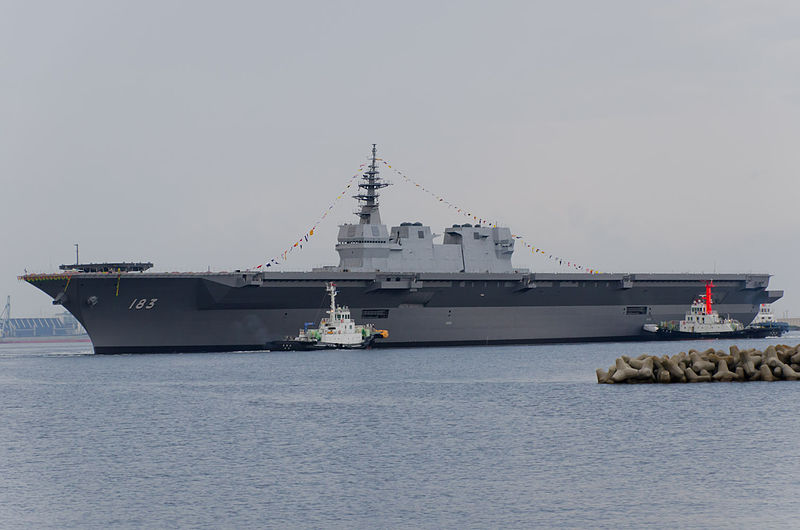
  • 2 or 3 large (25,000± tons) helicopter carrying “destroyers,” (in fact, small aircraft carriers) perhaps like the modern Japanese Izumo-class multi-purpose “destroyers” (pictured below) to conduct multi-purpose operations, including carrying combat-ready specialized amphibious warfare trained soldiers, on a global basis;
  • JS Izumo DDH-183

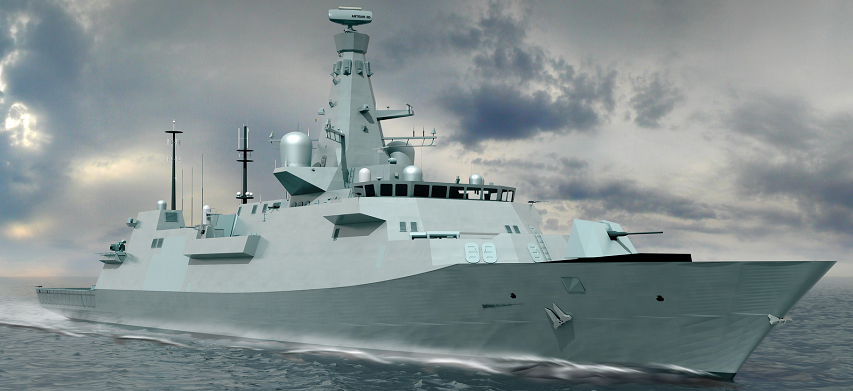
  • 8 to 12 Type-26 destroyer-frigates (below) ~ I believe (guess) they will also be named for Canadian provinces, cities or rivers or something;
  • Type 26 Global Combat Ship
    (BAE Systems, via Flickr)

  • 6 to 10 modern corvettes (a modern Dutch design is pictured below), 1,500-ton to 2,500-ton vessels, with a 5,000± nautical mile range, each able to carry a helicopter or, at least, a large unmanned aerial vehicle;
  • KRI Diponegoro (pennant number 365) of the Indonesian navy. The Sigma (Ship Integrated Geometrical Modularity Approach) class is a Dutch modular design that can be built in OPV, corvette, or frigate variants. In 2019, ships of this class are in service with Indonesia, Morocco, and Mexico.
    Photo by Wim Kosten via Wikimedia Commons.

  • 6 to 10 special purpose, ocean-going (i.e. with a range measured in thousands, not hundreds of nautical miles) underwater warfare vessels to replace the Kingston-class ships; and
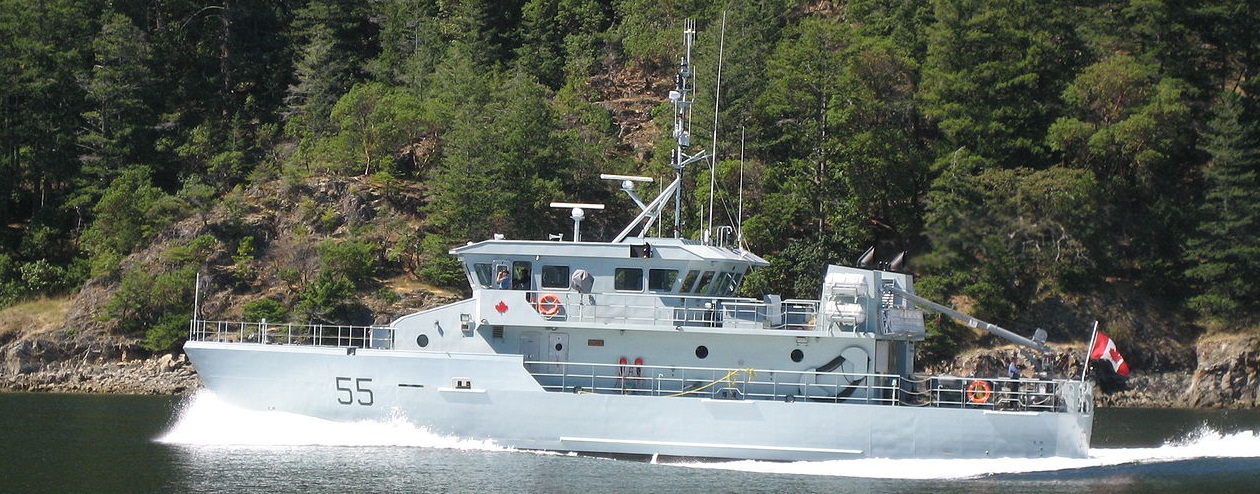
  • The lead vessel of the Orca-class in the Gulf Islands on officer training in August, 2007. She is not a commissioned naval ship, so does not bear the HMCS designation. Orcas are not generally armed, but the foredeck has been strengthened to allow an M2 12.7mm machine gun to be mounted if necessary.
    Photo via Wikimedia Commons.

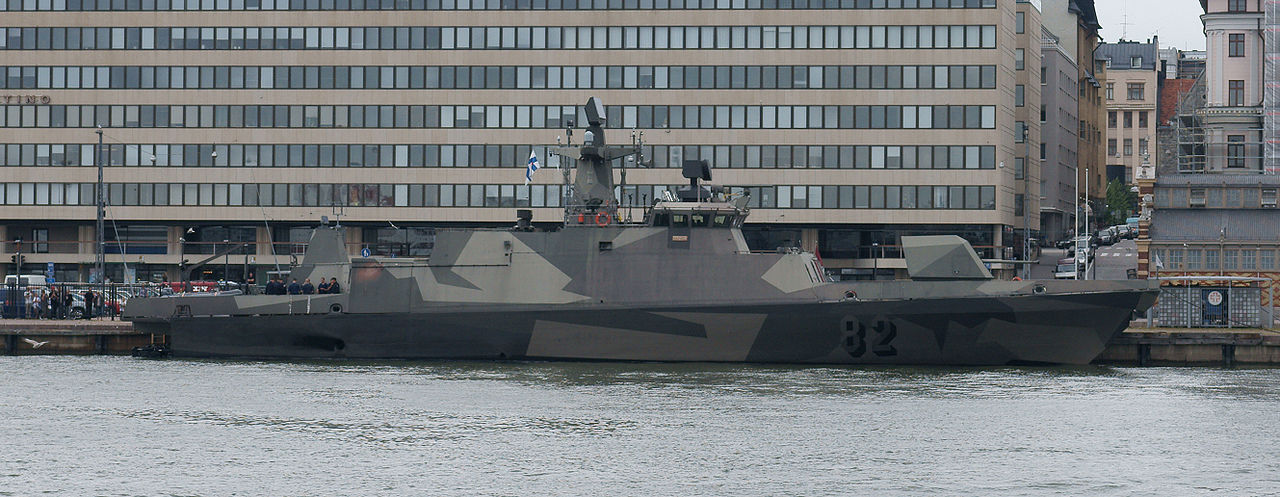
  • 8 to 12 armed “training” ships, about 250 tons (about the same as the Finnish Hamina class) to replace the (fairly new) Orca class vessels, which are not warships. These ships would be, primarily, training vessels, for which there is, always, a pressing need but they could, in emergencies, be used for coastal, constabulary patrol and search and rescue duties, too. The important thing is that they would be real warships, in commission, armed about as well as the Harry DeWolf class ships (which would enhance their training value, too) and, therefore, able to “fight.”
  • FNS Hanko, a Finnish Hamina-class missile boat.
    Photo by kallerna via Wikimedia Commons.

In his ideal world (i.e., not the one we’re living in at the moment), that would be the RCN’s combat fleet. Submarines, logistical support vessels, and (lots of) helicopters would also be required, which would further put this shopping list out of consideration for a Canadian peacetime government.

One thing to keep in mind for most of us civilians, is that warships operate in very rough environmental conditions even in peacetime, and require much more in the way of maintenance and service than your car or pleasure boat. This is why, even if you have a dozen ships “in commission”, you’ll likely only have eight of them available for deployment as the others will be in various states of maintenance and repair. For operations far from home, you really need three ships for each one actually deployed on active service, to account for the back-shop work to keep the ships afloat, fully staffed, and fully capable, plus transit time for the ship itself getting to and from the area of operations, and adequate leave and out-of-combat rest and recreation for the crews.

No Deal… Herr Hitler! – WW2 – 048 – July 27 1940

Filed under: Britain, China, Germany, History, Japan, Military, WW2 — Tags: , , , , — Nicholas @ 04:00

World War Two
Published on 27 Jul 2019

Hitler searches for ways to force Britain out of the war, but the British sit safely behind their cliffs, their channel and their Royal Navy. Engaging the navy and invading Britain would require a major air-superiority. As a result, the Germans plan to knock the British out of the skies. This is the Battle of Britain.

Join us on Patreon: https://www.patreon.com/TimeGhostHistory
Or join The TimeGhost Army directly at: https://timeghost.tv

Follow WW2 day by day on Instagram @World_war_two_realtime https://www.instagram.com/world_war_t…
Join our Discord Server: https://discord.gg/D6D2aYN.
Between 2 Wars: https://www.youtube.com/playlist?list…
Source list: http://bit.ly/WW2sources

Written and Hosted by: Indy Neidell
Produced and Directed by: Spartacus Olsson and Astrid Deinhard
Executive Producers: Bodo Rittenauer, Astrid Deinhard, Indy Neidell, Spartacus Olsson
Creative Producer: Joram Appel
Post-Production Director: Wieke Kapteijns
Research by: Indy Neidell
Edited by: Iryna Dulka
Map animations: Eastory

Colorisations by Norman Stewart and Julius Jääskeläinen https://www.facebook.com/JJcolorization/

Eastory’s channel: https://www.youtube.com/channel/UCEly…
Archive by Screenocean/Reuters https://www.screenocean.com.

A TimeGhost chronological documentary produced by OnLion Entertainment GmbH.

From the comments:

World War Two
1 week ago (edited)
World War Two is a very complex topic, and even with one or more videos a week, there is a lot of information or context that we don’t get to cover on this channel. That’s why are doing series on the interwar years (1919-1939) called “Between Two Wars” on our TimeGhost History channel. We’re currently in 1929, and we’ll be making generally two thematic episodes for each year of the interwar period. If you want to understand what led up to this massive and destructive conflict, do make sure to check the channel out here: https://www.youtube.com/channel/UCLfMmOriSyPbd5JhHpnj4Ng

Cheers,
Joram

With the SNC-Lavalin affair fading from memory, Justin Trudeau looks set for the fall election

Filed under: Cancon, China, Media, Politics — Tags: , , , , , , — Nicholas @ 03:00

They say that memories are short in politics, but this short? Thanks largely to the dog days of summer and a complicit media desperate for more government subsidies, Justin Trudeau and the Liberals are being allowed to shed the scandal-tainted skin of four whole months ago to emerge glistening and new with election promises galore. Democracy dies in government subsidies, apparently.

On the other hand, perhaps Canadian voters’ memories will last long enough to get past the casting of ballots in October:

Supposedly, the Liberals have put the SNC-Lavalin scandal behind them: the polls have rebounded, the media have moved on, while the company has worse problems to deal with than a mere hair-raising multi-million-dollar corruption charge.

Even the return of Gerry Butts, the prime minister’s former principal secretary, albeit in a part-time, temporary, what-are-friends-for capacity as adviser to the party’s election campaign, seems to have caused little stir, although he was one of two senior government officials to resign over their part in the affair.

Perhaps the Liberals have concluded the passage of time is enough to earn them a pass from the public. I mean this all took place, what, four months ago? Who even remembers that far back?

But as recent events have shown, the same ingredients that combined to produce the SNC-Lavalin scandal — hubris, a maniacal desire to run everything from the centre, and an unwillingness, in all this overweeningness and control-freakery, to be bound by basic legal and procedural norms — remain very much in place in the prime minister’s office.

For starters, there is the affair of the two ex-ambassadors. First, David Mulroney, Canada’s ambassador to China from 2009 to 2012, then his successor, Guy Saint-Jacques, reported a senior official in the Global Affairs department had called them to demand they clear any public comments on the government’s policy towards China with the government.

Both men are now private citizens. Both have been critical of the government’s handling of the China file. Unlike the most recent former ambassador, former Liberal cabinet minister John McCallum, neither has framed his comments on Sino-Canadian relations in terms of what would assist in the re-election of the Liberals. Apparently, that was the problem.

The official, assistant deputy minister Paul Thoppil, claimed to be speaking on behalf of the PMO and explicitly cited “the election environment” as a reason to shut up. Oh, also the current state of “high tension” between the two countries, presumably over China’s seizure of two Canadians as hostages, which supposedly made it essential for everyone in Canada, whether in the government’s employ or not, to “speak with one voice,” i.e., refrain from criticizing the government.

As a China policy, this has the advantage of closely resembling the Chinese way of doing things. It’s hard to say which is the more extraordinary: the notion that private citizens should be compelled to clear their criticisms of the government with the government, or the notion that they could be.

Sea Lion: Why not just invade the UK in 1940?

Filed under: Britain, Germany, History, Military, WW2 — Tags: , , , — Nicholas @ 02:00

Military History Visualized
Published on 13 Oct 2017

Quite often people remark Hitler should just have finished off the UK before attacking the Soviet Union. Well, there are many problems with that assumption.

»» SUPPORT MHV ««
» patreon – https://www.patreon.com/mhv
» paypal donation – https://www.paypal.com/cgi-bin/webscr…

Military History Visualized provides a series of short narrative and visual presentations like documentaries based on academic literature or sometimes primary sources. Videos are intended as introduction to military history, but also contain a lot of details for history buffs. Since the aim is to keep the episodes short and comprehensive some details are often cut.

QotD: Anglo-Italian relations, 1922-1940

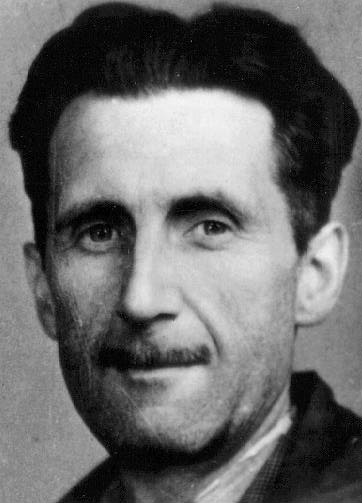
Orwell’s press card portrait, 1943

The history of British relations with Mussolini illustrated the structural weakness of a capitalist state. Granting that power politics are not moral, to attempt to buy Italy out of the Axis — and clearly this idea underlay British policy from 1934 onwards — was a natural strategic move. But it was not a move which Baldwin, Chamberlain and the rest of them were capable of carrying out. It could only have been done by being so strong that Mussolini would not dare to side with Hitler. This was impossible, because an economy ruled by the profit motive is simply not equal to rearming on a modern scale. Britain only began to arm when the Germans were in Calais. Before that, fairly large sums had, indeed, been voted for armaments, but they slid peaceably into the pockets of the shareholders and the weapons did not appear. Since they had no real intention of curtailing their own privileges, it was inevitable that the British ruling class should carry out every policy half-heartedly and blind themselves to the coming danger. But the moral collapse which this entailed was something new in British politics. In the nineteenth and early twentieth centuries, British politicians might be hypocritical, but hypocrisy implies a moral code. It was something new when Tory M.P.s cheered the news that British ships had been bombed by Italian aeroplanes, or when members of the House of Lords lent themselves to organized libel campaigns against the Basque children who had been brought here as refugees.

When one thinks of the lies and betrayals of those years, the cynical abandonment of one ally after another, the imbecile optimism of the Tory press, the flat refusal to believe that the dictators meant war, even when they shouted it from the house-tops, the inability of the moneyed class to see anything wrong whatever in concentration camps, ghettos, massacres and undeclared wars, one is driven to feel that moral decadence played its part as well as mere stupidity. By 1937 or thereabouts it was not possible to be in doubt about the nature of the Fascist régimes. But the lords of property had decided that Fascism was on their side and they were willing to swallow the most stinking evils so long as their property remained secure. In their clumsy way they were playing the game of Machiavelli, of “political realism”, of “anything is right which advances the cause of the Party” — the Party in this case, of course, being the Conservative Party.

All this “Cassius” brings out, but he does shirk its corollary. Throughout his book it is implied that only Tories are immoral. “Yet there is still another England,” he says. “This other England detested Fascism from the day of its birth… this was the England of the Left, the England of Labour.” True, but only part of the truth. The actual behaviour of the Left has been more honourable than its theories. It has fought against Fascism, but its representative thinkers have entered just as deeply as their opponents into the evil world of “realism” and power politics.

“Realism” (it used to be called dishonesty) is part of the general political atmosphere of our time. It is a sign of the weakness of “Cassius”s position that one could compile a quite similar book entitled The Trial of Winston Churchill, or The Trial of Chiang Kai-shek, or even The Trial of Ramsay MacDonald. In each case you would find the leaders of the Left contradicting themselves almost as grossly as the Tory leader quoted by “Cassius”. For the Left has also been willing to shut its eyes to a great deal and to accept some very doubtful allies. We laugh now to hear the Tories abusing Mussolini when they were flattering him five years ago, but who would have foretold in 1927 that the Left would one day take Chiang Kai-shek to its bosom? Who would have foretold just after the General Strike that ten years later Winston Churchill would be the darling of the Daily Worker? In the years 1935-9, when almost any ally against Fascism seemed acceptable, left-wingers found themselves praising Mustapha Kemal and then developing tenderness for Carol of Rumania.

George Orwell, “Who are the War Criminals?”, Tribune, 1943-10-22.

July 27, 2019

The US Economy is About to Crash Hard | Between 2 Wars | 1929 Part 1 of 3

TimeGhost History
Published on 25 Jul 2019

In 1929 it’s been nothing but growth for the US economy for years, at least if you judge by the New York Stock Exchange. But all that glitters is not gold, and when the gilding comes off this bubble it sinks like a lead ballon.

Join us on Patreon: https://www.patreon.com/TimeGhostHistory

Hosted by: Indy Neidell
Written by: Francis van Berkel
Produced and directed by: Spartacus Olsson and Astrid Deinhard
Executive Producers: Bodo Rittenauer, Astrid Deinhard, Indy Neidell, Spartacus Olsson
Creative Producer: Joram Appel
Post Production Director: Wieke Kapteijns
Edited by: Daniel Weiss
Sound Mix by: Iryna Dulka

Archive by: Reuters/Screenocean http://www.screenocean.com

A TimeGhost chronological documentary produced by OnLion Entertainment GmbH

From the comments:

TimeGhost History
3 hours ago (edited)
Now… ladies and gents – this is not a video about 2019 and we are not making any political statements. We know that some of you love making parallels between the present day and historical events. Although we can learn from history, try to remember that the circumstances were very different. Others among you feel it appropriate to extend partisan conflicts backwards and make out our videos, or events in the videos as partisan statements or issues. First of all we simply don’t do that, we just relate the events and the circumstances as factually as possible with the best possible sources. Second of all it is pointless to look for the 2019 partisan left/right divide according to party lines in events that happened 90 years ago. There’s just no comparison as both reality, and political parties have gone through so much change that the members of the same party, from today and then would probably disagree so vehemently on so many points the they would not even understand each other. So please, try your best to not go off on partisan rants, as it distracts form the actual historical issues at hand

« Newer PostsOlder Posts »

Powered by WordPress