Quotulatiousness

August 2, 2019

Doug Ford’s sudden onset “Winegate” scandal

Filed under: Business, Cancon, Media, Politics, Wine — Tags: , , , , , , — Nicholas @ 03:00

Ontario premier Doug Ford is now taking flak for promoting an Ontario winery after his party accepted what some Toronto media reports characterized as a “generous” donation from the winery’s owner. How generous? Are we talking millions? Tens of millions? A thousand dollars. Toronto media considers $1,000 to be enough money to sway the provincial government and at least one local media outlet encouraged its readers to boycott the winery. But that turned out to be only the tip of the iceberg from a media investigation point of view: Ford’s ultra-cheesy “Ontario News Now” party propaganda channel had given Ford’s endorsement to at least four other mega-corporations whose political contributions may have gone as eye-wateringly high as $2,000! Torontonians may never have heard of these corporate puppet-masters who clearly now control Premier Ford’s every waking moment, but as Canadians have never seen corruption on this scale before — nearly ten thousand dollars in political contributions!! — they’re demanding all the usual things that media-ginned-up protests tend to demand.

At the National Post, Chris Selley wonders why the Ontario Progressive Conservatives are acting just as badly as the Liberals they replaced:

When it comes to Canadian politicians and money, it might be difficult to explain to a foreign visitor exactly what’s kosher and what’s not. Ontario Premier Doug Ford got some bad press this week for having promoted the Pelee Island Winery in one of his impossibly cheesy “Ontario News Now” propaganda videos, just weeks after the winery’s owner, Walter Schmoranz, donated $1,000 to Ford’s Progressive Conservatives. In isolation, it didn’t look great. If it’s a coincidence, as the premier claims, then it’s the sort of coincidence a government wishing to claim moral rectitude should endeavour to avoid.

Viewed in the broad landscape of Canadian politics, however, it all seems rather overblown. Politicians regularly stump for certain products and businesses, after all, implicitly at the expense of others. More to the point they routinely give businesses free money without asking us, and not out of the goodness of their hearts.

According to David Akin’s indispensable @ottawaspends Twitter feed, the federal government doled out $723,000 to wineries and winery associations this year and last. The Nova Scotia Winery Association hoovered up $522,000 of the total, plus another $175,000 back in 2012. Perhaps it would be cynical to observe that the riding of West Nova, home to the Annapolis Valley wineries, is notorious for changing hands between the Liberals and Conservatives. Whoops — too late.

Here in Ontario, meanwhile, between 2013 and 2018, the province and feds collectively gave away at least $1.1 million to wineries and $1.5 million to breweries, plus $140-odd million more to an endless queue of cap-in-hand distillers, mushroom farmers, meat processers, goat dairies, sugarmakers and bakeries. Pelee Island Winery isn’t on that list, incidentally, which might put the premier’s non-financial contribution — quid pro quo or not — in perspective.

All that taxpayer dough got handed out under a program called Growing Forward 2, which was an “initiative that encouraged innovation, competitiveness and market development, adaptability and industry sustainability in Canada’s agri-food and agri products sector.” That’s a fancy way of saying “corporate welfare,” which can be unpopular in Canada when it comes to bailing Bombardier out of its latest fiasco or buying the Weston clan new freezers, but which is entirely uncontroversial when it comes to smaller, less obviously villainous businesses — especially if they happen to be farms.


PM63 Rak: An Interesting Polish SMG/PDW Hybrid

Filed under: Europe, History, Military, Technology, Weapons — Tags: , , , , , , — Nicholas @ 02:00

Forgotten Weapons
Published on 7 Jun 2019

http://www.patreon.com/ForgottenWeapons

Cool Forgotten Weapons merch! http://shop.bbtv.com/collections/forg…

The PM-63 Rak is a pretty interesting Polish Cold War machine pistol or personal defense weapon. It fires from an open bolt, but uses a slide like a pistol rather than a bolt in an enclosed receiver like a typical SMG. There are several other interesting elements to the design, so let’s take a closer look…

Thanks to Movie Armament Group in Toronto for giving me the opportunity to bring you this video! Check out MAG on Instagram: https://instagram.com/moviearmamentsg…

http://www.moviearms.com

Contact:
Forgotten Weapons
PO Box 87647
Tucson, AZ 85754

QotD: What we mean by “civilization”

Filed under: Books, History, Quotations — Tags: , , , , , — Nicholas @ 01:00

… I floated that there might have been “civilizations” between the emergence of anatomically modern humans, and ya’ll objected because no signs of dentistry, no extensive mining operations and even the crab bucket, I thought “Well, absence of evidence is not evidence of absence.” It wasn’t till yesterday morning that I stopped and went “waitaminut, Czar Nicholas’ skeleton showed signs of prolonged and horrific abscesses. We only found out how extensive the Roman mining operation in the village was when it rained for a month and roads collapsed under cars. And even with the crab bucket and no Judeo-Christian ethic, ancient Asia had a lot of very advanced, flourishing civilizations.”

Which is when the dime dropped and I realized you guys immediately translated civilization to “as good as we have or better.” Which, of course, made me giggle. Because I’d have liked you to tell a Roman, with their world-bestriding empire that they weren’t civilized. Or, before that a classical Greek.

Understand I am not imagining others before us had the internal combustion engine, or steam, or trains, or … Sure, they might have, but that’s a heck of a coincidence, since those things usually come about by an individual stroke of genius, and even when they do they often aren’t used the way we did (Romans and their mechanical toys.)

To imagine other civilizations of which we’ve forgotten every trace followed exactly the same route we did to the same place we’re at requires believing that inventing steam and the internal combustion engine and harnessing electricity is as natural to humans as dams to beavers.

Now, maybe that’s true. It would certainly make for a very good science fiction story. (Short story, I think. Too much of a punchline thing for a novel.) BUT the odds defy rationality.

I was imagining, you know “builds houses of wood or stone. Domesticated SOME animals. Has villages and cities. Might have trade over long routes. MIGHT have had wheeled vehicles.” (The last, as we know, one can have quite sophisticated civilizations without.)

Look, it’s not your fault. Since the seventies, we’ve been bombarded by crazy BS about superior aliens or superior lost civilizations. (And before that, there was a trickle of it, too, going back I think to the eighteenth century, just couched in different terms.) You’ll get stuff about how the pyramids were built of stones that floated at the sound of a certain note. (A C note, or the equivalent, I bet. “Listen, Mac, you take this stone to the top of the pyramid, I give you a C Note. A hundred Amontheps in your pocket, bucko. Buys a lot of fish and falafel.”)

Part of this, and part of the reason it intensified since the seventies were the “unilateral disarmament people.” You know, those jokers who wanted us to get rid of our own nukes and stand disarmed in front of the USSR, who would then realize we were peaceful, and not attack, and everyone would live in peace and harmony with rainbows and farting unicorns. Yes, it was a stupid and crazy idea since the continued survival of the USSR depended on plunder and conquest. But I’ll remind you our last president still believes that bag of moonshine. All of it, including the unicorn farts.

Sarah Hoyt, “We Are The Superior Civilization”, According to Hoyt, 2017-05-15.

August 1, 2019

“Since I recently called [Johnson] ‘a bag of living offal,’ my view is unlikely to be positive”

Filed under: Britain, Politics — Tags: , , , , , — Nicholas @ 05:00

Sean Gabb provides a brief evaluation of new British PM Boris Johnson:

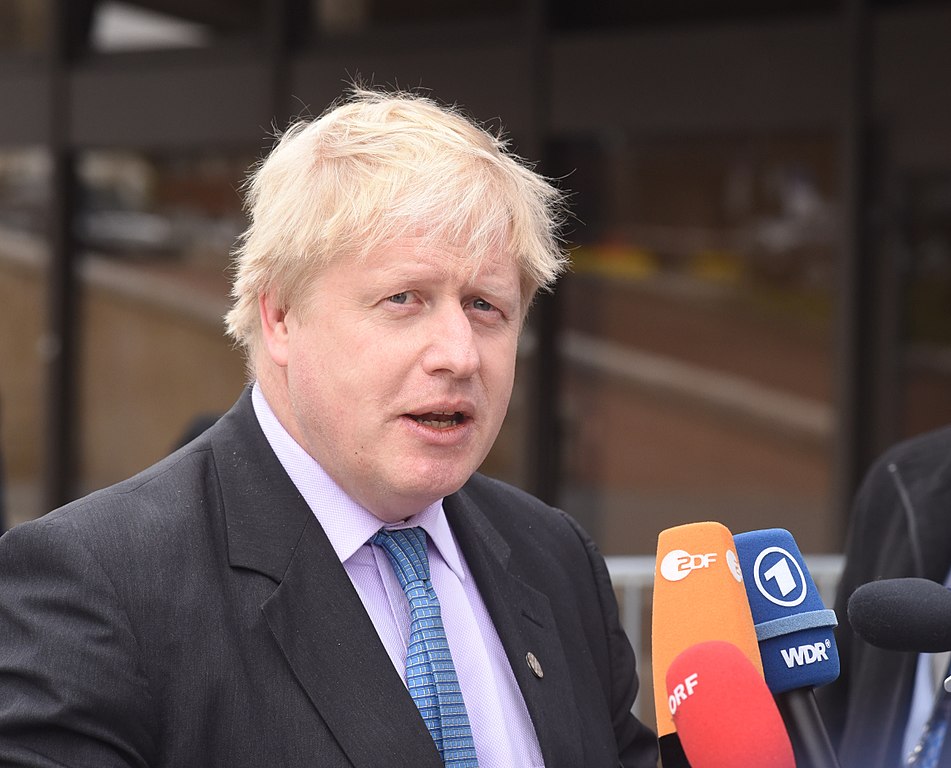
Boris Johnson, Secretary of State for Foreign and Commonwealth Affairs at an informal meeting of the Foreign Affairs Council on 15 February 2018.
Photo by Velislav Nikolov via Wikimedia Commons.

I have been asked to comment on Boris Johnson’s appointment as Leader of the Conservative Party and therefore as Prime Minister. Since I recently called him “a bag of living offal,” my view is unlikely to be positive. However, I will try to be fair. More to the point, I will try to relate this latest turn of events to my general analysis of British politics.

Last month, I wrote that membership of the European Union was a peripheral issue for our ruling class. The main agenda for this class is to carry through a neo-Puritan remodelling of our institutions, and indeed our minds. The details of a customs and regulatory union are less important than control of education, the media and the criminal law. This being said, membership is useful so far as it blurs the lines of accountability. It is also an article of belief among some elements of the Ruling Class. For this reason, the verdict of the 2016 Referendum was unwelcome. It meant a diversion of effort from the main purpose. It upset various important people. The obvious solution was to give us a minimal departure that would satisfy us, but would keep in place those elements of the European Project that really are important to the Ruling Class.

Here, I come to a digression on the nature of how we are governed. There is no cabal of evil persons directing all events and appointments from behind the scenes. This is generally not how ruling classes operate. A more realistic model can be taken from Ian Kershaw’s analysis of the National Socialist revolution in Germany. This proceeded with limited central direction. Before 1939, the leaders were concerned mostly with foreign policy, after that with fighting a big war. Instead, the revolution was decentralised. Reliable men were put in key positions and told to “work towards the Fuhrer” – that is, to act in any situation as they might imagine Hitler himself would act. The result was often administrative chaos. The benefit was that the leadership could concentrate on what it saw as the essentials, and more local knowledge could be used in the overall revolution than would otherwise have been possible.

This is largely how things work in England. Our own transformation is not driven by detailed orders from the Shadowy-Ones-on-High, but by creating a bias within every useful institution to those who are broadly in favour of the transformation. The benefit is a constrained diversity of approaches that can be presented as a genuine diversity of opinion. The disadvantage is that executive power lies in this country where it has since 1701 – that is, in the hands of the Ministers of the Crown, who are accountable to the House of Commons. If the Prime Minister turns out to be a fool, and the other ministers are too cowardly to stab him in the back, there is no easy way to remove him.

On balance, Theresa May was more stupid than malevolent. Her job was to produce the minimal departure I have mentioned. The question of who wrote her Withdrawal Agreement is less important than the fact that few who mattered wanted or dared to accept it. She should never have thought it would be accepted. Having discovered it was unacceptable, she should have tried something else. Instead, she tried four times to ram it through the House of Commons. She also reached out to a Labour leader who is feared or just hated by important strands within the Ruling Class. At first, the damage was confined to the possibility of a Labour Government. It then widened, with the emergence of the Brexit Party, to the threat of a general delegitimisation of the system as it has emerged since 1997, or perhaps 1979.

Maxim “Prototype”: The First Practical Machine Gun

Filed under: History, Military, Technology, Weapons — Tags: , , , , , , — Nicholas @ 04:00

Forgotten Weapons
Published on 31 Jul 2019

http://www.patreon.com/ForgottenWeapons

Cool Forgotten Weapons merch! http://shop.bbtv.com/collections/forg…

Hiram Maxim was the first person to create a truly practical and functional machine gun, based on a patent he filed in 1883. He pioneered the recoil operating system – the concept of harnessing the recoil generated by a firearm to perform the actions of reloading that firearm. His patent was based on a lever action rifle, but his intent was to create a machine gun, complete with belt feed and water cooling. After a testbed “forerunner” gun, he built this model which he called the “Prototype”. It was meant as a proof of concept, and used in many public exhibitions and demonstrations.

The Prototype used a hydraulic rate of fire control system which could be set as high as 500 rounds/minute and as low as just one round per minute. The gun did not have a trigger as we would recognize it today, but rather a single lever like a vehicle accelerator which acted as both trigger and fire rate control. Only three of these Prototypes exist today, with one belonging to the USMC, one on public display at the Royal Armouries museum in Leeds, and this one in the NFC reserve collection at Leeds.

For a fantastic exploded view of all this guns working parts, check out this work by YouTube channel vbbsmyt:

https://youtu.be/P1SbcZQ0N5A

Many thanks to the Royal Armouries for allowing me to film this tremendously important artifact! The NFC collection there — perhaps the best military small arms collection in Western Europe — is available by appointment to researchers:

https://royalarmouries.org/research/n…

You can browse the various Armouries collections online here:

https://royalarmouries.org/collection/

Contact:
Forgotten Weapons
PO Box 87647
Tucson, AZ 85754

“People in Ottawa don’t invoke PMO frequently or lightly. It is done to intimidate and obtain compliance”

Filed under: Bureaucracy, Cancon, China, Government, Politics — Tags: , , , , — Nicholas @ 03:00

What we’re not allowed to know can’t hurt us … the federal government apparently figures that no charges can be contemplated if there’s no investigation allowed:

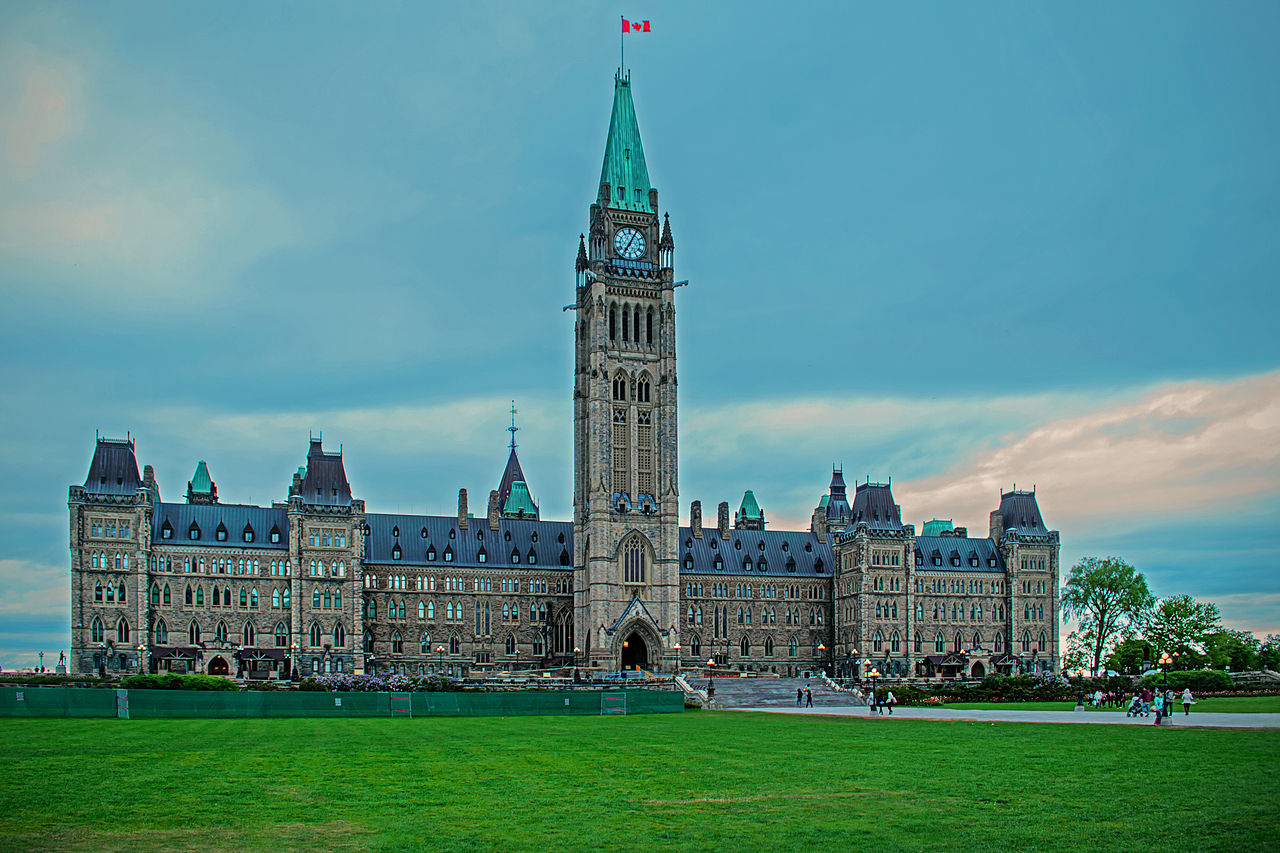
Parliament Hill in Ottawa.
Photo by S Nameirakpam via Wikimedia Commons.

Before colleagues voted to quash a review of whether the Liberal government acted improperly after a bureaucrat asked former ambassadors to temper public comments about China, Liberal MP Rob Oliphant told Parliament’s Foreign Affairs committee that he’s “distressed”.

Apparently, he was not distressed about a Foreign Affairs assistant deputy minister being asked to “check-in” on two former Canadian diplomats to China before making future pronouncements on Canada’s shambolic relations with the communist regime.

Oliphant’s also not distressed about the troubling optics that either diplomat – David Mulroney and Guy Saint-Jacques – felt The Globe and Mail should be aware of their reservations about said interactions, which the paper reported last week.

“I am very distressed, at the tone, at the idea and at the allegations that are being cast about by members of the opposition,” Oliphant, Parliamentary Secretary to the Minister of Foreign Affairs and non-voting member, claimed at the committee’s emergency meeting Tuesday.

Oliphant’s claim comes after either diplomat says the department’s ADM Paul Thoppil told them his call was at the behest of the PMO. Both Prime Minister Justin Trudeau and Foreign Affairs Minister Chrystia Freeland have denied they directed such outreach.

Mulroney, who had earlier warned about travel to China following the detention two Canadians there in December of last year, told the Globe that Thoppil cited the “election environment” and asked him to contact the department before making future statements.

“It wasn’t, in my view, so much an offer to consult and share ideas as to ‘get with the program’. People in Ottawa don’t invoke PMO frequently or lightly. It is done to intimidate and obtain compliance,” Mulroney is quoted as saying.

Saint-Jacques told the Globe that his conversation with Thoppil differed somewhat, “But I can understand that one could come to that conclusion when they say we should speak with one voice.”

What Is Money?

Filed under: Economics, Government, USA — Tags: , , , — Nicholas @ 02:00

Marginal Revolution University
Published on 18 Jul 2017

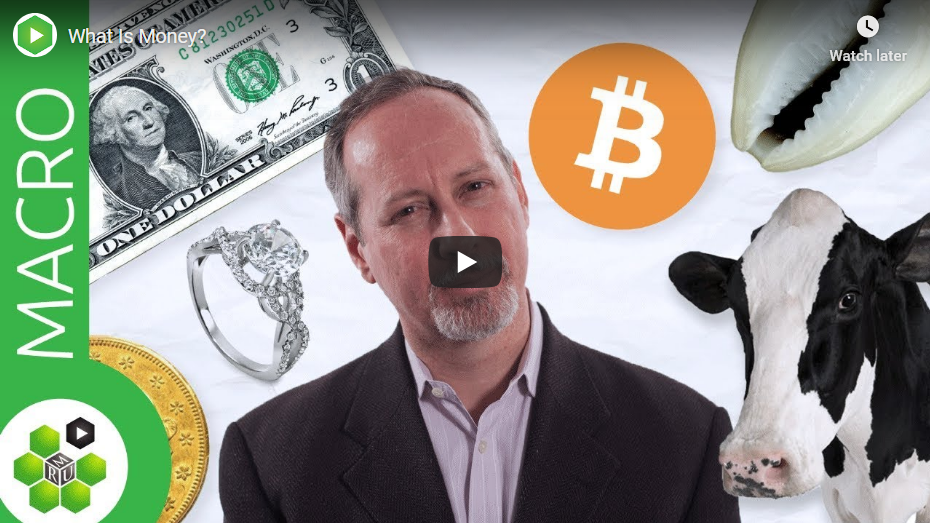
That may seem like a really simple question, but it’s actually kind of complicated. Paper bills and coins, or currency, is obviously money. But it doesn’t end there.

Technically, “money” is anything that is a widely accepted means of payment. This has changed throughout history. Once upon a time, cattle could be considered money. Or cowry shells. Today, cryptocurrencies like Bitcoin are being added to the mix.

Given that there’s no set definition for what makes a commodity money, there are a few measurements for the U.S. money supplies. The first, MB (or “monetary base”) measures currency and reserve deposits. This is what the Fed has the most direct control over.

Our next stop will be fractional reserve banking and the money multiplier.

QotD: Small government provides little scope for special interest lobbying

Filed under: Economics, Government, Quotations — Tags: , , , , — Nicholas @ 01:00

When a government is small, it can provide very limited benefits to special interest groups, so there is a small incentive for special interest groups to lobby the government. The successes of those that do lobby the government will cause the government to grow. This occurs because the great majority of voters and taxpayers are rationally ignorant about most government activity, making it easy to increase everybody’s taxes a small amount to provide a sizable benefit to a few. Most people do not have an incentive to investigate in detail the allocation of their tax dollars, but the special interest groups with the sizable benefit will repay the representatives with political support. Thus, special interest groups cause government growth.

The growth of government, in turn, raises the payoff available to special interest groups. With a higher payoff to special interest groups, this encourages the formation of new special interest groups to share in the payoff. A larger government can support a larger number of special interest groups. Thus, as government grows, more special interest groups form. The formation of special interest groups in turn increases the demand for special interest legislation, cause a further growth in government spending.

Randy Holcombe, An Economic Analysis of Democracy, 1985.

July 31, 2019

The quickest way to raise the real income of minimum wage earners

Filed under: Britain, Business, Economics, Government — Tags: , — Nicholas @ 05:00

Tim Worstall explains how to quickly raise the living standards of everyone in Britain earning the minimum wage, without costing employers any more:

I – Tim Worstall that is – then started pointing out that the difference between this living wage and the minimum wage was the amount of tax that we – shamefully – charge to the low paid. Tax being both income tax and national insurance contributions. In fact, I rather shouted about it around the place, at the ASI, and here in The Times in 2012.

    The gross annual salary of a full-time worker on the minimum wage is £12,070.50. We could come close to lifting every low-paid worker out of poverty if we simply increased the personal tax allowance from £8,105 to that sum. Not a penny of income tax or NICs should leave their pay packet. A full-time worker, however, on the living wage would be taking home £12,410.74, after the taxman has taken a cut — that’s only £340 more. And before the Foundation uprated the living wage yesterday, the annual difference was just £8.74.

    There are problems. Raising the personal allowance gives everyone a tax cut — which I’ll admit doesn’t break my heart. But we could lower the amount at which the higher rates of tax kick in to make up for that lost revenue. And won’t these workers lose their right to unemployment benefit and a pension, if they don’t pay NICs? No, they qualify already, as the system treats the very low paid as if they had made NI contributions. We should go farther. The link between the full-year minimum wage and the personal allowance for tax and NI should be made explicit. Change one and the government of the day must change the other. If the minimum wage is the minimum moral amount that someone’s labour is worth, then that is what they should get, not the amount after Denis MacShane’s European wanderings have been paid for.

    Which leaves us with two competing visions of how everyone can be free of poverty pay. The Living Wage Campaign’s vision is to shout at every employer in the country until they give in. The Worstall Way is to increase the incomes of the working poor by stopping taxing them.

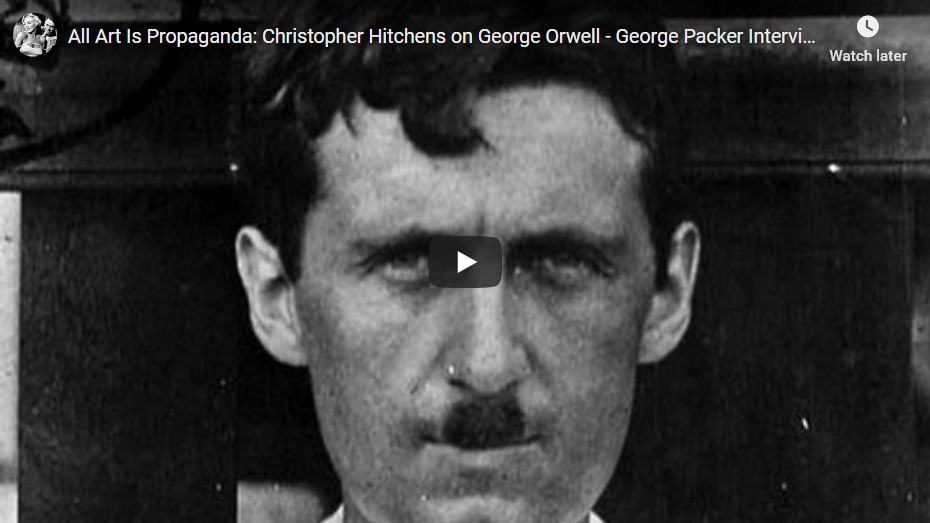
All Art Is Propaganda: Christopher Hitchens on George Orwell – George Packer Interview (2009)

Filed under: Books, Britain, History, Liberty, Politics — Tags: , , , , — Nicholas @ 04:00

The Film Archives
Published on 27 Jan 2014

George Packer (born August 13, 1960) is an American journalist, novelist, and playwright.

He is perhaps best known for his writings for The New Yorker about U.S. foreign policy and for his related book The Assassins’ Gate: America in Iraq.

Packer was born in Santa Clara, California. Packer’s parents, Nancy (née Huddleston) and Herbert Packer, were both academics at Stanford University; his maternal grandfather was George Huddleston, a congressman from Alabama. His sister, Ann Packer, is also a writer. His father was Jewish and his mother was from a Christian background. Packer graduated from Yale College, where he lived in Calhoun College, in 1982, and served in the Peace Corps in Togo. His essays and articles have appeared in Boston Review, The Nation, World Affairs, Harper’s, The New York Times, and The New Yorker, among other publications. Packer was a columnist for Mother Jones and has been a staff writer for The New Yorker since May 2003.

Packer was a Holtzbrinck Fellow Class of Fall 2009 at the American Academy in Berlin.

His book The Assassins’ Gate: America in Iraq analyzes the events that led to the 2003 invasion of Iraq and reports on subsequent developments in that country, largely based on interviews with ordinary Iraqis. He was a supporter of the Iraq war. He was a finalist for the 2004 Michael Kelly Award.

He is married to Laura Secor and was previously married to Michele Millon.

Books

The Village of Waiting (1988). New York: Farrar, Straus and Giroux (1st Farrar edition, 2001). Pb. ISBN 0-374-52780-6
The Half Man (1991). Random House ISBN 0-394-58192-X
Central Square (1998). Graywolf Press ISBN 1-55597-277-2
Blood of the Liberals (2000). Farrar, Straus and Giroux ISBN 0-374-25142-8
The Fight is for Democracy: Winning the War of Ideas in America and the World (2003, as editor). Harper Perennial. Pb. ISBN 0-06-053249-1
The Assassins’ Gate: America in Iraq (2005) Farrar, Straus and Giroux 2005 ISBN 0-374-29963-3
Betrayed: A Play (2008) Faber & Faber
Interesting Times: Writings from a Turbulent Decade (2009). ISBN 978-0-374-17572-6
The Unwinding: An Inner History of the New America (2013). ISBN 978-0-374-10241-8

Articles

Packer, George (28 September 2009). “A Reporter at Large: The Last Mission”. The New Yorker 85 (30): 38-55. [Richard Holbrooke’s plan to avoid the mistakes of Vietnam in Afghanistan].
Packer, George (15 March 2010). “A Reporter at Large: Obama’s Lost Year”. The New Yorker 86 (4): 40-51.
Packer, George (12 September 2011). “A Reporter at Large: Coming Apart”. The New Yorker. [An assessment of the post 9/11 decade]
Packer, George (27 May 2013). “A Reporter at Large: Change the World”. The New Yorker.

http://en.wikipedia.org/wiki/George_P…

Federal NDP and Greens duel on climate platforms

Filed under: Cancon, Economics, Environment, Politics — Tags: , , , , — Nicholas @ 03:00

Colby Cosh looks at the two most environmentally conscious federal parties’ climate change stances as we head into the next general election:

Federal NDP leader Jagmeet Singh taking part in a Pride Parade in June 2017 (during the leadership campaign).
Photo via Wikimedia.

So why are our most radical, eco-aware parties so easily distracted on this front? Jagmeet Singh’s New Democrats talk tough on climate change in their “Power to Change” plan. It is maximum urgency right out of the gate in the preamble. “People across Canada are worried about the future.” True enough! They usually are! “Flooding and forest fires are threatening our homes.” Well, speak for yourself, but OK. “Polluted air and water are hitting communities hard.” Wait, polluted water…? Wasn’t this supposed to be a climate change thing? “And rising temperatures are threatening our farming and forestry industries.” Oh, good, back on track! “It’s clear there’s no time to waste.”

There is a whole load of radical measures in the NDP program, but they cannot resist this tendency to drag in grace notes of economic nationalism and other subjects at best vaguely related. They promise to “make it easier to own a zero-emission vehicle” in Canada, which might help with the Big Problem, but in mid-sentence they remember that they’re in hock to organized labour and add “and make sure those cars are made in Canada.” This means that if the price of a Tesla comes down to $500 tomorrow, you’ll still have to buy the carbon-neutral modern equivalent of a Bricklin, assuming someone can be found to try building one. Shouldn’t we be willing to buy zero-emission vehicles from Zanzibar or Antarctica if that’s the most efficient way, or the only way, to upgrade the fleet?

The document also smuggles in a promise to eliminate single-use plastic products, which take carbon from the bowels of Mother Earth and… restore it thither in landfills, with the evil molecules usefully imprisoned in polymer chains. We’ll be replacing all that plastic, presumably, with metal cutlery (from mines) and cloth bags (from forests) that have to be washed in hot water if you happen to be particular. There is no hint that this is an incongruous or irrelevant part of a climate-change plan.

So, perhaps a bit of mixed messaging there, as the NDP have to trim their sails in odd ways to keep some of their constituencies in line. How about the Green Party then?

Green Party of Canada leader Elizabeth May with Green candidate Christ Tindal in 2008.
Photo by Shaun Merritt via Wikimedia Commons.

The Green list of climate-change policies is much more radical and earnest in appearance; Elizabeth May’s political liquidators intend to abolish internal-combustion vehicles by 2040 (such dates are no longer sci-fi, oldies) and retrofit every single building in the country for carbon neutrality by 2030.

But what, as the University of Alberta energy economist Andrew Leach asked in a CBC editorial on Monday, is this about “ending all imports of foreign oil”? This autarkic flake out flies in the face of the Greens’ entire approach; some of the oil we produce here is (please imagine me whispering this part) somewhat carbon-intensive relative to the stuff Eastern Canada takes from elsewhere in the world. Moreover, increasing use of domestic oil even in the short term implies a pretty major program of, uh, pipeline-building.

Not to mention the new refineries. The Green Climate Change War Cabinet (a real thing they want) would permit “investment in upgraders to turn Canadian solid bitumen into gas, diesel, propane and other products for the Canadian market, providing jobs in Alberta.” By 2050, they envision shifting “all Canadian bitumen from fuel to feedstock for the petrochemical industry.” This adds up to an awful lot of subsidized high-tech construction — executed at the same time as a total retrofit of the national housing stock! — that has nothing much to do with reducing emissions per se. Although it sounds as though the Greens are, if nothing else, definitely much bigger fans of plastic than the New Democrats.

The Jaguar E-Type / XK-E Story

Filed under: Britain, Business, History, Technology — Tags: , , — Nicholas @ 02:00

Big Car
Published on 10 May 2019

To help me continue producing great content, please consider supporting me: https://www.patreon.com/bigcar

The Jaguar XK-E or E-Type may be the most beautiful car in history. It’s certainly one of the most sought after, with cars fetching crazy prices at auction. It’s a car born out of a Le Mans-winning heritage, delivering looks with speed and handling to match, all at an affordable price. Yet somehow it had a top speed over 150mph, while also not having a top speed over 150mph!

#JaguarEType #JaguarXKE #EType

QotD: Foreshadowing Nuremberg

Filed under: Europe, Germany, History, Italy, Law, Quotations, WW2 — Tags: , , , , , — Nicholas @ 01:00

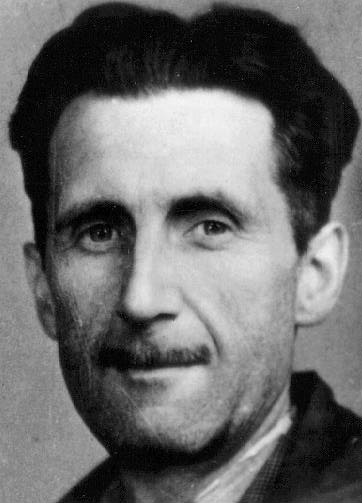
Orwell’s press card portrait, 1943

Mussolini, in “Cassius’s” book, after calling his witnesses, enters the box himself. He sticks to his Machiavellian creed: Might is Right, vae victis! He is guilty of the only crime that matters, the crime of failure, and he admits that his adversaries have a right to kill him — but not, he insists, a right to blame him. Their conduct has been similar to his own, and their moral condemnations are all hypocrisy. But thereafter come the other three witnesses, the Abyssinian, the Spaniard and the Italian, who are morally upon a different plane, since they have never temporized with Fascism nor had a chance to play at power politics; and all three of them demand the death penalty.

Would they demand it in real life? Will any such thing ever happen? It is not very likely, even if the people who have a real right to try Mussolini should somehow get him into their hands. The Tories, of course, though they would shrink from a real inquest into the origins of the war, are not sorry to have the chance of pushing the whole blame onto a few notorious individuals like Mussolini and Hitler. In this way the Darlan-Badoglio manoeuvre is made easier. Mussolini is a good scapegoat while he is at large, though he would be an awkward one in captivity. But how about the common people? Would they kill their tyrants, in cold blood and with the forms of law if they had the chance?

It is a fact that there have been very few such executions in history. At the end of the last war an election was won partly on the slogan “Hang the Kaiser”, and yet if any such thing had been attempted the conscience of the nation would probably have revolted. When tyrants are put to death, it should be by their own subjects; those who are punished by a foreign authority, like Napoleon, are simply made into martyrs and legends.

What is important is not that these political gangsters should be made to suffer, but that they should be made to discredit themselves. Fortunately they do do so in many cases, for to a surprising extent the war-lords in shining armour, the apostles of the martial virtues, tend not to die fighting when the time comes. History is full of ignominious getaways by the great and famous. Napoleon surrendered to the English in order to get protection from the Prussians, the Empress Eugénie fled in a hansom cab with an American dentist, Ludendorff resorted to blue spectacles, one of the more unprintable Roman emperors tried to escape assassination by locking himself in the lavatory, and during the early days of the Spanish Civil War one leading Fascist made his escape from Barcelona, with exquisite fitness, through a sewer.

It is some such exit that one would wish for Mussolini, and if he is left to himself perhaps he will achieve it. Possibly Hitler also. It used to be said of Hitler that when his time came he would never fly or surrender, but would perish in some operatic manner, by suicide at the very least. But that was when Hitler was successful; during the last year, since things began to go wrong, it is difficult to feel that he has behaved with dignity or courage. “Cassius” ends his book with the judge’s summing-up, and leaves the verdict open, seeming to invite a decision from his readers. Well, if it were left to me, my verdict on both Hitler and Mussolini would be: not death, unless in is inflicted in some hurried unspectacular way. If the Germans and Italians feel like giving them a summary court-martial and then a firing-squad, let them do it. Or better still, let the pair of them escape with a suitcaseful of bearer securities and settle down as the accredited bores of some Swiss pension. But no martyrizing, no St Helena business. And, above all, no solemn hypocritical “trial of war criminals”, with all the slow cruel pageantry of the law, which after a lapse of time has so strange a way of focusing a romantic light on the accused and turning a scoundrel into a hero.

George Orwell, “Who are the War Criminals?”, Tribune, 1943-10-22.

July 30, 2019

Moira Greyland discusses how she came to write The Last Closet

Filed under: Books, Law, Media — Tags: , , — Nicholas @ 05:00

Tamara Wilhite discusses some of the events that prompted Moira Greyland to write about her mother, Marion Zimmer Bradley and some of the reactions from readers of the book:

The Last Closet was written by Moira Greyland. She’s the daughter of Marion Zimmer Bradley, author of The Mists of Avalon and Walter Breen. It is Marion Bradley’s book from which the book title is drawn. “The Last Closet: The Dark Side of Avalon” is equal parts autobiography and true-crime thriller with a tragic sprinkling of the history of science fiction fandom mixed in.

Moira’s book includes large sections of horrifying personal stories, but she has gone to great length to document what happened. For example, her father’s repeated arrests on pedophilia charges (he died in prison) and her mother’s testimony during such trials are public record. She’s backed up everything she can from external sources.

I had the opportunity to interview Moira, and the transcript is below.

Tamara: Some of the events in the book go back forty years. What prompted you to write the book in 2017?

Moira: In 2014, a blogger named Deirdre Saoirse Moen contacted me. She was protesting Tor book’s publication of a puff piece lauding my mother, which did not mention either my father’s conviction or her court-documented collusion with him.

I only knew Deirdre as a woman from science fiction fandom who had hired me for a harp concert, and I did not realize how famous she was. My responses to her email consisted of a brief assent that my father had indeed done all that he was accused of and convicted for and more, but it also included the new for her information that my mother had been a great deal worse than my father. I also included my two poems “Mother’s Hands” and “They Did Their Best.”

Deirdre was horrified, and reported that she had lost her lunch upon reading my reply. Her blog posts about my mother and my responses were reblogged to 92 countries all over the world. There was furious controversy, mostly consisting of everyone who tried to defend my mother getting shouted down. Some people read my mother’s appallingly callous court testimony and pronounced her guilty from her own words. Other people saw themselves in my poetry, in the flatness and horror so familiar to the trauma patient. Still others recognized things in my mother’s books about incest and sexual abuse which had never quite seemed right to them.

I was astonished at the volume of response, and at the many, many, MANY letters addressed directly to me. Most of the letters included both sympathy for me and my brother, but nearly all contained reports of the letter writer’s own abuse, many containing the words “I never told anyone this before.”

I was asked to fill in the rest of my story, and I did so, in a blog post called “The Story of Moira Greyland,” hosted on the blog of Katy Faust, another child of gays and lesbians as I am. My blog post was nominated for a Hugo in 2015, and I was offered a book contract by Vox Day of Castalia House.

The only concern I had about writing my book was that my late brother Mark was having a very hard time with the unplanned public exposure. He was having flashbacks about our father, and beginning to have a lot more trouble managing his health. The reason that was so problematic for him was that we both identified our mother as being the scary, dangerous one, where our father was comparatively gentle and loving. Having to deal with his history meant that there was no even remotely good parent left for him, even as a matter of memory.

His distress predated the book, though, and I did not think that it would be relieved by my silence.

I was given a year to complete the book, and I beat my deadline. It would do no good to mention the particular kind of hell it was to tell the story, and I credit my beloved late husband with sticking by my side through the entire process. Anyone with a trauma history can imagine that all of my trauma symptoms from flashbacks to ataxia got worse. It became very clear to me while writing exactly why it was that so few people talk about their injuries.

Units of Classical Antiquity: The Praetorian Guard (Roman Army)

Filed under: Europe, History, Military — Tags: , , — Nicholas @ 04:00

Invicta
Published on 18 Mar 2016

Who were the Praetorian Guard? Special Forces, dictatorial musclemen, or ceremonial relics? In this documentary episode we dive deep into the history of this feared unit of the Roman empire!

« Newer PostsOlder Posts »

Powered by WordPress