Quotulatiousness

July 27, 2019

“[T]he more educated a Democrat is … the less he or she understands the Republican worldview”

Filed under: Education, Politics, USA — Tags: , , , , , — Nicholas @ 03:00

Last week in the Guardian, Arlie Hochschild explained some of the mutual incomprehension of US Democrats and Republicans based on a recent study:

In a surprising new national survey, members of each major American political party were asked what they imagined to be the beliefs held by members of the other. The survey asked Democrats: “How many Republicans believe that racism is still a problem in America today?” Democrats guessed 50%. It’s actually 79%. The survey asked Republicans how many Democrats believe “most police are bad people”. Republicans estimated half; it’s really 15%.

The survey, published by the thinktank More in Common as part of its Hidden Tribes of America project, was based on a sample of more than 2,000 people. One of the study’s findings: the wilder a person’s guess as to what the other party is thinking, the more likely they are to also personally disparage members of the opposite party as mean, selfish or bad. Not only do the two parties diverge on a great many issues, they also disagree on what they disagree on.

This much we might guess. But what’s startling is the further finding that higher education does not improve a person’s perceptions – and sometimes even hurts it. In their survey answers, highly educated Republicans were no more accurate in their ideas about Democratic opinion than poorly educated Republicans. For Democrats, the education effect was even worse: the more educated a Democrat is, according to the study, the less he or she understands the Republican worldview.

“This effect,” the report says, “is so strong that Democrats without a high school diploma are three times more accurate than those with a postgraduate degree.” And the more politically engaged a person is, the greater the distortion.

What could be going on? Bubble-ism, the report suggests. Even more than their Republican counterparts, highly educated Democrats tend to live in exclusively Democratic enclaves. The more they report “almost all my friends hold the same political views”, the worse their guesses on what Republicans think.

So do they believe in sticking with their own? No. When asked in a Pew survey whether it’s important to live in a place “where most people share my political views”, half of conservatives and only a third of liberals agreed. Although in principle more tolerant of political diversity, highly educated – and mostly urban – Democrats live, ironically, with less of it.

Take the quiz or see more of the results here.

Life and Death in Herculaneum (Prof. Wallace-Hadrill)

Filed under: Europe, History, Science — Tags: , , — Nicholas @ 02:00

Cardo Maximus
Published on 20 Jun 2013

QotD: Ban roses!

Filed under: Environment, Humour, Quotations — Tags: — Nicholas @ 01:00

Be honest: the roses one encounters in daily life are, mostly, hideous. Think of the colors: syphilitically inflamed orange, or highlighter-pen salmon, or nylon pink, or overripe-banana yellow. How often have you bent to smell a neighbor’s rose, ready to snort up a lungful of Turkish-delight deliciousness, only to discover no scent at all? The names, too — Newly Wed, Scentimental, Golden Smiles, Admiral Rodney, Bright ‘n’ Breezy — put breeders of pedigree dogs to shame. But worst of all is the plant itself: drab little leaves, plagued with leprous brown spots or grazing aphids; prickled shoots whipping in the wind above gnarled, charmless trunks. And no one knows how to prune them. Invariably either overdisciplined or scrubby, viciously trained into a municipal pygmy or as amateurishly hacked at as a young porcupine with a home haircut, the vast majority are tragic shadows of the perfect rose in its ruffled, scented bounty.

What’s more, they are dangerous. Which other common garden plant requires one to wear chainmail to perform the simplest tying-in, sharpened secateurs for ceaseless deadheading, a full hazmat outfit in which to spray it with the toxins required to keep it pretty? Haven’t you heard the stories of gardeners who, after a single rose-thorn puncture, lost an arm, or more? Would you keep a shark in your front yard? Precisely.

Charlotte Mendelson, “Let’s Ban Roses”, The New Yorker, 2017-06-21.

July 26, 2019

“Attero Dominatus” – The Battle of Berlin – Sabaton History 025 [Official]

Filed under: Germany, History, Media, Military, Russia, WW2 — Tags: , , , — Nicholas @ 06:00

Sabaton History
Published on 25 Jul 2019

The Sabaton song “Attero Dominatus” is about the Soviet advance on Berlin in the last months of World War Two. As the Soviets approach Berlin, two commanders, General Zhukov and General Konev, try their best to be the one to take the centre of the German capital. Meanwhile, thousands of Germans are raped or murdered by the Soviets in retaliation to the atrocities that the Germans committed in the east.

Support Sabaton History on Patreon: https://www.patreon.com/sabatonhistory

Listen to Attero Dominatus (where “Attero Dominatus” is featured):
CD: http://bit.ly/AtteroDominatusStore
Spotify: http://bit.ly/AtteroDominatusSpotify
Apple Music: http://bit.ly/AtteroDominatusAppleMusic
iTunes: http://bit.ly/AtteroDominatusiTunes
Amazon: http://bit.ly/AtteroDominatusAmzn
Google Play: http://bit.ly/AtteroDominatusGooglePlay

Check out the official videoclip for “Attero Dominatus” here: https://www.youtube.com/watch?v=eNlRq…
Listen to Sabaton on Spotify: http://smarturl.it/SabatonSpotify
Official Sabaton Merchandise Shop: http://bit.ly/SabatonOfficialShop

Hosted by: Indy Neidell
Written by: Markus Linke and Indy Neidell
Directed by: Astrid Deinhard and Wieke Kapteijns
Produced by: Pär Sundström, Astrid Deinhard and Spartacus Olsson
Creative Producer: Joram Appel
Executive Producers: Pär Sundström, Joakim Broden, Tomas Sunmo, Indy Neidell, Astrid Deinhard, and Spartacus Olsson
Maps by: Eastory
Edited by: Iryna Dulka
Sound Editing by: Marek Kaminski

Eastory YouTube Channel: https://www.youtube.com/channel/UCEly…
Archive by: Reuters/Screenocean https://www.screenocean.com
Music by Sabaton.

An OnLion Entertainment GmbH and Raging Beaver Publishing AB co-Production.

Sources:
Colored portrait of W. Wenck by Ruffneck88
Ministry of Defence of the Russian Federation
Photos of Helmuth Weidling from ww2gallery on Flickr

© Raging Beaver Publishing AB, 2019 – all rights reserved.

The young Boris Johnson at Oxford

Filed under: Britain, Education, Politics — Tags: , , — Nicholas @ 05:00

Toby Young recounts his first encounter with the new Prime Minister of the United Kingdom at Oxford in 1983:

Boris Johnson, Secretary of State for Foreign and Commonwealth Affairs at an informal meeting of the Foreign Affairs Council on 15 February 2018.
Photo by Velislav Nikolov via Wikimedia Commons.

I first set eyes on Boris Johnson in the autumn of 1983 when we went up to Oxford at the same time. I knew who he was since my uncle Christopher was an ex-boyfriend of his mother’s and he had told me to keep an eye out for him, but I still wasn’t prepared for the sight (and sound) of him at the dispatch box of the Oxford Union. This was the world famous debating society where ambitious undergraduates honed their public-speaking skills before embarking on careers in politics or journalism, and Boris was proposing the motion.

With his huge mop of blond hair, his tie askew and his shirt escaping from his trousers, he looked like an overgrown schoolboy. Yet with his imposing physical build, his thick neck and his broad, Germanic forehead, there was also something of Nietzsche’s Übermensch about him. You could imagine him in lederhosen, wandering through the Black Forest with an axe over his shoulder, looking for ogres to kill. This same combination — a state of advanced dishevelment and a sense of coiled strength, of an almost tangible will to power — was even more pronounced in his way of speaking.

He began to advance an argument in what sounded like a parody of the high style in British politics — theatrical, dramatic, self-serious — when — a few seconds in — he appeared to completely forget what he was about to say. He looked up, startled — Where am I? — and asked the packed chamber which side he was supposed to be on. “What’s the motion, anyway?” Before anyone could answer, a light bulb appeared above his head and he was off, this time in an even more orotund, florid manner. Yet within a few seconds he’d wrong-footed himself again, this time because it had suddenly occurred to him that there was an equally compelling argument for the opposite point of view. This endless flipping and flopping, in which he seemed to constantly surprise himself, went on for the next 15 minutes. The impression he gave was of someone who’d been plucked from his bed in the middle of the night and then plonked down at the dispatch box of the Oxford Union without the faintest idea of what he was supposed to be talking about.

I’d been to enough Union debates at this point to know just how mercilessly the crowd could punish those who came before them unprepared. That was particularly true of freshmen, who were expected to have mastered all the arcane procedural rules, some of them dating back to the Union’s founding in 1823. But Boris’s chaotic, scatter-brained approach had the opposite effect. The motion was deadly serious — “This House Would Reintroduce Capital Punishment” — yet almost everything that came out of his mouth provoked gales of laughter. This was no ordinary undergraduate proposing a motion, but a Music Hall veteran performing a well-rehearsed comic routine. His lack of preparedness seemed less like evidence of his own shortcomings as a debater and more a way of sending up all the other speakers, as well as the pomposity of the proceedings. You got the sense that he could easily have delivered a highly effective speech if he’d wanted to, but was too clever and sophisticated — and honest — to enter into such a silly charade. To do what the other debaters were doing, and pretend he believed what was coming out of his mouth, would have been patronising. Everyone else was taking the audience for fools, but not him. He was openly insincere and, in being so, somehow seemed more authentic than everyone else.

To say I was impressed would be an understatement. A few years before arriving at Oxford I had watched the television adaptation of Brideshead Revisited, Evelyn Waugh’s Oxford novel, and had been expecting to meet the modern-day equivalents of Sebastian Flyte and Anthony Blanche: larger-than-life, devil-may-care aristocrats delivering bon mots in between sips of champagne and spoonfuls of caviar. But the reality was very different: warm beer, stale sandwiches and second-hand opinions. Lots of spotty students, all as gauche as me. Less like an Oscar Wilde play than a Mike Leigh film.

In Boris, though, it was as if I’d finally encountered the “real” Oxford, the Platonic ideal. While the rest of us were works-in-progress, vainly trying on different personae, Boris was the finished article. He was an instantly recognizable character from the comic tradition in English letters: a pantomime toff. He was Sir Toby Belch in Twelfth Night demanding more cakes and ale, Bertie Wooster trying to pass himself off as Eustace H. Plimsoll when appearing in court after overdoing it on Boat Race night. Yet at the same time fizzing with vim and vinegar — “bursting with spunk,” as he once put it, explaining why he needs so many different female partners. He was a cross between Hugh Grant and a silverback gorilla.

My uncle had described him as a “genius” and as a boy he’d been regarded as something of a wunderkind. There was the occasion when he was holidaying with his family in Greece, aged 10, and asked a group of Classics professors if he could join their game of Scrabble. They indulged the precocious, blond-haired moppet, only to be beaten by him. Thinking it was a one-off, they asked him to play another round and, again, he won. On and on it went, game after game. At the prep school he attended before going to Eton, Britain’s grandest private school, he was seen as a prodigy. A schoolmaster who taught him back then told his biographer, Andrew Gimson, that he was the quickest-learner he’d ever encountered. In the staff room, the teachers would compare notes about the “fantastically able boy.”

He was without doubt the biggest man on campus — the person most likely to succeed. He made no secret of his desire to be Prime Minister one day, and not just a run-of-the-mill, common-or-garden PM, but up there with Gladstone and Disraeli. And this was a scaling back of his ambitions — as a boy he’d told his younger sister Rachel that he wanted to be “world king.” (There was an intermediate stage during his teenage years when he harboured fantasies of becoming President of the United States — something that’s technically possible, given that he was born in New York.) He was by no means the only member of the Oxford Union to express such hopes during that period, but in his case you felt it might actually happen. Unlike so many other privileged undergraduates, with their vaulting sense of entitlement, Boris’s gargantuan self-belief seemed of a piece with his outsized personality. He had an electrifying, charismatic presence of a kind I’d only read about in books before. Our mutual friend Lloyd Evans, who knew Boris better than me at Oxford, put it well. “He’s a war leader,” he told Andrew Gimson. “He is one of the two or three most extraordinary people I’ve ever met. You just feel he’s going somewhere. People just love him. They enjoy going with him and they enjoy being led.”

To get a sense of Boris Johnson’s unique charm, here’s a brilliant pastiche of some of his TV appearances, stitched together as if it was his Olympic Games Welcome during his time as Lord Mayor of London (do watch, it’s hilarious).


Drawbore – An Inside Look | Paul Sellers

Filed under: Tools, Woodworking — Tags: , , — Nicholas @ 04:00

Paul Sellers
Published on 25 Jul 2019

The drawbore is an ancient and intriguing method of holding joints together without the need for glue. However, it is hard to make this right if you don’t understand how it works. Paul has put together and then sawed in half a drawbored mortise and tenon to show how the peg works and what is needed to achieve the strength and unity of this type of joinery.

Want to learn more about woodworking? See https://woodworkingmasterclasses.com or https://commonwoodworking.com for step-by-step videos, guides and tutorials. You can also follow Paul’s latest ventures on his woodworking blog at https://paulsellers.com/

Post-Brexit, consider CANZUK

Filed under: Australia, Britain, Cancon, Economics — Tags: , , — Nicholas @ 03:00

Tom Colsey explains why in a post-Brexit world, CANZUK might be an attractive economic alternative:

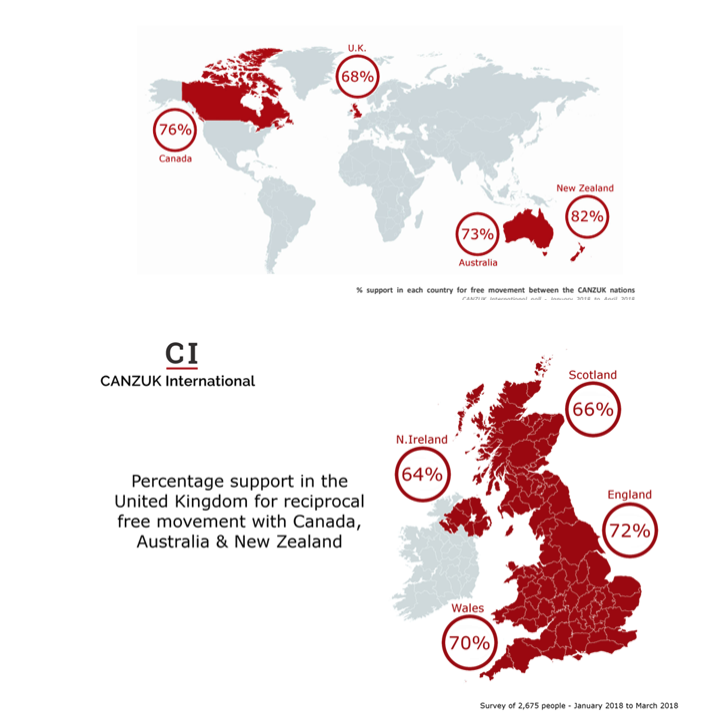
One possible option would mean the island nation would initially turn away from Europe toward certain anglophone Commonwealth nations and former colonies. I talk, of course, of the promising CANZUK proposal that would see Canada, Australia, New Zealand, and the United Kingdom band together with voluntary agreements on multilateral free trade and movement, forming a bloc that would singularly hold the third largest nominal GDP in the world.

The Free Movement Proposal

What makes CANZUK unique is how viable and well-thought-out it is on every level. Unlike within the EU, the grouping would not be consolidated through impositional treaties laced with unpleasant footnotes delegating political power to a bureaucratic institution. Freedom of movement would assist meeting labor market demands across the countries, yet this would be prohibited to those with serious criminal records.

Everything the EU seemed to get wrong about forming unions under a liberal-internationalist pretense, CANZUK proposals seem to get right. They account for social attitudes and the dangers of becoming impositional, eroding national sovereignty. Free movement within the European Union had been widely reviled by the domestic population — and is part of the reason Britain now is set to leave. Yet the very same population overwhelmingly favor the same principle, alternatively implemented, across the CANZUK nations, polling outright majorities in favor in every region.

Perhaps a reason for this is that while the nations are extremely close culturally, they are also resoundingly similar socio-economically. Despite their distances, the states could have been separated at birth (of course, they do share the same monarch).

How Does it Work: Blow Forward

Filed under: History, Technology, Weapons — Tags: , , , , — Nicholas @ 02:00

Forgotten Weapons
Published on 28 May 2019

http://www.patreon.com/ForgottenWeapons

Cool Forgotten Weapons merch! http://shop.bbtv.com/collections/forg…

The blow forward system has only been used on three commercially-produced firearms: the Schwarzlose 1908, Hino-Komuro, and Mannlicher 1894 (The SIG AK-53 uses a forward barrel movement, but in conjunction with a locked breech). It offers a simple system with a theoretical extra margin of safety because the side cannot come backward off the gun, but at the cost of substantially increased felt recoil. Once the blowback system was out of patent protection, there was no convincing reason to use the blow forward mechanism.

Contact:
Forgotten Weapons
PO Box 87647
Tucson, AZ 85754

QotD: Preparing for war

Filed under: Government, History, Military, Quotations — Tags: — Nicholas @ 01:00

A nation that does not prepare for all the forms of war should then renounce the use of war in national policy. A people that does not prepare to fight should then be morally prepared to surrender. To fail to prepare soldiers and citizens for limited, bloody ground action, and then to engage in it, is folly verging on the criminal.

T.R. Fehrenbach, This Kind of War: A Study in Unpreparedness, 1963.

July 25, 2019

In British Columbia, “butthurt” damages can exceed $75,000 under Human Rights legislation

Filed under: Cancon, Law, Liberty — Tags: , , , — Nicholas @ 05:00

In the Post Millennial, Jordan Schroeder illustrates how BC human rights rules have created a new class of tort:

I would argue that the issue is not with the BC Human Rights Tribunal itself, but with the perverse incentive of litigating for profit that is created by the BC Human Rights Code. The BC Human Rights Code creates this incentive through a type of damages called “injury to dignity, feelings, and self-respect.”

This head of damages is harmful to human rights law in BC. It is unfair to the defendants, and it incentivizes predatory litigation. All of this causes British Columbians to lose trust in the important role that the tribunal can play in redressing wrongs.

Section 37 of the BC Human Rights Code allows the tribunal to make an award of damages to a complainant for “injury to dignity, feelings, and self-respect”. The tribunal is permitted to award any amount for this that it sees fit.

By the admission of the Human Rights Tribunal [PDF], the awards for this type of damages is high and is “trending upwards.” For example, in the Oger v Whatcott case, Whatcott was ordered to pay $35,000 for discriminatory speech against Morgane Oger. Whatcott had made critical comments about Oger based Oger’s transgender identity. In the same case, the tribunal cited $5,000 awards as “lower” awards. Other cases have seen awards of up to $75,000.

Awards for hurt feelings are unique to human rights law. Damages awarded in every other area of law are based on the principle that the award should only make the complainant whole. A complainant should never be better off after receiving the damages award.

For example, consider if a company leased a concert hall to a business that wanted to use the space to put on a production. Imagine that business stood to make $50,000 in profit from a sold-out production.

If the rental was cancelled by the company leasing the concert hall in breach of the contract, that company would have to pay the other party $50,000, representing all of the profit the other party could have made. The other party is not better off after the award. They are only made whole.

In contrast, awards for hurt feelings undoubtedly put the complainant better off than they would have been had the human rights violation not occurred in the first place. It is self-evident that an award in the tens of thousands of dollars outweighs any injury to feelings caused by the discriminatory speech or action.

Why is it a problem to have an award that amounts to more than what the complainant actually lost? Obviously, there is the problem that it saddles a defendant with a massive financial burden that doesn’t reflect the damage that they caused. A woman starting a small business who is ordered to pay a “small” award of $5,000 dollars would likely find it ruinous.

Marking Out Dovetails | Dovetail Box Project #2 | Free Online Woodworking School

Filed under: Tools, Woodworking — Tags: , , — Nicholas @ 04:00

Matt Estlea
Published on 24 Jul 2019

In this video, I show you the various ways to mark out a dovetail joint for superior accuracy. As well as what to avoid, the consequences of certain decisions, and addressing the evergreen topic of dovetail ratios.
_________________________________________________________________
Want to get access to more supporting resources? View this on my website for the best educational experience:

Supporting Videos:
How to cut a Dovetail Joint:
https://www.youtube.com/watch?v=2hP-QAAhpxQ

How to use a Marking Gauge:
https://www.youtube.com/watch?v=-7G1Kmfb51Q

What Dovetail Ratio is Best?:
https://www.youtube.com/watch?v=Yue6GKRa3Ak

Download the FREE Tool List for this project here:
https://mailchi.mp/c7ac30e21fed/boxre…
_________________________________________________________________
Support what I do by becoming a Patron! This will help fund new tools, equipment and cover my overheads. Meaning I can continue to bring you regular, high quality, free content. Thank you so much for your support! https://www.patreon.com/mattestlea

Don’t want to commit to a monthly direct debit but still want to help out? That’s fine!
You can make a one time donation here: https://www.paypal.me/MattEstlea
You can donate us biscuits here: https://amzn.to/2WOl1UR
_________________________________________________________________
BUY THE WOODWORKING BIBLE HERE:
– UK: https://goo.gl/X8ZzSF
– US: https://goo.gl/UDqWf3
– CA: https://goo.gl/31jBxj
_________________________________________________________________
See what tools I use here: https://kit.com/MattEstlea
My Website: http://www.mattestlea.com
_________________________________________________________________

My name is Matt Estlea, I’m a 23 year old Woodworker from Basingstoke in England and my aim is to make your woodworking less s***.

I come from 5 years tuition at Rycotewood Furniture Centre with a further 1 year working as an Artist in Residence at the Sylva Foundation. I now teach City and Guilds Furniture Making at Rycotewood as of September 2018.

I also had 5 years of experience working at Axminster Tools and Machinery where I helped customers with purchasing tools, demonstrated in stores and events, and gained extensive knowledge about a variety of tools and brands.

During the week, I film woodworking projects, tutorials, reviews and a viewer favourite ‘Tool Duel’ where I compare two competitive manufacturers tools against one another to find out which is best.

I like to have a laugh and my videos are quite fast paced BUT you will learn a lot, I assure you.

Lets go make a mess.

YouTube’s secret fight against history documentaries

Filed under: Business, Education, History, Media — Tags: , — Nicholas @ 03:00

The good folks at TimeGhost have been struggling with YouTube’s monetization and recommendation mechanisms for some time. A number of TimeGhost’s WW2 documentary videos have been demonetized over the last year, and the team noticed that every demonetized video had significantly fewer viewers than those that were not demonetized. They did some analysis and submitted the results to YouTube, showing that the demonetized videos were also being restricted from showing up on the automated recommendation lists that users see, which largely accounted for the lower viewership for their demonetized videos, but YouTube denied that there was any connection between these things … that demonetized videos are just as likely to be recommended as the ones that are not demonetized, and that TimeGhost’s analysis was just wrong. YouTube sent the TimeGhost team a set of guidelines for how to ensure that the videos they post were considered acceptable to advertisers and would not be subject to demonetization (and the stealth omission from recommendation lists). Here’s the first video from TimeGhost, implementing those guidelines:

This is how they explained the situation in the comments:

World War Two
3 hours ago (edited)
Now, to begin with – this is not about that we need YouTube’s ad money, at our viewership levels that money is not near enough to finance our content anyway. We have a fantastic community in the TimeGhost Army that support us financially, and make our shows possible, for which we are eternally grateful. This is also not about politics – nothing in our data indicates that YouTube is choosing what to monetize based on political considerations. However, indirectly this is about money, but even more importantly about our self-appointed mandate to share education about our common past. You see, when YouTube labels content as “not suitable for some, or most advertisers” they also recommend it less – in fact almost only under our own videos. This means that we don’t reach new viewers with those videos, this in turn means that our community grows less, or not at all.

When we sent the data proving that (data from YouTube no less), they at first denied that there was a connection between monetization and recommendation. We sent them more data showing conclusively that this is a false statement. Their response then was to say that maybe there is a connection between things that impact monetization and things that impact recommendation. They also sent us a list of things we should do to become “more advertiser friendly” – the list states among other things that content dealing with war, political controversies, terrorism, or death is not suitable for advertisers. That in effect means more or less the better part of human history and all of WW2.

We emphatically object to this interpretation of what is acceptable for advertisers – our kind of content has been attached to advertising for decades in main stream media, historical magazines and websites dealing with exactly the same things we do, receives advertising from major brands. Furthermore less recommendation means less viewers, which means that our content gets less support and thus risks becoming financially impossible – that is censorship by drip. Therefore we also vehemently protest this policy that in effect restricts the access to educational content, with high academic standards covering topics that are essential parts of human history. Events and phenomena that need to be widely understood in order for the world to learn from our past mistakes.

Last but not least we want to point out one more time – we do not have any indication whatsoever that we are being targeted for political reasons. We cover topics covering both right wing and left wing politics, we do not make judgement ourselves, instead we leave it up to you to decide positively or negatively depending on your opinion. We cover these topics factually, with completeness, and unbiased. The portion of our videos that have been deemed unsuitable to advertisers include political themes that cover the entire spectrum from Naziism to Marxism. Notably, and from the educational perspective troubling is that videos covering crimes against humanity such as the Holocaust or war crimes by the Soviet Union are almost always demonetized.

Please share this video to raise the awareness of what we find to be irresponsible behavior by a corporation that holds a virtual monopoly on free to access ad financed online video. Thank you.

Monetary Policy and the Federal Reserve

Filed under: Economics, Government, USA — Tags: , , , — Nicholas @ 02:00

Marginal Revolution University
Published on 11 Jul 2017

Spider-Man fans likely recall Uncle Ben advising his nephew, Peter Parker, that “With great power, comes great responsibility.”

As it turns out, that sage wisdom is also pretty applicable to the U.S. Federal Reserve System (aka the Fed). The Fed Chairperson, currently Janet Yellen, may not shoot webs out of her wrists, but she and the organization she represents have some super powers over our money supply.

The Fed also has quite a few limitations – monetary policy can only do so much. We’ve previously covered the quantity theory of money and long- and short-run economic growth. If you think back to those videos, you’ll remember that an increase in the money supply (which, in the U.S., is controlled by the Fed) only affects growth in the short-run. Even then, it’s often not smooth sailing.

In this video, we’ll give you an introduction to the function of the Fed as well as some of the problems it faces, and raise the question, “What is money?”

QotD: Ice ages as evolutionary drivers

Filed under: Environment, History, Pacific, Quotations, Science — Tags: , — Nicholas @ 01:00

The widths of the Pacific continued unaltered for millions of years. Temperatures scarcely dropped there in the Ice Ages. Generation after generation of Pacific birds were able to evolve in an almost completely stable world. Birds which somehow or other had arrived on remote islands branched into different species. In the Atlantic, there was hardly time to do that between the Ice Ages […] in the Atlantic endemics — species confined to particular places — only rarely evolved.

What you see when the puffins arrive in the spring is a product of this history. The Atlantic, for the past 2.74 million years has been a place of coming and going, unsettled at the deepest of levels, a system always ready to flip from relatively beneficent to deeply unaccommodating. Life does not have the time here to develop the mass of differentiated variety it has within the security of the Pacific.

[…]

The result is that now in the North Atlantic there is relatively little local variation. Species have evolved to cope with the variability and have wide ranges across the latitudes. The Pacific is a mosaic of local land-based varieties; the Atlantic the exclusive realm of the ocean travellers, birds which have distance embedded in their way of being.

Adam Nicholson, The Seabird’s Cry: The Lives and Loves of Puffins, Gannets and Other Ocean Voyagers, 2017.

July 24, 2019

thoughts about writing

Filed under: Randomness — Tags: — Nicholas @ 08:00

exurb1a
Published on 23 Jul 2019

Apologies for the resolution in some places. Apologies for the words in all places.
Books I enjoyed while I was in creative pinches ►
Zen in the Art of Writing – Ray Bradbury
https://www.goodreads.com/book/show/1…

What I Talk About When I Talk About Running – Haruki Murakami
https://www.goodreads.com/book/show/2…

The Elements of Style – William Strunk Jr.
https://www.goodreads.com/book/show/3…

On Writing – Sol Stein
https://www.goodreads.com/book/show/1…

The Book of Five Rings – Miyamoto Musashi
https://www.goodreads.com/book/show/8…

Why I Write – George Orwell
http://orwell.ru/library/essays/wiw/english/e_wiw

My stuff –

The Fifth Science Paperback ► https://tinyurl.com/y5zj33s5 (you may need to change your region accordingly: .co.uk, etc)

I also make horrendous music ► https://soundcloud.com/exurbia-1

Help me to do this full-time, if you’re deranged enough ► https://www.patreon.com/exurb1r?ty=h

The rest of my books ► https://tinyurl.com/ycnl5bo3

« Newer PostsOlder Posts »

Powered by WordPress