Quotulatiousness

December 8, 2019

Sturmgeschütz (StuG) – German Assault Artillery – History & Organization #StugLife

Filed under: Germany, History, Military, Weapons, WW2 — Tags: , — Nicholas @ 02:00

Military History Visualized
Published 15 Jul 2016

» HOW YOU CAN SUPPORT MILITARY HISTORY VISUALIZED «
(A) You can support my channel on Patreon: https://www.patreon.com/mhv

(B) You can also buy “Spoils of War” (merchandise) in the online shop: https://www.redbubble.com/people/mhvi…

(C) If you want to buy books that I use or recommend, here is the link to the Amazon Store: http://astore.amazon.com/ytmh-20 which has the same price for you and gives a small commission to me, thus it is a win/win.

Short video about the famous German “StuGs” (Sturmgeschütze) Assault guns. The initial concept, organization and development from infantry support to mainly the tank destroyer role.

Script & Further Information: http://militaryhistoryvisualized.com/…

—Sources—
Wettsein, Adrian: “Sturmartillerie Geschichte einer Waffengattung”
http://portal-militaergeschichte.de/s…

Spielgerger, Walter: Sturmgeschutz & Its Variants
Amazon.com (affiliate link): http://amzn.to/29FLo3S

Spielberger, Walter: Sturmgeschütze. Entwicklung und Fertigung der sPak
Amazon.de (affiliate link): http://amzn.to/29FTHeF

Fleischer, Wolfgang: Die deutschen Sturmgeschütze 1935-1945.
Amazon.de (affiliate link): http://amzn.to/2a0ctCa

Buchner, Alex: The German Infantry Handbook 1939-1945
amazon.com (affiliate): http://amzn.to/1l4ABU0

Buchner, Alex: Das Handbuch der deutschen Infanterie 1939-1945; Gliederung – Uniformen, Bewaffnung – Ausrüstung, Einsätze
amazon.de (affiliate): http://www.amazon.de/gp/product/38955…

-Disclaimer-
Amazon Associates Program: “Bernhard Kast is a participant in the Amazon Services LLC Associates Program, an affiliate advertising program designed to provide a means for sites to earn advertising fees by advertising and linking to amazon.com.”
Amazon Partner (amazon.de): “Bernhard Kast ist Teilnehmer des Partnerprogramms von Amazon Europe S.à r.l. und Partner des Werbeprogramms, das zur Bereitstellung eines Mediums für Websites konzipiert wurde, mittels dessen durch die Platzierung von Werbeanzeigen und Links zu Amazon.de Werbekostenerstattung verdient werden kann.

—Credits & Special Thanks—
The Counter-Design is heavily inspired by Black ICE Mod for the game Hearts of Iron 3 by Paradox Interactive
https://forum.paradoxplaza.com/forum/…

—Song—-
Ethan Meixsell – “Demilitarized Zone” (the Irony :D)

QotD: Web traffic

Filed under: Humour, Media, Quotations, Technology — Tags: — Nicholas @ 01:00

The Boss: “But the web’s a valuable customer interface!”

The Operator: “If you’re Amazon or Sendit, but not if you’re us. We’re a web nothing! Baby seals get more hits!”

Simon Travaglia, “BOFH tests the law of redundant supply”, The Register, 2004-10-04.

December 7, 2019

History of Space Travel – One Small Step – Extra History – #5

Filed under: History, Russia, Space, Technology, USA — Tags: , , , , , , — Nicholas @ 06:00

Extra Credits
Published 5 Dec 2019

Start your Warframe journey now and prepare to face your personal nemesis, the Kuva Lich — an enemy that only grows stronger with every defeat. Take down this deadly foe, then get ready to take flight in Empyrean! Coming soon! http://bit.ly/EHWarframe

The United States was losing the space race. A number of unfortunate missteps and mistakes had hindered their progress. But the United States had also structured its space program entirely differently from the USSR. Instead of being helmed by the military, the National Aeronautics & Space Administration was created by Eisenhower with an emphasis on exploration and research. And in the end, the later but more advanced satellites will collect the data required a dream firmly placed in the American consciousness by JFK. A dream to place a man on the moon.

From the comments:

Extra Credits
19 hours ago
The plaque still gives me goosebumps in the best way possible. Hopefully one day we can live up to its promise of peace. Be good to one another. ❤️

And thanks to Rebecca Ford (the voice of Lotus) for voicing space mom at the end of each of these episodes. They’ve been a blast to make and we hope that you all have enjoyed this trip to the stars.

Pearl Harbor – The Japanese Attack

Filed under: History, Japan, Military, Pacific, USA, WW2 — Tags: , , , — Nicholas @ 04:00

Military History Visualized
Published 29 Nov 2016

» HOW YOU CAN SUPPORT MILITARY HISTORY VISUALIZED «
(A) You can support my channel on Patreon: https://www.patreon.com/mhv

(B) Alternatively, you can also buy “Spoils of War” (merchandise) in my online shop: https://www.redbubble.com/people/mhvi…

(C) If you want to buy books that I use or recommend, here is the link to the Amazon Store: http://astore.amazon.com/ytmh-20 which has the same price for you and gives a small commission to me, thus it is a win/win.

» SOURCES & LINKS «

Kuehn, John T.: “The war in the Pacific, 1941-1945”; in: Cambridge History of the Second World War, Volume 1
Amazon.com (affiliate): http://amzn.to/2g82o9a

Dull, Paul S.: The Battle History of the Imperial Japanese Navy.
Amazon.com (affiliate): http://amzn.to/2gPBxhJ

Germany & The Second World War – Volume VI
Amazon.com (affiliate): http://amzn.to/2g85hqt

Das Deutsche Reich und der Zweite Weltkrieg, Band 6.
Amazon.de (affiliate) http://amzn.to/2gc49Ra

Zimm, Alan D. The Pearl Harbor Myth
http://www.historynet.com/pearl-harbor

Zimm, Alan D. Attack on Pearl Harbor: Strategy, Combat, Myths, Deceptions.
Amazon.com (affiliate): http://amzn.to/2gc0LWk

» ADDITIONAL LINKS «
Maps
http://pacificwarbirds.com/pearl-harb…

https://spotlights.fold3.com/2011/12/…

Verifying the Submarine loss
https://www.history.navy.mil/research…

http://www.combinedfleet.com/I-70.htm

Bonus Link (not used): Original Damage Reports
https://archive.org/download/WorldWar…

» CREDITS & SPECIAL THX «
Song: Ethan Meixsell – “Demilitarized Zone”

» DISCLAIMER «
Amazon Associates Program: “Bernhard Kast is a participant in the Amazon Services LLC Associates Program, an affiliate advertising program designed to provide a means for sites to earn advertising fees by advertising and linking to amazon.com.”

Bernhard Kast ist Teilnehmer des Partnerprogramms von Amazon Europe S.à.r.l. und Partner des Werbeprogramms, das zur Bereitstellung eines Mediums für Websites konzipiert wurde, mittels dessen durch die Platzierung von Werbeanzeigen und Links zu amazon.de Werbekostenerstattung verdient werden können.

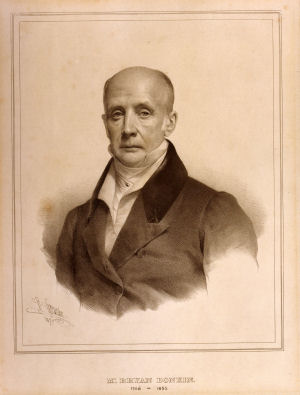
Bryan Donkin, 19th century inventor, amateur public relations whiz and independent lobbyist

Filed under: Britain, Government, History, Technology — Tags: , , , , , — Nicholas @ 03:00

In the latest installment of Anton Howes’ Age of Invention newsletter, he recounts the story of Bryan Donkin and his efforts to save innovators from excessive government interference:

One of the major arguments of the book I’m writing is that inventors’ talent for public relations and lobbying was one of the main reasons that Britain — rather unexpectedly — was the place that experienced an unprecedented acceleration of innovation.

The greatest of these lobbyist-inventors has to be Bryan Donkin, a nineteenth-century mechanical engineer. As an inventor, Donkin improved threshing machines, dredging machinery, and a variety of other tools. He invented the steel pen, dabbled in chemistry, as well as phrenology, and was one of the key people responsible for mechanising the production of paper. He became best known for improving and commercialising tin cans for food. Mechanised paper-making and canned food, having both been invented in France, were perfected in Britain by Donkin. He was the archetypal tinkerer.

Bryan Donkin (1768-1855).
Photographer unknown via Wikimedia Commons.

But it’s as a lobbyist that I think Donkin was truly exceptional. His experience has important lessons for all would-be supporters of invention today.

In April 1817, Donkin read in his newspaper that there had been a disaster in Norwich: the boiler aboard the steamboat Telegraph had exploded. Of the boat’s twenty-two passengers, eight had died immediately in the blast, and another six had eventually succumbed to their wounds. It was a shocking tragedy. And for Donkin, doubly so: in addition to the human death toll, the explosion threatened to kill off one of the era’s newest and most exciting inventions.

Although some of the first trials of steamboats had taken place in the 1780s, it wasn’t until the turn of the century that they began to be practical. By 1817, the first commercially successful steamboat service in Britain, Henry Bell’s Comet, had been chugging its way up the River Clyde between Glasgow and Greenock for only five years. And Londoners like Donkin had only just seen their first steamboat, Margery, when she puffed her way into the Thames in 1815 (the following year, after becoming the first steamboat to cross the Channel, she reinvented herself in Paris as Elise). Thus, by the time of Telegraph‘s explosion, the passenger steamboat had only just been born. There was a very real risk that it would be banned.

Fortunately, however, the steamboat had Donkin in its corner. His immediate reaction upon reading about the explosion was to gather some of his engineer friends — Timothy Bramah and John Collinge — and set off for Norwich to view the explosion site for themselves. As the first expert engineers on the scene, they then took control of the narrative about the explosion. Donkin and his friends went straight to Norwich’s MP to ask him to set up a parliamentary select committee to look into the disaster. And while they waited for the politicians to be assembled for the committee, they held a series of public meetings about the disaster at the Crown & Anchor Tavern — a favourite haunt of London’s engineers. There, they had a chance to rally the rest of the profession and get their story straight about what must have caused the explosion.

Biggest Revolver Yet? A 10-Gauge Colt 1855…

Filed under: History, USA, Weapons — Tags: , , — Nicholas @ 02:00

Forgotten Weapons
Published 17 Oct 2019

http://www.patreon.com/ForgottenWeapons

Cool Forgotten Weapons merch! http://shop.bbtv.com/collections/forg…

This ludicrously huge handgun is actually a 10-gauge Colt 1855 Revolving Shotgun with a cut-down barrel and a newly made grip frame. The backstop and trigger guard of the shotgun were handily reshaped into a grip frame, and the finished product actually looks nicely proportional — until you try to actually pick it up, of course. The grip is filled with brass inlay, about a third of which are missing (possibly from the recoil of actually firing?). Despite the rather poor finish condition, the gun cycles smoothly, and appears to be fully functional. Just the thing for someone who wants to make the Colt Walker look puny!

Contact:
Forgotten Weapons
6281 N. Oracle #36270
Tucson, AZ 85704

QotD: A “democratic” army

Filed under: Britain, Europe, France, Quotations — Tags: , , , , , , — Nicholas @ 01:00

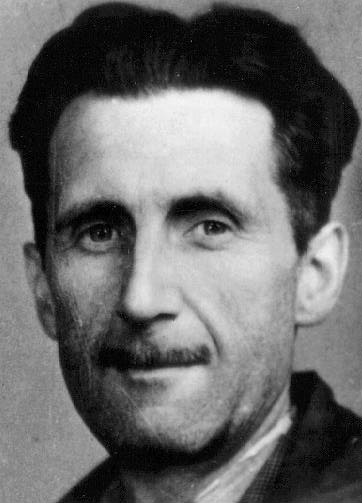
Orwell’s press card portrait, 1943

It is probable that the nature of modern war has made “democratic army” a contradiction in terms. The French army, for instance, based on universal service, is hardly more democratic than the British. It is just as much dominated by the professional officer and the long-service N.C.O., and the French officer is probably rather more “Prussian” in outlook than his British equivalent. The Spanish Government militias during the first six months of war — the first year, in Catalonia — were a genuinely democratic army, but they were also a very primitive type of army, capable only of defensive actions. In that particular case a defensive strategy, coupled with propaganda, would probably have had a better chance of victory than the methods casually adopted. But if you want military efficiency in the ordinary sense, there is no escaping from the professional soldier, and so long as the professional soldier is in control he will see to it that the army is not democratised. And what is true within the armed forces is true of the nation as a whole; every increase in the strength of the military machine means more power for the forces of reaction. It is possible that some of our more Left-wing jingoes are acting with their eyes open. If they are, they must be aware that the News-Chronicle version of “defence of democracy” leads directly away from democracy, even in the narrow nineteenth-century sense of political liberty, independence of the trade unions and freedom of speech and the press.

George Orwell, “Democracy in the British Army”, Left, 1939-09.

December 6, 2019

The End of Polish Democracy – Pilsudski and the Sanacja Regime | BETWEEN 2 WARS | 1935 Part 2 of 4

Filed under: Europe, Germany, History — Tags: , , , , , — Nicholas @ 06:00

TimeGhost History
Published 5 Dec 2019

The Second Polish Republic emerged victorious from the Polish-Soviet War in 1921. But the shine of independence is quickly rubbing off as the new state finds itself burdened with sever economic, political, and social problems. There is one man who sees it as his destiny to save his ailing nation. That man is Józef Piłsudski. But will his undemocratic Sanacja regime be able to solve Poland’s problems?

Join us on Patreon: https://www.patreon.com/TimeGhostHistory

Hosted by: Indy Neidell
Written by: Francis van Berkel
Directed by: Spartacus Olsson and Astrid Deinhard
Executive Producers: Bodo Rittenauer, Astrid Deinhard, Indy Neidell, Spartacus Olsson
Creative Producer: Joram Appel
Post-Production Director: Wieke Kapteijns
Research by: Francis van Berkel
Edited by: Daniel Weiss
Sound design: Marek Kaminski

Colorization:
– Julius Jääskeläinen – https://www.facebook.com/JJcolorization/

Sources:

A TimeGhost chronological documentary produced by OnLion Entertainment GmbH.

From the comments:

TimeGhost History
2 hours ago (edited)
YouTube has age-restricted our Blitz Spirit WW2 video and has REMOVED our Between Two Wars episode on the Holodomor (1932-02). We received a warning, which means that next time this happens we will be banned from publishing content for one week. They state that our “content was removed due to a violation of our Community Guidelines,” on account of publishing “violent of graphic content”, explaining that “Violent or gory content intended to shock or disgust viewers, or content encouraging others to commit violent acts, is not allowed on YouTube.”

Needless to say, we are shocked and disgusted by this action and legitimisation and are currently exploring our options. Meanwhile, this shows how much our independence depends on our Patreon supporters. Without them, we would have been long gone. So please consider supporting our effort and help us spread vital knowledge about our world’s history, albeit hard to swallow or confronting. Don’t let YouTube decide what will be a part of our public memory! You can support us on https://patreon.com/timeghosthistory or https://timeghost.tv.
Cheers,
Joram

Mikhail Gorbachev and the “third generation”

Filed under: Government, History, Russia — Tags: , , , , , — Nicholas @ 05:00

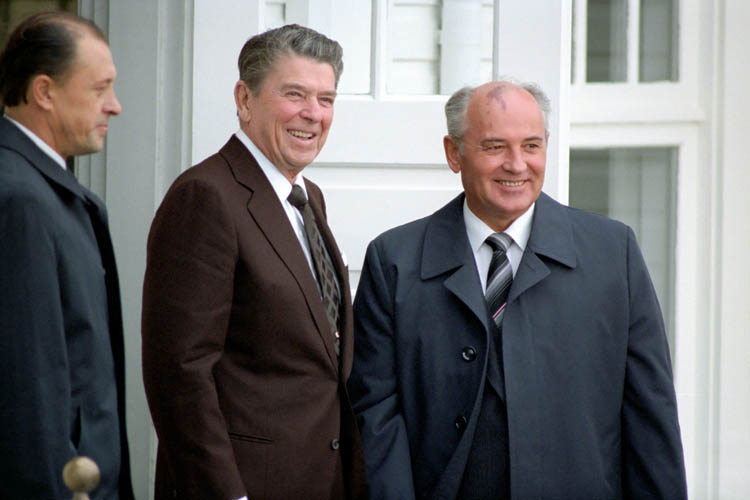
At Rotten Chestnuts, Severian explains why Mikhail Gorbachev’s perestroika was doomed to fail:

US President Ronald Reagan and Soviet General Secretary Mikhail Gorbachev at the Hofdi House in Reykjavik, Iceland during the Reyjavik Summit in 1986.
Official US government photograph via Wikimedia Commons.

Perestroika‘s what happens when you turn the reins over to the third generation — the generation that didn’t come up hard, and thus wasn’t forced to deal with objective reality. For all his faults, and for all the debate over whether Stalin was “really” a Communist (hint: he was), the Boss knew what it takes to hold onto power in a one-party state. He learned his craft in the hardest school — maneuvering against Lenin and Trotsky, two of the coldest, most ruthless sons-of-bitches ever to draw breath. His successor, Nikita Khrushchev, survived both the Great Purge and the Great Patriotic War for the Motherland — an achievement, as you can imagine, that pretty much no one else of consequence could boast.

Mikhail Gorbachev, by contrast, was born in 1931. His childhood was affected by the war — as was every Russian child’s — but his grandfather was a kolkhoznik from way back; Mikhail was wired in to the Party from birth. Stalin died in 1953. Gorbachev was 22 — in an earlier generation he could’ve been a serious player at that age, but the postwar generation didn’t start rising until their 30s, or more usually their 40s. He was still at university when the Boss kicked the bucket; he didn’t start his official political career until 1955, and wasn’t recognized as a bona-fide comer until the late 1960s.

What this meant was that Gorbachev grew up in the kinder, gentler Soviet Union — the one where Khrushchev released a whole bunch of folks from the Gulag and denounced cults of personality. This is not to say that Gorbachev wasn’t a sincere Communist; he was. In fact, that was his problem — he was too sincere. The earlier generations faced the stark choice between hewing to orthodox Marxism, or hanging on to power. They chose the latter, of course, and that’s why Trotsky had to go — he kept on claiming to be the only true Marxist of the bunch (which he was, of course, but that’s a story for another day). Gorbachev, though, got to see Communism “working,” and from this he deduced — not unreasonably for someone who didn’t come up hard — that Communism’s manifest failures were due to not following Marx and Lenin more exactly. Marx and Lenin talked a great game about “openness” (glasnost), “democracy,” and all that “improving the lot of the People” jazz.

So he did all that, the fool, not realizing that Communism “worked,” such as it did, only through repression. Take your foot off The People’s neck enough to let them breathe, by all means — that was Comrade Khrushchev’s great insight — but if you ease off any further, they’ll try to wriggle out … and eventually kill you, their tormentor. Having never seen The People at close range — as everyone in the previous generations had — he couldn’t understand this, and so crashed the system.

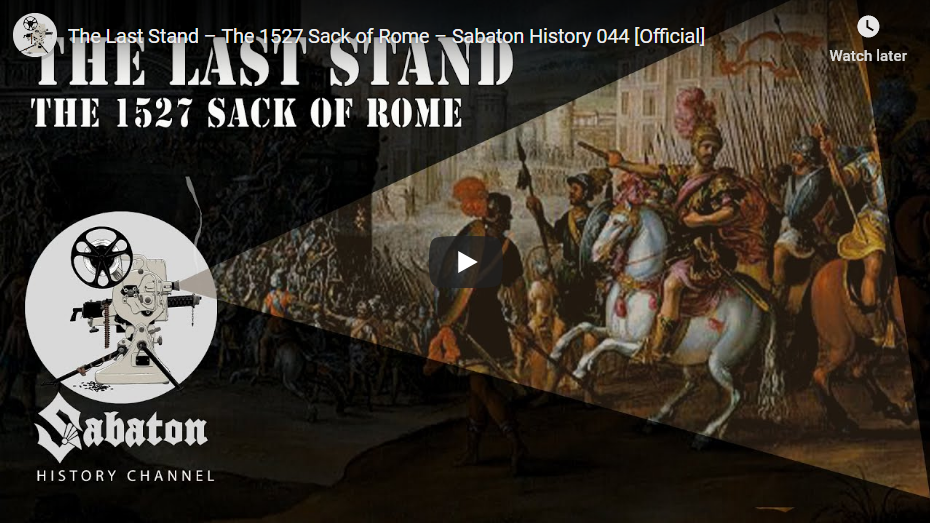
“The Last Stand” – The 1527 Sack of Rome – Sabaton History 044 [Official]

Filed under: Europe, History, Media, Military, Religion — Tags: , , , , , , — Nicholas @ 04:00

Sabaton History
Published 5 Dec 2019

In 1527, a large Holy Roman army consisting of Germans, Spaniards and Italians march on Rome frustrated over unpaid wages and lacking supplies. Pope Clement VII seeks shelter as Rome is pillaged and burned while his brave Swiss Guard makes a heroic last stand.

Support Sabaton History on Patreon: https://www.patreon.com/sabatonhistory

Listen to The Last Stand (where “The Last Stand” is featured):
CD: http://bit.ly/TheLastStandStore
Spotify: http://bit.ly/TheLastStandSpotify
Apple Music: http://bit.ly/TheLastStandItunes
iTunes: http://bit.ly/TheLastStandItunes
Amazon: http://bit.ly/TheLastStandAmz
Google Play: http://bit.ly/TheLastStandGooglePlay

Watch the official lyric video of “The Last Stand” here: https://www.youtube.com/watch?v=BwfJs…

Listen to Sabaton on Spotify: http://smarturl.it/SabatonSpotify
Official Sabaton Merchandise Shop: http://bit.ly/SabatonOfficialShop

Hosted by: Indy Neidell
Written by: Markus Linke and Indy Neidell
Directed by: Astrid Deinhard and Wieke Kapteijns
Produced by: Pär Sundström, Astrid Deinhard and Spartacus Olsson
Creative Producer: Joram Appel
Executive Producers: Pär Sundström, Joakim Broden, Tomas Sunmo, Indy Neidell, Astrid Deinhard, and Spartacus Olsson
Post-Production Director: Wieke Kapteijns
Production Intern: Rune Vaever Hartvig
Edited by: Iryna Dulka
Sound Editing by: Marek Kaminski
Maps by: Eastory – https://www.youtube.com/c/eastory

Archive by: Reuters/Screenocean https://www.screenocean.com
Music by Sabaton.

Sources:
– Rijksmuseum
– Fondo Antiguo de la Biblioteca de la Universidad de Sevilla
– A massacre in a church during the Sack of Rome: a priest is about to be stabbed and another priest is lying dead on the floor before the altar. Wood engraving by R. Venturi after himself. Credit: Wellcome Collection. CC BY
– Guy de Chauliac bandaging the leg of Pope Clement VII at Avi. Oil painting by Ernest Board. Credit: Wellcome Collection. CC BY
– Photo of Sistine Chapel ceiling by Qypchak
– Photo of Arco delle Campane by Przemek Pietrak

An OnLion Entertainment GmbH and Raging Beaver Publishing AB co-Production.

© Raging Beaver Publishing AB, 2019 – all rights reserved.

“‘The world needs more Canada’, some of us love to boast. Just not if it costs money”

Filed under: Cancon, Military, Politics, USA — Tags: , , , — Nicholas @ 03:00

In hindsight, President Trump let Justin Trudeau off rather lightly for his blatant disrespect on the world stage. Trump has all the cards in our bilateral trade relationship, and the Canadian economy isn’t in a healthy state at the moment. It’s not a risk any Canadian PM should be running when we are so “delinquent” on our NATO commitments, as Chris Selley points out:

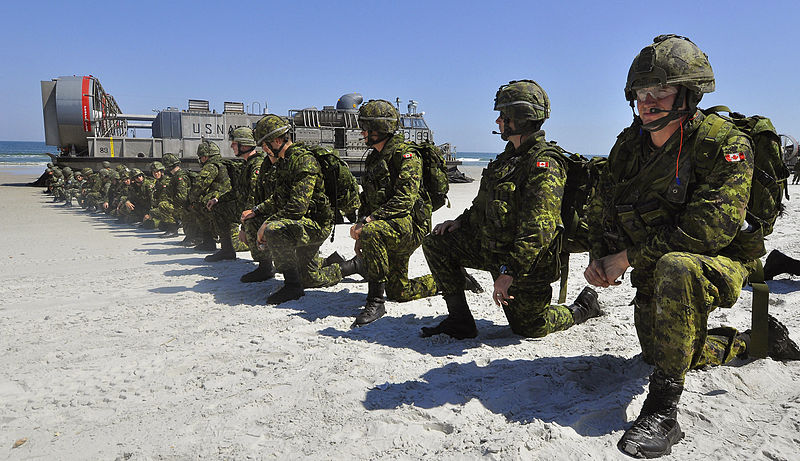
Canadian soldiers set a perimeter position after disembarking a U.S. Navy landing craft during a simulated amphibious landing, 24 April 2009. The training exercise was part of the 50th iteration of UNITAS, a multi-national exercise intended to increase interoperability among participating navies. Other participating nations include Brazil, Peru, Mexico, Germany, Ecuador, Argentina and Chile.
U.S. Coast Guard photo by Petty Officer Seth Johnson via Wikimedia Commons.

The unfortunate thing is that the precipitating event for this little spat could have been useful: An American president publicly calling out Canada, in effect, as a deadbeat brother. At their media availability-cum-fireside chat, Trump accused Canada — again in remarkably diplomatic language, by his standards — of being “slightly delinquent” when it comes to military spending, particularly as it relates to our NATO obligations. The unofficial target for NATO countries is two per cent of GDP. In 2018, the World Bank pegged Canada at 1.25.

This is far from a unique state of affairs. “The world needs more Canada,” some of us love to boast. Just not if it costs money. As a percentage of gross national income, Canada’s foreign aid spending is 0.26 per cent — below the OECD average of 0.31 and a pale shadow of countries like Sweden and Norway, which spend quadruple that. During the last election campaign, no doubt having extensively focus grouped the idea, the Conservatives promised to cut aid spending by 25 per cent.

Canada routinely lobbies for a seat on the UN Security Council for reasons no one can quite articulate — I suspect because it’s a relatively inexpensive thing that we can then boast about. Trudeau’s Liberals orated furiously about Canada’s alleged peacekeeping imperative during the 2015 election, dithered for an eon about how to fulfil it, sent 200 soldiers and eight helicopters to Mali for a year, and then brought them home. Peace kept! Conservatives spent the previous decade talking up Canada’s hard-power credentials even as military spending fell, as a percentage of GDP, for five out of the nine years Stephen Harper was prime minister.

No Canadian government of any stripe can procure a new fighter jet, icebreaker or frigate to save its life — because at the end of the day, we can’t use them to save our lives. If things really go pear-shaped we’re basically begging at Uncle Sam’s feet anyway, so military procurement has become about buying votes and very little else. Military spending has risen under Trudeau’s Liberals, but it’s still less than the 2009 high point under Harper — 1.4 per cent of GDP, in 2009. It was above two per cent as recently as 1987.

Justin Trudeau meets with President Donald Trump at the White House, 13 February, 2017.
Photo from the Office of the President of the United States via Wikimedia Commons.

Laying Out Dovetails with Christopher Schwarz

Filed under: Tools, Woodworking — Tags: , — Nicholas @ 02:00

Popular Woodworking
Published 23 May 2017

Chris shares his method for laying out dovetails to make things easier and more reliable for each set of dovetails. For more great information on joinery techniques, visit http://www.popwood.com/techniques/joi…

QotD: The British army

Filed under: Britain, History, Military, Quotations — Tags: , — Nicholas @ 01:00

[The British army] occupies a curious place in both the emotional heart of the nation and the head of policy makers. The public if asked are usually aware of an organisation steeped in regimental tradition, know of units like the SAS, Guards and Parachute Regiment and may know a little bit about the equipment such as tanks (noting that all APCs are tanks to the layman’s eye…). They recognise it from state ceremonial, where it is an integral part of the national fabric and identity, and are proud of the perception of “our boys” serving overseas in warzones. There is often a deeper rooted, but baseless suspicion of the senior echelons, dating back to the tired cliché of “lions led by donkeys” and fed by a generation of misguided historians trying to rewrite WW1 as not the greatest victory in the history of the British army, but instead four years of class war and turgid poetry.

To policy makers the army is an institution which is central to the survival of the nation, and which carries out many vital roles to meet defence and security policy objectives, but which is also extremely good at champing at the bit to get involved in operations overseas, even when it is not necessarily in the national interest to do so.

A cursory examination of history suggests that the British army is not by itself a war winning organisation. It does not go to war alone with peer rivals and expect to win – UK policy instead for centuries has been to maintain a small (but professional) army able to either conduct colonial policing, or work as part of a larger coalition force to achieve victory. This is not to do down the efforts of the army, but to accept the reality that as an island nation, the UK has relied on the navy as the ultimate guarantor of its security.

Sir Humphrey, “How Do You Solve a Problem Like a Deployable Division?”, Thin Pinstriped Line, 2017-08-06.

December 5, 2019

Build a spoke-shave for PENNIES (or just buy one)

Filed under: Tools, Woodworking — Tags: , — Nicholas @ 06:00

Rex Krueger
Published 4 Dec 2019

Should you build your own spokeshave or just buy an inexpensive new one?
More video and exclusive content: http://www.patreon.com/rexkrueger
Get the PLANS: https://www.rexkrueger.com/store/make…
Get the FREE Tip Sheet: https://www.rexkrueger.com/articles/2…
(more…)

Edith Cavell, before her execution, “patriotism is not enough. I must have no hatred or bitterness toward anyone”

Filed under: Britain, Germany, History, Military, WW1 — Tags: , , — Nicholas @ 05:00

At the Foundation for Economic Education, Lawrence W. Reed relates the story of British nurse Edith Cavell:

Nazi Germany forced France to surrender on June 22, 1940. A day later, Adolf Hitler himself toured the conquered capital of Paris, where he personally ordered the destruction of two memorials to heroes from the First World War. Today — December 4, 2019 — is the 154th anniversary of the birth of one of them, a remarkable woman named Edith Cavell.

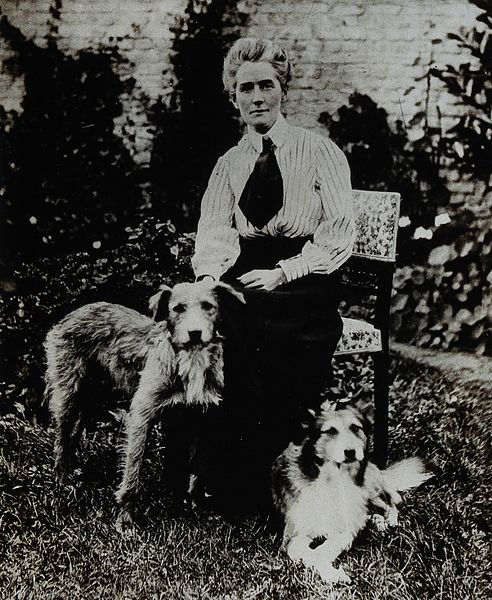
Edith Louisa Cavell
Photograph from the Wellcome Trust via Wikimedia Commons.

Her story is an example of the age-old tragedy that repeats itself every single minute somewhere in the world: a genuinely good individual whose life is snuffed out by some lousy government for a pointless purpose.

Born in 1865 in Swardeston, England, Edith Cavell was 30 when she chose nursing as a professional career. The inspiration had come to her while caring for her father during a serious illness, from which he recovered. During her training, she worked at several hospitals and later traveled around southeastern England treating patients in their homes for diseases from appendicitis to cancer. She earned a sterling reputation for her attention to detail, a congenial bedside manner and, says one biographer, a “ferocious sense of duty.”

At the insistence of a surgeon in Brussels, she went to Belgium in 1907 and became instrumental in the founding of Belgium’s first school of nursing. According to Kathy Warnes of the website Windows to World History, Cavell was soon training aspiring nurses for three hospitals, 24 schools, and 13 kindergartens in Belgium. She became the first matron of the Berkendael Institute in Brussels.

[…]

When Germany occupied Belgium in the fall of 1914, the Kaiser’s troops allowed Cavell, a citizen of an enemy country (England), to stay in charge of her Institute but they kept their eyes on her as she treated combatants from both sides in the hospital and training school. […] German suspicions led to Cavell’s arrest on August 3, 1915. Accused of treason, she was court-martialed, found guilty, and sentenced to death by firing squad.

Among the notes she wrote while incarcerated was a September 14 letter to a group of nurses, thanking them for flowers they had sent to the jail. She ended it with these words:

    In everything one can learn new lessons of life, and if you were in my place you would realize how precious liberty is and would certainly undertake never to abuse it. To be a good nurse one must have lots of patience; here, one learns to have that quality, I assure you.

At her subsequent trial, the prosecution posed only a dozen questions. From the first, she answered truthfully and boldly. Yes, she had helped hundreds to escape and she was proud of it. When asked if she realized what she was doing was “to the disadvantage of Germany,” she bravely replied that her preoccupation was “to help the men who applied to me to reach the frontier; once across, they were free.”

« Newer PostsOlder Posts »

Powered by WordPress