Quotulatiousness

March 5, 2024

The National Microbiology Laboratory scandal in brief

Filed under: Cancon, China, Government, Science — Tags: , , , , , , — Nicholas @ 03:00

Tristin Hopper rounds up some of the eye-opening details of the security breach at Winnipeg’s National Microbiology Lab which certainly looks like a factor in the Wuhan Coronavirus pandemic story:

Whether or not COVID-19 started as an accidental lab leak, the pandemic just so happens to have originated in the same neighbourhood as the Wuhan Institute of Virology, home to a coronavirus laboratory with a known history of lax security protocols.

For that reason alone it’s a major scandal that Canada’s own high-security biolab was employing two scientists – married couple Xiangguo Qiu and Keding Cheng – who according to CSIS exhibited a reckless disregard of lab security and the protection of confidential information. Now, tack on the fact that both Cheng and Qiu are suspected of prolonged unauthorized contact with the Chinese government.

This week, Health Canada bowed to opposition pressure and published an illuminating package of more than 600 official documents detailing CSIS’s evidence against the couple, as well as internal emails from the Winnipeg-based National Microbiology Laboratory where they worked. The highlights are below.

The lab is surprisingly casual about shipping planet-altering pathogens

One of the main accusations against Qiu is that she sent lab samples to China, the U.S. and the U.K. without proper authorization. Around this same time, she also sent highly virulent Ebola samples to the Wuhan Institute of Virology.

[…]

Cheng was accused of breaking virtually every cyber-security law in the book

If Qiu’s signature offence was sending out lab materials without proper authorization, Cheng’s was that he routinely ignored even the most basic protocols about computer security.

[…]

Throughout, both were in constant (unauthorized) touch with China

The CSIS reports don’t necessarily frame Qiu and Cheng as traitors.

[…]

The pair kept changing their story after being presented with smoking gun evidence, according to CSIS

Some of the documents’ more cinematic passages are when CSIS agents describe lengthy interrogations in which the pair were confronted about their alleged breaches of Canadian national security.

February 28, 2024

QotD: When the rules in the dating market all changed

Filed under: Health, Media, Quotations, USA — Tags: , , , , — Nicholas @ 01:00

So far we’ve only been talking about guys, but the gals went through their own version of the same process way back in the days. Indeed, it’s because the girls changed that the guys got into PUA in the first place.

Under the old dispensation, back before the Clinton Era (1988-2001), everyone acknowledged that there were a lot of users and abusers, douchebags and parasites and losers, out there in the world. That being the case, simply being an all-around ok guy with a steady job — what the PUAs came to term “beta providers” — was, in itself, a pretty solid resume in the dating market. “Just be yourself” was every guy’s dad’s advice when it came to dating, and back then it was pretty solid, since it was assumed that the decent job etc. flowed from being a decent human being. And since every girl’s mom was telling her complementary things, the system worked … until it didn’t, and you can date the change precisely: June 6, 1998, the premiere of the HBO series Sex and the City.

[…] Everyone has met one of those “one of the guys”-type girls. They’re great fun, and while you know what I mean when I say they’re not necessarily marriage material as-is, you therefore also know what I mean when I say they really are what feminists all claim to be: Strong, confident women. They are what they are, and they know it, take it or leave it.

The problem is, most women — and, it goes without saying, all feminists — aren’t “strong, confident women”, in the same way the vast majority of guys aren’t naturally “alpha males”. That’s the dialectic I’ve been trying to get at in this series of posts. Sex and the City, as much as every episode needs to be burned and the ashes shot into deep space, was just the manifestation of a long-developing process. Thanks to all that “self-esteem” shit that started in the Seventies, sometime in the Clinton Era a critical mass of young women decided that what they needed was to be “strong” and “self-confident”. But they didn’t know how to do that, because the people telling them this were fat lesbian college professors. Then HBO, sensing a valuable market niche, got into the act …

Sex and the City […] is the gayest show in the history of television. Carrie and the Gals don’t act like women; they act the way women think men act — which is to say, they act like gay men. Recall that the late 1990s also saw an explosion of female “comedians”, whose one “joke” was some version of “I got my period today, but damn, I still crave dick.” (Sex and the City, you’ll recall, was pitched as a comedy). And that’s a serious problem, because as every straight guy has said at least once in his life, being gay would be fabulous if not for the “sex with guys” part. I mean, how awesome would it be (every young man thinks), if you could reorient your whole life around your crotch?

Severian, “Mental Middlemen III: SATC”, Rotten Chestnuts, 2021-05-06.

February 26, 2024

Time to pry the smartphones from the clutches of our dopamine-addicted youngsters?

Filed under: Britain, Education, Health, Media, Technology — Tags: , , , , — Nicholas @ 05:00

A couple of articles this weekend deal with the already acknowledged problem of dopamine addiction especially among the young whose brains and personalities are still in the formative stages. First, here’s Christopher Gage reporting with some delight that British schoolchildren are going to have to learn how to cope with a full school day without the electronic binkies they’ve grown so dependent on:

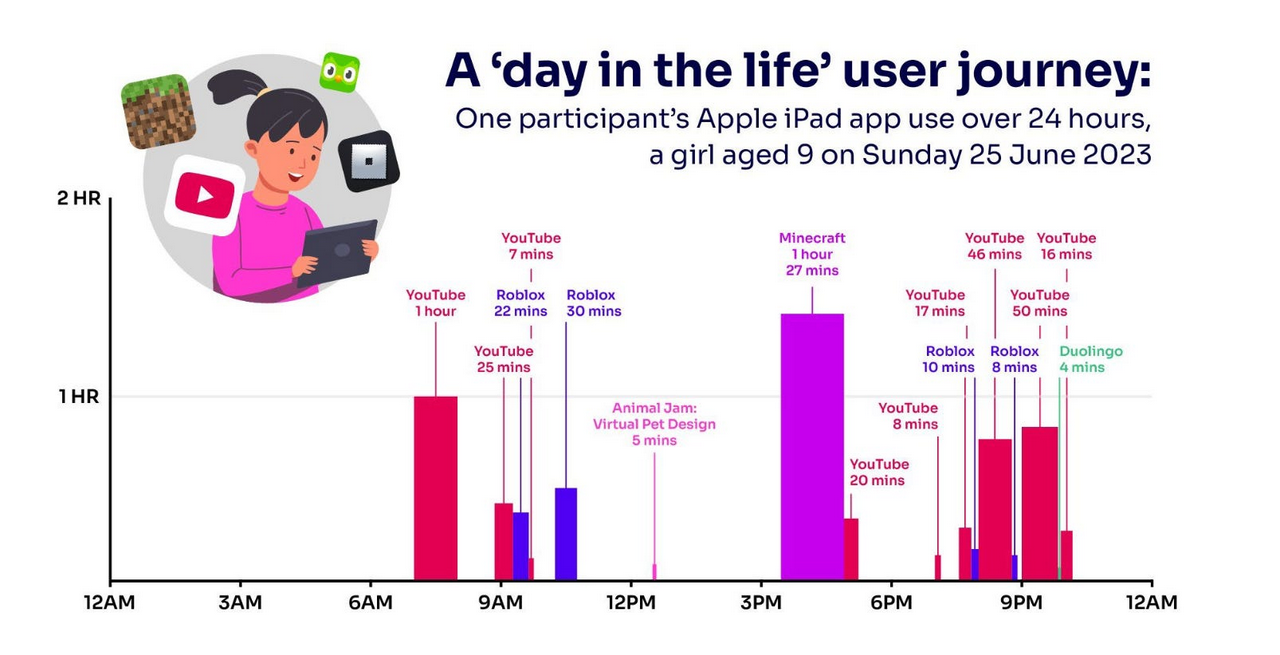
Detail of an article at bankmycell.com

I long for the day when gawking at one’s phone like a lobotomy patient invokes derision. Don’t you know your filthy addiction pollutes every atom of our society? You selfish bastard. You perverts should be ashamed of yourselves, etc. That day is on the horizon.

This week, British lawmakers banned smartphones in schools. Those pocket perils are lobotomising those whom sentimentalists call “the nation’s future”. Denied their devil devices, schoolchildren will endure hours of reading, thinking, and writing. Heaven forbid, they’ll talk to their friends and teachers in flesh and blood.

In these matters, I am militant. Children are not vessels of wisdom and wonder corrupted by a cruel world. They’re ignorant. By teaching them how to think and live, adults civilise children. That bleeping burping buzzing beehive in their pockets renders that civilising mission impossible.

Many disagree. But their knee-jerk reaction to this “knee-jerk reaction” crashes against concrete evidence. Smartphones erode concentration, dull critical thinking, blunt memory, and shred retention. The monstrous equation: Smartphones plus face-hugger apps equals ignorant, depressed, anxious youths.


Yes, technology invites moral panic. Plato worried that the written word would mulch minds into mush. But this is serious.

Last year, Dr Vivek Murthy, the United States surgeon general, issued a rare public health advisory. Across 19 pages, Dr Murthy warned that the effects of social media on adolescent mental health were “not fully understood”.

“There are ample indicators that social media can also have a profound risk of harm to the mental health and well-being of children and adolescents,” he said.

And what did we say? Not much. We had more important matters to attend. If I remember correctly, on that very day, Kim Kardashian revealed on Instagram her latest arse or her newest boyfriend.

However, serious people think this is a serious problem. Dr Benjamin Maxwell, a director of child and adolescent psychiatry at Rady Children’s Hospital in San Diego, said he is “immensely concerned” by a study linking social media and poor mental health. That “highly stimulating environment” may corrode “cognitive ability, attention span and memory during a time when their brains are still developing,” Maxwell said. “What are the long-term consequences? I don’t think we know.”

The UN’s education, science, and culture agency says the more young Jack scrolls through TikTok and the like, the lower his grades sink.

Countless studies show smartphones and their face-hugger apps — designed by behavioural psychologists to addict and milk the user — worsen anxiety, depression, and self-esteem. Not to mention lining up children for the predation of bullies 24/7.

Psychologists Jonathan Haidt and Jean Twenge are the canaries in the cultural coalmine. They say HMS Progress is crashing toward the icebergs — rising rates of suicide, depression, and anxiety. To them, the evidence is almost irrefutable. Turn back now, they say, or the ship sinks.

The second item is a follow-up by Ted Gioia to his post on dopamine culture last week:

My article on “dopamine culture” has stirred up interest and (even more) raised concerns among readers who recognize the symptoms I described.

One of the illustration went viral in a big way. And I’ve gotten requests from all over the world for permission to translate and share the material. (Yes, you can all quote generously from the article, and reprint my charts with attribution.)

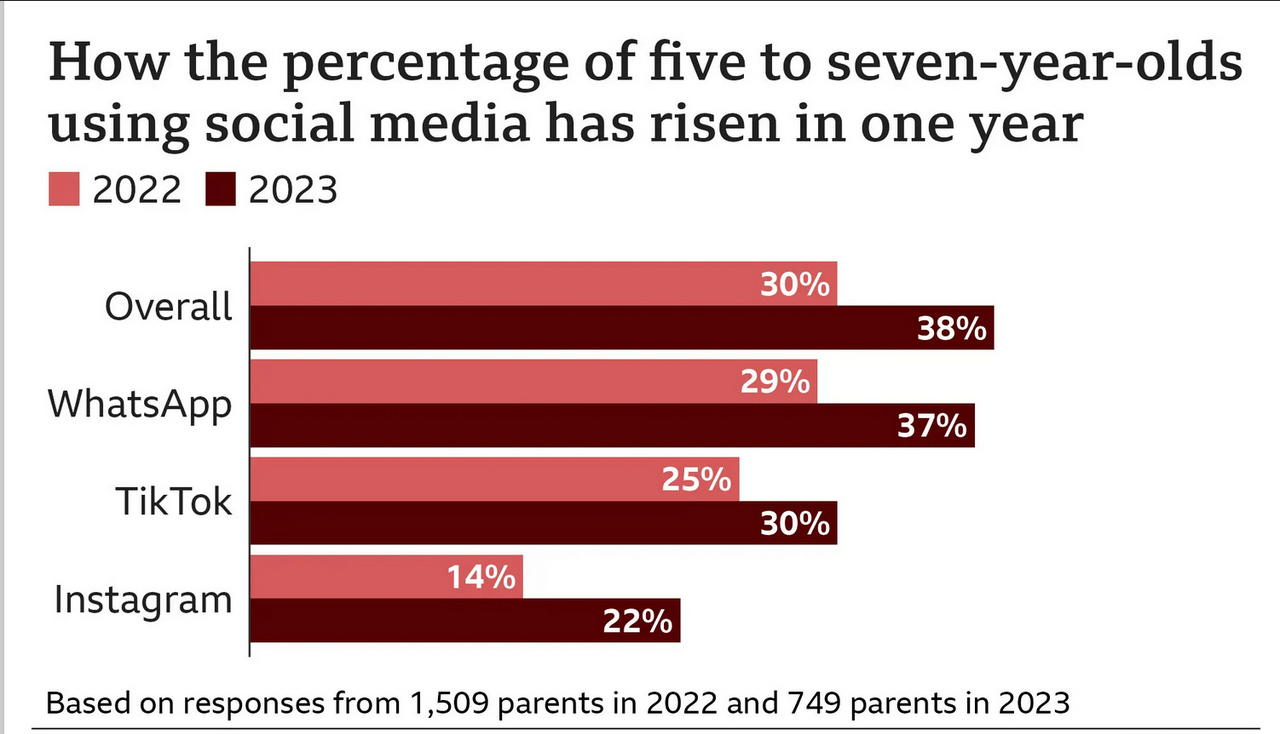
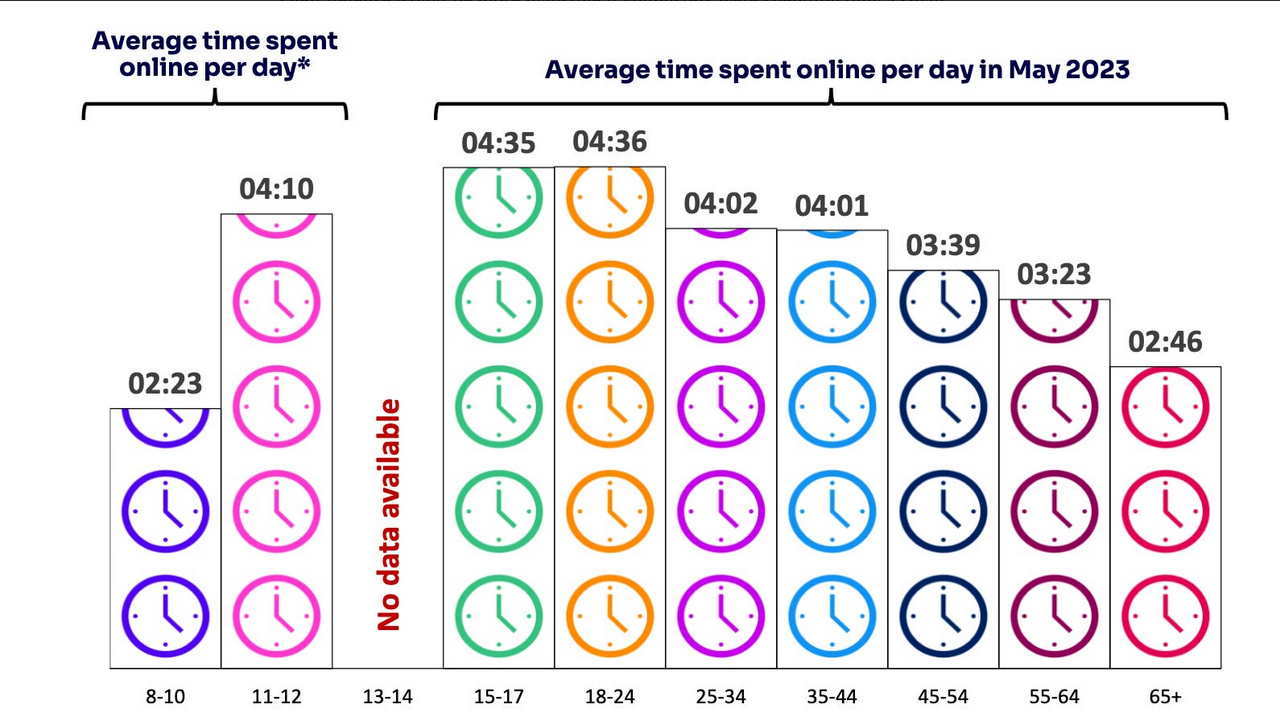
This image was shared widely online

But many have asked for more specific guidance.

What can we do in a culture dominated by huge corporations that want us to spend hours every day swiping and scrolling?

I find it revealing and disturbing that readers who work on the front lines (in education, therapy, or tech itself) expressed the highest degree of alarm. They know better than anybody where we’re heading, and want to find an escape path.

Here’s a typical comment from teacher Adam Whybray:

    I see it massively as a teacher. Kids desperately pleading for toilet breaks, claiming their human rights are being infringed, so they can check TikTok, treating lessons as though they’re in a Youtube reaction video, needing to react with a meme or a take — saying that silence in lessons scares them or freaks them out.

    One notable difference from when I was at school was that I remember a lesson in which we got to watch a film was a relief or even pleasurable (depending on the film). My students today often say they are unable to watch films because they can’t focus. I had one boy getting quite emotional, begging to be allowed to look at his phone instead.

Another teacher asked if the proper response is to unplug regularly? Others have already embraced digital detox techniques of various sorts (see here and here).

I hope to write more about this in the future.

In particular, I want to focus on the many positive ways people create a healthy, integrated life that minimizes scrolling and swiping and mindless digital distractions. Many of you have found joy and solace — and an escape from app dependence — in artmaking or nature walks or other real world activities. There are countless ways of being-in-the-world with contentment and mindfulness.

Today I want to discuss just one bedrock of real world life that is often neglected — or frequently even mocked: Ritual.

I know how much I rely on my daily rituals as a way of creating wholeness and balance. I spend every morning in an elaborate ritual involving breakfast, reading books (physical copies, not on a screen), listening to music, and enjoying home life.

Even my morning coffee preparation is ritualistic. (However, I’m not as extreme as this person — who rivals the Japanese tea ceremony in attention to detail.)

I try to avoid plugging into the digital world until after noon.

I look forward to this daily time away from screens. But my personal rituals are just one tiny example. There are many larger ways that rituals provide an antidote to the more toxic aspects of tech-dominated society.

Below I share 13 observations on ritual.

QotD: Lockdown rebuttal

Filed under: Government, Health, Media, Quotations, USA — Tags: , , , , — Nicholas @ 01:00

First, lockdowns were neither prudent nor essential. It’s not as if government officials considered the collateral damage to be inflicted on the economy, society, and health – not all health problems are caused by covid – by the lockdowns and then rationally concluded that the benefits of locking down outweighed these costs. No. The collateral damages were ignored. As the New York Times‘s Joe Nocera and Vanity Fair‘s Bethany McLean – authors of the just-released The Big Fail – write, “But there was never any science behind lockdowns – not a single study had ever been undertaken to measure their efficacy in stopping a pandemic. When you got right down to it, lockdowns were little more than a giant experiment.”1 In no universe is such a policy prudent.

Nor were lockdowns “essential”. As Nocera and McLean note,

    … the weight of the evidence seems to be with those who say that lockdowns did not save many lives. By our count, there are at least 50 studies that come to the same conclusion. After The Big Fail went to press, The Lancet published a study comparing the COVID infection rate and death rate in the 50 states. It concluded that “SARS-CoV-2 infections and COVID-19 deaths disproportionately clustered in U.S. states with lower mean years of education, higher poverty rates, limited access to quality health care, and less interpersonal trust – the trust that people report having in one another.” These sociological factors appear to have made a bigger difference than lockdowns (which were “associated with a statistically significant and meaningfully large reduction in the cumulative infection rate, but not the cumulative death rate”.)

Second, the lockdowns were, contra Mr. Orrell’s claim, utterly unprecedented. Isolating individuals known to be infected, such as Typhoid Mary, is a categorically different measure than locking down whole societies. Such lockdowns were never used until China locked Wuhan down in early 2020. Here again are Nocera and McLean: “On April 8, 2020, the Chinese government lifted its lockdown of Wuhan. It had lasted 76 days – two and a half months during which no one was allowed to leave this industrial city of 11 million people, or even leave their homes. Until the Chinese government deployed this tactic, a strict batten-down-the-hatches approach had never been used before to combat a pandemic. Yes, for centuries infected people had been quarantined in their homes, where they would either recover or die. But that was very different from locking down an entire city; the World Health Organization called it ‘unprecedented in public health history’.”

It’s jarring to encounter in an essay that features many excellent arguments – as Mr. Orrell’s does – such irrational and utterly uninformed claims as Mr. Orrell offers about lockdowns.

Donald J. Boudreaux, responding to an article by Brent Orrell in Law & Liberty, 2023-10-31.


February 21, 2024

“College attendance is our society’s only meaningful initiation ritual, and it thus assumes an existential importance that renders it near-impossible to replace until an alternative is found”

Filed under: Education, Health, History, Religion, USA — Tags: , , , , — Nicholas @ 05:00

Johann Kurtz believes the modern university’s survival despite its increasingly irrational and counterproductive actions can be explained as the last modern example of an initiation ritual:

Harvard University Memorial Church.
Photo by Crimson400 via Wikimedia Commons.

Our understanding of the college system is incomplete. Until we correct this, we won’t be able to fix or replace the system.

First, consider a paradox: college attendance remains near all-time highs [Link], yet the majority of Americans no longer believe it is worth the cost [Link].

The college system seems irrationally resistant to declining value. We must therefore ask: is there an important non-rational reason for college attendance which we have failed to acknowledge?

I believe the answer is “Yes”. College attendance is our society’s only meaningful initiation ritual, and it thus assumes an existential importance that renders it near-impossible to replace until an alternative is found.

Our culture is historically anomalous in lacking explicit initiation rituals.

Mircea Eliade, the great religious historian of the 20th-century, defined initiation rituals as “a body of rites and oral teachings whose purpose is to produce a decisive alteration in the religious and social status of the person to be initiated“.

    In philosophical terms, initiation is equivalent to a basic change in existential condition; the novice emerges from his ordeal endowed with a totally different being from that which he possessed before his initiation; he has become another.

    — Mircea Eliade, Rites and Symbols of Initiation: The Mysteries of Birth and Rebirth

In Europe, fully expressed initiation rituals were common until the end of the Middle Ages, and in the wider world, until the end of the First World War. Now, they only persist in the West in the sacramental practices of devout Christians (baptism, confirmation, and so forth).

Once, however, these practices were of tremendous importance to us, as Eliade makes clear:

    To gain the right to be admitted among adults, the adolescent has to pass through a series of initiatory ordeals: it is by virtue of these rites, and of the revelations that they entail, that he will be recognized as a responsible member of the society. Initiation introduces the candidate into the human community and into the world of spiritual and cultural values. He learns not only the behavior patterns, the techniques, and the institutions of adults but also the sacred myths and traditions of the tribe, the names of the gods and the history of their works …

In the absence of local community rituals, the universities are a natural site for their replacement. These have always been religious sites, although the nature and expression of this religion has transmuted over time.

H/T to Bruce Gudmundsson at Extra Muros for the link and his additional comments:

This hypothesis accords with the argument, made often in this blog, that education and schooling are two very different things. At the same time, it suggests that one of the definitive purposes of Extra Muros, the encouragement of young people to eschew the conventional college experience in favor of a combination of practical pursuits and systematic self-tuition, may be a fool’s errand. After all, if four (or five or six) years of drinking second-rate beer from red plastic cups does for the office-bound folk of North America what fear-filled rites of passage do for members of the bone-in-the-nose set, then I might well be sailing against the wind.

Upon second thought, I find hope in the possibility that the parasite (or, to be more precise, the cancer) promoted by d’Angelo, Kendi, and company will soon deal the coup de grâce to its mortally-wounded host.

The coming-of-age ordeals of warrior tribes demand that boys who would be men prove possession of such martial virtues as courage and self-command. The rites-of-passage of the modern middle classes, however, require that postulants demonstrate a mixture of conformity, conscientiousness, and, to a diminishing degree, intelligence. (Readers familiar with the oeuvre of economist Bryan Caplan will recognize the source of this troika. However, it is worth noting that, while Professor Caplan will occasionally tip his hat in the direction of the campus-based building of basic brain-power, he devotes far more attention to the collegiate cultivation of the two components of Sitzfleisch.)1

The cult of Marx, Mao, and Marcuse demands complete compliance, not only with its basic tenets, but also with any changes in the party line that, from time to time, may occur. (I am old enough to remember the days when campus commies of the caucasian persuasion could don dashikis without facing charges of “cultural appropriation”.) Thus, those who sit at the feet of the acolytes of critical theory learn an art of great value to people who wish to thrive in a large organization, that of discarding the old hat, and putting on the new one, at just the right time. (Think, if you will, of the mid-level employees of the McDonalds Corporation, who, over the course of the last four decades, were obliged to alter their opinion of the McRib sandwich more often than they changed the oil in their cars.)


    1. Bryan Caplan, The Case Against Education: Why the Education System is a Waste of Time and Money (Princeton: Princeton University Press, 2018), pages 9-21.

February 16, 2024

“… the rise in emotional disturbance among young women correlates precisely with the introduction of the smart phone”

Filed under: Health, Liberty, Media, Technology — Tags: , , , , , — Nicholas @ 05:00

At Postcards from Barsoom, John Carter sets off all the alarms with a proposal to address the burgeoning issue of social media addiction and the closely correlated rise in mental health issues among young women:

The psychic breakdown of the young Western female has been the defining political phenomenon of the twenty-first century. Women are suffering from depression, anxiety, neurosis, and dysphoria as never before, they’re drugged to the gills to deal with it, and they’ve got the SSREyes to prove it.

This isn’t only a problem for young women. Their suffering is everyone’s suffering. The romantic paranoia engendered by MeToo, a mass hysteria that has grown directly out of this plague of neurosis, has destroyed courtship among the young. As a result a shocking fraction of young men are virgin incels, while their femcel counterparts are contemplating a future where 45% of them will be childless. Driven by their neglected ovaries to latch on to surrogate children in the form of migrants and minorities, and entering into lesbian civil unions with the Mammy State, childless women overwhelmingly vote left – as always, the party of the psychically distressed thrives to whatever degree it cultivates psychic distress. The political derangement is downstream of their emotional derangement, and the two feed on one another in a vicious spiral of crazed minds pushing crazed policies that craze minds yet further, a cycle that threatens to break civilization, either gradually through steady demographic deflation and spiritual demoralization, or perhaps – if the young men alienated by a society that has ruined their women cease stupefying themselves with porn, and cohere as an army – more catastrophically.

There’s no real mystery as to why this has happened.

Jonathan Haidt has demonstrated at length and in extraordinary empirical detail that the rise in emotional disturbance among young women correlates precisely with the introduction of the smart phone, and the mass migration of social lives onto social media that immediately followed. The slot machine engineers of Silicon Valley trapped the world’s young women in a Skinner box by hacking their instinctive sexual competition strategies. Suddenly every young girl in the world was measuring herself against every other young woman, all viewing one another through the distorting filters of flattering camera angles, ruthlessly curated digital photographs, makeup, plastic surgery, and AI filters that smoothed wrinkles, removed blemishes, and reduced unwelcome poundage. On the Internet no girl is ever the prettiest girl in the room, or even the second or third prettiest. Meanwhile they’re flooded with a relentless barrage of that most intoxicating of drugs: male attention.

Of course they went mad.

They’re all wandering around in a state of selfie-shock.

QotD: The PUA (Pick-up artist)

Filed under: Business, Education, Health, Quotations, USA — Tags: , , , , — Nicholas @ 01:00

If you’ve read The Game […] you can’t help being struck by how expensive all this must be, both in time and money. Mystery, the first PUA guru who kicked the whole “community” off by offering classes, charged something like $1-5000 for a week-long class — serious money back then, and that’s before you consider that guys were flying in from all over the country, indeed from all over the world, to take them. That aside, consider what it would take to hit at least three Sunset Strip clubs a night, three nights a week. I’m well past my bar-hopping days, but when I was in grad school, the “trendy” clubs in College Town charged $10-20 just in cover …

This was two decades or more ago, and College Town was in Podunkville. Imagine what they’re charging to get into the hot nightspots on the Sunset Strip. I bet just getting into the clubs costs these aspiring PUAs a couple hundred bucks, every week, for months. Then there’s all the other stuff Strauss said he did to transform himself into “Style” — laser-whitening his teeth, tanning beds, classes on elocution and posture, a whole new (and ever-changing) wardrobe, surfing. I can’t even begin to calculate it, but at one point he and three other PUAs are living in a Hollywood Hills mansion that once belonged to one of the Rat Pack — monthly rent, $50K. Then throw in the fact that all of this takes a tremendous amount of time, and consider the toll that must take on your body. I hit the sauce pretty hard back in my day, and one of the reasons I stopped was that the hangovers really started hurting — one night of bar-hopping now, and I’d be bedridden for days. I’m getting exhausted just typing this, and do you see what I mean?

And all this without getting a single girl. I think everyone here has been in at least one relationship, so we know that no matter how casual you keep it, bare-bones relationship management, even of pump-and-dumps, takes a fairish bit of time (so I’ve heard, anyway). I might be misremembering, but at one point Strauss claims he was managing something like four or five more or less long-term hookups simultaneously. I don’t think there are enough hours in the day …

Much better, then, to just say you’re a PUA. To do it Tyler Durden style, in other words. I’m pretty sure you could sell the illusion of yourself as a hardcore PUA with one not-too-expensive night on the town. Just dress up like one of these goobers, hit up one bar, and take selfies with a bunch of girls, making sure to alter the shot angles enough that no one can tell you’re in the same bar the whole time. Post one or two stories of your conquests a week, and you could portray yourself as some kind of pickup master in no time at all.

Of course, that’s if you want to consciously fake it. I have no idea what “Tyler Durden” was doing, not being a sociopath myself, but as Strauss tells it, his disciples got snookered into it. They really did want to learn how to pick up girls, but since dressing up like a PUA and talking about getting girls is much easier than actually getting girls, a night on the town with those guys ended up being an endless series of “approaches”. Again, it’s how you define “effective”, and Strauss lets the cat out of the bag a bit when he informs us of the PUA’s weird lingo for “closing”. There’s the “f-close”, of course, which should be obvious, but there’s also the “kiss close” and even the “phone number close” … and both of those count as complete successes.

Severian, “Mental Middlemen”, Rotten Chestnuts, 2021-05-05.

February 9, 2024

The (so-far limited) ability to read the Herculaneum Papyri may vastly increase our knowledge about the Roman world

Filed under: History, Italy, Science, Technology — Tags: , , , , — Nicholas @ 03:00

Colby Cosh on the achievement of the three young researchers who were awarded the Vesuvius Challenge prize earlier this month, and what it might mean for classicists and other academics:

On Monday morning, Farritor and two other young Vesuvius Challenge notables, Youssef Nader and Julian Schillinger, were announced as winners of the grand prize. Nader and Schillinger had, like Farritor, already won Vesuvius Challenge prizes for smaller technical discoveries, and Nader had in fact been a mere heartbeat behind Farritor in producing the same “porphyras” from the same scan. After Farritor nabbed his US$40,000 “first letters” prize, the three decided to combine their efforts to net the big fish.

The result is a text that represents about five per cent of one of the thousands of scrolls recovered — and there may be more not yet recovered — from the Villa of the Papyri. The enormous villa was owned by an unknown Roman notable, but there are clues that one of its librarians was the Epicurean philosopher Philodemus of Gadara, who lived from around 110 to 35 BC. Until his identity was connected with the library, Philodemus did not receive too much attention even from classicists. But the Vesuvius Challenge efforts have now yielded fragments of what has to be an Epicurean text — one which discusses the delights of music and food, and condemns an unnamed adversary, possibly a Stoic, for failing to give a philosophical account of sensual pleasure.

The recovery of dozens more of the works of Philodemus would be — one might now say “will be” — a world-changing event for the classics. We know Philodemus was close to Calpurnius Piso (101-43 BC), the father-in-law of Julius Caesar and a likely owner of the doomed villa. He almost certainly had a front-row seat for the prelude to the end of the Roman Republic. We know he wrote works on religion, on natural philosophy and on history: even his thoughts on music and poetry would be of marked interest.

But nobody knows what else, what copies of older works, may be lurking in Philodemus’s library. At this moment antiquarians know the titles of dozens of lost plays by Aeschylus and Sophocles and Euripides and Aristophanes; we are missing major works of Aristotle and Euclid and Archimedes and Eratosthenes. We know that Sulla wrote his memoirs and that Cato the Elder wrote a seven-book history of Rome. Any of these old writings, or others of equal significance, may materialize suddenly out of oblivion now, thanks to the Vesuvius Challenge. It’s an impressive triumph for the idea of prize-giving as an approach to solving scientific problems, and the news release from the challenge offers a discussion of what the funding team got right and where the project will go next.

February 7, 2024

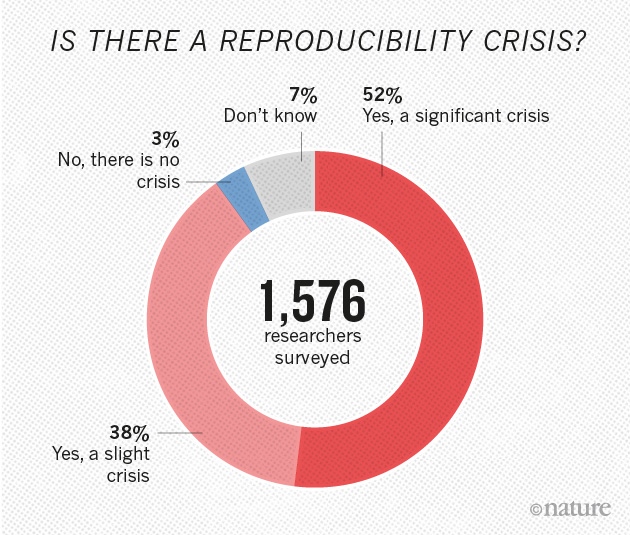
A disturbing proportion of scientific publishing is … bullshit

Tim Worstall on a few of the more upsetting details of how much we’ve been able depend on truth and testability in the scientific community and how badly that’s been undermined in recent years:

The Observer tells us that science itself is becoming polluted by journal mills. Fools — intellectual thieves perhaps — are publishing nonsense in scientific journals, this then pollutes the conclusions reached by people surveying science to see what’s what.

This is true and is a problem. But it’s what people publish as supposedly real science that is the real problem here, not just those obvious cases they’re complaining about:

    The startling rise in the publication of sham science papers has its roots in China, where young doctors and scientists seeking promotion were required to have published scientific papers. Shadow organisations – known as “paper mills” – began to supply fabricated work for publication in journals there.

    The practice has since spread to India, Iran, Russia, former Soviet Union states and eastern Europe, with paper mills supplying ­fabricated studies to more and more journals as increasing numbers of young ­scientists try to boost their careers by claiming false research experience. In some cases, journal editors have been bribed to accept articles, while paper mills have managed to establish their own agents as guest editors who then allow reams of ­falsified work to be published.

Indeed, an actual and real problem:

    The products of paper mills often look like regular articles but are based on templates in which names of genes or diseases are slotted in at random among fictitious tables and figures. Worryingly, these articles can then get incorporated into large databases used by those working on drug discovery.

    Others are more bizarre and include research unrelated to a journal’s field, making it clear that no peer review has taken place in relation to that article. An example is a paper on Marxist ideology that appeared in the journal Computational and Mathematical Methods in Medicine. Others are distinctive because of the strange language they use, including references to “bosom peril” rather than breast cancer and “Parkinson’s ailment” rather Parkinson’s disease.

Quite. But the problem is worse, much, much, worse.

Let us turn to something we all can agree is of some importance. Those critical minerals things. We all agree that we’re going to be using more of them in the future. Largely because the whole renewables thing is changing the minerals we use to power the world. We’re — to some extent, perhaps enough, perhaps not enough — moving from using fossil fuels to power the world to using rare earths, silicon, copper and so on to power the world. How much there is, how much useable, of those minerals is important. Because that’s what we’re doing, we’re changing which minerals — from fossil to metallic elements — we use to power the world.

Those estimates of how much there is out there are therefore important. The European Union, for example, has innumerable reports and task forces working on the basis that there’s not that much out there and therefore we’ve got to recycle everything. One of those foundational blocks of the circular economy is that we’ve got to do it anyway. Because there’s simply not enough to be able to power society without the circular economy.

This argument is nads*. The circular economy might be desirable for other reasons. At least in part it’s very sensible too – if it’s cheaper to recycle than to dig up new then of course we should recycle. But that we must recycle, regardless of the cost, because otherwise supply will vanish is that nads*.

But, folk will and do say, if we look at the actual science here we are short of these minerals and metals. Therefore etc. But it’s the science that has become infected. Wrongly infected, infested even.

Here’s the Royal Society of Chemistry and their periodic table. You need to click around a bit to see this but they have hafnium supply risk as “unknown”. That’s at least an advance from their previous insistence that it was at high supply risk. It isn’t, there’s more hafnium out there than we can shake a stick at. At current consumption rates — and assuming no recycling at all which, with hafnium, isn’t all that odd an idea — we’re going to run out sometime around the expected date for the heat death of the universe. No, not run out of the universe’s hafnium, run out of what we’ve got in the lithosphere of our own Earth. To a reasonable and rough measure the entirety of Cornwall is 0.01% hafnium. We happily mine for gold at 0.0001% concentrations and we use less hafnium annually than we do gold.

The RSC also says that gallium and germanium have a high supply risk. Can you guess which bodily part(s) such a claim should be associated with? For gallium we already have a thousand year supply booked to pass through the plants we normally use to extract our gallium for us. For germanium I — although someone competent could be a preference — could build you a plant to supply 2 to 4% of global annual germanium demand/supply. Take about 6 months and cost $10 million even at government contracting rates to do it too. The raw material would be fly ash from coal burning and there’s no shortage of that — hundreds of such plants could be constructed that is.

The idea that humanity is, in anything like the likely timespan of our species, going to run short in absolute terms of Hf, Ga or Ge is just the utmost nads*

But the American Chemistry Society says the same thing:


    * As ever, we are polite around here. Therefore we use the English euphemism “nads”, a shortening of “nadgers”, for the real meaning of “bollocks”.

As the media now tell us, it’s dangerous to do your own research and you should just trust them about everything

Filed under: Books, Education, Media, Science — Tags: , , , , — Nicholas @ 03:00

David Friedman has some timely tips on how you might go about determining the truth of an assertion offered in the legacy media or online source of undetermined trustworthiness:

Following up the claim you come across an article, perhaps even a book, which does indeed support that claim. Should you believe it?

The short answer for all of those examples, some of them claims I agree with, is that you should not. As I think I have demonstrated in past posts, claimed proofs of contentious issues are quite often wrong, biased, even fraudulent.

More examples from previous posts, here or on my old blog:

An estimate of the cost of a ton of carbon dioxide calculated with about half the total depending on the implicit assumption of no progress in medicine for the next three centuries.

A factbook on state and local finance that deliberately omitted the most important relevant fact that readers were unlikely to know.

A textbook, in its third edition, with multiple provably false claims.

The important question is how to tell. There are three answers:

1. Read the book or article carefully, check at least some of its claims — easier now that the Internet provides you with a vast searchable library accessible from your desktop — and evaluate its argument for yourself. Doing this is costly in time and effort and requires skills you may not have; depending on the particular issue that might include near-professional expertise in statistics, history, physics, economics, or any of a variety of other fields. I have taught elementary statistics at various points in my career, both in an economics department and a law school, but gave up on a controversy of considerable interest to me (concealed carry) when the statistical arguments got above the level I could readily follow.

2. Find one or more competent critiques of the argument and see if you find them convincing. This is the previous answer on easy mode. You still have to think things through but you don’t have to search out mistakes in the argument for yourself because the critic will point you at them, with luck offer evidence.

There are three possible conclusions that that exercise may support: that the argument is wrong. that it might be wrong, that it is probably right. The way you reach the last conclusion is from the incompetence or dishonesty of the critique; I am thinking of a real case.

John Boswell, a gay historian at Yale, argued that both the scriptures and early Christianity, unlike modern Christian critics of homosexual sex, treated it as no worse than other forms of non-marital intercourse. What convinced me that Boswell had a reasonable case was reading an attack on him by a prominent opponent which badly misrepresented the contents of the book I had just read. People who have good arguments do not need bad ones.

Of course, there might be other critics with better arguments.

An entertaining version of this approach is to find an online conversation with intelligent people covering a wide range of views and follow discussions of whatever issues you are interested in. With luck all of the good arguments for both sides will get made and you can decide for yourself whether one side, the other, or neither is convincing. Forty years ago I could do it in the sf groups on Usenet, which contained lots of smart people who liked to argue. Five years ago I could do it in the comment threads of Slate Star Codex. Currently Data Secrets Lox works for a few controversies but the range of views represented on it is too limited to provide a fair view of most.

The comment threads of this blog are at present too thin for the purpose, with between one and two orders of magnitude fewer comments than the SSC average used to be, but perhaps in another few years …

3. Recognize that you don’t know whether the claim is true and have no practical way of finding out, at least no way that costs less in time and effort than it is worth. This is the least popular answer but probably the most often correct.

QotD: Indoctrinating children into progressive worldviews

… As an analogy for the price of progressivism, it’s close to perfect. Authorities impose an ideology onto reality; reality slowly fights back. The question is simply how much damage is done by this kind of utopianism before it crumbles under its own weight. Simple solutions — like a separate, individual gender-neutral bathroom for the tiny minority with gender dysphoria or anyone else — are out of bounds. They are, after all, reinforcing the idea that girls and boys are different. And we cannot allow biology, evolution, reproductive strategy, hormones, chromosomes, and the customs of every single human culture since the beginning of time to interfere with “social justice.”

It’s also vital to expose children to the fact of their race as the core constituent of their identity. Here is an essay written by a woke teacher about the difficulty of teaching “White boys”:

    I spend a lot of my days worried about White boys. I worry about White boys who barely try and expect to be rewarded, who barely care and can’t stand being called on it, who imagine they can go through school without learning much without it impacting in any way the capacity for their future success, just because it never has before.

This sounds to me as if he is describing, well, boys of any race. And when boys are labeled as “White” (note the capital “W”) and this requires specific rules not applied to nonwhite boys, they often — surprise! — don’t like it:

    This week, a student spoke up in class to say that every time a particular writer talked about White people and their role in racism, he would start to feel really guilty, and it made him not want to listen … I try to keep an arm around the boys who most need it, but it’s hard, because I’m also not willing to give an inch on making my room safe for my students of color. It’s not their job to keep hurting while White boys figure it out.

Children, in other words, are being taught to think constantly about race, and to feel guilty if they are the wrong one. And, of course, if they resist, that merely proves the point. A boy who doesn’t think he is personally responsible for racism is merely reflecting “white fragility” which is a function of “white supremacy”. QED. No one seems to have thought through the implications of telling white boys that their core identity is their “whiteness”, or worried that indoctrinating kids into white identity might lead quite a few to, yes, become “white identitarians” of the far right.

One of the key aspects about social-justice theory is that it’s completely unfalsifiable (as well as unreadable); it’s a closed circle that refers only to itself and its own categories. (For a searing take down of this huge academic con, check out Douglas Murray’s superb new book, The Madness of Crowds.) The forces involved — “white supremacy”, “patriarchy”, “heterosexism” — are all invisible to the naked eye, like the Holy Spirit. Their philosophical origins — an attempt by structuralist French philosophers to rescue what was left of Marxism in the 1960s and 1970s — are generally obscured in any practical context. Like religion, you cannot prove any of its doctrines empirically, but children are being forced into believing them anyway. This is hard, of course, as this teacher explains: “I’m trying. I am. But you know how the saying goes: You can lead a White male to anti-racism, but you can’t make him think.”

The racism, sexism, and condescension in those sentences! (The teacher, by the way, is not some outlier. In 2014, he was named Minnesota’s Teacher of the Year!) Having taken one form of religion out of the public schools, the social-justice left is now replacing it with the doctrines of intersectionality.

Andrew Sullivan, “When the Ideologues Come for the Kids”, New York Magazine, 2019-09-20.

February 6, 2024

On gender issues, “Progressives may even find themselves — dare we say? — on the wrong side of history”

Filed under: Cancon, Government, Health, Media, Politics — Tags: , , , , , , — Nicholas @ 05:00

In the portion of The Line‘s weekly dispatch that’s visible to freeloaders, the editors discover to their horror that they have to weigh in on the gender fracas:

So to be clear, we really don’t have any problem with Alberta restricting elective gender-related surgeries on minors under the age of 17. While we are rather concerned about the use of puberty blockers and cross-sex hormones among minors, we also suspect that trying to ban these drugs for absolutely everyone under a certain age represents an overreach by the state.

Also, bluntly, we don’t think that in an ideal world, the state should be involving itself in most of this stuff at all. We want to exist in a country in which sports leagues, doctors, schools and teachers can be trusted to make sensible, evidence-based decisions on a case-by-case basis.

Take sports, for example: does a rec-league pickleball tournament need to have the same rules around trans participation as a competitive women’s rugby league? And do we really want any state regulation bulldozering over the people who are actually on the ground, and best understand the physical and cultural realities of that sport?

Or take puberty blockers.

Should we really be treating a 12-year-old who has displayed severe and crippling gender dysphoria since the age of three with the same treatment protocol as a depressed 14-year-old boy who comes into the gender clinic for the first time attached to a Munchausen-by-Proxy mom documenting every moment of her child’s transition for TikTok? Do we want politicians in Edmonton writing the precise rules that will be faithfully applied in both those situations?

Sigh.

We understand how we got here. Any discussion around trans issues is now highly insane; in a hyper-polarized, borderline hysterical moment, we actually can’t trust our institutions to possess the requisite reserve and dispassion needed to make credible and defensible decisions. These institutions are, or are perceived to be, too ideologically captured to be trustworthy.

For an example that just happened to cross our path today, take this quote from Dr. Simone Lebeuf, a pediatrician in Edmonton who specializes in gender-diverse youth. In it, she notes that restricting puberty blockers to children over the age of 15 effectively makes the treatment useless, as they would be administered at an age well past the onset of puberty.

“It’s done. The window has passed,” the doctor told City News. “And we really look at puberty blockers as an option for kids to have some space and time to make decisions about their future selves and who they might want to be as adults. Their puberty is not benign, it is not a nothing process to go through. The physical changes with puberty are permanent.”

Right off the bat, a statement like this ought to raise eyebrows, and not only because it’s a talking point we’ve already heard dozens of times on TikTok. This doctor — a physician who is actually treating children — is conflating the harms caused by artificially delaying a natural process with the apparent harms caused by the biological process itself. That logic is not sound. There is a clear difference between, say, permanent loss of sexual function and bone density caused by interfering in the natural course of puberty, and the harm of allowing a child’s body to grow an Adam’s apple despite that individual feeling like a woman.

Secondly, Dr. Lebeuf isn’t addressing the core concern with puberty blockers, above and beyond their physical side effects. The majority of children who present with gender dysphoria are not trans. Most of them turn out to be simply gay — a fact they discover via the process of growing up and sexually maturing. By delaying or denying a gender dysphoric child the opportunity to experience normal puberty, critics of these treatment protocols fear that a doctor may be preventing the very process by which gender dysphoria would resolve itself without medical intervention. Most — certainly not all, but most — gender dysphoric children would otherwise grow up to be at ease with their natal sex. But once kids start with the puberty blockers and then cross-sex hormones, this process of medical transitioning may be psychologically self reinforcing, pushing physically healthy minors into pursuing more and more unnecessary and invasive interventions with serious lifelong consequences.

In short, puberty blockers are not magic cures for gender dysphoria. They might be appropriate for some kids with lots of supports and monitoring. But they could be disastrous for others, and we have no foolproof way to know in advance which kids will fall into what camp.

This stuff is complicated, and it’s made more so because it’s difficult to study objectively in ideologically captured environments dominated by activists on all sides who muddy the waters with emotionally charged rhetoric, and confuse good science with bad. If you want to understand why people are turning to Danielle Smith instead of the Alberta Medical Association to address their fears, quotes like the one above are a prime example.

And, by the way, we include “The Media” writ large as having failed on this file. The lack of skepticism and neutrality that the media has demonstrated on even the most maximalist and unpopular positions on gender and sexuality has — to our mind — significantly contributed to the radical decline in its collective credibility.

February 5, 2024

The Vesuvius Challenge prize has been awarded!

Filed under: History, Italy, Science, Technology — Tags: , , , — Nicholas @ 10:54

Scrolling through Twit-, er, I mean “X” this morning brought me this amazing piece of news for classical scholars:

We received many excellent submissions for the Vesuvius Challenge Grand Prize, several in the final minutes before the midnight deadline on January 1st.

We presented these submissions to the review team, and they were met with widespread amazement. We spent the month of January carefully reviewing all submissions. Our team of eminent papyrologists worked day and night to review 15 columns of text in anonymized submissions, while the technical team audited and reproduced the submitted code and methods.

There was one submission that stood out clearly from the rest. Working independently, each member of our team of papyrologists recovered more text from this submission than any other. Remarkably, the entry achieved the criteria we set when announcing the Vesuvius Challenge in March: 4 passages of 140 characters each, with at least 85% of characters recoverable. This was not a given: most of us on the organizing team assigned a less than 30% probability of success when we announced these criteria! And in addition, the submission includes another 11 (!) columns of text — more than 2000 characters total.

The results of this review were clear and unanimous: the Vesuvius Challenge Grand Prize of $700,000 is awarded to a team of three for their excellent submission. Congratulations to Youssef Nader, Luke Farritor, and Julian Schilliger!

Much more information at the Vesuvius Challenge site.

February 4, 2024

“[L]et’s face it head-on: you’re a social and political outlier, a dangerous extremist”

Filed under: Cancon, Government, Health, Media, Politics, USA — Tags: , , , , , , , — Nicholas @ 05:00

You, yes you are exactly the kind of dangerous extremist that mature and sensible journalists at all the right media outlets have been warning us about for years:

You’re very weird.

In fact, let’s face it head-on: you’re a social and political outlier, a dangerous extremist. Your views put you firmly on the fringe, and that fringe is becoming a real problem. For example, the Premier of Alberta, Danielle Smith, has just embraced a bunch of radical fringe policies about parent notification and consent regarding schools and transgender children, simultaneously limiting the ability of young children to have their bodies medically altered to match their declared gender — and some pretty disturbing people are supporting this crazy stuff. Look how appalled normal Canadians are by these extremist maneuvers to keep parents involved in the lives of LGBT children:

See the whole poll here, if you can stand the disgust from seeing extremist material, or see a detailed report on a poll of Californians that offers similar results.

Fortunately, the responsible mainstream leaders of the Liberal Party and NDP are standing strong with the 14% in the majority who want parents out of the lives of transgender children, rejecting the fringe views of the 78% who live at the extremist edges.

At the same time, the New York Times has just published a remarkable opinion piece on the growing concern among longtime transgender advocates, including transgendered clinicians, about the casual and rushed process by which American pediatric gender clinics are pushing children into gender transition. The essay centers on detransitioners, trans youth who change their minds and accept their biological sex.

This being the New York Times, the author is compelled to mention the true danger: “The real threat to transgender people comes from Republicans who wish to deny them rights and protections.” Ahh, but watch what comes next:

    But the doctrinal rigidity of the progressive wing of the Democratic Party is disappointing, frustrating and counterproductive.

    “I was always a liberal Democrat,” one woman whose son desisted after social transition and hormone therapy told me. “Now I feel politically homeless.”

    She noted that the Biden administration has “unequivocally” supported gender-affirming care for minors, in cases in which it deems it “medically appropriate and necessary.” Rachel Levine, the assistant secretary for health at the U.S. Department of Health and Human Services, told NPR in 2022 that “there is no argument among medical professionals — pediatricians, pediatric endocrinologists, adolescent medicine physicians, adolescent psychiatrists, psychologists, et cetera — about the value and the importance of gender-affirming care.”

Democrats are doctrinally rigid, and a top health official in the Biden administration says proudly that there is no debate. See, everyone believes the same thing, except mean Republicans, but that’s also now understood to be a sign of excessive ideological rigidity. Then the same piece in the Times also says a whole bunch of things like this:

    Studies show that around eight in 10 cases of childhood gender dysphoria resolve themselves by puberty and 30 percent of people on hormone therapy discontinue its use within four years, though the effects, including infertility, are often irreversible.

I’ve removed the links from the quoted paragraphs, because they don’t work well after cutting and pasting, but you can find them all at the link to the non-paywalled opinion piece.

Well, I guess the secret’s out:

February 3, 2024

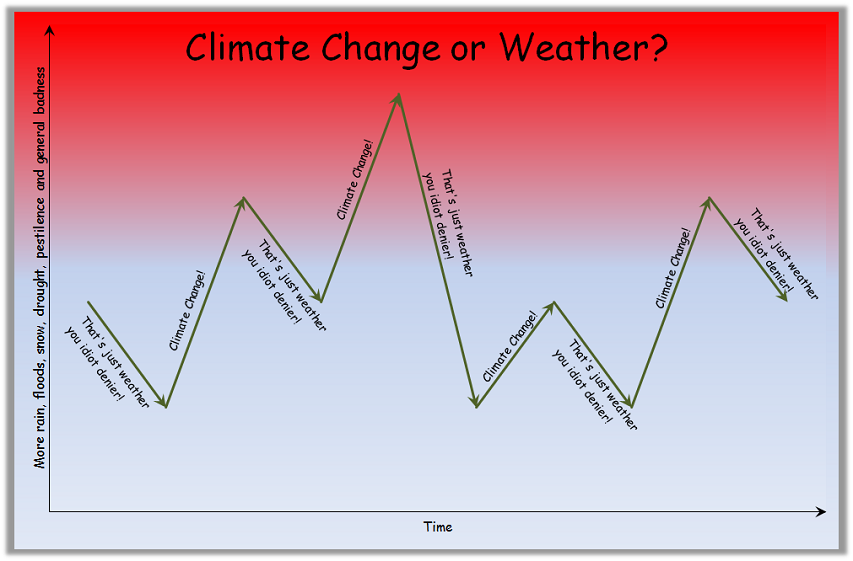
The climate alarmists long ago gave up honest scientific reporting

Filed under: Environment, Government, Media, Politics, Science, USA — Tags: , , — Nicholas @ 05:00

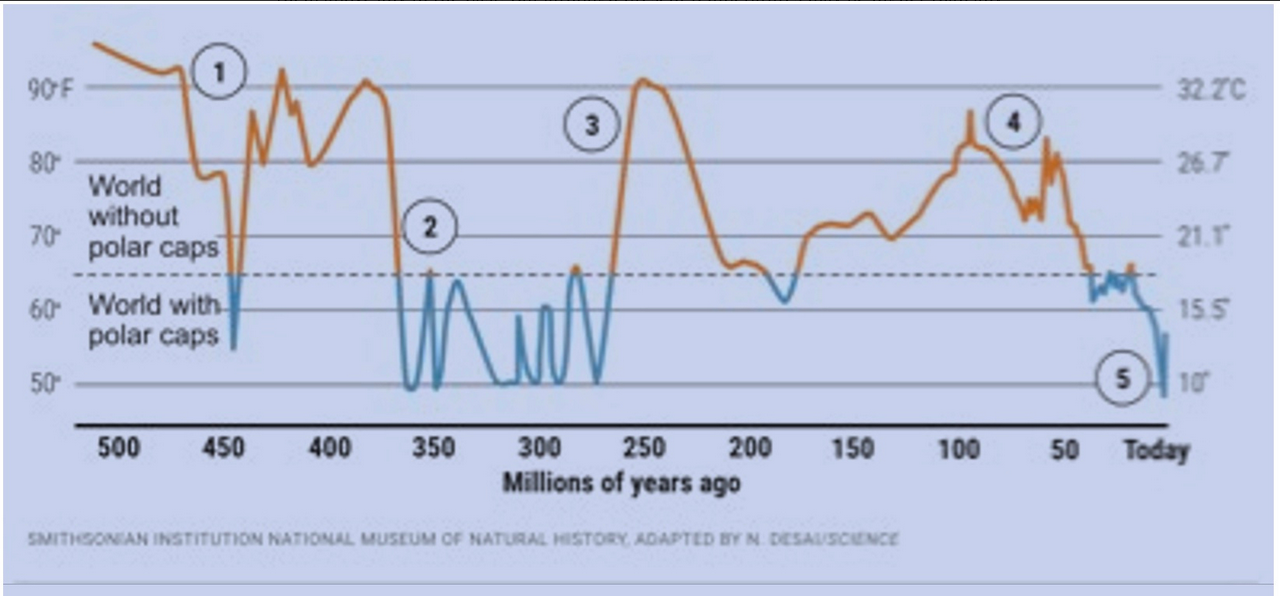
Tom Knighton says he used to fully buy in to the climate alarmist message, but eventually realized the fix had been in for years, especially when it came to the predictive ability of all the climate change models … as in, their total lack of predictive ability:

When Al Gore’s An Inconvenient Truth came out, I watched it. I was terrified by the world being described, and since I was still pretty liberal and sort of an environmentalist, I took it all to heart.

Over time, as my personal politics shifted, I still had concerns regarding climate change. After all, it is what it is, right?

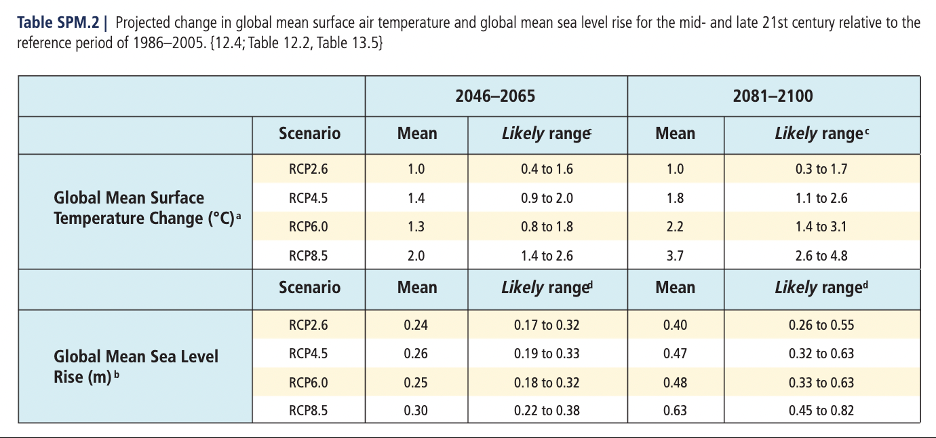
Until I came to look deeper into the issue and the one thing that shattered my belief in the whole concept: The fact that not a single climate model has ever panned out as predicted despite pretty much none of the draconian measures we’re told we need in order to avert disaster ever coming to fruition.

Science is supposed to be predictive. If it can’t predict something in its models, then scientists need to back up and figure out what the problem is. Instead, they seemingly just keep doubling down.

[…]

Let’s be clear here, the idea of taking measurements in heat islands is freshman year stuff. There’s absolutely no way they’re unaware the effect that’s having on their readings, even as most of their instruments are subject to heat bias.

In other words, I can’t accept this is a good faith error.

No, I believe this to be malicious.

Climatology isn’t exactly a field of science that would ever be considered sexy. Before all the climate alarmism, research grants were likely few and far between. People weren’t overly worried about the climate because it simply ways.

Then scientists started screaming that we were all doomed. The end is nigh, they told us, screaming at the top of their lung and acting just shy of wearing a sandwich board in Times Square.

With that came money and prestige.

Suddenly, climatologist could get recognition and write bestselling books. They could get grants from everyone and their brother to fund their research. The thing is, they had to keep up the charade. People had to believe that we were going to die if we didn’t do something.

Maybe they actually want the draconian measures they suggest, measures that pretty much amount to going back to living in mud huts, but with solar- and wind-created electricity so we won’t need to burn wood to survive.

Or something.

« Newer PostsOlder Posts »

Powered by WordPress