Quotulatiousness

January 18, 2024

QotD: Scientific fraud

Filed under: Quotations, Science — Tags: , , , — Nicholas @ 01:00

In sorting out these feelings, I start from the datum that scientific fraud feels to me like sacrilege. Plausible reports of it make me feel deeply angry and disgusted, with a stronger sense of moral indignation than I get about almost any other sort of misbehavior. I feel like people who commit it have violated a sacred trust.

What is sacred here? What are they profaning?

The answer to that question seemed obvious to me immediately when I first formed the question. But in order to explain it comprehensibly to a reader, I need to establish what I actually mean by “science”. Science is not a set of answers, it’s a way of asking questions. It’s a process of continual self-correction in which we form theories about what is, check them by experiment, and use the result to improve our theories. Implicitly there is no end to this journey; anything we think of as “truth” is merely a theory that has had predictive utility so far but could be be falsified at any moment by further evidence.

When I ask myself why I feel scientific fraud is like sacrilege, I rediscover on the level of emotion something I have written from an intellectual angle: Sanity is the process by which you continually adjust your beliefs so they are predictively sound. I could have written “scientific method” rather than “sanity” there, and that is sort of the point. Scientific method is sanity writ large and systematized; sanity is science in the small personal domain of one’s own skull.

Science is sanity is salvation – it’s how we redeem ourselves, individually and collectively, from the state of ignorance and sin into which we were born. “Sin” here has a special interpretation; it’s the whole pile of cognitive biases, instinctive mis-beliefs, and false cultural baggage we’re wired with that obstruct and weigh down our attempts to be rational. But my emotional reaction to this is, I realize, quite like that of a religious person’s reaction to whatever tribal superstitious definition of “sin” he has internalized.

I feel that scientists have a special duty of sanity that is analogous to a priest’s special duty to be pious and virtuous. They are supposed to lead us out of epistemic sin, set the example, light the way forward. When one of them betrays that trust, it is worse than ordinary stupidity. It damages all of us; it feeds the besetting demons of ignorance and sloppy thinking, and casts discredit on scientists who have remained true to their sacred vocation.

Eric S. Raymond, “Maybe science is my religion, after all”, Armed and Dangerous, 2011-05-18.

January 16, 2024

QotD: Children and transgenderism

Filed under: Education, Health, Politics, Quotations, Science — Tags: , , , , , — Nicholas @ 01:00

And then there is the disturbing “social justice” response to gender-nonconforming boys and girls. Increasingly, girly boys and tomboys are being told that gender trumps sex, and if a boy is effeminate or bookish or freaked out by team sports, he may actually be a girl, and if a girl is rough and tumble, sporty, and plays with boys, she may actually be a boy.

In the last few years in Western societies, as these notions have spread, the number of children identifying as trans has skyrocketed. In Sweden, the number of kids diagnosed with gender dysphoria, a phenomenon stable and rare for decades, has, from 2013 to 2016, increased almost tenfold. In New Zealand, the rate of girls identifying as boys has quadrupled in the same period of time; in Britain, where one NHS clinic is dedicated to trans kids, there were around a hundred girls being treated in 2011; by 2017, there were 1,400.

Possibly this sudden surge is a sign of pent-up demand, as trans kids emerge from the shadows, which, of course, is a great and overdue thing. The suffering of trans kids can be intense and has been ignored for far too long. But maybe it’s also some gender non-conforming kids falling prey to adult suggestions, or caused by social contagion. Almost certainly it’s both. But one reason to worry about the new explosion in gender dysphoria is that it seems recently to be driven by girls identifying as boys rather than the other way round. Female sexuality is more fluid and complex than male sexuality, so perhaps girls are more susceptible to ideological suggestion, especially when they are also taught that being a woman means being oppressed.

In the case of merely confused or less informed kids, the consequences of treatment can be permanent. Many of these prepubescent trans-identifying children are put on puberty blockers, drugs that suppress a child’s normal hormonal development, and were originally designed for prostate cancer and premature puberty. The use of these drugs for gender dysphoria is off-label, unapproved by the FDA; there have been no long-term trials to gauge the safety or effectiveness of them for gender dysphoria, and the evidence we have of the side effects of these drugs in FDA-approved treatment is horrifying. Among adults, the FDA has received 24,000 reports of adverse reactions, over half of which it deemed serious. Parents are pressured into giving these drugs to their kids on the grounds that the alternative could be their child’s suicide. Imagine the toll of making a decision about your child like that?

Eighty-five percent of gender-dysphoric children grow out of the condition — and most turn out to be gay. Yes, some are genuinely trans and can and should benefit from treatment. And social transition is fine. But children cannot know for certain who they are sexually or emotionally until they have matured past puberty. Fixing their “gender identity” when they’re 7 or 8, or even earlier, administering puberty blockers to kids as young as 12, is a huge leap in the dark in a short period of time. It cannot be transphobic to believe that no child’s body should be irreparably altered until they are of an age and a certainty to make that decision themselves.

I don’t have children, but I sure worry about gay kids in this context. I remember being taunted by some other kids when I was young — they suggested that because I was mildly gender-nonconforming, I must be a girl. If my teachers and parents and doctors had adopted this new ideology, I might never have found the happiness of being gay and comfort in being male. How many gay kids, I wonder, are now being led into permanent physical damage or surgery that may be life-saving for many, but catastrophic for others, who come to realize they made a mistake. And what are gay adults doing to protect them? Nothing. Only a few ornery feminists, God bless them, are querying this.

In some ways, the extremism of the new transgender ideology also risks becoming homophobic. Instead of seeing effeminate men as one kind of masculinity, as legitimate as any other, transgenderism insists that girliness requires being a biological girl. Similarly, a tomboy is not allowed to expand the bandwidth of what being female can mean, but must be put into the category of male. In my view, this is not progressive; it’s deeply regressive. There’s a reason why Iran is a world leader in sex-reassignment surgery, and why the mullahs pay for it. Homosexuality in Iran is so anathema that gay boys must be turned into girls, and lesbian girls into boys, to conform to heterosexual norms. Sound a little too familiar?

Adults are increasingly forced to obey the new norms of “social justice” or be fired, demoted, ostracized, or canceled. Many resist; many stay quiet; a few succumb and convert. Children have no such options.

Indoctrinate yourselves as much as you want to, guys. It’s a free country. But hey, teacher — leave those kids alone.

Andrew Sullivan, “When the Ideologues Come for the Kids”, New York Magazine, 2019-09-20.

January 14, 2024

QotD: The misleading wisdom of the ancient world

Filed under: Europe, History, Quotations, Science, Technology — Tags: , — Nicholas @ 01:00

It is difficult for us, today, to take some of the teachings of the ancients seriously. The ancient Greeks believed, for example, that peacock flesh did not rot, and that various small creatures — think mice, maggots, and clams — spontaneously generated from inanimate matter like wheat, meat, and sand.

These seem, today, to be so obviously wrong that our ancestors seem stupid. But they were not. Have you, for example, ever actually observed a mouse being born? And if you’d never seen a peacock, might you not also believe that its flesh really does not rot? We generally do, even now, take our facts on authority, trusting that somebody, somewhere, has observed them or performed the relevant experiments and found them to be true. In fact, things can get all the more convincing when we try the experiments ourselves. I described last week how the rapid “growth” of metals in certain solutions seemed to confirm the theory that they also grew, albeit much more slowly, underground. Or take Jan-Baptiste van Helmont, who in the early seventeenth century reported that, having placed some wheat and a sweaty shirt in a barrel, lo and behold, a few days later there appeared some mice. Spontaneous generation confirmed! (He also, somehow, found that small scorpions spontaneously generated from placing basil under a brick in the sun.) In fact, the persistence of spontaneous generation as a theory should give us pause — although it was tested from the seventeenth century onwards, it was only finally completely debunked by Louis Pasteur in the 1860s.

How could the authority of the ancients be so potent for so long? Well, consider the context. Today, in a world of skyscrapers, indoor plumbing, and the widespread use of horse-less metal chariots, we rarely think that the ancients were in any way more advanced than us. We would, automatically, question them. In the sixteenth and seventeenth centuries, however, in a world of wooden houses, dirt floors, and carts, then the still-standing achievements of the ancients must have been mind-blowing: centuries-old pyramids, aqueducts, amphitheatres, and arenas, not to mention the written accounts of technologies long lost. Archimedes had allegedly set fire to Roman ships at the siege of Syracuse in the 3rd century BCE, using only mirrors focusing the sun’s beams. Archytas had apparently made a flying pigeon out of wood, and Daedalus had achieved human flight. Perhaps Vulcan’s legendary army of iron men might have been real automata.

Anton Howes, “Trusting the Ancients”, Age of Invention, 2019-10-10.

January 13, 2024

It’s not lying lying

Filed under: Britain, Environment, Media — Tags: , , , , , — Nicholas @ 03:00

Paul Homewood on how Brits are propagandized through slanted reporting on the weather (which has always been a topic of interest in the British Isles):

Storm Gerrit arrived the day after Boxing Day, accompanied by the usual headlines: “85mph gales barrelled down on Britain”, screamed the Daily Mail.

As usual the public were being deliberately deceived. The 85mph claim was based on one site in North East Scotland, at the top of a 400ft cliff overlooking the North Sea, marked in red below.

Inverbervie, Kincardineshire

A few miles away at sea level average wind speeds never got above 30mph. The Met Office never reports any of this, preferring to publish its favourite sites on clifftops or halfway up mountains.

It was the same story a week later, when another system of low pressure came along to be given yet another silly name, “Henk”.

“94mph winds pummel the UK”, shrieked the Mirror. This time the wind speeds were measured on the Met Office’s go-to weather station, the Needles, off the Isle of Wight. As this column has discussed before, the Needles sit at the end of a long, narrow peninsula, and the station is on top of a 260ft cliff. Winds there are routinely 30mph higher than even exposed sites nearby, such as St Catherine’s Point. Meanwhile average winds inland were typically around 30mph.

It rained as well last week! During the two days of Storm Henk, about an inch fell in parts of southern and central England. There is nothing at all unusual about this amount; it is the sort of thing which happens every year. Because the ground was already saturated, following wet weather last month, there was inevitably some flooding. But, for the most part, this was little more than flooded fields, overflowing river banks and localised flooding. Again, normal scenes in England. And as Patrick Benham-Crosswell pointed out in TCW this week, many houses built on flood plains were once again flooded. There was certainly none of the major river flooding which has hit the country many times in the past.

According to the Environment Agency, about 2,000 properties were flooded, a tragedy for everybody involved. But in overall terms, this is a tiny number. For instance, 55,000 were flooded in 2007.

Inevitably, the media jumped to blame it all on climate change. According to ITV: “Henk is the eighth named storm to have hit the country this winter and the pattern is likely to continue due to the effects of climate change. ‘This is climate change and the impacts we are seeing,’ the Environment Agency’s Tom Paget added. ‘We are seeing these increasingly wet and blustery winters. We are seeing storm upon storm which is exacerbating the issues’.”

Claims like this explain why the Met Office decided to start giving every low-pressure system a silly name back in 2015. But as it admitted in its State of the UK Climate last year, storms used to be much stronger:

    The most recent two decades have seen fewer occurrences of max gust speeds above these thresholds [40, 50, 60 kts] than during the previous decades, particularly comparing the period before and after 2000.

    This earlier period [before 2000] also included among the most severe storms experienced in the UK in the observational records including the “Burns Day Storm” of 25 January 1990, the “Boxing Day Storm” of 26 December 1998 and the “Great Storm” of 16 October 1987. Storm Eunice in 2022 was the most severe storm to affect England and Wales since February 2014, but even so, these storms of the 1980s and 1990s were very much more severe.

Nor is there any evidence that December or the autumn last year were unusually wet.

We look like getting a few weeks of cold, dry weather from now on – so expect drought warnings soon!

January 12, 2024

“… normal people no longer trust experts to any great degree”

Theophilus Chilton explains why the imprimatur of “the experts” is a rapidly diminishing value:

One explanation for the rise of midwittery and academic mediocrity in America directly connects to the “everybody should go to college” mantra that has become a common platitude. During the period of America’s rise to world superpower, going to college was reserved for a small minority of higher IQ Americans who attended under a relatively meritocratic regime. The quality of these graduates, however, was quite high and these were the “White men with slide rules” who built Hoover Dam, put a man on the moon, and could keep Boeing passenger jets from losing their doors halfway through a flight. As the bar has been lowered and the ranks of Gender and Queer Studies programs have been filled, the quality of college students has declined precipitously. One recent study shows that the average IQ of college students has dropped to the point where it is basically on par with the average for the general population as a whole.

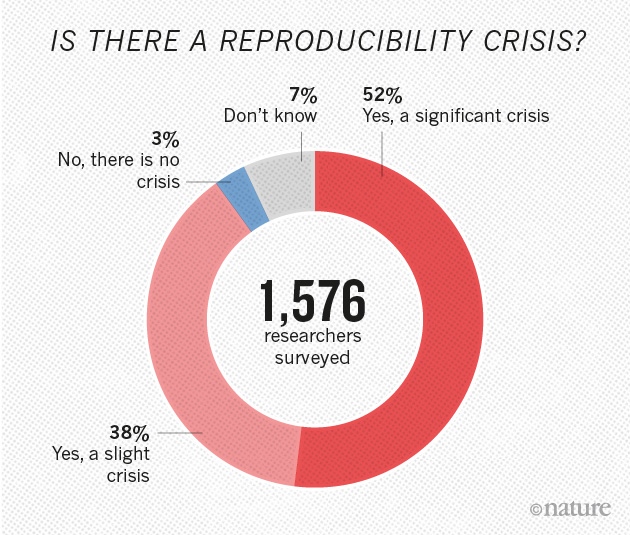
Another area where this comes into play is with the replication crisis in science. For those who haven’t heard, the results from an increasingly large number of scientific studies, including many that have been used to have a direct impact on our lives, cannot be reproduced by other workers in the relevant fields. Obviously, this is a problem because being able to replicate other scientists’ results is sort of central to that whole scientific method thing. If you can’t do this, then your results really aren’t any more “scientific” than your Aunt Gertie’s internet searches.

As with other areas of increasing sociotechnical incompetency, some of this is diversity-driven. But not wholly so, by any means. Indeed, I’d say that most of it is due to the simple fact that bad science will always be unable to be consistently replicated. Much of this is because of bad experimental design and other technical matters like that. The rest is due to bad experimental design, etc., caused by overarching ideological drivers that operate on flawed assumptions that create bad experimentation and which lead to things like cherry-picking data to give results that the scientists (or, more often, those funding them) want to publish. After all, “science” carries a lot of moral and intellectual authority in the modern world, and that authority is what is really being purchased.

It’s no secret that Big Science is agenda-driven and definitely reflects Regime priorities. So whenever you see “New study shows the genetic origins of homosexuality” or “Latest data indicates trooning your kid improves their health by 768%,” that’s what is going on. REAL science is not on display. And don’t even get started on global warming, with its preselected, computer-generated “data” sets that have little reflection on actual, observable natural phenomena.

“Butbutbutbut this is all peer-reviewed!! 97% of scientists agree!!” The latter assertion is usually dubious, at best. The former, on the other hand, is irrelevant. Peer-reviewing has stopped being a useful measure for weeding out spurious theories and results and is now merely a way to put a Regime stamp of approval on desired result. But that’s okay because the “we love science” crowd flat out ignores data that contradict their presuppositions anywise, meaning they go from doing science to doing ideology (e.g. rejecting human biodiversity, etc.). This sort of thing was what drove the idiotic responses to COVID-19 a few years ago, and is what is still inducing midwits to gum up the works with outdated “science” that they’re not smart enough to move past.

If you want a succinct definition of “scientism,” it might be this – A belief system in which science is accorded intellectual abilities far beyond what the scientific method is capable of by people whose intellectual abilities are far below being able to understand what the scientific method even is.

January 10, 2024

The unexpected rise in “Unknown Cause”

Filed under: Cancon, Health, Media, USA — Tags: , , , , , — Nicholas @ 04:00

Mark Steyn rounds up some interesting details on that long-forgotten-by-the-media pandemic and corresponding heavy-handed government interventions that made things so much worse:

The obvious problem with appeals to authority, at least for anyone more sentient than an earthworm, is that across the western world the last four years have been one giant appeal to authority – and the result of mortgaging the entirety of human existence to the expert class is the rubble all around. Just for starters:

US scientists held secret talks with Covid ‘Batwoman’ amid drive to make coronaviruses more deadly

You don’t say! When would that have been? Oh:

…just before pandemic

Well, there’s a surprise!

    A new cache of documents, obtained by Freedom of Information campaigners and seen by The Mail on Sunday, reveal the extent to which the controversial work at the Wuhan Institute of Virology was supported, and often funded, by America.

You got that right. Wuhan is the virological equivalent of a CIA black site in Pakistan: it’s where the Deep State goes to do the stuff it can’t do in suburban Virginia.

So how’s that working out for the planet? Way back in 2022, The Mark Steyn Show reported that “Unknown Cause” was now the leading cause of death in Alberta. According to the somewhat lethargic lads at Statistics Canada, taking eighteen month to catch up with yours truly, that same year it was the fourth leading cause of death across the entire country. “Unknown Cause” is rampaging from Nunavut igloos to the Hamas branch office in Montreal: Between 2019 and 2022, it was up almost five hundred per cent.

Does “Unknown Cause” have an awareness-raising ribbon like Aids or breast cancer? Are there any celebs who’d like to headline a gala fundraiser or do an all-star pop anthem?

Apparently not. Gee, it’s almost as if taking too great an interest in “Unknown Cause” can lead to a bad case of cancer of the career. Nevertheless, the official StatsCan numbers are, to put it at its mildest, odd. By the end of 2022, Canada was one of the most jabbed nations on earth, with a Covid vaccination rate of ninety-one per cent, the highest in the G7, by some distance (UK and US both at eighty per cent).

And yet, if these government numbers are to be believed, something very strange happened. In the most jabbed member of the G7, Covid deaths went up. As The Western Standard‘s Joseph Fournier noticed, while almost nobody else did, Covid deaths per annum across the Deathbed Dominion shot up 25 per cent from the days of curfews, and arrests for playing open-air hockey:

    2020 15,890

    2021 14,466

    2022 19,716

So, in Jabba Jabba Central, more people died of Covid in the most recent annual round-up than at the height of the pandemic. In fact, on those numbers, Canada has yet to reach “the height of the pandemic”. Here’s another striking feature – again, direct from Statistics Canada:

    During the first year of the pandemic, older Canadians (65 years of age and older) accounted for 94.1% of COVID-19 deaths, while those aged 45 to 64 years accounted for 5.3%. In 2021, while the number of COVID-19 deaths among individuals aged 65 years and older (82.0%) remained high, the proportion of deaths among those aged 45 to 64 years nearly tripled to 15.5%.

So, in the most vaxxed nation of the G7, middle-aged persons account for three times the proportion of Covid deaths than they did at “the height of the pandemic”.

Like I said: odd.

Canadian life expectancy? Down. Oh, just by four months or so. But that’s three times the size of last year’s drop.

Excess mortality? Indeed: In 2019 the age-standardised death rate was 830.5 per 100,000 people. In 2022 it was 972.5. As I’ve pointed out a gazillion times on telly, that’s the opposite of what’s meant to happen post-pandemic: After the Spanish Flu, the mortality rate fell because people who would otherwise have died in 1924 had already died in 1919. That phenomenon is visible in Eastern Europe, but nowhere in the Dominion of Death.

Last year I mentioned en passant to my friend Naomi Wolf that the Covid vaccines were beginning to remind me of the scandals of her old chum Bill Clinton: one such can do a politician in, but, if you have (as Slick Willy did) a multitude of ’em, who can follow it all? If Pfizer, Moderna and AstraZeneca just caused, say, myocarditis, maybe people would find it easier to focus on. Instead, it causes myocarditis in men and infertility in women and, if you manage to dodge the latter, the mRNA shows up in newborn babies; it brings on Guillain–Barré syndrome and Ramsay Hunt syndrome and lightning-speed turbo-cancers. Alternatively, you could get a dose of the SADS and drop dead on stage or on the footie pitch, or at home watching the telly. It’s a lot to keep track of.

Or maybe, as in Alberta, you just die of … whatever. And nobody cares to find out.

January 9, 2024

QotD: Women versus PUAs

Filed under: Health, Quotations — Tags: , , , — Nicholas @ 01:00

I don’t think the PUA crowd has any solution to the problem of how men and women can stop treating each other like shit. Nor do they claim to; the PUA attitude is that you just have to play your cards as best you can under a set of constraints that is intrinsically tragic. But I think the spotlight glare they’re putting on actual mating behavior — as opposed to the lies we tell ourselves about how we behave, or how we think we ought to behave — is a valuable first step.

The truth hurts, but it also helps. Understanding that you’re being yanked around in unhelpful ways by your instincts is the necessary first step to gaining more control of your choices. This is why I think the people who should be paying most attention to PUA theory are women — and not for the most obvious defensive reasons, either.

If you are female, you may be thinking “OK, I should learn game so jerks won’t be able to play me”. Well, that’s nice, but almost completely irrelevant. Because what both evolutionary psych and PUA tell us is that in cold fact you want to be played by an alpha – and failing that, at least someone a bit taller, a bit older, a bit smarter, and a bit higher-status than you. The fact that you want to be better at detecting imitation alphas changes nothing essential; women have been polishing that counter-game as long as men have been practicing theirs.

No. The reason women need be paying attention to PUA goes much deeper than just notching up another escalation in the jerk-vs.-bitch arms race. It’s because until women stop lying to themselves about their actual behavior, they won’t have any prayer of becoming self-aware enough to change the sexual reward pattern they present to men. In pervasive female self-honesty begins the only hope of not training up more generations of jerks. And it’s there that the pitiless, revealing glare of the PUA spotlight might help.

Yes, I know what kind of reflexive screaming that last paragraph is going to trigger. Feminists will lash at me for suggesting that this is womens’ problem to solve; shouldn’t at least half the burden of self-awareness and change fall on men?

In fact, it can’t be that way, and it can’t be for a brutally simple reason. If you are reading this, you are almost certainly a member of a culture in which women have far more power to control mens’ sexual experience than the reverse. The only exceptions to this rule have been barbaric hellholes in which women were treated as chattel.

Ladies, with having more power over sexual outcomes there comes more responsibility. And there’s this, too; just suppose the great mass of men stopped thinking with their dicks and 99% of them suddenly became sensitive New Age guys eager to commit. Until most women stopped being cruel to betas and rewarding men who behave like dominating jerks with sex, nothing … nothing would change. PUA game would still work. The tragedy to which it is a minimax response would still be in motion.

I don’t have any final answers either. But, gentle reader … if you’re a beta male and not a natural, learning some PUA game might sound icky but it would sure beat masturbating to porn for the rest of your life. And if you’re female, think hard about the last guy you slept with and the last guy you friend-zoned. Maybe you owe yourself a rethink and friend-zone guy an apology, of the kind best delivered naked.

Eric S. Raymond, “A natural contemplates game”, Armed and Dangerous, 2011-03-03.

January 8, 2024

“[A]ll philosophers, insofar as they were dogmatic, have been very inexpert about women”

Filed under: Health, Media, Politics — Tags: , , — Nicholas @ 03:00

Theodore Dalrymple on the food police and the linguistic distortions forced on traditionally technical and scientific journalism:

The world, said James Boswell, is not to be made a great hospital; but to a hammer everything is a nail, and to doctors and medical journals everything is either a medical problem or a medical solution.

Looking at the website of the Journal of the American Medical Association today, I came across a paper with the title “Effect of an Intensive Food-as-Medicine Program on Health and Health Care Use”. It was published just above “A Young Pregnant Person With Old Myocardial Infarction”.

Could that pregnant person possibly be a woman? Heaven forfend that so prejudiced a thought should occur to us! If it occurred to you, dear reader, I suggest that your brain still needs washing. The word woman is here abjured by JAMA as completely as, say, it would abjure (rightly) the word bitch with reference to a woman. In other words, the word woman is now treated as if it were in itself an insult, a rather strange result of pro-feminist indoctrination.

The paper begins, “A patient in their 30s presented to the hospital …” No doubt I am deeply reactionary, almost a dinosaur in a world of mammals, but is not their the plural possessive adjective, and is not “a patient” singular? If the authors of the paper were really not sure whether the pregnant person was a man or a woman, surely they should have written “A pregnant person in his or her 30s …”? That would have been a step too absurd (so far) even for the editors of JAMA, assuming that the paper in question was published with some kind of editorial oversight. I anticipate further linguistic absurdity in JAMA with a mixture of amusement and irritation; that there will be one is a racing certainty (a Dutch friend of mine was going to write a book about Dutch social policy titled Creative Appeasement).

The paper, by the way, gives new meaning to the first two sentences of Nietzsche’s book Beyond Good and Evil: “Suppose truth to be a woman — what then? Are there not grounds for the suspicion that all philosophers, insofar as they were dogmatic, have been very inexpert about women?”

January 4, 2024

“It is difficult to understand why our politicians are not locked up for life after successful prosecution for crimes against humanity”

Filed under: Britain, Government, Health — Tags: , , , — Nicholas @ 03:00

Part nine of Paul Weston‘s “beginner’s guide to Covid”:

Lockdown was never referred to as “lockdown” in March 2020. We were “asked” to stay at home for a few weeks, thus allowing our health services to get up to speed without being swamped. As we now know, a few weeks became months became 2021.

I simply cannot believe this was not planned. The logistics involved in keeping a country afloat after closing down the economy are extremely complicated. Months – if not years – of planning must have gone into it.

One of the strangest things about the first lockdown in the UK was the enforcement date of March 26, one week after the government declared on March 19 that Covid-19 was being downgraded from a High Consequence Infectious Disease (HCID). The reason given for the downgrade was a low mortality rate …

Anyway, the world locked down. When it became apparent the lockdowns were going to stay in place until a miracle vaccine was discovered, the governments promised us that detailed cost/benefit analyses would be conducted. They never were. But they very much should have been.

The principal reason they should is all to do with deaths. Closing down the country also meant partially closing down health services to non-Covid patients. Inculcating fear meant many people were too scared to go anywhere near a hospital. Patients with cancer and heart problems stayed away, voluntarily or involuntarily. Many died as a result.

On July 19 2020, the Daily Telegraph published an article based on Office for National Statistics figures claiming that 200,000 people could die (mid to long term) in the UK due to lockdowns. Similar figures were published in countries all around the world.

Here is a brutal truth. Governments which locked down essentially stated the following: “We are going to murder XYZ thousand people. We undertake this crime because we think we might save other people from Covid-19 deaths.”

Even more remarkably, the death rates were completely normal before lockdowns were initiated. Lockdowns were not the forced result of having to deal with large numbers of deaths. Rather, large numbers of deaths were the forced result of government-ordained lockdowns. It is difficult to understand why our politicians are not locked up for life after successful prosecution for crimes against humanity.

January 3, 2024

“One of the oddities of trans healthcare is that it masquerades as progressive”

Filed under: Books, Health, History, Politics — Tags: , , , , — Nicholas @ 04:00

In The Critic, Victoria Smith outlines the history of medical misogyny from Aristotle to modern-day “trans healthcare”:

The neglect of female bodies in medicine has a long history. The male-default bias, writes Caroline Criado Perez in Invisible Women, “goes back at least to the ancient Greeks, who kicked off the trend of seeing the female body as a ‘mutilated male’ body (thanks, Aristotle)”:

    The female was the male ‘turned outside in’. Ovaries were female testicles (they were not given their own name until the seventeenth century) and the uterus was the female scrotum. […] The male body was an ideal women failed to live up to.

As Criado Perez notes, this bias lives on in male-centric medical research and undifferentiated treatment recommendations. “Women are dying,” she notes, “as a result of the gender data gap.” The belief that there is nothing specifically different about female people — cut a bit here, add a bit there, and we’re the same as men — has led to our symptoms being ignored and our pain dismissed.

Over the past few years, there have been a number of books — Elinor Cleghorn’s Unwell Women, Cat Bohannon’s Eve, Leah Hazzard’s Womb, to name a few — which have aimed to correct the imbalance. This is important both to save lives and ease suffering, and because, on a very basic level, it is insulting for half the human race to have our bodies treated as lesser, imperfect versions of a male ideal. We are more than that. We exist in our own right.

There are many in medicine, however, who still seem to think that Aristotle was right. Last week, for instance, the World Health Organisation announced it would be developing new guidelines into “the health of trans and gender diverse people”. While this might sound positive, as Eliza Mondegreen notes, many of those leading the development group hold highly regressive views about sex, gender and bodies. It is only possible to believe that a person could change sex if you have not given much consideration to the “second” sex at all.

One of the oddities of trans healthcare is that it masquerades as progressive despite having evolved from — and continuing to rely on — an understanding of sex difference which is regressive, male-centric and superficial. Because no one wants to admit it, this has led to a plethora of articles along the lines of “Here’s Why Human Sex Is Not Binary” and “Sex Redefined: The Idea of 2 Sexes Is Overly Simplistic“. While these claim to be adding extra detail and nuance to our understanding, what they do in practice is revert back to privileging the male default. Sex is all so varied, all so different, they tell us, we might as well not bother setting any standards for what counts as “femaleness”. We’re all just human, aren’t we? Only some bodies have tended to be considered more human than others. Rebranding “the male default” “the sex spectrum” is a sneaky way of insisting, once again, that female people are nothing more than males with a few minor tweaks.

This is the new medical misogyny, built on the back of the old version. Unfortunately, because it positions itself as anti-conservative and even pro-feminist, many writers of texts that address the old version feel obliged to go along with the new. It’s not difficult to see why. Who wants their work to be undermined by bad faith accusations of transphobia? Isn’t it easier just to say “it’s clear that trans women are women” — as Bohannon has done — on the basis that at least this will enable you to challenge the centring of male bodies elsewhere?

QotD: Iron and steel

Filed under: History, Quotations, Science, Technology — Tags: , , , , , — Nicholas @ 01:00

I don’t want to get too bogged down in the exact chemistry of how the introduction of carbon changes the metallic matrix of the iron; you are welcome to read about it. As the carbon content of the iron increases, the iron’s basic characteristics – its ductility and hardness (among others) – changes. Pure iron, when it takes a heavy impact, tends to deform (bend) to absorb that impact (it is ductile and soft). Increasing the carbon-content makes the iron harder, causing it to both resist bending more and also to hold an edge better (hardness is the key characteristic for holding an edge through use). In the right amount, the steel is springy, bending to absorb impacts but rapidly returning to its original shape. But too much carbon and the steel becomes too hard and not ductile enough, causing it to become brittle.

Compared to the other materials available for tools and weapons, high carbon “spring steel” was essentially the super-material of the pre-modern world. High carbon steel is dramatically harder than iron, such that a good steel blade will bite – often surprisingly deeply – into an iron blade without much damage to itself. Moreover, good steel can take fairly high energy impacts and simply bend to absorb the energy before springing back into its original shape (rather than, as with iron, having plastic deformation, where it bends, but doesn’t bend back – which is still better than breaking, but not much). And for armor, you may recall from our previous look at arrow penetration, a steel plate’s ability to resist puncture is much higher than the same plate made of iron (bronze, by the by, performs about as well as iron, assuming both are work hardened). of course, different applications still prefer different carbon contents; armor, for instance, tended to benefit from somewhat lower carbon content than a sword blade.

It is sometimes contended that the ancients did not know the difference between iron and steel. This is mostly a philological argument based on the infrequency of a technical distinction between the two in ancient languages. Latin authors will frequently use ferrum (iron) to mean both iron and steel; Greek will use σίδηρος (sideros, “iron”) much the same way. The problem here is that high literature in the ancient world – which is almost all of the literature we have – has a strong aversion to technical terms in general; it would do no good for an elite writer to display knowledge more becoming to a tradesman than a senator. That said in a handful of spots, Latin authors use chalybs (from the Greek χάλυψ) to mean steel, as distinct from iron.

More to the point, while our elite authors – who are, at most dilettantish observers of metallurgy, never active participants – may or may not know the difference, ancient artisans clearly did. As Tylecote (op. cit.) notes, we see surface carburization on tools as clearly as 1000 B.C. in the Levant and Egypt, although the extent of its use and intentionality is hard to gauge to due rust and damage. There is no such problem with Gallic metallurgy from at least the La Tène period (450 BCE – 50 B.C.) or Roman metallurgy from c. 200 B.C., because we see evidence of smiths quite deliberately varying carbon content over the different parts of sword-blades (more carbon in the edges, less in the core) through pattern welding, which itself can leave a tell-tale “streaky” appearance to the blade (these streaks can be faked, but there’s little point in faking them if they are not already understood to signify a better weapon). There can be little doubt that the smith who welds a steel edge to an iron core to make a sword blade understands that there is something different about that edge (especially since he cannot, as we can, precisely test the hardness of the two every time – he must know a method that generally produces harder metal and be working from that assumption; high carbon steel, properly produced, can be much harder than iron, as we’ll see).

That said, our ancient – or even medieval – smiths do not understand the chemistry of all of this, of course. Understanding the effects of carbuzation and how to harness that to make better tools must have been something learned through experience and experimentation, not from theoretical knowledge – a thing passed from master to apprentice, with only slight modification in each generation (though it is equally clear that techniques could move quite quickly over cultural boundaries, since smiths with an inferior technique need only imitate a superior one).

Bret Devereaux, “Collections: Iron, How Did They Make It, Part IVa: Steel Yourself”, A Collection of Unmitigated Pedantry, 2020-10-09.

January 1, 2024

The largest telescope that will ever be built*

Filed under: Americas, Science, Space, Technology — Tags: , , — Nicholas @ 02:00

Tom Scott
Published 2 Oct 2023

The asterisk is important.
■ More on the ELT: @ESOobservatory https://eso.org

The Extremely Large Telescope, in Paranal, Chile, is probably going to be the largest optical telescope that will ever be constructed. I was invited out there by the UK Science and Technology Facilities Council and the European Southern Observatory, and I wasn’t going to turn down a chance like that.

📰 DISCLAIMER
While the STFC and ESO invited me and arranged the logistics after arrival into the Antofagasta region, I was not paid for this (not even my travel costs) and I have sole editorial control over the video. This is not an advert.
(more…)

December 26, 2023

The awe-inducing power of volcanoes

Ed West considers just how much human history has been shaped by vulcanology, including one near-extinction event for the human race:

A huge volcano has erupted in Iceland and it looks fairly awesome, both in the traditional and American teenager senses of the word.

Many will remember their holidays being ruined 13 years ago by the explosion of another Icelandic volcano with the epic Norse name Eyjafjallajökull. While this one will apparently not be so disruptive, volcano eruptions are an under-appreciated factor in human history and their indirect consequences are often huge.

Around 75,000 years ago an eruption on Toba was so catastrophic as to reduce the global human population to just 4,000, with 500 women of childbearing age, according to Niall Ferguson. Kyle Harper put the number at 10,000, following an event that brought a “millennium of winter” and a bottleneck in the human population.

In his brilliant but rather depressing The Fate of Rome, Harper looked at the role of volcanoes in hastening the end of antiquity, reflecting that “With good reason, the ancients revered the fearsome goddess Fortuna, out of a sense that the sovereign powers of this world were ultimately capricious”.

Rome’s peak coincided with a period of especially clement climatic conditions in the Mediterranean, in part because of the lack of volcanic activity. Of the 20 largest volcanic eruptions of the last 2,500 years, “none fall between the death of Julius Caesar and the year AD 169”, although the most famous, the eruption of Vesuvius in AD 79, did. (Even today it continues to reveal knowledge about the ancient world, including a potential treasure of information.)

However, the later years of Antiquity were marked by “a spasm” of eruptions and as Harper wrote, “The AD 530s and 540s stand out against the entire late Holocene as a moment of unparalleled volcanic violence”.

In the Chinese chronicle Nan Shi (“The History of the Southern Dynasties”) it was reported in February 535 that “there twice was the sound of thunder” heard. Most likely this was a gigantic volcanic explosion in the faraway South Pacific, an event which had an immense impact around the world.

Vast numbers died following the volcanic winter that followed, with the year 536 the coldest of the last two millennia. Average summer temperature in Europe fell by 2.5 degrees, and the decade that followed was intensely cold, with the period of frigid weather lasting until the 680s.

The Byzantine historian Procopius wrote how “during the whole year the sun gave forth its light without brightness … It seemed exceedingly like the sun in eclipse, for the beams it shed were not clear”. Statesman Flavius Cassiodorus wrote how: “We marvel to see now shadow on our bodies at noon, to feel the mighty vigour of the sun’s heat wasted into feebleness”.

A second great volcanic eruption followed in 540 and (perhaps) a third in 547. This led to famine in Europe and China, the possible destruction of a city in Central America, and the migration of Mongolian tribes west. Then, just to top off what was already turning out to be a bad decade, the bubonic plague arrived, hitting Constantinople in 542, spreading west and reaching Britain by 544.

Combined with the Justinian Plague, the long winter hugely weakened the eastern Roman Empire, the combination of climatic disaster and plague leading to a spiritual and demographic crisis that paved the way for the rise of Islam. In the west the results were catastrophic, and urban centres vanished across the once heavily settled region of southern Gaul. Like in the Near East, the fall of civilisation opened the way for former barbarians to build anew, and “in the Frankish north, the seeds of a medieval order germinated. It was here that a new civilization started to grow, one not haunted by the incubus of plague”.

December 19, 2023

Behind enemy lines at the WPATH symposium

Filed under: Cancon, Health, Media, Politics — Tags: , , , , — Nicholas @ 05:00

Eliza Mondegreen reports her experiences at the World Professional Association for Transgender Health gathering in Montreal last year:

This was no ordinary medical conference. Over the course of three days, I learned a great many things. That eunuchs are one of the world’s oldest gender identities and that doctors should not judge their strange desires for castration but fulfil them. That, “ideally, patients wouldn’t be actively psychotic” when they initiated testosterone, but that psychotic patients consent to take medication like stool softeners and statins all the time and “people don’t pay that much attention”. That it would be “ableist” to question an autistic girl’s insistence on a double mastectomy. That patients who claim to have multiple personalities that disagree about which irreversible steps to take toward transition can find consensus — or at least obtain a quorum — using a smartphone app.

It is hard to shock me these days — but as I moved around the World Professional Association for Transgender Health’s symposium in Montreal in September 2022, I often felt as if I’d slipped sideways into some strange universe that operated in accordance with other laws: where up is down and girls are boys and medicine has left its modest brief — healing — far behind in its breathless pursuit of transcendence.

I wasn’t really supposed to be there. I hadn’t misrepresented myself — I am what I claimed to be: a graduate student researching gender identity — but this was a convocation for believers and I’m a sceptic. When WPATH, the world’s most prestigious and influential gathering in transgender healthcare, came to Montreal, I couldn’t resist the opportunity to see up close the people and ideas I had pursued through so many articles and books.

[…]

It’s difficult to imagine clinicians practising in other areas of medicine not asking such basic questions, especially when the basis for treatment is so murky. But a good gender clinician, looking at a patient, does not see what non-believers like you or I might see. A good clinician falls under the sway of the same fantasy as the patient and conspires with her to bring her transgender self into existence. Under this framework, there is no “really trans” or not. There is only what the patient says and the readiness of the clinician to put herself at the service of the patient’s vision.

A bad gender clinician, by contrast, feels an “entitlement to know” why a patient feels the way she does or why she seeks a particular intervention. She clings to a traditional conception of her role as a “gatekeeper” who evaluates and prescribes. She thinks she can “discern a ‘true’ gender identity beyond what is articulated by the patient”. She may believe she can “identify the ‘root cause’ of a transgender identity”, which is seen as pathologising. She may try to leave the door open to desistance — the most common outcome before gender clinicians started interfering with normal development by deploying puberty-blocking drugs — in which case she is guilty of “valuing cis lives over trans lives”.

A bad gender clinician is easily “intimidated” by complicated patients, while a good gender clinician knows how to secure consent even in the trickiest cases. Mental health difficulties become “mental health differences”. Severe autism or thinking you have multiple personalities living inside your head become empowering forms of “neurodiversity”. When it comes to assessment, “careful” and “comprehensive” have become dirty words: “The answer always seems to be more assessment and more time. That’s gatekeeping.”

During the Denver conference, presenters role-played how to secure informed consent for a hysterectomy and phalloplasty in the case of a schizophrenic, borderline autistic, intellectually disabled “demiboy” with a recent psychiatric hospitalisation. At no point do the role-players encounter any real barriers. Instead, they persevere. At first, the patient struggled to understand why a phalloplasty might require multiple surgeries, but then the clinicians “explained everything” and the patient understood. This is called “lean[ing] into the nuance of capacity”.

The moral of this story is clear: failure to achieve informed consent is a failure on the part of the clinician, a failure of imagination and flexibility, not a recognition that some patients — whether because of age or mental illness or intellectual disability — will simply not be able to consent.

December 17, 2023

How RFK, Jr. helped destroy British Columbia’s resource-based economy

Filed under: Cancon, Environment, Government, Media, Politics — Tags: , , , , , — Nicholas @ 05:00

Elizabeth Nickson found herself added to one of Robert F. Kennedy Jr.’s fundraising mailing lists:

Robert F. Kennedy, Jr. speaking in Urbana, Illinois on October 14, 2007.
Photo by Daniel Schwen via Wikimedia Commons.

I am on RFKJr’s campaign mailing list, probably through Children’s Health Defence and they asked me for money, and I said sure, just as soon as he fixes the catastrophe he caused in the province where I live.

Got a message back!

It read, “Elizabeth, I am sure Robert would fix whatever harm he caused, can you explain?”

No problem, I said.

1. In British Columbia, we had the largest industrial forest in the world

2. It paid for education and universal “free” health care.

3. The environmental left decided to shut it down.

4. The reason for their protest was that the government, as was common practice, had sold cutting permits with long leaseholds. A new socialist government announced it was pulling the permits and taking those forests back.

5. In order not to lose all the invested money, which they had not only paid for upfront and in annual leasing charges, but paid taxes on, some for decades, lessees immediately clear cut their lands. Clear cuts are ugly. (but they are fire breaks)

6. That triggered the protest.

7. RFK Jr came in under RiverKeepers and supercharged the protest. His celebrity and glamour made the protest major international news. I was in London, I heard about it. More kids joined the protest. And then more and more. Until the government caved. Would it have happened without his presence? I do not think so. He gave very young people who had no access to power, nor any hope of it, ever, a very heady hit of significance and their lives took on huge huge meaning. For many it remains the high point of their lives. Because for the province, it was all downhill from there. All promise vanished and a grinding slow growth followed.

8. Over the ensuing ten years, cutting was diminished and heavy regulation covered the rest. By 2002, written regulations piled on top of each other stood seven feet high, taller than a man.

9. Forested communities died.

10. 100,000 families lost their livelihood.

11. Resource jobs have huge multipliers, not only forested towns died, so did regional metropolitan centers. Greens, replete with success, hit other resource industries – mining, ranching – which died. More families bankrupted.

12. They were told to go into tourism.

13. Which pays minimum wage and can only support a family if everyone, even the children, work. And, it’s seasonal.

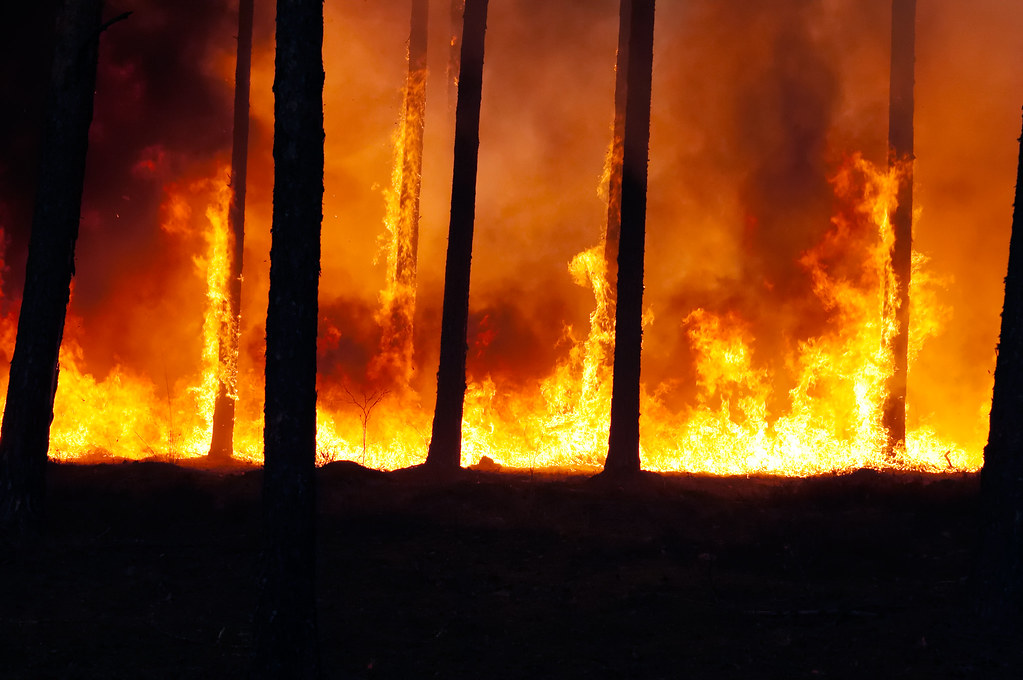
14. Over time, the unmanaged forests became clogged with overgrowth, little trees like carrots pulled all the water from the forest floor, desiccated the soil and then pulled water from aquifers. The forests became tinder. And increasingly every summer, they explode in fire.

15. The government needed money.

16. Casinos provided it.

17. Asian cartels – you cannot imagine how violent they are – moved in and used the casinos to launder most of the drug money from North America. They bribed immigration, they bribed city government, they threatened anyone who tried to stand in their way.

18. They were so successful, human trafficking and child sex trafficking shot up. We have the second largest port on the west coast of North and South America. Through it streams container loads of drugs and trafficked children and women. At the port, you just stand aside, if you want to live. You think most of the fentanyl comes in through Mexico? Nope. It comes in through us.

19. The cartels do pay taxes. You think Black Rock is bad? These guys kill if they don’t get what they want. They are buying every business they can, to launder money through. The cartels also launder money through real estate in the city. That means housing is insanely expensive and property taxes are sky high. Canadians can’t afford to buy houses or live in the ones they own. A family making a median income has to pay 100% of income to buy a median priced house.

20. Crime is a) a driver of the economy and b) a principal source of government revenue.

21. Green has destroyed the province.

And that, I am afraid, is what celebrities do. It is why they are so hated, and one of the reason Hollywood is dying. They destroy the lives of ordinary men and women, and then move on to greater heights. Their lives are so privileged, they have absolutely no idea how people make money. And RFKJr, mind-numbingly privileged from birth, is the same. When asked about climate change, he says it’s happening but taxes won’t work. “Regenerative agriculture” he says, vaguely. It is true, regenerative agriculture could capture a lot of carbon, the amount debatable but it has promise. But cutting regulation? He has no, zero, absolutely no idea of how regulation punishes the non-elites. His is a black hole of ignorance and that is common; a majority have zero idea. Zero.

« Newer PostsOlder Posts »

Powered by WordPress