Quotulatiousness

August 20, 2024

Folk tale fictions about childbirth in “traditional cultures”

Filed under: Books, Health, History — Tags: , , , — Nicholas @ 04:00

Jane Psmith finds that “everyone” has been doing certain “traditional” things during and after childbirth that she somehow wasn’t informed about until just a short while ago:

I just had a baby, which means I have once again been immersed in a sea of advice about how “traditional cultures” do things. And miraculously, every single kid, I discover some new practice I’ve never heard of but that apparently just everyone did until about five minutes ago. This time it was vaginal steaming. (Don’t Google, it’s exactly what it says on the tin.)

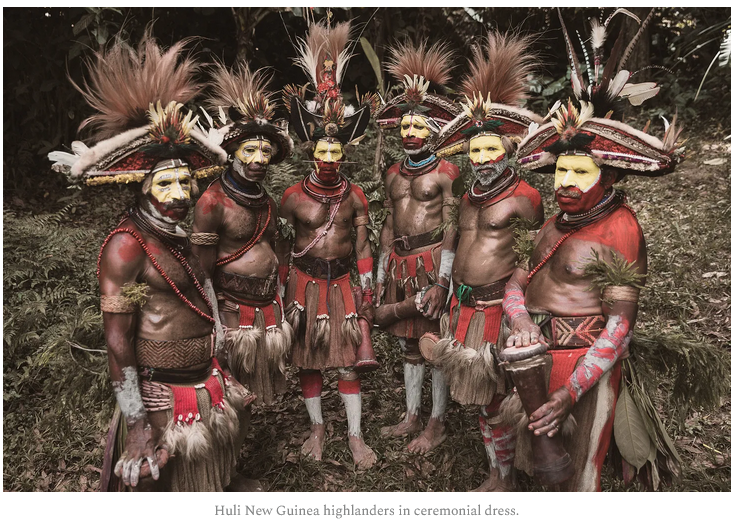
Which cultures, exactly? Oh, you know … the traditional ones, the ones whose folk wisdom is untrammeled by Western medicalization, where the pregnant woman is treated to the most nutritious foods, birth is a joyous event surrounded by supportive kin, the new mother puts her baby to the breast the minute he’s born, and she’s waited on hand-and-foot in bed for a month afterwards. So, you know, not the Ngongo of central Africa, who forbid women from eating meat, or the Netsilik Inuit or !Kung, both of whom send laboring women off to give birth in silent isolation, or any of the peoples from Fiji to northern Alberta who delay nursing for days … In fact, you might be excused if you began to suspect that the real measure of how “traditional” a culture is boils down to how much it resembles the practices of crunchy WEIRD people. You might even, if you had a nasty suspicious frame of mind, conclude that all this discussion of “traditional cultures” is just a disguised way of asserting our own preferences.

None of which is actually unique to the babies. (I’ve written about the babies before.) It’s not even unique to our era. The idea that we have been corrupted by civilization, that more primitive societies lead purer, nobler, more harmonious lives and enjoy access to truths and virtues we have lost, goes back millennia.1 And so, naturally, does the practice of using the supposed superiority of those other cultures as clubs to beat our own. Tacitus’ Germania, for instance, is a fun read if borderline useless as a source on the actual Germanic tribes — but it’s a wonderful guide to the angst of the early Empire and the pervasive fear that greed, luxury, and ambition had replaced the nobility, valor, and honor that had once characterized the Romans. Nowadays, of course, no one writes about the barbarians’ fides and virtus; instead you’ll get paeans to their idyllic existence lived in harmony with nature, their peaceful sense of community, and probably their joyful embrace of gender and sexual diversity. But either way, most of the books about small-scale societies are actually books about us and what the people writing the books think we lack.

Even professional anthropologists tend to assume that small-scale (this is a polite way of saying “primitive”) societies are more satisfying, meaningful, and fulfilling than complex ones. But in their case it goes hand in hand with another, allied assumption: that these societies have developed beliefs, practices, and institutions that work well for them. After all, the thinking goes, we know that people change their tools and their behavior when their environment changes, abandoning anything that no longer serves their needs and adopting new ways of life. Therefore, anything they haven’t abandoned must be somehow adaptive. Sure, these “primal communities” might do things that seem odd to us — things like torture, infanticide, ceremonial rape, cannibalism, and so forth — but they must serve some useful function or they wouldn’t have persisted. Thus, for example, the classic ethnography of the Navajo argues that their overwhelming fear of witchcraft, which led to pervasive anxiety, a hypochondriacal obsession with magical curing rituals, and of course regular violence perpetrated against suspected witches, actually had great benefits because it allowed the Navajo direct their stress and hostility at marginal members of the community and “keep the core of the society solid”.

The problem with this framework becomes obvious as soon as you mentally translate from some strange foreigners with funny (or no) clothes to, say, a business in the industrialized world. (Which can easily be larger than the kind of small-scale society that interests anthropologists.) No one would ever say, “Well, sure, the leadership of this company allows their mediocre employees to bully their highly productive peers out of the department so they do better in the stack ranking, but the company hasn’t gone bankrupt so it must be a savvy business move. Probably the solidarity created by banding together to surreptitiously delete someone else’s code enhances productivity more than losing a 10x engineer detracts from it …” But this is exactly what anthropologists (professional and armchair) are tempted to do when they set out to understand and explain another culture. Yes, sometimes apparently bizarre behavior contains a deep and hidden wisdom, but sometimes it’s just messed up.

That’s the case the late UCLA anthropologist Robert Edgerton set out to make in Sick Societies: that some primitive societies are not actually happy and fulfilled, that some of their beliefs and institutions are inadequate or actively harmful to their people, and that some of them are frankly on their way to cultural suicide. The mere fact that people keep doing something doesn’t mean it’s actually working well for them, but just as the market can stay irrational longer than you can stay solvent, your society can stay dysfunctional longer than you can stay alive.


    1. At least in the Occident. My informant tells me that the Noble Savage is a less common trope in, say, China. Maybe the Blue savages are just less noble.

August 15, 2024

QotD: The bitter fruit of deinstitutionalization

Filed under: Health, History, Law, Liberty, Quotations, USA — Tags: , , , — Nicholas @ 01:00

In 1963, JFK signed the Community Mental Health Act. Its order to close the state psychiatric hospitals was followed, and hundreds were shuttered; the community mental health centers that were meant to replace them were never built. With far fewer beds for a growing patient population it should not have surprised anyone that the streets gradually filled with the severely ill. But somehow, we were surprised. The state governments were mostly just grateful to save money that had once gone to mental healthcare. The passage of Medicaid two years later deepened the problem. Medicaid’s funding structure presented states with an opportunity to further offload costs, this time onto the federal government. Unfortunately, the private institutions that filled with Medicaid patients were no better than the state facilities that had been closed; often they were worse. And maintaining access to Medicaid funding for such care, in practice, was more complicated and less certain than staying in a state institution. In 1975, the Supreme Court’s O’Connor v. Donaldson decision established a national standard that the mentally ill could only be involuntarily treated if they represented an immediate threat to themselves or others. This completely removed actual medical necessity from the equation, and the standard directly incentivized hospitals to discharge very ill patients, many of whom leave these useless emergency room visits and immediately abuse drugs, self-harm, commit crimes, attack others, or commit suicide. In 1990 the passage of the Americans with Disabilities Act further empowered treatment-resistant patients and created legal incentives that led hospitals to release severely ill people rather than face the burden of litigation. Various state reforms in recent decades have almost uniformly pushed the severely ill out of treatment rather than into it, under the banner of “autonomy”. For sixty years we’ve done everything in our power to make it harder to treat people who badly need care. And here we are.

Freddie deBoer, “We Closed the Institutions That Housed the Severely Mentally Ill and We Made It Dramatically Harder to Compel Them to Receive Care”, Freddie deBoer, 2024-05-14.

August 13, 2024

Feelings … nothing more than (climate) feelings …

Filed under: Books, Environment, Europe, Politics — Tags: , , , — Nicholas @ 04:00

Have you been metaphorically beaten over the head about your climate sins? Your carbon buttprint? You know your very existence is a threat to Mother Gaia, right? Well, Katharina van Bronswijk is worried that you’ll stop listening to the neverending lectures about you and your evil externalities:

Climatism is a political programme bound to a broad social movement. Most of its momentum comes not from The Science or The Experts, but from diffuse cultural forces that we should probably try to understand, if only because they are driving our entire civilisation straight into the ground. Against all advice, I will therefore steer the plague chronicle into this ridiculous quagmire of leftoid green babble, with a look at our first lesson in Unlearnings, namely “Unlearn Repression”.

This superficial and disorganised essay is the work of an infuriating young woman named Katharina van Bronswijk. She’s a psychotherapist best known for her 2022 book, Climate in Our Heads. Fear, Anger, Hope: What the Ecological Crisis is Doing to Us. It belongs to that genre of inevitably unreadable monographs, in which the author herself appears on the cover, looking windswept, pioneering and undaunted:

“Climate feelings” are van Bronswijk’s niche in the extremely crowded enterprise of CO2-bothering. In “Unlearn Repression”, she argues that we should not suppress our negative feelings about climate change, but rather embrace them in constructive ways on behalf of the planet.

Now, van Bronswijk is the kind of deeply unoriginal person who just says the same things over and over. Everything she writes in “Unlearn Repression” flows directly from Climate in our Heads; she’s been digesting, reheating and reworking this same overboiled intellectual artichoke for almost two years now, through various media interviews and even in this English-language TEDx Talk. Throughout this woman’s work is the vague anxiety that the climatists have perhaps overdone it with doom and gloom, and that a lot of people have had enough of hearing about a climate apocalypse that never quite happens.

Van Bronswijk is naturally very dumb, but more than that she is painfully condescending, oblivious, verbose and just awash in litres of estrogen. I defy anyone to read her work and not come away from it a raging misogynist. This odious overpromoted schoolmarm belongs out of sight in a childcare centre teaching young children the alphabet. Perhaps she should also be in a choir, or part of a local environmental club dedicated to collecting litter in parks. That our society has denied van Bronswijk and so many others like her these proper outlets for their instincts and instead pushed them into public activism and intellectual production itself explains a great deal of what is wrong with the world.

“Unlearn Repression” opens with some autobiographical details, because of course everything van Bronswijk talks about is all about van Bronswijk. Like so many Germans of her generation, she was radicalised by school climate propaganda – specifically, by her teacher’s fateful screening of that classic propaganda film, An Inconvenient Truth:

    Back then … I was happy for the welcome distraction of watching a film instead of doing normal lessons. But afterwards I was shocked and asked my mum for answers to all the questions and challenges. She didn’t have any solutions for me, how could she? I was alarmed and started to think about the impending consequences of climate change and what could be done about it. I found approaches in newsletters from NGOs and by reading up on animal and environmental protection … That was when my dream bubble burst and I realised: the world is unfair and, unlike all the Disney stories of my childhood, there will be no single hero*ine who saves the world. And there is no magical or technical miracle solution either.

Al Gore’s film so terrified the young van Bronswijk, that for a while she retreated into conspiratorial theories about why climate change is not happening, which qualifies our crayon psychotherapist to pronounce upon the psychology of those who deny the climate. This deeply evil and irrational movement is driven primarily by “white men”, because they “still enjoy most of the privileges in our society, and therefore have the most to lose”.

August 12, 2024

QotD: The key attraction of video games to young men

Filed under: Gaming, Health, Quotations — Tags: , — Nicholas @ 01:00

    That would explain video game escapism/addiction amongst men. It’s a little world where there are predictable rules and outcomes and one can succeed much easier than in the unpredictable real world with ever-changing rules.

I think this is a really important point deserving of more attention.

Yes. Video games are a drug aimed straight at the receptor that is male need for agency. They’re a superstimulus for it in exactly the same way that pornography is a superstimulus for desire.

I don’t have a policy prescription about this or anything. But it’s a connection that matters.

ESR, Twitter, 2024-05-06.

August 9, 2024

A crisis of competence

Glenn “Instapundit” Reynolds on one of the biggest yet least recognized issues of most modern nations — our overall declining institutional competence:

Almost everywhere you look, we are in a crisis of institutional competence.

The Secret Service, whose failures in securing Trump’s Butler, PA speech are legendary and frankly hard to believe at this point, is one example. (Nor is the Butler event the Secret Service’s first embarrassment.)

The Navy, whose ships keep colliding and catching fire.

Major software vendor Crowdstrike, whose botched update shut down major computer systems around the world.

The United States government, which built entire floating harbors to support the D-Day invasion in Europe, but couldn’t build a workable floating pier in Gaza.

Boeing's CST-100 Starliner crew ship approaches the International Space Station on the company's Orbital Flight Test-2 mission

And of course, Boeing, whose Starliner spacecraft is stuck, apparently indefinitely, at the International Space Station. (Its crew’s six-day mission, now extended perhaps into 2025, is giving off real Gilligan’s Island energy.) At present, Starliner is clogging up a necessary docking point at the ISS, and they can’t even send Starliner back to Earth on its own because it lacks the necessary software to operate unmanned – even though an earlier build of Starliner did just that.

Then there are all the problems with Boeing’s airliners, literally too numerous to list here.

Roads and bridges take forever to be built or repaired, new airports are nearly unknown, and the Covid response was extraordinary for its combination of arrogant self-assurance and evident ineptitude.

These are not the only examples, of course, and readers can no doubt provide more (feel free to do so in the comments) but the question is, Why? Why are our institutions suffering from such widespread incompetence? Americans used to be known for “know how,” for a “can-do spirit”, for “Yankee ingenuity” and the like. Now? Not so much.

Americans in the old days were hardly perfect, of course. Once the Transcontinental Railroad was finished and the golden spike driven in Promontory, Utah, large parts of it had to be reconstructed for poor grading, defective track, etc. Transport planes full of American paratroopers were shot down during the invasion of Sicily by American ships, whose gunners somehow confused them for German bombers. But those were failures along the way to big successes, which is not so much the case today.

But if our ancestors mostly did better, it’s probably because they operated closer to the bone. One characteristic of most of our recent failures is that nobody gets fired. (Secret Service Director Kim Cheatle did resign, eventually, but nobody fired her, and I think heads should have rolled on down the line).

August 5, 2024

Current culture is failing teenage girls very badly

Filed under: Books, Health, USA — Tags: , , , — Nicholas @ 03:00

In The Free Press, Kat Rosenfield contrasts her own teenage years with the situation faced by teenage girls today:

The Genius of Judy, a new book by Rachelle Bergstein, suggests that I was not alone in believing that Judy Blume was the ultimate source of knowledge on all things teenage girl. “Her characters and stories were more than just entertainment,” Bergstein writes. “They were a road map.”

Blume’s stories offered a powerful counterpoint to a culture that sought to limit women’s choices by surrounding their bodies and sexuality with shame and stigma — a culture that treated the lives of teenage girls as frivolous and insignificant. She spoke frankly and authentically not only of girls’ struggles but also, crucially, of their survival. She offered a glimpse of how beautiful life could be on the other side.

Are You There God? It’s Me, Margaret at once demystifies the bodily changes associated with the onset of puberty, and approaches the idea of becoming a woman with a sense of wonder. Her 1981 novel Tiger Eyes tackles loss, grief, and family upheaval — all of which shape its main character’s identity, but do not shatter her. Forever (1975) dares to tell a story about two teenagers who fall in love and have sex — responsibly, and without dire consequences.

Blume “taught young readers”, writes Bergstein, “that we were allowed to expect more from our lives than the women who came before us”.

I was struck, reading Bergstein’s book, that today’s youth may need Blume even more desperately than my cohort did. If the path to womanhood was once too taboo to talk about, today’s cultural landscape is flooded with narratives that make the entire enterprise seem like an unmitigated horror.

Puberty, rather than the exciting sign of maturity experienced by Margaret and her friends, has become a battleground for a gender ideology whose first response to a pubescent girl’s anxiety about her changing body is to suggest that perhaps she’s not really a girl. Meanwhile, the one-two punch of #MeToo followed by the fall of Roe v. Wade has fueled a consensus that to be a woman is to exist in a nightmarish state of perpetual physical vulnerability — if not to the torments of pregnancy and childbirth, then to the predations of men, who are of course written off en masse as “trash” by the pop-feminist commentariat. Dating and sex, in particular, are positioned as a minefield of traumas best avoided in favor of celibacy, which has been rebranded by Zoomers as a trendy new practice known as going “boy sober“.

The result is an entire generation of girls who are not just terrified of becoming women, but actively distressed by narratives that depict the process in a realistic way. One of the more interesting observations from The Genius of Judy is that Gen Z seems to have particular trouble with Blume’s Forever, in which the protagonist, Katherine, is wrestling with the question of when and whether to have sex, while her boyfriend Michael, who is not a virgin, is extremely and vocally in favor. Bergstein describes watching a TikTok in which the young female poster rants that “Michael is like a predator. This man pressures her so many times into sexual intercourse that I feel like she eventually just gave in.”

Bergstein sees this as a sign Forever hasn’t aged well. To me, it is a sign of how poorly today’s teenagers have been served by contemporary sexual discourse, and how badly they need Blume’s countervailing narrative. Forever articulates an important set of truths: that every girl approaches sexual readiness on her own timeline, that the desires of two individual people are rarely in perfect alignment, and that many, if not most couples have to negotiate that misalignment in the normal course of a relationship. In Forever, as in the real world, a girl can be at once desirous of sex but not yet ready for it — until, one day, she decides she is.

Having been a teenage boy in the 1970s, while I thought it was a bad suite of experiences (afterwards, with a bit of life perspective: at the time I thought it was hellish), it seems that teenage girls today are even worse off.

What the First Astronauts Ate – Food in Space

Filed under: Food, History, Space, Technology, USA — Tags: , , , , — Nicholas @ 02:00

Tasting History with Max Miller
Published Apr 23, 2024

Smooth, sweet, and sour Tang pie in a graham cracker crust

City/Region: United States of America
Time Period: 1960s

Contrary to popular belief, NASA did not invent Tang, but the company that did, General Foods, used the association in a lot of their marketing. They even developed this recipe for Tang pie, also called astronaut pie.

The texture of the pie is smooth and very nice, but it had too much of a sour zip in it, or “tang” if you will, for me. If you like sour notes like in lemon meringue or key lime pies, or if you just like Tang, then I think you’ll like this. You can use a ready-made graham cracker crust to make this pie even easier to put together.

    Tang Pie. It’s the pie of the future. Here it goes space boys and girls:

    TANG Pie
    1 can sweetened condensed milk
    3/4 C. Tang® powder drink mix
    1/2 C. sour cream
    1 (9 oz.) tub Cool Whip®
    1 graham cracker pie crust.
    Mix condensed milk and Tang. Add in sour cream until well blended. Then fold in tub of Cool Whip. Pour into pie crust and refrigerate for 4 hours or until set and cold.

(more…)

August 1, 2024

QotD: Sex and dating in the internet dating age

Filed under: Health, Media, Quotations, Technology — Tags: , , , — Nicholas @ 01:00

… as they encounter each other in the chambers of Tinder, Bumble, Hinge and OkCupid, the climate between men and women is frosty. Everyone is cross and fed up with everyone else for being so rubbish that they have to keep swiping.

In 1996, Helen Fielding’s Bridget Jones helped women realise that half the human race (men) might usefully be called “fuckwits” when it came to dating and romance. The dynamics of internet dating, with its illusion of graspable sexual paradise, has either created a new tsunami of apparent fuckwits, or it has made the sheer extent of them inescapable.

Meanwhile, the boredom and jadedness stitched into heavy use of apps (“nope”, “like”, “nope”, “nope”, “nope”, “like”) has produced a ubiquitous undercurrent of queasy unpleasantness. The result is that men, formerly seen as an alternating source of fun, trouble and heartbreak, become “men: ugh”. Women, once the promised land for many a Romeo, become bitches, gold-diggers, game-players, and, most significantly, for a depressing bloc known as “women: meh”.

This sexual stand-off, characterised by simmering distrust and putrid fatigue, oozes off internet dating portals. I’ve often found myself, after a night of binge-scrolling, surprised to remember that dating is filed under “romance”, which is supposed to be — at least at the start — a little about positive, fuzzy feelings or the potential to develop them.

Zoe Strimpel, “Why the young are falling out of love with sex”, UnHerd, 2019-11-25.

July 28, 2024

QotD: The environment

Filed under: Environment, Quotations — Nicholas @ 01:00

The environment, as such, is not a sentient creature. It has no will, no wants, no goals, no triumphs, no regrets, no hopes, and no fears. The environment’s value lies solely in the value attached to it by us human beings (including, of course, the value that we attach to the welfare of non-human creatures).

I here do not express a normative judgment; I express a positive assessment – namely, any value that any human attaches to, or perceives in, the natural environment is necessarily the product of his or her own mind and judgment. (I understand that many of my Christian friends might conclude that my positive statement is in error.)

The beauty that Smith enjoys when looking at a mountain range and the comfort that Jones feels knowing that she and her family live on land that is fertile are human experiences. An alien from another planet – a creature evolved under very different conditions from humans – who finds itself suddenly transported to any place on earth, including any place that we humans commonly regard as comfortable and gorgeous, would almost certainly regard earth’s atmosphere as hellish and find the view, if that alien could see it all, as hideous.

Reasonable people can and do disagree over the extent to which the state should act to protect the environment. But no reasonable person believes that any such state action should, or can possibly be, judged by standards other than human ones. Again, such judgments are inescapably made by humans.

Don Boudreaux, “Quotation of the Day…”, Café Hayek, 2019-09-06.

July 22, 2024

QotD: Post-apartheid South Africa

There were two things that finally caused the dam to break and muted criticism of the South African regime to start appearing in the international press: the first was the situation in Zimbabwe. Like South Africa, Zimbabwe had recently ended decades of white minority rule, but in Zimbabwe things went way more wrong, way more quickly. Robert Mugabe, the incumbent president of Zimbabwe, was running in a contested election, and decided to ensure his victory with a campaign of mass murder and torture which in turn triggered a famine and a refugee crisis.

All of this brought tons of international condemnation onto the Zimbabwean regime, and a lot of countries looking for ways to pressure it to stop the atrocities. The glaring exception was Mbeki’s South Africa, which staunchly defended Zimbabwe for years as the killing and the starvation just kept ratcheting up. It’s unclear why they did this, beyond the ANC and ZANU-PF (the Zimbabwean ruling party) having a certain ideological and familial kinship, both being post-colonialist revolutionary parties that had overthrown white minority rule. But whatever the reason, this was the straw that finally caused Western politicians and celebrities to wake up a little bit and realize that South Africa was now ruled by thugs.

The second, even more catastrophic event that caused the South African government to lose the sheen of respectability was the AIDS epidemic and their response to it. The story of how Mbeki buried his head in the sand, embraced quack theories on the causes of AIDS, and condemned hundreds of thousands of people to avoidable deaths is well known at this point, but Johnson’s book is full of grimly hysterical details that turn the whole story into the darkest comedy you’ve ever seen.

For example: I had no idea that Mbeki was so ahead of his time in outsourcing his opinions to schizopoasters on the internet. According to his confidantes, at the height of the crisis the president was frequently staying up all night interacting pseudonymously with other cranks on conspiracy-minded forums (an important cautionary tale for all those … umm … friends of mine who enjoy dabbling in a conspiracy forum or two). These views were then laundered through a succession of bumbling and imbecilic health ministers such as Nkosazana Dlamini-Zuma or Mantombazana Tshabalala-Msimang who gave surreal press conferences extolling the healing powers of “Africanist” remedies such as potions made from garlic, beetroot, and potato.

Actually, the potions were a step up in some respects, the original recommendation from the South African government was that AIDS patients should consume “Virodene”, a toxic industrial solvent marketed by a husband-wife con-artist duo named Olga and Siegfried Visser. Later documents came to light revealing large and inexplicable money transfers between the Vissers and Tshabalala-Msiming. The Vissers then established a secret lab in Tanzania where they experimented on unsuspecting human subjects, engaged in bizarre sexual antics, and performed cryonics experiments on corpses. Despite this busy schedule, they also produced a constant stream of confidential memos on AIDS policy that were avidly consumed by Mbeki.

The horror of it all is that by this point there were very good drugs that could massively cut the risk of mother-child HIV transmission and somewhat reduced the odds of contracting the virus after a traumatic sexual encounter. There were a lot of traumatic sexual encounters. A contemporaneous survey found that around 60 percent of South Africans believed that forcing sex on somebody was not necessarily violence, and a common “Africanist” belief was that sex with a virgin could cure AIDS, all of which led to extreme levels of child rape. The government then did everything in its power to prevent the victims of these rapes from accessing drugs that could stave off a deadly disease. At first the excuse was that they were too expensive, then when the drug companies called that bluff and offered the drugs for free, it became that they caused “mutations”.

John Psmith, “REVIEW: South Africa’s Brave New World, by R.W. Johnson”, Mr. and Mrs. Psmith’s Bookshelf, 2023-03-20.

July 21, 2024

QotD: There’s no recovery mode from being a Basic College Girl

Filed under: Education, Health, Quotations, USA — Tags: , , , , , — Nicholas @ 01:00

    Do you have any examples of BCGs recuperating?

Sadly, very few. Part of this is just in the nature of the biz — I don’t see too many former students out and about, since they all leave College Town for the big wide world — but I do know this: Scratch a Karen, find a BCG. In fact, you could go so far to say that “Karen” simply IS the BCG after she hits The Wall. The faster the impact, the bigger the Karen (this is a testable hypothesis — given that our gal Taylor Swift is currently impacting The Wall at about Mach 3, if I’m right, she’ll soon unleash the kraken of Karens on an unsuspecting world).

I also strongly suspect that BCGs can’t recover. As any shrink will tell you, Narcissistic and Borderline Personality Disorders are almost impossible to treat. For one thing, treatment requires believing that you have a problem, and believing you don’t have a problem is pretty much diagnostic of those two syndromes. And while I’m not sure the BCG is clinically diagnosable with either of those, what they actually are is close enough that I’m betting whatever therapies “work” on actual clinical cases would “work” on them … but see above.

Finally, I guess I can’t really blame the BCG for not realizing she’s got a problem, because she obviously doesn’t have a problem. Look around — society rewards this shit. AOC, for example, is going to be La Presidenta por Vida de los Estados Unidos here in a decade or so; if that’s a problem, I can’t really blame them for not fixing it. Eventually, of course, reality will intrude, and your BCG will be screaming for a real man to come save her … but, thanks to her BCG antics, there won’t be any real men around. Or, you know, we’ll all be in the OPFOR, so good luck with that, beeyatch.

Severian, “Friday Mailbag /Grab Bag”, Rotten Chestnuts, 2021-06-25.

July 13, 2024

Did you blink and miss Gender Empathy Gap Day?

Filed under: Germany, Health, Media, Politics — Tags: , , , , — Nicholas @ 03:00

Don’t worry, unlike so, so many other formal days (or months, or seasons …) in the calendar devoted to this or that or the other real and imagined causes, celebrations, or acknowledgements, Gender Empathy Gap Day isn’t observed anywhere:

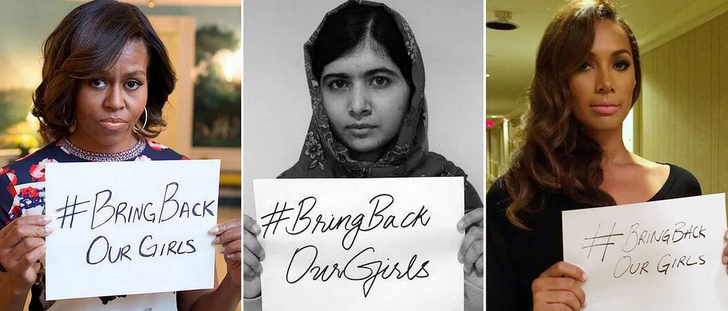
Remember these examples of virtue signalling? Can you imagine them doing the same for boys or young men?
Image from The Fiamengo File.

Few people have heard of Gender Empathy Gap Day, a day inaugurated in Germany in 2018 to raise awareness about our societies’ remarkable indifference to the suffering of men and boys. Not surprisingly, it has no official status in any country.

Most people, if asked, will insist that it is women and girls who suffer. We expect men and boys to apologize for their advantages and educate themselves about issues affecting women and girls. Animus against men is socially acceptable, even approved. “I bathe in male tears” is a popular feminist slogan, and university professors write mainstream opinion pieces with unironic titles like “Why Can’t We Hate Men?”

The Gender Empathy Gap Day doesn’t advocate a contest over which sex has it worse. It does advocate recognition of our collective inability or unwillingness to see the full humanity of men.

Academic researchers Alice Eagly and Antonio Mladinic have compiled data showing that both females and males tend to have more positive associations with women than with men. Researchers have also confirmed a much higher in-group bias amongst women, meaning that women feel more empathy towards other women than towards men, while men also feel more empathy for women.

Whether it’s homelessness (61% male), homicide (78% male victims), suicide (79% male), workplace fatalities (93% male), prison incarceration (93% male), or a host of other issues, men and boys do suffer. Yet according to the research of Dr. Tania Reynolds, we tend to associate agency with maleness and the capacity for victimhood with femaleness, seeing men and boys as active doers rather than as sufferers deserving concern.

As a result, we are tolerant of harsh punishments for male criminal offenders, but not for women. In 2012, Sonja Starr, a professor of Law, published the results of her study of discrepancies in criminal sentencing that showed a very large gender gap in the punishment of women for the same crimes committed by men. Starr’s extensive study found an average 63% sentencing gap that harshly disadvantaged men. She also discovered that “Female arrestees are […] significantly likelier to avoid charges and convictions entirely, and twice as likely to avoid incarceration if convicted”.

The gap in punishment results because we all — including prosecutors, judges, and juries — incline to the belief that women who commit crimes were led into their law-breaking by others, usually men, and had limited choices because of poverty, childhood abuse, mental illness, or addiction. We hesitate to deprive young children of the care of their mothers, while we are content to see fathers behind bars. As Starr points out, however, male offenders have also “suffered serious hardships, have mental health or addiction issues, have minor children, and/or have ‘followed’ others onto a criminal path”.

Author Glen Poole has noted that such indifference to male difficulties is built right into the stories our society tells about itself. He points out that when a large number of men are killed — whether in war, accident, or natural disaster — mainstream news sources report on people killed, making the sex of the victims invisible. It is not news when men and boys die.

When women or girls are killed or harmed, they are rarely if ever referred to as people. Their suffering is news.

QotD: The need for social status

Filed under: Economics, Health, Quotations — Tags: , , , , — Nicholas @ 01:00

Human beings become more preoccupied with social status once our physical needs are met. In fact, research reveals that sociometric status (respect and admiration from peers) is more important for well-being than socioeconomic status. Furthermore, studies have shown that negative social judgment is associated with a spike in cortisol (hormone linked to stress) that is three times higher than non-social stressful situations. We feel pressure to build and maintain social status, and fear losing it.

It seems reasonable to think that the downtrodden might be most interested in obtaining status and money. But this is not the case. Inhabitants of prestigious institutions are even more interested than others in prestige and wealth. For many of them, that drive is how they reached their lofty positions in the first place. Fueling this interest, they’re surrounded by people just like them — their peers and competitors are also intelligent status-seekers. They persistently look for new ways to move upward and avoid moving downward. The French sociologist Émile Durkheim understood this when he wrote, “The more one has, the more one wants, since satisfactions received only stimulate instead of filling needs.” And indeed, a recent piece of research supports this: it is the upper class who are the most preoccupied with gaining wealth and status. In their paper, the researchers conclude, “relative to lower-class individuals, upper-class individuals have a greater desire for wealth and status … it is those who have more to start with (i.e., upper-class individuals) who also strive to acquire more wealth and status”. Plainly, high-status people desire status more than anyone else.

Furthermore, other research has found that absolute income does not have much effect on general life satisfaction. An increase in relative income, on the other hand, has a positive effect. Put differently, making more money isn’t important. What’s important is making more than others.

Rob Henderson, “Thorstein Veblen’s Theory of the Leisure Class — A Status Update”, Quillette, 2019-11-16.

July 8, 2024

All the conspiracists seem to find room for the Rockefellers in their theories

Filed under: Environment, Media, Politics, USA — Tags: , , , , , , — Nicholas @ 04:00

Elizabeth Nickson on a new book by Jacob Nordangård that illustrates just how important Rockefeller funding is to so many activists and the environmental pressure groups that deploy them:

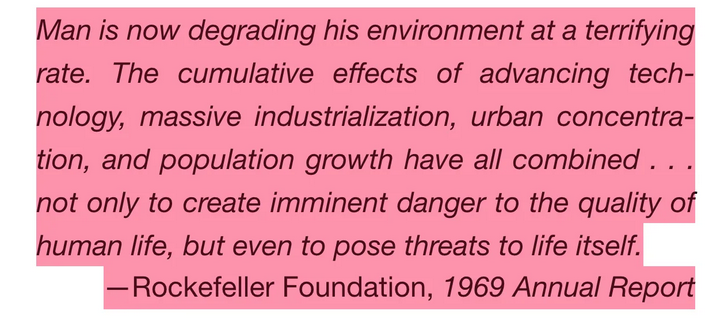
In the climate change arena, the Rockefellers call the shots. The whole thing was their idea, they took a silly but interesting theory and amped it up with hundreds and hundreds of million of dollars. They founded institutions and linked the survival of those institutions to promoting climate change and population reduction. They adopted one likely politician after another.

The Rockefellers have created 990 Climate Change activist organizations. They give them directions, financing, and launch them on the world. The Green Movement was started, financed, organized, and militarized by the Rockefellers. By the late 40’s the family was all in, on the same page. In the 50’s they began to stand up countless institutions, committees, university departments, university institutes, foundations, and policy shops gathered around this one idea, as below:

Let’s just pause here and recognize that the United States and Canada are 5% developed. If it were 50%, then maybe we would have reason to worry about the effects of trace gas that takes up .04% of the atmosphere, of which 3% is currently contributed to by humans. But were we to have that level of development, our science would have long ago solved the problem. Our sense of proportion, size and consequence has been twisted, propagandized via hundreds of billions of purposed dollars. And all of it is exaggerated science done by scientists compromised by Rockefeller money.

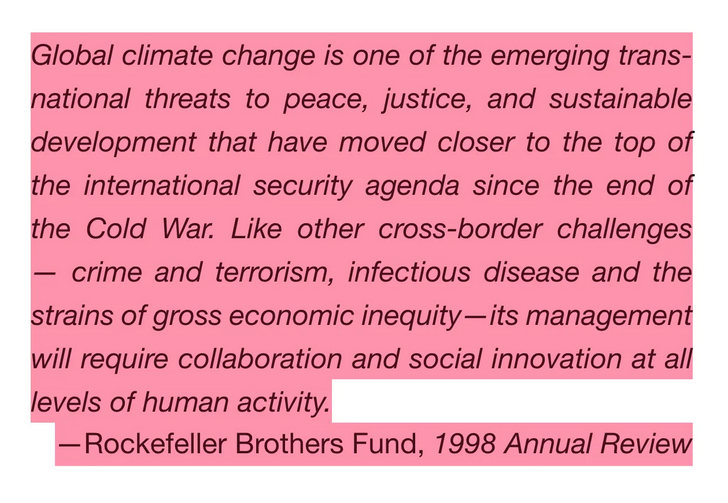
By 1998, the Rockefeller family had swept the table clean of any opposition to this one idea. Any scientist not on board with the agenda was imperiled. Any university department not working towards this one artificial goal, was in danger of being marginalized. Infiltration had begun into every media organization, every entertainment division of every major corporation. This, as stated below, would be a generational goal. For everyone. Or get off the bus.

What is evidentiary, what can be proved in a court of law, rather than opinion, however, is that the Fabians started the idea of this whole one-world, no nation state. It is clear too that after the First World War, the Fabians roped in the second generation of Rockefellers. It was a major catch. It meant they had America. And it was spiritual. It was meant to change mankind, to kill off Homo Sapiens and turn us to Homo Universalis.

The New Man would be not-Christian, quietist, and self-obsessed. The economy would trend towards zero-growth if not de-growth. There is a preponderance of data, many many publications that laid out their plans. They twisted education away from practical science, engineering and building things towards social movements, the humanities, the arts, and pleasure. And via Laurance Rockefeller’s money and organizational skill, they devised and invented the discipline of cybernetics from which the internet flows.

June 30, 2024

QotD: The use of pictorial and archaeological evidence in studying the ancient world

What about pictures? We call this representational evidence. Representational evidence can be quite good at telling you what something looked like (but beware of artistic conventions!), but is of course little help for the names-and-dates kind of historical work. The larger problem though is that representational evidence especially becomes difficult to interpret without literary or archaeological evidence backing it up. The problem of correlating an image to a specific person or object can be very hard (by way of example, the endless debates about what is meant by kotthybos in the Amphipolis military regulations). Representational evidence gets a lot more useful if you can say, “Ah, X depicts Z events from B-literary-source” but obviously to do that you need to have B-Literary-Source and B is going to do most of the heavy lifting. To see just how hard it can be to use representational evidence without a robust surviving literary tradition, one merely needs to look at work on pre-historic Gaul (it’s hard!).

Which brings us at last to the big dog, archaeological evidence (although all of the aforementioned also show up in the archaeological record). Archaeology is wonderful, easily the biggest contributor to the improvement in our knowledge of the ancient world over the last century; my own research relies heavily on archaeological evidence. And the best part of it is we are getting more and better archaeological evidence all the time. Some archaeological finds are truly spectacular, like the discovery of the remains of the wrecks from the Battle of the Aegates Islands (241), the decisive engagement that ended Rome’s first war with Carthage (underwater archaeology in general in a young part of archaeology, which is itself a young field so we may well expect more marvels to come).

But (you knew there would be a but), archaeological evidence is really only able to answer certain specific questions and most research topics are simply not archaeologically visible. If your research question is related to what objects were at a specific place at a given time (objects here being broad; “pots” or “houses” or “farms” or even “people” if you are OK with those people being dead), good news, archaeology can help you (probably). But if your research question does not touch on that, you are mostly out of luck. If your object of study doesn’t leave any archaeological evidence … then it doesn’t leave any evidence. Most plagues, wars, famines, rulers, laws simply do not have archaeologically visible impacts, while social values, opinions, beliefs don’t leave archaeological evidence in any case.

Take, for instance, our evidence for the Cult of Mithras in the Roman Empire. This religion leaves us archaeological evidence in the form of identifiable ritual sanctuaries (“mithraeums“). Archaeology can tell us a lot about the normal size and structure of these places, but it can’t tell us much about what people there believed, or what rituals they did, or who they were, with only a handful of exceptions, which is why so much of what we think we might know about Mithraism is still very speculative.

Moreover, archaeology only works for objects that leave archaeological remains! Different materials preserve at different rates. Ceramic and stone? Great! Metals? Less great; these tend to get melted down when they don’t rust. Wood or textiles? Worse, almost never survives. This is why we have so much data on loom weights (stone, ceramic) but less on looms (wood, textile), and so much data on spindle whorls (stone, ceramic) but less on spindle-sticks or distaffs (wood). Compounding this are preservation accidents, in that things that survive tend to be things thrown away or buried with bodies and those practices will impact your archaeological record.

But the best part about archaeology is that it has network effects, which is to say that the more archaeology we do, the more useful each find becomes. New discoveries help to date and understand old discoveries and with lots of archaeological evidence, you can do really neat things like charting trade networks or changing land-use patterns. The problem is that you really do need a lot to generate a representative sample so you know you aren’t wrongly extrapolating from exceptions, and for right now, only the best excavated regions (Italy, to a lesser extent Greece and Egypt) are at the point where we can talk about, for instance, changing patterns of land use and population with any detail. And even then, uncertainties are huge.

Finally, archaeology, like everything else, works best with literary evidence. Take, for example, pre-Roman Gaul. The Gauls, due to their deposition practices are very archaeologically visible. Rich burial assemblages, large ritual deposits and archaeologically visible hill-fort settlements mean that the archaeological record for pre-Roman Gaul is very robust (in some cases more robust that the equivalent Roman context; we can be far more confident about the shape and construction of Gallic weapons than contemporary Roman ones, for instance). But effectively no literary sources for Gaul until contact with the Romans and Greeks. Consequently, almost everything about their values, culture, social organization in the pre-Roman period is speculative, with enormous numbers of questions and few answers.

If you want to ask me, “When did the Gauls shift to using longer swords” I can tell you with remarkable precision, in some cases, region by region (but generally c. 250 BC, with the trend intensifying in the late second century). But if you want to ask, “what was it like to rule a Gallic polity in c. 250 BC?” The best we can do is reason from what we see Caesar describing in c. 50 BC and hope that was typical two hundred years earlier.

Bret Devereaux, “Fireside Friday: March 26, 2021 (On the Nature of Ancient Evidence”, A Collection of Unmitigated Pedantry, 2021-03-26.

« Newer Posts — Older Posts »

Powered by WordPress