
Madison, Hamilton, and Jay got it wrong. If you recall your high school civics class from back when that was a thing, you’ll remember that the authors of The Federalist Papers thought that geographic expansion would be a check on what they called “faction”, which meant something like “proto political party”. Back in Britain, the “Whigs” and the “Tories” weren’t parties in the modern sense; they were groups of men of a similar outlook that coalesced around a dominant personality, a kind of bastard feudalism for the parliamentary age. But since there are always more clever, ambitious men than there are places for them in such a system, Britain’s “party” system was always tearing itself apart — that’s a big reason the rebellion started in the first place, and one reason the Colonials won the war.
Geographic expansion keeps that in check, the Federalist guys thought, because clever, ambitious men who feel themselves blocked by the Old Boys’ Network can always head west, to try their luck in one of the burgeoning frontier communities. Which worked — that’s the part the Federalist guys got right — but enough clever, ambitious men stayed back East that “factions” transformed into something much worse: Actual political parties.
Severian, “Real Federalism Has Never Been Tried”, Rotten Chestnuts, 2021-05-03.
December 17, 2023
QotD: When “factions” coalesce into “parties”
December 15, 2023
“Cletus is ’bout to go kinetic, y’all”!
Chris Bray turns to movie trailer analysis as a break from his usual work. Oh, wait, no it’s not really much of a break:
Cletus is ’bout to go kinetic, y’all. I got the news straight from brunch in Brentwood, where people really understand Middle America.
The trailer has dropped for a major new movie about an American civil war. No, not that one: the next one, with the dictatorial president who seizes an unconstitutional third term and refuses to leave the White House, and is an old white guy with big hair who drawls and thinks the world of himself and totally isn’t like any real person they’re trying to compare him to.
Note that the sniper in the thumbnail has camouflaged his rifle with a pile of spaghetti to avoid being seen, but is also wearing … nail polish? I am unfamiliar with this military doctrine, but if you ever find yourself in a war, wear bright shiny things so you blend in with the trees. I hope we’ve all seen the White House Christmas video this year, because I think they might also be gesturing at this brand of postmodern ghillie suit:
Civil War is Hollywood’s other “America collapsing soon” movie, behind the Obama-backed Leave the World Behind, which sounds like a form of torture. […]
You can watch the Civil War trailer to see how utterly dogshit banal it is, but my favorite detail is that Texas and California form an alliance against the US government and secede together. Yes, a long line of development executives said, Texas and California share a political agenda and would obviously make common cause in an insurgency.
I beg you to get drunk and discover on your own what professional entertainment journalists, a real category of human existence, are saying about this movie.



Severian also saw the trailer and as you’d guess it just blew him away:
So let’s see here … Florida and Texas seceding, necessitating the use of airstrikes — indeed, of all available force — against Americans? Check. Journalists as heroes? Check. Brown-skinned folks with funny accents as the only real Americans? Check. A rebel assault on the capitol, complete with explosions at the very heart of Our Democracy™? Check! I don’t think they actually said the names in the trailer — I kinda skimmed, because it’s nauseating — but whaddaya wanna bet the President of Real America has a name like, oh, I dunno … “Joe Ryder”, and the President of Godawful Redneckistan has a name kinda like “Ronald Rumph”?
They’re really steeling themselves to do Whatever It Takes, aren’t they?
Noted in the comments by Andrew: “Fun fact no. 1: there is only one facility in the US that manufactures explosive ordinance for the military. Fun fact no. 2: that facility is in Texas.”
Oh, and apparently red sunglasses are the new MAGA hat.

December 13, 2023
“Harvard stands firmly behind President Claudine Gay”
 Chris Bray discusses the sure-to-be-continued saga of a plagiarist — who’s also a full-time water-carrier for terrorism — who happens (for the moment) to head
 HAMAS University Harvard University:
Harvard stands firmly behind President Claudine Gay, a remarkably undistinguished scholar and academic leader who has been lavishly overpraised and promoted beyond her ability for three decades. They do this, they have just explained, because Harvard is deeply committed to a culture of academic freedom, open discourse, and cultural pluralism:
In this tumultuous and difficult time, we unanimously stand in support of President Gay. At Harvard, we champion open discourse and academic freedom, and we are united in our strong belief that calls for violence against our students and disruptions of the classroom experience will not be tolerated. Harvard’s mission is advancing knowledge, research, and discovery that will help address deep societal issues and promote constructive discourse, and we are confident that President Gay will lead Harvard forward toward accomplishing this vital work.
And so here’s the tweet — I insist on still calling them tweets — in which Harvard announces that it has posted its public letter on its insistent promotion of open and constructive discourse:
We stand for open discourse! (Replies are closed.)
Coprophagiacs eat so much shit that it stops being shit, and just becomes the thing they eat. Every word of a statement from the enormously high-status trustees of an enormously high-status institution is just ludicrous. They self-refute, casually, without noticing.
Every day now, I think about a term that lawyers use: a colorable argument. If you have a colorable argument, you can file your lawsuit without being instantly thrown out of the courtroom. You may not have the winning argument, and you may not even have a really good argument, yet, but you have enough of an argument that you can start. Then, through the discovery process and with some luck and hard work, maybe you can build the actual winning argument. But for now, you have some not-totally-implausible factish claims, and you can more or less connect it all to a law of some kind, and you can walk into the courtroom without the judge bursting into laughter. You have a colorable argument; you have the bare minimum.
Look how much of the culture is made up of people who don’t have a colorable argument. Look how much total nonsense streams by.
Now, about those plagiarism allegations against the president of what is alleged to be one of the nation’s most prestigious universities:
With regard to President Gay’s academic writings, the University became aware in late October of allegations regarding three articles. At President Gay’s request, the Fellows promptly initiated an independent review by distinguished political scientists and conducted a review of her published work. On December 9, the Fellows reviewed the results, which revealed a few instances of inadequate citation. While the analysis found no violation of Harvard’s standards for research misconduct, President Gay is proactively requesting four corrections in two articles to insert citations and quotation marks that were omitted from the original publications.
She did absolutely nothing wrong, and that’s why she’s requesting corrections on 18% of her exceptionally thin scholarly record. No big deal, she’s just correcting “citations and quotation marks that were omitted”. Who omitted them? That’s the wrong question, see, because what happened is just that they “were omitted”. The quotation marks didn’t insert themselves. I demand that the quotation marks be denied tenure for wandering away from the page!
QotD: Woke psychiatry
No. Nobody has forgotten that. Because the third thing you notice at the American Psychiatric Association meeting is that everyone is very, very woke.
Here are some of the most relevant presentations listed in my Guidebook:
Saturday, May 18
- Climate Psychiatry 101: What Every Psychiatrist Should Know
- Women’s Health In The US: Disruption And Exclusion In The Time Of Trump
- Gender Bias In Academic Psychiatry In The Era Of the #MeToo Movement
- Revitalizing Psychiatry – And Our World – With A Social Lens
- Hip-Hop: Cultural Touchstone, Social Commentary, Therapeutic Expression, And Poetic Intervention
- Lost Boys Of Sudan: Immigration As An Escape Route For Survival
- Treating Muslim Patients After The Travel Ban: Best Practices In Using The APA Muslim Mental Health Toolkit
- Making The Invisible Visible: Using Art To Explore Bias And Hierarchy In Medicine
- Navigating Racism: Addressing The Pervasive Role Of Racial Bias In Mental Health
Sunday, May 20
- Addressing Microaggressions Toward Sexual And Gender Minorities: Caring For LGBTQ+ Patients And Providers
- Latino Undocumented Children And Families: Crisis At The Border And Beyond
- Racism And Psychiatry: Growing A Diverse Psychiatric Workforce And Developing Structurally Competent Psychiatric Providers
- Sex, Drugs, And Culturally Responsive Treatment: Addressing Substance Use Disorders In The Context Of Sexual And Gender Diversity
- Grabbing The Third Rail: Race And Racism In Clinical Documentation
- Racism And The War On Terror: Implications For Mental Health Providers In The United States
- The Multiple Faces Of Deportation: Being A Solution To The Challenges Faced By Asylum Seekers, Mixed Status Families, And Dreamers
- What Should The APA Do About Climate Change?
- Intersectionality 2.0: How The Film Moonlight Can Teach Us About Inclusion And Therapeutic Alliance In Minority LGBTQ Populations
- Transgender Care: How Psychiatrists Can Decrease Barriers And Provide Gender-Affirming Care
- Gun Violence Is A Serious Public Health Problem Among America’s Adolescents And Emerging Adults: What Should Psychiatrists Know And Do About It?
- Working Clinically With Eco-Anxiety In The Age Of Climate Change: What Do We Know And What Can We Do?
- Are There Structural Determinants Of African-American Child Mental Health? Child Welfare – A System Psychiatrists Should Scrutinize
Monday, May 21
- Community Activism Narratives In Organized Medicine: Homosexuality, Mental Health, Social Justice, and the American Psychiatric Association
- Disrupting The Status Quo: Addressing Racism In Medical Education And Residency Training
- Ecological Grief, Eco-Anxiety, And Transformational Resilience: A Public health Perspective On Addressing Mental Health Impacts Of Climate Change
- Immigration Status As A Social Determinant Of Mental Health: What Can Psychiatrists Do To Support Patients And Communities? A Call To Action
- Psychiatry In The City Of Quartz: Notes On The Clinical Ethnography Of Severe Mental Illness And Social Inequality
- Racism And Psychiatry: Understanding Context And Developing Policies For Undoing Structural Racism
- Trauma Inflicted To Immigrant Children And Parents Through Policy Of Forced Family Separation
- Deportation And Detention: Addressing The Psychosocial Impact On Migrant Children And Families
- How Private Insurance Fails Those With Mental Illness: The Case For Single-Payer Health Care
- Imams In Mental Health: Caring For Themselves While Caring For Others
- Misogynist Ideology And Involuntary Celibacy: Prescription For Violence?
- Advocacy: A Hallmark Of Psychiatrists Serving Minorities
- Inequity By Structural Design: Psychiatrists’ Responsibility To Be Informed Advocates For Systemic Education And Criminal Justice Reform
- Treating Black Children And Families: What Are We Overlooking?
- Blindspotting: An Exploration Of Implicit Bias, Race-Based Trauma, And Empathy
- But I’m Not Racist: Racism, Implicit Bias, And The Practice Of Psychiatry
- No Blacks, Fats, or Femmes: Stereotyping In The Gay Community And Issues Of Racism, Body Image, And Masculinity
- Silence Is Not Always Golden: Interrupting Offensive Remarks And Microaggressions
- Black Minds Matter: The Impact Of #BlackLivesMatter On Psychiatry
… you get the idea, please don’t make me keep writing these.
Were there really more than twice as many sessions on global warming as on obsessive compulsive disorder? Three times as many on immigration as on ADHD? As best I can count, yes. I don’t want to exaggerate this. There was still a lot of really meaty scientific discussion if you sought it out. But overall the balance was pretty striking.
I’m reminded of the idea of woke capital, the weird alliance between very rich businesses and progressive signaling. If you want to model the APA, you could do worse than a giant firehose that takes in pharmaceutical company money at one end, and shoots lectures about social justice out the other.
Scott Alexander, “The APA Meeting: A Photo-Essay”, Slate Star Codex, 2019-05-22.
December 12, 2023
Canadian politics – if you don’t like something, call it some kind of “genocide”
Tristin Hopper on the political mis-use of the technical term “genocide”, to the point that it’s almost become routine to describe something you oppose as a “genocide”:
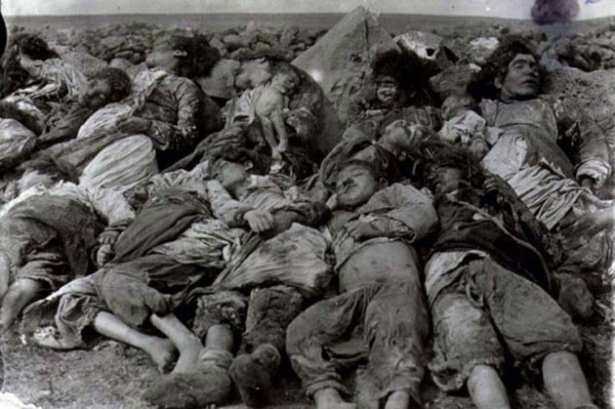
Victims of genocide
Photo by Cantetik2 via Wikimedia Commons.
In recent weeks, it’s become popular among Canada’s activist groups and even mainstream politicians to accuse Israel of “genocide”. In a since-deleted Thursday evening social media post, for one, NDP MP Don Davies accused Israel of “cultural genocide” against Palestinians. The United Church of Canada has also begun using the g-word in its official literature.
The charge doesn’t hold up on any material grounds. Unlike most genocided people, the Palestinian population has been soaring dramatically ever since the 1960s — all while retaining their traditional language and religion. Israel’s prosecution of its current conflict against Hamas, meanwhile, has featured any number of factors that are markedly out-of-step with an attempted genocide, including detailed evacuation orders and a rate of civilian casualties markedly lower than the global average.
But the charge doesn’t need to make sense, because it turns out Canada has been abusing the term “genocide” for quite some time. Coined amidst the Second World War by Polish lawyer Raphael Lemkin, “genocide” refers to the intentional destruction of an entire demographic of people.
While the most notable genocides involve systematized mass-murder, it’s not a requirement. As per the official definition struck in the immediate aftermath of the Holocaust, genocide can also include attempts to erase a people via birth control or indirect methods such as famine. It’s on these grounds that Canada has officially accused China of genocide regarding its Uyghur minority. Although Beijing is not mass-murdering the Uyghurs, they are rounding them up into “re-education” camps and mandating forced sterilization with the explicit intention of destroying the Uyghur way of life.
But among Western academic and activist circles, “genocide” has now been stretched to apply to almost anything, from emissions policy to the ethnic ratios in prisons. Below, a not-at-all comprehensive list of just how much of Canadian life has been accused of being genocidal.
December 11, 2023
QotD: The Palace of Westminster
I worked for some years in this odd place. It is by law a Royal Palace, so nobody was ever officially allowed to die on the premises, in case the death had to be inquired into by some fearsome, forgotten tribunal, perhaps a branch of Star Chamber. Those who appeared to have deceased were deemed to be still alive and hurried to a nearby hospital where life could be pronounced extinct and an ordinary inquest held. We were also exempt from the alcohol laws that used in those days to keep most bars shut for a lot of the time, and if the drinks were not free they were certainly amazingly cheap.
In my years of wandering its corridors and lobbies, of hanging about for late-night votes and dozing in committee rooms, I came to loathe British politics and to mistrust the special regiment of journalists (far too close to their sources) who write about it. I had hoped for a kingdom of the mind and found a squalid pantry in which greasy, unprincipled deals were made by people who were no better than they ought to be.
But I came to love the building. Once you had got past the police sentinels, who knew who everyone was, you could go everywhere, even the thrilling ministerial corridor behind the Speaker’s chair, from which Prime Ministers emerged to face what was then the genuine ordeal of Parliamentary questions, twice a week. There was a rifle range beneath the House of Lords, set up during World War I to make sure honorable members of both Houses would be able to shoot Germans accurately if they ever met any. There was a room where they did nothing but prepare vast quantities of cut flowers, and which perfumed the flagstone corridor in which it lay. There was a convivial staff bar (known to few) where the beer was the best in the building and politicians in trouble would hide from their colleagues. The Lords had a whole half of the Palace, with lovely murals illustrating noble moments of our history, and the Chief Whip’s cosy, panelled office where reporters would be summoned once a week for dangerous gossip and perilously large glasses of whisky or very dry sherry, generously refilled. And high up in the roof, looking down over the murky Thames, was the room where the government briefed us, in meetings whose existence we were sworn never to reveal. Now they are pretty much public, so the real briefings must happen somewhere else, I suppose.
Peter Hitchens, “An Empty Parliament”, First Things, 2017-10-03.
December 10, 2023
“The peasants are revolting!”
Chris Bray says we’re back to aristocracy:
What do Americans think of vitriolic language directed at government?
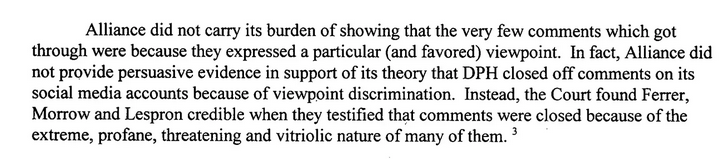
Remember that Superior Court Judge William Fahey has just tentatively ruled, in a First Amendment lawsuit over the decision by the Los Angeles County Department of Public Health to forbid public comments on its social media posts, that the county has not engaged in viewpoint discrimination, because the public is yucky:
Comments were closed to the public because many were “extreme” and vitriolic; therefore, no First Amendment violation has occurred. Government cannot discriminate against your viewpoint if your viewpoint is extreme, or if it’s expressed too strongly; the First Amendment only protects inoffensive expression.
The lowest-hanging fruit for the counterargument is all in New York Times Company v. Sullivan, in which a quite liberal Supreme Court repeatedly and very clearly spelled out the American standard for the criticism of government. Justice Arthur Goldberg, in a concurring opinion: “In my view, the First and Fourteenth Amendments to the Constitution afford to the citizen and to the press an absolute, unconditional privilege to criticize official conduct despite the harm which may flow from excesses and abuses”.
This is how the Supreme Court showed up in 1964 to start thinking about a case involving the limits of speech about public officials; as Justice William Brennan, Jr. wrote in the majority opinion, “we consider this case against the background of a profound national commitment to the principle that debate on public issues should be uninhibited, robust, and wide-open, and that it may well include vehement, caustic, and sometimes unpleasantly sharp attacks on government and public officials.”
Compare that conclusion to the argument that government has not engaged in viewpoint discrimination, because it banned comments only in the context of being addressed with vitriol. We didn’t say we didn’t didn’t like their viewpoint; we just said that their opinions were too extreme.
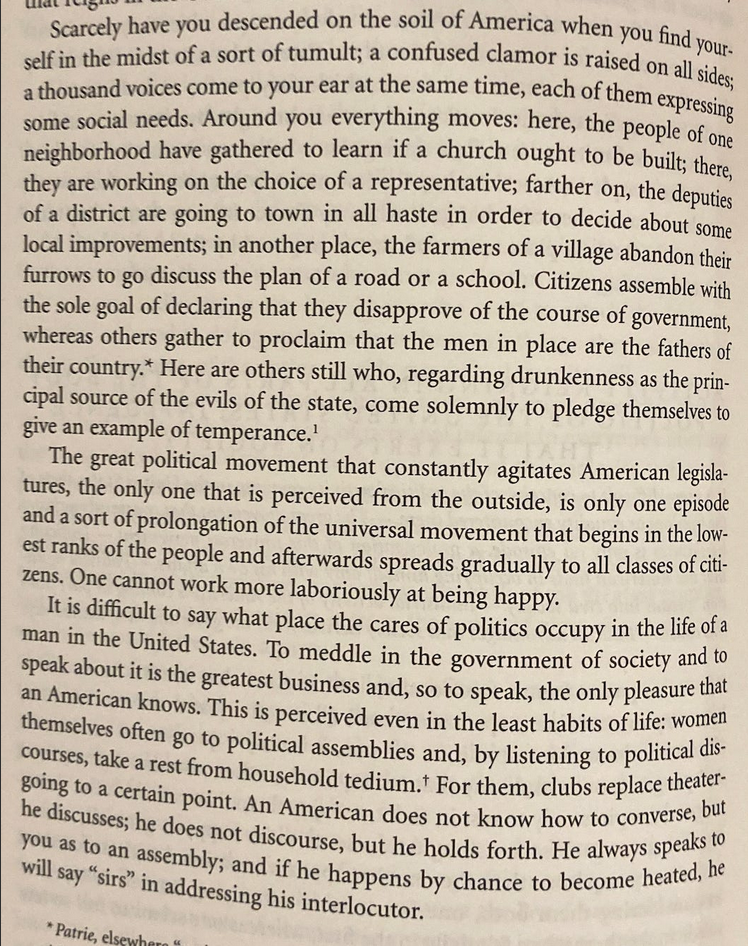
But here’s the important thing about New York Times Company v. Sullivan: it’s a history lesson. The majority opinion quotes James Madison and John Stuart Mill, and examines debates over public speech in the early republic. Looking at the national past and its political sources, they saw only the idea that government officials may properly be addressed with whatever degree of firmness citizens choose to apply. American politics were never polite, and were never thought to be. The tumult of a democratic republic, Tocqueville wrote, “begins in the lowest ranks of the people”, storming the seats of government to shout their disapproval:
“… if he happens by chance to become heated”. That wasn’t pathology or exception; a French observer touring America thought that heated denunciations of government were signs of … a weekday. A scholar of early American politics has written colorfully about the way national officials limited the aggressiveness of attacks on their character: they shot each other, or threatened to.
December 9, 2023
Venezuela’s renewed imperialism
Like many of us, Colby Cosh is trying to figure out what’s going on in Venezuela these days, as the government “won” a plebiscite to push its long-standing claim for a huge chunk of next-door neighbour Guyana’s territory:
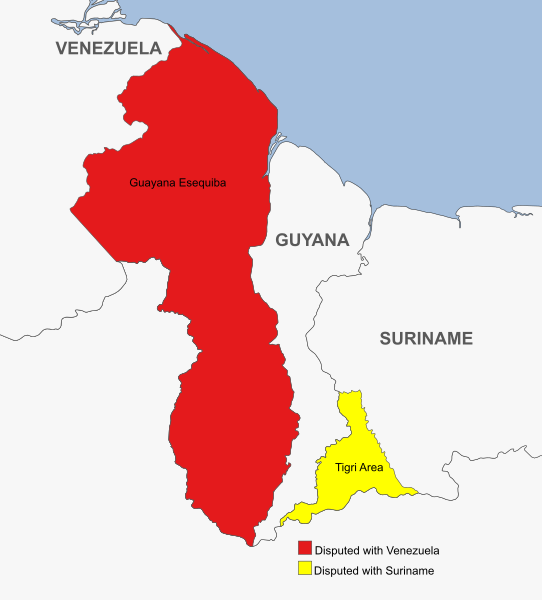
Map showing the two disputed land areas of Guyana. The red region is disputed with Venezuela (Guayana Esequiba) and the yellow region is disputed with Suriname (Tigri or New River Triangle)
Map by SurinameCentral via Wikimedia Commons.
I’ve been plunging into the weeds — as some of my readers perhaps are — trying to figure out why Venezuela is trying to take over three-quarters of the land area of neighbouring Guyana. I mean, yes, duh, the simple answer is “oil”. The relevant part of Guyana — the sparsely populated, heavily Indigenous Essequibo region west of the river of the same name — has been claimed by Venezuela with varying degrees of vigour and indignation since it became independent from Spain. In the last decade or so, it has come to light there is abundant oil beneath the continental shelf belonging to the Essequibo area.
It might, in fact, be enough oil to make Guyana the world’s largest crude producer in a manner of months. Such an event would almost certainly create an unbearable crisis for the radical-left Venezuelan government, which has fouled up its own oil industry, obliterated its currency and created the single largest refugee crisis in the recorded history of the Americas. And so, the North Korea of the Western Hemisphere is suddenly behaving in an awfully warlike — one might say imperialistic — manner towards a tiny neighbour. Which is, in turn, why the United States is rattling the sabre in Guyana’s defence.
The basic situation in the Essequibo region in the centuries after Columbus was that the territory de jure belonged to Spain but was often really in the hands of Dutch mariners and colonists. There was a long cycle of Dutch incursion and Spanish retaliation. Venezuela inherited and pursued the Spanish claims upon independence — originally as part of the Republic of Gran Colombia (1811) and then as a sovereign state unto itself (1830). Britain gained the Dutch territory in the Napoleonic Wars and incorporated Essequibo into the unified colony of British Guiana in 1831.
The two countries recognized that they had a big disagreement over where the Venezuela-British Guiana border might actually lie. But Venezuela wasn’t in a position to pick a fight with the British Empire, and British public opinion couldn’t be convinced to care very much about the problem. The two countries kicked the can down the road and mutually agreed not to colonize the area.
Fast-forward a bit: in the 1870s, gold was discovered in the disputed zone, waaay over toward the Venezuelan side, and in the 19th century, gold meant a gold rush. British and American privateers started turning up with shovels and pickaxes in the interior, sovereignty be damned. Venezuela eventually began to lobby the U.S. executive branch for redress, reminding American politicians of their precious Monroe Doctrine (which was technically incompatible with the existence of a “British Guiana”). Britain, coming under uncomfortable diplomatic pressure, agreed to submit the border question to neutral arbitration.
And here we come to the heart of the quarrel. The U.S. and Britain set up an arbitration panel of the classic 19th-century kind — the same kind of panel, in fact, that fixed up much of the U.S.-Canada border during the same period. This panel had two American Supreme Court justices representing Venezuelan interests; two equally high-ranking British judges; and a neutral fifth man borrowed from the Russian Empire — the Estonian international-law scholar Friedrich Martens (1845-1909). Throughout the 19th century, Russia had often been used in this way by western powers as an honest broker, and arbitration was seen as a universal means of peaceful dispute resolution — the great hope of the world’s future.
And yet, like what seems to be every border dispute in South America since the Spanish skedaddled, an agreement doesn’t seem to last more than the lifetime of one of the governments that negotiated it and some of them aren’t even that durable. Ed Nash has a video summarizing the economic and military state of affairs that helps explain why this dispute is potentially of global concern.
December 8, 2023
“An error of this magnitude makes one wonder how robust such calculations are”
Christopher Snowden notes the proliferation of media and public advocacy groups warning us about “junk food”:

On Monday, the front page of The Times led with a speech from Henry Dimbleby and a cost-of-obesity estimate from the Tony Blair Institute for Global Change — the perfect start to the week for any Times reader. According to Sir Tony’s think tank, “the effect on national productivity from excess weight is nine times bigger than previously thought”. An error of this magnitude makes one wonder how robust such calculations are (the previous estimate only came out last year), but Mr Dimbleby saw it as further proof that food should be treated like smoking.
The NHS “will suck all the money out of the other public services” while “at the same time, economic growth and tax revenue will stagnate. We will end up both a sick and impoverished nation,” Dimbleby will warn.
Would it be unfair to point out that the USA has much higher rates of obesity than the UK and also has much higher GDP growth?
As I pointed out on what I shall continue to call Twitter, the estimates as bunkum. They come from Frontier Economics and were first commissioned by the makers of Wegovy, presumably to make their effective but expensive weight loss drug look like a relative bargain.
Their previous estimate of the cost of obesity to “society” was £58bn. This year’s estimate is £98bn, most of which (£57bn) comes from lost quality-adjusted life years. As I tire of pointing out, these are internal costs to the individual which, by definition, are not costs to wider society. I can’t stress enough how absurd it is to include lost productivity due to early death as a cost to the economy. You might as well calculate the lost productivity of people who have never been born and claim that contraception costs the economy billions of pounds.
Since the previous estimate, the costs have been bulked up by including the costs of being overweight, but there is no indication in the wafer-thin webpage of what these are. Being merely overweight doesn’t have many serious health implications. The healthcare costs have doubled, but as in the previous report, the new estimate does not look at how much more healthcare would be consumed if there was no obesity. No savings are included. What we need is the net cost.
The “report” that The Times turned into a front page news story is no more than a glorified blog post. It contains no detail, no methodology and none of the assumptions upon which it is based can be checked. It comes with an eight page slideshow from Frontier Economics which is described as a “full analysis” but which doesn’t contain any useful figures either.
Estimates like this are bound to mislead the casual reader into thinking that they are paying higher taxes because of obesity. There is no other reason to publish them, as they have no academic merit. They are designed to be misunderstood.
Sure enough, the very next day The Times was explicitly claiming that the putative £98 billion — now rounded up to £100 billion — was a direct cost to government …
The findings come after an analysis found this week that Britain’s weight problem is costing the state almost £100 billion a year.
“When you see the same signs here that characterised collapse in other polities for the last 5000 years, it means collapse is coming here too – we’re not special snowflakes”
Feeling good? Happy with your culture and comfortable that major disruptions won’t disturb you? Here’s Theophilus Chilton to harsh your mellow:
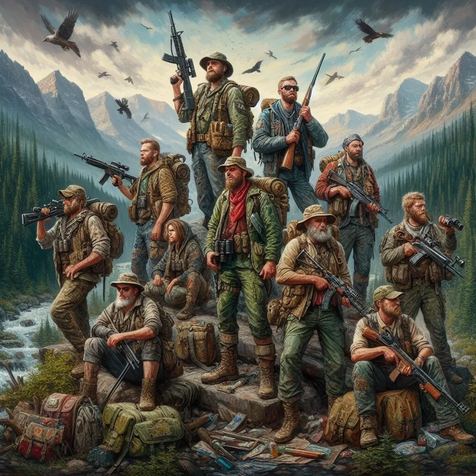
There are essentially three basic reasons why those on the American Right haven’t shrugged the same way regular folks in Europe are beginning to (see Spain and France as well as Ireland for recent examples). The first of these is because the American Right still holds onto a residual trust in elections and democracy and the whole “We’ll get ‘em next election!” mentality. Having been fed a decades-long diet of reverence for democracy and voting and whatnot acts as a desensitising agent that keeps many Americans anesthetised to the actual uselessness of such attitudes.
But this will continue to erode as we see more obvious election fraud. Eventually, when the norm becomes “go to bed with the right-wing candidate ahead by 10% and wake up with the left-wing candidate winning by 0.5%,” elections will lose what legitimacy they have left. Further, as “democracy” comes to be increasingly defined as “whatever the Regime wants to do“, more and more normies will start to clue in to the fact that democratic forms are not going to save America, but are in fact what are destroying it.
Second, Heritage Americans and those on the normie Right tend to assume that everybody still plays by the old, traditional set of norms, including FedGov. This “seemed” plausible when the Regime employed incrementalism to gradually acculturate normies to its agenda. But as they accelerate their revolutionary overthrow of everything that normies thought would be sacrosanct like they have over the past few years, this sense of “norms” will go away. And when that happens, there will be a whole lot of people suddenly open to the possibility that something else might become a new set of norms.
Third, because America is so BIG – especially in the geographical sense – Heritage Americans have been able to self-mitigate many of the worse aspects of the Regime agenda. They could get away from the slums. Federalism allowed them to find states in which to prosper despite the Regime’s efforts. And so forth. Regular folks in many places could still plausibly think America was a high trust, high social cohesion society because where they were at locally might well have been. But as the Regime accelerates, this also will stop. $oros DAs will continue to release violent criminals while punishing law-abiding citizens for defending themselves and their property. Immigration and inflation will further erode the economic prosperity that still remains, which is something that fleeing to a Red state can’t fix. And of course, it will all be brought home starkly once 20,000 or so Palestinian “refugees” get relocated into their counties.
Let’s remember that this is what we actually saw in Ireland. Even into the Oughts, Ireland was homogenous, relatively high IQ and high trust, was the Celtic Tiger with lots of prosperity. Then globohomo decided that Ireland needed tons of “refugees” just like the rest of Europe and suddenly that prosperity and safety and high trust went away. What was the response? Riots and continued disorder that Regime attempts to clamp down on are only going to make worse.
This is going to wear out eventually, which is something that FedGov knows. That’s why they’ve been ramping up gun control efforts over the past few years despite constant opposition from the courts. They’re merely trying to prepare for the inevitable by disarming the people they know they need to suppress the most. Unlike most Euro and Anglosphere countries, Americans haven’t allowed themselves to be disarmed — and that’s something that really does vex The Powers That Be.
But the problem is that it isn’t the 1950s anymore, or even the 1990s for that matter. Back in the 1950s, FedGov could literally stick bayonets at the backs of high school students and force unwilling southern states to integrate their schools. Even in the 1990s FedGov could send its agents to besiege and murder dozens of men, women, and children and most people even at an official level wouldn’t say a thing. But now its 2023 and we’re quite a bit further along the decentralisation path in our secular collapse phase. What FedGov had the moral legitimacy and competency to pull off back then isn’t guaranteed for them now anymore.
So what happens when the FBI wants to do another Waco? What happens if Texas decides it doesn’t want to allow the FBI to do another Waco? We’re past the point where we can blithely say, “Well, the Feds can just make Texas go along with it!” Our place in our collapse cycle means that’s not going to fly like it could have 30 years ago.
At this point, the goal should not be to calm people down but to get them riled up so that when (not if) the break comes, it will be so widespread and numerous that it will completely overwhelm the ability of FedGov and its agencies to deal with it. In this vein, I think of Solzhenitsin’s quote from Gulag Archipelago,
And how we burned in the camps later, thinking: What would things have been like if every Security operative, when he went out at night to make an arrest, had been uncertain whether he would return alive and had to say good-bye to his family? Or if, during periods of mass arrests, as for example in Leningrad, when they arrested a quarter of the entire city, people had not simply sat there in their lairs, paling with terror at every bang of the downstairs door and at every step on the staircase, but had understood they had nothing left to lose and had boldly set up in the downstairs hall an ambush of half a dozen people with axes, hammers, pokers, or whatever else was at hand? … The Organs would very quickly have suffered a shortage of officers and transport and, notwithstanding all of Stalin’s thirst, the cursed machine would have ground to a halt! If … if … We didn’t love freedom enough. And even more – we had no awareness of the real situation … We purely and simply deserved everything that happened afterward.
So what does this mean practically? It means people need to start organising locally with people they trust, building a network in their town or county, coordinating with friendly local power holders. It means stockpiling the necessary tools for the maintenance of their freedoms. It means training to shoot, learning how to use comms, thinking both strategically and tactically — obtaining the knowledge to use with your organising. Most of all, it means being morally and temperamentally prepared to oppose the enemies of our people, both foreign and domestic.
December 7, 2023
Burying the lede … and the victims
Maxime “Mad Max” Bernier sent out a fundraising letter to PPC supporters that included some disturbing new data from Statistics Canada:

As usual, the biggest news in Canada is being ignored by all of our crooked establishment politicians and the dishonest corporate media.
Last week Statistics Canada released a report on deaths in Canada (causes of death, overall life expectancy, etc), which include the latest data from 2022.
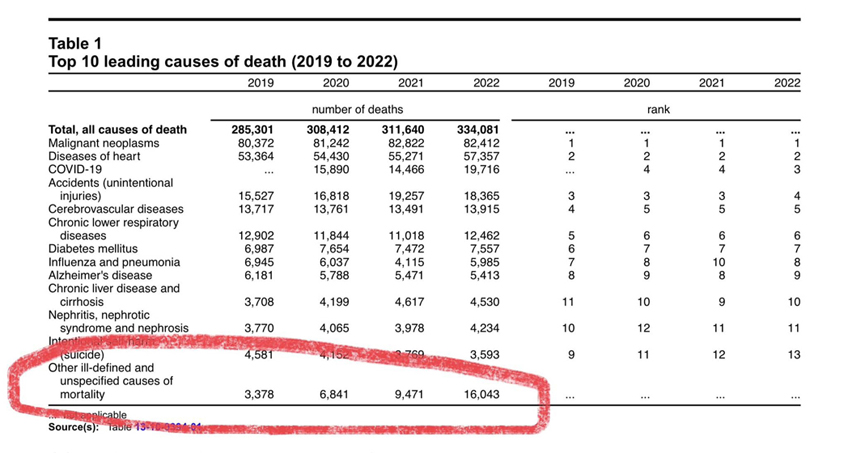
I’m not a doctor, a scientist, or even a statistician, but when I saw the table below, a few things jumped out at me.
First, deaths related to covid-19 (check the fourth line) were at an all-time high in 2022!
Can you believe that? There were more covid deaths in 2022 than the two years before.
And yet that same year saw the end of mask mandates, vaccine passports, and most covid measures.
For two years the elites blasted us with propaganda and warped our society around this mild illness, but when deaths were rising, they were silent. Bizarre!
To be clear, I am not advocating for any of these unnecessary draconian restrictions to return, I am just demanding some honesty and consistency from our morally corrupt politicians, public health officials, and media!
It has never been so obvious that covid restrictions were not scientific, they were just about politics and control.
But the most disturbing part is what I have circled at the bottom of the table. Deaths with “ill-defined or unspecified causes” have been steadily increasing since 2020.
These deaths have almost TRIPLED since 2020 from 6,841 to 16,043 in 2022.
What could be causing this? What happened in 2021 that could have caused this explosion of unexplained deaths over the last 2 years?
An experimental pharmaceutical product was rushed to market and forced on Canadian society, is what happened.
They told us it was “safe and effective” but over the last few years we have learned more and more about how that covid shot was neither.
Now more and more Canadians are dying from causes very likely related to the covid shot.
And where is the accountability?!
There is no admission of any possible error on the part of the government. On the contrary, it’s still encouraging everyone to get boosters!
There are no demands for an inquiry by the opposition parties to investigate the potential risks associated with the covid jab.
There are no investigative journalists trying to get to the bottom of one of the biggest medical scandals in Canadian history.
No! They’re just trying to sweep it under the rug and move on!
We can’t wait for the political establishment to hold itself to account. We saw throughout the covid years that the government, the opposition, and the media will all work together to protect themselves and each other.
And we can’t let them get away with it!
The only kind of conspiracy theories the media is interested in
Chris Selley points out the obvious bias legacy media polls bring to any investigation into the popularity of various conspiracy theories:
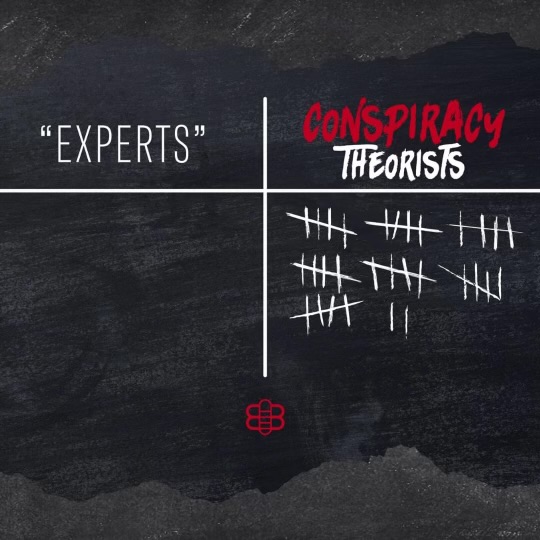
Readers, were you aware that polls show conservative Canadians are more prone to believing in conspiracy theories than liberal Canadians? I’m kidding — of course you were. The pollsters haven’t stopped asking about it since the pandemic hit: Insights West in April 2021, Angus Reid in November 2021, Abacus Data in June 2022, Leger Marketing in the spring of 2022, and again this week. And we in the media can’t get enough of it: “Conspiracy theories are popular in Canada, especially among conservatives, poll says”, was The Canadian Press headline for this week’s Leger poll.
The notion that the Conservative Party of Canada and some of its leading lights are inviting violence through unconscionably heated and conspiratorial rhetoric is endemic in the Canadian newsroom. While I’m no fan of unconscionably heated rhetoric, I very much doubt actual extremists, or potentially violent extremists, see anyone worth choosing among Canada’s federal political leaders. But in any event, it apparently needs saying that not all conspiracy theories are created equal. Some aren’t conspiracy theories at all.
To its credit, The Leger poll released this week mostly confines itself to proper conspiracies: 9/11 Trutherism, a faked lunar landing, etc. Somewhere between 36 per cent (the truth about John F. Kennedy’s assassination was covered up) and five per cent (the earth is flat) believe completely or somewhat in these notions.
But by far the most popular statement among those Leger presented to respondents was as follows: “Mainstream media manipulates the information it disseminates”. Fifty-five per cent of respondents overall agreed with that; the JFK coverup was in a distant second at 36 per cent.
What’s “mainstream media”? If it includes, say, Al Jazeera and Fox News, then the statement is obviously true. (What does “manipulate” mean, for that matter? It doesn’t necessarily imply bad faith.) And the belief is certainly not just confined to Conservative voters: 47 per cent of NDP voters and 53 per cent of Green voters agreed, compared to 69 per cent of Conservative supporters.
What the question definitely does, however, is boost the overall numbers and make them more newsworthy. So Leger (and media) can say “79 per cent of Canadians believe in at least one of the conspiracy theories we asked them about”, and “Conservative voters (94 per cent) are more likely to believe in at least one of the theories”.
That’s a quibble, really. Other polls have, in my view, been utterly shameless about this sort of results-padding.
Take this proposition, for example, which Abacus put to its respondents: “52 per cent think government accounts of events can’t be trusted”.
That is a true statement. It applies to every government in the world, ever.
Even to mention Klaus Schwab’s Great Reset in Canadian political conversation is to risk being branded a conspiracy theorist. But it’s a real-deal “world governance” manifesto, it’s absolutely bonkers from start to finish, everyone from Justin Trudeau to the King (in a previous role) has made approving noises about it, and to the very limited extent it should be taken seriously, everyone should oppose it.
December 4, 2023
QotD: The “ivory gulag”
So, too, with their mentalities. I spent many years toiling in the groves of academe, so obviously my social life (such as it was) contained a lot of post-menopausal lesbians. No creature is more solipsistic than this. Whatever maternal instincts she once might’ve had, have curdled into general naggy truculence, and since they have all the money and free time in the world in which to indulge their narcissism, if they can’t find any actual wrongthink around they’ll simply invent some. Before the Deplorables were driven to organize themselves for gaudy, suicidal, IRA-style violence, post-Oranzhevvy Trashcanistan felt, I imagine, a lot like a college campus …
… which the few people with normal serum hormone levels who were stuck there often called “the ivory gulag”. Make of that what you will.
Severian, “Hormones, or Lack Thereof”, Founding Questions, 2021-01-20.
December 3, 2023
“I find myself despising the elites I joined in ways that shock me. I have come to despise the woke left, their indifference to crime, their reveling in reverse-racism, their deep hatred of Western civilization”
I’ve been reading Andrew Sullivan’s Substack since he started and it’s always been a pretty clear indicator that as soon as the name Trump is mentioned, the rest of the piece can be ignored because he’s been saying the same things for literally years now. This week’s article is a significant break with that tradition. It’s not that he suddenly likes Trump but that he seems to have gained more understanding about why other people support him:

As old-time Dishheads may recall, I was one of a handful of pundits who thought in early 2016 that Trump not only could, but probably would, win the election. I could feel his appeal in my lizard brain, and had long studied the fragility of liberal democracy in my frontal cortex. But the moment I knew his presidency was almost certain was when the Brexit result was announced in June, when everyone still assumed Hillary was a shoo-in. Something was stirring. And that’s why, after my annual trip back to Britain last week, I’m feeling the nausea again.
[…]
Add to that anger a lockdown far more intense than in the US and a period of crippling inflation, and you have a recipe that will likely lead to a Labour landslide next year. And in so many countries right now, for a variety of reasons, you see the same “blow it all up” mentality, turfing out incumbents mercilessly, often in favor of performative populists of various hues and flavors.
Look at the Netherlands: a progressive country that just saw Geert Wilders’ hard-right anti-immigration party go from 10 percent in 2021 to 23.5 percent of the vote, and become by far the biggest party in the Dutch House of Representatives, with center-right parties open to joining them. Or Argentina, where a weirdly coiffed, former rock-singer, Javier Milei — who had a near mental breakdown in a televised interview during the campaign, complaining about voices that weren’t there — wiped out the Peronist establishment in a landslide.
Orbán’s decisive re-election, Meloni’s electoral victory in Italy, and Sweden’s lurch to the right all suggest a sudden widening of the Overton window in much of Europe. In Germany, the AfD, the far-right movement, is now polling at 21 percent of the electorate, compared with 15 percent for Chancellor Scholz’s Social Democrats and 9 percent for the Greens. None of it is particularly coherent. Milei is Steve Forbes in a very bad toupee — about as far away from Boris’ Red Toryism or entitlement-friendly Trumpism as you can get. The only truly consistent thing is the ridiculous hair, and contempt for elites.
And the fear of the crazy right has gone. Milei and Wilders instantly moderated on some of their most outlandish positions, as soon as power was within reach. No, Milei won’t dollarize the Argentine economy, it turns out; and no, Wilders won’t ban mosques, as he tries to build a coalition government. Meloni has talked up immigration control, but in power, she hasn’t done much about it, and her support for Ukraine and the EU has been a big surprise. Poland’s hard-right party showed it could not stay in power forever this year, and in Spain, Vox lost ground. But in all this, a taboo has been broken — the same kind of taboo that the election of Donald Trump represented. The small-c conservatism of the Western electorate has expired.
That’s why I find the re-election of Joe Biden so hard to imagine. Biden is the incumbent of all incumbents. He became a senator in 1973! He has been vice president for eight years and president for four. He’s extremely old for the job he is doing, and everyone knows it. He has presided over inflation higher than at any time since the 1970s, and a huge new wave of legal and illegal immigration. We may now have a higher percentage of the population that is foreign-born than in the entire history of this country of immigration. Americans’ support for a border wall is the highest it’s been since 2016.
And Gallup’s latest polling on how the public feels about crime should terrify the Democrats. Coming back to DC this week after seven months away, I’m struck by how stark the decline has become. It says something when a city is experiencing a massive wave of carjackings, bars the cops from pursuing them, and just hands out free AirTags so you can track your stolen car yourself.
And the key, lame argument from Biden will be that Trump is too big a risk to take. He’s right. Broadly speaking, I agree with Bob Kagan on the crazed ambitions of this tyrant wannabe. But how has that argument worked out so far? Impeachments and indictments seem to have strengthened, not weakened him. And what we’re seeing all over the world is that voters are rushing toward the risky candidates, not away from them.
And Trump has already been in office for four years, and … democracy didn’t end, did it? Or at least, that’s what his supporters will say. They’ll remember the pre-Covid years as the good old days (and economically they wouldn’t be wrong), and also vent anger at an elite that seems to care more about pronouns and “equity” than protecting the border or controlling crime — the core functions of government. I’d be worried if Biden were ahead of Trump by five points in the battleground states. But he’s actually behind.
And though I will never vote for Trump, in my lizard brain, I kind of get the appeal. Inflation and mass immigration, alongside a bewildering and compulsory cultural revolution, are the kind of uncontrollable things that make people vent, especially if the president seems oblivious to these concerns — as Biden does. When Elon Musk f-bombed on Andrew Ross Sorkin and the advertisers who are boycotting X this week, the rational part of me shook my head. He’s bonkers and may see his company collapse from his whims and rages.
But at some deeper level, I also wanted to yell “Fuck yeah!” I find myself despising the elites I joined in ways that shock me. I have come to despise the woke left, their indifference to crime, their reveling in reverse-racism, their deep hatred of Western civilization. I hate how they’ve taken so much of the progress we made on gay integration and thrown it all away in transqueer solipsism. I loathe their piety and certainty and smugness. I found their instant condemnation of Israel, even as October 7 was taking place, shocking.
Doctor What-are-your-pronouns
I don’t watch Doctor Who although I have fond childhood memories of watching William Hartnell and Patrick Troughton’s respective “Doctors” and I caught one or two episodes of Jon Pertwee and Tom Baker in the role. That the show is still running on British TV is a wonder … but it got headlines for a recent installment that had the Doctor being told off for “assuming” an alien creature’s pronouns:

Remember when Doctor Who was fun? Watching it now is about as much fun as being publicly humiliated at work by some jumped-up nonbinary form-filler from HR who thinks he’s amazing because he’s painted one of his fingernails black.
A good example of this joylessness is a scene in the most recent special, “The Star Beast”, which has been treated by right-on broadsheet types as a moment of profound importance. Yet all that happened was a transwoman character – played by transwoman actor Yasmin Finney – lectured the Doctor about pronouns. In a moment of unforgivable Time Lord-cis privilege, the Doctor had assumed a diminutive alien called Beep the Meep used male pronouns. What was he thinking?
It is this sort of banal plot line that encapsulates the shrivelling ambition of science fiction. Once the genre dared to hold up a provocative mirror to contemporary society. From Mary Shelley’s Frankenstein to Octavia Butler’s Parable of the Sower, sci-fi challenged lazy assumptions. Now it revels in groupthink that feeds the collective self-righteousness of indolent teenagers and adults with teenage imaginations.
This matters, because at its best sci-fi can dazzle and even inspire us with the potential strangeness of the imagined future. A few years ago I made a series presented by William Shatner tracing the cultural and technological influence of Star Trek. In one episode, the inventor of the mobile phone, Martin Cooper, told director Julian Jones how he had been inspired by the example of Captain Kirk’s hand-held “communicator”. Will anyone invent something inspired by the new Doctor Who? A new set of guidelines for pronoun use, perhaps?
You can tell how out of touch Doctor Who has now become by the fact its enormously pompous showrunner, Russell T Davies, seemed to think that the new series would shock viewers with its “progressive” radicalism. The only shock was the alien pronoun scene’s patent stupidity.
I mean, why on Earth would the Doctor assume the gender of any alien? He has been encountering aliens with no fixed gender since the 1960s. The Doctor has effectively been asking aliens for their pronouns for nigh on 60 years.
Davies may think he’s blazing a trail with the new series of Doctor Who. But the truth is that gender-bending in science fiction is as old as the frozen hills of Gallifrey. In The War of the Worlds, published 125 years ago, HG Wells regaled us with Martian invaders who reproduced asexually. And hermaphrodites pepper sci-fi, from the work of Philip K Dick to that of Ursula K Le Guin.


