Quotulatiousness

January 19, 2024

Canada “as a white supremacist genocidal settler state” also somehow has an immigration problem

In The Line, Jen Gerson documents what she characterizes as a collapse of the pro-immigration consensus that has been a major part of Canadian political affairs for generations:
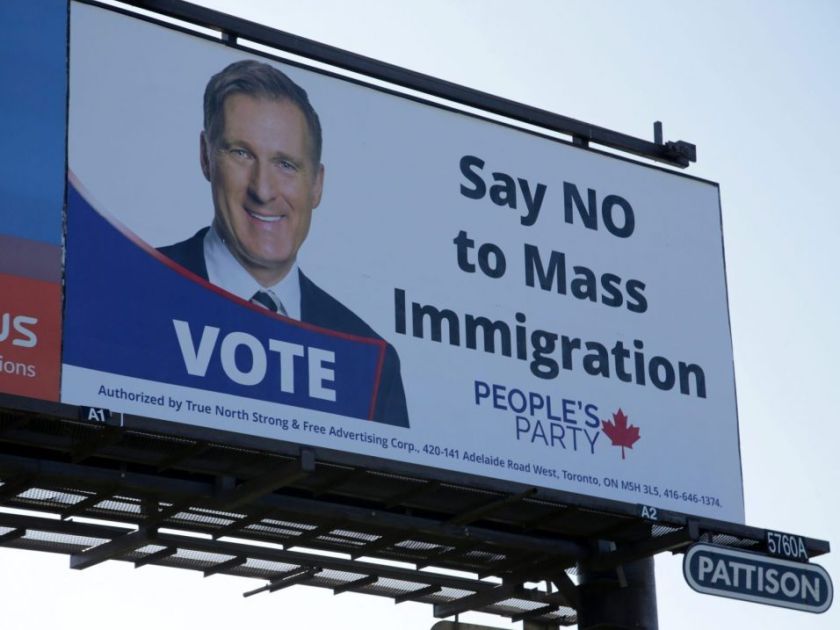
A billboard in Toronto in 2019, showing Maxime Bernier and an official-looking PPC message.
Photo from The Province.

Canada created a durable and lasting consensus on immigration by leaning on a shared national mythology: that from a colonial past, we forged a principled multicultural nation in which people from around the world are able to honour their heritage and traditions while building a prosperous and successful life for themselves and their descendants. This narrative requires that all of us — regardless of our divergent ideologies or religious views — cohere around a shared set of post-enlightenment principles: the equality of man, the rule of law, tolerance, and the rest. We take this highly abstract concept of nationhood so for granted that we’ve forgotten how historically rare it is.

This is not to say Canada ever imagined itself to have an unblemished history, but rather that this is a nation that saw itself as a fundamentally good and noble project, and therefore some place worth immigrating to, and a culture worth integrating with.

The last nine years of Liberal government have undermined that vision. Under the Trudeau Liberals, instead what we have been regularly subjected to Canada as a white supremacist genocidal settler state. And, hey, to what extent that historical reckoning is good or necessary is not for me to say: but if “Canada is bad, actually” is the starting position, by what delusion do any of us presume to perpetuate it?

A post-modern nation state that has no sense of itself, and no belief in its own inherent value, is not an experiment worth continuing, now is it? How do we expect to welcome and integrate 500,000 new Canadians annually into a corrupt national project? If “Canadian” isn’t something worth being, why should anyone sublimate their ethnic or religious grievances into this vicious national identity?

I think this is the tension that lies at the heart of this growing unease around immigration, and it’s going to be the most difficult one for the Conservatives to navigate. There will be those within the party that follow this thread directly into white grievance and conspiracies like great replacement theory, the xenophobic fear that “elites” are trying to demographically and culturally replace white people through mass migration.

I think that theory is insane, to be clear, but I’m also noticing it wend its way into politics in weird and destructive ways.

A small example: before the holidays, certain conservative social media circles were put into a state of high uproar over the construction of a 55-foot statue of the Hindu deity Hanuman on a private temple complex in Brampton.

Initially, I was baffled and confused and even a bit amused by the upset. After all, this wasn’t a publicly funded monument. It was on private property, and isn’t respect for private property a sacrosanct value for conservatives? This wasn’t rational.

The controversy was only explicable when we examine the emotional subtext of the complaints: that there was something deeply menacing about Hanuman to these people. They saw him overlooking the suburbs of Brampton with a colonial intent. (Irony abounds!) One of the most telling tweets came from one angry individual who said something to the effect: “They tore down our John A. Macdonald statues, but, sure, Hanuman is great.”

To this gentleman: the fine devout Hindus of Brampton did not tear down your John A. Macdonald statues — and I highly doubt they would any pick bones with historic or civic monuments.

We, Canadians, tore down our own statues (or allowed them to be torn down) as part of an internal process of historical reckoning. Again, immigrants are not doing anything to Canada. They are Canada, and as such, they share in this country’s problems, which are largely self created.

Those passionate Houthi and the Blowfish fans

Filed under: Cancon, Media, Middle East, Politics — Tags: , , , , , , , , — Nicholas @ 03:00

Chris Selley wonders why the rest of the Canadian legacy media are being so careful to proactively curate and “contextualize” the violent and hateful message of the pro-Hamas and pro-Houthi protesters in our cities:

The Houthi Ansarullah “Al-Sarkha” banner. Arabic text:

الله أكبر (Allah is the greatest)

الموت لأمريكا (death to America)

الموت لإسرائيل (death to Israel)

اللعنة على اليهود (a curse upon the Jews)

النصر للإسلام (victory to Islam)

Image and explanatory text from Wikimedia Commons.

The record will show I had little sympathy for the Ottawa convoy crowd, especially once they had made their point and refused to go away. You can’t occupy the downtown of a G7 capital for a month. Sorry, you just can’t.

At the same time, I cringed at the media’s fevered attempts to cast the entire crowd as neo-Nazi oafs, based on what seems to have been two observed flags — one Confederate, one Nazi.

I recalled this while watching video footage of protesters in Toronto over the weekend chanting “Yemen, Yemen, make us proud! Turn another boat around!” Because the Houthis, who control Yemen’s Red Sea coast and have been waging war on commercial shipping, are about as neo-Nazi as it gets in the world nowadays.

The movement’s official slogan: “Allahu Akbar! Death to America! Death to Israel! Curse the Jews! Victory for Islam!” As if to drive home the point, there is ample video evidence of Houthi fighters chanting that slogan with their hands raised skywards in a Nazi salute.

The Houthis use child soldiers (as video evidence also makes horrifyingly plain). They are literally slavers. I have seen it suggested, by way of context, that they really don’t have that many slaves. Just a few slaves. It’s so hard to get good help.

But I haven’t seen anyone try to “contextualize” the Houthi slogan, the way Palestinian supporters will tell you “from the river to the sea” isn’t a call for Israel’s destruction and cheering for “intifada” doesn’t mean further terrorist attacks against Jews. Perhaps it’s just too big a job for even the most dedicated and creative of apologists.

Outside of the Postmedia empire, so far as I can see, not a single Canadian media outlet has seen fit to mention the chanting in Toronto streets in support of a rabidly antisemitic death cult. You can read several articles, however, about how Canadian media are terribly biased against the Palestinian cause. It’s ludicrous.

A nice little illustration, as the National Post‘s Tristin Hopper noted in November: When the convoy crowd appropriated Terry Fox’s statue, just opposite Parliament Hill, for their “mandate freedom” message, the Laurentian bubble nearly burst with righteous fury. When pro-Palestinian protesters draped a keffiyeh over Fox’s shoulders and had their kids pose with him, there was all but total silence.

Of course, flamboyant media double-standards aren’t the worst of our problems.

January 18, 2024

Understanding the Spanish Civil War

Filed under: Europe, History, Military, Politics — Tags: , , , , — Nicholas @ 03:00

Niccolo Soldo offers an introduction to the context in which the Spanish Civil War took place, with emphasis on one side’s uneasy coalition of interests:

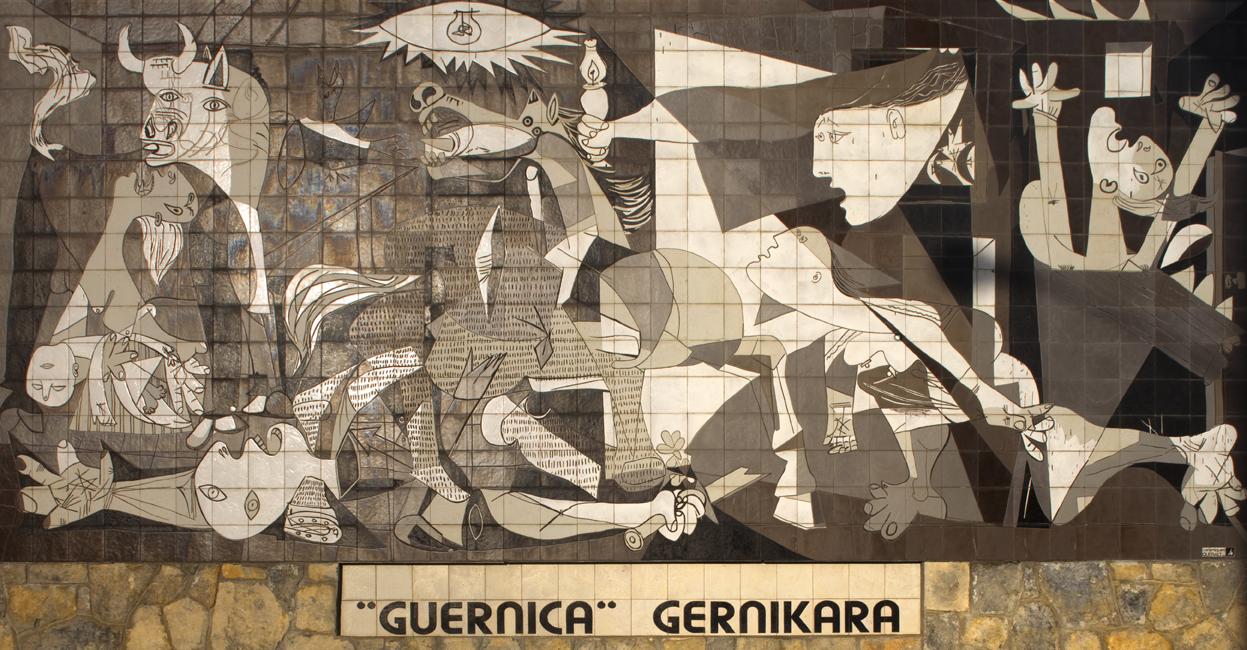
Picasso’s “Guernica” in mural form in the town of Guernica.
Photo by Papamanila via Wikimedia Commons.

At a crossroads in his life, [Ernest Hemingway] decided to go to Spain to cover the conflict for a newspaper chain. Out of his experiences in that war came For Whom the Bell Tolls (1940), one of his most celebrated novels. In this excerpt, he uses the female character “Pilar” to relate the story of how Republican forces massacred a group of people in a small town who were opposed to the government and supported the Spanish Generals seeking to overthrow it. Derided as “fascists”, each of the men were forced to pass a line of pro-government peasants who would beat them with flails before throwing them off of a cliff. Civil wars are indeed the most vicious, even in fictional depictions like this one.

The Spanish Civil War is odd for two reasons, the first one being that more than any other war that I can think of, historians have placed a much stronger focus on the politics of the conflict to the detriment of its military aspects. The second reason is much more important overall, and particularly germane to the subject of this essay: it is the only war that I can think of where the histories have been overwhelmingly written by the losers.1

If you ask a random, somewhat educated person in the West about the Spanish Civil War, they will generally say that “Franco was a fascist who allied himself to Hitler and Mussolini and won the civil war in the most brutal fashion possible. He was a dictator who hated democracy and killed thousands upon thousands of innocent people.” Beyond that, they might make mention of Hemingway and his novel, or even Pablo Picasso’s painting entitled “Guernica”2, that depicts the victims of the German Luftwaffe bombardment of that small Basque town in the north of Spain. Others still will relay the fact that the term “Fifth Column” came out of the Spanish Civil War.3 Added up all together, the most simplified take becomes “Franco bad, Republicans good”.

Of course this take is wrong, as this conflict was too complex to arrive at such a ridiculous reductionist conclusion no matter which side you sympathize(d) with. To give you a quick illustration of just how complex this conflict was, here is a list of the major domestic factions that took part in it:

Spanish Republican Side:

  • People’s Army (the armed forces of the Spanish Republic)
  • Popular Front (left-wing electoral alliance of communists, socialists, liberals, anarchists)
  • UGT (very large trade union affiliated with the Spanish Socialists)
  • CNT-FAI (massive trade union of anarchist militants)
  • POUM (anti-Stalinist communists, including some Trotskyites)4
  • Generalitat de Catalunya (Catalonian Autonomists)
  • Euzko Gudarostea (Army of the Basque Nationalists)

Spanish Nationalist Side:

  • Spanish Renovation (monarchists supporting the Bourbon claimant to the throne, Alfonso XIII, who abdicated in 1931)
  • CEDA (the main conservative party, Catholic conservatives)
  • Requetés (traditionalist Catholic monarchist militants who supported the Carlist Dynasty, mainly from the region of Navarre)
  • Falange Española de las JONS (Spanish Fascists)
  • The Army of Africa, including the Spanish Legion (Spanish Army in Spain’s then-colony of Morocco, with many Moroccans serving in it)

Add to this mix the International Brigades5 that fought on the side of the government, and the German and Italian forces who backed the rebels. To list off all the political groupings that participated in the war is a mouthful, but necessary to hammer home the point of the complexity of this conflict. So here goes: nationalists, monarchists (from two competing royal houses), fascists, conservatives, liberals, social democrats, socialists, communists (from two competing camps), anarchists, and regional autonomists. In short, this war had something for everyone, which is why it caught the attention of so many foreigners (especially famous ones) at the time. But before we dive into the run up to the civil war, we need to understand some of the history of Spain that lead up to this “world war in miniature”.


    1. “History will be kind to me, for I intend to write it” – falsely attributed to Winston Churchill, but it makes for a good quote to illustrate the point. From the International Churchill Society: “‘Alas poor Baldwin. History will be unkind to him. For I will write that history.’ And another version often repeated is ‘History will be kind to me. For I intend to write it.’

    What Churchill actually said, in the House of Commons in January 1948, was in response to a speech by Herbert Morrison, the Labour Lord Privy Seal, which attacked the Conservatives’ foreign policy before the war:

    “For my part, I consider that it will be found much better by all parties to leave the past to history, especially as I propose to write that history myself.”

    2. In January of 1937, Picasso was commissioned by the Spanish Republican government to create a work of art to display at the upcoming World’s Fair in Paris in order to draw international attention to their cause. At the time, Picasso was living in the French capital. It wasn’t until he read reports of the bombing of Guernica on April 26 of that same year that he felt inspired enough to create something that he felt was worthwhile for audiences to see.

    3. In September 1936, General Francisco Franco supposedly claimed that there were “four nationalist columns approaching Madrid, and a fifth column inside of it ready to attack”.

    4. Leon Trotsky did not support POUM and went on to disassociate himself from them and their actions. George Orwell joined POUM when he went to Spain to volunteer to fight against the Spanish nationalists.

    5. Formed by volunteers from outside of Spain and almost entirely Stalinist in leadership and political orientation.

January 17, 2024

“The thing liberals don’t understand about the average Republican voter in 2024 is that they hate the Republican Party”

Filed under: Media, Politics, USA — Tags: , , , , , , — Nicholas @ 04:00

In The Free Press, Batya Ungar-Sargon attempts to explain at least one aspect of the inexplicable-to-liberals Trump appeal for many Republican voters:

Donald Trump addresses a rally in Nashville, TN in March 2017.
Photo released by the Office of the President of the United States via Wikimedia Commons.

To the surprise of no one and the dismay of the liberal commentariat class, former president Donald Trump has crushed the first GOP primary election.

Iowa, which voted twice for Barack Obama before flipping to Trump in 2016, gave Trump a decisive win Monday night. And in Iowa, as in the Republican Party and the country more generally, the class divide was the defining feature of the night.

According to MSNBC’s early entrance polls, Trump won voters without a college degree by 65 percent, to Florida governor Ron DeSantis’s 17 percent and former UN ambassador Nikki Haley’s scant 8 percent. Trump won college grads, too, but by a much slimmer margin — just 35 percent caucused for Trump. Haley, meanwhile, got nearly as many — 33 percent, with DeSantis trailing at 23 percent. The AP had a similar breakdown.

That’s a 30-point gap in support for Trump — and a 25-point gap for Haley. It’s the gulf separating the college-educated from the working-class, who don’t just have different candidates of choice but different concerns, different struggles, and different priorities.

Working-class Americans are worried about the economy, immigration, our foreign entanglements, and the disappearing American Dream — all issues Donald Trump not only talks about but has a solid record on. Haley represents the GOP that Trump replaced — the free-market, chamber-of-commerce, nation-building version of the party that is dominated by a donor class whose interests are completely at odds with those of the working class.

Unfortunately for Haley, her party is now the party of the working class. In 2020, Bloomberg found that truckers, plumbers, machinists, painters, corrections officers, and maintenance employees were among the occupations most likely to donate to Trump (Biden got the lion’s share of writers and authors, editors, therapists, business analysts, HR department staff, and bankers.) As much as the Republican donor class wishes Haley were the party’s nominee, there’s no going back for your average corrections officer.

The thing liberals don’t understand about the average Republican voter in 2024 is that they hate the Republican Party. The average liberal feels well-represented by the Democratic Party because the Democrats’ base, like the party leadership, are college-educated elites. They share the same list of priorities. But the average Republican voter is working class and truly loathes the Bush-era version of the Republican Party, which meant tax cuts for the rich, failed wars, and an economic agenda that outsourced jobs to China.

Whether they realize it or not, this is why Democrats truly hate Trump. Without him, the left would soon have had a pretty permanent monopoly on power.

But if Iowa is any indication, not so soon after all.

Should Trump manage not to get thrown off the ballot (or sent to jail) by the time the election rolls around, he can’t count on Justin Trudeau for support:

Prime Minister Justin Trudeau says voters in the United States will face a choice later this year between optimism for the future or nostalgia for a past that never existed.

Trudeau made the comments in Montreal today to a business crowd in reference to Donald Trump’s victory Monday in the Iowa Republican caucuses, which gives the former president an early lead for the Republican nomination ahead of the November election.

The prime minister says a second Trump presidency would be difficult for the Canadian government, as there are many issues on which he and former president disagree.

On Monday, a majority of Iowa Republican supporters said they back Trump’s “Make America Great Again” movement.

Though he didn’t mention Conservative Party Leader Pierre Poilievre by name, Trudeau said Canadians will face a similar choice to American voters when they head to the polls.

January 16, 2024

“Flatly, if you think Trump is horrible, it’s time to think about where he comes from and why he isn’t going away quietly”

Filed under: Media, Politics, USA — Tags: , , , — Nicholas @ 04:00

Chris Bray plays the “for the sake of argument” game about the Bad Orange Man:

Let’s pretend. I’m going to accept a bunch of arguments that I don’t believe, for the sake of argument, and see where they take us. For the next two minutes, it’s all true: Donald Trump is a vicious racist, an unspeakably cruel man, and the figure whose ascension to power ends American democracy and turns the country into a fascist dictatorship. All of that is perfectly obvious, for the purposes of our exercise, and only a fool or a fellow traveling fascist could pretend not to see it.

Now: If all of that is true, why can’t America stop him? A thoroughly established constitutional republic, nearing its 250th year, with a deep well of legal and political tradition and thoroughly entrenched institutions, can’t stop a vulgar Nazi thug, who keeps winning and advancing. Right? Distinguished statesmen like Joe Biden and Jerrold Nadler can’t hold the line against the death of the republic, despite their decades of accumulated wisdom. This is already making me feel like an idiot, but I’m committed.

The problem is that, if the prevailing “mainstream” argument about Donald Trump is true, it condemns all of the important political norms that Trump’s critics say they’re protecting. Immune systems that can’t stop a virulent infection are failed immune systems. If Trump is what Jamie Raskin and Adam Schiff and Liz Cheney say he is, then they’ve condemned … everything else. Everything else. The emergence of a Hitler figure, the implosion of the rule of law, the collapse of political institutions, and on and on: None of that happens in a healthy country.

So if you want to argue that this is what’s happening, you must argue that America is in a state of ruin. You have no choice. No Weimar republic, no Nazis. Failure comes from failure. Hitler figures don’t arise from healthy societies.

Turning well to my left, Christopher Hedges has been making this argument for years:

    The parting gift, I expect, of the bankrupt liberalism of the Democratic Party will be a Christianized fascist state. The liberal class, a creature of corporate power, captive to the war industry and the security state, unable or unwilling to ameliorate the prolonged economic insecurity and misery of the working class, blinded by a self-righteous woke ideology that reeks of hypocrisy and disingenuousness and bereft of any political vision, is the bedrock on which the Christian fascists, who have coalesced in cult-like mobs around Donald Trump, have built their terrifying movement.

Taking off my Daily Kos hat, let’s reformulate. Donald Trump is an unusual political figure, and both his election to the presidency and his continued political importance are signs of an unusual moment. But outsider attacks on the supposed mainstream are not uncommon, and we have a long line of outsider figures who’ve played this role in various forms: William Jennings Bryan, Huey Long, George Wallace, Ross Perot. Thomas Jefferson attacked the Federalist mainstream, and the existence of the Republican Party grew from exhaustion with a broken center. A schoolhouse in Ripon was our Trump Tower, the place where people broke with the available choices. And then, you know, the Civil War, but still.

The ridiculousness of the current manufactured crisis is found precisely in the inability of existing institutions to fend off the challenge. To deliver the kind of sophisticated analysis that makes bartenders enjoy our conversations so much, it’s because our existing institutions suck. I roll my eyes at the “Orange Hitler” part, but I see the failed Weimar republic part that Trump’s critics (other than Hedges) often imply without noticing. The common refrain on social media in the face of institutional failure: “You want more Trump? This is how you get more Trump.” A healthy politics would already have seen off the moment, instead of deepening a completely unnecessary societal wildfire with a long series of increasingly insane overreactions: WELL LET’S ARREST HIM AND IMPRISON SOME OF HIS SUPPORTERS AND THROW HIM OFF THE BALLOT THAT SHOULD PRODUCE CALM AND RESTORE ORDER.

Flatly, if you think Trump is horrible, it’s time to think about where he comes from and why he isn’t going away quietly.

QotD: Children and transgenderism

Filed under: Education, Health, Politics, Quotations, Science — Tags: , , , , , — Nicholas @ 01:00

And then there is the disturbing “social justice” response to gender-nonconforming boys and girls. Increasingly, girly boys and tomboys are being told that gender trumps sex, and if a boy is effeminate or bookish or freaked out by team sports, he may actually be a girl, and if a girl is rough and tumble, sporty, and plays with boys, she may actually be a boy.

In the last few years in Western societies, as these notions have spread, the number of children identifying as trans has skyrocketed. In Sweden, the number of kids diagnosed with gender dysphoria, a phenomenon stable and rare for decades, has, from 2013 to 2016, increased almost tenfold. In New Zealand, the rate of girls identifying as boys has quadrupled in the same period of time; in Britain, where one NHS clinic is dedicated to trans kids, there were around a hundred girls being treated in 2011; by 2017, there were 1,400.

Possibly this sudden surge is a sign of pent-up demand, as trans kids emerge from the shadows, which, of course, is a great and overdue thing. The suffering of trans kids can be intense and has been ignored for far too long. But maybe it’s also some gender non-conforming kids falling prey to adult suggestions, or caused by social contagion. Almost certainly it’s both. But one reason to worry about the new explosion in gender dysphoria is that it seems recently to be driven by girls identifying as boys rather than the other way round. Female sexuality is more fluid and complex than male sexuality, so perhaps girls are more susceptible to ideological suggestion, especially when they are also taught that being a woman means being oppressed.

In the case of merely confused or less informed kids, the consequences of treatment can be permanent. Many of these prepubescent trans-identifying children are put on puberty blockers, drugs that suppress a child’s normal hormonal development, and were originally designed for prostate cancer and premature puberty. The use of these drugs for gender dysphoria is off-label, unapproved by the FDA; there have been no long-term trials to gauge the safety or effectiveness of them for gender dysphoria, and the evidence we have of the side effects of these drugs in FDA-approved treatment is horrifying. Among adults, the FDA has received 24,000 reports of adverse reactions, over half of which it deemed serious. Parents are pressured into giving these drugs to their kids on the grounds that the alternative could be their child’s suicide. Imagine the toll of making a decision about your child like that?

Eighty-five percent of gender-dysphoric children grow out of the condition — and most turn out to be gay. Yes, some are genuinely trans and can and should benefit from treatment. And social transition is fine. But children cannot know for certain who they are sexually or emotionally until they have matured past puberty. Fixing their “gender identity” when they’re 7 or 8, or even earlier, administering puberty blockers to kids as young as 12, is a huge leap in the dark in a short period of time. It cannot be transphobic to believe that no child’s body should be irreparably altered until they are of an age and a certainty to make that decision themselves.

I don’t have children, but I sure worry about gay kids in this context. I remember being taunted by some other kids when I was young — they suggested that because I was mildly gender-nonconforming, I must be a girl. If my teachers and parents and doctors had adopted this new ideology, I might never have found the happiness of being gay and comfort in being male. How many gay kids, I wonder, are now being led into permanent physical damage or surgery that may be life-saving for many, but catastrophic for others, who come to realize they made a mistake. And what are gay adults doing to protect them? Nothing. Only a few ornery feminists, God bless them, are querying this.

In some ways, the extremism of the new transgender ideology also risks becoming homophobic. Instead of seeing effeminate men as one kind of masculinity, as legitimate as any other, transgenderism insists that girliness requires being a biological girl. Similarly, a tomboy is not allowed to expand the bandwidth of what being female can mean, but must be put into the category of male. In my view, this is not progressive; it’s deeply regressive. There’s a reason why Iran is a world leader in sex-reassignment surgery, and why the mullahs pay for it. Homosexuality in Iran is so anathema that gay boys must be turned into girls, and lesbian girls into boys, to conform to heterosexual norms. Sound a little too familiar?

Adults are increasingly forced to obey the new norms of “social justice” or be fired, demoted, ostracized, or canceled. Many resist; many stay quiet; a few succumb and convert. Children have no such options.

Indoctrinate yourselves as much as you want to, guys. It’s a free country. But hey, teacher — leave those kids alone.

Andrew Sullivan, “When the Ideologues Come for the Kids”, New York Magazine, 2019-09-20.

January 15, 2024

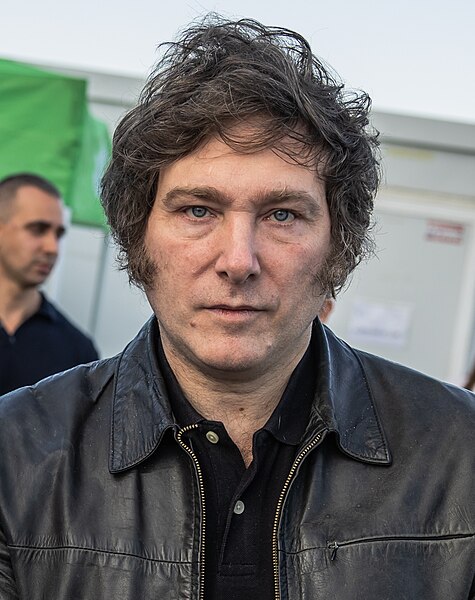
The radical anti-state agenda of Argentina’s Javier Milei

Filed under: Americas, Economics, Liberty, Media, Politics — Tags: , , , — Nicholas @ 04:00

Jon Miltimore compares the Venezuelan experience after electing Hugo Chavez in 2007 to Argentina’s radically opposed choice to elect Javier Milei as President late in 2023:

Javier Milei, 8 October 2022.
Photo attributed to Vox España via Wikimedia Commons.

In November, the country elected libertarian Javier Milei as its new president. And whereas Hugo Chavez said, “All that was privatized, let it be nationalized”, Milei is essentially saying the opposite: All that was nationalized, let it be privatized.

Milei started by cutting in half the number of federal ministries in Argentina, reducing them from 18 to nine. This was followed by a massive currency devaluation.

Milei did not stop there. In a recent televised announcement, he said he would “repeal rules that impede the privatization of state companies”.

Those words were backed up by a 300-measure order designed to deregulate internet services, eliminate various government price controls, repeal laws that discourage foreign capital investment, abolish the Economy Ministry’s price observatory, and “prepare all state-owned companies to be privatized”.

Milei capped it off on Wednesday with a 351-page omnibus bill that takes aim at Argentina’s regulatory state and would grant Milei emergency powers “until December 31, 2025”.

Giving any president emergency powers is no small thing, even during a genuine crisis. Though Milei’s bill is designed to curb state power, not to expand it — a notable contrast to the typical crisis response paradigm — history and recent events in El Salvador show how emergency powers can be abused and used to violate human rights and liberty.

Whether Milei can get his full agenda through is unclear, but there’s reason for optimism.

His stunning election is itself evidence that Argentines are hungry for change. He’s already shown an impressive pragmatism to wed to his undeniable political flair, surrounding himself with a slew of talented policy experts. This includes Federico Sturzenegger, a former chief economist of Argentina’s central bank who two decades ago managed to turn around the failing Bank of the City of Buenos Aires. Sturzenegger’s reforms were so effective they became a Harvard case study.

Success is by no means certain, of course.

Recovering from decades of Peronism — a blend of socialism, nationalism, and fascism, which dominated Argentina’s political system for years — will not happen overnight. And Argentina’s political class has spent the last few years making a bad situation worse.

Still, the great economist Adam Smith once observed that the key to economic prosperity is surprisingly simple.

“Little else is requisite to carry a state to the highest degree of opulence from the lowest barbarism, but peace, easy taxes, and a tolerable administration of justice,” the Wealth of Nations author said.

Milei knows this. He has not just read Smith (in addition to Austrian school economists such as Friedrich Hayek and Ludwig von Mises). In a 2017 profile, he dubbed himself “Adam Smith’s heir.”

A heavy dose of Adam Smith is precisely what Argentina needs, and Milei has correctly diagnosed the affliction of Argentina’s once-prosperous economy.

“The state doesn’t create wealth; it only destroys it,” Milei said in a widely viewed 2023 interview.

Grave Error

Filed under: Books, Cancon, History, Media, Politics — Tags: , , , — Nicholas @ 03:00

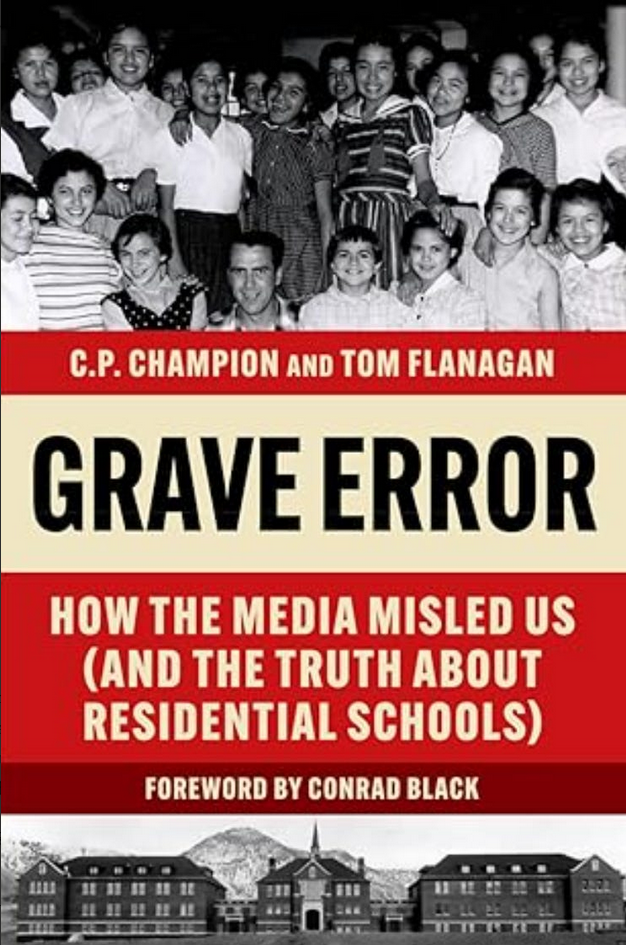
In the latest SHuSH newsletter, Ken Whyte calls our attention to an important book on a major Canadian topic … that has been ignored by the Canadian media establishment (as one would expect if it contravenes the official narrative):

Have you read Grave Error? Have you seen it on the shelves in your local bookstore? At the library, perhaps? Did you notice coverage of it in the Globe or hear someone talking about it on CBC?

I’d bet ninety-eight out of a hundred SHuSH readers would answer “no” to all those questions.

The full title of the book is Grave Error: How the Media Misled Us (and the Truth About Residential Schools). Its authors are former University of Calgary political scientist and Harper aide Tom Flanagan and Chris Champion, editor of the Dorchester Review. The book takes strong exception to commentary by media, politicians, and Indigenous leaders on the subject of unmarked graves at a former Kamloops Indian Residential School. I first noticed it over the holidays, several weeks after publication, when it was the overall #1 bestseller on Amazon.

It’s not easy to become the top-selling book on Amazon. You’re competing against Colleen Hoover and Prince Harry and the entire world of books, published and self-published. Grave Error was the only Canadian book, fiction or nonfiction, in Amazon’s top fifty when I came across it. It’s rare to see more than two or three Canadian books in Amazon’s top fifty at any given time.

You won’t have noticed Grave Error in your local bookstore because Amazon is the only outlet that’s selling the book. You won’t have seen coverage of it because no mainstream Canadian media outlet has paid attention to it. Nor does any public library stock it. It has not appeared on any conventional bestseller list, although it has to be a Canadian bestseller — Amazon sells well over half of all books in Canada. Most Amazon sales don’t register on our bestseller lists because Amazon doesn’t cooperate with the organizations that produce the lists.

Grave Error is published by True North, a conservative news website and public policy organization. It is run by Candace Malcolm, who founded True North with her husband, Kaz Nejatian, a former Jason Kenney staffer, now COO of Spotify. It’s published a half dozen hits in recent years, several written by Malcolm herself.

QotD: Beyond mere superstition, moderns believe in literal magic

Filed under: Politics, Quotations, USA — Tags: , , , , — Nicholas @ 01:00

Stern’s “intellectual Luddites” wrote a whole lot of supercharged, Sturm und Drang hooey about “national souls” and “blood spirits” and whatnot, but even their most Romantic fantasies about the Aryan Übermenschen of yore paled in comparison to stuff like “Critical Race Theory”. Heinrich Himmler may have been the spiritual heir of Stern’s “intellectual Luddites”, but even he, playing with his live-action Castle Wolfenstein playset while the world burned, was a paragon of reason compared to people like Robin DeAngelo. Himmler thought “Nordic” runes were spiritual conduits to the mythic past, but our modern Elites believe, quite literally, in magic.

Magic dirt: There’s something about the Rio Grande, or the Ellis Island ferry, such that crossing it transforms 70-IQ campesinos into bourgie app developers. Magic shapes: Mold plastic into something that looks like a Glock, and anyone who sees it will be compelled to start shooting people. And of course the granddaddy of them all, magic words: Race, sex, these are all “social constructions”, such that a persyn who says xzhey are a woman really IS a woman, physiology be damned. Within the space of a generation, the same people who were smugly slapping Darwin fish on the bumpers of their Subaru Outbacks have declared the very basics of biology rank heresy.

Everyone knows that Karl Marx called religion “the opium of the masses”. It’s a fun quote, but it wasn’t particularly effective rhetoric back in the 19th century, since drug addiction wasn’t really a thing back then.1 Far more effective was David Hume’s description — “sick men’s dreams” — but even that paled in comparison to the 19th century’s go-to tactic: Implied infancy. If religious belief developed naturally, in a predictable pattern — and who could deny it, having read the formidable logic of E.B. Tylor? — then anyone who still clung to his belief in a Magic Sky Fairy must belong, despite his physical presence here in this best of all possible worlds, to Mankind’s intellectual infancy. Of course we’re not saying that the religion of Aquinas and Galileo, of Newton and Boyle, was all piffle … but come now, old sock, you must admit that the Thirty Nine Articles can only be understood “in a non-natural sense”, as Cardinal Newman (of all people!) put it. Are we not, in the face of all-triumphing science, all Robert Elsmere? Surely no one as obviously intelligent as yourself could possibly still …

Marx had that other quote that fits this situation much better, the one about “second time as farce”. Our Postmodern Elite, the I-Fucking-Love-Science crowd, has gone way past intellectual Luddism. They’re digital infants, chanting their hosannas to magic dirt, watching the same cartoon play out over and over again in Minnesota, in Chicago, soon enough in a neighborhood near you (infants love repetition). Tantrums, nom noms, and whee! A shiny!!

Such are the fruits of rationalism.

Severian, “Digital Infants”, Rotten Chestnuts, 2021-04-16.


    1. Despite the easy availability of all kinds of highly addictive shit like opium and cocaine. Ponder that in the dark watches of the night, if you ever feel like giving yourself insomnia.

January 14, 2024

Tristin Hopper imagines the thoughts of the Toronto Police Service

Filed under: Cancon, Law, Media, Politics — Tags: , , , , — Nicholas @ 05:00

Every week, Tristin Hopper helps us understand an element of the week’s news by “imagining” the diary entries of the people or organizations involved. This week, it’s the turn of Toronto’s police department:

The Toronto police have not had a good week. After receiving widespread criticism for refusing to disperse an anti-Israel blockade targeting a north Toronto Jewish neighbourhood, video emerged this week of officers delivering coffee and donuts to the blockaders.

And so, only after a cross-section of local politicians and Jewish leaders had expressed bafflement at police inaction, did Toronto police announce plans on Thursday to actually put a stop to protests at the Avenue Road bridge. They even charged one protester with incitement of hatred for allegedly carrying a hate group’s flag at a protest in downtown Toronto.

Monday
I’m sorry — is that the sound of people wanting us to enforce the law? As in, “hey there, sworn peace officer, get in your car, go identify some criminality and use force to stop it?”

Are you sure about that, Toronto? You sure you don’t want us to instead try fixing this with a solidarity flag raising? Or maybe this is something that could be diffused with one of those equity roundtables you keep forcing us to attend.

After all, enforcing the law is a messy business. People could get hurt. This isn’t like handing out a traffic ticket or a jaywalking citation: You’re asking us to confront people who may not care that their actions are illegal, and may employ additional illegal methods to dispute that.

Tuesday
I’m still trying to get my head around this new paradigm. So to refresh: when people break laws, you want us to stop that? The Criminal Code. The Highway Traffic Act. The Controlled Substances Act. You want our officers to read up on contemporary legislation, seek out violators of said legislation, and then apply appropriate sanctions?

This is a minefield, frankly. We’re talking raised voices. Mean tweets. People in handcuffs. Unflattering videos. Outraged Toronto Star columns. This is how we board an escalator that may soon make us pine for the days when our only problems were an easily ignored minority demographic having their overpass shut down.

Wednesday
When we’re enforcing these laws, are you absolutely sure you want us to do this without first checking if they’re politically acceptable? I mean, it would obviously streamline everything if roadways were only ever blockaded by white supremacist cannibal pedophiles, but that’s rarely the case.

And what if they’re doing an illegal thing that is tangentially related to something you like? I had our legal guy look into it and he said that any laws broken as a result of a public protest are still illegal – the right to protest only covers legal things, it turns out. So bear with me; this could result in a city in which graffiti, blockades and vandalism OF ANY KIND could end up banned. It’s a slippery slope.

January 12, 2024

“… normal people no longer trust experts to any great degree”

Theophilus Chilton explains why the imprimatur of “the experts” is a rapidly diminishing value:

One explanation for the rise of midwittery and academic mediocrity in America directly connects to the “everybody should go to college” mantra that has become a common platitude. During the period of America’s rise to world superpower, going to college was reserved for a small minority of higher IQ Americans who attended under a relatively meritocratic regime. The quality of these graduates, however, was quite high and these were the “White men with slide rules” who built Hoover Dam, put a man on the moon, and could keep Boeing passenger jets from losing their doors halfway through a flight. As the bar has been lowered and the ranks of Gender and Queer Studies programs have been filled, the quality of college students has declined precipitously. One recent study shows that the average IQ of college students has dropped to the point where it is basically on par with the average for the general population as a whole.

Another area where this comes into play is with the replication crisis in science. For those who haven’t heard, the results from an increasingly large number of scientific studies, including many that have been used to have a direct impact on our lives, cannot be reproduced by other workers in the relevant fields. Obviously, this is a problem because being able to replicate other scientists’ results is sort of central to that whole scientific method thing. If you can’t do this, then your results really aren’t any more “scientific” than your Aunt Gertie’s internet searches.

As with other areas of increasing sociotechnical incompetency, some of this is diversity-driven. But not wholly so, by any means. Indeed, I’d say that most of it is due to the simple fact that bad science will always be unable to be consistently replicated. Much of this is because of bad experimental design and other technical matters like that. The rest is due to bad experimental design, etc., caused by overarching ideological drivers that operate on flawed assumptions that create bad experimentation and which lead to things like cherry-picking data to give results that the scientists (or, more often, those funding them) want to publish. After all, “science” carries a lot of moral and intellectual authority in the modern world, and that authority is what is really being purchased.

It’s no secret that Big Science is agenda-driven and definitely reflects Regime priorities. So whenever you see “New study shows the genetic origins of homosexuality” or “Latest data indicates trooning your kid improves their health by 768%,” that’s what is going on. REAL science is not on display. And don’t even get started on global warming, with its preselected, computer-generated “data” sets that have little reflection on actual, observable natural phenomena.

“Butbutbutbut this is all peer-reviewed!! 97% of scientists agree!!” The latter assertion is usually dubious, at best. The former, on the other hand, is irrelevant. Peer-reviewing has stopped being a useful measure for weeding out spurious theories and results and is now merely a way to put a Regime stamp of approval on desired result. But that’s okay because the “we love science” crowd flat out ignores data that contradict their presuppositions anywise, meaning they go from doing science to doing ideology (e.g. rejecting human biodiversity, etc.). This sort of thing was what drove the idiotic responses to COVID-19 a few years ago, and is what is still inducing midwits to gum up the works with outdated “science” that they’re not smart enough to move past.

If you want a succinct definition of “scientism,” it might be this – A belief system in which science is accorded intellectual abilities far beyond what the scientific method is capable of by people whose intellectual abilities are far below being able to understand what the scientific method even is.

The rise of “anti-woke” comedy

Filed under: Media, Politics — Tags: , , — Nicholas @ 03:00

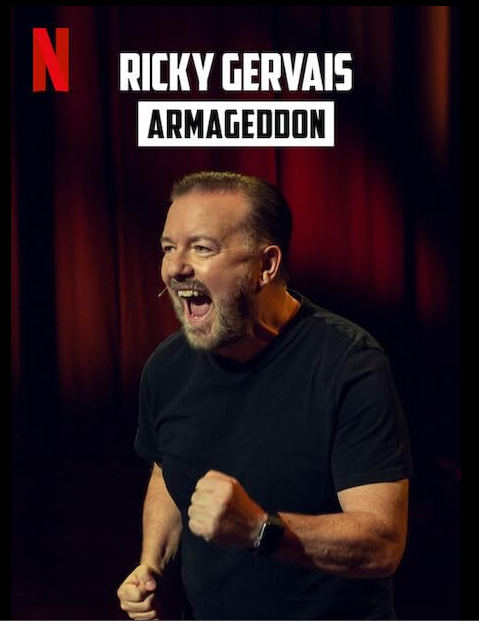
Andrew Doyle suggests we should stop calling Ricky Gervais “anti-woke”:

Stop me if you’ve heard this one. A man’s wife divorces him and shacks up with his boss. Soon after, a friend suggests that he should remarry. “What for?” he asks. “Are you looking for a wife as well?”

It may not be the funniest joke, but that’s because it’s an anecdote from The Lives of the Caesars by the Ancient Roman historian Suetonius. The comedian in this case was a senator called Aelius Lamia whose wife had left him for the Emperor Domitian. For making this casual quip, Domitian had Lamia put to death. Now that’s a bad review.

It might be worth keeping this anecdote in mind when the usual debates flare up about whether comedy “goes too far”. The notion of people being offended by jokes is as old as comedy itself, and often people react angrily if humour isn’t to their taste. The current manifestation of this age-old debate takes the form of a simple dichotomy: “woke comedy” versus “anti-woke comedy”.

Already we are in treacherous waters. It is very unwise to define whole genres by terms that have no settled definitions. The actor Kathy Burke believes that “woke” simply refers to people who are neither racist nor homophobic, which would surely mean that the overwhelming majority of us would happily embrace the term. But for those who have been on the receiving end of the bullying, harassment and intimidation by activists who self-define as “woke”, it is clear this issue is not so straightforward.

Over the past few years, we have seen the emergence of a new comedy movement, one branded by commentators as “anti-woke”, that seeks to push back against the orthodoxies of our time. Its closest historical precedent is the “alternative” comedians of the Eighties, who also took aim at establishment norms and were often similarly blunt in their approach. The key difference today is that there is no broad agreement about where the power in society lies, and so while “anti-woke” comedians see themselves as anti-establishment, their critics insist that the opposite is true.

Consider the example of Ricky Gervais, whose new Netflix stand-up special Armageddon has sparked this most recent round of discussions about the supposed red lines in comedy. Some have accused Gervais of taking a reactionary stance, most notably because of jokes relating to migrants and disabled children. Gervais has been branded an “anti-woke” comedian, but I doubt very much that he would see it in such reductive terms. Anyone familiar with his work will know that he has always lampooned closed systems of thought, and it just so happens that “wokeness” currently represents the dominant incarnation. There was a time when many of Gervais’s critics were perfectly happy to see him take a wrecking ball to the certainties of religious faith. It would appear they take a different view when it’s their own belief system taking a battering.

January 11, 2024

The Canadian Armed Forces believe “that they – and the country they serve – are irredeemably racist and oppressive”

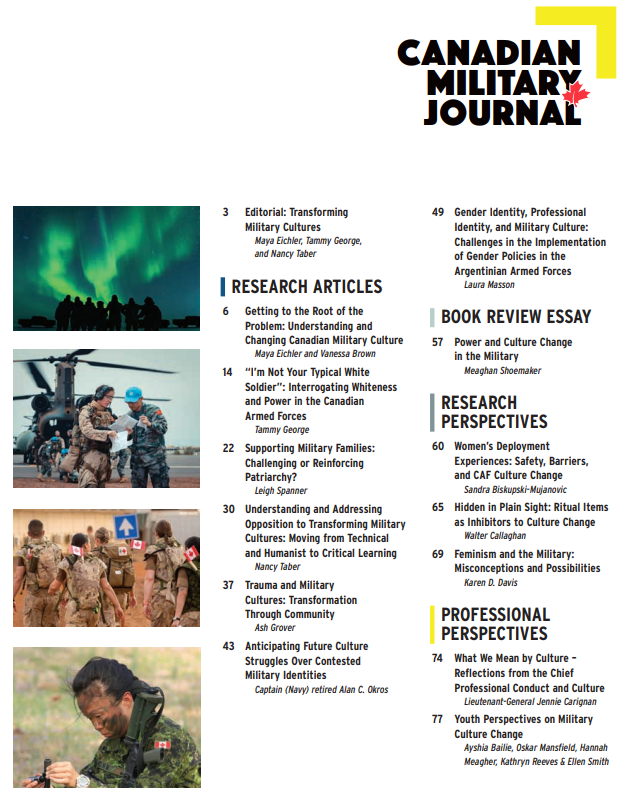
The official journal of the Canadian Armed Forces has a … woke … view of themselves and the nation:

… the latest edition — which was just posted online — contains little to no mention of strategy, geopolitics or the avalanche of contemporary problems facing the Canadian Armed Forces. There’s not a single reference to the recruiting crisis, which has left vacancies of up to 40 per cent in some departments. No mention of the plummeting maintenance standards that recently prompted the commander of the Royal Canadian Navy to declare that his fleet was in a “storm” with no end in sight. No discussion of why Canada is slashing its military budget even as its peer countries do the exact opposite.

Instead — in a signal of just how far the Canadian Armed Forces has embraced far-left “anti-racist” ideology — the entire issue is devoted to how the Canadian military is a racist, patriarchal den of colonialist oppression that needs to be torn down and remade from scratch.

After devoting extended paragraphs to each cultural infraction, Eichler concludes that the Canadian Armed Forces must be remade via an “anti-oppression framework” of “feminist, decolonial, critical race, queer, critical disability, and critical political economy theories”.

Eichler notes this is “not an easy task, but a necessary one if DND/CAF wants to move the yardstick on culture change.”

Another feature, by York University psychotherapist Tammy George, frames the Canadian Armed Forces as being poisoned by “institutional whiteness”.

“In order for meaningful, sustained culture change to occur, there must be a recognition by the white majority of the way in which whiteness organizes lives,” she writes.

Leigh Spanner, a feminist postdoctoral research fellow, wrote that the CAF’s system of supporting military families was anti-feminist and patriarchal.

Ash Grover, a researcher in “feminist anti-militarism”, argues that the military might have fewer instances of post-traumatic stress disorder if they paid closer attention to “anti-oppressive theory” and how “acts of ‘othering’ can result in responses typically associated with post-traumatic stress disorder”.

January 10, 2024

“[T]he prime minister is either three spins into a profound self-destructive spiral: or he really just does not care”

Filed under: Cancon, Media, Politics — Tags: , , , — Nicholas @ 05:00

The Line returns from the holidays with a solid betting pool on what the hell Prime Minstrel Justin Trudeau is thinking:

We at The Line have two theories, each championed by its respective editor; the prime minister is either three spins into a profound self-destructive spiral: or he really just does not care.

Theory 1: Trudeau is constitutionally incapable of stepping away from his current role. There are no viable leadership alternatives, and his party has been so centralized into a cult of personality that the Liberals may not not be able to recover from his departure.

At the same time, Trudeau is neither particularly capable as a prime minister, nor does he actually enjoy the role very much. After almost a decade in power, he’s been unable to champion a real vision for the country and he struggles to get anything done — long gone are the days of bold promises, replaced now by time extensions granted by the epically borked NDP. This has left him grasping for legacy policy changes that are largely superficial (and sometimes unconstitutional), if well meaning.

Most of Trudeau’s term has been reactionary, in the value-neutral sense that he has been forced to react to events and crises beyond his control or making, from the election of Trump and COVID, to the Trucker Convoy. Clearly, this job has taken a toll on him and his family and, at least subconsciously, he doesn’t actually want to do it anymore. But he just can’t bring himself to step aside and appear the coward before Pierre Poilievre.

So, essentially, this theory goes — he’s engaging in self sabotage. Consciously or otherwise, he’s replaying his previous poor judgment and ethical lapses because, deep in his heart, he wants to be fired.

If that’s a little too much pop psych for you all, the second theory is that Trudeau simply DGAF. He got away with all of those previous fancy holidays. Why not get away with this one? The usual partisans will scream and whine for a few days and we’ll all move on. He’ll get a nice vacation, and if it pleases the ex and makes the kids happy, well, all the better. Trudeau doesn’t care about optics or ethics because he doesn’t have to care; his critics don’t matter, and his supporters have clearly signalled that they are along for the ride no matter what he does.

Both of these theories may be true or wrong, but it will be interesting to ponder as 2024 plays out whether Trudeau’s greatest bane proves to be self-sabotage or indifference.

Your Line editors are opening the betting table now.

QotD: The root of leftism is envy

Filed under: Books, Economics, Politics, Quotations — Tags: , , , — Nicholas @ 01:00

    “Social justice” is sacralized envy.

Which fits a lot better on a Pepe the Frog meme, you must admit.

Note also the slight, but important, change in emphasis — from “hate” to “envy”. Recall that [Economics in One Lesson author Henry] Hazlitt was writing in 1946, when material deprivation was still a thing, even for Americans. Back then it was assumed that the hate sprang from the envy, which meant that the hatred could eventually be dissipated. It implied an endpoint. Hazlitt, like seemingly everyone else on the Right, took Lefties at their word — that some level of “equality”, by which they meant material prosperity, would cause the Left to finally hang up their jocks and hit the showers.

Three quarters of a century later, we know that’s not true. There’s nothing you could give them that would ever satisfy them. Go ahead, do it Jesus-style — turn the other cheek, give them your coat and your cloak, walk with them two miles, all that jazz. You know as well as I do what will happen — they’ll still hate you. It doesn’t matter what the “reasons” are. Before, they hated you because they didn’t have a coat and cloak. Now they’ve got yours, but they still hate you, because you’re right-handed, or blonde, or have webbed toes. Or because you don’t have webbed toes.

Whatever, something, anything. I won’t bother repeating the O’Brien quote from 1984; you’ve heard it enough by now to know what I mean when I say that for the Left, the point of envy is envy. They don’t envy you for what you have. They don’t even envy you for what you are. They just envy. The mere fact that you exist, a separate entity from them, means that they’re not all there is in the world. In other words — French judges, take note — we’re down to three words:

    Leftism is solipsism.

They envy your mere existence, since you are the walking, talking proof that not everything in this world is as shriveled and petty and miserable as they are.

Severian, “Crossing the Bar”, Rotten Chestnuts, 2021-04-06.

« Newer PostsOlder Posts »

Powered by WordPress