
The Korean War by Indy Neidell
Published 26 May 2026In the wake of the kidnapping of the Koje-Do POW camp commandant, UN Commander Mark Clark is busy really working on expanding security at all the POW camps in Korea and gaining total internal control of them. However, the damage done to the UN’s global reputation by the whole incident is considerable, and at the negotiating table the Communists denounce the UN and UN Chief Delegate Turner Joy leaves his post to return to the states. The war in the field goes on as always, with the Philippine Battalion Combat Team seeing success in the field.
May 27, 2026
The Korean War Week 101 – Another Week, Another POW Riot – May 26, 1952
Comments Off on The Korean War Week 101 – Another Week, Another POW Riot – May 26, 1952
The Real T26 “Tanker” M1 Garand
Forgotten Weapons
Published 5 Jan 2026The name “tanker” has been applied to shortened M1 Garand rifles for a long time and today we are looking at one of the rifles that was the genesis of that concept. It actually has nothing to do with tanks; the idea for a shortened M1 came from the Pacific Warfare Board of the US Army, looking for a handier weapon for jungle fighting. During 1944 when this idea was proposed, Springfield Arsenal was already independently working on the M1E5, a very similar paratrooper version of the M1. The PWB ordered the 6th Infantry Division in the Philippines to make 150 samples for testing, of which two were sent back to Springfield for testing.
In testing, the T26 showed the same problems as the M1E5 — excessive recoil, noise, and concussion. Despite this, 15,000 were recommended for production in the summer of 1945, but the war ended before any production actually took place. The name “tanker” came later, when companies started making cut-down Garands for commercial sale and thought that marketing them as specialized tanker weapons would help them sell.
Thanks to the Springfield Armory National Historic Site for giving me access to this truly unique specimen from their reference collection to film for you! Don’t miss the chance to visit the museum there if you have a day free in Springfield, Massachusetts: https://www.nps.gov/spar/index.htm
(more…)
Comments Off on The Real T26 “Tanker” M1 Garand
May 25, 2026
George Washington “basically started the world’s first global war”
On his Substack, Ed West talks about a book he had intended to write, but “put it on the back burner” for too long and the moment has passed:
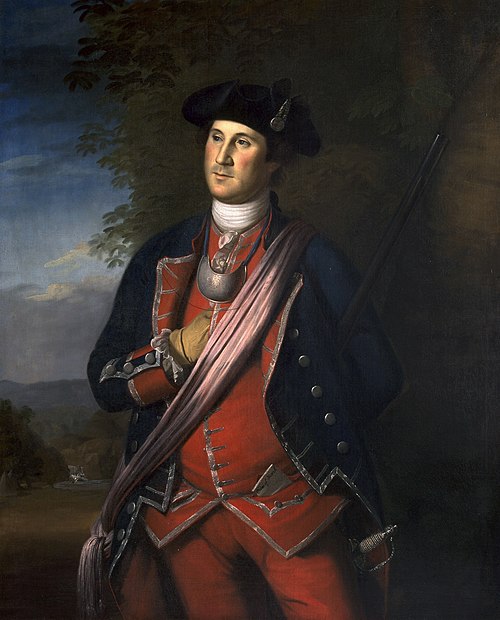
George Washington in the uniform of the Virginia Regiment, 1772.
Portrait by Charles Willson Peale (1741-1827) from the Washington and Lee University collection via Wikimedia Commons.
The story would start in the 1750s. The first truly world war is in full flow, as Britain and France battle for supremacy of the continent and the oceans. In North America, British colonial troops fight side by side with soldiers from the old country, who mock the bumpkin locals with their ditty “Yankee Doodle“. But, rivalries aside, they both know what they’re fighting for: if Louis XV’s absolute monarchy wins, all their liberties will be gone.
In a heroic battle the British regular and colonial forces take the French stronghold of Fort Duquesne and rename it Fort Pitt, after cabinet minister William Pitt “the elder” – it later becomes Pittsburgh. By 1763 the French are driven out of North America altogether. The British colonies are safe. One officer particularly shines during this war, and diarist Horace Walpole writes how “The volley fired by a young Virginian in the backwoods of America set the world on fire”.
That Virginian was George Washington. Born in Wakefield in Westmoreland County, this British hero was the great-grandson of an Essex clergyman thrown out of the church for drunkenness, and who had landed in that colony in 1657. Washington was an impressive man in every way – standing at 6’2″, with enormous hands and feet and a massive nose, he was notably strong and able to throw objects immense distances (although many of these accounts improved in the telling).
Despite having almost no teeth, like any good British patriot, Washington was very proper about his appearance, insisting on bringing a selection of fine linen shirts even into the backwoods. A conservative by nature and with ambitions to serve as an officer in His Majesty’s forces, he didn’t like the new fashion for shaking hands, preferring the more formal bow.
A major at 21, Washington’s first job was to lead his men into the Ohio Valley to warn away any Frenchmen they found there. The following year, 1754, and now a lieutenant-colonel, he went back and built Fort Necessity close to Fort Duquesne, where he stumbled upon a contingent of enemy troops. They ran for their muskets and Washington ordered his company to fire. Ten Frenchmen were killed, including their lieutenant, and the incident would spark a war in North America between the two great powers, which in 1756 linked up with a Europe-wide conflict later known as the Seven Years’ War. It’s strange to think that, as well as being the first president of a future global superpower, Washington basically started the world’s first global war.
But what if France had won that struggle? Would French-controlled colonies in North America have formed constitutions centred on the rights to life, liberty and the pursuit of happiness, not to mention the often-overlooked right to property? Would they have enshrined religious tolerance or the right to free speech? Trial by jury? Innocence until proven guilty? Hell, no! And if it wasn’t for us, my thesis went, you’d be speaking French.
Without England’s history of Parliamentary freedom, habeas corpus, Magna Carta and the jury system, the colonies would never have developed as they did. Neither would they have the same commercial spirit, downstream of their Puritan and Quaker inheritance.
I think I came up with the proposal after reading David Hackett Fischer’s Albion’s Seed, one of the most discussed and popular analyses of American culture. This great work of history and anthropology charts the foundation of the country’s cultural folkways through four migrations – East Anglian Puritans to New England, Cavaliers from England’s south and south-west to Virginia, the mostly northern Quakers to the middle colonies, and Borderers from Ulster to the Appalachians.
I was always very interested in founder effects, whereby colonies come to take on aspects of the mother country which subsequently disappear back home. This is reflected in the fact that many “Americanisms” are actually old English words, like fall, trash and garbage, even “gotten”. It’s also true to some extent of the American accent, developing out of various regional dialects which have since been flattened by the dominance of London. This is especially the case with Ocracoke Island in North Carolina, which apparently is the closest thing to Shakespearean English, although I fear that if I went there this would no longer be true, and they’d all say “like” four times in every sentence and tell you they’re “reaching out”.
Comments Off on George Washington “basically started the world’s first global war”
Did The Taranto Raid Inspire Pearl Harbor?
TimeGhost Cartographic
Published 24 May 2026In November 1940, the British Royal Navy launched a daring carrier strike against the Italian fleet at Taranto. The attack shocked the world, crippled Italian naval power in the Mediterranean, and demonstrated just how devastating naval air power could be against battleships at anchor. But the consequences of Taranto didn’t end in Italy.
In this episode, we explore the aftermath of the raid, the race to understand how it had been achieved, and why military observers around the world paid such close attention to what happened there. From British convoy operations in the Mediterranean to Japanese investigations into shallow-water torpedo attacks, this episode examines how one raid would echo far beyond the harbor at Taranto.
How did the British make the attack possible? What lessons did foreign observers take away from it? And why did some nations react to the raid very differently than others?
Comments Off on Did The Taranto Raid Inspire Pearl Harbor?
CP-121 Tracker; carrier-borne ASW powerhouse turned aerial firefighter
Polyus
Published 31 Jan 2026This is an aircraft carrier borne submarine hunter, dressed up like a firefighter. Its story is one of Cold war posturing, coastal policing, and aerial firefighting. Quite the career for such an unassuming looking aircraft. It was the de Havilland Canada CP-121 Tracker, an icon of Canadian aviation for almost 60 Years.
0:00 Introduction
0:30 Historical Context
1:58 Tracker or Gannet?
4:26 Canadian built CS2F-1 Trackers
9:06 CS2F-2
10:23 CS2F-3
13:12 New roles
15:14 Marine Reconnaissance
16:10 Conair Firecat/Turbo Firecat
17:48 Conclusion
(more…)
Comments Off on CP-121 Tracker; carrier-borne ASW powerhouse turned aerial firefighter
May 24, 2026
The PRC would need a literal “short, victorious war” to defeat the US
On Substack, Tom Kratman looks at the economic and strategic weakness of the Peoples Republic of China should it get into a serious shooting war with the United States:
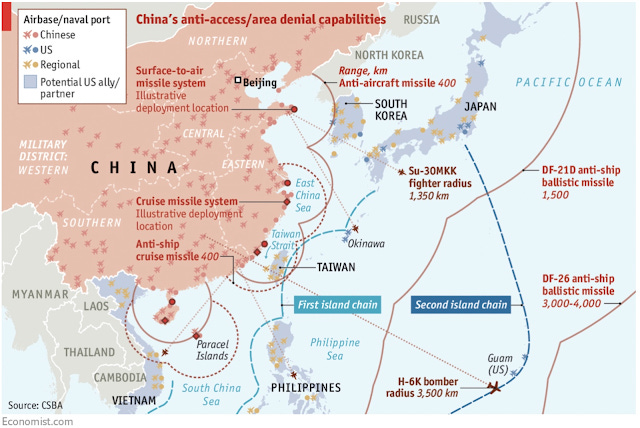
China’s strategic position is appalling, and at least the higher party cadres and senior military leadership have to know that it is. Why? China is utterly dependent on both imports and exports to keep their economy going and to feed themselves. By that latter, I don’t just mean they need to import food, though they do to the tune of one third. That’s bad enough, but they also need to import fertilizer to grow the inadequate amount of food they grow for themselves. No, nitrogen and phosphates aren’t a huge problem; they are net exporters. Potash is a problem. Loss of potash imports probably cut their grain production by about ten percent. This would be painful, but survivable with a touch of rationing and some weight loss.
Except for one thing, oil and natural gas. Cut those off and grain production drops by a third within two years and probably forty percent after that. On top of the loss of the third that they must import, that’s serious hunger.
And another thing, farm machinery and transportation. China only produces about a quarter of its oil needs domestically. Cut those off and mechanization of farming must be reduced.
Add in that this kind of food reduction also means they must stop feeding food animals.
Moreover, while a good deal of their transportation net runs off of electricity, which can be produced by the coal China does have, at what we might call the strategic level, getting the food from the farms to the railheads and from the railheads to markets to kitchens requires liquid fuel. China’s ability to produce liquid fuel from coal exists, but it is tiny.
Add in the increased need for liquid fuel for their military in this case.
A long series of interrogatories to Grok suggests that China’s total food production and importation collapses by seventy percent or more within two or three years if they go to war with us.
It won’t be sudden; they probably have about a year’s worth of food in storage against such a day. But within three years? We’re talking an entire civilization in kwashiorkor1 and marasmus2.
How do they keep that industrial civilization going in the absence of food and energy imports, or the exports that have kept their economy going? They likely don’t.
Although China’s population appears to be in accelerating collapse, they still have a lot more people than we do. Surely that represents … nothing. For a war fought largely at sea it represents nothing. Yes, they can, at least for the moment, build more ships faster than we can. However, we can build things to sink ships faster than they can build ships. Thus, we’ll keep our existing naval supremacy.
There’s a worse factor in there, though; in China sons are just a lot more important than daughters. No, I don’t care if this upsets western feminist sensibilities; we are not talking about the west but about China. Daughters, assuming they marry, go on to take care of their husband’s family. Sons take care of the parents. It is the rare Chinese family with an extra son to spare.
But can’t they build enough ships to overwhelm our blockade in the short term, at least? No, they can’t. China is surrounded by enemies on land, Vietnam, India, and Russia predominant among them, though none of the neighbors – barring, maybe, North Korea – really likes China or doesn’t fear it. No, however much public kissy face they may engage in for foreign consumption, China and Russia have long-standing, intractable issues between them. China is a threat to Russia and vice versa in ways we are not.
So all the manpower and money spent on a navy is largely wasted. They’re not going to get a navy large, powerful, and competent enough to take us on and, if they really try to, we will manufacture a war – the United States is good at this – to trim them down to size before they can. Worse, every increment of money and manpower they spend on the navy is money and manpower not spent on the much more important army and air force.3
- Caused by protein deficiency.
- Caused by deficiency in all macronutrients.
- The Navy is much more important to us because we have no serious land enemies in this hemisphere.
Update, 25 May: Welcome, Instapundit readers! Have a look around at some of my other posts you may find of interest. I send out a daily summary of posts here through my Substack – https://substack.com/@nicholasrusson that you can subscribe to if you’d like to be informed of new posts in the future.
US Tanks & Armour in the Vietnam War
The Tank Museum
Published Jan 9, 2026If you watch films like We Were Soldiers and Platoon, Vietnam was all about Hueys dropping off Air Cav with M60 door gunners giving fire support and M16 toting grunts humping through the jungle. Tanks and AFVs barely get a look-in. In fact, armour was vitally important in Vietnam. The South Vietnamese, the US Marines and Army, all used AFVs in some of the worst tank country in the world in ways that definitely weren’t in the owner’s handbook. This is the story of armour in Vietnam, told through three incredible vehicles
First, the M48 – part of the famous US Patton family. Designed with the battlefields of Europe in mind, it was the US Marine Corps that insisted on bringing them to Vietnam. With 110mm of frontal armour, and a hull designed to deflect mine blasts, the M48s proved their worth time and time again.
Next, the M113 (or “tracks”) – an armoured personnel carrier that was the most numerous and, arguably, the most effective AFV on the battlefield. Designed to be air portable, the M113s had aluminium armour and weighed just 12 tons. As an APC, the M113 was basically a battle taxi intended to drop off its passengers and perhaps provide a bit of fire support with its pintle mounted .50 Cal. However, the soldiers in Vietnam skipped reading the owner’s handbook and set about turning them into ersatz tanks.
And finally, one of the most bizarre vehicles to ever emerge on the battlefield – the M50 Ontos. The Ontos was small – only 12.5 feet long and lightweight at 9.5 tons, making it easy to move by air. Yet despite its diminutive size the Ontos bristled with 6 M40 106mm recoilless rifles. They were small, ferocious and devastatingly effective.
00:00 | Introduction
00:46 | The Beginning
03:02 | The Patton
08:04 | The ACAV
11:39 | “The Thing”
13:33 | The Other Side of the Hill
15:28 | The End is NighThis video features archive footage courtesy of British Pathé.
In this film, Chris Copson and Paul Famojuro reveal the untold story of armour in Vietnam. Whilst media portrayals of the Vietnam War tend to focus on other aspects of the armed forces, armoured fighting vehicles played an incredibly important role. The M48, a tank designed for Europe, ended up surviving mine strikes while crashing through the jungle. The M113, a lightly-armoured personnel carrier, was upgunned to serve in armoured assaults. And the M50 Ontos, a thing so ferocious a nearby shot would have the North Vietnamese abandoning their positions. This is the story of Armour in Vietnam.
(more…)
Comments Off on US Tanks & Armour in the Vietnam War
May 23, 2026
Beretta M1918: Italy’s Semiauto 9mm Carbine from WWI
Forgotten Weapons
Published 31 Dec 2025Italy adopted the Villar Perosa in 1915, a gun that is sometimes considered the first submachine gun. Despite being fully automatic and chambered for pistol ammo (9mm Glisenti/Parabellum), it was actually not a submachine gun in practice. It was actually a twin gun, fired usually from a bipod using spade grips. It had some very specific applications, but was generally not very useful, and Italy set about looking for alternative uses for them. The solution they found was to split the guns into single receivers and fit them with buttstocks and traditional triggers. This led to the first true Italian submachine gun — the OVP-1918 — and also the Beretta 1918, which was originally a semiauto-only carbine.
The Beretta was made using Villar Perosa magazines, magazine latches, receivers, and bolt assemblies. The stocks came from Vetterli rifles and the bayonets from Carcano carbines. Only a few parts like the trigger assembly and ejection port housing were made from scratch. Beretta was given a contract late in the war to convert 5,000 Villar Perosas into these carbines, but was unable to complete the work before the war ended and the contract was cancelled. Of the guns that were completed, many were later converted into Beretta M1918/30 carbines and others were sold as surplus. A bunch of them went to Ethiopia, where some were ironically recaptured by Italian forces in the 1930s and put back into service in World War Two in North Africa. This example is one of a few recently found intact in Ethiopia.
Villar Perosa: • M1915 Villar Perosa
Shooting the Villar Perosa: • WW1 Villar Perosa SMG at the Range
OVP-1918: • OVP 1918: Italy’s first WW1 Submachine Gun
Beretta M1918/30: • Beretta Model 1918/30
(more…)
Comments Off on Beretta M1918: Italy’s Semiauto 9mm Carbine from WWI
May 22, 2026
The Real-Life British Top Gun
Imperial War Museums
Published 7 Jan 2026This video take an in depth look at the Sea Harrier. We cover its development, the air battle for the Falklands in 1982 and renowned Sea Harrier pilot Nigel “Sharkey” Ward.
0:00 Introducing Sea Harrier ZA175
0:57 Why the Sea Harrier?
2:00 Harrier Development
2:40 GR.3 vs Sea Harrier
3:30 Nigel “Sharkey” Ward
4:35 The Falklands Conflict
5:39 Preparing for Battle
7:12 The Air War
9:11 The AIM-9L Sindewinder
9:54 Sharkey’s Kill
11:41 The Sea Harrier’s Record
12:17 What happened to Sharkey and ZA 175?
(more…)
Comments Off on The Real-Life British Top Gun
May 21, 2026
The RCAF Snowbirds
The RCAF’s aerobatic flight demonstration team, the Snowbirds (431 Air Demonstration Squadron), have been needing new aircraft for a couple of decades, but there was never the political will to purchase new jets just for the PR benefits the Snowbirds provided. This year, the government announced they’d be “pausing” the Snowbirds until sometime — perhaps in the 2030s — when new aircraft could be provided. Paul Wells argues that, should the team survive this operational pause, they will be just as effective flying turboprops as the CT-114 Tutor jets they’ve been flying since 1963:

I’m just catching up to this story now, after a long weekend away. I won’t keep you long. I just want to make a few points. These are:
- Airplanes get old. Eventually it becomes harder to fly them safely, and harder to be proud of owning them when they do fly.
- Concern about the Snowbirds is almost as old as the Snowbirds. The Tutor jet is a sturdy beast, as are many things that first saw light in 1960 — the Twist, Hitchcock’s Psycho, televised presidential debates — but it’s always been fair to wonder whether a barnstorming team is the best use of scarce military resources, and people have wondered.
- Other countries have, on occasion, grounded their aerobatic teams; replaced old fleets with newer fleets for those teams; even occasionally replaced older jet-propelled fleets with newer prop-driven fleets. There seem to be countries that have viewed this sort of decision as routine and easy. Canada hasn’t been one of them. It would be good if we got better at making simple decisions that obviously have to be made.
A CT-114 Tutor of the Snowbirds team in St. Catharines, Ontario on 26 August, 2006.
Photo by Balcer-commonswiki via Wikimedia Commons.
[…]In August 2003 the Defence Department’s director of major service delivery procurement wrote that the Snowbirds Tutors might last until 2010, or if heroic measures were used, perhaps as far as 2020. “With each passing year, the technical, safety and financial risk associated with extending the Tutor into its fifth decade and beyond, will escalate,” the review said. Emphasis, as always, added.
The Defence department should proceed “immediately” with Snowbirds fleet replacement, the report said.
It didn’t.
[…]
We’re supposed to get weepy over the beloved Snowbirds, but with great respect to the flight crews that have flown the Tutors with durable proficiency and the ground crews that have kept them airborne, surely it wouldn’t be a big deal if they never came back? Other countries sometimes ground their aerobatics teams — the Asas de Portugal in 2010, the Philippine Blue Diamonds in 2005, Sweden’s Team 60 in 2024. The old newspaper stories I just quoted all called the Snowbirds an unbeatable recruitment tool for the Canadian Armed Forces, but I suspect the Afghanistan war was a bigger boost to recruitment and morale, and Donald Trump might yet give it a run for its money. Also useful: the internet, which the Tutors predate.
I have enjoyed many fun hours at air shows, and in my high-school days was a bit of a fighter geek. But it’s always been strange to idolize a particular model of vintage trainer rather than the whole portfolio of work a competent military performs. Perhaps a parliamentary committee or, I don’t know, a parliament could have discussed such matters, at some point in my lifetime. Perhaps a government could make a decision. “Air shows are fine, but participating in them is not a priority of government policy,” one might say. And even: “We’re taking the sign out of the window.”
Committees, parliaments and governments having proven reluctant to grasp the nettle, perhaps we could farm it out to some arms-length body. An equivalent of the Parliamentary Budget Officer could make decisions, rather than simply costing them. Call her or him the Parliamentary Finding Some Stones Officer. Her or his office would make actual decisions, with funding attached, about official residences, flight-show equipment, and supply management. Parliamentarians could flutter their hands over their brows and exclaim, “I had nothing to do with it!” Everybody wins. Sorry that it’s come to this, but we tried it the other way and it went poorly.

May 20, 2026
The Korean War Week 100: Mark Clark in Command – May 19, 1952
The Korean War by Indy Neidell
Published 19 May 2026Mark Clark is the new UN Commander and will run the war in Korea, replacing Matt Ridgway, who leaves for Europe to take over NATO Command. The Koje-Do POW camp situation is resolved, but is a black eye for the UN, as are the allegations that the US has been practicing germ warfare in Korea and Manchuria, backed up by “confessions” from captured American airmen.
00:00 Intro
01:13 Recap
01:29 Demand and Response
05:35 What Went Wrong at Koje-Do?
12:06 Germ Warfare?
13:55 Mark Clark
15:45 ROK and Ammunition
19:53 Philippine Raids
21:16 Summary
21:28 Conclusion
22:09 Call to Action
Comments Off on The Korean War Week 100: Mark Clark in Command – May 19, 1952
LMG-25: The Swiss Toggle-Locked Light Machine Gun
Forgotten Weapons
Published 29 Dec 2025The LMG-25 was designed by Adolph Furrer at Waffenfabrik Bern in the 1920s. Furrer was a devoted fan of the toggle locking system, and also designed a toggle-locked submachine gun that Switzerland (unwisely) adopted in 1941. The LMG-25 was first produced in 1924, adopted in 1925, and remained in production until 1946 with a total of 23,045 standard models and 1,742 optics-equipped fortress models made.
It is chambered for the standard 7.5x55mm Swiss cartridge with a 30-round side-mounted magazine (interchangeable with the later Stgw 57 magazine, incidentally). It is an effective design, if expensive to produce, and served Switzerland well for several decades.
(more…)
Comments Off on LMG-25: The Swiss Toggle-Locked Light Machine Gun
May 19, 2026
The War People by Lucian Staiano-Daniels
At Dead Carl and You, Kiran Pfitzner reviews The War People: A Social History of Common Soldiers during the Era of the Thirty Years War and finds it has value in bringing to life some of the ordinary people involved in that bloody, interconnected series of wars that we group together as the Thirty Years’ War:
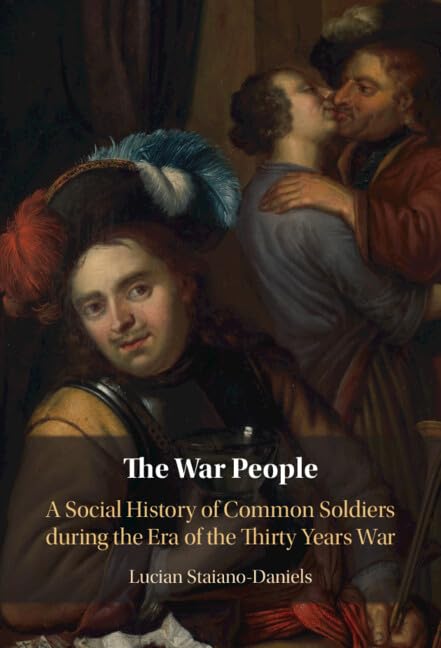
“Their word for themselves was People. Early seventeenth-century common soldiers were Die Leute, Das Volk, les gens, or la gente. They were Das Kriegsvolk, Die Kriegsleute, les gens de guerre, the War People.” So begins Lucian Staiano-Daniels’s aptly titled The War People: A Social History of Common Soldiers during the Era of the Thirty Years War. Using the technique of micro-history, Staiano-Daniels follows the Mansfeld regiment from its raising in 1625 to its unhappy dissolution in 1627. This unexceptional regiment is notable because of the primary source documentation that survives, specifically its original internal legal records — investigations, debts, trials, and last testaments. Through this unusually immediate resource, we gain glimpses of the reality of the 17th century common soldier and so a clearer view of the social conditions he lived within.
One way Staiano-Daniels situates this investigation is in terms of the relationship between military organization and state-building. Describing the existing historiography, he writes: “In this argument, early-modern states increased their control over their civilian populations in part to raise tax money for larger armies that were inhabited by soldiers who were themselves increasingly well-disciplined”. He instead finds, “neither an intensification of military discipline nor unadulterated thuggishness. The military community was made up of systems of relationships that were subtle, intricate, and disorganized.” (7). These findings are well evidenced, and significant, as earlier literature (drawing on more normative sources like manuals and regulations) asserted the intensification of discipline as part of the emergence of the modern state. Instead, we see states forced to engage in the paradoxically complexly and loosely organized world of the mercenary, unable in this time of crisis and state-emergence to fully subordinate the armed forces they employed.
The 17th century and the Thirty Years’ War serve as an important benchmark in understanding the development of war. In witnessing the lives of the kind of men with which wars of the 17th century were fought, we gain a greater understanding of the society that they moved in. In so doing, we can more easily conceptualize the forces that both constrained and enabled war in the 17th century, producing its particular form. This conception provides the opportunity to more easily understand war in other places and times and what conditions reduced or intensified its violence.
Reading this work as a Clausewitz scholar, I could also not help but see a connection between the culture of the war people and Clausewitz’s support for a national militia or Landwehr as a step towards more inclusive governance. There is, of course, a great distance between the unruly mercenaries of the Thirty Years’ War and the “nation in arms” envisioned by Clausewitz and the other Prussian reformers, but at its core we find a common phenomenon: the connection between military service and rights, personal and political.
This book demonstrates well the value of microhistory; in looking closely at the practices and prevalent attitudes of these soldiers of the 17th century, we gain a more concrete view of the prevailing social conditions. This is not just of interest for its own sake (as social history), but because social conditions greatly shape the practice of war, as Clausewitz tells us. This is so because social conditions both reflect and affect the political conditions that create war, as well as the political purpose that exercises a continuous influence upon it.
Comments Off on The War People by Lucian Staiano-Daniels
May 18, 2026
Isoroku Yamamoto – the admiral and the postwar legend
Big Serge examines the popular memory of Japanese admiral Isoroku Yamamoto, the architect of Japan’s early naval war successes against the United States from 1941 onwards, contrasting the postwar image with the man himself:
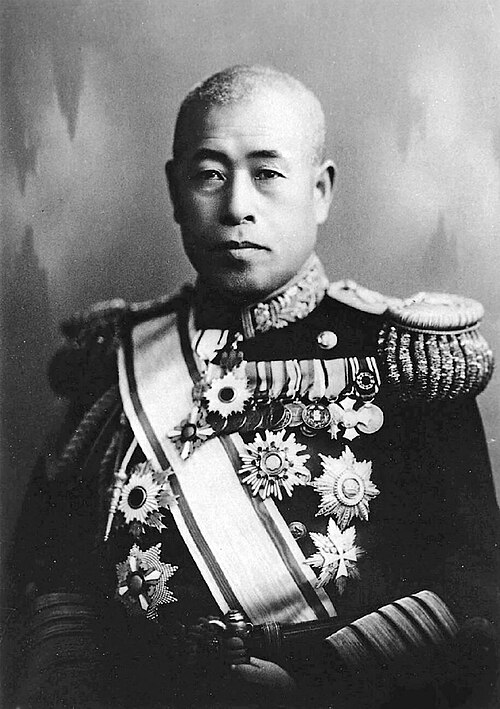
Admiral Isoroku Yamamoto, Commander-in-Chief of the Imperial Japanese Navy’s Combined Fleet.
Photo from the National Diet Library via Wikimedia Commons.
Japanese leadership in the Second World War enjoys noticeably lower name recognition than their German counterparts. Most people with a cursory knowledge of the war know the core German leadership group around Hitler — Himmler, Goering, Goebbels, Speer, and perhaps Heydrich and Bormann — and the all-star lineup of German generals like Rommel, Manstein, and Guderian. In contrast, the only particularly notorious member of Japan’s nebulous leadership group is General Hideki Tojo, who served as Prime Minister for most of the war and became the centerpiece defendant in the postwar trial. As far as Japanese commanders go, the list of name-brand personnel has but a single entry: Isoroku Yamamoto.
Yamamoto’s life and career present a fascinating trajectory that shapes a particular, sympathetic view of the man. A veteran of the Russo-Japanese War, he spent much of his 30’s in the United States, studying at Harvard and serving as naval attache in Japan’s Washington embassy. He therefore had a first hand understanding of America’s industrial depth, and was famously pessimistic about Japan’s prospects in a a war against the United States. “Anyone who has seen the auto factories in Detroit and the oil fields in Texas”, he argued, “knows that Japan lacks the power for a naval race with America”. In one of his more famous and widely recited (though often badly translated) remarks about a war with the United States, he told Prime Minister Fumimaro Konoe in September 1940:
If I was told that I had to do it, then you will certainly observe the Navy going all out for half a year to a year. However, I do not hold conviction about the outcome after 2-3 years.
This quote certainly seems remarkably prescient, in light of Japan’s initial wave of operational successes, which slowly faded away as American combat power ramped up. Far more famous still is his remark, after the attack on Pearl Harbor, that Japan had “awakened a sleeping giant, and filled him with terrible resolve”.
All of this shapes the perception of Yamamoto as a quasi-tragic figure who understood that Japan was unlikely to defeat the United States in the Pacific War, counseled against the conflict, and then dutifully tried to play a losing hand as well as he could once war had been thrust upon him against his own advice. Yamamoto was furthermore a critic of the Japanese Army’s war in China and a particularly vocal opponent of the Tripartite Pact with Germany and Japan, lending credence to the idea that he was war-averse.
This is the Yamamoto of American popular memory, and indeed of a great deal of Japanese postwar writing: a sort of samurai Cassandra, too perceptive and cosmopolitan for the militarist regime he served, a man who fired the opening shot of the Pacific War with a heavy heart and no illusions.
It is certainly true that Yamamoto had an appropriately pessimistic assessment of Japan’s prospects in an extended conflict with the United States. What is less often appreciated is that Yamamoto did not, on the basis of this assessment, conclude that Japan ought not to fight. He concluded instead that, if Japan was going to fight, it had to fight differently — with greater boldness, more risk, and an aggressive search for a decisive stroke. He did not spend the eighteen months before Pearl Harbor advocating for peace. He spent them designing what was, on balance, the single most aggressive operational scheme that was possible — and then only barely — within Japan’s kinetic parameters.
This is the critical distinction between Yamamoto-the-man and the Yamamoto of postwar hagiography. He was not a pacifist, reluctant or otherwise. He was a Japanese naval officer of strong patriotic conviction, deeply committed to his service and his nation, who happened to understand the arithmetic of industrial war better than most of his colleagues. Notwithstanding his appreciation for America’s vast industrial base, he shared a broader Japanese disdain for American martial proclivities, dismissing American naval officers as a club of “golfers and bridge players”. His understanding of the United States did not produce pacifism. It produced, rather, a particular kind of operational philosophy — one which held that Japan’s best hope in a war with the United States was to front-load its risk-taking, to achieve a string of dramatic early victories that would either compel American negotiation or, failing that, push the eventual American counter-offensive as far into the future as possible. In either case, the operational prescription was the same: bold, high-risk operations aimed at decisive results.
Comments Off on Isoroku Yamamoto – the admiral and the postwar legend
The American Civil War was “two armed mobs chasing each other around the country, from which nothing could be learned”
Ben Duval looks at the implications of the quote above (attributed to Moltke the Elder) and shows that there were indeed lessons to be learned from that conflict:
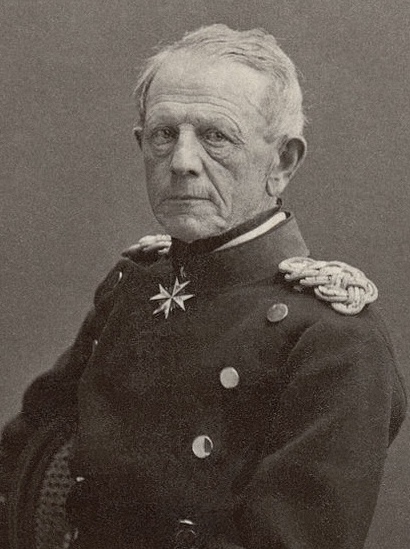
Chief of the Prussian General Staff Helmuth von Moltke the Elder (1800-1891).
Photo by Carl Günther via Wikimedia Commons.
A famous, if apocryphal, quote attributed to Moltke dismissed the American Civil War as “two armed mobs chasing each other around the country, from which nothing could be learned”. There were certainly lessons to be learned — it could hardly be otherwise in so long and intense a conflict. The war showcased many new technologies on a large scale, including rail and telegraph, while the growing accuracy of firearms showed the growing importance of field fortifications in pitched battle. It also gave witness to many expedients and innovations, including the first known employment of indirect fire (although that would take much longer to be appreciated).
Nevertheless, the readiness with which Moltke’s spurious quote was accepted is suggestive of fundamental differences between Europe’s large professional armies and the hastily-raised volunteers that fought for both North and South. The Civil War saw a mobilization of unprecedented scale, expanding from a pre-war regular army of 15,000 to a total of nearly 2 million at its peak.
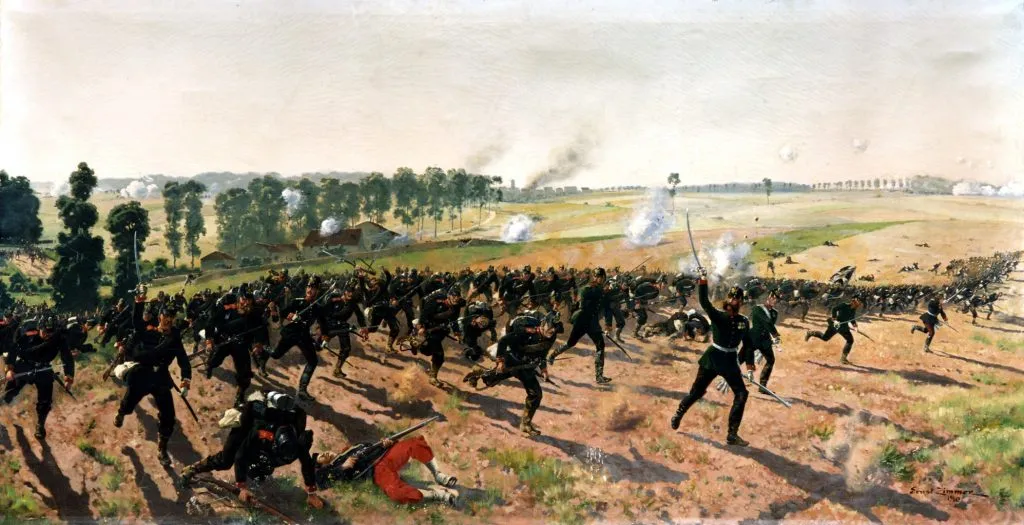
At some critical battles, like Antietam, many regiments had mustered bare weeks before. At best, these soldiers could handle their weapons reasonably well; large-scale maneuvers in the heat of combat were out of the question. Even long-serving formations did not have much of a chance to redress these deficiencies, as demonstrated by the disjointed conduct of Pickett’s Charge. What immediate lessons could the Prussian and French, efficiently maneuvering under fire at Gravelotte or Mars-la-Tour, have learned from Civil War armies?
Prussian attack at Gravelotte on 18 August 1870.
Lessons at the Right Level
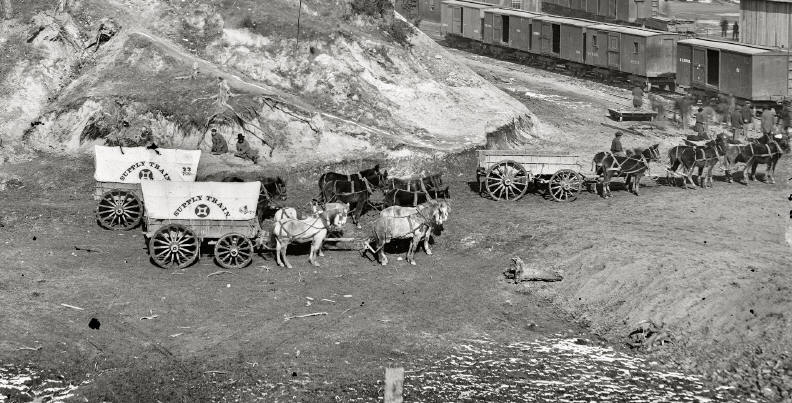
Perhaps not much at the tactical level, but there was plenty to be learned at the operational. Never before had railroads been employed at such scale to shift troops within and between theaters; nor the telegraph, which was used to coordinate such movements. Efficient logistical services allowed both sides to undertake bold maneuvers involving massive numbers of troops (it is noteworthy how many generals had previous experience working for railroad companies, and how many more went on to high management or board positions after the war).
Union supply wagons loading up at a railhead.
But the point also holds more broadly, beyond the particular technical specialties of 1860s America. Whenever tactics alone cannot suffice—either because both sides are extremely skilled, as in the First World War, or because organizational breakdowns rule out more complex maneuvers — decisive action can by default only occur at the operational level. This was an essential point in Saladin the Strategist. Muslim and Crusader armies, through long experience fighting each other, had developed unique fighting styles tailored to blunt each other’s edges: barring a fluke, decision could only be won through some higher-level maneuver.
In such cases, the fighting capabilities of an army matter less in any absolute sense than in their ability to effect a particular operational scheme. Tactical proficiency is but one variable among many, and not necessarily the most important. Whether a general is dealing with poorly-trained militia or long-serving professionals, it is above all their relative odds that factor into his calculations.
Comments Off on The American Civil War was “two armed mobs chasing each other around the country, from which nothing could be learned”


