Quotulatiousness

February 28, 2012

Hacker-Artist group UX roves under Paris streets

Filed under: Europe, France, History, Media — Tags: , — Nicholas @ 09:03

A fascinating article in Wired talks about a French group that does the opposite of vandalism — unauthorized repairs to neglected historical objets d’art:

This stealthy undertaking was not an act of robbery or espionage but rather a crucial operation in what would become an association called UX, for “Urban eXperiment.” UX is sort of like an artist’s collective, but far from being avant-garde — confronting audiences by pushing the boundaries of the new — its only audience is itself. More surprising still, its work is often radically conservative, intemperate in its devotion to the old. Through meticulous infiltration, UX members have carried out shocking acts of cultural preservation and repair, with an ethos of “restoring those invisible parts of our patrimony that the government has abandoned or doesn’t have the means to maintain.” The group claims to have conducted 15 such covert restorations, often in centuries-old spaces, all over Paris.

What has made much of this work possible is UX’s mastery, established 30 years ago and refined since, of the city’s network of underground passageways — hundreds of miles of interconnected telecom, electricity, and water tunnels, sewers, catacombs, subways, and centuries-old quarries. Like computer hackers who crack digital networks and surreptitiously take control of key machines, members of UX carry out clandestine missions throughout Paris’ supposedly secure underground tunnels and rooms. The group routinely uses the tunnels to access restoration sites and stage film festivals, for example, in the disused basements of government buildings.

H/T to CuthSpies for the link.

February 26, 2012

Who is destroying the archaeological remains of Saudi Arabia?

Filed under: Government, History, Middle East, Religion — Tags: , , , , — Nicholas @ 10:17

The Saudi government:

News that David Kennedy, an Australian scholar, has succeeded in identifying almost 2,000 unexplored archaeological sites using Google Earth has focused attention on the wages of that battle: the destruction of Saudi Arabia’s own heritage More than 90 per cent of the archaeological treasures of the holy cities of Mecca and Medina, experts estimate, have been demolished to make way for hotels, apartment blocks and parking facilities.

The $13 billion project that led to a wave of demolitions in the middle of the last decade was part of an effort to modernise infrastructure in the ancient cities, where millions of pilgrims gather for the Hajj each year.

Sami Angawi, an expert on Arabian architecture, lamented that history had been ” bulldozed for a parking lot”. “We are witnessing now the last few moments of the history of Mecca,”, he said.

The Kingdom’s ultraconservative clerics believe that the veneration of ancient sites associated with the Prophet Mohammad and his family is heretical, and want potential shrines obliterated.

In October last year, a Saudi clerical body was reported to have renewed long-standing calls for the demolition of several historic Islamic sites — including the birthplace of the Prophet Muhammad and the grave of his mother.

H/T to Ghost of a Flea for the link and the embedded video.

I’m reminded of a post at the old blog from February, 2006:

This is a cool part-time job

Elizabeth’s cousin Ross emailed her the other day to describe a new part-time job he’s taken on:

    I have got myself another part-time flying job. It is flying a 1968 Cessna 172 (old single engine piston) for English Heritage. The job is aerial photography of ancient earth works/listed buildings/standing stones etc. etc. How good is that for a job?

    I was up last Friday afternoon and the dude was photographing an iron age settlement in one of the villages less than 5 miles from ours. We have been shoeing in the village for years and had no idea. [After leaving the army, Ross became a farrier.] In fact one of the old farms that we have shod in has been demolished ready for development and the developers have allowed an archaeological dig to go in before they build.

    From the air, with the low sun, you could easily see the outlines of the old settlement and ridge and furrow ploughing. I believe we will even go as far as Carlisle and Hadrian’s Wall. It is only where and when the weather is right and they have a target to shoot, but having done one flight for them I am looking forward to my next, whenever that may be.

    The drill is, you fly to the target, circle it until the dude works out the best angle for the shot. He then opens the window while you bank the aircraft and hangs out and shoots.

It certainly sounds like a much more interesting job than being a flying truck driver!

Reason.tv: Margaret Thatcher, Meryl Streep, & The Iron Lady

Filed under: Britain, History, Media — Tags: , , — Nicholas @ 09:08

February 24, 2012

Star Wars in Icelandic saga form

Filed under: History, Humour, Media — Tags: , , , — Nicholas @ 09:04

A Google+ post by ESR led to this delightful post at Tattúínárdœla saga:

Earlier this week I was drawn into an enlightening discussion with my colleague Ben Frey about the complicated textual tradition that lies behind George Lucas’s “Star Wars,” which few outside the scholarly community realize is a modern rendition of an old Germanic legend of a fatal conflict between a father and his treacherous son. Below I present some remarks on the Old Icelandic version of the legend, with some spare comparative notes on the cognate traditions in other old Germanic languages.

The story as presented in George Lucas’s films represents only one manuscript tradition, and a rather late and corrupt one at that — the Middle High German epic called Himelgengærelied (Song of the Skywalkers). There is also an Old High German palimpsest known to scholars, later overwritten by a Latin choral and only partly legible to us today, which contains fragments of a version wherein “Veitare” survives to old age after slaying “Lûc” out of loyalty to the emperor, but is naturally still conflicted about the deed when the son of his daughter Leia avenges the killing on him.

This is also the ending that we infer for the Icelandic Tattúínárdœla saga (the Saga of the People of the Tattooine River Valley), though unfortunately the ending of that saga is lost and has to be reconstructed from the scant remains of the Old High German poem and from references in other sagas (it should be noted that the later chivalric Lúks saga Anakinssonar is derived from another tradition and may well be a translation of a continental epic, probably one closely related to the extant Middle High German Himelgengærelied, from which Lucas’s narrative is drawn). The author of the Old English poem Déor also knows an “Anacan, haten heofongangende” (“Anacen, named the sky-walker”), who later in the poem is referred to by an alternative byname, “sunubana” (“son-killer”), suggesting that the more tragic version of the tale was current among the Anglo-Saxons too. Hammershaimb seems to know a Faroese ballad on the two Himingangarar, but there is no trace of the text of this ballad in any known collection, and it was not known to the last exponents of the Faroese oral tradition in the early twentieth century.

February 23, 2012

3D-print your own robot dinosaur

Filed under: History, Science, Technology — Tags: , , — Nicholas @ 11:58

Over at The Register, there’s a discussion on the latest frontier in paleontology — Xeroxiraptors:

Dino-loving boffins in the US have embarked on their very own Jurassic Park-esque experiment to bring the actions of Earth’s favourite prehistoric lizards to life.

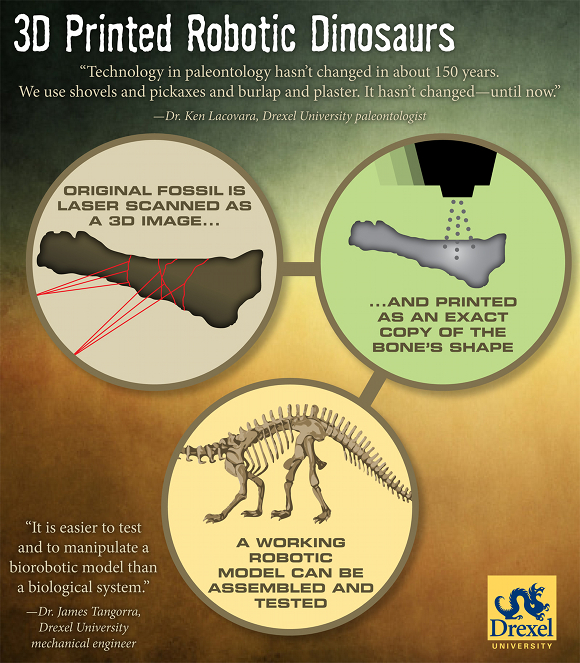
The researchers, from Philadelphia’s Drexel University, are using 3D printing to create dino-bones and then attaching artificial muscles and tendons to create dinosaur robots.

“Technology in paleontology hasn’t changed in about 150 years,” paleontologist Kenneth Lacovara said. “We use shovels and pickaxes and burlap and plaster. It hasn’t changed — until right now.”

The 3D printers build the dino-bones by repeatedly putting out thin layers of resin or another material to build up the object based on a digital design.

February 18, 2012

New medieval ruins, you say?

Filed under: Germany, History, Humour — Tags: , , , — Nicholas @ 13:19

In an article about Guild Wars 2 game play at the German website wartower.de, author 4thVariety briefly reminisces about fake medieval ruins:

This ruin will be smashed by Tequatl every time. I wonder, if players need to build it first, in some obtuse quest, sorry, event referencing Kevin Costner’s unforgettable, or rather unrepressable, classic Field of Dreams. Building a ruin makes no sense you say? I beg to differ. 135 years ago, the Bavarian king announced he was looking forward to visiting my home town the next year and take a tour of the medieval ruins. Problem was, there were no medieval ruins, but nobody wanted to tell that to the King and spoil the perfect visit he was looking forward to. Thus, in a fit of “because we can” and to further spite the neighboring cities, a medieval ruin was build in the middle of an English garden. The King had a happy visit and today’s fantasy nerds a spot to geek out once a year. This is the place where I learned that people in chainmail do not jump and dropping off a one meter ledge in armor with a broadsword in your hand is a scary dangerous thing. Thank god, neither cell-phone cameras nor Youtube were invented back then, else I would be an international near self-impalement meme today. On the bright side, nobody would then complain about not being able to jump in MMOs.

The skeleton of Eugenics rattles in the socialist closet

Filed under: Britain, History, Liberty — Tags: , , , , , , — Nicholas @ 11:22

In, of all places, the Guardian, Jonathan Freedland discusses the attraction to Eugenics for mainstream socialists in the 1930s:

It is eugenics, the belief that society’s fate rested on its ability to breed more of the strong and fewer of the weak. So-called positive eugenics meant encouraging those of greater intellectual ability and “moral worth” to have more children, while negative eugenics sought to urge, or even force, those deemed inferior to reproduce less often or not at all. The aim was to increase the overall quality of the national herd, multiplying the thoroughbreds and weeding out the runts.

Such talk repels us now, but in the prewar era it was the common sense of the age. Most alarming, many of its leading advocates were found among the luminaries of the Fabian and socialist left, men and women revered to this day. Thus George Bernard Shaw could insist that “the only fundamental and possible socialism is the socialisation of the selective breeding of man”, even suggesting, in a phrase that chills the blood, that defectives be dealt with by means of a “lethal chamber”.

Such thinking was not alien to the great Liberal titan and mastermind of the welfare state, William Beveridge, who argued that those with “general defects” should be denied not only the vote, but “civil freedom and fatherhood”. Indeed, a desire to limit the numbers of the inferior was written into modern notions of birth control from the start. That great pioneer of contraception, Marie Stopes — honoured with a postage stamp in 2008 — was a hardline eugenicist, determined that the “hordes of defectives” be reduced in number, thereby placing less of a burden on “the fit”. Stopes later disinherited her son because he had married a short-sighted woman, thereby risking a less-than-perfect grandchild.

Yet what looks kooky or sinister in 2012 struck the prewar British left as solid and sensible. Harold Laski, stellar LSE professor, co-founder of the Left Book Club and one-time chairman of the Labour party, cautioned that: “The time is surely coming … when society will look upon the production of a weakling as a crime against itself.” Meanwhile, JBS Haldane, admired scientist and socialist, warned that: “Civilisation stands in real danger from over-production of ‘undermen’.” That’s Untermenschen in German.

I’m afraid even the Manchester Guardian was not immune. When a parliamentary report in 1934 backed voluntary sterilisation of the unfit, a Guardian editorial offered warm support, endorsing the sterilisation campaign “the eugenists soundly urge”. If it’s any comfort, the New Statesman was in the same camp.

Lest Canadians get smug about those evil Brits and their morally dubious theories, let us remember that our own sainted Tommy Douglas, first leader of the NDP, wrote his Master’s thesis on the subject of eugenics:

Douglas graduated from Brandon College in 1930, and completed his Master’s degree (M.A.) in Sociology from McMaster University in 1933. His thesis entitled The Problems of the Subnormal Family endorsed eugenics.[16] The thesis proposed a system that would have required couples seeking to marry to be certified as mentally and morally fit. Those deemed to be “subnormal” because of low intelligence, moral laxity or venereal disease would be sent to state farms or camps while those judged to be mentally defective or incurably diseased would be sterilized.[17]

Douglas rarely mentioned his thesis later in his life and his government never enacted eugenics policies even though two official reviews of Saskatchewan’s mental health system recommended such a program when he became premier and minister of health.[17] By that time, many people questioned eugenics after Nazi Germany had embraced it to create a “master race”.[18] Instead, Douglas implemented vocational training for the mentally handicapped and therapy for those suffering from mental disorders.[19] (It may be noted that two Canadian provinces, Alberta and British Columbia, had eugenics legislation that imposed forced sterilization. Alberta’s law was first passed in 1928 while B.C. enacted its legislation in 1933.[20] It was not until 1972 that both provinces repealed the legislation.)[21][22]

February 17, 2012

Colby Cosh on the current drama around the Falkland Islands

Filed under: Americas, Britain, History, Military — Tags: , , , , , — Nicholas @ 09:22

The last time Colby Cosh discussed the Falkland Islands, we had a bit of a discussion on Twitter, with my pessimism about Britain’s strategic situation finally persuading him to say “You’ve convinced me to worry about this a little more than I would’ve” (summary in this post). He’s now posted a new article at Maclean’s, which I think accurately captures the situation in the south Atlantic:

Argentina, the world press tells us, intends to rename its top soccer league the “Cruiser General Belgrano First Division”, in honour of the Argentine ship sunk by the Royal Navy during the 1982 Falklands War. Far be it from any outsider to prescribe how a country honours its war dead, but honour is not what the move is about: it’s part of a continuing, exhausting barrage of Falklands agitprop from Argentina’s Kirchner government. Kirchner is scrambling to keep Argentine economic growth rolling, barracking businesses and workers in the classic caudillo manner as inflation outpaces the dubious official statistics. She has tried, with some success, to close off Southern Hemisphere ports to boats flying the maritime flag of the Falklands and to weld traditionally UK-friendly neighbours into a regional bloc against “colonialism”. Tensions are high and the Falkland Islanders are feeling besieged.

Britain is passing through a phase of relative strategic vulnerability when it comes to the Falklands. The islands are garrisoned much more strongly than they were in 1982 and the RAF has a proper airfield. But the UK has sold off its Harrier fleet, and its naval force-projection capacity is a little threadbare; public austerity has forced the Royal Navy to wait until 2016 for a new Nimitz-sized aircraft-carrier class to come into play. General Sir Michael Jackson, often considered the top UK commentator on military affairs (how many General Sirs are there?), recently summed up the situation by suggesting that the Falklands could be defended—but if Argentina captured them in a coup de main, as it did in ’82, its soldiers could probably not now be driven off. From a game-theoretic standpoint, the situation is a nightmare.

Update, 21 February: Brendan O’Neill explains that in the modern celebrity-fuelled world, the Penn really is mightier than the sword:

Easily the most extraordinary thing about Sean Penn’s recent comments on the Falkland Islands is the impact that they made. The tidal wave of furious commentary has tended to focus on Penn’s undoubted combination of daftness and arrogance, with enraged British hacks asking ‘where does Mr Madonna get off holding a press conference to pontificate about the serious affairs of the South Atlantic?’. That is indeed a good question. But a better and more pressing one is this: how on earth did the musings of one muppet make such a massive impact, intensifying the stand-off between Argentina and Britain, generating acres of newsprint, and even provoking a huge protest in the Falkland Islands themselves under the banner ‘Falk You, Sean’?

[. . .]

The Penn affair confirms the extraordinary and terrifying power of celebrity today. It shows that in our celeb-obsessed era, the famous and allegedly fabulous are no longer used simply to advertise booze or to titillate the readers of gossip columns — they have become actual tools of global politics. (In both senses of the word ‘tool’ — ‘a device used to carry out a particular function’ and ‘one who lacks the mental capacity to know he is being used’.) Indeed, Kirchner’s use of Penn in her war of words with Britain shows that she is a sussed and wily leader — she recognises that, today, a comment from a celeb is a far more effective political manoeuvre than readying a warship or making a stern speech at the United Nations. Her message is basically: ‘I’ll see your Prince William and raise you Sean Penn…’

February 16, 2012

Rum running in the Maritimes during Prohibition

Filed under: Cancon, Economics, France, History, USA — Tags: , , , — Nicholas @ 11:33

I just received a press release about a new documentary to be shown on the CBC this Sunday. Here’s the trailer:

Rum Running is a half hour documentary that will celebrate its world broadcast premiere on CBC Television’s Land & Sea on Sunday, February 19, 2012 at 12 Noon. Rum Running describes the history of rum running and depicts the high stakes role that Nova Scotia and the French Islands of St. Pierre and Miquelon played during the era. The film reveals how thousands of law abiding citizens of Atlantic Canada were lured into the alcohol smuggling trade during Prohibition in the 1920’s and 30s.

February 12, 2012

Interested in early SF pulps?

Filed under: History, Media — Tags: , , — Nicholas @ 10:17

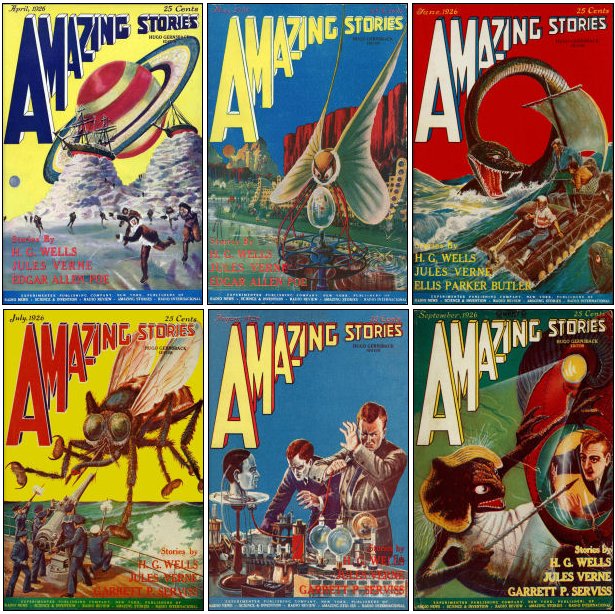
You can now read the full text, including pictures and ads, of the first six issues of Amazing Stories online:

The Pulp Magazines Project has just posted the first several issues of Amazing Stories. Read the classic pulp magazine edited by Hugo Gernsback in all its scanned-in glory, with stories by H.G. Wells, Jules Verne, Edgar Allan Poe, Murray Leinster and more.

February 11, 2012

Alan Moore: “Without wishing to overstate my case, everything in the observable universe definitely has its origins in Northamptonshire”

Filed under: Books, Britain, History, Liberty, Media, Politics — Tags: , , , , — Nicholas @ 11:51

Alan Moore on the origins of the Guy Fawkes mask and its role in the Anonymous protests:

When parents explained to their offspring about Guy Fawkes and his attempt to blow up Parliament, there always seemed to be an undertone of admiration in their voices, or at least there did in Northampton.

While that era’s children perhaps didn’t see Fawkes as a hero, they certainly didn’t see him as the villainous scapegoat he’d originally been intended as.

At the start of the 1980s when the ideas that would coalesce into V for Vendetta were springing up from a summer of anti-Thatcher riots across the UK coupled with a worrying surge from the far-right National Front, Guy Fawkes’ status as a potential revolutionary hero seemed to be oddly confirmed by circumstances surrounding the comic strip’s creation: it was the strip’s artist, David Lloyd, who had initially suggested using the Guy Fawkes mask as an emblem for our one-man-against-a-fascist-state lead character.

When this notion was enthusiastically received, he decided to buy one of the commonplace cardboard Guy Fawkes masks that were always readily available from mid-autumn, just to use as convenient reference.

To our great surprise, it turned out that this was the year (perhaps understandably after such an incendiary summer) when the Guy Fawkes mask was to be phased out in favour of green plastic Frankenstein monsters geared to the incoming celebration of an American Halloween.

It was also the year in which the term “Guy Fawkes Night” seemingly disappeared from common usage, to be replaced by the less provocative ‘bonfire night’.

At the time, we both remarked upon how interesting it was that we should have taken up the image right at the point where it was apparently being purged from the annals of English iconography. It seemed that you couldn’t keep a good symbol down.

February 10, 2012

Help sponsor a new home for the historic Colossus code-cracking computer

Filed under: Britain, History, Technology, WW2 — Tags: , , — Nicholas @ 11:11

John Leyden at The Register on the fundraising efforts to build a new home for the WW2 cryptographic computer:

The National Museum of Computing (TNMOC) has turned to a tried-and-tested fundraising method to establish a home for the rebuilt Colossus computer at Bletchley Park.

Individuals and firms are invited to buy up pixels of an online picture of the wartime code-breaking machine — at 10 pence per dot with a minimum spend of £10 — pretty much like Alex Tew’s million-dollar homepage effort.

The museum’s curators need the cash to open an exhibition featuring the Colossus in the historic Block H, on the spot where Colossus No 9 stood during the Second World War and where the rebuild took place.

Colossus was the world’s first electronic programmable computer, and was used to crack encrypted messages between Hitler and his generals.

Before Watergate the FBI had to put together files using wiretaps, informants, and detective work

Filed under: Government, History, Liberty, USA — Tags: , , , , , — Nicholas @ 11:03

Nowadays, of course, they wouldn’t need to do any of that: most of what they collected then could be gathered by looking you up on Facebook:

Bud Abbott and Lou Costello are perhaps best known for their comedy sketch Who’s on First?

But in the 1950s, the duo caught the FBI’s attention for other reasons.

“A police informant furnished information to the effect that Bud Abbott, the well-known motion picture and television star, is a collector of pornography, and alleged he has 1,500 reels of obscene motion pictures,” an agent wrote in an FBI file.

Of Costello, agents reported: “Information was secured reflecting that two prostitutes put on a lewd performance for Lou Costello,” for which they were paid $50 each.

[. . .]

During the era of legendary FBI director J Edgar Hoover, “you could find a reason to open a file on anyone”, says Steve Rosswurm, a historian at Lake Forest College in Illinois and author of a book about the FBI’s dealings with the Catholic Church.

“The reasons for the surveillance are as varied as the people being watched,” said British writer Nicholas Redfern, author of Celebrity Secrets: Official Government Files on the Rich and Famous

“It was very much dependent upon the character or the situation the subject of the file was in.”

Today, the bureau’s Cold War-era fears of communist infiltration, obscenity and homosexuality sound almost quaint..

February 6, 2012

The Diamond Jubilee

Filed under: Britain, Cancon, History, Media — Tags: — Nicholas @ 12:07

Paul McMichael Nurse on today’s 60th anniversary of the start of the reign of Queen Elizabeth II.

Today marks the 60th anniversary of Elizabeth II’s accession to the Throne of Great Britain in February of 1952. There can hardly be many heads of state, past or present, who have witnessed so many major events over so long a period. Elizabeth has outlasted 12 British prime ministers, 10 Canadian ones and 11 U.S. presidents. Decolonization, the Cold War, the space race, civil rights for minority groups, various assassinations and international regime changes have all taken place during her reign. From the grim austerity days following the end of the Second World War to the technological wonders of the early 21st century, Elizabeth as princess and queen has seen Britain transform from a quasi-imperial nation to something less than the superpower it was a century ago.

A number of events are planned to celebrate this year’s Diamond Jubilee, capped by a massive flotilla of boats accompanying the queen’s barge up the Thames on June 3. Members of the Royal Family will visit all 15 countries of which the queen is head of state, and Elizabeth herself will travel extensively within the United Kingdom.

Royal jubilees are rare things at the best of times, but none rarer than 60th anniversaries. Over 1,000 years of British monarchy there have been only two Diamond Jubilees, and the last one occurred not in the last century, but the one before, in 1897, when Queen Victoria celebrated her own reign of 60 years. To this day, Victoria remains the longest-serving British monarch on record, ascending the throne on the death of her uncle William IV, in 1837, and seeing Britain grow into the most extensive global empire since Rome.

Update: Even some self-described anti-monarchists think she’s been a fine Queen:

But admiration for the monarch might be unexpected coming from me. After all, I’m a republican.

Heredity is just about the silliest method I can think of for selecting someone to govern a country. Think Kim Jong-Il.

[. . .]

It’s true that bad prime minister, premiers and presidents can stick around long enough to rot in office. But no elected leader gets to stay for 60 years. Democracies may be imperfect, but they are self-correcting in a way hereditary monarchies never can be.

So why such effusive praise for our Queen from such a staunch anti-monarchist? Because Elizabeth has been a remarkable queen, an inspirational queen, steadfast, steady, intelligent, balanced and above reproach. She has seldom, if ever, put a foot wrong. Without her pitch-perfect discharge of her duties, it is entirely possible the British monarchy would have gone the way of other European royalty decades ago.

In short, Elizabeth is the Queen we would have chosen to elect if a campaign were ever held to select our monarch. Heredity may have placed her on the throne, but had voters ever been asked, democracy would have kept here there. I can think of no elected leader who could have acted so impeccably in office to remain popular from 1952 until today. Indeed, if anything, the Queen is more popular today than at any time since the first years after her accession. And it is an earned popularity, a reward for her unwavering commitment to serve her subjects and the people of the Commonwealth.

February 5, 2012

This is where all the manufacturing jobs have gone

Filed under: Britain, Economics, Education, History, Technology — Tags: , , — Nicholas @ 11:44

Jackart explains that they’ve not so much been “outsourced” as they’ve been compressed, optimized, economized, and made more efficient. Fewer workers are now required to produced more things, and this is unequivocally a good thing:

A small cadre of highly skilled professionals do the jobs with enormous machines once done by vast armies of peasant labourers; which is what’s happening to manufacturing. British industrial production is rising barring recessionary glitches, UK industrial production has kept rising for most of the last 100 years. We are still producing lots of things that can be dropped on a foot. It’s just it’s no longer done by the descendants of those peasants who left the land during the industrial revolution to seek work in factories. Those factories still exist, but they employ a small number of highly paid people to operate machines which do the riveting, welding, assembling and polishing. Each machine takes does the job of hundreds of people.

That’s what happened in Agriculture, and is happening in Manufacturing. And THIS IS A GOOD THING. Because all those people not employed in riveting in Tyneside shipyards or Scything Lincolnshire corn fields are employed doing something else for someone else. All that productive labour has been freed, but we’re still getting the food produced, in abundance the Lincolnshire harvestman would have thought impossible.

The majority of Western economies are now services. Even the Germans, who’ve a niche in Machine tools and Automobiles have only 21% of their economy in making things they can drop on their feet.

And this reflects another point. Manufactured products are getting cheaper, so to have material wealth unimaginable to our Lincolnshire harvestman requires far fewer hours of Labour to achieve. Thus cars, the most expensive manufactured products most of us buy, are getting cheaper relative to average earnings, decade by decade. A reliable runaround would have been beyond the means of a WW2 factory worker, but is available to a cleaning lady now. So the same car forms a smaller part of the economy. Having spent less on the car, we can spend more on clothes, shoes, music, computers, kitchen appliances etc, and in so doing provide jobs to people supplying those things. Above all we can pay for people do do things for us – cut our hair, serve us food in restaurants, mediate for us legally, invest our surplus production into other productive activities, heal our illnesses and so on.

[. . .]

The next challenge is to banish stress and misery from our lives. I suspect this will be harder. The only caveat is that I have a great deal more faith in Adam Smith’s “invisible hand” (a much maligned and misunderstood idea) than the idiotic ideas of politicians. Politicians still seem to think manufacturing jobs are special, which suggests they don’t understand why we’re rich. The only limitless resource is man’s ingenuity. Markets aren’t an ideology, they’re simply what works in the absence of one, by deploying that one limitless resource to everyone’s benefit.

« Newer PostsOlder Posts »

Powered by WordPress