
The Tank Museum
Published 30 Sept 2022In this weeks video, David Fletcher discusses the development and features of Striker, another vehicle from the CVRT family.
(more…)
January 26, 2023
Tank Chats #165 | Striker | The Tank Museum
Comments Off on Tank Chats #165 | Striker | The Tank Museum
QotD: Non-commissioned officers
“Deltas”, the “socio-sexual hierarchy” spergs inform us, are the good soldiers, the go-along-to-get-along types who know their place in an organization and — crucially — derive their sense of self worth from excelling in it.
Your ideal “delta” is something like a lifer noncom in a non-pozzed military. Back in the days, I’m told, new recruits and civilians used to call crusty old gunny sergeants “sir”, to which the gunny would reply “Don’t call me ‘sir’, I work for a living!” That’s the attitude. Those guys with all the stripes on their sleeves aren’t officers because they lack “command presence”; they’re not officers because they don’t want to be officers. They know themselves, and, crucially, they know where they best fit into the organization’s overall mission. “Get in where you fit in” is, in a very real sense, their identity.
Examples of that kind of guy are tougher to find in the historical literature, which is why we need to develop, and pump up, the archetype. […] the ideal is the centurion, the backbone of Marcus Aurelius’ army. A soldier, a Stoic, a leader … but one who knows, and values, his place in the organization above all things.
Severian, “Be a Centurion!”, Rotten Chestnuts, 2020-04-07.
Comments Off on QotD: Non-commissioned officers
January 25, 2023
Dinner with Attila the Hun
Tasting History with Max Miller
Published 24 Jan 2023
(more…)
Comments Off on Dinner with Attila the Hun
January 24, 2023
The Vietnam War still has echoes in US politics
In UnHerd, Dominic Sandbrook outlines the end of US involvement in the Vietnam War:
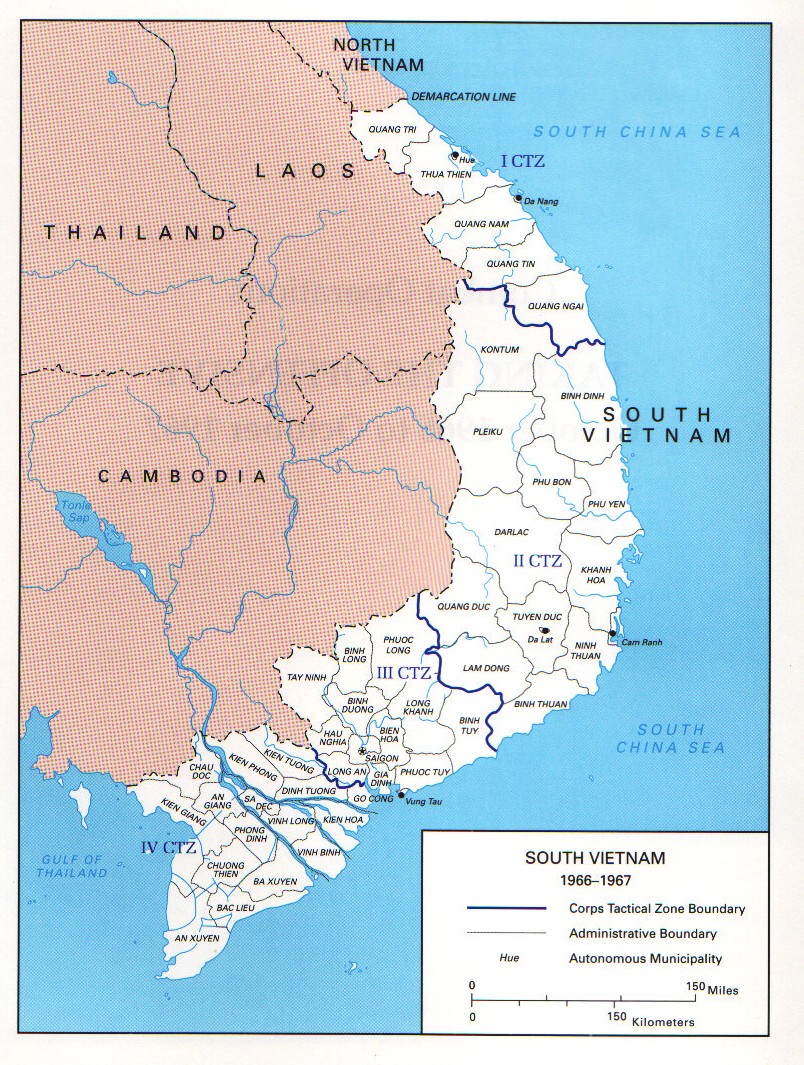
From George L. MacGarrigle, The United States Army in Vietnam: Combat Operations, Taking the Offensive, October 1966-October 1967. Washington DC: Center of Military History, 1998. (Via Wikimedia)
In the course of his troubled presidency, Richard Nixon spoke 14 times to the American people about the war in Vietnam. It was in one of those speeches that he coined the phrase “the silent majority”, while others provoked horror and outrage from those opposed to America’s longest war. But of all these televised addresses, none enjoyed a warmer reaction that the speech Nixon delivered on 23 January 1973, announcing that his Secretary of State, Henry Kissinger, had achieved a breakthrough in the Paris peace talks with the North Vietnamese.
At last, Nixon said, the war was over. At a cost of 58,000 American lives and some $140 billion, not to mention more than two million Vietnamese lives, the curtain was falling. The last US troops would be brought home. South Vietnam had won the right to determine its own future, while the Communist North had pledged to “build a peace of reconciliation”. Despite the high price, Nixon insisted Americans could be proud of “one of the most selfless enterprises in the history of nations”. He had not started the war, but it had dominated his presidency, earning him the undying enmity of those who thought the United States should just get out. But the struggle had been worth it to secure “the right kind of peace, so that those who died and those who suffered would not have died and suffered in vain”. He called it “peace with honour”.
Fifty years on, Nixon’s proclamation of peace with honour has a bitterly ironic ring. As we now know, much of what he said that night was misleading, disingenuous or simply untrue. South Vietnam was in no state to defend itself, and collapsed just two years later. The North Vietnamese had no intention of laying down their weapons, and resumed the offensive within weeks. And Nixon and Kissinger never seriously thought they had secured a lasting peace. They knew the Communists would carry on fighting, and fully intended to intervene with massive aerial power when they did. But then came Watergate. With Nixon crippled, Congress forbade further intervention and slashed funding to the government in Saigon. On 30 April 1975, North Vietnamese tanks crashed through the gates of the presidential palace, and it really was all over.
Half a century later, have the scars of Vietnam really healed? It remains not only America’s longest war but one of its most divisive, comparable only with the Civil War in its incendiary cultural and political impact. The fundamental narrative trajectory of the late Sixties — the turn from shiny space-age Technicolor optimism to strident, embittered, anti-technological gloom — would have been incomprehensible without the daily images of suffering and slaughter on the early evening news. It was Vietnam that destroyed trust in government, in institutions, in order and authority. In 1964, before Lyndon Johnson sent in combat troops after the Gulf of Tonkin incident, fully three-quarters of Americans trusted the federal government. By 1976, a year after the fall of Saigon, not even one in four did so.
It was in the crucible of Vietnam, too, that you can spot many of the tensions that now define American politics. Perhaps the most potent example came in May 1970, after Nixon invaded nominally neutral Cambodia to eliminate the North Vietnamese Army’s jungle sanctuaries. First, on 4 May, four students were shot and killed by the National Guard during a demonstration at Kent State University, Ohio. Then, on 8 May, hundreds more students picketed outside the New York Stock Exchange, only to be attacked by several hundred building workers waving American flags.
The “hard hat riot”, as it became known, was the perfect embodiment of patriotic populist outrage at what Nixon’s vice president, leading bribery enthusiast Spiro Agnew, called “the nattering nabobs of negativism … an effete corps of impudent snobs who characterise themselves as intellectuals”. Today it seems almost predictable, just another episode in the long-running culture wars. But at the time it seemed genuinely shocking. And with his brilliantly ruthless eye for a tactical advantage, Nixon saw its potential. When he invited the construction workers’ leaders to the White House two weeks later, he knew exactly what was doing. “The hard hat will stand as a symbol, along with our great flag,” he said, “for freedom and patriotism and our beloved country”.
Comments Off on The Vietnam War still has echoes in US politics
The Byzantine Empire: Part 9 – The Last Centuries
seangabb
Published 30 Dec 2022In this, the ninth in the series, Sean Gabb gives an overview of the last years of Byzantium, from the Crusader sack in 1204 to the Turkish capture in 1453.
Between 330 AD and 1453, Constantinople (modern Istanbul) was the capital of the Roman Empire, otherwise known as the Later Roman Empire, the Eastern Roman Empire, the Mediaeval Roman Empire, or the Byzantine Empire. For most of this time, it was the largest and richest city in Christendom. The territories of which it was the central capital enjoyed better protections of life, liberty and property, and a higher standard of living, than any other Christian territory, and usually compared favourably with the neighbouring and rival Islamic empires.
(more…)
Comments Off on The Byzantine Empire: Part 9 – The Last Centuries
January 23, 2023
Who was John Wilkes?
Lawrence W. Reed on the life of John Wilkes, a British parliamentarian in the reign of George III:
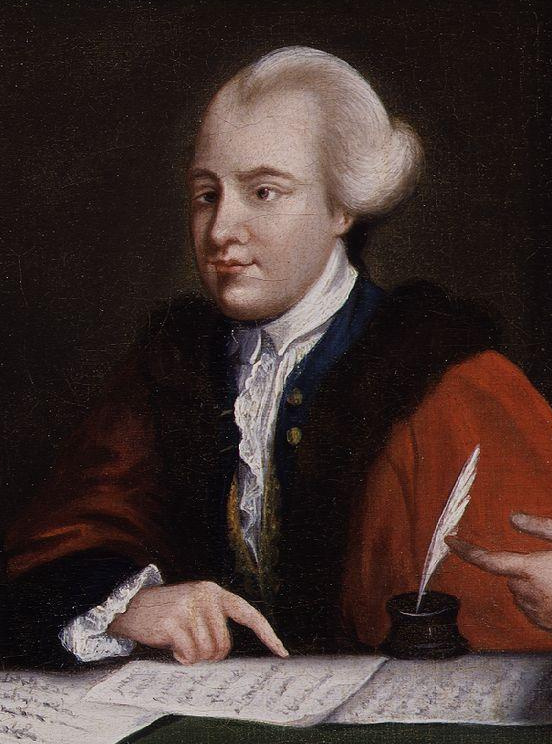
John Wilkes (1725-1797)
Cropped from a larger painting entitled “John Glynn, John Wilkes and John Horne Tooke” in the National Portrait Gallery via Wikimedia Commons.
In the long history of memorably scintillating exchanges between British parliamentarians, one ranks as my personal favorite. Though attribution is sometimes disputed, it seems most likely that the principals were John Montagu, 4th Earl of Sandwich, and the member from Middlesex, John Wilkes.
Montagu: Sir, I do not know whether you will die on the gallows or of the pox.
Wilkes: That depends, my lord, on whether I embrace your lordship’s principles or your mistress.
Repartee doesn’t get much better than that. And it certainly fits the style and reputation of Wilkes. Once when a constituent told him he would rather vote for the devil, Wilkes famously responded, “Naturally. And if your friend decides against standing, can I count on your vote?”
Wilkes deserves applause for his rapier wit, but also for something much more important: challenging the arrogance of power. He was known in his day as a “radical” on the matter. Today, we might label him “libertarian” in principles and policy and perhaps even “libertine” in personal habits (he was a notorious womanizer). His pugnacious quarrels with a King and a Prime Minister are my focus in this essay.
Born in London in 1725, Wilkes in his adult life was cursed with bad looks. Widely known as “the ugliest man in England”, he countered his unattractive countenance with eloquence, humor, and an eagerness to assault the powers-that-be with truth as he saw it. Fortunately, the voters in Middlesex appreciated his boldness more than his appearance. He charmed his way into election to the House of Commons as a devotee of William Pitt the Elder and, like Pitt, became a vociferous opponent of King George III’s war against the American colonies.
Pitt’s successor as PM in 1762, Lord Bute of Scotland, earned the wrath of Wilkes for the whole of his brief premiership. Bute negotiated the treaty that ended the Seven Years War (known in America as the French & Indian War), which Wilkes thought gave too many concessions to the French. Wilkes also opposed Bute’s plan to tax the Americans to pay for the war.
[…]
George III took it personally. He ordered the arrest of Wilkes and dozens of his followers on charges of seditious libel. For most of the nearly thousand years of British monarchy, kings would have remanded foes like Wilkes to the gallows forthwith. But as a measure of the steady progress of British liberty (from Magna Carta in 1215 through the English Bill of Rights in 1689), the case went to the courts.
Wilkes argued that as a member of Parliament, he was exempt from libel charges against the monarch. The Lord Chief Justice agreed. Wilkes was released and took his seat again in the House of Commons. He resumed his attacks on the government, Bute’s successor George Grenville in particular.
Comments Off on Who was John Wilkes?
Monte Cassino, the Battle Begins – Ep 230 – January 21, 1944
World War Two
Published 21 Jan 2023The Allies have reached the linchpin of the German defenses in Italy, but a first attack proves disastrous. It does, though, divert troops from where they soon plan to make landings behind enemy lines. Meanwhile in the USSR, the huge Soviet offensive in the north makes great gains against the stunned Axis forces.
(more…)
Comments Off on Monte Cassino, the Battle Begins – Ep 230 – January 21, 1944
QotD: Rice farming
Wet-rice is farmed in paddies, small fields (often very small – some Chinese agronomists write that the ideal size for an individual rice field is around 0.1 hectare, which is just 0.24 acres) surrounded by low “bunds” (small earthwork walls or dykes) to keep in the water, typically around two feet high. Because controlling the water level is crucial, rice paddies must be very precisely flat, leading to even relatively gentle slopes often being terraced to create a series of flat fields. Each of these rice paddies (and there will be many because they are so small) are then connected by irrigation canals which channel and control the water in what is often a quite complex system.
The exact timing of rice production is more complex than wheat because a single paddy often sees two crops in a year and the exact planting times vary between areas; one common cycle on the Yangtze is for a February planting (with a June harvest) followed by a June planting (with a November harvest). In other areas, paddies planted with rice during the first planting might be drained and sown with a different plant entirely (sometimes including wheat) in the intervening time.
The cycle runs thusly: after the heavy rains of the monsoons (if available), the field is tilled (or plowed, but as we’ll see, manual tillage is often more common). The seed is then sown (or transplanted) and the field is, using the irrigation system, lightly flooded, so that the young seedlings grow in standing water. Sometimes the seed is initially planted in a dedicated seed-bed and then transferred to the field, rather than being sown there directly; doing so has a positive impact on yields, but is substantially more labor intensive. The water level is raised as the plant grows; agian this is labor intensive, but increases yields. Just before the harvest the fields are drained out and allowed to dry out, before the crop is harvested and then goes into processing.
Rice is threshed much like grain (more often manually threshed and generally not threshed with flails) to release the seeds, the individual rice grains, from the plant. That is going to free the endosperm of the speed, along with a hull around it and a layer of bran between the two. Hulling was traditionally done by hand-pounding, which frees the seed from the hull, leaving just the endosperm and some of the bran; this is how you get brown rice, which is essentially “whole-grain” rice. While it is generally less tasty, the bran actually has quite a lot of nutrients not present in the calorie-rich endosperm. Whereas white rice is produced by then milling or polishing away the bran to produce a pure, white kernal of the endosperm; it is very tasty, but lacks many of the vitamins that brown rice has.
Consequently, while a diet of mostly brown rice can be healthy, a diet overwhelmingly of white rice leads to Thiamine deficiency, known colloquially as beriberi. My impression from the literature is that this wasn’t as much an issue prior to the introduction of mechanical milling processes for rice. Mechanical milling made producing white rice in quantity cheap and so it came to dominate the diet to the exclusion of brown rice, producing negative health effects for the poor who could not afford to supplement their rice-and-millet diet with other foods, or for soldiers whose ration was in rice. But prior to that mechanical milling, brown rice was all that was available for the poor, which in turn meant less Thiamine deficiency among the lower classes of society.
Bret Devereaux, “Collections: Bread, How Did They Make It? Addendum: Rice!”, A Collection of Unmitigated Pedantry, 2020-09-04.
Comments Off on QotD: Rice farming
January 22, 2023
Where The British Army Figured Out Tanks: Cambrai 1917
The Great War
Published 20 Jan 2023The Battle of Cambrai in 1917 didn’t have a clear winner, but the conclusions that Germany and Britain drew from it, particularly about the use of the tank (in combination with other arms), would have far reaching consequences in 1918.
(more…)
Comments Off on Where The British Army Figured Out Tanks: Cambrai 1917
QotD: Evolution of the nation-state
It took the rest of Europe another 150 years, but the Thirty Years’ War did the trick. What started as another of the endless doctrinal conflicts kicked off by the Reformation ended with the creation of the modern nation-state. Cardinal Richelieu really was a Cardinal — a prince of the Roman Catholic Church, a guy with a legitimate chance of being elected Pope. This man brought Catholic France into the war on the Protestant side for “reasons of state”. This made sense in 1631 … and the war still had another 17 years to run.
Speaking of, the treaty that ended the Thirty Years’ War, the famous Peace of Westphalia, is credited with creating the modern nation-state. Which it did, but since we decided back in 1946 that nationalism was the worst possible sin, we Postmoderns forgot what everyone around the treaty table knew: That “nation” and “state” are inseparable. The nation-state, which for clarity’s sake will henceforth be known as the ethno-state, is the biggest stable form of human organization.
Severian, “The Libertarian Moment?”, Rotten Chestnuts, 2020-03-19.
Comments Off on QotD: Evolution of the nation-state
January 21, 2023
When did England become that sneered-at “nation of shopkeepers”?
In the latest Age of Invention newsletter, Anton Howes considers when the English stopped being a “normal” European nation and embraced industry and commerce instead of aristocratic privilege:
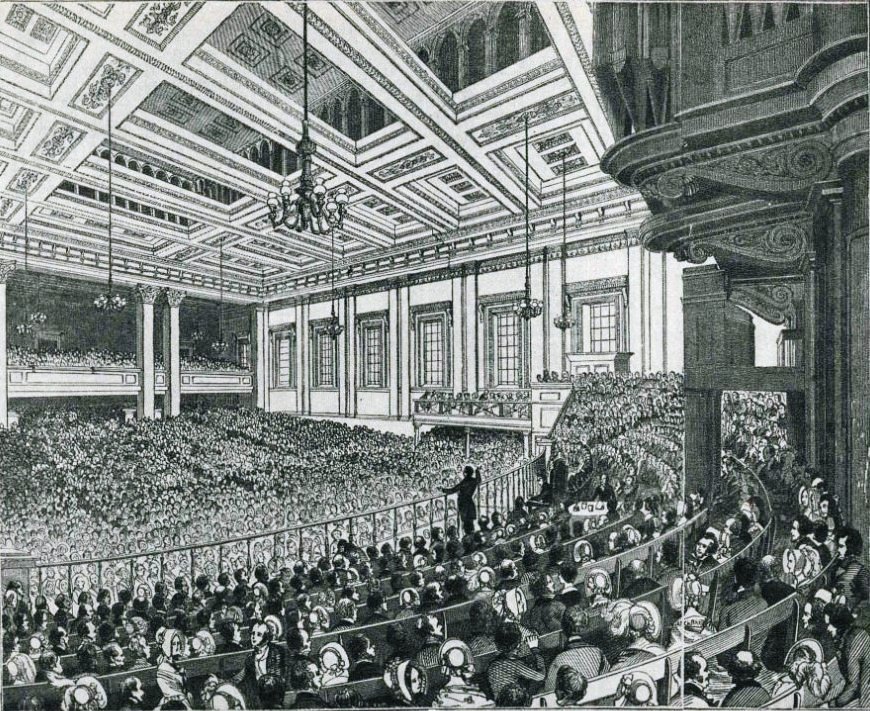
A meeting of the Anti-Corn Law League in Exeter Hall in 1846.
Wikimedia Commons.
England in the late eighteenth century was often complimented or disparaged as a “nation of shopkeepers” — a sign of its thriving industry and commerce, and the influence of those interests on its politics.
But when did England start seeing itself as a primarily commercial nation? When did the interests of its merchants and manufacturers begin to hold sway against the interests of its landed aristocracy? The early nineteenth century certainly saw major battles between these competing camps. When European trade resumed in 1815 after the Napoleonic Wars, an influx of cheap grain threatened the interests of the farmers and the landowners to whom they paid rent. Britain’s parliament responded by severely restricting grain imports, propping up the price of grain in order to keep rents high. These restrictions came to be known as the Corn Laws (grain was then generally referred to as “corn”, nothing to do with maize). The Corn Laws were to become one of the most important dividing lines in British politics for decades, as the opposing interests of the cities — workers and their employers alike, united under the banner of Free Trade — first won greater political representation in the 1830s and then repeal of the Corn Laws in the 1840s.
The Corn Laws are infamous, but I’ve increasingly come to see their introduction as merely the landed gentry’s last gasp — them taking advantage of a brief window, after over two centuries of the declining economic importance of English agriculture, when their political influence was disproportionately large. In fact, I’ve noticed quite a few signs of the rising influence of urban, commercial interests as early as the early seventeenth century. And strangely enough, this week I noticed that in 1621 the English parliament debated a bill that was almost identical to the 1815 Corn Laws — a bill designed to ban the importation of foreign grain below certain prices.
But in this case, it failed. In the 1620s it seems that the interests of the cities — of commerce and manufacturing — had already become powerful enough to stop it.
The bill appeared in the context of a major economic crisis that, for want of a better term, ought to be called the Silver Crisis of 1619-23. Because of the outbreak of the Thirty Years War, the various mints of the states, cities, and princelings of Germany began to outbid one another for silver, debasing their silver currencies in the process. The knock-on effect was to draw the silver coinage — the lifeblood of all trade — out of England, and at a time when the country was already unusually vulnerable to a silver outflow. (For fuller details of the Silver Crisis and why England was so vulnerable to it, I’ve written up how it all worked here.)
The sudden lack of silver currency was a major problem, and all the more confusing because it coincided with a spate of especially bountiful harvests. As one politician put it, “the farmer is not able to pay his rent, not for want of cattle or corn but money”. A good harvest might seem a time for farmers and their landlords to rejoice, but it could also lead to a dramatic drop in the price of grain. Good harvests tended to cause deflation (which the Silver Crisis may have made much worse than usual by disrupting the foreign market for English grain exports). An influential court gossip noted in a letter of November of 1620 that “corn and cattle were never at so low a rate since I can remember … and yet can they get no riddance at that price”. Just a few months later, in February 1621, the already unbelievable prices he quoted had dropped even further.
Despite food being unusually cheap, however, the cities and towns that ought to have benefitted were also struggling. The Silver Crisis, along with the general disruption of trade thanks to the Thirty Years War, had reduced the demand for English cloth exports. And this, in turn, threatened to worsen the general shortage of silver coin — having a trade surplus, from the value of exports exceeding imports, was one of the only known ways to boost the amount of silver coming into the country. England had no major silver mines of its own.
It’s in this context that some MPs proposed a ban on any grain imports below a certain price. They argued that not only were low prices and low rents harming their farming and landowning constituents, but that importing foreign grain was undermining the country’s balance of trade. They argued that it was one of the many causes of silver being drawn abroad and worsening the crisis.
Comments Off on When did England become that sneered-at “nation of shopkeepers”?
When the SS Go Too Far – War Against Humanity 096
World War Two
Published 20 Jan 2023The internal conflict between Poland and the other United Nations Allies deepens as Churchill faces them with diplomatic defeat over Soviet land grab. In the Occupied Netherlands and Poland the Nazis continue their atrocities.
(more…)
Comments Off on When the SS Go Too Far – War Against Humanity 096
A club for autodidacts?
Ed West regrets the lacunae in his knowledge of many things, which I suspect also describes a lot of my blog visitors (given how often my own autodidactic web explorations end up here or on my social media accounts). His proposed solution is a club to study the western canon:
I’m ashamed of how little I know about a lot of things. Classical music, for instance, is a huge ocean of unknowns to me. I appreciate it, and I would like to know more, but it still feels like a language in which I have only the barest of vocabulary.
I’m so clueless and lightweight on that front that my favourite classical music LP when I still had a record player was a double album which told you which advert each piece was from (“The Hovis advert with the boy walking up the hill” for Dvorak, “the Hamlet cigar ad with Gregor Fisher” by Bach).
My knowledge of poetry is quite poor, too, and I wish I could recite more of it, rather than, say, the lyrics of the first seven Iron Maiden albums I learned off by heart at 13 (nothing against Iron Maiden, I still love them, but I’ve found this a slightly less useful skill down the years when trying to impress people).
Poetry has never been my thing. I enjoy hearing others read poetry, but there’s always something that prevents me from reading poetry on the printed page and “getting” the rhythm of it for more than a stanza or so. However, with song lyrics the underlying music provides sufficient support that I undoubtedly know far more lyrics by heart than any other kind of poet-created text.
YouTube is full of videos following in George Birkbeck’s tradition of adult learning. There are podcasts like Peter Adamson’s History of Philosophy Without Any Gaps or The Partially Examined Life. One of the most popular Twitter accounts at the moment is The Cultural Tutor, with over a million followers, producing threads on the art, architecture, music and literature you should know about. People really want to learn this stuff, and regret that they were never made to do so earlier.
Some of this is due to the education system, although I don’t want to be one of those tedious people who go on Twitter and blame the curriculum for the gaps in their knowledge of history: “why weren’t we taught about the Second Schleswig war in school? Why am I only learning this now?” as if their teachers had thousands of hours spare rather than a very limited amount of time. But it’s also true that most people leave the British state education system knowing very little about the western canon, and are afterwards playing catch-up with a less absorbent mind.
In my case, with a couple of exceptions, the way that history — especially Canadian history — was taught in school seemed to be deliberately made as bland and uninteresting as possible … we of course skipped over most of the battles and campaigns so we could concentrate on the diplomats and treaties. Steve Sailer noted a similar phenomenon in US schools:
In Europe, anthropologists have promoted the “pots not people” theory to argue that trade and changes in fashion must explain why Corded Ware pots suddenly showed up all over Europe about 4,900 years ago. (So did battle axes; indeed, early scientists called this the Battle Axe Culture. But that sounded too awesome. Hence, more recent academics renamed it after its pottery style to make these brutal barbarians sound dweebier and thus less interesting to boys.)
Oddly, we were at least given some minimal insight into the plight of First Nations children in the residential school system which was not true when my son went to school a generation later. I’m still puzzled about that change in the curriculum. But back to Ed’s proposal:
Perhaps the main reason is that there already aren’t enough people who know about these things to teach in the first place, and who are also willing to endure the strain of having to keep order among an unwilling audience. So the knowledge does not get passed on, and public culture becomes ever more lowbrow.
But while it’s a hopeful sign that so many people go online to learn these things, my take-away from lockdown is that in-person is always better — going to something live, meeting people face to face, allowing your sensory perception to aid the learning process. I also believe that the more clubs and institutions we have, the healthier and happier our society.
That is why I’m proposing an idea, for a sort of club where people come and listen to talks about a particular feature of the western canon — Virgil, Goethe, Milton, Van Eyck, whatever — and fill in all these enormous holes in our knowledge. It would be a bit like an old-fashioned salon, or a Lyceum club. Although there are local salons still running, this would ideally be national. This canon club — I’m open to suggestions for a different name — would initially start in one city, presumably London, but if there was further interest we could help set up branches across Britain (and then even maybe abroad). Each local club would run semi-independently, but the wider organisation would help with arranging speakers and so on.
I see his point, but in my experience a lot of autodidacts are also rather introverted by nature so a physical salon or club with a lot of strangers might be less appealing than some of the existing online options.
Comments Off on A club for autodidacts?
Ask Ian: Liberators or Cobray Terminators for the Elbonian Resistance?
Forgotten Weapons
Published 29 Sept 2022From Jon on Patreon:
“Elbonia has been occupied by an enemy force. Do you sabotage their resistance by airdropping them Liberator pistols or Cobray Terminators?”To my mind, the Liberator is a substantially more useful resistance weapons, so I would supply Elbonia with lots of crates of Cobray Terminators. Why?
First, the Liberator is concealable. Historically, lots of resistance action requires hiding a small weapons. It’s not all forest encampments and ambushes.
Second, the Liberator is more effective. It uses a .45ACP pistol cartridge. The smooth barrel and atrocious sights certainly limit its utility, but if you actually hit someone with it, it will do the job. Most of the shotgun ammunition available to a resistance organization will be the most common sort of sporting ammunition, which is birdshot. Birdshot is very ineffective against people at anything but absolutely point-blank range.
Third, it is much simpler to fabricate a single-shot shotgun than a compact pistol. The Elbonian Resistance wouldn’t have much trouble making something like a Richardson Guerrilla Gun, so supplying them with Terminators doesn’t actually give them much that they couldn’t get already.
(more…)
Comments Off on Ask Ian: Liberators or Cobray Terminators for the Elbonian Resistance?
January 19, 2023
“Sir, was everyone in history a racist?”
At The Critic, Fred Skulthorp explains how British history is being taught in schools these days:
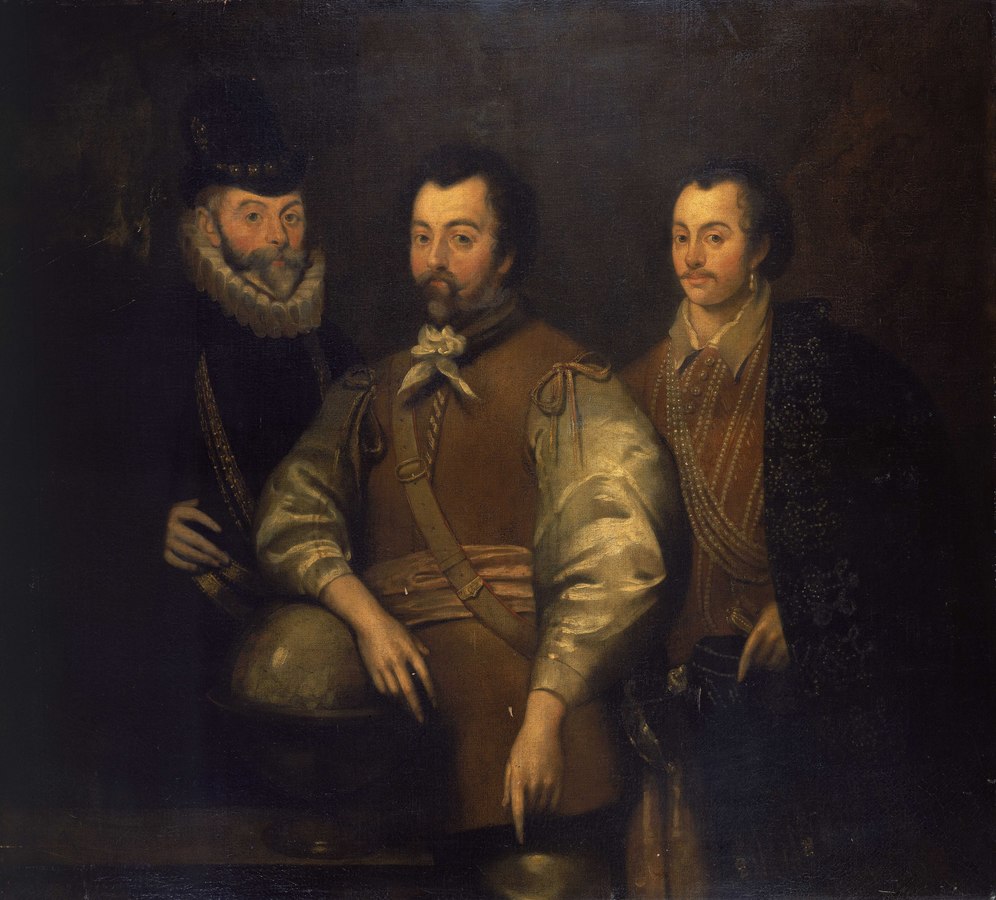
Sir John Hawkins (1532-1595), Sir Francis Drake (1540?-1596), and Thomas Cavendish (1560-1592).
Probably a copy of Daniel Myten’s’ painting of the same subject, now part of the Royal Museums Greenwich collection via Wikimedia Commons.
“Sir, was everyone in history a racist?” said Daniel one slow Thursday afternoon at my old school in North London. Daniel hadn’t put up his hand, so of course, I had to tell him off. Even worse, being in my usual teacherly bad mood, I wasn’t exactly Mr Chips with my response. What a silly question, I snapped, before going back to trying to teach a set of pandemic weary teenagers about the Reformation.
Daniel deserved a better answer than that. Not least because some version of his question has now worked its way onto the lips of the certain adults who run schools. The latest “yes” in a primary school in Lewisham saw an “overwhelming” majority vote to remove the stain of Sir Francis Drake’s name from the school. Who knows what arguments went into the decision, but one can only hope they delved a little bit more into his career than the BBC who initially served him up as a “16th century slave trader”.
The decision didn’t surprise me. I had briefly taught in another secondary school just down the road, and another in North London, where making the curriculum inclusive, diverse, decolonised, equal etc was all the rage. For me, Drake was a fascinating target. I had actually taught the man to a class of Year 8s. Funnily enough then, Drake was one of the few old white men of British history deemed more accessible — largely given his relationship with an escaped slave called Diego. According to Miranda Kaufman, whose book Black Tudors was gleefully worked into our history curriculum, Diego became Drake’s “right-hand man” in his various endeavours across the high seas.
This wasn’t enough to exonerate him in Lewisham. When it comes to slavery and being a dead white man, even flirt with it and you’re out. Beyond the expected uproar, the bigger issue here is the increasingly strange way we feel compelled to serve up our history to make it accessible for “minorities” in the name of “diversity, equality and inclusivity”.
Both schools I taught in during my short-lived career were some of the most diverse in London. This isn’t something that particularly interested me, but it certainly played on the conscience of some of my colleagues. One of the most cringe-inducing conversations I have ever had was with a fellow teacher, who on discussing changes to the curriculum in the name of “diversity” recalled something along the lines of: that they had looked down the register, seen the names and wondered how we might better tell their story. Presumably, this meant anything other than the usual fare of boring old “white” British history
What exactly is their story? As British citizens, their story is our story; our history, their history and vice versa. The attempts to presume exactly what these teenagers found relatable end up pretty disingenuous. Roman Britain? Ever heard of Ivory Bangle Lady? The Tudors? All old dead white guys, huh? Nope, check out this cool black trumpeter who was in the court of Henry VII! These are interesting curios, but sprinkling them throughout the curriculum all too often seemed to advance the misconception that Britain has always been a multiracial, multicultural society — something not only historically inaccurate but incredibly patronising to the children of second, third, even fourth generation immigrants.
This all came to a head during a unit on World War One, which our head of department insisted be based on the book The World’s War: Forgotten Soldiers of Empire by David Olusoga. The book is an interesting piece of revisionism about the role of colonial soldiers in WW1. In obsessing over race and teaching the Western Front, it does at some point have to contend with the fact that the vast majority who died there were, err … white men. In one particularly painful lesson, I ended up having to teach the Battle of the Somme by asking the class: what does the story of Chinese labourers reveal about World War One? Funnily enough, as it turns out, not that much! I’m sure being subjected to racial slurs whilst doing manual labour behind the front wasn’t much fun. But I felt something fundamentally dishonest, even borderline offensive, in prioritising their story over those of the Pals Battalions who went over the top that morning.
Comments Off on “Sir, was everyone in history a racist?”


