Quotulatiousness

January 18, 2025

Incentives matter even to “objective” scientists

Filed under: Cancon, Government, Health, Politics, Wine — Tags: , , , , — Nicholas @ 03:00

A 2019 Canadian “study” ideally illustrates that scientists are just as human as anyone else where they are incentivized to provide “desired” outcomes:

“The Beer Store” by Like_the_Grand_Canyon is licensed under CC BY-NC 2.0

Earlier this year, a major Canadian study on alcohol policy provided an excellent illustration of this. As news headlines across the country reported, 16 scientists and researchers at various universities and institutions had, through their Canadian Alcohol Policy Evaluation, shown that provincial governments are “failing to address alcohol problems”.

The scientists evaluated provincial government policies and assigned a grade in the “D” range to seven of Canada’s 13 provinces or territories, while five received an “F”. The policy evaluation, however, was a curious one. Strangely, the policy evaluation did not evaluate whether government policies were beneficial to those who want to buy or sell alcohol.

Instead, provincial governments were evaluated more favorably if they devoted greater efforts toward afflicting buyers and sellers of alcohol through punitive taxes, price controls, heavy restrictions on the sale and marketing of alcoholic beverages, higher minimum legal drinking ages, and so on.

Even in the most restrictive markets, the researchers found that alcohol was too cheap, or that its purchase was too convenient, or that governments did not do enough to discourage or restrict its sale and consumption.

Predictably, and perhaps exemplifying Berlinski’s point on scientists grasping for government funds, the report authored by 16 scientists whose livelihoods involve raising public alarm about alcohol consumption concluded that there ought to be more government funding for public education on the dangers of alcohol consumption.

The report also advocated more government funding for bureaucracies to discourage drinking, more government funding for a lead organization to implement restrictive alcohol policies, more government funding for independent monitoring of such implementation, and more government funding to track and report the harm caused by alcohol consumption.

Like the CEO of a domestic automobile company insisting that tariffs against car imports — which would cause a massive wealth redistribution from consumers’ wallets into his own and those of the company’s shareholders — are in the national interest, the anti-drinking scientists insisted in the name of public health and wellness upon income redistribution from taxpayers and consumers to their own industry.

January 17, 2025

Trump’s demands include some things that would be quite beneficial to Canada

In the National Post, Bryan Schwartz suggests that some of the things Trump has raised as issues in Canada/US trade would be economically sensible for Canada to address because they’d reduce costs of doing business in Canada which would be good for all Canadians (except the crony capitalists in the blatantly protectionist “supply management” cartels):

US President-elect Donald Trump trolling about Canada becoming the 51st state of the union does seem to have directed attention to our bilateral trade situation wonderfully.

The threatened Trump tariffs would hurt both the United States and Canada in many ways. But the U.S., with a larger and more productive economy (on a per capita basis), is better able to sustain the immediate pain. The economic pressure on Canada is, therefore, serious and credible.

Canada should first address issues that are of particular importance to the Trump administration. The incoming president tends to emphasize national security, even over economic nationalism. The authority of the president, under the inherent powers of the office and congressional statutes, is greater if the issue relates to national security.

The same holds under international trade agreements. The president can raise issues that Canada can address in a prompt and reasonable manner. These include border security and increasing Canada’s commitment to contributing its fair share to international alliances, which would include increasing military expenditures.

Second, Canada should recognize that external pressures can provide opportunities to do things that are in this country’s own interests, but are otherwise politically difficult. Outside pressures have in the past encouraged Canada to adopt several measures that are good for the country, such as reducing pork-barreling and regional favouritism in government contracting.

Canada’s dairy protectionism provides a good example of a trade concession that would benefit Canada, as it is unfair to lower-income Canadians and, in the long run, hurts the industry itself. An industry more exposed to competitive pressures would be incentivized to be more productive and seek to expand into international markets.

Australia has shown how such marketing boards can be abolished in a manner that gives some time to the industry to adjust and ultimately benefits all concerned. Canada could similarly rid itself of its outdated and counterproductive Freshwater Fish Marketing Corporation, as well. To the extent that the United States pressures us to eliminate such supply management systems, it is actually doing us a favour.

Likewise, given that the U.S. is moving away from suppressing free expression in cyberspace, Canada would benefit from joining such initiatives rather than continuing down the path of having government or big companies effectively engage in censorship under the guise of fighting “disinformation”. The best remedy for any wrongheaded speech is rightheaded speech, not censorship.

At Dominion Review, Brian Graff steals a line from George C. Scott’s portrayal of Patton who said (in the film, not in real life) – “Rommel, you magnificent bastard. I read your book!” after reading the book of Trump’s Trade Representative, Robert Lighthizer:

Lighthizer wrote a book (released in June 2023) about his trade views and experience entitled No Trade Is Free: Changing Course, Taking on China, and Helping America’s Workers, which I just read. I only became aware of Lighthizer in November, in part because of a review of his book in The Guardian.

I don’t think Lighthizer is a bastard (literally or figuratively). He is hardly magnificent, but his book should be required reading for Canadians interested in our upcoming negotiations with the US. Our government would learn how best to counter the US by preparing a strong strategy and going on offence even before negotiations begin.

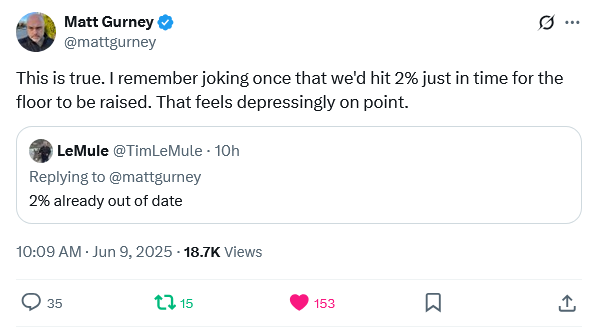
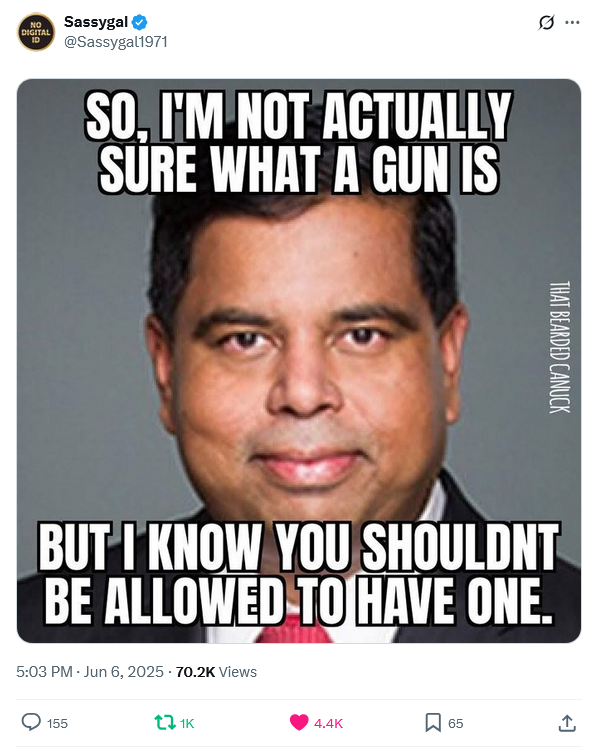
In short, we should not give away anything for free. This is Lighthizer’s position in matters of trade. For example, Canada should not volunteer to meet the two percent defense spending target ahead of negotiations. If anything, Canada should be accusing the US of whatever complaints we can muster. Trump might complain about the Canadian border being porous when it comes to people and drugs, but we can make the same claims, and add on the fact that the US should do more to stop the flow of illegal guns into Canada across our southern border.

Lighthizer provides a history of the US based around the idea that the US revolution and the constitution were a reaction to the mercantilist policies of Britain, which wanted to export manufactured goods and import only raw materials, while also limiting US trade with the rest of the world. Here is Lighthizer’s essential view:

    Today, the tide has turned against the argument for unfettered free trade, in no small part because of the changes we made in the Trump administration. More broadly, evidence and experience have shown us that free trade is a unicorn – a figment of the Anglo-American imagination. No one really believes in it outside of countries in the Anglo-American world, and no one practices it. After the lessons of the past couple decades or so, few believe in it even within that world, save for some hard-core ideologues. It is a theory that never worked anywhere.

This is his critique of the neoliberal free trade approach:

    According to the definitions preferred by these efficiency-minded free traders, the downside of trade for American producers is not evidence against their approach but rather is an unfortunate but necessary side effect. That’s because free trade is always taken as a given, not as an approach to be questioned. Rather than envisioning the type of society desired and then, in light of that conception of the common good, fashioning a trade policy to fit that vision, economists tend to do the opposite: they start from the proposition that free trade should reign and then argue that society should adapt. Most acknowledge that lowering trade barriers causes economic disruption, but very few suggest that the rules of trade should be calibrated to help society better manage those effects. On the right, libertarians deny that these bad effects are a problem, because the benefits of cheap consumer goods for the masses supposedly outweigh the costs, and factory workers, in their view, can be retrained to write computer programs. On the left, progressives promote trade adjustment assistance and other wealth-transfer schemes as a means of smoothing globalization’s rough edges.

This section is also key:

    … mercantilism and a free market are dramatically different systems, with distinctions that are important to note. Mercantilism is a school of nationalistic political economy that emphasizes the role of government intervention, trade barriers, and export promotion in building a wealthy, powerful state. The term was popularized by Adam Smith, who described the policies of western European colonial powers as a “mercantile system.” Then and now, there are a vast array of tools available for countries seeking to go down this path. Mercantilist governments, for instance, frequently employ import substitution policies that support exports and discourage imports in order to accumulate wealth. They employ tariffs, too, of course, and they limit market access, employ licensing schemes, and use government procurement, subsidies, SOEs, and manipulation of regulation to favor domestic industries over foreign ones.

The focus of the book, and the main villain, is China, followed closely by the World Trade Organization (WTO). Canada gets less than 77 mentions, Mexico gets 99 mentions in the first 352 pages of 576 (the e-book stops counting at 99), and Japan gets 99 mentions in the first 400 pages. Compare this to China, which gets 99 mentions within the first 101 pages alone.

January 16, 2025

For some unknowable reason, high-tax states keep losing population to low-tax states

Filed under: Business, Economics, Government, USA — Tags: , , , , , , — Nicholas @ 03:00

It sure is a mystery:

“U-Haul Rental Truck (44601958941)” by HireAHelper is licensed under CC BY 2.0 .

This probably won’t come as a surprise to many readers, but when people move, they tend to prefer migrating to places where, among other considerations, the taxes are lower than in their old digs. Data from the U.S. government as well as from moving companies reveals that — as we’ve seen in the past — high-tax states are losing residents to states that take a smaller bite out of people’s wallets.

“Americans are continuing to leave high-tax, high-cost-of-living states in favor of lower-tax, lower-cost alternatives. Of the 26 states whose overall state and local tax burdens per capita were below the national average in 2022 (the most recent year of data available), 18 experienced net inbound interstate migration in FY 2024,” Katherine Loughead wrote last week for the Tax Foundation. “Meanwhile, of the 25 states and DC with tax burdens per capita at or above the national average, 17 of those jurisdictions experienced net outbound domestic migration.”

Loughead crunched numbers from both the U.S. Census Bureau as well as U-Haul and United Van Lines. The government data tracks population gains and losses across the country while numbers from the private companies is helpful for comparing flows in and out of various states. The results are revelatory, though not unexpected.

“For the second year in a row, South Carolina saw the greatest population growth attributable to net inbound domestic migration” according to Census Bureau figures. The Tax Foundation separately ranks South Carolina at number 9 for tax burden, with 1 being the lowest tax burden among states and 50 the highest. Rounding out the top-10 population-gainers were Idaho (ranked 29), Delaware (42), North Carolina (23), Tennessee (3), Nevada (18), Alabama (20), Montana (27), Arizona (15), and Arkansas (26).

According to census data, Hawaii lost the biggest share of its population to other states; it’s ranked at 48 for the third-highest tax burden in the country. The rest of the top 10 states for population outflow were New York (50), California (46), Alaska (1), Illinois (44), Massachusetts (37), Louisiana (12), New Jersey (45), Maryland (35), and Mississippi (21).

Numbers released this month by U-Haul and United Van Lines showed migration patterns closely, but not precisely, tracking the Census Bureau’s information. Loughead attributes the disparities, at least in part, to the companies’ varying geographic coverage and market share.

January 15, 2025

Is there anything climate change can’t do?

Filed under: Government, Media, Politics, USA — Tags: , , , , , — Nicholas @ 05:00

Seen on social media earlier this week:

Confirming this, Chris Bray talks about current reporting on the wildfires in and around Los Angeles:

In his much-discussed piece on the Los Angeles fires at the Free Press, Leighton Woodhouse looks to Mike Davis for a narrative foundation. In his book Ecology of Fear, Woodhouse notes, Davis “argued that the area between the beach and the Santa Monica Mountains simply never should have been developed. No matter what measures we take to prevent it, those hills are going to burn, and the houses we erect upon them are only so much kindling.” Malibu and the Palisades, the land of hard living. That’s why so many rich and famous people lived there: because it was so inherently miserable and dangerous.

Mike Davis was full of shit for thirty years — he died in 2022 — and I’ve been rolling my eyes at him throughout. He described Los Angeles as an “apocalypse theme park”, a place of ruin and pain, populated by hardened survivors who, “dutifully struggling”, stagger on through the “Job-like ordeal” of clinging to a brutal landscape.

Also, Sierra Madre has bears. The Los Angeles suburbs are a place of horror and agony, because they back into the mountains, where blood-clawed wild animals prowl and stalk and slaughter. Places where life is especially grim and sanguinary, pgs. 240-41: Bradbury, La Crescenta, Glendora, the areas around the hellscape of Santa Barbara. A poodle was eaten by a mountain lion in Bradbury once, as neighbors gaped in open-jawed terror, YET STILL DO FOOLS ENDURE THE HORROR OF LIVING IN SUCH A PLACE.

Current real estate listings in Bradbury, a gated hillside community incorporated as an independent city in the San Gabriel Valley with a population of about 900 people:

How then would ye endure such horror, oh pilgrim, to live thus amid such blood and death? How bearest thou brutal existence upon this land?

Famously, in 1999, the Los Angeles Times, which used to be a newspaper, ran a long story examining Mike Davis and his vision of Southern California. It’s full of sentences like this:

  • Los Angeles’ most provocative social critic has stretched, bent and broken more than a few facts in “Ecology of Fear,” his latest, darkly themed work on the urban area he claims to love.
  • … more than a third of the time there were factual problems with his work.
  • Davis concedes the error.
  • Davis does not say where he got this piece of information.
  • “I honestly don’t know what I’m referring to,” Davis said.
  • Some of Davis’ mistakes involve mergers of fact and fiction, including making up a quote.
  • Davis attributes the false quote to a mix-up.
  • Then he takes readers on a partial flight of fantasy …
  • An examination of the Malibu Times article shows that Davis made up the parts about the jewels, the hair color, the kayakers’ occupations, the evidence of their callous classism and the ethnicity of their maids.
  • Davis is mischievously unrepentant.
  • Davis also merges fact and literary fiction, without acknowledgment, while arguing that Pomona, like other older, outer suburbs, is dying.

And so on.

The Times concluded that Davis could be read as “a polemicist, who makes cogent, incisive arguments on big themes”, but not as “a historian who is expected to be reliable, even on details”.

January 14, 2025

Andrew Sullivan on the “grooming gangs” scandal in Britain

Filed under: Britain, Government, Law, Media, Politics — Tags: , , , , , , — Nicholas @ 04:00

These rape gangs have been operating for more than a decade in English towns and cities yet the government does everything it possibly can to avoid taking action, for fear of being accused of racism (or perhaps fear of what they’d discover if they did properly investigate) and losing all those Muslim votes:

The first response of most human beings to news of irredeemably evil acts is to ask who committed them. And if the answer makes us deeply uncomfortable, we tend to move on pronto. You see this most obviously on social media with news of an atrocity. Was the shooter white, a Democrat, a Republican, Muslim, MAGA, woke, trans? And where did the victim fit into these categories?

Our priors instantly color our moral judgment, and even our sense of the seriousness of the offense. And the temptation simply to deny what seems to be in front of our nose can be overwhelming.

[…]

The more intense the horror, the more powerful the instinct to doubt when you first hear of it. The sex-abuse scandal in my own church first numbed and incapacitated me. It took some time for me to see the totality of what had happened, and how deeply it had destroyed Catholic moral authority. Again, when I first read about, say, the Catholic school for deaf children where a priest had picked his victims among those whose parents did not know sign language, the feeling of horror was almost too much to process at all. And as with the Bush administration’s torture policy, it took even more time to grasp how this moral rot had been enabled by the very top.

This is why, I think, the scandal of Britain’s Pakistani rape-gangs, and the institutional negligence toward tens of thousands of underage victims over several years, has had a second burst of life. A serious national inquiry on the scandal was conducted years ago (its recommendations not yet implemented). But several towns with the worst records were omitted from that inquiry; and the sheer scale and depravity of what happened has finally begun to sink in. The precipitant was Elon Musk pontificating about the scandal on X, as part of his campaign to bring down Keir Starmer.

The details are hard to absorb. Think of the hideous abuse suffered by that extraordinary French woman, Gisèle Pelicot, sedated and raped by dozens of French men, organized by her husband. Now think of that kind of organized gang-bang — but make it close to ubiquitous in some towns and the victims under-age girls: raped, brutalized, mutilated, beaten, their lives destroyed. Yes, it was that bad. Tens of thousands of rape victims across the country. This is how one British judge addressed some culprits at sentencing:

    You coerced her into providing sex to vast numbers of strangers. Up to four or five men would be invited to addresses so they could have sex with her … Threats were made to kill her … If she resisted, she would be coerced. Customers would become angry … If oral sex was required, her head would be pushed down, her hair pulled and she would be slapped. Strangers would burn her with cigarettes. A stranger almost throttled her. One deliberately scratched her vagina with his nails. One inserted a hairbrush into her vagina.

The victim was just 13 years old. And she wasn’t unconscious. In just one town, a “conservative estimate is that approximately 1,400 children were sexually exploited” between 1997 and 2013. And in communities dominated by men of Pakistani origin, largely from the Mirpuri region of Kashmir, who held huge sway over the police and local community — just like the Catholic Church in Boston — cover-ups were routine.

Among the abuse concealed: gang-rapes of a single minor by 20 men; putting a pump into a girl’s anus so more men could penetrate her at once; and constant threats of murder of the girls or their families if anyone spoke up. In one case, a minor was arrested and charged with prostitution for having oral sex in a car with a john. When she attended her trial, she discovered that the magistrate in charge of her case was the man she’d fellated. No one knows the full number of minor girls affected, but it is in at least the tens of thousands, and possibly in the six figures.

Why was this allowed to go on for so long? For the same reason the Catholic Church covered up child rape for decades, and Dick Cheney covered up torture. Because the orthodoxies of Catholicism, of the American military, and, in this case, the multicultural experiment were respectively involved. These orthodoxies were sacred, their cultural power extreme. Catholic Boston, conservative America, and elite liberal Britain therefore defended their own orthodoxies for a very long time. And with every successful deflection of responsibility, the number of victims increased.

The truth damns the multicultural project in Britain. Rather than integrating these men of Pakistani heritage, insisting that they adopt the laws and mores of the native population, and treating them like everyone else, the UK elites celebrated cultural difference, enabled the siloing of these populations, bemoaned their own white working-class populations, and forbade any criticism of Islam. So if you called out this stuff, you were instantly called racist. After all, to accuse a non-white minority of raping white girls was a trope right out of white-supremacist fever dreams. And yes, it is a hideous racist trope — from the depths of the American South. But sometimes the trope is the truth.

In all the major cases, I’ve found no reported evidence of Pakistani or Muslim girls being groomed and raped — only poor, white natives. The justification among the rapists, moreover, was that these non-Muslims were sluts who were asking for it and beneath contempt. Racist insults were common as these girls were brutally abused. These were not just rapes, but hate crimes of a grisly sort.

January 12, 2025

QotD: Kaiser Wilhelm II

Filed under: Germany, Government, History, Military, Quotations — Tags: , , , , , — Nicholas @ 01:00

Following the all-too brief reign of Frederick III, his son Wilhelm II, grandson of the first German Emperor, took power in 1888 (known as the “year of the three emperors”). From the start, the young Wilhelm was determined not to be the reserved figure of his grandfather and still less the liberal reformer that his ill-fated father had wished to be. Instead, Wilhelm believed it was his right and duty to be directly involved in the country’s governing.

This was completely incompatible with Bismarck’s system, which had centralized power upon his own person. With uncharacteristic focus and subtlety, Wilhelm sought to reclaim the power that his grandfather had ceded to the chancellor. This was not to prove especially difficult; Bismarck’s position had always relied upon his indispensability to the emperor. Thus, when Bismarck offered his resignation (as he often did during disputes) Wilhelm merely accepted it. The last great man of the wars of unification had now disappeared from the balance.

While the German Empire never became a true autocracy, Wilhelm succeeded in creating what historian, and biographer of the Kaiser, John C. Röhl called a “personalist” system.1 The Kaiser had significant power over personnel. Promotions in the officer corps required his assent. Advancement within civil service (from which civilian ministers were appointed) was also dependent on his favor. By exercising this power, Wilhelm was able to ensure the highest levels of the German government were men agreeable to his point of view. Though they were not mere “yes men”, Wilhelm ensured that they were knowingly dependent on his favor for their position. The Kaiser — even to the end of the monarchy — exercised considerable “negative power” (as Röhl termed it.)2 While Wilhelm’s ability to actively make policy was limited, anything he disapproved of was simply not proposed.

Wilhelm II’s reign marked a departure from the more restrained leadership of his predecessors, as he sought to assert direct influence over the German Empire’s governance and military affairs. This shift toward a more “personalist” system, where loyalty to the Kaiser outweighed true statesmanship, weakened the effectiveness of German leadership and contributed to its eventual strategic missteps. The rigid adherence to the Schlieffen Plan and the technocratic focus on material advantages, such as firepower and mobility, overshadowed the need for adaptable strategic thinking. These failures in both leadership and military planning set the stage for Germany’s disastrous involvement in World War I, where an empire led by personalities rather than policies was ill-prepared for the complexities of modern warfare. Ultimately, Wilhelm’s influence and the culture of sycophancy he fostered played a pivotal role in leading Germany down the path of ruin.

Kiran Pfitzner and Secretary of Defense Rock, “The Kaiser and His Men: Civil-Military Relations in Wilhelmine Germany”, Dead Carl and You, 2024-10-02.


    1. John C. G. Röhl, Kaiser Wilhelm II: A Concise Life (Cambridge: Cambridge University Press. 2014).

    2. Negative power refers to the ability of an actor or group to block, veto, or prevent actions, decisions, or policies from being implemented, rather than directly initiating or shaping outcomes.

January 11, 2025

Euphemizing organized gang rapes of children as “grooming” won’t work much longer

Filed under: Britain, Government, Law, Media, Politics — Tags: , , , , , — Nicholas @ 03:00

It’s possible that the current upswell of anger about the decade-long cover-up of organized child rape gangs in English towns and cities may come to nothing … or it could result in a complete breakdown of law and order:

Like professional basketball, those accused of being members of “grooming gangs” tend to be monocultural.

The grooming gang thing has really blown up in the past couple of weeks. I’m not sure wholly why myself but a couple of guesses.

One is that the media really couldn’t report all that much — and for the same reason that Tommy Robinson got jailed one time around. Because there have been multiple ongoing cases and full reporting of one could — and probably would too — prejudice a jury in subsequent cases. So, those ongoing cases mean that the subject is more or less sub judice and can’t, in volume or detail, be talked about.

Thus things like Guardian reporting. Where you get the news that a gang has been tried, found guilty, sent off to jail. And no comment on who they were. Well, except for a list of names all of which are, shall we say, less than Anglo Saxon or even Viking in origin. We all draw our own conclusions at that point.

[…]

The number of abused — which means children raped, recall, arses blown up with pumps so that adult dicks can multiply penetrate to be detailed — starts to be counted up into the thousands. The tens of thousands perhaps.

There’s a point there at which I don’t think that normal societal agreement to allow the authorities to handle things works any more. At some point along that spectrum then significant civil violence breaks out.

Which brings me to the two questions. What is that number which, when known, leads to actual riots? And no, I don’t mean 15 meatheads lobbing half bricks at the police. Actual real and sustained loss of civilian authority control. The second, obviously, is are we going to reach that number?

In short, what is the level of betrayal of these girls that leaves the mob triumphant over law and order?

What really worries me is that I have a horrible — even if still slight at this point — suspicion that there was enough vileness done to enough young girls that we’re going to find out.

On Substack, Francis Turner shares concerns about the mass rapes of children and young women over too many years:

The scandal has been going on for at least 25 years and probably a decade more. That means that every year around 1000 new girls have been gang raped by the gangs.


Every year around 1000 new girls have been gang raped by the gangs


There are roughly 300,000 girls of each year cohort in the UK so that means one in around 300 girls of any age group has been gang-raped. Given that there are large chunks of the UK which are not places where the ~50 identified rape gangs have operated and indeed are places without residents of the relevant ethnicity (primarily Pakistani and Somali in a couple of cases) that means that the number goes way up in those areas. It seems likely that in one those 50 areas the ratio of new victims to their year group is more like 1 in 100 or 1%, especially when you remove the Pakistani girls that probably weren’t targeted even if some of them were in fact abused at home.


In places like Telford if you see a school year group photo for any year in a Comprehensive school in the last 30+ years at least one of the girls in that photo was being gang-raped


If successful steps had been taken in ~2010 to stop the abuse then about 15,000 girls would not have been gang-raped.

The Tory party and civil service disgust of Tommy Robinson has had the result that about 5000 girls were gang raped between when Tommy Robinson started going about the issue in around 2018 and 2023 when Sunak finally set up the national Grooming Gangs Taskforce.

If Substack would let me do a table this would be easier. However here is a summary of girls gang-raped under the prime ministers of this century based on a simple linear model

Starmer: 500 (to date)
Sunak: 1700
Truss: <100
Johnson: 3000+
May: 3000
Cameron: 6000+
Brown: 3000-
Blair: 10,000

Probably half of Blair’s 10,000 was before anyone was aware that this was a systemic problem, but it was known to be a potential problem by at least 2004 when

    [a] Channel 4 documentary about claims young white girls in Bradford were being groomed for sex by Asian abusers is delayed as police forces warn it could inflame racial tensions. It was finally shown three months later.

If the UK had got serious about stopping grooming gangs back in 2004 then over half of the gang rape victims could have been saved from such a terrible experience.

Take that 35,000 number a different way. There are roughly 35 million women in the UK. So one in a 1000 women in the UK have been gang-raped over the decades.

January 10, 2025

Javier Milei’s “devastation” and “social chaos” report card

Filed under: Americas, Economics, Government, Media, Politics — Tags: , , , — Nicholas @ 03:00

In the Washington Examiner, David Harsanyi checks the current state of Argentina against the doom-and-gloom predictions from the start of Javier Milei’s term:

In the days leading up to the August 2023 presidential election in Argentina, a hundred “leading” economists from around the world, including progressive favorite Thomas Piketty, published an open letter warning that “radical right-wing economist” Javier Milei would inflict “devastation” and social chaos on his country.

However, they said it like it was a bad thing.

By the time Milei unexpectedly won the presidency, Argentina, once one of the wealthiest nations in the world, had a poverty rate of over 40% and the third-highest inflation rate in the world. After decades of Peronism, a toxic melding of fascism, socialism, and unionism, the nation bankrupted its central bank, and the peso was depreciating at warp speed. Do you think your mortgage rate is bad? Interest rates hit 118% in Argentina weeks before the election. The country was on its way to becoming another Venezuela. Milei wanted to blow it up.

After Milei’s unlikely victory, political scientist Ian Bremmer warned, “Economic collapse is coming imminently”. Felix Salmon, the chief financial correspondent at Axios, argued that Milei’s policies would plunge Argentina into “a deep recession”.

Seven months later, Argentina was out of a recession that had set in before Milei’s victory. The chainsaw-wielding economist, “el Loco” to friends, followed through on his promise of “shock therapy”, prioritizing taming inflation by cutting spending and deregulating the economy.

Almost all problems in modern Keynesian fixes are prominent features of governance in the modern West. Governments are always bragging about spending their way out of economic tribulations (tribulations they usually instigate). If a person suggests that free-market economic policy would have been more beneficial in the long term, they are forced to rely on a counterhistory. This is one reason why lots of elites are rooting against Milei, who argues that most of the West’s economic ills lie in Keynesian economics. They want him to fail.

As we all know, most panic-inducing cases of “austerity” are just minuscule reductions in the trajectory of spending growth. Not Milei’s plan, which entailed shutting down 13 government agencies and firing over 30,000 public workers — around 10% of the federal workforce. That is an unrivaled political revolution. Argentina’s federal budget was reduced by 30%. Even if the Department of Government Efficiency accomplished everything Elon Musk and Vivek Ramaswamy are talking about doing, they wouldn’t come close to 3%, much less 30%, in spending cuts. There has likely been no comparable austerity program in any Western economy.

By May 2024, Argentina recorded its first quarterly budget surplus since 2008. Inflation, still high, dropped from a debilitating 25% at the end of 2023 to 2.4% by the end of 2024. Per capita salary, having plunged, is now also recovering.

Dan Mitchell agrees that it’s easy to mock economists for their hair-on-fire reaction to Milei’s election:

Consider the supposedly prestigious left-leaning academics who asserted in 2021 that Biden’s agenda was not inflationary. At the risk of understatement, they wound up with egg on their faces.1

Today, we’re going to look at another example of leftist economists making fools of themselves.

It involves Argentina, where President Javier Milei’s libertarian agenda has yielded amazingly positive results in just one year.

Some of us knew that good policy would lead to good results.

Others, like the editors at Bloomberg, perhaps did not expect such a quick turnaround. But, to their credit, they just acknowledged the amazing progress in an editorial.

The U.K.-based Telegraph leans to the right, so this headline can probably be interpreted as a victory dance.


January 9, 2025

“Starmer is a banshee of a prime minister; he makes a terrible noise but is completely lacking in substance”

The extent of active disinterest to ongoing criminal activity in British towns and cities over a period of several years passes belief. The fear of being accused of racism metastasized to the extent that the authorities may even have colluded with criminals to hide the crimes to preserve politicians’ and senior bureaucrats’ careers. It’s now broken through the conspiracy of silence to being actively discussed in British media and even on the floor of the House of Commons. Even the Prime Minister may have to answer for past actions (or inactions):

It’s very easy to judge the past, particularly when you’re on the “right side of history”. What supreme confidence it must take to assume that all previous generations had got it so wrong, and that humanity was simply waiting for you to turn up and set them straight.

And yet isn’t it curious that so many who like to judge the values and behaviour of people in the past are also rarely willing to turn that critical eye on other cultures that exist today? According to the principle of cultural relativism, all societies and ways of life are equal. So we must not assert that we are morally better to a culture that permits the genital mutilation of children or that denies women an education, but we may assume that we are highly superior to the Ancient Greeks.

This debate has become particularly relevant with the recent explosion of interest in the rape gangs scandal. A report by Professor Alexis Jay in 2022 determined that more than 1,400 young girls were raped and abused in the period between 1997 and 2013 by what became known as the “grooming gangs”, so called because of the manipulative tactics that were employed to gain the victims’ trust. These groups comprised mostly of men of Pakistani heritage, which led many authorities to overlook the severity of the crimes.

Consider this example from a speech delivered by Andrew Norfolk, reporter for the Times. When police discovered a 13-year-old girl, drunk and mostly naked in the company of seven Pakistani men, they arrested her and failed to question any of the adults.

Police have admitted that such failures to investigate were largely down to a desire to avoid allegations of racism. The Jay report noted that several members of local council staff “described their nervousness about identifying the ethnic origins of perpetrators for fear of being thought as racist; others remembered clear direction from their managers not to do so”. Politicians and media commentators were more concerned with maintaining the fantasy that multiculturalism has been a success, rather than taking seriously their obligation to safeguard children. When Julie Bindel — the first journalist to investigate the grooming gangs — tried to publish her findings, she faced resistance ‘because some editors feared an accusation of racism’.

The Labour government has shown itself incapable of making amends. Jess Phillips has rejected a request for a public inquiry into child sexual exploitation in Oldham. And Keir Starmer has stated that anyone interested in a full-scale inquiry into these failings is jumping “on a bandwagon of the far right”.

This acute form of tone-deafness would, in any sound political climate, be cause for immediate resignation. While it is true that racists will be quick to weaponise the criminal behaviour of a minority, there is nothing remotely “far right” in taking an interest in the wellbeing of children and wishing to see those who abuse them held to account. But Starmer is a banshee of a prime minister; he makes a terrible noise but is completely lacking in substance.

Something may change with the release this week of crime league tables according to nationality. Up until now, there has been tremendous political resistance to releasing such statistics, with police in many European countries not recording such details at all in order to preserve the daydream of multiculturalism. And yet those that do keep such records have revealed a clear trend. Data from the Danish government, for instance, has shown that although non-Western immigrants constitute only 9% of the population, they account for 25% of convictions for violent crime. According to the Telegraph, in Sweden immigrants are “three times more likely to be registered as a suspect for assault than the native population – which grows to four times for robbery, and five times for rape”.

By happenstance, I posted this to social media the other day, which seems apposite:

January 7, 2025

Justin Trudeau announces his resignation … and a nation rejoices!

Rather than letting Canadians have an election, Justin Trudeau announced that he is resigning as Liberal party leader but that Parliament will be prorogued for long enough for the Liberals to run a full leadership campaign. This means that Trudeau’s replacement will likely be prime minister for roughly as long as it takes for Parliament to come to order after prorogation and not a minute longer. Nice work, Justin!

Full credit to the Babylon Bee for their coverage:

It’s impossible not to feel that Trudeau’s ego has been the biggest player in our national psychodrama over the last few months (years, actually), as it seems inevitable that Trudeau’s hapless successor is going to be the Liberal Party’s version of former PM Kim Campbell, although probably not being reduced to a caucus of two seats in a landslide, as Campbell endured.

The Line‘s immediate response quite properly describes Trudeau as “an absolute Muppet”, and I think that’s pretty unkind … to Muppets:

There was only one major thought that crossed your Line editors’ minds when watching Prime Minister Justin Trudeau’s resignation speech on the porch of Rideau Cottage on Monday morning: “Jesus Christ, the absolute self regard of this fucking Muppet.”

Yes, that’s harsh. We’re even almost sorry about it. And we’ll touch on the humanity of it all in a moment. But for now, like, gosh. This isn’t good.

We are well aware that much of the media will be replete with mopey paeans to the decade-long service of this prime minister, even as he announces his entirely hypocritical plan to prorogue Parliament until March 24 in order to enable his party to assemble a chaotic and hasty leadership race. You’ll get none of that from us here at The Line. Trudeau deserves no such consideration — at least not at the top. From where we sit today, the sheer arrogance of this man, and the party that has enabled him, has just locked the nation into months of parliamentary paralysis in the midst of what is likely to shortly become an economic trade war and a broader international geopolitical realignment.

While we fully expect news of Trudeau’s resignation to lead many of our readers to sound the bells, we share none of their relief. The decision he announced on Monday demonstrates a total lack of respect for voters, an utter disregard for the good of the nation, and a profound obliviousness to the realities of the international environment we are about to find ourselves in.

And while we’d like to give Trudeau some credit for demonstrating an ounce of genuine humility in his resignation speech, too much of it was crammed with statements of breathtaking, overweening egotism; he pegged his decision to leave squarely on internal divisions — a fantastic parting “fuck you” to his caucus that abrogates any attempt at accountability for his own policy or leadership failures.

Trudeau repeatedly justified his decision to ask for the house to be prorogued by noting that Parliament had become dysfunctional, the opposition parties had stalled business of the house on process questions, and the government was in need of a “reset”.

This blithely ignores a few points, including the fact that part of the reason Parliament has been stuck in a procedural quagmire is because Trudeau’s own government has refused to hand over a potentially incriminating dossier that may demonstrate thwacks of taxpayer cash being siphoned off to well-connected businesses and insiders via what the opposition has deemed a “green slush fund”.

This is a matter upon which the Commons’ Liberal speaker ruled against his own party. The Liberals could have stopped the pseudo-filibuster by turning over to Parliament the documents that they are required to turn over. They didn’t.

The very foundations of the Westminster parliamentary system are rooted in the concept of confidence: if you can’t maintain the confidence of the house, you cannot rule Parliament. Prorogation is a procedural tool intended to govern ordinary logistics. It should never be used to circumvent a matter of confidence — and while it was delicious to watch Trudeau squirm on this point during his resignation speech, defending Stephen Harper’s 2008 use of it in order to justify his own, the fact remains that both leaders have now set and affirmed a dangerous norm that undermines one of the foundational democratic concepts of our democracy and how it functions.

When a government finds itself this battered and unpopular, and when a long-serving leader has announced that he’ll step down, while prorogation may be legal, there’s only one politically and even morally right thing to do. There is only one way to “reset” parliament. Only one.

Call an election.

Paul Wells says “The Liberals give themselves three months to save the furniture”:

He was late as usual. He sounded sad. The wind blew his script away. He said more or less what you expected. When his time in office ends at the end of March, he’ll have been prime minister for a few months less than Stephen Harper was. His party has very little chance of recovering, but more than it had yesterday. It would have been so easy to pick his own time, maybe at the end of 2022, but apparently these decisions are hard to make.

Things happen fast. It’s been six weeks, Monday to Monday, since Donald Trump threatened 25-per-cent tariffs on everything Canadian. Three weeks since Chrystia Freeland resigned from cabinet. In two weeks Donald Trump will be sworn in as President of the United States. Justin Trudeau’s resignation is a pure product of this crisis.

I see a straight line from Trump’s Truth Social outburst of Nov. 25 to this week’s events. Trudeau’s circle once thought a second Trump victory would help them make the case against Pierre Poilievre. It’s fair to say the results are not up to their hopes. With Elon Musk continuing his hobby kibbitzing in the politics of countries around the world, Canada will now stand as a warning to governments elsewhere: Trump and his crew can take you down.

Having stalled until he ran out of options, Trudeau will now become incidental to events. There’s a lot going on. Wistful tribute speeches in the House of Commons will have to wait. The Trudeau succession will play out quickly, in four arenas at once: Parliament; the Liberal Party; the electorate; and Canada’s national security. Events in each venue will influence the others.

Some people accuse Trudeau of doubling the national debt during his time in office — from C$612B in 2015 to C$1.2 trillion currently — but as mathematically inclined commentators have noted, Trudeau also successfully engineered the decline of the value of the Canadian dollar so that the actual increase in national debt is less than 55%! Success!

At Spiked, Tom Slater bids farewell to “Canada’s first black prime minister”:

Yes, Justin Trudeau – the man who proved that in these topsy-turvy political times you can be a liberal and an authoritarian, and painfully woke while also having spent much of your youth in black face – has finally resigned.

The writing’s been on the wall for some time now. After historically low poll ratings, came the resignation before Christmas of his deputy, Chrystia Freeland, who clashed with Trudeau about how to tackle president-elect Donald Trump’s imperious threats of a 25 per cent tariff on Canadian goods. In the end, Justin jumped before he was pushed.

After almost a decade in power, he will step down as prime minister and Liberal leader as soon as a successor can be found. Polls suggest that, such is the hole he has left his party in, whoever replaces him will likely face a shellacking in the upcoming election.

Where did it all go wrong? When Trudeau took the reins of his nation back in 2015 – following in the footsteps of his father, Fide … sorry, Pierre – he rode on a wave of popular support and corporate-media swooning.

With the election of another pampered rich kid south of the border a year later, Trudeau was praised in the international media as the anti-Trump – progressive, pro-migration and drop-dead gorgeous, to boot!

Indeed, the next time an establishment scribe slurs Trump supporters as doe-eyed dolts dazzled by celebrity, point them in the direction of the gushing coverage of “hunky” Trudeau, who seemed to govern as if he was in a budget version of The West Wing.

Soon enough, he began carrying on like an unsubtle caricature of a cringe, establishment liberal, chiding women for saying “mankind”, instead of “peoplekind”, and declaring that he was insisting on a 50:50 male-to-female cabinet “because it’s 2015“.

Trudeau is the apotheosis of a hectoring style of politics that assumes voters are terrible bigots in need of lecturing, and women and minorities are perennial victims in need of his paternalistic assistance.

I’m frankly amazed it took the good people of Canada almost 10 years to wipe that smug look off his face.

January 6, 2025

The rape gangs in Britain were enabled and protected by “good people” who didn’t want to be accused of racism

Tom at The Last Ditch confesses his early complicity with the official culture of silence that protected and encouraged the exploitation of girls and young women in Britain for decades:

Everyone who ever participated in the leftist orthodoxy of identity-politics is to blame for the near-total impunity of the Muslim rape gangs in Britain. As I reported here, when I was a young solicitor in Nottingham, a police sergeant told me I was “part of the problem.” I had a choice between believing what he told me about “honour killings” in that city or preserving my good standing as an anti-racist liberal. I chose the latter. I feared my career prospects and social standing would be jeopardised (they would have been) if I accepted his honest account. I called a good man a racist (mentally equating him with the likes of Nick Griffin and recoiling in fear from the association) when he was just horrified (as any decent human should be) by young women being murdered.

In that moment, I very much was “part of the problem” and I am profoundly ashamed of that. It is fortunate that – unlike the politicians, local councillors, social-workers and police officers who should have brought the rape gangs or the “honour” killers to justice (or prevented both phenomena altogether) – I had no occasion ever to make any real life choices on the matter. I believe – faced with actual evidence – I would have made better ones, but the way I failed the good sergeant’s test that long-ago day in the early 1980s proves I would have wanted to look the other way, just as they actually did.

I am not still playing the stupid rainbows and unicorns game of cultural moral equivalence (still less the foul Critical Race Theory game of cultural moral hierarchy) when I make the point that the young white working class girls in our cities have not been the only victims of multiculturalism. Those murdered Muslim girls who (so the sergeant told me) had paraffin poured over them and were burned to death were victims too. It was racist to refuse to consider that their Muslim dads, uncles and brothers might murder them because of their primitive religious and cultural notions. It was racist for our authorities to treat Muslim men who gang-raped white girls differently than they would have treated others. It was racist to cover up these horrors in order to protect the myth – shamefully repeated just days ago in his annual Christmas message by His Majesty the King – that multiculturalism has been an overall benefit to Britain.

Some of us have been making these points as best we can for a long time. Many of us had given up, if we’re honest. It was clear that the official narrative that we were racists and that these stories were disinformation – a “moral panic” as Wikipedia puts it – was going to prevail. Until recently the key social media market of ideas – Twitter – was controlled by the Left and attempts to raise the issue were likely to be memory-holed by their private sector woke equivalent of Orwell’s MiniTru.

Miraculously, Elon Musk – a modern Edison, with plenty to occupy him besides our concerns about free speech – bought Twitter and (in one of history’s greatest acts of philanthropy) set it free at his own personal expense. He told advertisers who sought to maintain its old Newspeak regime to “go fuck themselves.” Miraculously he got involved in the issue not just in America (where the Constitution gives him some basis for hope) but in Britain too.

My British Constitution textbook at law school illustrated the supremacy of our Parliament by jokingly saying that it could – in law – make a man into a woman. Little did its authors know that dimwit politicians would later prove the educational point of their joke by making it real. Our constitution – as a result of centuries of struggle with the monarchy, which Parliament decisively won – can be summarised in just three words – “Parliament is supreme”

January 5, 2025

QotD: The customary Dictatorship in the Roman Republic before 82BC

Filed under: Europe, Government, History, Quotations — Tags: , , , — Nicholas @ 01:00

It’s important to note at the outset that the Romans had no written constitution and indeed most of the rules for how the Roman Republic functioned were, well, customary. The Roman term for this was the mos maiorum, the “custom of the ancestors”, but Roman practice here isn’t that different from how common law and precedent guide the functioning of something like the British government (which also lacks a written constitution). Later Roman writers, particularly Cicero, occasionally offer theoretical commentary on the “rules” of the Republic (as a retrojected, ideal version), but just as often their observations do not actually conform to the practice we can observe from earlier periods. In practice, the idea here was that the “constitution” of the Republic consisting in doing things as they had always been done, or at least as they were understood to have always been done.

Consequently, as historians, we adopt the formulation that the Republic is what the Republic does – that is that one determines the rules of offices and laws based on how they are implemented, not through a hard-and-fast firm legal framework. Thus “how does the dictatorship work?” is less a question of formal rules and more a question of, “how did the eighty-odd Roman dictatorships work?”

The basic idea behind the office was that the dictator was a special official, appointed only in times of crisis (typically a military crisis), who could direct the immediate solution to that crisis. Rome’s government was in many ways unlike a modern government; in most modern governments the activities of the government are carried out by a large professional bureaucracy which typically reports to a single executive, be that a Prime Minister or a President or what have you. By contrast, the Roman Republic divided the various major tasks between a bunch of different magistrates, each of whom was directly elected and notionally had full authority to carry out their duties within that sphere, independent of any of the other magistrates. In crude analogy, it would be as if every member of the United States cabinet was directly elected and none of them reported to any of the rest of them but instead all of them were advised by Congress (but in a non-binding manner). Notionally, the more senior magistrates (particularly the consuls) could command more junior magistrates, but this wasn’t a “direct-report” sort of relationship, but rather an unusual imposition of a more senior magistrate on a less senior one, governed as much by the informal auctoritas of the consul as by law.

In that context, you can see the value, when rapid action was required, of consolidating the direction of a given crisis into a single individual. This is, after all, why we have single executive magistrates or officials in most countries. So, assuming you have a crisis, how does this process work?

The typical first step is that the Senate would issue its non-binding advice, a senatus consultum, suggesting that one or both of the consuls appoint a dictator. The consuls could ignore this direct, but almost never did (save once in 431, Liv. 4.26.5-7). The consuls would then have to nominate someone; they might agree on the choice (which would make things simple) or one of them might be indisposed (out of the city, etc.), which would leave the choice to the one that remained. If both consuls were present and did not agree, they’d draw lots to determine who got to pick (which happens in the aforementioned instance in 431 after the tribunes got the consuls of that year to relent and pick someone, Liv. 4.26.11).

The nominating consul could pick anyone except himself; if you, as consul, wanted to be dictator, you would need your co-consul to so nominate you. There were no formal requirements; of course nominations tended to go to experienced commanders, which tended to mean former consuls, but this was not a requirement. Publius Claudius Pulcher (cos. 249), enraged when the Senate directed him to appoint a dictator (because of his own bungled military command) infamously nominated his own freedman, Claudius Glicia, as dictator (Liv. Per. 19.2; Seut. Tib. 2.2), which was apparently a bridge too far; Glicia was forced to abdicate but his name was duly entered onto the Fasti because the appointment was valid, if ill-advised (despite the fact that, as a freedman, Glicia would have been ineligible to run for any [office]). Nevertheless, dictators were usually former consuls.

Once the name was picked, in at some cases the appointment may have been confirmed by a vote of the Comitia Curiata, Rome’s oldest voting assembly, which was responsible for conferring imperium (the power to command armies and organize law courts; essentially “the power of the kings”) on magistrates; not all magistrates had imperium (consuls, praetors, proconsuls, propraetors, dictators and their magistri equitum did; quaestors, aediles, tribunes, both plebeian and military, and censors did not). We do not know of any instance where the Comitia Curiata put the kibosh on the appointment of a dictator, so this step was little more than a rubber-stamp, and may have been entirely optional (Lintott, op. cit., 110, n. 75), but it may have also reflected the notion that all imperium had to be conferred by the people through a voting assembly. It is often hard to know with clarity about pro forma elements of Roman politics because the sources rarely report such things.

The dictator was appointed to respond to a specific issue or causa, the formula for which are occasionally recorded in our sources. The most common was rei gerundae causa, “for the business to be done” which in practice meant a military campaign or crisis. In cases where the consuls were absent (out on campaign), a dictator might also be nominated comitiorum habendorum causa, “for having an assembly”, that is, to preside over elections for the next year’s consuls, so that neither of the current consuls had to rush back to the city to do it. Dictators might also be appointed to do a few religious tasks which required someone with imperium. Less commonly but still significantly, a dictator might be appointed seditionis sedenae causa, “to quell sedition”; only one instance clearly under this causa is known, P. Manlius Capitolinus in 368, but several other instances, e.g. L. Quinctius Cincinnatus in 439, also dealt with internal matters. Finally, once in 216, Marcus Fabius Buteo held the office of dictator senatus legendi causa, “to enroll the Senate”, as the Battle of Cannae, earlier that year, had killed so many Senators that new inductions were needed (Liv. 23.23).

The dictator then named a subordinate, the magister equitum (“master of the horse”). The magister equitum was a lieutenant, not a colleague, but interestingly once selected by a dictator could not be unselected or removed, though his office ended when the dictator laid down his powers. We should note Marcus Minucius, magister equitum for Q. Fabius Maximus in 217 as an exception; his selection was forced by the people via a law and his powers were later made equal to Fabius’ powers. This turned out to be a substantial mistake, with Fabius having to bail the less prudent Minucius out at Geronium – the undermining of Fabius generally during 217 was, in retrospect viewed as a disaster, since the abandonment of his strategy led directly to the crushing defeat at Cannae in 216.

One of the ways that legal power was visually communicated in Rome was through lictors, attendants to the magistrates who carried the fasces, a bundle of rods (with an axe inserted when outside the sacred bounds of the city, called the pomerium). More lictors generally indicated a greater power of imperium (consuls, for instance, could in theory give orders to the praetors). Praetors were accompanied by six lictors; consuls by 12. The dictator had 24 lictors when outside of the pomerium to indicate his absolute power in that sphere (that is, in war), but only 12 inside the city. The magister equitum, as the dictator’s subordinate, got only six, like the praetors.

It also seems fairly clear that while dictators had almost complete power within their causa, those powers didn’t necessarily extend beyond it (e.g. Liv. 2.31.9-11, the dictator Manius Valerius, having been made dictator to resolve a military problem, insists to the Senate that he cannot resolve internal strife through his dictatorial powers and instead lays down his office early). The appointment of a dictator did not abolish the other offices (Cicero thinks they do, but he is clearly mistaken on the matter, Cic. De Leg. 3.9, see Lintott, 111). In essence then, the dictator was both a supreme military commander and also expected to coordinate the other magistrates with his greater degree of imperium, though of course in practice the ability to do that is going to substantially depend on the individual dictator’s ability to get cooperation from the other magistrates (but then, on the flip side, the dictator has just been designated as the leader in the crisis, so the social pressure to conform to his vision must have been intense). Notably, dictators could not make a law (a lex) on their own power or legislate by fiat outside of their causa; they could and did call assemblies which could by vote approve laws proposed by a dictator, however.

The dictator served for six months or until the task for which he was appointed was resolved, whichever came first. There is a tendency in teaching Roman history to represent a figure like Cincinnatus, who laid down his dictatorship after just fifteen days in 458, as exceptional but while the extreme shortness of term was exceptional, laying down power was not. Indeed, Cincinnatus (or perhaps a relative) served as dictator again in 439 and again laid down his power, this time in merely 21 days. In practice, the time-limited nature of the dictatorship meant there were few incentives to “run out the clock” on the office since it was so short anyway – better, politically, to solve the crisis quickly and lay down power ostentatiously early and “bank” the political capital than try to run out the period of power, accomplish relatively little and squander a reputation for being public-spirited.

Bret Devereaux, “Collections: The Roman Dictatorship: How Did It Work? Did It Work?”, A Collection of Unmitigated Pedantry, 2022-03-18.

January 4, 2025

Can Javier Milei Make Argentina Great Again?

Adam Smith Institute
Published 3 Jan 2025

In November 2023, Argentina elected Javier Milei, a libertarian economist armed with a chainsaw and a bold plan to rescue the country from decades of decline. Facing 142% inflation, a crumbling peso, and 40% poverty, Milei slashed spending, deregulated markets, and delivered a historic budget surplus — all within a year.

Sam Bidwell dives into Milei’s radical reforms, exploring the challenges that have made them necessary. He traces the country’s rise as a global economic powerhouse in the early 20th century, its decline through years of government intervention and Peronism, and its resurgence under Milei’s leadership.

Discover how this fiery libertarian turned Argentina’s economic fortunes around — and what the world can learn from his audacious blueprint for recovery.

🔗 Subscribe for more insights on global economics, history, and leadership!
🔗 Check out our website for more economics content: https://www.adamsmith.org/

TIMESTAMPS

00:00 Start
00:53 Golden Years
02:59 Decline of Argentina
05:20 Peron
08:47 The Legacy of Peronism
11:56 After the Falklands
15:38 Javier Milei
18:17 Challenges
24:31 Lesson for the UK and the wider world

January 2, 2025

How to solve Britain’s housing crisis

Tim Worstall outlines why just increasing the number of building permits allowed won’t — by itself — increase the total number of houses built. This is because the process of awarding the permits has been largely captured by the biggest players, and the supply is artificially restricted by local governments:

Kensington High Street at the intersection with Kensington Church Street. Kensington, London, England.
Photo by Ghouston via Wikimedia Commons.

The first bit is to diagnose the problem properly. If the big builders won’t build because they don’t want to then and therefore we want to find other builders who will and do want to. And the important part of this is that the big builders do indeed have market power. It costs a lot — a lorra lots — of money to be able to get a scheme through planning. Thus we not only have that problem of a shortage of places to build — because planning — but we’ve also handed market power to those able to build — because planning.

The answer is to shoot the planners, obviously. But then that always is the correct answer. Here, more specifically, we need to flood the zone with permissions. Really, grossly, oversupply. Like issue 15 million permits. Say. At which point the value of a permit is zero. So, anyone with a scrap of land can gain a permit and build.

This brings back the small housebuilder. Instead of being held back by the ideals of half a dozen national builders we’ve got 50,000 blokes all looking to build 2 or 3 houses a year. Or 10 or 20 even.

There’s no way that the big builders can then delay building on their plots. For they don’t have market power any more. And even if they do want to delay then it doesn’t matter a damn.

And this always is the way that you deal with those with market power. You flood that zone with supply so as to destroy their market power.

DOGE has a lot of low-hanging fruit to pick

Filed under: Bureaucracy, Economics, Government, Politics, USA — Tags: , , , , — Nicholas @ 03:00

Patrick Carroll selects some of the least-defendable ways the US government has been spending taxpayer money from Senator Rand Paul’s 2024 Festivus Report, including pickleball courts, $10B in unused office space, DEI initiatives for birdwatchers, crop fertilizer in foreign countries, and literal circus performances:

Rand Paul by Gage Skidmore is licensed under CC BY-SA 2.0 .

Why does such government waste persist year after year? A significant part of the explanation traces back to the concept of concentrated benefits and dispersed costs. Essentially, the beneficiaries tend to be a small, concentrated group, so they lobby hard for these outlays because they stand to gain a lot from them. Taxpayers, on the other hand, tend to be dispersed and only minimally affected by any single expense, so it’s not usually worth it for them to lobby against the spending, or even learn about it in the first place.

Economist Gordon Tullock famously illustrated this concept with his fictional Tullock Economic Development Plan. The plan “involves placing a dollar of additional tax on each income tax form in the United States and paying the resulting funds to Tullock, whose economy would develop rapidly”.

Think about the incentive Tullock would have to advocate for this plan, compared to the incentive that an ordinary taxpayer would have to look into it and voice their objections. With campaign contributions and votes to be gained from the special interest beneficiaries, is it any wonder politicians often go for these kinds of wealth transfers?

The ubiquity and stubborn persistence — year after year — of all this waste, combined with the economic theory that explains why it happens, suggests that there is a fundamental problem with the process of government as we know it. This is not, as many are itching to believe, a “Democrat” problem or a “Republican” problem. The degree of government waste changes very little with changing administrations. No, this is a problem with the government as such.

To solve this problem, we need to ask not just who should run the government, but what the government should be allowed to spend money on in the first place, given what we know about its entirely predictable and repeatedly demonstrated propensity for waste and dysfunction.

Milei has already started that conversation in Argentina. Let’s hope that with the new Trump administration and DOGE, that’s a conversation we can have here as well.

« Newer PostsOlder Posts »

Powered by WordPress