
Published on 18 Jul 2015
The conquest of Carthage and the North African provinces was just the beginning for Justinian’s ambition. He must have Rome. But like Carthage, he must find a reason to attack the Ostrogoths who now hold it. And like Carthage, this reason is given to him when the Ostrogothic Queen Amalsuntha, his ally, is murdered. But unlike Carthage, Belisarius now has only 7500 men, barely half of what he had for North Africa. He sails out anyway, making his first stop at the island of Sicily. All the cities except Panormus surrender to him, and Panormus he takes quickly by seizing their harbor with his ships. Meanwhile, Justinian has bribed the Franks to invade Italy from the north while another his generals marches from the east. But just when the Ostrogothic king is on the verge of surrender, disaster strikes. The other Byzantine general dies, and Belisarius is forced to return to Carthage to quell a revolt. The conquest loses its momentum and the Ostrogothic king imprisons the Roman ambassador. Justinian will not be stopped, and orders Belisarius to return to Italy once North Africa is secure. Alone, Belisarius marches up the coast of Italy until he meets resistance at Neapolis. With his forces too thinned to mount a siege, he engineers a sneak attack by invading through the pipe of a dried, broken aqueduct. Neapolis falls and the way now lies open to Rome.
August 25, 2015
Byzantine Empire: Justinian and Theodora – V: Impossible Burden of Fate – Extra History
July 24, 2015
Scorched Earth – Russia’s retreat goes up in flames! l THE GREAT WAR Week 52
Published on 23 Jul 2015
This week Russia premieres her tactics of “Scorched Earth”. A new strategy of burning their own land is to avoid enemies profiting from their conquests. Russia had been retreating from the German and Austro-Hungarian armies for nearly three months now. Continuously losing huge areas of land and hundreds of thousands of men on the Eastern Front. As a consequence, millions of civilians had to flee their homes. At the same time allied troops at Gallipoli are weakened by infections and disease due to lack of hygiene and heat while Italy repeatedly failed to take out Austrian strongpoints.
July 14, 2015
Italy in World War 1 I THE GREAT WAR Special
Published on 13 Jul 2015
Italy was a major European country that joined World War 1 almost a year after the assassination of Archduke Franz Ferdinand in Sarajevo. Initially, Italy actually had an alliance with Germany and Austria-Hungary called the Triple Alliance, but Italy decided to back the Entente powers instead because they were promised disputed land in the Alps and near Trieste. Find out all about Italy in World War 1 in our new special.
June 26, 2015
The Austro-Hungarian Empire Strikes Back I THE GREAT WAR Week 48
Published on 25 Jun 2015
Just a few weeks ago Austria-Hungary’s military laid in shambles. But with German support from August von Mackensen and other German generals, the tide is turning on the Eastern Front. Even Lemberg can be conquered again and the Russians are still on their Big Retreat.
June 12, 2015
Rex Warneford Destroys A Zeppelin – Austria Digs Into the Mountains I THE GREAT WAR – Week 46
Published on 11 Jun 2015
Reginald Warneford is important to Britain’s war effort. Not just because he shot down a German zeppelin, but because he is made a hero in times when heroes are needed. He receives a Victoria Cross soon after his victory because the commanders know about the average life span of pilots in World War 1. Meanwhile, the Austro-Hungarian army digs into the alpine rocks to fend of the Italian Attackers and Gallipoli continues to be a butchery without any progress.
May 29, 2015
Frontline in the Alps – Italy Declares War I THE GREAT WAR Week 44
Published on 28 May 2015
After the defeats of Austria-Hungary against Russia, Italy is seeing her chance to grab disputed territories from them. Even though they are not prepared for a full scale war economically or militarily, the declare war against the Central Powers. So, just one month after the landing at Gallipoli, yet another front is opened in Europe. Meanwhile the Russians are still on the run from August von Mackensen and in Gallipoli the fighting stops to collect the dead.
May 17, 2015
The Little World of Don Camillo (1951)
Published on 26 Dec 2014
Narrated by ORSON WELLES (O.W. bonus: voice of Christ)
April 26, 2015
Giovanni Guareschi
I first read the short stories of Giovanni Guareschi when I was about ten years old. Much of the political content flew right over my head, but I enjoyed the interplay of the two main characters, Don Camillo and Peppone, in their never-ending battles in the un-named tiny Italian village somewhere in the Po valley. From the beginning of this post, you can tell that Sarah Hoyt is also a fan:
Years ago on this blog I talked about “Technique of The Coup D’Etat” by Giovanni Guareschi and I typed the beginning in here. I shall copy that. (Assume typos are mine.)
At ten o’clock on Tuesday evening, the village square was swept with wind and rain, but a crowd had been gathered there for three or four hours to listen to the election news coming out of a radio loudspeaker. Suddenly the lights went out and everything was plunged into darkness. Someone went to the control box but came back saying there was nothing to be done. The trouble must be up the line or at the power plant, miles away. People hung around for half an hour or so, and then, as the rain began to come down even harder than before, they scattered to their homes, leaving the village silent and deserted. Peppone shut himself up in the People’s Palace, along with Lungo, Brusco, Straziami, and Gigio, the same leader of the “Red Wing” squad from Molinetto. They sat around uneasily by the light of a candle stump and cursed the power and light monopoly as an enemy of the people, until Smilzo burst in. He had gone to Rocca Verde on his motorcycle to see if anyone had news and now his eyes were popping out of his head and he was waving a sheet of paper.
“The Front has won!” he panted. “Fifty-two seats out of a hundred in the senate and fifty-one in the chamber. The other side is done for. We must get hold of our people and have a celebration. If there’s no light, we can set fire to a couple of haystacks nearby.
“Hurrah!” shouted Peppone. But Gigio grabbed hold of Smilzo’s jacket.
“Keep quiet and stay where you are!” he said grimly. It’s too early for anyone to be told. Let’s take care of our little list.”
“List? What list?” asked Peppone in astonishment.
“The list of reactionaries who are to be executed first thing. Let’s see now…”
Peppone stammered that he had made no such list, but the other only laughed.
“That doesn’t matter. I’ve a very complete one here all ready. Let’s look at it together, and once we’ve decided we can get to work.”
Gigio pulled a sheet of paper with some twenty names on it out of his pocket and laid it on the table.
“Looks to me as if al the reactionary pigs were here,” he said. “I put down the worst of them, and we can attend to the rest later.”
Peppone scanned the names and scratched his head.
“Well, what do you say?” Gigio asked him.
“Generally speaking, we agree,” said Peppone. “But what’s the hurry? We have plenty of time to do things in the proper style.”
Gigio brought his fist down on the table.
“We haven’t a minute to lose, that’s what I say,” he shouted harshly. “This is the time to put our hands on them, before they suspect us. If we wait until tomorrow, they may get wind of something and disappear.”
At this point Brusco came into the discussion.
“You must be crazy,” he said. “You can’t start out to kill people before you think it over.”
“I’m not crazy and you’re a very poor Communist, that’s what you are! These are all reactionary pigs; no one can dispute that, and if you don’t take advantage of this golden opportunity then you’re a traitor to the party!”
Brusco shook his head.
“Don’t you believe it! It’s jackasses that are traitors to the Party! And you’ll be a jackass if you make mistakes and slaughter innocent people.”
Gigio raised a threatening finger.
“It’s better to eliminate ten innocents than to spare one individual who may be dangerous to the cause. Dead men can do the party no harm. You’re a very poor Communist, as I’ve said before. In fact, you never were a good one. You’re as weak as a snowball in hell, I say. You’re just a bourgeois in disguise!”
Brusco grew pale, and Peppone intervened.
“That’s enough,” he said. “Comrade Gigio has the right idea and nobody can deny it. It’s part of the groundwork of Communist philosophy. Communism gives us the goal at which to aim and democratic discussion must be confined to the quickest and surest ways to attain it.”
Giggio nodded his head in satisfaction, while Peppone continued: “Once it’s been decided that these people are or may be dangerous to the cause and therefore we must eliminate them, the next thing is to work out the best method of elimination. Because if by our carelessness, we were to allow a a single reactionary to escape, then we should indeed be traitors to the Party. Is that clear?”
“Absolutely,” the others said in chorus. “You’re dead right.”
“There are six of us,” Peppone went on, “And twenty names on that list, among them the Filotti, who has a whole regiment in his house and a cache of arms in the cellar. If we were to attack these people one by one, at the first shot the rest would run away. We must call our forces together and divide them up into twenty squads, each one equipped to deal with a particular objective.”
“Very good,” said Gigio.
“Good, my foot!” shouted Peppone. “That’s not the half of it! We need a twenty first squad, equipped even better than the rest to hold off the police. And mobile squads to cover the roads and the river. If a fellow rushes into action in the way you proposed, without proper precautions, running the risk of botching it completely, then he’s not a good communist, he’s just a damn fool.”
It was Gigio’s turn to pale now, and he bit his lip in anger, while Peppone proceeded to give orders. Smilzo was to transmit word to the cell leaders in the outlying settlements and these were to call their men together. A green rocket would give the signal to meet in appointed places, where Falchetto, Brusco and Straziami would form the squads and assign the targets. A red rocket would bid them go into action. Smilzo went off on his motorcycle while Lungo, Brusco, Straziami and Gigio discussed the composition of the squads.
“You must do a faultless job,” Peppone told them. “I shall hold you personally responsible for its success. Meanwhile, I’ll see if the police are suspicious and find some way to put them off.
Don Camillo, later waiting in vain for the lights to go on and the radio to resume its mumble, decided to get ready for bed. Suddenly he heard a knock at the door and when he drew it open cautiously, he found Peppone before him.
“Get out of here in a hurry!” Peppone panted. “Pack a bag and go! Put on an ordinary suit of clothes, take your boat and row down the river.”
Don Camillo stared at him with curiosity.
“Comrade Mayor, have you been drinking?”
“Hurry,” said Peppone. “The people’s Front has won and the squads are getting ready. There’s a list of people to be executed and your name is the first one!”
Spoiler alert, though this is not one of the stories that you read for the denouement: by the end of the story, the entire cell except Gigio is crammed in Don Camillo’s closet, as each successive comrade shows up to try to save him and is shoved into the closet as the next one comes along.
Then it is revealed that they didn’t in fact win the election, but more importantly, the entire cell, which had lived in fear of the Stalinist *sshole who pulled book and fervor on them every time and made everyone of them live in terror of being denounced as insufficiently fervent, now knows who the enemy really is. That is, each individual now knows he is not an isolated individual surrounded by good party members who will turn on him, but one in a collection of decent individuals kinda sorta following an ideology but not so far it blunts their humanity and ONE isolated *sshole turning them against each other for the power.
At the end of the story, Peppone finds Gigio proudly waiting to send up the red rocket and kicks him all the way to main street.
Gigio’s power is gone, because he’s revealed to be ONE individual working for himself and only that, and a hateful, little one at that.
If you’d like to know more about Guareschi and his work, you could do worse than to read the entries at The Little Blog of Don Camillo, which unfortunately hasn’t been updated for a few years, but has lots of details both about the Little World and its author.
March 16, 2015
Parallels between the Regia Marina of the 1930s and the PLAN today
In The Diplomat, Franz-Stefan Gady shows how it could be that China’s People’s Liberation Army Navy (PLAN) may be following a similar strategy to Mussolini’s Regia Marina (Royal Italian Navy):
The history of the inter-war Italian navy, the Regia Marina, which faced a strategic outlook similar to the PLAN and was also confronted by technologically superior naval opponents, provides a great lesson in why overestimating your enemy’s capabilities is maybe just as dangerous as underestimating military power.
In short, miscalculating the fighting strengths of Mussolini’s navy prior to and during World War II diverted precious allied resources from dealing with more important military challenges (and as a consequence it inadvertently contributed to various allied defeats in the first three years of the war, such as during the Battle of France, and especially during the campaigns in North Africa). It also influenced policy making by granting Italy too big of a say in European politics (e.g., look up the history of the signing of the Munich Agreement) in comparison to the country’s real military capabilities.
Like the PLAN today, the Italians were engaged in many military innovations throughout the 1930s. For example, one article notes: “The Italian navy was impressive for its pioneering naval research into radar and its prowess in torpedo technology — the latter resulting in powerful aerial and magnetic torpedoes and contributing to the maiali, or small human-guided torpedoes — the ultimate weapons in asymmetric naval warfare.”
Also, the post-World War I Italian Navy, similar to today’s People’s Liberation Army Navy, harbored regional aspirations. With the conclusion of the war in 1918, the Italian admirals agreed that the navy must first dominate the Adriatic Sea and then expand into the Mediterranean and the Red Sea. China has a similar sequential strategy with attempting to dominate the Taiwan Strait as well as the South China Sea, followed by a push beyond the First Island Chain, and finally projecting power all the way to the Second Island Chain and beyond.
February 28, 2015
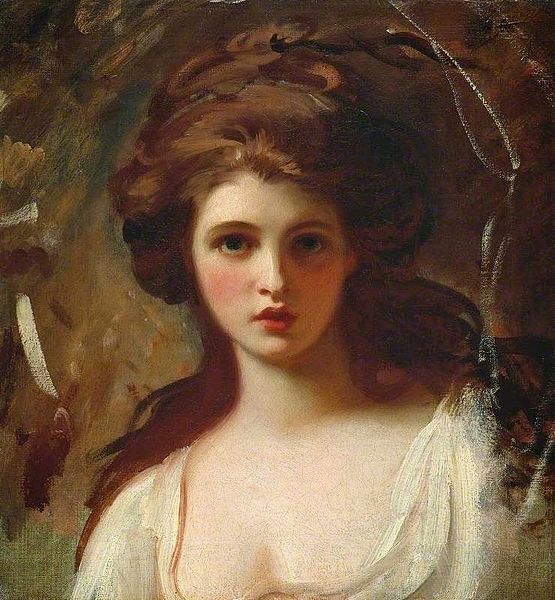
Lady Hamilton
Maggie McNeill recounts the life of Horatio Nelson’s beloved Emma, Lady Hamilton:
Unfortunately, Greville spent far beyond his means, and by 1783 he needed a new source of funds; he decided to acquire them by marrying the young heiress Henrietta Middleton, but since it was common knowledge that Emma was his lover he had to be rid of her. He therefore convinced his uncle, Sir William Hamilton, to accept her as his mistress. Hamilton was an art collector, and no doubt viewed the now-famous beauty as a valuable find; he also wanted to facilitate his nephew’s marriage so as to eliminate his frequent requests for money. The deal was therefore made without Emma’s input or knowledge, and she was shipped off to Naples (where Hamilton was the British envoy) under the guise of a six-month holiday while Greville was supposedly away on business. She was, in other words, “sex trafficked”, sent from one owner to another in a different country.
But though Emma was furious upon discovering what was really expected of her, she eventually adapted to her situation. Hamilton’s home was beautiful and his art collection renowned, and he was a widower who, far from viewing her as an embarrassment, instead encouraged her modeling, singing and other performance. The form for which she became known was called “attitudes”; this consisted of an act in which she would wear a simple gown dressed up by scarves and shawls which helped her to evoke images from history and classical mythology by posing. The audience was then supposed to guess who she was portraying. Though this may sound a bit silly to modern ears, the effect was apparently very striking; Johann Wolfgang von Goethe wrote, “The performance is like nothing you have ever seen before. With a few scarves and shawls she expressed a variety of wonderful transformations. One pose after another without a break”. Within a few years of her first performance in the spring of 1787, a number of other actresses took up the art; over the years Emma herself evolved from mere posing into acting out short pantomimes, most famously portraying Medea.
Sir William eventually married Emma on September 6th, 1791; he was sixty and she twenty-six. The match gave her the title by which she was forever known afterward, though friends still called her “Emma”. It also gave her the duties of a diplomat’s wife, among them entertaining Horatio Nelson (then a mere post captain) when he came in 1793 to request reinforcements from the King of Naples. By the time he returned in 1798 he had lost an arm, an eye, most of his teeth and the majority of his health, but had won both the Battle of the Nile and worldwide fame. Sir William invited the great man to recuperate in their home, nursed by his young wife, and it was at this time that the two began their affair.
But while one might think this a betrayal of hospitality, the truth is that Sir William definitely knew about and seems to have even encouraged the affair; he and Nelson respected and admired one another, and Emma and Nelson had similar feelings for one another. Indeed, the relationship soon developed into a ménage a trois; after the Neopolitan Revolution of 1799 the ailing Hamilton was allowed to retire and return to England, accompanied by Nelson, who openly moved in with the Hamiltons despite having a home (and wife) of his own. In fact, the arrangement became such a huge scandal that the Admiralty ordered Nelson back to sea to keep him away from Emma. The public, however, was fascinated and the Hamiltons seemed completely unconcerned with what anyone said; when Emma gave birth to a daughter on January 31st, 1801 she named her “Horatia”, flagrantly advertising her paternity.
January 11, 2015
6th century Sicilian shipwreck yields 39 ingots of orichalcum
I’d only ever encountered mentions of orichalcum as a rare metal in Guild Wars 2, but it was a real thing, and an underwater archaeology team found 39 ingots of orichalcum just off the coast of Sicily near Gela:
Gleaming cast metal called orichalcum, which was said by Ancient Greeks to be found in Atlantis, has been recovered from a ship that sunk 2,600 years ago off the coast of Sicily.
The lumps of metal were arriving to Gela in southern Sicily, possibly coming from Greece or Asia Minor. The ship that was carrying them was likely caught in a storm and sunk just when it was about to enter the port.
“The wreck dates to the first half of the sixth century,” Sebastiano Tusa, Sicily’s superintendent of the Sea Office, told Discovery News. “It was found about 1,000 feet from Gela’s coast at a depth of 10 feet.”
He noted that the 39 ingots found on the sandy sea floor represent a unique finding.
“Nothing similar has ever been found,” Tusa said. “We knew orichalcum from ancient texts and a few ornamental objects.”
Indeed orichalcum has long been considered a mysterious metal, its composition and origin widely debated.
According to the ancient Greeks, it was invented by Cadmus, a Greek-Phoenician mythological character. The fourth century B.C. Greek philosopher Plato made orichalcum a legendary metal when he mentioned it in the Critias dialogue.
December 8, 2014
The Luftwaffe attack at Bari in 1943
Patrick K. O’Donnell discusses one of the Luftwaffe‘s most deadly attacks and why most people have never heard of it:
Americans remember December 7 as Pearl Harbor Day, but most Americans have never even heard of the “Little Pearl Harbor,” which occurred in Bari Harbor, Italy, on December 2, 1943. More than 100 Luftwaffe bombers mounted a surprise attack on Allied ships moored in the harbor. Their bombs sank or rendered inoperable 28 of these ships. Nearly a thousand Allied troops were killed or wounded. along with hundreds of civilians.
Unbeknownst to those in the port, one of the ships carried liquid death in its belly. The American freighter John Harvey was secretly carrying mustard agent, in violation of international agreements that banned its use. President Franklin Roosevelt had covertly ordered the shipment of 100 tons of mustard agent to Italy for retaliation in the event that the Germans used chemical warfare against the Allied troops. The incident was covered up and remained a secret for decades.
When the German bombs hit the John Harvey, the ship’s hold immediately exploded with devastating violence, killing all those who knew about the mustard [gas]. Deadly liquid and gas flew high into the air and then slowly settled back down into the harbor, coating everything and everyone in the vicinity. Casualties would mount over the coming days and weeks as the agent slowly and painfully claimed the lives of many who had survived the initial attack.
Mustard gas was one of the nastiest relics of the attempts to break the trench lines during the First World War. Wikipedia says:
The sulfur mustards, or sulphur mustards, commonly known as mustard gas, are a class of related cytotoxic and vesicant chemical warfare agents with the ability to form large blisters on the exposed skin and in the lungs. Pure sulfur mustards are colorless, viscous liquids at room temperature. When used in impure form, such as warfare agents, they are usually yellow-brown in color and have an odor resembling mustard plants, garlic, or horseradish, hence the name. Mustard gas was originally assigned the name LOST, after the scientists Wilhelm Lommel and Wilhelm Steinkopf, who developed a method for the large-scale production of mustard gas for the Imperial German Army in 1916.
Mustard agents are regulated under the 1993 Chemical Weapons Convention (CWC). Three classes of chemicals are monitored under this Convention, with sulfur and nitrogen mustard grouped in Schedule 1, as substances with no use other than in chemical warfare. Mustard agents could be deployed on the battlefield by means of artillery shells, aerial bombs, rockets, or by spraying from warplanes.
November 13, 2014
QotD: Unintended consequences
After World War II, many left-wing European governments wanted to do something about unemployment. As I discuss extensively in my book, unemployment is about the worst thing that can happen to you in a modern democracy, short of death or dismemberment. So they passed laws making it very, very difficult to fire workers. In Italy, for example, a judge could reverse a layoff decision, not because you’d fired the worker unjustly, but because the judge didn’t think you needed to cut staff. Hurrah! Finally, workers were protected from the dark specter of unemployment!
Well, not quite. Workers were thrilled; employers were terrified. Now hiring a worker meant you were stuck with them unless they committed some absolutely flagrant offense — like, say, emptying the till and running out the door.
That’s a hell of a commitment to make to someone you barely know. So employers didn’t want to hire scary strangers; they wanted to hire close friends and family. Or, better yet, no one at all. Youth unemployment in many of these nations was staggering. The insiders had a great deal, but people without jobs found themselves consigned to a series of temporary, not-very-well-paid contracts. Or the dole.
The lesson is that when you make it harder to exit, you also make people reluctant to enter.
Megan McArdle, “Can Limiting Divorce Make Marriage Stronger?”, Bloomberg View, 2014-04-16
October 16, 2014
Italian recession officially ends, thanks to drugs and prostitution
As Kelly McParland put it, it’s “another reason to legalize everything nasty“:
Italy learnt it was no longer in a recession on Wednesday thanks to a change in data calculations across the European Union which includes illegal economic activities such as prostitution and drugs in the GDP measure.
Adding illegal revenue from hookers, narcotics and black market cigarettes and alcohol to the eurozone’s third-biggest economy boosted gross domestic product figures.
GDP rose slightly from a 0.1 percent decline for the first quarter to a flat reading, the national institute of statistics said.
Although ISTAT confirmed a 0.2 percent decline for the second quarter, the revision of the first quarter data meant Italy had escaped its third recession in the last six years.
The economy must contract for two consecutive quarters, from output in the previous quarter, for a country to be technically in recession.
It’s merely a change in the statistical measurement, not an actual increase in Italian economic activity. And, given that illegal revenue pretty much by definition isn’t (and can’t be) accurately tracked, it’s only an estimated value anyway.
August 6, 2014
Who is to blame for the outbreak of World War One? (Part eight of a series)
We’re getting closer to the end of the series now … you can catch up to the earlier posts here: part one, part two, part three, part four, part five, part six, and part seven. The previous post touched on Russia’s disaster in the far east and the dangerous domestic situation it faced after the war. In this post we discover that Italy could be at least as perfidious as “Perfidious Albion”, and that the Balkans are a hell of a place to wage a war.
Italy tips the first domino … in Africa
In The Sleepwalkers, Christopher Clark talks about a war I don’t think I’d ever heard of … an Italian campaign against the Ottoman Empire:
At the end of September 1911, only six months after the foundation of Ujedinjenje ili smrt! [“Union or death!” aka The Black Hand], Italy launched an invasion of Libya. This unprovoked attack one one of the integral provinces of the Ottoman Empire triggered a cascade of opportunistic attacks on Ottoman-controlled territory in the Balkans.
Italy’s attack on the Ottoman Empire was literally planned to steal what is now Libya and incorporate it into a new Italian Empire. Although the formal war was over in thirteen months, indigenous Arabs were still fighting back twenty years later. This attack broke the public-but-informal international understandings about leaving the remaining parts of the Ottoman Empire alone to prevent the risk of great power struggles breaking out. Britain and France had gone to war in 1854 to ensure that Russia did not gain access to the straits and thus a warm-water route to the Mediterranean and the coastlines of southern Europe, but the outcome of both the 1870-71 Franco-Prussian War and the 1877-78 Russo-Turkish War (and the secret Reinsurance Treaty with Germany) meant that Russia’s hands were largely free as long as Constantinople and the straits were not directly attacked. Italy’s attack broke with that understanding, and could be said to have started the most recent (and also most fatal) scramble for territory in the Balkans.
However, Italy did not act completely outside the norm for a would-be great power: they had an understanding with the French government that was formalized in a secret treaty in 1902 — Italy would not oppose French designs on Tunisia in exchange for French acceptance of Italy’s similar hopes for Tripolitania and Cyrenaica (modern day Libya). Italy’s attack was only possible because of the anomaly of the British position in Egypt: although still formally part of the Ottoman Empire, day-to-day Egyptian affairs were run by or overseen by British officials. Egypt was militarily occupied, but not a colony of the British Empire, and the country was — in theory — still run by the government of the Khedive. The Ottomans could not move formed bodies of troops through Egypt, and the Ottoman navy did not have the ships to transport them from Anatolia directly to Libya. This gave Italy the opportunity to concentrate against the weaker Ottoman forces.
The otherwise obscure Italo-Turkish War was interesting for several reasons, as the Wikipedia article notes:
Although minor, the war was a significant precursor of the First World War as it sparked nationalism in the Balkan states. Seeing how easily the Italians had defeated the weakened Ottomans, the members of the Balkan League attacked the Ottoman Empire before the war with Italy had ended.Italian airships bomb Ottoman troops in Libya (via Wikipedia)
The Italo-Turkish War saw numerous technological changes, notably the airplane. On October 23, 1911, an Italian pilot, Captain Carlo Piazza, flew over Turkish lines on the world’s first aerial reconnaissance mission, and on November 1, the first ever aerial bomb was dropped by Sottotenente Giulio Gavotti, on Turkish troops in Libya, from an early model of Etrich Taube aircraft. The Turks, lacking anti-aircraft weapons, were the first to shoot down an aeroplane by rifle fire.
It was also in this conflict that the future first president of Turkey and leader of the Turkish War of Independence, Mustafa Kemal Atatürk, distinguished himself militarily as a young officer during the Battle of Tobruk.

Although Italy ended up with possession of the disputed land, it did not come easily or cheaply:
The invasion of Libya was a costly enterprise for Italy. Instead of the 30 million lire a month judged sufficient at its beginning, it reached a cost of 80 million a month for a much longer period than was originally estimated. The war cost Italy 1.3 billion lire, nearly a billion more than Giovanni Giolitti estimated before the war. This ruined ten years of fiscal prudence.
After the withdrawal of the Ottoman army the Italians could easily extend their occupation of the country, seizing East Tripolitania, Ghadames, the Djebel and Fezzan with Murzuk during 1913. The outbreak of the First World War with the necessity to bring back the troops to Italy, the proclamation of the Jihad by the Ottomans and the uprising of the Libyans in Tripolitania forced the Italians to abandon all occupied territory and to entrench themselves in Tripoli, Derna, and on the coast of Cyrenaica. The Italian control over much of the interior of Libya remained ineffective until the late 1920s, when forces under the Generals Pietro Badoglio and Rodolfo Graziani waged bloody pacification campaigns. Resistance petered out only after the execution of the rebel leader Omar Mukhtar on September 15, 1931. The result of the Italian colonisation for the Libyan population was that by the mid-1930s it had been cut in half due to emigration, famine, and war casualties. The Libyan population in 1950 was at the same level as in 1911, approximately 1.5 million in 1911.
The war ended well — at least geographically speaking — for Italy, having gained title not only to Libya but also to the Dodecanese: a group of twelve large and about 150 small islands in the Aegean Sea. The largest and most economically valuable island was Rhodes, which became a useful base for Italian forces for more than 40 years. The treaty ending the Italo-Turkish War required Italy to vacate the islands, but due to both fuzzy wording and the dissolution of the Ottoman Empire at the end of the First World War, Italy managed to retain possession.
The Ottoman tide ebbs

A German map of the Balkans, showing the borders as of 1905 (via Wikipedia)
Italy’s attack was the first domino falling. Christopher Clark writes:
The First World War was the Third Balkan War before it became the First World War. How as this possible? Conflicts and crises on the south-eastern periphery, where the Ottoman Empire abutted Christian Europe, were nothing new. The European system had always accommodated them without endangering the peace of the continent as a whole. But the last years before 1914 saw fundamental change. In the autumn of 1911, Italy launched a war of conquest on an African province of the Ottoman Empire, triggering a chain of opportunistic assaults on Ottoman territories across the Balkans. The system of geopolitical balances that had enabled local conflicts to be contained was swept away. In the aftermath of the two Balkan Wars of 1912 and 1913, Austria-Hungary faced a new and threatening situation on its south-eastern periphery, while the retreat of Ottoman power raised strategic questions that Russian diplomats and policy-makers found it impossible to ignore.
Margaret MacMillan, in The War That Ended Peace:
It was in the Balkans […] that the greatest dangers were to arise: two wars among its nations, one in 1912 and a second in 1913, nearly pulled the great powers in. Diplomacy, bluff and brinksmanship in the end saved the peace but although Europeans could not know it, they had had a dress rehearsal for the summer of 1914. As they say in the theatre, if that last run-through goes well, the opening night will be a disaster.
The First Balkan War of 1912 — A Pan-Slavic triumph
To some, the Balkans were a comic opera assemblage of exotic uniforms, passionate actors, indecipherable languages, a bit of bloodshed, but no real source of international danger or worry. Margaret MacMillan explains that much happened beneath the surface of the above-ground culture: much that portended danger to the entire region and beyond.
To the rest of Europe the Balkan states were something of a joke, the setting for tales of romance such as the Prisoner of Zenda or operettas (Montenegro was the inspiration for the The Merry Widow), but their politics were deadly serious — and frequently deadly with terrorist plots, violence and assassinations. In 1903 King Peter’s unpopular predecessor as King of Serbia and his equally unpopular wife had been thrown from the windows of the palace and their corpses hacked to pieces. […] The growth of national movements had welded peoples together but it had also divided Orthodox from Catholic or Muslim, Albanians from Slaves, and Croats, Serbs, Slovenes, Bulgarians or Macedonians from each other. While the peoples of the Balkans had coexisted and intermingled, often for long periods of peace through the centuries, the establishment of national states in the nineteenth century had too often been accompanied by burning of villages, massacres, expulsions of minorities and lasting vendettas.
Politicians who had ridden to power by playing on nationalism and with promises of national glory found they were in the grip of forces they could not always control. Secret societies, modelling themselves on an eclectic mix which included Freemasonry, the underground Carbonari, who had worked for Italian unity, the terrorists who more recently had frightened much of Europe, and old-style banditry, proliferated throughout the Balkans, weaving their way into civilian and military institutions of the states.
In addition to the ethnic, proto-national, cultural, and religious aspects of Balkan conflict, it was also an inter-generational conflict:
The younger generation who were attracted to the secret societies were often more extreme than their elders and frequently at odds with them. “Our fathers, our tyrants,” said a Bosnian radical nationalist, “have created this world on their model and are now forcing us to live in it.” The young members were in love with violence and prepared to destroy even their own traditional values and institutions in order to build the new Greater Serbia, Bulgaria, or Greece. (Even if they had not read Nietzsche, which many of them had, they too had heard that God was dead and that European civilization must be destroyed in order to free humankind.) In the last years before 1914, the authorities in the Balkan states either tolerated or were powerless to control the activities of their own young radicals who carried out assassinations and terrorist attacks on Ottoman or Austrian-Hungarian official as oppressors of the Slavs, on their own leaders whom they judged to be insufficiently devoted to the nationalist cause, or simply on ordinary citizens who happened to be in the wrong religion or the wrong ethnicity in the wrong place.

French map of the territorial changes due to the First Balkan War (via Wikipedia)
And there it might have ended, but the unexpectedly successful campaign by the Balkan League left just a few too many loose ends, which almost immediately led to conflict among the victorious allies. Since I’ve already tipped you to the fact that there was more than one Balkan War, you probably won’t be surprised to find that the Second Balkan War happened quite soon after the first one. But that’s a tale for another day.


