Quotulatiousness

January 19, 2012

Vada a bordo, cazzo!

Filed under: Europe, Italy — Tags: , — Nicholas @ 12:24

It takes a lot to vault ahead of someone like world-class competitor President Bashar al-Assad of Syria in the most-hated person contest, but Captain Francesco Schettino has “triumphed” in this, at least temporarily:

The coward in the hot seat is Captain Francesco Schettino, who infamously abandoned his sinking ship, the Costa Concordia, leaving hundreds of passengers stranded in the dark off the Tuscan coast.

The transcript of his conversation with Gregorio De Falco, an enraged Italian Coast Guard, has made a hero of DeFalco and rained down contempt on Schettino. T-shirts with an enraged De Falco’s command, “Vada a bordo, cazzo!” (Get back on the boat, for f—’s sake!) have been a big hit.

In the latest implausible explanation for his behaviour, Schettino claims he tripped on the listing Costa Concordia and somehow found himself in a lifeboat from which he was unable to extricate himself. Certainly he did not return to the stricken vessel, where rescue operations went on until 6 a.m.

The Christian Science Monitor lists the bumbling Schettino’s “top four deceptions.” The best (or feeblest, depending on your level of cynicism) is a variation of the old insurance claim excuse — the tree came out of nowhere and hit me.

Update: Now there’s speculation that the shipwreck may have been caused in the course of an attempt to impress a young woman.

The 25-year-old blonde, identified as Domnica Cemortan, was invited onto the bridge as the cruise liner sailed perilously close to Giglio, in what was apparently a ‘salute’ to an old friend of the captain’s and a favour to the ship’s head waiter, whose family were from the island.

She was reportedly the guest of one of the ship’s officers and may be the woman that passengers saw drinking and chatting with Capt Francesco Schettino on Friday evening, a few hours before the Costa Concordia ran aground.

Italian judicial authorities, who are investigating the accident and the captain’s conduct, want to interview Ms Cemortan, who according to her Facebook page was born in Chisinau, Moldova, and lives in Bucharest, Romania.

They believe she may be able to shed light on what happened on the bridge when the giant cruise ship collided with a rocky outcrop, ripping a massive gash in its hull.

Adding to the mystery, she was reportedly not on the official list of passengers and crews.

January 17, 2012

The media angle on the Costa Concordia wreck

Filed under: Europe, Italy, Media — Tags: , , , — Nicholas @ 09:17

Tim Black points out the most common media memes about the Costa Concordia have much more to do with snobbery and disdain than with human interest or concern about the actual causes of the shipwreck:

The sequence of events that led to the sinking of the luxury cruise liner, the Costa Concordia, is now pretty much established. But facts have not got in the way of a variety of commentators who are using the accident to parade their prejudices about too-big ships and ignorant passengers.

[. . .]

These are the tragic facts so far. What no one knows exactly is why it happened. Explanations have been mooted, of course: a power blackout affecting the ship’s steering; inaccurate navigation charts failing to show the rocks; or human error, in particular by the ship’s captain, Francesco Schettino. Yet while the exact reason for the ship straying off course remains unclear, that has not stopped another object of blame coming to the fore in some of the coverage. That is, the real, underlying reason for the Costa Concordia accident is to be sought not in the actual events of Friday evening but rather in the profit-driven, build-‘em-high cruise industry and, by association, in the sea-faring ignorance of all those who sailed aboard her.

This is why so much of the coverage seems obsessed with the size of the Costa Concordia. Over the past few days, we have been repeatedly told that cruise ships have doubled in size over the past decade. While this is true — and as the twenty-sixth-largest liner in the world, the Costa Concordia is far from the most impressive of this new breed of ships — the Concordia’s size does not actually tell us why it was three miles off course. Nor does it explain why the ship’s crew was unaware of the rock outcrop despite having navigation equipment. Yes, perhaps ship size does affect manoeuvrability, but would a smaller vessel not have suffered a similar fate that befell the Concordia? In fact, the obsession with the ship’s size sheds very little light on what happened to the Concordia on Friday evening.

What the convenient obsession with size draws upon, rather, is an antipathy towards the cruise industry, a sense that it is little more than the ocean-going equivalent of that other right-thinking person’s bête noire, Dubai. In other words, a vulgar testament to profit and sky-high consumption. So although size here is not really relevant as a cause of the Concordia’s capsizing, it appears relevant to certain commentators as a symbol of commercial hubris, of complacent materialism.

December 6, 2011

The Battle of Ortona

Filed under: Cancon, Germany, History, Italy, Military, WW2 — Tags: , , , — Nicholas @ 10:16

The Laurier Centre for Military Strategic and Disarmament Studies is marking the anniversary of the Battle of Ortona in 1943 by sending Twitter updates from @BattleOfOrtona to outline the historical events of the 1st Canadian Division and the 1st Canadian Armoured Brigade in this key battle of the Italian Campaign. Here is the situation just before the battle opened, from Terry Copp:

The Canadians were involved in a series of isolated battles in the mountains of Central Italy in November 1943 when General Bernard Law Montgomery issued orders for an advance up the Adriatic Coast to seize control of the east-west road Pescara to Rome. The American 5th Army was to launch a direct advance towards Rome at the same time.

The Canadians were still in the mountains when British, Indian, and New Zealand troops fought their way across the Sangro River, forcing a German withdrawal to the Moro River. The 78th British “Battleaxe” Division had shot its bolt at the Sangro and Montgomery ordered the fresh, full strength Canadian Division to take over the advance on the coastal flank. The move was to be completed by the night of 5 December.

The German 10th Army, responsible for the defence of Italy east of the Appenine Mountains, contained 12 divisions — 10 infantry and 2 armoured. The 76 Panzer Corps held the river lines south of Pescara with 1st Parachute, 90th Panzer Grenadier, 26th Panzer and 65th Infantry divisions. Normally an attacker needs to outnumber the defender by at least 3:1. This ratio could not be achieved in December 1944 and with the beginning of heavy winter rains air power could only play a small role. Everyone but the infantry was optimistic.

December 3, 2011

Remembering the “Italian Stalingrad”

Filed under: Cancon, Europe, History, Italy, Military, WW2 — Tags: , — Nicholas @ 14:04

The Laurier Centre for Military Strategic and Disarmament Studies will be starting a series of “live tweets” to remember the 1943 Battle of Ortona. Follow @BattleOfOrtona to get the full story, as narrated by Terry Copp.

November 28, 2011

The real reason the German bond auction failed

Filed under: Economics, Europe, Germany, Italy — Tags: , , — Nicholas @ 08:58

Tyler Cowen explains:

If Germany and a few other, smaller AAA countries were to guarantee or monetize the debts of Italy, Spain, and possibly France and Belgium, never mind Greece and Portugal, Germany would not be AAA itself. The German median voter has very little interest in guaranteeing the above-mentioned debts. If German yields are flipping upwards, it is, in my view, because investors now see the whole euro deal as unraveling and don’t want to deal with the complexities and flak. A big chunk of the German auction didn’t sell at all. You don’t have to think that Germany is ripe to default to see that markets are warning Germany not to take on the whole burden.

The only remaining question, if Germany isn’t willing to take on the entire burden of European debt, is when will the whole edifice come crashing down and who’ll manage not to be crushed by falling debris.

November 24, 2011

Nigel Farage on “German-dominated Europe”

Filed under: Bureaucracy, Economics, Europe, Germany, Greece, Italy — Tags: , , — Nicholas @ 08:59

November 4, 2011

Opening moments of the G20 in Cannes

Filed under: France, Government, Greece, Italy, Media, Politics — Tags: , — Nicholas @ 09:01

From the tone of the article, even the Guardian is finding it hard to take the politicians seriously this time:

The red carpet was drenched and sodden, the palm trees battered by a storm and even the trumpet fanfares of the French Republican Guard were muffled by the wind.

Nicolas Sarkozy’s glittering G20 summit at Cannes was supposed to be a showcase for his skill as the caped crusader: Super Sarko, fighting his way through the markets and eurozone crisis to rescue his personal damsel in distress, France’s endangered AAA-credit rating.

Instead, the opening hours on the French Riviera seemed more like a muted crisis-gathering of head-scratching politicians, some staring into the jaws of political death, fearing being punished at the ballot box or hung out to dry by their own governments.

Even without the specially summoned whipping boy, the Greek prime minister George Papandreou — who had a constantly furrowed brow and clasped hands, as pressure was heaped on him over his resignation-referendum ping-ping — the red-carpet arrivals ceremony often looked like a roll call of doom.

Silvio Berlusconi arrived in the rain with a huge black overcoat perched on his shoulders, shoulder pads visible from space, likened by his own press corps to a mafia boss from the Sopranos.

October 30, 2011

Using Pompeii as another stick to beat Berlusconi

Filed under: Europe, Government, History, Italy, Media — Tags: , , , , — Nicholas @ 11:48

Mary Beard debunks the widely reported story of yet another wall collapse in the archaeological remains of Pompeii:

By chance I am on the site of Pompeii for the weekend. It is now swarming with more journalists than tourists, and all (it seems) with a determination to hype another collapse, another Pompeian disaster. That is to say, they are here with a determined misunderstanding of what has just happened — or with a drive to use any damage to the site as a stick with which to beat Berlusconi.

Actually, I am usually quite happy to beat Berlusconi, but the fact is that this latest melodrama only serves to make the job much more difficult for those in the archaeological services here, who are doing their level best to keep the place up and running. (This weekend curators and other staff have been fielding tv crews, not getting on with the real job.)

So far as I can tell, what happened is this. There was an absolute downpour last night, in the course of which some stones were dislodged from a relatively fragile (and not very well built) stretch of wall near the Nola gate. A custode entered this damage rather loosely in the incident book — and (we can only speculate how and why) that report got to the press, and it soon became a new “wall collapse”. The carabinieri arrived and everything in the area (including, let me confess, where I want to go) was shut off.

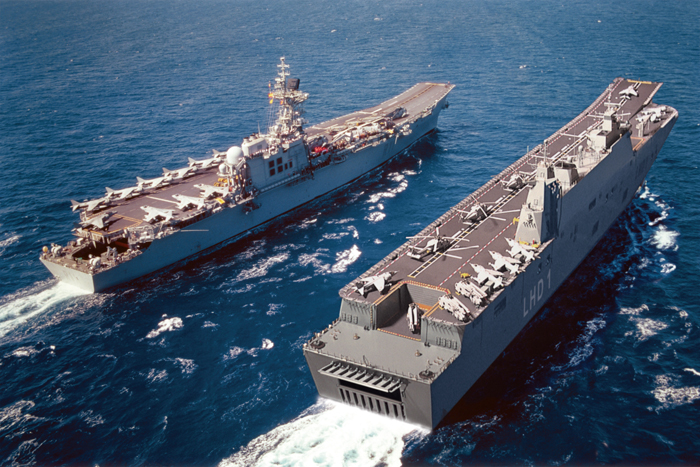
Media folks are not trained archaeologists, so it’s easy to understand how a garbled report could be misunderstood — and that’s setting aside the urge to use any tool as a weapon against the current Italian prime minister. This is why media reports become less and less dependable as they try to report on more specific or more technical information: they lack the expertise and usually don’t take the time to get external experts to help them. (My favourite examples of this are when naval vessels larger than a rowboat are described as “battleships” and tracked military vehicles are invariably “tanks”.)

H/T to Tyler Cowen for the link.

August 31, 2011

Despite media reports, Australia didn’t “screw up” torpedo purchase

Filed under: Australia, France, Italy, Media, Military — Tags: , , — Nicholas @ 08:58

Strategy Page expresses a bit of contempt for the Fairfax media reporters who mangled a story to get a juicy headline or six:

Another good example of mass media screwing up a story on the military recently appeared in Australia. Fairfax, the largest media group in Australia ran a late August story asserting that the Australian Navy had mishandled the acquisition of new anti-submarine torpedo from France, and had to hire translators to turn the French and Italian user and technical manuals into English. The Defense Ministry quickly responded and pointed out that the Fairfax reporters had misunderstood the situation. The contract to purchase the torpedoes stipulated that all documents be in English. This is standard for such purchases, and has been for a long time. The Fairfax reporters should have known that. The Defense Ministry was hiring translators to handle additional data, not covered by the MU90 purchase, on some of the 200 test launches of the torpedo. This would save the Australian Navy a lot of money as some of their own test launches could be skipped, if the French and Italian tests covered the same situations. But the documents on most of those tests were in the language of the navy conducting them (French or Italian.) The reports were classified, but the two navies were willing to share them, although it was understood that Australia would have to handle translations. This has been standard practice for decades, but the Fairfax reporters didn’t dig that deep. This sort of facile military reporting has become increasingly common. It goes beyond calling all warships (except carriers and subs) “battleships” (a class of ship that went out of wide use half a century ago) or calling self-propelled artillery (or even infantry fighting vehicles) “tanks” simply because they all have turrets (but very different uses). The bad reporting extends to many other basic items of equipment, training, leadership, tactics and casualties.

The argument from the press is probably that the public doesn’t know — and doesn’t care about — the differences between warship classes or armoured vehicles anyway, so they don’t “waste their time” by being accurate.

July 14, 2011

The Eurozone crises

Filed under: Economics, Europe, Greece, Italy — Tags: , , , , — Nicholas @ 17:30

That’s right, crises, not crisis. There are three interlinked crises, not just one:

The crisis in the Eurozone has been lurching from one country to another over the past year or so. After bailouts for Greece, Ireland and Portugal, and with a second bailout for Greece in the offing, the financial markets this week turned their attention to Italy, a far larger economy than those previously affected. Spain, another country struggling to pay its way, has also been hit by austerity measures and political turmoil. But while it is easy to get caught up in the specifics of each new stage of the crisis, it is worth taking a step back to understand what is going on and the possibilities for the future.

The Euro crisis, like just about every other economic story these days, has a three-fold character. It is not, in fact, a single crisis; it has three inter-related elements: financial, economic and political.

Of the three, the financial crisis is, paradoxically, the least significant, even though it is the most prominent of the three and the one which threatens to spin out of control with serious broader consequences. Alongside the financial, the economic aspect is the most entrenched and material of the three, while the political crisis — that is, the failure of the political elites to get on top of the other two challenges — is the most critical, as it is, or should have been, the key to the resolution of the other two. The shift in focus to Italy, the Eurozone’s third largest economy, indicates that time may have run out for effective containment. The Euro genie is probably out of the bottle.

July 11, 2011

The Euro: who’ll be the first to leave?

Filed under: Economics, Europe, Government, Greece, Italy — Tags: , , — Nicholas @ 11:15

With all eyes on Greece recently, the troubles of Italy come as a sudden shock to many:

Greece, Ireland, Portugal, (maybe) Spain…and now Italy? Contagion. The hope on the part of the EU and ECB was to contain the contagion by throwing money at it, but every time they fill one sink-hole with Euros another one opens up. It’s been obvious for a long time that the Eurozone was simply a bad idea, and this crisis has exposed the rotten underpinnings for all to see. Europe wanted to have a currency union just like the United States, but they are finding out the hard way that a monetary union without a fiscal-policy union just won’t work. European countries are not like US states — they have different langauges, different work rules, different governing philosophies…different cultures. The big question in everyone’s mind is…now what? Some countries must default, and a default will probably require leaving the Euro and going back to the sovereign currency. But no one knows exactly how this will work, or what the consequences will be.

Some people are floating the idea of a Euro-Bond, but I find that a little nonsensical absent any fiscal-policy union backing it. But of course this may be the point to the enterprise: to “force” Europeans into a closer union without having to go through the messy (and time-consuming) processes of holding a vote. The EU project has never really been a democratic enterprise from the very first — the Eurozone was implemented without the say-so (even over the protests of) its citizens. If I Eurobond is floated, I expect it to be another example of droit de Seigneur on the part of the Eurozone elite. (And it probably won’t work, and will piss away a lot more good money after bad, but none of that has stopped them so far.)

June 29, 2011

Canada’s Cormorant fleet to stay airborne thanks to former “Marine One” helicopters

Filed under: Britain, Cancon, Italy, USA — Tags: , , , , — Nicholas @ 12:29

The Cormorant is not quite the success story we hoped for when we bought the helicopters for our search and rescue operations. Part of the problem is that spare parts for the choppers are in very short supply. An unexpected source of spare parts just happened to come our way recently:

The helicopters sold to Canada are the so-called US101 version of the EH101 aircraft developed during the 1980s and 1990s in the UK and Italy by companies which are now grouped as AgustaWestland. The UK forces, after massive delays and cost overruns, eventually received two versions, both known as “Merlin” — a naval submarine-hunting variant and a cargo or troop-carrying one for the RAF. Both types finally reached frontline useability around 2004-2005, but their availability rates have been poor: perhaps due to the fact that the Merlin didn’t sell well worldwide and thus parts were at a premium.

However the Merlin did sell to the Bush administration, which was seeking to replace its ageing VH-3 Sea King presidential helicopters operated by the US Marines (the president’s chopper becomes “Marine One” when he is aboard, just as his airforce-operated plane becomes “Air Force One”). But the US101 project, managed by Lockheed on behalf of AgustaWestland, soon became mired in cost and time overruns every bit as bad as those which had hit the Royal Navy’s HM1.

The plan might well have been doomed from the outset, with requirements calling for 14 VIP seats, hardening against electromagnetic pulse, an executive washroom and communications equivalent to “a flying Oval Office” — a pretty big ask for an aircraft which can only lift four tonnes in its RAF cargo-carrying incarnation.

The US101 problems became bad enough that each new Marine One copter was projected to cost as much as an Air Force One jumbo jet, and the costs became an issue in the presidential election — with both Mr Obama and his opponent John McCain vying to issue the strongest condemnation of the aircraft. Obama in particular described it as “procurement amok”, and unsurprisingly it was axed as soon as he took office.

Now the Canadians, who also operate the EH101 under the name “Cormorant”, have snapped up the former presidential fleet of nine aircraft for $164m.

April 8, 2011

QotD: the international double standard

Filed under: Europe, Humour, Italy, Quotations, USA — Tags: , — Nicholas @ 13:39

A long time ago we had a president who was doing a chubby intern.

And some Americans got uptight about it.

And we were told by Europeans everywhere ‘Relax, it’s just sex. He’s the leader of the country, they have mistresses, it happens get over it you uptight prudes.’

So now with Silvio Berlusconi having sex with underage prostitutes and orgies and I don’t know what-all I guess that makes Europe — and Italy in particular — about eighteen times more sophisticated [1] than us hicks in the United States and so-on and so-forth.

Y’all must be so proud.

[1] Sarcasm.

Brian Dunbar, “Sophisticated Europe”, Space for Commerce, by Brian Dunbar, 2011-04-07

November 30, 2010

Ireland’s debt problem

Filed under: Economics, Europe, Humour, Italy, Politics — Tags: , , , , — Nicholas @ 07:48

James Howard Kunstler looks at Ireland’s plight:

When you’re out of the country, as I was last week, it’s good to know that the home folks are keeping up with the Kardashians and bravely venturing into the blood-splattered chambers of cable TV’s latest hit, Bridal Plasty — where candidates for marriage are transformed from Holstein cows into inflatable sex toys by magic surgical technology — not to mention all those humble guardians of freedom who kept the parking lots of WalMart safe for consumerism in the wee small hours of Black Friday. These are, after all, perilous times.

Elsewhere, Ireland and the rest of Europe wore themselves out with soul-searching all week over how to handle national bankruptcy within a currency system that bears only a schematic relation to reality. Does the bankruptee go broke all at once, or is she recruited into permanent debt slavery so that the bond-holders of various banks can keep their loved ones in marzipan and Fauchon’s wonderful marrons glacés for one more holiday season? As of Monday morning, Ireland has been commanded to, er, bend over and pick up the soap, shall we say, for about a hundred billion euros in loans that will not be paid back until a mile-high ice-sheet covers Dublin (something that might happen sooner rather than later if the climate mavens are right).

We’ll see how this bail-out goes down with the French and German voters, too, who have to pay for it, after all, especially as Portugal, Spain, and Italy line up at the cash cage for their cheques (and bars of soap). Of course, a few more basis points in the interest rate spreads could prang the whole Euro soap opera — does anybody really believe this game of kick-the-can will go on after New Years? I’m not even sure it goes on past this Friday, but I am a notoriously nervous fellow.

This is almost as good as the (temporarily discontinued) daily Financial Briefings from Monty.

H/T to Terry Kinder for the link.

November 29, 2010

Oh noes! WikiLeaks show “undiplomatic” side of US diplomacy

The latest release of WikiLeaks’ cache of US government documents shows the undiplomatic side of things:

The documents obtained by the whistle-blowing website WikiLeaks, some of which describe allies and adversaries in starkly blunt terms, could undermine the Obama administration’s efforts to improve ties that have frayed with some key countries in Europe, the Middle East and elsewhere.

As reported by The New York Times and other media, the cables at times deride or mock foreign officials, calling Italian Prime Minister Silvio Berlusconi a “feckless” partier and describe Afghan President Hamid Karzai as “weak” and “easily swayed.”

Below are highlights of the embarrassing comments from the new WikiLeaks documents.

— One July 2009 cable from the State Department’s intelligence bureau, posted by The New York Times, contains instructions to U.S. diplomats for collecting intelligence on the United Nations.

The directive, from U.S. Secretary of State Hillary Clinton, urges diplomats to collect biographical information on U.N. personnel, including such personal data as telephone, cellphone, pager and fax numbers and e-mail addresses; credit card account numbers; frequent flyer account numbers, work schedules, and Internet and intranet “handles” (or nicknames).

Here we go: a perfect example of government duplication of effort. Everyone knows it’s cheaper to buy this information from Facebook!

Other “worldshaking” revelations include:

The newspaper says one 2008 cable characterizes the relationship between Dmitry Medvedev, Russia’s president, and its Prime Minister Vladimir Putin as a partnership in which Medvedev, who has the grander title, “plays Robin to Putin’s Batman.”

It also says a cable describes Italy’s Berlusconi as “feckless, vain and ineffective as a modern European leader.” One cable from Rome to Washington describes Berlusconi as “physically and politically weak” and asserts that his “frequent late nights and penchant for partying hard mean he does not get sufficient rest.”

In other words, pretty much common knowledge.

Update: William A. Jacobson thinks this is the Jimmy Carter moment for Barack Obama:

The U.S. Embassy takeover in Tehran on November 4, 1979, was the start of 444 days which came to define Jimmy Carter. The U.S. government was revealed to be powerless and the President weak. Those among us who were alive and conscious during those days have embedded the feelings of helplessness.

There have been many comparisons of Barack Obama to Jimmy Carter, focused on the economy. But the continuing leak of documents by Wikileaks has become for Obama what the Iranian hostage crisis was to Carter.

« Newer PostsOlder Posts »

Powered by WordPress