Quotulatiousness

October 29, 2019

Greenland to USA, Australia to war, and French Colonies to…? – WW2 – OOTF 004

Filed under: Africa, Australia, Europe, France, History, Military, USA, WW2 — Tags: , , , , — Nicholas @ 06:00

World War Two
Published 27 Oct 2019

In another edition of our Q&A format, Indy answers some questions about Greenland after the German occupation of Denmark, the state of Australia and the fate of the French Colonies.

Ask your own question for OOTF: https://community.timeghost.tv/c/Out-…

Join us on Patreon: https://www.patreon.com/TimeGhostHistory
Or join The TimeGhost Army directly at: https://timeghost.tv

Follow WW2 day by day on Instagram @World_war_two_realtime https://www.instagram.com/world_war_t…
Join our Discord Server: https://discord.gg/D6D2aYN.
Between 2 Wars: https://www.youtube.com/playlist?list…
Source list: http://bit.ly/WW2sources

Hosted by: Indy Neidell
Produced and Directed by: Spartacus Olsson and Astrid Deinhard
Executive Producers: Bodo Rittenauer, Astrid Deinhard, Indy Neidell, Spartacus Olsson
Creative Producer: Joram Appel
Research by: Rune Vaever Hartvig
Edited by: Mikołaj Cackowski
Map animations: Eastory

Colorisations by Norman Stewart and Julius Jääskeläinen https://www.facebook.com/JJcolorization/

Eastory’s channel: https://www.youtube.com/channel/UCEly…
Archive by Screenocean/Reuters https://www.screenocean.com.

Sources:
IWM: H 10569, A 1524, CM 64

A TimeGhost chronological documentary produced by OnLion Entertainment GmbH.

From the comments:

World War Two
3 days ago
We get a ton of questions about the war on a daily basis. A lot of them are already answered in the YouTube comments to you all directly, but because some questions are very interesting indeed, we like to showcase some of them on the channel. Because the YouTube comments are hard to navigate, we have made a section on our forum where you can submit questions to be covered in Out of the Foxholes. You can do that here: https://community.timeghost.tv/c/Out-of-the-Foxholes-Qs

Cheers,
The TimeGhost team

October 26, 2019

Chassepot Needle Rifle

Filed under: France, History, Military, Weapons — Tags: , , , , — Nicholas @ 02:00

Forgotten Weapons
Published on 30 May 2015

Sold for $1,150 (with three other rifles).

The Chassepot was the French answer to the Dreyse needle rifle, and also the only other needlefire rifle to see major military service. It was adopted in 1866 and served as a primary French infantry rifle until being replaced by the 1874 Gras rifle, which was basically a conversion of the Chassepot to use self-contained brass cartridges. The concept of a needle rifle is that of a breech loading rifle using paper cartridges. A primer was set in the base of the cartridge (inside the paper), and upon firing the needle-like firing pin would pierce the paper cartridge and detonate the primer and powder charge. The system always had trouble with sealing the breech, but was still a significant improvement over muzzleloading rifles.

October 21, 2019

The French Resistance – was it of any use to anyone?

Filed under: France, Germany, History, Military, WW2 — Tags: , , , — Nicholas @ 02:00

Lindybeige
Published on 19 October 2016

Who organised the French Resistance? Did it ever do much?
Support me on Patreon: https://www.patreon.com/Lindybeige

I had planned to say a lot more, but this should be long enough. In take one, which I had to ditch because my sound recorder packed in half-way through it (but I didn’t notice, so carried on), I talked quite a bit about Wing Commander F.F.E. Yeo-Thomas AKA “The White Rabbit” who did a lot of organising the French Resistance, and I was also planning to talk about “R.A.F. blackmail sabotage” but perhaps that will come out in another video another day. Probably not, though. Never mind – sixteen minutes should be long enough for anyone.

Many of the figures I quote were fresh in my mind because I had just read them in Dadland by Keggie Carew. Another influential book on this video was The White Rabbit about Wing Commander FFE Yeo-Thomas.

Lindybeige: a channel of archaeology, ancient and medieval warfare, rants, swing dance, travelogues, evolution, and whatever else occurs to me to make.

▼ Follow me…

Twitter: https://twitter.com/Lindybeige I may have some drivel to contribute to the Twittersphere, plus you get notice of uploads.

website: http://www.LloydianAspects.co.uk

October 14, 2019

Cavalry Combat & Tactics during the Napoleonic Era

Filed under: Britain, Europe, France, Germany, History, Military — Tags: , — Nicholas @ 04:00

Military History Visualized
Published 20 Jan 2018

This video gives insights in cavalry combat and tactics during the era of Napoleon. This includes cavalry types, forms of combat, formations, organization, principles and many more.

Link to History Gaming Verified: https://www.youtube.com/channel/UCoeY…

»» SUPPORT MHV ««
» patreon – https://www.patreon.com/mhv
» paypal donation – https://www.paypal.com/cgi-bin/webscr…

Military History Visualized provides a series of short narrative and visual presentations like documentaries based on academic literature or sometimes primary sources. Videos are intended as introduction to military history, but also contain a lot of details for history buffs. Since the aim is to keep the episodes short and comprehensive some details are often cut.

» SOURCES «
Rothenberg Gunther E.: The Art of Warfare in the Age of Napoleon

Nosworthy, Brent: Battle Tactics of Napoleon and his Enemies

Bruce, Robert B.;‎ Dickie, Iain; Kiley, Kevin;‎ Pavkovic, Michael F.;‎ Schneid, Frederick C.: Fighting Techniques of the Napoleonic Age 1792 – 1815: Equipment, Combat Skills, and Tactics

Ortenburg, Georg: Waffen der Revolutionskriege 1792-1848

Planert, Ute: “Die Kriege der Französischen Revoluation und Napoleons. Beginn einer neuen Ära der europäischen Kriegsgeschichte oder Weiterwirken der Vergangenheit?” In: Beyrau, Dietrich; Hochgeschwender, Michael; Langewiesche, Dieter (Hrsg.): Formen des Krieges. Von der Antike bis zur Gegenwart, S. 149-162

Rogers, H.C.B.: Napoleon und seine Armee / Napoleon’s Army

Browing, Peter: The Changing Nature of Warfare. The Development of Land Warfare from 1792 to 1945

Citino, Robert M.: The German Way of War

Chandler, David: The Art of Warfare in the Age of Marlborough

Philip J. Haythornthwaite: Weapons & Equipment Of The Napoleonic Wars

Hughes, B. P.: Firepower – Weapon Effectiveness on the Battlefield, 1630-1850

Lind, William S.: “Maneuver”; in: Margiotta, Franklin (ed): Brassey’s Encyclopedia of Land Forces and Warfare, p. 661-667

AskHistorians: How does a commander screen his army?
https://www.reddit.com/r/AskHistorian…

Russell, Jill R.: With rifle and bibliography: General Mattis on professional reading
http://www.strifeblog.org/2013/05/07/…

» DISCLAIMER «
Amazon Associates Program: “Bernhard Kast is a participant in the Amazon Services LLC Associates Program, an affiliate advertising program designed to provide a means for sites to earn advertising fees by advertising and linking to amazon.com.”

Bernhard Kast ist Teilnehmer des Partnerprogramms von Amazon Europe S.à.r.l. und Partner des Werbeprogramms, das zur Bereitstellung eines Mediums für Websites konzipiert wurde, mittels dessen durch die Platzierung von Werbeanzeigen und Links zu amazon.de Werbekostenerstattung verdient werden können.

» TOOL CHAIN «
PowerPoint 2016, Word, Excel, Tile Mill, QGIS, Processing 3, Adobe Illustrator, Adobe Premiere, Adobe Audition, Adobe Photoshop, Adobe After Effects, Adobe Animate.

October 11, 2019

Bethlehem Steel 37mm Cannon – WWI Era

Filed under: France, History, Military, USA, Weapons, WW1 — Tags: , , — Nicholas @ 02:00

Forgotten Weapons
Published on 6 Jul 2014

http://www.forgottenweapons.com

Theme music by Dylan Benson – http://dbproductioncompany.webs.com

The 37mm gun was found in many guises during World War One – that caliber was the smallest allowed to use exploding projectiles by the 1899 Hague accords. Every nation in the world, it seems, used 37mm guns of one type or another. Well, one particular version I had the chance to look at was built by Bethlehem Steel in Pennsylvania for the French Army. Chambered for the same 37x136mm Hotchkiss Heavy cartridge used in US naval service, 200 were purchased in 1916. Only 15 were actually shipped before the US Army seized the bulk of the order in 1917 – but they were never put into any sort of service by the US military. The French tested the guns for suitability as an infantry gun, anti-tank gun, anti-aircraft gun, and naval landing gun – and found it unsuitable for all roles. It was probably tested only as a backup in case the redesign of the Mle 1916 Tir Rapid ran into problems.

At any rate, the 15 guns sent to France were sent back at the end of the war, and the guns remained in US Army inventory until 1921, when they appear to have been distributed out the National Guard units.

I think this is a very cool gun for the present-day enthusiast. In addition to the historical links to WWI, it has the practical benefits of being relatively light and using ammunition relatively inexpensive to reload. And, of course, the free mount and shoulder rest and iron sights give it more the feel of a shoulder rifle than later light artillery that use precisely adjusted mounts. This one is just more fun to shoot! Alas, there are very few still in existence. Perhaps an opportunity for someone who wants to make a reproduction Big Boy’s Toy?

October 10, 2019

Suez Crisis Part 2 of 2

Filed under: Britain, France, History, Middle East, Military, USA — Tags: , , , , , — Nicholas @ 02:00

Epic History TV
Published on 28 Dec 2017

In 1956, an international crisis over control of the Suez Canal put Britain and France into direct conflict with President Nasser of Egypt, a proud Arab nationalist determined to stand up to foreign powers meddling in Egyptian affairs.

Part 2 explores how Britain, France and Israel cooked up a secret plan to invade Egypt, overthrow Nasser and reassert their standing as global powers. But when the international community, and in particular the United States, condemned their actions, the aggressors were forced into a humiliating climbdown. The repercussions for the Middle East and global history were long-lasting and profound.

Archive film from AP Archive http://www.aparchive.com/

Music from Filmstro https://www.filmstro.com/
Get 20% off an annual license! Use our exclusive coupon code: EPICHISTORYTV_ANN

Help me make more videos by supporting Epic History TV on Patreon https://www.patreon.com/EpicHistoryTV

Further Reading on Suez Crisis (click affiliate links to buy on Amazon & support the channel):
Blood and Sand, Alex von Tunzelmann (Simon & Schuster, 2016) http://geni.us/QyoWs
Suez: Britain’s End of Empire in the Middle East, Keith Kyle (I.B.Tauris, 2011) http://geni.us/aqn6AH
The Suez Crisis 1956, Derek Varble (Osprey, 2003) http://geni.us/ANxBQEE
“Suez 1956”, Timothy Benson in History Today (Nov 2006)
“Suez: The Canal Before the Crisis”, Steve Morewood in History Today (Nov 2006)
“Nasser, Suez and Arab Nationalism”, Michael Scott-Baumann in History Today (Mar 2010)
“The First Suez Crisis”, Christopher Danziger in History Today (Sep 1982)
The Suez Crisis, by Laurie Milner, BBC website http://www.bbc.co.uk/history/british/…
“Andrew Bacevich reviews ‘Eisenhower 1956′”, London Review of Books (Vol.33 No.12)
“Avi Shlaim reviews ‘Israel’s Border Wars, 1949-56′”, London Review of Books (Vol.16 No.16)

#EpicHistoryTV #SuezCrisis #ColdWarHistory

October 9, 2019

Suez Crisis Part 1 of 2

Filed under: Britain, France, History, Middle East, Military, USA — Tags: , , , — Nicholas @ 02:00

Epic History TV
Published on 22 Dec 2017

In 1956, an international crisis over control of the Suez Canal put Britain and France into direct conflict with President Nasser of Egypt, a proud Arab nationalist determined to stand up to foreign powers meddling in Egyptian affairs.

To understand the deep roots of the crisis we go right back to the creation of the canal in 1869, and the long history of British intervention in Egypt — all with the usual Epic History TV maps as well as loads of brilliant and rarely-seen archive film from the period.

Archive film from AP Archive http://www.aparchive.com/

Music from Filmstro https://www.filmstro.com/
Get 20% off an annual license! Use our exclusive coupon code: EPICHISTORYTV_ANN

Help me make more videos by supporting Epic History TV on Patreon https://www.patreon.com/EpicHistoryTV

Further Reading on Suez Crisis (click affiliate links to buy on Amazon & support the channel):
Blood and Sand, Alex von Tunzelmann (Simon & Schuster, 2016) http://geni.us/QyoWs
Suez: Britain’s End of Empire in the Middle East, Keith Kyle (I.B.Tauris, 2011) http://geni.us/aqn6AH
The Suez Crisis 1956, Derek Varble (Osprey, 2003) http://geni.us/ANxBQEE
“Suez 1956”, Timothy Benson in History Today (Nov 2006)
“Suez: The Canal Before the Crisis”, Steve Morewood in History Today (Nov 2006)
“Nasser, Suez and Arab Nationalism”, Michael Scott-Baumann in History Today (Mar 2010)
“The First Suez Crisis”, Christopher Danziger in History Today (Sep 1982)
The Suez Crisis, by Laurie Milner, BBC website http://www.bbc.co.uk/history/british/…
“Andrew Bacevich reviews ‘Eisenhower 1956′”, London Review of Books (Vol.33 No.12)
“Avi Shlaim reviews ‘Israel’s Border Wars, 1949-56′”, London Review of Books (Vol.16 No.16)

#EpicHistoryTV #SuezCrisis #ColdWarHistory

October 8, 2019

Sarah Hoyt on the “rough music”

Filed under: China, Economics, France, Media, Politics, USA — Tags: , , , , , — Nicholas @ 09:00

Sarah Hoyt borrows a notion from Terry Pratchett’s Discworld series to explain a real phenomenon in our world:

Pratchett’s “Witches” world was so similar to my own, from jumping over fires to get married (not legal in my day, but there was memory of it) to various local folk superstitions, that it was always a surprise when he pulled something I’d never heard of.

One of these is the “rough music.”

When someone has done just about enough that a small village can no longer put up with him, the men in the village get together and play a barbarous and terrible music as they nerve themselves up for the barbarous and terrible things they have to do.

In Europe — hell, all over the rest of the world — the rough music is playing. Just because no one is reporting on this, it doesn’t mean it’s not going on, and growing, and nerving itself up to … something.

The level at which the Gilets Jaunes have been under reported is extraordinary, except that it hasn’t stopped the uprising either.

(And now I think about it, how much do we see in main stream news about Hong Kong? And it hasn’t stopped the uprising either.)

[…]

So, let’s talk about the rough music. Sure, you can hear it. I can hear it too. The stomp and the drumming can be heard all over the world.

That which can’t go on, won’t.

But I implore you to stop and think: if the rough music plays, what comes after?

There might be no hope for Europe, but Europe’s … ah … how do we put this? Europe’s tenets, their stand before the world, an improvement as they were on everything before them, are not ours.

Even in Europe I suspect when this bursts — and there it will burst. The elites flaying and screaming is only making it worse — you’re going to see things that will make you wonder why on Earth good American boys died in WWII. Because we’re about to get National Socialism, the sequel. National because they’re getting tired of the international elites (and who isn’t) and socialism because the poor bastards have not experienced anything else their entire adult lives.

It will happen. It is necessary. The EU was probably one of the most bizarre ideas in the history of bad ideas. The way it’s run which essentially steals the franchise from ordinary people was just the old style “good families” coming back into power through a back door.

But what comes after will probably be horrific. If we’re all lucky it will also be briefish and like France after the revolution they’ll find their way to something slightly less insane. With or without Napoleon and Europe wide war? Ah … that’s where we need to talk.

First however, let me say that hearing the rough music from the rest of the world is starting to echo here. We see what’s going on there. And we hear strange and stupid stuff, like the “whistleblower of the day” and an impeachment without voting and of course, pancake-gate.

Faced with that kind of behavior you obviously think “It’s insane.” And “We have to stop it.”

October 3, 2019

The Crimean War – History Matters

History Matters
Published on 7 Apr 2019

Twitter: https://twitter.com/Tenminhistory
Patreon: https://www.patreon.com/user?u=4973164

This episode covers the Crimean War (1853-1856) between the Russian Empire and the Ottomans, the British, the French and the Sardinians. It began largely out of Russo-Ottoman rivalry and because French Emperor Napoleon III had been appointed the protector of Christians within the Ottoman Empire, at the expense of the Russian Emperor Nicholas I. The war really kicked off in 1854 with the British and French invasion of Crimea and largely ended with the capture of Sevastopol in 1855, after which the Russians sued for peace.

October 1, 2019

Bring back the Aurochs!

Filed under: Europe, France, History, Science — Tags: , , — Nicholas @ 03:00

L. Neil Smith has a dream, and it includes lots and lots of barbecue sauce:

Aurochs in a cave painting in Lascaux, France.
Image via Infogalactic.com

The aurocs, you probably know, was a kind of wild bovine critter that lived and flourished in fairly recent prehistoric times. It ranged all over the Old World, from Japan and what became Sahara country, to Europe, where it first showed up about 270,000 years ago. (Homo sapiens arrived there about 100,000 years ago, when Adam and Eve got expelled from the Garden of Africa.

The aurocs is the number one game animal depicted lovingly in cavemens’ wet dreams, as painted by torchlight on the walls of certain caves, notably in France. I don’t know why French cavemen produced the most beautiful paintings in the world, but the genetic thread seems to have run true from 40,000 years ago, straight to Henri Toulouse-Lautrec, Paul Gauguin, and Claude Monet. Our ancestors hunted wooly mammoths, too — it must have seemed to them as massive an undertaking as the Space Progran — but I don’t think I’ve ever seen one depicted on a cave wall.

[…]

Julius Caesar described aurochs in Volume III of his Gallic Wars — another French connection, coinzidenza? The last one died, regrettably, in 1627, in a forest in Poland, but I recently learned to my delight that aurochs DNA abounds in the world’s laboratories (it’s found in their bones), and the entire genome has been mapped. It wouldn’t be much of a feat to plant some of it in the egg cell of a closely related descendant species — say an Indian cow — and bring it to term. It would certainly be less ambitious than trying to resurrect wooly mammoths (a favorite scientific undertaking of mine) and a hell of a lot more practical — and profitable.

Imagine, if you can, the Wyoming prairie (my wife is from Wyoming, the original Marlboro Girl, and as inveterate a Westerner as I am) or the flatlands of northern Texas, blackened from horizon to horizon, not with American bison (although I like them, too — yummy!) but with archaic European aurochs. Fifteen hundred pounds of politically incorrect red meet, stamping around, munching the prairie grass, paying court to the lady aurochs and doing whatever else aurocs did when Fred Flintstone and Ringo Starr were wandering the countryside with flint-tipped spears in their hands and growling stomachs under their aurochs-hide Speedos.

So that’s my idea, friends and readers. Resurrect the first big game animal our distant ancestors likely ever hunted and ate. It should prove to be a highly profitable enterprise. We may even discover that we have a genetic affinity for aurocs meat. Perhaps we’ll be less likely to gather deadly fat in our arteries, chowing down on the creature we evolved to consume.

Pass the barbecue sauce, please, and in any case, Bring Back The Aurochs!

September 29, 2019

History Summarized: Mexico

Overly Sarcastic Productions
Published 27 Sep 2019

Go to https://NordVPN.com/overlysarcastic and use code OVERLYSARCASTIC to get 70% off a 3-year plan and an extra month for free. Protect yourself online today!

This video is quite serendipitous in timing — by complete coincidence, this is going live on September 27, the day of Mexico’s true political independence under the First Mexican Empire. This is the 11 year sequel to the more traditional Mexican Independence celebrations of September 16th, which marks Miguel Hidalgo’s proclamation of the “Cry of Dolores” and the start of the Mexican War of Independence. No joke, I only realized this when I was partway through researching the video. I do so much ancient history I’m not used to events having dates we can track to the day.

ANYWAY enjoy this look at Mexican History, here broken into three main acts, the Aztec Empire, the Colony of New Spain, and the Independent nation of Mexico.

“Santianna” By The Longest Johns: https://thelongestjohns.bandcamp.com/…

PATREON: https://www.Patreon.com/OSP

DISCORD: https://discord.gg/sS5K4R3

September 14, 2019

Apocrypha: WW1 Tour Sneak Peek

Filed under: Cancon, France, History, Military, WW1 — Tags: , , , — Nicholas @ 04:00

Forgotten Weapons

Want to see all of my Apocrypha behind-the-scenes videos? They are a perk for Patrons who help directly support Forgotten Weapons:

http://www.patreon.com/ForgottenWeapons

Cool Forgotten Weapons merch! http://shop.bbtv.com/collections/forg…

I partnered up with Military Historical Tours to guide a World War One battlefield tour this week, and I figured I’d give you a bit of a peek into it. We are looking at the war chronologically, starting with a day in Belgium to look at the German attack in 1914, visiting the remains of Fort de Loncin in Liege and the Mons cemetery. Next was a day in Ypres for the stagnation into trench warfare in 1915, seeing the Dodengang up on the Yser and then the Bayernwald trenches, Passchendaele Museum, and Kitchener’s Wood. The year of 1916 marks two of the huge Western Front offensives, and we took one day on the Somme (Beaumont-Hamel and Lochnagar Crater) and a day at Verdun (Driant’s command post and tomb, Fort Vaux, Fleury Village, and the Douaumont Ossuary). Today we move to the Chemin des Dames to look at the disastrous French Nivelle Offensives at the Plateau de Californie and the Caverne du Dragons, and tomorrow we will see the arrival of significant American forces and the Hundred Days Offensive the ended the war, through the sites of Les Mares Farm, Belleau Wood, and Blanc Mont. We have a great group of people along, and it’s been a lot of fun, if quite sobering at times. I hope to see you on a future tour!

https://www.miltours.com

Contact:
Forgotten Weapons
6281 N. Oracle #36270
Tucson, AZ 85704

August 31, 2019

Young Recruits, French Planes, and Graf Spee – WW2 – OOTF 003

Filed under: Britain, France, Germany, History, Military, WW2 — Tags: , , , — Nicholas @ 06:00

World War Two
Published on 30 Aug 2019

How young were British soldiers? Could Graf Spee have gotten away? What was the French air force like? Questions, questions, questions – from you no less! With answers from us Out of the Foxholes.

Join us on Patreon: https://www.patreon.com/TimeGhostHistory
Or join The TimeGhost Army directly at: https://timeghost.tv

Follow WW2 day by day on Instagram @World_war_two_realtime https://www.instagram.com/world_war_t…
Join our Discord Server: https://discord.gg/D6D2aYN.
Between 2 Wars: https://www.youtube.com/playlist?list…
Source list: http://bit.ly/WW2sources

Image sources:
Drawing Morane-Saulnier M.S.406 C1 and Dewoitine D.520 fighters : Kaboldy

Written and Hosted by: Indy Neidell and Nicholas Moran
Produced and Directed by: Spartacus Olsson and Astrid Deinhard
Executive Producers: Bodo Rittenauer, Astrid Deinhard, Indy Neidell, Spartacus Olsson
Creative Producer: Joram Appel
Research by: Indy Neidell, Nicholas Moran, and Joram Appel
Edited by: Wieke Kapteijns

Eastory’s channel: https://www.youtube.com/channel/UCEly…
Archive by Screenocean/Reuters https://www.screenocean.com.

A TimeGhost chronological documentary produced by OnLion Entertainment GmbH.

From the comments:

World War Two
39 minutes ago
One day before the war has being going on for a whole year, we look back at some stuff from 1939 and 1940. And once again Nicholas Moran, the Chieftain https://www.youtube.com/user/TheChieftainWoT joins us to answer your questions. This time he leaves his main turf (tanks) to dive into his other area of expertise; naval battles. Please remember that we can’t field questions from the comments so if you want submit a new question do it here: https://community.timeghost.tv/c/Out-of-the-Foxholes-Qs

Coming out with Out of the Foxholes has been a bit of a challenge as we try to master the crazy amount of stuff going on in our main episodes. But thanks to the fantastic collaboration of the TimeGhost Army on https://www.patreon.com/TimeGhostHistory and https://timeghost.tv we are constantly expanding our capacity and we hope to come out with these a bit more often now! For now, enjoy and remember that tomorrow our first anniversary episode comes out!

History Summarized: French Empire (Ft. Armchair Historian!)

Overly Sarcastic Productions
Published on 30 Aug 2019

Check out the Armchair Historian channel for more on French Vietnam and the battle of Dien Bien Phu: https://youtu.be/IJ051WyUsW8

Dubious morality, drawn out timescales, intricate royal politics, worldwide stages — Colonialism be like that sometimes. And by “Like That” I mean impenetrably complicated. I did my best, I’ll say that, but oh man is history a mess in the 15-1900s. This stuff is the reason I had so much trouble with history for so long. It’s just so DENSE.

ANYWAY, join Blue and Griffin the Armchair Historian for a look into the history of the multiple successive French Empires. Listen carefully as Blue makes imperceptibly subtle commentary about his extremely non-biased opinions on this chapter in history, and laugh together as we analyze the historical significance of Napoleon Bonaparte’s anime hair.

NOTE on 6:14 — I say Napoleon became Emperor in 1802. That’s a mistake. In 1802, the constitution of France was amended to make the position of Consul permanent, but Napoleon did not become the Emperor until 1804, when he declared the French Empire. That’s my bad.

NOTE on 11:25 — French Guiana, on the northeast coast of South America, remained part of France following the decolonization of Africa. That’s a mapping mix-up.

DISCORD: https://discord.gg/sS5K4R3

PATREON: https://www.Patreon.com/OSP

August 30, 2019

QotD: Racism in London during WW2

Filed under: Britain, France, History, Quotations, USA, WW2 — Tags: , , , , — Nicholas @ 01:00

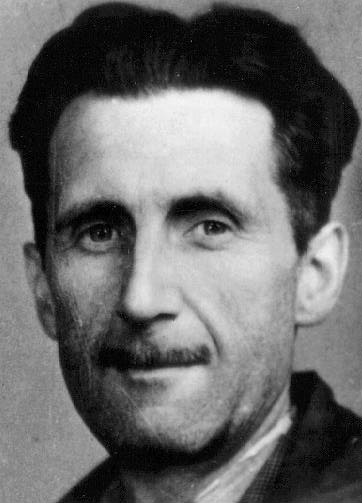
Orwell’s press card portrait, 1943


A few days ago a West African wrote to inform us that a certain London dance hall had recently erected a “colour bar”, presumably in order to please the American soldiers who formed an important part of its clientele. Telephone conversations with the management of the dance hall brought us the answers: (a) that the “colour bar” had been cancelled, and (b) that it had never been imposed in the first place; but I think one can take it that our informant’s charge had some kind of basis. There have been other similar incidents recently. For instance, I during last week a case in a magistrate’s court brought out the fact that a West Indian Negro working in this country had been refused admission to a place of entertainment when he was wearing Home Guard uniform. And there have been many instances of Indians, Negroes and others being turned away from hotels on the ground that “we don’t take coloured people”.

It is immensely important to be vigilant against this kind of thing, and to make as much public fuss as possible whenever it happens. For this is one of those matters in which making a fuss can achieve something. There is no kind of legal disability against coloured people in this country, and, what is more, there is very little popular colour feeling. (This is not due to any inherent virtue in the British people, as our behaviour in India shows. It is due to the fact that in Britain itself there is no colour problem.)

The trouble always arises in the same way. A hotel, restaurant or what-not is frequented by people who have money to spend who object to mixing with Indians or Negroes. They tell the proprietor that unless he imposes a colour bar they will go elsewhere. They may be a very small minority, and the proprietor may not be in agreement with them, but it is difficult for him to lose good customers; so he imposes the colour bar. This kind of thing cannot happen when public opinion is on the alert and disagreeable publicity is given to any establishment where coloured people are insulted. Anyone who knows of a provable instance of colour discrimination ought always to expose it. Otherwise the tiny percentage of colour-snobs who exist among us can make endless mischief, and the British people are given a bad name which, as a whole, they do not deserve.

In the nineteen-twenties, when American tourists were as much a part of the scenery of Paris as tobacco kiosks and tin urinals, the beginnings of a colour bar began to appear even in France. The Americans spend money like water, and restaurant proprietors and the like could not afford to disregard them. One evening, at a dance in a very well-known cafe some Americans objected to the presence of a Negro who was there with an Egyptian woman. After making some feeble protests, the proprietor gave in, and the Negro was turned out.

Next morning there was a terrible hullabaloo and the cafe proprietor was hauled up before a Minister of the Government and threatened with prosecution. It had turned out that the offended Negro was the Ambassador of Haiti. People of that kind can usually get satisfaction, but most of us do not have the good fortune to be ambassadors, and the ordinary Indian, Negro or Chinese can only be protected against petty insult if other ordinary people are willing to exert themselves on his behalf.

George Orwell, “As I Please” Tribune, 1944-08-11.

« Newer PostsOlder Posts »

Powered by WordPress