Jabzy
Published 14 May 2015Thanks for the 5,000 subs

Jabzy
Published 14 May 2015Thanks for the 5,000 subs
The History Guy: History Deserves to Be Remembered
Published 14 Jul 2017The History Guy remembers when the hopes to restore the Second French Empire die in South Africa with Prince Imperial, the last Napoleon. It is history that deserves to be remembered.
The History Guy uses images that are in the Public Domain. As photographs of actual events are often not available, I will sometimes use photographs of similar events or objects for illustration.
Patreon: https://www.patreon.com/TheHistoryGuy
The History Guy: Five Minutes of History is the place to find short snippets of forgotten history from five to fifteen minutes long. If you like history too, this is the channel for you.
The episode is intended for educational purposes. All events are presented in historical context.
#worldhistory #thehistoryguy #militaryhistory
World War Two
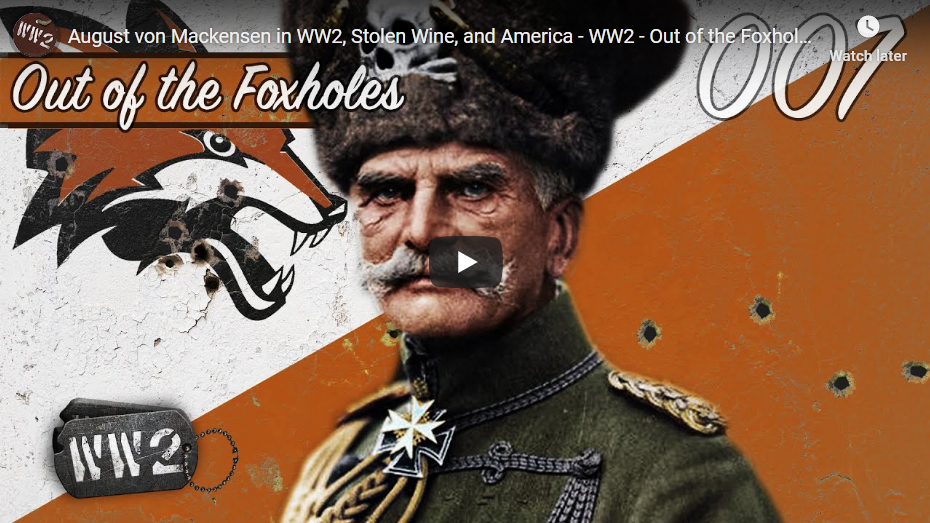
Published 5 Mar 2020In this episode of Out of the Foxholes, we answer some community questions on what August von Mackensen did in World War Two, if there was a shortage on French wines and what the Axis’ perception of the Monroe Doctrine was.
Ask your own question for Out of the Foxholes here: https://community.timeghost.tv/c/Out-…
Join us on Patreon: https://www.patreon.com/TimeGhostHistory
Or join The TimeGhost Army directly at: https://timeghost.tvFollow WW2 day by day on Instagram @World_war_two_realtime https://www.instagram.com/world_war_t…
Join our Discord Server: https://discord.gg/D6D2aYN.
Source list: http://bit.ly/WW2sourcesHosted by: Indy Neidell
Written by: Rune Væver Hartvig
Produced and Directed by: Spartacus Olsson and Astrid Deinhard
Executive Producers: Bodo Rittenauer, Astrid Deinhard, Indy Neidell, Spartacus Olsson
Creative Producer: Joram Appel
Post-Production Director: Wieke Kapteijns
Research by: Rune Væver Hartvig
Edited by: Mikołaj Cackowski
Map animations: Eastory (https://www.youtube.com/c/eastory)Colorizations by:
Julius Jääskeläinen – https://www.facebook.com/JJcolorization/
Ruffneck88 – https://commons.wikimedia.org/wiki/Fi…Sources:
Narodowe Archiwum Cyfrowe
IWM F 3551
Library of Congress
Wine Bottles by Ivan from the Noun Project
Spider by Sneha from the Noun Project
Spider Web by Valerie Lamm from the Noun ProjectSoundtracks from the Epidemic Sound:
Trabant 33 – “When in Bavaria”
Philip Ayers – “Trapped in Maze”
Johannes Bornlof – “The Inspector”Archive by Screenocean/Reuters https://www.screenocean.com.
A TimeGhost chronological documentary produced by OnLion Entertainment GmbH.
Eventually the Renaissance became less of an impending threat and more of a fait accompli, and people’s worries died down a bit. Madness began to be treated more as ordinary immorality. This didn’t necessarily mean people freely chose to be mad – the classical age didn’t think in exactly the same “it’s your fault” vs. “it’s biological” terms we do – but it was considered due to a weakness of character in the same way as other failures.
In some cases, it was the result of an excess of passions, flightiness, or imagination: the most famous example is Don Quixote, who went crazy after reading too many fiction books. This was actually considered a very serious risk by practically all classical authorities, especially for women. Foucault quotes Edme-Pierre Beauchesne:
In the earliest epochs of French gallantry and manners, the less perfected minds of women were content with facts and events as marvelous as they were unbelievable; now they demand believable facts yet sentiments so marvelous that their own minds are disturbed and confounded by them; they then seek, in all that surrounds them, to realize the marvels by which they are enchanted; but everything seems to them without sentiment and without life, because they are trying to find what does not exist in nature.
And a newspaper of the time:
The existence of so many authors has produced a host of readers, and continued reading generates every nervous complaint; perhaps of all the causes that have harmed women’s health, the principal one has been the infinite multiplication of novels in the last hundred years … a girl who at ten reads instead of running will, at twenty, be a woman with the vapors and not a good nurse.
Novels weren’t the only danger, of course. There were other hazards to watch for, like waking up too late:
The moment at which our women rise in Paris is far removed from that which nature has indicated; the best hours of the day have slipped away; the purest air has disappeared; no one has benefited from it. The vapors, the harmful exhalations, attracted by the sun’s heat, are already rising in the atmosphere.
Also, freedom:
For a long time, certain forms of melancholia were considered specifically English; this was a fact in medicine and a constant in literature … Spurzheim made a synthesis of all these analyses in one of the last texts devoted to them. Madness, “more frequent in England than anywhere else,” is merely the penalty of the liberty that reigns there, and of the wealth universally enjoyed. Freedom of conscience entails more dangers than authority and despotism. “Religious sentiments exist without restriction; every individual is entitled to preach to anyone who will listen to him”, and by listening to such different opinions, “minds are disturbed in the search for truth.”
These are a very selective sampling of quotes from just one of Foucault’s many chapters, and some of them are separated by centuries from others, but the overall impression I got was that conformity/wholesomeness/clean living was salubrious, and deviations from these likely to cause madness. Essentially, if you deviate from your humanity a little bit of the way – by failing to be a godly, sober-living, and industrious person – then that can compound on itself and make you lose practically all of your humanity. You will end up a feral madman, little different from a beast.
Scott Alexander, “Book review: Madness and Civilization”, Slate Star Codex, 2018-01-04.
TimeGhost History
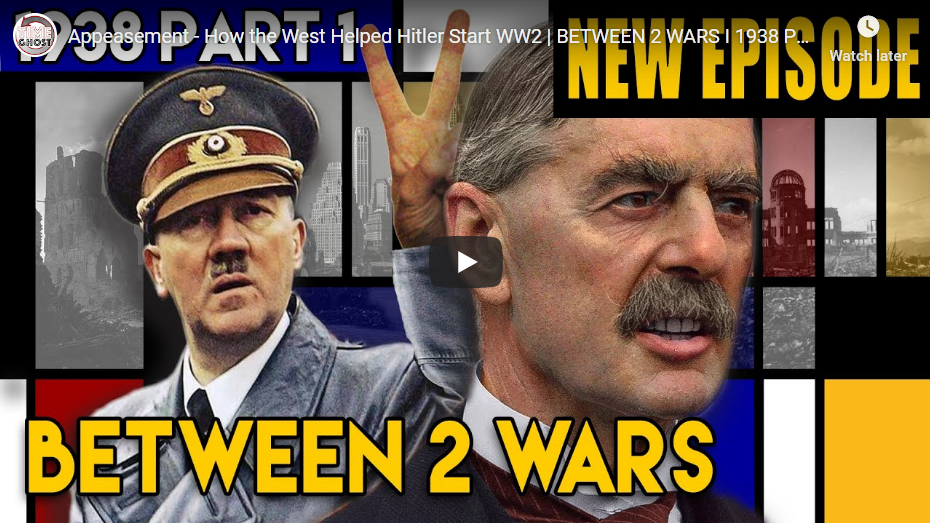
Published 26 Feb 2020With the increasing aggression of Italy, Japan, and Germany in the 1930s, the League of Nations is becoming increasingly ineffective in regulating international disputes. Britain and France adopt a diplomatic strategy of appeasement to hold off all-out war and buy some crucial time. But will it work, and can Adolf Hitler’s territorial ambitions be contained?
Join us on Patreon: https://www.patreon.com/TimeGhostHistory
Hosted by: Indy Neidell
Written by: Francis van Berkel and Spartacus Olsson
Directed by: Spartacus Olsson and Astrid Deinhard
Executive Producers: Bodo Rittenauer, Astrid Deinhard, Indy Neidell, Spartacus Olsson
Creative Producer: Joram Appel
Post-Production Director: Wieke Kapteijns
Research by: Tom Meaden, Izzy Wilson, and Francis van Berkel
Edited by: Daniel Weiss
Sound design: Marek KamińskiSources:
Bundesarchiv_Bild:
102-08806, 102-08810, 102-09042,
119-5243, 146-1970-052-24, 146-1985-108-27A,
183-1987-0922-500, 183-R03618,
Photo from color by klimbim.Colorizations by:
– Daniel Weiss
– Norman Stewart
– Julius Jääskeläinen – https://www.facebook.com/JJcolorization/Soundtracks from Epidemic Sound:
– “The Inspector 4” – Johannes Bornlöf
– “Last Point of Safe Return” – Fabien Tell
– “Split Decision” – Rannar Sillard
– “Death And Glory 1” – Johannes Bornlöf
– “Guilty Shadows 4” – Andreas Jamsheree
– “Disciples of Sun Tzu” – Christian Andersen
– “First Responders” – Skrya
– “Easy Target” – Rannar Sillard
– “Death And Glory 3” – Johannes Bornlöf
– “The Charleston 3” – Håkan ErikssonA TimeGhost chronological documentary produced by OnLion Entertainment GmbH.
From the comments:
TimeGhost History
2 days ago (edited)
Hindsight is 20/20. It’s easy to look back at Anglo-French foreign policy in the 1930s and be shocked at how many mistakes politicians like Neville Chamberlain could make. This video will probably only add to that judgement, it more or less charts all the times Hitler could have been stopped but wasn’t. But put yourself in the context of the time. Memories of the Great War are only twenty years ago old, and the public has no appetite for another massive conflict. The global economy is only just showing signs of recovery after the Great Depression, and Britain and France barely have the industrial capacity to fight a modern war. So, imagine you’re Chamberlain (or any other politician of the time), are you really going to commit your country to war over a territorial disagreement between Germany and Czechoslovakia? The invasion of Poland in September 1939 shows that appeasement was a mistake. But maybe it was an understandable one? Let us know what you think in the comments.Cheers,
Francis.
World War Two
Published 26 Feb 2020This video is sponsored by Paradox Interactive. Indy shares his thoughts on what he thinks would have happened if the French would have decided to meddle in the Spanish Civil War – triggering a Civil War.
Hearts of Iron IV: La Résistance is now available! You can play Hearts of Iron IV for free until next Sunday, the 1st of March! Discover it here: https://pdxint.at/39Re5ld
Watch our first collab video with HoI4 about the Spanish Civil War here: https://youtu.be/7QE1hvH8ZVU
Watch our Between Two Wars episode on the Spanish Civil War here: https://youtu.be/ncUkPavahCU
Watch our Between Two Wars episode on the French February Revolution in 1934 here: https://youtu.be/tLm1gWnlcYwJoin us on Patreon: https://www.patreon.com/TimeGhostHistory
Or join The TimeGhost Army directly at: https://timeghost.tvFollow WW2 day by day on Instagram @World_war_two_realtime https://www.instagram.com/world_war_t…
Join our Discord Server: https://discord.gg/D6D2aYN.
Between 2 Wars: https://www.youtube.com/playlist?list…
Source list: http://bit.ly/WW2sourcesWritten and Hosted by: Indy Neidell
Produced by: Spartacus Olsson and Astrid Deinhard
Directed by: Wieke Kapteijns
Executive Producers: Bodo Rittenauer, Astrid Deinhard, Indy Neidell, Spartacus Olsson
Creative Producer: Joram Appel
Post-Production Director: Wieke Kapteijns
Research by: Indy Neidell
Edited by: Guido Becker
Gameplay scenes: Sietse KenterColorizations by:
Dememorabilia – https://www.instagram.com/dememorabilia/
Julius Jääskeläinen – https://www.facebook.com/JJcolorization/
Adrien Fillon – https://www.instagram.com/adrien.colo…
Daniel WeissArchive by Screenocean/Reuters https://www.screenocean.com.
A TimeGhost chronological documentary produced by OnLion Entertainment GmbH.
Jay McInerney, Bacchus & Me: Adventures in the Wine Cellar, 2002.
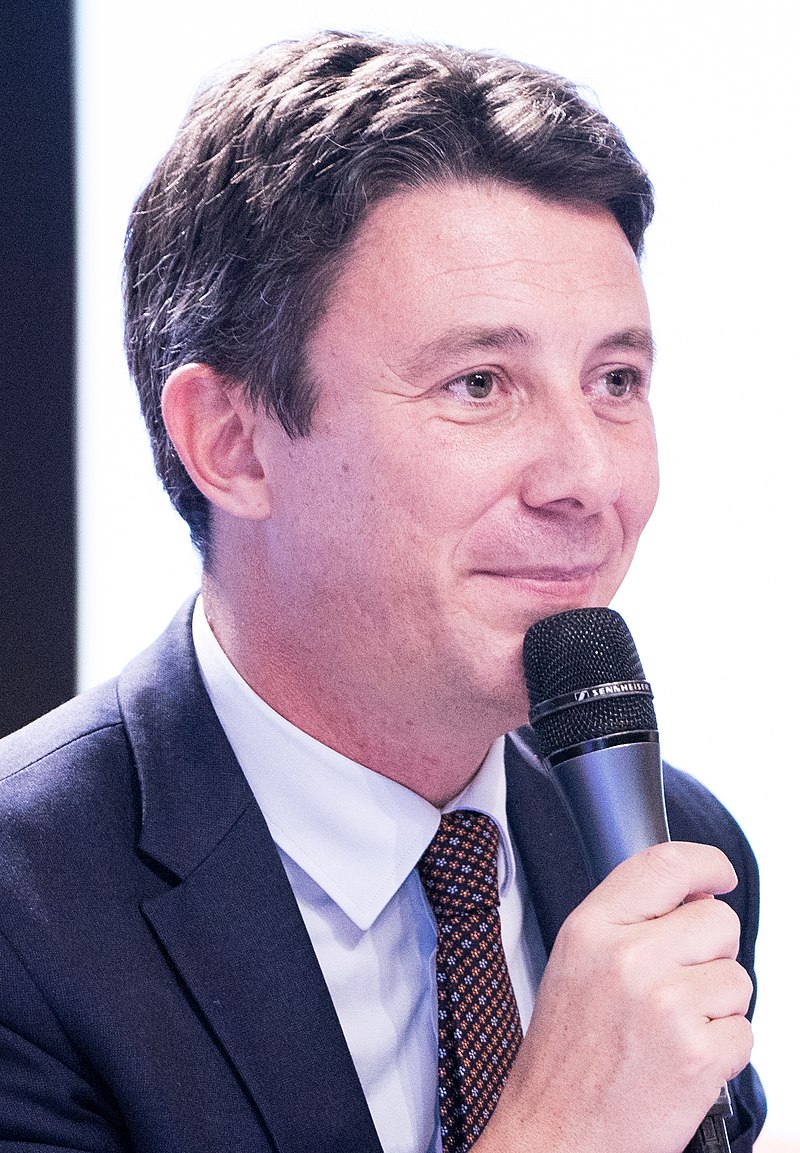
At The Register, Alistair Dabbs describes the descent of formerly ascendent French politician Benjamin Griveaux:
Previously a key spokesman for president Emmanuel Macron, he was flying high in the polls to be elected mayor of Paris next month … until the electorate got a good look at his knob.
Benjamin Griveaux on 11 October 2018.
Photo by Jacques Paquier via Wikimedia Commons.In a case of political revenge porn that is gripping the French nation almost as tightly as Griveaux was gripping himself, videos of him buffing the aubergine appeared on a short-lived satirical website apparently focusing on “political pornography” (don’t bother asking) and promptly went viral.
These were private, first-person videos he’d taken himself spiralising the old courgette and sent to the object of his amour who, unfortunately for his wife, was not his wife. Predictably, neither woman was impressed with the, er, outcome.
Cue an embarrassed press conference with lots of deliberately posed shots of him looking downwards and contrite, during which he announced he would stand down from the imminent elections and pass the, er, baton to someone else. Taking their example from Griveaux himself, Macron’s party La République en Marche (since redubbed “La République en Main“) did a bit of frenzied reshuffling to find a replacement.
Put aside the political, moral and human issues: these are being thoroughly argued out in the media as you read this. As for nudey selfies, come on, most of us have tried it for a laugh – albeit most probably when we were students. What I want to know is how an intelligent, well-connected and tech-savvy party executive like this could allow his personal instruction video on the subject of unclothed self-taming to get into the wild in the first place.
Griveaux’s official statement to the police claims that he sent the video person-to-person via a certain private messenging system – press reports do not name which one, unfortunately – that would delete the video after one minute. If this is true, it strengthens his case for “invasion of personal privacy”, which has massive punitive outcomes in France thanks to Jacques Chirac who as president beefed up the privacy laws to protect his illegal financial dealings from media scrutiny.
What messaging app was he using? And is he being all that tech-savvy in his belief that his video would self-destruct after 60 seconds, like in some ’70s episode of Mission Impossible? Even in WhatsApp, you have to remember to delete it yourself.
Perhaps he was using a business-focused porn-selfie messenger: a kind of doing-the-business sharing app. It’s the innovative new way of engaging with your contacts. Norbert Spankmoney wants to connect with you! Yes, I bet he does.
Come on, Ben, surely you know that for every ultra-secure, ultra-private, ultra-personal video messaging app, there are a dozen freebie video-grabbing utilities out there. Even if you code it up to prevent screen capture, someone could always video your video, just like they can photograph an onscreen secret document.
Give it up. Nothing is private any more.
John Lichfield on the plight of the cheesemakers (get your MPATHG jokes out of the way now):
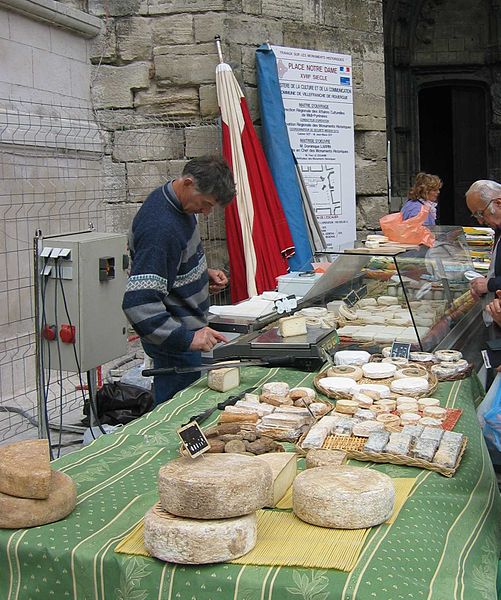
French cheese seller, offering Villefranche de Rouergue and other artisanal cheeses.
Photo by Sybren via Wikimedia Commons.
In his small fromagerie at Saint Point Lac in the Jura, Fabrice Michelin produces authentic, hand-made, raw-milk Mont d’Or cheeses. He is the last person in France to do so — the last in a line of local cheese-makers which goes back for centuries.
“I get up at 5am. I collect the milk myself from the farms in the village. I warm the milk,” Mr Michelin told me. “I scoop it carefully into cylinders. I pay attention to the varying consistency and taste of the curd. It alters subtly with the seasons, depending on the qualities of the grass. I mold the cheeses by hand. Every cheese is a little different.”
Individual, artisanal cheeses? Wonderful.
Not any more, it seems.
“That’s what gets me into trouble these days,” M. Michelin said. “Brussels and Paris say that the cheeses must all be the same. There seem to be new rules every month. How can I carry on if all my cheeses have to be identical?”
Forget the yellow vests. Forget the strikes against pension reform. The real battle for the immortal soul of France is about something far more important — cheese.
The infinite variety of French cheeses — one of the finest achievements of French culture — is gradually being eroded and dumbed down. Only one in ten of the cheeses now consumed in France is made with raw milk or “lait cru” in the authentic manner.
Search where you like in the finest cheese shops in France, you will no longer find a Bleu de Termignon or a Galette des Monts-d’Or. They are among 50 species of French cheese that have vanished, like rare flowers or butterflies, in the last 40 years. Other varieties, like Vacherin d’Abondance and M. Michelin’s hand-made Mont d’Or have been reduced to a single producer.
Many of the best-known French cheeses — Brie or Pont L’Evêque or Camembert — thrive at home and abroad, but they are overwhelmingly made in large factories with pasteurised or sterilised milk. To purists, that is a betrayal of the French tradition of “living cheese”.
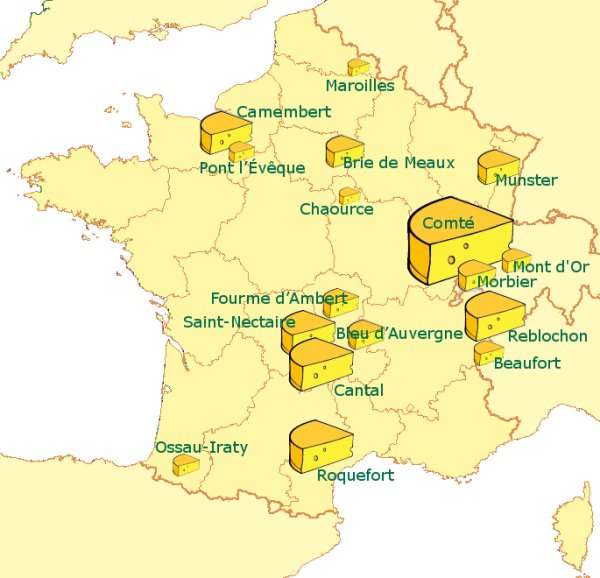
Major French AOC cheese designations: the size of the symbol indicates the relative production of that variety. Many smaller cheese varieties not shown.
Graphic by FrancoisFC – Own work, CC BY-SA 3.0, https://commons.wikimedia.org/w/index.php?curid=3640022
Lindybeige
Published 2 Jun 2016Sieges in the ancient and medieval worlds were on quite different scales. 10,000 men can do things differently from 500.
Support me on Patreon: https://www.patreon.com/Lindybeige
This video’s subject was chosen by Jack Sargeant, the winner of the DeepArt art competition a couple of weeks ago. The topic is a large one, but I hope I gave it a decent enough shot.
Castle illustration by Mathew Nielsen.
Buy the music – the music played at the end of my videos is now available here: https://lindybeige.bandcamp.com/track…
Lindybeige: a channel of archaeology, ancient and medieval warfare, rants, swing dance, travelogues, evolution, and whatever else occurs to me to make.
▼ Follow me…
Twitter: https://twitter.com/Lindybeige I may have some drivel to contribute to the Twittersphere, plus you get notice of uploads.
website: http://www.LloydianAspects.co.uk
At The Register, Alistair Dabbs reveals some unfortunate truths about the French railway service (the Société nationale des chemins de fer français or SNCF) and its mobile app:

An SNCF Train à Grande Vitesse (TGV) Duplex DASYE (moteur asynchrone, nouvelle generation de duplex) train at Figueres-Vilafant station, 1May 2011.
Photo by eldelinux via Wikimedia Commons.
Actually, the hotel app is rubbish. The booking system is slow, the property information incomplete and some of the buttons don’t do anything at all. From time to time, the app flashes up a notification inviting you to install the app … er, that you’re already running. Much better to book using a proper computer. Still, flashing the screen around got me the Presidential Disability Suite. Franklin D rocked a wheelchair, remember, and I’m a fan.
This, however, pales into insignificance with the tedious and frankly silly collection of smartphone apps I had to juggle to manage my train journey to get here. Yes, it’s my own fault for trying to navigate my way across France on public transport in the midst of a general strike but surely that’s precisely the kind of thing digital communications ought to be able to help you with, don’t you agree?
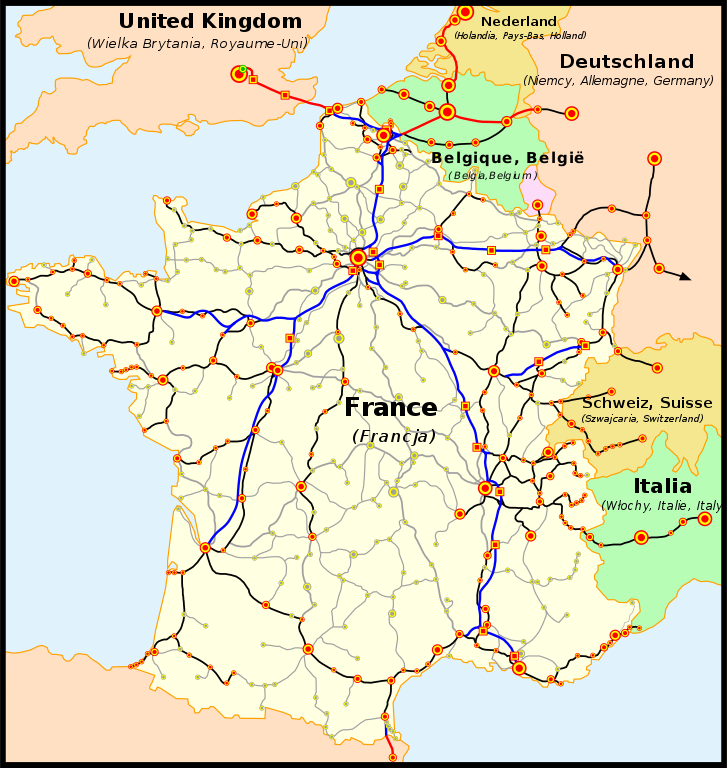
Map of the French railways on which the TGV (LGV: blue; normal tracks: black) and Intercités (grey) SNCF trains run. Only lines going to and from Paris are shown here.
Wikimedia Commons.The French train company, SNCF, has been doing its best by notifying travellers with bookings every day at 17:00 which of the following day’s trains would be running and which would be cancelled. I’m a lifelong union member myself and I fully support the workers’ rights to … oh buggeration, my TGV’s been rerouted to set off from a city 300km away. Fucking union arsewipes – sack ’em all bastard wankers.
Oh well, I thought, I’ll just have to work out another way. Fire up the SNCF booking app!
A banner at the top informs me that I should seek information about which train services are running by checking its Twitter feed. So I launch the Twitter app. SNCF on Twitter says I should check via the idiotic INOUI brand for TGV bookings. So I launch the INOUI app. This tells me I should check with SNCF or, if I want more information, click on a highlighted link. I click on it: it links to a one-sentence message that tells me there is a strike on and that train services may be affected.
Two hours of thumb-numbing smartphone tomfoolery later, I have worked out my own alternative route via multiple connecting services. This was made more challenging by the SNCF and INOUI apps providing contradictory information about the same journey. Best of all is they can’t agree on where my TGV will actually go. Will it reach its terminus as usual or will it apparently go inexplicably missing from the tracks in the countryside outside Lille? According to SNCF and INOUI, it will do both. It’s Schrodinger’s train.
Just as I go to bed, the Eurostar app sends me a notification reminding me to get to my local station on time tomorrow to catch the TGV that’s been cancelled.
As you can see, my much prolonged, zig-zag route up the country and into Blighty worked, no thanks to these ridiculous apps. It wasn’t all bad: I got to see more French farmland than I expected and experienced first-hand the extraordinarily rich cultural variety of train station beggars that France has to offer the modern rail traveller.
World War Two
Published 18 Jan 2020The Chinese Communists and Nationalists clash while they’re also both facing Japanese armies in the North. And although the Communists are not the obvious victor this week, the battle has bigger ramifications. Other action takes place in Cambodia and the Mediterranean.
Join us on Patreon: https://www.patreon.com/TimeGhostHistory
Or join The TimeGhost Army directly at: https://timeghost.tvFollow WW2 day by day on Instagram @World_war_two_realtime https://www.instagram.com/world_war_t…
Join our Discord Server: https://discord.gg/D6D2aYN.
Between 2 Wars: https://www.youtube.com/playlist?list…
Source list: http://bit.ly/WW2sourcesWritten and Hosted by: Indy Neidell
Produced and Directed by: Spartacus Olsson and Astrid Deinhard
Executive Producers: Bodo Rittenauer, Astrid Deinhard, Indy Neidell, Spartacus Olsson
Creative Producer: Joram Appel
Post-Production Director: Wieke Kapteijns
Research by: Indy Neidell
Edited by: Mikołaj Cackowski
Map animations: Eastory (https://www.youtube.com/c/eastory)Colorizations by:
– Dememorabilia – https://www.instagram.com/dememorabilia/
– Julius Jääskeläinen – https://www.facebook.com/JJcolorization/Sources:
Imperial War Museum (E872; E 6600)
Narodowe Archiwum CyfroweSoundtracks from Epidemic Sound:
Phoenix Tail – “At the Front”
Johannes Bornlof – “Death And Glory 2”
Johannes Bornlof – “Last Man Standing 3”
Yi Nantiro – “Watchman”
Johan Hynynen – “Dark Beginning”
Reynard Seidel – “Deflection”
Bonnie Grace – “Imperious”Archive by Screenocean/Reuters https://www.screenocean.com.
A TimeGhost chronological documentary produced by OnLion Entertainment GmbH.
TimeGhost History
Published 16 Jan 2020After more than twenty years of colonial management, promises made but few promises kept and ethnic & cultural clashes in the area, unrest in the Middle East erupts in violence. A series of movements originate in this time, with long lasting consequences.
Watch our episode about the Middle east in the 1920s here: https://youtu.be/y6tSvRbvh2s
Join us on Patreon: https://www.patreon.com/TimeGhostHistory
Hosted by: Indy Neidell
Written by: Joram Appel
Directed by: Spartacus Olsson and Astrid Deinhard
Executive Producers: Bodo Rittenauer, Astrid Deinhard, Indy Neidell, Spartacus Olsson
Creative Producer: Joram Appel
Post-Production Director: Wieke Kapteijns
Research by: Joram Appel
Fact-Checking by: Jonas Srouji
Edited by: Daniel Weiss
Sound design: Marek KaminskiSources:
Arab by LINECTOR from the Noun Project
Bomb by P Thanga Vignesh from the Noun ProjectColorizations by:
– Dememorabilia – https://www.instagram.com/dememorabilia/
– Adrien.Colorisation – https://instagram.com/adrien.colorisa…
– Norman StewartSoundtracks from Epidemic Sound:
– “Dawn Of Civilization” – Jo Wandrini
– “The Inspector 4” – Johannes Bornlöf
– “Easy Target” – Rannar Sillard
– “First Responders” – Skrya
– “Not Safe Yet” – Gunnar Johnsen
– “Deflection” – Reynard Seidel
– “The Charleston 3” – Håkan ErikssonA TimeGhost chronological documentary produced by OnLion Entertainment GmbH.
From the comments:
TimeGhost History
42 minutes ago (edited)
We have already covered “Carving up the Middle East” in one of our first Between Two Wars episodes (watch here: https://youtu.be/y6tSvRbvh2s), but we felt like we had to return to the area one more time as all that carving had quite some consequences. This means that a large part of this episode is about colonialism, Zionism, Arabism, race and ethnicity. I’m also aware of the complicated modern-day conflict in the area, many of which originate in [the events covered in] this episode. However, we would like the comment section to be reserved for debating the history. We’re not going to engage with people discussing modern-day issues and politics, and we’re going to be quite strict in monitoring any racist or otherwise hateful comments.Cheers,
Joram
Kings and Generals
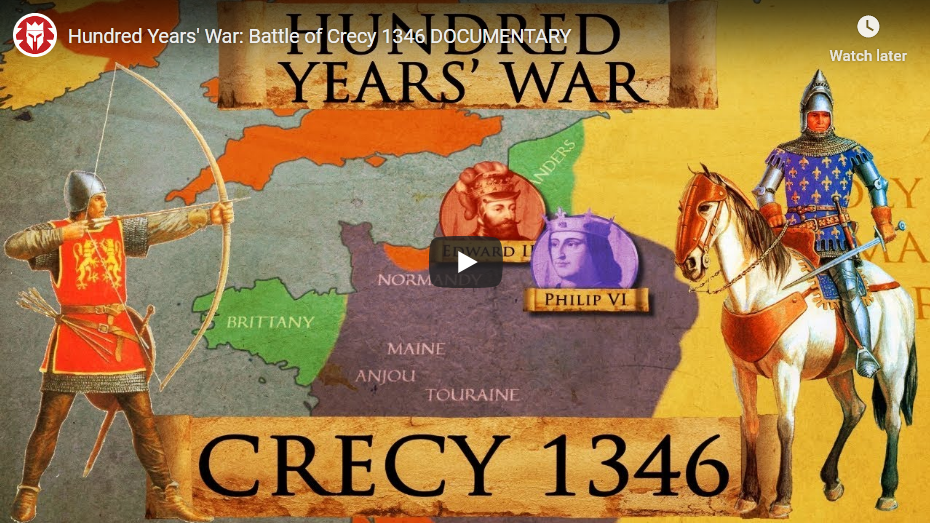
Published 7 December 2017The Hundred Years’ War of 1337-1453 between France and England is one of the most crucial conflicts in the history of Europe. It changed the social, political and cultural outlook of the countries involved, influenced the change in warfare, brought the end of feudalism closer. The first phase of this war is called the Edwardian War, and one of the most decisive engagements of this conflict was the battle of Crecy (1346). This series will have 5 videos, so don’t hesitate to like, subscribe and share. And if you want to support us, you can do it on Patreon: http://www.patreon.com/KingsandGenerals or Paypal: http://paypal.me/kingsandgenerals
We are grateful to our patrons, who made this video possible: Ibrahim Rahman, Koopinator, Daisho, Łukasz Maliszewski, Nicolas Quinones, William Fluit, Juan Camilo Rodriguez, Murray Dubs, Dimitris Valurdos, Félix Gagné-Dion, Fahri Dashwali, Kyle Hooton, Dan Mullen, Mohamed Thair, Pablo Aparicio Martínez, Iulian Margeloiu, Chet, Nick Nasad, Jeyares, Amir Eppel, Thomas Bloch, Uri Sternfeld, Juha Mäkelä, Georgi Kirilov, Mohammad Mian, Daniel Yifrach, Brian Crane, Muramasa, Gerald Tnay, Hassan Ali, Richie Thierry, David O’Hare, Christopher Commins, Chris Glantzis, Mike, William Pugh, Stefan Dt, indy, Bashir Hammour, Mario Nickel, R.G. Ferrick, Moritz Pohlmann, Russell Breckenridge, Jared R. Parker, Kassem Omar Kassem, AmericanPatriot, Robert Arnaud, Christopher Issariotis, John Wang, Joakim Airas, Nathanial Eriksen and Joakim Airas.
This video was narrated by our good friend Officially Devin. Check out his channel for some kick-ass Let’s Plays. https://www.youtube.com/user/Official…
The Machinimas for this video is created by one more friend – Malay Archer. Check out his channel, he has some of the best Total War machinimas ever created: https://www.youtube.com/user/Mathemed…
Inspired by: BazBattles, Invicta (THFE), Epic History TV, Historia Civilis and Time Commanders
Machinimas made on the Total War: Attila engine using the great Medieval Kingdoms mod.
Production Music courtesy of Epidemic Sound: http://www.epidemicsound.com
Anton Howes, “The House of Trade”, Age of Invention, 2019-11-13.



Powered by WordPress