Jabzy
Published 14 Oct 2017

Jabzy
Published 14 Oct 2017
World War Two
Published 16 Apr 2020Charles De Gaulle is a towering figure in history, and not just because of his height. Becoming increasingly political in the interwar years due to his unorthodox views on military strategy, The Fall of France will thrust him into the limelight.
Join us on Patreon: https://www.patreon.com/TimeGhostHistory
Or join The TimeGhost Army directly at: https://timeghost.tvFollow WW2 day by day on Instagram @World_war_two_realtime https://www.instagram.com/world_war_t…
Between 2 Wars: https://www.youtube.com/playlist?list…
Source list: http://bit.ly/WW2sourcesHosted by: Indy Neidell
Written by: Francis van Berkel
Director: Astrid Deinhard
Producers: Astrid Deinhard and Spartacus Olsson
Executive Producers: Astrid Deinhard, Indy Neidell, Spartacus Olsson, Bodo Rittenauer
Creative Producer: Joram Appel
Post-Production Director: Wieke Kapteijns
Research by: Catherine Burton
Edited by: Mikołaj Cackowski
Sound design: Marek Kamiński
Map animations: Eastory (https://www.youtube.com/c/eastory)Colorizations by:
Carlos Ortega Pereira, BlauColorizations, https://www.instagram.com/blaucoloriz…
Dememorabilia – https://www.instagram.com/dememorabilia/
Norman Stewart – https://oldtimesincolor.blogspot.com/
Adrien Fillon – https://www.instagram.com/adrien.colo…
Sources:
Outdoor family portrait, with lurkers (c.1920), courtesy pellethepoet https://flic.kr/p/ompxgf
IWM A 1464, E 2324, D 1966
Frederick Milthorp collectionSoundtracks from the Epidemic Sound:
Max Anson – “Ancient Saga”
Farell Wooten – “Blunt Object”
Johannes Bornlof – “Deviation in Time”
Reynard Seidel – “Deflection”
Johannes Bornlof – “The Inspector 4”
Phoenix Tail – “At the Front”Archive by Screenocean/Reuters https://www.screenocean.com.
A TimeGhost chronological documentary produced by OnLion Entertainment GmbH.
Sabaton History
Published 16 Apr 2020The bells rang on Armistice Day 1920 in the 11th hour, and two minutes of silence followed. One minute for the soldiers that had fought in the Great War and had come back. The second for those who did not. Those unfortunate souls that had been left behind. They had died like so many others, but had been denied a final resting place due to the violence of war. They had vanished, without a trace, without an identity. Those men where the Unknown Soldiers.
Support Sabaton History on Patreon: https://www.patreon.com/sabatonhistory
Listen to “Diary of an Unknown Soldier” on the album The Last Stand:
CD: http://bit.ly/TheLastStandStore
Spotify: http://bit.ly/TheLastStandSpotify
Apple Music: http://bit.ly/TheLastStandItunes
iTunes: http://bit.ly/TheLastStandItunes
Amazon: http://bit.ly/TheLastStandAmz
Google Play: http://bit.ly/TheLastStandGooglePlayWatch the official lyric video of “Diary Of An Unknown Soldier” here:
https://www.youtube.com/watch?v=Jhkz5…Check out the trailer for Sabaton’s new album The Great War right here: https://www.youtube.com/watch?v=HCZP1…
Listen to Sabaton on Spotify: http://smarturl.it/SabatonSpotify
Official Sabaton Merchandise Shop: http://bit.ly/SabatonOfficialShopHosted by: Indy Neidell
Written by: Markus Linke and Indy Neidell
Directed by: Astrid Deinhard and Wieke Kapteijns
Produced by: Pär Sundström, Astrid Deinhard and Spartacus Olsson
Creative Producer: Joram Appel
Executive Producers: Pär Sundström, Joakim Broden, Tomas Sunmo, Indy Neidell, Astrid Deinhard, and Spartacus Olsson
Post-Production Director: Wieke Kapteijns
Edited by: Iryna Dulka
Sound Editing by: Marek Kaminski
Maps by: Eastory – https://www.youtube.com/c/eastoryArchive by: Reuters/Screenocean https://www.screenocean.com
Music by Sabaton.Sources:
– National Library of Scotland
– National Library of France
– Imperial War Museum: Q 10378, Q 100373, Q 57227, Q 100624, Q 53727, Q 29155, ART 3991 a, Q 109517, Q 100928, Q 100699, Q 100913, Q 45814, Q 23706, Q 14963, Q 31518, Q 31494, RAF-T 3129, Q 31514, Q 909, Q 87441, Documents.5323, Q 100486, Q 48929A, Q 78614An OnLion Entertainment GmbH and Raging Beaver Publishing AB co-Production.
© Raging Beaver Publishing AB, 2019 – all rights reserved.
From the comments:
Sabaton History
2 days ago
Something different this time. Since we already have two episodes about the fighting in the Argonne, we thought this time we’d talk about the sacrifice and the legacy of the “Unknown Soldier”. Of those who fought and died but were not fortunate enough to have a last known resting place. We hope you still enjoy the episode!
Overly Sarcastic Productions
Published 10 Apr 2020English history has a reputation for being nigh incomprehensible — what with all the kings, civil wars, succession crises, and slapfights with France. But with the right perspective (and a little royal-restraint), England can become quite a straightforward story. So let’s take a look at this slice of Britain, and see how it grew into the master of the Isles.
SOURCES & Further Reading: “History of England from the Tudors to the Stuarts”, lecture series for The Great Courses by Robert Bucholz, a great look at Renaissance and Early Imperial England.
“Ten Minute History of England and Britain” Parts 1-18, by History Matters, a lengthy chronicle of English history from the Roman conquest through the Union of the Crowns. Good watch if you have the time.
Foundation by Peter Ackroyd, the first book in a mammoth 6-volume History of England, which covers everything up to the death of Henry VII. If you really want to dig into English history, this is the book for you.This video was edited by Sophia Ricciardi AKA “Indigo”. https://www.sophiakricci.com/
Our content is intended for teenage audiences and up.PATREON: https://www.Patreon.com/OSP
DISCORD: https://discord.gg/h3AqJPe
MERCH LINKS: https://www.redbubble.com/people/OSPY…
OUR WEBSITE: https://www.OverlySarcasticProductions.com
Find us on Twitter https://www.Twitter.com/OSPYouTube
Find us on Reddit https://www.Reddit.com/r/OSP/
Forgotten Weapons
Published 14 Dec 2019http://www.patreon.com/ForgottenWeapons
Cool Forgotten Weapons merch! http://shop.bbtv.com/collections/forg…
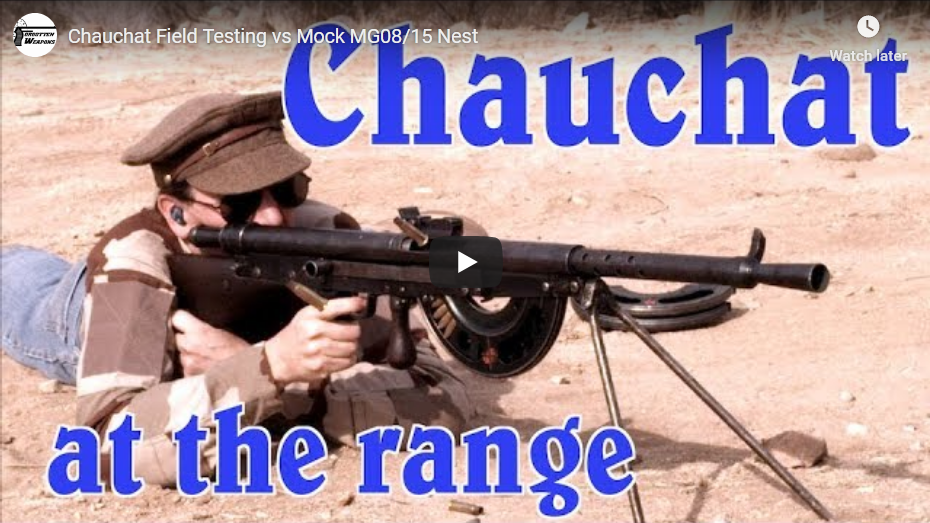
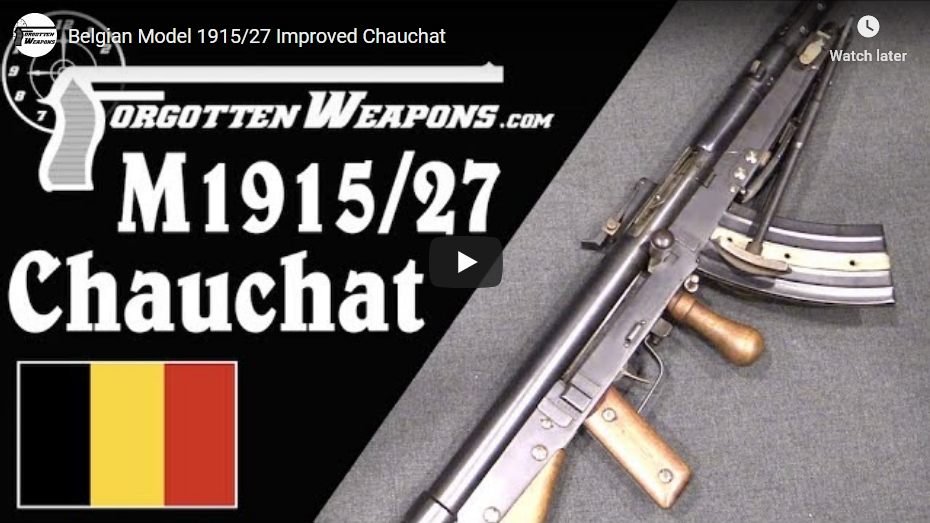
Out at the range today with the Chauchat, testing accuracy against a simulated MG08/15 nest at 150 yards. I’ll try out semiauto and full auto (in short bursts), and see how they compare. For reference, the US Army recommended never using the Chauchat beyond 400 yards, as it was not sufficiently accurate to be effective at greater distance.
To see a set of original WW1 American Expeditionary Force Chauchat manuals, check here:
https://www.forgottenweapons.com/chau…
Contact:
Forgotten Weapons
6281 N. Oracle #36270
Tucson, AZ 85704
When Chinese premier Zhou Enlai famously said it was “too early” to assess the implications of the French revolution, he was referring to turmoil in France in 1968 and not — as is commonly thought — to the more distant political upheaval of 1789.
So says a retired American diplomat, Charles W. (Chas) Freeman Jr., who was present when Zhou made the comment during President Richard Nixon’s visit to China in February 1972.
Freeman, who was Nixon’s interpreter during the historic, weeklong trip, made the disclosure last week during a panel discussion in Washington about On China, the latest book by former Secretary of State Henry Kissinger.
The discussion was moderated by Richard McGregor, a journalist and China expert who wrote about Freeman’s comments for the Financial Times of London.
In an interview yesterday, Freeman elaborated on his recollection about Zhou’s comment, the conventional interpretation of which is frequently offered as evidence of China’s sage, patient, and far-sighted ways. Foreign Policy magazine, for example, referred last month to that interpretation, saying the comment was “a cautionary warning of the perils of judgments made in real time.”
The Washington Post‘s recent review of Kissinger’s book likewise referred to the conventional understanding of Zhou’s remark.
Freeman described Zhou’s misconstrued comment as “one of those convenient misunderstandings that never gets corrected.”
He said Zhou’s remark probably was made over lunch or dinner, during a discussion about revolutions that had succeeded and failed. They included, Freeman said, the Prague Spring of 1968 and the Hungarian uprising of 1956, both of which the Soviet Union crushed.
He said it was clear from the context and content of Zhou’s comment that in saying it was “too early to say” the Chinese leader was speaking about the events in France in May 1968, not the years of upheaval that began in 1789.
Freeman acknowledged that the conventional interpretation makes for a better story but added that it was “absolutely clear” from the context of the discussion that Zhou was speaking about 1968.
W. Joseph Campbell, “‘Too early to say’: Zhou was speaking about 1968, not 1789”, Media Myth Alert, 2011-06-14.
I’m guessing from what is revealed in this report, the Armée de l’air will be far more reluctant to allow unqualified individuals to get into their fighter aircraft in future:
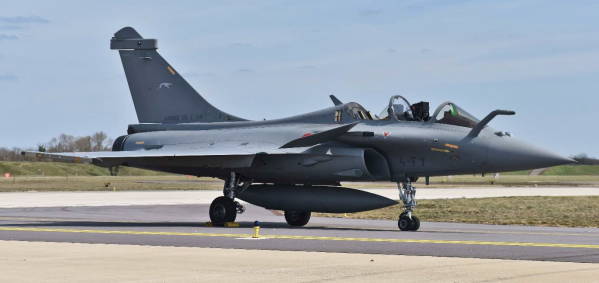
The Rafale-B that was damaged during the accidental passenger ejection in March 2019.
Image from Bureau enquêtes accidents pour la sécurité de l’aéronautique d’État, BEA-A.
An elderly and reluctant Frenchman was ejected from a French Air Force fighter during a retirement day jolly – and narrowly missed taking the pilot with him, an investigation report littered with unintentional howlers has revealed.
The unnamed 64-year-old was éjecté from the two-seat Rafale-B in March from a height of 2,500ft in March last year after grabbing his ejection seat handle to steady himself, France’s BEA-E aviation investigator concluded.
Although the BEA’s full report is in French [PDF], aviation news website Aerotime Hub translated and summarised its contents, revealing the full comedy of errors triggered by a group of enthusiastic colleagues hoping to give their workmate a send-off to remember.
[…] a mechanic gave them both a cursory check, strapped a Go-Pro to an approved bulkhead mounting point so the hapless passenger’s gurning would be preserved for all time, and nodded to the pilot to close the transparent cockpit canopies.
Things got worse when the pilot took off from northeastern France’s Saint-Dizier Robinson airbase. Rather than the gentle ascent at 10°-15° that airline passengers experience, the Frenchman at the Rafale’s controls carried out a typical fighter jet departure and “climbed at 47°, generating a load factor of around +4G. Then, as he levelled off, he subjected his passenger to a negative load factor of about -0.6G”.
Forces exerted by Britain’s most G-force-intensive roller coaster, Alton Towers’ Rita, max out at +4.7G – or four times the normal force of gravity.
Our pensioner, loose in his straps, not really wanting to be there and totally unused to being flung around like a rag doll, reached out to grab something and hang on for dear life. He picked the worst possible handhold: the trigger handle for the ejection seat. After the customary loud bang and whoosh he ceased to be part of the jet’s payload, with the force of the ejection tearing his unsecured helmet and mask from his face.
The Rafale-B’s command ejection system is meant to fire both seats if one of the crew pulls the handle. A very confused pilot, however, was still sitting in his newly canopy-free Rafale wondering what the hell had just happened. He returned to land, conscious all the time that the seat could fire at any moment without warning. Luckily, it didn’t go off.
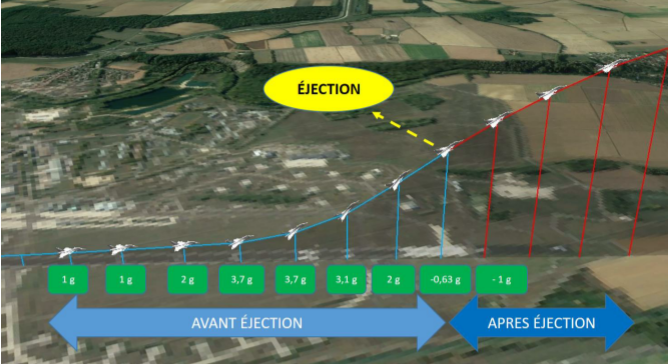
Approximate reconstruction of the path of the Rafale-B leading up to and following the accidental ejection.
Image from Bureau enquêtes accidents pour la sécurité de l’aéronautique d’État, BEA-A.
Mark Felton Productions
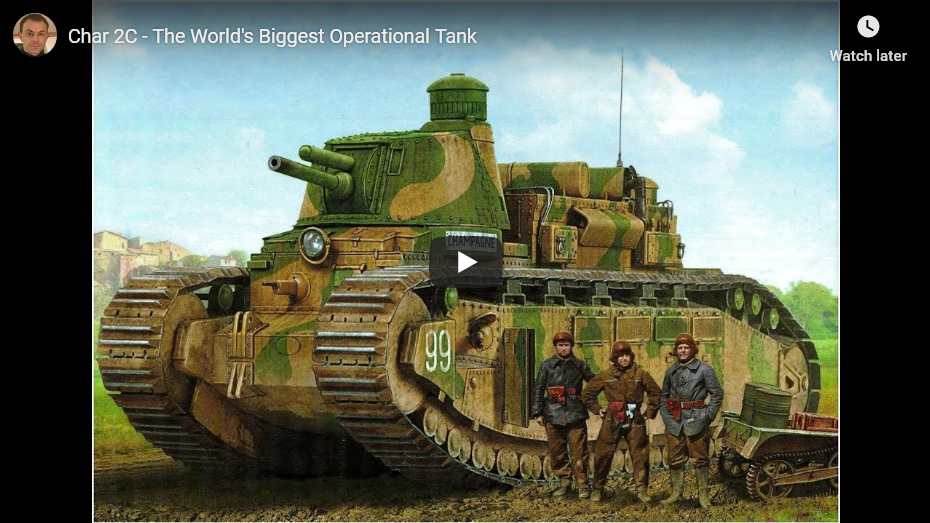
Published 15 Nov 2019Find out the unbelievable story of the biggest operational tanks in history – the French Char 2C, and their peculiar fate.
Help support my channel:
https://www.paypal.me/markfeltonprodu…
https://www.patreon.com/markfeltonpro…Disclaimer: All opinions and comments expressed in the ‘Comments’ section do not reflect the opinions of Mark Felton Productions. All opinions and comments should contribute to the dialogue. Mark Felton Productions does not condone written attacks, insults, racism, sexism, extremism, violence or otherwise questionable comments or material in the ‘Comments’ section, and reserves the right to delete any comment violating this rule or to block any poster from the channel.
Credits: YouTube Creative Commons; WikiCommons; Google Commons; Mark Felton Productions
Music: “Pursuit” and “Dogma” licenced to iMovie by Apple, Inc.
H/T to @AnonymousFred514 for the link.
Forgotten Weapons
Published 9 Dec 2019http://www.patreon.com/ForgottenWeapons
Cool Forgotten Weapons merch! http://shop.bbtv.com/collections/forg…
The Belgian Army was the second to adopt the Chauchat automatic rifle, after the French. Almost all of Belgium was under German occupation during World War One, leaving Belgium significantly dependent on French aid for arms during the war. The initial Belgian purchases were standard 8mm Lebel CSRGs, but by 1917 Belgian engineers were working on a solution to convert the guns to the Belgian standard 7.65mm Mauser cartridge. This was completed by the end of the war, and the Chauchat remained a standard arm of the Belgian military after the war.
Work to improve the design continued, and an upgrades version was formally adopted in 1927. This included the 7.65mm conversion, with the best magazines made for any model of the Chauchat, as well as a series of dust covers to close off every hole in the gun (magazine well, ejection port, charging handle slot, and barrel shroud vents). The Belgians also replaced the original bipod with a much better type (similar to what they would use on the FN BAR), simplified the feed system, and added a tension latch to ensure reliable operation.
This new pattern of CSRG would be standard Belgian front-line armament until the FN BAR was adopted in 1930. The Chauchats were still in service with some units at the beginning of World War Two though, and saw service at that time.
Thanks to the Liege Arms Museum for access to film this for you! If you are in Belgium, definitely plan to stop into the museum, part of the Grand Curtius. They have a very good selection of interesting and unusual arms on display.
Contact:
Forgotten Weapons
6281 N. Oracle #36270
Tucson, AZ 85704
World War Two
Published 2 Apr 2020Did the British government know of the German plans for Operation Barbarossa? What happened to Jewish communities in Ethiopia? And to Prisoners of War in occupied countries?
Submit your own question for OOTF: https://community.timeghost.tv/c/Out-…
Join us on Patreon: https://www.patreon.com/TimeGhostHistory
Or join The TimeGhost Army directly at: https://timeghost.tvFollow WW2 day by day on Instagram @World_war_two_realtime https://www.instagram.com/world_war_t…
Between 2 Wars: https://www.youtube.com/playlist?list…
Source list: http://bit.ly/WW2sourcesWritten and Hosted by: Indy Neidell
Produced and Directed by: Spartacus Olsson and Astrid Deinhard
Executive Producers: Bodo Rittenauer, Astrid Deinhard, Indy Neidell, Spartacus Olsson
Creative Producer: Joram Appel
Post-Production Director: Wieke Kapteijns
Research by: Indy Neidell
Edited by: Mikołaj Cackowski
Map animations: Eastory (https://www.youtube.com/c/eastory)Colorizations by:
Adrien Fillon – https://www.instagram.com/adrien.colo…Sources:
IWM MH 26392, BU 5939, HU 58537
Religion by Berkah Icon from the Noun Project
Letter by Mochammad Kafi from the Noun Project
quiet by priyanka from the Noun Project
Doctor by Wilson Joseph from the Noun Project
jail by Luis Prado from the Noun ProjectSoundtracks from the Epidemic Sound:
Johannes Bornlof – “The Inspector 4”
Johannes Bornlof – “Deviation In Time”
Andreas Jamsheree – “Guilty Shadows 4”Archive by Screenocean/Reuters https://www.screenocean.com.
A TimeGhost chronological documentary produced by OnLion Entertainment GmbH.
The Tank Museum
Published 31 Mar 2020Join Curator David Willey as he takes you on a tour of The Tank Museum’s Tank Story Hall, which houses over 30 key vehicles from Little Willie to Challenger 2. In this section he looks at the First World War vehicles and gives you a potted history of WW1.
Support the work of The Tank Museum on Patreon: ► https://www.patreon.com/tankmuseum
Visit The Tank Museum SHOP & become a Friend: ► https://tankmuseumshop.org/Twitter: ► https://twitter.com/TankMuseum
Instagram: ► https://www.instagram.com/tankmuseum/
Tiger Tank Blog: ► http://blog.tiger-tank.com/
Tank 100 First World War Centenary Blog: ► http://tank100.com/
#tankmuseum #tanks

Geographics
Published 29 Nov 2019The journey to the Express was not a simple one. For upper class travellers to enjoy a luxury, non-stop train ride across seven nations, it would take the dream of a lovesick Belgian engineer, with his rather interesting supporting cast: an American industrialist, the inventor of US tabloid journalism, the Prince of Wales, and one of the most prolific mass murderers of the 19th and 20th Centuries.
Credits:
Host – Simon Whistler
Author – Arnaldo Teodorani
Producer – Jennifer Da Silva
Executive Producer – Shell HarrisBusiness inquiries to admin@toptenz.net

Jabzy
Published 25 Jul 2015Thanks to Xios, Alan Haskayne, Lachlan Lindenmayer, William Crabb, Derpvic, Seth Reeves and all my other Patrons. If you want to help out – https://www.patreon.com/Jabzy?ty=h
IT’S HISTORY
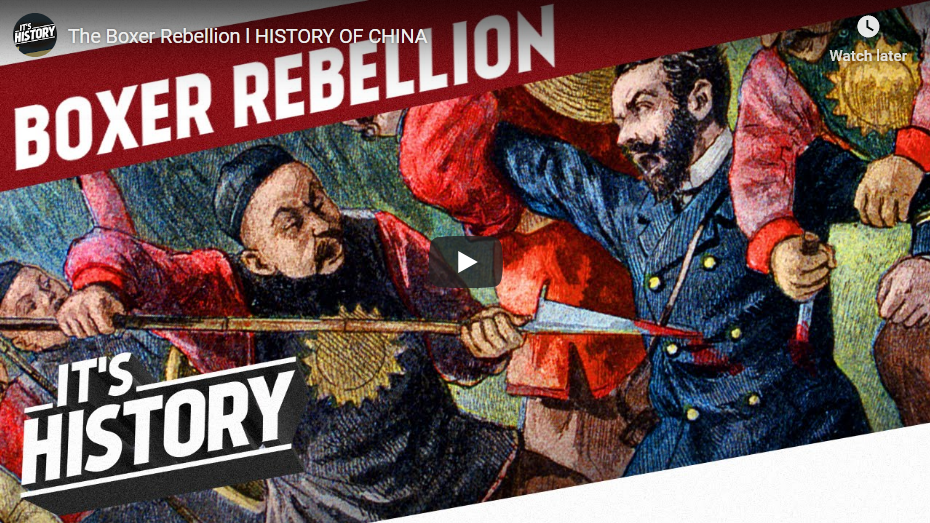
Published 26 Aug 2015The Boxer Rebellion was one of China’s biggest uprisings against the unwanted European, US-American and Japanese imperialism. Distrust and tensions marked all contacts with foreigners. Secret societies were formed to propagate against the enemy. The Yihequan, also known as Boxers, quickly rose to one of the biggest organisations in Northern China. Masters of close combat, they mainly targeted converted Chinese Christians and attacks increased wildly in the 1880s. From 1900 Empress Dowager Cixi was less and less opposed to the Rebellion, as she hoped to fight back foreign influence. Shortly after, even the Chinese Army started helping the rebels and foreigners were fought, killed or driven out. Consequently, an alliance of the imperial powers sent in 50,000 soldiers to end the massacre. Tough reprisals and treaties followed. Learn all about the Boxer Rebellion on IT’S HISTORY.
» JOIN OUR COMMUNITY FOR MORE HISTORY KNOWLEDGE!
Follow us on Twitter: http://twitter.com/thehistoryshow
Your photos on Instagram: https://instagram.com/itshistorychannel» SOURCES
Videos: British Pathé (https://www.youtube.com/user/britishp…)
Pictures: mainly Picture Alliance
Content:
Harrington, Peter: Peking 1900: The Boxer Rebellion, Osprey Campaign
Bodin, Lynn: The Boxer Rebellion, Men-at-Arms
http://www.historyofwar.org/articles/…
http://www.chinafolio.com/chinas-last…» ABOUT US
IT’S HISTORY is a ride through history – Join us discovering the world’s most important eras in IN TIME, BIOGRAPHIES of the GREATEST MINDS and the most important INVENTIONS.» HOW CAN I SUPPORT YOUR CHANNEL?
You can support us by sharing our videos with your friends and spreading the word about our work.» CAN I EMBED YOUR VIDEOS ON MY WEBSITE?
Of course, you can embed our videos on your website. We are happy if you show our channel to your friends, fellow students, classmates, professors, teachers or neighbors. Or just share our videos on Facebook, Twitter, Reddit etc. Subscribe to our channel and like our videos with a thumbs up.» CAN I SHOW YOUR VIDEOS IN CLASS?
Of course! Tell your teachers or professors about our channel and our videos. We’re happy if we can contribute with our videos.» CREDITS
Presented by: Indy Neidell
Script by: Dan Hungerford
Directed by: Daniel Czepelczauer
Director of Photography: Markus Kretzschmar
Music: Markus Kretzschmar
Sound Design: Bojan Novic
Editing: Markus KretzschmarA Mediakraft Networks original channel
Based on a concept by Florian Wittig and Daniel Czepelczauer
Executive Producers: Astrid Deinhard-Olsson, Spartacus Olsson
Head of Production: Michael Wendt
Producer: Daniel Czepelczauer
Social Media Manager: Laura PaganContains material licensed from British Pathé
All rights reserved – © Mediakraft Networks GmbH, 2015
World War Two
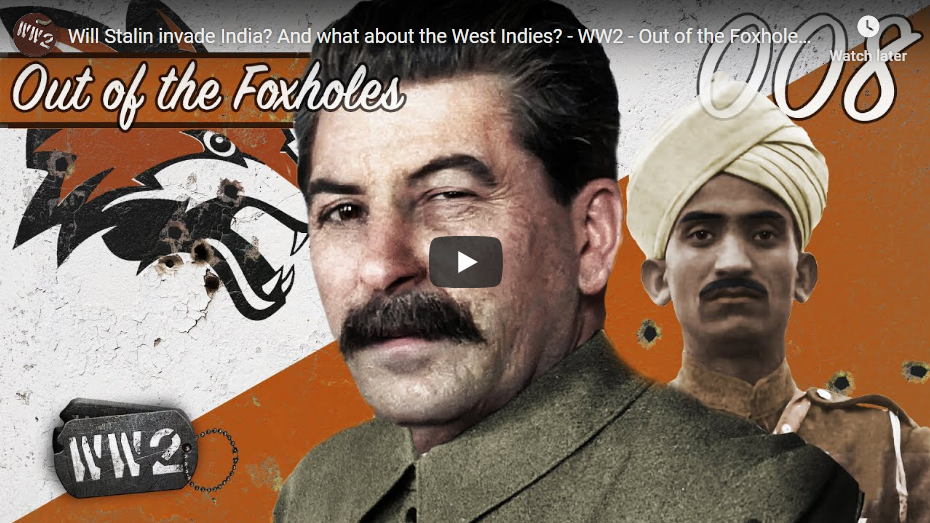
Published 19 Mar 2020In today’s episode of Out of the Foxholes, we answer exciting questions concerning Dutch and French colonies in America, British defence strategies in India and French soldiers stuck in Britain post-armistice.
Ask your own question for Out of the Foxholes here: https://community.timeghost.tv/c/Out-…
Join us on Patreon: https://www.patreon.com/TimeGhostHistory
Or join The TimeGhost Army directly at: https://timeghost.tvFollow WW2 day by day on Instagram @World_war_two_realtime https://www.instagram.com/world_war_t…
Between 2 Wars: https://www.youtube.com/playlist?list…
Source list: http://bit.ly/WW2sourcesHosted by: Indy Neidell
Written by: Rune Væver Hartvig
Produced and Directed by: Spartacus Olsson and Astrid Deinhard
Executive Producers: Bodo Rittenauer, Astrid Deinhard, Indy Neidell, Spartacus Olsson
Creative Producer: Joram Appel
Post-Production Director: Wieke Kapteijns
Research by: Rune Væver Hartvig
Edited by: Mikołaj Cackowski
Map animations: Eastory (https://www.youtube.com/c/eastory)Colorizations by:
Norman Stewart – https://oldtimesincolor.blogspot.com/
Dememorabilia – https://www.instagram.com/dememorabilia/Sources:
IWM H 3508, D 1725
gold by Phạm Thanh Lộc from the Noun Project
Rum by Andrejs Kirma from the Noun Project
sugar by Maria Zamchy from the Noun ProjectSoundtracks from the Epidemic Sound:
Hakan Eriksson – “Adventure Theme 3”
Johannes Bornlof – “The Inspector 4”
Reynard Seidel – “Deflection”Archive by Screenocean/Reuters https://www.screenocean.com.
A TimeGhost chronological documentary produced by OnLion Entertainment GmbH.



Powered by WordPress