
Tasting History with Max Miller
Published 16 Dec 2022
(more…)
December 25, 2022
What the heck is Wassail?
Comments Off on What the heck is Wassail?
Stalin’s Christmas Surprise – Major Offensives to Come – WW2 – 226 – December 24, 1943
World War Two
Published 24 Dec 2022Twas the night before Christmas and the war was grinding on. The Moro River Campaign continues in Italy with Canadian infantry pushing past the Gully and into “Little Stalingrad”. Generally, the Allied advance to Rome is turning into a stalemate though, but Winston Churchill still believes an amphibious landing is the way to break this. Joseph Stalin also has some pretty big plans to bring the USSR back to its pre-Barbarossa borders. In the Pacific, there is attrition over Rabaul and stalemate on Bougainville.
(more…)
Comments Off on Stalin’s Christmas Surprise – Major Offensives to Come – WW2 – 226 – December 24, 1943
December 24, 2022
The abiding influence of A Christmas Carol by Charles Dickens
So many of our fading-but-still-fondly remembered Christmas traditions seem to come back to Victorian times, and especially those featured in Charles Dickens’ most famous Christmas story (certainly helped by the popularity of the Alistair Sim film adaptation):
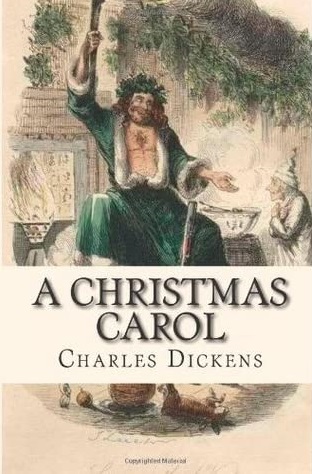
Even in our supposedly rationalist secular era, we find one of these thin places or times in the unlikely guise of Christmas and its rich repository of ghost stories. The supernatural was not banished by the developments of modernity but rather it evolved and adapted, moving from enchanted woods to gothic houses to the streets and rooms of Victorian cities. Just as in earlier times, they found their place where it is dark, in the dead of winter, when the nights close in and fireside stories cause the mind to play tricks and shadows to seemingly change their forms.
Among the many writers who have tried their hand at yuletide ghost stories, none loom larger than Charles Dickens who, with A Christmas Carol (subtitled Being a Ghost Story of Christmas), fundamentally influenced the way we perceive and celebrate the festivity. To fully understand how and why Christmas became a thin place and remains so, we have to delve into a scourge at the very heart of Dickens’s story and our society still — loneliness.
Christmas is one of those times when, as a much earlier writer, Dante, put it: “There is no greater sorrow than to recall in misery the time when we were happy.” And what time is happier, or more melancholic when irretrievable, than a childhood Christmas? Victorian writers knew that when we are alone at Christmas, a time that seems intrinsically meant for loved ones congregating (the perpetual renewal of the Nativity scene), our ghosts, borne by memory, absence and regret, would instead arrive.
Dickens knew the power of myth, and how the beautiful lie might reveal the hidden truth. Determined to speak out about the horrors of child labour and poverty he had directly experienced and witnessed, Dickens first toyed with writing a strident but fairly unwieldly political jeremiad until he realised, correctly, that there was a much more seductive approach available, through the Trojan Horse of storytelling. It was all too easy to turn away from a lecture or respond with platitudes and fallacies, but a heart-stirring tale had the ability to get under one’s skin. His characters and settings were constructed not just from satirical observations of the powerful but from encounters Dickens had had with the powerless, during his lengthy night walks around London. He was also deeply inspired, and haunted, by macabre tales that his cockney nursemaid Mary Weller used to delight in telling him as a child — full of Faustian pacts, treacherous innkeepers, poisons “distilled from toads’ eyes and spiders’ knees”, the Black Cat and Captain Murderer. To add to the unease, Weller would claim the horrors were true and she had witnessed them herself or had heard them from relatives who were eyewitnesses. As Dickens later recounted, in The Uncommercial Traveller, she “took a fiendish enjoyment of my terrors, and used to begin, I remember — as a sort of introductory overture — by clawing the air with both hands, and uttering a long low hollow groan”.
A Christmas Carol has this oral tradition feel, albeit delivered in a short, and affordable, novella form. It also rebalances Dickens’s heavy lean towards sentimentality (the pitiable figure of Tiny Tim, for instance) with the resolutely unsentimental tactic of terrifying child readers. This was necessary for reasons of veracity — existence was unsentimental in those days — but also as a myth-making technique. There are few lessons that stay with us longer and deeper than those which strike mortal fear in us and then propose a way out.
At the heart of the story and its extraordinary legacy is loneliness. Rereading A Christmas Carol, its power initially comes from its status as a social tract and a fable. What is crucial, however, is its existential quality. It shows that the system then in place, and perhaps still, not only oppresses and squanders but it also alienates. Dickens takes the traditional Christmas theme of visitation (the announcing angel, the wandering star leading to the Christ child, the shepherds, the Magi) and makes it sinister. Salvation can come only through the painful process of facing the truth (“Without their visits,” said the Ghost, “you cannot hope to shun the path I tread”). It can only emerge from Scrooge seeing that he has betrayed and marginalised not only his fellow human beings but himself, acknowledging that he belongs to the Malthusian “surplus population” he castigates, that he is alone and bereft (“Will you not speak to me?” he begs the final phantom), and the only precious hope he has left is to be found through gratitude and selfless communion with others.
QotD: Auberon Waugh on Christmas shopping
For Christmas shopping in London I go by force of habit to Harrods. The toy department is full of loud-voiced Englishwomen, but I do not see a fellow Englishman anywhere until I chance upon the Women’s Underwear Department. As I pass, I hear a Major of the Household Brigade ask for some knickers with pussy fur. Another man, almost certainly from the Treasury, asks in a hoarse whisper for some crotchless briefs.
Auberon Waugh, Diary, 1975-12-18.
Comments Off on QotD: Auberon Waugh on Christmas shopping
December 22, 2022
Pseudo swear words “like fuckpuffin, spunktrumpet, shitgibbon, but, most of all, by the undisputed king of the new pseudo swear words, cockwomble“
John Sturgis would like you to swear properly without all these modern pseudo swear words that are all the rage:
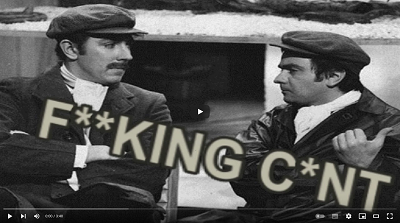
Peter Cook and Dudley Moore as “Derek and Clive” in 1976.
Full video at https://www.youtube.com/watch?v=RYGy-j_oH5Q
Warning: this article features a number of words and terms which some readers may find offensive.
As it happens, I have been offended frequently myself lately — by a growing trend for replacing traditional expressions of anger, aggression or exasperation with neologisms.
I am speaking of terms like fuckpuffin, spunktrumpet, shitgibbon, but, most of all, by the undisputed king of the new pseudo swear words, cockwomble.
Cockwomble’s origins are hard to pin down. There are earlier examples of compound swear words from overseas: the American dickwad, the (I think) Australian fuckwit. They weren’t a significant phenomenon here until around five years ago when cockwomble first began to circulate.
Since then its popularity has grown and grown. Just last week it was trending on Twitter, apparently in relation to Matt Hancock. In fairness, Hancock probably does embody the qualities suggested by the expression better than any other living person.
That exception doesn’t excuse its proliferation: cockwomble has now begun to be picked up overseas and celebrated as an example of our native humour. The British Council really ought to step in and disassociate the nation from this awful expression.
My problem with cockwomble isn’t so much that it’s vulgar, but that it’s not vulgar enough. The addition of the completely innocuous womble to what is already one of our tamer core swear words, serves to neuter it to the point where it’s almost entirely inoffensive, even twee. The fictional furry creatures from Wimbledon have absolutely no place in meaningful swearing. Swearing shouldn’t be nice; it should be the preserve of the slightly scary: the docker, the builder, the fishwife, the public rather than saloon bar. Swearing should be a little bit dark, dangerous, even underground. It should certainly not be underground, overground.
Comments Off on Pseudo swear words “like fuckpuffin, spunktrumpet, shitgibbon, but, most of all, by the undisputed king of the new pseudo swear words, cockwomble“
The Emulsified High-Fat Offal Tube | Yes, Minister: 1984 Christmas Special | BBC Comedy Greats
BBC Comedy Greats
Published 26 Jul 2021Bernard (Derek Fowlds) walks Jim Hacker (Paul Eddington) through the red-tape of signing his Christmas cards, but Jim Hacker is more concerned with worrying plans from Brussels to rename the British sausage.
(more…)
Comments Off on The Emulsified High-Fat Offal Tube | Yes, Minister: 1984 Christmas Special | BBC Comedy Greats
December 21, 2022
The rise of David Bowie
In Quillette, David Cohen outlines the career of David Bowie:
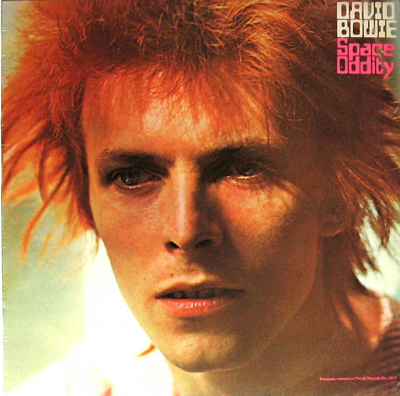
With impeccable timing, the thin white stork had dropped David Robert Jones out of London’s skies nearly three-score-and-ten years earlier. The suburban Bromley Boomer fell to Earth on January 8th, 1947, and landed smack in the middle of the bulge years, a wonderfully fertile period for anyone looking to forge a career in recorded music. His first instrument was the saxophone, which he was blowing on by the age of 14. Within a few years, the transistor radio would be ubiquitous, young people would be awash with disposable cash to buy records, and the mass adoption of international air travel would open up new vistas for fans and artists alike. Could any moment have been better suited to a rock-star-in-waiting?
But he also came of age as the youngest child in a doomy household. Three of his maternal aunts suffered from acute mental health issues — one of whom was eventually lobotomized — and the family was riven with more dark secrets than the Tolstoy home. His schizophrenic step-brother, Terry, would spend much of his adult life in psychiatric care. His beloved father dropped dead when Bowie was just 22, while his mother — a children’s home publicist with whom he was emphatically not close — lived on. “Everyone says, ‘Oh yes, my family is quite mad,'” Bowie later recalled. “Mine really is.”
The greatest dream of the era in which Bowie grew up — the promise of putting Man on the Moon — became one of his first signature artistic nightmares. Space Oddity, the most famous track from his eponymous second album, conjured one such scenario, and provided him with his first real hit after the false start of his debut. The earlier album had its moments, but it left unresolved the question of whether the singer wanted to be a fey-voiced Anthony Newley or a strange young man called Dylan.
By the time he recorded his second album — and, especially, his third — Bowie had decided he would be a bit of both. The cover art for 1970’s The Man Who Sold the World presented him elegantly reclining on a chaise longue in a dress. He smoked copious amounts of hash and assembled a crack band for 10 days of whirling Moog synthesizers and hard rock guitars. The experience was so enjoyable and creatively rewarding that bassist Trevor Bolder, guitarist Mick Ronson, and drummer Mick Woodmansey stayed on. The tracks were laid down at a London residence called Haddon Hall, in Beckenham, and it is here that he would write and rehearse the material for his next three albums that would send his career stratospheric.
Commercially, the sex, drugs, and frock ‘n’ roll of The Man Who Sold the World didn’t find much of an audience. It was too heavy, perhaps, for the folk followers he had accrued with its acoustic predecessor. And too gay for rock fans certainly, the singer’s voracious heterosexuality notwithstanding. He followed it a year later with Hunky Dory, which is generally thought to be the record on which the Bowie alchemy first cohered into something truly new. It was also the curtain-raiser for what’s generally regarded as his classic period, and it provided him with his first American hit, “Changes”. More critically, it saw him discard the claustrophobic sound of The Man Who Sold the World for textured melodies, creamy arrangements, seat-of-the-pants lyrics, and further cameos from extraterrestrials.
On Hunky Dory, Bowie also turned in tribute tracks about Lou Reed, Andy Warhol, and Bob Dylan. Warhol hated the song Bowie had written about him. Reed would eventually smack Bowie about the head during an altercation at a London restaurant in April 1979. And when Bowie finally met Dylan, he later told Playboy, they “didn’t have a lot to talk about. We’re not great friends. Actually, I think he hates me.” Small wonder that he preferred the company of spacemen. The razzle-dazzle of “Oh! You Pretty Things” conjures hordes of them. As does “Life on Mars?” which features a chord progression nicked from Frank Sinatra’s “My Way”. The album closes with “The Bewlay Brothers”, in which the 24-year-old singer paid a tribute of sorts to his own step-brother, Terry.
But it was the release of The Rise and Fall of Ziggy Stardust and the Spiders from Mars in 1972 that made David Bowie a superstar. Picking the space songs out of that record is difficult because, by that point, almost everything Bowie was writing seemed to have an explicitly alien streak. During his appearance on Top of the Pops, he draped an arm across Ronson’s shoulders, and glowered out at a world that was about to repay the attention. In the wake of the album’s release, he returned to the United States a sensation (although the stormy flight en route only confirmed his fear of flying).
A generation on, Ziggy Stardust still routinely appears at or near the top of critics’ lists of the all-time greatest rock albums. It is strange to recall then, that in 1972, while it picked up its share of warm reviews, the album was by no means universally well received (the work of a “competent plagiarist”, sniffed Sounds). Some critics never got it. “I always thought all that Ziggy Stardust homo-from-Aldebaran business was a crock of shit,” wrote Lester Bangs in Creem four years later, “especially coming from a guy who wouldn’t even get in a goddam airplane.”
Comments Off on The rise of David Bowie
December 20, 2022
A true behind-the-scenes look at George Orwell’s Nineteen Eighty-Four
In Spiked, Alexander Adams reports on a new, limited edition of the surviving portion of George Orwell’s manuscript for the novel:
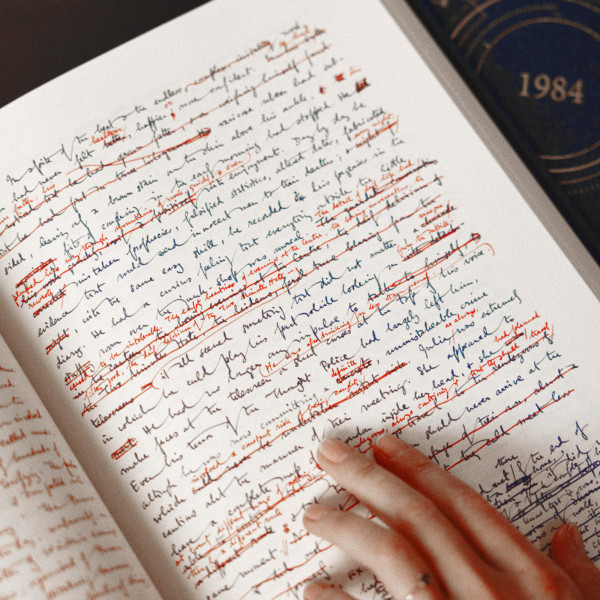
A photo from SP Books’ web page showing the reproduction of Orwell’s manuscript.
SP Books, https://www.spbooks.com/150-1984-9791095457114.html
Published by SP Books, this is Nineteen Eighty-Four as you’ve never seen it before. It reproduces, in colour facsimile, the 197 surviving pages of Orwell’s manuscript, held by the John Hay Library at Brown University, Rhode Island. We see Orwell’s work in fountain pen and ballpoint (complete with ink blots), as well as 14 typewritten sides. We are even given his doodles and pen tests. Readers will remember how Winston also marvels at the beauty of the paper and binding of a blank book he buys from a junk shop.
This edition contains what amounts to 44 per cent of the text of the published novel. It is in a jumbled state, with pages missing and drastic changes made. There are many crossings out and additions. The handwriting can be a little tricky to decipher – Orwell had a habit of using cursive joining lines between words and using abbreviations. Added to that, the script can be somewhat crabbed, especially where Orwell adds text between existing lines. With a little patience, though, the reader can adjust to Orwell’s writing, especially if familiar with the text, and glimpse this most familiar of novels anew.
This version includes an introduction by Orwell scholar DJ Taylor. He tells us that although Orwell usually wrote quickly, he took five years to complete Nineteen Eighty-Four. Taylor details the difficult conditions that explain the novel’s long gestation. The death of Orwell’s first wife in 1945, the effort of raising their young son alone and the toll of tuberculosis all slowed work and drained the author’s energy (tuberculosis would kill him in 1950, only months after the novel’s publication). There are indications that Orwell let the book go to publication even though he thought it was not properly finished.
Looking at this draft, we can see Orwell revising heavily as he wrote. Some revisions are minor, such as Trotsky-figure Goldstein’s description of the workings of the Party and his description of the geopolitics of Oceania, Eurasia and Eastasia. Other changes are more significant. Here, in the propaganda film described by Winston at the start of his diary, there is a graphic passage about the lynching of a pregnant black woman. Orwell seems to have cut these lines on grounds of decency. He also reduced the references to race overall, perhaps uncomfortable about the implications of speaking so generally about groups and types. Orwell’s background as a policeman in Burma no doubt made him sensitive to racial issues.
Comments Off on A true behind-the-scenes look at George Orwell’s Nineteen Eighty-Four
The forgotten Thomas Savery
In the latest Age of Invention newsletter, Anton Howes remembers the work of inventor Thomas Savery:

Screenshot from “Savery’s Miners Friend – 1698”, a YouTube video by Guy Janssen (https://www.youtube.com/watch?v=Dt5VvrEIj8w)
We know surprisingly little about Thomas Savery — the inventor of the first widely-used steam engine. Unfortunately, his achievements were almost immediately overshadowed by the engine of Thomas Newcomen, and so he’s often only mentioned as a sort of afterthought — a loose and rather odd-seeming pebble before the firmer stepping stones of Newcomen, Watt, Trevithick, and other steam engine pioneers in the standard and simple narratives of technological progress that people like to tell. I’ve often seen Savery’s name omitted entirely.
He is even neglected by the experts. The Newcomen Society, of which I am a new member, has an excellent journal — it is the best place to find scholarly detail about all steam pioneers, and about the history of engineering in general. Yet even it only mentions Savery in passing. In over a century, Savery has been named in the titles of just three of its articles, and the last was published in 1986.
I think Savery is extremely under-rated, and deserves to be studied more. Fortunately, we do know quite a bit about the engine he designed, which he intended primarily for raising the water out of mines. Steam was admitted into a chamber, and then sprayed with cold water to condense it. This caused mine water to be sucked up a pipe beneath it, by creating a partial vacuum within the chamber and thus exploiting the relative pressure of the atmosphere on the surface of the mine water. Then, hot steam was readmitted to the chamber, this time pushing the raised water further up through another pipe above. Two chambers, the one sucking while the other pushed, created a continuous flow. (Video here.) We have dozens of images and technical descriptions of Savery’s engine, as it continued to be used for decades, especially in continental Europe.
But we know essentially nothing about Savery’s background, training, inspiration, or profession, and most of the supposedly known biographical details we have for him are simply wrong. There is no evidence that he was a “military engineer” or a “trenchmaster”, for example — mere speculation that has been repeated so often as to take on the appearance of fact. Savery simply appears out of nowhere in the 1690s, with his inventions almost fully formed.
Yet in Savery’s own writings we can see a few tantalising hints of how he thought, including some flashes of brilliance. I kept coming across them by chance, when investigating various energy-related themes with Carbon Upcycling. Take the following aside, from Savery’s 1702 prospectus for his steam engine: “I have only this to urge, that water in its fall from any determinate height, has simply a force answerable and equal to the force that raises it”. Savery here seems to be hinting at some idea of the conservation of energy, and perhaps of a theoretical maximum efficiency — in a phrase that is remarkably similar to that used by the pioneers of water wheel theory half a century later, and to Sadi Carnot when he applied the same ideas to early thermodynamics.
Savery, frustratingly, doesn’t expand any further on the point, except to then casually mention the notions of both mechanical work and horsepower — over eighty years before James Watt. Savery noted that when an engine will raise as much water as two horses can in the same time, “then I say, such an engine will do the work or labour of ten or twelve horses” — ten horsepower, rather than two, because you’d need a much larger team of horses from which to rotate fresh ones while the others rested, to keep raising water as continuously as the force of a stream could turn a water-wheel, or his steam engine could pump. (Incidentally, Watt wasn’t even the second person to use horsepower — the same concept was also mentioned by John Theophilus Desaguliers in the 1720s and John Smeaton in the 1770s. Watt just managed to get all the credit later on. Perhaps watts should really be called saveries, even if he was less precise.)
Comments Off on The forgotten Thomas Savery
December 18, 2022
A Super Bomber to Break Japan – WW2 – 225 – December 17, 1943
World War Two
Published 17 Dec 2022This war has now lasted as long as the Great War did, but there’s no signs of it slowing. The Soviets have three offensives going on on the Eastern Front, in Italy the Allies are attacking at San Pietro and over the Moro River, in the Pacific there are Allied landings on New Britain, but in Pacific Command, the big talk is all about a new super bomber.
(more…)
Comments Off on A Super Bomber to Break Japan – WW2 – 225 – December 17, 1943
Christopher Snowden reviews Andrew Doyle’s The New Puritans
In The Critic, Christopher Snowden praises Doyle’s recent book:
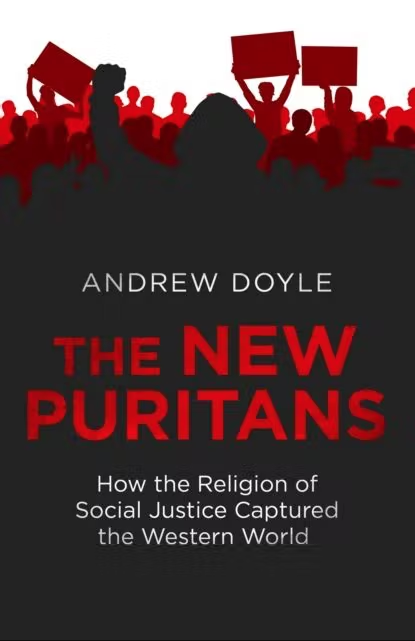
How wrong I was. As Andrew Doyle shows in The New Puritans, it took only a few years for Critical Social Justice to infect the corporate world, government agencies and the media. Most worryingly for a system of thought that favours “lived experience” over objective truth, it became pervasive in higher and lower education.
Doyle had been warning about this for years and kept the receipts. He has a long list of examples of institutional idiocy and persecution to show that there is more to concerns about the “woke brigade” than a right-wing panic over a handful of crazies.
So divorced from reality is Critical Social Justice, that unintentional humour often arises: the CEO of Stonewall accusing lesbians who refuse to date trans women of “sexual racism”; activists becoming uncomfortable with the phrase “trigger warning” because it invokes guns; an American professor of education asserting that “on many levels, mathematics itself operates as whiteness” (how many levels?).
[…]
Those of us who will never be intimately acquainted with the Frankfurt School owe a debt to Doyle for calmly dissecting the anti-liberal worldview. Doyle himself is a left-wing homosexual who is often portrayed as a Nazi on social media for defending free speech and mocking the “entitled demands and infantile tantrums” of the woke mob.
Borrowing a phrase from Isaiah Berlin, he argues that we are living through a “Counter-Enlightenment” led by “conformists with pretensions of radicalism”. The woke ideology is not a natural extension of left-liberalism, he says, nor of political correctness. It is something far more sinister, regressive and authoritarian. In its Year Zero approach to knowledge and history, it is almost nihilistic.
Academically rigorous but never pretentious, The New Puritans is virtually unimprovable as an analysis of this chilling social phenomenon. It begins and ends with the Salem witch trials of 1692–93, when two vindictive children sent 20 people to their deaths on the basis of nothing more than “spectral evidence” (AKA “lived experience”). The mania ended as quickly as it began when the adults in the room simply stopped believing them.
Doyle believes the current madness will end the same way if we can return to critical thinking and put a stop to ad hominem attacks. Good luck with that. Most of the people he is writing about would sooner burn this book than read it.
Comments Off on Christopher Snowden reviews Andrew Doyle’s The New Puritans
December 17, 2022
The RAF’s Worst Day of the War – War Against Humanity 091
World War Two
Published 15 Dec 2022The United Nations Allies has some success bombing the Nazi German Reich, but it comes at a heavy price. In the village Kalavryta in Greece, the Wehrmacht massacre hundreds of men and boys.
(more…)
Comments Off on The RAF’s Worst Day of the War – War Against Humanity 091
QotD: The female murderer
The woman who murders her husband has nearly always ceased to think of him as such, and cannot really believe that he ever stood in that relationship towards her. It is only a tiresome insistence on the part of the law that makes her drastic step necessary. She loves another man who is her husband “in the sight of God”, and it is to her both unreasonable and indecent that the first man should be obstructing her path.
Jesse writes things that I think would nowadays call down upon her all the anathemata of which right-thinking intellectuals are capable. In describing the trial of a Mrs. Carew, who poisoned her husband in order to join her illicit lover, Jesse says:
Her counsel made a point that did not succeed in weighing the scales in her favour … but which shows him to have been a man of some penetration in the matter of female psychology. He said: “It must be borne in mind that a woman never thinks it wrong for a man to be in love with her”, and when he said that he said something profoundly true. A woman may think it shows a lack of pride, utter shamelessness, complete lack of all decent feeling for another woman to be in love with her husband, but she will always feel convinced that it is a sign of something nice and perspicacious in a man for him to be in love with her.
This was written in 1924. Subsequently, it seems to me, male psychology has — in this regard, anyway — become feminized; what once applied specially to women now applies equally to men.
Theodore Dalrymple, “A Quiet Evening’s Reading: Notable British Trials is as complete an inventory of human depravity as has ever been assembled”, City Journal, 2018-06-24.
Comments Off on QotD: The female murderer
December 16, 2022
Tank Chat #161 Samaritan and Sultan | The Tank Museum
The Tank Museum
Published 19 Aug 2022Do you know why the Museum’s Samaritan has a red cross painted on it? Join Historian David Fletcher and discover this and more for the latest Tank Chat on Samaritan and Sultan.
(more…)
Comments Off on Tank Chat #161 Samaritan and Sultan | The Tank Museum
December 15, 2022
Christmas in the WWI Trenches – Xmas Rations
Tasting History with Max Miller
Published 13 Dec 2022
Comments Off on Christmas in the WWI Trenches – Xmas Rations


