Quotulatiousness

February 13, 2025

Australia’s most toxic export (so far) – “Settler-colonial ideology”

Filed under: Australia, Books, Cancon, Education, History, Media, Politics, USA — Tags: , , , , — Nicholas @ 05:00

Helen Dale explains how a lunatic fringe Australian notion has grown to be a major ideology in most of the Anglosphere and even as far afield as Israel:

Despite a great efflorescence of literature and especially film about the mafia, it’s a truism to say that it isn’t very good for Sicily. It also hasn’t been very good when exported to other countries, either, spreading violence, corruption, and lawlessness. Well, Australia is to settler-colonial ideology as Sicily is to mafia, and our poisonous gift to the world is, like Sicily’s mafia, one of those things about us that really isn’t for export.

“Settler-colonial ideology” seems a mouthful, but if I describe bits of it to you, you’ll recognise it. Heard Australia Day called “Invasion Day”? You’ve encountered settler-colonial ideology. Been called racist for voting NO in the 2023 Voice Referendum? You’ve encountered settler-colonial ideology. Noticed Aboriginal academics get hired with obviously inadequate qualifications? You’ve encountered settler-colonial ideology.

Many Australians — including me — first encountered settler-colonial ideology at university. Back then, it was a theoretical and foreign concern, and largely in languages other than English (mainly French and Arabic). I do remember one of the “post-colonial literatures” (note the s, the s is important) obsessives trying to convince me that Alan Paton’s Cry the Beloved Country wasn’t a “legitimate book” because its author was white, but back then, this was still a niche view.

Like other Australians confronted with daft academic ideas, I blamed the US or France and ignored my own country’s contribution. Australians aren’t noted for their theoretical acumen, which made this easier. Critical race theory and affirmative action are all-American, while US academics have often executed hostile takeovers of French nonsense like postmodernism or queer theory early on in proceedings. It gets easy to blame America and France.

Easy, but unfair.

I realised how mistaken I’d been when, in October last year, I returned to Australia for a stint. While I was there, I read Adam Kirsch’s On Settler Colonialism: Ideology, Violence and Justice. I did so in part because October 2024 was the one-year anniversary of two important events. Both concerned what Kirsch calls “the ideology of settler-colonialism”.

Kirsch documents a process whereby the French- and Arabic-speaking theorists of post WWII decolonial conflicts — particularly Frantz Fanon — had their ideas grafted (very, very awkwardly) onto dissimilar Australian history and conditions by Australian intellectuals. These were then exported throughout the English-speaking world, likely through academic conferences. This explains how cringeworthy Australian nonsense like land acknowledgments managed to spread first to Canada and then the US in a reversal of the usual process whereby America sneezes and so gives its Hat a cold.

Fanon was a Marxist and a Freudian. His writing seethes with angry bloodthirstiness and pseudoscientific psychodrama, but he was responding to a vicious war of independence and incipient civil conflict. Kirsch notices a pattern where Australian scholars borrow bits of Fanon to give a sanguinary rhetorical garnish to their writing. “Fanon’s praise of violence is a large part of his appeal for Western intellectuals,” he notes. “Many of the sentiments expressed in The Wretched of the Earth, coming from a European or American writer, would immediately be identified as fascistic.”

Australia’s intervention changed the ideology, in some ways making it more destructive. Fanon is shorn of most of his Marxism, for example (can’t have that, won’t be able to recruit rich minorities to the boss class otherwise). The key Australian shift coalesces around an oft-quoted aphorism from historian Patrick Wolfe: “invasion is a structure, not an event”. That is, colonisation trauma is constantly renewed because “settler” is a heritable identity. “Every inhabitant of a settler colonial society who is not descended from the original indigenous population,” Kirsch points out, “is, and always will be, a settler”.

“Settler” here includes people transported to both America and Australia in chains — slaves and convicts. Once it became acceptable to construe one group of people conveyed against their will across thousands of miles of ocean in dreadful conditions as providentially lucky (and genocidal) settlers, it became possible to extend the reasoning to other, similar groups. After all, the only difference between a convict and a slave is the presence or absence of a criminal conviction.

Kirsch’s attempt to explain how Australia was analogised with Fanon’s Algeria and then how Israel was analogised with Wolfe’s Australia is heroic, in part because the casuistry he seeks to unpick is so convoluted. Filtering Fanon through Australian academia and its claim that “settler” is a heritable identity did have the effect of making Jewish Israelis look more like non-indigenous Australians or Americans, however, especially when attention was focussed on European Jewish immigrants to Israel.

February 12, 2025

Poilievre’s outlined plan for the Canadian Arctic gets the CDR Salamander seal of approval

Filed under: Cancon, Military, Politics — Tags: , , , — Nicholas @ 05:00

Although most of the attention is on the still ongoing Trump tariff tantrum, there is still the required battle-space preparations going on for the next federal election. Conservative leader Pierre Poilievre discussed his proposals for improving national security in the Arctic, and CDR Salamander is enthusiastic:

Pierre and Ana Poilievre at a Conservative leadership rally, 21 April, 2022.
Photo by Wikipageedittor099 via Wikimedia Commons.

… here are the highlights as I see them.

  • Canada’s Arctic is under threat. 75% of Canada’s coastline is in the far north, and 40% of her landmass. Canada needs to become self-sufficient.
  • In the fall of 2022, the Canadian military found Chinese monitoring buoys in the Arctic.
  • A Royal Canadian Navy frigate shadowed a Chinese research vessel in the Bering Strait off Alaska last year (thank you RCN friends, we don’t have any frigates nor naval bases in Alaska because … our leaders don’t understand much outside Norfolk, San Diego, or the Potomac).
  • Russia is building new bases and infrastructure in the Arctic.
  • Canada will take back control of Canadian waters, sky, and land.
  • The Canadian military today is weakened and her allies no longer respects her.
  • Canada does not have a permanent military presence in the Arctic.
  • When Prime Minister, he will increase Canadian forces by:
  • – Doubling the size of the Canadian Rangers from 2,000 to 4,000 Rangers.

    – Acquire two additional polar heavy icebreakers for the Royal Canadian Navy by 2029 on top of the two current icebreakers being built for the Canadian Coast Guard.

    – Will build Canada’s first permanent Arctic military base since the Cold War. It will be CFB Iqaluit. 100% of the cost of the base will come out of the Canadian foreign aid budget and will be up and running within two years of Poilievre becoming Prime Minister.

    – New submarines.

  • Bringing wasted foreign aid back to Canada.
  • If Canada wants to be a sovereign, self-reliant nation, it must take control of their north, secure its borders, and stand on its own two feet.
  • Canada cannot count on the Americans to do it for them.

Further on in this speech, Poilievre speaks out strongly against some of the statements of President Trump and his administration, and that is fine for me. Were I Canadian, I would say very similar things. This is OK. Friends can have disagreements now and then, but for every one item that causes friction, we will always have nine items that bring us together.

It’s all good.

Electric vehicles and cold Canadian weather

Filed under: Cancon, Technology — Tags: , , — Nicholas @ 03:00

The Canadian government has been a noisy proponent for Canadians replacing their internal combustion vehicles with electric-powered alternatives, but unlike places like California it gets cold in Canada … very cold indeed at times. The CAA conducted some tests on popular EVs to find out how typical cold conditions impact the range of the cars:

Nissan Leaf electric vehicle charging.
Photo by Nissan UK

CAA is out with the results from their first ever road tests of how electric vehicles (EV) charge and perform in a Canadian winter.

They tested out 14 electric vehicles which included seven of the top 10 sellers in Canada. They were driven from Ottawa to Mont Tremblant and the temperatures during the drive ranged from -7 to -15 degrees Celsius.

Each vehicle was driven until the battery completely died to determine the range in winter conditions. The results were compared to the estimated driving range published by Natural Resources Canada. CAA says officially posted EV ranges (below) in Canada are based on overall, year-round numbers.

“CAA is responding to a top concern of Canadians when it comes to EVs,” said Ian Jack, vice-president, public affairs, CAA National. “We measured the effective range of electric vehicles in cold weather and how quickly they charge. These insights are critical for both current EV owners and those considering making the switch.”

The association says a recent poll revealed more than two-thirds of Canadians say the drop in driving range during winter is the top barrier to purchasing an EV. Out of those who own an EV, 65 per cent said they experienced a lower battery range in extreme cold weather.

The rest results showed the vehicles drove 14 to 39 per cent less than their official range.

“The vast difference in results really highlights the importance in truth and advertising when it comes to EV range and making sure that Canadians are comparing numbers when it comes to winter performance,” said Kristine D’Arbelles, Senior Director of Public Affairs for CAA National.

February 8, 2025

Interprovincial trade barriers in Canada

Filed under: Cancon, Economics, Government, History — Tags: , , , — Nicholas @ 03:00

In the National Post, Jamie Sarkonak pours some icy cold water on the fever dream that we can fix what ails us economically with this one neat trick:

Understand what an interprovincial trade barrier is: it isn’t a simple matter of repealing tariffs, because internal tariffs don’t exist — provinces aren’t allowed to impose them. Instead, barriers take the form of red tape that differs in shade by province; if there are 10 provinces that each regulate, say, what shape of toilet seat is required to be used on a construction site, expect 10 different rules on the matter (Ontario requires a gap at the front of the seat; Alberta doesn’t care).

For Canada’s toilet seat manufacturers, that’s another level of complexity that can complicate production and make it costly to expand to new jurisdictions.

Now repeat the mental exercise for every other provincially regulated product: food, alcohol, pesticides, lumber and so on. And again, with all the other provincially regulated things you can buy but not hold: massage therapy, legal services, hair and aesthetic services, provincially regulated securities.

It adds up to a lot, and that’s by design: in 1867, the Constitution explicitly handed authority over most sectors to provincial governments. Provincial regulations, and by extension, interprovincial trade barriers, are central to provincial autonomy.

Theoretically, rule consolidation is a good deal. It would be far easier to do business in Canada if it worked more like one country with one set of rules, rather than a heterogenous group of 10 micro-states packed into one.

On the taxpayer side, there are savings to be had, too: regulatory bodies use public funds and there are (theoretically) savings to be had by centralizing the offices of 10 different sheriffs into one. Estimates vary, but lifting barriers is thought to add a boost of $80 billion (International Monetary Fund) to $200 billion (Canadian Federation of Independent Business) to the economy.

But standing in the way of free-trade utopia are the practical considerations, the big one being protectionism. Making its case in the Journal de Montreal, William Rousseau put it well: “The abolition of these barriers can even be economically harmful, because for each barrier that blocks a company from the rest of the country, there is a Quebec company that benefits from it and whose business model takes this barrier into account.” The exact same can be said for any province.

This is why I thought well of Pierre Poilievre’s recent trial balloon about ways to coax the provinces into reducing interprovincial trade barriers by … let’s be honest … providing a financial bribe from the federal government. By allowing the individual provinces to “capture” some of that “lost” revenue, it may provide enough incentive to start dismantling at least some of the structural barriers to free trade within Confederation.

February 6, 2025

Trump tariff diary, day 5

Filed under: Cancon, Government, Media, Politics, USA — Tags: , , , , — Nicholas @ 03:00

The attention shifted away from the BOM kicking the Little Potato around as BOM floated the idea of annexing the Gaza Strip (as Eastern New Jersey?) on social media. There goes at least 24 hours of media hysteria …

Justin Trudeau’s vision of Canada

As I’ve pointed out a few times, the situation didn’t blow up out of nowhere (we’re back to the Trump tariffs, not the Gaza Strip), as Trump had given ample warning that this was an important issue for him. However, as Roxanne Halverson points out, Trudeau’s government paid it not the slightest bit of attention until Trump forced them:

This means Ontario Premier Doug Ford who threatened to cancel a $100 million dollar Starlink contract with Elon Musk to provide high-speed internet to northern and rural Ontario communities because of Musk’s strong ties to Trump. And perhaps BC Premier David Eby shouldn’t have threatened to take alcohol products from “red states” in the US off the shelves of BC liquor stores. And perhaps Team Trudeau shouldn’t been trying to play the mouse that roared by threatening to slap retaliatory tariffs on American products coming into Canada, given that it means Canadians will pay more for products like fruits and vegetables that we simply can’t get here in the winter. And that goes for all the provincial premiers, with the exception of Alberta Premier Danielle Smith.

And for all Canadians — particularly those who voted for Trudeau — who are so angry at Trump that they are blowing up the internet with memes, threatening never to vacation in the States, and booing the singing of the American anthem at hockey games — grow up and smarten up and rethink who your anger should be directed at.

Everyone needs to recognize the fact that Trump made it pretty clear about the tariffs when he was campaigning for the US presidency, after he won the presidency — but had yet been officially sworn in — and as soon as he entered the Oval Office. And yet everyone seemed so shocked when he did it — including Prime Minister Trudeau.

Trump also made it pretty clear what he was after — fix Canada’s porous border and fix the drug trafficking problem — and the fentanyl problem in particular. And thanks to the dithering of the Trudeau government — vacillating between “negotiating and diplomacy” and talking “tough”, as well as using the issue as a campaign tool, this is what it came to. Because, it would seem, Trump didn’t think his request was being taken seriously so he made it serious. One thing Trump recognizes is weakness, and it is something he is willing to take advantage of it. And in Canada he saw weakness — weak leadership and an weak economy. Another thing Trump is very good at, and that is rattling people and he did that in spades on Saturday — and by Sunday he got results.

For all the Canadians who are mad at Trump for starting these tariff wars, particularly those who voted for Trudeau. Remember this … if Canada had a strong economy that hadn’t been driven into the ground by ten years of Liberal economic, monetary, social engineering and “green” policies we wouldn’t be so vulnerable to Trump’s tariffs.

Trump didn’t halt the building of pipelines that could have taken our oil products to both eastern and western coasts to be shipped to markets overseas. This would have expanded markets for Canadian oil, meaning we wouldn’t be selling sell the bulk of it to the Americans at bargain prices. It wasn’t Trump who drove billions, if not trillions of dollars in investments out of the country by overtaxing businesses with ever increasing carbon taxes and various other in sundry operating costs, or stifling business growth with endless crippling green energy policies and regulations, or extinguishing any chance of expanding our natural gas production to sell to overseas markets by claiming “no business case” for it.

The business investment picture in Canada shows a clear decline dating almost exactly to the start of Trudeau’s time in office:

The Canadian government’s (and several provincial governments’) hostility to economic development and infrastructure expansion is clearly illustrated, I think.

February 5, 2025

Trump tariff diary, day 4

Filed under: Cancon, Government, Media, Politics, USA — Tags: , , , , , , , — Nicholas @ 03:00

The Big Orange Meanie and the Little Potato had a phone call, after which the BOM announced a 30-day delay to the imposition of tariffs. In Canada, all of “peoplekind” were relieved to hear that they won’t have to give up their American-made binkies quite yet. Some appropriate snark from The Free Press:

It was actually a phone call between the BOM and the Little Potato, but we can imagine this is what it would have looked like in person.

Mexican president Claudia Sheinbaum Speedy Gonzales’d her way to a deal with Trump yesterday, promising to deploy 10,000 Mexican troops to the border to stop the flow of illegal immigrants and drugs. In return, Trump agreed to pause his 25 percent tariff on goods coming from south of the border. Soon after, he struck a seemingly identical deal with Justin Trudeau, who said he’d appoint a “fentanyl czar” and promised to send 10,000 Canadian troops to the northern border. Who knew they even had that many?! Tariffs will still be levied against Chinese goods starting today, but Trump says he plans to talk with President Xi Jinping as soon as this week.

The FP isn’t wrong … the Canadian Army doesn’t have 10,000 spare troops just hanging around their barracks who could be sent to the border, so it’s much more likely to be a combination of Canadian Border Services Agency (CBSA) agents, RCMP officers, provincial police (if the respective provinces are willing), and whatever the army can spare. (Trudeau refers only to “nearly 10,000 frontline personnel”, not “troops” as a lot of US reports state … that seems a lot more achievable.)

You may be wondering how the US President has such disruptive and antagonistic tools at his disposal. It’s yet another hangover from the Carter years, as Congress delegated these powers to the president in 1977:

Donald Trump as Napoleon the 47th.
Image generated by Grok.

The emerging on-off-on-off trade war between Canada and the United States has everyone asking “How should we fight?” — understandably enough — but we should not move too quickly beyond the question “How is this literal nonsense at all possible?” How did the U.S. Congress’s clearly specified constitutional power to regulate the country’s commerce with foreign nations fall into naked and unapologetic decrepitude? Why is every new American president now a Napoleon, and why isn’t this at all a political issue in the U.S.?

The American Constitution, it seems, has no political party apart from a handful of cranky, tireless libertarians like Gene Healy, Clyde W. Crews or Ilya Somin, who has a new article spitballing possible litigation approaches for Americans who lie in the path of the tariffs now being wishcasted into existence by Napoleon the 47th. Somin explains that President Donald Trump is using an openly contrived “national emergency” to invoke powers delegated to the White House by Congress in 1977, powers that are to be invoked only in the face of “unusual and extraordinary threats” to the Republic.

Since the president apparently has plenary power to define an emergency, and to do so without offering anything resembling a rational explanation, this act of Congress now appears to be less of a delegation and more of a surrender — a total abandonment of constitutional principle and the classical separation of powers. I pause to observe that the cheeks every Canadian should redden with slight shame at the spectacle of frivolous recourse to the law of emergencies causing obvious and sickening injury to the rule of law in the U.S. (Oh, no, that could never happen here!)

February 4, 2025

Trump tariff diary, days 2 and 3

Filed under: Cancon, Economics, Government, Media, Politics, USA — Tags: , , , — Nicholas @ 03:00

Posted to social media yesterday:

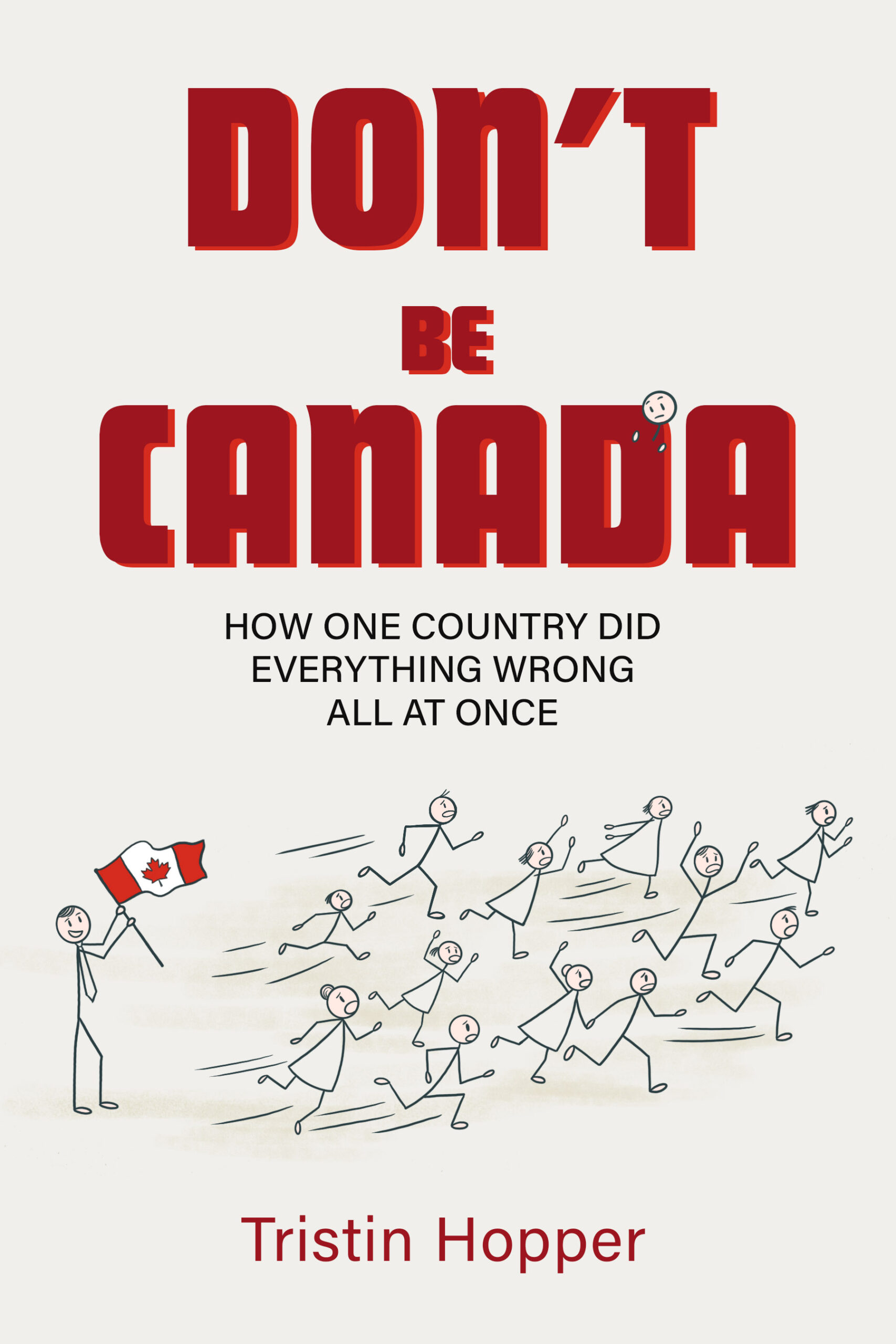
To celebrate Groundhog Day, Governor Trudeau wore commemorative Groundhog-themed socks. Governor Trudeau’s announced counter-tariffs seem to have made no difference to the Big Orange Meany, so the Great State of Canada proceeds with plans to annex Guam and American Samoa. China has indicated interest in purchasing Vancouver Island or leasing the naval base in Esquimault. The National Post‘s Tristin Hopper suggested “Spend 10 years relentlessly kneecapping the Canadian economy for no reason to show Trump we’re not scared of him”, but we’ve already done that.

Today’s tariff diary entry was going to be:

Reports indicate that the Mexican government is folding to Trumpian pressure. Governor Trudeau insists he won’t budge, regardless of the economic damage to Canadian consumers … what a hero! A few of us may lose our jobs, our businesses, and our economic futures, but he’s willing to take that risk. Update: Trudeau folded like the cheap suit he so resembles. Tariff war on hold for 30 days as Trudeau looks for a way to sign the terms of surrender without any blame attaching to him or his party … he’ll probably blame the provincial governments and the federal NDP (who’ll still support him in Parliament, regardless).

… But the “pause” in tariff enforcement may be enough to let Trudeau and the Liberals — with the active connivance of the bought-and-paid-for Canadian legacy media propagandists — portray this as a great national victory and attempt to turn it into votes for Liberal candidates in the next federal election. I’d love to be proven too cynical here, but the Liberal track record isn’t good.

The FN C1A1 – Workhorse of the Cold War Canadian Army

Filed under: Cancon, History, Military, Weapons — Tags: , , , , — Nicholas @ 02:00

On Target Canada
Published 20 Jan 2020

Time to get a closer look at a rifle I have spent a lot of time with in the past. The FN C1A1, used by the Canadian Army from the mid 1950s to the late 1980s.

Enjoy!
(more…)

February 3, 2025

Rational response to Trumpish provocations? Don’t be silly, we must run in circles with our hair on fire!

My first entry in the “Trump tariff diary” on social media perhaps takes the situation too flippantly:

President Trump trolled Justin Trudeau about Canada becoming the 51st state.

Trump tariff diary, day 1: Governor Justin Trudeau of the Great State of Canada struck back at the Big Orange Meany by wearing particularly fashionable socks to his press conference. Ontario will remove all bottles of Jack Daniels from the government liquor monopoly distribution system. The American national anthem will be formally booed at all NHL games played in Canada from now on.

At the National Post, Tristin Hopper offers much more substantive and serious suggestions:

Order Ryan Reynolds to defame American directors until free trade is restored.

Spend 10 years relentlessly kneecapping the Canadian economy for no reason to show Trump we’re not scared of him.

Politely suggest that the U.S. may have confused us with China. Say that although both countries start with the letter C, China is the one seeking to destroy American hegemony via economic means, and we’re just an obsequious neighbour who sells them raw materials.

As a gesture of fealty to American continental supremacy, immediately adopt the U.S. Constitution as Canadian law. Uphold it about as loosely as our existing constitution so there’s no material change.

Volunteer an honour guard of Mounties to serve alongside the Secret Service. Force them to wear red serge if Trump asks.

Offer to pillory a Trudeau at Mar-a-Lago if the tariff threats stop, but don’t specify which one.

Put sugar in the crude oil so all the U.S. refineries seize up.

Instead of shutting off Canadian electricity exports, export too much electricity so that their toast burns and the coffee is too hot.

Send Trump a bentwood box filled with smoked salmon as a gesture of goodwill. When he opens it, it’s just filled with bees.

On a rather more serious note, PPC leader Maxime Bernier posted this on the social media platform formerly known as Twitter:

It’s important to understand that the 25% tariffs announced by President Trump today are NOT imposed on Canada — they will be paid by American consumers and businesses who buy goods imported from Canada. Tariffs are a tax, and Americans who will have to pay more or go without our products will be the first to suffer.

Of course, Canadian exporters of these goods will as a consequence lose clients, contracts and sales, and will be forced to cut down on production and lay off workers. Or they will lower their prices to keep market shares and will see their profits diminish.

Because 75% of our exports go south of the border, our economy will for sure be very negatively impacted by this.

The stupidest thing our government can do however to deal with this crisis is to impose the same kind of tariffs “dollar for dollar” against US imports.

The US economy is ten times bigger than ours, much less reliant on trade than ours, and much less dependent on our market than we are on theirs.

Not only would retaliatory tariffs have much less impact on American exporters, they would immediately impoverish Canadian consumers forced to pay more for imported goods, as well as destabilize Canadian businesses that need inputs from the US in their production processes. It would more than double the harm of the US tariffs to our economy.

Trade wars are bad for everyone, but they are much worse for a small country with fewer options. We simply cannot win a trade war with the US. It’s very unlikely that Trump will back down. All we will do is provoke a massive economic crisis in Canada, until we are forced to capitulate.

Another self-destructive thing to do would be to set up giant “pandemic-level” bailout plans to support everyone affected by this trade war. This will simply bankrupt our governments even more than they already are and make us even weaker.

So what should we do?

1. Double down on efforts to control our border, crack down on fentanyl dealers, deport all illegals, and impose a complete moratorium on immigration, to answer Trump’s immediate concerns about Canada.

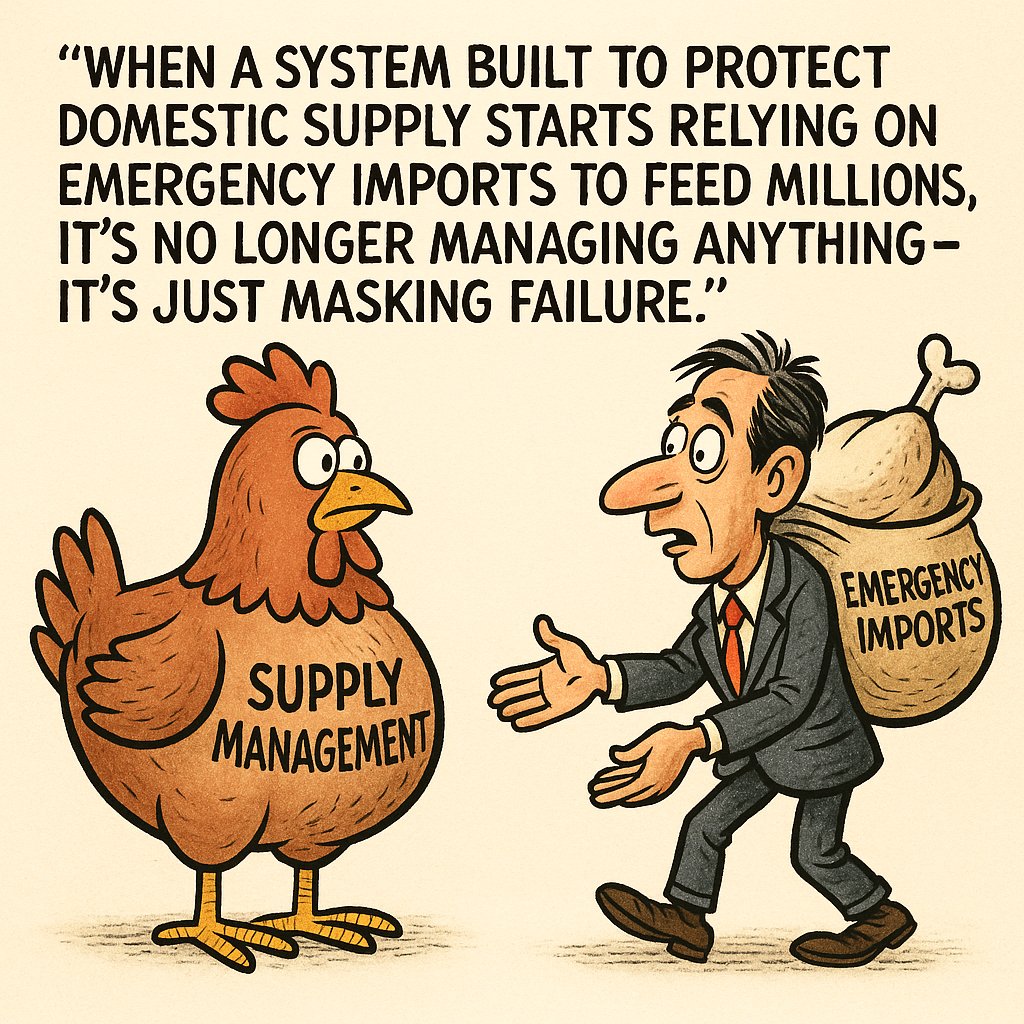
2. Tell the US administration that we are ready to renegotiate North American free trade and put dairy supply management and other contentious issues on the table.

3. Wait and see to what extent Trump is willing to keep tariffs in place despite the harm it does to the US economy. Despite his pretenses that Americans don’t need our stuff, the reality is that on the contrary they have few other options for crucial resources like oil, lumber, uranium and other minerals, etc. He will stop acting like a bully when he sees that he can get more results by sitting down and negotiating.

3. To reduce our dependence on the US market, immediately implement an ambitious plan to tear down interprovincial trade barriers and help our impacted exporting industries find alternative markets in other countries.

4. Immediately implement a series of bold reforms to make our economy more productive, including: reduce corporate and personal taxes, abolish the capital gains tax, abolish all corporate subsidies, get rid of excessive regulation, remove impediments to the exploitation and export of natural resources, drastically cut government spending, mandate the Bank of Canada to stop printing money and start accumulating a gold reserve to prepare for the global monetary reset (which is likely part of Trump’s plan).

In short, instead of adopting a suicidal strategy to confront Trump, we must do what we should have done a long time ago to strengthen our economy and our bargaining position. The transition will be rough, but not as much as complete bankruptcy and disintegration.

My strong suspicion is that Trump’s extended tantrum directed at Canada is actually a way to provide pressure against other future tantrum targets … “if he’d do that to friendly neighbour Canada, what won’t he do to us?” An updated version of Voltaire’s quip that Britain needed to shoot an admiral every now and again pour encourager les autres.

Coyote Blog facepalms over Trump’s self-sabotage of the US economy:

Trump’s first few weeks have been a mix of good and bad for this libertarian, all against a backdrop of horror at how Imperial the presidency has become. […] Because we are all tired of those fentanyl-toting Canadians crossing the border illegally. I mean, we all saw the Proposal and know how all those Canadians are trying to cheat US immigration law.

Seriously, this is beyond awful — and not just because of the threat of retaliation, though that is real. Even if all the affected countries roll over and accept these modified tariffs without response, this is still a terrible step for the US. No matter how Trump and his very very small group of protectionist economist friends sell this, this is a tax on 300 million US consumers to benefit a small group of producers. I don’t have time right now to give an updated lesson on free trade — that will have to wait for when I am not on vacation. But I will offer a few ironies:

  • After campaigning hard on inflation, Trump is slapping a 10-25% consumption tax on foreign goods. That is a straight up consumer price increase for a variety of key products including much of the lumber we use to build homes, a lot of our oil and gas, a lot of our grain and beef, and many of our cars and appliances.
  • Much of this inflation is going to disproportionately hurt Trump’s base. No one is going to care much if a Hollywood actor has the fair trade coffee they buy at Whole Foods go up in price, but Trump voters are going to see a direct effect of this on prices at Wal-Mart.
  • Republicans have spent 4 years (rightly) condemning Federal and State governments for the economic disruptions of COVID lockdowns and restrictions. While some of the inflation of the last 4 years was due to ridiculously high government deficits, another major cause was the COVID supply chain disruptions. And now Trump is voluntarily recreating them.

The only small hope I have is that Trump is steeped from his business career in a certain style of brinksmanship bargaining that consists of taking an entirely destructive and irrational position in hopes that they folks on the other side of the table will back down and give him more than he should. My son won poker tournaments like this because he would do so much crazy stuff that no one at the table wanted to challenge him. I have always said that I don’t think Trump is a particularly good business person — he has run business after business that has failed. But he is a good negotiator, and has exited numerous bankruptcies with his creditors giving him far more than one would think was necessary.

February 2, 2025

Captain Trumpmerica versus the Post-national Maple Protectionists

Donald Trump has made picking fights with the corrupt oligarchs of Mexico and Canada a key part of his appeal to American voters. Canada used to be a proud nation, but after years of deliberate mismanagement and stubborn opposition to innovation and growth, we’ve become — as Justin Trudeau so smugly put it — the first “post-national state” that has “no core identity [and] no mainstream”, because we’re a plaything for the WEF and other transnational organizations. Elizabeth Nickson calls us a “failed state” and that swapping in globalist WEF’er Mark Carney for globalist WEF’er Justin Trudeau will make no positive difference:

25% tariffs will ruin us. The tariffs mean one million small businesses — all which sell to the U.S. — will contract and many will close their doors. And then Trump, as he promised the unions, will pull “our” auto industry. Then we’re done.

Who is to blame for this?

The following is going to be crude because Canada is so boring (that’s deliberate) that no one cares. There are a thousand ultra-complex rationales on why Canada is failing and all they do is obfuscate. I’m not pulling punches, softening rhetoric — it is bad. It is urgent. This is the death of something that 75 years ago was shining, sunlit, exciting. That country? That country was killed by the Laurentian elite, weak, cosplaying Marxism to stay in power, themselves outwitted by investment bankers who plan to steal everything not nailed down. In so doing new elements were forcibly injected into the population: envy, resentment of the successful, sloth, the refusal to grow up, be strong and independent. We effectively sit on top of the U.S., seething with envy, in wet diapers.

We are a broken country. Everyone who understands the world knows this. The only people who don’t are deluded Canadian socialists, which is to say our entire elite and all our “knowledge class”. Dissent is ignored. Or jailed.

Central banker Mark Carney, WEFer paramount, is being parachuted into the Liberal party in order to sell us off to the investment banks who will harvest us for our resources. Our people? Future serfs in Special Enterprise Zones. We already have the regulation in place. No taxes, no worker rights, no enviro controls, no self-determination, no agency, no freedom. Time frame? Ten years, twenty at the outside. The inevitable end of hard-core socialism.

That is what Carney did to Canada in the ‘08 crisis, a crisis entirely created by larcenous government and investment bankers: he loaded us up with so much debt that the moment the economy turned, the working class — and Canada is now 75% working class — paid for it through interest rates so high they crippled and broke every middle class family with a mortgage. Then, he moved to England and did it to the English. His name there? Mark Carnage. During the ’08 crisis, he in Canada and the UK and Obama in the US transferred trillions in public wealth to the investment banks to keep them going after the worst crisis since ’29. A crisis they caused. That was the people’s money, not theirs.

However, as Peter Menzies points out, our Laurentian Elite are still 100% protecting us from the baleful influence of American culture … well, the commercial bits anyway:

Next Sunday, the federal agency responsible for the flourishing of national culture and identity will be swamped with complaints. The grumbling will emanate from Canadians enraged they can’t get more American culture. Yes, America may be in the process of humiliating Canada as its lamest of lame duck leaders, Prime Minister Justin Trudeau, waddles into the sunset. And, for sure, most of us are mortified that U.S. President Donald Trump has chosen to make an example of us as he launches his mission to bring the globe to heel and Make America Great Again.

But the bitching directed in the days to come at the Canadian Radio-television and Telecommunications (CRTC) headquarters in Gatineau will originate from Canadians angry they can’t watch American Super Bowl TV ads along with the game. A perennial contender to be the most watched TV event in Canada, the Super Bowl also has traditionally been the most controversial event on the CRTC’s calendar.

The USA can slap us silly with tariffs. It can send hundreds of thousands of us into unemployment and despair. It can mock our disinterest in maintaining the essentials of nationhood and drive us into unsustainable debt. Trump can brutalize our national esteem and taunt us for our cavalier attitudes towards the defence of our sovereignty. And he can lick his big beautiful lips while pondering our potential as the 51st state.

But what will really light us up Feb. 9 will be being unable to watch Meg Ryan and Billy Crystal reinvent their famous restaurant scene from When Harry Met Sally or Michelob Ultra’s production starring Willem Dafoe and Catherine O’Hara as a couple of pickleball hustlers. Or Matthew McConaughey channeling legendary Chicago Bears coach Mike Ditka for Uber Eats. And the Clydesdales. Everyone loves those Budweiser Clydesdales, particularly the cute little foal making a debut.

It doesn’t matter that the ads cost $7 million U.S. (which will convert into heaven only knows how many bazillion loonies in the months ahead) for a 30-second spot. Or that for more than a decade many of the commercials have been available on YouTube. Canadians don’t want to watch a Super Bowl adorned with Government of Ontario and Maple Leaf Foods ads. They want to watch the game like real Americans and relish the full, unfettered American experience.

At the National Post, a sad recounting of just how badly we’ve been let down by our politicians — and not just recently … this is a decades-long list of conscious self-harm for short-term domestic political advantage:

Bold counter-attacks against the U.S. can’t work, because all the ideas Canada could have put into action to make such a response viable are collecting dust on the cellar shelf. Drop interprovincial trade barriers that amount to a $200-billion penalty on the national economy every year? That only became a serious conversation in the last month. It should have been a serious conversation 10 years ago, if not more.

End supply management? Out of the question — think of the Quebec votes such a move would cost. The Big Milk lobby is a strong one.

How about resource development? Because Canada is ultimately a resource-exporting economy? No; we’ve been cancelling energy projects at the slightest objection and building more legislation to stand in their way. Industries like mining and fishing, already mired in growth-choking regulations, are increasingly refashioned by governments into welfare and “reconciliation” initiatives, repelling private investment that would have brought prosperity to the country as a whole.

Diversify away from the Americans? We’ve only done the opposite: since 2017, Canadian trade has become more focused on the U.S.

Canada should be a prosperous, growth-oriented economy, but instead, its government — and the people who continuously vote for economy-stagnating policy — settle for subsistence and redistribution of a shrinking pie of wealth. Their choices for the past decade have left us without enough fat to get through a cold trade winter.

Prompt retaliatory counter-tariffs are hence unwise. Such a move would put Canadians in the path of two separate blows, one from the front, the other from the back. And while immediate counter-tariffs could affect Americans whose support the president depends on — as was the case in the 1930s, when Canadian counter-tariffs prolonged the American Great Depression (while inflicting domestic pain) — those Americans have much bigger economic fat stores. In a trade war of attrition, expect Canada to lose.

That leaves us, unfortunately, with the less-glamourous immediate option: play this by the book. The United States-Canada-Mexico free trade agreement, which will be violated by any across-the-board tariff Trump applies, needs to be challenged with the mechanisms agreed upon by party states. During the process, Canada must remind Trump that it’s just following the agreement that he made.

QotD: Tariffs

Filed under: Business, Cancon, Economics, Quotations, USA — Tags: , , , , — Nicholas @ 01:00

Who is punished by tariffs on imported goods? Let’s go through the steps. The Canadian government imposes high tariffs on American dairy imports. That forces Canadians to pay higher prices for dairy products and protects Canada’s dairy producers from American competition. What should be the U.S. government’s response to Canada’s screwing its citizens? If you were in the Trump administration, you might retaliate by imposing stiff tariffs on softwood products built from pine, spruce and fir trees used by U.S. homebuilders. In other words, the U.S. should retaliate against Canada’s harming its citizens by forcing them to pay higher dairy product prices, by forcing Americans through tariffs to pay higher prices for wood and thereby raising the cost of building homes.

Walter E. Williams, “Economics Reality”, Townhall.com, 2020-02-04.

January 31, 2025

Canada – sovereign nation or “post-national state” with “no core identity”?

Filed under: Britain, Cancon, History, Politics, USA — Tags: , , , , , — Nicholas @ 04:00

In The Line, Andrew Potter retraces Canada’s history from British colony to self-governing Dominion to proud mover-and-shaker in the postwar world to whatever the heck it is today:

There is a map that shows up on social media from time to time, and it looks like this.

Sometimes it is followed by this one:

And then maybe this one:

What’s the point of these maps? Apart from noting the obvious, which is that Canada is sparsely populated, and much of the population is gathered in cities very close to the border with the United States, they raise important questions about the exercise of political power and its legitimacy, forms of governance, and, ultimately, sovereignty. By what methods did Canada come to be, and by what right does a small and relatively concentrated group of people, most of whom live down by the Great Lakes or along the St. Lawrence River, lay claim to almost ten million square kilometres of the Earth’s landmass?

It is easy to draw lines on maps. Anyone can do it. If you want those lines to represent some sort of generally accepted reality, two things must be true. First, the people inside the lines need to see those lines as legitimate, and be willing to take the necessary steps, up to and including the use of force, to assert them against outsiders. And second, enough outsiders of sufficient global importance also need to recognize those lines.

Any student of Canadian history knows that the borders of Canada are highly contingent. Rewind the tape of the past, and there are any number of moments where things could have turned out differently. In some scenarios, Canada ends up smaller than it currently is; in others, Canada ends up larger, perhaps substantially so. And in some alternative histories, Canada does not exist at all — or if it does, we’re all speaking French.

There’s nothing that is either sinister or celebratory in pointing this out. History is a bunch of stuff that happened, and in some cases, things might have turned out differently. But again, if you know your Canadian history, you know that the process by which Canada went from a French fur trading outpost to a collection of British mercantile colonies to a continent-spanning multinational federation and parliamentary democracy was made possible only through a rough admixture of ambition, cunning, scheming, coercion, violence, strong foreign support, and, between 1812 and 1814, war.

To get to the point: Canada’s sovereignty wasn’t something we just stumbled upon, nor is it something we were happily given. It was a thing we did. We did not do it alone, though; for most of the 19th century, the main ongoing threat to Canada’s sovereignty was the United States, while the ultimate guarantor of that sovereignty was Great Britain.

That dynamic shifted over the first half of the 20th century, when the British Empire went into decline, and the United States became the dominant world power. There was a short period after 1931, while British influence was ebbing and that of the Americans was flowing, in which Canada stood more or less independent and autonomous. This largely ended in 1940; Britain was on the ropes against Nazi Germany, Canada was in Hitler’s sights, and an increasingly anxious Franklin Roosevelt invited Mackenzie King down to Ogdensburg, New York, for a friendly chat about continental security.

I Spent Over 12 Hours on an Amtrak Train (on purpose)

Filed under: Cancon, Railways, USA — Tags: , , , , , , — Nicholas @ 02:00

Not Just Bikes
Published 6 Oct 2024

Chapters
0:00 Intro
1:24 Leaving New York
3:04 On the train
4:03 The views
4:38 Freight trains & delays
5:37 The train is so much more comfortable
7:09 The border crossing
8:17 The Canadian side
9:24 Should you take this train?
10:20 Comparisons to Europe & Japan
11:20 We need more high-speed rail
12:02 VIA Rail is bad … and getting worse
12:58 VIA Rail is expensive!
14:11 The new VIA Rail baggage policy 🤦‍♂️
15:49 Better train service is important!
17:14 Concluding thoughts
(more…)

January 30, 2025

The MAGA movement as “America’s Thermidorian Reaction”

Filed under: Cancon, Media, Politics, USA — Tags: , , , , — Nicholas @ 03:00

Fortissax lays out the case for Canada remaining separate from the United States, in what he says is the longest single article he’s written. It is indeed a long piece, from which I’ve selected a small portion that helps identify the US MAGA movement as something other than just pro-Trump activism:

“Canada’s national identity is rooted in Order, as expressed in its national motto, Peace, Order, and Good Government, conceived by Sir John A. Macdonald. This stands in contrast to the United States, whose core value is Liberty, reflecting its liberal and individualist foundations in the pursuit of life, liberty, and the pursuit of happiness.”

The MAGA movement, as explored in my colleague and fellow Canadian Endeavour’s article, can be understood not as a counter-revolutionary or genuinely reactionary force, but as America’s Thermidorian Reaction — a movement within the post-WWII liberal order to purge its own radical excesses. Endeavour draws parallels to the French Revolution, where the Thermidorian Reaction was not a restoration of the monarchy but a moderation of the Reign of Terror’s extremism, and to the Soviet Union’s Destalinization, which sought to distance the regime from Stalin’s radical policies without abandoning communism.

Similarly, MAGA does not aim to dismantle the liberal framework established during the cultural revolution of the 1960s, marked by the Civil Rights Act and Hart-Celler Act, but instead seeks to address the instability caused by the radicalization of this framework during the “Great Awokening” of the 2010s. Its faith in “colourblind meritocracy” is rock solid. Just as the Thermidorians and Khrushchev’s regime sought to preserve their respective systems by eliminating destabilizing elements, MAGA represents an attempt to recalibrate the liberal order by challenging excessive ideological commitments like open borders, identity politics, and globalist policies.

While MAGA appeals to traditionalist sentiments, it ultimately operates within the boundaries of the same liberal system it critiques, lacking the philosophical depth to present a true alternative. Trump’s 2016 campaign was fueled by widespread dissatisfaction with the establishment and a sense of cultural alienation among, working-class European-Americans. As an outsider candidate, Trump faced opposition from both political parties and the media but managed to channel populist anger into an unexpected victory. However, his presidency revealed that he posed less of a threat to the system than many anticipated. Trump’s administration implemented some reforms but fell short of disrupting the liberal order, leading many elites to reframe him as a tolerable alternative to the increasing instability caused by radical left-wing movements. The 2024 campaign differs significantly from Trump’s earlier runs because he has garnered support from influential elite factions. Figures in Big Tech, such as Elon Musk and Peter Thiel, and segments of the Zionist lobby, see Trump as a tool to stabilize the system without fundamentally altering it. While Trump continues to appeal to his populist base, his elite backers are likely to exert more influence over his presidency than grassroots supporters.

The Four Agendas of America’s Elite

Endeavour outlines four major agendas driving the U.S. political landscape, which often overlap but also compete for dominance:

  1. The Anti-White Agenda (Wokeism)
  2. This agenda promotes diversity, equity, and inclusion (DEI) as core principles, advocating for identity politics, demographic transformation, and the demonization of traditional Western cultural norms. Organizations like the NAACP, SPLC, and Open Society Foundations champion this cause.

  3. Managerialism
  4. Focused on centralized control, managerialism, coined by James Burnham, expands bureaucratic oversight in both public and private sectors. The COVID-19 pandemic epitomized managerial overreach, as policies enforced compliance on an unprecedented scale. Key proponents include BlackRock, the World Economic Forum (WEF), and the Bill & Melinda Gates Foundation.

  5. The Zionist Lobby
  6. Primarily concerned with ensuring unwavering U.S. support for Israel, the Zionist agenda overlaps with wokeism in promoting leftist social causes but diverges when these causes conflict with Israeli interests. Organizations like AIPAC and the ADL straddle this divide.

  7. Big Tech
  8. Initially aligned with wokeism, Big Tech has begun to push back against its most radical elements due to its impact on innovation and competence. Elon Musk’s purchase of Twitter (now X) symbolizes this shift, as does growing discontent with DEI mandates within the tech sector.

While these agendas are not inherently unified, they collectively uphold the liberal framework established in the 1960s, even as they compete for dominance within it. I’ve defined these forces in the past as left-liberalism vs right-liberalism, which I covered here: MAGA & Wokism

Parallels to Historical Thermidorian Reactions

MAGA’s role is likened to historical Thermidorian Reactions, where moderates sought to rein in revolutionary excesses to stabilize their regimes. For example:

  • The Thermidorians ended Robespierre’s radical Reign of Terror, easing persecution and executions while maintaining the republic.
  • Khrushchev’s Destalinization moderated Stalin’s authoritarian rule but preserved the communist system.

Similarly, MAGA seeks to temper the radicalism of woke managerialism without challenging the core tenets of the liberal order. The “Great Awokening,” characterized by intensified DEI policies, identity politics, and cancel culture, parallels the Reign of Terror and Stalinist purges in its ideological zeal. Trump’s 2024 campaign represents an attempt to dial back these excesses and restore a degree of moderation.

Challenges Facing the Thermidorians

Despite its goals, MAGA faces significant hurdles in moderating the system:

  • Demographic Shifts: The growing influence of progressive, non-white voting blocs entrenches leftist policies.
  • Institutional Entrenchment: Managerial bureaucracies are staffed with ideologues deeply committed to woke principles, making reform difficult.
  • Superficial Reforms: Even if MAGA eases censorship and curbs DEI mandates, it is unlikely to reverse structural changes such as demographic transformation or the Civil Rights Act.

Endeavour contends that MAGA’s moderation of woke managerialism may improve short-term conditions but will not address deeper contradictions in the liberal order. For example:

  • The Zionist lobby’s support for both Israeli ethno-nationalism and woke policies in the U.S. creates unsustainable contradictions.
  • Universalist egalitarianism remains fundamentally flawed, and attempts to reform it, like Gorbachev’s Perestroika in the USSR, may inadvertently accelerate systemic collapse.

While MAGA may temporarily stabilize the United States, it will not fundamentally alter the trajectory set in motion during the cultural revolution of the 1960s. The deeper issues of demographic change, cultural alienation, and institutional decay remain unresolved. Trump’s vision—and likely that of most within the MAGA movement—is rooted in nostalgia for the 1980s and 1990s, a romanticized era cherished by many baby boomers. This idealized vision imagines a time when race was purportedly invisible, the black middle class thrived, and patriotism unified Americans across racial lines. This narrative conveniently ignores the darker realities of that period, including the L.A. race riots and the rise of militant groups like the Black Panther Party. At the same time, this Thermidorian Reaction is being leveraged to solidify control over America’s imperial vassals, with the Anglosphere serving as its primary appendages and European nation-states as key dependencies. Populist movements across Europe echo rhetoric nearly identical to that of MAGA, with many receiving direct or indirect support from individuals and entities affiliated with the movement. Figures like Elon Musk have actively amplified some of these efforts, like promoting the Alternative für Deutschland party and bolstering independent actors aligned with MAGA’s agenda, thereby expanding its influence across the Western world. Not ideal, but a means to an end for sure.

January 29, 2025

Canadians – “polite lunatics”

Filed under: Cancon, History, USA, WW2 — Tags: , , , , , — Nicholas @ 05:00

In The Line, Mitch Heimpel talks about a Canadian culture from a time before a Canadian PM could get away with maligning the country as having “no core identity”:

In recent days, The Line has spoken of the need for Canada to go “full psycho”. To “Make ‘Canada’s back’ a threat”. And, specifically, to recapture a Canadian identity that was, not long ago, widely shared — Canadians as scary and even dangerous. My own mind had been on similar topics of late, and I’d been thinking, specifically, about how those representations used to show up not just in our pop culture, but in American pop culture.

And in at least one place, you can find it still: Shoresy, a hilarious comedy show about Canadian hockey hosers that has found success on both sides of the border.

Shoresy is interesting not because it’s new, but almost because it’s retro. Once upon a time, the kind of Canadian identity shown in Shoresy was just … Canadian identity. Here’s a great example of what I mean that I suspect many readers will have seen: 1968’s The Devil’s Brigade, a film about the First Special Service Force, a joint Canadian-American unit that would become the forerunner to the American Green Berets. The film is a remarkable reflection of the attitudes that the two cultures had about each other. In one particular scene, after the Americans (predominantly tough guy actors Claude Akins and James Coburn) have spent days making sport of the Canadians, a new Canadian sergeant — played by Jeremy Slate — is introduced in a mess hall scene. Mild-mannered, lithe, and even bespectacled, the Sergeant sits down next to Akins and begins to insult him. He starts by literally elbowing the American bully for room at the table in the Mess and proceeds to call him a fat tub of lard.

Sgt. Patrick O’Neill (Jeremy Slate) in the mess hall scene in The Devil’s Brigade (1968).

Once Akins has had enough, he attacks the Canadian sergeant, who reveals himself to be the unit’s new hand-to-hand combat instructor, and proceeds to pummel Akins while barely smudging his glasses. After having bruised the American’s body, as well as his ego, he returns to dinner and punctuates it by asking Akins for the salt. Akins hands it over.

This was not a remarkable representation. The Americans used to view us as polite lunatics. This showed up not just in American media, but also our stories about ourselves. Characters like Slate’s sergeant Patrick O’Neill showed up in the songs of Stompin’ Tom, Ian Tyson, and even Gordon Lightfoot. They’re memorialized in the works of Robert Service and Al Purdy. Purdy, in particular, describes this archetype well, both in At the Quinte Hotel and in The Country North of Belleville:

    backbreaking days
    in the sun and rain
    when realization seeps slow in the mind
    without grandeur or self-deception in
    noble struggle
    of being a fool –

    A country of quiescence and still distance
    a lean land
    not like the fat south.

In those few lines, Purdy captures Canadiana so easily. A people shaped by distance and the harshness of the land. Capable of the toughness needed to endure. With just a little foolishness mixed in for good measure.

Polite lunatics.

« Newer PostsOlder Posts »

Powered by WordPress