Quotulatiousness

July 6, 2018

Lac-Mégantic, five years on

Filed under: Cancon, Railways — Tags: , — Nicholas @ 05:00

Five years ago today, we learned of the tragedy that had struck the Quebec town of Lac-Mégantic in the small hours of the morning:

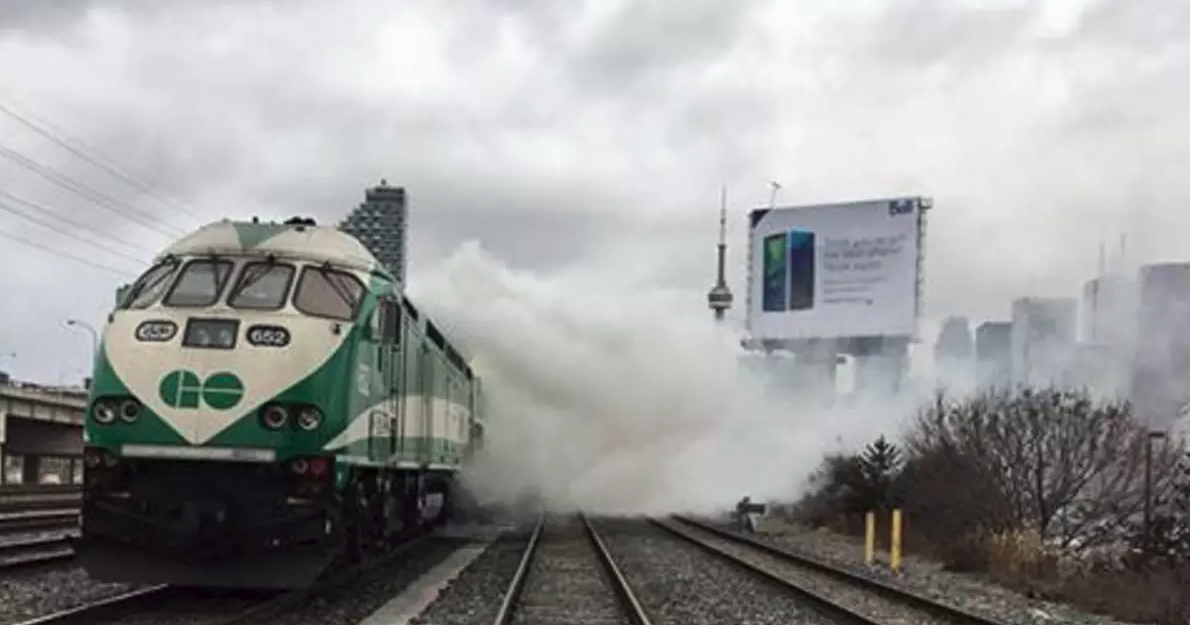
Updates as they came in: initial post, locomotive fire, media access, still questions more than a week later, first anniversary, and the Transportation Safety Board report.

Earlier this week, Asad Iqbal reported from Lac-Mégantic:

Rail safety advocates say that five years after the Lac-Mégantic train derailment, not enough has been done to prevent similar tragedies from happening elsewhere in Canada.

On July 6, 2013, 47 people died when a train loaded with 7.7 million litres of fuel rolled unmanned into the downtown core and exploded in the middle of the night.

Commemorative events honouring the victims will take place throughout the day on Friday.

Meanwhile a citizens’ committee for rail safety and surveillance will mark the disaster by heading north to the neighbouring town of Nantes, where the train started rolling down the steep hill toward Lac-Mégantic in 2013.

“Five years after the tragedy we have not seen a significant improvement of rail safety measures,” said Robert Bellefleur, a spokesperson for the Coalition des citoyens et organismes engagés pour la sécurité ferroviaire.

The federal and provincial governments announced in May a bypass would be built around the town of Lac-Mégantic, Que. (Julia Page/CBC)

Tanker cars carrying dangerous goods are regularly parked at the top of this steep hill above the town, Bellefleur said, a disturbing image for people who drive past.

“The main risk factor that contributed to the tragedy is not even solved,” said Bellefleur.

July 5, 2018

World of Warships – HMCS Haida

Filed under: Cancon, Gaming, History, Military, WW2 — Tags: , , , — Nicholas @ 04:00

The Mighty Jingles
Published on 3 Jul 2018

Oh Canada! Your ship finally made it into World of Warships even if your flag didn’t. I could just tell you what I think of her right now but that would spoil the video, so go on, watch it!

Little White Mouse Haida Review: https://forum.worldofwarships.com/top…

All music licensed from www.epidemicsound.com and www.machinimasound.com Really, I’m not kidding. Stop trying to claim license-free music you record company scumbags!

Barbara Kay on revising Ontario’s sex-ed curriculum

Filed under: Cancon, Education, Health, Politics — Tags: , , , , , — Nicholas @ 03:00

Her latest column in the National Post has some advice for Premier Doug Ford and his merry band of (dare I say) reformers:

Doug Ford at the 2014 Good Friday procession in East York, Ontario.
Photo via Wikimedia Commons.

Doug Ford’s victory was in some measure due to his promise — I believe a heartfelt one — to repeal the sex ed curriculum in Ontario schools. I assume there’s a replacement program in the works. A sex-ed vacuum is not politically tenable, or even what most conservative parents want.

What principles will undergird a Doug Ford inspired curriculum? I’d suggest four guidelines for his consideration.

First, take sex ed out of the hands of ideologues and activists. Constitute a task force made up of a variety of stakeholders, involving both liberal and conservative parents (including parents of LGBT students), disinterested scientific authorities and, yes, religious representatives, to hammer out recommendations for a sex ed paradigm, in which science is separated from theory, and in which proponents of morality and modesty-based sex ed have a voice and a vote.

Second, revisit the underlying premise in sex ed today that all children must learn everything under the sun that touches on sexuality from the state.

[…]

Third, there is the question of readiness. Children can be taught the facts of biology quite early, but there is no need to engage young children in detailed discussion of sexual preferences before they fully understand the nature of sexual desire. It is obviously appropriate to warn against internet porn and social media perils at a fairly early age, and the reality of same-sex couples (including parents of students) openly acknowledged, but full engagement in the nature of sexual desire in all its diversity and detail is best left for adolescence.

Finally, nowhere is the need for distinction between science and theory more urgently required than in the area of transgenderism.

Much of what children are learning about transgenderism today, at a very tender age, is not science-based, but activist-dictated theory that can result in psychological harm.

July 4, 2018

The War of 1812 on the frontier

Filed under: Britain, Cancon, History, Military, USA — Tags: , , , — Nicholas @ 06:00

Danny Sjursen on what he calls the “Forgotten and Peculiar War of 1812”, specifically the odd situation on the US/Canadian border:

A lithograph based on an E.C. Watmough painting titled “Repulsion of the British at Fort Erie, 15 August 1814.” It depicts an attack that occurred at the U.S.-Canadian border during the War of 1812.
Image via AntiWar.com

“The acquisition of Canada, this year, as far as the neighborhood of Quebec, will be a mere matter of marching.” —Thomas Jefferson (1812)

“People speaking the same language, having the same laws, manners and religion, and in all the connections of social intercourse, can never be depended upon as enemies.” —Baron Frederick de Gaugreben, British officer, in 1815

No one seems to know this (or care), but the United States had long coveted Canada. In two sequential wars, the U.S. Army invaded its northern neighbor and intrigued for Canada’s incorporation into the republic deep into the 19th century. Here, on the Canadian front, the conflict most resembled a civil war.

Canada was primarily (though sparsely) populated by two types of people: French Canadians and former American loyalists — refugees from the late Revolutionary War. Some, the “true” loyalists, fled north just after the end of the war for independence. The majority, however, the “late” loyalists, had more recently settled in Upper Canada between 1790 and 1812. Most came because land was cheaper and taxes lower north of the border. Far from being the despotic kingdom of American fantasies, Canada offered a life rather similar to that within the republic. Indeed, this was a war between two of the freest societies on earth. So much for modern political scientists’ notions of a “Democratic Peace Theory” — the belief that two democracies will never engage in war. Britain had a king, certainly, but also had a mixed constitution and one of the world’s more representative political institutions.

In many cases families were divided by the porous American-Canadian border. Loyalties were fluid, and citizens on both sides spoke a common language, practiced a common religion and shared a common culture. Still, if and when an American invasion came, the small body of British regular troops would count on these recent Americans — these “late” loyalists — to rally to the defense of mother Canada.

And came the invasion did. Right at the outset of the war in fact. Though the justification for war was maritime and naval, the conflict opened with a three-pronged American land invasion of Canada. The Americans, for their part, expected the inverse of the British hopes — the “late” loyalists, it was thought, would flock to the American standard and support the invasion. It never happened. Remarkably, a solid base of Canadians fought as militiamen for the British and against the southern invaders. Most, of course, took no side and sought only to be let alone.

It turned out the invading Americans found few friends in Canada and often alienated the locals with their propensity for plundering and military blunder. Though the war raged along the border — primarily near Niagara Falls and Detroit — for nearly three years the American campaign for Canada proved to be an embarrassing fiasco. Defeats piled up, and Canada would emerge from the war firmly in British hands. In the civil war along the border, the Americans were, more often than not, the aggressors and the losers.

[…]

The Treaty of Ghent, which ended the war, changed nothing. There was no change of borders, and the British said nothing about impressment — the purported casus belli! So just what had those thousands died for?

Certainly it was no American victory that forced the British to the peace table. By 1814 the war had become a debacle. Two consecutive American invasions of Canada had been stymied. Napoleon was defeated in April 1814, and the British finally began sending thousands of regular troops across the Atlantic to teach the impetuous Americans a lesson — even burning Washington, D.C., to the ground! (Though in fairness it should be noted that the Americans had earlier done the same to the Canadian capital at York.) The U.S. coastline was blockaded from Long Island to the Gulf of Mexico; despite a few early single ship victories in 1812, the U.S. Navy was all but finished by 1814; the U.S. Treasury was broke and defaulted (for the first time in the nation’s history) on its loans and debt; and 12 percent of U.S. troops had deserted during the war.

The Americans held few victorious cards by the end of 1814, but Britain was exhausted after two decades of war. Besides, they had never meant to reconquer the U.S. in the first place. A status quo treaty that made no concessions to the Americans and preserved the independence of Canada suited London just fine.

Northern theatre of the War of 1812 (note that Ottawa was not founded until 1826 and shouldn’t appear in this view, and the Niagara River is shown at least 45 degrees off its actual course)
Image via Wikimedia Commons

July 2, 2018

Mark Steyn on 49th Parallel

Filed under: Cancon, Germany, History, Military, WW2 — Tags: , , , , — Nicholas @ 05:00

His annual Canada Day post this year featured a World War 2 British film about Canada intended for Americans:

The film stars, in order of billing, Leslie Howard, Laurence Olivier, Raymond Massey, Anton Walbrook, Eric Portman “and the music of Ralph Vaughan Williams”, which gets an above-the-title credit – as well it should. Vaughan Williams’ score is an integral part of the picture and, if not especially Canadian (save for a very short evocation of Calixa Lavallée’s “O Canada” right at the beginning), accompanies the country’s physical landscape beautifully, particularly in the opening travelogue, mostly shot by Freddie Young leaning out of a plane with a hand-held camera and edited back in England by David Lean. (Lean and Young, of course, subsequently worked together on Lawrence of Arabia, Doctor Zhivago and Ryan’s Daughter.) And, if you’re thinking that (with one exception) none of these participants seems terribly Canuck, well, if it’s any consolation, the English also get to play all the Nazis, too. The Canadians are largely relegated to small roles and extras – like the real seamen who play the survivors of the Canadian ship torpedoed in the Gulf of St Lawrence at the opening of the picture. “So,” pronounces the German U-boat commander, “the curtain rises on Canada.”

U-37 decides to flee to Hudson’s Bay to evade the RCAF and RCN patrols looking for it. Six Germans are put ashore to scout for supplies. But, even as they set foot on land, they hear the swoop of planes and look back to see Canadian bombers destroying their submarine. In order to lend verisimilitude to the scene, Michael Powell destroyed a real – or real-ish – sub, built for him in Halifax, Nova Scotia. The RCAF gave him two thousand-pound bombs to make it look good, and he put them on “U-37” and was cunning enough to neglect to tell the actors, lest it made them nervous. The sub was then towed to the Strait of Belle Isle between Labrador and Newfoundland to be blown sky high. That was Powell’s only mistake. Notwithstanding that he named the film after Canada’s southern border, the director’s grip on the country’s eastern border was a little hazier. He had forgotten that Newfoundland was not (yet) in Canada but was a British possession in its own right. So HM Customs impounded “U-37” and Powell had to go directly to the Governor to get it back.

Other than that, he and Pressburger didn’t put a foot wrong. The location footage was impressive in its day, and still striking in ours; Pressburger’s script is subtle and humane; and the episodic structure allows for plenty of variety. Following the loss of U-37, the six Germans are now beached in northern Canada and have to figure out a way to get to safe, neutral America. They make their way to a Hudson’s Bay trading post, where the factor (played by the great Scots actor Finlay Currie) is welcoming back an old friend who’s spent the last eleven months hunting in the wilds and so has no idea Canada is at war. Johnny is a French-Canadian trapper played by – who else? – Laurence Olivier. We first meet him in the bath tub singing “Alouette”, and, as often with Olivier, the attention to detail on the accent is so good that it becomes oddly intrusive: “Diss is one big country, but verra few pipple. Ever-wan know ever-body. You can’t make goosestep trew it widdout da police fine out,” he tells the senior German officer (Eric Portman).

The window shot Michael Powell uses to get the Nazis into the factor’s small cabin is cool and clinical and all the more chilling for it. The six Germans enter and announce that they’re now in control. When you’ve just come in off the tundra after eleven months and you want to have a soak in the tub and unwind, the Master Race showing up is a bit of a downer. “Okay, you are German. Why yell about it? I am Canadian,” says the Frenchie. “He is Canadian” – he points to the Scots factor – “and he is Canadian” – and to the smiling eskimo lad: French, English and Inuit all with the same unhyphenated label “Canadian”. That’s a lot simpler than the fractious diversity at Parliament Hill earlier today.

The Nazi lieutenant attempts to beguile his captives with a copy of Mein Kampf, but Trapper Johnny isn’t interested. “What’s the matter with Negroes?” he asks.

“They’re semi-apes,” explains the German. “One step above the Jews.” This is something of a remote concern at a Hudson’s Bay trading post. The Nazis seems as enraged by their prisoners’ geniality as by anything else. As they depart, one tears a portrait of the King and Queen off the wall and carves a swastika into the space.

Pressburger’s plot follows as you’d expect: There are six Germans, and soon there will be five, and then four, three, two… From Hudson’s Bay, they commandeer a seaplane that crashes near a Hutterite community in Manitoba, where a young pre-Mary Poppins Glynis Johns is sweetly trusting of them. They make their way to Indian Day in Banff National Park, for a rather Hitchcockian scene, and thence to a camp in the Rockies, where an arty pacifist (Leslie Howard) is discoursing on Thomas Mann. The tone is set by Olivier’s Frenchie coming in from the bush: He may not be interested in war, and nor is Glynis Johns or Leslie Howard. But war is interested in them. This was the purpose of the film, as the British Ministry of Information saw it: That’s why they wanted it set in Canada, rather than in, say, England, across the Channel from Occupied Europe. These trappers, Hutterites, and pacifists didn’t come looking for trouble. But, even five thousand miles from the fighting, trouble came looking for them – in big, empty, peaceable Canada. And the implicit message to America was: In the end, it will come for you, too. There is no 49th Parallel. Whichever side of it you’re on, it’s the same side.

July 1, 2018

Naval Legends: HMCS Haida | World of Warships

Filed under: Cancon, History, Military, WW2 — Tags: , , , , — Nicholas @ 04:00

World of Warships Official Channel
Published on 28 Jun 2018

“The most fightingest ship of the Royal Canadian Navy”, and the last survivor of the Tribal-class! Find out more in the new Naval Legends episode!

Naval Legends is a series about the construction, service, and daring deeds of legendary 20th-century ships. Very few vessels survived World War I and II — most were decommissioned and scrapped. The Naval Legends production crew travels all across the globe to visit almost every active museum ship and chronicle her story.

Each episode has our own footage, military chronicles, and data from archives. The story of each ship is narrated by military historians, museum staff, and navy veterans for maximum historical accuracy. Computer graphics based on archival blueprints illustrate critical engineering elements and components, along with the ship’s armament, so you can observe these colossal war machines from your armchair!

June 29, 2018

Justin Trudeau’s emotional thinking style resonates with female voters

Filed under: Cancon, Economics, Politics — Tags: , , — Nicholas @ 05:00

Brandon Kirby on, among other things, why Justin Trudeau polls consistently higher with women than with men:

Justin Trudeau and family during India visit
Image via NDTV, originally tweeted by @vijayrupanibjp

Justin Trudeau gave one of his worst interviews during the campaign with a Maritime reporter, Steve Murphy.

Murphy continually asked him for the numbers on his spending promises, to which Trudeau had none to give. Eventually he went on the offensive against Murphy and suggested that Murphy approached politics with a calculator while Trudeau can speak to Canadians. People who think in terms of STEM find this remarkably absurd.

It’s problematic that if the numbers don’t add up in Trudeau’s budgets, he won’t be helping Canadians at all. Wages will remain stagnant while power bills go up, grocery bills go up, and our tax bills will go up.

Trudeau is on the record claiming that he will grow the economy from the heart outward, but as the calculator dictates, his plans have serious economic consequences and the rhetoric that appears caring is actually destructive.

Rational thinkers find the empty rhetoric of growing the economy from the heart outward, while simultaneously making life harder on the poor and middle class, highly offensive.

Feminists have supplied us with the premise that on average, women don’t think in terms of STEM. Economics as a science requires an appraisal that is thoroughly calloused at times, which people who don’t appreciate STEM will find highly offensive.

The end result is that if women don’t think in terms of calloused rationalism, they won’t find libertarianism at all appealing.

If it were the case that only Canadian women were permitted to vote, Trudeau would win a majority government easily. If only Canadian men were to vote, Trudeau would be swiftly defeated.

George W. Bush was the most unpopular president in the U.S. during my lifetime, and yet his approval ratings are polled higher for Americans than Trudeau’s are among Canadian men.

There’s a discrepancy between men and women but that doesn’t imply individualism is wrong.

[…]

We do need to encourage women to adopt the calloused STEM approach. $99 per case of water isn’t how most women think, but unlike the opposing view it has the virtue of actually being getting water to people; going beyond stage-one-thinking – it’s actually compassionate.

June 27, 2018

Canada’s euphemistically named “High Risk Returnees”

Filed under: Cancon, Middle East, Politics, Religion — Tags: , , , , , , — Nicholas @ 05:00

Judith Bergman on the Canadian government’s kid-gloves approach to dealing with Canadian citizens who return to Canada after volunteering to serve with terrorist organizations:

Canadians who go abroad to commit terrorism – predominantly jihadists, in other words – have a “right to return” according to government documents obtained by Global News. They not only have a right of return, but “… even if a Canadian engaged in terrorist activity abroad, the government must facilitate their return to Canada,” as one document says.

According to the government, there are still around 190 Canadian citizens volunteering as terrorists abroad. The majority are in Syria and Iraq, and 60 have returned. Police are reportedly expecting a new influx of returnees over the next couple of months.

The Canadian government is willing to go to great (and presumably costly) lengths to “facilitate” the return of Canadian jihadists, unlike the UK, for example, which has revoked the citizenship of ISIS fighters so they cannot return. The Canadian government has established a taskforce, the High Risk Returnee Interdepartmental Taskforce, that, according to government documents:

    “… allows us to collectively identify what measures can mitigate the threat these individuals may pose during their return to Canada. This could include sending officers overseas to collect evidence before they depart, or their detention by police upon arrival in Canada.”

Undercover officers may also be used “to engage with the HRT [High Risk Traveler] to collect evidence, or monitor them during their flight home.”

In the sanitizing Orwellian newspeak employed by the Canadian government, the terrorists are not jihadis who left Canada to commit the most heinous crimes, such as torture, rape and murder, while fighting for ISIS in Syria and Iraq, but “High Risk Travelers” and “High Risk Returnees”.

The government is fully aware of the security risk to which it is subjecting Canadians: According to the documents, “HRRs [High Risk Returnees] can pose a significant threat to the national security of Canada”. This fact raises the question of why the government of Canada is keen to facilitate these people’s “right of return” — when presumably the primary obligation of the government is to safeguard the security of law-abiding Canadian citizens.

Canada’s odd approach to open data

Filed under: Cancon, Government, Liberty, Media — Tags: , , — Nicholas @ 03:00

Michael Geist the contrast between what the Canadian government says about access to information and what they actually do:

The Liberal government has emphasized the importance of open data and open government policies for years, yet the government has at times disappointed in ways both big (Canada’s access-to-information laws are desperately in need of updating and the current bill does not come close to solving its shortcomings) and small (restrictive licensing and failure to comply with access to information disclosures).

For example, late last year, I noted that government departments had oddly adopted a closed-by-default approach to posting official photographs on Flickr. Unlike many other governments that use open licenses or a public domain approach, Canadians looking for openly licensed photographs for inclusion in learning materials, blog posts, or other content must rely on foreign governments. The restrictive licensing approach remains in place: those seeking photos on Flickr from the G7 will find Prime Minister Justin Trudeau’s are “all rights reserved” but other governments attending the summit – including the United States, United Kingdom, Norway, and South Africa – all facilitate re-use of their photos through open licensing.

A restrictive approach to disclosing information about completed access-to-information requests has also emerged in recent months. Open disclosure of the completed requests benefits both the public and the government. For the public, completed requests are there for the asking as they can be obtained on an informal basis at no cost. For the government, completed requests can sometimes provide the information requested by the public, thereby reducing costs and saving time for government officials. For many years, the government maintained a database known as CAIRS, which featured lists of completed access to information requests. After that was cancelled, the government created an open government page that includes the last two years of requests (the information is searchable or downloadable). According to the site:

    Government of Canada institutions subject to the Access to Information Act (ATIA) are required to post summaries of processed ATI requests. You can search these summaries, which are available within 30 calendar days after the end of the month. Searches can be made by keywords, topic or field of interest. If you find a summary of interest, you can also request a copy of the previously released ATIA records.

But you can’t access them until they’ve been published, and several government departments are as much as a year behind in making these records available.

June 23, 2018

QotD: The protectionist two-step, Alberta craft-beer variant

Filed under: Business, Cancon, Economics, Quotations — Tags: , , , , — Nicholas @ 01:00

Economic protectionism has two classic rationales. Sometimes, as in the case of Alberta’s clumsy attempt at an interprovincial tariff on craft beer, it is undertaken in the name of defending small, emerging “infant industries” that a government wishes to give time to establish themselves in its territory. And sometimes, as in the case of Canadian dairy supply management, it is done to defend “strategic” industries that have existed forever and that allegedly create an irreplaceable quantity of employment and profits.

Give yourself a gold star if you spotted that these canonical pretexts for trade barriers are contradictory. The inherent promise of protection for “infant industries” is that they will grow up and leave the nest. But, oops: by the time they reach adulthood, they may have become too “strategic” to expose to market forces. Heads, the favoured firms win; tails, the consumer loses.

Of course, on the level of fine detail, the arguments for trade barriers are manifold and complicated. (If you get into a quarrel about dairy, and take the free-trade side, you will find them being changed by your interlocutor every 30 seconds.) Alberta’s program for supporting small brewers has an unclear, touchy-feely small-is-beautiful justification. By design, the tariff applies only to businesses that have no intention of attaining industrial scale. It’s right there in the term “craft brewing,” isn’t it? Whatever the esthetic merits of craft beer, this is surely the deliberate encouragement of what the urbane left likes to calls “precarious” jobs that could be flung into disarray by a bad season, a shift in fashions, or a supply problem.

And, also, it’s illegal.

Colby Cosh, “A court refuses to swallow Alberta’s thinly disguised craft-beer tariff”, National Post, 2018-06-22.

June 17, 2018

Conrad Black – Trump’s not bluffing

In the National Post (but linked from his personal website), Conrad Black warns of the danger of assuming that Trump is just blustering on his trade threats:

Justin Trudeau struck just the right Canadian note of our gentle nature but refusal “to be pushed around,” and he predictably will reap the short-term reward for standing up for the country opposite the ideal American bogeyman, the blustering billionaire president who has been a Garry Trudeau caricature of the Ugly American for 25 years. (It is a very incomplete picture, like most caricatures, but it works for Trump and he often cultivates it.) The boycotts of American goods and holidays will be a bonus to Canada economically and the anti-Trump American media will be along within two weeks to lionize doughty Canada like “Gallant little Belgium” in 1914 and “Plucky Israel” in 1947, and it will strengthen Canada’s always fragile self-regard opposite the United States.

On the other hand, Trump isn’t just a blowhard; all his career he has known how to go for the jugular and his reference to 270-per-cent Canadian tariffs on butter is a valid complaint that threatens to tear the scab off this egregious payoff to the comparatively small number of Quebec dairy farmers who mainly profit from it. The same issue was hammered hard by Martha Hall Findlay when she ran for the federal Liberal leadership in 2013 and by Maxime Bernier when he ran narrowly behind Andrew Scheer for the Conservative federal leadership last year. The issue died down after their unsuccessful campaigns, but if Donald Trump is incited to hammer that theme, he will roil the domestic Canadian political waters and English-French relations in the country generally.

Presumably our trade negotiators will not become so intoxicated by the prime minister’s peppy talk and spontaneous popular boycotts of the U.S. that they forget the correlation of forces. An aroused American administration could do serious damage to Canada’s standard of living, and it could be a tempting tactic to expedite more important negotiations with Mexico and the principal Asian and European powers. The United States is now enjoying three times as great a rate of economic growth as Canada (4.8 to 1.5 per cent), has lower tax rates, 11 times as great an economy, and more unfilled jobs than unemployed people.

Behind the peeling façades of Norman Rockwell and Walt Disney, the United States is a monster, and not always an amiable monster. If Canadians are blinded by their visceral dislike of Donald Trump, as the antithesis of Canadian criteria for likeable public figures, they will be exposed to the ruthless pursuit of the national interest that in his own career propelled him from technical insolvency to immense wealth and celebrity and then, against all odds, to control of a great political party and to the headship of the most powerful country in the world. If these talks blow up, the U.S. doesn’t have to settle for WTO rules; it can impose outright protectionist measures. Justin Trudeau has been agile, and the country has responded admirably. But Canadian policy-makers must understand that they are playing for almost mortal stakes with potentially dangerous protagonists who have no sense of fair play and no interest in what Canada thinks of them.

June 14, 2018

The economic idiocy of Canada’s supply management system

Filed under: Cancon, Economics, Politics — Tags: , , , , — Nicholas @ 10:03

Andrew Coyne, who finally seems to have weaned himself off the PR voting jag, explains the Canadian government’s idiotic yet deeply entrenched supply management bureaucracy:

How did supply management, of all things, come to be at the centre of everything?

The policy, under which farmers in a number of sectors — milk, cheese, eggs, poultry — are organized into government-approved price-fixing rings, enforced by a complex system of quotas and protected by prohibitive tariffs on imports of the same goods, has been in place since the early 1970s. It affects fewer than 15,000 farmers nationwide, who between them account for less than one per cent of Canada’s GDP.

Yet it has somehow become the central issue not only of our domestic politics, but of international trade talks. It was the pretext for Donald Trump’s decision to impose tariffs on imports of aluminum and steel, and is his most-cited grievance with Canadian trade policy. As such, it has become the rallying cry of preening political patriots, each of the parties seeking to outdo the others in defence of a policy whose avowed purpose, let us remember, is to make basic food items more expensive for Canadians.

It has also become a source of deep division within the Conservative Party. It was already, of course, thanks to last year’s leadership race, in which Maxime Bernier made its elimination the central plank in his campaign, as Andrew Scheer made its retention the key to his. Indeed, Scheer’s narrow victory was directly attributable to the votes of thousands of Quebec dairy farmers, who took out party memberships for the sole purpose of ensuring Bernier’s defeat. It is even possible the Scheer campaign encouraged them in this endeavour.

[…]

There is no serious case for supply management — a policy that is is as unjust, inasmuch as it imposes the heaviest burden on the poorest families, as it is inefficient; that locks out new farmers and deters existing farmers from seeking new markets; and that makes us look utter hypocrites in free-trade talks, not only with the U.S., but the rest of the world — and no serious person whose livelihood does not depend upon it would make it.

And yet every member of every party is obliged to swear a public oath of undying fealty to it. That all do, but for one, is a sign of the institutional rot in our politics. For they do so not in spite of its awfulness but because of it — because the willingness to say two plus two equals five has become the ultimate test of loyalty.

On other issues, that might be because of genuine agreement. But a willingness to sign onto a truly hideous policy like supply management — that’s certain proof an MP is a “team player.”

June 13, 2018

Misinformed – Canada

Filed under: Cancon, Humour — Tags: — Nicholas @ 02:00

Misinformed
Published on 25 Jan 2018

There are 21 facts in this video

June 11, 2018

Jay Currie says it’s time to light the Bat Signal for … Brian Mulroney?

Filed under: Business, Cancon, Economics, Government, USA — Tags: , , , , , , — Nicholas @ 05:00

I find it hard to believe that things have gotten to the point that anyone, let alone Jay Currie, is looking to former PM Brian Mulroney to pull Justin’s chestnuts out of the Trumpian fire:

In Canada, more specifically Ontario, the destruction of the auto industry would be a full scale, all hands on deck, disaster. Realistically, the auto sector is Ontario’s largest private sector employer and the largest manufacturing sector. Being priced out of the US market would kill tens of thousands of well-paid jobs.

Trump has taken the measure of Trudeau and his tiny, annoying, Minister of External Affairs, Chrystia Freeland and concluded they are featherweights. Which means that Canada is potentially screwed because Trump has no faith in our leadership. You don’t call people dishonest publicly if you plan to do business with them.

It is unlikely that Trudeau will be aware of just how badly he has failed for a few days. The Canadian media are heavily invested in a narrative which has Justin standing up to the big, bad, Trump. Trudeau’s tone-deaf advisors are, no doubt, revelling in the fact they got lots of “gender” language into the communique.

It will take a few days for the more sober side of the media to realize what peril Trudeau has put us in. And a few more for the geniuses in the PMO to figure out that Trump is not playing the same game as they are.

When they do figure it out the question will arise, “What the fuck do we do now?”

As I am quite sure Butz and his posse read this blog I have a simple suggestion.

Normally, I would have suggested they get in touch with Simon Reisman who negotiated both the Auto-Pact and NAFTA. Alas, Reisman is dead.

Second best by a long shot? Brian Mulroney. A man I have next to no time for but who a) managed to get Canadians onboard for NAFTA, b) was a quite successful Canadian Prime Minister, c) is wired into both Trump World and broad swaths of corporate America.

If Trudeau could get Mulroney to do it Mulroney would be going into the US with a serious, well thought out, everything on the table, pitch. Likely starting with first principles – no tariffs, no subsidies, no non-tariff barriers. Be prepared to dump dairy and end transhipment of Chinese steel. And pitch it to the Trump people as the template for the deals which could be made with the EU, Japan, India and so on. (China is a whole other thing.)

The key point here is that Canada has to move, and move quickly, away from the finger-wagging politics of gender inclusion and climate change to a hard-nosed business approach to getting the best deal we can with an America which is now willing to put its own interests first.

June 9, 2018

Various comments on the Ontario election

Filed under: Cancon, Politics — Tags: , , — Nicholas @ 03:00

Once the voting was underway, I briefly checked my Facebook feed and, as expected, saw a lot of declared support for the NDP (even among those who normally lean Liberal), a few of the more outspoken Conservatives fighting their corner, but others I think of as Conservative-leaning were generally being very quiet. I didn’t bother with my Twitter feed, as relatively few of the people I follow are from Ontario, and the same for my Gab feed (Twitter biases as far left as Gab tends to the far right).

When I went in to vote (I had a Libertarian candidate in my riding), I asked the poll clerk if there had been any ballot refusals and she said “there’d been a few”. The preliminary results shown on the Elections Ontario site for my riding:

The Globe and Mail sent a tweet showing the overall shape of the PC victory:

David Warren commented on the election results:

My Chief Texas Correspondent leaps naturally upon the result of yesterday’s Ontario provincial election, in which our governing Liberals were annihilated. He sees this as a conventional “shift to the Right,” in Merican party terms, and celebrates it as such.

To which I reply: that the moronic city voters went not Right but over to the NDPee, which promised more spending than even the Liberals could imagine, and various grand new welfare schemes. (They are a zoological garden of various activist nutjobs.) Our outgoing premier’s personal charmlessness factored into the result. The winning Doug Ford is a total clown, and the media will have him for breakfast and snacks, yet for one brief glorious moment the Leftoids are in disarray. Ford is no Trump, though he might be able to match your esteemed President in straightforward vulgarity. He cannot have the fondest clew what he will do with the mess he has inherited, now that he is in power. He will have to betray that half of his constituency to which he promised the opposite of what he pledged to the other half, with unstudied vagueness. His caucus will be crawling with Suburban Saracens and other multicultural eccentrics — not the old solid Tory phalanx of white, Presbo-Methodist, rural hicks. Alas, though the ride may be wild, it won’t be fun to watch.

At BlogTO, Lauren O’Neil gathers a lot of Toronto-centric Twitter comments (not surprisingly, most are not complementary toward the Premier-elect (who, I’m informed we should more accurately be calling the Premier-designate instead)).

Kathy Shaidle posted on Facebook:

Am I relieved? You bet. But: Remember how close the polls were. The NDP got a lot of votes, and while our system means that the PCs won, the “popular” vote still shows how many leftoids there are in the province. And who else noticed that Doug’s “enthusiastic” official opening lines — “What a response. This is incredible.” — was scripted, and delivered with the stilted conviction of an Ed Wood stock player? On that note, I’ve seen less wooden Chippendale highboys…

« Newer PostsOlder Posts »

Powered by WordPress