Quotulatiousness

July 16, 2019

Bitcoin mining’s massive carbon buttprint

Filed under: China, Economics, Environment, Technology — Tags: , , , — Nicholas @ 03:00

Lincoln Swann explains why Bitcoin has become a huge environmental liability as its per-unit cost-to-mine has risen:

Bitcoin is more than a rather volatile imitation currency, it is also a huge energy monster.

The digital “mining” to create more Bitcoins and the recording of transactions uses up vast, crazy, amounts of electricity – something like 70TWh a year. That is about the same as Austria, say 20% of UK power consumption. As an added horror much if it is done in China where most of the power is coal generated.

All that adds up to a CO2 output from Bitcoin stuff of about 35mt a year. Planet friendly it definitely aint.

July 6, 2019

History Summarized: Hong Kong

Overly Sarcastic Productions
Published on 5 Jul 2019

Sometimes small corners of the map can have outsized effects on the surrounding world. Hong Kong is undoubtedly one of History’s greatest examples of big things coming from small beginnings. If you’re curious about Hong Kong’s current political situation, there’s no better place to start than at the beginning.

LEARN MORE about Hong Kong’s current events:
China is Erasing its border with HK: https://www.youtube.com/watch?v=MQyxG…
HK’s huge protests, explained: https://www.youtube.com/watch?v=6_Rdn…

Further Historical Reading:
A Modern History of China — Steve Tsang https://www.amazon.com/Modern-History…

PATREON: https://www.Patreon.com/OSP

June 29, 2019

Canada’s inability to deal with Chinese hard ball tactics

Filed under: Business, Cancon, China, Law, USA — Tags: , , , — Nicholas @ 05:00

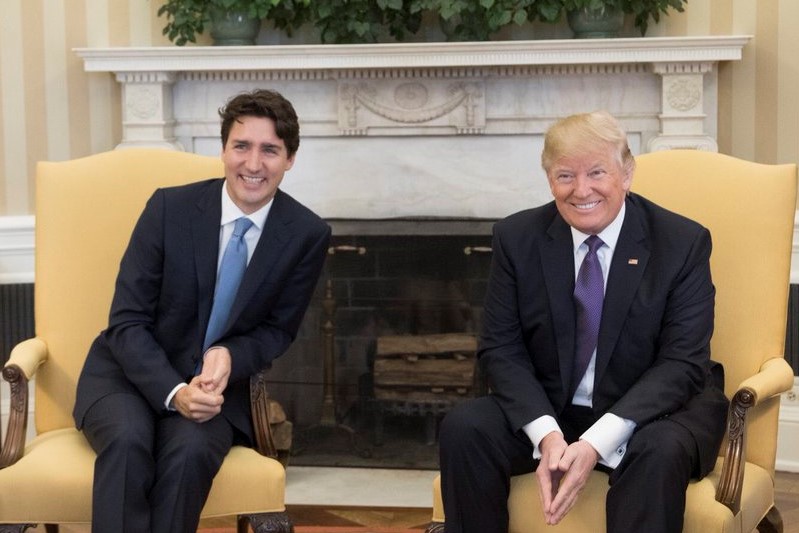
The Canadian government complied with a request from the United States government to detain a Chinese national for possible extradition to the US. But this was no ordinary Chinese citizen: it was Meng Wanzhou, the Chief Financial Officer for Huawei, a very big and very well-connected Chinese conglomerate. Ms. Wanzhou is not just a high-ranking executive, but also the daughter of the founder of the company. The Chinese government is more than miffed at Canada’s legal presumption and has been piling on the means of persuasion to get Canada’s notoriously pliable government to just pretend this never happened and to let Ms. Wanzhou proceed on her way. Under normal circumstances, this might well happen, but the US government is now under the control of a man who reputedly makes our Prime Minister lose control of his bladder, so we can’t just be seen to knuckle under to the bullying of the Bad Orange Man, nor can we be seen to knuckle under to the bullying of the PRC, leaving poor Justin Trudeau looking weak and powerless (and, to be fair, he is weak and powerless).

Andrew Coyne suggests that the best way to help a couple of poor Canadians who have been caught up in the inter-governmental shenanigans is to stop talking about some sort of “deal”:

U.S. Department of Justice among others announced 23 criminal charges (Financial Fraud, Money Laundering, Conspiracy to Defraud the United States, Theft of Trade Secret Technology and Sanctions Violations, etc.) against Huawei & its CFO Wanzhou Meng
Image via Wikimedia Commons.

I don’t doubt that behind the scenes government officials are doing everything they can, or think they are. But the pressure to bring the Canadians home is surely less for the conspicuous failure of other Canadians to give a damn.

Indeed, what is striking throughout this standoff is that most of the pressure has come from the other side. It is China, not Canada, that has used trade as a weapon, blocking imports of Canadian meat and canola. It was the Chinese air force that buzzed a Canadian warship in the East China Sea.

It is the departing Chinese ambassador to Canada who has launched one incendiary attack after another on this country, while Canada’s now-former ambassador to China was floating trial balloons about getting the Americans to drop the charges against Meng. It is China’s leaders who refuse to meet ours.

And yet for all of China’s lawlessness, for all its bestial mistreatment of our citizens and baseless attacks on our interests, the most common response in this country is not to demand that China repair its relationship with Canada, but to ask how Canada can mollify China.

June 23, 2019

The state of play in the Strait of Hormuz

Filed under: China, Economics, Middle East, Military, USA — Tags: , , — Nicholas @ 03:00

Arthur Chrenkoff wonders what would happen if Iran gave a war, but nobody came:

A satellite view of the Strait of Hormuz, 30 December 2001.
Jacques Descloitres, MODIS Land Rapid Response Team, NASA/GSFC via Wikimedia Commons.

Nearly twenty per cent of world crude oil shipments (from the Arab Gulf producers) go out to the rest of the world through the Strait of Hormuz, which Iran is threatening to close (hence its recent attacks on oil tankers).

However, through a combination of fracking, increased mainline well production and greater efficiencies, the United States is now finally energy self-sufficient. For all that America cares, Iran could cut off all the traffic through the Strait and it would have a minimal impact on the domestic economy, some minor logistical adjustments aside.

Nearly two thirds of the oil that travels through the Strait ships to Asia instead, and specifically to China, India, Japan and Korea, which are significantly more dependent on that oil to power their energy-hungry, export-oriented economies than other regions of the world.

China, notably, has been Iran’s tacit international ally. If Iran wants to interfere with the free navigation in its backyard and in so doing antagonise one of its few remaining backers, it should be left alone to do so.

These circumstances – the US doesn’t need the Gulf oil, China does – should convince the United States to stand back and not involve itself yet another time as the world sheriff to enforce the rules of international law and maintain the open international trading system. The rest of the world all too often free-rides on America’s good graces (not to mention its blood and treasure), while at the same time reserving the right to castigate the superpower for its interventionism. Why not let the world experience what it’s like without having the US solve all their problems (while getting all their blame)? Maybe the European Union or the United Nations can do something [canned laughter]. Or maybe the most affected Asian nations can try to solve their own oil supply problems. Good luck, lads.

June 18, 2019

Hong Kong protests

Filed under: China, Law, Liberty, Politics — Tags: , , — Nicholas @ 03:00

Colby Cosh tests Betteridge’s Law by asking if the protests in Hong Kong are the birth pangs of a new nation (commonsense and a slight knowledge of Chinese history militate against answering “yes”):

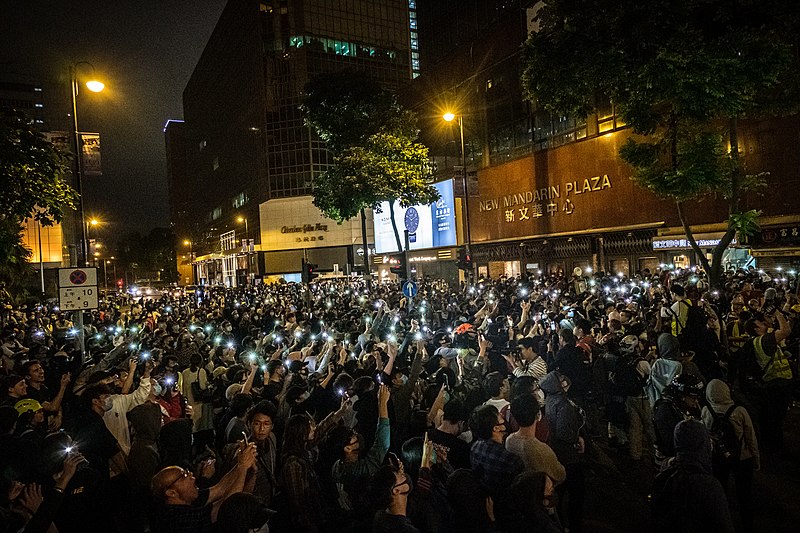
2019 Hong Kong anti-extradition law protest on 16 June, captured by Studio Incendo from Flickr.
Photo via Wikimedia Commons

For the past week, Hong Kong has been taking another step toward figuring out exactly what it is. In an unprecedented display of resistance to Chinese power, literally innumerable hordes have been taking to the streets of HK, protesting the Communist Party-anointed chief executive and her effort to introduce a law allowing for the extradition of citizens to the mainland.

To anyone who follows Hong Kong affairs, these protests seem different qualitatively from those of the past. Earlier, related demonstrations like the Umbrella Movement of 2014 could be dismissed as economic unrest acted out by the young and irresponsible — by people who had not yet entered into, or who feared being excluded from, the strange social bargain between mainland power and HK’s wealth. 2019’s mass action is new: now everyone is marching. The revolt against the extradition bill is led by students, but persons of all ages — in some cases, multiple generations of the same family — are taking to the streets. Business owners are displaying sympathy with the marchers by means of small gestures. Commuters, who would normally be as annoyed with chaos and delay as any Torontonian trying to manoeuvre around a human rights demo, are signalling solidarity. The Hong Kong legal profession, aware that unrestricted extradition would annihilate their distinct system and the freedoms China promised to preserve, staged its own silent protest march. Hongkongers abroad are joining in symbolically.

Is this the birth of a nation? Those who wanted to push Hong Kong in the direction of formal independence have always been politely outnumbered. But the challenging, explosive assertion that “Hong Kong is not China” has become a routine feature of Hong Kong life.

Hong Kong was relinquished to China in 1997 after Britain secured paper guarantees that its independent judiciary and Commonwealth-style legal procedures would survive at least until 2047. When the handover was executed, the number 2047 meant — to the British trying to extract themselves from their last imperial briar patch — “far enough in the future for mainland China to have liberalized a bit.” The advent of Xi Jinping has since shown that progress, alas, does not proceed in a predictable linear way.

June 10, 2019

Bomb the Children – WW2 – WaH 003 – May 1940

Filed under: China, Europe, History, Military, WW2 — Tags: , , , , , , — Nicholas @ 06:00

World War Two
Published on 9 Jun 2019

When WW2 breaks out, the belligerents promise to not bomb civilians. The promise is broken, literally within minutes by the Nazis and within weeks by the Soviets. Now, nine months later the Allies are about to follow suite.

Join us on Patreon: https://www.patreon.com/TimeGhostHistory
Or join The TimeGhost Army directly at: https://timeghost.tv

Follow WW2 day by day on Instagram @World_war_two_realtime https://www.instagram.com/world_war_t…
Join our Discord Server: https://discord.gg/D6D2aYN.
Between 2 Wars: https://www.youtube.com/playlist?list…
Source list: http://bit.ly/WW2sources

Written and Hosted by: Spartacus Olsson
Produced and Directed by: Spartacus Olsson and Astrid Deinhard
Executive Producers: Bodo Rittenauer, Astrid Deinhard, Indy Neidell, Spartacus Olsson
Creative Producer: Joram Appel
Post Production Director: Wieke Kapteijns
Research by: Spartacus Olsson
Edited by: Wieke Kapteijns

Archive by Screenocean/Reuters https://www.screenocean.com.

A TimeGhost chronological documentary produced by OnLion Entertainment GmbH.

From the comments:

World War Two
16 hours ago
Strategic Bombing is what it’s called, but in reality the strategic part is just theory – the simple reality is that people not involved in the fighting are going to die. This is a hot topic to this day. Who started? Was it justified to retaliate? Is it an acceptable method because the end justifies the means, that it might help win the war by breaking an enemy country? Does one strategic bombing of civilians make another murder of a thousand innocent victims less atrocious? Pretty absurd questions when you think about it. No matter who did it, no matter why they did it, no matter who started it, it’s really hard to justify the murder of children and unarmed adults – individuals that could not have any real influence on the outcome of the war.

May 25, 2019

History Summarized: Late Dynastic China

Filed under: Britain, China, Economics, History, Humour — Tags: , , , — Nicholas @ 06:00

Overly Sarcastic Productions
Published on 24 May 2019

Signup for your FREE trial to The Great Courses Plus here: http://ow.ly/diiG30oC0Lk

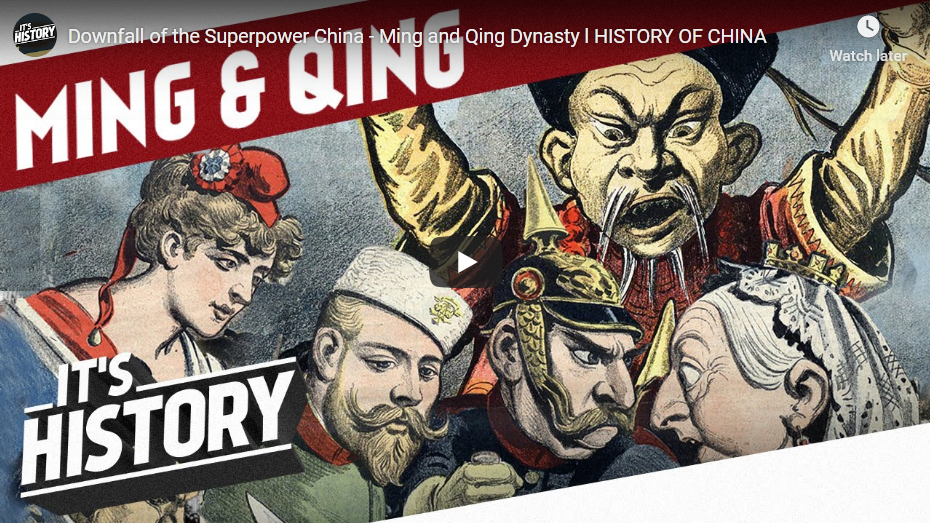
In a shocking twist of fate, China stays in one piece for a majority of this video. The unfortunate side-effect is that when it does collapse, it collapses HARD. Find out how in this tour through the Yuan, Ming, and Qing dynasties!

Further Reading: China, A History by John Keay

PATREON: https://www.Patreon.com/OSP

The Great Courses Plus is currently available to watch through a web browser to almost anyone in the world and optimized for the US, UK and Australian market. The Great Courses Plus is currently working to both optimize the product globally and accept credit card payments globally.

India’s “Modi generation”

Filed under: China, Economics, India, Politics — Tags: , , , — Nicholas @ 05:00

Mihir Swarup Sharma discusses the demographic, political, and social impact of India’s most influential generation:

Israeli President Reuven Rivlin and IDF Chief of General Staff Gadi Eizenkot meet with Indian Prime Minister Narendra Modi, in Jerusalem, July 5, 2017.
Photo by Mark Neyman / GPO via Wikimedia Commons.

The Modi generation, which is and will be India’s most influential ever, will reshape this country the way that other demographic bulges — think of the US’ Baby Boomers — have done so elsewhere. Their India will be substantively different, in terms of domestic and global politics, than that which has come before.

What might this India look like? First, it will be impatient. Young people are less willing to wait for national glory. In the People’s Republic of China, the rule for the country, set by Deng Xiaoping, was to “bide your time and hide your strength”. Xi Jinping’s China, where the agenda is being set to appease a generation of young single men, has abandoned Deng’s maxim. This will be even more true for India, which is after all a democracy that must respond to the most powerful voting bloc in its history. It will be impatient about economics as well. Young Indians expect a better life soon. Today they are willing to give Modi some more time to achieve it. But, in the years to come, that patience will run out.

Second, it will be aggressive. India can no longer “hide its strength”. That was the lesson we must take from the political salience in this election of Balakot, of the promise by the ruling party to enter their houses and kill India’s enemies. A national machismo is the natural consequence of a bulge of young, unemployed and unemployable men. India is perhaps less able to sustain this aggressiveness than, say, China. But the times in which India would be able to absorb terrorist attacks, for example, without a major pushback have passed.

Third, it will be a risk-taker. Young people have a belief in their own invincibility, and Indian policy will be forced to reflect this. Others might argue demonetisation was a foolish mistake; but what matters to many voters is that Modi took a risk, and according to them in a good cause. The Balakot air strike on Pakistan may not have achieved a fundamental strategic transformation of the India-Pakistan relationship (though some experts disagree) but it played well politically because it was not just a demonstration of strength as a nation, but an example of a tolerance to risk. In this sense, the notion of Indian leadership has become one of risk-taking; Manmohan Singh was pilloried for caution and “silence”, Modi is considered an epochal leader because he takes risks.

May 17, 2019

The Three Kingdoms – The Battle of Guandu – Extra History – #2

Filed under: Books, China, History, Military — Tags: , — Nicholas @ 06:00

Extra Credits
Published on 16 May 2019

This series is brought to you by Total War: THREE KINGDOMS, a brand new strategy game set during this time period. https://store.steampowered.com/app/77…

Yuan Shao’s forces cross the Yellow River, assaulting Cao’s fortifications. Yuan has 110,000 soldiers — including the runaway warlord Liu Bei — while Cao Cao has only twenty thousand. But things are about to go in a very unexpected, brutal twist for the next eight years…

Three kings ruled in China. Three kings, each dreaming of ruling all under heaven. Three kings who rallied their armies for battle. The empire, long divided, must unite; long united, must divide.

Thanks to Jordan Martin for the guest art! https://www.jordanwmartin.com/

Join us on Patreon! http://bit.ly/EHPatreon

May 11, 2019

The Three Kingdoms – Yellow Turban Rebellion – Extra History – #1

Filed under: Books, China, History, Military — Tags: , , — Nicholas @ 06:00

Extra Credits
Published on 9 May 2019

This series is brought to you by Total War: THREE KINGDOMS, a brand new strategy game set during this time period. https://store.steampowered.com/app/77…

Fierce duels. Great armies. Love, brotherhood and betrayal. These are the images conjured when we speak of the Three Kingdoms.

Liu Bei, Zhang Fei, Guan Yu — these were the men who would define the Three Kingdoms period. Even though the actual history of this period is often conflated with the events of the historical novel, Romance of the Three Kingdoms, there was still a lot of compelling drama and intrigue we can explore — let’s delve in to the Yellow Turban Rebellion, which really did happen!

Thanks to Jordan Martin for the guest art! https://www.jordanwmartin.com/

Join us on Patreon! http://bit.ly/EHPatreon

May 5, 2019

Retreat in the North, Preparations in the West – WW2 – 036 – May 4 1940

Filed under: China, Europe, History, Japan, Military, WW2 — Tags: , , , , , — Nicholas @ 04:00

World War Two
Published on 4 May 2019

Allied plans to take Trondheim in Norway to allow for larger reinforcements and even bigger aerial support to come in are disbanded as the troops approaching Trondheim are pulled back from Norway. While the Allied efforts in Norway lose force there, the Allied forces in Western Europe are prepared for a German invasion through the Benelux countries. The Japanese too are determined to continue their campaign in China, and send thousands more young men into the battlefields.

Join us on Patreon: https://www.patreon.com/TimeGhostHistory
Or join The TimeGhost Army directly at: https://timeghost.tv

Follow WW2 day by day on Instagram @World_war_two_realtime https://www.instagram.com/world_war_t…
Join our Discord Server: https://discord.gg/D6D2aYN.
Between 2 Wars: https://www.youtube.com/playlist?list…
Source list: http://bit.ly/WW2sources

Written and Hosted by: Indy Neidell
Produced and Directed by: Spartacus Olsson and Astrid Deinhard
Executive Producers: Bodo Rittenauer, Astrid Deinhard, Indy Neidell, Spartacus Olsson
Creative Producer: Joram Appel
Research by: Indy Neidell
Edited by: Iryna Dulka
Map animations: Eastory

Colorisations by Norman Stewart and Julius Jääskeläinen https://www.facebook.com/JJcolorization/
Some photos depicting Norway are from the Jonatan Myhre Barlien’s photo collection.

Eastory’s channel: https://www.youtube.com/channel/UCEly…
Archive by Screenocean/Reuters https://www.screenocean.com

A TimeGhost chronological documentary produced by OnLion Entertainment GmbH.

From the comments:

World War Two
The situation in Norway looks grim for the Allied forces, and the Norwegians are steadily losing faith in the Allied capability to turn things around. And even though all is still quiet on the Western Front, the Allies have a plan ready to counter a German invasion of France and the Benelux countries. This episode is, again, very heavily filled with top notch maps and animations. These are all made by Eastory, who has a YouTube channel on his own as well! Check out and subscribe to his channel here: https://www.youtube.com/channel/UCElybFZ60Hk1NSjgCf7I2sg

Cheers,
Joram

April 29, 2019

Banning single-use plastics won’t make much (if any) difference

Filed under: China, Environment, India, Pacific — Tags: , , , — Nicholas @ 03:00

My local high school is suddenly all about the proposed ban on single-use plastics — where student-made posters used to proclaim their dedication to gender equality, they’re now all about the evils of plastics. It’s almost like it’s a co-ordinated campaign that originated somewhere else…

But despite the students’ new-found environmental awareness, the ban they favour would make little or no difference to plastic items ending up in the oceans, because the vast majority of the plastic there comes from only ten rivers, none of them in North America (this is from a World Economic Forum report). Jason Unrau reports on his trip up the Yangtze River in China twenty years ago that illustrates the breadth of the problem:

Beginning in Shanghai in the summer of 1999, I boarded a large flat-bottom boat with around 300 other passengers. It would be the first of about a dozen different vessels, that over two weeks ferried me 2500 kilometres to Chongqing.

After taking my first meal in the ferry’s mess hall, served in a Styrofoam box, I searched everywhere for a garbage can. There were none – passengers simply tossed their garbage overboard and without an alternative, I joined in the littering.

The banks of the Yangtze are home to more than 200 million Chinese who treat the waterway as commuter corridor and as I soon discovered, a dump. I took the trip to get a glimpse the fabled Three Gorges, before a hydro-electric project and dam would change the watershed forever. As my trip progressed, however, so did my treatment of this historic river as trash receptacle.

The closer I got to Chongqing, the narrower the river became and the smaller the ferries got. About 10 days into the trip, I exited the dining hall of a different vessel to engage in the daily ritual of reckless Styrofoam abandonment, but to my surprise there was a garbage bin.

Delighted at the prospect that my littering ways on the Yangtze were through, enthusiastically I added my box to a near overflowing bin. As if on cue a kitchenhand exited the dining hall, gathered up the bag and heaved the entire thing overboard.

Like I experienced and begrudgingly participated in creating, the World Economic Forum’s report describes “rivers of plastic” – its analyses of respective outputs and comparisons to garbage island and other samples, could be traced back to their source.

According to the economic forum eight of these rivers are in Asia: the Yangtze; Indus; Yellow; Hai He; Ganges; Pearl; Amur; Mekong; and two in Africa – the Nile and the Niger.

April 21, 2019

The Scramble For Norway – WW2 – 034 – April 20 1940

Filed under: Britain, China, Europe, Germany, History, Japan, Military, WW2 — Tags: , , , — Nicholas @ 04:00

World War Two
Published on 20 Apr 2019

The German Invasion of Norway is still very much in full swing. The German Wehrmacht is moving north from Oslo, where a Norwegian force is trying to halt them in anticipation of Allied reinforcements. The British do land in Norway, but don’t necessarily rush to relief the Norwegian army. Meanwhile, Norwegian “traitor” and “failure” Vidkun Quisling rises to be the new leader of Norway – only to get rejected by Hitler again. Numerous powers are now trying to grab, restore or consolidate military or political power in Norway. It’s a mess.

Join us on Patreon: https://www.patreon.com/TimeGhostHistory
Or join The TimeGhost Army directly at: https://timeghost.tv

Follow WW2 day by day on Instagram @World_war_two_realtime https://www.instagram.com/world_war_t…
Join our Discord Server: https://discord.gg/D6D2aYN.
Between 2 Wars: https://www.youtube.com/playlist?list…
Source list: http://bit.ly/WW2sources

Written and Hosted by: Indy Neidell
Produced and Directed by: Spartacus Olsson and Astrid Deinhard
Executive Producers: Bodo Rittenauer, Astrid Deinhard, Indy Neidell, Spartacus Olsson
Creative Producer: Joram Appel
Research by: Indy Neidell
Edited by: Iryna Dulka
Map animations: Eastory

Colorisations by Norman Stewart and JuliusJaa (https://www.flickr.com/photos/juliusjaa/)

Eastory’s channel: https://www.youtube.com/channel/UCEly…
Archive by Screenocean/Reuters https://www.screenocean.com

Sources:
© IWM (N 159)
© IWM (HU 104676)
© IWM (HU 104684)

A TimeGhost chronological documentary produced by OnLion Entertainment GmbH.

April 18, 2019

Chiang Kai-shek Plays it Like Stalin | Between 2 Wars | 1926 Part 3 of 3

Filed under: China, History, Military, Russia — Tags: , , , — Nicholas @ 06:00

TimeGhost History
Published on 17 Apr 2019

In 1926 Chiang Kai-shek manages to turn the Kuomintang into his own private army, and the events are befuddling…

Join us on Patreon: https://www.patreon.com/TimeGhostHistory

Hosted by: Indy Neidell
Directed by: Astrid Deinhard
Written by: Spartacus Olsson
Produced by: Astrid Deinhard
Executive Producers: Bodo Rittenauer, Astrid Deinhard, Indy Neidell, Spartacus Olsson
Creative Producer: Joram Appel
Post Production Director: Wieke Kapteijns
Edited by: Wieke Kapteijns
Research by: Spartacus Olsson supported by Gabriel Matsakis

Colorized Pictures by Olga Shirnina
https://klimbim2014.wordpress.com

Video Archive by Screenocean/Reuters http://www.screenocean.com

A TimeGhost chronological documentary produced by OnLion Entertainment GmbH.

From the comments:

TimeGhost History
15 hours ago (edited)
First of all, many thanks to Gabriel Matsakis for helping out with the research for this episode! While writing about China and Chiang Kai-shek, Spartacus realised that he needed to make more than one script to explain The Northern Expedition (crucial to the developments that eventually lead to the World War in China), so we threw in another episode in 1926 to explain Chiang Kai-shek’s rise to power. In the next episode (1927 part 1) we will return to the United States and look at the economic boom and the Roaring Twenties. We will also return to China and the actual Northern Expedition in a 1927 episode after that. Enjoy the confusion that is China in the 1920s!?!

April 14, 2019

The repressive new intellectual orthodoxy

Filed under: Britain, China, Europe, Politics — Tags: , , , , , — Nicholas @ 03:00

Roger Scruton discusses the interview he gave to the New Statesman:

I recently gave an interview to the New Statesman, on the assumption that, as the magazine’s former wine critic I would be treated with respect, and that the journalist, George Eaton, was sincere in wanting to talk to me about my intellectual life. Not for the first time I am forced to acknowledge what a mistake it is to address young leftists as though they were responsible human beings. Here is my brief response to an unscrupulous collection of out of context remarks, some of them merely words designed to accuse me of thought-crimes, and to persuade the government that I am not fit to be chairman of the commission recently entrusted to me.

[…]

In retrospect I could have chosen the words more carefully. But my purpose was to point out that anti-Semitism has become an issue in Hungary, and an obstacle to a shared national identity. As for the Soros Empire, I am the only person I know who has actually tried to persuade Viktor Orbán to accept its presence, and that of the Central European University in particular, in Hungary. I did not succeed, but that is another matter. I should add that I am neither a friend nor an enemy of Orbán, but know him from the days when I helped him and his colleagues to set up a free university under the communists. What Orbán did then was the first step towards the liberation of his country, and George Soros was one of those who helped him too. It is sad for Hungary that the two have fallen out, and that the old spectre of anti-Semitism has been reborn from their clash. Given their two aggressive personalities, however, it is hardly surprising.

[…]

Finally, my comments on China: I was describing the attempt of the Chinese Communist Party to achieve conformity of behaviour in everything that might threaten its comprehensive political control, and I think it is fair to describe this as an attempt to robotise the Chinese people. The Communist Party expects each person to replicate the behavioural code, not questioning its authority and finding safety in imitation. Many people see the threat of this in the attitude of Beijing towards Hong Kong. Far more important, to my mind, is the internment of a million or more Uighur Muslims, in order to clean their minds of the dangerous God idea and re-programme them with the Party idea instead. If we are not allowed to criticise this as the robotising of the victims, then what are we allowed to criticise and how?

We in Britain are entering a dangerous social condition in which the direct expression of opinions that conflict – or merely seem to conflict – with a narrow set of orthodoxies is instantly punished by a band of self-appointed vigilantes. We are being cowed into abject conformity around a dubious set of official doctrines and told to adopt a world view that we cannot examine for fear of being publicly humiliated by the censors. This world view might lead to a new and liberated social order; or it might lead to the social and spiritual destruction of our country. How shall we know, if we are too afraid to discuss it?

« Newer PostsOlder Posts »

Powered by WordPress