Quotulatiousness

September 29, 2019

Being a dictator is a stressful vocation

Filed under: Books, China, Germany, Government, History, Italy, Russia — Tags: , , , , , , — Nicholas @ 03:00

Gustav Jönsson reviews a new book by Professor Frank Dikötter on twentieth-century dictators:

One of the first things to emerge from Professor Frank Dikötter’s eagerly awaited new book How to Be a Dictator is that it is a stressful vocation: there are rivals to assassinate, dissidents to silence, kickbacks to collect, and revolutions to suppress. Quite hard work. Even the most preeminent ones usually meet ignominious ends. Mussolini: summarily shot and strung upside down over a cheering crowd. Hitler: suicide and incineration. Ceausescu: executed outside a toilet block. Or consider the fate of Ethiopia’s Haile Selassie: rumoured to have been murdered on orders of his successor Mengistu Haile Mariam, he was buried underneath the latter’s office desk. Not the most alluring career trajectory, one might say.

Dikötter’s monograph is a study of twentieth century personality cults. He examines eight such cults: those created by Mussolini, Hitler, Stalin, Mao, Kim Il-sung, Duvalier, Ceausescu, and Mengistu. For them, cultism was not mere narcissism, it was what sustained their regimes; foregoing cultism, Dikötter argues, caused swift collapse. Consider Pol Pot and the Khmer Rouge. Cambodians were unsure of Pol Pot’s exact identity for years, even after he had assumed leadership of the country. The Khmer Rouge, meanwhile, was in its initial stages merely called “Angkar” — “The Organisation.” There was no inspiring iconography. There was no ritualised leader worship. There was only dark terror. Dikötter quotes historian Henri Locard: “Failing to induce adulation and submissiveness, the Angkar could only generate hatred.” The Khmer Rouge soon lost its grip on the country. Dikötter makes an obligatory reference: “Even Big Brother, in George Orwell’s 1984, had a face that stared out at people from every street corner.”

Readers of Orwell will remember that INGSOC has no state ideology. There is only what the Party says, which can change from hour to hour. Likewise, Dikötter argues, there was no ideological core to twentieth century dictatorships; there was only the whim of the dictator. Nazism, for example, was not a coherent creed. It contained antisemitism, nationalism, neo-paganism, etc., but its essence was captured in one of its slogans: The Führer is Always Right. That is what the creed amounted to. Indeed, the NSDAP referred to itself simply as “the Hitler movement.” Nazism was synonymous with Hitlerism. Italian Fascism was perhaps even more vacuous. The regime’s slogan was simple: Mussolini is Always Right. Explaining his method of politics, Mussolini said: “We do not believe in dogmatic programmes, in rigid schemes that should contain and defy the changing, uncertain, and complex reality.”

While it is uncontroversial to argue that Nazism and Fascism were without ideology, as Dikötter writes, the “issue is more complicated with communist regimes.” Naturally, Marxism was connected with Stalin, Mao, Ceausescu, Kim, and Mengistu. But Dikötter rightly says that it was Lenin’s revolutionary vanguard, not Marx’s philosophical works, that inspired them. Doctrines can be interpreted in contradictory ways, creating schismatic movements — as shown throughout the history of socialism. In this regard personality cults are far safer because they are substantively empty. Marxist dictators thus subverted Marxism. Engels had said that socialism in one country was impossible, but that is what Stalin’s Soviet Union favoured. Or consider Kim’s North Korea, which in 1972 replaced Marxism with Great Leader Thought. And as Dikötter writes, “Mao read Marx, but turned him on his head by making peasants rather than workers the spearhead of the revolution.” Reading Marx under Marxism, Dikötter says, was highly imprudent: “One was a Stalinist under Stalin, a Maoist under Mao, a Kimist under Kim.” In short, Marxism was whatever the dictator said, and not what Marx had actually written.

September 18, 2019

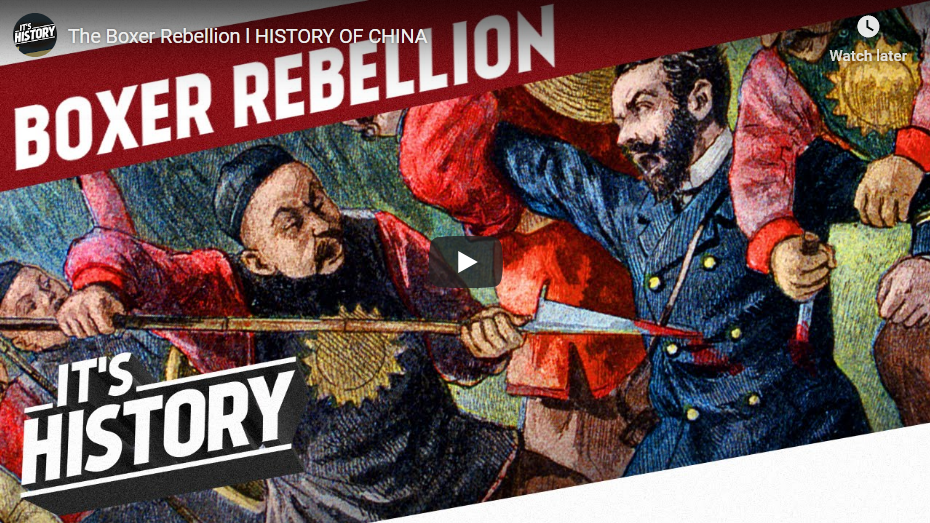
The invention of Writing, Paper and Print! l HISTORY OF CHINA

Filed under: Books, China, History, Technology — Tags: , , — Nicholas @ 04:00

IT’S HISTORY
Published on 22 Jul 2015

The invention of script, paper and printing can be credited to the Chinese. It was in China that Cai Lun, in his emperor’s service, made the production of paper suitable for the masses. Originally planned as a means to wrap things in, it soon became obvious that paper was more suitable for writing than the common bamboo stick. Guy explains how the Chinese printed written pages long before Gutenberg was born, how Chinese writing actually works and how emperor Qin tried to establish the standardized Chinese Han Characters, or Hanzi, attempting to unify the writing symbols for his country.

» SOURCES
Videos: British Pathé (https://www.youtube.com/user/britishp…)
Pictures: mainly Picture Alliance
Content:
Faulmann, Carl (1995): Schriftzeichen und Alphabete aller Zeiten und Völker. Augsburg. Reprint der Originalausabe von 1880 Wien.
Pan, Jixing (1998): “On the origin of movable metal-types”. In: Chinese Science Bulletin 43 (20).
Wai Wong (2005): “Typesetting Chinese. A personal perspective”. In: TUGboat 26 (2) 111-114.
https://www.tug.org/TUGboat/tb26-2/wo…
Yan, Yangtse (2006): “New Evidence suggests longer paper making history in China”. http://news.xinhuanet.com/english/200…

» ABOUT US
IT’S HISTORY is a ride through history – Join us discovering the world’s most important eras in IN TIME, BIOGRAPHIES of the GREATEST MINDS and the most important INVENTIONS.

» HOW CAN I SUPPORT YOUR CHANNEL?
You can support us by sharing our videos with your friends and spreading the word about our work.

» CAN I EMBED YOUR VIDEOS ON MY WEBSITE?
Of course, you can embed our videos on your website. We are happy if you show our channel to your friends, fellow students, classmates, professors, teachers or neighbors. Or just share our videos on Facebook, Twitter, Reddit etc. Subscribe to our channel and like our videos with a thumbs up.

» CAN I SHOW YOUR VIDEOS IN CLASS?
Of course! Tell your teachers or professors about our channel and our videos. We’re happy if we can contribute with our videos.

» CREDITS
Presented by: Guy Kiddey
Script by: Martin Haldenmair
Translated by: Guy Kiddey
Directed by: Daniel Czepelczauer
Director of Photography: Markus Kretzschmar
Music: Markus Kretzschmar
Sound Design: Bojan Novic
Editing: Markus Kretzschmar

A Mediakraft Networks original channel
Based on a concept by Florian Wittig and Daniel Czepelczauer
Executive Producers: Astrid Deinhard-Olsson, Spartacus Olsson
Head of Production: Michael Wendt
Producer: Daniel Czepelczauer
Social Media Manager: Laura Pagan and Florian Wittig

Contains material licensed from British Pathé
All rights reserved – © Mediakraft Networks GmbH, 2015

September 15, 2019

The Nazi Invasion of Britain?! – WW2 – 055 – September 14 1940

Filed under: Britain, China, Europe, Germany, History, Italy, Japan, Middle East, Military, WW2 — Tags: , , , , — Nicholas @ 06:00

World War Two
Published on 14 Sep 2019

The Blitz continues as the German army seems close to the execution of Operation Sea Lion: the invasion of Britain.

Join us on Patreon: https://www.patreon.com/TimeGhostHistory
Or join The TimeGhost Army directly at: https://timeghost.tv

Follow WW2 day by day on Instagram @World_war_two_realtime https://www.instagram.com/world_war_t…
Join our Discord Server: https://discord.gg/D6D2aYN.
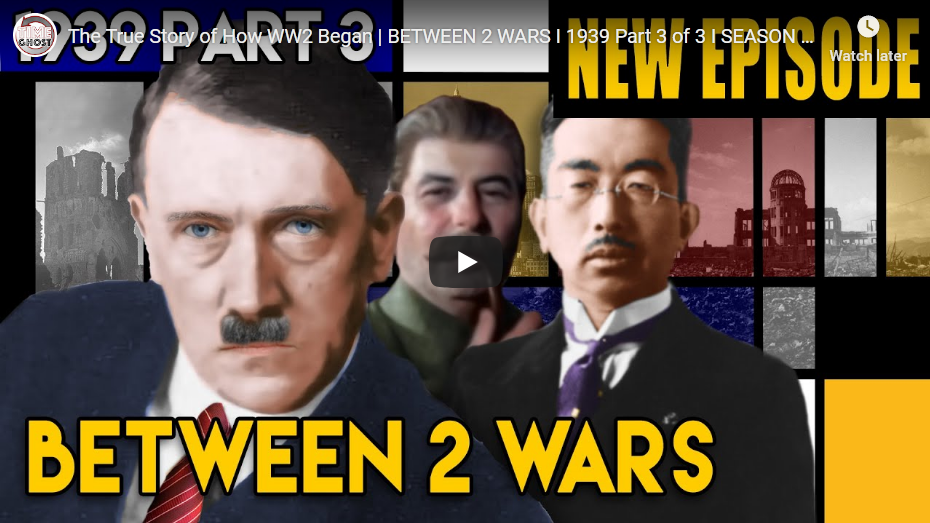
Between 2 Wars: https://www.youtube.com/playlist?list…
Source list: http://bit.ly/WW2sources

Written and Hosted by: Indy Neidell
Produced and Directed by: Spartacus Olsson and Astrid Deinhard
Executive Producers: Bodo Rittenauer, Astrid Deinhard, Indy Neidell, Spartacus Olsson
Creative Producer: Joram Appel
Research by: Indy Neidell
Post-Production Director: Wieke Kapteijns
Edited by: Iryna Dulka
Map animations: Eastory

Colorisations by Norman Stewart and Julius Jääskeläinen https://www.facebook.com/JJcolorization/

Eastory’s channel: https://www.youtube.com/channel/UCEly…
Archive by Screenocean/Reuters https://www.screenocean.com.

Sources:
– IWM: E 7304, E 1400, CH 4972, E 12789
– Italian poster – James Vaughan on Flickr
– Narodowe Archiwum Cyfrowe

A TimeGhost chronological documentary produced by OnLion Entertainment GmbH.

From the comments:

World War Two
3 days ago
What if the Germans had invaded Britain this week? We will probably never know, but we get asked to give our views on counterfactual history questions like this all the time. Many did that during our first Q&A session on Instagram last week. We had a great time answering many questions about the war, about TimeGhost and about the production process, and we’ll certainly do similar Instagram Q&A sessions again. If you don’t already, you can follow us by looking up @world_war_two_realtime or https://www.instagram.com/world_war_two_realtime/

Cheers,
Joram

September 8, 2019

Burn London, Burn it’s the Blitz – WW2 – 054 – September 07 1940

World War Two
Published on 7 Sep 2019

This week, the battle in the skies of Britain enters a new, even deadlier phase, as the crowded streets of London turn into a war zone. It is the start of the Blitz.

Join us on Patreon: https://www.patreon.com/TimeGhostHistory
Or join The TimeGhost Army directly at: https://timeghost.tv

Follow WW2 day by day on Instagram @World_war_two_realtime https://www.instagram.com/world_war_t…
Join our Discord Server: https://discord.gg/D6D2aYN.
Between 2 Wars: https://www.youtube.com/playlist?list…
Source list: http://bit.ly/WW2sources

Written and Hosted by: Indy Neidell
Produced and Directed by: Spartacus Olsson and Astrid Deinhard
Executive Producers: Bodo Rittenauer, Astrid Deinhard, Indy Neidell, Spartacus Olsson
Creative Producer: Joram Appel
Research by: Indy Neidell
Edited by: Iryna Dulka
Map animations: Eastory

Colorisations by Norman Stewart and Julius Jääskeläinen https://www.facebook.com/JJcolorization/

Eastory’s channel: https://www.youtube.com/channel/UCEly…
Archive by Screenocean/Reuters https://www.screenocean.com.

Sources:
– IWM: SP 2553, FL 5186, H 23836, HU 93069, CH 19
– Colorization of Hugo Sperrle by Ruffneck88
– Narodowe Archiwum Cyfrowe

A TimeGhost chronological documentary produced by OnLion Entertainment GmbH.

September 4, 2019

Japan, the Bureaucratic War Machine | BETWEEN 2 WARS I 1931 Part 2 of 3

Filed under: Bureaucracy, China, History, Japan, Military — Tags: , , , , , — Nicholas @ 04:00

TimeGhost History
Published on 3 Sep 2019

In Japan there has been a gradual increase of militarism since the Great War and in 1931 the country goes to war again when they invade Chinese Manchuria based on a false flag terrorist strike at the Mukden railway junction.

Join us on Patreon: https://www.patreon.com/TimeGhostHistory

Subscribe to our World War Two series: https://www.youtube.com/c/worldwartwo…

Hosted by: Indy Neidell
Written by: Spartacus Olsson
Directed by: Spartacus Olsson and Astrid Deinhard
Executive Producers: Bodo Rittenauer, Astrid Deinhard, Indy Neidell, Spartacus Olsson
Creative Producer: Joram Appel
Post-Production Director: Wieke Kapteijns
Research by: Joram Appel and Spartacus Olsson
Edited by: Danile Weiss
Sound design: Marek Kaminsky

Sources:

A TimeGhost chronological documentary produced by OnLion Entertainment GmbH.

Sources:

James Fulcher, The Bureaucratization of the State and the Rise of Japan (1988)

Katō Yōko, “The debate on fascism in Japanese historiography”, in: Sven Saaler and Christopher W.A. Szpilman (ed.), Routledge Handbook of Modern Japanese History (2018), 225-236.

Ethan Mark, “Japan’s 1930s crisis, fascism, and social imperialism”, in: Sven Saaler and Christopher W.A. Szpilman (ed)., Routledge Handbook of Modern Japanese History (2018), 237-250.

Penolepe Francks, “The path of economic development from the late nineteenth centre to the economic miracle”, in: Sven Saaler and Christopher W.A. Szpilman (ed)., Routledge Handbook of Modern Japanese History (2018), 267-278.

Sandra Wilson and Robert Cribb, “Japan’s colonial empire”, in: Sven Saaler and Christopher W.A. Szpilman (ed)., Routledge Handbook of Modern Japanese History (2018), 77-91.

Mark R. Peattie, “Nanshin: The ‘Southward Advance’, 1931-1941, as a Prelude to the Japanese Occupation of Southeast Asia”, in: Peter Duus e.a., The Japanese Wartime Empire, 1931-1945 (2010), 190-242.

From the comments:

TimeGhost History
13 minutes ago
This is the third of several episodes that cover the developments in East Asia leading to World War Two. In this episode we look at how Japan by 1931 has developed to be on the brink of a fascist state without anyone specifically taking power or staging a coup. The democratic reforms from the past four decades are dying a death by a thousand cuts as the Japanese administration and military simply take one small decision after the other that erodes freedom, dials back democracy, and inevitably leads to war. It’s an anonymous, mechanic, gradual movement towards global conflict proceeding with clockwork precision.

This episode also sees the first change to the Between 2 Wars set as Astrid and Wieke have started adapting the set to the changing themes, while we move closer and closer to the outbreak of WW2 — we’d love to hear what you think!

English spelling – a bit mad, but perhaps the best system around

Filed under: Britain, China, History, USA — Tags: , — Nicholas @ 02:00

Lindybeige
Published on 12 Nov 2015

Support me on Patreon: https://www.patreon.com/Lindybeige

Many people think that the English system of spelling is just mad. The random quirks of history have certainly played their part, and today we have spellings that follow so many different rules that at times it can seem just random. However, here I argue that actually the fact that our spelling does not match our pronunciation is a strength, not just a weakness.

I see from the comments that several viewers have misunderstood me, and have thought that I am saying that only when people are reading English do they recognise words in the same way as we recognise faces. No, this is how people read in all languages. This being the case, phonetic spelling is not such a great advantage, since people are not decoding the words using sound, and spelling based on derivation has advantages.

Lindybeige: a channel of archaeology, ancient and medieval warfare, rants, swing dance, travelogues, evolution, and whatever else occurs to me to make.

September 1, 2019

366 Days of Crushed Hopes, Suffering and Death – WW2 – 053 – August 31 1940

Filed under: Britain, China, Germany, History, Japan, Military, WW2 — Tags: , , , , — Nicholas @ 04:00

World War Two
Published on 31 Aug 2019

As the war turns one year old, there seems to be no end in sight. The Luftwaffe starts targeting civilian areas of London, the peoples of Eastern Europe switch country without moving houses, in occupied territory the population continues to be terrorized, and an end to the Chinese war that has been raging on for years now seems ever further away.

Join us on Patreon: https://www.patreon.com/TimeGhostHistory
Or join The TimeGhost Army directly at: https://timeghost.tv

Follow WW2 day by day on Instagram @World_war_two_realtime https://www.instagram.com/world_war_t…
Join our Discord Server: https://discord.gg/D6D2aYN.
Between 2 Wars: https://www.youtube.com/playlist?list…
Source list: http://bit.ly/WW2sources

Written and Hosted by: Indy Neidell
Produced and Directed by: Spartacus Olsson and Astrid Deinhard
Executive Producers: Bodo Rittenauer, Astrid Deinhard, Indy Neidell, Spartacus Olsson
Creative Producer: Joram Appel
Research by: Indy Neidell
Edited by: Karolina Dołęga
Map animations: Eastory

Colorisations by Norman Stewart and Julius Jääskeläinen https://www.facebook.com/JJcolorization/

Sources:
Soviet occupation of Bessarabia and Northern Bukovina. Military parade in Kishinev on the 4th of July 1940, ANRM, Fototeca, 24950 from http://anr.infoideea.ro/basarabia1940…

Eastory’s channel: https://www.youtube.com/channel/UCEly…
Archive by Screenocean/Reuters https://www.screenocean.com.

A TimeGhost chronological documentary produced by OnLion Entertainment GmbH.

From the comments:

World War Two
6 days ago (edited)
Tomorrow, the war turns one year old, just like our channel. It doesn’t feel like a year, but when you think about what has happened all over the world since the Germans invaded Poland, it feels like a lifetime. Since then, our project has grown significantly, with new editors, community managers, and other people that help us out to make this series the best that it could be. We owe that to each and every one of you who stuck around and watched, shared, and engaged with our channel. We’re especially grateful to our supporters on Patreon and the TimeGhost website. It’s your support that makes this show possible and helps us to keep improving our quality. Our next goal is to raise enough money to go abroad and film on location, so that we can give you a real look of what it was like, and get in-depth knowledge from local historians. So please, support us on Patreon at https://www.patreon.com/TimeGhostHistory or at our website at https://timeghost.tv.

A big virtual hug from all of us,
The TimeGhost Team

August 28, 2019

And then came Genghis Khan – Sorrow of the Song Dynasty l HISTORY OF CHINA

Filed under: Bureaucracy, China, Economics, History — Tags: , , , — Nicholas @ 04:00

IT’S HISTORY
Published on 10 Aug 2015

The Song dynasty is often described as an early modern economy. It marked a lot of economical changes from previous dynasties. Starting with the decentralisation of power and reduced economical involvement, it brought on industrial growth and agricultural expansion. Although being forced to advance in military technology due to wars with the Liao and the Jurchen, the Song would eventually fall to the Mongols. Crumbling under Genghis Khan’s attacks it would only take one generation until his successor Kublai Khan would declare a new Yuan Dynasty. Find out all about this Epoch on IT’S HISTORY!

» SOURCES
Videos: British Pathé (https://www.youtube.com/user/britishp…)
Pictures: mainly Picture Alliance
Content:
Benn, Charles (2002), China’s Golden Age: Everyday Life in the Tang dynasty, Oxford University Press
Ebrey, Patricia Buckley (1999), The Cambridge Illustrated History of China, Cambridge: Cambridge University Press
Gascoigne, Bamber; Gascoigne, Christina (2003), The Dynasties of China: A History, New York
Levathes, Louise (1994), When China Ruled the Seas, New York: Simon & Schuster
Whitfield, Susan (2004), The Silk Road: Trade, Travel, War and Faith, Chicago: Serindia

» ABOUT US
IT’S HISTORY is a ride through history – Join us discovering the world’s most important eras in IN TIME, BIOGRAPHIES of the GREATEST MINDS and the most important INVENTIONS.

» HOW CAN I SUPPORT YOUR CHANNEL?
You can support us by sharing our videos with your friends and spreading the word about our work.

» CAN I EMBED YOUR VIDEOS ON MY WEBSITE?
Of course, you can embed our videos on your website. We are happy if you show our channel to your friends, fellow students, classmates, professors, teachers or neighbors. Or just share our videos on Facebook, Twitter, Reddit etc. Subscribe to our channel and like our videos with a thumbs up.

» CAN I SHOW YOUR VIDEOS IN CLASS?
Of course! Tell your teachers or professors about our channel and our videos. We’re happy if we can contribute with our videos.

» CREDITS
Presented by: Guy Kiddey
Script by: Guy Kiddey
Directed by: Daniel Czepelczauer
Director of Photography: Markus Kretzschmar
Music: Markus Kretzschmar
Sound Design: Bojan Novic
Editing: Markus Kretzschmar

A Mediakraft Networks original channel
Based on a concept by Florian Wittig and Daniel Czepelczauer
Executive Producers: Astrid Deinhard-Olsson, Spartacus Olsson
Head of Production: Michael Wendt
Producer: Daniel Czepelczauer
Social Media Manager: Laura Pagan and Florian Wittig

Contains material licensed from British Pathé
All rights reserved – © Mediakraft Networks GmbH, 2015

August 25, 2019

The Battle of Britain is a Bitch – WW2 – 052 – August 24 1940

World War Two
Published on 24 Aug 2019

This week, the communists attack the Japanese in the Battle of 100 Regiments. Meanwhile in Europe, the Battle of Britain enters phase three with the Luftwaffe actively targeting British airfields.

Join us on Patreon: https://www.patreon.com/TimeGhostHistory
Or join The TimeGhost Army directly at: https://timeghost.tv

Follow WW2 day by day on Instagram @World_war_two_realtime https://www.instagram.com/world_war_t…
Join our Discord Server: https://discord.gg/D6D2aYN.
Between 2 Wars: https://www.youtube.com/playlist?list…
Source list: http://bit.ly/WW2sources

Written and Hosted by: Indy Neidell
Produced and Directed by: Spartacus Olsson and Astrid Deinhard
Executive Producers: Bodo Rittenauer, Astrid Deinhard, Indy Neidell, Spartacus Olsson
Creative Producer: Joram Appel
Post-Production Director: Wieke Kapteijns
Research by: Indy Neidell
Edited by: Iryna Dulka
Map animations: Eastory

Colorisations by Norman Stewart and Julius Jääskeläinen https://www.facebook.com/JJcolorization/

Sources:
IWM: H7019, H005772, Q 7928
Color of Trotsky and Soviet leaders by Klimbim
Mercader picture from a public mural by Grahame Miller Ware, Wikimedia Commons
Icons by Sergey Tikhonov, Ely Wahib and Ivan Boyko from iconfinder.com

Eastory’s channel: https://www.youtube.com/channel/UCEly…
Archive by Screenocean/Reuters https://www.screenocean.com.

A TimeGhost chronological documentary produced by OnLion Entertainment GmbH.

From the comments:

World War Two
2 days ago
Last Sunday, we had our one year anniversary livestream in which we talked about the last year, our current challenges and the plans for the road ahead, and answered a lot of your questions. We explained how we want to increase our Patreon income to be able to travel to the known and unknown locations of World War Two. To do so, you can help us by supporting us on https://www.patreon.com/TimeGhostHistory or https://timeghost.tv. Literally every dollar counts. If you’d like to see the livestream I mentioned, you can check that out right here -> https://youtu.be/EKws1jNIAmE

Cheers,
Joram

August 14, 2019

Hong Kong’s struggle with the Chinese government

Filed under: China, Government, Law, Liberty — Tags: , , , , — Nicholas @ 03:00

Andrew Coyne on the desperate situation of the Hong Kong protests:

2019 Hong Kong anti-extradition law protest on 16 June, captured by Studio Incendo from Flickr.
Photo via Wikimedia Commons

A sickening pall of inevitability hangs over the protests in Hong Kong, now in their tenth week. Neither side can afford to back down – the protesters, because their way of life, indeed their very lives, are at stake; the Beijing-backed government, for the precedent it would set, and the hope it would inspire.

As the violence mounts — most of it, to date, on the part of the police, or in some cases the Triad gangs hired to beat and intimidate the protesters — so does the likelihood of mass bloodshed, a reprise of the Tienanmen massacre of 30 years ago. Some of the protesters may indeed hope to tempt Beijing into such an appalling overstep; however horrific the prospect, or improbable their chances, it is difficult to blame them.

For as the people of the world’s freest city fend off being swallowed by one of the world’s most repressive dictatorships, they do so largely alone. Fifty-six years ago, when West Berlin faced a similar threat from the Eastern Bloc, the democratic world rallied to its cause – because its cause, they knew, was their cause. President John F. Kennedy went to Berlin to give his great, moving “ich bin ein Berliner” speech, declaring before the world that “all free men, wherever they may live, are citizens of Berlin.” These were not just words — it was NATO policy to defend the city with arms, if necessary.

And today? The president of the United States refers to the protesters as “rioters,” the Beijing-approved term. Should President Xi Jinping decide to suppress the unrest in Hong Kong by force, he seems to be signalling, he would be willing to look the other way — perhaps for reasons of state (what are a few hundred or even thousand lives if it helps close a trade deal?), or perhaps just out of his habitual admiration for dictators. But the government of Canada — 300,000 of whose citizens, let us remember, live in the city — has been scarcely more robust in their defence; neither have most western governments.

August 4, 2019

QotD: The post-WW2 American army

Filed under: Asia, China, History, Military, Quotations, USA — Tags: , , , , — Nicholas @ 01:00

The men of the Inmun Gun and the CCF were peasant boys, tough, inured to hunger and hardship. One-third of them had been in battle and knew what battle meant. They had been indoctrinated in Communism, but no high percentage of them were fanatic. Most of them, after all, were conscripts, and unskilled.

They were not half so good soldiers as the bronzed men who followed Rommel in the desert, or the veterans who slashed down toward Bastogne.

They were well armed, but their weapons were no better than those of United States design, if as good.

But the American soldier of 1950, though the same breed of man, was not half so good as the battalions that had absorbed Rommel’s bloody lessons, or stood like steel in the Ardennes.

The weapons his nation had were not in his hands, and those that were were old and worn.

Since the end of World War II ground weapons had been developed, but none had been procured. There were plenty of the old arms around, and it has always been a Yankee habit to make do. The Army was told to make do.

In 1950 its vehicles in many cases would not run. Radiators were clogged, engines gone. When ordered to Korea, some units towed their transport down to the LST’s, because there was no other way to get it to the boat. Tires and tubes had a few miles left in them, and were kept — until they came apart on Korean roads.

In Japan, where the divisions were supposedly guarding our former enemies, most of the small arms had been reported combat unserviceable. Rifle barrels were worn smooth. Mortar mounts were broken, and there were no longer any spare barrels for machine guns.

Radios were short, and those that were available would not work.

Ammunition, except small arms, was “hava-no.”

These things had been reported. The Senate knew them; the people heard them. But usually the Army was told, “Next year.”

Even a rich society cannot afford nuclear bombs, supercarriers, foreign aid, five million new cars a year, long-range bombers, the highest standard of living in the world, and a million new rifles.

Admittedly, somewhere you have to cut and choose.

But guns are hardware, and man, not hardware, is the ultimate weapon. In 1950 there were not enough men, either — less than 600,000 to carry worldwide responsibilities, including recruiting; for service in the ranks has never been on the Metropolitan Life Insurance Company’s preferred list of occupations.

T.R. Fehrenbach, This Kind of War: A Study in Unpreparedness, 1963.

August 1, 2019

“People in Ottawa don’t invoke PMO frequently or lightly. It is done to intimidate and obtain compliance”

Filed under: Bureaucracy, Cancon, China, Government, Politics — Tags: , , , , — Nicholas @ 03:00

What we’re not allowed to know can’t hurt us … the federal government apparently figures that no charges can be contemplated if there’s no investigation allowed:

Parliament Hill in Ottawa.
Photo by S Nameirakpam via Wikimedia Commons.

Before colleagues voted to quash a review of whether the Liberal government acted improperly after a bureaucrat asked former ambassadors to temper public comments about China, Liberal MP Rob Oliphant told Parliament’s Foreign Affairs committee that he’s “distressed”.

Apparently, he was not distressed about a Foreign Affairs assistant deputy minister being asked to “check-in” on two former Canadian diplomats to China before making future pronouncements on Canada’s shambolic relations with the communist regime.

Oliphant’s also not distressed about the troubling optics that either diplomat – David Mulroney and Guy Saint-Jacques – felt The Globe and Mail should be aware of their reservations about said interactions, which the paper reported last week.

“I am very distressed, at the tone, at the idea and at the allegations that are being cast about by members of the opposition,” Oliphant, Parliamentary Secretary to the Minister of Foreign Affairs and non-voting member, claimed at the committee’s emergency meeting Tuesday.

Oliphant’s claim comes after either diplomat says the department’s ADM Paul Thoppil told them his call was at the behest of the PMO. Both Prime Minister Justin Trudeau and Foreign Affairs Minister Chrystia Freeland have denied they directed such outreach.

Mulroney, who had earlier warned about travel to China following the detention two Canadians there in December of last year, told the Globe that Thoppil cited the “election environment” and asked him to contact the department before making future statements.

“It wasn’t, in my view, so much an offer to consult and share ideas as to ‘get with the program’. People in Ottawa don’t invoke PMO frequently or lightly. It is done to intimidate and obtain compliance,” Mulroney is quoted as saying.

Saint-Jacques told the Globe that his conversation with Thoppil differed somewhat, “But I can understand that one could come to that conclusion when they say we should speak with one voice.”

July 28, 2019

No Deal… Herr Hitler! – WW2 – 048 – July 27 1940

Filed under: Britain, China, Germany, History, Japan, Military, WW2 — Tags: , , , , — Nicholas @ 04:00

World War Two
Published on 27 Jul 2019

Hitler searches for ways to force Britain out of the war, but the British sit safely behind their cliffs, their channel and their Royal Navy. Engaging the navy and invading Britain would require a major air-superiority. As a result, the Germans plan to knock the British out of the skies. This is the Battle of Britain.

Join us on Patreon: https://www.patreon.com/TimeGhostHistory
Or join The TimeGhost Army directly at: https://timeghost.tv

Follow WW2 day by day on Instagram @World_war_two_realtime https://www.instagram.com/world_war_t…
Join our Discord Server: https://discord.gg/D6D2aYN.
Between 2 Wars: https://www.youtube.com/playlist?list…
Source list: http://bit.ly/WW2sources

Written and Hosted by: Indy Neidell
Produced and Directed by: Spartacus Olsson and Astrid Deinhard
Executive Producers: Bodo Rittenauer, Astrid Deinhard, Indy Neidell, Spartacus Olsson
Creative Producer: Joram Appel
Post-Production Director: Wieke Kapteijns
Research by: Indy Neidell
Edited by: Iryna Dulka
Map animations: Eastory

Colorisations by Norman Stewart and Julius Jääskeläinen https://www.facebook.com/JJcolorization/

Eastory’s channel: https://www.youtube.com/channel/UCEly…
Archive by Screenocean/Reuters https://www.screenocean.com.

A TimeGhost chronological documentary produced by OnLion Entertainment GmbH.

From the comments:

World War Two
1 week ago (edited)
World War Two is a very complex topic, and even with one or more videos a week, there is a lot of information or context that we don’t get to cover on this channel. That’s why are doing series on the interwar years (1919-1939) called “Between Two Wars” on our TimeGhost History channel. We’re currently in 1929, and we’ll be making generally two thematic episodes for each year of the interwar period. If you want to understand what led up to this massive and destructive conflict, do make sure to check the channel out here: https://www.youtube.com/channel/UCLfMmOriSyPbd5JhHpnj4Ng

Cheers,
Joram

With the SNC-Lavalin affair fading from memory, Justin Trudeau looks set for the fall election

Filed under: Cancon, China, Media, Politics — Tags: , , , , , , — Nicholas @ 03:00

They say that memories are short in politics, but this short? Thanks largely to the dog days of summer and a complicit media desperate for more government subsidies, Justin Trudeau and the Liberals are being allowed to shed the scandal-tainted skin of four whole months ago to emerge glistening and new with election promises galore. Democracy dies in government subsidies, apparently.

On the other hand, perhaps Canadian voters’ memories will last long enough to get past the casting of ballots in October:

Supposedly, the Liberals have put the SNC-Lavalin scandal behind them: the polls have rebounded, the media have moved on, while the company has worse problems to deal with than a mere hair-raising multi-million-dollar corruption charge.

Even the return of Gerry Butts, the prime minister’s former principal secretary, albeit in a part-time, temporary, what-are-friends-for capacity as adviser to the party’s election campaign, seems to have caused little stir, although he was one of two senior government officials to resign over their part in the affair.

Perhaps the Liberals have concluded the passage of time is enough to earn them a pass from the public. I mean this all took place, what, four months ago? Who even remembers that far back?

But as recent events have shown, the same ingredients that combined to produce the SNC-Lavalin scandal — hubris, a maniacal desire to run everything from the centre, and an unwillingness, in all this overweeningness and control-freakery, to be bound by basic legal and procedural norms — remain very much in place in the prime minister’s office.

For starters, there is the affair of the two ex-ambassadors. First, David Mulroney, Canada’s ambassador to China from 2009 to 2012, then his successor, Guy Saint-Jacques, reported a senior official in the Global Affairs department had called them to demand they clear any public comments on the government’s policy towards China with the government.

Both men are now private citizens. Both have been critical of the government’s handling of the China file. Unlike the most recent former ambassador, former Liberal cabinet minister John McCallum, neither has framed his comments on Sino-Canadian relations in terms of what would assist in the re-election of the Liberals. Apparently, that was the problem.

The official, assistant deputy minister Paul Thoppil, claimed to be speaking on behalf of the PMO and explicitly cited “the election environment” as a reason to shut up. Oh, also the current state of “high tension” between the two countries, presumably over China’s seizure of two Canadians as hostages, which supposedly made it essential for everyone in Canada, whether in the government’s employ or not, to “speak with one voice,” i.e., refrain from criticizing the government.

As a China policy, this has the advantage of closely resembling the Chinese way of doing things. It’s hard to say which is the more extraordinary: the notion that private citizens should be compelled to clear their criticisms of the government with the government, or the notion that they could be.

July 21, 2019

History-Makers: Marco Polo

Filed under: China, Europe, History, Humour — Tags: , , , , , , — Nicholas @ 04:00

Overly Sarcastic Productions
Published on 19 Jul 2019

Go to https://NordVPN.com/overlysarcastic and and use code OVERLYSARCASTIC to get 75% off a 3 year plan and an extra month for free. Protect yourself online today!

On this episode of History-Makers, Blue takes a trip alongside the legendary explorer Marco Polo to figure out how the intrepid Venetian merchant made his way to the Mongol Empire and back, and what that means for his written account of those Travels.

What History-Maker do you want to see next? Leave a comment!

NEW MERCH: “Let’s Do Some History” — https://www.redbubble.com/people/ospy…
NEW STORE: https://www.redbubble.com/people/OSPY…

PATREON: https://www.Patreon.com/OSP

OUR WEBSITE: https://www.OverlySarcasticProductions.com
Find us on Twitter https://www.Twitter.com/OSPYouTube
Find us on Reddit https://www.Reddit.com/r/OSP/

« Newer PostsOlder Posts »

Powered by WordPress