
World War Two
Published 24 Jun 2023The Red Army surges forward in Operation Bagration, a mighty new offensive to destroy German Army Group Centre. Fighting continues in Normandy, Italy, and Finland. The United States Navy tears the heart out of the Imperial Japanese Navy in the Philippine Sea even as the Imperial Japanese Army has success in China. The British and Indian armies lift the siege of Kohima.
(more…)
June 25, 2023
The Greatest Pincer Movement in Military History – WW2 – Week 252 – June 24, 1944
Comments Off on The Greatest Pincer Movement in Military History – WW2 – Week 252 – June 24, 1944
June 23, 2023
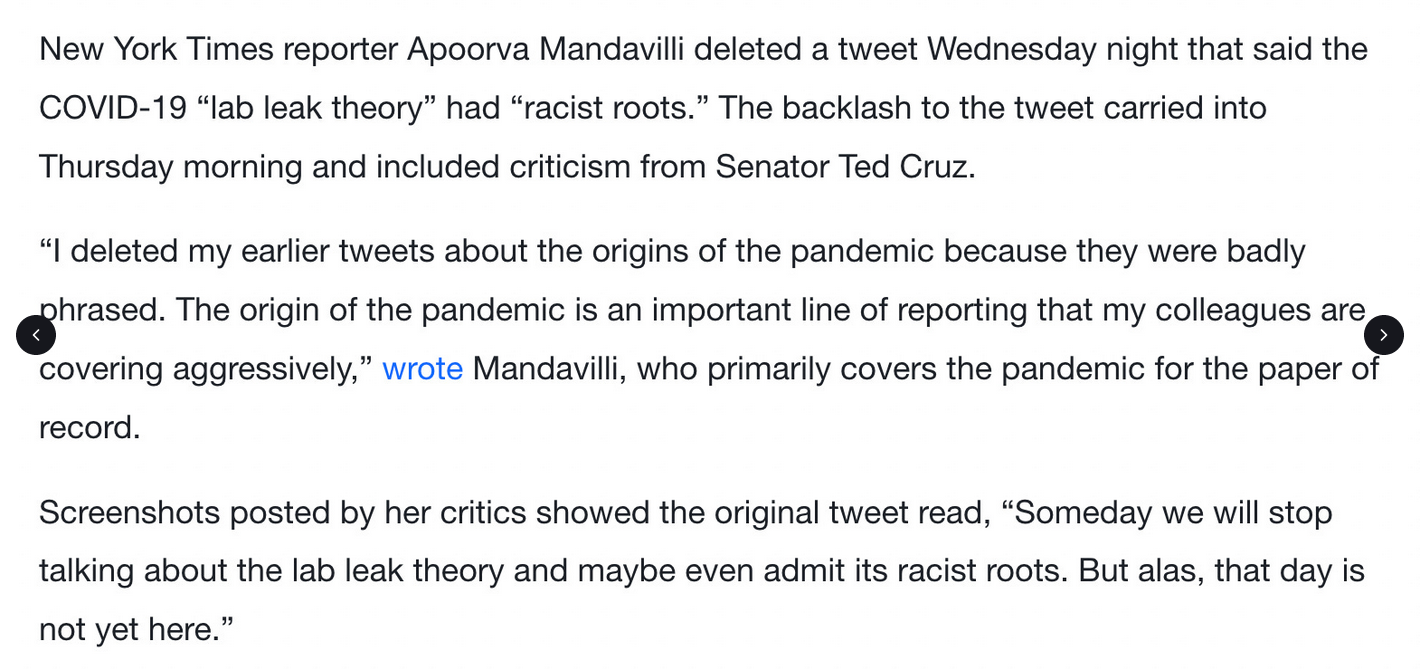
From Operation Barbarossa in 1941 to the disinformation and cover-up over the origins of the Wuhan Coronavirus
Chris Bray outlines the utterly amazing situation between the Soviet Union and Nazi Germany on the eve of Hitler launching Operation Barbarossa — where Stalin refused to believe that Hitler would attack Russia despite overwhelming evidence from many sources — to the parallel situation over Covid:
Several sources quite specifically reported to the Soviet government that the Germans would invade around dawn on June 22. Their reports can be found in the Soviet archives in a “folder of dubious and misleading reports”. Then, shortly before dawn on June 22, Germany invaded the Soviet Union. Military leaders on the border called in reports of the invasion, and the people they talked to in Moscow declined to believe them. Soviet border troops held their fire, seeing Germans while being ordered to understand that no true invasion could possibly be underway. Stalin knew better, and contradicting Josef Stalin was known to be a fatal mistake. Achieving an entirely avoidable surprise, the Germans destroyed much of the Soviet air force on the ground, parked wingtip-to-wingtip for the convenience of the invader’s bombers.
[…]
An invasion that could have been met with brutal severity from the first moment instead achieved considerable initial success against a supine nation because the Soviet leader, and the chain of subordinates beneath him who were forced to adopt his conception of facts and truth, assumed that things they didn’t wish to believe constituted disinformation. Millions of lives were wasted for that illusion. A society that categorizes inconvenient truths in this way is committing a form of suicide, hiding from hard facts that demand acknowledgment.
Now: In 2021, the lab leak theory was a disgusting lie with “racist roots”.
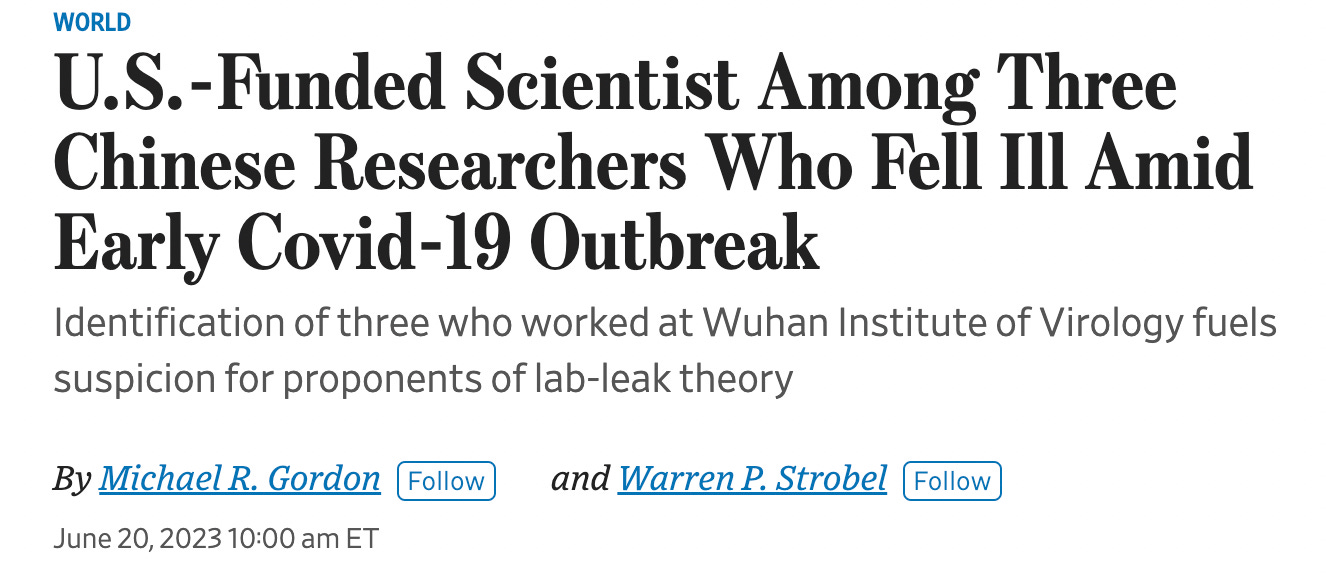
In June of 2023, the, uh, first people who got sick with Covid turn out to have been, uh, scientists at the lab in Wuhan. BUT THEY PROBABLY HAD SOME BAT SOUP AT THE WET MARKET, IS WHY, or something.
Stupid conspiracy theorists, you people are such MORONS, do you actually bel— okay, that one’s true too.
We’ve somehow developed an industry of professional information barriers, dimwitted parasitical human garbage whose sole function in life is to prevent understanding by pasting “disinformation” stickers on things that you’re not supposed to know.
Comments Off on From Operation Barbarossa in 1941 to the disinformation and cover-up over the origins of the Wuhan Coronavirus
June 18, 2023
Titanic Clash Looms In Pacific – WW2 – Week 251 – June 17, 1944
World War Two
Published 17 Jun 2023Japanese and American navies are heading for a showdown in the Philippine Sea, even as American forces land on Saipan in the Marianas in force. The Japanese have Changsha under siege in China, the Allies advance in both Normandy and Italy, the Soviets advance in Finland, and the massive Soviet summer operation is coming together and will begin in a matter of days.
(more…)
Comments Off on Titanic Clash Looms In Pacific – WW2 – Week 251 – June 17, 1944
June 17, 2023
China’s long-term revenge for the Opium Wars
In Quillette, Aaron Sarin discusses what he calls the “Reverse Opium War” with Chinese drugs flooding the US street drug culture:
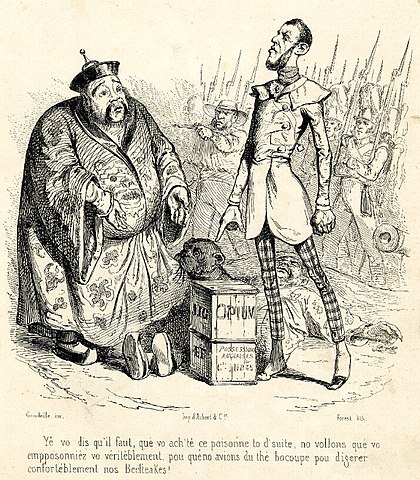
Jean-Jacques Grandville cartoon originally published in Charivari in 1840. “I tell you to immediately buy the gift here. We want you to poison yourself completely, because we need a lot of tea in order to digest our beefsteaks.”
Image and translated caption from Wikimedia Commons.
An epidemic is stalking American cities. Every day, men and women die on sidewalks, in bus shelters, on park benches. Some die sprawled in crowded plazas at midday; others die slumped in the corners of lonely gas station bathrooms. Internally, however, the circumstances are the same. They all end their lives swimming in the warm amniotic dream of a lethally dangerous opioid. When it comes, the moment of death is imperceptible: coaxed by the drug further and further from shore, the user simply floats out too far, passing some unmarked point of no return. The heartbeat weakens, the breathing slows and shallows. As soft an end as anyone might wish for.
This is the fentanyl crisis. It may seem strange to connect a very modern and very American phenomenon to a brace of wars waged 200 years ago by the British Empire on the last of the Chinese dynasties. But so the rhetoric runs: we are witnessing a Reverse Opium War; a belated Sinic revenge.
The Communist Party teaches schoolchildren that China was once a glorious superpower, until it was brought low by that subtlest and most devious of British weapons: Lachryma papaveris (poppy tears). Opium sapped the nation’s strength, and when the Chinese authorities banned it, then Britain went to war — twice.
Those wars crippled the Qing and heralded a “century of humiliation” for China — multiple military defeats and lopsided treaties, the Anglo-French looting and burning of the Emperor’s Summer Palace, the Japanese Rape of Nanking and lethal human experimentation by Unit 731 — ending only with the liberating forces of Marxism-Leninism in 1949. Now some commentators are telling us that history has inverted, that karma has kicked in.
Before examining this idea, we should remind ourselves of the American predicament. Ten years ago, fentanyl began its steady flow from China to the United States. Within just three years the drug had surpassed heroin to become the most frequent cause of American overdose deaths. Fentanyl is many times more powerful than heroin, and so there should be no surprise that lethality has spiked since the great Chinese flow began: in 2012, heroin topped the list with 6,155 deaths; by 2016, fentanyl was proving three times as deadly, with 18,335 deaths. The opioid’s influence seeps into all corners of the narcotics market, due to dealers hiding it in cocaine, heroin, and ecstasy. And it leaks across social strata, killing the homeless but also the rock star Prince, who passed away in an elevator at his Paisley Park estate after ingesting fentanyl disguised as Vicodin.
Under American pressure, the Chinese authorities agreed to regulate fentanyl analogs and two fentanyl precursor chemicals, but it soon turned out that shipments were being rerouted via Mexico. With this new arrangement, the crisis only deepened: between 2019 and 2021, the opioid killed 200 Americans a day. Last year alone, the DEA seized quantities of the drug equivalent to 410 million lethal doses. That’s enough to kill everyone in the US. Even a pandemic couldn’t stem the flow for long: in fact, Wuhan is one of the world’s most reliable suppliers of fentanyl precursors (a role it played both before and after starring at the eye of the COVID storm).
The booming fentanyl trade does not appear to rely on traditional criminal organisations, in the way that East Asian methamphetamine trafficking depends on the Triads. Instead, it turns out to be small family-based groups and legitimate businesses who manufacture and move the drug. Usually located on China’s south-eastern seaboard — Zhejiang, Fujian, Guangdong — these groups use the cover of the vast Chinese chemical industry to channel ingredients into the manufacture of fentanyl-class drugs and their precursors.
Comments Off on China’s long-term revenge for the Opium Wars
June 16, 2023
Friday Foundlings
A few items that I didn’t feel required a full post of their own, but might be of interest:
- “Lunch of suffering”: plain “white people food” goes viral in China
- From a review of Njal’s Saga – “There are only about 40,000 people in medieval Iceland. The book focuses on the Southwest Quarter, so let’s say 10,000 there. Each of our characters is a large landowning farmer with many children, servants, tenants, etc; if he is patriarch of a 20 person household, then there must be about 500 such patriarchs. Each of these 500 relevant Icelanders is profiled in loving depth. And if there are 500 characters in Njal’s Saga, and n people can have n(n-1)/2 possible two-person feuds, that’s 124,750 possible feuds. Of these, about 124,749 actually take place over the course of the saga (Njal and his friend Gunnar are best buds, and refuse to feud for any reason).”
- The Canadian government continues to rack up the internet regulation wins – “The fallout from Bill C-11 has been the subject of several posts this week, including the demands from a wide range of services for exceptions to the law and warnings from streaming services such as PBS and AMC that they may block the Canadian market due to the regulatory burden imposed by the law. While those stories focus on the availability of services and content in Canada, a new Variety report points to another negative impact from the bill: less film and television production in Canada, at least in the short term. Throughout the Bill C-11 debate, there were concerns that the large streamers might pause their productions in Canada given the uncertainty over whether they would ‘count’ for the purposes of new CRTC imposed contribution requirements. In other words, the bill could initially lead to less investment in Canada.”
- Random meme of the day:

Comments Off on Friday Foundlings
June 12, 2023
It’s an insult to Chuck Barris and The Gong Show to compare it to the Justin Trudeau Show
In the weekly dispatch from The Line, the editors defend the honour of the original Gong Show and say that it’s not fair or right to compare that relatively staid and dignified TV show to the Canadian government’s performance art on the foreign interference file:
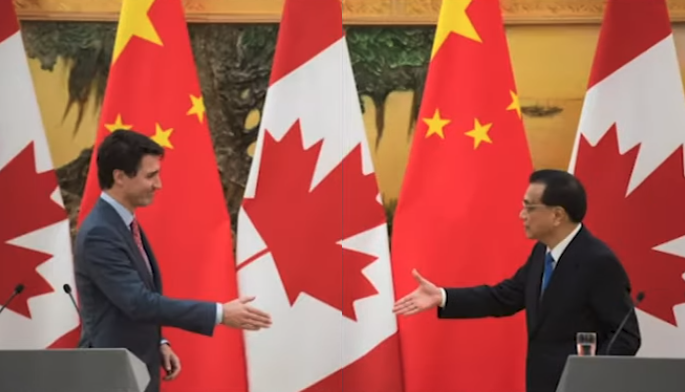
When the news broke late Friday afternoon that David Johnston was resigning from his position as special rapporteur on Chinese interference, the general reaction across the chattering class was a variable admixture of amusement and scorn. There’s probably a German word for it, but the security and intelligence expert Wesley Wark captured the tone of it with the headline on his Substack post, which said, simply: “Gong Show“.
We’re somewhat inclined to concur with Wark, except the three-ring train wreck that has marked Johnston’s time as Justin Trudeau’s moral merkin has been so disastrous that we think apologies are due to Chuck Barris, in light of the relative sobriety of his famous game show.
Reporters at the Globe and Mail and Global News started breaking stories about Chinese interference in Canadian elections a few months back, based largely on leaks from inside the Canadian intelligence apparatus. Almost immediately it was clear that the Liberals had a major problem on their hands, one that was going to require levels of transparency, good judgment and political even-handedness that this government has manifestly failed to achieve during its almost eight years in power.
Yet when Trudeau announced that he was going to appoint an “eminent Canadian” as “special rapporteur” to do an investigation and report back to the government with recommendations for how it should tackle the issue, we gave a collective groan here at The Line. Given the endless similar tasking of retired Supremes passim, it was clear that the pool from which Trudeau was going to fish his eminent personage was very shallow, and pretty well-drained. Indeed, at least one of us here was willing to bet large sums that it would be David Johnston.
What do we make of all this? Here’s the situation as we see it, in bullet form for brevity’s sake:
- Johnston should never have been offered the position of special rapporteur
- Having been offered the job of special rapporteur, Johnston should never have accepted it
And that is basically it. But given that Trudeau had the poor judgment to ask him, and Johnston had the poor judgment to accept, we think everything that has happened since was pretty much inevitable. We couldn’t have guessed at all the details of how this would have played out, especially the delicious elements beginning with the decision to hire Navigator to provide strategic advice (to manage what, exactly?), the revelation that Navigator had also provided strategic advice to Han Dong (who, recall, Johnston more or less exonerated), the firing of Navigator and the involvement of Don Guy and Brian Topp … this is really just gongs piled upon gongs piled upon gongs.
But the overall trajectory of Johnston’s time as special rapporteur? If you had told us ahead of time that this was more or less how things would go, we wouldn’t have been much surprised. Why? Because we live in Canada. And this is how Canada’s governing class behaves. It is a small, incestuous, highly conflicted and enormously self-satisfied group of people that is so isolated from the rest of the country they don’t even realize how isolated they are.
Honestly. What in heaven’s name gave Trudeau the idea that it would be smart to ask a former governor general to help launder his government’s reputation? And why on Earth did Johnston think it was a good idea to accept? Forget the Navigator stuff, this turkey was never going to fly. Johnston’s report was not accepted as the wise counsel of a wise man; instead it was seen as a partisan favour by a conflicted confidant. Sure, Johnston was subject to some pretty unfair attacks from the opposition, but what did he think was going to happen? Has he paid any attention over the last decade? But pride is a form of stubborness, and even after parliament voted for him to go, Johnston insisted he would stay on to finish his work. Until, on Friday afternoon, he decided he would not.
We’re not going to speculate about why Johnston finally pulled the chute. We’d like to think that the former GG in him thought it best to obey the will of the House of Commons. We rather hope it had nothing to do with some pointed (and unanswered) questions put to Johnston’s office by the Globe and Mail, asking whether Navigator had been given a heads-up on Johnston’s conclusions on the Dong file.
Maybe it doesn’t matter. As Paul Wells put it in a recent column, Trudeau sought to “outsource his credibility by subcontracting his judgment,” where credibility was supposed to flow from Johnston to Trudeau. Instead, and we would say, inevitably, the flow went in the opposite direction. If the prime minister had any credibility to lead the country on this issue, he wouldn’t need a special rapporteur in the first place. The fact that Trudeau felt the need to appoint one is a tacit admission that he knows he doesn’t have the trust of the people.
And that is the real problem here. The Johnston saga has ended where it was always going to, with a once-honorable man’s reputation in tatters and the problem he was brought in to address still unresolved. David Johnston has resigned, as he must have. In our view, that’s one resignation too few.
Comments Off on It’s an insult to Chuck Barris and The Gong Show to compare it to the Justin Trudeau Show
June 10, 2023
Do you also dream of apocalypse?
John Psmith certainly does, as he explains before plunging into a review of a book on Chinese warfare between 300 and 900 AD:
I have a secret confession to make. Late at night, when Mrs. Psmith and the Psmithlets are all tucked away in their beds, I like to stay up in my study and fantasize about … the end of the world. But not just any end of the world, because most apocalypses are very boring. For example: “AI unleashes killer nanobots that turn everybody into paperclips.” Yawn. How dull. Where’s the drama in that? No, like all disordered fantasies, mine are fun, and ever-so-conveniently constructed to push the bounds of plausibility while still being technically possible. I’m mostly fantasizing about apocalypses where almost everybody dies, but where one dashing and well-prepared man with pluck and determination and a giant pile of book reviews can restore an island of order and civilization. Hey come on, it could happen!
Most apocalypses would be awful — we would all die instantly, or else we would all die slowly and painfully, but somewhere perfectly balanced in the middle are the apocalypses that would be very exciting, and those are the emotional driver that lead me to engage in a mild degree of prepping. Now like all potential addicts, I have some hard and fast rules, clear lines that prevent me from spending all my family’s savings on refurbishing an old missile silo. My main rule is that any prepping I do has to have a dual use in some less exciting but more likely scenario.
So I store a lot of water in my basement because, look the US government tells me it could be useful in the event of a regional or local disaster. We have emergency bags pre-packed that include a list of rendezvous locations a day’s walk from our house because, hey, there are all kinds of reasons we might need that, okay? I own this tool so I can shut off my gas in the event of an earthquake and totally not because it looks handy for bludgeoning feral packs of marauders, so stop judging me. I have precious metals buried in the ground in a secret location because, uhhh … it’s good to have a tail-risk hedge in your portfolio, all right? What’s that? Why is there ammo in there too? Look, a good portfolio should be anti-fragile …
I think all of this is why I like Chinese history so much, because it’s just way crazier, bloodier, and more apocalyptic than the history of most other places. In Western Europe civilization collapsed once (okay fine, twice (okay, fine, three times)), and we’re still ruminating over it and working through this unending cultural psychodrama like some civilization-scale therapy addict. Meanwhile, in China, civilization collapsing is like Tuesday. The history of China is an endless cycle of mini-apocalypses in which the entire political, economic and moral order gets razed to the ground and Mad Max conditions prevail for a few decades or centuries, until somebody gathers enough power in his hands to establish a new dynasty and all is peaceful and harmonious under heaven. A few hundred years later, that new regime grows tired and old, the Mandate of Heaven slips away, and the cycle repeats.
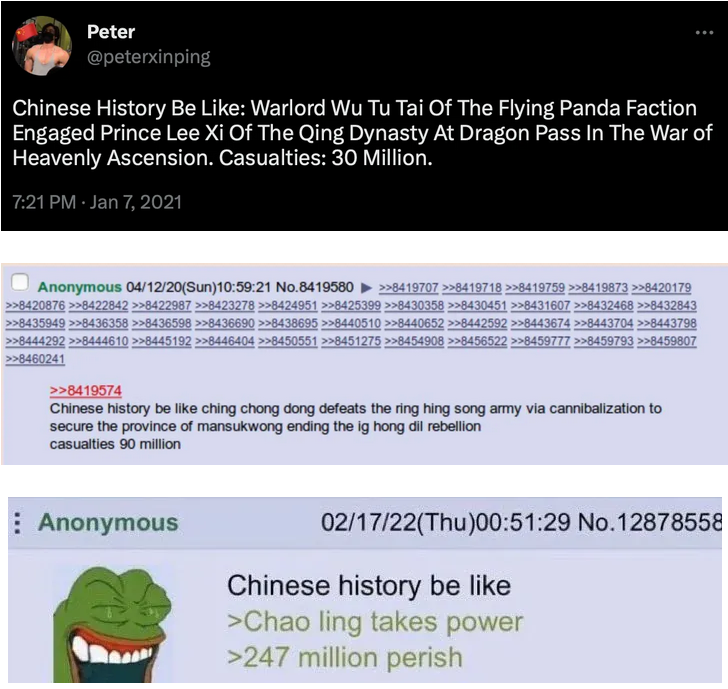
Comments Off on Do you also dream of apocalypse?
June 4, 2023
The Allies are Driving for Rome – WW2 – Week 249 – June 3, 1944
World War Two
Published 3 Jun 2023The Allies head north in Italy after the fall of Monte Cassino last week; the Japanese head south in China in a new phase of their offensive; and the Soviets and the Western Allies make ever more concrete plans for their huge offensives, to go off very soon.
(more…)
Comments Off on The Allies are Driving for Rome – WW2 – Week 249 – June 3, 1944
May 28, 2023
Breakout from Anzio! – WW2 – Week 248 – May 27, 1944
World War Two
Published 27 May 2023After four months, the Allies breakout from their bridgehead at Anzio and meet with the advancing troops heading north after the fall of Monte Cassino last week. The Japanese begin phase two of their big operation in China, and both the Soviets and the Western Allies continue making plans for their massive June offensives to squeeze the Axis from both sides of Europe.
(more…)
Comments Off on Breakout from Anzio! – WW2 – Week 248 – May 27, 1944
May 27, 2023
“David Johnston is an honourable man”
From this heading, you might be a bit reminded of Mark Antony’s funeral oration for Caesar, as imagined by William Shakespeare (well, I was, so you’ll have to suffer a few lines of iambic pentameter):
Friends, Romans, countrymen, lend me your ears;
I come to bury Caesar, not to praise him.
The evil that men do lives after them;
The good is oft interred with their bones;
So let it be with Caesar. The noble Brutus
Hath told you Caesar was ambitious:
If it were so, it was a grievous fault,
And grievously hath Caesar answer’d it.Here, under leave of Brutus and the rest–
For Brutus is an honourable man;
So are they all, all honourable men–
Come I to speak in Caesar’s funeral.
He was my friend, faithful and just to me:
But Brutus says he was ambitious;
And Brutus is an honourable man.He hath brought many captives home to Rome
Whose ransoms did the general coffers fill:
Did this in Caesar seem ambitious?
When that the poor have cried, Caesar hath wept:
Ambition should be made of sterner stuff:
Yet Brutus says he was ambitious;
And Brutus is an honourable man.
Perhaps I’m reading too much into the opening line of Philippe Lagassé’s article about former Governor General David Johnston’s role in whitewashing the Trudeau running dogs, however:
David Johnston is an honourable man. As a former governor general, he holds the title of Right Honourable and he wears it better than many former prime ministers who share that moniker. Johnston is also a champion of trust in democratic institutions; he literally wrote a book called Trust: Twenty Ways to Build a Better Country.
Although his appointment has been plagued by questions about his perceived conflicts of interest, it’s hard to accept that Johnston set out to protect the Liberal party. Whether one agrees with him or not, Johnston’s conclusions were arrived at sincerely and in keeping with his view that “Democracy is built on trust.” Unfortunately, his recommendation against a public inquiry is not only bewildering from a political perspective, but could erode the very trust in democracy that he wants to strengthen.
Whatever we think about Johnston’s first report, we should be concerned with his appointment as the special rapporteur. Aside from the perceived conflicts of interest, we should ask why a former governor general accepted the role in the first place. Serving as a vice-regal representative should be the last public role an individual performs. Any other public duty performed by a former governor general or lieutenant governor, however well-intentioned and performed, carries risks that can diminish these offices. Johnston’s experience is a cautionary tale for future vice-regals.
The governor general is the second-highest office of the Canadian state, under the monarch alone. The King’s representative performs most of the Crown’s head of state functions in Canada, both constitutional and ceremonial. Official independence and non-partisanship are essential parts of the head of state function. Canadians should be able to trust (there’s that word again) that governors general will be impartial in the exercise of their constitutional powers. We need only look at the 2008 prorogation controversy and the 2017 election in British Columbia to see why this matters for Canadian democracy.
Although less vital, independence and non-partisanship are also important for the governor general’s ceremonial roles. Having the governor general bestow honours ensures that Canadians are recognized by a neutral, but high-standing, representative of the state. An ardent Conservative can receive the Order of Canada while a Liberal government is in power without wincing, since the prime minister and cabinet are kept at a safe distance from the whole thing.
[…]
Former vice-regal representatives should take heed. They would do well to avoid becoming a new set of “retired Supreme Court justices”, whose judicial halo effect has become comically overused to stem political controversy. Indeed, Canadians should insist that the governor general’s salary and annuity come with a tacit bargain: you were set for life to ensure your impartiality and independence, now we never want to hear you wading into political controversies or see you hold another public office again.
This should not be too much to ask of the King’s representatives. No other public role has the formal role stature of a vice-regal office, aside from the monarch, and none are as carefully insulated from partisan battles. The office of governor general should be held by those at the end of a remarkable career, as a final act of independent and impartial public service.
Also in The Line, Mitch Heimpel seems to be a bit less willing to tolerate the use of a former Governor General as ablative shielding for a compromised government:
In the end, David Johnston proved himself to be exactly what his critics argued he always was.
A fervent defender of his advantaged status quo. Another among the thoroughly compromised set of politicians, senior civil servants and academics who have, over the decades when it comes to Canadian foreign policy regarding China, taken the money and run. The idea that he was ever going to be anything else was a figment of our own collective fantasy.
We believed we were a serious country. David Johnston has laughed in our faces at the very thought.
The families of members of Parliament have been targeted for possible “sanctions”? No matter.
Our elections are the subject of coordinated foreign intelligence operations? Well, sure. But what is democracy really?
Really, you see, Johnston told us — without ever being quite so direct about it, because people of Johnston’s polite air are rarely so crass — the media was your problem. They published things without the appropriate “context.”
Choosing Johnston was always a bit grubby. It was meant to politically neuter Conservatives because, after all, Stephen Harper appointed him to be the governor general. How could he possibly be compromised? Yes, he’s known the prime minister whose government he was investigating since Justin Trudeau was a small child. And, yes, as a university president, he was long an advocate for more open relations with China. And, yes, he involved with the Trudeau Foundation, which has found itself at the heart of the question of foreign interference coordinated by the Chinese Communist Party, but …
No, there is no “but”.
There is no other democracy which would have successfully conducted an elaborate farce of this magnitude to tell its citizens what it is painfully obvious that it wanted to tell them all along: You have no right to know.
Comments Off on “David Johnston is an honourable man”
May 21, 2023
The Fall of Monte Cassino – WW2 – Week 247 – May 20, 1944
World War Two
Published 20 May 2023In Italy, the Allies finally overcome Monte Cassino and break through the Gustav Line; in Burma Merrill’s Marauders surprise the Japanese and take Myitkyina Airfield; in China, it’s the Japanese who are playing offense, as Operation Ichi Go and the siege of Luoyang continue. That’s the field action, but there’s big planning behind the scenes for major June offensives going on by both the Western Allies and the Soviets.
(more…)
Comments Off on The Fall of Monte Cassino – WW2 – Week 247 – May 20, 1944
May 14, 2023
Victory at Sevastopol! – WW2 – Week 246 – May 13, 1944
World War Two
Published 13 May 2023The Soviets push the Axis out of the Crimea this week once and for all. In Italy, the Allies launch a major offensive, and the French make a breakthrough there by week’s end. In China, the Japanese are aiming at Luoyang, but in India at Kohima they’re slowly being pushed back.
(more…)
Comments Off on Victory at Sevastopol! – WW2 – Week 246 – May 13, 1944
May 7, 2023
The Line reports on “a Liberal policy convention in Fantasia”
It used to be said that the marketing department in any given organization was where the rubber met the sky (three drink minimum), but the Liberal convention in Barad-dûr-by-the-Rideau now owns that territory:

Once upon a time, Canada was led by a serious man named Pierre Elliot Trudeau. No matter what you think of his tenure as prime minister, there is no question that he took the job, and the country, seriously. Today his offspring, both biological and ideological, prance around the Canadian political landscape, smug and entitled and all the rest of it. But none of them has the foggiest idea of what they are doing with with the power they inherited, or why, or for what purpose.
[…]
For the evening entertainment on Friday, they brought out Jean Chrétien — another fantastically unserious person — to do his usual petit gars de Shawinigan routine. And did the old coot ever deliver, bragging yet again about keeping Canada out of Iraq, jabbing at Pierre Poilievre, and joking that he expects The Globe and Mail to call for a royal commission into Hillary Clinton showing up at the Liberal convention and interfering in Canadian elections.
Oh, our sides. They split. No matter that two days ago was World Press Freedom day. No matter that Friday also happened to be NNA night, where the Globe and Mail won nine awards. This is the Liberal convention after all, where one of the main policy proposals up for debate is a suggestion from the B.C. Liberals to essentially nationalise the news. Why not aim a few kicks at the media. The Liberals are paying for it anyway, aren’t they?
In his speech, Chrétien played to the latest Liberal idée fixe, which is that all of the party’s troubles since 2018 — from SNC Lavalin to WEgate to the egregious handling of Chinese interference — are all due to the clickbait chasing yellow journalists at the failing Globe and Mail.
For those of you who weren’t lucky enough to live through the nineties, Chrétien is the Liberal prime minister who brought you such hits as “what me worry?” about a Quebec referendum on secession; a joke about his PMO ordering the RCMP to pepper spray UBC students protesting his decision to invite a brutal dictator to dinner on their campus; and the Shawinigate and Adscam scandals, both of which are still routinely taught and referenced as case studies in ruling party greaseballery at its most unctuous.
But Liberals be Liberals. As National Post columnist Chris Selley noted: “This is deadly serious shit and this buffoon is playing it for laughs, just like [he] always played deadly serious shit.”
The “deadly serious shit” Selley had in mind is surely the river of scandal coursing through the Liberal Party in Ottawa over Chinese interference in Canadian politics, with tributaries flowing in from riding associations across the country, the Trudeau Foundation in Montreal, and numerous other parts of the Canadian political landscape. On Monday, the Globe and Mail reported on a CSIS analysis from 2021 which alleged that the family of Conservative MP Michael Chong was targeted by China’s security apparatus for unknown sanctions, in response to Chong’s sponsorship of a House of Commons motion calling China’s persecution of the Uighurs a genocide.
On Tuesday an understandably alarmed Chong was given an emergency briefing about the threat by CSIS director David Vigneault, in a meeting arranged by the prime minister.
This isn’t just about Michael Chong. Every member of parliament, every member of the government, should be up in arms over this. The Chinese diplomat in Canada involved, Zhao Wei, should have been sent home immediately, but Melanie Joly is still weighing the pros and cons.
As appalling as the targeting of Chong is in its own right, more scandalous still is the government’s response — equal parts utterly incompetent, unbelievably shady, and shamelessly partisan.
The scandal begins with the fact that Chong himself was never told about the CSIS report. Why is that? On Wednesday, the prime minister claimed it was because the threat identified in the CSIS report wasn’t deemed serious enough by the intelligence agency, so it never circulated outside of the agency. The first Trudeau had heard of this, apparently, was when he read about it in the newspaper.
But on Thursday, Michael Chong told the House of Commons that he’d been told, in a call from Trudeau’s current national security advisor Jody Thomas, that the report had actually made its way to the desk of one of her predecessors. When Trudeau was asked to explain this apparent contradiction on Friday, he said: “In terms of what I shared, I shared the best information I had at the time on Wednesday, both to Mr. Chong and to Canadians.” When asked who had given him this information, Trudeau declined to answer.
Look, we’ve seen this game before, countless times, with this government and this prime minister. Trudeau’s habit of responding to allegations of wrongdoing or incompetence or mismanagement by first denying any knowledge of the issue, then discrediting the source, and finally throwing unidentified third parties under the bus, is a well trod path for this deeply unserious man.
Given the pattern, we’re pretty skeptical of Trudeau’s claim that he’d been given incomplete information. Honestly, it wouldn’t surprise us in the slightest if it turns out that he just made the whole thing up.
Comments Off on The Line reports on “a Liberal policy convention in Fantasia”
Total Chaos on the Chinese Front! – WW2 – Week 245 – May 6, 1944
World War Two
Published 6 May 2023A command crisis in the Chinese Nationalist Army benefits the Japanese invaders, in Italy, Mark Clark spends his birthday planning new offensives, the Japanese are pushing for Imphal, and the Soviets for Sevastopol — another busy week of the war!
(more…)
Comments Off on Total Chaos on the Chinese Front! – WW2 – Week 245 – May 6, 1944
April 30, 2023
Germany’s Existential Crisis – WW2 – Week 244 – April 29, 1944
World War Two
Published 29 Apr 2023The fighting at Kohima is up close, personal, and vicious, as it is at Imphal. The Allies consolidate their gains at Hollandia, the Japanese are advancing in Central China, and it seems like the Chinese Nationalist Army has lost the support of the civilian population. This might not surprise you when we take a closer look.
(more…)
Comments Off on Germany’s Existential Crisis – WW2 – Week 244 – April 29, 1944


