Lindybeige
Published 1 Dec 2021Signup for your FREE trial to Wondrium here: http://ow.ly/TzQv30rNQ5z
Here I take you with me on my first day at Tikal, in the jungles of Guatemala. Archaeology, wildlife, strange sounds, and a sunset. The overgrown remains of a stone-age civilisation.
Support me on Patreon: https://www.patreon.com/Lindybeige
Kapok image: David Mead, CC0, via Wikimedia Commons
Buy the music – the music played at the end of my videos is now available here: https://lindybeige.bandcamp.com/track…
Buy tat (merch): https://outloudmerch.com/collections/…
Lindybeige: a channel of archaeology, ancient and medieval warfare, rants, swing dance, travelogues, evolution, and whatever else occurs to me to make.
▼ Follow me…
Twitter: https://twitter.com/Lindybeige I may have some drivel to contribute to the Twittersphere, plus you get notice of uploads.
My website:
http://www.LloydianAspects.co.uk
December 2, 2021
TIKAL – greatest city of the Maya
November 29, 2021
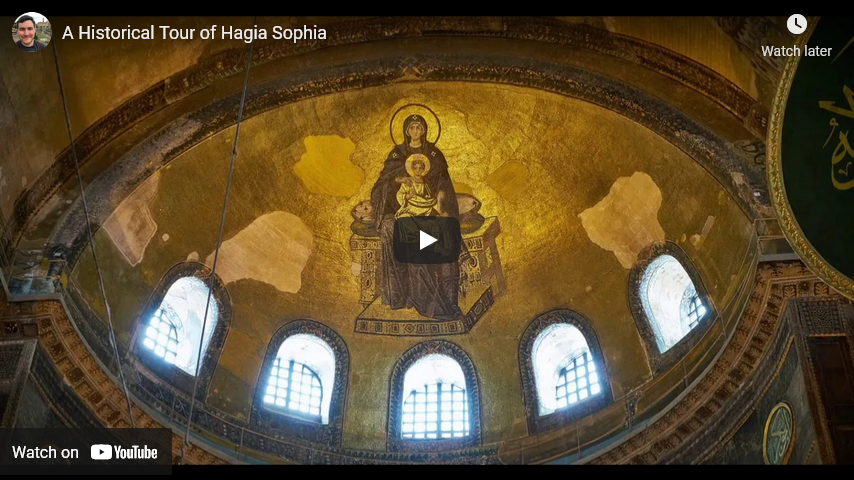
A Historical Tour of Hagia Sophia
toldinstone
Published 28 Nov 2020You’ve heard about Hagia Sophia‘s famous dome. But what about the miraculous column, the Viking graffiti, and the portrait of Byzantium’s worst emperor?
For more on Roman art and architecture, check out my book Naked Statues, Fat Gladiators, and War Elephants: Frequently Asked Questions about the Ancient Greeks and Romans.
https://www.amazon.com/Naked-Statues-…
If you’re so inclined, you can follow me elsewhere on the web:
https://www.patreon.com/toldinstone
https://www.reddit.com/r/AskHistorian…
https://www.instagram.com/toldinstone/
https://www.goodreads.com/author/show…Chapters:
0:00 Introduction
0:49 Justinian and his church
2:55 Construction of Hagia Sophia
4:11 Exterior
4:49 Exonarthex
5:14 Narthex
5:51 Vestibule of the Warriors
6:36 Imperial Gate
7:53 The Nave and Dome
10:37 Omphalos
11:12 Apse Mosaics
12:00 Column capitals
12:25 Weeping Column
13:07 Galleries
13:42 Gates of Heaven and Hell
14:01 Deësis mosaic
14:29 Tomb of Dandolo
15:14 Imperial mosaics of the South Gallery
17:28 Nordic runes
17:50 Alexander mosaic
18:26 ConclusionThanks for watching!
October 19, 2021
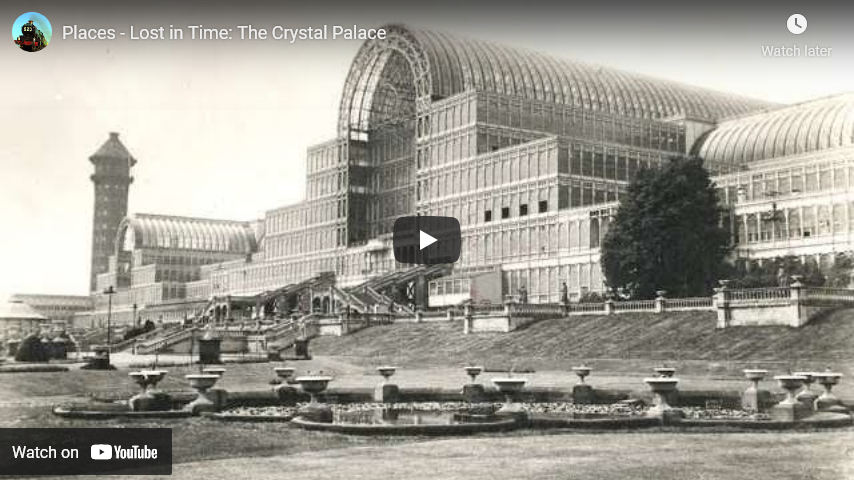
Places – Lost in Time: The Crystal Palace
Ruairidh MacVeigh
Published 1 Jun 2020This is a reupload of my original Crystal Palace video, which I had to take down and do some amendments to in order to fix some technical issues.
Hello! 😀
Not to change the format so early in it’s conception, but here I present an idea I’ve had for several years now, but am proud to finally bring to fruition.
For as long as I can remember I have been fascinated by places that have either been abandoned or destroyed, not so much out of interest for how they were lost, but more the microcosm of society that revolved around them — how people interacted with them and made them more human. Specifically, places which existed in living memory or photographic record are the ones that have captured my imagination the most, as you can see how people did interact with these wondrous locations and almost put yourself in their shoes.
Therefore, without further ado, I present Episode 1 of Places — Lost in Time, with my first feature being the lavish and opulent Crystal Palace in London. This video follows the history of the two structures to share this iconic name, and how both were created through Victorian engineering feats, how they became icons of British culture, and how they eventually met their end.
All video content and images in this production have been provided with permission wherever possible. While I endeavour to ensure that all accreditations properly name the original creator, some of my sources do not list them as they are usually provided by other, unrelated YouTubers. Therefore, if I have mistakenly put the accreditation of “Unknown”, and you are aware of the original creator, please send me a personal message at my Gmail (this is more effective than comments as I am often unable to read all of them): rorymacveigh@gmail.com
The views and opinions expressed in this video are my personal appraisal and are not the views and opinions of any of these individuals or bodies who have kindly supplied me with footage and images.
If you enjoyed this video, why not leave a like, and consider subscribing for more great content coming soon.
Thanks again, everyone, and enjoy! 😀
References:
– British Library (and their respective references)
– Victoria and Albert Museum (and their respective references)
– Wikipedia (and its respective references)Music – YouTube Audio Library
October 18, 2021
“If Extinction Rebellion had brains, they’d be blockading building sites rather than airports”
In The Critic, Andrew Hunt runs through the invisible environmental costs of the building industry and points out that despite the eye-opening amount of carbon emissions, the buildings we’re putting up everywhere are just not built to stand the test of time:

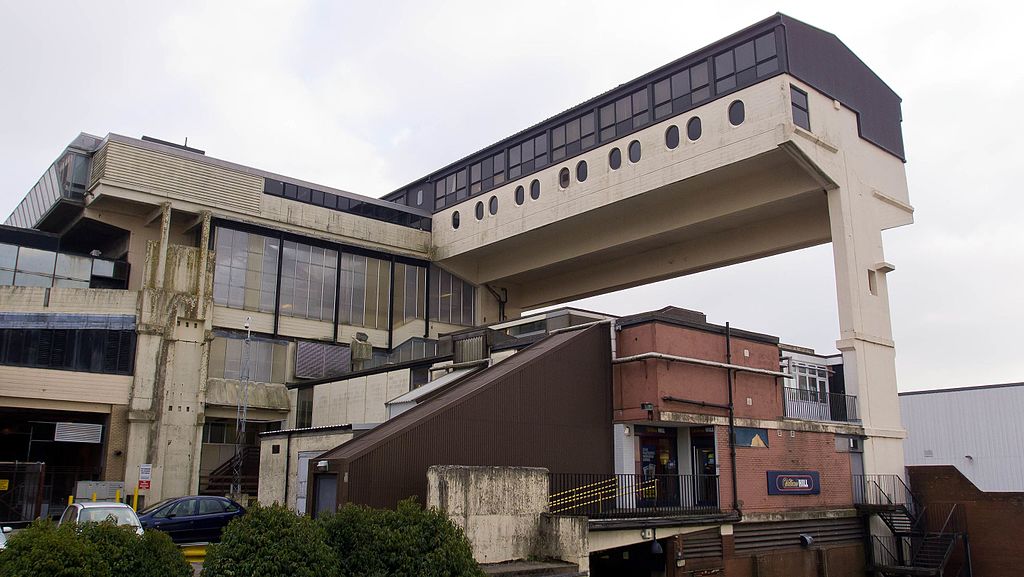
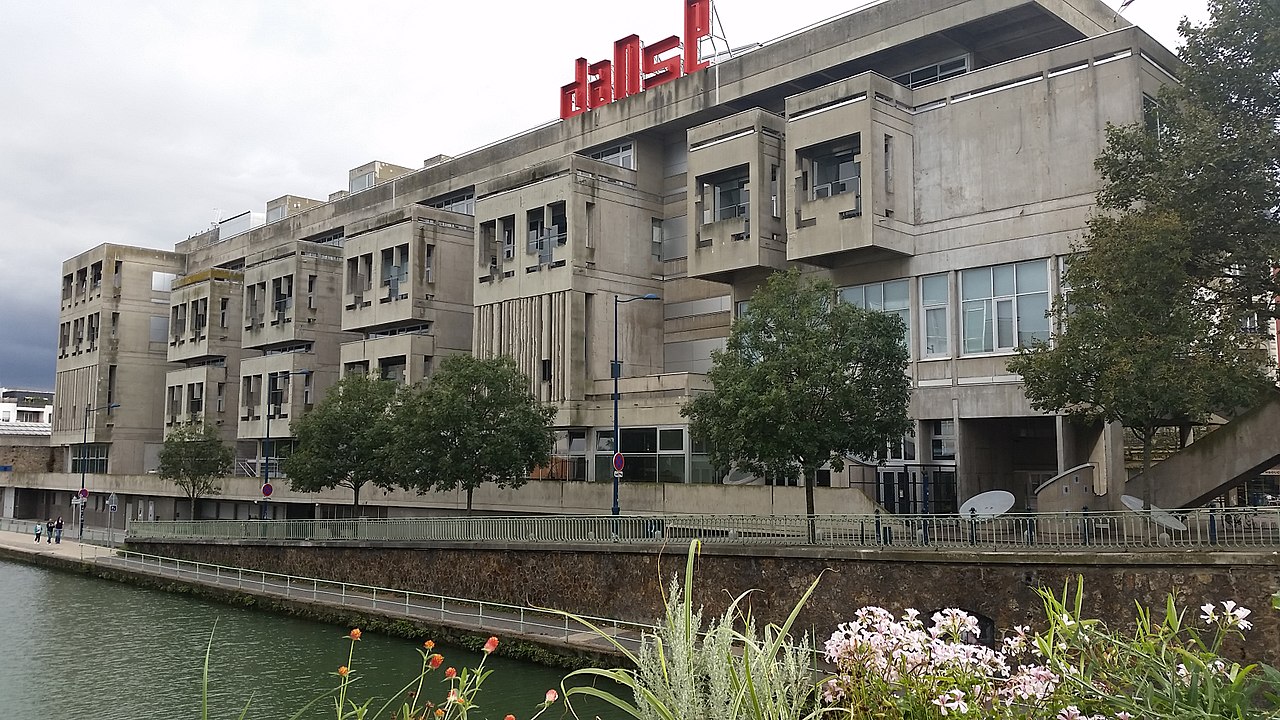
The Centre national de la danse in Pantin (Seine-Saint-Denis), designed in 1965 by Jacques Kalisz.
Photo by Cinerama14 via Wikimedia Commons.
In the run up to COP26, you can be sure we won’t be spared the preaching about windmills, electric cars and heat pumps, along with pious admonishments against any form of human pleasure, from taking holidays to eating a steak. As always, those in charge will ignore the elephant in the room. The world’s biggest polluter by far is the construction industry. According to the UN, it produces 38 per cent of global emissions. By comparison, airlines produce just 2 per cent. If Extinction Rebellion had brains, they’d be blockading building sites rather than airports.
Politicians seem equally blind. They fetishise house-building, but fail to notice that building even a two-bed house creates 80 tonnes of carbon and uses 150 tonnes of materials – the same amount of landfill as an average household creates over 300 years! By comparison, powering your house produces about 2 tonnes of CO2 per year. Even if you could build a truly net zero home tomorrow (which you can’t), it would take forty years to break even.
A big part of the problem is modern construction materials. Producing concrete (180kg of CO2/tonne) and steel (1.85 tonnes of CO2/tonne!) are two of the most ubiquitous and environmentally destructive industries on the planet. By contrast, sandstone has a carbon footprint of just 77kg/tonne, and wood can be CO2 negative as it locks in carbon. Those old materials last longer as well. There are stone buildings that have been knocking around for more than a millennium — Rome’s Pantheon is 1900 years old. If treated properly, wooden buildings can last almost as long. The world’s oldest inhabited house in the Faroe Islands is 900 years old and built from wood. China’s ornately carved Nanchang Temple has been welcoming Buddhists since the 8th century.
Pre-stressed concrete meanwhile has a lifespan of 50-100 years, meaning many of the first concrete structures have already crumbled into carcinogenic dust.
It’s not just the materials. For buildings to last, we must love them enough to preserve them.
In a little-known study, “Sustainable Build Heritage“, a group of Danish academics looked at why some buildings stand for centuries while others are demolished in as little as a generation. Their conclusion was that buildings that last are made of good materials, are functional and, above all, are beautiful. They acknowledged the timelessness of traditional notions of beauty: how some buildings give us the same gut reactions as they did our ancestors. Copenhagen is of course full of examples — not least her colourful townhouses that have been standing for over two centuries. They have had to be adapted, but they have always been popular places to live.
Closer to home, badly built eyesores are being torn down barely a generation after their construction: tower blocks from the 60s, council offices from the 70s and shopping centres from the 90s. That’s billions of tonnes of fossil fuels and mining degradation ending up as landfill.
Has anything been learnt? The Prime minister’s “Build Back Better” plan is in no way green. Construction can never be green. Is it possible to conceive of a crueller thing to do to future generations than a debt-fuelled frenzy of brutalist carbuncles that will be theirs to demolish? When Greta Thunberg described Build Back Better as “blah-blah-blah”, she was being generous. It’s an environmental catastrophe.
October 16, 2021
City Minutes: Indigenous America
Overly Sarcastic Productions
Published 15 Oct 2021As we look at four pre-Columbian American cities, I don’t know whether to be more impressed with the the architecture or the landscaping. Probably both.
More Indigenous Myths & History:
The Five Suns (https://youtu.be/dfupAlon_8k)
Quetzalcoatl (https://youtu.be/451jzIesWoU)
Huitzilopotchli (https://youtu.be/Zj-jDOjBets)
El-Dorado (https://youtu.be/UHzkGueRz3g)
Pele (https://youtu.be/q1z19p48lZU)
Hawaii (https://youtu.be/xYouQESFE2A)Teotihuacan shirt: https://www.redbubble.com/shop/ap/903…
Timestamps:
0:00 – 1:03 — Teotihuacan
1:03 – 2:04 — Tikal
2:04 – 3:00 — Tenochtitlan
3:00 – 4:08 — Cusco
4:08 – 5:20 — ConclusionSOURCES & Further Reading: The Great Cities in History by John Julius Norwich, The Great Courses lectures “The Great City of Teotihuacan” and “Tikal – Aspiring Capital of the Maya World” and “The Aztec Capital of Tenochtitlan” from lecture series Maya to Aztec: Ancient Mesoamerica Revealed by Edwin Barnhart, and “Machu Picchu and the Sacred Valley” and “The Inca – From Raiders to Empire” from lecture series The Lost Worlds of South America by Edwin Barnhart.
Our content is intended for teenage audiences and up.
PATREON: https://www.Patreon.com/OSP
PODCAST: https://overlysarcasticpodcast.transi…
DISCORD: https://discord.gg/osp
MERCH LINKS: http://rdbl.co/osp
OUR WEBSITE: https://www.OverlySarcasticProductions.com
Find us on Twitter https://www.Twitter.com/OSPYouTube
Find us on Reddit https://www.Reddit.com/r/OSP/
October 6, 2021
Let’s Visit Finland (1935) – Helsinki Liinakhamari Lapland Arctic Ocean Highway
PeriscopeFilm
Published 2 Aug 2020Love our channel? Help us save and post more orphaned films! Support us on Patreon: https://www.patreon.com/PeriscopeFilm Even a really tiny contribution can make a difference.
This travelogue film shows Finland in the 1930’s. It was presented by Joseph Harris and Martin Ross. Finland is in northern Europe bordering Sweden, Norway and Russia. The capital city of Helsinki as well as the Arctic Ocean Highway running to the port of Liinakhamari which once touched the Arctic Ocean will be shown. It refers to Helsinki as Helsingfors which is the former Swedish name of the capital. The Arctic Ocean Highway was rerouted after WW2. Finland had long been a battleground due to the imperial ambitions and growing pains of Sweden and Russia. Finland was absorbed by the Russian Empire in 1807 (:32). A 1917 revolution overthrew the Czarist regime (:38). Due to wars and fires, few remnants existed of historical value in Helsinki (:47). Some of the old wooden houses have managed to remain (:53). Granite columns and entryways of the city point to early architects’ desire to use the country’s reserve of granite (1:14). Russian influence is exemplified in a Russian style church (1:35) and the cathedral of St. Nicholas (1:38). Architects sought to stray from the influences of foreign domination (1:45). The red granite railway station in the Market Square (1:59), the parliament building (2:05) and white factory buildings show no allegiance to former occupiers (2:08). A newly erected suburb consisting of flats constructed with reinforced steel (2:26) lay encircled by forests and lakes. Roads are lined with trees and intermittent flower beds (2:49). Helsinki harbor follows (2:59). Town parks and gardens were erected with artistic sculptures throughout showing Finland’s growing appreciation for the arts (3:22). The capital is also the terminus of the road leading northward for over a thousand miles to the port of Liinakhamari (3:34). A map is provided which still has USSR on it as this was before the fall of Soviet Russia (3:35). The port of Liinakhamari lay about 300 miles beyond the polar circle (3:43). The film follows this road which remains concrete for 20 miles after leaving the capitol (3:58). Land alongside had been cleared for agriculture (4:06). A farmer reaps hay with a scythe as modern farm machinery had not yet reached the area (4:34). A striking feature of the Finnish countryside are the impaled corn husks on wooden poles for drying (5:03). A double arched bridge of granite follows crossing one of the waterways along the route (5:09). A close up shot of the farm houses show they are crudely erected structures reminiscent of the middle ages (5:28). Corn fields dissipate and the countryside becomes hilly and wooded (6:03). Finland is known as the land of a thousand lakes, though it should be known as the land of 60,000 lakes (6:11). The route continues on for 300 miles until hitting another agricultural district (6:44) sprinkled with one-story windmills. It continues around the Gulf of Bothnia (6:54). The only important town along the way is Oluu where the Oulujoki River cuts the city into three (7:28). Uneven cobblestone roads (7:38) and wooden buildings with elaborate ornate facades. Rivers float timber out from the forests (8:18). Finland’s timber industry racks in 80 million pounds annually (8:28). The timber is sent to sawmills along the coast (9:35). Stacks along the road await trucks (9:40). A car heads to be taken across a river by ferry as bridges become less frequent (10:27). The pulley system is operated by the ferryman, his young daughter and by the passengers (10:45). The government auctioned the ferries to those who would operate them at the lowest cost (11:02). Further on, another farm area appears with small white wooden churches (11:33). Most of the water for homes are sourced by well (11:49). The road then re-enters the wilderness (12:03). A sign with “Arctic Circle” in four different languages (12:05) follows as the road crosses the imaginary line marking the Arctic circle. Cattle are wandering through the road (12:31), hay farms (13:08), and stacks of wood to heat the homes in the winter (13:24). A housewife washes her clothes using water from a brook (13:32). The road hits Lapland (13:54) and turns into a dirt road (14:01). Reindeer feed on the lichen in winter (15:05). A log hut has reindeer antlers placed on top (15:22). Laplanders with their colorful handcrafted headdresses and pointed toe tall boots (15:43). Vegetation becomes stunted while approaching the northern coastline (16:29). The film wraps up as the road reaches the deep-water port of Liinakhamari (16:40).
This film is part of the Periscope Film LLC archive, one of the largest historic military, transportation, and aviation stock footage collections in the USA. Entirely film backed, this material is available for licensing in 24p HD, 2k and 4k. For more information visit http://www.PeriscopeFilm.com
October 4, 2021
History Summarized: Sicily
Overly Sarcastic Productions
Published 1 Oct 2021The plot twist of Medieval Italian History is that the main event was happening in the South — In the centuries before the Renaissance, Sicily and southern Italy were sporting one of the most spectacular cultures in the world, combining the greatest hits of Mediterranean history in one place. It’s way cool, you guys.
SOURCES & Further Reading: Sicily: An Island at the Crossroads of History by John Julius Norwich, The Great Cities in History by John Julius Norwich, Great Courses Lectures “Muslims in the Court Of Roger II – 1130” from Turning Points in Middle Eastern History by Eamonn Gerron and “Renaissance Italy’s Princes and Rivals” from Renaissance: The Transformation of the West by Jennifer McNabb
This video’s topic was requested by our patron Salvatore Corasaniti. Thank you for supporting our channel!
Our content is intended for teenage audiences and up.
PATREON: https://www.Patreon.com/OSP
PODCAST: https://overlysarcasticpodcast.transi…
DISCORD: https://discord.gg/osp
MERCH LINKS: http://rdbl.co/osp
OUR WEBSITE: https://www.OverlySarcasticProductions.com
Find us on Twitter https://www.Twitter.com/OSPYouTube
Find us on Reddit https://www.Reddit.com/r/OSP/
From the comments:
Overly Sarcastic Productions
2 days ago
I can’t even begin to describe how much Ancient Sicily Content™ I had to cut for time.
Fear not, Magna Graecia will get the spotlight it deserves in another video.
-B
August 31, 2021
Isambard Kingdom Brunel: The Genius of the Industrial Revolution
Biographics
Published 23 Mar 2020Check out Brilliant: https://brilliant.org/biographics
Check out Business Blaze: https://www.youtube.com/channel/UCYY5…
This video is #sponsored by Brilliant.
TopTenz Properties
Our companion website for more: http://biographics.org
Our sister channel TopTenz: https://www.youtube.com/channel/UCQ-h…
Our Newest Channel about Interesting Places: https://studio.youtube.com/channel/UC…Credits:
Host – Simon Whistler
Author – Morris M.
Producer – Jennifer Da Silva
Executive Producer – Shell HarrisBusiness inquiries to biographics.email@gmail.com
Source/Further reading:
Oxford National Dictionary of Biography: https://www.oxforddnb.com/view/10.109…
Interesting podcast on his life: https://www.bbc.co.uk/programmes/b04n…
Britannica: https://www.britannica.com/biography/…
History Today: https://www.historytoday.com/archive/…
The Thames Tunnel: https://www.smithsonianmag.com/histor…
The atmospheric railway: https://www.theguardian.com/science/t…
SS Great Britain accident: https://www.ssgreatbritain.org/about-…
August 10, 2021
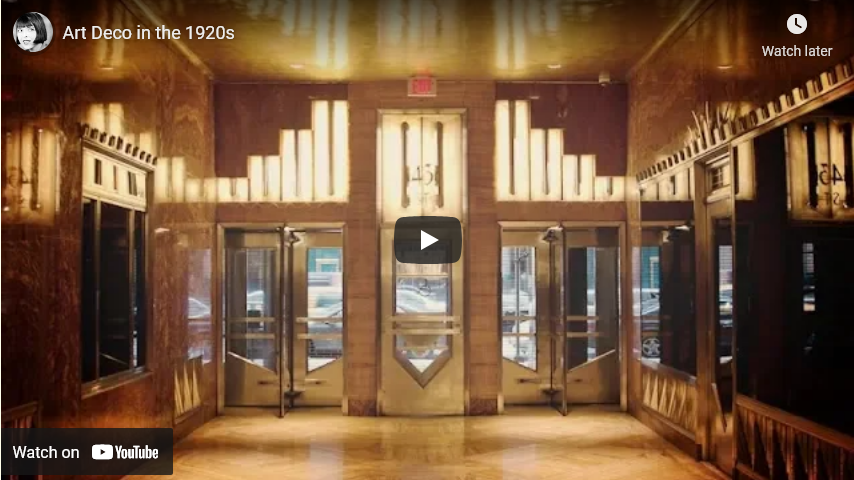
Art Deco in the 1920s
The1920sChannel
Published 1 Nov 2019The aesthetic of the 1920s was certainly unique and instantly recognizable. For those of us (me included) who don’t know much about art, it’s difficult to pinpoint the characteristics. The most important art movement of the ’20 was Art Deco. So here’s a closer, though unprofessional, look at 1920s aesthetic.
July 1, 2021
QotD: Life at “Flyover State” in the 1990s
Something felt off when I arrived at Flyover State to take up my first teaching gig. It took me a while, but I finally figured it out: Everything, everywhere, was just ugly.
“Blandly utilitarian” was about the best that one could say about the least offensive campus architecture; “brutalist monstrosities” was closer to the truth for most of it. And as with the campus, so with the town — the off-campus housing was beautiful old Victorian houses ripped up and made into “efficiency” apartments, crammed cheek by jowl with poured-concrete boxes that looked like barracks for low-ranking Party members in the Pyongyang suburbs. The public parks were nicely landscaped, but each featured some publicly-subsidized “art” that made you want to gouge your eyeballs out. Every single space had wheelchair ramps, and was festooned with enough signs to give M. Night Shyamalan wood. It was hideous.
As with the built environment, so with human behavior. Everyone on the faculty looked like a refugee from 1968, but instead of toking righteous bud, they’d been taking sriracha enemas. The shopkeepers who catered to them were seemingly locked in a contest to out-obnoxious each other over their leftwing politics, and as for the few tradesmen who provided vital services, they had the warm and welcoming vibe of a DMV supervisor. Not that I blame them for this — I ended up hanging out with a lot of those guys at a townie bar, and trust me, being called out to work at a professor’s home is exactly the kind of experience you think it is. Hurry up and fix the leaky pipe, bigot, while I lecture you about your privilege … then try to stiff you on the bill. (Same thing in reverse for the students). So they came off like cops, assuming that everyone they met was a dyed-in-the-wool asshole until proven otherwise.
Life in a college town, then, is soulless, instrumentalist, transactionalist — everything’s for sale, but everything had best be spelled out, in writing, in triplicate. Nobody’s from there, nobody stays there, so everything is always on the arm. No one and nothing is ever on the level; everyone is always looking to chisel everyone else. And, ironically, the longer someone stays there, the more likely xzhey are to push this attitude to near-platonic perfection — eggheads all believe, with all their hearts and souls, that they deserve to be at Harvard, so when Harvard doesn’t come calling, the days and months and years become an intolerable insult. How dare they expect me to live like this, in a place designed to cater to my every whim, making only 100 large per year! It’s an outrage!!
Looking back on it, I see now why I hated the 1990s so much. Eggheads are incredibly conservative about everything but their politics, but in this one case, they really were as “progressive” as they fancy themselves. Before just about anyone else, they embraced the globohomo ethos of rootless piracy. Then as now, they all claimed to hate “sportsball” (if you’ll forgive an anachronism for clarity’s sake) with the heat of a thousand suns, but they could’ve given LeBron James lessons on how to be a backstabbing, glory-hogging, money-chasing, utterly mercenary douchebag. As early as the late 1980s, they found the idea of remaining loyally in one institution, building it up as a service to the community, as laughable as modern sportsballers find sticking in one city in order to be a role model. Fuck that, give me mine!!!
Severian, “Everything Is Ugly New”, Rotten Chestnuts, 2021-02-15.
June 22, 2021
History Summarized: The Athenian Temple at Sounio
Overly Sarcastic Productions
Published 29 Sep 2017On my summer vacation, I had the distinct pleasure of visiting Cape Sounio, at the southern tip of Attica at sunset, and I have to say it was one of the most historically exciting moments of my life. For all I myself have said about the Athenian empire, seeing the view from this temple made everything click into place and feel tangibly real for the first time ever (even my 10+ trips to the Parthenon over the course of my childhood didn’t do that). So uh … here’s 7 minutes of me gushing about it under the thin guise of persuasive historical argumentation.
PATREON: www.patreon.com/user?u=4664797
MERCH LINKS:
Shirts – https://overlysarcasticproducts.threa…
All the other stuff – http://www.cafepress.com/OverlySarcas…Find us on Twitter @OSPYouTube!
June 13, 2021
QotD: Defending the undefendable – Brutalist architecture
I have recently collected quite a number of articles online and in the press in favor of brutalism. I did so without having made any special effort, and without finding anything like the same number of countervailing articles against it, albeit that the great mass of the population, in my view rightly, detests brutalism. The penultimate paragraph of one of the recent articles that I have seen in favor of brutalism — the employment of great slabs of concrete in the construction of buildings — goes as follows:
The newly-gained attractivity [of architectural brutalism] is growing by the day. In troubled times where societal divides are stronger than ever around the globe and in a world where instantaneous rhymes with tenuous, brutalism offers a grounded style. It’s a simple, massive and timeless base upon which one can feel safe, it’s reassuring.
It is rather difficult to argue with, let alone refute, the vague propositions of such a paragraph, which nevertheless intends (I imagine) to connote approval and judgment based upon sophisticated, wide, and deep intellectual considerations. But what exactly is a “grounded style” in contrast to a “world where instantaneous rhymes with tenuous”? This is verbiage, if not outright verbigeration, though it might serve to intimidate those with little confidence in their own judgment. The idea that brute concrete could create any kind of security rather than unease or fear is laughable.
When defenders of or apologists for brutalism illustrate their articles with supposed masterpieces of the genre, it is hardly a coincidence that they do so with pictures of buildings utterly devoid of human beings. A human being would be about as out of place in such a picture, and a fortiori in such a building, as he would be in a textbook of Euclidean geometry, and would be as welcome as a termite in a wooden floor or a policeman in a thieves’ kitchen. For such defenders and apologists of brutalism, architecture is a matter of the application of an abstract principle alone, and they see the results through the lenses of their abstraction, which they cherish as others cherish their pet.
Theodore Dalrymple, “The Brutalist Strain”, Taki’s Magazine, 2019-11-02.
May 31, 2021
QotD: Contemporary architecture hates you
The fact is, contemporary architecture gives most regular humans the heebie-jeebies. Try telling that to architects and their acolytes, though, and you’ll get an earful about why your feeling is misguided, the product of some embarrassing misconception about architectural principles. One defense, typically, is that these eyesores are, in reality, incredible feats of engineering. After all, “blobitecture” — which, we regret to say, is a real school of contemporary architecture — is created using complicated computer-driven algorithms! You may think the ensuing blob-structure looks like a tentacled turd, or a crumpled kleenex, but that’s because you don’t have an architect’s trained eye.
Another thing you will often hear from design-school types is that contemporary architecture is honest. It doesn’t rely on the forms and usages of the past, and it is not interested in coddling you and your dumb feelings. Wake up, sheeple! Your boss hates you, and your bloodsucking landlord too, and your government fully intends to grind you between its gears. That’s the world we live in! Get used to it! Fans of Brutalism — the blocky-industrial-concrete school of architecture — are quick to emphasize that these buildings tell it like it is, as if this somehow excused the fact that they look, at best, dreary, and, at worst, like the headquarters of some kind of post-apocalyptic totalitarian dictatorship.
Brianna Rennix and Nathan J. Robinson, “Why You Hate Contemporary Architecture”, Current Affairs, 2017-10-31.
May 26, 2021
QotD: Modern architecture is ugly … or worse
The British author Douglas Adams had this to say about airports: “Airports are ugly. Some are very ugly. Some attain a degree of ugliness that can only be the result of special effort.” Sadly, this truth is not applicable merely to airports: it can also be said of most contemporary architecture.
Take the Tour Montparnasse, a black, slickly glass-panelled skyscraper, looming over the beautiful Paris cityscape like a giant domino waiting to fall. Parisians hated it so much that the city was subsequently forced to enact an ordinance forbidding any further skyscrapers higher than 36 meters.
Or take Boston’s City Hall Plaza. Downtown Boston is generally an attractive place, with old buildings and a waterfront and a beautiful public garden. But Boston’s City Hall is a hideous concrete edifice of mind-bogglingly inscrutable shape, like an ominous component found left over after you’ve painstakingly assembled a complicated household appliance. In the 1960s, before the first batch of concrete had even dried in the mold, people were already begging preemptively for the damn thing to be torn down. There’s a whole additional complex of equally unpleasant federal buildings attached to the same plaza, designed by Walter Gropius, an architect whose chuckle-inducing surname belies the utter cheerlessness of his designs. The John F. Kennedy Building, for example — featurelessly grim on the outside, infuriatingly unnavigable on the inside — is where, among other things, terrified immigrants attend their deportation hearings, and where traumatized veterans come to apply for benefits. Such an inhospitable building sends a very clear message, which is: the government wants its lowly supplicants to feel confused, alienated, and afraid.
Brianna Rennix and Nathan J. Robinson, “Why You Hate Contemporary Architecture”, Current Affairs, 2017-10-31.
April 17, 2021
Neoclassical Architecture
Overly Sarcastic Productions
Published 16 Apr 2021You asked, I deliver: the Neoclassicism tangent receives the full-video spotlight it deserves. But there’s plenty more architectural and art-historical analysis where that came from. So if this kind of thing seems fun, please comment and let me know!
SOURCES & Further Reading: Francesco’s Venice by Francesco Da Mosto, A History of Venice by John Julius Norwich, “Renaissance Architecture” via Britannica, and many many many hours spent staring at buildings in Italy.
This video was edited by Sophia Ricciardi AKA “Indigo”. https://www.sophiakricci.com/
Our content is intended for teenage audiences and up.
PATREON: https://www.Patreon.com/OSP
PODCAST: https://overlysarcasticpodcast.transi…
DISCORD: https://discord.gg/osp
MERCH LINKS: http://rdbl.co/osp
OUR WEBSITE: https://www.OverlySarcasticProductions.com
Find us on Twitter https://www.Twitter.com/OSPYouTube
Find us on Reddit https://www.Reddit.com/r/OSP/