toldinstone
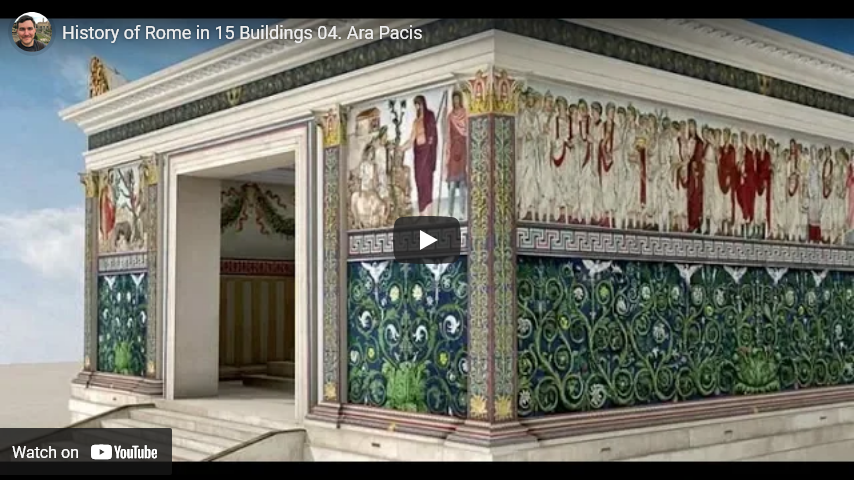
Published 27 Sep 2018Augustus dominates this fourth episode of our History of Rome, which uses the Ara Pacis Augustae (Altar of the Augustan Peace) to discuss the first emperor’s reign, reforms, and propaganda. I also threw in a gripping description of the Battle of Actium.
If you enjoyed this video, you might be interested in my book Naked Statues, Fat Gladiators, and War Elephants: Frequently Asked Questions about the Ancient Greeks and Romans. You can find a preview of the book here:
https://toldinstone.com/naked-statues…
If you’re so inclined, you can follow me elsewhere on the web:
https://www.reddit.com/r/AskHistorian…
https://www.instagram.com/toldinstone/To see the story and photo essay associated with this video, go to:
https://toldinstone.com/ara-pacis/Thanks for watching!
April 10, 2022
History of Rome in 15 Buildings 04. Ara Pacis
April 6, 2022
How To Build a Nazi Fortress – WW2 Special
World War Two
Published 5 Apr 2022Few things of the Second World War are more intimidating than the iconic German bunker. Made out of reinforced concrete with a thickness of up to 3.5 meters, these casemates and pillboxes were incredibly tough to destroy. Built to withstand shells and bombs, they provided shelter to troops and civilians alike. But there were also some even larger super-structures. From giant U-Boat shelters and fearsome Flak-Towers, to the ultimate Führerbunker, the Germans perfected the art of bunker building.
(more…)
April 3, 2022
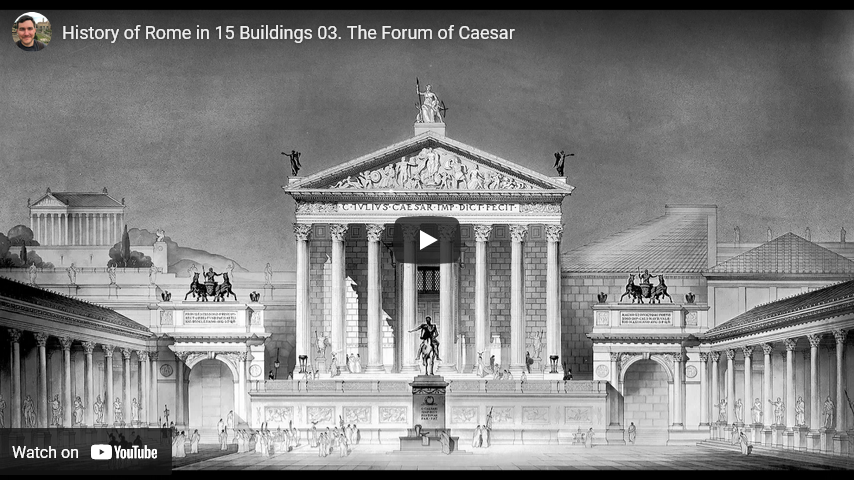
History of Rome in 15 Buildings 03. The Forum of Caesar
toldinstone
Published 27 Sep 2018In this third episode of our History of Rome, focused on the Forum of Julius Caesar, we discuss (as might be expected) Julius Caesar, the last and greatest of the generals who reshaped the Roman Republic in their own image. Caesar dominates the stage, but there are walk-on bits for a crew of pirates, forty trained elephants, and Cleopatra.
If you enjoyed this video, you might be interested in my book Naked Statues, Fat Gladiators, and War Elephants: Frequently Asked Questions about the Ancient Greeks and Romans. You can find a preview of the book here:
https://toldinstone.com/naked-statues…
If you’re so inclined, you can follow me elsewhere on the web:
https://www.reddit.com/r/AskHistorian…
https://www.instagram.com/toldinstone/To see the story and photo essay associated with this video, go to:
https://toldinstone.com/the-forum-of-…Thanks for watching!
March 26, 2022
History of Rome in 15 Buildings 02. The Rostra
toldinstone
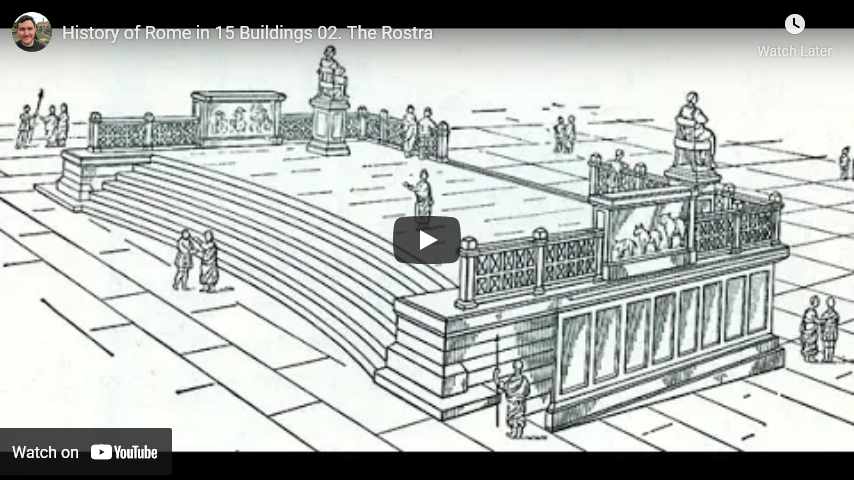
Published 2 Oct 2018This second episode of our History of Rome presents the Rostra, the speaking platform in the Roman Forum, as a key to understanding the turbulent world of the Late Republic. It focuses on the career of Cicero, Rome’s greatest orator, who was successively applauded and impaled on the Rostra.
If you enjoyed this video, you might be interested in my forthcoming book Naked Statues, Fat Gladiators, and War Elephants: Frequently Asked Questions about the Ancient Greeks and Romans.
You can find a preview of the book here:
https://toldinstone.com/naked-statues…
If you’re so inclined, you can follow me elsewhere on the web:
https://www.reddit.com/r/AskHistorian…
https://www.instagram.com/toldinstone/To see the story and photo essay associated with this video, go to:
https://toldinstone.com/the-rostra/
Thanks for watching!
March 19, 2022
History of Rome in 15 Buildings 01. The Hut of Romulus
toldinstone
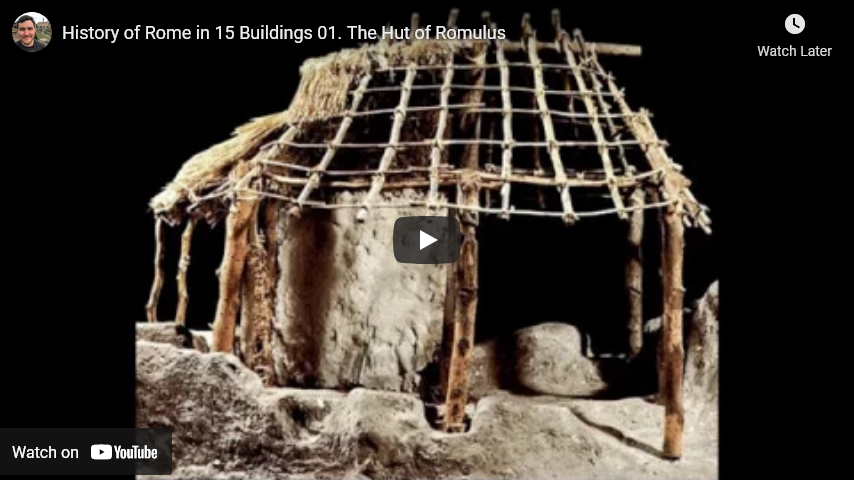
Published 27 Sep 2018This first episode of my History of Rome in Fifteen Buildings discusses the origins of Rome in relation to the enigmatic and frequently-rebuilt structure known as the Hut of Romulus. Along the way, we’ll encounter a floating phallus, a remarkably accommodating she-wolf, and, of course, the homicidal demigod who founded the city of Rome.
If you enjoyed this video, you might be interested in my forthcoming book Naked Statues, Fat Gladiators, and War Elephants: Frequently Asked Questions about the Ancient Greeks and Romans.
https://toldinstone.com/naked-statues…
If you’re so inclined, you can follow me elsewhere on the web:https://www.reddit.com/r/AskHistorian…
https://www.instagram.com/toldinstone/To see the story and photo essay associated with this video, go to:
https://toldinstone.com/the-hut-of-ro…
Thanks for watching!
March 1, 2022
Mycenaean Greece
Thersites the Historian
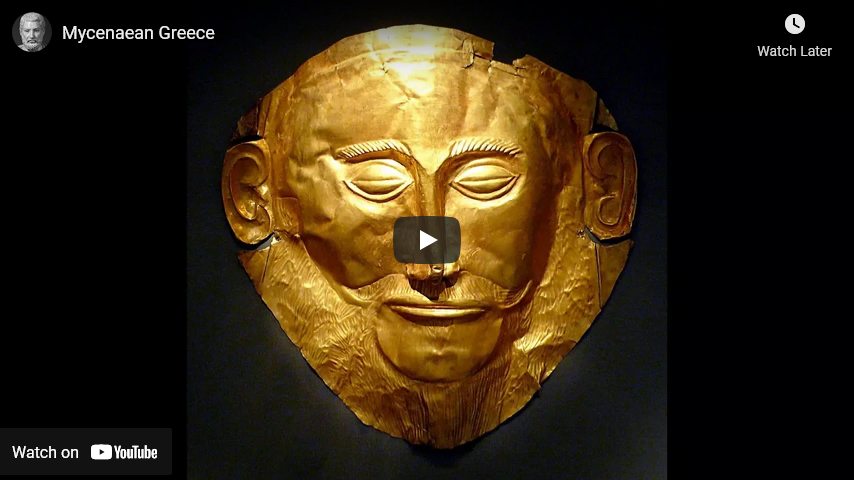
Published 25 Jan 2018In this video, I look at the Mycenaean civilization in Greece, which lasted from 1600-1100 BCE.
February 26, 2022
QotD: Taste in decoration
The villa itself is beautiful, a tasteful combination of traditional Javanese and Balinese influences with a secluded pool and tropical garden. The architect should be commended. The decorators, however, should be fed to wild pigs. To call the interior “kitsch” is to be too kind. Gilt framed mirrors compete with gilt framed pictures and massive gilt encrusted chandeliers. Understatement and elegance are in short supply. Indeed, they’ve fled the premises in horror. Vulgar tchotkies, however, abound. A life size porcelain tiger crouches in the entry way. Cherubs peer down from walls and [the owner is] a Muslim for christsake.
It’s as if a Las Vegas wedding chapel designer had been abducted, brought to Indonesia, and forced, at gun-point, to lower his standards. One half-waits for the Elvis impersonator to come down the staircase.
Conrad, “The Long Weekend”, The Gweilo Diaries, 2004-09-28
February 22, 2022
QotD: Architecture’s crisis of confidence
Architecture is suffering a crisis of confidence. More and more mainstream figures in the field are admitting that the profession has lost its way. […] Frank Gehry, the world’s most famous architect, recently said that “98% of everything that is built and designed today is pure sh*t. There’s no sense of design, no respect for humanity or for anything else.” Architectural thought-leaders seconded and thirded him. And he’s since been fourthed by another.
Last year, recognizing general public’s low opinion of architects, the American Institute of Architects (AIA), the trade organization for the profession, launched an effort to “reposition” the industry by hiring marketing and brand-identity firms.
And now The New York Times, the ultimate arbiter of elite opinion, recently published an op-ed that declared, “For too long, our profession [architecture] has flatly dismissed the general public’s take on our work, even as we talk about making that work more relevant with worthy ideas like sustainability, smart growth and ‘resilience planning’.” The authors are not kooks on the fringe but architect Steven Bingler and Martin C. Pedersen, former executive editor of Metropolis magazine, both of them very much in the establishment.
The authors observe that self-congratulatory, insulated architects are “increasingly incapable … of creating artful, harmonious work that resonates with a broad swath of the general population, the very people we are, at least theoretically, meant to serve.” Bingler and Pedersen note that this has been a problem for over forty years (my emphasis), and that things are even worse today.
Justin Shubow, “Architecture Continues To Implode: More Insiders Admit The Profession Is Failing”, Forbes, 2015-01-06.
February 19, 2022
Antique Antics: The Doge’s Palace
Overly Sarcastic Productions
Published 5 Nov 2021To celebrate my marriage to my Darling Wife Cyan, I asked her to select this video’s topic. Now, given she chose Venice, I wonder who truly gave the gift to whom?
SOURCES & Further Reading: A History of Venice by John Julius Norwich, Francesco’s Venice by Francesco Da Mosto, Venice: City of Dreams from Rick Steves’ Europe, and perhaps literally the most fun source I’ve ever stumbled upon: a 17-page document from the actual Museum of the Doge’s Palace in Venice, explaining the history of the building and the collections inside. The bottom of their building-history webpage has a link to download the magnificent full-PDF, enjoy: https://palazzoducale.visitmuve.it/en…
Our content is intended for teenage audiences and up.
PATREON: https://www.Patreon.com/OSP
PODCAST: https://overlysarcasticpodcast.transi…
DISCORD: https://discord.gg/osp
MERCH LINKS: http://rdbl.co/osp
OUR WEBSITE: https://www.OverlySarcasticProductions.com
Find us on Twitter https://www.Twitter.com/OSPYouTube
Find us on Reddit https://www.Reddit.com/r/OSP/
February 5, 2022
City Minutes: The Roman Empire
Overly Sarcastic Productions
Published 4 Feb 2022The funny thing about Empire is that ~*Rome*~ includes far more than just the City of Rome. Spread out across every corner of the Mediterranean — and then some — Roman Civilization was always adapting to local circumstances and changing over time. Today we’ll look at 5 cities that show the diversity of just how much “Rome” could really mean in the days of the empire.
The Great Cities In History by John Julius Norwich, “A Wonder of the World – Ephesus” from The Great Tours: Greece and Turkey, from Athens to Istanbul by John R. Hale, “Ephesus”, “Leptis Magna”, “Roman Britain”, “Pompeii” from World History Encyclopedia https://www.worldhistory.org/ephesos/, https://www.worldhistory.org/Lepcis_Magna, https://www.worldhistory.org/Roman_Britain, https://www.worldhistory.org/pompeii/. “Ephesus”, “Leptis Magna” “London”, “Pompeii” from Britannica https://www.britannica.com/place/Ephesus, https://www.britannica.com/place/Leptis-Magna, https://www.britannica.com/place/Lond…, https://www.britannica.com/place/Pompeii. I also have a degree in Classical Studies.
Chapters:
0:00 — Rome
0:58 — Ephesus
2:00 — Leptis Magna
3:03 — Londinium
4:12 — Pompeii
5:17 — ConclusionOur content is intended for teenage audiences and up.
PATREON: https://www.Patreon.com/OSP
PODCAST: https://overlysarcasticpodcast.transi…
DISCORD: https://discord.gg/osp
MERCH LINKS: http://rdbl.co/osp
OUR WEBSITE: https://www.OverlySarcasticProductions.com
Find us on Twitter https://www.Twitter.com/OSPYouTube
Find us on Reddit https://www.Reddit.com/r/OSP/
January 12, 2022
QotD: Baumol’s cost disease in architecture and furniture
Remember, the Baumol effect [Wiki] happens when new technology makes some industries more productive. Since the high-tech industries are so lucrative, wages go up. Then low-tech industries have to raise their wages so that their workers don’t all desert them for the high-tech industries. But since low-tech industries aren’t improving their productivity, they just because more expensive, full stop.
If stonemasonry is a low-tech industry, and new high-tech industries are arising all around it, stonemason wages could get prohibitively high (compared to everything else) until nobody wants to hire them anymore. This would create pressure for architectural styles that require as little masonry (or, generalized, human labor) as possible.
This has gotten me thinking about furniture.
I got a new place recently and have been looking for furnishings. Sometimes I look at people’s furniture Pinterests. If Pinterest is any kind of representative window into the soul of the modern furniture-enthusiast, people really like Art Nouveau. […] As far as I can tell, you can’t buy any of these anywhere — they’re a combination of antiques and concept pieces. The people who pin these and pine after these end up getting minimalist Scandinavian furniture with names like UJLIBLÖK, just like everyone else.
Anything that even comes close to the above costs high four to five digits. I don’t know if this is because it’s antique, because it requires more labor, or both.
I’m harping on furniture because it avoids a lot of the complicating factors in architecture. There isn’t some vague collection of “elites” making our furniture decisions. It’s a pretty free market! There are lots of normal middle-class people spending big chunks of money on furniture, lots of them really really like the old stuff, and the old stuff is still either unavailable or unaffordable. It seems like it used to be affordable — it wasn’t just kings and dukes who had the old Art Nouveau stuff — but for some reason that’s changed. I think Baumol effects offer a tidy explanation here, and if we use them to explain furniture, then they start looking really attractive for architecture.
I want this one to be true, because it exonerates our civilization. If we could make things like the Art Nouveau furniture above, or the Taj Mahal, relatively cheaply and easily, then the question of why we aren’t doing that demands an answer. If it’s just a quirk of basic economics, then our civilization is fine, and maybe we can hope that stoneworking technology advances to the point where we can do this kind of thing again cheaply.
Scott Alexander, “Highlights From The Comments On Modern Architecture”, Astral Codex Ten, 2021-10-04.

January 8, 2022
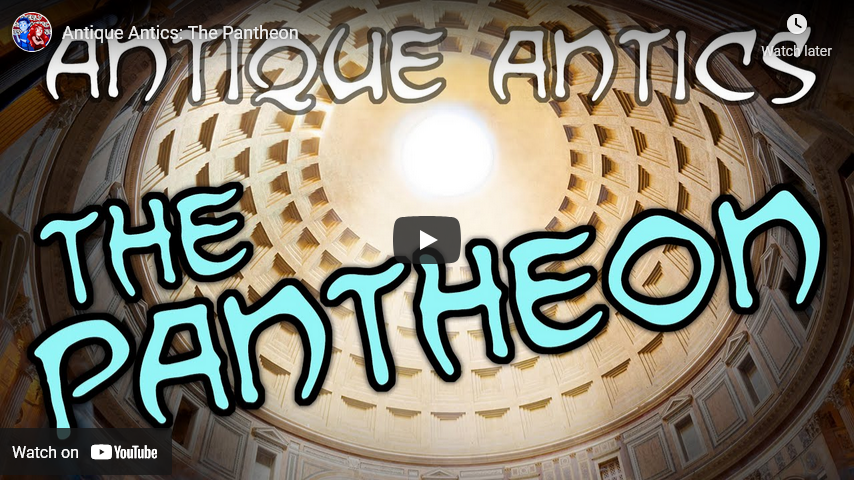
Antique Antics: The Pantheon
Overly Sarcastic Productions
Published 7 Jan 2022It’s a good dome, simple as that.
SOURCES & Further Reading: The Great Courses lectures: “The Most Celebrated Edifice – The Pantheon” from Understanding Greek and Roman Technology by Stephen Ressler, and “Roman Art and Architecture” from The Roman Empire: From Augustus to The Fall of Rome by Gregory Aldrete. “The Pantheon” by Chris Legare via ATouchOfRome https://www.atouchofrome.com/the_pant…. Additionally, I have a university degree in Classical Studies.
Our content is intended for teenage audiences and up.
PATREON: https://www.Patreon.com/OSP
PODCAST: https://overlysarcasticpodcast.transi…
DISCORD: https://discord.gg/osp
MERCH LINKS: http://rdbl.co/osp
OUR WEBSITE: https://www.OverlySarcasticProductions.com
Find us on Twitter https://www.Twitter.com/OSPYouTube
Find us on Reddit https://www.Reddit.com/r/OSP/
December 28, 2021
“After the Second World War, the architecture-industrial complex … began a massive rebuilding of major cities”
In The Critic, Nikos A. Salingaros decries “architectural urbanicide”:

Cumbernauld Shopping Centre, voted as Britain’s most hated building.
Photo by Ed Webster via Wikimedia Commons.
Biological life transforms energy from the sun into complexes of organic materials that either metabolize while remaining relatively fixed, or move about and eat each other. Human energy creates the analogous case of artifacts and buildings, which give us a healing effect akin to the feedback experienced from our interaction with biological organisms. This positive emotion corresponds to the mechanism of “biophilia”.
Women grow and nurture the human baby. They are predisposed to appreciate the created life form through an intense bond of love through beauty. Most people — though not all, a notable exception being the architect Le Corbusier — love babies and have a built-in reflex of smiling at the sight of one, even if it’s not their own. Beauty is inseparable from creation and life.
Established architecture in our times, and for a century before now, has been an almost exclusively male domain, dominated by sheer power. The profession has aligned itself with ideology and extractive money interests. A design movement that ignores living structure took dominance after World War II. It thrives through global consumption. Mathematical analysis can measure very precise living qualities embedded in design and materials, such as fractal scaling, multiple nested symmetries, color harmonization, organized details, vertical axis, etc. Recent experimental tools of eye-tracking and artificial intelligence using Visual Attention Software determine which designs attract the eye unconsciously, and which remain uninteresting to our sophisticated brain evolved for survival.
[…]
After the Second World War, the architecture-industrial complex of building and real estate industries began a massive rebuilding of major cities. This freed up real estate for new construction, an activity that enriched a certain section of society. Working with politicians at all levels, architectural review boards did not value traditional buildings, nor those in any of several new but non-modernist form languages. Any qualms about the irreversible destruction of the life of cities were offset by the media convincing the population that this was an inexorable and much desired move towards progress. Anybody opposing this program of architectural substitution — replacing living by dead structure — was labeled an obscurantist reactionary. The promised utopia seduced academia to join this campaign. People failed to realize that an ideology ostensibly linked to Marxist beliefs was driven by ruthless industry manipulation.
Nevertheless, architects don’t tear down buildings: it is real estate speculators who do. Those corporate entities are amoral, willing to do anything for profit. It’s not their responsibility to save valuable older buildings; that task falls upon society, which has failed miserably in this duty. The various mechanisms that are supposed to protect a perfectly sound and health-inducing building become a cruel joke when such a building is demolished. A decision is taken outside the light of public scrutiny, while implementing the strategy of the fait accompli — after the bulldozers and wreckers, it’s too late to do anything.
The story of the systematic destruction of the UK’s architectural heritage is long and ugly. To mention just one example, the corrupt Newcastle City Council Member Thomas Daniel Smith managed to erase large swaths of central city districts and replace them with cheaply-built glass-and-steel monstrosities before he was jailed in 1974. Smith worked closely with dishonest — and extremely successful — architect John Poulson, who was also jailed in 1974. He appealed directly to democratic and liberal sentiments to further his ambitions, and the political class at the time fell for his manipulations. This sordid story repeats, with only minor variations, except that the other urbanicides were never prosecuted.
December 21, 2021
“Modernizing” Notre-Dame
The restoration plans for Notre-Dame Cathedral in Paris included some wild and whacky ideas for the exterior. Fortunately, the citizens of Paris persuaded the authorities to restore the outside of the building to as close as possible to the beautiful original. The fate of the interior — including the undamaged portions — is not yet settled:
All great art was contemporary once, but it would be a mistake to conclude from this that therefore some contemporary art must be great. The fact is that there are fallow periods in the history of art — the Golden Age of Dutch painting evaporated with astonishing swiftness — and we are going through just such a fallow period now.
Hence the idea that the refurbishment of the interior of Notre-Dame Cathedral in Paris after its terrible fire two and a half years ago should include contemporary art is, to say the least, contestable. It is difficult to think of ancient churches in which art of the last century has been a great adornment, and in general it is a relief to find that, when present, such art is not actually a terrible blot or assault on the interior of the church.
In fact, the plan to modernize the interior of Notre-Dame applies to that part of it that was undamaged by fire, so that the plan appears to be the seizing of a longed-for opportunity rather than a desire to restore the church to its former glory.
Given the state of French taste in such matters, at least among those with the power to decide anything, one trembles for the future of the church. All contemporary French public buildings are monstrosities, from the Opéra Bastille and the Ministry of Finance in Paris to the Musée de la Romanité in Nîmes. The more that is spent on them, they worse they get. They almost always desecrate their surroundings, as if their architects wanted to take their revenge on previous ages, as mediocrity revenges itself on genius.
Some of the plans that emerged for restoring the roof of Notre-Dame after the fire would have defied belief were it not that we are now so inured to architectural madness that such folly was more to be expected than it was surprising. The proposed plans included everything from a swimming pool to a greenhouse, probably with the intention for growing cannabis.
The public outcry was sufficient that the government decided that the roof should be restored as near as possible to its former state, thwarting those who said that every age should leave its mark on great monuments.
But the idea that every age should bring something of its own to the great monuments of the past is not French alone: the Soviets, for example, thought the same way about the Kremlin in Moscow, and built the Palace of Congresses, a standard monstrosity completely out of keeping with the rest of the buildings that composed it, in its very heart. How could the Soviets have claimed superiority to the pre-revolutionary regime, they thought, if they added nothing distinctly their own to the Kremlin?
Update: At First Things, Samuel Gregg is also viewing the prospect with some (justified) alarm:
Apart from the post-Vatican II liturgy wars, few topics are more likely to set off fierce disputes within Catholic dioceses than architecture — or, more precisely, proposals for renovating church structures and interiors.
One doesn’t have to be an enthusiast of Counter-Reformation baroque to recognize that, from the late 1950s onward, a contemporary stripping of the altars was carried out in many Western countries in the name of renewal. In The Spirit of the Liturgy, Joseph Ratzinger called it a “new iconoclasm” that “eliminated a lot of kitsch and unworthy art, but ultimately … left behind a void.” For decades, it seems, beauty was out, and a mixture of infantilism and neo-Stalinist brutalism was in.
[…]
Some of these tensions burst into public view recently, when plans for reconstructing the interior of Paris’s Notre-Dame Cathedral were leaked to the British press. The proposed redesign includes a “discovery trail” that will take visitors through fourteen themed chapels, each with a text projected upon the wall and a contemporary work of art, to “create a fecund dialogue between contemporary creation and the church” — whatever that means. The plan also proposes shunting aside many classical sculptures and most of the confessionals, using sound-and-light shows to create “emotional spaces” and explain basic Christian teachings in multiple languages, installing luminous “mobile benches” (which can be moved aside to make more room for tourists after Mass), and adding a stained-glass window and chapel wall overlain by a contemporary abstract painting of clouds.
The proposed changes were submitted to France’s Commission nationale du patrimoine et de l’architecture last week, as per an agreement between the archdiocese of Paris and the French government about who gets to decide what about the cathedral restoration. The commission approved the redesign with two exceptions: The statues must not be removed from the redesigned chapels, and the plan for mobile benches must be reviewed. The commission also offered verbal assurance that no object or painting that was inside Notre-Dame before the fire will be removed from the cathedral.
Catholic and non-Catholic designers and art critics alike have expressed dismay at the plans, denouncing them as, among other things, the equivalent of a “politically correct Disneyland” and a “woke theme park”. The man behind the plans, Fr. Gilles Drouin, has defended the redesign by arguing that we can’t assume the 12 million tourists who will wander through the cathedral each year will know much about Christianity in general or Catholicism in particular. The new interior, he asserts, will make Christian teaching more accessible to contemporary visitors.
Fr. Drouin is right that profound religious ignorance is the rule rather than the exception for contemporary Western Europeans. Furthermore, Catholic churches are not supposed to be forever frozen circa 1756. Every generation of Catholics can contribute to the ways that their churches give glory to God. But church architects and liturgists must realize that no matter how hard they try, they’ll never be able to “out-contemporary” their secular peers in attempts to make the faith speak to the so-called moment. And anyone seriously interested in evangelization through church design should consider that using electronic sound and light shows to disrupt the current architectural harmony of Notre-Dame, which has inspired both Mass-goers and visitors for centuries, is likely not the best way to communicate the transcendent beauty of the faith to tourists.
December 4, 2021
QotD: Still making dystopia
It is now three years since James Stevens Curl’s Making Dystopia was first published. Professor Curl’s book revised the history of architecture in the 20th century, exposing the standard curriculum taught to students as a poorly-conceived fabrication. The truth, backed by the mountains of evidence he cited, was frightening.
Curl’s critique of the theory and practice of modernism demolished the economical-ethical-political arguments put forward for decades that justified forcing people to live in inhuman environments. It was all a power-play, to drive humane architecture and its practitioners into the ground so that a new group of not very competent architects and academics could take over.
Alas, after three years, the situation is much the same as it was before 2018. Whoever practised humane architecture continues to do so today. Practitioners who have always applied Curl’s philosophy include Classical and Traditional architects, and followers of Christopher Alexander (who do not necessarily use a Classical style, but reject the modernist design straightjacket so as to create a more living structure). Those who produced image-based inhumane architecture have not changed tack or been influenced in any perceivable way.
Curl’s book covers human-scale developments that were allowed at the margins of the profession during several decades, as long as they didn’t threaten the core where the spotlight shines. Practitioners the world over, most often working in isolation, produce excellent and humane buildings. That work is hardly ever seen in the media, certainly never in the architecture journals. I’m sure that those architects now feel vindicated. It is possible that Curl’s book provides a rallying point for those who desire a new, humane architecture.
Nikos A. Salingaros, “Still making dystopia”, The Critic, 2021-08-30.