
Rhetty for History
Published 22 Apr 2022Home designs have changed a lot over the years and so have the features. In this video we will take a look at some of the mysterious features no longer used in new homes. You may run across these if you purchase an old home or you visit one.
(more…)
August 13, 2022
Mysterious Home Features No Longer Used
Comments Off on Mysterious Home Features No Longer Used
August 8, 2022
QotD: How houses have changed to fit the times
It’s unexceptional today to come across an open-plan apartment, because (except for the very rich) we don’t typically share our homes with servants, and we have efficient ventilation and climate control. Try to imagine living in an open-plan Victorian flat with a coal-burning kitchen range and fireplace puffing out smuts, a maid and a cook to keep on top of the grime and the food preparation: it doesn’t work. Try, also, to imagine a contemporary home without a living room with a TV in the corner. Go back to the 1950s and well-designed homes also had a niche for the telephone — the solitary, wired communications device, typically bolted to the wall in the hallway or at the foot of the stairs, for ease of access from all other rooms.
But today telephones have collapsed into our pocket magic mirrors, and TVs are going in two directions — flattening and expanding to fill entire walls of the living room, and simultaneously shrinking to mate with our phones. A not-uncommon aspect of modern luxury TV design is that they’re framed in wood or glass, made to look like a wall-hanging or a painting. The TV is becoming invisible: a visitor from the 1960s or 1970s might look around in bafflement for a while before realizing that the big print in middle of the living room wall is glowing and sometimes changes (when it’s in standby, running a screensaver). Meanwhile, microwave ovens and ready meals and fast food have reduced the need for the dining room and even the kitchen: to cook a family dinner and serve it in a formal dining room is an ostentatious display of temporal wealth, a signal that one has the leisure time (and the appliances, and the storage for ingredients) to practice and perfect the skills required. The middle classes still employ cooks: but we outsource them to timeshare facilities called restaurants. Similarly, without the daily battle to keep soot and dirt at bay, and equipped with tools like vacuum cleaners and detergents, the job of the housemaid has been shrunk to something that can be outsourced to a cleaning service or a couple of hours a day for the householder. So no more cramped servants’ bedrooms.
The very wealthy ostentatiously ape the behaviour of the even richer, who in turn continue the traditions they inherited from their ancestors: traditions rooted in the availability of cheap labour and the non-existence of labour-saving devices. Butlers, cooks, and live-in housemaids signal that one can afford the wage bill and the accommodations of the staff. But for those who can’t quite afford the servants, the watchword seems to be social insulation — like the dining room at the opposite end of the corridor from the kitchen.
The millionaire’s home cinema, in an auditorium of its own, is the middle class TV in the living room, bloated into an experience that insulates its owner from the necessity of rubbing shoulders with members of the public in the cinema. Likewise, the bedroom with en-suite bathroom insulates the occupants from the need to traipse down a corridor through their dwelling and possibly queue at the bathroom door in the middle of the night.
Types of domestic space come and go and sometimes change social and practical function.
The coal cellar is effectively dead in this era of decarbonization and clean energy, as is the chimney stack. Servants’ quarters are a fading memory to all but the 0.1% who focus on imitating the status-signaling behavior of royalty, although they may be repurposed as self-contained apartments for peripheral residents, granny flats or teenager basements. The dining room and the chef’s kitchen are becoming leisure pursuits — although, as humans are very attached to their eating habits, they may take far longer to fade or mutate than the telephone nook in the hallway or the out-house at the end of the back yard.
Likewise, outdoor climate change and indoor climate control are changing our relationship with the window. Windows used to be as large as possible, because daylight lighting was vastly superior to candlelight or oil-lamp. But windows as generally poor insulators, both of sound and heat, and indoor lighting has become vastly more energy efficient in recent years. Shrinking windows and improving insulation (while relying on designed-in ventilation and climate control) drive improvements in the energy efficiency of dwellings and seem to militate against the glass bay and big sash windows of yesteryear.
Charles Stross, “Social architecture and the house of tomorrow”, Charlie’s Diary, 2019-04-29.
Comments Off on QotD: How houses have changed to fit the times
July 5, 2022
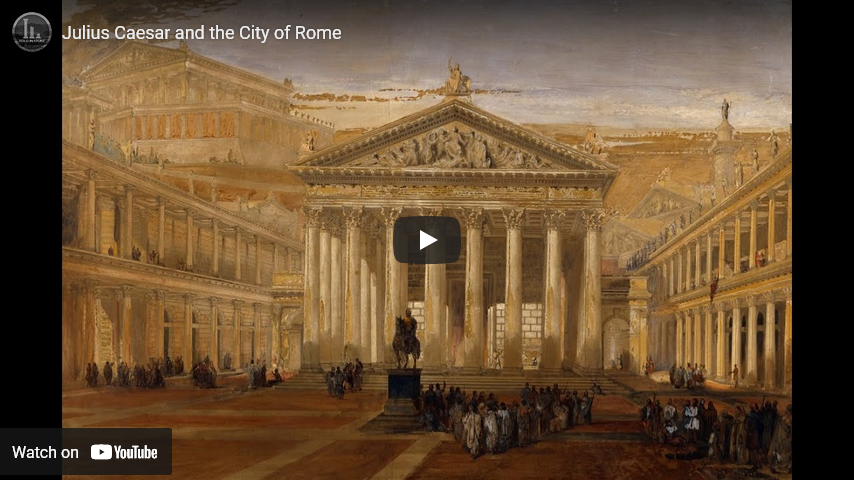
Julius Caesar and the City of Rome
toldinstone
Published 14 May 2021Julius Caesar was not only a gifted general and fiercely ambitious politician. He was also a great builder, who reshaped the heart of Rome in his own image.
For much more on Caesar and his successors, check out my book Naked Statues, Fat Gladiators, and War Elephants: Frequently Asked Questions about the Ancient Greeks and Romans.
https://www.amazon.com/Naked-Statues-…
If you’re so inclined, you can follow me elsewhere on the web:
https://www.patreon.com/toldinstone
https://www.reddit.com/r/AskHistorian…
https://www.instagram.com/toldinstone/
https://www.goodreads.com/author/show…0:00 Introduction
1:29 The Forum in Caesar’s time
3:30 Caesar’s new forum
4:42 The Temple of Venus Genetrix
5:37 The Basilica Julia
6:10 The Curia and Rostra
6:57 Dedication games
8:02 Caesar the godThanks for watching!
Comments Off on Julius Caesar and the City of Rome
June 28, 2022
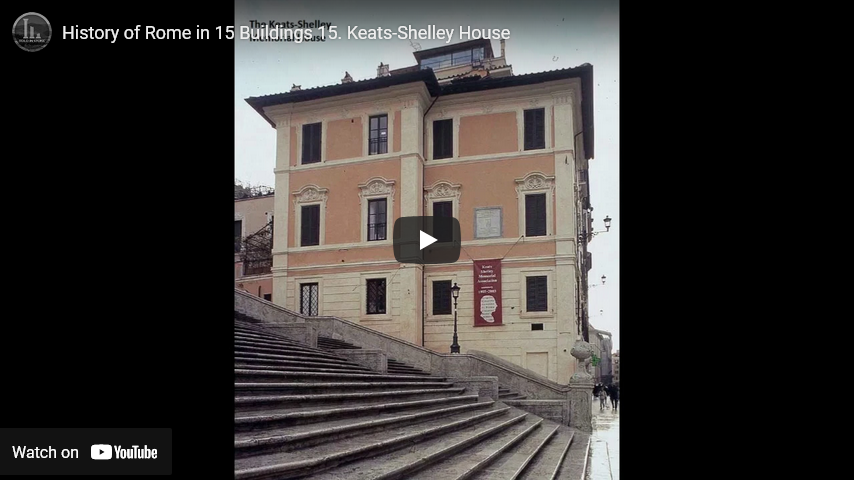
History of Rome in 15 Buildings 15. Keats-Shelley House
toldinstone
Published 2 Oct 2018For well over a century, the “Odes” of John Keats have been boring high school students, enchanting lovers of poetry, and giving scholars of English literature interesting things to overinterpret. When he died in 1821, however, Keats was virtually unknown – an anonymous member of Rome’s large community of travelers and expatriates in the last years of the Grand Tour.
To see the story and photo essay associated with this video, go to:
https://toldinstone.com/keats-shelley…
Comments Off on History of Rome in 15 Buildings 15. Keats-Shelley House
June 21, 2022
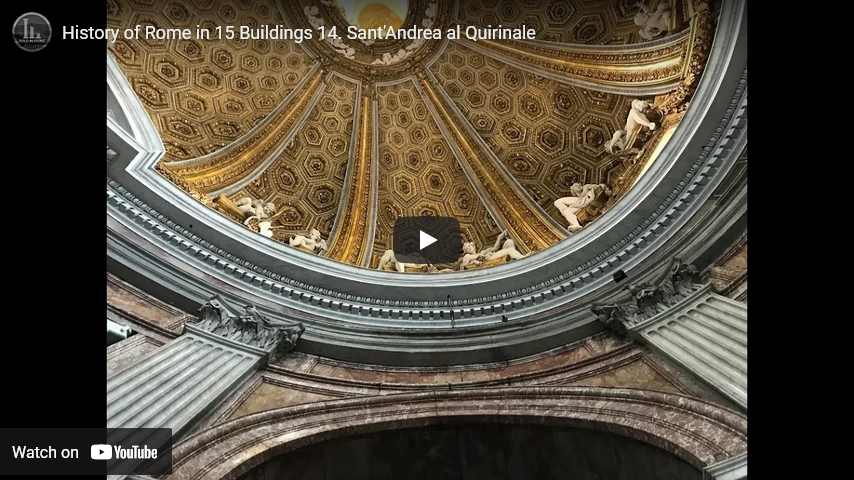
History of Rome in 15 Buildings 14. Sant’Andrea al Quirinale
toldinstone
Published 2 Oct 2018Coke vs. Pepsi. Kramer vs. Kramer. Alien vs. Predator. Everyone loves a rivalry – and so, discussions of art and architecture in Baroque Rome never fail to mention the antagonism between the ebullient Gianlorenzo Bernini and grim Francesco Borromini. This fourteenth episode in our History of Rome follows suit.
To see the story and photo essay associated with this video, go to:
https://toldinstone.com/santandrea-al…
Comments Off on History of Rome in 15 Buildings 14. Sant’Andrea al Quirinale
June 14, 2022
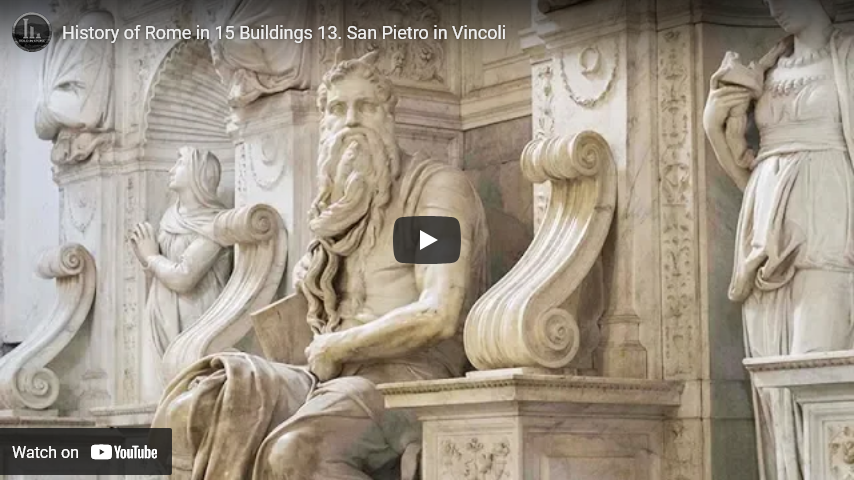
History of Rome in 15 Buildings 13. San Pietro in Vincoli
toldinstone
Published 2 Oct 2018Speech stands at the threshold of the compressed lips. Righteous indignation is written in the lines of the set jaw. The presence of God blazes forth from the eyes. As a work of art, Michelangelo’s Moses is nothing short of awe-inspiring. It sits, however, in the cramped central niche of a rather underwhelming wall tomb, ringed by smaller statues ranging in quality from mediocre to incompetent. This thirteenth episode in our History of Rome discusses the creation of the Moses, and the circumstances that brought it to the church of San Pietro in Vincoli.
To see the story and photo essay associated with this video, go to:
https://toldinstone.com/san-pietro-in…
Comments Off on History of Rome in 15 Buildings 13. San Pietro in Vincoli
June 12, 2022
History Re-Summarized: Egypt
Overly Sarcastic Productions
Published 18 Feb 2022I for one was shocked to learn the Egyptians actually buried their kings in a giant Millennium Puzzle.
We’ve covered Egypt on this channel in previous videos, but this History Re-Summarized is the Definitive Edition, redone from the ground up to present the best possible account — starting at the beginning for a full chronology of Ancient Egypt, from the very first Pharaohs to the Muslim Conquest.
(Observant Egyptologists and D&D players might note the Pyramids are actually D-*Fives*, but technically they’re D-*Nines* since each face is actually two right triangles at a slight angle to each other and not a single flat isosceles triangle, so shhh, we can pretend it’s a D4.)
Sources & Further Reading: The Oxford History of Ancient Egypt & Ancient Egypt: A Very Short Introduction by Ian Shaw, World History Encyclopedia entries on “Ancient Egypt”, “Old Kingdom of Egypt”, “First Intermediate Period of Egypt”, “Middle Kingdom of Egypt”, “Second Intermediate Period of Egypt”, “New Kingdom of Egypt” https://www.worldhistory.org/egypt/, The Great Courses’ lecture series “History of Ancient Egypt” by Bob Brier. Additionally, I have an undergraduate degree in classical studies (re: Persia, Ptolemies and Rome). Extra special thanks to our OSP Discord server moderator & Egyptology connoisseur Billy, for his assistance and guidance for this video!
Our content is intended for teenage audiences and up.
PATREON: https://www.Patreon.com/OSP
PODCAST: https://overlysarcasticpodcast.transi…
DISCORD: https://discord.gg/osp
MERCH LINKS: http://rdbl.co/osp
OUR WEBSITE: https://www.OverlySarcasticProductions.com
Find us on Twitter https://www.Twitter.com/OSPYouTube
Find us on Reddit https://www.Reddit.com/r/OSP/

Comments Off on History Re-Summarized: Egypt
June 7, 2022
History of Rome in 15 Buildings 12. Santa Maria in Trastevere
toldinstone
Published 2 Oct 2018Wanted: candidate for Pope. Must be a good fundraiser, effective administrator, and shrewd politician. Deep pockets a must. Sanctity negotiable.
The medieval papacy lies at the heart of this twelfth episode of our History of Rome, in which we discuss the catastrophic schism that created the church of Santa Maria in Trastevere.
To see the story and photo essay associated with this video, go to:
https://toldinstone.com/santa-maria-i…
Comments Off on History of Rome in 15 Buildings 12. Santa Maria in Trastevere
May 31, 2022
History of Rome in 15 Buildings 11. Santa Prassede
toldinstone
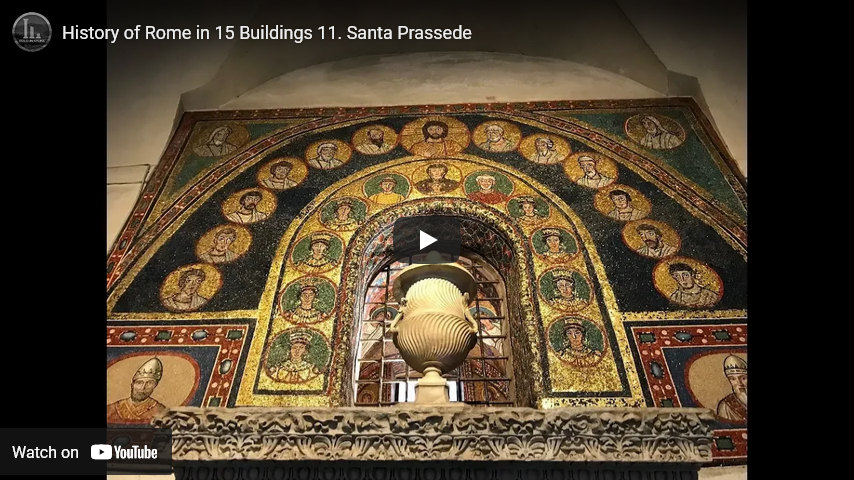
Published 2 Oct 2018After Leo III crowned Charlemagne Holy Roman Emperor in 800, Europe had two notional leaders: the pope and the emperor. In theory, they were the twin pillars of a well-ordered Christian society. In practice, they were usually at each other’s throats. One product of their rivalry was the ninth-century church of Santa Prassede, the subject of this eleventh episode in our history of Rome.
To see the story and photo essay associated with this video, go to:
https://toldinstone.com/santa-prassede/
Comments Off on History of Rome in 15 Buildings 11. Santa Prassede
May 27, 2022
Minoru Yamasaki and the Pruitt–Igoe urban housing project
Joseph Kast recounts the story of a post-war government scheme to demolish slums, re-house the slum-dwellers in a massive public housing project and the architect whose career was forever blighted by the failure of the design:
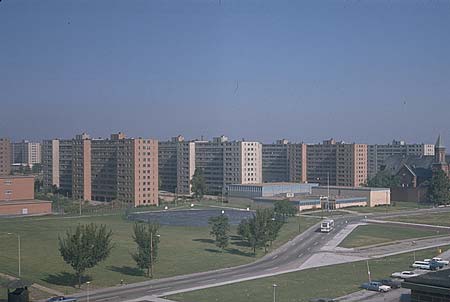
An undated overview of some of the 33 buildings of the Pruitt-Igoe complex in St. Louis, Missouri. Designed by Japanese-American architect Minoru Yamasaki and built in the early 1950s. All had been demolished by 1976.
Uncredited photo from Wikimedia Commons.
Can society be designed? Can an expert engineer alleviate people’s pains and struggles with a good-enough central plan and blueprint?
Minoru Yamasaki thought so.
Yamasaki was one of America’s most well-respected architects in the 20th century and was a member of the school of thought that people’s human nature could be improved (whether those people needed or wanted improving) by a properly planned building surrounding them.
Yamasaki got to test his theory by designing the public housing complex that promised to be a template for all public housing going forward. The complex, St. Louis’ Pruitt-Igoe, was made possible by post-war New Deal housing and urban development programs. And like many New Deal initiatives, Pruitt-Igoe was guided by the idea that good intentions, centralized planning, and strong government power would progress society more than protecting people’s rights or personal choices.
Pruitt-Igoe and Yamasaki’s designs were sold as the solution to poverty, crime, and housing in America’s major cities, but within just a few years, the complex would show the dangerous consequences when government planners take away people’s liberties and homes.
As with so many vast schemes to use the government’s power to reshape people’s lives, the hopes of the central planners quickly fell afoul of economic and social realities that the plan never took into account.
St. Louis quickly realized that Pruitt-Igoe was a problem. But it was unclear who, if anyone, could fix it. The federal government, the St. Louis Housing Authority, the state, and the City of St. Louis itself all shared responsibility for the complex. When a problem belongs to everyone, it belongs to no one.
Within five years of its launch, Yamasaki was regularly apologizing for his role in the project. Though the final design of the complex differed from his original vision, he came to question the core assumption behind the project: that people’s lives could be effectively engineered through urban design. He expressed regret for his “deplorable mistakes” with Pruitt-Igoe. By the late 1950s, he was giving eloquent speeches about the “tragedy of housing thousands in exactly look alike cells,” which “certainly does not foster our ideals of human dignity and individualism.”
To the Detroit Free Press, he put it more simply: “Social ills can’t be cured by nice buildings.”
By the early 1970s, the 33 concrete tombstones lining St. Louis’ skyline were a cautionary tale for utopian housing schemes. It was a den of crime and misery, rather than anything anyone could call home. When the decision came to demolish the complex, occupancy was only 10 percent.
The day the demolitions began at Pruitt-Igoe, architectural historian Charles Jencks declared the death of high modernist architecture and its grand assumptions: “It was finally put out of its misery. Boom, boom, boom.”
Three towers were demolished in 1972. The last tower finally came down in 1976, leaving nothing of Pruitt-Igoe behind.
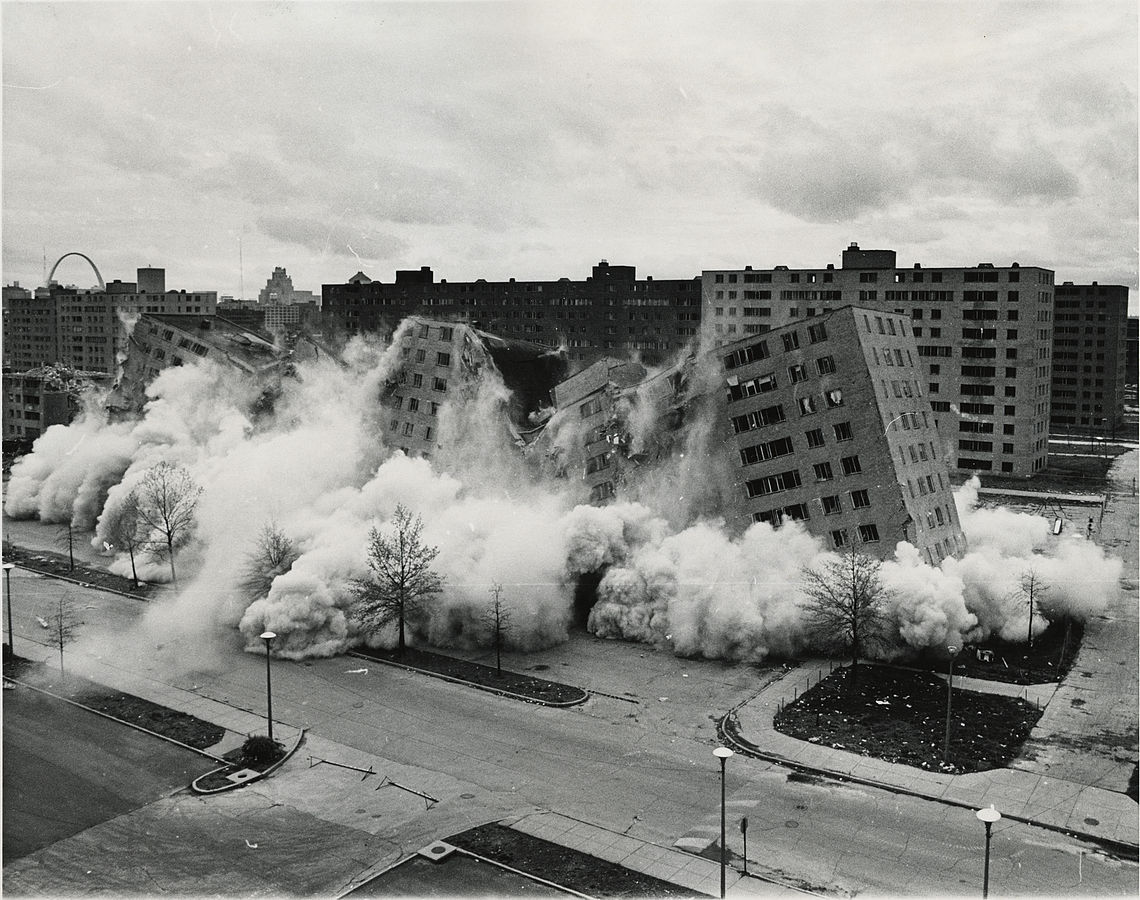
The demolition of one of the Pruitt-Igoe buildings, which began in 1972 with the final building demolished in 1976.
Uncredited image from Wikimedia Commons.
Comments Off on Minoru Yamasaki and the Pruitt–Igoe urban housing project
May 24, 2022
History of Rome in 15 Buildings 10. Santa Sabina
toldinstone
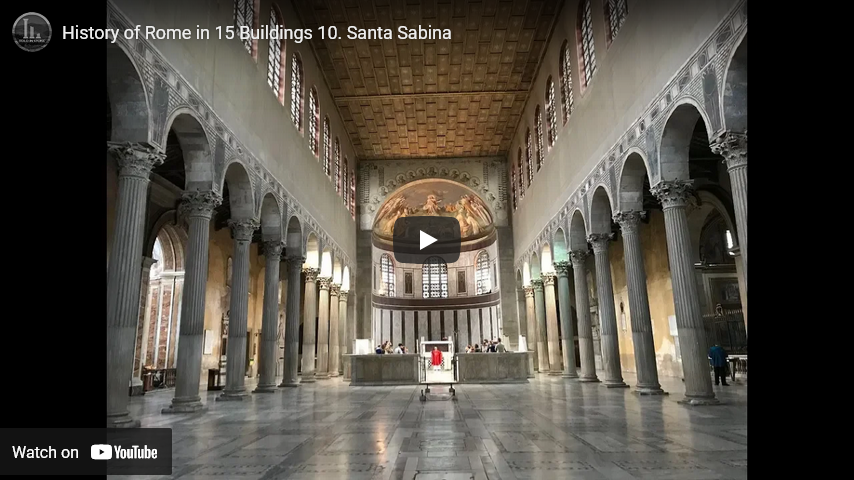
Published 2 Oct 2018Through some combination of military disasters, barbarian migrations, social change, and dynastic bad luck, the Western Roman Empire collapsed in the fifth century. In this tenth episode of our History of Rome, focused on the church of Santa Sabina, we will consider some of the implications of this crisis.
If you enjoyed this video, you might be interested in my book Naked Statues, Fat Gladiators, and War Elephants: Frequently Asked Questions about the Ancient Greeks and Romans. You can find a preview of the book here:
https://toldinstone.com/naked-statues…
If you’re so inclined, you can follow me elsewhere on the web:
https://www.reddit.com/r/AskHistorian…
https://www.instagram.com/toldinstone/To see the story and photo essay associated with this video, go to:
https://toldinstone.com/santa-sabina/Thanks for watching!
Comments Off on History of Rome in 15 Buildings 10. Santa Sabina
May 17, 2022
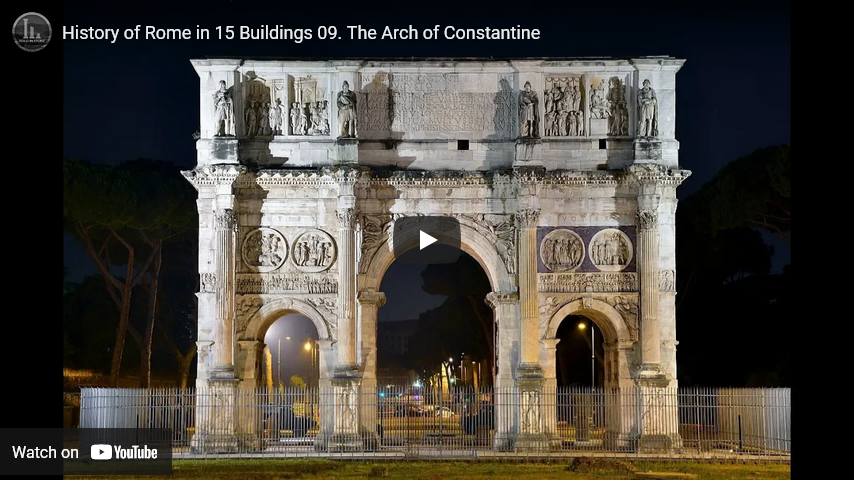
History of Rome in 15 Buildings 09. The Arch of Constantine
toldinstone
Published 27 Sep 2018The many statues and reliefs from older monuments integrated into the Arch of Constantine – the focus of this ninth episode of our History of Rome – advertise the continuity of traditional Roman values into the fourth century. The Arch’s inscription, however, alludes to the religious revolution set in motion by the first Christian emperor.
If you enjoyed this video, you might be interested in my book Naked Statues, Fat Gladiators, and War Elephants: Frequently Asked Questions about the Ancient Greeks and Romans. You can find a preview of the book here:
https://toldinstone.com/naked-statues…
If you’re so inclined, you can follow me elsewhere on the web:
https://www.reddit.com/r/AskHistorian…
https://www.instagram.com/toldinstone/To see the story and photo essay associated with this video, go to:
https://toldinstone.com/the-arch-of-c…
Comments Off on History of Rome in 15 Buildings 09. The Arch of Constantine
May 10, 2022
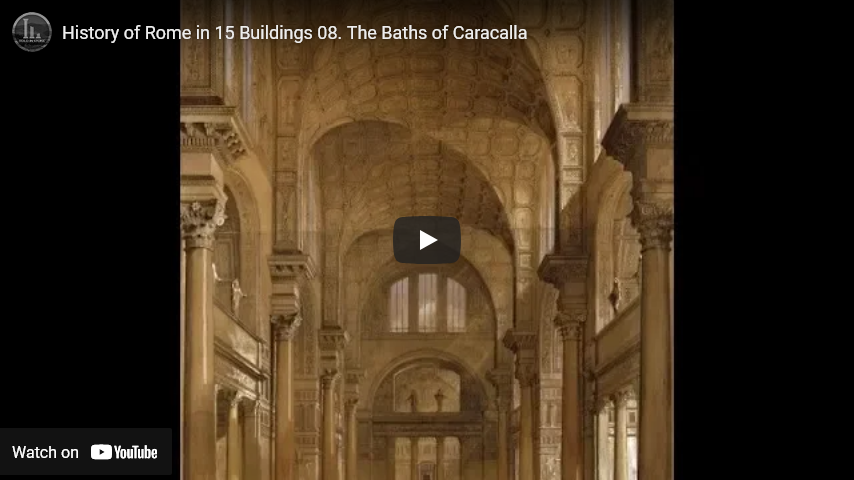
History of Rome in 15 Buildings 08. The Baths of Caracalla
toldinstone
Published 27 Sep 2018Every day, ten thousand bathers and over a million gallons of water were funneled through the Baths of Caracalla, the subject of this eighth episode in our History of Rome. The astonishing scale of the Baths indicates the power of two Roman obsessions: imperial propaganda and public bathing.
If you enjoyed this video, you might be interested in my book Naked Statues, Fat Gladiators, and War Elephants: Frequently Asked Questions about the Ancient Greeks and Romans. You can find a preview of the book here:
https://toldinstone.com/naked-statues…
If you’re so inclined, you can follow me elsewhere on the web:
https://www.reddit.com/r/AskHistorian…
https://www.instagram.com/toldinstone/To see the story and photo essay associated with this video, go to:
https://toldinstone.com/the-baths-of-…Thanks for watching!
Comments Off on History of Rome in 15 Buildings 08. The Baths of Caracalla
May 3, 2022
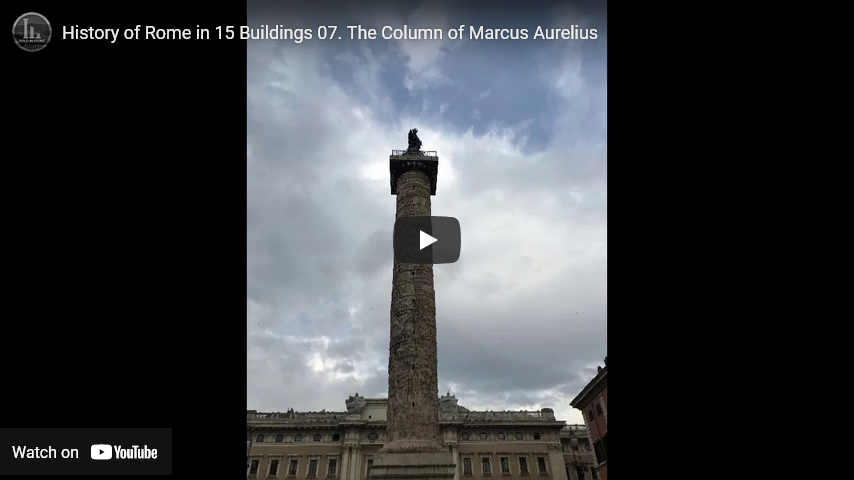
History of Rome in 15 Buildings 07. The Column of Marcus Aurelius
toldinstone
Published 27 Sep 2018Roman troops file in neat lines over raging rivers and trackless mountains. They crush barbarian forces in battle after battle, leaving fields of corpses in their wake. Villages burn, captives weep – and the lonely figure of the philosopher-emperor leads his legions to victory. So the spiraling reliefs of the Column of Marcus Aurelius, subject of the seventh episode in our History of Rome, represent the brutal conflict that turned back the first wave of the barbarian invasions.
If you enjoyed this video, you might be interested in my book Naked Statues, Fat Gladiators, and War Elephants: Frequently Asked Questions about the Ancient Greeks and Romans. You can find a preview of the book here:
https://toldinstone.com/naked-statues…
If you’re so inclined, you can follow me elsewhere on the web:
https://www.reddit.com/r/AskHistorian…
https://www.instagram.com/toldinstone/To see the story and photo essay associated with this video, go to:
https://toldinstone.com/the-column-of…Thanks for watching!
Comments Off on History of Rome in 15 Buildings 07. The Column of Marcus Aurelius
April 26, 2022
A new guide to classical architecture
In The Critic, Ptolemy Dean reviews The Layman’s Guide to Classical Architecture by Quinlan Terry:

Trained in the bleakly grey era of the late 1950’s, the classical architect Quinlan Terry has achieved a remarkable legacy. At the time he embarked on his architectural career, the profession was locked firmly in the postwar austerity of flat-roofed perfunctory modernism, with planar walls of exposed aggregate concrete or unadorned “stretcher bond” brickwork.
This was the “machine age” of mass production of buildings, and it is sometimes hard to remember how restrictive this period must once have been, as so much has happened since. To the more hard-line practitioners of those times, any suggestion of creating buildings with ornament was considered at best eccentric but more often offensive and worthy of censure.
This beautifully produced red-cloth-covered hardback book is therefore a fitting record of a lifetime’s work of studying, drawing and creating new classical buildings. Such buildings are generally defined by the application of the five classical orders of columns handed down to us by the ancient Greeks and Romans. They are beautifully illustrated and explained in this book. There have been centuries of creative re-use of these Classical orders. Italian Renaissance, Palladians, Georgians, Victorians and Edwardians across the world have all offered ever inventive, fresh, new and distinctive reinterpretations of the Classical architectural language.
But, with the arrival of the International Modern Movement, the literal application of classical architecture was dramatically reduced and it was no longer taught in mainstream schools of architecture. For almost a century, Classicism has been seen as largely irrelevant in new building design. This book sets out to explain, in layman’s terms, what each part of the classical assembly is called and how the components can be developed and composed into a harmonious building.
Quinlan Terry’s classical buildings, which are illustrated in elegantly drawn elevations and crisp black and white photographs, illustrate that the selection and interpretation of the language of classicism is a highly personalised choice. Quinlan’s first employer, from 1962, had been Raymond Erith, to whom this book is dedicated. Erith was a gentle practitioner based in rural Essex who weathered the worst of the postwar austerity until his death in 1973.
After that time, and in part due to Erith and Terry’s joint achievement, the climate for making traditionalist buildings steadily improved, and the occasional country house commissions multiplied and expanded into full scale classical country houses on a substantial scale both here and in the United States.
Comments Off on A new guide to classical architecture


