Real Engineering
Published 18 Feb 2023
(more…)
May 28, 2023
This Gun Could Reach Space
May 24, 2023
QotD: Impostor Syndrome in academia
Trust me on this: “impostor syndrome” is very real. It is, in fact — and obviously — the source of the benzo bottle in every egghead’s medicine cabinet. And the reason all eggheads feel like frauds is equally obvious: Nothing you do can possibly justify your paycheck.
There are no Dead Poets Society teachers in real life in any case, and even if there were, and even if you were one of them, well … congrats, buddy, you’ve managed to reach one student, one time, out of the hundreds, thousands, tens of thousands you taught before reaching tenure, the hundreds, thousands, tens of thousands more who will drift through your classroom, fish-eyed and phone-addled, for the rest of your academic career. One kid, one time, and meanwhile you live a life that 90% of Americans would be ecstatic to have. (As for your “research”, […] please. Unless your book revolutionizes a field — good luck with that — maybe twenty people will read it, and fifteen of them will hate it). You’re a fucking fraud, pal, that’s all there is to it …
Which leaves you with two options, if you want to avoid the kind of crushing cognitive dissonance that turns a guy like Todd into a gutter drunk: You embrace the make-believe, or you quit. Todd quit. Becoming a gutter drunk was a spectacularly gaudy, self-destructive way of quitting, but it was quitting nonetheless. I quit too, as y’all know … but the funny thing was, I didn’t quit drinking until I did. I didn’t go out and get wrecked every night like I used to do with Todd, but I was still a drinker, often quite a heavy one. I just did it in private. It was only when I quit the ivory tower for good that I stopped drinking.
This, I suggest, is the ultimate source of the Poz: The crushing impostor syndrome that all Americans feel, who haven’t built their lives up from scratch. Unless your day-to-day is a struggle, a real one — a “need to choose between buying food and making rent” one — you can’t help but feel, at some level, that you’re a fraud, a sham. You don’t deserve this, because no one deserves this who didn’t earn it, didn’t hew it out of the wilderness himself. And the more “white collar” you are, the stronger your latent impostor syndrome. Is it any surprise that Karen, who has never earned anything in her entire life, is the most pozzed? That “Human Resources” is just the Poz Gestapo?
Severian, “On the Poz”, Rotten Chestnuts, 2020-11-16.
May 12, 2023
Dispatch from the front lines of the Imperial History Wars
In Quillette, Nigel Biggar recounts how he was conscripted into the Imperial History Wars:
It was December 2017, and my wife and I were at Heathrow airport, waiting to board a flight to Germany. Just before setting off for the departure gate, I could not resist checking my email one last time. My attention sharpened when I saw a message in my inbox from the University of Oxford’s Public Affairs Directorate. What I found was a notification that my “Ethics and Empire” project, organized under the auspices of Oxford’s McDonald Centre for Theology, Ethics & Public Life, had become the target of an online denunciation by a group of students; followed by reassurance from the university that it had risen to defend my right to run such a thing.
So began a weeks-long public row that raged over the project, which had “gathered colleagues from Classics, Oriental Studies, History, Political Thought, and Theology in a series of annual workshops to measure apologias and critiques of empire against historical data from antiquity to modernity across the globe.” Four days after I flew, the eminent imperial historian who had conceived the project with me abruptly resigned. Within a week of the first online denunciation, two further ones appeared, this time manned by professional academics, the first comprising 58 colleagues at Oxford, the second, about 200 academics from around the world. For over a fortnight, my name was in the press every day.
What had I done to deserve all this unexpected attention? Three things. In late 2015 and early 2016, I had offered a partial defence of the late-19th-century imperialist Cecil Rhodes during the Rhodes Must Fall campaign in Oxford. Then, in late November 2017, I published a column in the Times, in which I referred approvingly to Bruce Gilley’s controversial article “The Case for Colonialism”, and argued that the British (along with Canadians, Australians, and New Zealanders) have reason to feel pride as well as shame about their imperial past. Note: pride, as well as shame. And a few days later, third, I finally got around to publishing an online account of the “Ethics and Empire” project, whose first conference had in fact been held the previous July.
Contrary to what the critics seemed to think, the Ethics and Empire project is not designed to defend the British Empire, or even empire in general. Rather, it aims to select and analyse evaluations of empire from ancient China to the modern period, in order to understand and reflect on the ethical terms in which empires have been viewed historically. A classic instance of such an evaluation is St Augustine’s The City of God, the early-fifth-century AD defence of Christianity, which involves a generally critical reading of the Roman Empire. Nonetheless, Ethics and Empire was conceived with awareness that the imperial form of political organisation was common across the world and throughout history until 1945; and so does not assume that empire is always and everywhere wicked; and does assume that the history of empires should inform — positively, as well as negatively — the foreign policy of Western states today.
The territories that were at one time or another part of the British Empire. The United Kingdom and its accompanying British Overseas Territories are underlined in red.
Composed by “The Red Hat of Pat Ferrick” via Wikimedia Commons.Thus did I stumble, blindly, into the Imperial History Wars. Had I been a professional historian, I would have known what to expect, but being a mere ethicist, I did not. Still, naivety has its advantages, bringing fresh eyes to see sharply what weary ones have learned to live with.
One surprising thing I have seen is that many of my critics are really not interested in the complicated, morally ambiguous truth about the past. For example, in the autumn of 2015, some students began to agitate to have an obscure statue of Cecil Rhodes removed from its plinth overlooking Oxford’s High Street. The case against Rhodes was that he was South Africa’s equivalent of Hitler, and the supporting evidence was encapsulated in this damning statement: “I prefer land to n—ers … the natives are like children. They are just emerging from barbarism … one should kill as many n—ers as possible.” As it turns out, however, initial research discovered that the Rhodes Must Fall campaigners had lifted this quotation verbatim from a book review by Adekeye Adebajo, a former Rhodes Scholar who is now director of the Institute for Pan-African Thought and Conversation at the University of Johannesburg. Further digging revealed that the “quotation” was, in fact, made up from three different elements drawn from three different sources. The first had been lifted from a novel. The other two had been misleadingly torn out of their proper contexts. And part of the third appears to have been made up.
There is no doubt that the real Rhodes was a moral mixture, but he was no Hitler. Far from being racist, he showed consistent sympathy for individual black Africans throughout his life. And in an 1894 speech, he made plain his view: “I do not believe that they are different from ourselves.” Nor did he attempt genocide against the southern African Ndebele people in 1896 — as might be suggested by the fact that the Ndebele tended his grave from 1902 for decades. And he had nothing at all to do with General Kitchener’s concentration camps during the Second Boer War of 1899–1902 (which themselves had nothing morally in common with Auschwitz). Moreover, Rhodes did support a franchise in Cape Colony that gave black Africans the vote on the same terms as whites; he helped to finance a black African newspaper; and he established his famous scholarship scheme, which was explicitly colour-blind and whose first black (American) beneficiary was selected within five years of his death.
April 22, 2023
Epistemology, but not using the term “epistemology” because reasons
At Founding Questions, Severian responds to a question about the teaching profession in our ever-more-self-beclowning world:

Proposed coat of arms for Founding Questions by “urbando”.
The Latin motto translates to “We are so irrevocably fucked”.
I know a guy who teaches at a SPLAC where they have some “common core” curriculum — everyone in the incoming class, regardless of major, is required to take a few set courses, and all of them revolve around that question. How do we know what we know? So it’s not just a public school / grade school thing. And epistemology IS fascinating … almost as fascinating as the fact that the word “epistemology” never shows up on my buddy’s syllabi.
I think the problem is especially acute for “teachers”, because the Dogmas of the Church of Woke are so ludicrous that it takes real effort to not see the obvious absurdities. It takes real hermeneutical talent to reconcile the most obvious empirical facts with the Dogmas of the Faith, and very few kids have it. So they either completely check out, or just repeat the Dogmas by rote.
The other problem has to do with teacher training. I know a little bit about this (or, at least, a little bit about how it stood 15 years ago), because a) I was “dating” an Education Theory person, and b) I went through Flyover State’s online
indoctrinationeducation Certificate Program.The former is just awful, even by ivory tower standards, so I’ll spare you the gory details. Just know that however bad you think “social science” is, it’s way way worse. The “certification program” was something I got my Department to sign off on — I was the guy who “knew computers” (which is just hilarious if you know me in real life; I’m all but tech-illiterate), so I got assigned all the online classes, which the Department fought against with all its might, and only grudgingly agreed to offer when the Big Cheese threatened to pull some $$$ if they didn’t. So even though I wouldn’t have been eligible for all the benefits and privileges thereunto appertaining, me being a lowly adjunct, none of the real eggheads could bring themselves to do it, so I was the guy.
The Education Department, being marginally smarter than the History Department, saw which way the wind was blowing, so they started offering big money incentives for professors to sign up for this “online teaching certification program” they’d dreamed up. No, really: It was something like $5000 for a two course, which really meant “two hours a day, four days a week,” because academia works like that (it’s a 24/7 job, remember — 24 hours a week, 7 months a year). By my math, $5000 by 16 hours is something like $300 an hour, so hell yeah I signed right up …
It was torture. Sheer torture. I knew it would be, but goddamn, man. Take the worst corporate struggle session you’ve ever been forced to attend, put it on steroids. Make the “facilitator” — not professor, by God, not in Education! — the kind of sadistic bastard that got kicked out of Viet Cong prison guard school for going overboard. Add to that the particularities of the Education Department, where all of academia’s worst pathologies are magnified. You know how egghead prose hews to the rule “Why use 5 words when 50 will do?” In the Ed Department, it’s “why use 50 when 500 will do.” The first two hours of the first two struggle sessions were devoted to Bloom’s Taxonomy of Success Words, and click that link if you dare.
I know y’all won’t believe this, but I’ll tell you anyway: I spent more than an hour rewriting the “objectives” section of my class syllabus to conform to that nonsense. Instead of just “Students will learn about the origins, events, and outcomes of the US Civil War,” I had to say shit like “Engaging with the primary sources” and “evaluating historical arguments,” and yes, the “taxonomy” buzzwords had to be both underlined and italicized, for reasons I no longer remember, but which were of course retarded.
Given that this is fairly typical Ed Major coursework, is it any surprise that they have no idea what learning is?
April 20, 2023
We strongly believe in academic freedom, except when research turns up “inconvenient” results
Tom Knighton on a sad situation at a London university with publicly funded research having arrived at a politically unwelcome result:

Two people at EuroPride 2019 in Vienna holding an LGBTQ+ pride rainbow flag featuring a design by Daniel Quasar; this variation of the rainbow flag was initially promoted as “Progress” a PRIDE Flag Reboot.
Photo by Bojan Cvetanović via Wikimedia Commons.
In the UK, one academic decided to look at the “gender wars”, particularly how academics feel silenced on the whole trans issue.
It sounds to me like both an interesting subject for study and one that might be very necessary in this day and age.
It seems that while the researcher in question was approved to study it, her findings are problematic and that got her canned.
From The Telegraph:
A university has “confiscated” the findings of an academic studying Britain’s gender wars in a row over her “dangerous” research data, The Telegraph can reveal.
Dr Laura Favaro began the first ever taxpayer-funded study into whether social scientists at universities feel censored over their views on transgender issues in March 2020 at City, University of London.
But it has descended into chaos, with the study’s author allegedly hounded out of the university, stripped of the findings she collected and barred from publishing them amid claims of transphobia.
[…]
Her study involved 50 individual interviews with academics in gender studies who identified as feminists, a representative survey of social scientists with 650 responses and hundreds of documents and tweets.
Scholars told her that they had threats of violence in the gender debate, hostility from colleagues, and others said they felt their careers “can’t survive that sort of backlash”, and that they have to have “secret conversations” to avoid reprisal and because “we are all so afraid”.
Her final work has not been published, as it was derailed by complaints about an article for Times Higher Education in which she warned that “a culture of discrimination, silencing and fear has taken hold”.
Following this, she says, her line managers told her that the study had “become an institutionally sensitive issue” and that “City considers my data to be dangerous” and is “frightened of making it public”.
So, what Favaro was finding was accurate.
That’s the big takeaway for me here. She said that academics were concerned about being attacked or that they had been because they didn’t play along with the trans agenda, and she was attacked and basically canceled because of it.
What’s even dumber is that Favaro was lured to City University from Spain so that she could conduct this research. She received roughly £28,000 from the British government via two different governmental entities to conduct the research.
Then she was silenced because the research found inconvenient truths.
That’s not what academia is supposed to be about. That’s not what academic freedom is about.
Freedom of any kind requires one to accept things that we would rather not have to accept. If you’re not free to say or do something that doesn’t actually harm a specific person but is otherwise objectionable, you don’t really have any freedom.
April 12, 2023
QotD: Karen
Back in March, I was certain this whole thing [the pandemic] would blow over in a matter of weeks. It’s a Karen-driven phenomenon, I argued, but unlike everything everything else they do, this time Karen’s going to have to shoulder the burden herself. She’ll have fun berating the manager of the local Starbucks for not closing down … until she realizes there’s no place to get a half-caff, triple-foam, venti soy latte frappuccino. Nor is there any place to dump her
self-propelled lifestyle accessorieskids while she gets exalted at hot yoga and the nail salon, now that school’s out. Give her a week without Starbucks, I said, locked in her house with Kayden, Brayden, Jayden, and Khaleesi, and she’ll demand we never mention the word “flu” again.In other words, I misunderstood the essence of Karen. Karen is — first, foremost, and always — a victim. I of all people should’ve known better, because I was surrounded by Karens all the time in my personal and professional life. I’ve mentioned this story before, but bear with a quick repeat: At one of my first teaching gigs, at the big directional tech that makes up a lot of “Flyover State”, the department’s women got it into their vapid little heads that they — women — were being systematically excluded from positions of power. The fact that the department chair was a woman, and in fact the whole department, emeritus through first year grad student, was something like 65% female should’ve been their first clue, but nevertheless, they persisted. They got together a blue-ribbon commission, as one does, and studied the shit out of the problem. The much-ballyhooed report revealed …
… that all the positions of authority in the department, every blessed one, was held by a female. At which point, without missing a single fucking beat, they started complaining that being forced to hold all these positions of authority was keeping them from making adequate career progress.
I shit you not.
That’s Karen, my friends.
Severian, “The Civil War That Wasn’t”, Rotten Chestnuts, 2020-09-09.
April 7, 2023
QotD: The effluvium of the university’s overproduction of progressive “elites”
By the late 1990s the rapid expansion of the universities came to a halt, especially in the humanities. Faculty openings slowed or stopped in many fields. Graduate enrollment cratered. In my own department in 10 years we went from accepting over a hundred students for graduate study to under 20 for a simple reason. We could not place our students. The hordes who took courses in critical pedagogy, insurgent sociology, gender studies, radical anthropology, Marxist cinema theory, and postmodernism could no longer hope for university careers.
What became of them? No single answer is possible. They joined the work force. Some became baristas, tech supporters, Amazon staffers and real estate agents. Others with intellectual ambitions found positions with the remaining newspapers and online periodicals, but most often they landed jobs as writers or researchers with liberal government agencies, foundations, or NGOs. In all these capacities they brought along the sensibilities and jargon they learned on campus.
It is the exodus from the universities that explains what is happening in the larger culture. The leftists who would have vanished as assistant professors in conferences on narratology and gender fluidity or disappeared as law professors with unreadable essays on misogynist hegemony and intersectionality have been pushed out into the larger culture. They staff the ballooning diversity and inclusion commissariats that assault us with vapid statements and inane programs couched in the language they learned in school. We are witnessing the invasion of the public square by the campus, an intrusion of academic terms and sensibilities that has leaped the ivy-covered walls aided by social media. The buzz words of the campus — diversity, inclusion, microaggression, power differential, white privilege, group safety — have become the buzz words in public life. Already confusing on campus, they become noxious off campus. “The slovenliness of our language”, declared Orwell in his classic 1946 essay, “Politics and the English Language“, makes it “easier for us to have foolish thoughts.”
Orwell targeted language that defended “the indefensible” such as the British rule of India, Soviet purges and the bombing of Hiroshima. He offered examples of corrupt language. “The Soviet press is the freest in the world.” The use of euphemisms or lies to defend the indefensible has hardly disappeared: Putin called the invasion of Ukraine “a special military operation”, and anyone calling it a “war” or “invasion” has been arrested.
But today, unlike in 1946, political language of Western progressives does not so much as defend the indefensible as defend the defendable. This renders the issue trickier than when Orwell broached it. Apologies for criminal deeds of the state denounce themselves. Justifications for liberal desiderata, however, almost immunize themselves to objections. If you question diversity mania, you support Western imperialism. Wonder about the significance of microaggression? You are a microaggressor. Have doubts about an eternal, all-inclusive white supremacy? You benefit from white privilege. Skeptical about new pronouns? You abet the suicide of fragile adolescents.
Russell Jacoby, “The Takeover”, Tablet, 2022-12-19.
April 1, 2023
The fastest growing demographic in Canada might be the “Pretendians”
In Quillette, George Case outlines the fraught topic of claimed First Nations heritage among Canadians:

“The Pretendians”, a CBC documentary – https://www.cbc.ca/passionateeye/episodes/the-pretendians
Many North Americans have cited such extraction as a conversation piece, an exotic mark of character, or just an intriguing bit of genealogy: among them are singers Cher and Beyoncé, actor Johnny Depp, rockers Jimi Hendrix and Robbie Robertson, baseball great Johnny Bench, and numerous others.
That such backgrounds are both perfectly plausible and difficult to verify tells us something about the history of the human species since 1492. Consensual or coerced relations between Europeans, Africans, and Indigenous people throughout the Americas — even when socially deplored or officially prohibited—must have happened countless times to generate the populace we are today. Most of us, by some measure, are mini-melting pots. And consider, too, today’s routine unions of partners whose great-grandparents might have been horrified at the prospect of “marrying out”: Protestants with Catholics, Jews with Gentiles, Asians with Anglos, and a rainbow of other combinations. Indeed, to oppose such relationships, and the products thereof, is now usually seen as a small-minded prejudice of the ignorant and intolerant.
Unless the opponent happens to be a Native person. In Canada, over the last few years, a rash of scandals have erupted over prominent figures whose claims of Aboriginal heritage have been heatedly disproved, like novelist Joseph Boyden, actress and filmmaker Michelle Latimer, academic Carrie Bourassa, and former judge Mary Ellen Turpel-Lafond. The uproar around “Pretendians” has raised uncomfortable questions around race and politics that the angriest Aboriginals may not have intended in their denunciations. Métis lawyer Jean Teillet has called the phenomenon “the ultimate step in colonialism”, while on The Indigenous Foundation website, Neegahnii Madeline Chakasim has asserted, “To claim Indigenous ancestry and/or claim to be a member of a Nation without any evidence, or claiming Indigeneity for the fun of it, is a complete slap to the face of any existing Indigenous person.” And Ojibwe writer Drew Hayden Taylor explained the message of his 2022 documentary, The Pretendians, by remarking, “In past centuries, the dominant culture has tried to take so many things from us, leaving behind the one thing most important to us: who we are.”
Yet just who are “we”? As with so much else in conventional Canadian wisdom around Native issues, the jealous guarding of authentic Native identity has its logical terminus in a separate-but-equal regime that contradicts the universal impartiality promised to all citizens: sanctioned racial essentialism for Aboriginals, mandatory multiculturalism for everyone else. Never discriminate against, but always discriminate in favor. In principle, all people are to be treated interchangeably, but in practice, one subset of people must be impermeably sealed off from others. At its creepiest, the Pretendian problem has echoes of the one-drop standards that obtained in Nazi Germany and the Jim Crow American South, insofar as sorting the real Natives from the fake ones is determined in part by a biological purity that few other cultures attempt to preserve, much less openly endorse.
It’s also ironic that in many episodes of exposed Pretendians, the purported disadvantage of a Native background — statistically, Canadian Natives are poorer than non-Natives, suffer higher rates of addiction and suicide, and have long been overrepresented in prisons and as victims of crime — is used as a bonus credential in academia or the arts. Schools and other institutions eager to boast of their ameliorative “Indigenization” programs have hired, commissioned works by, or otherwise granted special recognition to applicants based on unchecked claims of Aboriginal ancestry.
Eventually — and inevitably — some of those claims turn out to be flimsy: a vague personal biography here, a tenuous adoption record there, suspicious gaps in government documentation (Canadian Natives are entitled to hold a “Status Indian” card issued by federal or provincial agencies) somewhere else. This has happened across Canada, from Vancouver’s Emily Carr University of Art and Design, where faculty member Gina Adams’s Native lineage was called into question in 2021, to Kingston Ontario’s Queen’s University, where no less than six instructors and staff had their Native self-identification doubted in an anonymous report that came out the same year.
Complicating these situations, however, is that few of these cases seem to have been deliberate frauds. Even the famous imposter Archie Belaney (1888–1938), an Englishman whose Scottish-Apache persona of “Grey Owl” was wholly invented, parlayed his imaginary Native status into genuinely progressive campaigns for wilderness conservation in the early 20th century.
March 11, 2023
QotD: We used to call them “parlour pinks”
Leftists […] were, are, and always shall be nothing more than irritated butterflies. They don’t have to leave their ivy-covered ivory towers, so they won’t. They don’t know anyone who has ever killed so much as a mouse. When it comes right down to it, they find this whole “Revolution” business to be just … so … vulgar.
What’s life like in the Soviet Union? They neither know nor care, until the brute facts of life in the USSR are rubbed into their faces for so long that they have to acknowledge them. At which point they simply switch allegiances. Kolakowski’s essay doesn’t mention Paul Hollander’s Political Pilgrims, but they arrive at essentially the same conclusion — that instead of becoming disillusioned with Communism (Socialism, “social justice”) itself, the irritated butterflies of the Left grow disillusioned with a particular country or leader. The USSR has failed, yes, but — all together now! — “real Communism has never been tried”, so let’s put all our faith in Mao … and then Castro … and then Chavez, et cetera ad nauseam.
It’s all about maintaining the purity of the idea in the face of disappointing, vulgar, grubby reality. An honest-to-Marx Communist will come into plenty of contact with reality. A Leftist never will, because xzhey have convinced xzhemself that even the mugging they’re currently experiencing is a lofty and noble expression of authenticity. They’re willing to die for the Revolution, certainly — the urge for martyrdom has always been highly conspicuous on the Left. So long as they never feel that base, grubby, vulgar proletarian urge to defend themselves, they’ll be fine.
[…]
“Never cheer for your own.” When you come right down to it, that’s the Leftist motto. Leftists don’t deride “sportsball”, for instance, because they’re un-athletic little dweebs who were always picked last at recess (well, ok, not only that). It’s because cheering for a team, any team, is vulgar. It’s what grubby little proles do. (That’s another way to distinguish a Communist from a Leftist, by the way. Actual Commies love sports; look at all the resources the USSR poured into the Olympics, for instance. That’s because sports are good training for war).
Is Leftism curable? Can they be made to cheer for their own? Experience suggests that the cure will be very harsh indeed … if indeed it’s possible at all.
Severian, “Grubby Little Proles”, Rotten Chestnuts, 2020-05-31.
March 7, 2023
Getting rid of the SAT won’t help low-income or minority students – in fact, it’ll hurt them
Rob Henderson explains why the notion of getting rid of SAT requirements will to the opposite of what is being claimed, based on his own experience:

US Navy Seaman Chanthorn Peou takes the SAT aboard USS Kitty Hawk, 23 February, 2004.
US Navy photograph by Photographer’s Mate 3rd Class Jason T. Poplin via Wikimedia Commons.
I graduated in the bottom third of my high school class with a 2.2 GPA. Didn’t think of myself as “smart”. I thought a lot and read a lot. But I hated homework, teachers, rules, etc. I thought “smart” meant kids who did their homework and raised their hand in class. Those types.
My senior year of high school I took the required test to join the military — the Armed Services Vocational Aptitude Battery (ASVAB). Half my motivation to take this test was because I got to skip class. I spent the night before with my friends drinking Four Loko and playing Fight Night Round 3 on Xbox 360. Woke up with a hangover, chugged 20 ounces of Rockstar energy drink, and took the test. Afterwards, the Air Force recruiter showed me how to convert ASVAB to SAT scores. I got the same score as my smartest friend who always got straight-As and was headed for college. What the fuck? I thought.
At the time, I wasn’t aware these tests are thinly veiled IQ tests. The SAT, ASVAB, and the ACT are all highly correlated with IQ at about r = .8.
A study on Army recruits found that scores on an intelligence test, along with 2-mile run time, were the best predictors of success in infantry training.
Research on tank gunners found that replacing a gunner who scores around the 20th percentile with one who scores around the 55th percentile improves the likelihood of hitting a target by 34 percent.
To qualify, potential military recruits must score higher than roughly one-third of all who take the ASVAB. The lowest acceptable percentile score to join is 36 for the Air Force, 35 for the Navy, 32 for the Marine Corps, and 31 for the Army. By definition, the worst test taker who makes it into the military still scores higher than one-third of his or her peers. The military slices off the bottom third of standardized test-takers, not allowing them to join.
The psychologist and intelligence researcher Linda Gottfredson has written:
IQ 85 … the U.S. military sets its minimum enlistment standards at about this level … The U.S. military has twice experimented with recruiting men of IQ 80-85 (the first time on purpose and the second time by accident), but both times it found that such men could not master soldiering well enough to justify their costs.
In the 1960s, Secretary of Defense Robert McNamara launched Project 100,000 which lowered the testing requirement. This allowed people at the 10th percentile (80~ IQ) — a standard deviation lower than the previous standard — to join.
Supposedly, the aim was to alleviate poverty. LBJ had recently begun his War on Poverty program. The story was that getting more recruits into the military would help them move into the middle class. And they needed more recruits for the Vietnam War. Lowering recruitment standards was an easy way to get them.
Recruits of Project 100,000 were 9 times more likely to require remedial training and training took up to 4 times longer to complete compared to their peers who had entered under the higher score requirement. In Vietnam, men recruited under the lower testing threshold were 2.5 times more likely to die in combat.
Did the veterans who made it home achieve upward mobility? No. Compared to civilians with similar attributes who were not recruited, McNamara’s Morons (as they were later termed) were less likely to be employed, less likely to own a business, and obtained less education. Later, the policy changed to improve the talent pool of the armed forces. Higher ASVAB score thresholds were reinstated. Along with additional rigid requirements.
Today, eight out of ten Americans between 17 and 24 are ineligible for military service. Mostly due to obesity, medical issues, and criminal records.
Anyway, seeing my ASVAB score was the first time I learned I could have been a good student. It was possible. How many kids out there are like this. Kids who have fucked up lives and get bad grades which mask their underlying potential. Potential that a standardized test could reveal.
The SAT is a “barrier” according to that NYT op-ed. But it’s also a gateway. Most poor kids don’t take the SAT. Or any other standardized test. More should.
March 3, 2023
QotD: What’s the opposite of university? “Diversity”
That was one of the things that made faculty meetings such joys, back in my professin’ days — no matter how trivial the issue at hand, the meeting couldn’t move forward until everyone had gotten up on xzyher soapbox and delivered xzheyr standard diatribe. “As a post-structuralist lesbian Maoist furry, I feel that …” The outside observer would see a room full of identical freaks, but the people inside saw a glorious rainbow of diversity. Real diversity. God help us, they really did. They really do. It’s one of the keys to understanding them.
Severian, “Advice to Young Dissidents”, Rotten Chestnuts, 2020-04-01.
March 1, 2023
QotD: What do we mean by “the humanities”?
First, just to define my terms, what are the humanities? Broadly, they are the disciplines that study human society (that is, that are concerned with humanity): language study, literature, philosophy, history, art history, archaeology, anthropology, and so on. It is necessarily a bit of a fuzzy set. But what I think defines the humanities more than subject matter is method; the humanities study things which (we argue) cannot be subjected to the rigors of the scientific method or strictly mathematical approaches. You cannot perform a controlled trial in beauty, mathematical certainty in history is almost always impossible, and there is no way to know much stress a society can bear except to see it fail. Some things cannot be reduced to numbers, at least not by the powers of the technology-aided human mind.
By way of example, that methodological difference is why there’s a division between political science and history, despite the two disciplines historically being concerned with many of the same subjects and the same questions (to the point that Thucydides is sometimes produced as the founder of both): they use different methods. History is a humanities discipline through and through, whereas political science attempts to hybridize humanities and STEM (Science, Technology, Engineering and Mathematics) approaches; that’s not to say historians never use statistical approaches (I do, actually, quite a lot) but that there are very real differences in methodology. As you might imagine, that difference leads to some competition and conflict between the disciplines as to whose methodology best answers those key questions or equips students to think about them. Given that I have a doctorate in history and self-identify as a historian, you will have no trouble guessing which side of this I come down on, although that might be a bit self-interested on my part.
So if the STEM fields are, at some level, fundamentally about numbers, the humanities are fundamentally about language. The universe may be made of numbers, but the human mind and human societies are constructed out of language. Unlike computers, we do not think in numbers, but in words and consequently, the study of humans as thinking creatures is mostly about those words (yes, yes, I see you there, economics and psychology; there are edge cases, of course). Our laws are written in words because our thoughts form in our heads as words; we naturally reason with words and we even feel with words. Humans are linguistic creations in a mathematical universe; consequently, while the study of the universe is mediated through math, the study of humans and human minds is fundamentally linguistic in nature.
Thus, the humanities.
Bret Devereaux, “Collections: The Practical Case on Why We Need the Humanities”, A Collection of Unmitigated Pedantry, 2020-07-03.
February 23, 2023
QotD: Academic types
Let’s […] circle back to that list of school shooters. Actually they’re university shooters — a crucial distinction. [He] points out that most of them were grad students, and all of them were too damn old to still be hanging around in college. There’s a bit of chicken-and-egg going on here, but the point’s still valid. Even if you claim that every single grad school outside STEM is utterly worthless — and you’ll get no argument from me, buddy — the fact remains that grad students are functionally much closer to the aeronautical engineers and their 50-nerd slap fight than they are to the homies in the inner city. If a solution can’t be found in a very tight-knit environment, by a bunch of very concerned people who are constantly on the lookout for Oppressed People to champion, what chance do we normals have to even diagnose, let alone solve, the problems of half the fucking country?
You do acknowledge, of course, that it’s in the nature of math that 50% of the population are below average?
Our default “solution” for university shooters […] is psychiatry. More access to better “mental health care”, we say, would’ve prevented this. Maybe, maybe not, but at least it’s something. The problem, though, is that the only diagnostic criterion you can realistically use is “So-and-So is a twitchy, weird loner”, which — trust me — exactly describes 99% of grad students and 100% of professors. Do we force feed all of them powerful prescription psychotropics on the off-chance?
Before you jump to agree — and yes, I fully acknowledge how awesome that would be, if you put it on Pay-per-View I’d be the first to sign up […] I’d ask you to consider two things:
First, it’s the government doing this. The same stupid motherfuckers who can’t manage to rig a poll where only a handful of addled old farmers vote. Do you really want to bet America’s future social stability on them loading the right drug into the sprayers? Given the federal bureaucracy’s sterling reputation for basic competence, they’d probably crop-dust the ‘hood with meth.
Severian, “The Scientific Management of Populations”, Rotten Chestnuts, 2020-02-15.
February 21, 2023
Smart people are at least as likely to fall for false beliefs as anyone else
Gurwinder explains why people well above average intelligence are actually more likely to adopt irrational ideas:
What causes delusion?
The prevailing view is that people adopt false beliefs because they’re too stupid or ignorant to grasp the truth. This may be true in some cases, but just as often the opposite is true: many delusions prey not on dim minds but on bright ones. And this has serious implications for education, society, and you personally.
In 2013 the Yale law professor Dan Kahan conducted experiments testing the effect of intelligence on ideological bias. In one study he scored people on intelligence using the “cognitive reflection test”, a task to measure a person’s reasoning ability. He found that liberals and conservatives scored roughly equally on average, but the highest scoring individuals in both groups were the most likely to display political bias when assessing the truth of various political statements.
In a further study (replicated here), Kahan and a team of researchers found that test subjects who scored highest in numeracy were better able to objectively evaluate statistical data when told it related to a skin rash treatment, but when the same data was presented as data regarding a polarizing subject — gun control — those who scored highest on numeracy actually exhibited the greatest bias.
[…]
Since we’re a social species, it is intelligent for us to convince ourselves of irrational beliefs if holding those beliefs increases our status and well-being. Dan Kahan calls this behavior “identity-protective cognition” (IPC).
By engaging in IPC, people bind their intelligence to the service of evolutionary impulses, leveraging their logic and learning not to correct delusions but to justify them. Or as the novelist Saul Bellow put it, “a great deal of intelligence can be invested in ignorance when the need for illusion is deep”.
What this means is that, while unintelligent people are more easily misled by other people, intelligent people are more easily misled by themselves. They’re better at convincing themselves of things they want to believe rather than things that are actually true. This is why intelligent people tend to have stronger ideological biases; being better at reasoning makes them better at rationalizing.
This tendency is troublesome in individuals, but in groups it can prove disastrous, affecting the very structure and trajectory of society.
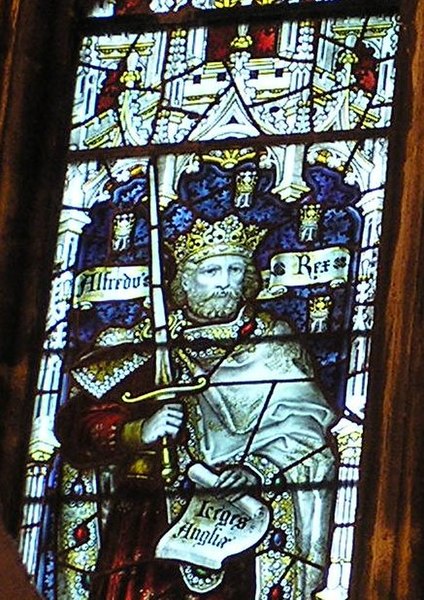
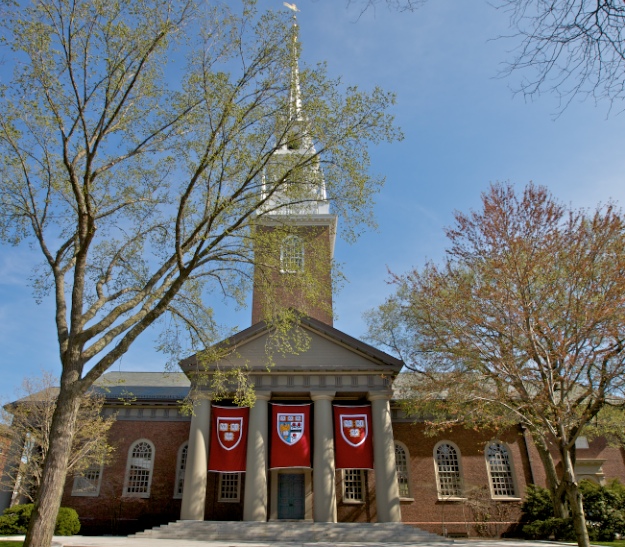
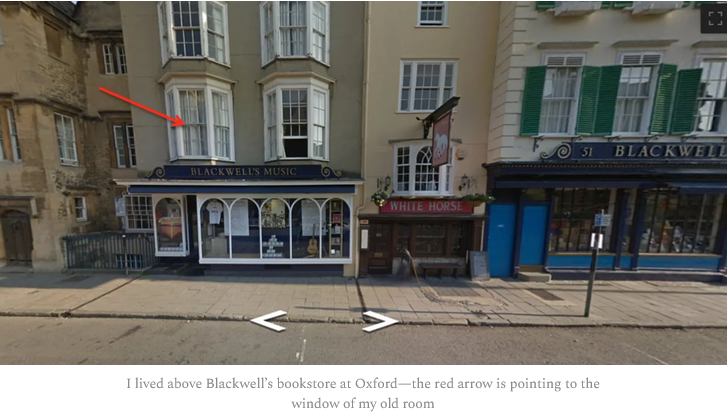
For centuries, elite academic institutions like Oxford and Harvard have been training their students to win arguments but not to discern truth, and in so doing, they’ve created a class of people highly skilled at motivated reasoning. The master-debaters that emerge from these institutions go on to become tomorrow’s elites — politicians, entertainers, and intellectuals.
Master-debaters are naturally drawn to areas where arguing well is more important than being correct — law, politics, media, and academia — and in these industries of pure theory, secluded from the real world, they use their powerful rhetorical skills to convince each other of FIBs. During their master-debatery circlejerks, the most fashionable delusions gradually spread from individuals to departments to institutions to societies.
Some of these FIBs can now be found everywhere. A particularly prominent example is wokeism, a popularized academic worldview that combines elements of conspiracy theory and moral panic. Wokeism seeks to portray racism, sexism, and transphobia as endemic to Western society, and to scapegoat these forms of discrimination on white people generally and straight white men specifically, who are believed to be secretly trying to enforce such bigotries to maintain their place at the top of a social hierarchy.
February 11, 2023
QotD: “The rest of philosophy is not, as Alfred North Whitehead would have it, a series of footnotes to Plato … but all secular religions are”
Which is why I’m not going to humbug you about “the Classics.” Commanding you to “read the Classics!” would do you more harm than good at this point, because you have no idea how to read the Classics. Context is key, and nobody gets it anymore. Back when, that’s why they required Western Civ I — since all the Liberal Arts tie together, you needed to study the political and social history of Ancient Greece in order to read Plato (who in turn deepened your understanding of Greek society and politics … and our own, it goes without saying). I can’t even point you to a decent primer on Plato’s world, since all the textbooks since 1985 have been written by ax-grinding diversity hires.
And Plato’s actually pretty clear, as philosophers go. You’d really get into trouble with a muddled writer … or a much clearer one. A thinker like Nietzsche, for example, who’s such a lapidary stylist that you get lost in his prose, not realizing that he’s often saying the exact opposite of what he seems to be saying. To briefly mention the most famous example: “God is dead” isn’t the barbaric yawp of atheism triumphant. The rest of the paragraph is important, too, especially the next few words: “and we have killed him.” Nietzsche, supposedly the greatest nihilist, is raging against nihilism.
[…]
So here’s what I’d do, if I were designing a from-scratch college reading list. I’d go to the “for Dummies” versions, but only after clearly articulating the why of my reading list. I’d assign Plato, for example, as one of the earliest and best examples of one of mankind’s most pernicious traits: Utopianism. The rest of philosophy is not, as Alfred North Whitehead would have it, a series of footnotes to Plato … but all secular religions are. The most famous of these being Marxism, of course, and you’d get much further into the Marxist mindset by studying The Republic than you would by actually reading all 50-odd volumes of Marx. “What is Justice?” Plato famously asks in this work; the answer, as it turns out, is pretty much straight Stalinism.
How does he arrive at this extraordinary, counter-intuitive(-seeming) conclusion? The Cliff’s Notes will walk you through it. Check them out, then go back and read the real thing if the spirit moves you.
Articulating the “why” saves you all kinds of other headaches, too. Why should you read Hegel, for example? Because you can’t understand Marx without him … but trust me, if you can read The Republic for Dummies, you sure as hell don’t have to wade through Das Kapital. Marxism was a militantly proselytizing faith; they churned out umpteen thousand catechisms spelling it all out … and because they did, there are equally umpteen many anti-Marxist catechisms. Pick one; you’ll get all the Hegel you’ll ever need just from the context.
Severian, “How to Read ‘The Classics'”, Rotten Chestnuts, 2020-02-13.