Quotulatiousness

January 19, 2019

QotD: Politics, politicians and intellectuals

Filed under: Politics, Quotations — Tags: — Nicholas @ 01:00

An obsession with politics is often the triggering factor. A man (women, of course, never go crazy) may swing from right to left, or left to right, on the great mental gallows. He may even do this without altering his voice; the tone may remain constant all the pendular way across; but still we spy the disconcerting movement. He walks from his commitments, and betrays all his friends.

Politics offers a terrible spiritual danger. To think politically, is an out-of-body experience. One is trying to imagine how the machinery of policy may engage with the machinery of life. It is a Cartesian operation; always short of the necessary information. Something similar may happen in an ecclesial stance. The man becomes detached from reality, by all this machinery in his head.

Career politicians seldom wobble quite so much, for they have little brain to loosen. The characters I’m thinking of are thinkers, intellectuals of some kind. Most know better than to run for public office; or if they do, the voters put them back in place. They are in product development; they tend anyway to sneer at the people in sales. A successful politician knows his market, instead. He knows what his constituents want to hear, and tells them. He remembers what side of the aisle he is sitting, and whom he owes for his seat. He is caught in a matrix of personal loyalties, with hell to pay when he skivs. His eye is fixed on the pay-off.

Whereas, your typical intellectual is coatless against the winds of fashion. He courts allies with a different kind of vanity. His party loyalties are ambiguous, and the cost of his betrayal is seldom very high. Friends become a fungible commodity, if all you require from them is Facebook Likes. He may actually improve his prospects by defecting. Depending where you live, there is a path of least resistance.

David Warren, “Brain disease”, Essays in Idleness, 2017-02-13.

December 28, 2018

“Local 473 of the Amalgamated Union of Lone Wolves” strikes again

Filed under: Africa, Europe, Media — Tags: , , , , — Nicholas @ 03:00

Mark Steyn on the latest use of the ridiculous “lone wolves” excuse for terrorism:

A week before Christmas two young ladies from Scandinavia vacationing in Morocco – Louisa Vesterager Jespersen, 24, from Denmark, and Maren Ueland, 28, from Norway – were brutally stabbed and decapitated and then had the final moments of their lives uploaded as triumphal snuff videos to Facebook, Twitter, 4Chan and Reddit, the Four Horsemen of the Social-Media Apocalypse.

Fortunately, if you were thinking of getting a little nervous about your next holiday in the Maghreb, this bloody double-murder was the work of merely another “lone wolf”:

    In a press conference in Rabat yesterday, police and domestic intelligence spokesman Boubker Sabik labelled the suspects “lone wolves”…

Wait a minute: “lone wolves” plural? You mean, the wolf wasn’t lone? No, indeed:

    What ‘lone wolf’ gang did before Scandinavian tourist beheadings

There’s a whole gang of lone wolves?

    A motley crew of “lone wolves”, including two street vendors, a plumber and a carpenter, hunted backpackers to kill in the Moroccan mountains.

At last count, nineteen “lone wolves” have been arrested for the double-murder. That’s a rugby team plus bridge four of lone wolves. They’re the least lonesome lone wolves in town.

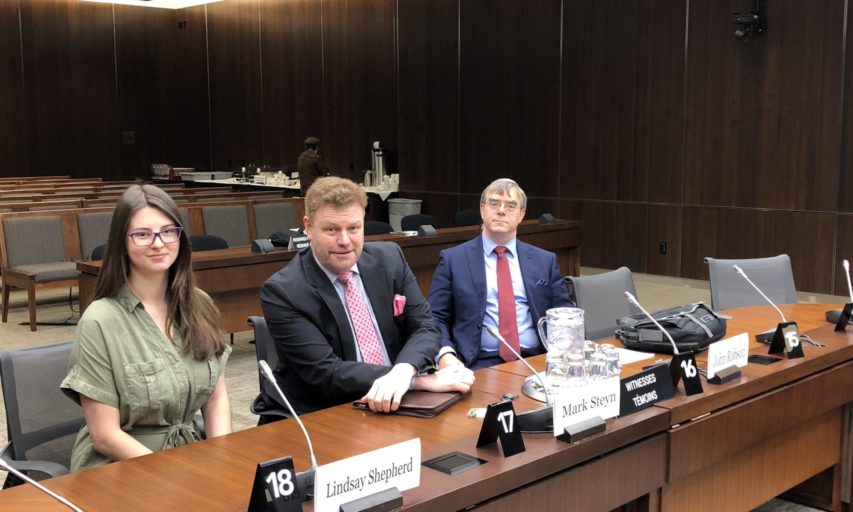
And are they really that “motley”? (See photo above for representative three-nineteenths of the lone wolf pack.)

For almost a decade, I have made mocking reference to Local 473 of the Amalgamated Union of Lone Wolves. But there’s no point to jokes, is there? Because, as absurd as they are, you wait a year or two and everybody’s doing them entirely straight-faced. The phrase “lone wolf” was created by the Pansy Media to ward off the suggestion that all these lone wolves might have something in common. Just as “all politics is local”, all jihad is lone. And, if you use the phrase often enough, it has such a pleasing anesthetizing effect you don’t even notice that you’re sitting there typing, perfectly seriously, about a gang of nineteen lone wolves.

Same number as the 9/11 hijackers, by coincidence. But we hadn’t yet taken refuge in such halfwit evasions.

Needless to say, the decapitation video went “viral”. Among those who were “spammed” with pictures of the severed heads were the mums of the girls, whose first Christmas without their beloved daughters was further enlivened by social-media enthusiasts posting snaps of the decapitated women to their mothers’ Facebook pages. But Big Social Brother knows its priorities: It was too busy banning Robert Spencer, whose Jihad Watch website is one of the few remaining outlets that doesn’t take refuge in platitudinous drivel about “lone wolves”.

December 15, 2018

Twitter cannot hold her back – Titania McGrath speaks!

Filed under: Media, Politics — Tags: , , , , — Nicholas @ 03:00

Despite the patriarchal oppression of a Twitter permanent suspension, Titania McGrath will be heard:

My name is Titania McGrath. I am a radical intersectionalist poet committed to feminism, social justice, and armed peaceful protest. In April of this year, I decided to become more industrious on social media. I was inspired by other activists who had made use of their online platforms in order to spread their message and explain to people why they are wrong about everything.

This week the powers-that-be at Twitter hit my account with a “permanent suspension” (a semantic contradiction, but then I suppose bigots aren’t known for their grammatical prowess). This was the latest in a series of suspensions, all of which were imposed because I had been too woke. The final straw appeared to be a tweet in which I informed my followers that I would be attending a pro-Brexit march so that I could punch a few UKIP supporters in the name of tolerance.

Don’t get me wrong. I have always supported censorship. Major social media platforms have a responsibility to ensure that we are expressing the correct sort of free speech. Twitter’s decision to suspend Alex Jones, host of American website InfoWars, set the right kind of precedent. I fully supported this action because Jones is known for disseminating fake news and wild conspiracy theories. But the fact that I was also banned makes me think that Twitter were being secretly controlled by InfoWars from the very start.

Indeed, Twitter’s modus operandi appears to involve routinely silencing those who defend social justice and enabling those who spread hate. In my short time on the platform, I have regularly come across hate speech from the sort of unreconstructed bigots who believe that there are only two genders, or that Islam is not a race. It’s got to the point where if someone doesn’t have “anti-fascist” in their bio, it’s safest to assume that they’re a fascist.

The permanent suspension only lasted for a day, but the experience was traumatic and lasting. I now understand how Nelson Mandela felt. If anything, my ordeal was even more damaging. Mandela may have had to endure 27 years of incarceration, but at least his male privilege protected him from ever having to put up with mansplaining, or being subject to wolf-whistling by grubby proles on a building site.

They may have silenced the great Godfrey Elfwick, but thank goodness Titania McGrath can continue to point out the absurdities and inconsistencies of the wider world.

December 7, 2018

Australian parliament votes to weaken encryption

Filed under: Australia, Government, Law, Liberty, Technology — Tags: , , — Nicholas @ 03:00

Scott Shackford reports on the latest bit of oddness from the southern hemisphere:

Pretty much every single person in the tech industry, human rights circles, and academia warned the Australian government that forcing online platforms to weaken encryption would lead to disastrous results. Nonetheless, lawmakers are pushing forward — and it’s not just Australians who will suffer as a result.

Last night, Australia’s parliament rushed through the Assistance and Access Bill of 2018 right as their session was coming to a close. The bill gives various government agencies the authority to demand that tech and communication platforms provide them secret bypass routes around encrypted messages.

This is what is known as an encryption “backdoor,” and it’s a bad idea. Governments insist such tools are needed to fight crime and terrorism. The problem is that an encryption backdoor doesn’t care who uses it: If there’s a mechanism to bypass privacy security on a communication system, it can be exploited by anybody who knows how. That includes hackers, thieves, officials from authoritarian governments, and all sorts of dangerous people (including, of course, the very government people who insist they’re trying to protect us). That’s why tech companies have spent years fighting against the idea.

Weak encryption is a threat to the health of any tech platform that involves transferring data, and governments know that. So they insist they’re not demanding encryption backdoors while attempting to enact policies that pretty much demand them.

The Assistance and Access Bill won’t just grant the Australian government the power to demand that everybody from Facebook to Whatsapp help them bypass security to access private communications. The bill will let officials order companies, through “technical capability notices,” to alter their programming to facilitate snooping. And it gives the government the authority to force the tech employees who implement the changes to keep them secret. Break that secrecy, and the employees can face up to five years in jail.

December 4, 2018

Terry Teachout’s unhappy Twitter experience

Filed under: Media — Tags: , , — Nicholas @ 03:00

While I don’t follow him on Twitter, I’ve long subscribed to the RSS feed from Terry Teachout’s website. On Sunday, he posted about a recent unpleasantness on Twitter that I thought was worth sharing:

… my Twitter account, was hacked on Sunday morning as part of a cross-platform attack on my social-media presence. The objective, it seems, was ransom: I actually received a series of telephone calls from the culprits, who appear to reside in England. Needless to say, I hung up and immediately started changing passwords and building a higher security wall. Alas, several hours went by before the powers-that-be at Twitter took notice of my plight, and numerous obscene postings are still visible on my old Twitter page as of this hour, as well as on the Twitter module in the right-hand column of this blog.

So, as you’d expect, the crack Twitter security team sprang into action, right? Er, no:

I received this message from Twitter Support late last night:

    We’ve investigated the reported account and have determined that it is not in violation of Twitter’s impersonation policy. In order for an account to be in violation…it must portray another person…in a misleading or deceptive manner.

So that’s how Twitter Support responds when my verified account is hacked, obscene and racist messages are posted on it, and a ransom request is made to me by telephone. Is it any wonder that more and more people are getting fed up with Twitter?

November 24, 2018

It’d be an inhumanly restrained government that wouldn’t take advantage of this arrangement

Filed under: Business, Cancon, Government, Media — Tags: , , , , , , — Nicholas @ 03:00

And I don’t know of anyone who thinks that highly of our current federal government. In the Financial Post, Terence Corcoran outlines the government’s bribe offer to Canadian media organizations:

Historically, a free press has meant freedom from government intervention — from the king, the president, the prime minister, politicians, bureaucrats. The proposals outlined Wednesday by Finance Minister Bill Morneau to rescue journalists pretends to be consistent with that fundamental principle. The measures, he said, will be “arm’s-length and independent of the government.” They are not, and they represent a step backward for Canadian journalism.

Under the Morneau proposals, the arm of government is directly involved in deciding which journalists or news organizations will receive special treatment, tax breaks, charitable status. Over five years the amount of federal money moving directly into news and journalism will exceed $600 million, which obviously results in government dependence, not independence.

Morneau’s own words betray the falsity of his defence of the media-bailout plan. Decisions will be in the hands of an “independent panel of journalists (that) will be established to define and promote core journalism standards, define professional journalism, and determine eligibility.” What the heck does all that mean? Other journalists are going to set standards for what? Content? Ethics? Ideology? Adherence to the Canada Food Guide?

[…]

It is also unlikely that these measures to shape local journalism and bolster some media companies over others will be the end of government efforts to meddle in the industry. One can reasonably expect that there will be corresponding attempts to undermine the corporate entities and others that are said to be destabilizing Canadian journalism and the news and information business.

There is constant pressure on government from many sources to take action against the social media giants that are accused of stealing profits from legacy newspapers while spreading fake news. In a new commentary this week, former U.S. labour secretary Robert Reich called on Washington to break up Facebook and Google on the grounds that they dominate advertising. Anti-trust action is needed, said Reich, on the grounds that they “stifle innovation.” Canadian regulatory activists share the view that the U.S. tech and media companies need to be controlled and taxed — with the money redistributed to Canadian entities.

October 30, 2018

The plight of Gab

Filed under: Business, Law, Liberty, Media — Tags: , , — Nicholas @ 05:00

Unlike other social media platforms that have hosted (and continue to host) legal-but-“hateful” content, Gab has suffered a de-platforming and is currently scrambling to get the service operational with a new service provider (reported to be a non-US site). On Monday, the Gab team posted the following static page in place of their normal UI:

The Z Man explains:

The question that normal people ask is how this is possible. After all, these companies sign contracts and in theory, we still have courts where contracts can be enforced by impartial judges. While that is a laughable fiction now, the reality is these companies are not bound by standard business agreements. They have been allowed to carve out new law for themselves, forcing their vendors and customers to sign off on what is called an adhesion contract. This gives the tech giants absolute power over everyone else.

An adhesion contract or “standard form contract” is a contract drafted by one party and signed by another party. The second party typically does not have the power to negotiate or modify the terms of the contract. Adhesion contracts are commonly used for things like insurance or rental contracts. When you rent a car or purchase car insurance, you just sign the contract, because you have to in order to rent the car or get insured. Every technology service provider is now basing their relationships on these types of contracts.

It used to be that the courts carefully scrutinized these types of arrangements, so the contract had to adhere to some basic principles. The courts would often use the “doctrine of reasonable expectations” to void all or part of these contracts, when there was lack of notice, unequal bargaining power, or blatant and substantive unfairness. The reason for this should be obvious. When a powerful company has the right to dictate the terms of the contract to their customers, they have all the power in the contractual relationship.

In western jurisprudence, a valid contract is one in which both parties freely engage and have equal opportunities to negotiate. When one party imposes the conditions on the other, that’s not a contract. That’s slavery. In a world where a handful of people control the public space, these types of contract give them arbitrary power over public discourse. If they become vexed with what you say, they can claim you have violated their terms of service and remove you from the internet. Again, the terms are dictated, not negotiated.

October 21, 2018

Politicians’ social media accounts

Filed under: Media, Politics, Technology — Tags: , , , — Nicholas @ 05:00

Stephen Gordon probably has the right of this issue here:

September 30, 2018

Moral panic à la mode: Witch hunt, 2018

Barrett Wilson compares a moral panic that convulsed the Wilson family (Satanic lyrics and overt sexual messages in contemporary movies and rock music) with today’s moral panic:

When my very Christian parents tried to throw away my 14-year-old sister’s heavy metal records, she ran away to her friend’s house. I cried for days. It felt like the end of everything. My sister would be gone forever. I would now live in what was referred to at the time as a “broken home.” I imagined that I’d be reunited with my sister in a few years—on the mean city streets after I’d been forced into a life of crime.

Both my parents and sister seemed to make good arguments. My mother and father tried to trash the records because they loved my sister, while my sister ran away because of her love for Dee Snyder. My parents wanted my sister to be safe. My sister wanted to express her individuality through music. My parents claimed that heavy metal was the cause of my sister’s rebellious behavior. My sister said that Judas Priest rocked, and elevated Ozzy Osbourne to secular sainthood. My parents thought my sister had fallen victim to satanic messages encoded in vinyl, while my sister believed my parents were enslaved to religious dogma printed in the Bible.

I remember the Bible studies and prayer groups well. There was a uniformity of belief and cause that united my parents and their pious peers. There was a collective smugness and sense of superiority that led members of the church to purge the culture (or what parts of the culture they could control) of dangerous and unholy influences. They wanted culture to be safer. Their targets: violence and overt sexuality in movies, music and video games.

So that was then, back in the benighted dark ages before the cell phone and broadband internet and all-consuming social media — they knew so little back then. We, as a culture, have grown so wise and mature that we’d never fall back into that kind of moral panic … oh, damn.

The right-left pro-censorship alliance that Gore formed three decades ago has its modern equivalent in the Twitter era. Right-wing men’s rights advocates and hyper-progressives found common cause in an online shaming campaign targeting Canadian feminist Meghan Murphy, for instance, after she dared suggest that women born into their female bodies might have reason to see themselves differently from those born with penises. And the recent de-platforming of second-wave feminist icon Germaine Greer on the basis of perceived transphobia would be met with gleeful applause by stridently conservative Australians as much as by stridently progressive gender-studies post-docs. The tactics used by right-wing Twitter trolls such as Mike Cernovich to get James Gunn fired from Disney are identical to those used by the left to get Twitter troll Godfrey Elfwick de-platformed. Their crime was the same: tweeting controversial jokes.

But while all forms of social panic tend to resemble one another, there are some stark differences between now and then. For one thing, young people today seem more naturally censorious and culturally conservative than their parents. Peace, love, freedom, and experimentation have been replaced by an obsession with emotional safety. Today’s young men and young women seem scared to death of each other. The LGBT community has fractured into its alphabetic constituent parts. And racial tensions are fed by a steady diet of online microaggressions. Everyone feels at risk, despite the fact the free world has never been safer.

Of course, moral panics are not based on facts but fears. In Stanley Cohen’s 2002 introduction to Folk Devils and Moral Panics, he writes that in moral panics, “the prohibitionist model of the ‘slippery slope’ is common … [and] crusades in favor of censorship are more likely to be driven by organized groups with ongoing agendas.” They are driven by organized groups, yes, but they are facilitated by well-meaning, ill-informed actors such as activists, therapists, and law enforcement officers. From the censorship of comic books, to video games, to music, we’ve known about the agendas of these special interests for a very long time. So why do we keep falling for it?

Moreover, there seems to be more hypocrisy at play in 2018 than there was during the moral panics of the 1980s. Many Christians who embraced Tipper Gore’s campaign truly were sincere anti-sex and anti-violence crusaders. But the world that people inhabit in 2018 is at once hyper-explicit and puritanical. In one browser tab, we’re typing about how words are violence, while in the other tab, we’re engaging in malicious gossip that could ruin someone’s career.

A feverish approach that seeks to sanitize culture is harmful but is also futile. Forbidding people from consuming content can often serve to make that content more desirable to consumers, something similar to the Streisand Effect. This phenomenon is named after Barbra Streisand’s futile attempt to keep photos of her Malibu mansion off of the internet. The harder she tried to stop people from posting photos, the more photos appeared. Paternalistically making music and art “forbidden content” makes it sexier, and elevates its status. The PMRC’s Filthy Fifteen is chockfull of rock and roll classics that went on to make millions. My parents’ disdain for heavy metal certainly did not make my sister pop Perry Como into her Walkman – she just rocked harder. Fans and free speech advocates rally around Tyler, the Creator today now more than ever.

Update:

September 27, 2018

France moves toward the Soviet system of psychological “treatment” for dissidents

You may not agree with much that prominent French nationalist politician Marine Le Pen stands for, but the recent court order that she must undergo a psychological evaluation as part of the investigation of a “hate crime” should worry everyone. Jacob Sullum writes:

Marine Le Pen speaking in Lille during the 2017 French presidential election
Photo by Jérémy-Günther-Heinz Jähnick via Wikimedia Commons

France ranked 12 notches above the United States in this year’s World Press Freedom Index, produced by Reporters Without Borders. But such ratings can be misleading, as illustrated by the prosecution of Marine Le Pen, head of the right-wing National Rally party (formerly the National Front), for posting images of ISIS atrocities on Twitter. Last week Le Pen revealed that she had been ordered to undergo a psychiatric examination as part of the investigation into her speech crime, which added another layer of Soviet-style thought control to the story.

It is inconceivable that an American politician, no matter how extreme his views, would be prosecuted for doing what Le Pen did, because a law like the one she is charged with violating would be clearly inconsistent with the First Amendment. That law, Article 227-24 of the French Criminal Code, makes it a crime, punishable by a fine of €75,000 (about $88,000) and up to three years in prison, to distribute “a message bearing a pornographic or violent character or a character seriously violating human dignity…where the message may be seen or perceived by a minor.” Le Pen allegedly ran afoul of that prohibition in 2015 by posting three pictures of men murdered by ISIS—one beheaded, one burned alive, and one run over by a tank—in response to a Twitter user who likened her party to the terrorist organization. “Daesh [the Arabic acronym for ISIS] is this!” she tweeted.

This case vividly illustrates why Article 227-24 would never pass constitutional muster in the United States. Le Pen’s tweet is indisputably political speech, sitting at the core of the expression protected by the First Amendment. The terms of Article 227-24 (especially the phrase “seriously violating human dignity”) are broad and vague, encouraging self-censorship and inviting politically motivated prosecution of people who irk the powers that be. Le Pen, who unsuccessfully ran against Emmanuel Macron in a presidential runoff last year, was stripped of her parliamentary immunity six months later, leaving her open to prosecution.

September 25, 2018

China’s anti-Japanese attitudes

Filed under: China, History, Japan, WW2 — Tags: , , , — Nicholas @ 05:00

From the time that Japan broke out of its self-imposed isolation in the late 19th century, China has been one of its main targets, first for military action and more recently for economic expansion and competition. Japan’s reputation in China would have been bad enough even without the Japanese Imperial presence in large portions of China from 1937 through 1945, but the wounds from the Second Sino-Japanese War have never healed.

Last week, Nick Taber reported on some surprisingly intense anti-Japanese sentiments he encountered in China:

In 2017 in a rust-belt city in Northeast China I hopped in a taxi and began chatting with my driver who, when the conversation turned to politics, nonchalantly told me that he wished that the Chinese Government would kill every single Japanese person on the planet. I found this extreme to say the least, so I double-checked just in case my Chinese was failing me, “You mean kill every single Japanese man, woman, and child?”

“Yes, exactly,” he said.

Guessing by his apparent age I wrote my driver off as a fringe extremist whose possibly restricted worldview was likely shaped during the throes of the Cultural Revolution. I presumed that the vast majority of Chinese people today would decisively denounce this kind of violent sentiment of genocide. This presumption was wrong.

Chinese genocidal hatred against the Japanese simply cannot be dismissed as the bigotry of a nationalist fringe movement. Anti-Japanese sentiment is in fact so engrained in Chinese culture that it has become not only a political utility and form of patriotism but even a solid go-to branding opportunity.

The CEO of a major company in Hebei province sets his username on Weibo (China’s Twitter) to “killer of Japanese devils” and likewise a news anchor of a regional TV station sets his Weibo username to “destroy Japanese devils.” Weibo also has hundreds of users with the phrase “bomb Japan” in their username, and after a devastating 6.1 magnitude earthquake struck Osaka in June, the natural disaster began trending on Weibo with a large number of Chinese netizens lamenting that more Japanese people had not been killed. As one user put it, “The whole nation of Japan should perish as soon as possible. It’s an evil race that has infuriated god.”

Certainly not all Chinese hold such genocidal or hateful views. There is a sizeable minority that even frown upon these views and a growing number of more internationally-minded Chinese who have Japanese friends or study in Japan so are at the very least suspicious of this hate. Some Chinese even see this sentiment, in part, as a product of government propaganda and brainwashing. As The Chinese Communist Party (CCP) manages uncertainty over the future of its leadership, it exploits nationalism to boost its popularity and the painful memories of WWII anti-Japanese sentiment provides a relatively low-cost, high-yield opportunity for this purpose.

Chinese citizens who do openly support Japan in any way, shape, or form also risk being seen as traitors. Another user commenting on the Osaka tragedy remarked, “Any Chinese people in Osaka right now travelling or shopping? They should be buried together with the Japanese”.

In 2017, the China Badminton Super League told their own Lin Dan, the number one badminton champion in the world, that he would be forbidden from competing in the playoffs because he had a sponsorship contract with the Japanese sports brand Yonex. In 2012, the Chinese actress Li Bingbing refused to travel to Japan to promote her film, Resident Evil 5, saying that she “personally cannot handle it emotionally”.

The origin of China’s anti-Japanese sentiment lies in the Chinese theater of World War II when the Imperial Japanese Army committed scores of harrowing war crimes on Chinese soil including the mass killing of civilians, sexual slavery, human experimentation, and cannibalism that resulted in the deaths of 10 to 20 million Chinese people.

Bodies of victims along Qinhuai River out of Nanjing’s west gate during Nanjing Massacre.
Detail of original photo by Moriyasu Murase, 村瀬守保 via Wikimedia Commons.

September 11, 2018

The tiny, airless, self-censoring world of Canadian literature

Jonathan Kay on a recent thought-crime, show-trial, and tentative rehabilitation of a part-First Nations poet in the minuscule, suffocating world of Canadian literature:

While I rarely like to concede defeat in a Twitter smackdown, I had to admit that this festival’s social-media people had me dead to rights — for it’s absolutely true that Webb Campbell wasn’t censored in any formal sense. None of the events I am describing here involve the government. Nor was Webb Campbell muzzled in any way by Book*hug, which presumably would have been only too happy to have her publish her book elsewhere. Webb Campbell could have put the controversial poem on Facebook, or Tweeted it out line by line. But she did none of this. Instead, she swallowed her pride, signed the confession that had been placed in front of her, and prayed that she would be readmitted into CanLit’s good graces — which, in fact, now seems to be happening, following what seems to have been an elaborate months-long display of performative contrition on Webb Campbell’s part. (The festival’s flacks also were correct that Webb Campbell never asked for my help or advice. Just the opposite in fact: I suspect that the poet would have opposed my involvement, since my views on free speech (and a dozen other topics) mark me as an outsider to her caste, and one badly tainted by cultural wrongthink.)

One thing about Nineteen Eighty-Four that does still ring true about the current age of crowdsourced censorship is the reverse classism at work. In Orwell’s Oceania, the intellectual class is scrutinized relentlessly for the slightest deviation in thought or speech, while “proles” are free to wallow in astrology, smut and sentimental storytelling.

    There was even a whole sub-section — Pornosec, it was called in Newspeak — engaged in producing the lowest kind of pornography, which was sent out in sealed packets and which no Party member, other than those who worked on it, was permitted to look at.

The same principle applies in broad form today. Canadian tabloids publish material every day that would be deemed offensive to Ottawa Writers Festival types in all sorts of ways. But with rare exceptions, it gets a pass, because it is seen, in effect, as a sort of ideological Pornosec. The world of Canadian poetry, on the other hand, is a tiny rarefied world run by, and for, a few hundred Canlit Party members — all relentlessly scrutinizing one another for ideological heresies through the panopticon of social media. In this environment, Webb Campbell’s status as a reliably leftist, thoroughly woke poet who proclaimed her guiding light to be “decolonial poetics” was not a mark in her favor. Just the opposite: It confirmed her status as a full Party member, and therefore strictly subject to all the ideological strictures applicable thereto. When the scarlet letter is sewn upon such a specimen by one publisher within the tiny incestuous world of Canadian poetry, it is sewn upon her by all. And while it was once imagined that artists and writers had a special duty to speak out against censorship, dogma and speech codes, they are now conditioned to believe that their highest duty is toward avoiding offense and staying in their lane.

This, in capsule form, is how crowdsourced censorship works in the literary field. And analogous stories could be told about academia and other creative métiers. It is up to the government to maintain a free marketplace of ideas. But freedom from government censorship doesn’t mean much when the stall-owners in the marketplace of ideas organize their own ideological protection rackets to drive one of their own out of business. Venerable groups that once led the fight for free speech and freedom of conscience, such as PEN and the ACLU, seem completely unequipped to deal with the new threats. Their entire organizational culture always has been directed at pushing back against government monoliths, not decentralized mob subcultures.

But the fact that government has no direct role in this new kind of censorship does not mean that public policy can’t be part of the solution. For while it’s true that government isn’t directly engineering these newly emergent forms of crowdsourced speech suppression, the current public funding model can indirectly encourage them.

The reason Book*hug can pulp Shannon Webb Campbell’s book without worrying much about lost readers or earned revenue is that, to a rough order of magnitude, they don’t have any readers or earned revenue. Like most small, high-concept book publishers in Canada, Book*hug is overwhelmingly dependent on government subsidies, which are what allow it to publish obscure manifestoes and poetry volumes that, outside of copies assigned to review, libraries, friends and family, might be expected to sell a few hundred copies.

Or fewer.

I recently consulted an online index that tracks Canadian book sales. For the latest Book*hug releases, the average number of books sold, per title, for the 15 most recently published books seems to be about 60. The tracking service does not claim to capture all book sales, estimating its accuracy at about 85%. (Direct sales at book-launch events, for instance, may escape capture in the data.) So let us be generous and assume that the average book sells 100 copies, or even double that. It doesn’t matter: In commercial terms, this is a non-entity. Which means there really is little or no financial penalty to be suffered if Book*hug publishes, or doesn’t publish, Shannon Webb Campbell instead of some other author. Everyone in this heavily subsidized subculture is playing with house money — as are the niche literary journals run by charitable entities (including one where I briefly served as editor). And the real asset to be husbanded in all these places isn’t the affection of readers — there often aren’t any — but rather the editors’ reputation for ideological purity among peers, donors and Twitter followers.

It’s the CanLit version of Sayre’s Law: “Academic politics is the most vicious and bitter form of politics, because the stakes are so low.”

September 1, 2018

QotD: Raising “taking offence” to be the highest moral ground

Filed under: Media, Politics, Quotations, Technology — Tags: , , — Nicholas @ 01:00

The rule used to be, “If you lose your shit, you’ve lost the game.”

Now it’s the exact opposite: “If you lose your shit and throw a tantrum, you win. Always. Because obviously the person who takes offense and flies into rage over nothing must have moral superiority over people who are calm and rational.”

The old rules are gone now, thanks to the juvenilizing effect of social media — where all 55 year old men pretend to be 13 year old girls. And not just for some perverted sexual goal, but because acting like a 13 year old mean girl is now just sort of how 55 year old men, who should know a damn lot better, have decided it’s appropriate to present themselves.

It’s also due, of course, to relentless conditioning by the left that there is no such thing as an immature emotional outburst that should be restrained, or a minor psychic boo-boo that should be ignored and toughed out.

The left has taught society that internal emotional restraint is not to be valorized any longer; not to be treated as a personal characteristic to be valued and further trained.

The left teaches exactly the opposite — that to restrain one’s pettier, immediate emotional outbursts is to counterfeit one’s True Self, a true self which is apparently a 10 year old with developmental disorders, and that what everyone must do to be #Woke is not merely permit oneself to descend into hysterics but to actively seek out reasons to descend into hysterics as frequently and as derangedly as possible.

This is all just to repeat the central insight of this still-bracing piece from Jonathan Haidt and Greg Lukianoff, “The Coddling of the American Mind”. In this article — sorry that I’ve repeated its premise so many times — Lukianoff discusses a previous phobia he had, and how he went through the process of Cognitive Behavioral Therapy to no longer be phobic about it. Basically, CBT taught him to deliberately expose him to small doses of the thing he feared and keep telling himself There’s nothing to fear here, get over it until his sensitivity to that trigger went away.

Lukianoff realized that what is going on on college campuses now — and I would say, in society generally — is Cognitive Behavioral Therapy, but one pointed in the precise opposite direction. Rather than teaching people to not sweat minor things that might “trigger” them, to desensitize them to those triggers, this malignant version of Cognitive Behavioral Therapy teaches people to panic, throw conniptions, fly into hysterics, and descend into lower-animal rage over minor things.

Rather than training people to de-sensitize them to petty bothers, this malignant version of Cognitive Behavioral Therapy trains them to be hyper-sensitive to trivial things.

It’s not merely that we are no longer valorizing — promoting; holding up as an ideal to aspire to — the age-old and well-proven ethic of emotional restraint and mastery of self.

We’re now actively valorizing, promoting, and inculcating the exact opposite — emotional promiscuity and performative hysteria.

Ace, “An Observance of the Decay of Learned Restraint”, Ace of Spades H.Q., 2018-08-09.

August 29, 2018

QotD: The limited power of political parties to “discipline” their supporters

Filed under: Politics, Quotations, USA — Tags: , , — Nicholas @ 01:00

… liberals spent years trying to diagnose the unique psychological disease that seemed to have beset the Republican Party — Acute Chronic Racism, or perhaps Psychosomatic Obstructionitis — I have always suspected that the fervent devotion to pointless and often counterproductive obstruction was less a Republican disease than a symptom of a larger structural problem in our politics. As people have geographically sorted themselves into partisan enclaves, partisanship has risen dramatically; the culture war has taken the kind of fierce battles that rocked the country during the civil rights era to all 50 states, rather than concentrating them on a handful of states and cities; and perhaps most importantly, a century of “good government” initiatives, from primary elections to campaign finance reform to anti-earmark legislation, have gutted the parties as a source of political discipline and political deal-making. These weak parties were unable to mount any kind of coherent response to the social media revolution, which allowed candidates and activists to do an end-run around the party professionals who would have stopped them in an earlier era.

The result is a fundamentally broken politics. But that politics is not broken because of something that “Republican elites” did. Liberals have been very fond of arguing that those elites somehow encouraged the growth of these destabilizing influences by not shutting down … well, name your candidate: right-wing talk radio, the tea party, obstructionist forces in Congress, Donald Trump. Liberals are about to find out what those Republicans have long known: they had no power to shut them down. All the tools they might have used had been taken away decades ago, mostly by progressives.

For exactly the same structural forces are at work on the left. Things fall apart; the center cannot hold. Those forces have been masked by Democratic possession of the presidency, which is a unifying force far out of proportion to its actual usefulness. As long as your party holds the White House, you feel like you have a shot at getting things done, and you are willing to cut a great deal of slack to your leadership. Prepare to see Republicans get a lot quieter and more cooperative, and the obstreperous forces on the left to get angrier and more intransigent.

Megan McArdle, posting on Facebook, 2016-11-11.

August 28, 2018

QotD: Being woke

Filed under: Politics, Quotations — Tags: , — Nicholas @ 01:00

I suppose the woke-lings’ signature shunning and hair-trigger indignation makes a kind of sense if you bear in mind the fact that being woke is largely about pretending. It’s a world of vanity and make-believe. And so, if someone in the vicinity isn’t willing to pretend – or worse, says “Hey, these guys are pretending” – then the collective pretence, and all of the pretenders, are in danger of being revealed.

And so everyone must play, or be blocked, or immediately denounced.

David Thompson, commenting on “Shatner, You Monster”, David Thompson, 2018-08-08.

« Newer PostsOlder Posts »

Powered by WordPress