Quotulatiousness

June 1, 2020

How to be a Pirate 🏴‍☠️

Filed under: Britain, History, Humour — Tags: , , , — Nicholas @ 04:00

CGP Grey
Published 30 May 2020

‣ Adapted largely from The Invisible Hook. It’s great, go read it: https://amzn.to/36PLKSE
‣ Thank you, my Patrons, for making this video possible: https://www.patreon.com/posts/37699725

## Special Thanks

Peter T. Leeson for reviewing a draft of the script. Check out his newest book, WTF?!: An Economic Tour of the Weird: https://amzn.to/3eEMm09

## Crowdfunders

Steven Snow, Bob Kunz, John Buchan, Nevin Spoljaric, Donal Botkin, BN-12, Chris Chapin, Richard Jenkins, Phil Gardner, Martin, سليمان العقل, Steven Grimm, Colin Millions, Saki Comandao, Jason Lewandowski, Andrea Di Biagio, David F Watson, Ben Schwab, Elliot Lepley, rictic, Bobby, Marco Arment, Shallon Brown, Shantanu Raj, emptymachine, George Lin, Henry Ng, Jeffrey Podis, Thunda Plum, Awoo, David Tyler, Derek Bonner, Derek Jackson, Fuesu, iulus, Jordan Earls, Joshua Jamison, Mikko, Nick Fish, Nick Gibson, Orbit_Junkie, Ron Bowes, Tómas Árni Jónasson, Tyler Bryant, Zach Whittle, Oliver Steele, Kermit Norlund, Kevin Costello, Ben Delo, Arctic May, Bear, chrysilis, David Palomares, Emil, Erik Parasiuk, Esteban Santana Santana, Freddi Hørlyck, Frederick The Great, John Rogers, ken mcfarlane, Leon, Maarten van der Blij, Peter Lomax, Rhys Parry, ShiroiYami, Tijmen van Dien, Tristan Watts-Willis, Veronica Peshterianu, Dag Viggo Lokøen, John Lee, Maxime Zielony, Bryan McLemore, Elizabeth Keathley, Alex Simonides, Felix Weis, Melvin Sowah, Giulio Bontadini, Paul Alom, Ryan Tripicchio, Scot Melville

## Music

David Rees: http://www.davidreesmusic.com

May 31, 2020

Sink the Bismarck! – The Pride of the Kriegsmarine‘s Demise – WW2 – 092 – May 30 1941

Filed under: Britain, China, Germany, History, Japan, Military, WW2 — Tags: , , , , — Nicholas @ 04:00

World War Two
Published 30 May 2020

This week, the Battle of Crete continues as the Bismarck and Prinz Eugen set sail to the Atlantic, starting one of the most dramatic episodes in the histories of the Royal Navy and the Kriegsmarine.

Join us on Patreon: https://www.patreon.com/TimeGhostHistory
Or join The TimeGhost Army directly at: https://timeghost.tv

Follow WW2 day by day on Instagram @World_war_two_realtime https://www.instagram.com/world_war_t…
Between 2 Wars: https://www.youtube.com/playlist?list…
Source list: http://bit.ly/WW2sources

Written and Hosted by: Indy Neidell
Director: Astrid Deinhard
Producers: Astrid Deinhard and Spartacus Olsson
Executive Producers: Astrid Deinhard, Indy Neidell, Spartacus Olsson, Bodo Rittenauer
Creative Producer: Joram Appel
Post-Production Director: Wieke Kapteijns
Research by: NN
Edited by: Iryna Dulka
Sound design: Marek Kamiński
Map animations: Eastory (https://www.youtube.com/c/eastory)

Colorizations by:
– Norman Stewart – https://oldtimesincolor.blogspot.com/
– Daniel Weiss
– Jaris Almazani (Artistic Man), https://instagram.com/artistic.man?ig…
– Carlos Ortega Pereira, BlauColorizations, https://www.instagram.com/blaucoloriz…

Sources:
– Imperial War Museum: A 6152, A 6155, A 3898, IWM A4057, HU 50190, HU 374, FL 2120, E 3464, E 450
– U.S. Naval History and Heritage Command Photograph
– Narodowe Archiwum Cyfrowe
– Drawing of Churchill from Museon
– Battlecruiser Renown shape by Emoscopes from Wikimedia

Archive by Screenocean/Reuters https://www.screenocean.com.

A TimeGhost chronological documentary produced by OnLion Entertainment GmbH.

May 29, 2020

Der Bismarck: Doomed to Fail? – WW2 Biography Special

Filed under: Germany, History, Military, WW2 — Tags: , , , , — Nicholas @ 06:00

World War Two
Published 28 May 2020

The Bismarck is without a doubt a force to be reckoned with. But with the Kriegsmarine experiencing an identity crisis throughout the 1930s, the Bismarck‘s design and strategic purpose foreshadow a dramatic ending.

Join us on Patreon: https://www.patreon.com/TimeGhostHistory
Or join The TimeGhost Army directly at: https://timeghost.tv
Check out our TimeGhost History YouTube Channel: https://www.youtube.com/c/timeghost?s…

Follow WW2 day by day on Instagram @World_war_two_realtime https://www.instagram.com/world_war_t…
Between 2 Wars: https://www.youtube.com/playlist?list…
Source list: http://bit.ly/WW2sources

Hosted by: Indy Neidell
Written by: Joram Appel
Director: Astrid Deinhard
Producers: Astrid Deinhard and Spartacus Olsson
Executive Producers: Astrid Deinhard, Indy Neidell, Spartacus Olsson, Bodo Rittenauer
Creative Producer: Joram Appel
Post-Production Director: Wieke Kapteijns
Research by: Joram Appel
Edited by: Mikołaj Cackowski
Sound design: Marek Kamiński
Map animations: Eastory (https://www.youtube.com/c/eastory)

Colorizations by:
Ruffneck88, Wikimedia Commons
Norman Stewart – https://oldtimesincolor.blogspot.com/

Sources:
Bundesarchiv
IWM HU 374, HU 67486, HU 1041, HU 108392, A 6155, D 2373, HU 55631
From the Noun Project: Game by Ecem Afacan, Shield by Nikita Kozin

Soundtracks from the Epidemic Sound:
Phoenix Tail – “At the Front”
Johannes Bornlof – “The Inspector 4”
Rannar Sillard – “March Of The Brave 10”
Max Anson – “Ancient Saga”
Johannes Bornlof – “Deviation In Time”
Reynard Seidel – “Deflection”

Archive by Screenocean/Reuters https://www.screenocean.com.

A TimeGhost chronological documentary produced by OnLion Entertainment GmbH.

May 27, 2020

Webley 1913 Semiauto Pistol: History and Disassembly

Filed under: Britain, History, Military, Weapons, WW1 — Tags: , , , — Nicholas @ 02:00

Forgotten Weapons
Published 25 May 2017

William Whiting and the Webley company had high hopes for their self-loading pistols being adopted by the British military — but they never got the success they were hoping for.

After the poor performance of the Webley 1904 (https://www.youtube.com/watch?v=-hT38…) at trials, William Whiting decided to make sure his next attempt would be fully developed before he put it in the hands of the military. He did very well at that too, as the gun which would become the Model 1913 Webley did very well from its very first military tests. The Royal Navy was, in fact, quite enthusiastic about it, although the Army was not. The Navy would ultimately adopt the gun and purchase about 8,000 of them during World War One, while the Army acquired just a couple hundred and preferred to stick to its revolvers.

Thanks to Mike Carrick of Arms Heritage magazine for loaning me these pistols to bring to you!

Cool Forgotten Weapons merchandise! http://shop.bbtv.com/collections/forg...

http://www.patreon.com/ForgottenWeapons

If you enjoy Forgotten Weapons, check out its sister channel, InRangeTV! http://www.youtube.com/InRangeTVShow

May 24, 2020

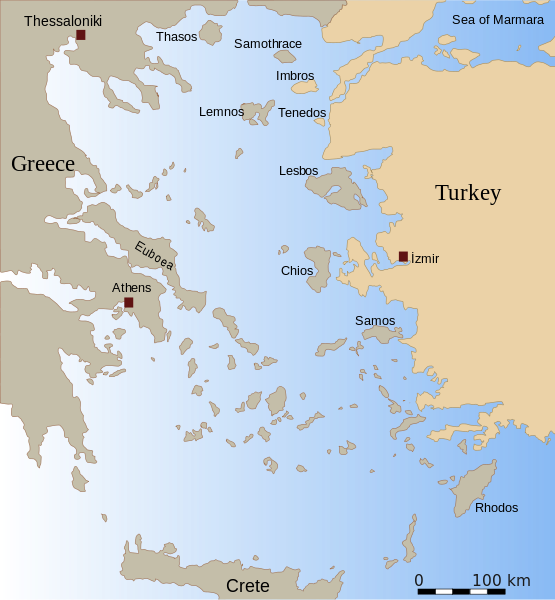
Invasion of Crete: a Bloody Mess – WW2 – 091 – May 23 1941

World War Two
Published 23 May 2020

Operation Mercury commences as fallschirmjäger airborne troops land on the Greek island of Crete. A bloody and messy battle follows as it turns out to be costly in more ways than one.

Join us on Patreon: https://www.patreon.com/TimeGhostHistory
Or join The TimeGhost Army directly at: https://timeghost.tv

Follow WW2 day by day on Instagram @World_war_two_realtime https://www.instagram.com/world_war_t…
Between 2 Wars: https://www.youtube.com/playlist?list…
Source list: http://bit.ly/WW2sources

Written and Hosted by: Indy Neidell
Director: Astrid Deinhard
Producers: Astrid Deinhard and Spartacus Olsson
Executive Producers: Astrid Deinhard, Indy Neidell, Spartacus Olsson, Bodo Rittenauer
Creative Producer: Joram Appel
Post-Production Director: Wieke Kapteijns
Edited by: Iryna Dulka
Sound design: Marek Kamiński
Map animations: Eastory (https://www.youtube.com/c/eastory)

Colorizations by:
– Julius Jääskeläinen – https://www.facebook.com/JJcolorization/
– Dememorabilia – https://www.instagram.com/dememorabilia/
– Norman Stewart – https://oldtimesincolor.blogspot.com/
– Jaris Almazani (Artistic Man), https://instagram.com/artistic.man?ig…
– Carlos Ortega Pereira, BlauColorizations, https://www.instagram.com/blaucoloriz…

Sources:
– Imperial War Museum: A 28473, E 3064E, A 4154, A 4153, A 4149, A 4144, E 3066E, E 3023E, A 4156, E 6066
– Archives municipales de Brest
– Museums Victoria
– Bundesarchiv, CC-BY-SA 3.0: Bild_141-0816, Bild_183-L04232, Bild_101I-166-0527-10A, Bild 101I-166-0527-22 / Weixler, Franz Peter, Bild_183-L19019, Bild 146-1977-115-04, Bild 141-0823, Bild_101I-166-0512-39, Bild_146-1981-159-22, Bild_146-1980-090-34, E 3022E

Archive by Screenocean/Reuters https://www.screenocean.com.

A TimeGhost chronological documentary produced by OnLion Entertainment GmbH.

May 11, 2020

Battle of Cape Matapan: Just Four Minutes to Cripple a Fleet

Filed under: Britain, Europe, History, Italy, Military, WW2 — Tags: , , — Nicholas @ 04:00

Historigraph
Published 10 May 2020

For unlimited access to the world’s top documentaries and non­fiction series go to http://go.thoughtleaders.io/167132020… and use the promo code ‘historigraph‘ to get 30 days free access.

Buy Historigraph Posters here! teespring.com/stores/historigraph
Support the channel on Patreon: https://www.patreon.com/historigraph

#CapeMatapan #Historigraph #Historigraph #CuriosityStream

► Twitch: https://www.twitch.tv/historigraph
► Twitter: https://twitter.com/historigraph
► Instagram: https://www.instagram.com/historigraph

Sources:

The Battle of Matapan, SWC Pack

Engage the Enemy More Closely, Corelli Barnett,

Dark Waters, JE Harrold

Music:

“Unnatural Situation” by Kevin MacLeod
Link: https://incompetech.filmmusic.io/song…
License: http://creativecommons.org/licenses/b…

“Volatile Reaction” by Kevin MacLeod
Link: https://incompetech.filmmusic.io/song…

“Crypto” by Kevin MacLeod
Link: https://incompetech.filmmusic.io/song…

May 9, 2020

History Summarized: The Meiji Restoration

Overly Sarcastic Productions
Published 8 May 2020

Japan may well have the record for World’s Speediest Industrialization, but how did they accomplish so much so fast without falling victim to Europe’s favorite 19th century pastime of “Colonization”? And how did Japan build up a Pan-Asian empire so darn quickly? All that and more in this deep-dive into the Meiji Restoration!

SOURCES & Further Reading:
Modern Japan: A Very Short Introduction by Goto-Jones.
The Japanese Empire: Grand Strategy from the Meiji Restoration to the Pacific War by Paine.
Bushido: The Soul of Japan by Nitobe.

THAT WACKY POLITICAL CARTOON: “Japan Makes Her Debut Under Columbia’s Auspicies” https://tile.loc.gov/storage-services…

This video was edited by Sophia Ricciardi AKA “Indigo”. https://www.sophiakricci.com/

Our content is intended for teenage audiences and up.

PATREON: https://www.Patreon.com/OSP

DISCORD: https://discord.gg/h3AqJPe

MERCH LINKS: https://www.redbubble.com/people/OSPY…

OUR WEBSITE: https://www.OverlySarcasticProductions.com
Find us on Twitter https://www.Twitter.com/OSPYouTube
Find us on Reddit https://www.Reddit.com/r/OSP/

The Battle of Trafalgar – Admiral Nelson’s Moment

Filed under: Britain, France, History, Military — Tags: , , , — Nicholas @ 02:00

IT’S HISTORY
Published 13 May 2015

It was the defining moment of the British naval history and let the groundwork for their naval superiority over the next century. Horatio Nelson’s brilliant battle tactics let to a decisive victory over Napoleon’s French Navy. Find out all about the famous Battle of Trafalgar with Indy on IT’S HISTORY.

» The Complete Piracy-PLAYLIST: http://bit.ly/PiratePlaylist

» ALL EPISODES of Battlefields: http://bit.ly/BattlefieldsOfHistory

» JOIN OUR COMMUNITY FOR MORE HISTORY KNOWLEDGE!
Follow us on Twitter: http://twitter.com/thehistoryshow
Your photos on Instagram: https://instagram.com/itshistorychannel

» SOURCES
Videos: British Pathé (https://www.youtube.com/user/britishp…)
Pictures: mainly Picture Alliance

» ABOUT US
IT’S HISTORY is a ride through history – Join us discovering the world’s most important eras in IN TIME, BIOGRAPHIES of the GREATEST MINDS and the most important INVENTIONS.

» HOW CAN I SUPPORT YOUR CHANNEL?
You can support us by sharing our videos with your friends and spreading the word about our work.

» CAN I EMBED YOUR VIDEOS ON MY WEBSITE?
Of course, you can embed our videos on your website. We are happy if you show our channel to your friends, fellow students, classmates, professors, teachers or neighbors. Or just share our videos on Facebook, Twitter, Reddit etc. Subscribe to our channel and like our videos with a thumbs up.

» CAN I SHOW YOUR VIDEOS IN CLASS?
Of course! Tell your teachers or professors about our channel and our videos. We’re happy if we can contribute with our videos.

» CREDITS
Presented by: Indy Neidell
Based on the script by: Daniel Hungerford
Directed By: Daniel Czepelczauer
Director of Photography: Markus Kretzschmar
Music: Markus Kretzschmar and Daniel Czepelczauer
Sound Design: Bojan Novic
Editing: Markus Kretzschmar

A Mediakraft Networks original channel
Based on a concept by Florian Wittig and Daniel Czepelczauer
Executive Producers: Astrid Deinhard-Olsson, Spartacus Olsson
Head of Production: Michael Wendt
Producer: Daniel Czepelczauer
Social Media Producer: Hendrik Sontheim
Social Media Manager: Florian Wittig and Laura Pagan

Contains material licensed from British Pathé
All rights reserved – © Mediakraft Networks GmbH, 2015

May 1, 2020

Why Pearl Harbor? Peaceful Portugal, and the poor Kriegsmarine – WW2 – OOTF 011

Filed under: Britain, Europe, Germany, History, Japan, Military, WW2 — Tags: , , , — Nicholas @ 06:00

World War Two
Published 30 Apr 2020

How were relations between Japan and the United States at the beginning of the war? What were both sides doing to try and make Portugal enter the war? And to what extent did the Kriegsmarine match the Royal Navy? Find out as we answer these questions in this Out of the Foxholes episode!

Links to the Between 2 Wars videos mentioned in the episode:
Japan, the Bureaucratic War Machine | BETWEEN 2 WARS I 1931 Part 2 of 3: https://youtu.be/vVgCy6iwrHQ
The World Takes Advantage of American Isolationism | BETWEEN 2 WARS | 1933 part 3 of 3: https://youtu.be/-iuQcxXAdfw
Did WW2 Start in 1937? – The Rape of China | BETWEEN 2 WARS I 1937 Part 1 of 2: https://youtu.be/_3vPGpamtDI

Join us on Patreon: https://www.patreon.com/TimeGhostHistory
Or join The TimeGhost Army directly at https://timeghost.tv

Follow WW2 day by day on Instagram @World_war_two_realtime https://www.instagram.com/world_war_t…
Between 2 Wars: https://www.youtube.com/playlist?list…
Source list: http://bit.ly/WW2sources

Hosted by: Indy Neidell
Written by: Rune Væver Hartvig
Director: Astrid Deinhard
Producers: Astrid Deinhard and Spartacus Olsson
Executive Producers: Astrid Deinhard, Indy Neidell, Spartacus Olsson, Bodo Rittenauer
Creative Producer: Joram Appel
Post-Production Director: Wieke Kapteijns
Research by: Rune Væver Hartvig
Edited by: Mikołaj Cackowski
Sound design: Marek Kamiński
Map animations: Eastory (https://www.youtube.com/c/eastory)

Colorizations by:
Carlos Ortega Pereira, BlauColorizations, https://www.instagram.com/blaucoloriz…
Dememorabilia – https://www.instagram.com/dememorabilia/

Sources:
BIBLIOTECA DE ARTE DA FUNDAÇÃO CALOUSTE GULBENKIAN
Bundesarchiv

Soundtracks from the Epidemic Sound:
Reynard Seidel – “Deflection”
Fabien Tell – “Last Point of Safe Return”
Johannes Bornlof – “Deviation In Time”

Archive by Screenocean/Reuters https://www.screenocean.com.

A TimeGhost chronological documentary produced by OnLion Entertainment GmbH.

April 21, 2020

QotD: Admiral Jackie Fisher’s five keys to “lock up the world”

Filed under: Britain, History, Military, Quotations — Tags: , , , — Nicholas @ 01:00

Geography plays an important part in all of this. While the sea surface itself is without geography, naval forces are dependent on shore facilities for support. In the age of sail, this was mostly for supply and repair, while coaling stations defined naval geography during the early age of steam, giving the British a huge advantage over all opponents. The US, lacking such facilities, built bigger, longer-ranged ships. Today, we’ve created forward bases in Europe and Japan, to allow our ships to spend more time on station, and replenishment ships to allow ships to spend more time at sea.

Moreover, a huge fraction of global trade flows through a few key choke points. A century ago, Jackie Fisher described “Five keys [that] lock up the world! Singapore. The Cape. Alexandria [Suez]. Gibraltar. Dover.” Today, we’d have to add the Strait of Hormuz, but the basic truth remains the same. Control of trade through these critical areas gives immense power, and it is in the interest of a maritime power to have that control, or at least to have great influence over how it is used.

“bean”, “Basics of Naval Strategy”, Naval Gazing, 2018-01-22.

April 13, 2020

Increasing hazards to navigation in the East China Sea

Filed under: Asia, China, Japan, Military — Tags: , , , , , , — Nicholas @ 05:00

It’s odd that all the increased collisions seem to involve Chinese vessels:

Japanese Maritime Self-Defence Force ship JS Shimakaze (DDG-172), the second ship of the Hatakaze class, commissioned in 1988. She was slightly damaged in a collision with a Chinese fishing boat in the East China Sea on 30 March 2020.
Image via Wikimedia Commons.

Sci-fi genius Robert Heinlein warned readers never to attribute to villainy behavior that was adequately explained by stupidity. In other words, he believed malice should be the explanation of last resort for puzzling conduct on the part of people or groups of people; it shouldn’t be the default. Better to hunt for more benign explanations first. With apologies to Heinlein, I would amend his “razor,” or heuristic, slightly. It’s too narrow. There are other candidates than stupidity or purposeful villainy to account for misconduct. Factors like incompetence, bureaucratic inertia, and sheer accident form — and sometimes deform — human thought and action. They belong on the stupidity side of Heinlein’s ledger.

How about this: Never attribute to villainy behavior that can be adequately explained by human failings. That preserves the essence of Heinlein’s razor while widening its scope to fit reality.

Let’s use his revised heuristic to evaluate the Sino-Japanese collision. It’s certainly possible the mishap came about by accident. It took place at night, in crowded waters. If the U.S. Navy collisions of 2017 taught us nothing else, it’s that the crews of even frontline warships can suffer from a host of maladies, from overwork to shoddy personnel practices to doctrinal or training shortfalls. No amount of high technology — whether it’s Aegis radar or satellite navigation — can altogether forestall human error. It may be that the Japanese crew, the Chinese crew, or both blundered around in the dark and came to grief. By Heinlein’s lights that’s the generous and proper assumption until the facts become known. If they do.

Nevertheless, a silent corollary has to be appended to Heinlein’s razor: But don’t rule out villainy, either.

Especially when it comes to the Chinese Communist Party (CCP). For decades Beijing has made militiamen embedded in the Chinese fishing fleet an arm of maritime strategy. The maritime militia is an irregular adjunct to regular naval forces, including the People’s Liberation Army Navy (PLA Navy) and especially the musclebound China Coast Guard fielded over the past decade. Beijing touted the militia’s combat prowess as long ago as 1974, when Chinese naval forces wrested a tottering South Vietnam’s holdings in the Paracel Islands from it in a brief but bloody sea battle. Militia craft backed by the coast guard have been a fixture in the South China Sea ever since 2009, when Beijing declared “indisputable sovereignty” over the vast majority of that body of water — including seas allocated to its neighbors by treaty. The irregular force went into overdrive in 2012 during the standoff with the Philippine Navy and Coast Guard at Scarborough Shoal, deep within the Philippines’ exclusive economic zone. Fishing craft flood the zone in CCP-claimed waters and dare local coast guards or navies to repulse them. If the locals resist, the China Coast Guard backs up the militia. PLA regular forces provide a backstop should things go awry.

H/T to Blazing Cat Fur for the link.

April 9, 2020

The (former) captain of USS Theodore Roosevelt

Filed under: Media, Military, USA — Tags: , , , , , — Nicholas @ 05:00

Another example of how civilians interpret an action in a radically different way than the military does (and must):

The Nimitz-class aircraft carrier USS Theodore Roosevelt (CVN 71) underway in the Persian Gulf, 3 December 2005.
U.S. Navy photo by Photographer’s Mate 2nd Class Matthew Bash via Wikimedia Commons.

Okay, about this USS Teddy Roosevelt captain …

No, he’s not some sort of rebel hero who fought the power for his sailors and stuff because only he gave a damn about them. That’s crap, and […] I am not happy to see him get canned. I was an O6 myself, and I would prefer O6s, as a rule, not end up fired. But that was the only course of action available to the SecNav. The guy screwed up, big time.

To believe this CAPT Crozier guy is a hero, you have to believe stupid and wrong things which you should not believe due to their stupidness and wrongness.

You have to believe that the Navy “didn’t care” about sick sailors. Libs take this further to imply that the Navy “didn’t care” about sick sailors because that would have made Trump angry.

This is, as I said, stupid and wrong.

The Navy brass has several things to think about, and there is an order of priority among those things. The priority order is 1) the mission and then 2) the sailors. Notice the order? One of the unique aspects of the military is that it is one of the very few institutions where the lives of its members are expressly and deliberately subordinated to the mission. An aircraft carrier is a major strategic asset, almost incalculably major. And this captain wanted to take it offline. Now, that could have been the decision. Command is about making tough decisions, but it was not his decision. Once he gave his input to his bosses, what he thought meant nothing.

Nothing.

We elect a commander-in-chief to make those decisions. He delegates them in a clear order of precedence to his subordinates. So, CAPT Crozier was not defying admirals or even Trump when he decided he should make the decision. He was defying you and me.

The chain of command is a thing, as he found out when he got his walking papers. And it did not stop being a thing when he did not like the orders it gave him.

If your sailors are your number one priority, you frankly have no business being in command. The mission is the number one priority. That’s hard, and no fun, but [it’s] true. And that’s not an excuse to abuse or neglect your men — far from it. But it is a recognition that you have a mission and that is your priority.

Corzier was the captain of the carrier. There was an admiral down the hall — literally — who was his boss as task force commander. Why did he not go to the admiral? Or maybe he did go to the admiral and didn’t like the answer he got. Your commander disagreed with you? Gee, welcome to military service. Salute and drive on.

There’s no scenario where he’s right on this.

April 5, 2020

China’s geostrategic box

ESR looks at the concerns that China may be considering starting a war with the United States in the wake of the Wuhan Coronavirus:

To understand how limited the PRC’s war options are, we can start with a grasp on how difficult and unsatisfying any war of conquest would be due to the geographic box China is in. The obstacles around it are formidable.

To the south, the Himalayan massif makes all of South Asia other than a narrow coastal plain on the Southeast Asian peninsula inaccessible to serious troop movements. There are no roads or rail links. The last time the Chinese tried pushing in that direction, in 1979, they were unable to sustain an offensive at any distance from their railheads and withdrew after less than a month. Their war aim – forcing the North Vietnamese to withdraw its troops from Cambodia – failed.

To the west, the vastness and comparatively undeveloped state of China’s western hinterland is a serious logistical problem before one even gets to the border. At the borders, the Tien Shan and Pamir ranges present a barrier almost as formidable as the Himalayas. External road and rail links are poor and would be easily interdicted.

To the north, movement would be easier. It might be just within logistical possibility for the PLA to march into Siberia. The problem with this idea is that once you’ve conquered Siberia, what you have is … Siberia. Most of it, except for a small area in the south coastal region of Primorsky Kraye, is so cold that cities aren’t viable without food imports from outside the region. Set this against the risks of invading a nuclear-armed Russia and you don’t have a winning proposition.

To the east is the South China Sea. The brute fact constraining the PRC’s ambitions in that direction is that mass movement of troops by sea is risky and difficult. I recently did the math on Chinese sealift craft and despite an expensive buildup since the 1980s they don’t have the capacity to move even a single division-sized formation over ocean. Ain’t nobody going to take Taiwan with one division, they’ve has too much time to prepare and fortify over the last 60 years.

The PRC leadership is evil and ruthless, but it’s also cautious and historically literate and can read maps. Accordingly, the People’s Liberation Army is designed not to take territory but to hold the territory the PRC already has. Its mission is not conquest but the suppression of regional warlordism inside China itself. The capability for the PLA to wage serious expeditionary warfare doesn’t exist, and can’t be built in the near-term future.

It’s often said that the danger of aggressive war by China is a function of the huge excess of young men produced by covert sexual selection and the one-child policy. But to expend those young men usefully you need to get them to where they can fight and are motivated by some prospect of seizing the wives unavailable for them at home. The PRC can’t do that.

The military threat from China is, therefore, a function of what it can do with its navy, its airpower, and its missiles. And what it can do with those against the U.S. is upper-bounded by the fact that the U.S. has nuclear weapons and would be certain to respond to a PRC nuclear or EMP attack on the U.S. mainland by smashing Chinese cities into radioactive rubble.

Within the constraints of conventional warfare waged by navy and air force it is difficult to imagine an achievable set of PRC war aims that gains more than it costs.

It’s possible — even likely — that the Chinese military has something like the oft-rumoured “ship-killer missiles” that might be able to cripple or sink an American carrier … if it was in range. That makes the South China Sea, the East China Sea, and the west coast of Japan a possible no-go area for US Navy carrier strike groups. A good defensive weapon system to have on hand in case relations with the outside world go “hot”, but not a strategic game-changer. Nobody would be likely to consider anything as dangerous as a seaborne invasion of mainland China, even without the threat of wonder weapons like the ship-killer. And good defensive weapons won’t secure the trade routes that China depends on outside coastal waters.

In a lot of ways your strategic situation is like a scaled-up version of Japan’s in 1941 – you could seize the initiative with a Pearl-Harbor-like initial shock, but you can’t wage a long war because without sealane control you’ll run out of key feedstocks and even food rather rapidly. And unlike the Japanese in 1941, you don’t have the kind of serious blue-water navy that you’d need for sealane control outside the First Island Chain – not with just two carriers you don’t.

There is one way an aggressive naval war could work out in your favor anyway. You can count on the U.S.’s media establishment to be pulling for the U.S. to lose any war it’s in, especially against a Communist or Socialist country. If your war goals are limited to ending U.S. naval power projection in the Western Pacific, playing for a rapid morale collapse orchestrated by agents of influence in the U.S. is not completely unrealistic.

It’s playing with fire, though. One problem is that before you launch your attack you don’t know that your sucker punch will actually work. Another is that, as the Japanese found out after Pearl Harbor, the American public may react to tragic losses with Jacksonian fury. If that happens, you’re seriously screwed. The war will end with your unconditional surrender, and not sooner.

Update: Bone-headed typo in the headline fixed. It’s funny how you can’t see ’em until just after you click the Save button…

March 29, 2020

Yugoslavia Joins the Axis Powers. and then they don’t – WW2 – 083 – March 28, 1941

Filed under: China, Europe, Germany, History, Italy, Japan, Military, WW2 — Tags: , , , , , — Nicholas @ 06:00

World War Two
Published 28 Mar 2020

Yugoslavia joins the Axis powers, which then triggers a pro-Allied coup, angering Hitler. Meanwhile, the Italians fail to outsmart the British as the Japanese hope to capitalise on their superior army.

Join us on Patreon: https://www.patreon.com/TimeGhostHistory
Or join The TimeGhost Army directly at: https://timeghost.tv

Follow WW2 day by day on Instagram @World_war_two_realtime https://www.instagram.com/world_war_t…
Between 2 Wars: https://www.youtube.com/playlist?list=PLrG5J-K5AYAU1R-HeWSfY2D1jy_sEssNG
Source list: http://bit.ly/WW2sources

Written and Hosted by: Indy Neidell
Produced and Directed by: Spartacus Olsson and Astrid Deinhard
Executive Producers: Bodo Rittenauer, Astrid Deinhard, Indy Neidell, Spartacus Olsson
Creative Producer: Joram Appel
Post-Production Director: Wieke Kapteijns
Research by: Indy Neidell
Edited by: Iryna Dulka
Map animations: Eastory (https://www.youtube.com/c/eastory)

Colorizations by:
– Julius Jääskeläinen – https://www.facebook.com/JJcolorization/
– Daniel Weiss
– Owen Robinson – https://www.instagram.com/owen.colori…
– Dememorabilia – https://www.instagram.com/dememorabilia/

Sources:
– Bundesarchiv
– Wellcome Images
– Narodowe Archiwum Cyfrowe
– Војни архив
– Istorijski arhiv u Pančevu
– IWM: H 10922, A 10274
– Littorio class Battleship drawing by David Orlović from Wikimedia
– Italian heavy cruiser Pola drawing by K.E.Sergeev
– Prison icon by FORMGUT. from the Noun Project

Archive by Screenocean/Reuters https://www.screenocean.com.

A TimeGhost chronological documentary produced by OnLion Entertainment GmbH.

From the comments:

World War Two
2 days ago (edited)
NOTE BY INDY: I researched and wrote this episode in January. Since then I have done deep research on the fighting for Greece and Crete, as well as the Barbarossa planning. I can now say unequivocally that I do NOT believe the actions in Yugoslavia had anything to do with Hitler changing the start of Barbarossa.

I hope everyone is doing well and staying safe in these tumultuous times. Indy was meant to fly back to Stockholm after a very full week of shooting, but his flight was changed to an earlier time (which they didn’t tell him), so now he’s “stuck” in the studio in Bavaria. He hopes to be able to fly back soon, but until then we’re writing and shooting a few more episodes for you. We hope we’re able to bring you all some distraction, relief or perspective. Stay safe!
Cheers, Joram

March 23, 2020

Naval strategy versus naval tactics in the Battle of the Atlantic

Ted Campbell outlines how the Battle of the Atlantic was fought between the Kriegsmarine and the Royal Navy (and the Royal Canadian Navy and, eventually, the United States Navy) in World War 2:

U-2513 in US Navy control off Key West, Florida – 30 October 1946

… there is a rather thick, and quite blurry line between naval strategy and naval tactics. One Army.ca member used the Battle of the Atlantic to distinguish between two doctrines:

  • Sea control ~ which was practised by the 2nd World War allies ~ mostly British Admirals Percy Noble and Max Horton in Britain and Canadian Rear Admiral Leonard Murray in St John’s and Halifax; and
  • Sea denial ~ which was practised by German Admiral Karl Dönitz.

The difference between the two tactical doctrines was very clear. The strategic aims were equally clear:

  • Admiral Dönitz wanted to knock Britain out of the war ~ something that he (and Churchill) understood could be done by starving Britain into submission by preventing food, fuel and ammunition from reaching Britain from North America. (We can be eternally grateful that Adolph Hitler did not share Dönitz’ strategic vision and listened, instead, to lesser men and his own, inept, instincts); and
  • Prime Minister Churchill, who really did say that “the only thing that ever really frightened me during the war was the U-boat peril“, who wanted to keep Britain fighting, at the very least resisting, until the Americans could, finally, be persuaded to come to the rescue.

Prime Minister Winston Churchill greets Canadian PM William Lyon Mackenzie King, 1941.
Photo from Library and Archives Canada (reference number C-047565) via Wikimedia Commons.

Canada’s Prime Minister Mackenzie King did have a grand strategy of his own. It was to do as much as possible while operating with the lowest possible risk of casualties ~ the conscription crisis of 1917 was, always, uppermost in his mind and he was, therefore, terrified of casualties. He mightily approved of the Navy doing a HUGE share in the Battle of the Atlantic ~ especially by building ships in Canadian yards and escorting convoys which he hoped would be a low-risk affair.

Churchill’s grand strategy was based on Britain surviving … there was, I believe, a “worst case” scenario in which the British Isles were occupied and the King and his government went to Canada or even India. But that has always seemed to me to be a sort of fantasy. The United Kingdom, without the British Isles, made no sense.

    (While I believe that Rudolph Hess was, as they say, a few fries short of a happy meal, I think that he and several people in Germany believed that it might be possible to negotiate a peace with Britain which many felt was a necessary precursor to a successful campaign against Russia. The Battle of Britain (die Luftschlacht um England, September 1940 to June 1941) was, clearly, not going in Germany’s favour. Late in 1940, the Nazi high command had been forced to send a German Army formation to Libya to prevent a complete rout of the Italians. Malta still held out, meaning that Britain had air cover throughout the Mediterranean. In short, Britain was not going to go down unless it could be starved into submission ~ and in the spring of 1941, the Battle of the Atlantic was going in Germany’s favour. There was, in other words, some reason for Germans to believe that an armistice might be possible ~ freeing up all of Germany’s power to be used against the USSR.)

    (But things were changing for the Allies, too. At just about the same time as Hess was flying to Scotland, then Commodore Leonard Murray of the Royal Canadian Navy, who had been in England on other duties, had met with and persuaded Admiral Sir Percy Noble, who liked Murray and had been his commander in earlier years, that a new convoy escort force should be established in Newfoundland and that it should be a largely Canadian force (with British, Dutch, Norwegian and Polish ships under command, too) and that it should be commanded by a Canadian officer. Admiral Noble insisted, to Canada, that Murray, who he liked, personally, and who had written, extensively, on convoy operations in the 1920s and ’30s, must be that commander. The establishment of the Newfoundland Escort Force, which would be more appropriately renamed the Mid Ocean Escort Force in 1942, was a key decision at the much-debated operational level of war which put an expert tactician (Murray) in command of a major force and allowed him (and Noble) to move closer to achieving Churchill’s strategic aim. The Battle of the Atlantic was not won in 1941, but it seemed to Churchill, Noble and Murray that they were a lot less likely to lose it, even without the Americans.)

Diagram of the early Flower-class corvettes, via Lt. Mike Dunbar (https://visualfix.wordpress.com/2017/04/12/dreadful-wale-4/)

Anyway, the boundaries of strategy vs. the operational art vs. tactics were as thick and blurry in 1941 as they are today. The decision, taken in 1939, for example, to build little corvettes in the many British and Canadian yards that could not build a real warship was, in retrospect, a key strategic choice, but it was, at the time, totally materialist: just a commonsense, engineer solution to an operational problem ~ lack of ships. Ditto for the eventual decision, which had to be made by Churchill, himself, to reassign some of the big, long-range, Lancaster heavy bombers to Coastal Command. It was, once again, with the benefit of hindsight, a key strategic move, but at the time it would likely have seemed, to Capt(N) Hugues Canuel, the author of that Canadian Naval Review essay, to be materialistic, more concerned with how to use the resources available than with deciding what is needed.

I agree with Capt(N) Canuel that, by and large, Canadians have left strategic and even operational level thinking to first, the British and more recently the American admirals ~ Rear Admiral Murray being known, in the 1930s and early 1940s as a notable exception.

« Newer PostsOlder Posts »

Powered by WordPress